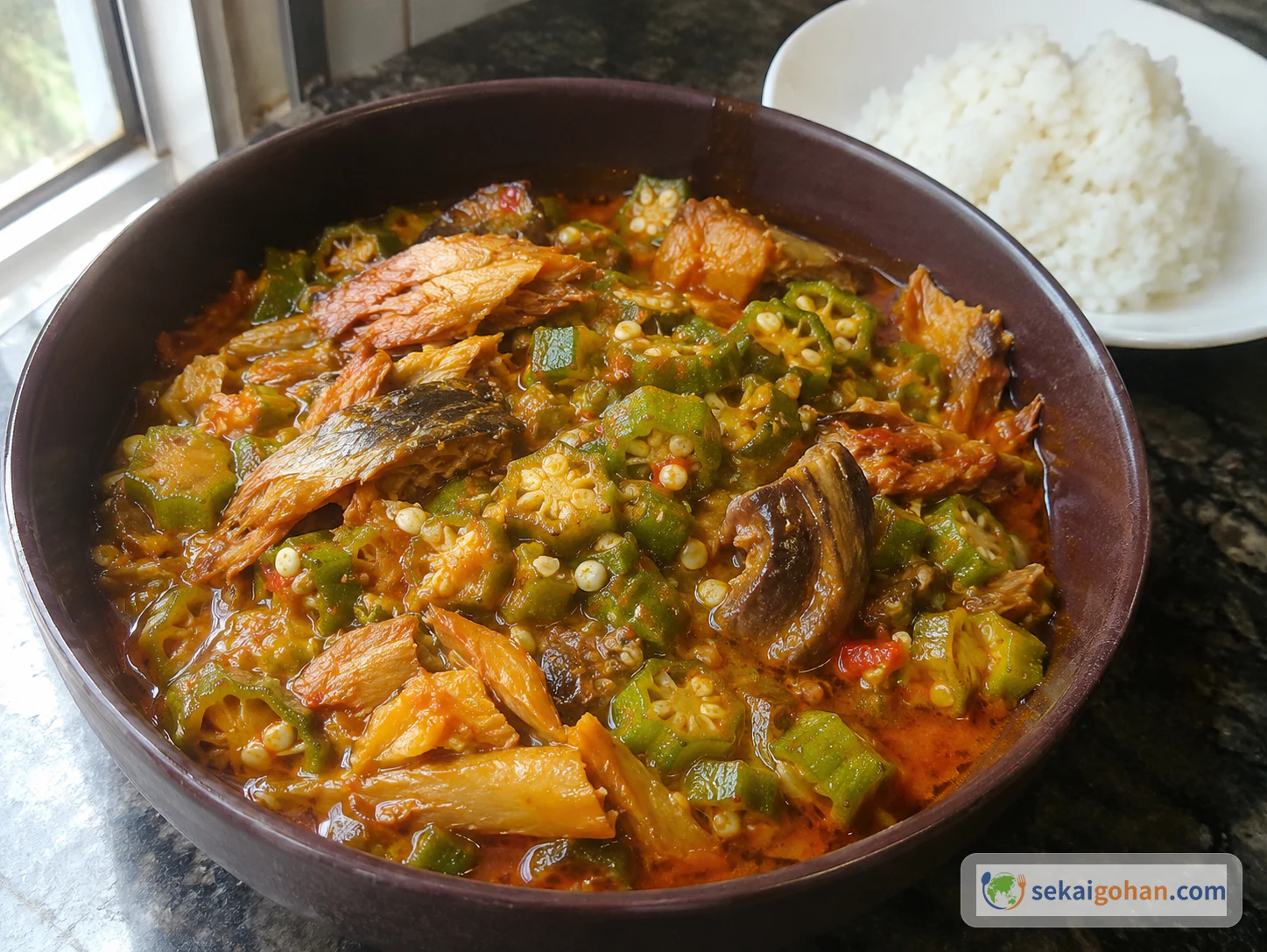
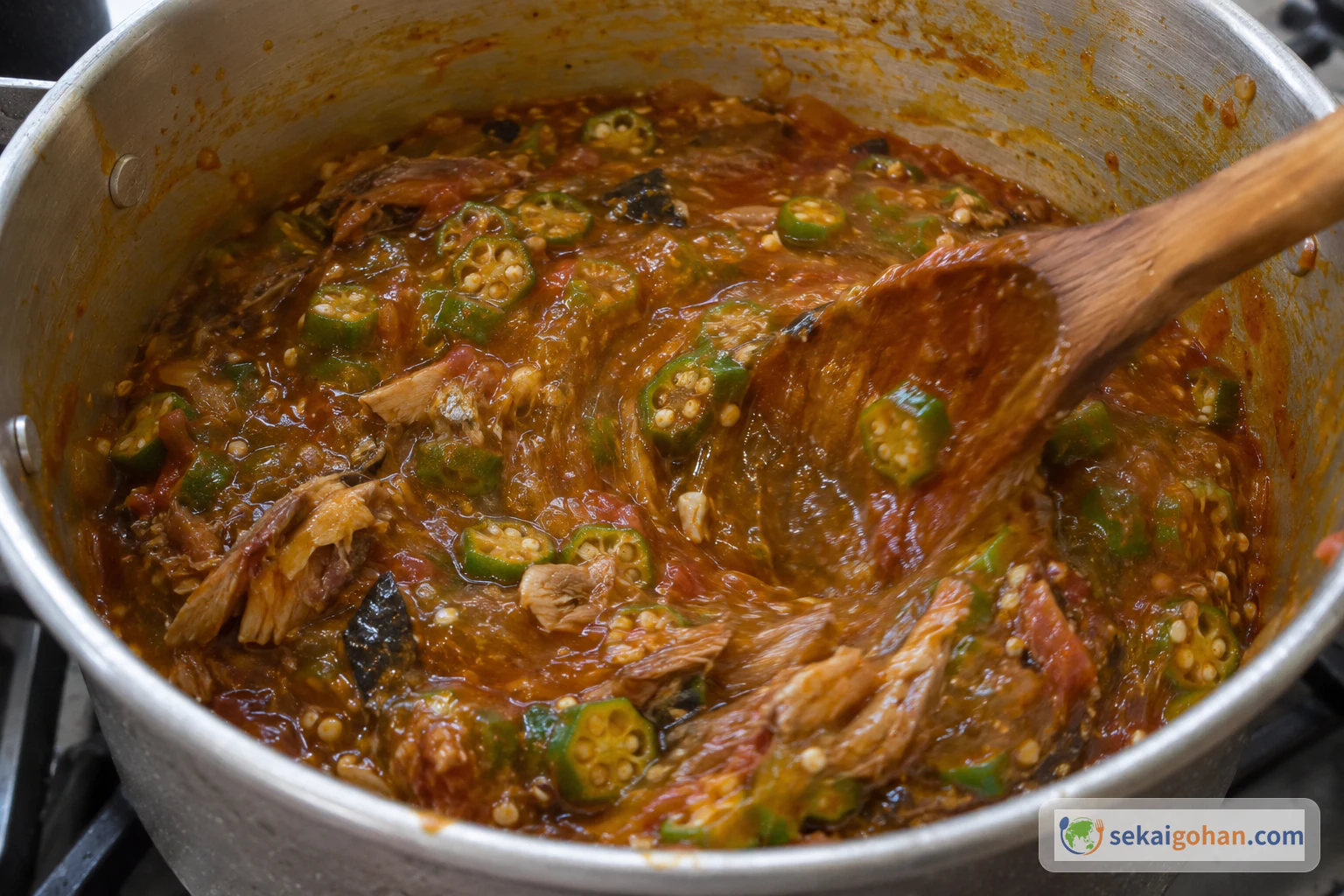
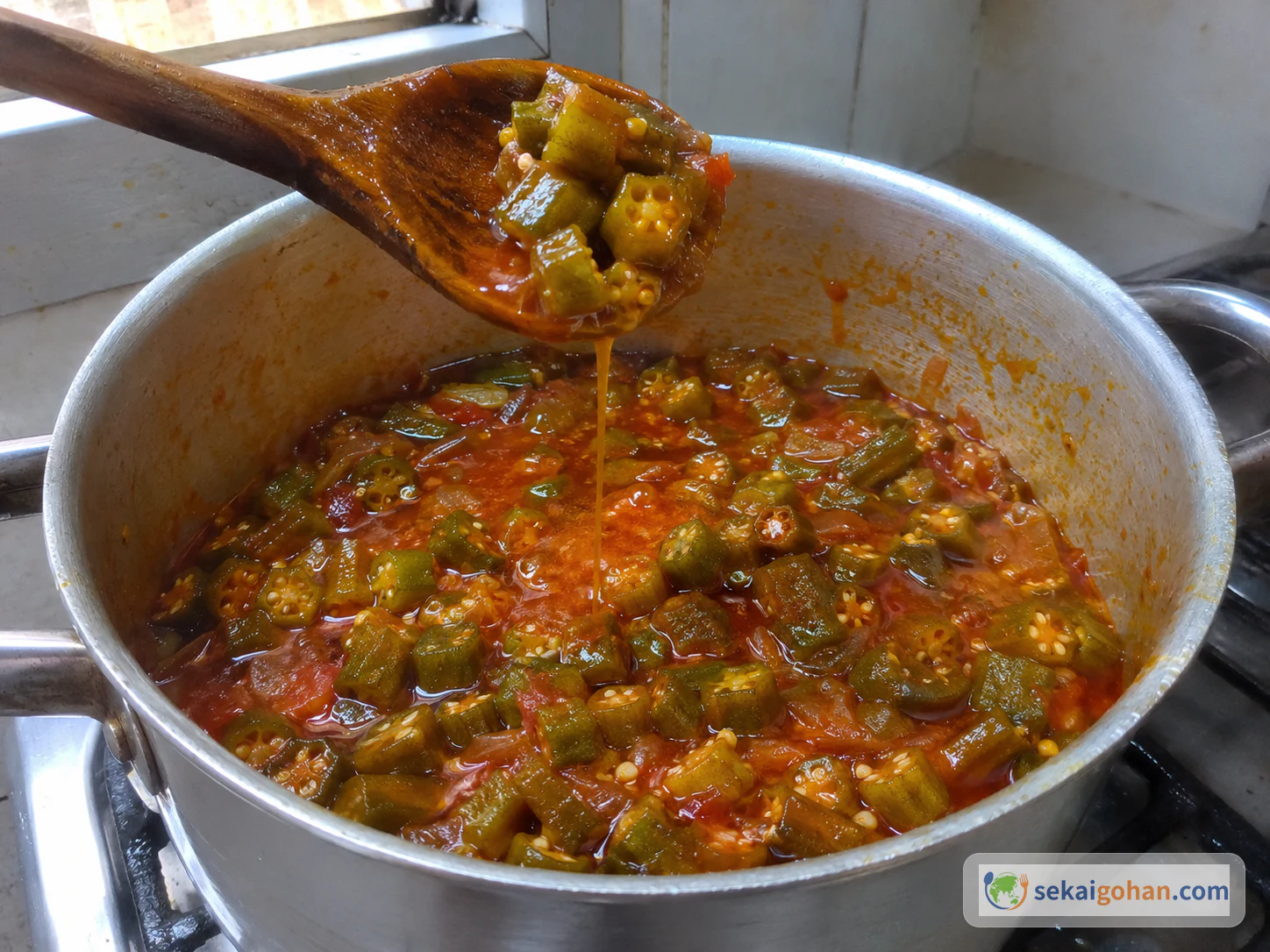
The okra rounds go into the pot last, and within a few turns of the wooden spoon the sauce changes. It turns glossy, it starts to cling, and when you lift the spoon a slow, fine thread follows it back down into the red-orange oil. That thread is the whole point of févi, the everyday okra sauce of southern and western Benin. Smoked fish gives it a deep, smoky savour, red palm oil gives it colour and a warm, nutty smell, and a little fermented afitin sits underneath everything. It goes to the table hot, next to a mound of rice or a maize staple, and every spoonful is meant to slide.
A Sauce Named After Its Vegetable
In Fongbé, the Fon language spoken across the south of the country, févi simply means okra. The sauce carries the vegetable's name because the vegetable is what it is about: the slippery, stretchy body that okra releases when it is cut and cooked. In a Beninese kitchen that texture is the measure of a good pot, and a févi without it is a different dish.
The sauce is eaten at ordinary meals, spooned beside a firm staple that soaks it up. Stiff maize pâte and pâte noire are the classic partners, along with akassa, telibo and rice. The staple is torn or scooped and dragged through the sauce, so the slip of the okra and the firmness of the starch meet in the same mouthful. Rice is the easiest partner to set up anywhere, and it is the one shown here.
Okra and its sauces go by other names across Benin, among them ila, fétri, yébonou and kandia. In the centre and north of the country, okra is also dried and ground into a powder that thickens and flavours sauces. Within Benin, févi has a slippery neighbour in assrokouin, a separate sauce built on red palm oil, smoked fish, crab and afitin. Further afield, the okra sauces of French-speaking West Africa follow their own proportions of water and simmering time, and they cook to a different result.
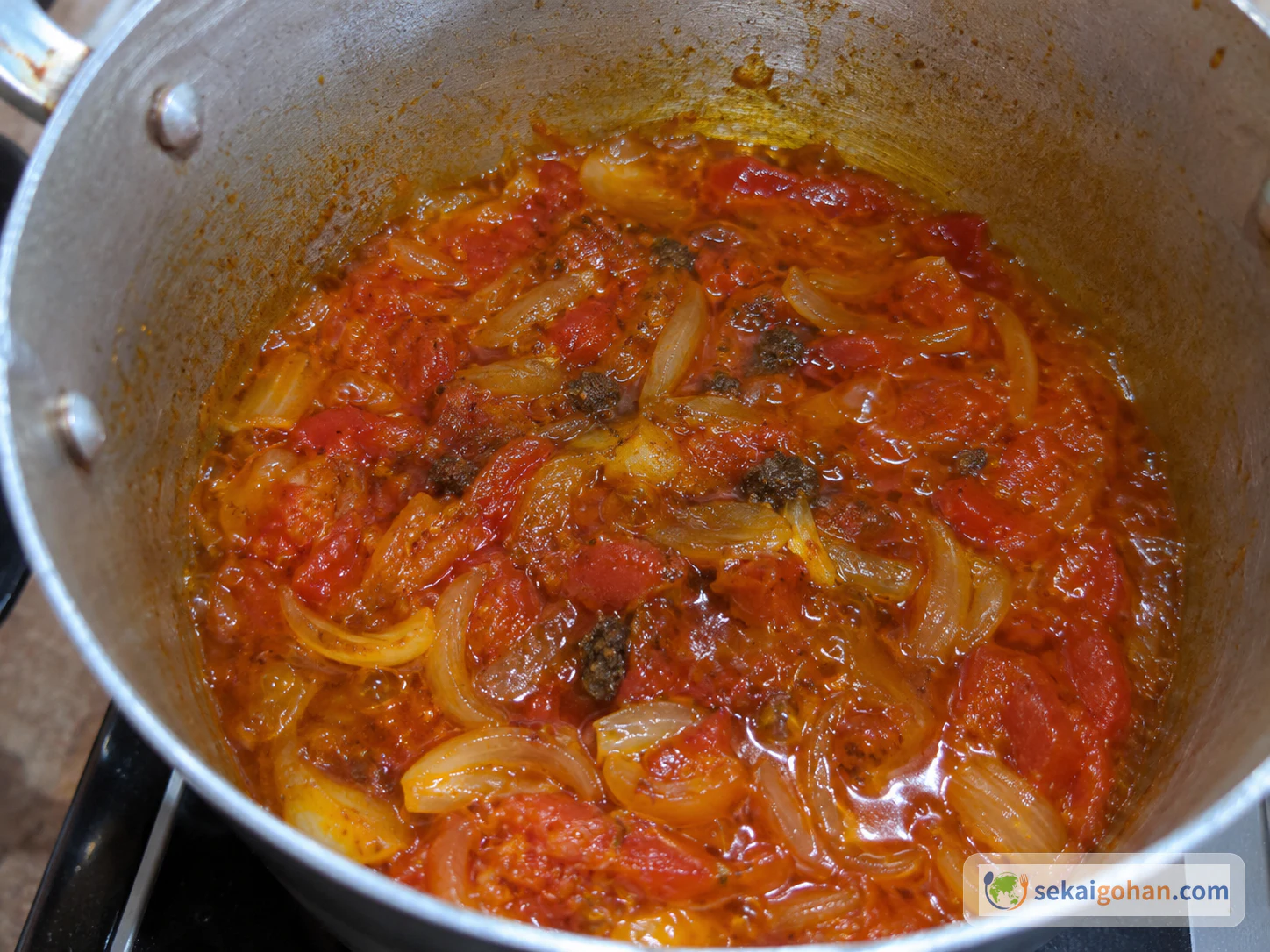
Households also differ on the palm oil. Some cooks add red oil at the very end so it floats bright on top. Here the palm oil goes in once, at the start, and the onion and tomato fry in it, so its colour and scent run through the whole sauce rather than sitting on the surface. Where Benin's other dishes come in, the Benin country page gathers them.
Because the name means okra, you will hear févi used both for the vegetable at the market and for the sauce at the table. The slipperiness is exactly what this pot is built to bring out.
Ingredients (serves 4–6)
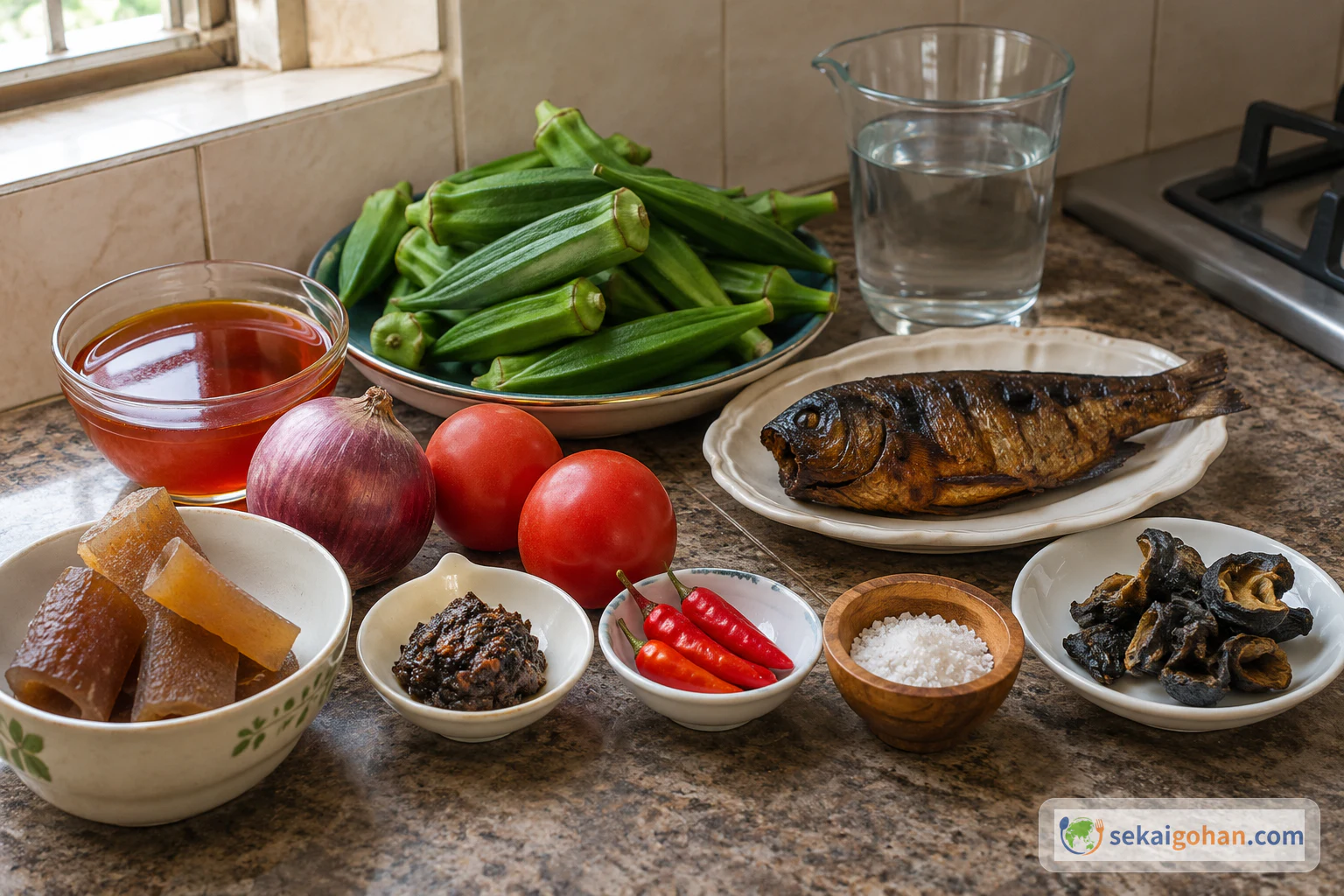
This sauce contains fish. The optional dried snails are molluscs. Check the labels on smoked fish and on any stock you use for other allergens.
Equipment
- Heavy pot
- Wooden spoon
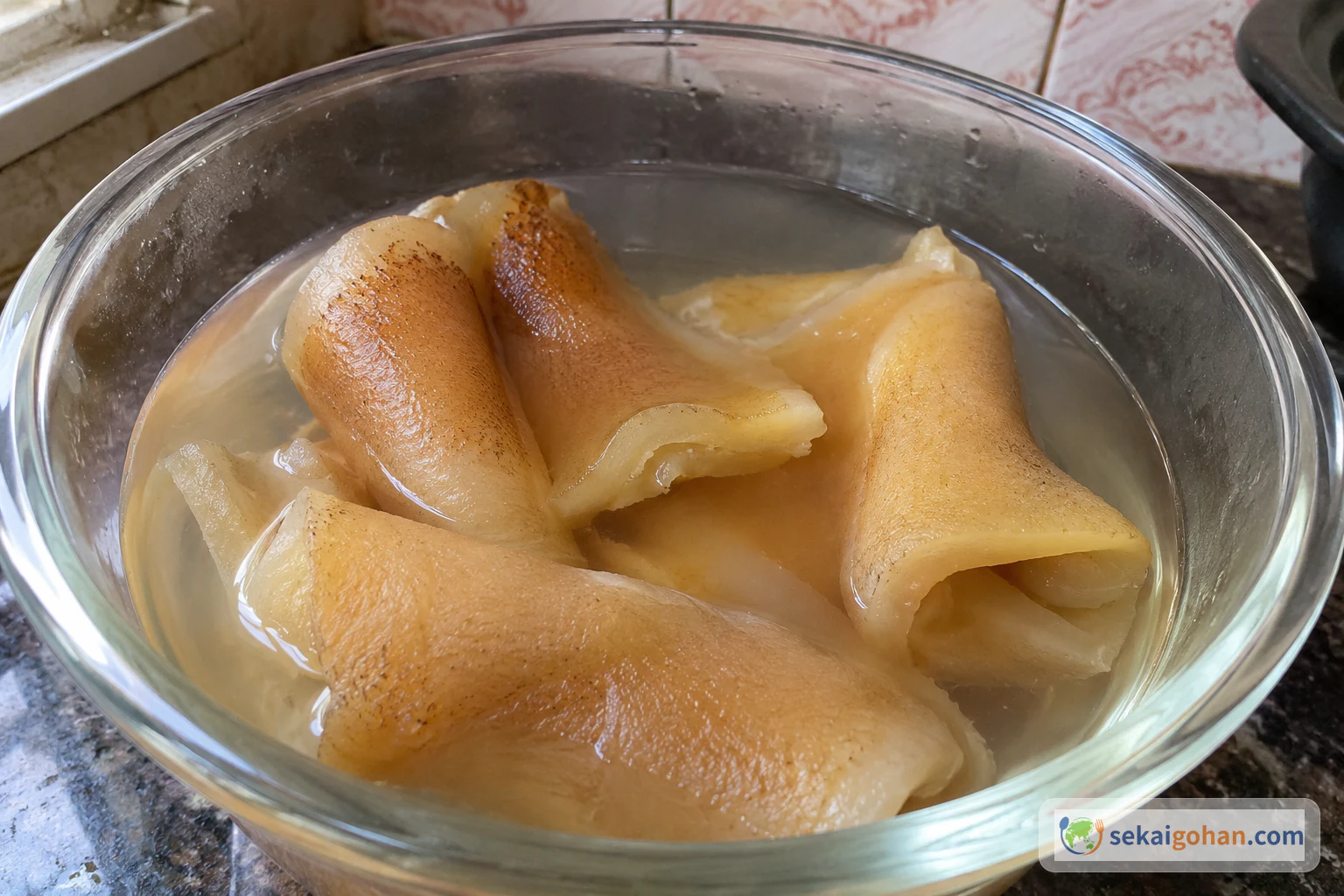
- Heatproof bowl for soaking the beef skin
- Kettle or second pot for boiling water
- Cutting board and knife
Choosing and Substituting
Red palm oil is the one ingredient to keep. It is sold at African grocers and online as red palm oil or huile rouge. Swapping in a neutral vegetable oil gives you a pale sauce without the warm, nutty smell, and the dish no longer tastes like févi.
Smoked fish comes in many kinds, and any whole smoked fish you can find will work. Flake it so it spreads through the sauce. Smoked fish is salty, so it changes how much salt you add at the end.
Kpanman is dried beef skin, sold at West African grocers. If you cannot find it, leave it out. The sauce loses its chewy pieces and some of its depth, and the smoked fish carries the savour alone.
Afitin, also sold as soumbala, is a fermented seasoning found at the same shops. Leaving it out gives a cleaner, lighter sauce without the deep, slightly funky note underneath. The dried snails are optional and can be skipped with little loss.
Use fresh okra, firm and bright green.
Shop for the okra on the day you cook. The dried and smoked ingredients keep; the okra decides the texture, and it loses its spring quickly.
Method
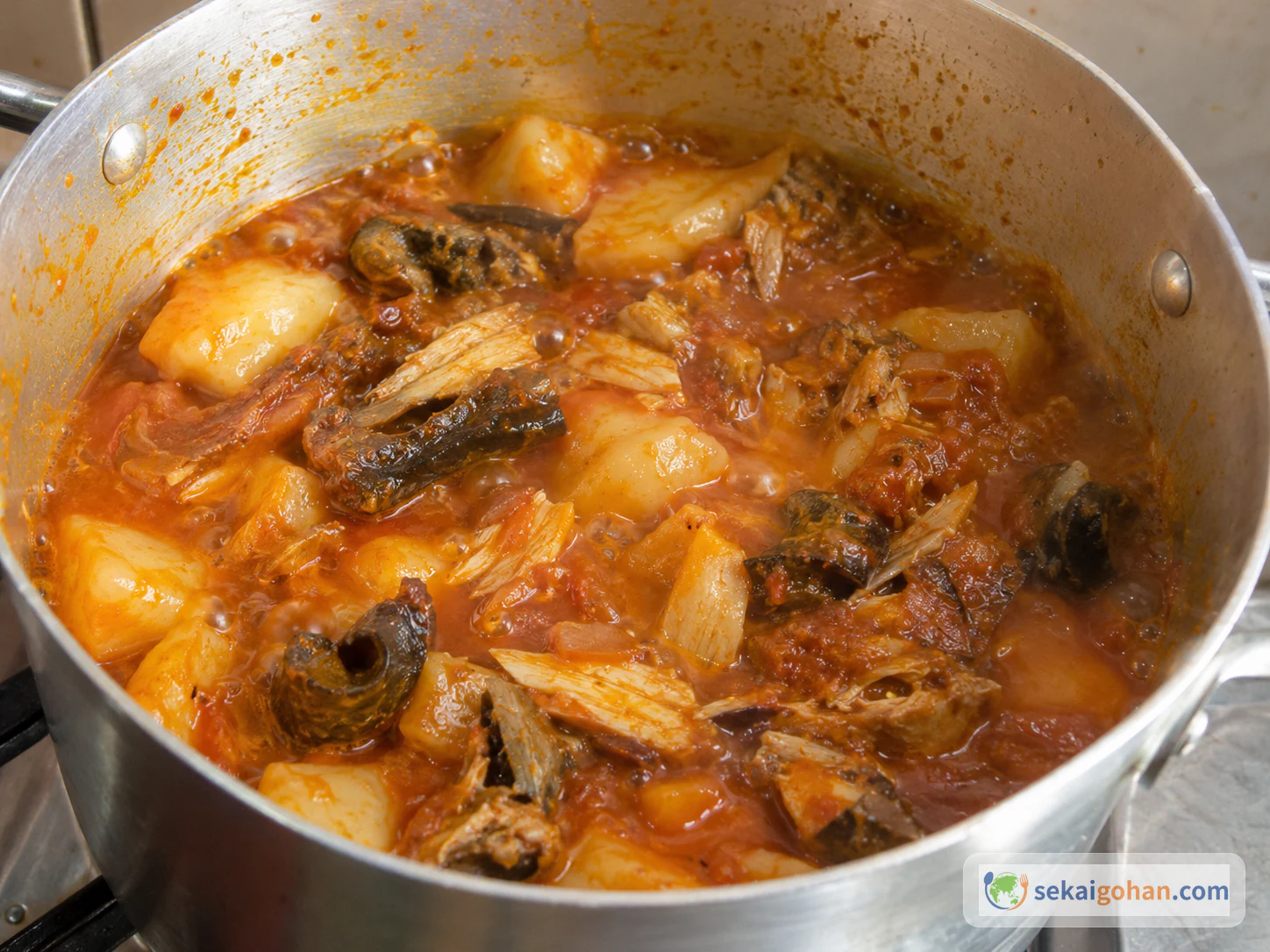
The work splits cleanly in two. The beef skin needs its soak and the fish and snails need preparing first, and while they sit you slice the okra and the aromatics. The cooking itself is a short run in one pot: fry the base, simmer the fish and skin, then add the okra and watch it closely. The only hands-off stretch is the simmer before the okra goes in. Everything from the okra onward happens at the stove with the spoon in your hand.
Smoked fish and dried snails both bring salt into the pot. Seasoning only once they have simmered keeps the sauce from turning harsh.
The more you stir the okra, the more slip it releases. Stir steadily for a thick, stretchy sauce, and more gently for a looser one.
When It Goes Wrong
| What you see | Why | What to do |
|---|---|---|
| The sauce stays thin with no thread | The okra has not been stirred enough or has not cooked long enough | Keep stirring over the heat until the thread appears on the spoon |
| The okra rounds have broken up and turned dark | The okra cooked too long | Serve it as it is; next time take the pot off as soon as the sauce threads |
| The bottom is catching or smells scorched | Too little liquid during the simmer | Add water a little at a time and stir up from the bottom |
| The sauce tastes too salty | Salt went in before the fish and snails had given up theirs | Add a little water to loosen it; next time season only at the end |
| The beef skin is still tough | It came out of the simmer too early | Keep it simmering before the okra goes in, until a skewer slides through |
Serving and Variations
At the table
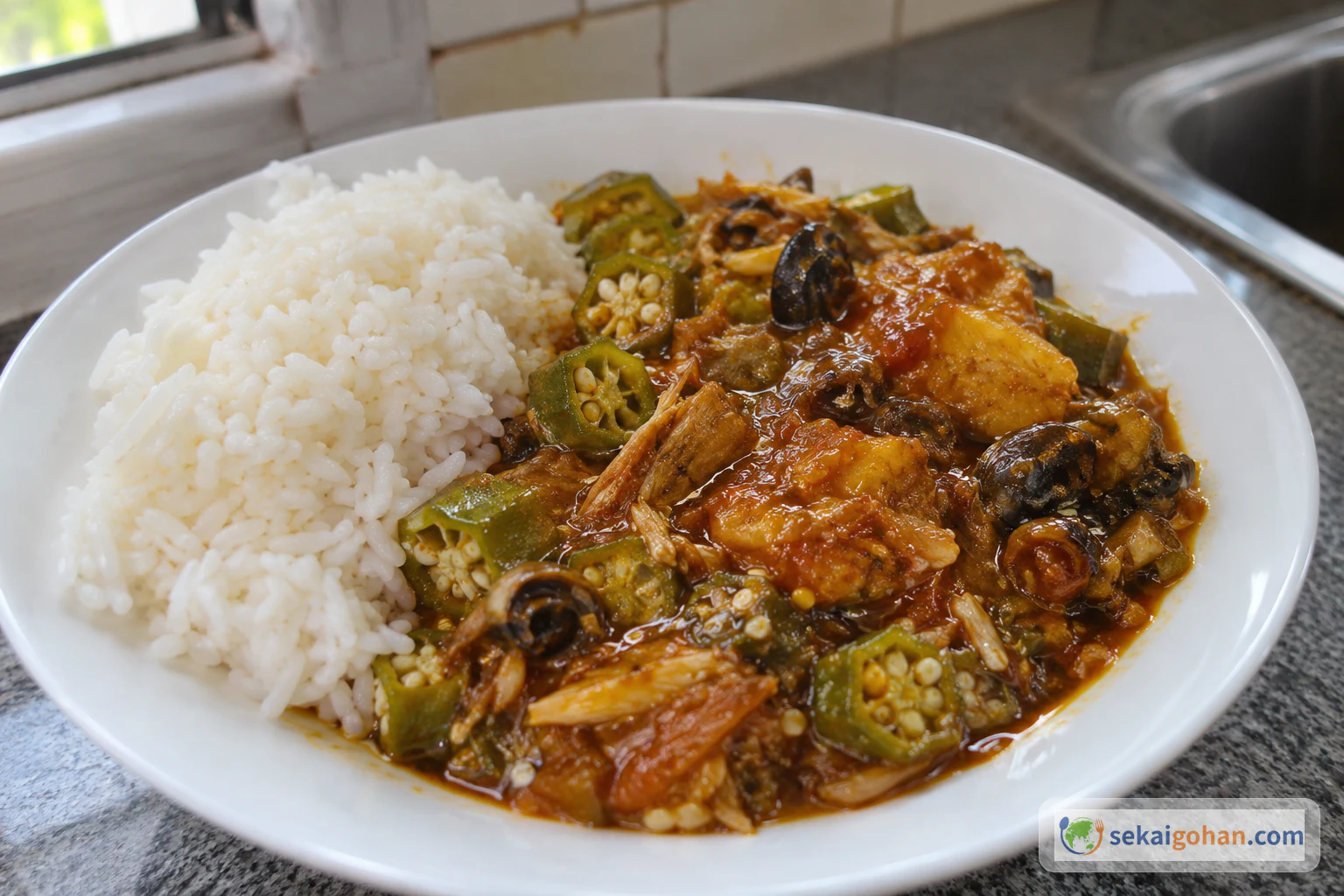
Févi is an everyday sauce, eaten hot, the moment it is ready, alongside a firm staple. In Benin that means maize pâte or pâte noire, akassa, telibo or rice. Plain white rice works well because it takes up the sauce without competing with the smoke of the fish. Put a bowl of extra sauce on the table, because the staple soaks it up faster than you expect.
Variations
- Red oil at the end. Hold back some of the palm oil and stir it in just before serving. The colour and scent sit brighter on top instead of running through the whole sauce.
- Without kpanman. Leave out the beef skin for a softer sauce with no chewy pieces. The smoked fish becomes the only source of depth, so make sure it is a well-flavoured one.
- Without snails or afitin. Dropping these gives a lighter, cleaner pot that leans more on the fish and the palm oil.
- Stir-fried okra. A drier Beninese way with okra skips the sauce. The okra is stir-fried over high heat with onion, chili and salt, and served with pâte. The okra keeps more bite and much less slip.
Frequently asked questions
Can I make the sauce less slippery for people new to okra?
Stir less once the okra goes in, and stop as soon as the rounds are coated and glossy. The sauce stays looser, with a lighter slip. Some slip always remains, because that is what makes the dish févi.
What does afitin add, and how much should I use?
Afitin brings a deep, fermented savour that rounds out the smoke of the fish. Use a little, stirred into the hot oil with the onion and tomato. Too much takes over the sauce, so start small and taste.
Can I use stock instead of water for the simmer?
Yes. Either goes in just to cover the fish and beef skin. Stock adds more savour, and many stocks are salted, so hold back on salt until the final taste.
Why does the okra go in so late?
Okra gives up its slip quickly and then starts to break down. Adding it after the fish and beef skin are fully cooked means it only needs a short stir in the hot sauce, and you can take it off at the moment it threads.