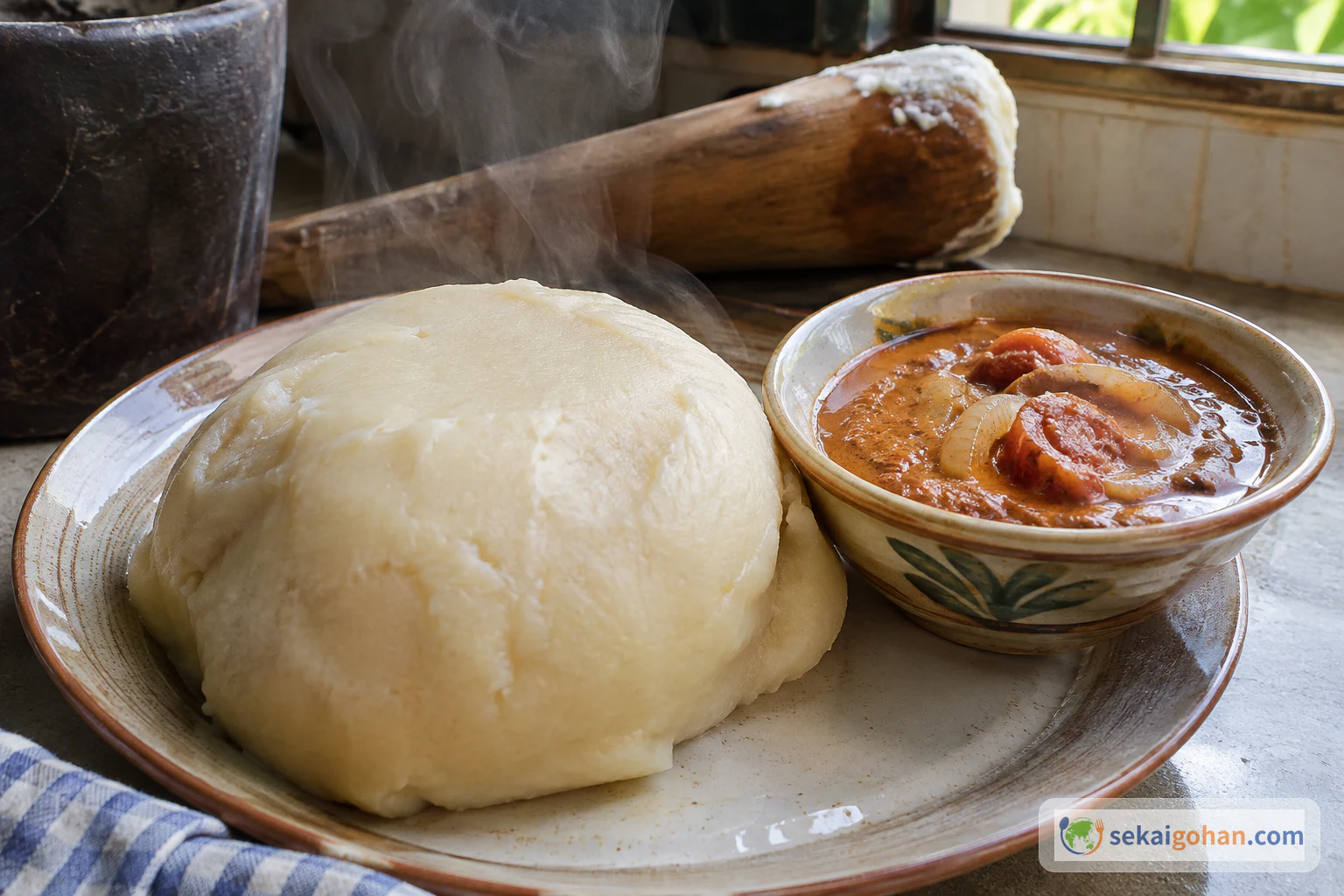
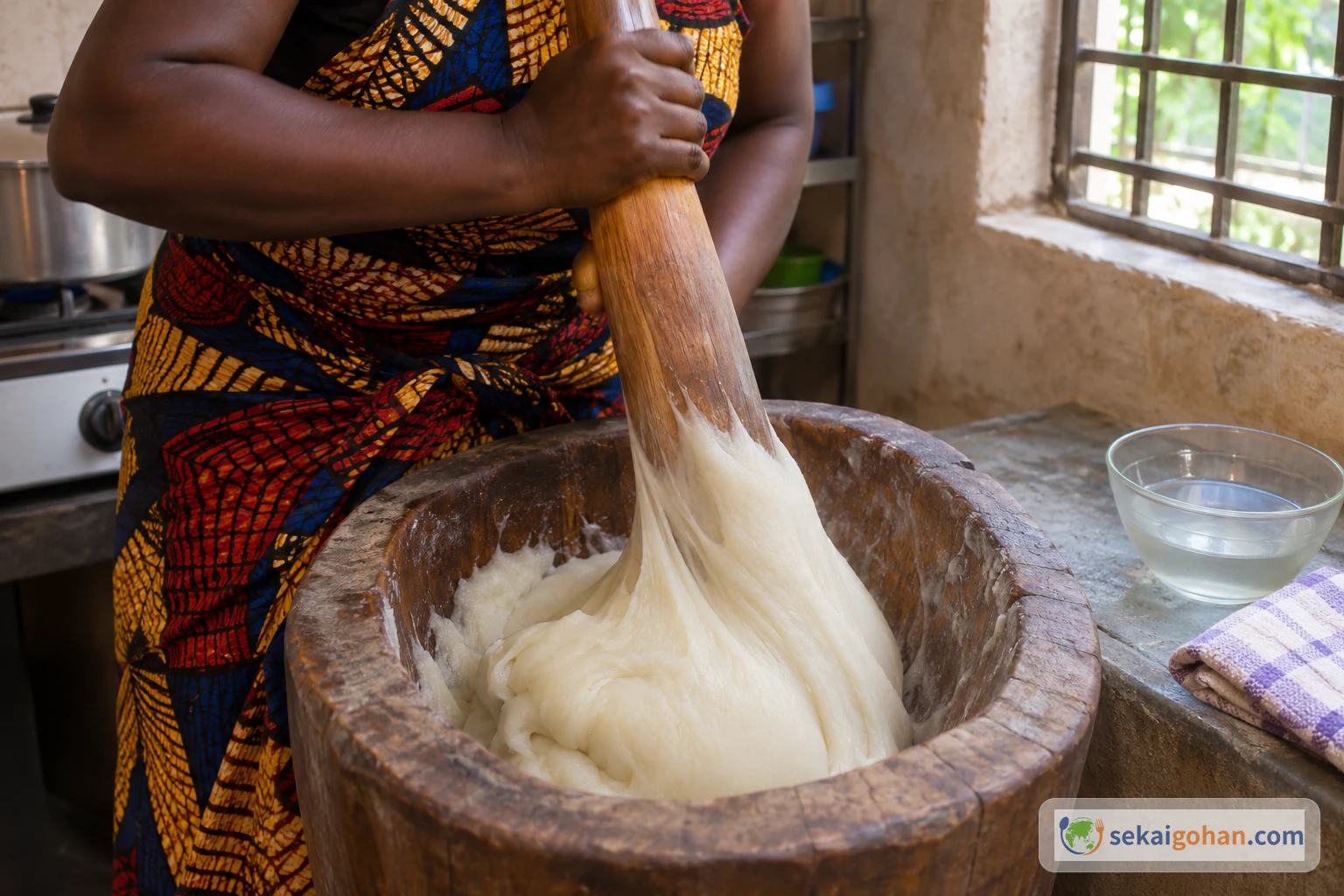
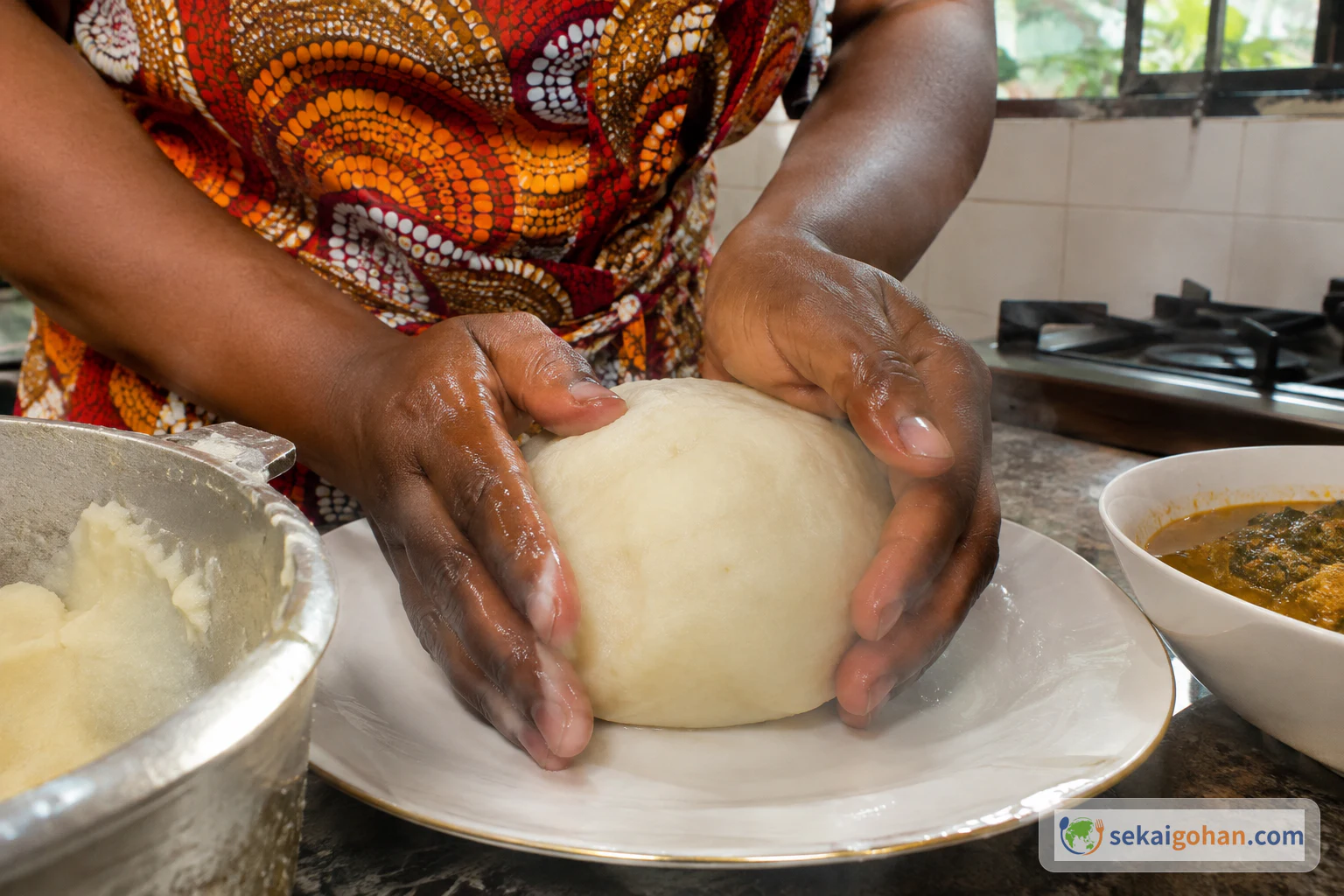
Steam comes up from the mortar as the pestle drops onto the hot yam. The pale chunks first break into rough crumbs. Then, stroke by stroke, they pull together into one smooth, elastic mass that stretches when the pestle lifts away. That moment is pounded yam, igname pilée in Benin: white yam boiled and pounded into a dough that is firm, soft and slightly sticky all at once. At the table it gets torn into small pieces by hand, rolled into balls and dipped into a warm sauce, most often a peanut sauce with tomato, onion and garlic.
From the Mortar to the Table in Benin
Pounded yam turns up all over Benin. It is cooked for family meals, for weddings and for the yearly yam festivals, when the new harvest is celebrated. It is also street food. Vendors sell it from the afternoon into the evening as a snack, so it fills the gap before dinner as well as being dinner itself.
Only two ingredients really go into it, yam and water. The whole dish depends on the work. Peeled yam is boiled until tender, drained, and pounded while hot until the texture changes completely. Smooth and stretchy is the goal, with no lumps of boiled yam left and nothing gluey either. People eat it as a "swallow": a soft staple you pinch off by hand and use to carry sauce, rather than chew on its own.
How it differs from its neighbours
West Africa has many pounded or stirred staples, and each starts from a different plant. Benin's eba is made from cassava, and amiwo is built on maize. Ghana's fufu brings together cassava and plantain. Pounded yam uses only white yam, and that gives it a paler colour and a cleaner, gently earthy taste. You can tell it apart from the cassava staples by its springy stretch.
The same dish is eaten across the border in Nigeria, and many people place its origin there. In Nigeria it is eaten with egusi, ogbono, ewedu, efo riro and okra soups, and in Ile-Ife a version called iyan gbere includes breadfruit. If you want to take your pounded yam that way, egusi soup is the natural partner. For a peanut-based pot from the region, try Ghana's groundnut soup. More dishes from the country are on the Benin page.
French-speaking Benin calls it igname pilée, which means pounded yam. English menus write pounded yam, and in Yoruba it is iyán. All three names point to the same thing: boiled white yam beaten smooth in a mortar.
Ingredients (serves 4)
Yam is not a major allergen. Peanut sauce, the usual partner in Benin, is made from peanut paste. Tell your guests, and serve a different sauce or stew to anyone with a peanut allergy.
Equipment
- Large pot
- Knife and cutting board, or a peeler
- Fork, for testing tenderness
- Colander
- Wooden mortar and pestle, or a sturdy wooden spoon
- Kitchen scale, for weighing the yam
- Small cup, for the reserved cooking water
Choosing Your Yam and What a Swap Changes
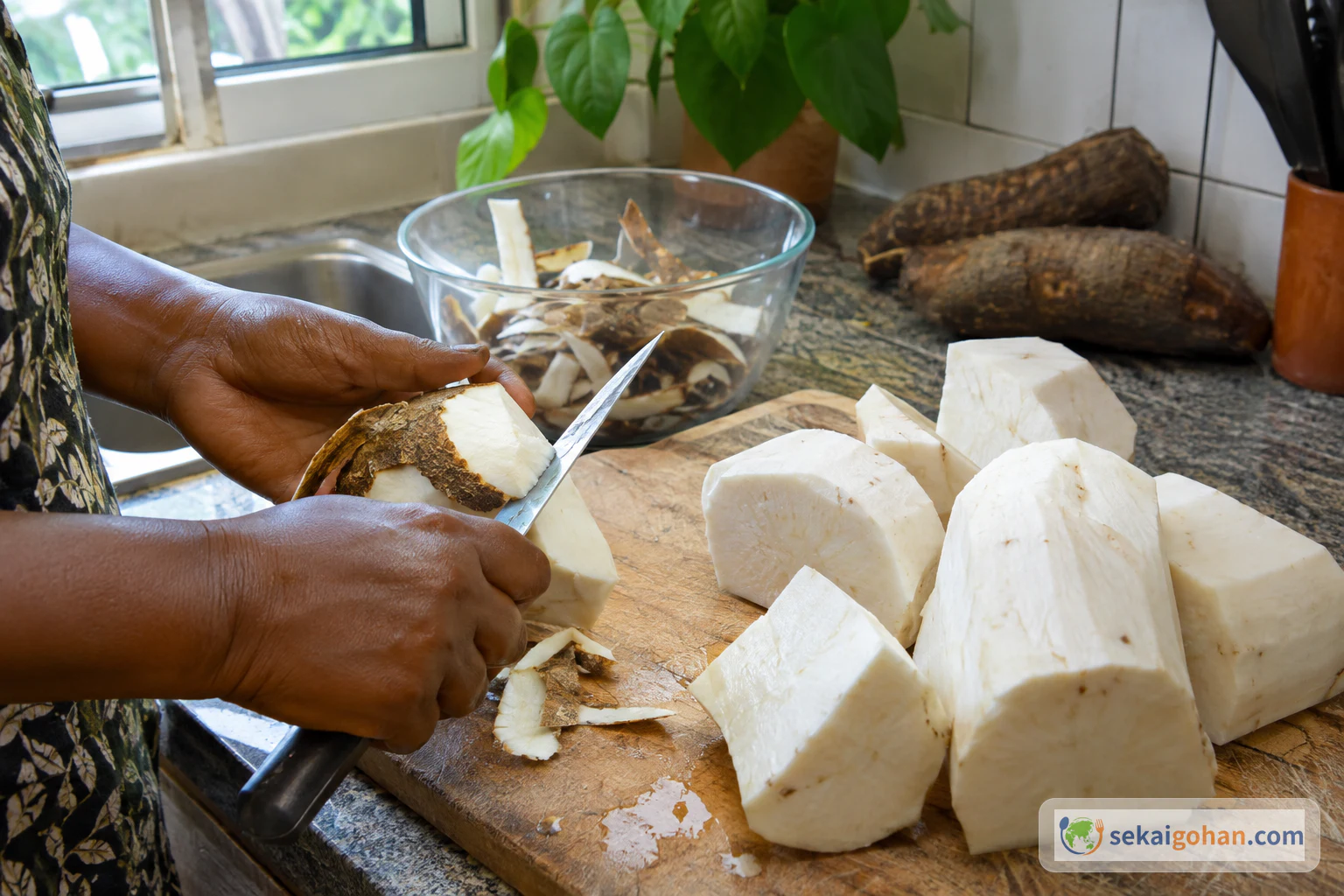
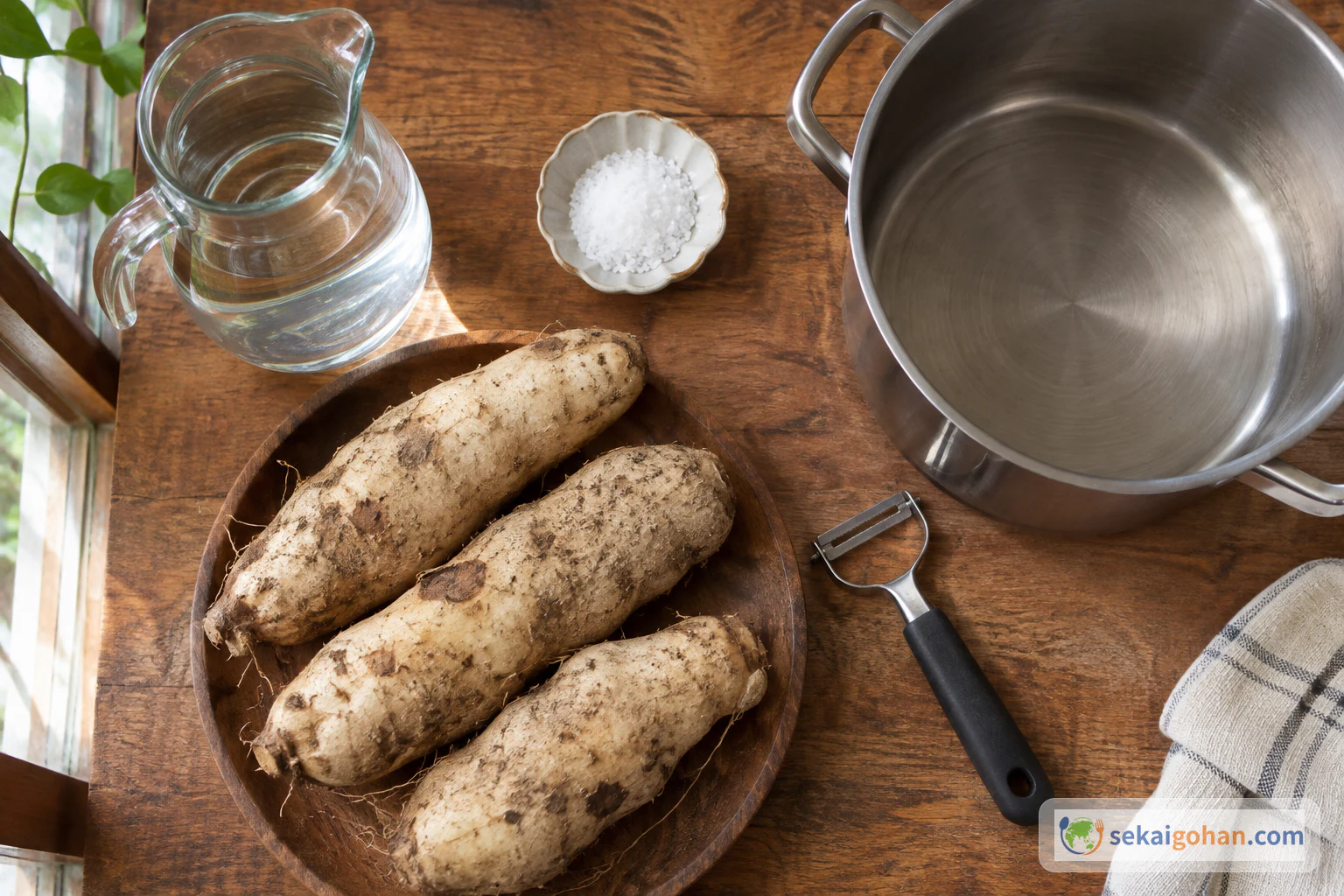
The yam decides everything here. Look for African white yam at African, Caribbean or international grocers, either fresh as whole tubers or frozen. Fresh tubers should feel heavy and hard, with no soft patches.
Supermarket "yams" in North America are often orange sweet potatoes. They are a different plant and will not pound into this dough. Asian mountain yams such as nagaimo and yamato-imo are a different species too. They have their own slippery stickiness and cook differently, and pounded they give you a separate dish rather than a close copy. Taro is different again in texture. Use any of these only knowing you are making something else. If the dish is to taste like Benin, keep the white yam and the hand pounding. The sauce and the serving style are where you have room to adapt.
The 2¼ lb (1 kg) is the weight of the yam you buy. Weigh the whole tubers at the shop or at home, then peel. Mixing tubers of different sizes is fine, as long as you cut the chunks to a similar size.
Method
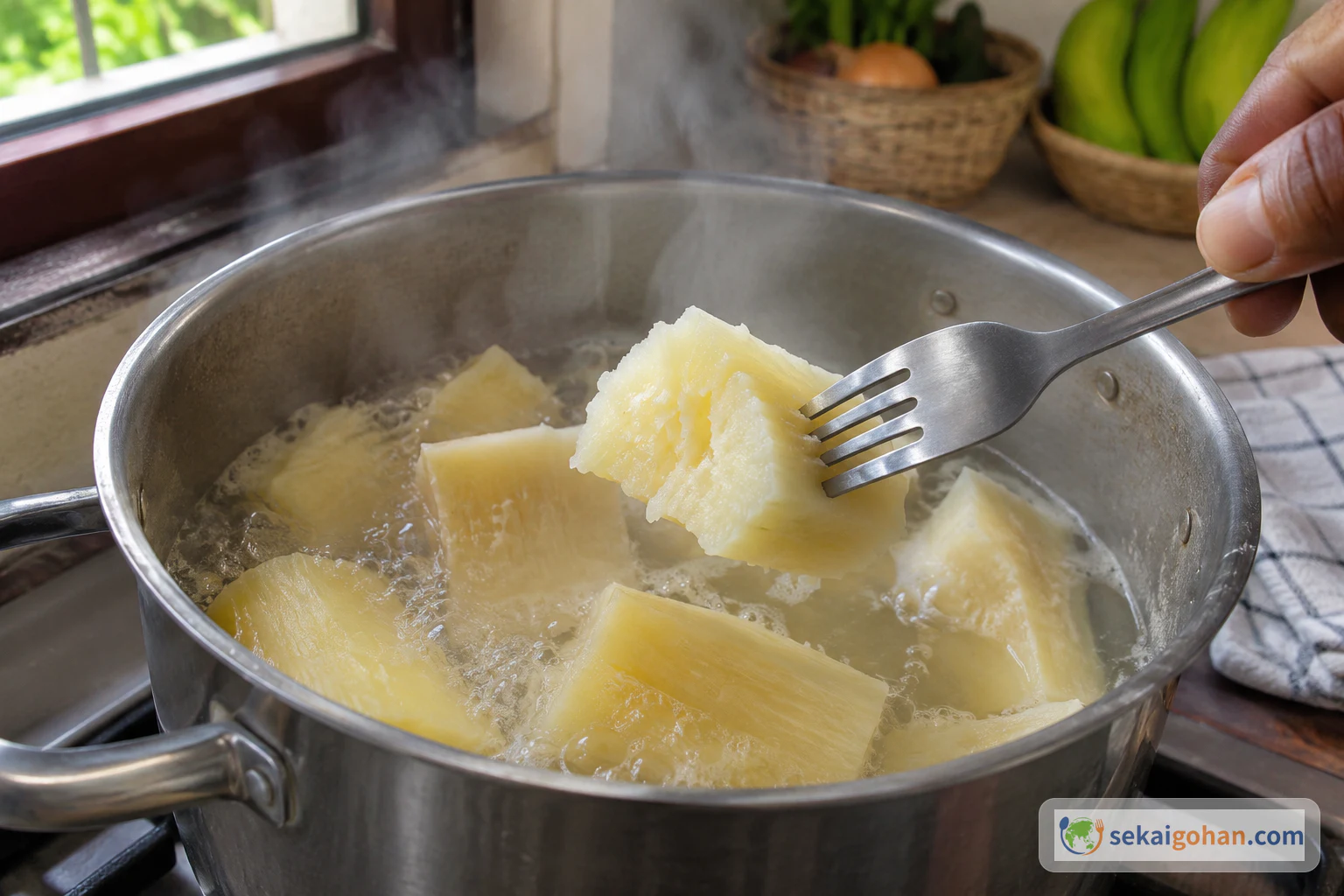
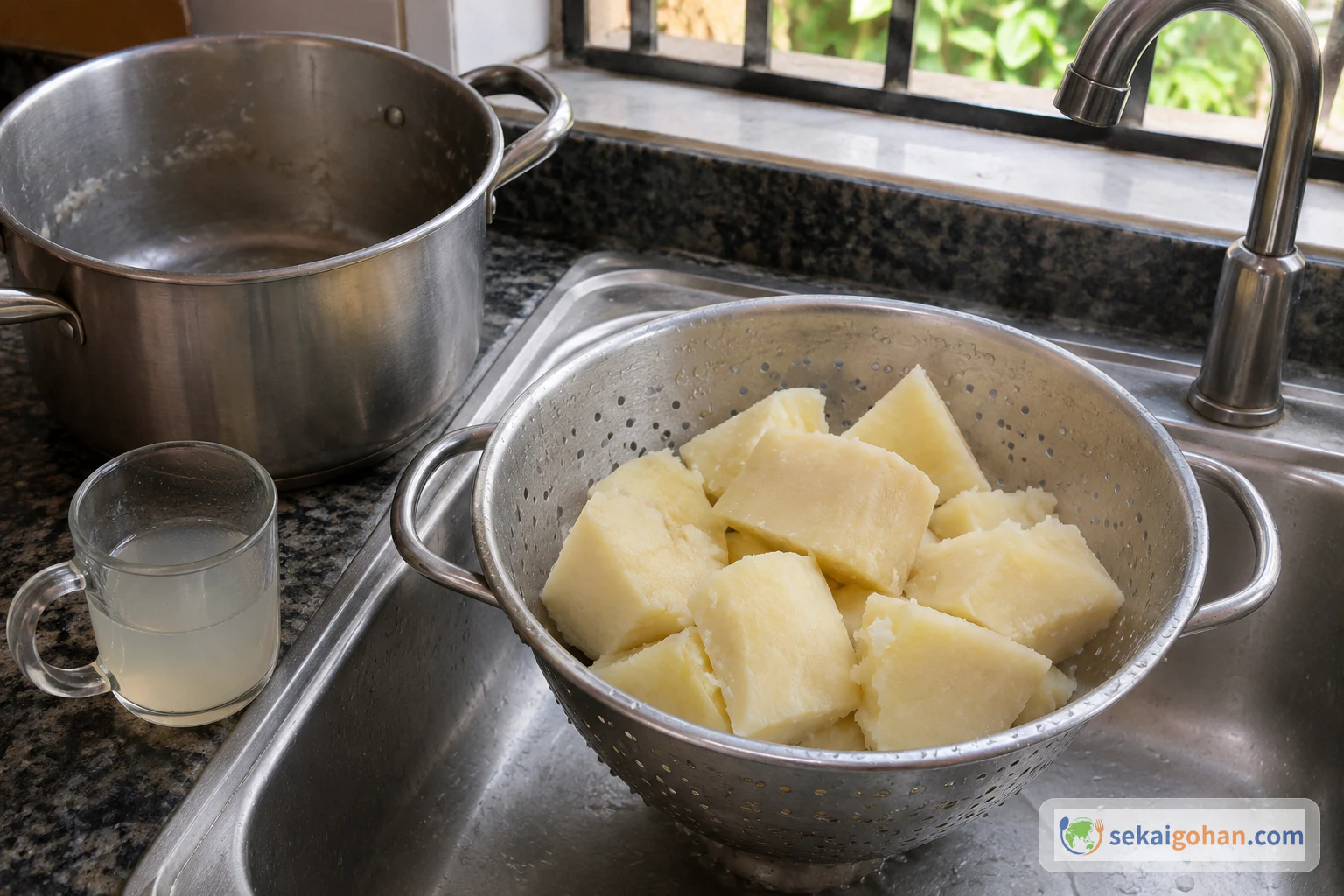
The work comes in one quick run. Peel and cut, boil, drain, pound, shape. The boil is the only time you can step away. Have the mortar or spoon ready and the colander in the sink before the yam is tender, because the pounding has to start while the yam is hot.
When It Goes Wrong
| What you see | Why | What to do |
|---|---|---|
| Hard lumps that will not pound out | The yam was undercooked, or it cooled before pounding | Next time, test every chunk with the fork before draining and start pounding at once. Pound the hottest part of the batch first |
| The dough sticks to the pestle and your hands | It is too dry | Work in a little of the reserved cooking water, then keep pounding |
| Slack, wet dough that will not hold a round | Too much water went in during pounding | Add water only in small amounts. Keep pounding hot dough to tighten it |
| Some chunks are mushy while others resist the fork | The chunks were different sizes | Cut pieces of a similar size. Take off the tender chunks and keep boiling the firm ones |
| Slippery or gluey texture, not stretchy | A different yam, such as nagaimo, was used | Look for African white yam. Other species give a different dish |
Serving and Variations
At the table

In Benin, pounded yam most often goes to the table with peanut sauce, made from peanut paste, tomato, onion, garlic and local spices. It also works with any sauce or stew that has enough body to cling. Each person tears off a small piece, rolls it into a ball with their fingers and dips it. Put the yam in the middle with bowls of sauce around it, and let everyone take from the shared plate.
For young children and older eaters, tear the dough into small pieces before serving. The dough is soft but sticky, and small pieces are easier to swallow.
Variations
- Smaller pieces, rinsed first. In the Nigerian approach, the yam is cut into small pieces, rinsed in cold water and boiled for about 15 to 20 minutes. The time is shorter. The fork test still decides when it is done.
- Machine-made. A food processor, blender or hand mixer can stand in for the mortar. The texture changes with the machine, and processing too long turns the dough gluey instead of stretchy.
- Nigerian soups. Serve it with egusi, ogbono, ewedu, efo riro or okra soup instead of peanut sauce. The yam stays the same, and the meal tastes of the other side of the border.
Frequently asked questions
Can I use frozen yam?
Yes. Frozen African white yam from international grocers is often the easiest kind to find abroad. Boil it the same way and use the same fork test to decide when it is done, then drain and pound while hot.
Can I make pounded yam ahead?
Eat it the day you make it. It is at its best fresh from the mortar, warm and stretchy, so plan to pound it shortly before the sauce is ready.
Does it need much salt?
Season the cooking water lightly, to taste. The sauce brings most of the flavour, and the yam should stay mild so it balances the sauce.