
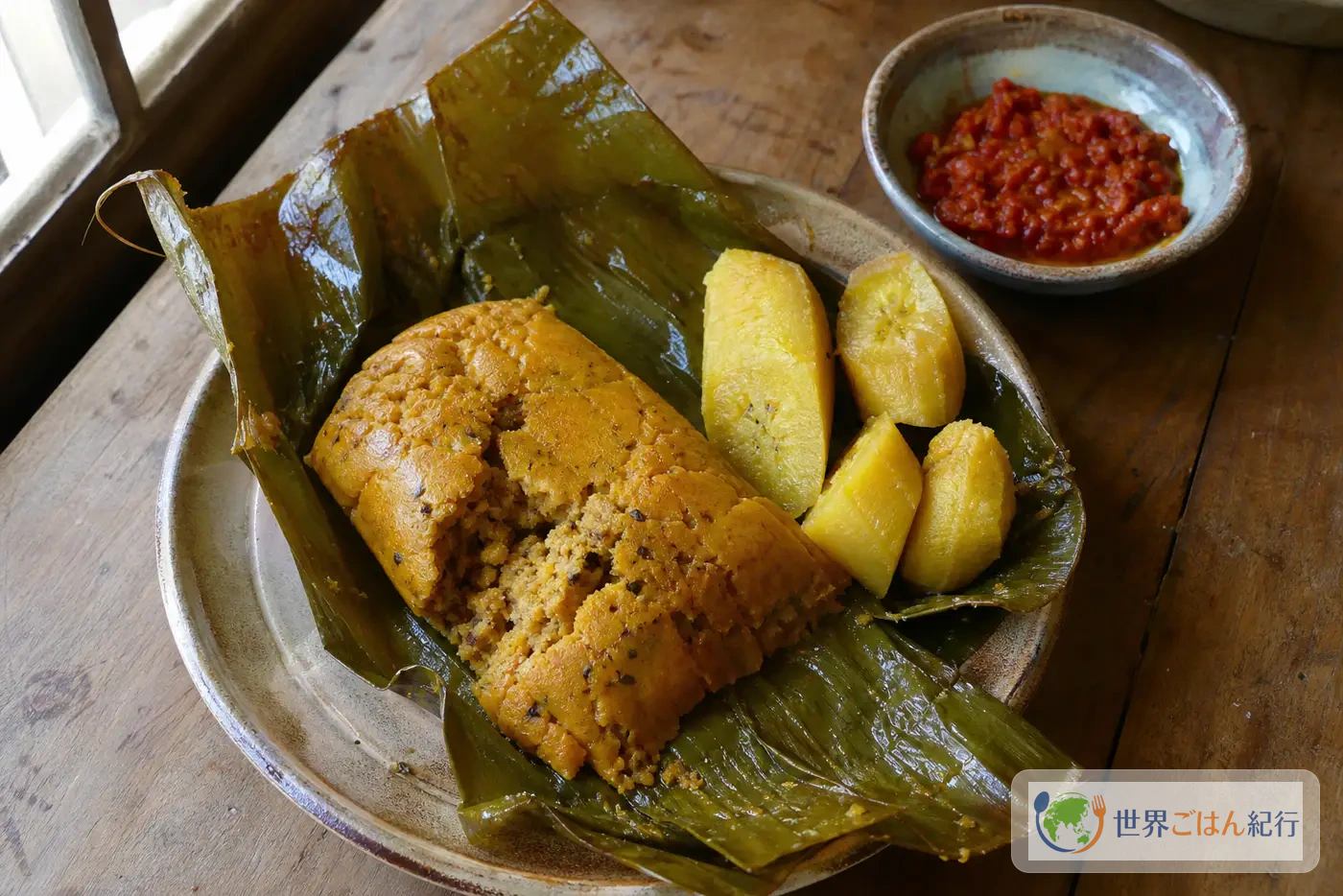
Open the leaf and the aroma of beans and red palm oil rises
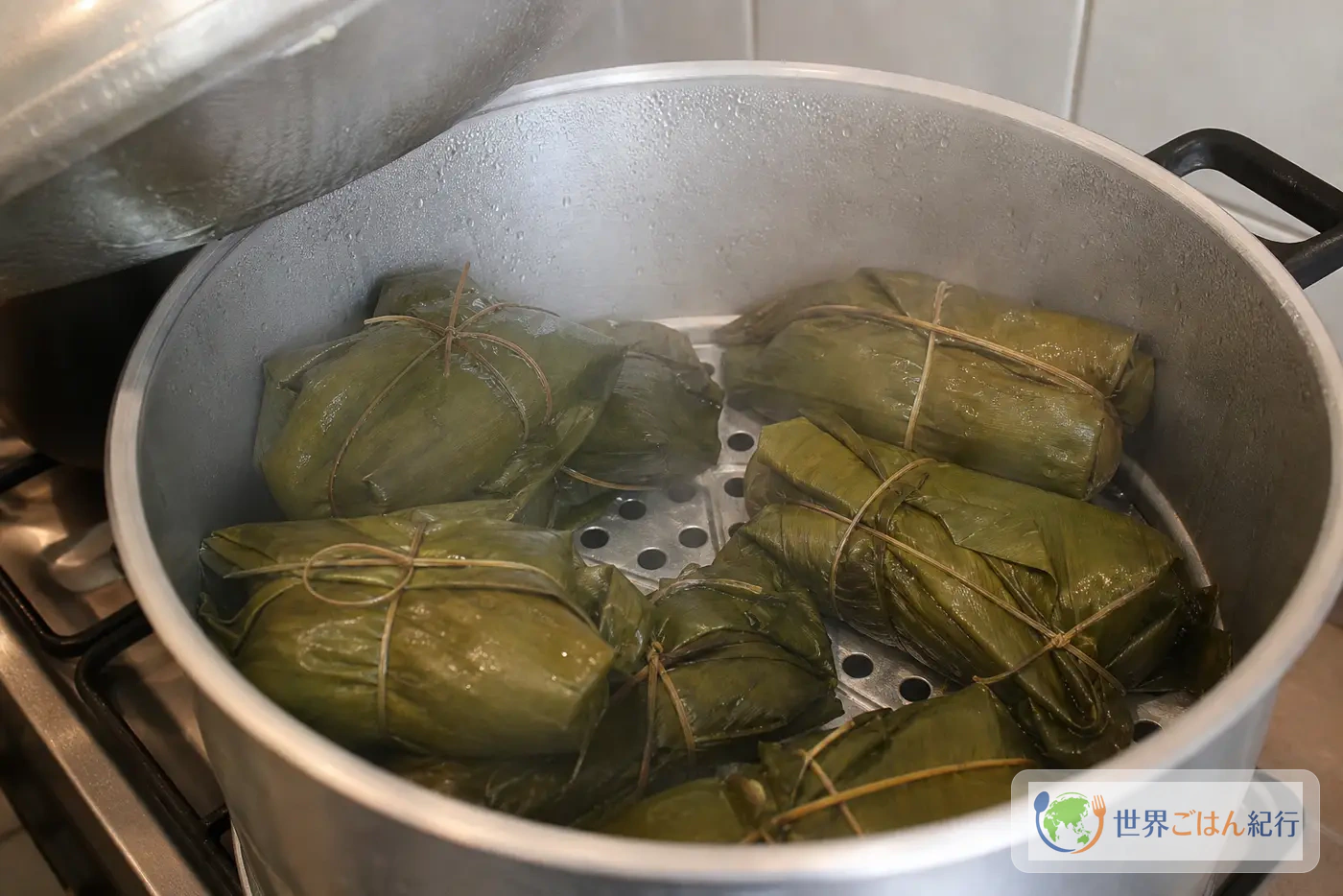
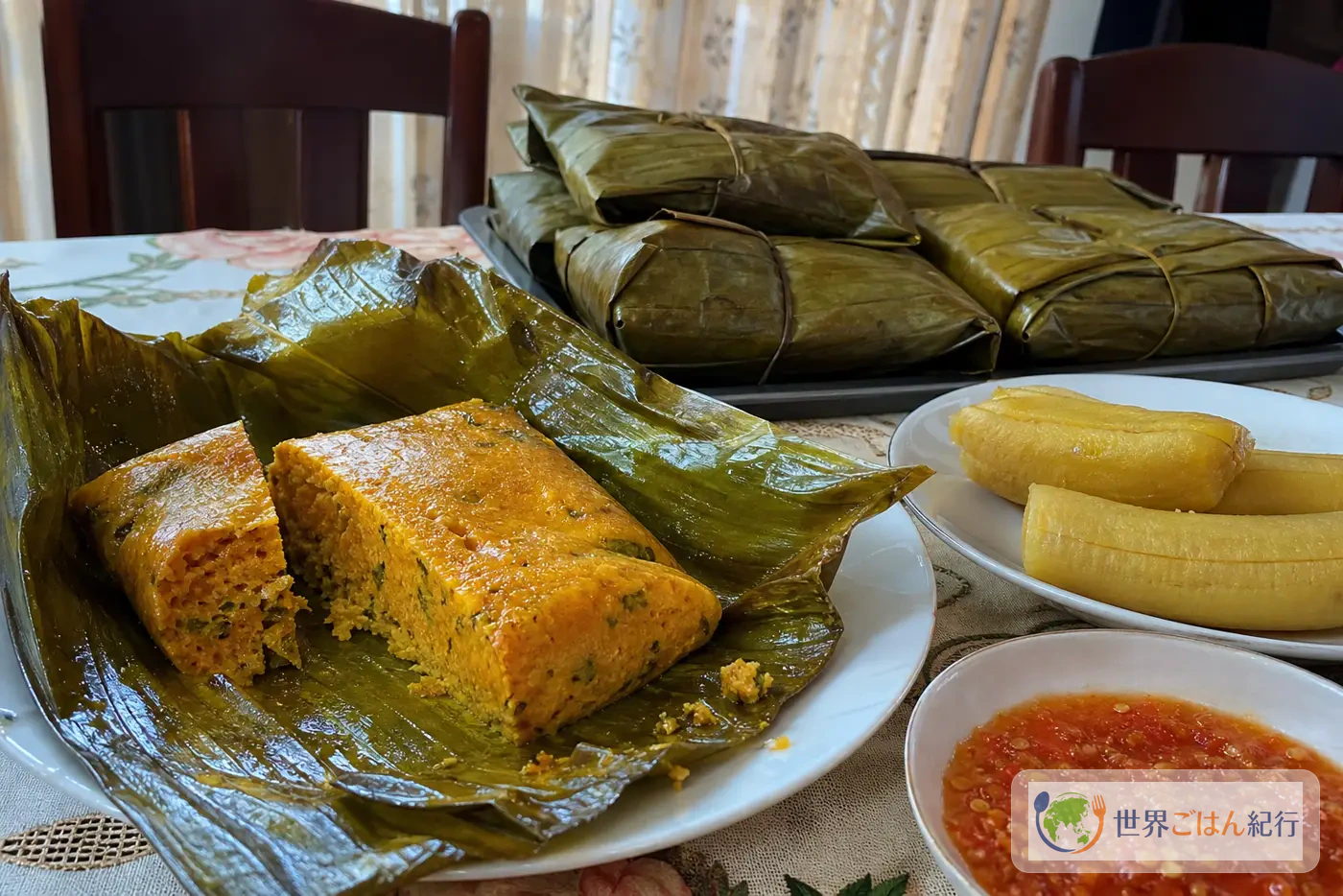
The moment you lift the steamer lid, the green smell of banana leaf and the earthy sweet aroma of red palm oil rise together. Unwrap the packet and inside is a bean batter set like a cake. But it is not a sweet pastry: it is Cameroon's koki (Koki / Ekoki), black-eyed peas coarsely ground and dyed a vivid orange with red palm oil.
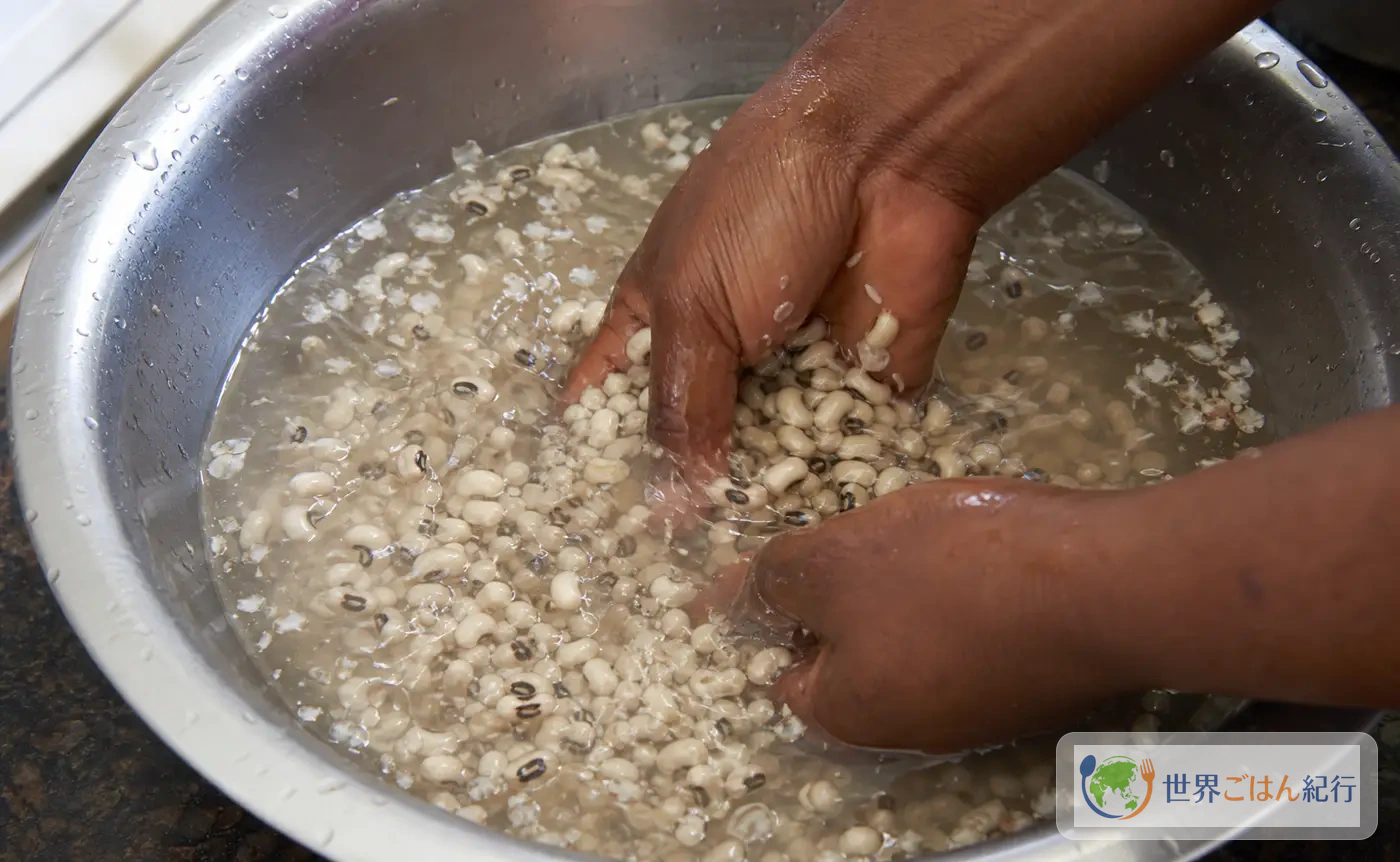
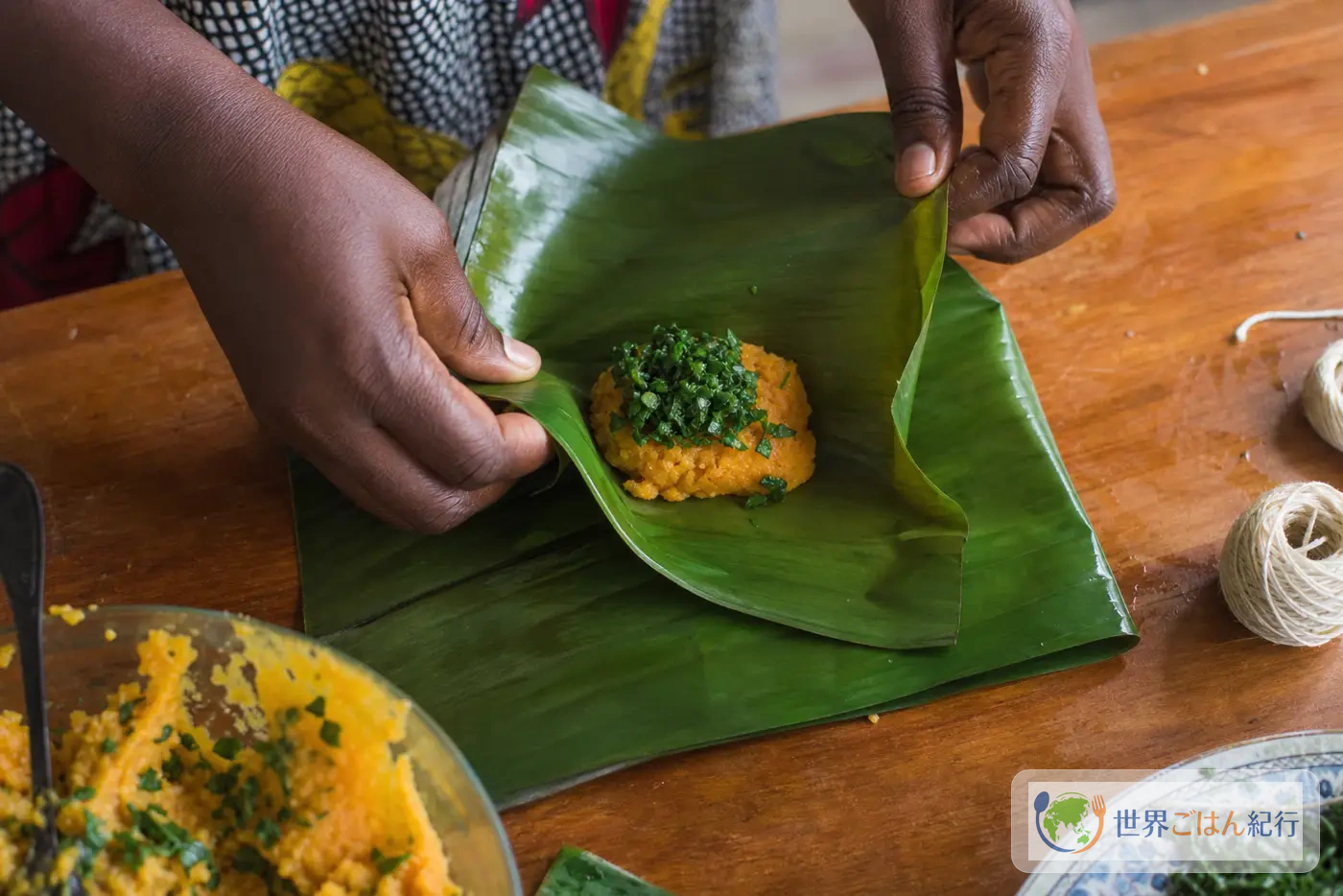
What gives you pause in a home kitchen is peeling the beans, how coarse the paste should be, the amount of red palm oil, and the leaf wrapping. From the recipe alone it looks like just "crush beans and steam," but too much water means it won't set, and making it too smooth turns it into a heavy bean jelly.
In this article the black-eyed peas are soaked overnight, made into a coarse paste, mixed with red palm oil and a little leafy green, and wrapped in banana leaf or parchment paper to steam. If the same country's sanga is a stew of leafy greens and corn, koki is a steamed dish with beans as the star. Set beside ndolé (in Japanese) and achu soup (in Japanese), you can see that Cameroonian cooking is not only "green stews."
In English it is often written Koki beans, and in WIPO's Cameroon food-culture project it is listed as Ekoki among the selected dishes. In French-speaking areas it is sometimes explained as a "bean cake," as in gâteau de haricots or haricots koki.
Koki: a Cameroonian dish of steamed, set black-eyed peas
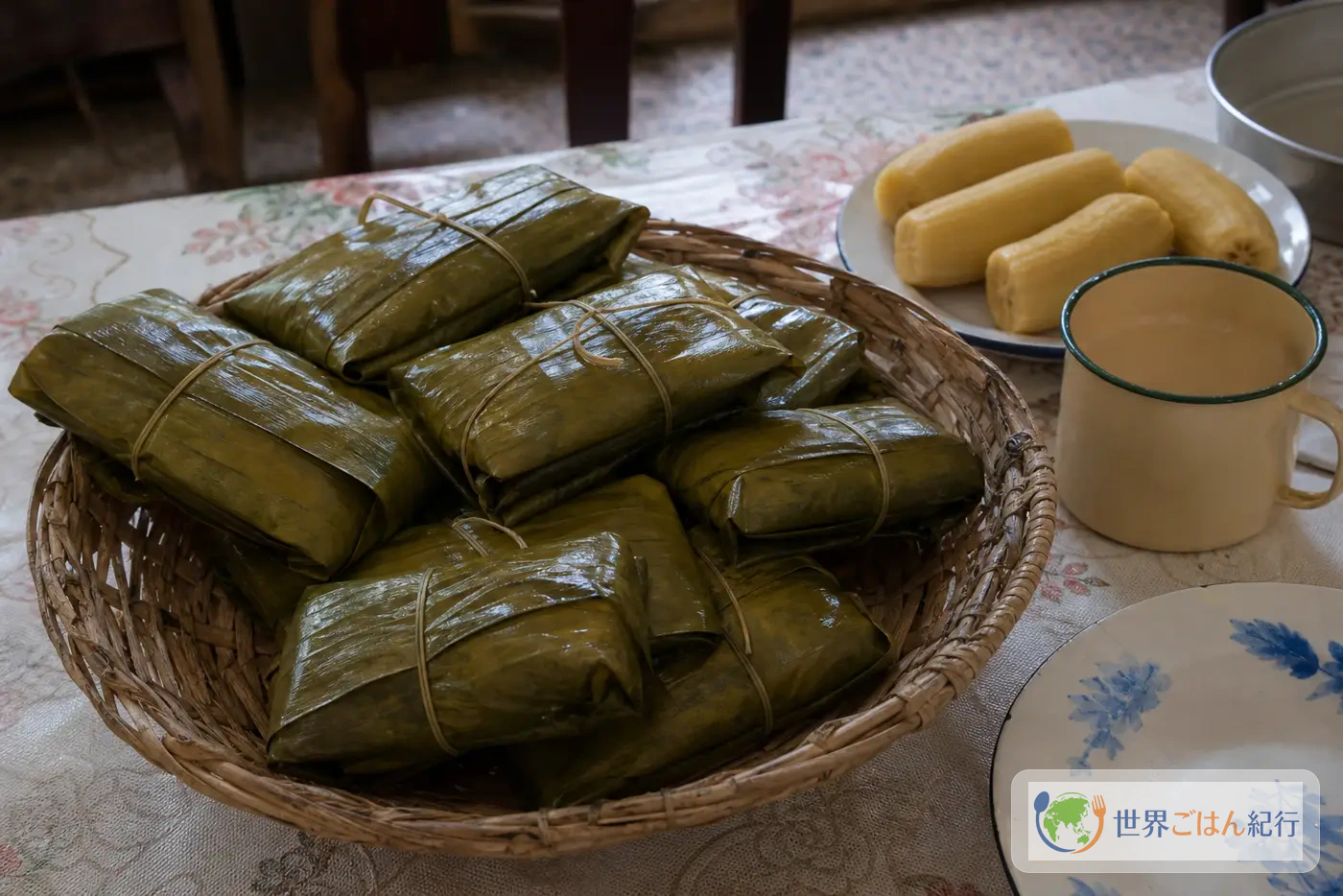
Koki is one of the bean dishes of Central and West Africa that use black-eyed peas or cowpeas. It uses ingredients close to Nigeria's ekuru (in Japanese) and to akara (in Japanese), in which beans are fried, but koki differs in that red palm oil is mixed in generously and it is wrapped in leaves or paper and steamed.
In WIPO's "IP and Gastronomic Tourism: Cameroon," Ekoki is included among the culinary traditions that could become tourism resources of Cameroon. In other words, though it is home cooking, it is treated as one of the representative dishes for conveying Cameroonian food culture to the outside.
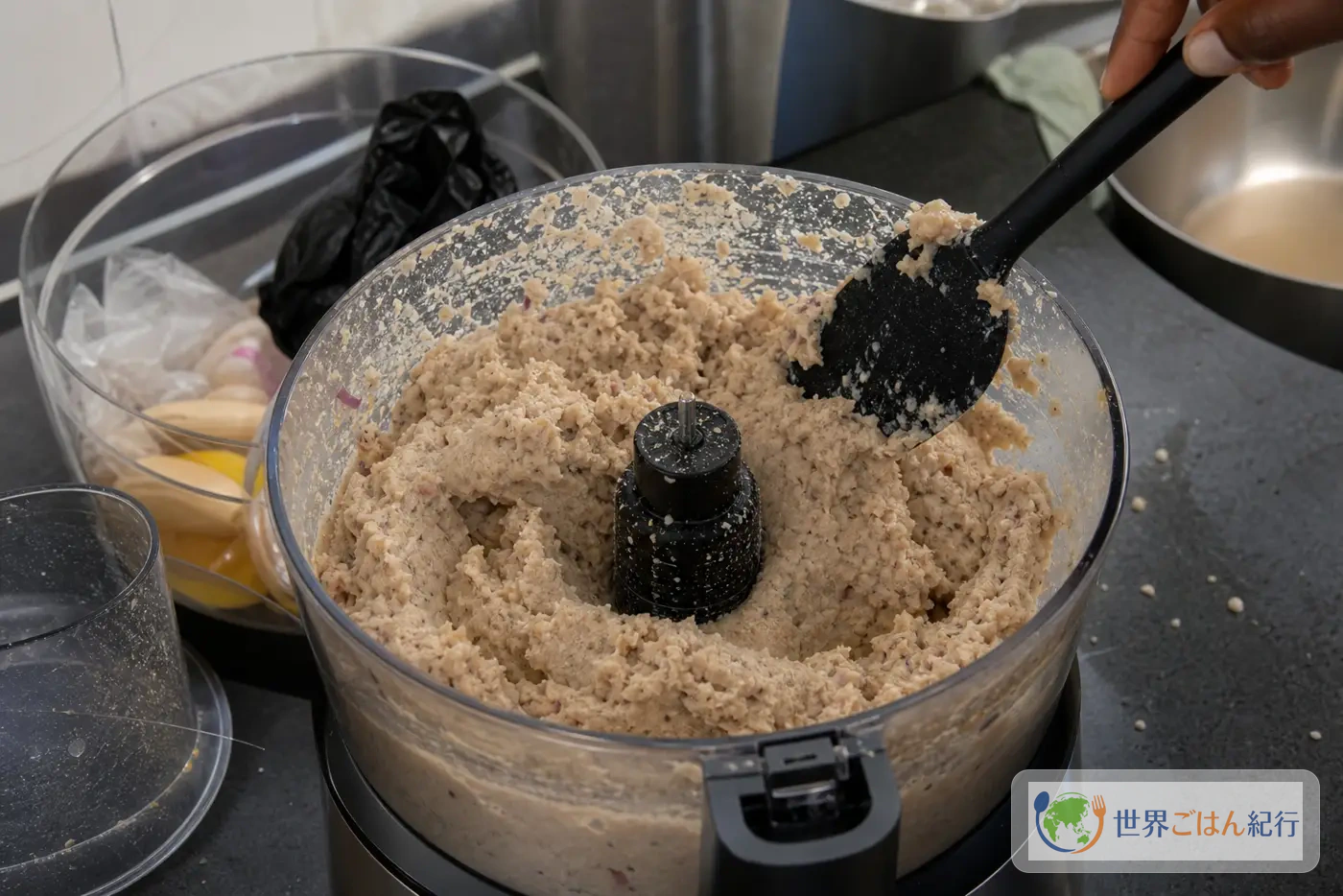
What recipes from abroad have in common is black-eyed peas, red palm oil and a wrap-and-steam step. The Vegan Society's recipe presents it as a "steamed pudding," and African Bites explains that it is important not to turn the beans into a perfectly smooth paste but to leave some grain. The thing that separates good results is whether you can make this "slightly gritty bean batter."
| Pillar of koki | The form often seen locally | What to keep elsewhere |
|---|---|---|
| Beans | Black-eyed peas, cowpeas | Soak dried black-eyed peas and remove at least 80% of the skins |
| Oil | Red palm oil | Use a small amount for color and aroma, not for health reasons |
| Wrapping | Banana leaf, aluminum foil, leaf wrapping | The aroma comes from the leaf; parchment can make up the shape |
| Way of eating | Plantain, cassava, yam, potato | Elsewhere, take it with steamed plantain, grilled bananas or rice |
Ingredients (serves 4, 6 packets)
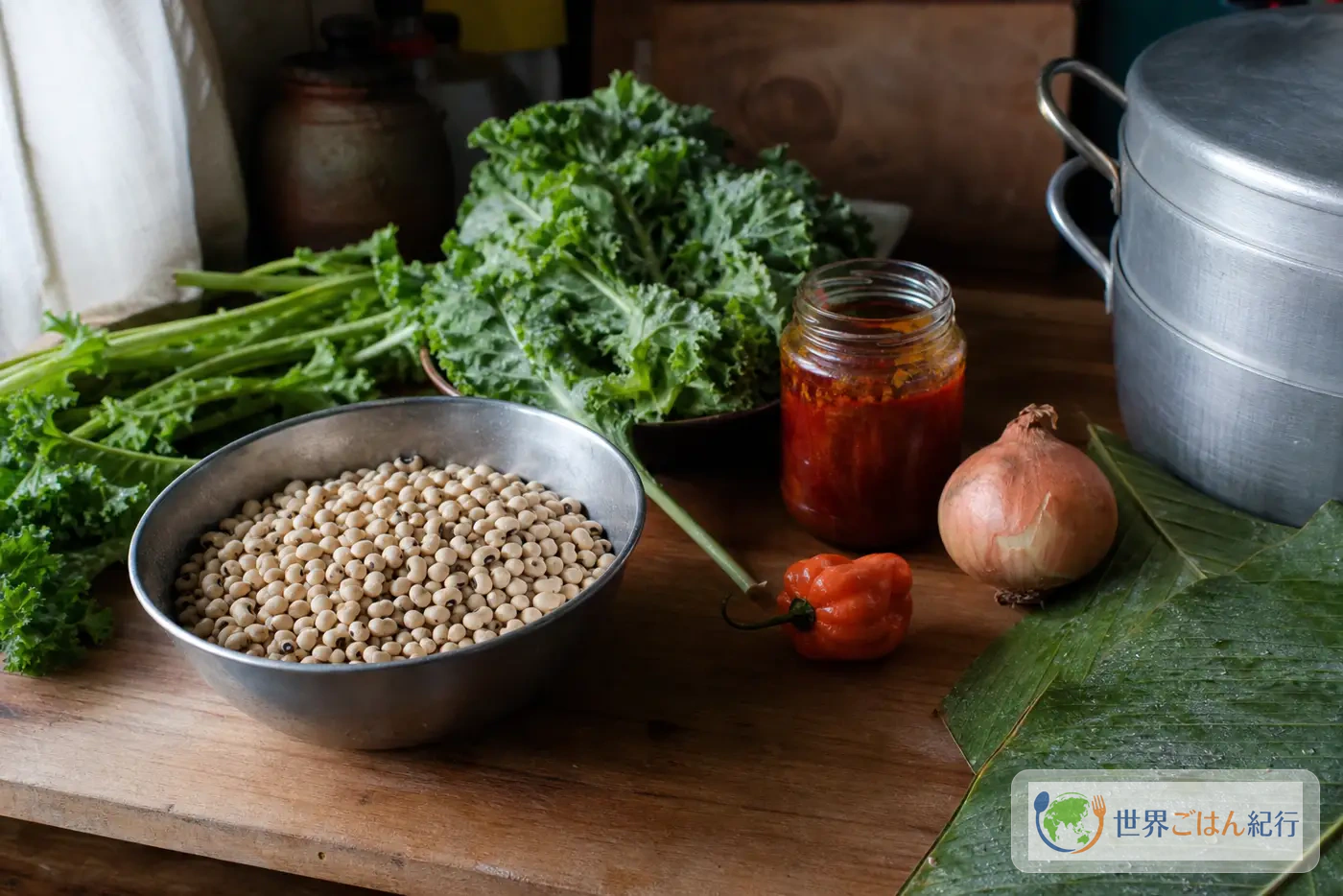
This amount is a guide for making 6 packets about 10 cm (4 in) across. At one packet per person, there is a little left over for four. They can be refrigerated and reheated the next day, so even for a first try, making 6 packets uses the steamer more efficiently.
The basic version is a dish of beans, oil and vegetables, but commercial bouillon can contain wheat, soy, dairy or chicken extract. If you want it fully plant-based, use a vegetable bouillon whose ingredient label you have checked, or make it with just salt and white pepper. Red palm oil is an oil for color and aroma, not something to use in large amounts for expected health benefits.
Ingredients and tools that give you pause when shopping
Shopping for koki is easier if you separate what you can buy nearby from what is worth seeking at a specialty grocer or online. Onion, greens, chili, and bananas or potato as a plantain substitute are fine from an ordinary supermarket. What is worth seeking is black-eyed peas, red palm oil and a steamer.
| Priority | What to buy | Why | What you can get nearby |
|---|---|---|---|
| Top | Black-eyed peas | With soybeans or white beans the aroma and lightness change | Onion, greens, chili |
| High | Red palm oil | Decides koki's color and aroma | Substituting entirely with neutral oil moves it toward a different dish |
| High | A steamer | The packets stay out of the water and set evenly | A deep pot with a steaming rack also works |
| Medium | Banana leaf | Gives aroma, but parchment can make the shape | For a first try, paper wrapping is fine |
Black-eyed peas can also go into red red, waakye (in Japanese) and akara (in Japanese). They are a dried ingredient you can easily use up even from a 1 kg bag.
Red palm oil is the ingredient that turns koki orange in one stroke. Made with ordinary oil alone, it is edible as a steamed bean dumpling but the koki-like aroma is much weaker. A small bottle is enough at first.
A steamer is a tool for cooking the packets without soaking them in water. You can make it with a steaming rack in a deep pot too, but if a packet touches the water only the bottom turns watery, so make sure the steam has a path.
How to read the nutrition information
The nutrition values in the frontmatter are an estimate for dividing 6 packets among 4 people, excluding plantain. One serving is about 430 kcal, about 16 g protein and about 21 g fat. Reducing red palm oil to 90 ml lowers the fat but also weakens the koki aroma.
How to make it: wrap a coarse bean batter and steam
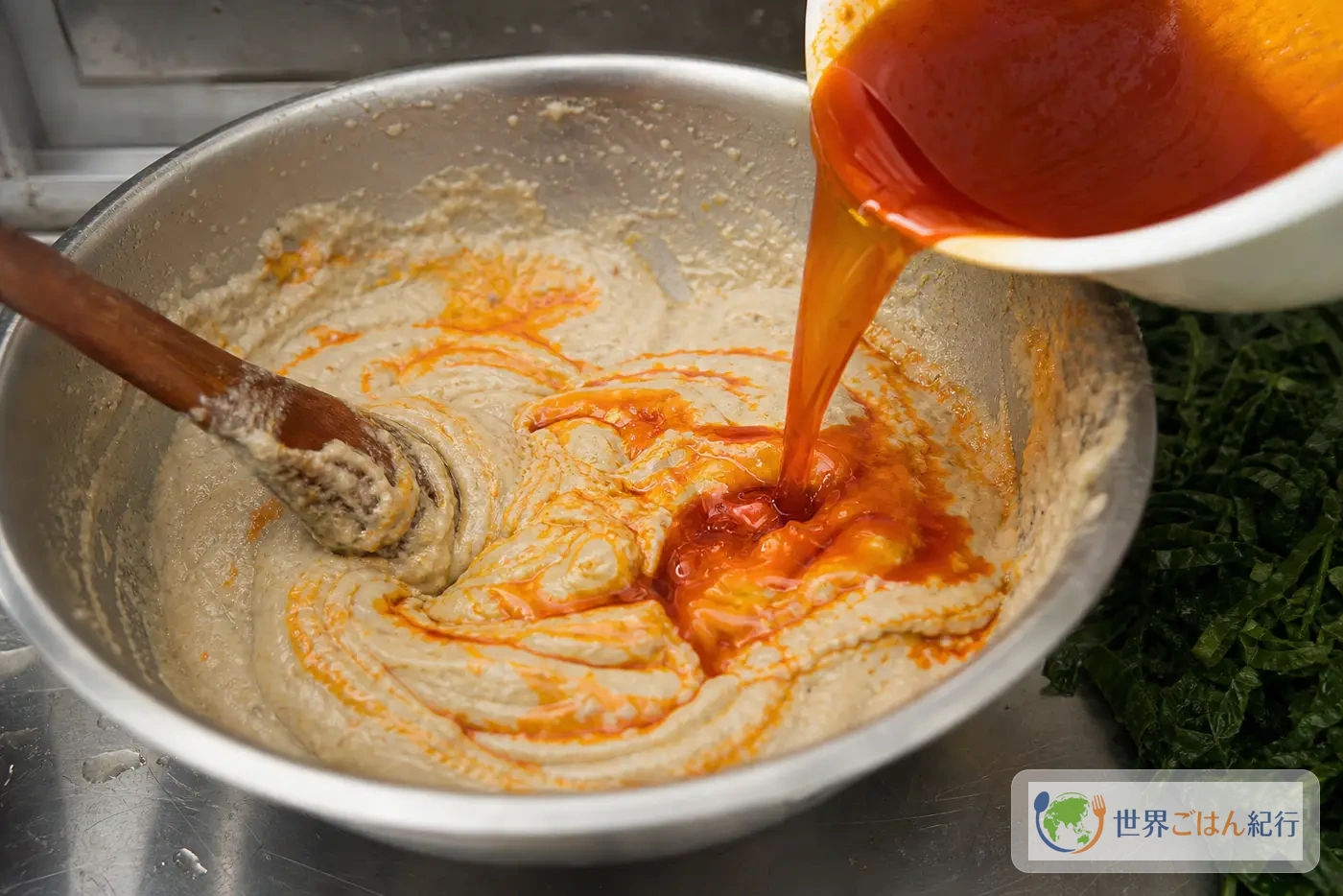
Koki is made in this order: soak the beans, remove the skins, blend coarsely, mix in red palm oil, wrap, steam, rest. The most important thing along the way is not to add too much water. If you keep adding water because the blender won't turn, the cross-section won't cut cleanly even after steaming.
A branching table for adapting it in a home kitchen
Because koki has few ingredients, substitutions have a big effect. Rather than moving everything toward local ingredients, separating what to keep from what you can relax makes it easier to succeed.
| Uncertainty | What to keep | A realistic answer elsewhere |
|---|---|---|
| No black-eyed peas | The light bean aroma of cowpea types | Not soybeans or chickpeas; look for black-eyed peas at a grocer or online |
| No banana leaf | The wrapped-steam shape and aroma | Wrap the inside with parchment and support with aluminum foil |
| Red palm oil is too strong | Color and earthy aroma | Reduce from 120 ml to 90 ml. At zero it becomes a different dish |
| Whether to add greens | Green flecks and lightness in the batter | Kale, spinach or komatsuna up to 80 g |
| No plantain | Receiving it with a starch | Grill firm bananas, steam potato, or put it over white rice |
Even with the same black-eyed peas, akara (in Japanese) is aerated and fried, and ekuru (in Japanese) is steamed white and eaten with sauce. Koki holds the red palm oil in the batter before steaming, so it has both the lightness of beans and the aroma of the oil.
Where it tends to go wrong
Koki failures cluster in the water in the bean batter, leftover skins and too little steam. They are hard to fix after steaming, so check the thickness at the mixing stage.
| Problem | Cause | Fix |
|---|---|---|
| Doesn't set and crumbles | Too much water, beans too fine | Next time reduce the water by 2 tbsp. This time, put it in a dish and steam 20 more minutes |
| Strongly gritty | Many skins left | Remove at least 80% of the skins. Accept the rest as texture |
| Heavy and dense | Made a completely smooth paste | Blend coarsely and mix 5 minutes with a wooden spoon to include a little air |
| Oil separates | Red palm oil too hot, not mixed enough | Only warm it over low heat and pour in a little at a time |
| Watery at the bottom | The packet touched the water | Raise the steaming rack and keep the packets off the water |
| Leaf tears | Folded while stiff | Soften with steam or boiling water and reinforce the inside with paper |
Recipes from abroad such as African Bites explain that leaving the beans a little gritty is the key to the result. Because blenders are strong, not running it too long makes it more koki-like. Conversely, if an old food processor leaves the grains too big, do the batter in two batches and run it in short bursts, scraping down the sides.
How to eat it, menus and storage
Koki is fun served in its wrapping and opened at the table. The aroma when you open a hot packet is the treat, so opening one packet at a time gives better atmosphere than cutting everything first and arranging it on plates.
| Menu | Suited to | How to combine |
|---|---|---|
| Koki, steamed plantain, chili sauce | Weekend lunch | The sweet staple and the red palm oil aroma go well together |
| Koki, white rice, cucumber salad | Weeknight dinner | Cut the heaviness of the oil with the salad |
| Koki, sanga, fufu | A Cameroonian menu | Put a steamed bean dish beside a leafy-green stew |
| Koki, ndolé, grilled fish | When you have guests | Rich dishes pile up, so cut the koki smaller |
To store, let the packets cool in their wrapping for about 20 minutes and eat within 2 days in the refrigerator. To reheat, steam the packet as is for 10 minutes. In a microwave, take it out of the wrapping, set it on a heatproof plate, sprinkle with 2 tsp water, cover loosely with plastic wrap and heat at 600 W for 1 minute 30 seconds. It can be frozen, but after thawing it is a little crumbly, so aim to eat within 2 weeks.
Frequently asked questions
Do I need to remove all the black-eyed pea skins?
Not all. If about 80% come off, the grittiness after steaming is much reduced. If many skins remain, black flecks increase in appearance and the mouthfeel gets heavier.
Can I make it without banana leaf?
Yes. Wrapping the inside with parchment and supporting the outside with aluminum foil keeps the shape steady. You won't get the leaf's aroma, but you can make the shape of a steamed dish well enough. If you find frozen banana leaf at an Asian grocery, using it next time will change the aroma.
Can I replace red palm oil with neutral oil?
It will not be exactly the same dish. Red palm oil makes the color, aroma and weight of the oil. If you really dislike it, reduce to 60 ml red palm oil and 40 ml neutral oil and add 1/2 tsp paprika to make up the color alone.
Are the greens necessary?
They are not. Koki can be made without greens. In this article 80 g kale or spinach is added to make it easier to eat and to give lightness to the cross-section. Too much loosens the bean batter, so keep it to no more than 100 g.
I don't have time to soak the beans overnight
A shortcut of soaking 3 hours in lukewarm water is possible, but peeling becomes a little harder. Rushing with boiling water softens only the surface of the beans and may leave the center hard. For a first try, soaking in water the night before is safer.
Sources
- WIPO, IP and Gastronomic Tourism: Cameroon, https://www.wipo.int/ip-development/en/agenda/projects/ip-and-gastronomic-tourism.html
- WIPO, Scoping study Cameroon, https://www.wipo.int/export/sites/www/ip-development/en/docs/scoping-study-cameroon.pdf
- The Vegan Society, Koki beans, https://www.vegansociety.com/lifestyle/recipes/koki-beans
- African Bites, Koki Beans, https://www.africanbites.com/koki-beans/
- FAO, Cowpea Post-harvest Operations, https://www.fao.org/fileadmin/user_upload/inpho/docs/Post_Harvest_Compendium_-_Cowpeas.pdf



