A Red Aroma Rising from the Bottom of the Pot
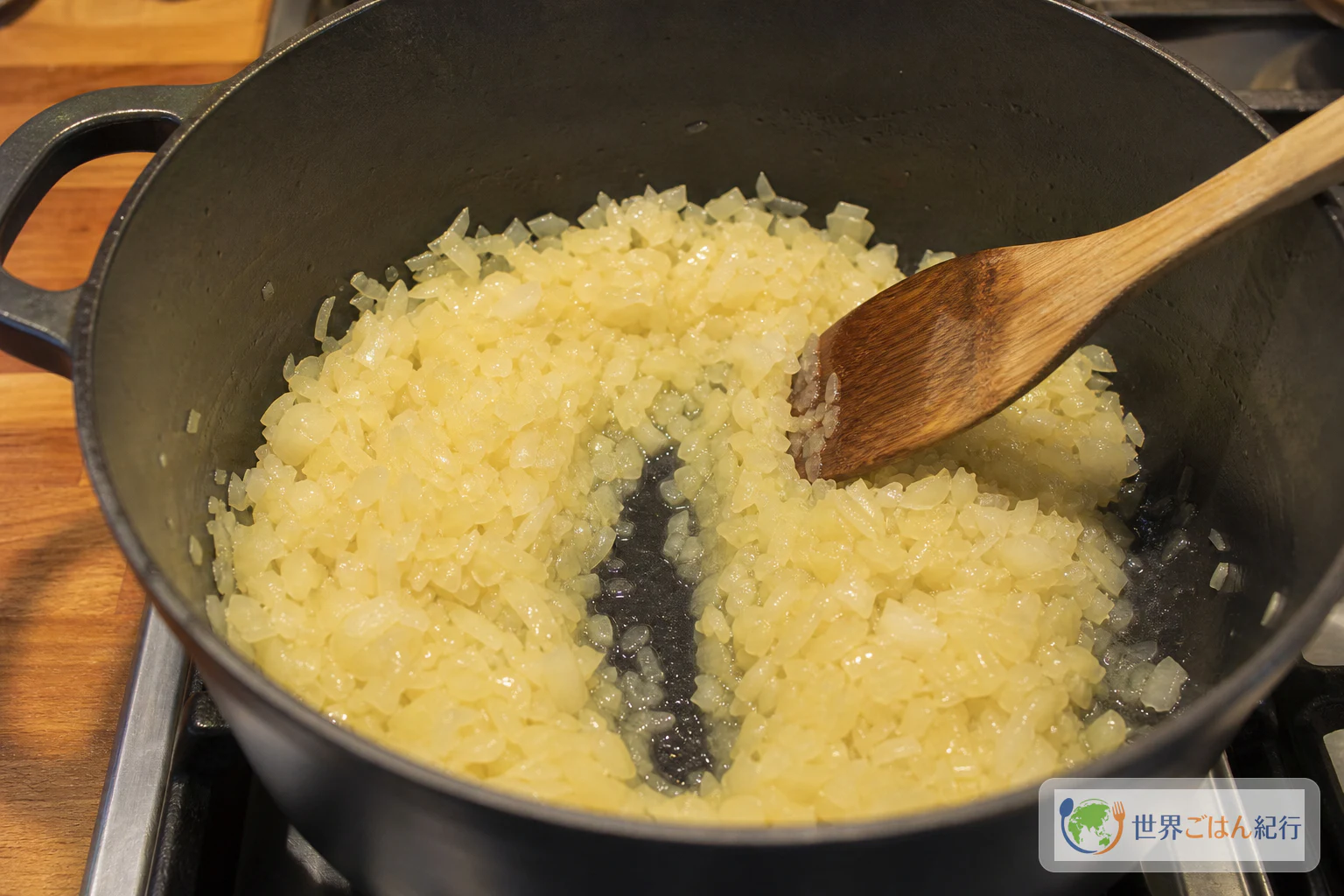
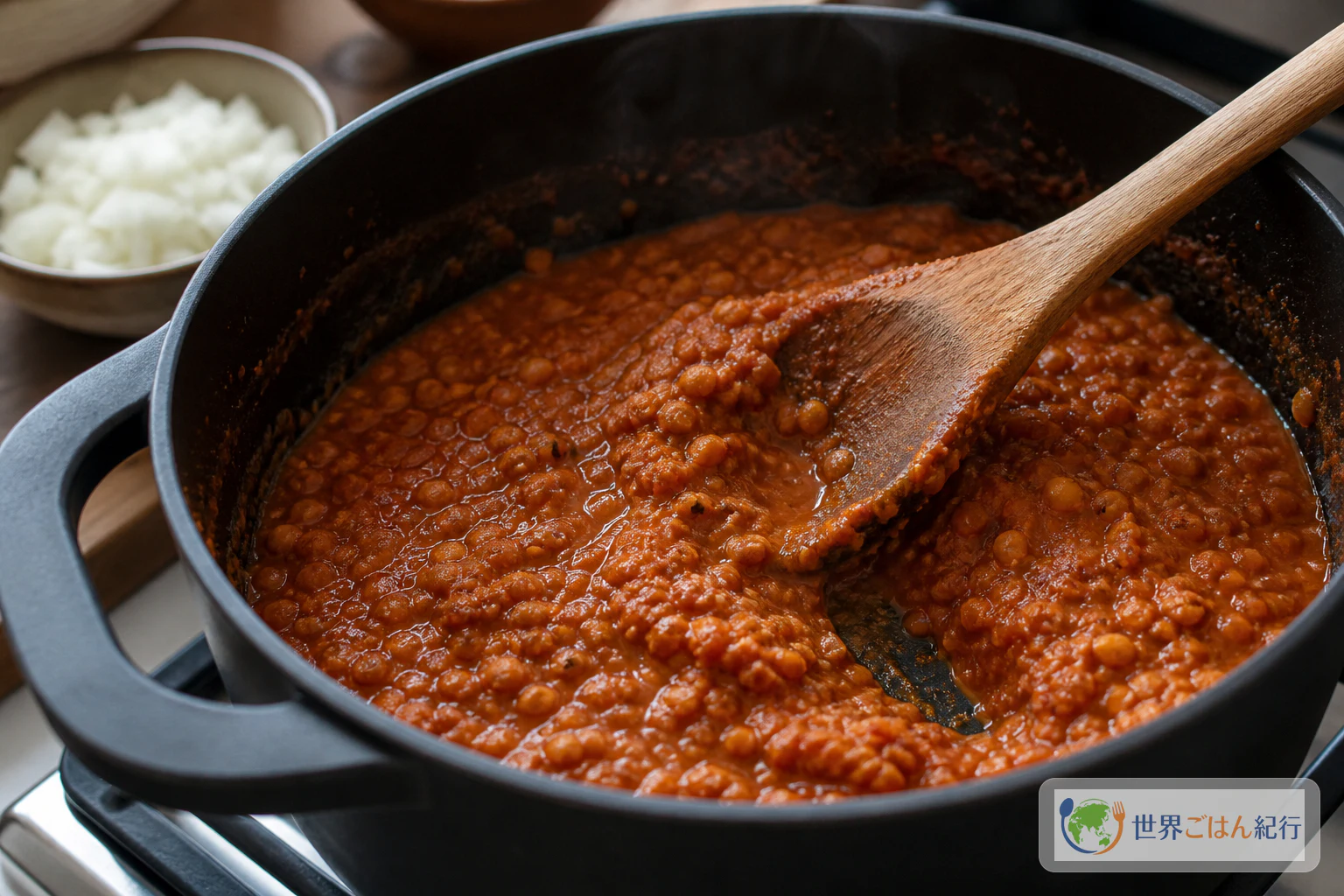
The onion absorbs its moisture and the sound at the bottom of the pot turns fine.
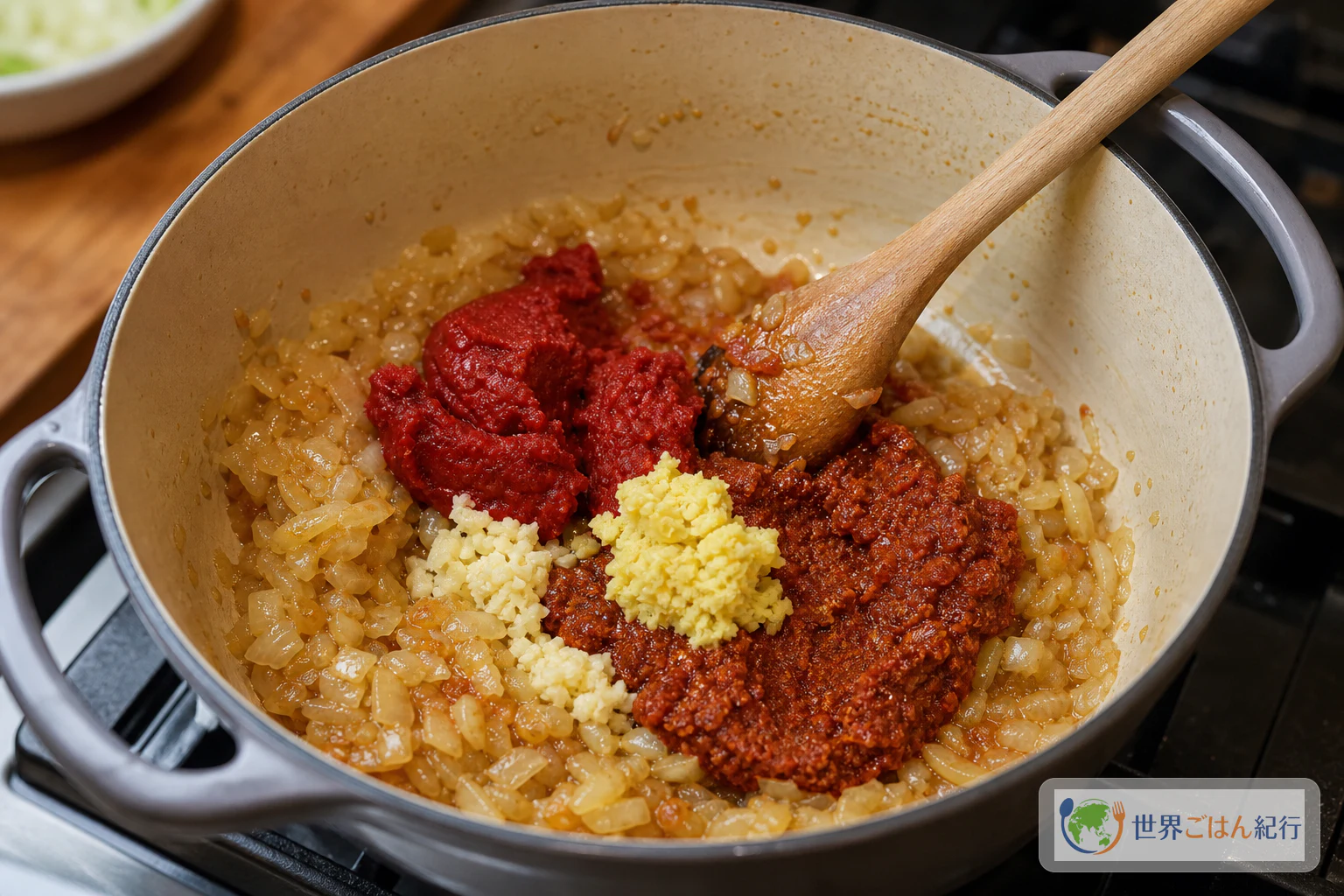
Add the berbere and not only the red of the chile but the dry sweetness and faint bitterness of the spices rise up.
Red lentils, still hard, lose their shape in the pot little by little.
You make misir wat by waiting for this change.
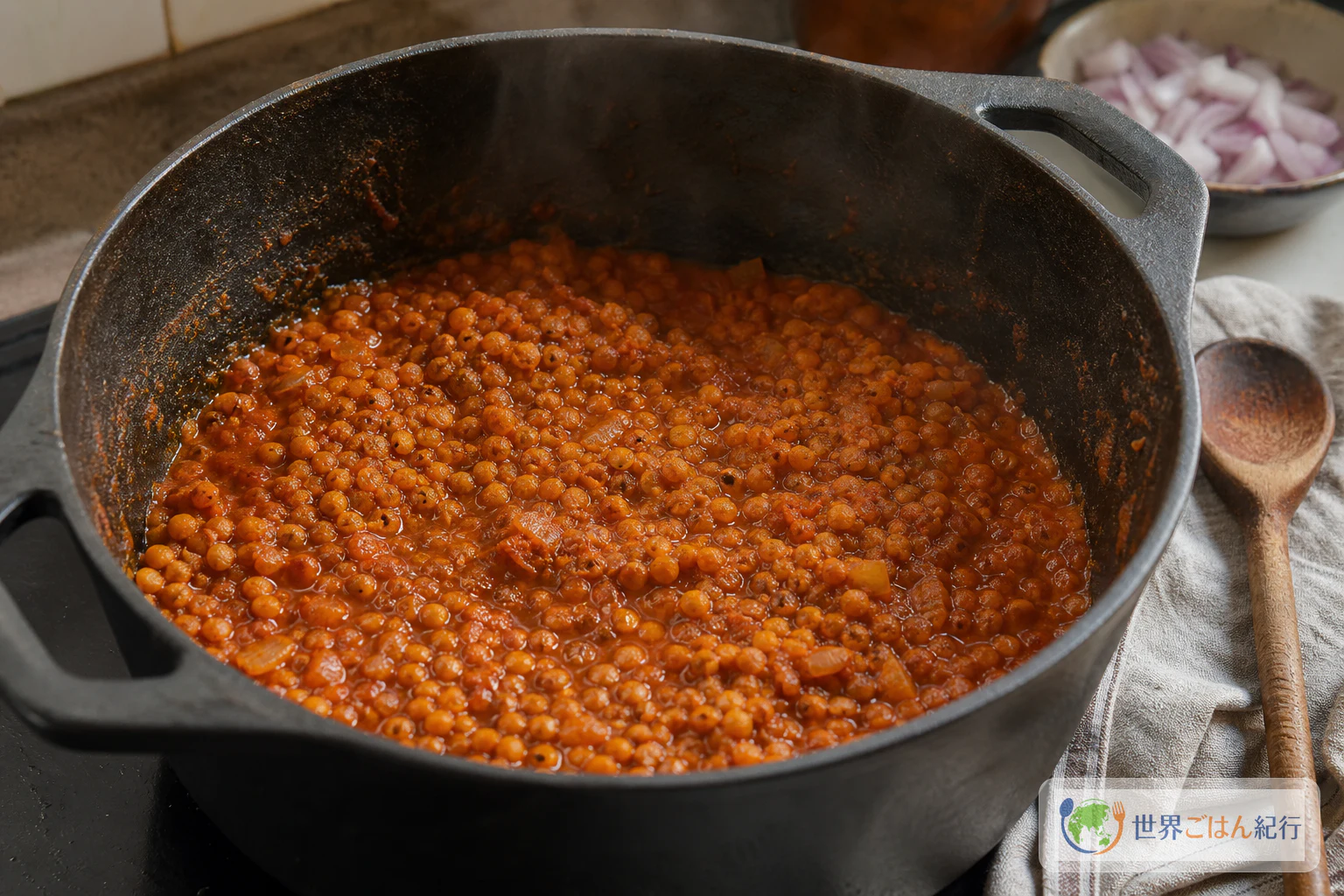
In English, misir wat is presented under several spellings, including Misir Wot, Misir Wat, and Misr Wot.
The name varies, but the outline stays the same: an Ethiopian lentil stew in which red lentils are simmered with berbere and aromatics.
The first stumbling block in a home kitchen is not the heat but the moisture.
Too much water makes a lentil soup, and too little scorches the spices on the bottom of the pot.
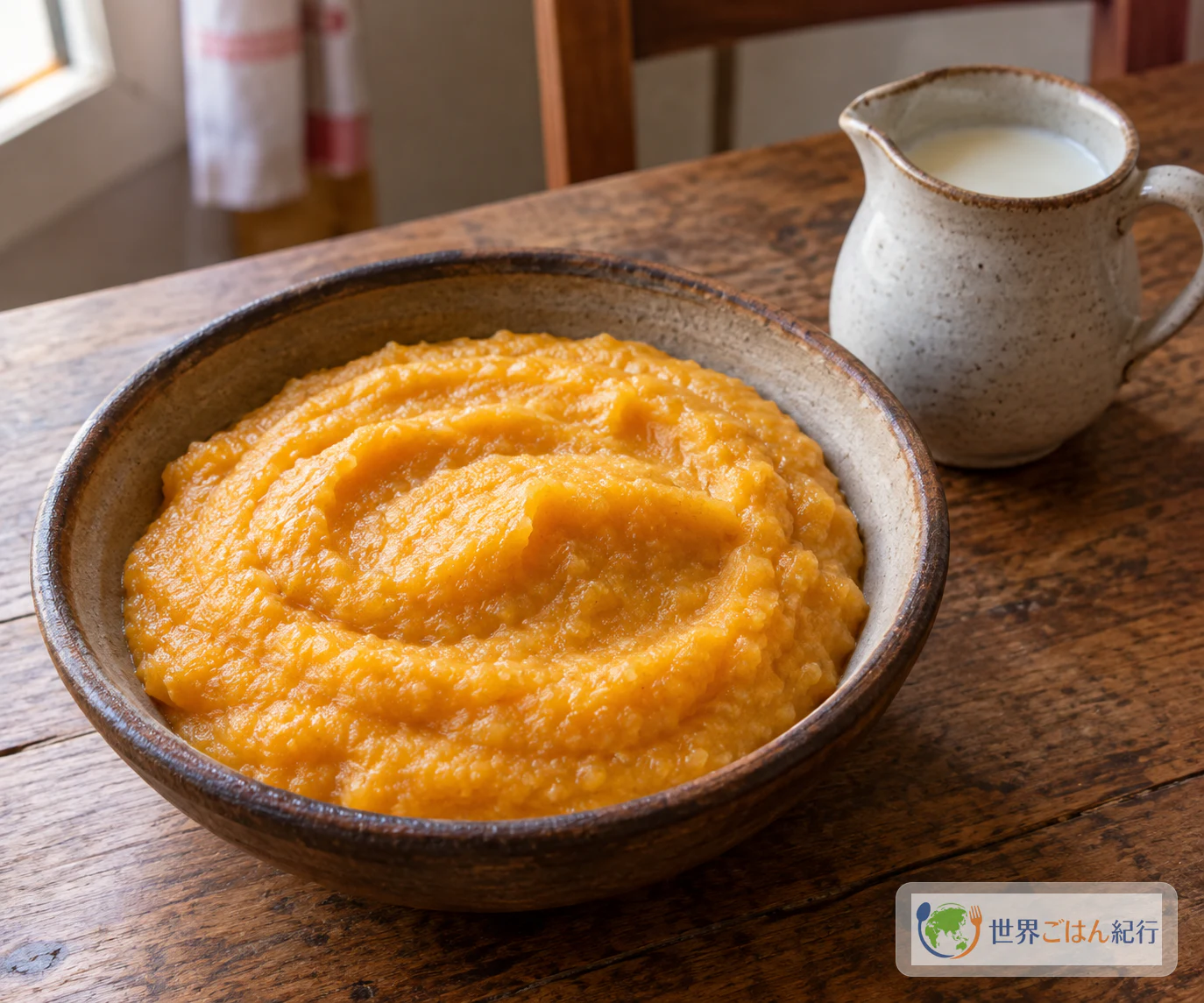
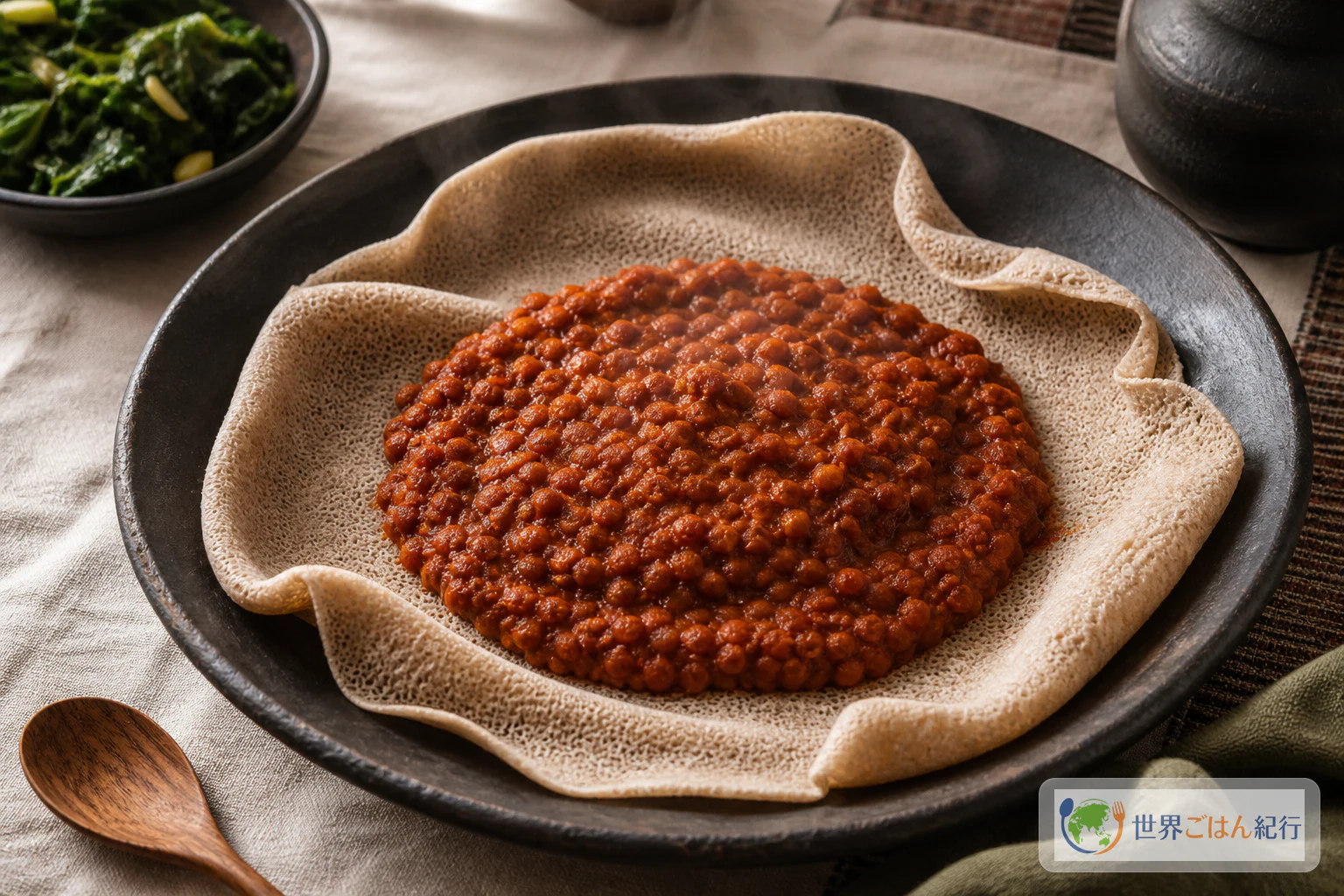
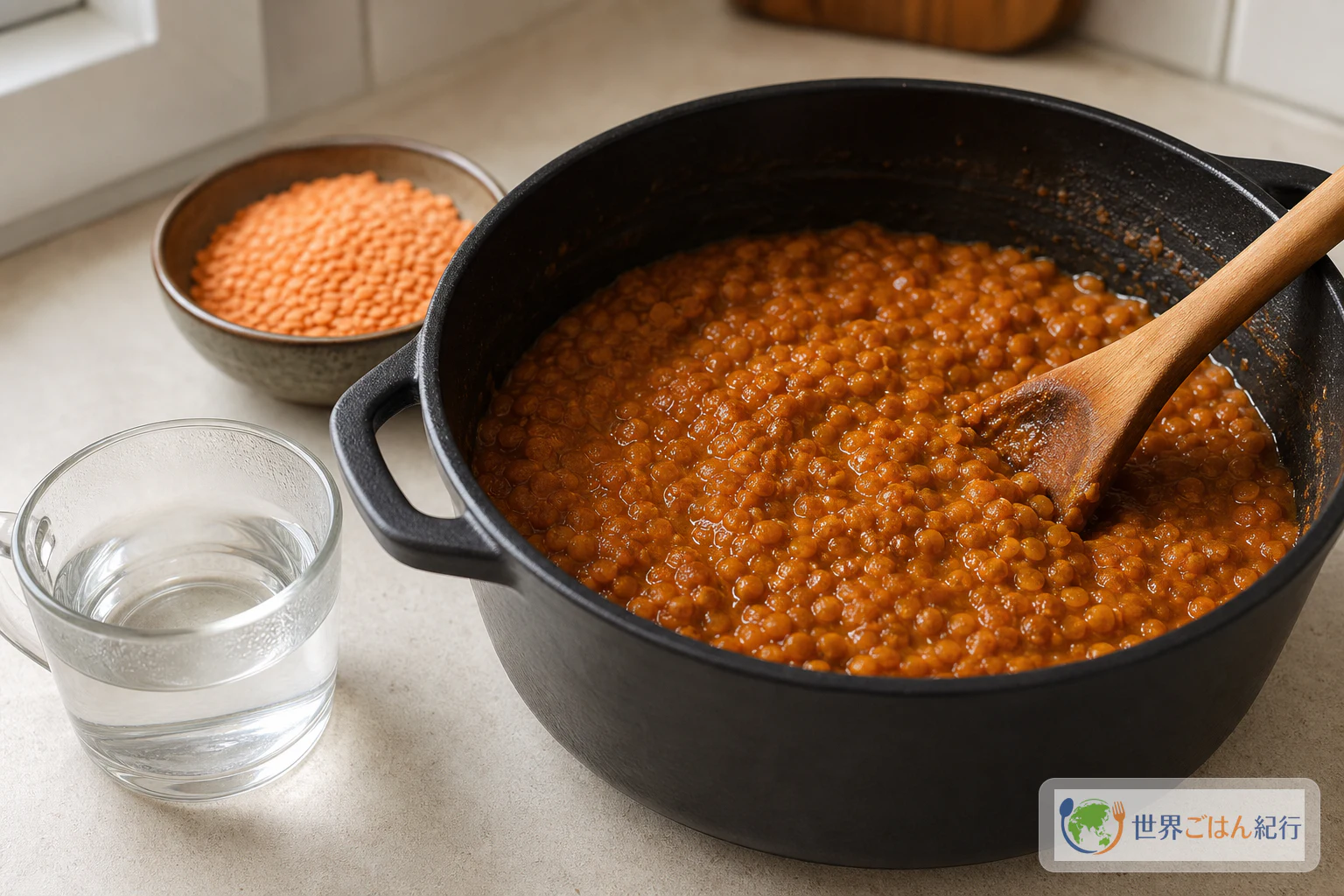
Here the target is a consistency where, when you move the wooden spoon, the bottom of the pot shows for a moment and you can scoop the stew onto injera.
The ingredients for an Ethiopian home dish are not always on hand elsewhere.
So I have separated what you can change from what to keep.
You can adjust the type of red lentil to what you can find, but keep two things: don't rush the onion into scorching, and don't fry the berbere too long in the oil.
What This Article Settles
This is a 4-serving misir wat with a vegetable-oil formula in the style of a fasting day.
You can check how simmering time differs by type of red lentil, how to add berbere while watching the heat, what to serve in place of injera, and how to reheat the next day.
If you already have berbere, you can start without buying anything more.
Only if you want to build the aroma yourself should you consider fenugreek and a mortar.
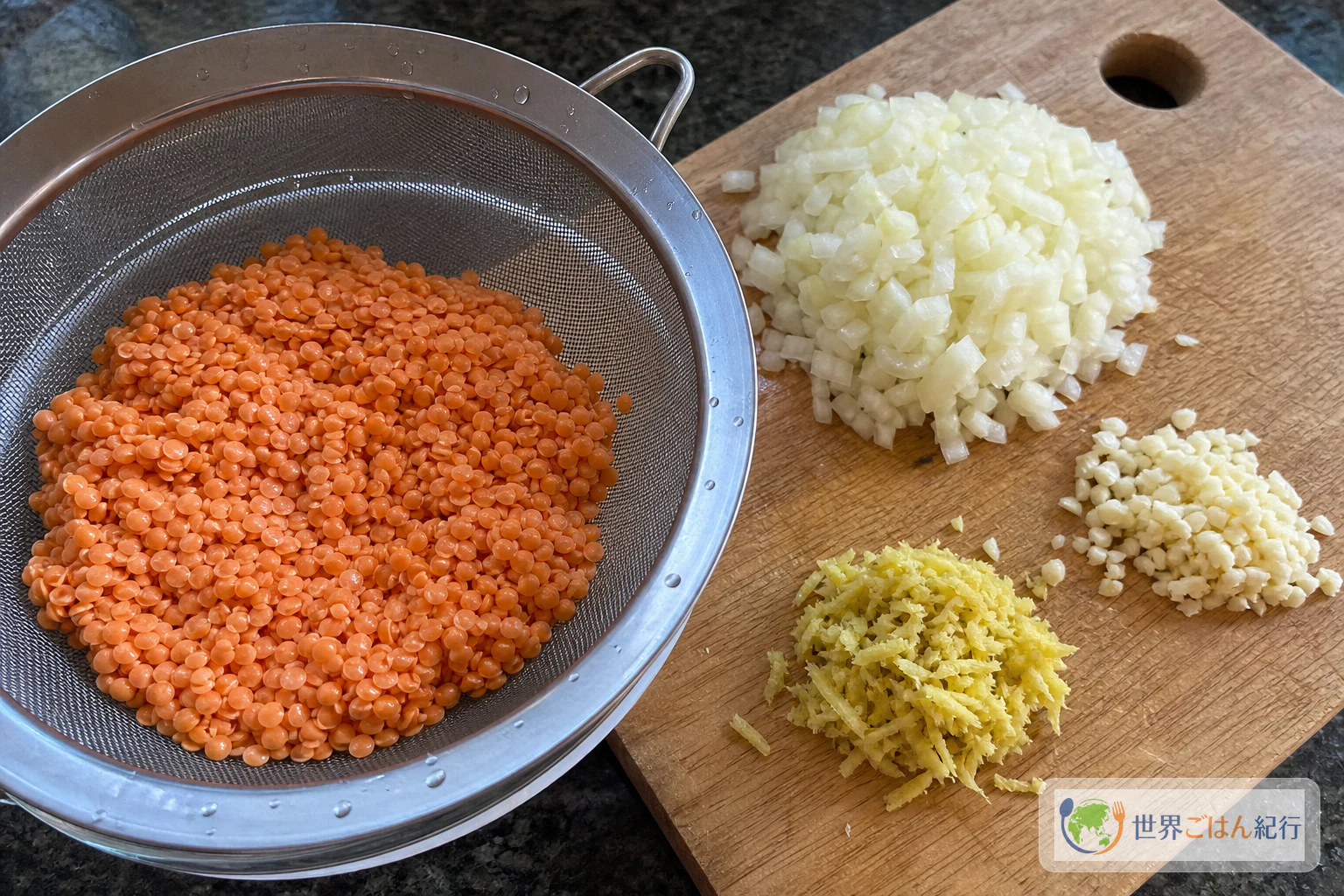
Use 250 g red lentils, 300 g onion, and 25–30 g berbere, and simmer over medium-low heat for about 45 minutes. When finished it is not a soup but a consistency where the track of the wooden spoon stays visible for 2 to 3 seconds. Serve with 4 to 6 pieces of injera, or white rice, for 4 people.
The nutrition values are approximate figures for the misir wat itself, the vegetable-oil version divided into 4, and do not include injera or rice.
Catching the Lentil Stew at the Local Table
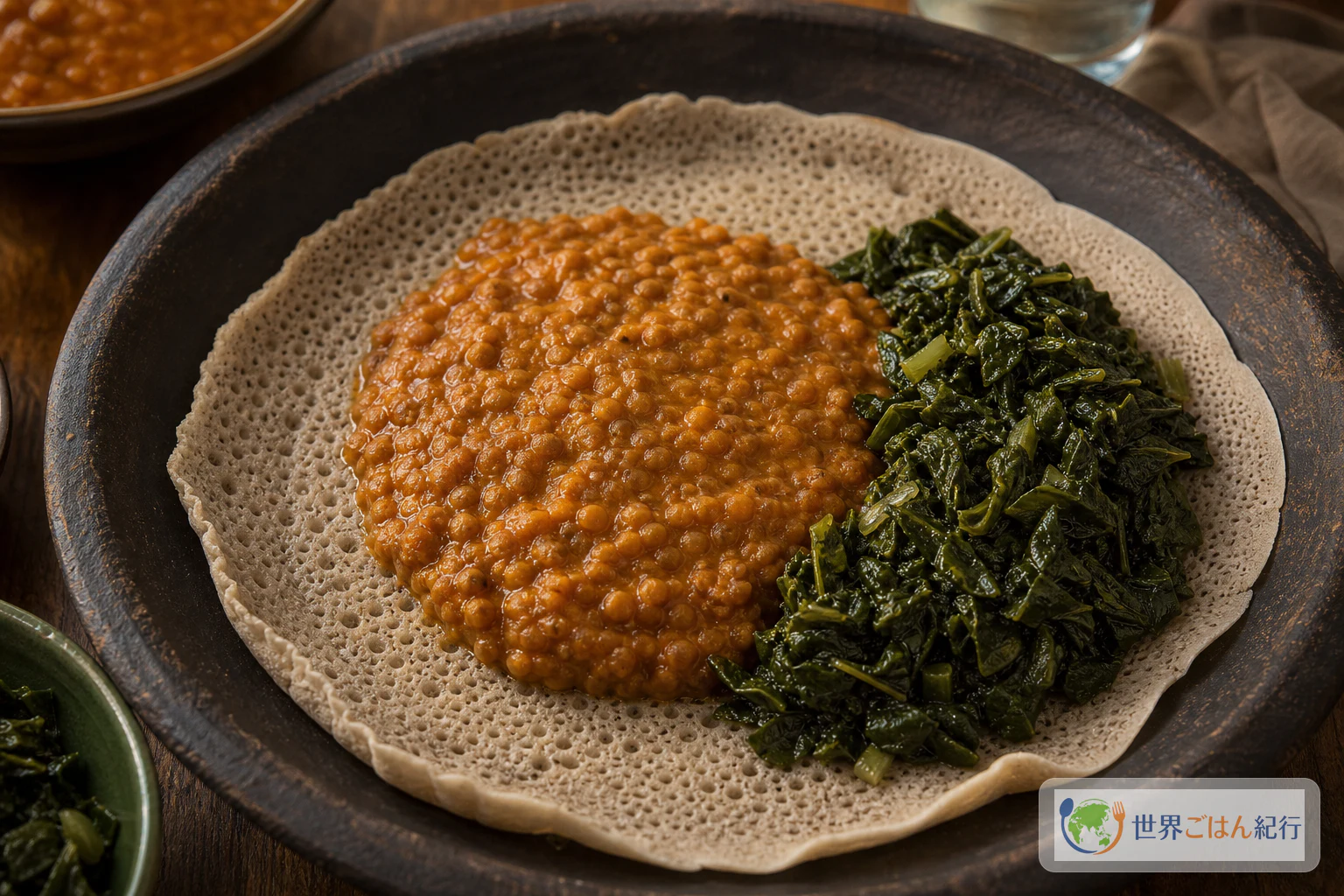
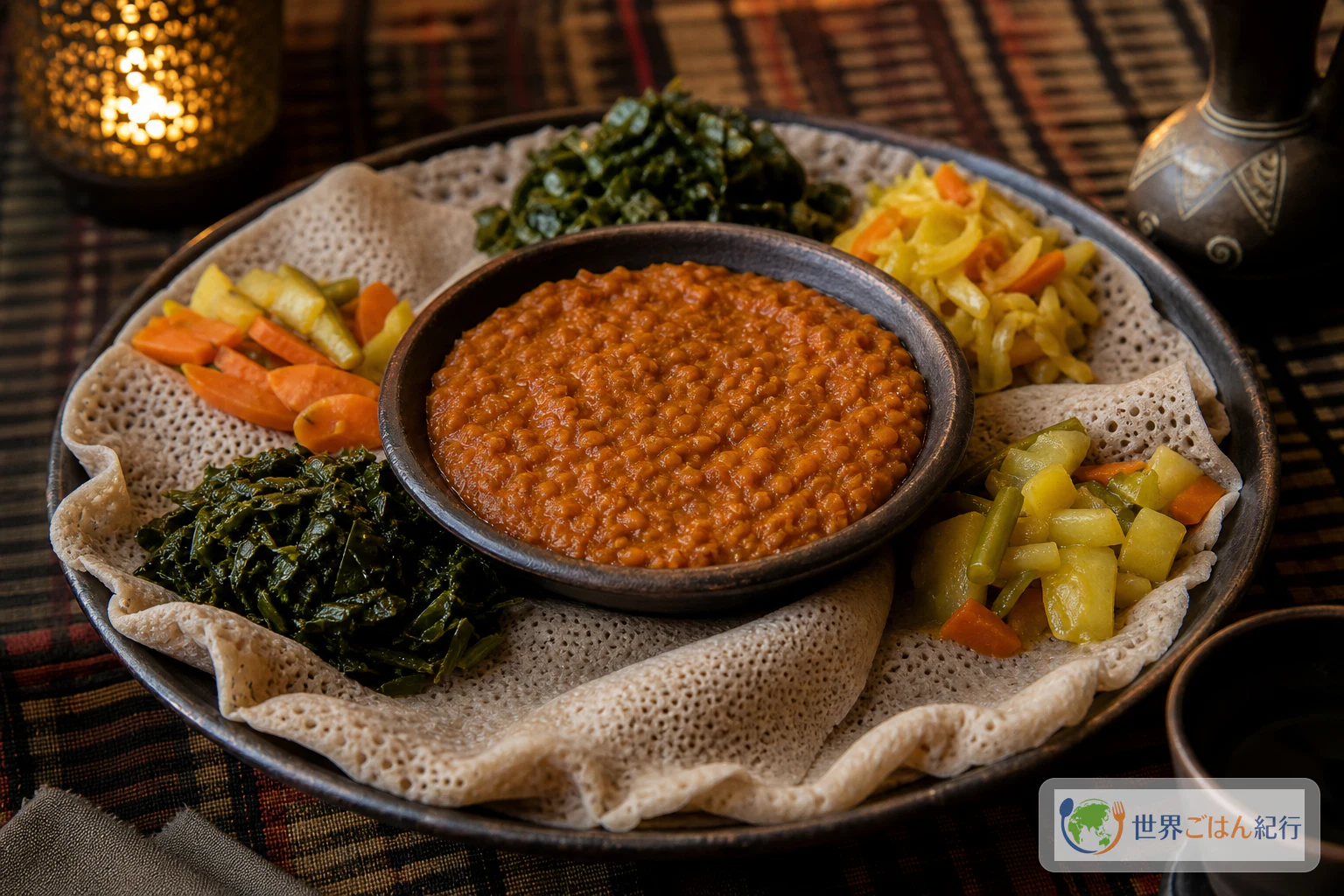
In the Ethiopian Embassy's introduction to food culture, injera is described as a thin, sour bread made from teff, served with meat and vegetable sauces.
You tear off injera, scoop up the topping, and mop up the sauce.
You understand here the layering of sourness and the sweetness of lentils that is hard to see when you eat the stew alone with a spoon.
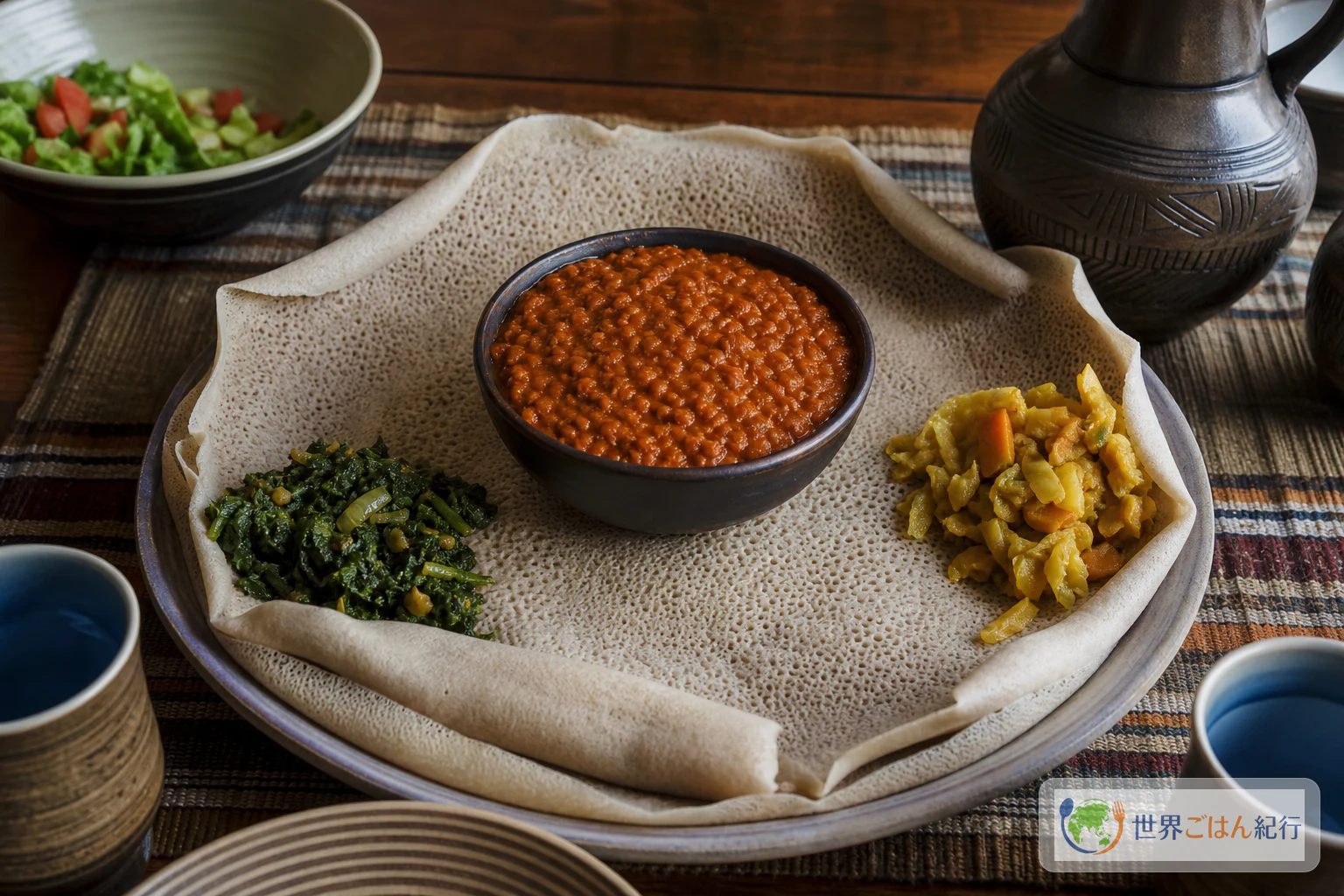
The same introduction also touches on the form of the table, where food is served on one large platter and eaten with injera by hand.
Misir wat is less a small dish of lentils as the star than a dish whose richness makes sense when you think of it set on the same platter as a sour bread, greens, and other stews.
The Ethiopian Orthodox Church explains that during the prescribed fasting periods, not only meat but animal foods such as milk, butter, and eggs are avoided.
For that reason misir wat, made with vegetable oil and lentils, is an easy dish to fit into a fasting-day menu.
However, religious practice differs by person and household.
If you are following strict dietary rules, check the ingredients of the oil, the stock, and the spices to confirm what you can use.
Set it beside the festival meat dish doro wot and the chickpea-flour-thickened shiro wot and you can see that even among red stews, a change of main ingredient changes the dish's role on the table.
There are differences between households and recipes too.
Saveur's misir wat uses niter kibbeh or unsalted butter, while The Vegan Society's recipe uses vegetable oil and tomato paste.
This article is closer to the latter, the vegetable-oil version.
On days you want a butter aroma and days you want to avoid animal foods, the entrance to the pot changes even under the same dish name.
Few Ingredients. Don't Skip the Order of the Aroma
When cooking this elsewhere, you don't have to match every local brand.
But once red lentils, berbere, and onion are settled, the core of misir wat's flavor remains.
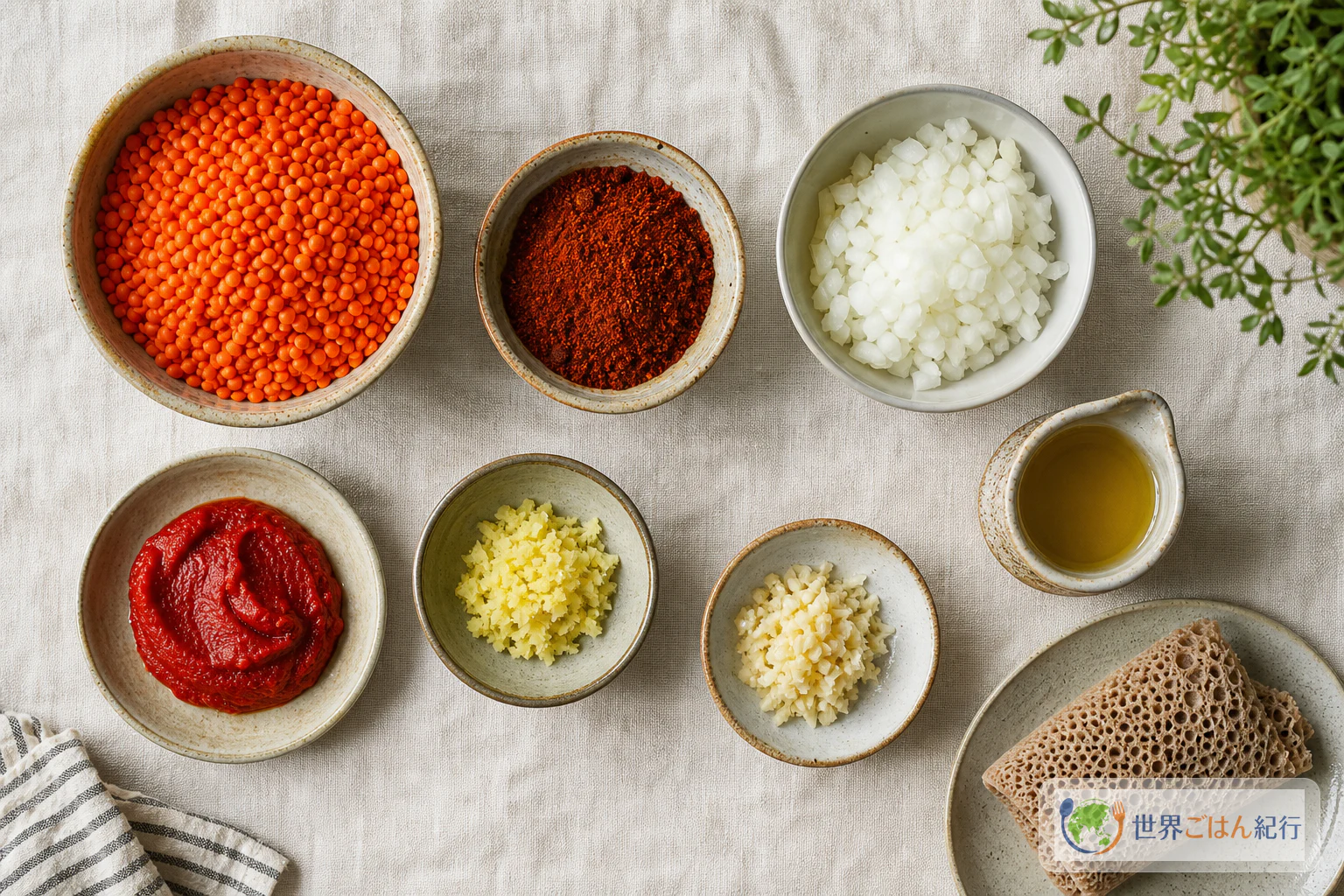
Red lentils come as types close to whole and types with the hulls split.
Whole-type lentils keep a little shape after cooking, while split ones fall apart sooner and turn smooth.
If you use split lentils, which are commonly sold, reduce to 220 g and shorten the simmering time by about 10 minutes.
Powdered berbere differs by product in both the strength of the chile and the sweetness of the aroma.
Rather than using all 30 g from the start, adding 25 g, simmering, and then checking the heat and aroma at the end to add 5 g is easier to recover from.
Fasting-Day Style, or Adding Richness
Made with vegetable oil alone, it fits more easily into a menu that avoids meat, dairy, and eggs.
If you use niter kibbeh, replace 30 ml of the 45 ml vegetable oil with niter kibbeh and keep the remaining 15 ml for sautéing.
Niter kibbeh contains dairy, so don't use it in plant-based cooking.
Commercial bouillon may also contain dairy or meat extract.
For a fasting-day version, simmer with only water and salt and choose a berbere whose label you can check.
Red lentils are legumes. Do not serve them to anyone with a legume allergy. Berbere, bouillon, and injera mixes may contain wheat, sesame, nuts, or dairy. Check the ingredients and allergen labels of each product.
Shopping if You Build the Aroma Yourself
If you only use a ready-made berbere, fenugreek seeds are not essential.
On the other hand, if you try making berbere, whole fenugreek is the core of the aroma with its trace of bitterness.
It makes sense to buy it if you want to grind small amounts with other spices and adjust to your own heat.
If you don't expect to use up a bag of powdered berbere, or will only make misir wat once, the ready-made product is enough.
When you shop, check not just the product name but the quantity and ingredient list.
A granite mortar is a tool for people who grind whole spices, including fenugreek, themselves.
The Ethiopian Embassy's description of the coffee ceremony also includes the step of roasting beans and grinding them with a mortar and pestle.
This does not mean the mortar is a tool for misir wat only.
A reason to buy it appears if you make your own berbere and also use it for coffee or other spices.
If you buy powders or don't want more to store, skip it.
The one point to check is that the mortar comes with a pestle and that its size fits your storage space.
Method: Break Down the Lentils from the Sweetness of the Onion
Use a heavy-bottomed pot.
If you only have a thin pot, lower the heat a notch and stir so the bottom is never left alone.
Judge the Heat of Berbere by Aroma, Not Redness
Misir wat is not a dish where redder is more correct.
The color of berbere differs by product, and with a strong chile blend even a small amount is plenty hot.
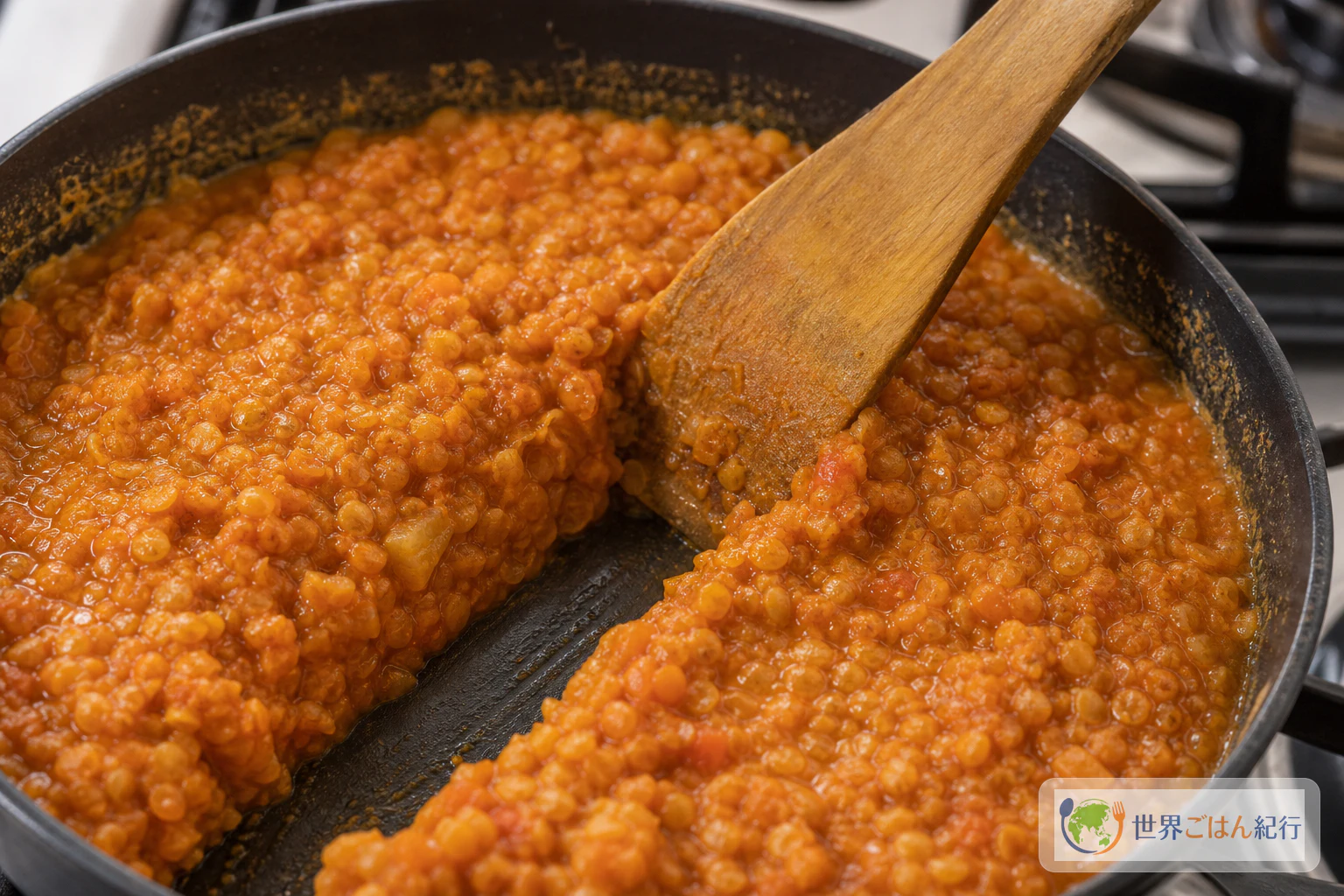
Look not at the redness of the pot but at the surface the moment you stop the wooden spoon.
If the oil separates and only a red ring floats, there may be too little liquid.
Add 50 ml boiling water, stir, and simmer over low heat for 5 minutes.
If the berbere smells powdery and stings the nose, it has not yet settled into the pot.
Add a little boiling water and simmer 5 minutes, and it will layer with the sweetness of the lentils.
On the other hand, if a bitter scorched smell appears, the first priority is not to scrape the bottom.
Move only the upper portion to another pot, add boiling water, and continue.
If you stir the scorched bottom in, adding more lentils will not bring back the bitterness.
To soften the heat, add a little unsalted cooked lentils, or add tomato paste 1 tsp at a time.
Rather than adding sugar to hide the heat, increasing lentils and liquid to keep the consistency gives a flavor that works better at the table.
On Days Without Injera, Choose a Sour Base
Injera is both a tool for scooping misir wat and an ingredient that adds sourness.
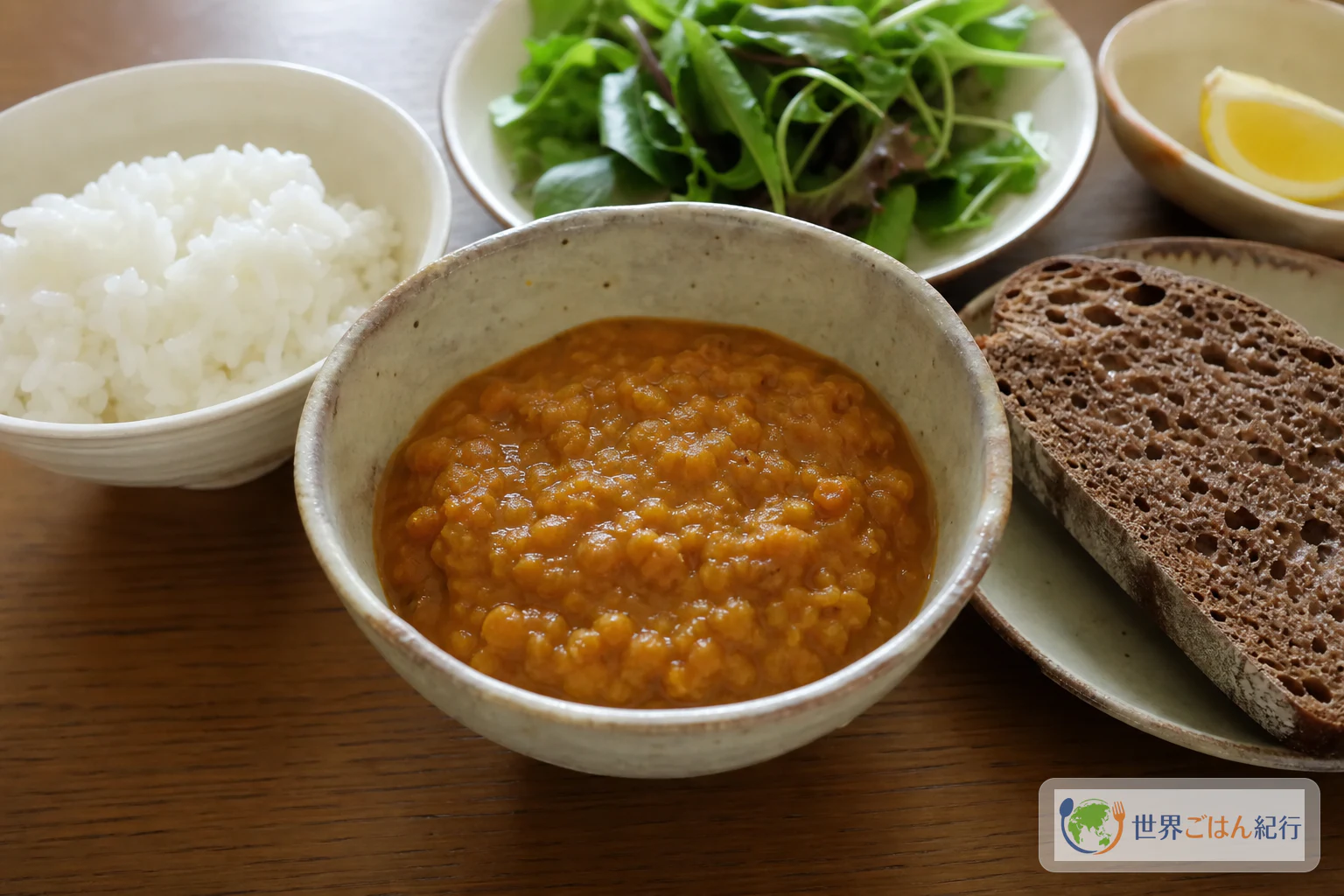
If you make it yourself, plan how to make injera, which includes fermenting and cooking, as a separate project.
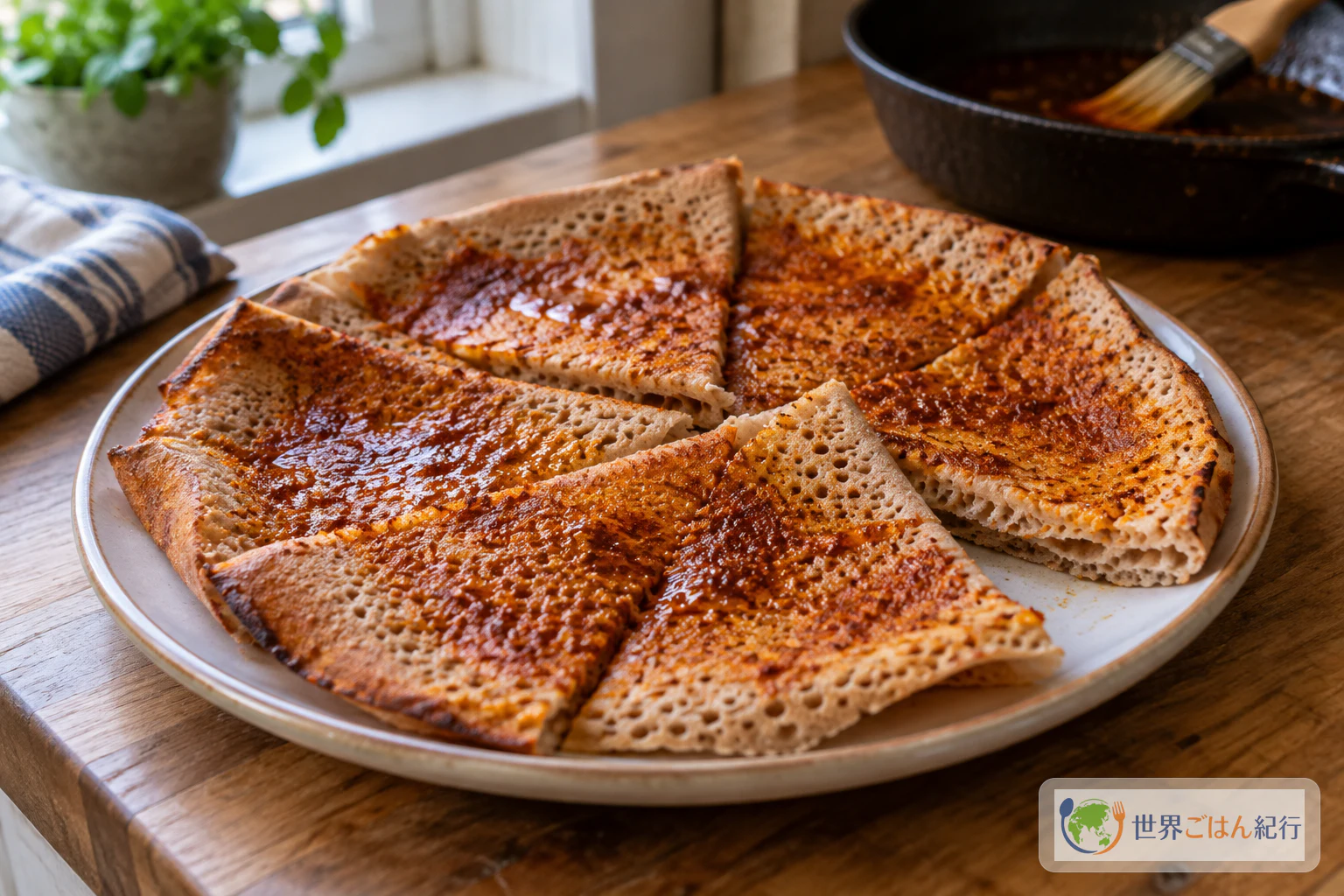
For just that day's meal, white rice, rye bread, and thin buckwheat crepes are easiest to pair, in that order.
White rice has no sourness, so the heaviness of misir wat comes forward.
Serve greens with salt and a little oil and add a few drops of lemon just before eating, and your mouth is reset once.
This is not a substitute that tastes the same as injera.
It is a practical way of adjusting the density of the table when you make a pot at home.
Arranging small portions of misir wat, greens, and another lentil dish on one plate gives even a small amount of stew the flow of a meal.
If you have already tried the aroma of berbere, read the background of the Ethiopian cuisine table as well, and you won't treat injera as mere bread.
Changing Ingredients and Adjusting the Flavor at the Table
When reproducing it elsewhere, think of swapping in what is available separately from breaking the dish's backbone.
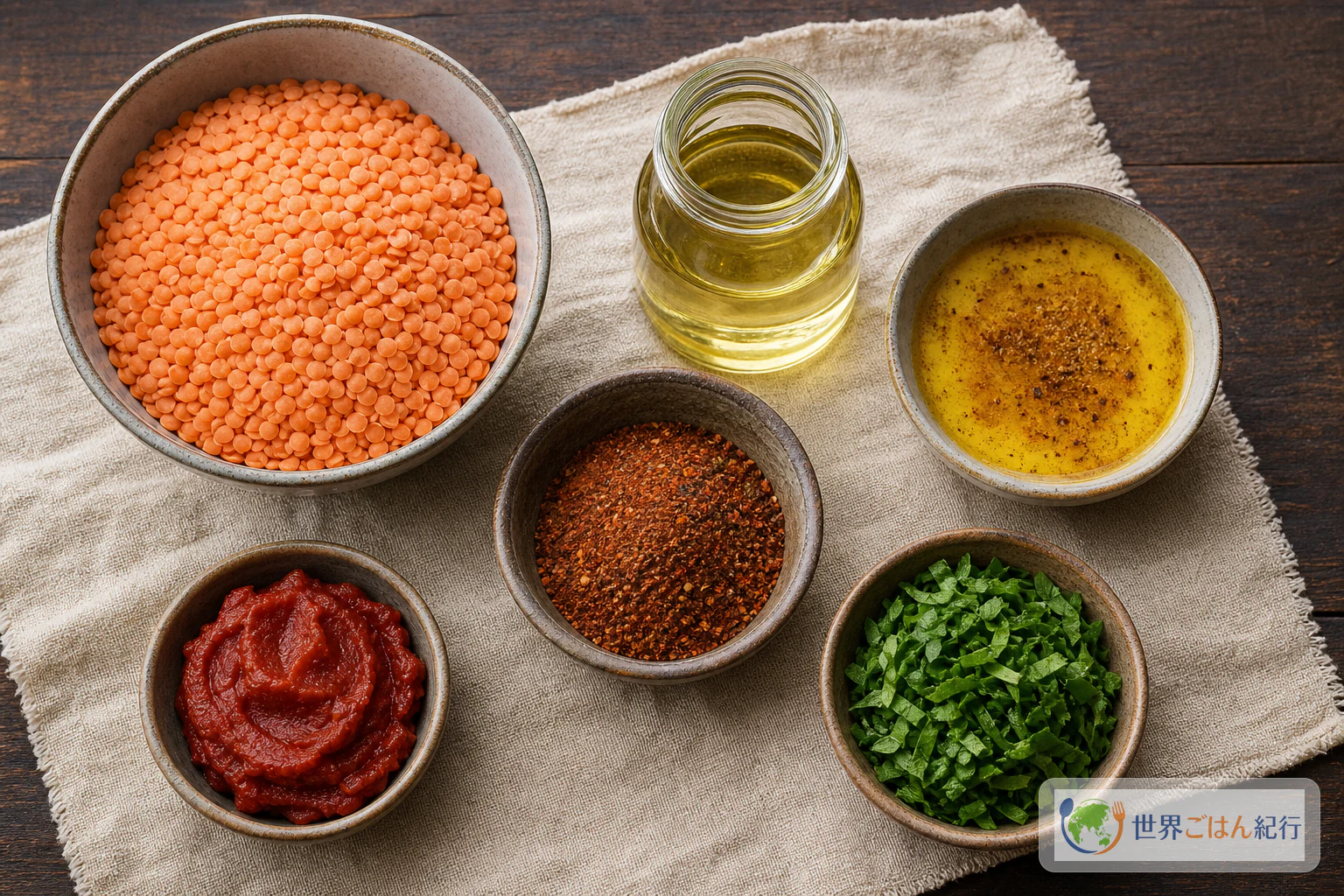
| What to change | How to change it | Effect on flavor |
|---|---|---|
| Red lentils | From whole to skinless split | Breaks down faster and gives a smoother stew |
| Fat | From vegetable oil to partly niter kibbeh | Adds butter aroma and richness. Not used in the fasting-day style |
| Tomato | From 45 g paste to 120 g diced tomatoes | More acidity and water, so reduce the boiling water by 50 ml |
| Heat | Start with 25 g berbere and add 5 g at a time | Easier to adjust heat while keeping aroma |
| Base | From injera to rice or rye bread | Sourness and texture change, but it still catches a thick lentil stew |
Conversely, three things are safer not to change: browning the onion over high heat, frying berbere for long, and leaving the lentils sitting in water while they cook.
Substituting only curry powder gives an edible stew, but it becomes a different dish from the aroma of berbere.
Without berbere, you can also combine small amounts of paprika, chile, and cumin.
But this is a substitute.
Using ready-made berbere once before moving on to making your own makes it easier to judge what you want to add.
For the Next Day, Cool It Shallow
Misir wat thickens as it cools.
If you will eat it the next day, finishing it a little looser from the start, or keeping some boiling water for reheating, makes it easier to handle.
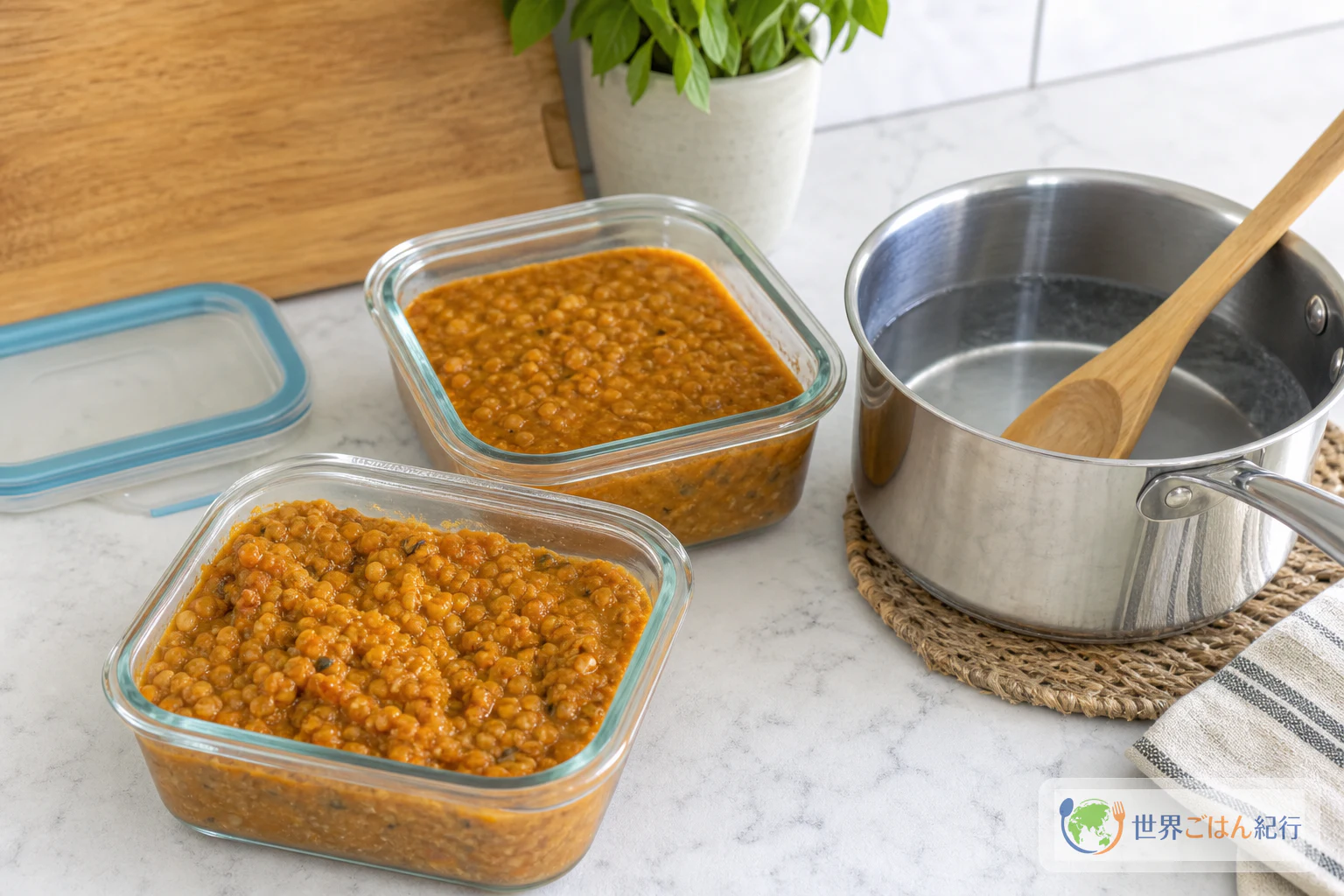
When storing, don't leave it at room temperature in the pot; move it to shallow containers within 2 hours and refrigerate.
FoodSafety.gov advises refrigerating cooked leftovers and using them within 4 days.
Move only what you will eat into a small pot, add 1 to 2 tbsp boiling water, and warm over low heat.
Make sure the whole pot bubbles again and the center is hot enough, at about 74°C.
In a microwave, heat at 600 W for 1 minute at a time, stirring each time.
Avoid leaving a container taken from the refrigerator at room temperature for a long time.
If there is a sour smell, any abnormality on the surface, or you don't know how long it has been stored, discard it rather than judging by taste.
How to Recover from Mistakes
| State | How to recover |
|---|---|
| Lentils are hard | Add 50 ml boiling water and extend over low heat 10 minutes at a time with the lid slightly ajar |
| Watery | Remove the lid and simmer over low heat 3 to 5 minutes at a time, checking the spoon track |
| Too hot | Add a little unsalted cooked lentils or tomato paste and match the consistency |
| Powdery | Add a little boiling water, simmer 5 minutes over low heat, then rest 5 minutes |
| Scorched bottom | Don't scrape; move only the upper portion to another pot. If you sense scorching, don't force a fix |
Frequently Asked Questions
Q1. Can I use ordinary lentils instead of red lentils?
You can, but green or brown lentils change how they break down and the color.
For split red lentils, use the 220 g in the ingredient table and check the simmer at 25 to 35 minutes.
When there is no white firmness at the center of the lentils and the spoon track remains, turn off the heat.
Q2. What if the berbere is too hot?
Next time start with less than 25 g and make up the color with paprika.
For a pot already simmered, add unsalted red lentils or tomato paste 1 tsp at a time to adjust the consistency.
Adding only water tends to thin it, so add lentils as well while tasting.
Q3. Is it different from the authentic dish without niter kibbeh?
There are recipes that use niter kibbeh, but there is also misir wat made with vegetable oil.
This article takes the fasting-day style that avoids animal foods as its baseline.
On days you don't need to avoid dairy, replacing part of the oil with niter kibbeh adds a butter aroma.
Q4. Is injera essential?
It is not essential.
You can eat it with white rice or rye bread, but the sourness and spongy texture of injera are something else.
On days you substitute, add greens and lemon and make a plate that can take the thick lentil flavor, and you tire of it less.
Q5. Do I add fenugreek seeds directly to misir wat?
If you use ready-made berbere, you can make it without adding them directly.
When making berbere from whole spices, you grind a small amount along with the other ingredients.
Too much brings out bitterness, so check with the small amount in the recipe first.
Q6. How many days can I eat refrigerated misir wat?
Divide it into shallow containers, cool it quickly, and use up refrigerated portions within 4 days.
Take out only what you will eat and warm it thoroughly to the center, restoring the consistency with boiling water.
If the storage condition is unknown or there is anything off about the smell, do not eat it.
Buy the Lentils, or Make the Aroma Too?
You can start misir wat with red lentils and onion.
If you have berbere, you don't need to add anything to what you buy today.
If you want to adjust the aroma yourself, pick fenugreek, and if you will grind whole spices repeatedly, add a granite mortar.
If you want to make one pot quickly with powdered spices, you can skip both.
What matters is not scorching the berbere and waiting for the time the lentils take to hold their moisture.
Whether it is a day with the sourness of injera or a day you make do with white rice, the moment the red lentils loosen in the pot does not change.
Sources
- Saveur, "Ethiopian Lentil Stew (Misr Wot)", https://www.saveur.com/article/Recipes/Ethiopian-Lentil-Stew/. Used to check a home recipe with red lentils, berbere, and onion, and the simmering time guide. Accessed and checked 3 August 2026 (JST).
- The Vegan Society, "Ethiopian Misir Wot: Spicy Red Lentil Stew", https://www.vegansociety.com/lifestyle/recipes/ethiopian-misir-wot-spicy-red-lentil-stew. Used to check the vegetable-oil version's ingredients, handling of berbere, and texture differences by type of lentil. Accessed and checked 3 August 2026 (JST).
- Embassy of Ethiopia, "Culture", https://ethiopianembassy.org/culture/. Used to check how injera is eaten, the table around one large platter, and the mortar in the coffee ceremony. Accessed and checked 3 August 2026 (JST).
- Ethiopian Orthodox Tewahedo Church, "Worship", https://www.ethiopianorthodox.org/english/ethiopian/worship.html. Used to check the explanation of avoiding animal foods such as meat and dairy during fasting periods. Accessed and checked 3 August 2026 (JST).
- FoodSafety.gov, "People at Risk of Food Poisoning", https://www.foodsafety.gov/people-at-risk. Used to check the storage standard of refrigerating leftovers quickly and using them within 4 days. Accessed and checked 3 August 2026 (JST).
- Sekai Gohan Kiko, How to Make Berbere, How to Make Injera, and The Ethiopian Cuisine Table. Used to check consistency of internal links and ingredient judgments with related articles.