
The Pot Tells You Nothing Until You Lift the Lid
You chop onions on the cutting board and crush the tomatoes. You rub the chicken with salt and put it in the pot, and here you want to pour in water.
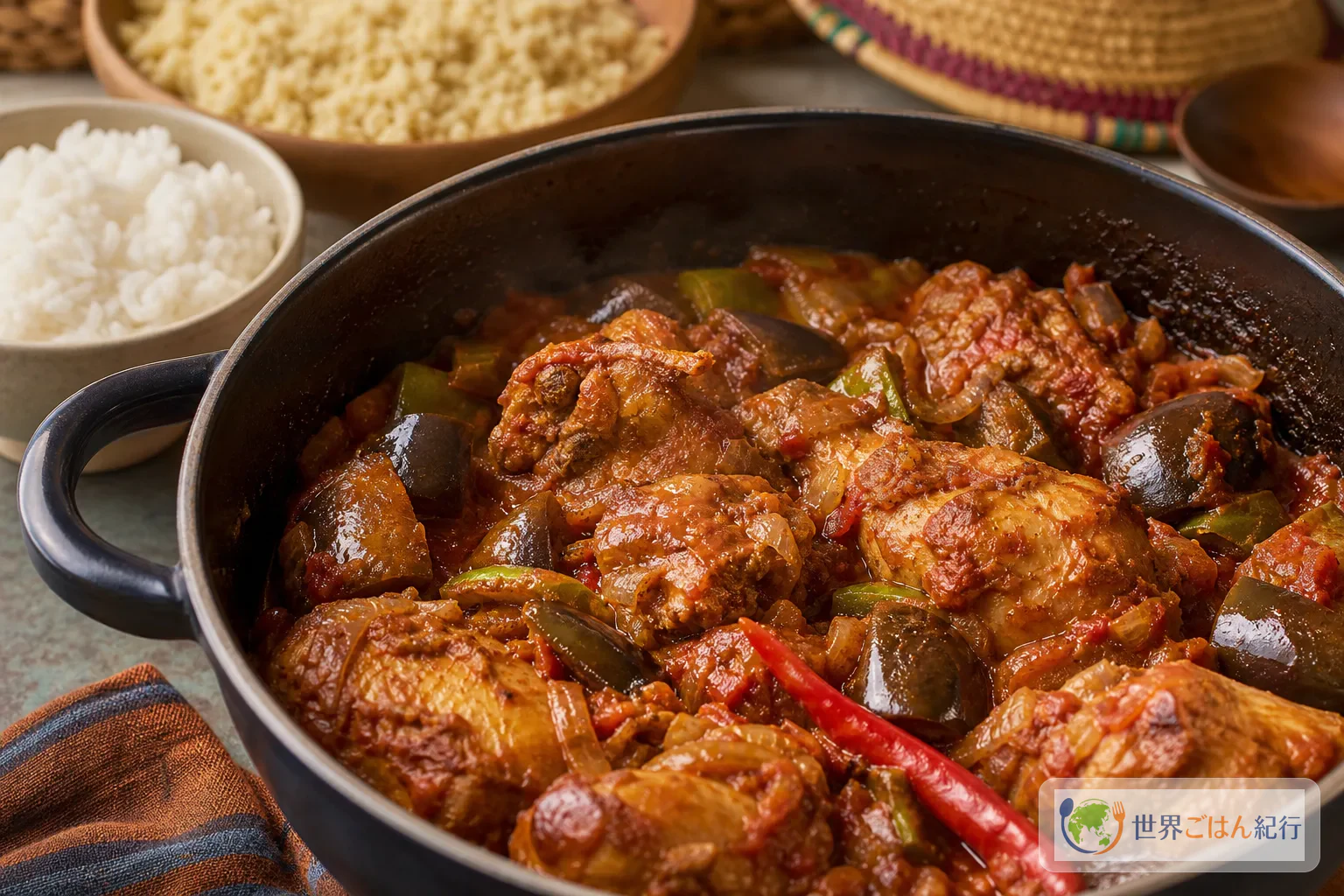
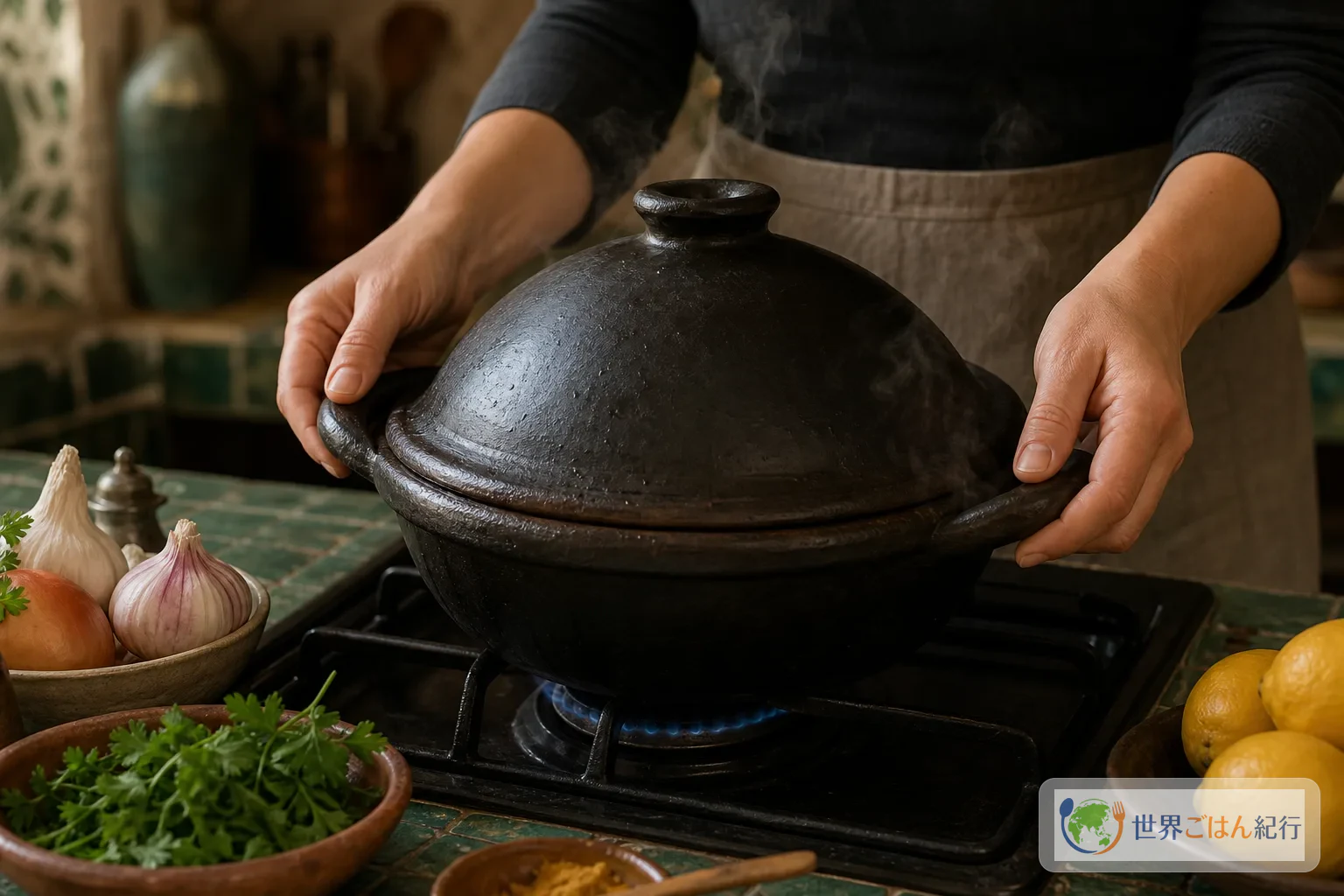
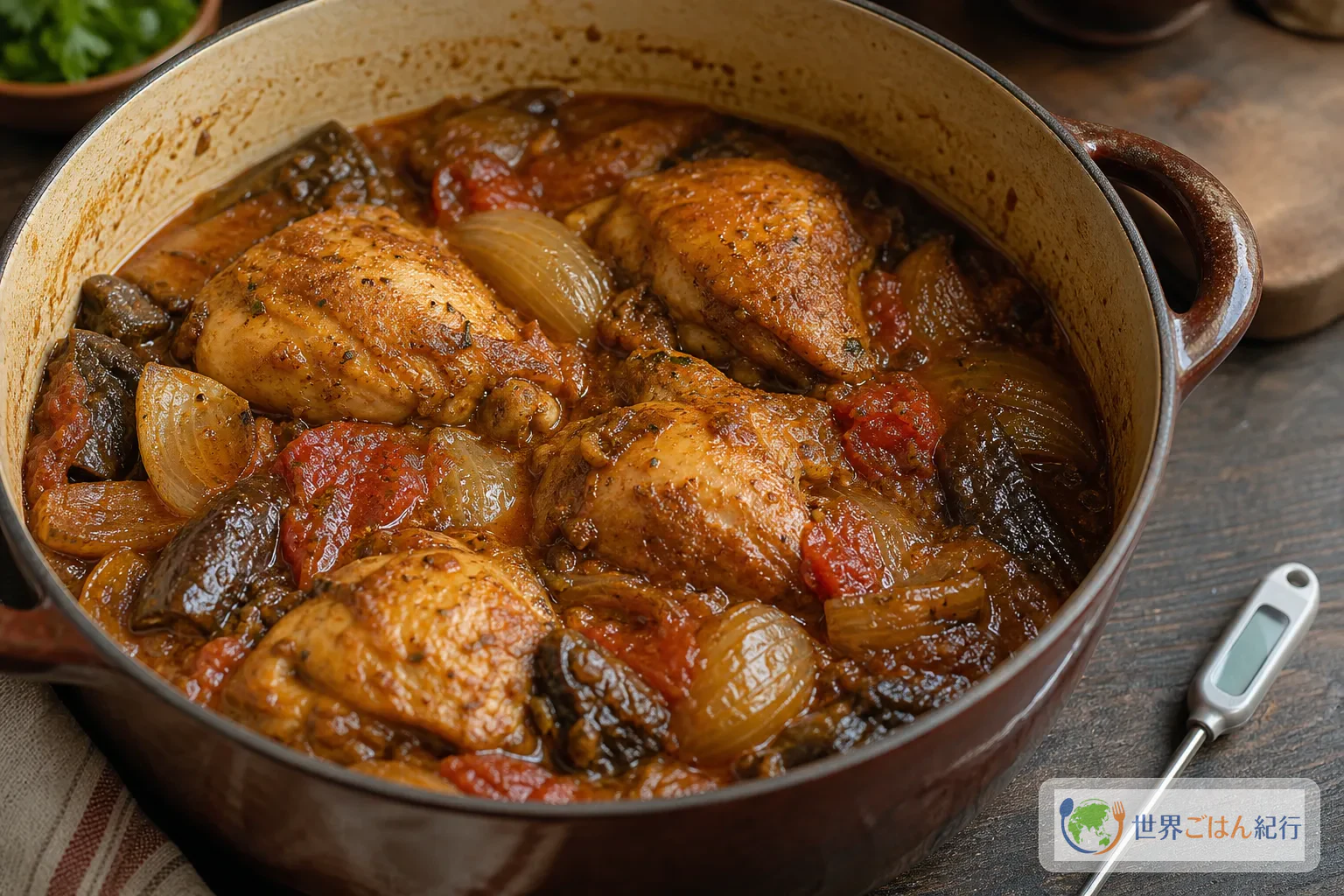
But kédjénou (Kedjenou) from Côte d'Ivoire is traditionally a chicken stew made without added water. The onion and tomato slowly release their moisture, and together with the chicken's fat they become the sauce. With the lid closed, you lift the pot now and then and shake it. The name is explained as linked to a Baoulé phrase meaning "to shake what's inside."
The sound of steam is small at first, and then low from the whole pot. Lifting the lid would let you feel reassured sooner, yet some aromas can be kept only by not opening it. The interest of this dish is not that there are many places to put your hands, but in learning to recognize the time to keep your hands off.
To make kédjénou elsewhere, you don't have to look for a clay canari pot. What you need is a heavy pot in which the chicken can be piled without the lid lifting and where the heat at the bottom doesn't spike suddenly. What follows is a build that uses bone-in chicken thighs and finishes serving four in about 95 minutes.
Moving a Waterless Stew into a Home Kitchen
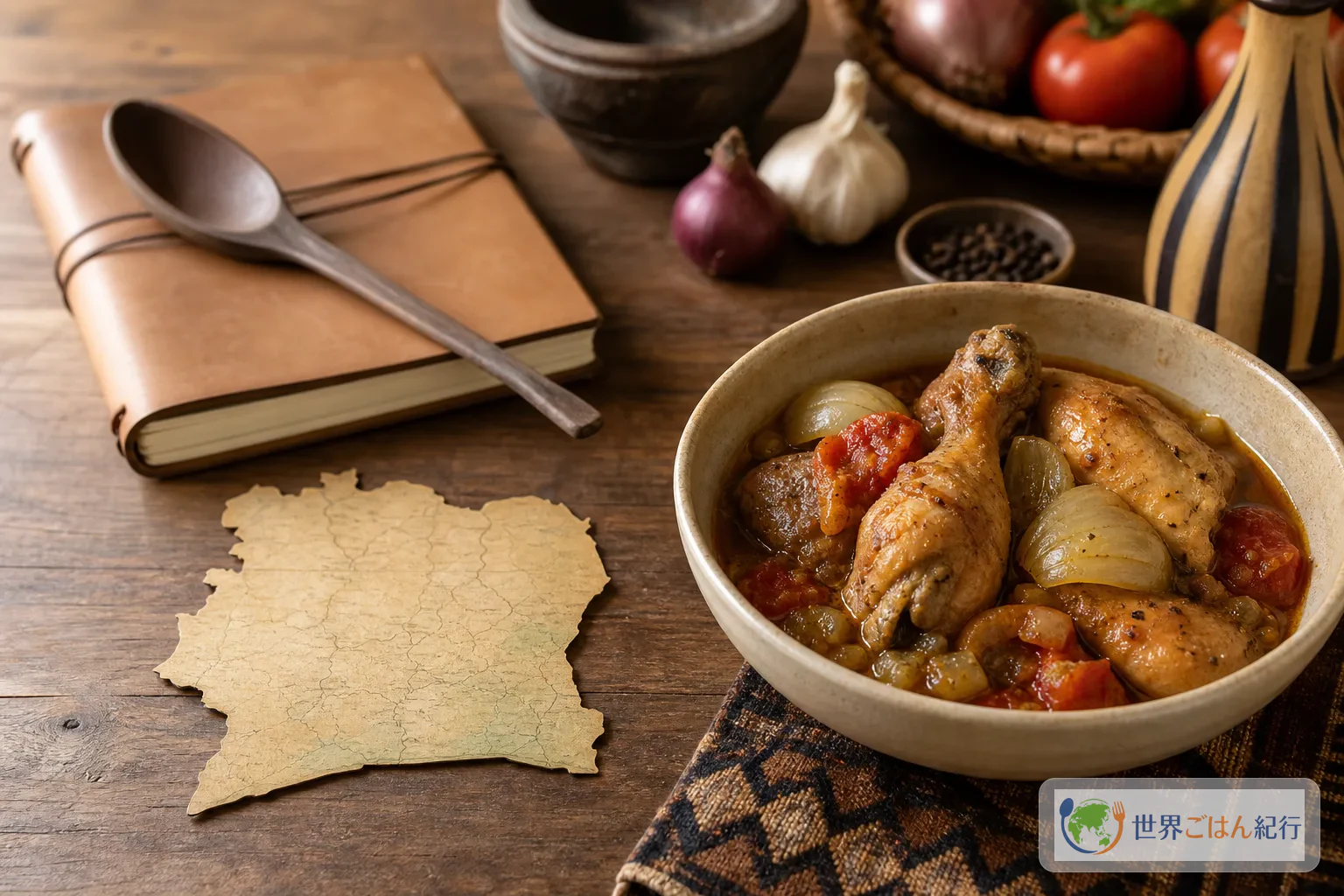
Kédjénou is often presented as a dish of central Côte d'Ivoire. It is described as the food of people who farm and hunt, and chicken, guinea fowl and, depending on the region, game were stewed with vegetables and aromatics. Locally, a method is also handed down that uses the narrow-mouthed clay canari and seals the lid with banana leaves and the like.
Reproducing a clay pot fully in a home kitchen is hard. But the backbone of the dish lies not in the pot's origin but in these three things.
- Do not let the moisture released by the vegetables escape
- Loosen the chicken by steam-braising, not by searing it firm
- Do not open the lid; protect only the bottom by shaking the pot
In French-language recipes there are also urban versions that add oil, water or stock. Some recipes from local brands also use water, so kédjénou does not have a single formula. What is presented here is a reproduction that fits the heat and ingredients of a home kitchen to the axis that appears in common across the sources: "don't add water," "close the lid" and "move the pot."
When searching, including both spellings makes it easier to find local recipes.
Ingredients (serves 4)
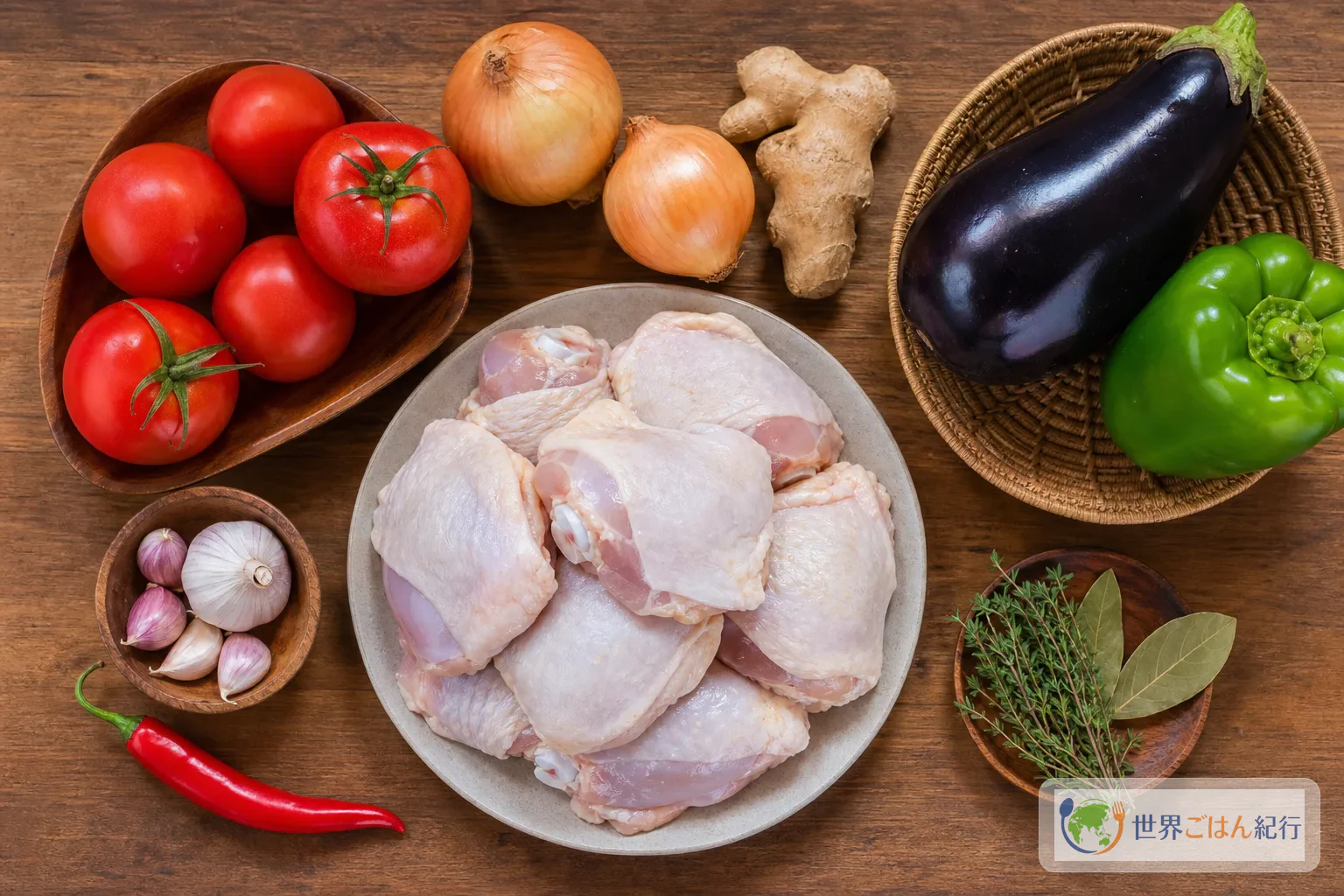
To serve alongside
Attiéké (fermented cassava couscous) adds a sourness and graininess true to the local table. To skip the trouble of finding an imported product, plain white rice cooked firm is fine. Both take up the kédjénou sauce, so keep the seasoning light on salt.
| Side | Guide for 4 | Why choose it |
|---|---|---|
| Attiéké | 400–500g | The light sourness from fermentation cuts the chicken's fat |
| Or white rice | 2 cups | Easy to get, and lets you finish all the sauce. Uncooked rice, in 180 ml cups (about 360 ml in all) |
| Lime or lemon | 1 | A little at the end to taste. Don't add too much sourness |
Check that the center of the thickest part of the chicken has reached 74°C (165°F).
Add red oil, or not
Red palm oil is an ingredient you easily come across when looking at Ivorian cooking, but it is not essential in a kédjénou pot. It is easier to judge if you think of it as an extra for people who want to round the aroma slightly and drip color over attiéké. If you want to try the traditional waterless version from the first time, don't buy it; first look at the aroma of the chicken skin and vegetables.
If you do buy it, check on the label that it is for cooking, the capacity and the origin. You use only 1–2 tsp at a time, so it suits people who also plan to use it for African dishes and bean dishes.
Method
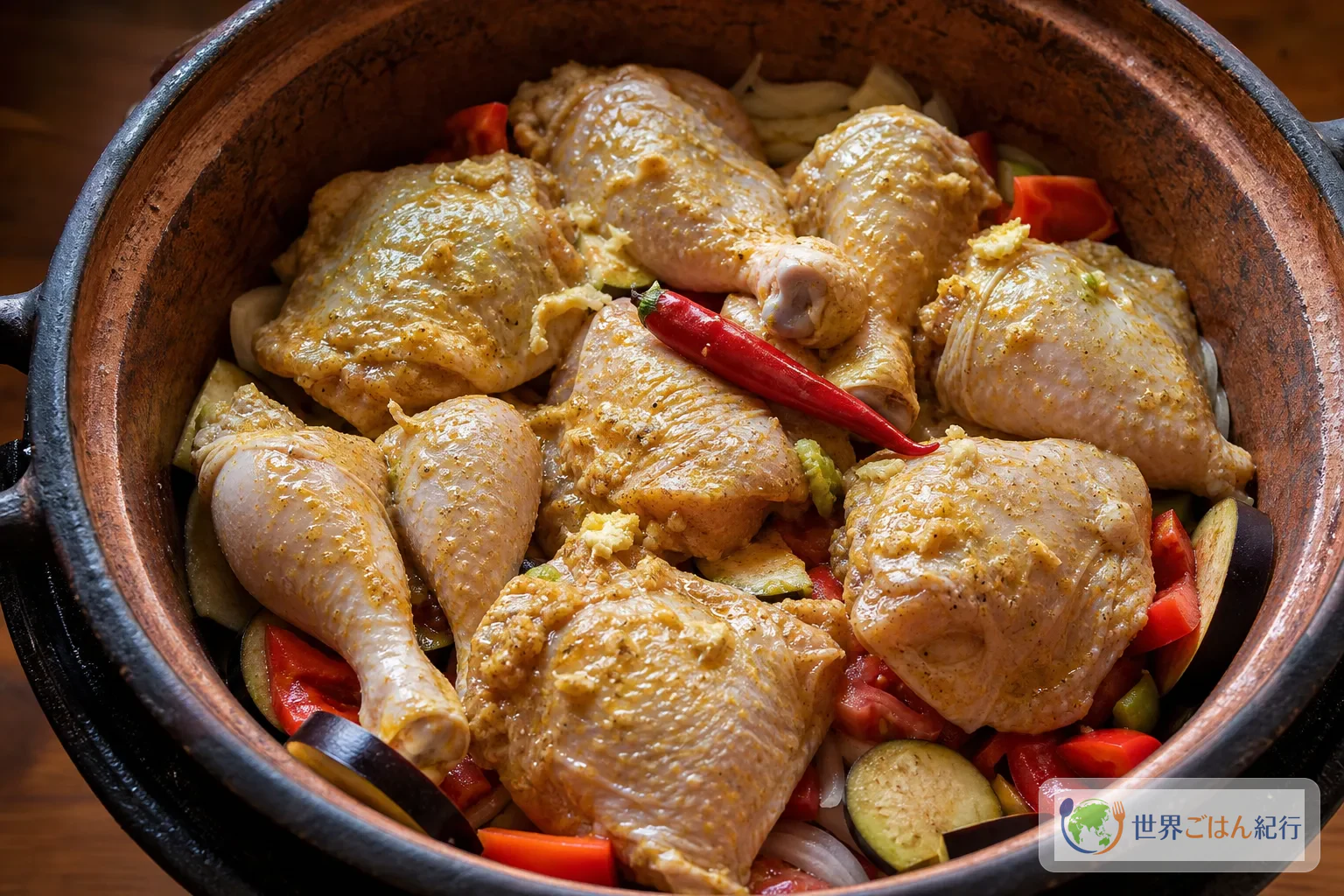
Kédjénou is a dish in which the water is born inside the pot. Even if the bottom of the pot is dry at first, don't panic; lay the vegetables underneath and then close the lid. But if a burnt smell comes up, don't put up with it. Take the pot off the heat, check the bottom, and rescue it only if necessary.
Serve with Attiéké, or Plain White Rice
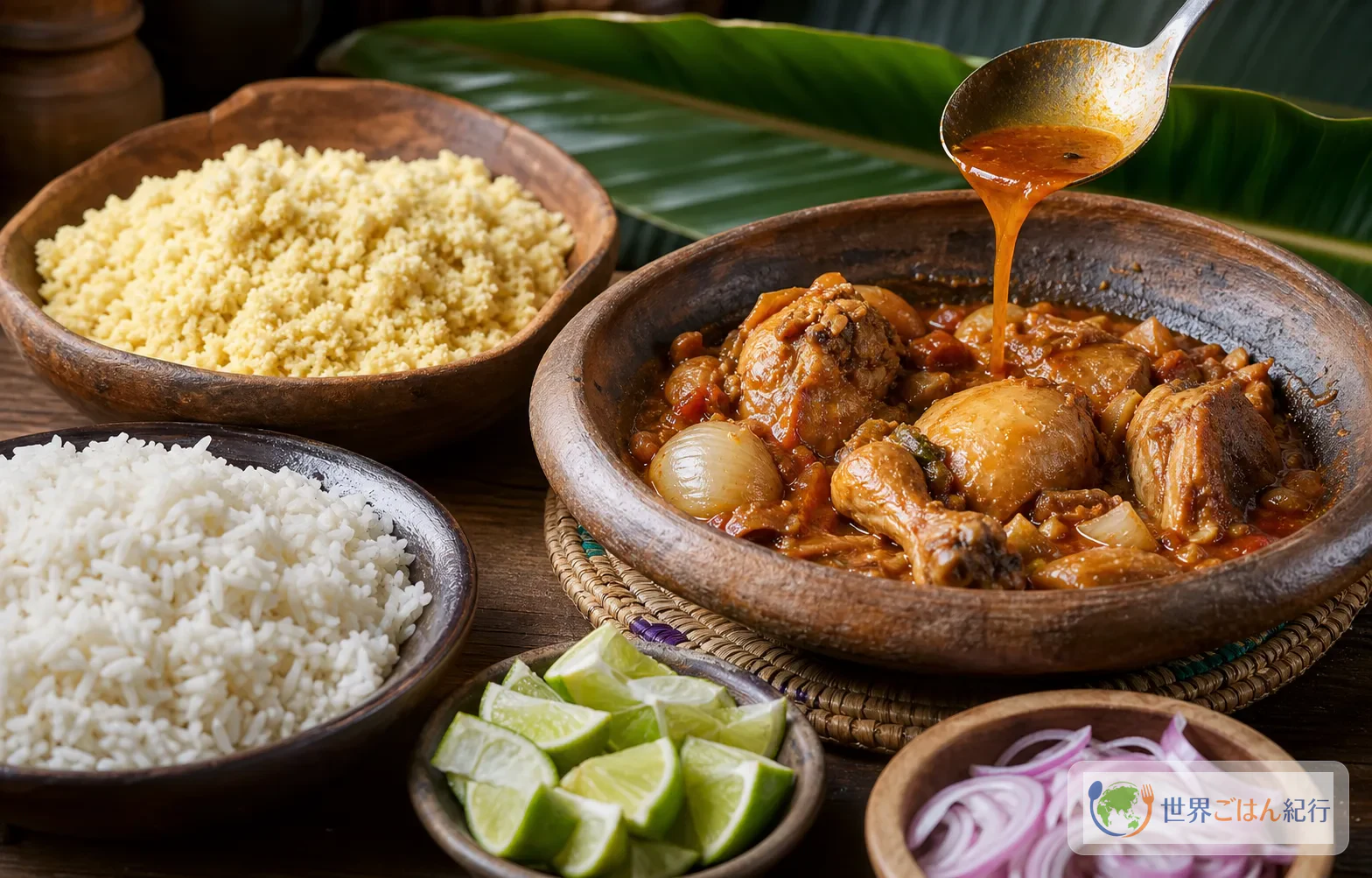
The classic pairing on an Ivorian table is kédjénou with attiéké. Attiéké is a couscous-like staple of fermented, steamed cassava. With its light sourness and the way the grains loosen, it keeps the mouth from feeling heavy even when it takes up a stew with oil. The detailed preparation is gathered in how to make attiéké.
If you can't find dried or frozen attiéké, white rice works well enough. Don't cook the rice too soft; make it firm enough that it takes up the kédjénou sauce a little at a time. Only when you want to add attiéké's sourness, put lime at the edge of the plate. Adding lots of lemon juice to the pot would clash with the tomato's acidity, so squeeze a little just before eating.
If you use red palm oil, rather than mixing it through the pot, a few drops over the plated attiéké are easiest to handle. You can check the aroma and color before adding more, so even first-timers won't lose the core of the dish.
Choosing the Pot and Aromatics Tools
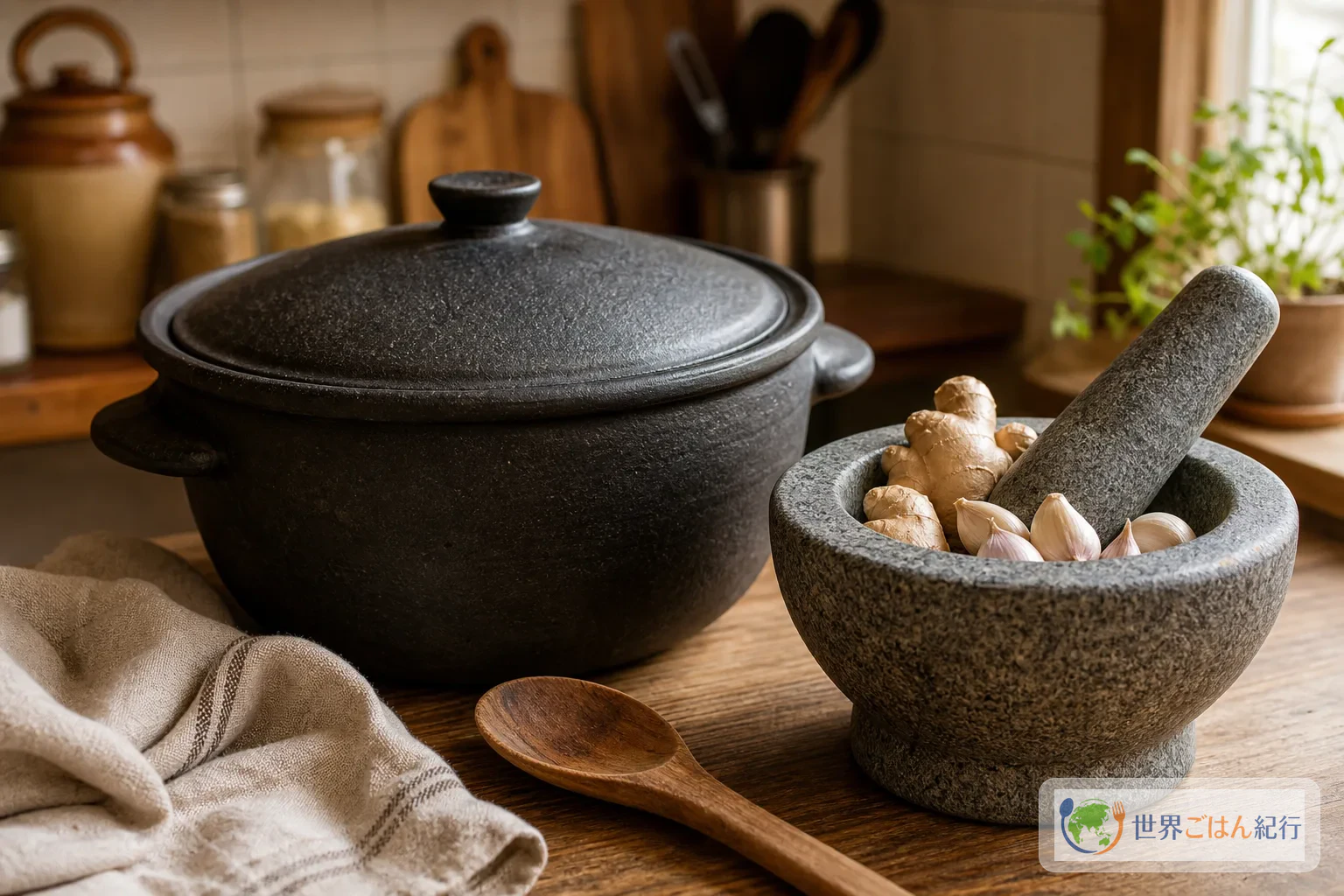
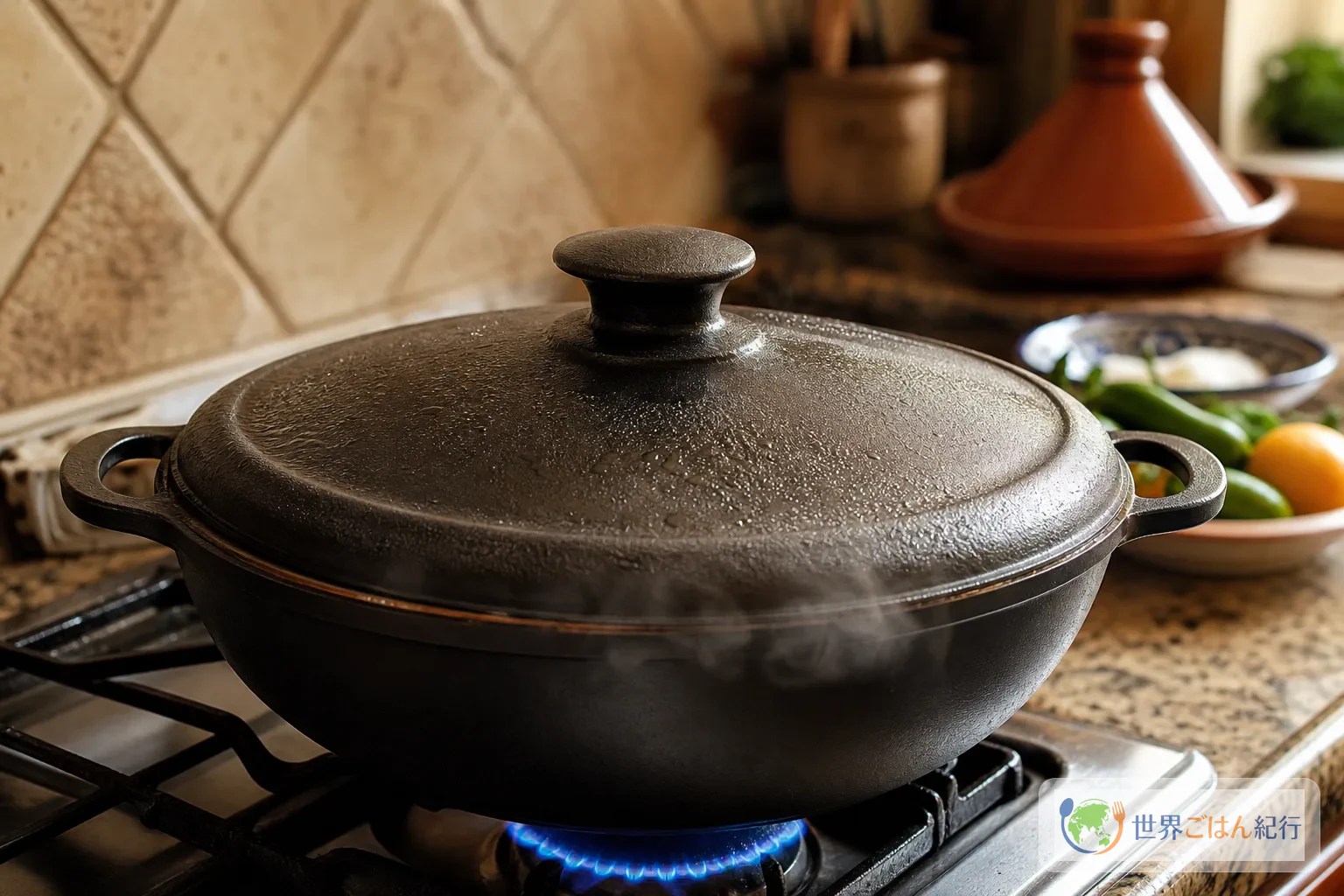
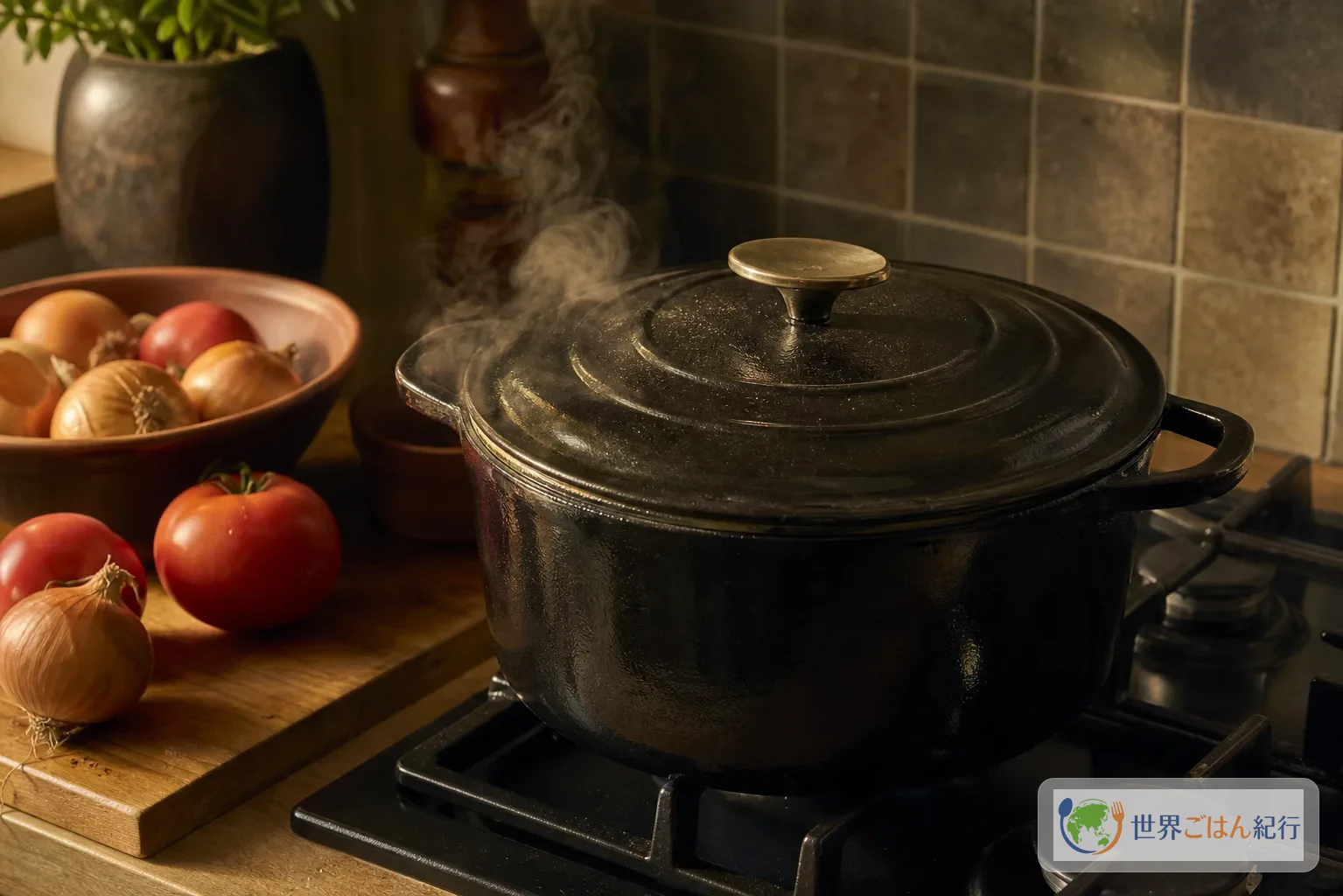
The authentic canari is a clay pot with a narrow mouth that traps steam with a lid or leaves. But you don't need to buy a dedicated clay pot just to make kédjénou for four once. A heavy pot you already have is enough if the lid doesn't wobble and it can be filled to about eight-tenths of its height. Enameled and cast-iron pots are slow to change temperature, but they keep their residual heat even after leaving the burner, so plan to turn off the heat a little earlier.
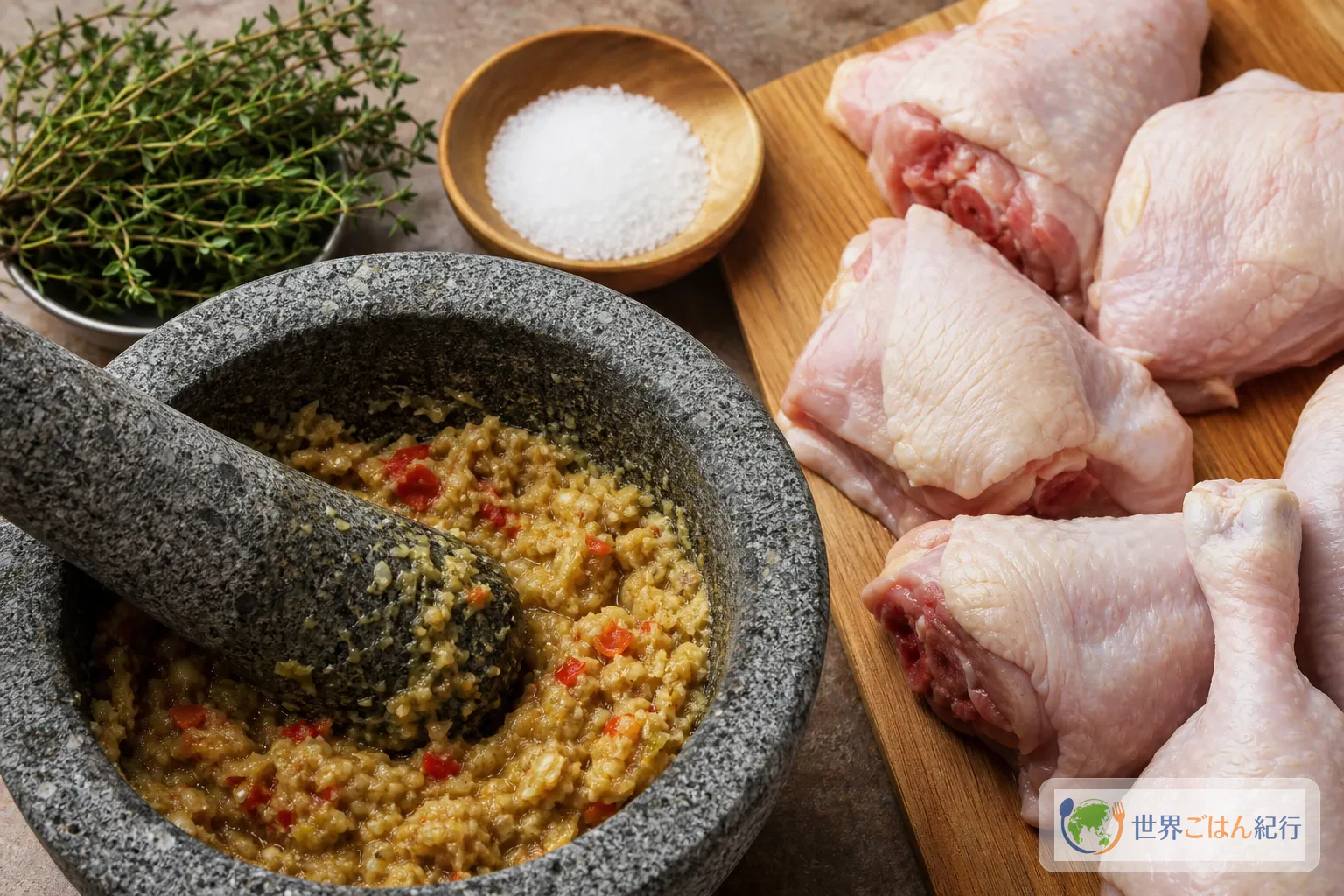
You can make the aromatics by finely chopping with a knife. If you will keep cooking dishes where ginger fiber and garlic are crushed together, a stone mortar is handy. For kédjénou alone, don't buy one; crush with the flat of a knife.
The conditions for buying are that the set contents of mortar and pestle, material and inner diameter can be confirmed on the page, and that you have a place to keep it. If you make a dish that crushes aromatics only once a year and already have a small mortar, there is no need to add one. Choose it understanding that this item is not a tool for tenderizing meat but for evening out the grain size of the aromatics.
The Table Where Kédjénou Was Born
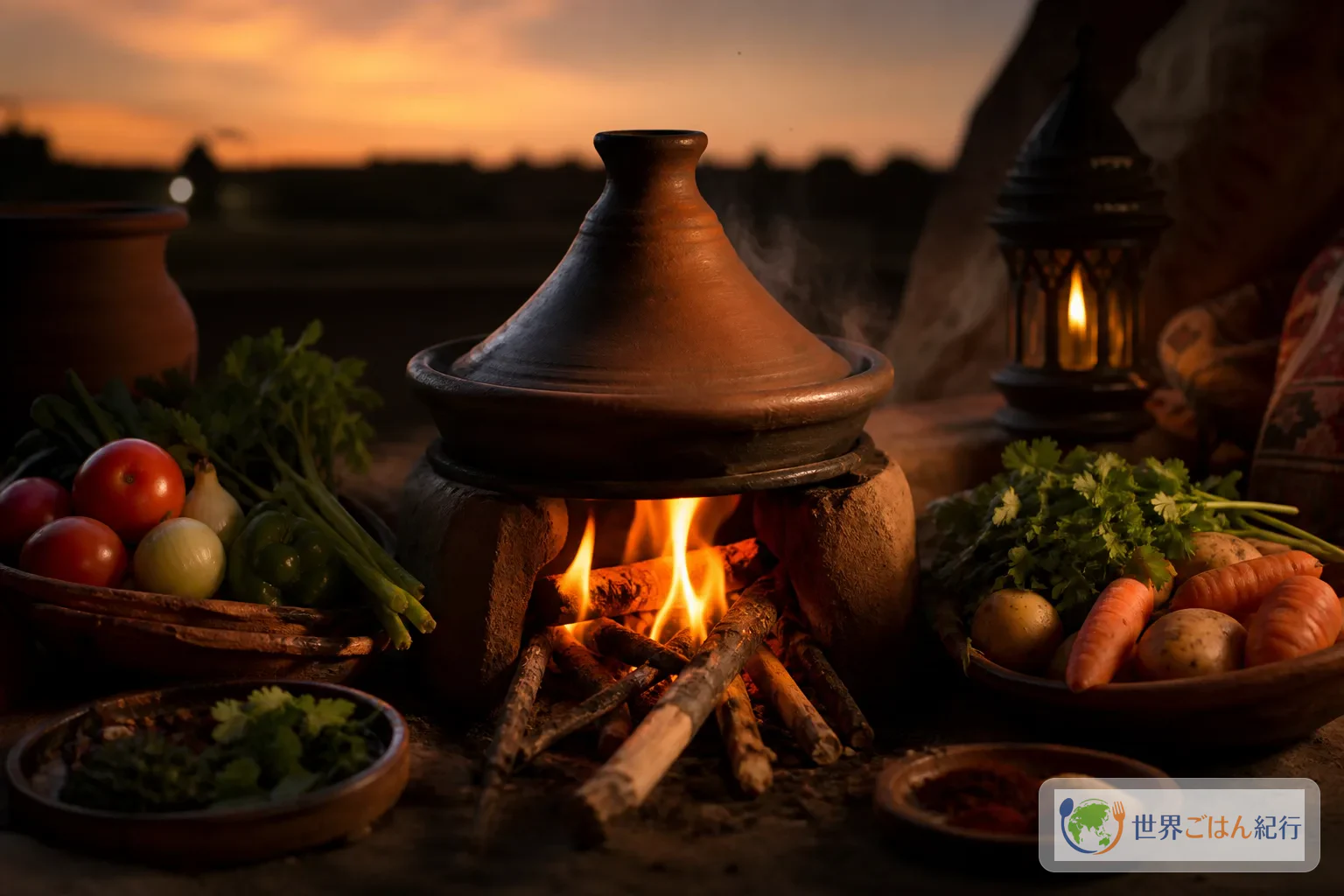
Kédjénou is a dish presented in connection with the culture of central Côte d'Ivoire, especially the Baoulé and Bété. Academic papers describe it as a stew of people who farm and hunt, in which chicken and game are cooked with onion, tomato, salt, ginger and herbs. The canari set over the fire is shaken now and then to protect the bottom. There is also an account that, during the long cooking, the person watching the pot is not fixed as one individual but the people around take turns moving the pot.
This dish differs a little from the type of stew in which the meat is first seared hard to build a toasty flavor. It traps the vegetables' moisture and the chicken's fat and turns the time with the lid unopened into flavor. Moving a wood-fired canari to a pot on a stove changes the scene, but the judgment remains: don't scorch the bottom, and don't let the aroma escape.
Tourism materials from Côte d'Ivoire present kédjénou as a dish eaten with rice or attiéké. Depending on the region and household, guinea fowl, fish, eggplant, okra, chili and oil are added. In the urban setting of Abidjan, recipes that use water or oil can also be found. So "don't add water" is not the only rule across the country; it is the choice made here to verify, at home, the old axis of the dish.
Five Variations to Use Up the Same Pot
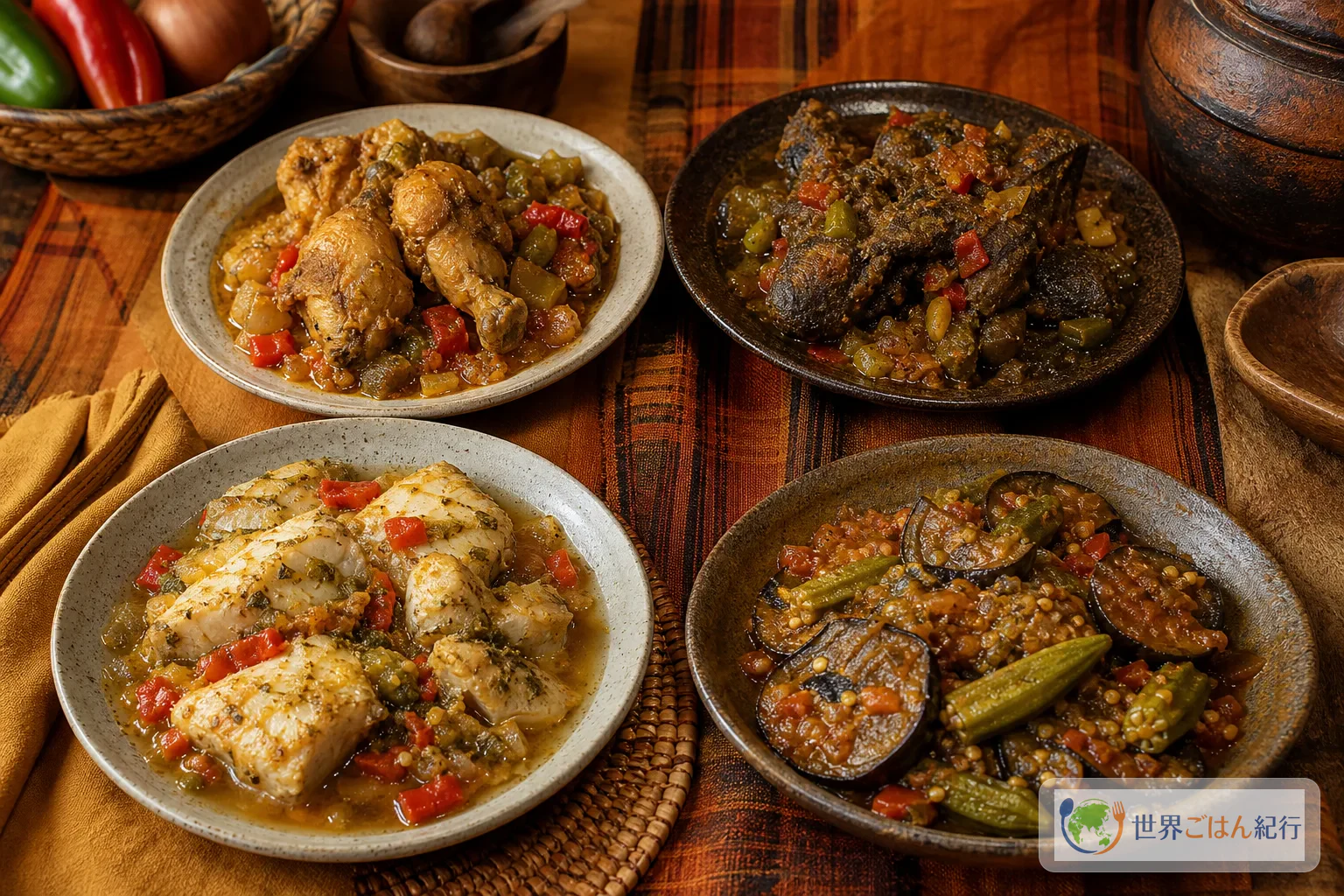
1. Adjust the heat with a whole chili
Adding a red chili uncut transfers only its aroma to the sauce, keeping the heat relatively mild. For those who want it hot, serve a little sliced chili on their plate only. Habanero and Scotch bonnet types are very hot, so don't handle them bare-handed, and start with 1/4 of one.
2. Replace the chicken with guinea fowl
Guinea fowl appears in Ivorian recipes too, and tends to be firmer than chicken. If you can get it, use the same 1kg as a guide, and extend the low-heat time by 10–15 minutes. Check that it has reached 74°C near the bone, and if the meat is hard, rest it a further 10 minutes.
3. Make a fish kédjénou
At coastal tables there is also a version with fish. Fillets fall apart easily, so cook the vegetables covered for about 20 minutes first, then lay the fish on top and check doneness at 15–20 minutes. If you shake the pot too much with white fish, the flesh dissolves into the sauce, so shake it fewer times.
4. Increase the eggplant and okra
One more eggplant lets the collapsed flesh add body to the sauce. If you use okra, cut it in half lengthwise and add it for the last 15 minutes, which keeps the sliminess from spreading through everything. In a season when the tomatoes have little water, increasing the eggplant rounds the flavor more than adding water.
5. Change the staple to suit the region's mood
Attiéké's strength is the sourness of fermented cassava; white rice's is the softness that takes up the sauce. To widen the table, it also goes with staples such as boiled yam, plantain and cassava fufu. Steaming sweet potato or potato separately and serving it alongside makes it easy to compare the taste of the sauce.
Nutrition Guide
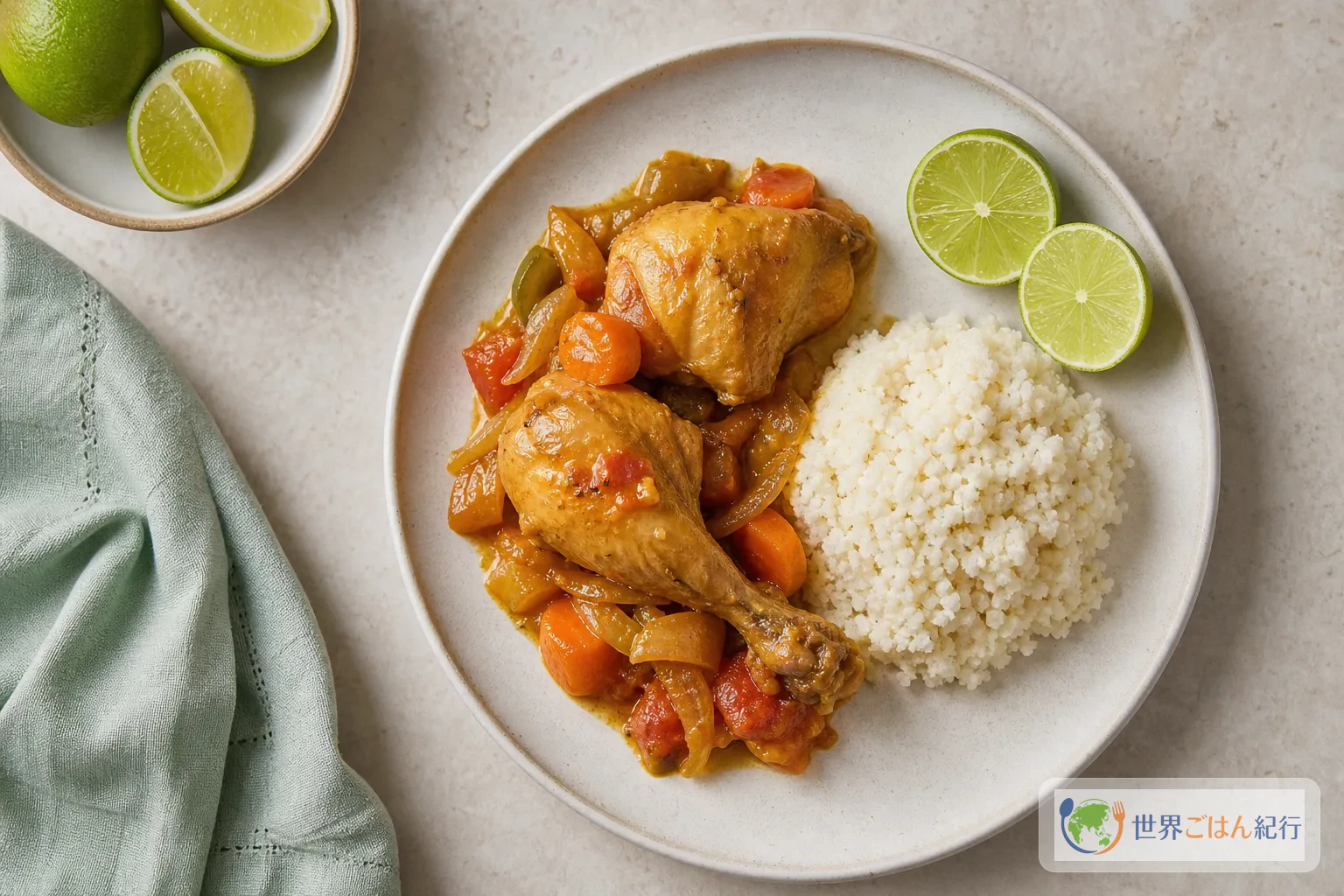
Dividing the bone-in chicken thighs, vegetables and vegetable oil into four, and calculating on an amount that leaves out white rice or attiéké, the guide per serving is about 520 kcal, 39g protein, 29g fat, 30g carbohydrate, 7g fiber, and about 2.1g salt equivalent. This changes with whether you remove the chicken skin, add red palm oil, and how much staple you serve.
These are estimates calculated from standard values of the ingredients used, not figures for medical or nutritional guidance. To reduce salt, cut the salt first rubbed into the chicken to 1 tsp and add more at the table.
Frequently Asked Questions
Can I make it without a clay pot or canari?
You can, with a pot that has a heavy lid and a thick bottom. Rather than buying a canari itself, give priority to a cast-iron or enameled pot you already have, as long as the lid doesn't lift. If you use a clay pot, avoid sudden heating and heating it empty, and follow the product's instructions.
Is it really okay not to add water?
With plenty of fully ripe tomato and onion and a closed lid, moisture comes out of the vegetables and the chicken. But there are differences depending on the size of the pot, the heat and how ripe the tomatoes are. If a burnt smell comes up, take it off the heat, and add 30–50ml boiling water only if the bottom is dry. At that point the waterless condition changes, but saving the pot matters more.
Can I make it with chicken breast?
You can, but it dries out more easily than bone-in thighs. Cut it into large slices, shorten the simmering time to 30–35 minutes, and turn off the heat as soon as it reaches 74°C. The first time, bone-in thighs give more time to take up the vegetables' moisture.
How can I reduce the heat of the chili?
Put one whole chili in the pot and take it out before eating. If you want the aroma to be gentler too, leave out the chili and use black pepper alone. So the juice of a hot variety doesn't touch your eyes or skin, wear gloves if you cut it, and wash the utensils after the work.
How many days can I keep leftovers?
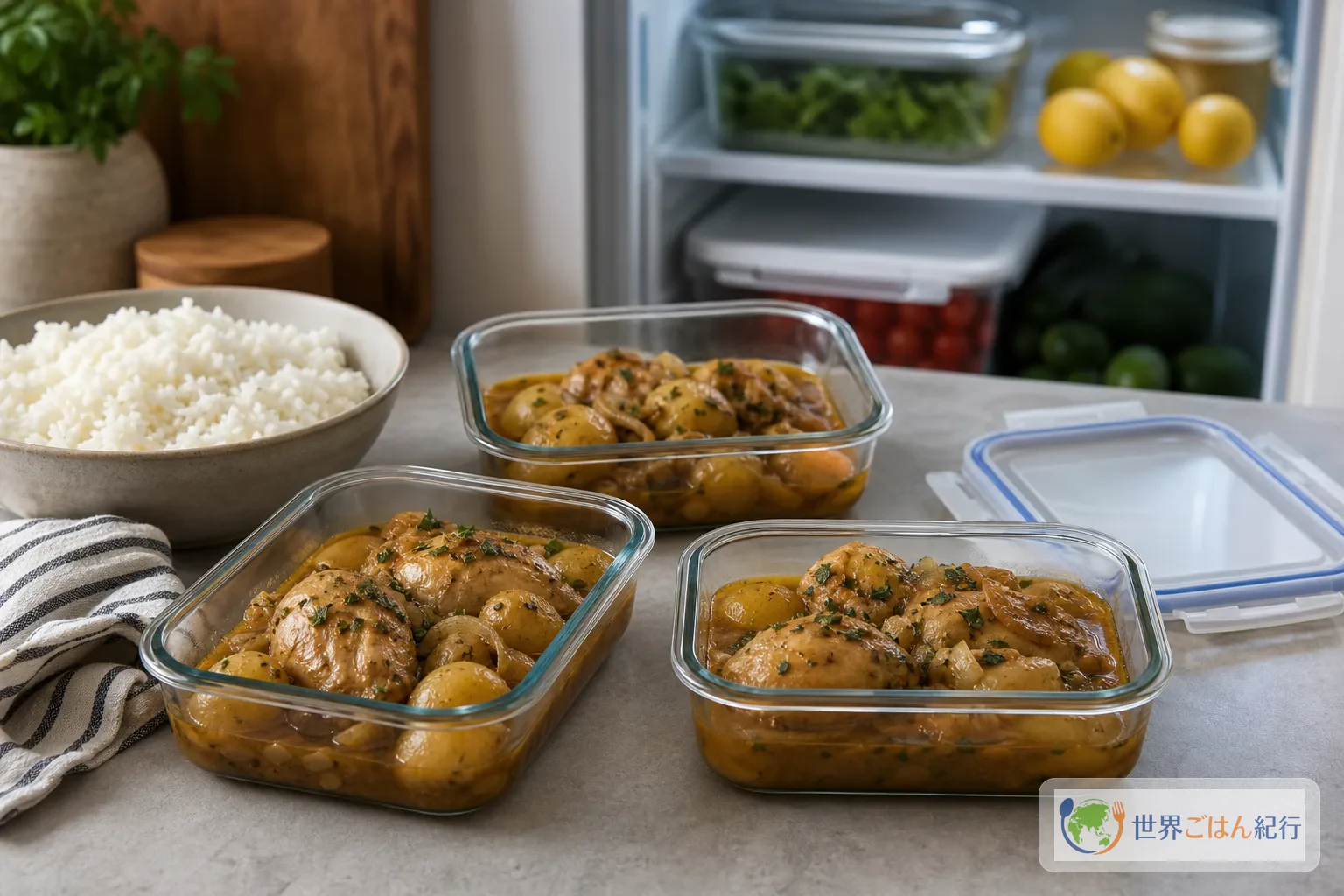
Within 2 hours of cooking, divide into shallow containers and put in a refrigerator at 4°C (40°F) or below. A guide is within 3–4 days in the refrigerator, and 2–3 months frozen as a stewed dish. When eating, reheat to 74°C at the center, and avoid refreezing.
Sources
The materials that confirmed the origin, cooking method, how it is eaten, and storage and safe temperatures of kédjénou are as follows. All online materials were reopened on the day the text was written and checked against the scope used in the text.
- A Tour of African Gastronomy: Côte d'Ivoire (UN Tourism) Accessed and checked: 4 August 2026. Checked the markets of Côte d'Ivoire, attiéké and how kédjénou is eaten.
- Kedjenou (196 flavors) Accessed and checked: 4 August 2026. Checked the canari, the stew without added water, the step of shaking the pot, and example ingredients.
- Ivorian Kedjenou Recipe (Travel Food Atlas) Accessed and checked: 4 August 2026. Checked the ingredient composition, cooking time, and pairing with attiéké or rice.
- Chicken Kedjenou from the Ivory Coast (Tastes From the Road) Accessed and checked: 4 August 2026. Checked the canari, attiéké, and variations extending to fish and guinea fowl.
- Kedjenou de pintade fermière (MAGGI Côte d'Ivoire) Accessed and checked: 4 August 2026. Checked an example of a different line of recipe using guinea fowl, water and oil.
- La gastronomie ivoirienne : une diversité culturelle à découvrir (paper published by Ziglôbitha) Accessed and checked: 4 August 2026. Checked the culinary background tied to farming and hunting, the canari, aromatics and regional differences.
- Safe Minimum Internal Temperatures (FoodSafety.gov) Accessed and checked: 4 August 2026. Checked the safe temperature of 74°C for chicken and reheating.
- Cold Food Storage Charts (FoodSafety.gov) Accessed and checked: 4 August 2026. Checked refrigerator and freezer periods for stewed dishes and cooling conditions.



