
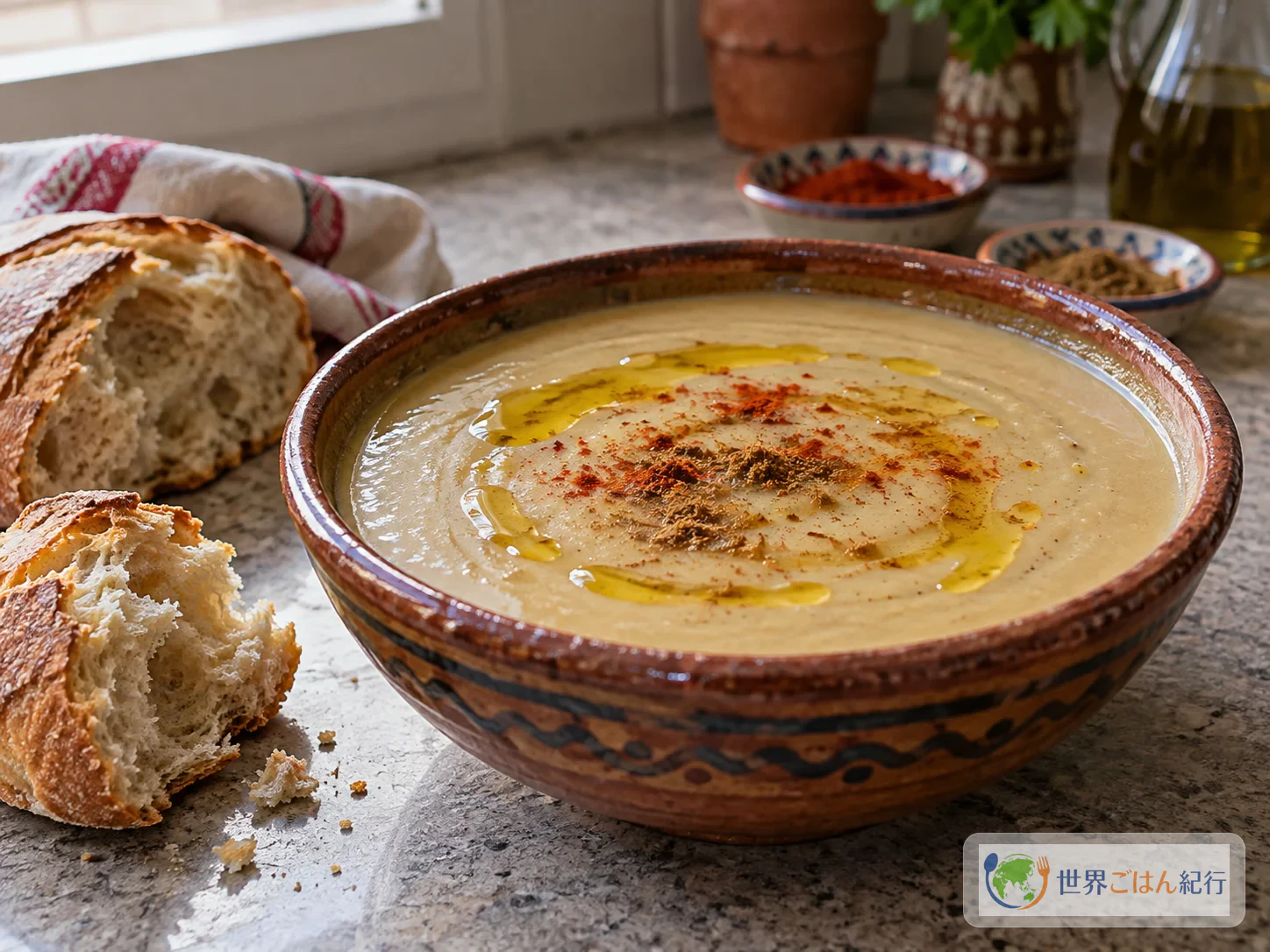
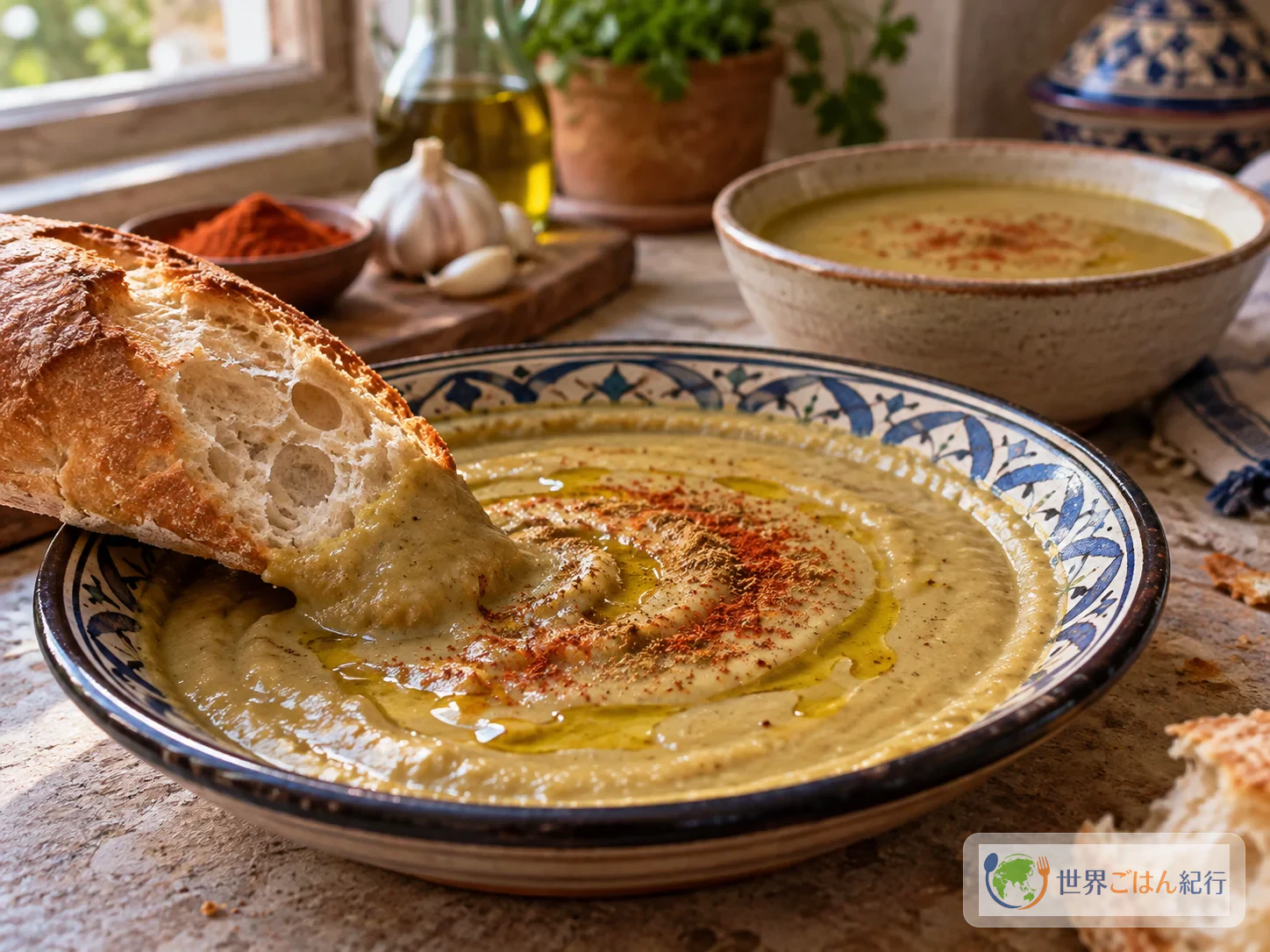
In the bowl is a pale cream-colored bean purée. Olive oil dropped on the surface forms small golden rings, torn bread is stacked beside it, and a small jar of cumin sits on the table. Dip the edge of the bread into the beans, scoop, sprinkle a pinch of cumin, and bring it to your mouth. This is the typical way to eat bissara. Sometimes called dried fava bean soup, this dish is the Moroccan one in which skinned dried fava beans are cooked and made smooth. No milk or cream is added, yet just mashing the beans gives it a silky thickness.
At the Table in Northern Morocco, With Bread or a Spoon
The spelling comes in several forms, including Bissara, Bessara, and Bisarra, and it is especially loved in northern Morocco. Some people eat it at street stalls and some make it in their home kitchens; it is that familiar a dish. A thickly finished purée is put on a shared plate, and everyone dips bread to scoop it. A thinner one is poured into individual bowls and drunk with a spoon. You can also make it somewhere in between. In the north it is sometimes served as an accompaniment to fish, but it is not eaten the same way everywhere in the country. The recipe in this article is based on a thickness you can scoop with bread.
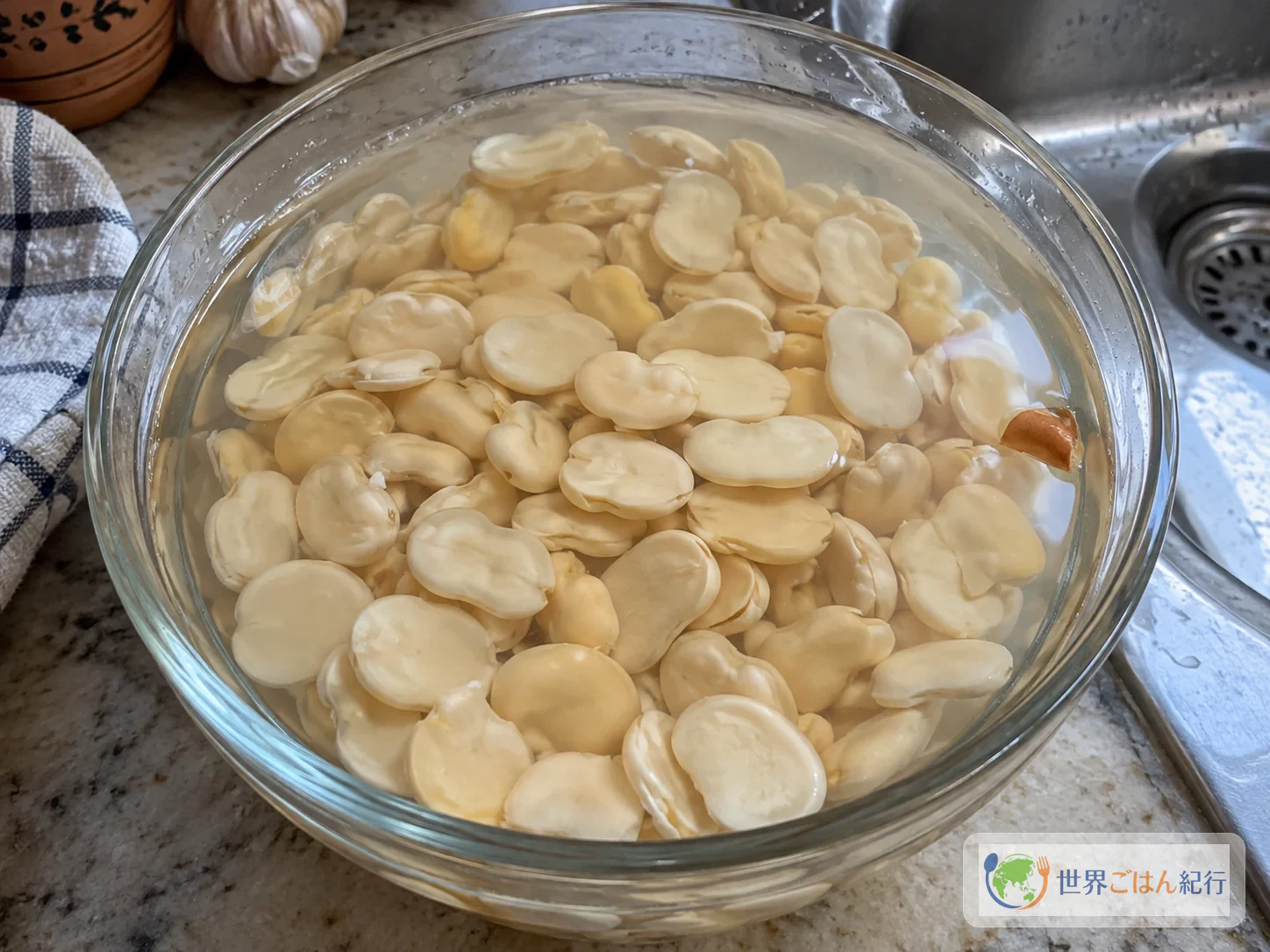
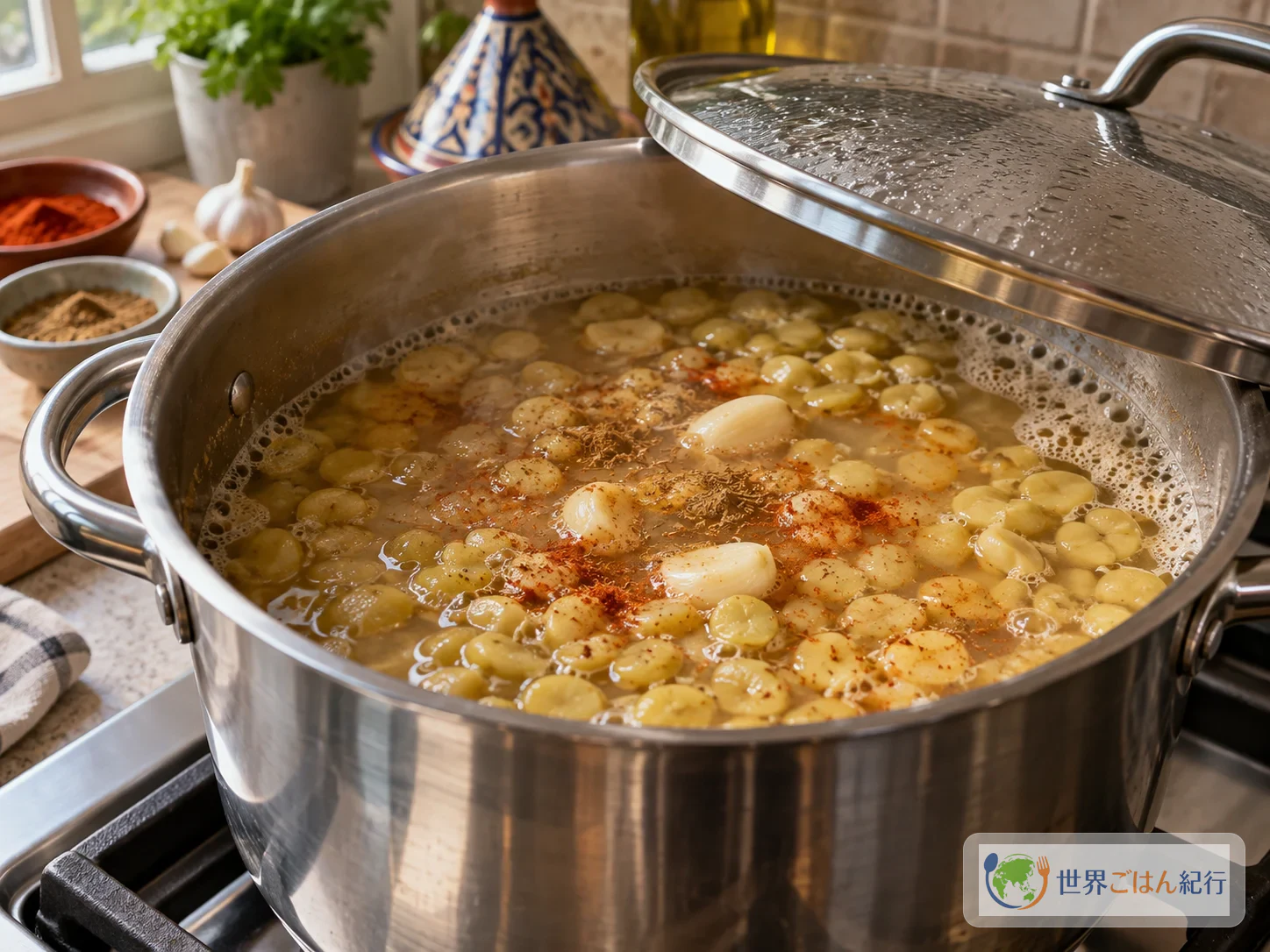
Before you start, look at the time and shopping. This is a formula adjusted for home cooks, for four servings. Soak 250 g skinless split dried fava beans in water overnight (8 hours or more), and plan about 90 minutes for the cooking itself. Cook the beans with garlic and mash them, and finish at the table with cumin and oil. The thickness changes with how much of the reserved cooking liquid you return. With fresh or frozen fava beans, the result is a different thing. When buying, check three points: dried, skinless, and split. The most important is that they are skinless dried split beans.
There is also bissara made with dried split peas. Fava beans and peas are different beans, so the color and flavor are not the same. In the pea version, some formulas use onion. Methods vary by region and household and cannot be narrowed to one correct answer.
Ingredients (serves 4)
"Dried fava beans" on a shelf means broad beans. What you need are pale cream-colored skinless split beans; round brown beans with the skin on and salted fried fava beans are not for this method. Do not choose by the product name alone; look at the ingredient and processing labels and confirm the skin and the processing state. For spices, use ground cumin and a mild paprika powder. Curry powder is a mix of several spices and differs in flavor from cumin alone.
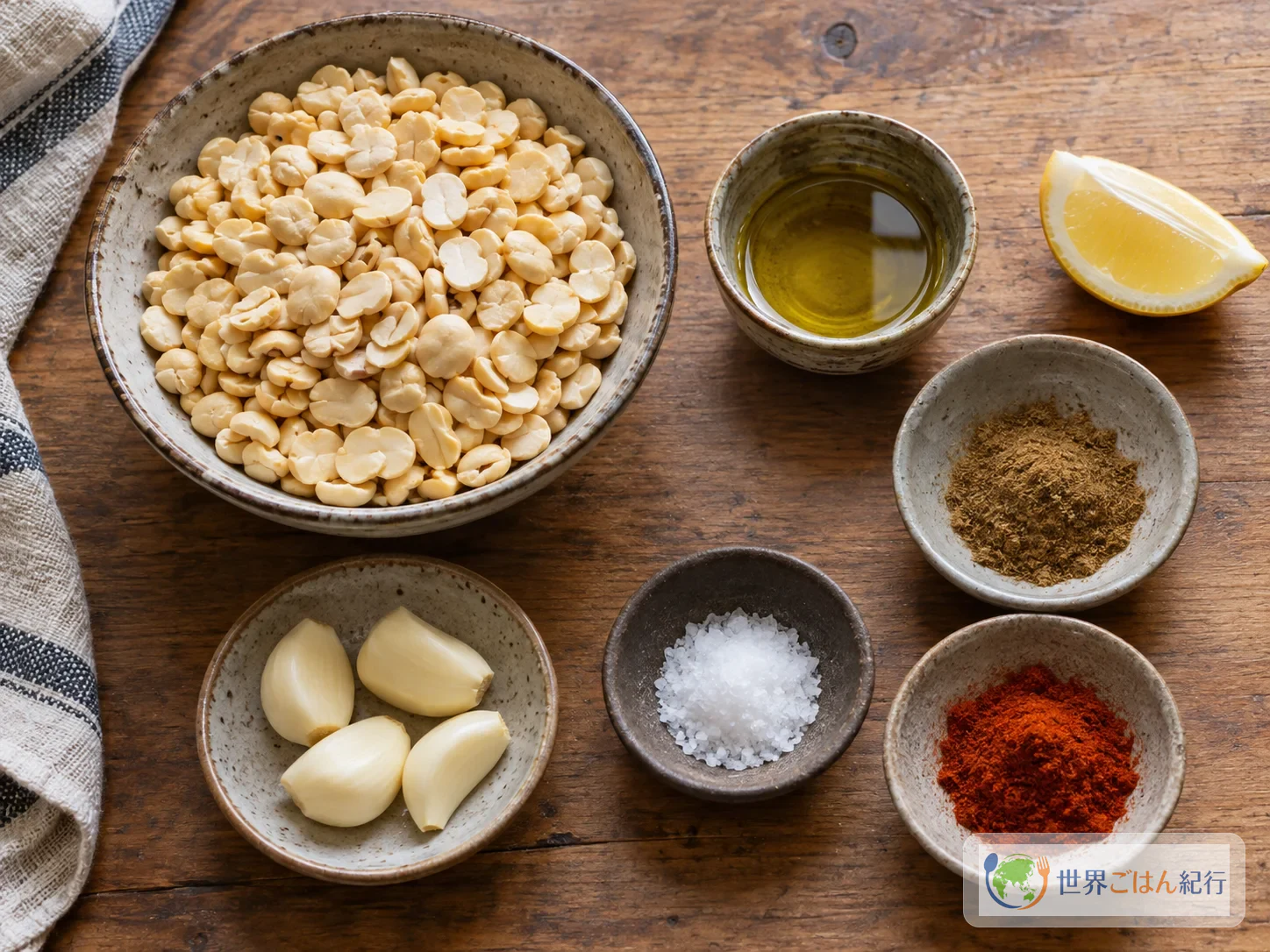
When looking at import grocers or online, give priority to dried skinless split fava beans. Even if canned goods or fried beans show up in search results, do not choose them as the same ingredient. Garlic, salt, bread, and everyday oil are easy to gather on a regular shop, so secure the beans and cumin first.
The nutrition values are an estimate for the whole four servings of soup. Bread, the optional lemon juice, and heat are not included, and adding oil would change the values. The 8 hours 15 minutes of prep time includes 8 hours of soaking. Depending on the age of the beans, the pot, and the heat, the time to become soft may extend further.
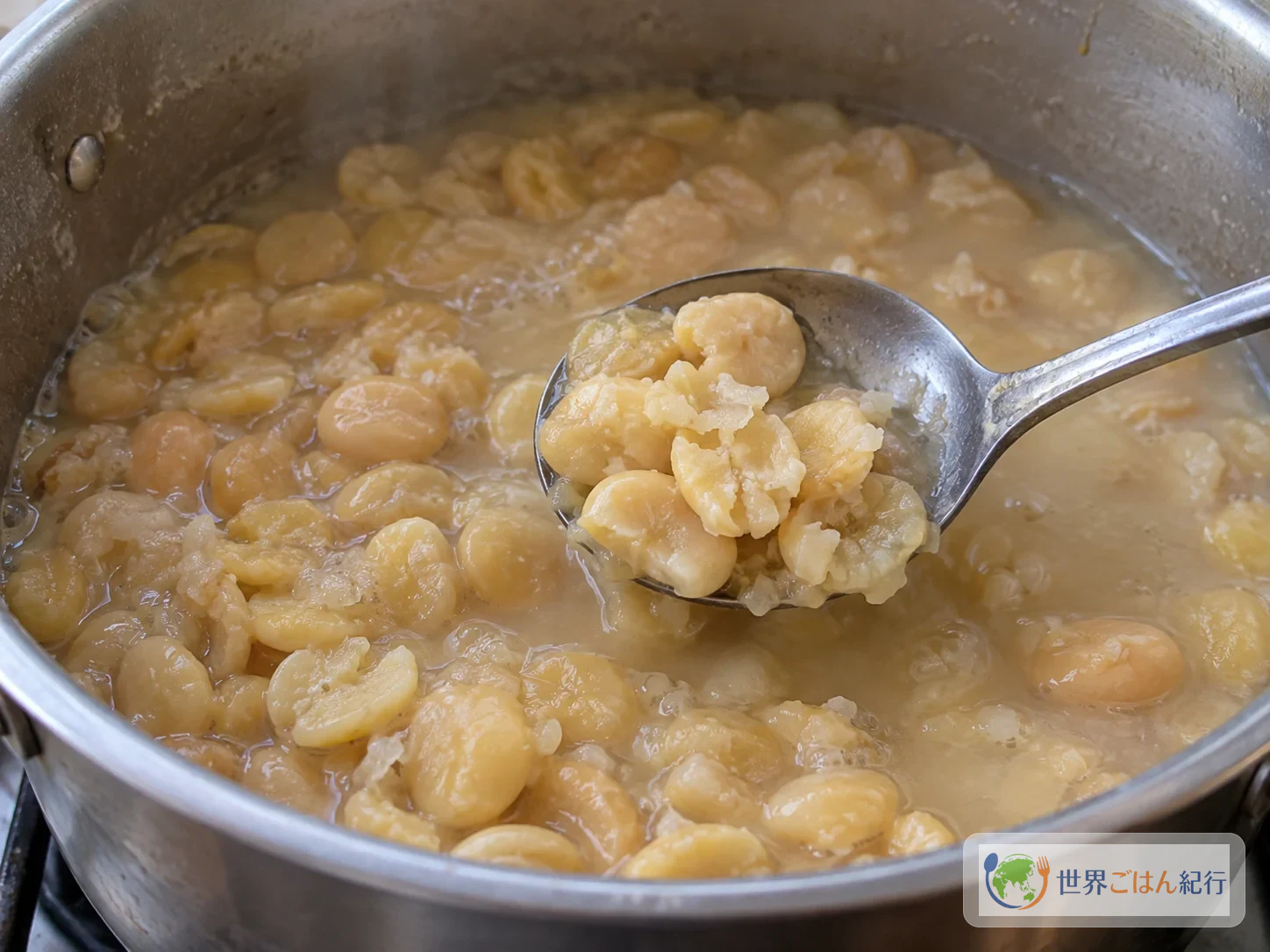
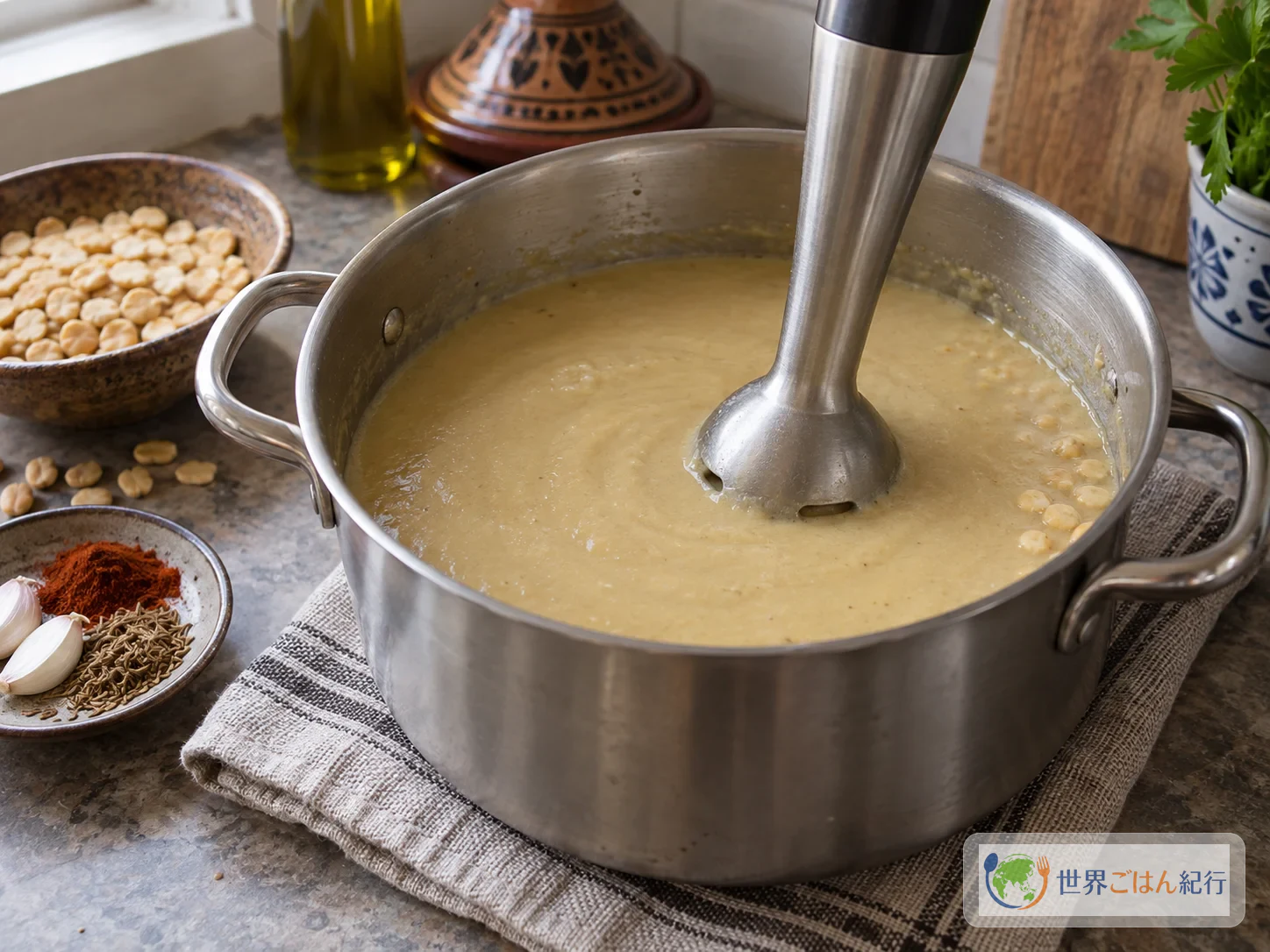
For equipment, prepare a heavy pot of about 3 L, a colander, a heatproof bowl to catch the cooking liquid, a wooden spoon, and an immersion blender. Without a blender, you can press the soft-cooked beans through a sieve, but it takes more effort and time. The order is to check that the beans are soft before mashing. Do not throw away the cooking liquid; reserve the cooking liquid to use later when adjusting the thickness.
Avoiding Grittiness and Scorching
Watch for hot splashes when making the purée. First, check in the instruction manual whether your blender can be used with hot liquid. When you are done, stop the blade before lifting it, and then lift it out of the liquid. Avoid putting hot soup straight into a sealed blender jar. If you are unsure of the temperature or capacity instructions, let it cool before working.
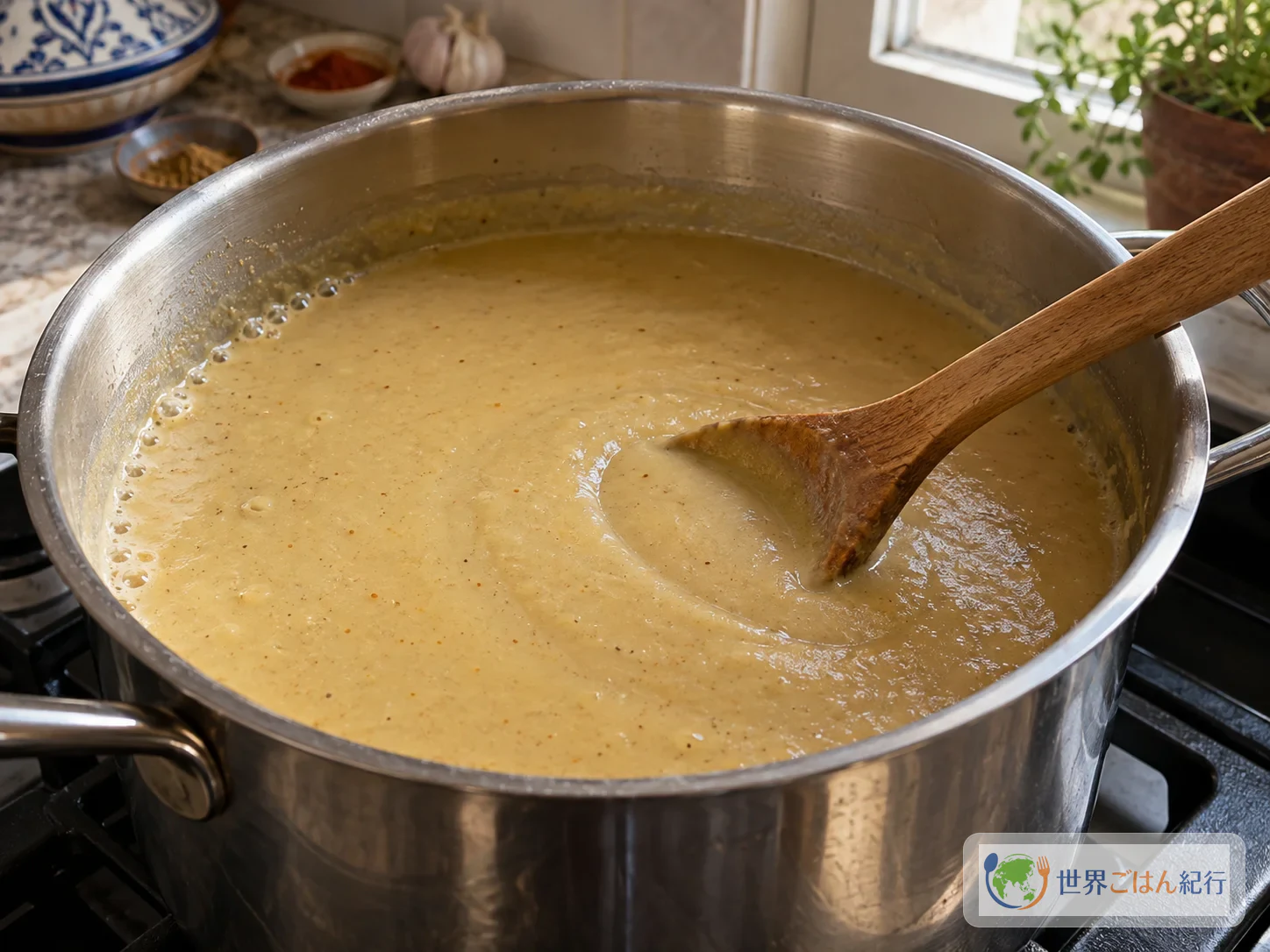
If the result is gritty, suspect that you mashed the beans while the grains were still hard. If it is before mashing, add water and cook 10 minutes at a time. The time it takes changes with the age of the beans and how they were processed. More than the clock of about 60 minutes, give priority to whether they are soft to the core.
Bissara thickens as it cools. When reheating, first add 50 ml water at a time and warm over medium-low heat, stirring the bottom. The trick is not to pour in a lot at once but to return water a little at a time while watching the thickness you want to eat. If the bottom of the pot scorches, do not scrape the bottom and stir it in.
If the taste seems lacking, before reaching for salt, add the finishing oil and cumin to the bowl. Taste one bite, then add salt. If you keep the heat separate from the bean purée, people who do not like spicy food can share the same pot of bissara. The lemon juice is optional. A small amount to see the change is just right, rather than making it strongly acidic and covering the taste of the beans.
On Days You Have No Fava Beans, Use Split Peas
Bissara is also made with dried split peas. If you use green split peas, the result is greenish in color and does not taste the same as the fava version. Think of it as a different bissara made with split peas. Some formulas for dried split peas do not need an overnight soak. Follow the product description for the ingredients, and rinse before cooking. For a home-style adaptation that replaces the 250 g of fava beans in this formula with the same amount of split peas, simmer for 50–60 minutes over low heat until the core is gone. Add water while watching absorption and thickness.
Cumin and oil are the axis of the toppings. Serve the cayenne on the side so that heat can be adjusted bowl by bowl. A mild paprika adds color. It can be made without bouillon, and as a basic formula that uses no meat or dairy, it is easy to adapt to dietary needs if you also check the ingredients of any added stock and the bread. Fresh or frozen fava beans have a different water content from dried beans, so do not substitute them at this amount and cooking time.
From the Everyday Table in the North to Summer Trips
In northern Morocco, bissara is eaten as a dish on its own and as a companion to fish. If you imagine only a thin soup, you miss the way of eating it as a purée scooped with bread. It is a dish that appears on the table both morning and night, not reserved for festivals. It is enjoyed as an everyday meal built around beans, not a grand meat dish.
Salima Benkhalti, who shares Moroccan recipes, writes a memory: on a summer car trip from Rabat to Marrakech with her father, they ordered bissara at a roadside restaurant. This is Salima's own recollection. She says she mostly makes it in winter, but that in Morocco it is also served on hot summer days. As a soup that is also there on summer trips, bissara seems to be eaten regardless of season.
Seasoning bissara divides into two stages: cooking the beans in the pot, and adding oil, cumin, and heat at the table. The thickness and the tabletop seasonings differ by shop and household. The amount of oil or the level of heat is not a measure of whether it is authentic.
If you want to add a vegetable dish to a table of just bean soup and bread, zaalouk (in Japanese), below, goes well. If you want to know another Moroccan soup with meat and tomato, try harira. It is a separate dish from bissara.
Frequently Asked Questions
Can I make it with dried fava beans with the skin on?
You can, but removing the skins takes effort, and the soaking and cooking times change. The times in this recipe are based on skinless split beans. If you have already bought skin-on ones, soak them as the product instructions say, remove the skins, and then check that they are soft to the core. If you leave the skins on, the mouthfeel differs.
Will it be smooth without a blender?
There is a method of cooking the beans until quite soft and pressing them through a sieve while reserving the cooking liquid. It takes longer than a blender. Mashing with just a wooden spoon leaves graininess. A grainy texture and a hard core remaining are separate things, though, so tell them apart.
How do I store leftover bissara?
Do not leave it in a big pot at room temperature for long; move it to small containers and cool it quickly. Refrigerate within 1–2 hours of cooking. Dividing into portions and refrigerating quickly is the basic rule, and the guide is for the refrigerator to be at 4°C or below. Freeze what you cannot finish within 48 hours. Freeze in portions with the date, and the quality guide is 1 month. To eat, thaw in the refrigerator, take out only the amount you need, and reheat while stirring until the whole thing is thoroughly hot. Bring the thickness back by adding water. The storage periods written here do not guarantee the safety of anything left at room temperature.
What should I check for allergies?
Do not serve it to anyone who needs to avoid fava beans. If you switch to split peas, check first that they are ingredients the person can eat. Some breads served alongside contain wheat, dairy, and other allergens. Check the ingredient labels not only of the soup but also of the bread, mixed spices, and any added stock.
Sources
- Christine Benlafquih, Taste of Maroc, “Moroccan Dried Fava Bean Dip or Soup – Bessara (Bissara),” updated 13 January 2021. Basis for skinless split fava beans, soaking, cooking, how to eat it, and the nutrition estimate. Accessed and checked: 16 October 2026.
- Christine Benlafquih, Taste of Maroc, “Moroccan Split Pea Bessara Recipe,” updated 11 October 2020. The split pea version and thickness adjustment. Accessed and checked: 16 October 2026.
- Salima Benkhalti, Salima's Kitchen, “Bisarra (Moroccan Fava Bean Soup),” updated 15 May 2025. A home formula, the summer trip recollection, and how the thickness changes when cold. Accessed and checked: 16 October 2026.
- Food Standards Agency, “How to chill, freeze and defrost food safely,” published 18 December 2017. Dividing into portions to cool, time to refrigeration, and consumption within 48 hours. Accessed and checked: 16 October 2026.
- FoodSafety.gov, “Cold Food Storage Chart,” checked 19 September 2023. Guide for refrigerator at 4°C or below and freezer temperature. Accessed and checked: 16 October 2026.



