

It Smells Sweet, but Cut It and Chicken Comes Out
When you dust the baked round pie with powdered sugar, the air in the kitchen suddenly smells like a pastry shop. But when you put a knife in, what comes out is not whipped cream; it is chicken simmered with ginger, cinnamon, and herbs, and a rich onion filling bound with egg. Finally the sweetness of almonds follows, and the line in your head between "sweet" and "salty" shifts a little.
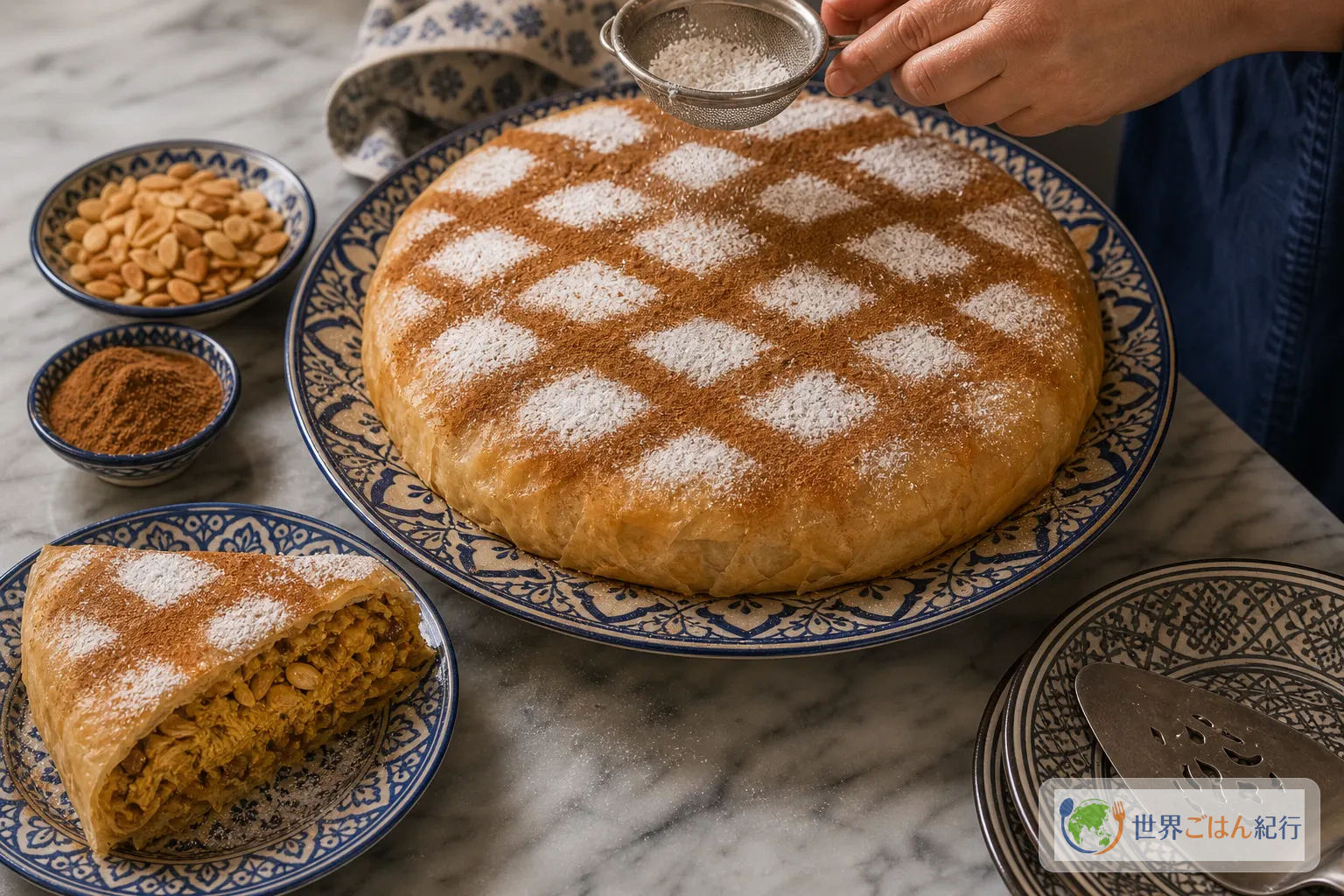
Pastilla (Pastilla / Bastilla / بسطيلة) is a well-known Moroccan baked pie wrapped in thin pastry. Traditionally it layers pigeon or young chicken, a thin pastry called warqa, eggs, almonds, cinnamon, and powdered sugar. In kitchens there it is baked on a large platter and often served at celebrations and when guests come.
The obstacles to making it at home are pigeon and warqa. Neither is realistic to shop for at home. This article moves toward a form you can make with chicken thighs, spring roll wrappers or filo, and a shallow round pan. Still, there are things to protect: cooking the moisture out of the filling, not chopping the almonds too fine, and getting fat evenly into the pastry before baking. If you do not miss these three, even a home oven comes close to a pastilla that is "sweet yet a proper meal".
An introduction to Moroccan cuisine gathers the standards such as tagine, couscous, and harira. Pastilla leans a bit more toward special occasions among them. For an everyday stew, how to make tagine is easier, and if you want to start with a bean-and-herb soup, how to make harira is easier; if you can take a little time on a weekend, pastilla instantly becomes the star of the table.
Pigeon can be replaced with chicken thighs. Warqa can be replaced with filo, or with large spring roll wrappers if filo is hard to find. Even with substitutions, if you cook out the filling's moisture thoroughly and keep the egg layer and the almond layer separate, the lightness and sweet-and-salty character of pastilla remain.
Background of Pastilla: A Celebration Dish of Fez and Changes by the Sea
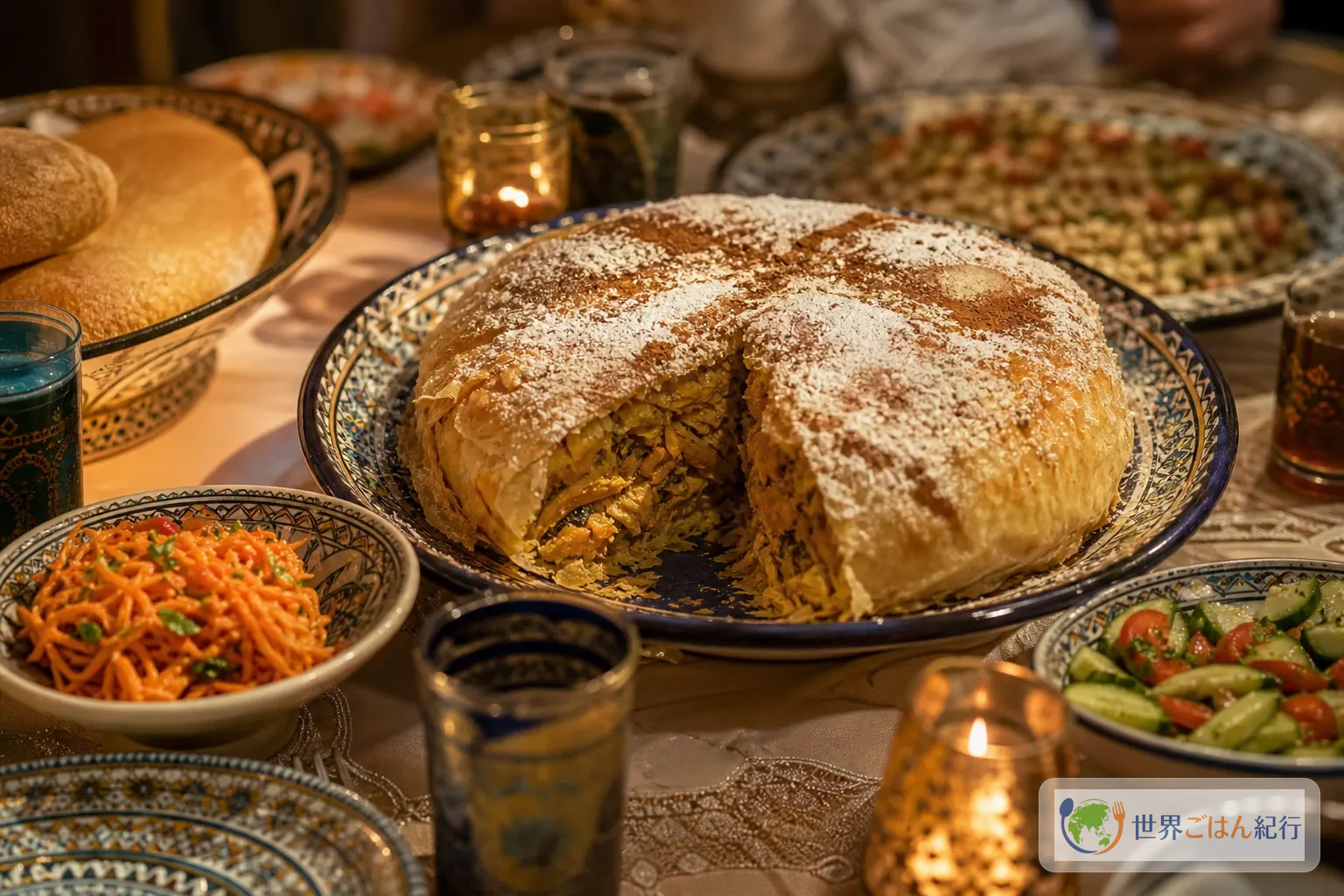
In the context of introducing Fez's food culture, Morocco's tourism office lists pastilla as a dish stuffed with pigeon and almonds. A WIPO document on Moroccan cuisine also describes it as a dish that combines pigeon or chicken, almonds, eggs, and cinnamon in warqa pastry. In other words, the heart of pastilla is not "making meat sweet" but layering strongly aromatic meat, the savoriness of egg-bound filling, the sweetness of nuts, and the toasty quality of thin pastry into one.
The name is spelled in varying ways: pastilla, bastilla, bestilla. In Japanese it is sometimes explained as a "Moroccan meat pie", but its layers are thinner than an ordinary pie and it comes out lighter. The filling varies by home and shop; inland there is a sweet-and-savory version with chicken or pigeon, and by the sea, in places like Casablanca, you also see seafood bastilla using fish and shellfish. The seafood versions often use vermicelli, white fish, shrimp, and squid, and some do not push the powdered sugar strongly.
If you are making it for the first time, the chicken version makes the most sense. You will not get the gamey quality of pigeon, but chicken thighs have fat and gelatin and hold their own against the onion and egg layers. Made with breast only, the cut face tends to be dry, so if you use it, use half thigh and half breast.
What is interesting about pastilla is that it teaches the "sweetness of a meal". In Japanese homes, combining sugar and meat tends to go in the direction of sukiyaki or teriyaki, but pastilla's sweetness is much drier. The powdered sugar and cinnamon are not a sauce; they sit on the surface like a veil of aroma. Not over-sweetening the filling makes it easier to eat all the way through.
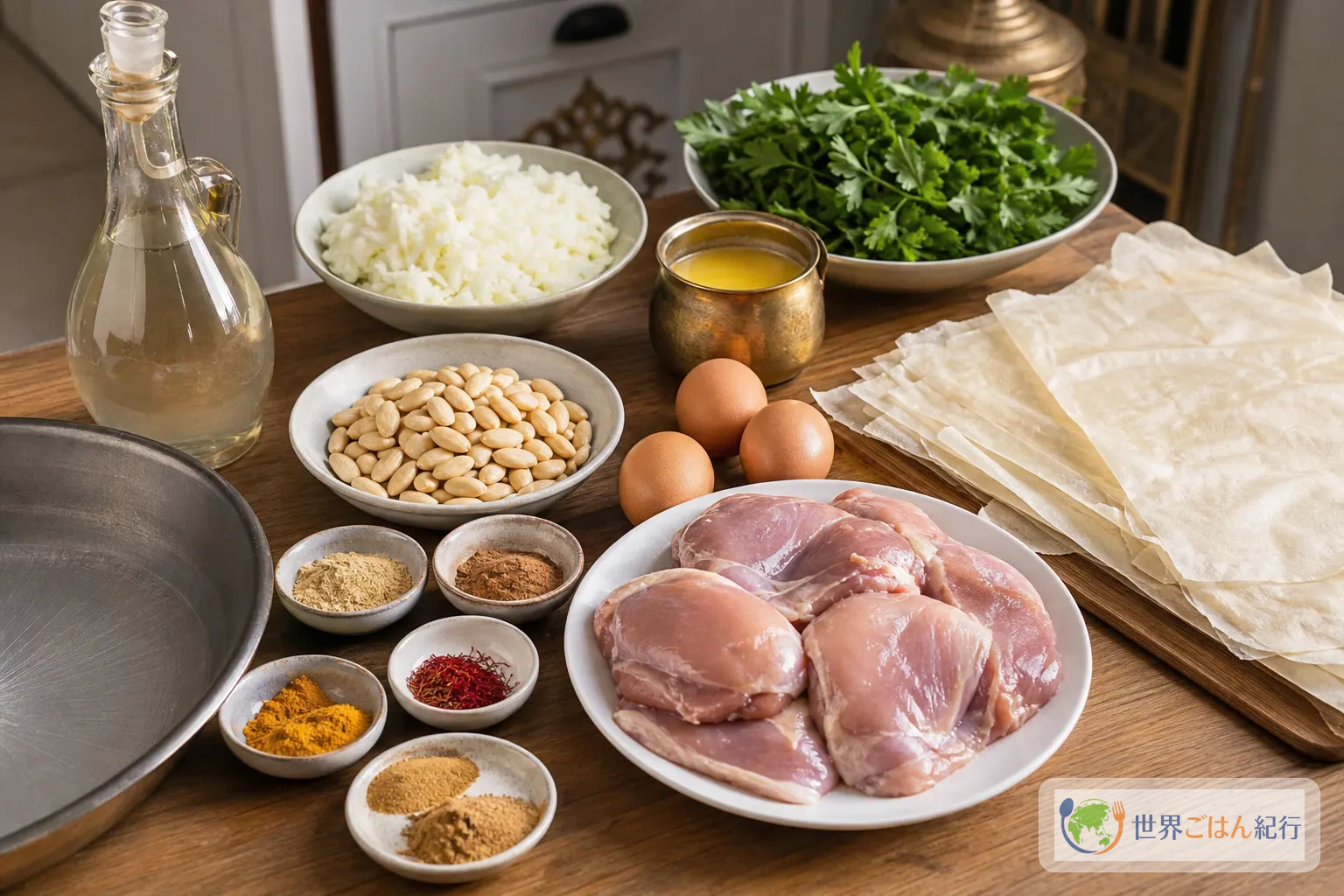
Ingredients (one 24 cm round pan, serves 6)
Equipment
| Tool | Guide | Reason |
|---|---|---|
| Shallow round pan, about 24 cm in diameter | 1 | Heat reaches the bottom and it cuts easily |
| Heavy pot or deep frying pan | 1 | For simmering the chicken and cooking off liquid |
| Colander | 1 | Separates the chicken from the cooking liquid |
| Food processor or knife | 1 | To crush the almonds coarsely |
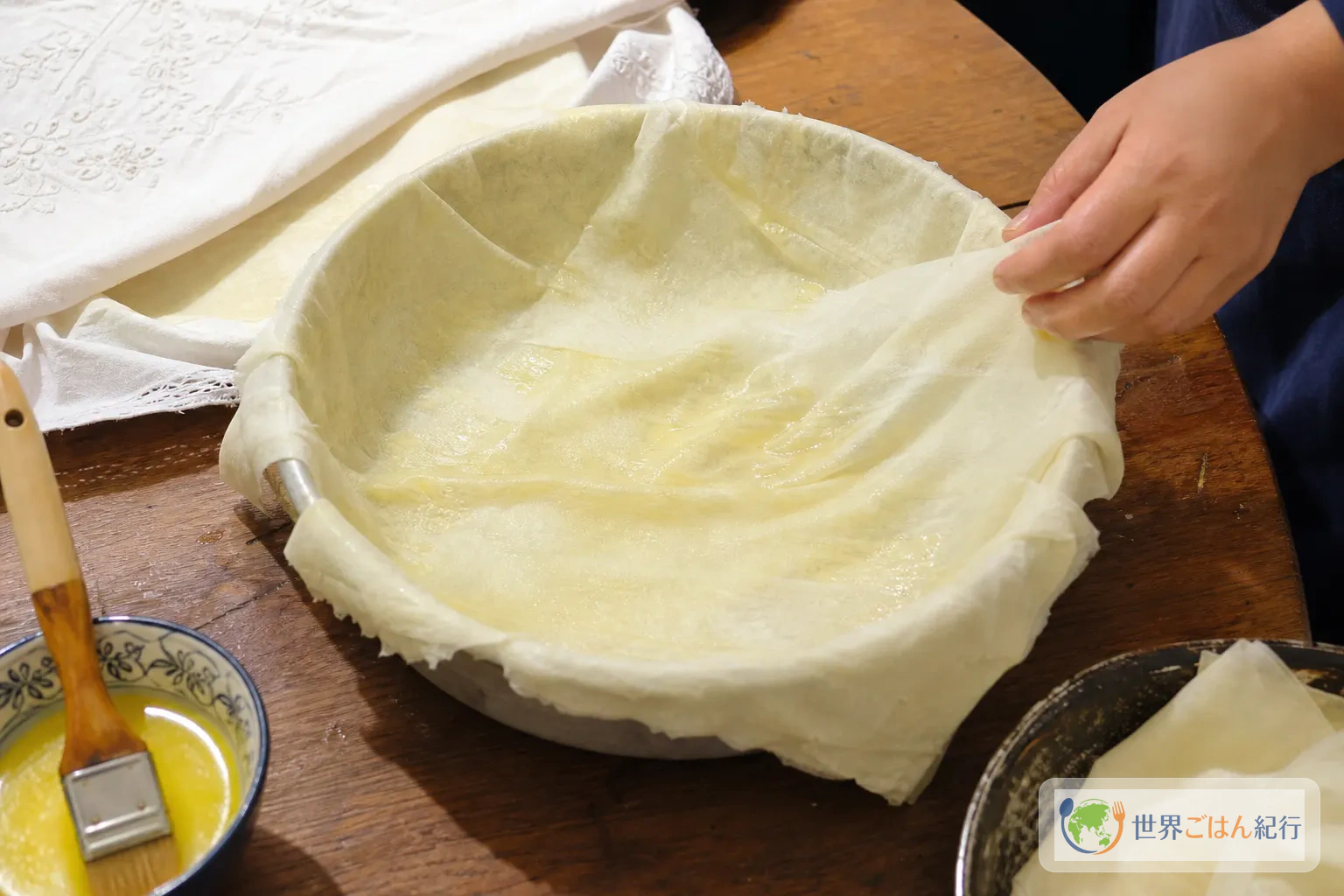
| Pastry brush | 1 | For brushing a thin layer of melted butter on the pastry |
This recipe uses wheat, eggs, dairy, nuts, and chicken. Spring roll wrappers and filo contain wheat, butter contains milk, and almonds are tree nuts. Depending on the product, ras el hanout may contain sesame, nuts, or celery-derived ingredients, so check the ingredient label.
What to think about when shopping
What is worth looking at when shopping for pastilla is not the chicken or eggs but the spices that give the aroma its outline, saffron that gives color and aroma in tiny amounts, and a shallow round pan that bakes thin. Chicken thighs, onions, eggs, and almonds are fine from an ordinary grocery store. Orange blossom water is used at just 1 tsp if you can find it, and looking for a small bottle at a baking supply shop is plenty. Ras el hanout and saffron are best bought in small quantities at a spice shop or from an online seller. A shallow pan works whether it is a paella pan, a tart pan, or any shallow round pan; if you already have one, there is no need to buy more.
Method: Cook Off the Moisture, Then Wrap in Thin Pastry
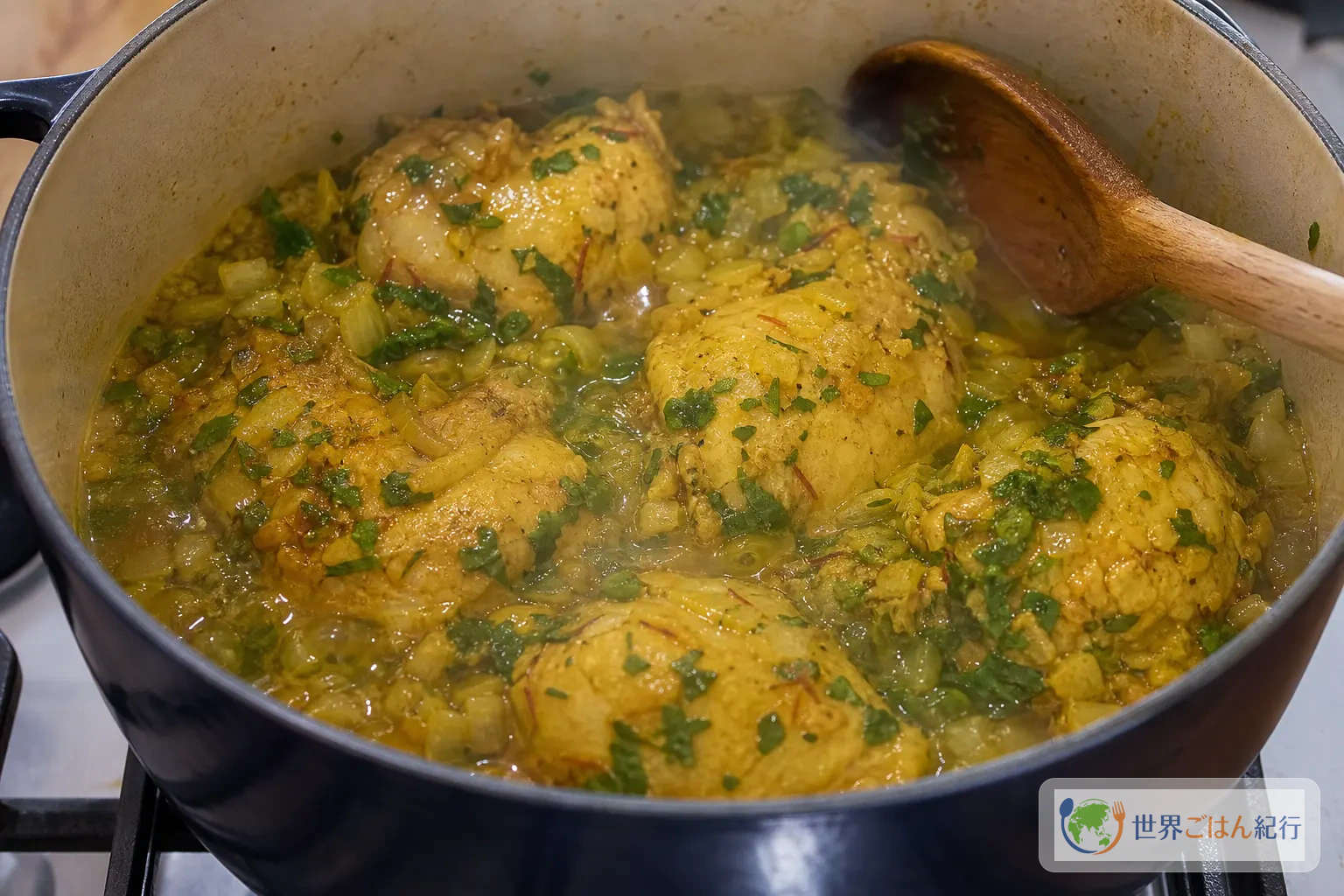
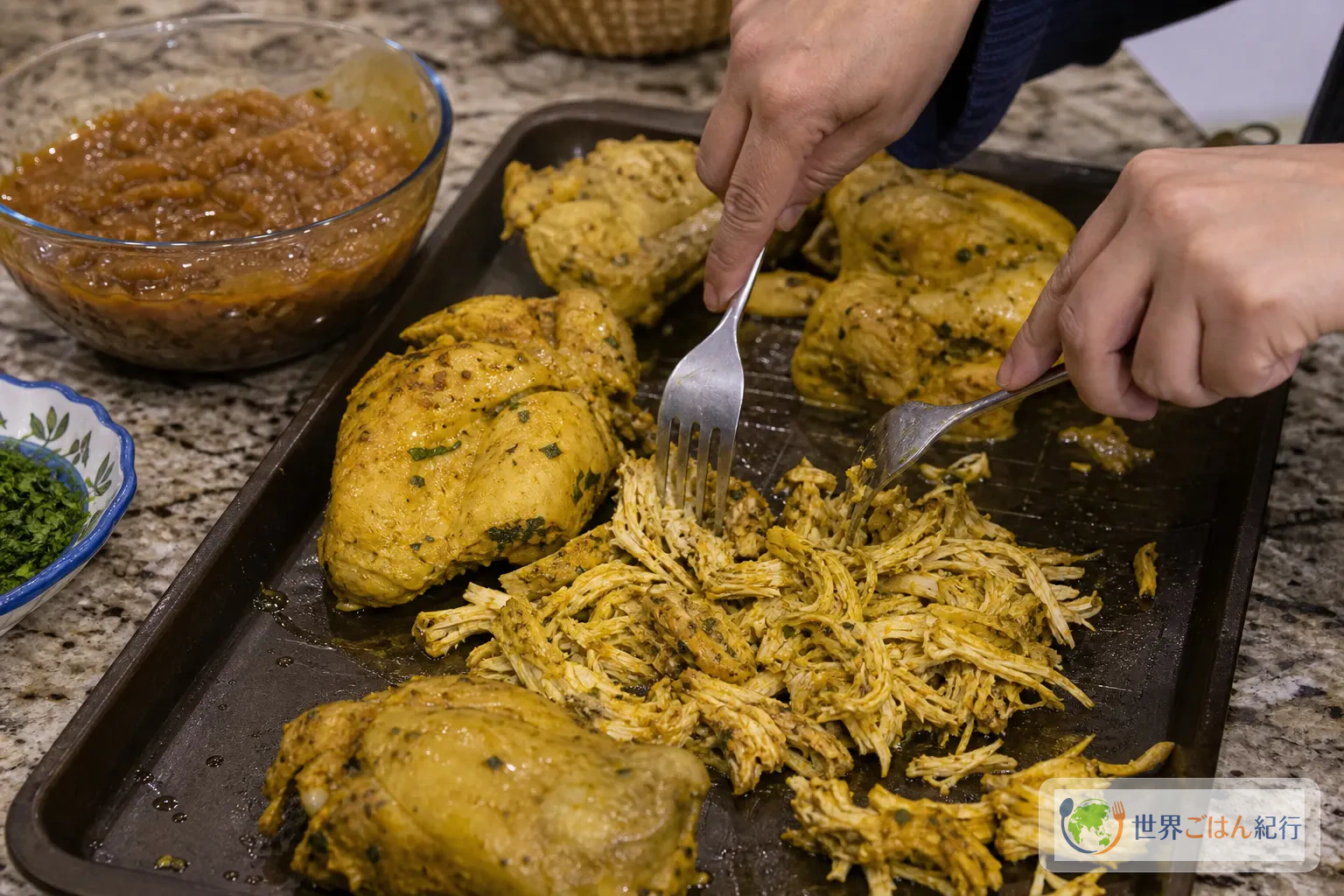
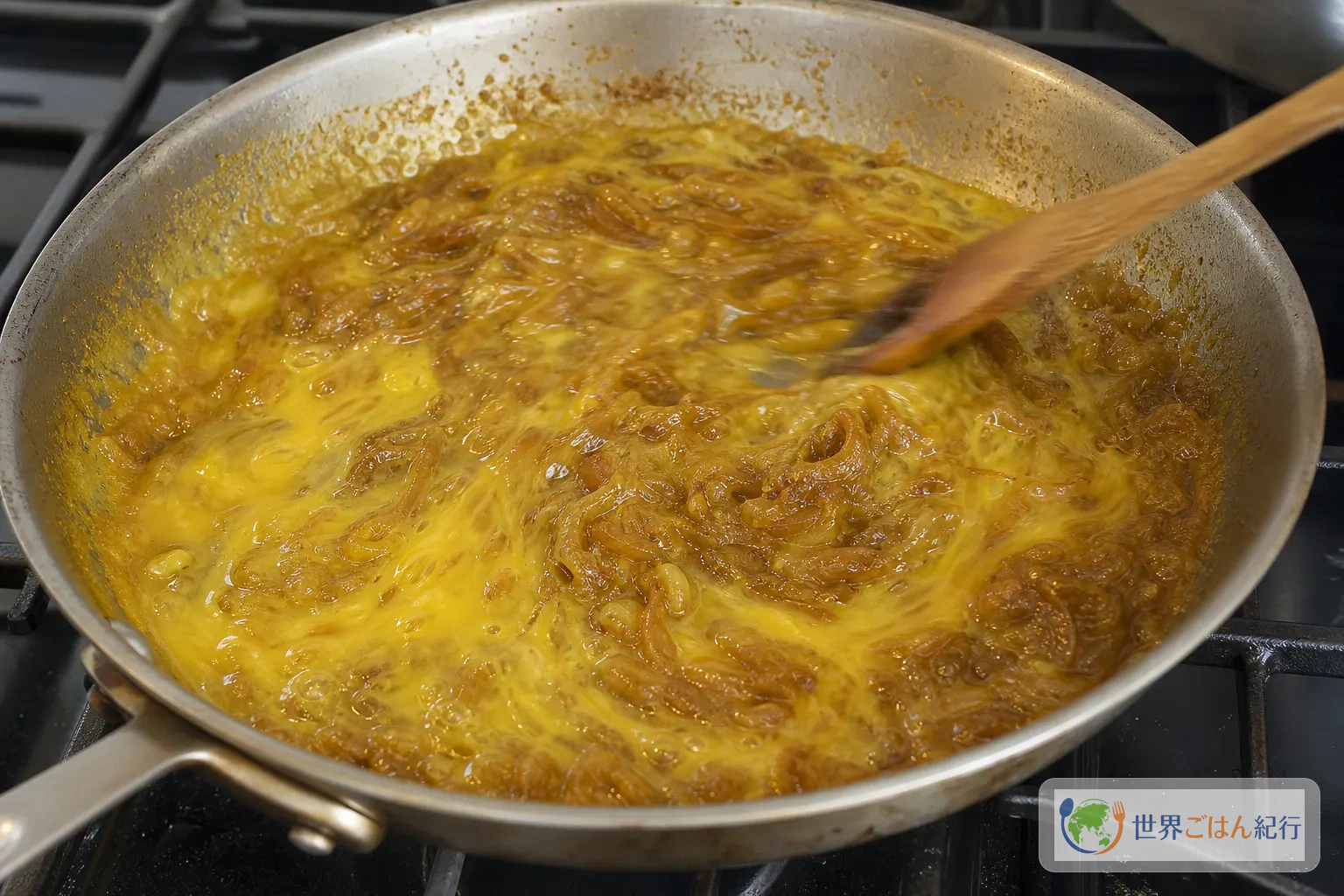
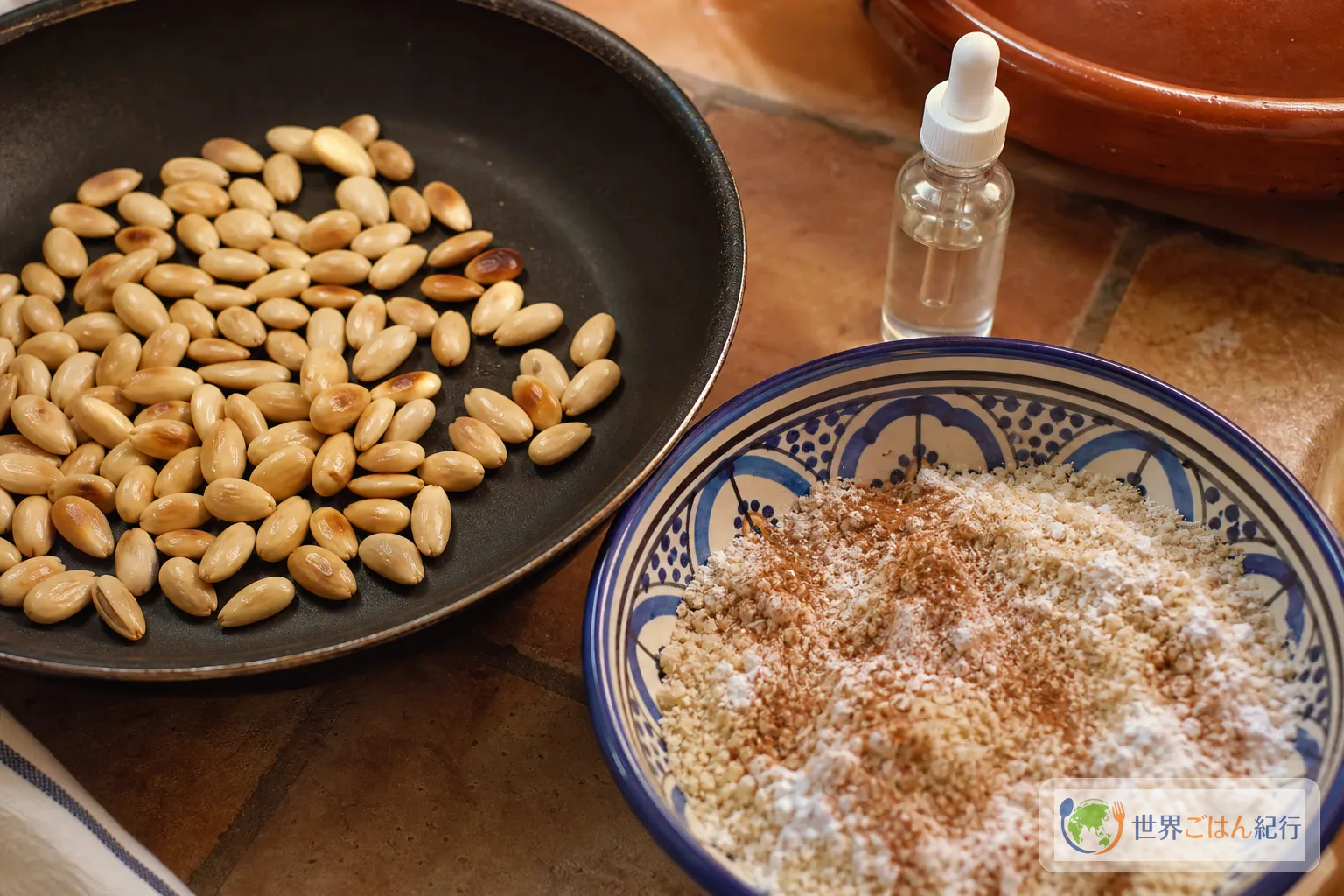
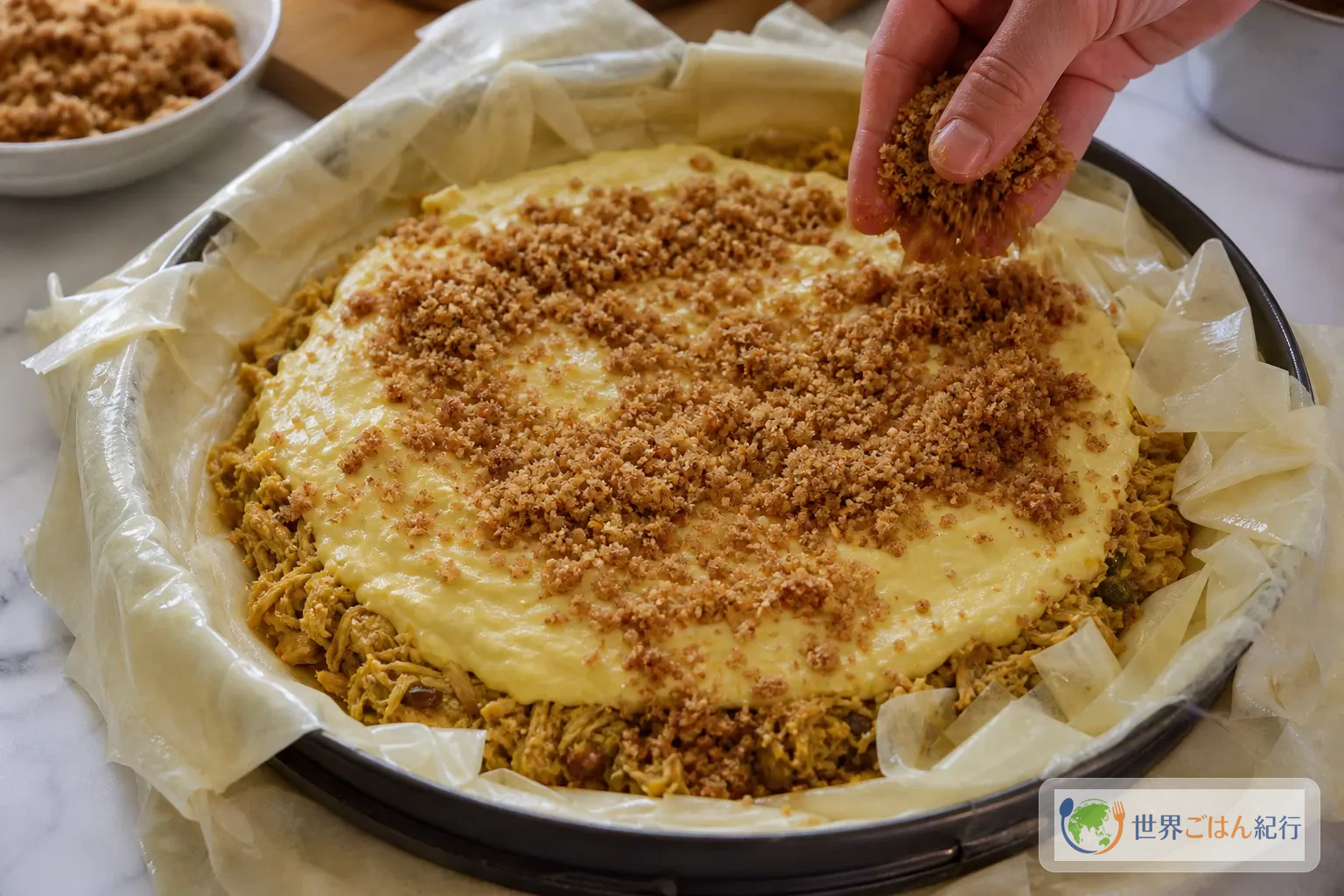
What matters in pastilla comes before the wrapping. If too much of the chicken's cooking liquid remains, the bottom gets damp, and if the almonds are ground to powder, the filling feels heavy. Prepare the chicken, egg, and almonds separately, and layer and bake them at the end.
If you over-sweeten the almonds inside, the boundary with the chicken blurs. The impression of sweetness is enough from the powdered sugar and cinnamon on the surface. Dust lightly the first time and let each person add more after cutting, which is less likely to go wrong.
A table of choices for staying close to the original in a home kitchen
| What to protect for authenticity | Realistic substitute | Substitutes to avoid |
|---|---|---|
| The savoriness of pigeon or young chicken | Chicken thighs. If using breast, up to half | Breast only, or tenderloin only |
| The thinness of warqa | Filo. If you have none, large spring roll wrappers, 2 sheets at a time | Wrapping only in frozen puff pastry |
| Dry sweetness | Powdered sugar and cinnamon thinly on the surface | Putting a lot of sugar in the filling |
| The green note of herbs | Parsley and cilantro in equal parts | Leaving out the herbs entirely |
| Floral aroma | 1 tsp of orange blossom water | Vanilla extract, liqueurs with strong flavoring |
| A shallow, round bake | Paella pan, tart pan, shallow round pan | Packing it thick into a deep cake pan |
If you can get filo, choose filo the first time. You can make it with spring roll wrappers, but they absorb moisture more easily than filo and the result is slightly heavier. If you use spring roll wrappers, don't brush too much butter on each sheet, and offset two sheets slightly to make a thin layer.
Frozen puff pastry is convenient but moves away from pastilla's lightness. The butter layers are thick, and when cut the pastry tends to speak louder than the filling. If you must use it, use it thinly only on the top and spring roll wrappers on the bottom, which keeps it from getting heavy.
Saffron deepens the aroma if you have it, but it is not essential. What builds pastilla's outline is rather ginger, cinnamon, herbs, and almonds. If you leave out the saffron, keep the turmeric to 1/2 tsp at most, and don't add too much trying to deepen the yellow.
Why It Fails and How to Fix It
| Symptom | Cause | Fix |
|---|---|---|
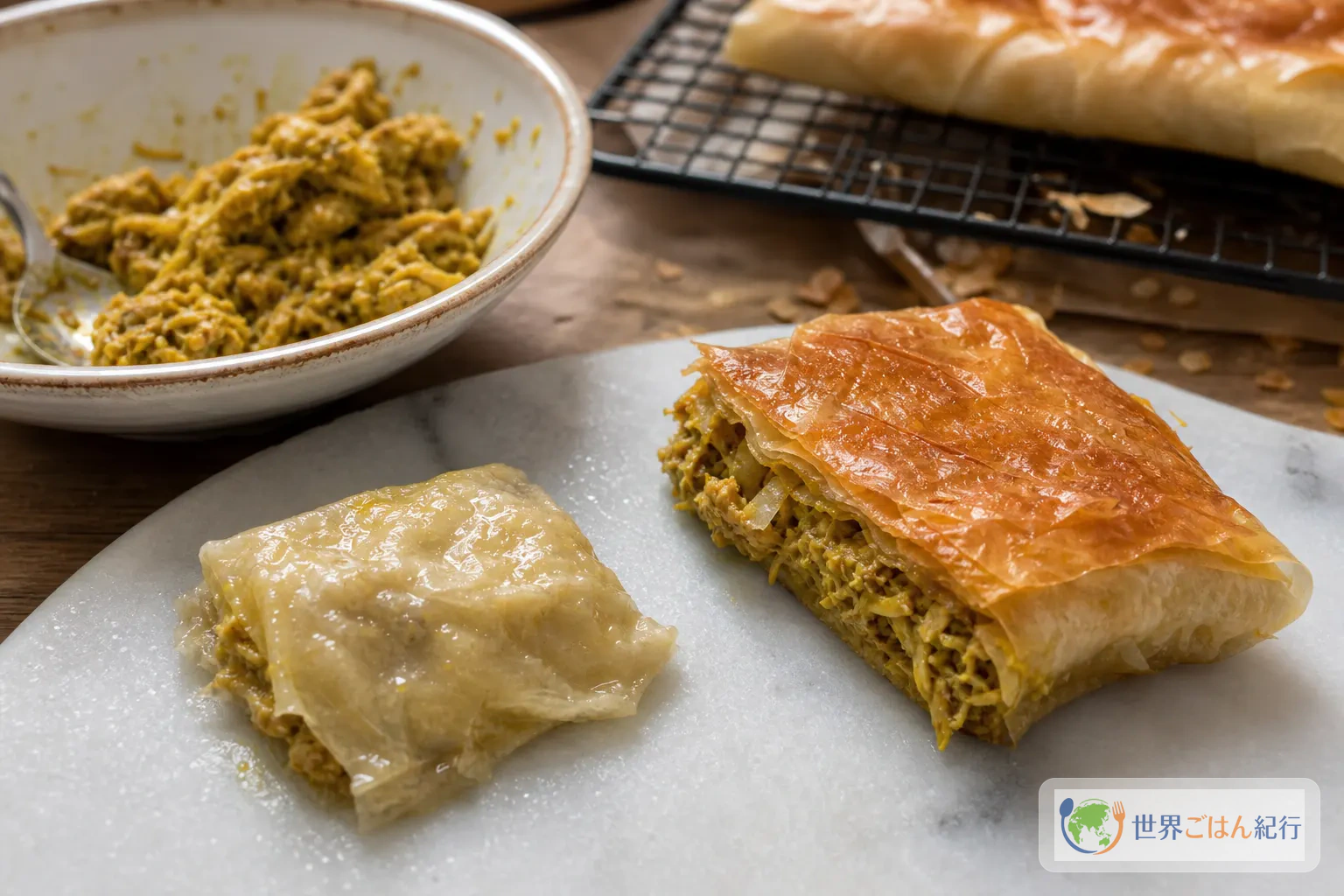
| Damp bottom | Cooking liquid left in the egg layer or chicken | Before cutting, add 8–10 minutes on the lower rack at 190°C. Next time cook off the egg layer 2 minutes longer over low heat |
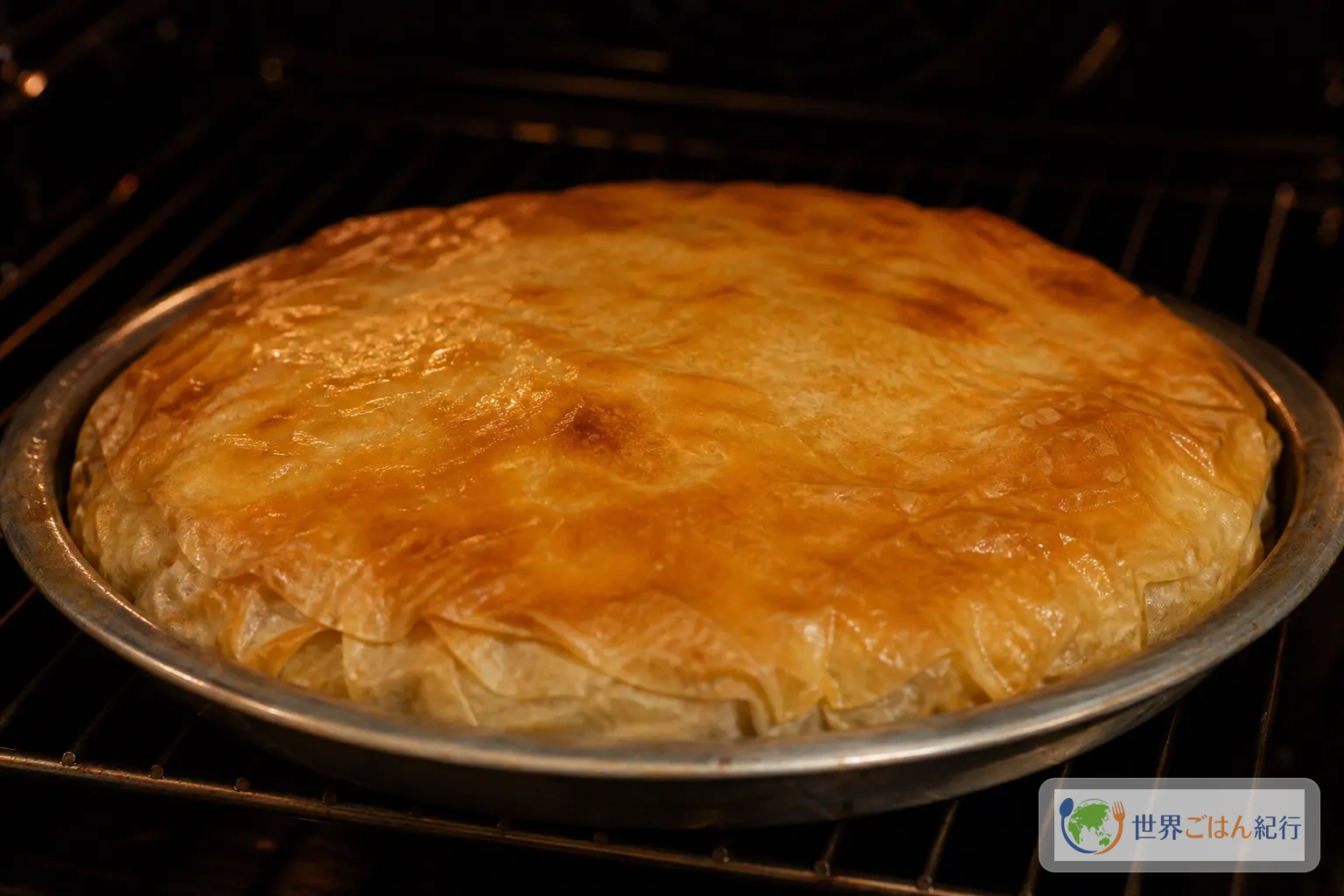
| Only the surface burns | Too much sugar dusted, top heat too strong | During baking, lightly cover with aluminum foil. Dust the finishing powdered sugar after baking |
| Pastry cracks | Filo or spring roll wrappers dried out | Keep a damp, well-wrung cloth over them while you work. Cover cracked spots with extra sheets |
| Filling is crumbly and dry | Chicken overcooked, or made with breast only | Make the egg layer a bit more generous and use thighs. Keep the simmering within 25 minutes |
| Sweetness is heavy | Too much sugar in the almonds | Serve with a salad sharpened with lemon. Next time limit the almonds' powdered sugar to 25 g |
| Aroma leans toward curry | Too much cumin or turmeric | Return to cinnamon, ginger, and herbs as the axis. Cap the ras el hanout at 1 tsp |
The most common failure is a damp bottom. The cause is not the pastry but the moisture in the filling. After taking out the chicken, if you leave a generous amount of the cooking liquid in the pot because it looks delicious, it will sink to the bottom while baking. Always reduce it before binding with egg, and cook until no liquid is visible even after the egg goes in.
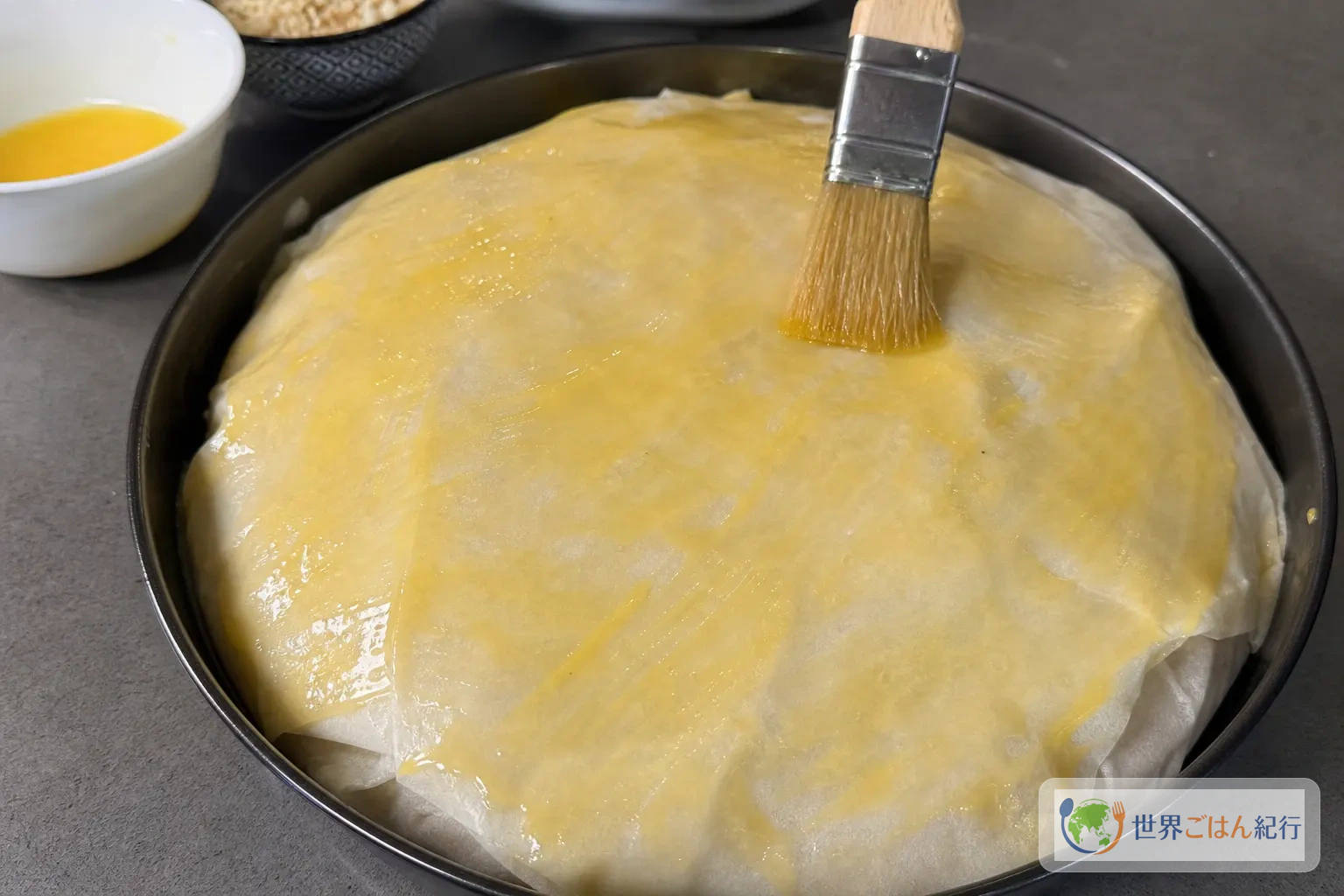
Another pitfall is being afraid of the pastry and not brushing on fat. Not brushing butter seems like it would be lighter, but in fact the pastry dries and cracks easily and the layers do not separate. A light stroke of the brush is enough, so add a little fat with each sheet.
Cutting right after baking is also a cause of failure. If you put the knife in before the egg and almonds settle, the cut face collapses. Resting for 8 minutes lets the layers come together with residual heat, so the boundaries between chicken, egg, and almonds are easier to see when you cut.
How to Eat It, Menus, Storage, and FAQ
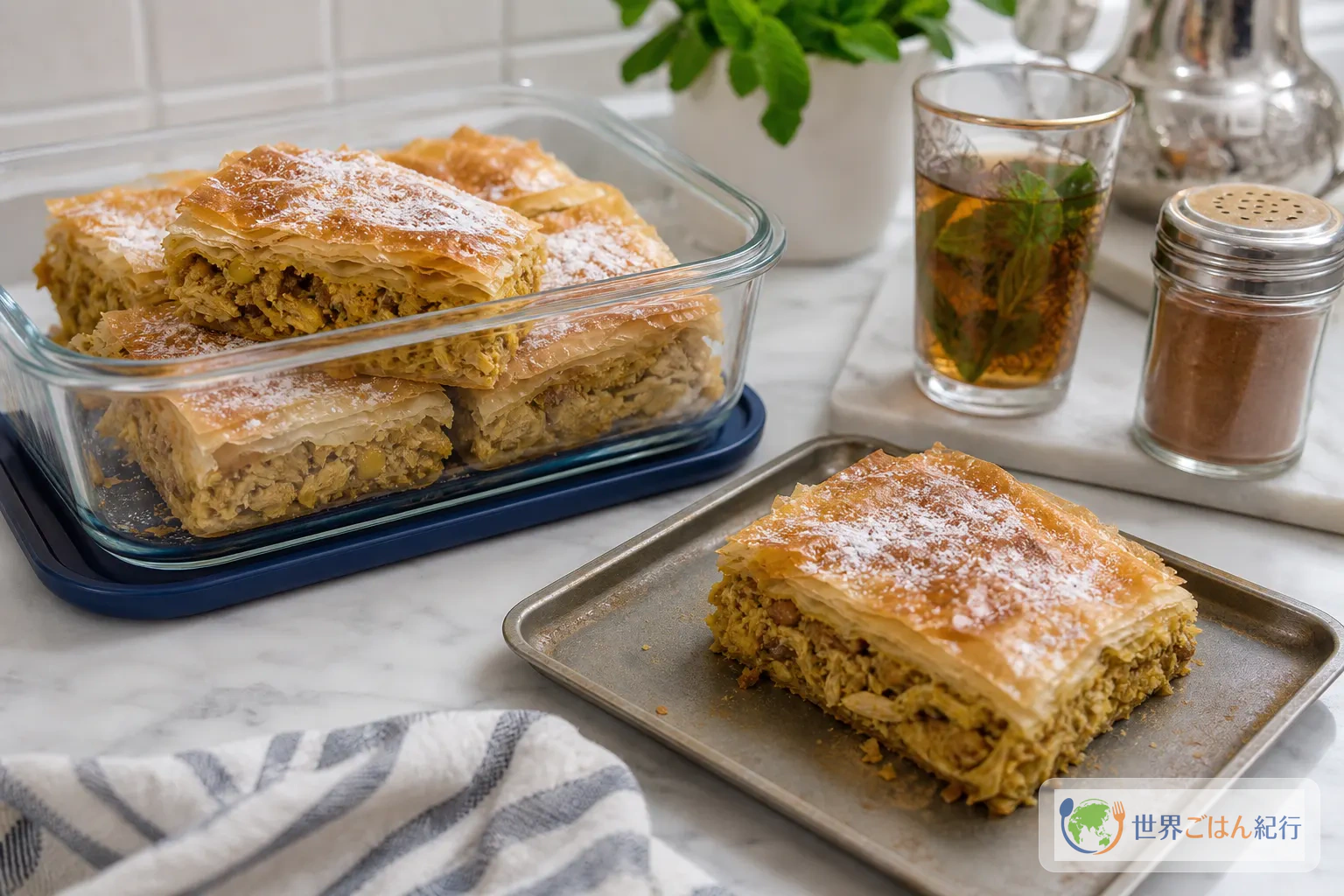
In Morocco pastilla is served on a large platter and sometimes cut and served between the starter and the main course. It has powdered sugar on top so it looks like a dessert, but its position when eaten is within the flow of the meal. For a dinner at home, serve small slices first, then put a small amount of couscous or a vegetable tagine after it, and it will not get too heavy.
Sides with acidity and moisture go well. A diced cucumber and tomato salad, carrot salad with cumin, or lemony greens cut through the sweetness and fat. If you pair it with harira, cut the pastilla smaller and keep the soup light. To widen the sweet-scented table a little, comparing it with the Middle Eastern pastry knafeh shows clearly the difference between meal-leaning and sweet-leaning in the same "sweet and toasty" territory.
Refrigerated storage is about 2 days. Once it has cooled slightly, cut it into portions, wrap each slice in plastic wrap, and put them in a storage container. To reheat, use a 180°C oven or toaster oven for 8–12 minutes. A microwave alone makes the pastry damp, so if you use one, heat at 600 W for 30 seconds and then bake in the toaster oven for 3–4 minutes.
For freezing, freezing cut slices after baking is easiest to handle. Wrap each slice and use it up within 2–3 weeks. Freezing unbaked tends to crack the pastry and release moisture from the filling, so at home freezing after baking is more stable.
Frequently asked questions
| Question | Answer |
|---|---|
| Can I make it with chicken breast? | You can, but with breast alone the cut face tends to be dry. For the first time we recommend 700 g of thighs, or a combination of 400 g of thigh and 300 g of breast. |
| Are spring roll wrappers really okay? | Yes, if you use large ones and brush a thin layer of butter on each sheet. They are thicker than filo, so don't overlay too many, and bake to a good color. |
| Can I leave out the powdered sugar? | Technically yes, but the pastilla character weakens. If you dislike sweetness, halve the powdered sugar and use a little more cinnamon. |
| Can I prepare it the day before? | The chicken, egg layer, and almond layer can be made the day before. Wrapping is best done the same day. Wrapping and leaving it for a long time makes the bottom damp. |
| What if I have a nut allergy? | The almond layer is the center of the flavor, so it is safer not to force it. Substituting sesame or breadcrumbs changes both texture and flavor a lot. |
| Can I make a seafood version? | You can, but the method is almost a different dish. It often uses seafood, vermicelli, bell pepper, and herbs, and some versions do not push the powdered sugar. Learning how to build the layers with the chicken version first makes it easier to follow. |
Sources consulted
- Morocco Tourism Office, “Fez, gastronomy: Pastilla and street food”, accessed 17 May 2026.
- World Intellectual Property Organization, “The Use of Intellectual Property in the Protection of Traditional Culinary Know-How: Scoping Study in Morocco”, accessed 17 May 2026.
- Taste of Maroc, “Moroccan Seafood Bastilla Recipe”, accessed 17 May 2026.
- My Moroccan Food, “Chicken Pastilla”, accessed 17 May 2026.
Pastilla can feel intimidating from its list of ingredients alone: pigeon, warqa, floral aromas, and meat wearing powdered sugar. But what you do in the kitchen is surprisingly straightforward. Simmer the chicken. Bind the cooking liquid with egg. Crush the almonds coarsely. Wrap it all in thin pastry. Once you think of it in these separate parts, the only difficult thing is not trying to make it all at once.
You do not need to reproduce a perfect Fez platter in a home kitchen. What is worth protecting is the surprise when you break the sweet-scented surface and warm chicken, herbs, egg, and almonds spill out softly. If you can make that one bite, your weekend table gets plenty close to Morocco.



