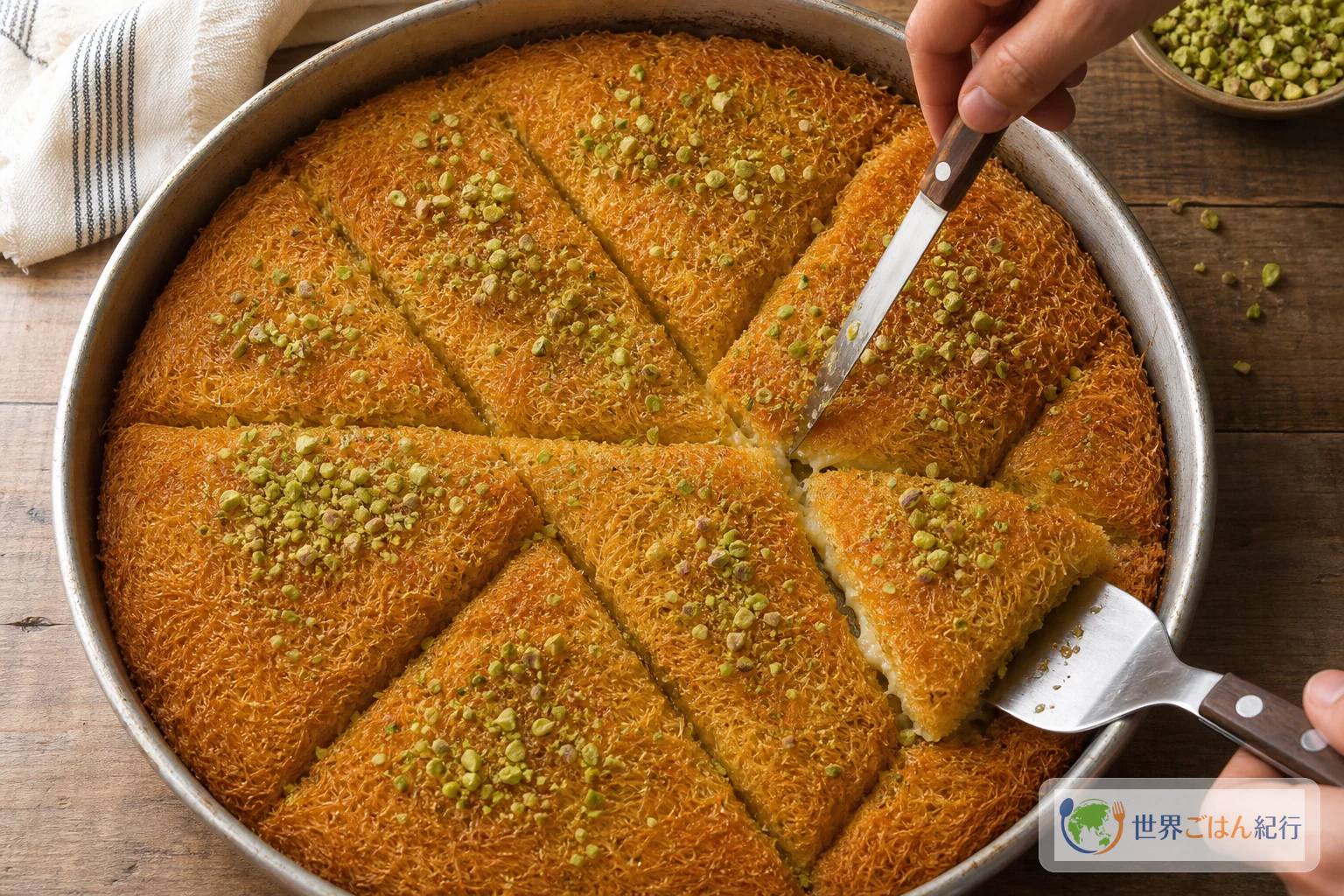
When you cut with a knife into kataifi dough soaked in hot syrup, the surface crackles, and white cheese slowly stretches from inside. Knafeh, or kanafeh. On Levantine street corners, it is a sweet, toasty baked pastry that serves as both breakfast and festive dessert.
When you try to make it outside the Levant, the first thing that gives pause is the ingredients. Nabulsi cheese from Nablus is hard to get. Kataifi dough is almost never in an ordinary supermarket. But if you don't get the core principles wrong, you can get quite close even in a home oven.
This recipe uses frozen kataifi dough, low-moisture mozzarella, and ricotta, baked in a shallow metal pan about 22 cm across. The points are three: draw the water out of the cheese, coat the kataifi evenly with fat, and let cooled syrup soak into the freshly baked dough.
In Arabic-speaking regions several romanizations are used, such as kunafa, knafeh, and kanafeh. Spellings in English and other languages vary, but this article uses "knafeh" as the main form.
The Story of Knafeh: Sweet Heat That Spread from Nablus
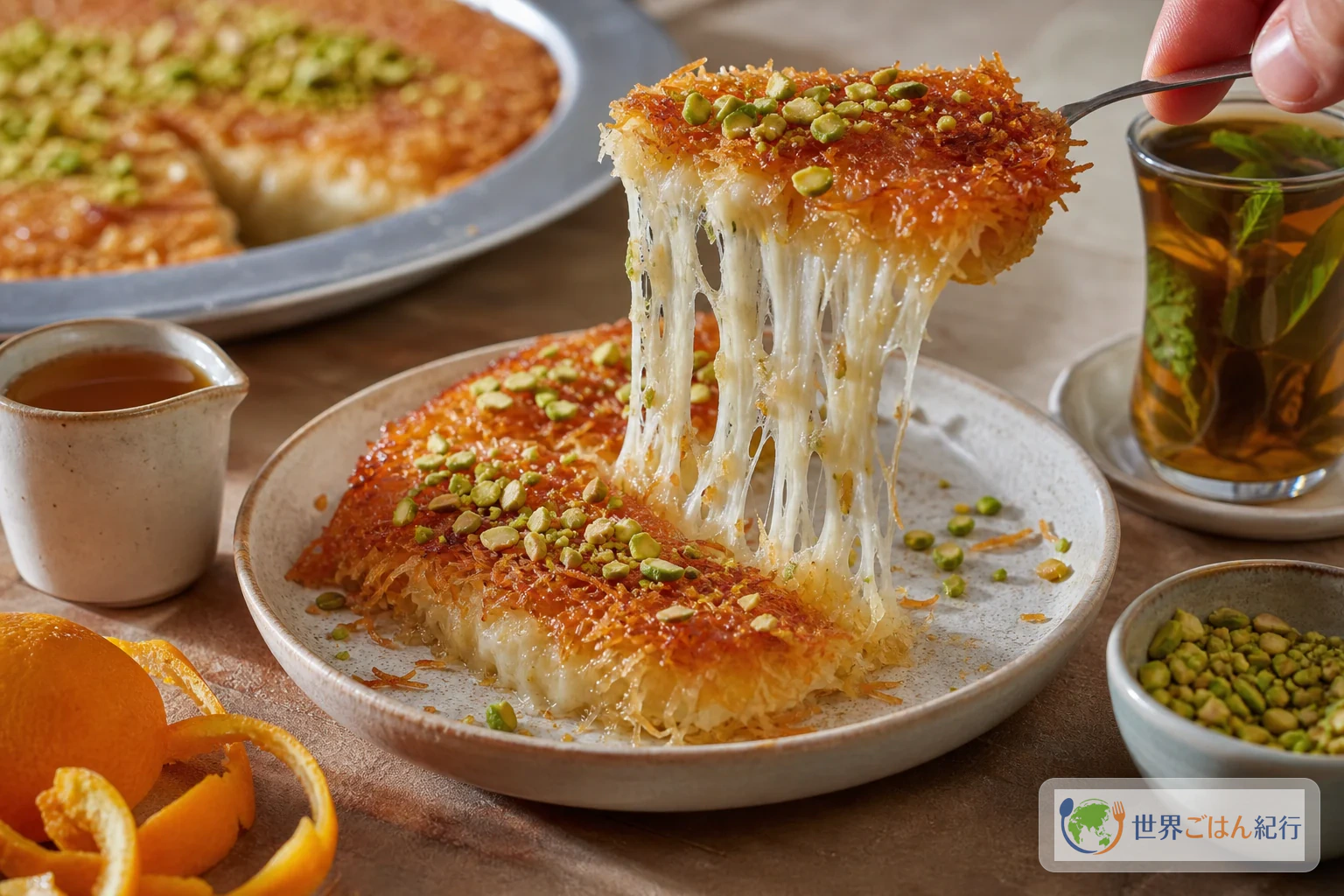
Knafeh is a Middle Eastern sweet in which cheese or cream is layered with thin noodle-like dough or semolina dough and soaked in sugar syrup. Nablus in Palestine in particular is well known for cheese knafeh, and the sight of shops flipping it from a hot iron tray onto a large round plate to sell has become the very memory of this sweet.
Rather than confining its origin to a single town, it is easier to make decisions in the kitchen if you see it as a dish that spread while changing form in the pastry shops and homes of the Levant. Around Lebanon, Syria, Jordan, Palestine, and Turkey, the name and shape change a little from place to place. There is a version using coarse kataifi, a version pressing down finely chopped dough, a version tucked into bread-like ka'ak to eat on the move, and a version with a strongly orange color. There are regional and shop-to-shop differences, but what they share is the combination of toasty dough, warm dairy, and a syrup carrying a floral aroma.
When recreating it in your own kitchen, put texture ahead of flashy color. Crisp dough, cheese that is not watery, and a syrup that is not just sweet but has an outline from lemon and floral scent. Once you decide that much, a special sweet becomes a dish you can make on a weekend afternoon.
On a day when you set out Levantine starters such as hummus, falafel (in Japanese), and tabbouleh, serving a small amount of this knafeh at the end neatly closes a table of saltiness and acidity.
Breakfast on an Iron Tray, and a Plate Cut at Home
The first surprise on learning about knafeh locally is that there are occasions when this sweet is eaten in the morning. At pastry shops in Nablus and Lebanon, the scene is described of cutting hot knafeh baked on a large round iron tray and handing it over on a paper plate or tucked in bread. To many readers it looks like an after-meal dessert, but it can also be eaten in a small amount as a sweet plate in the morning, with strong coffee or tea. So when making it at home too, cutting a piece within 5 minutes of coming out of the oven keeps more of the dish's character than letting it cool and settle like a cake.
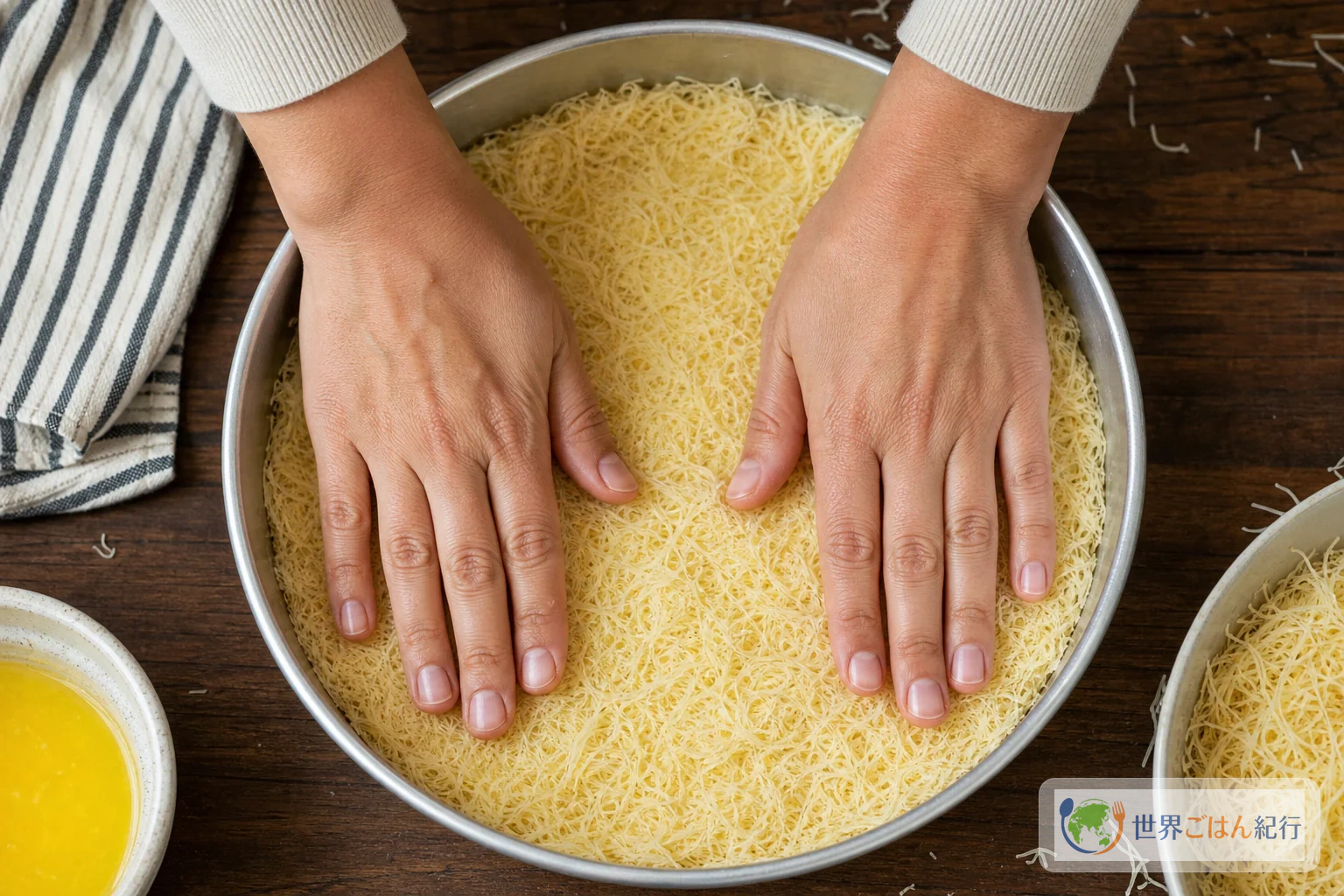
On the other hand, in a home kitchen you do not need a large iron tray. Narrowing to a shallow metal pan about 22 cm across makes the kataifi layer thinner and makes it easier to see both the toastiness of the base and the stretch of the cheese. Since you cannot prepare local Nabulsi or Akkawi cheese as is, bringing it closer through the shape of the equipment and moisture control is realistic. If you make it too large, the edges burn while you chase the browning and the center stays watery. Small, thin, and cut fresh from the oven. Keep this order and the difference that the kataifi dough and the flower water make is easier to see.
You can also set the table a little closer to the local way. On a day when you put a bean or grain dish like baba ghanoush (in Japanese) or mujaddara as a starter, don't serve the knafeh as a big piece; cut thin triangles and serve the syrup on the side. If people can add sweetness themselves, even first-timers reach for it without hesitation.
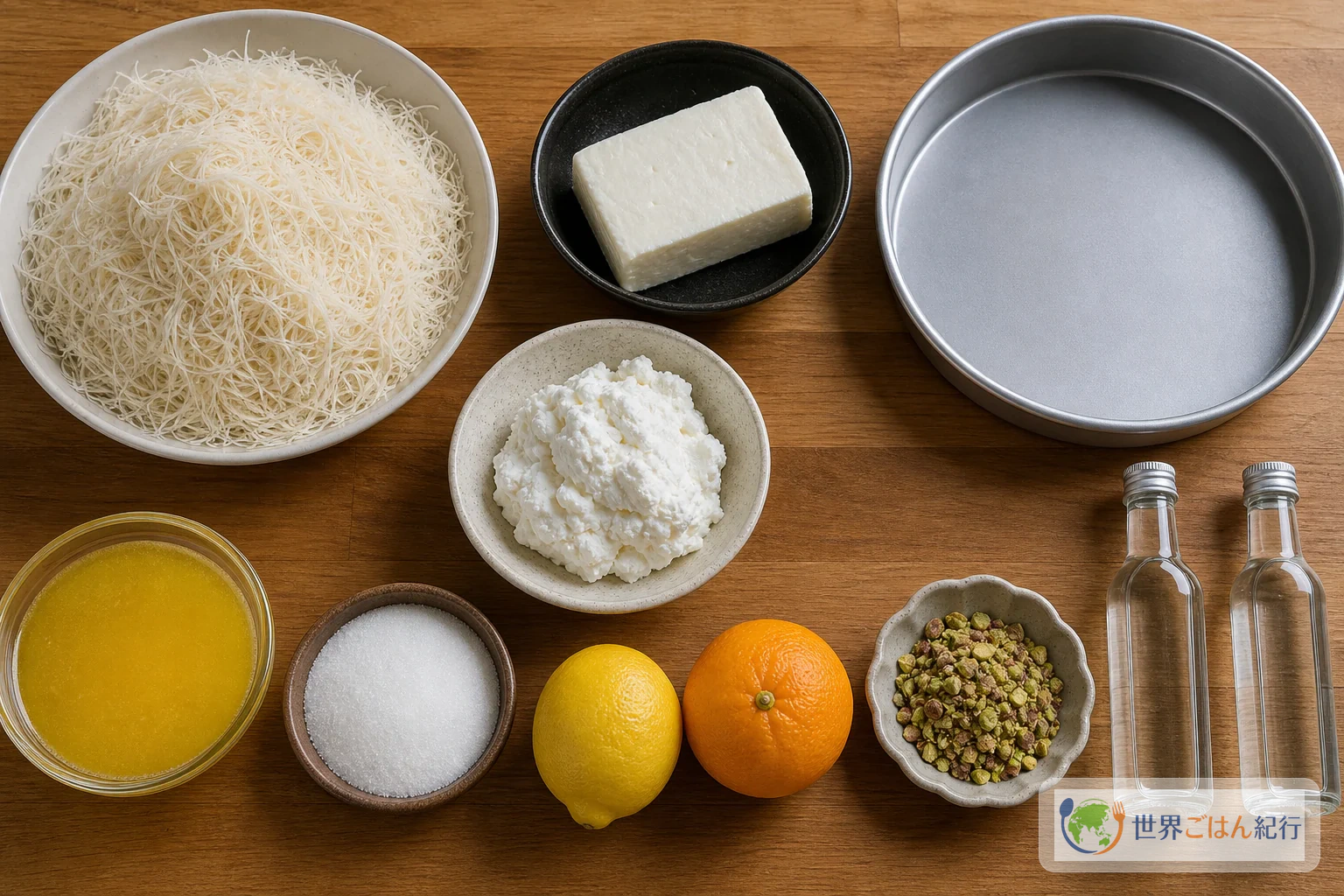
Ingredients (serves 6): Decide on Kataifi and Cheese First
Equipment
| Equipment | Guide | Reason |
|---|---|---|
| Shallow metal pan or round tin | About 22 cm across | Bakes the dough thin and toasts the base |
| Small pot | 1 | For the syrup |
| Bowls | 2 | One for kataifi, one for cheese |
| Oven | 180 degrees C | Bakes evenly throughout |
This recipe uses wheat, dairy, and nuts. Kataifi dough contains wheat, and since a lot of cheese is used, if you have a dairy allergy, do not force a substitution. The pistachios can be left out, but some products are made on shared equipment that handles nuts.
What Is Worth Checking When Shopping
What makes a difference when shopping for knafeh is not the ordinary dairy but the kataifi dough, the water that gives the floral aroma, and a shallow pan that bakes thin. Mozzarella and ricotta are fine from any local supermarket, but checking in advance that you can get these three reduces failure.
Method: Bake at 180 Degrees C, and Let Hot Dough Soak Up the Syrup
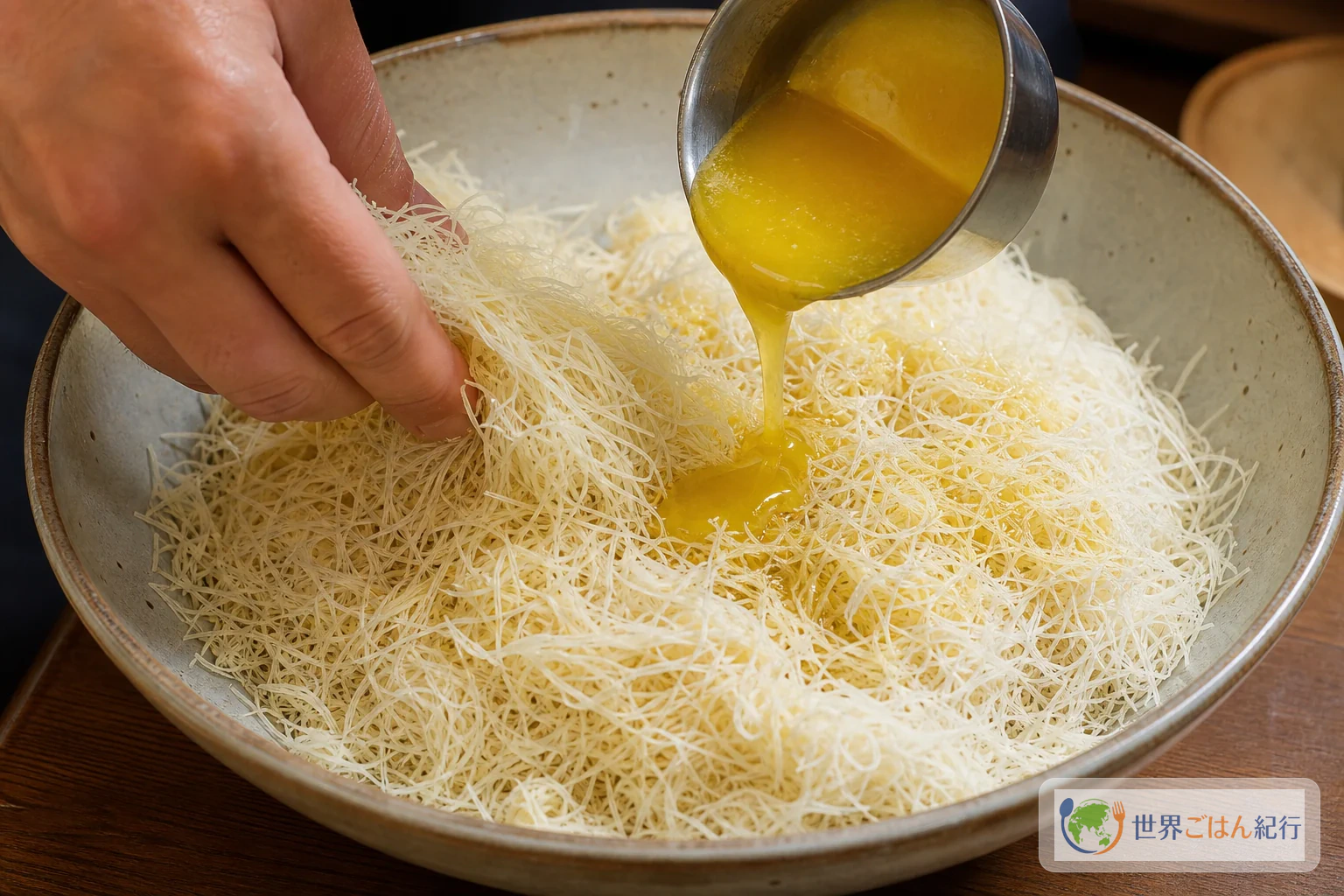
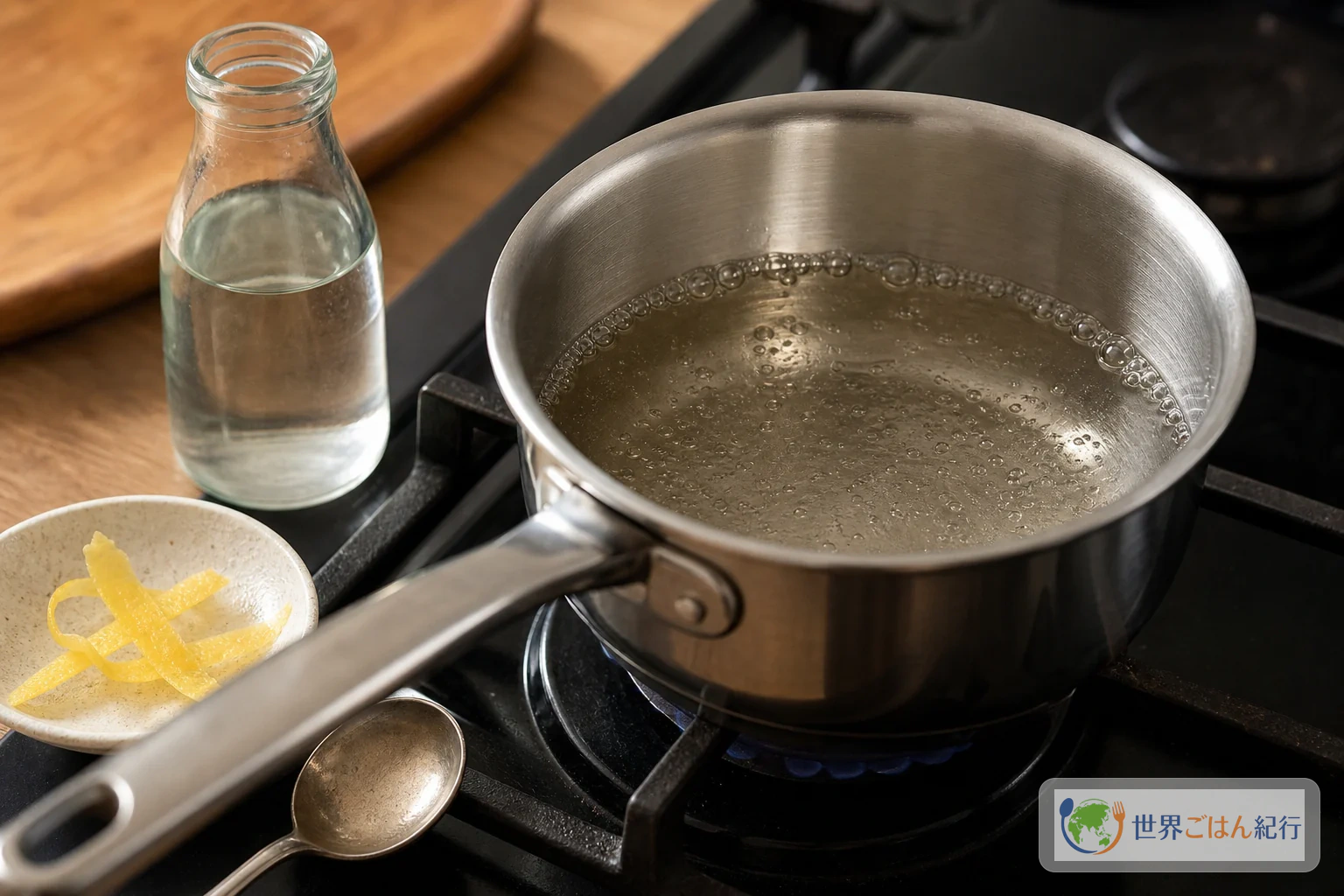
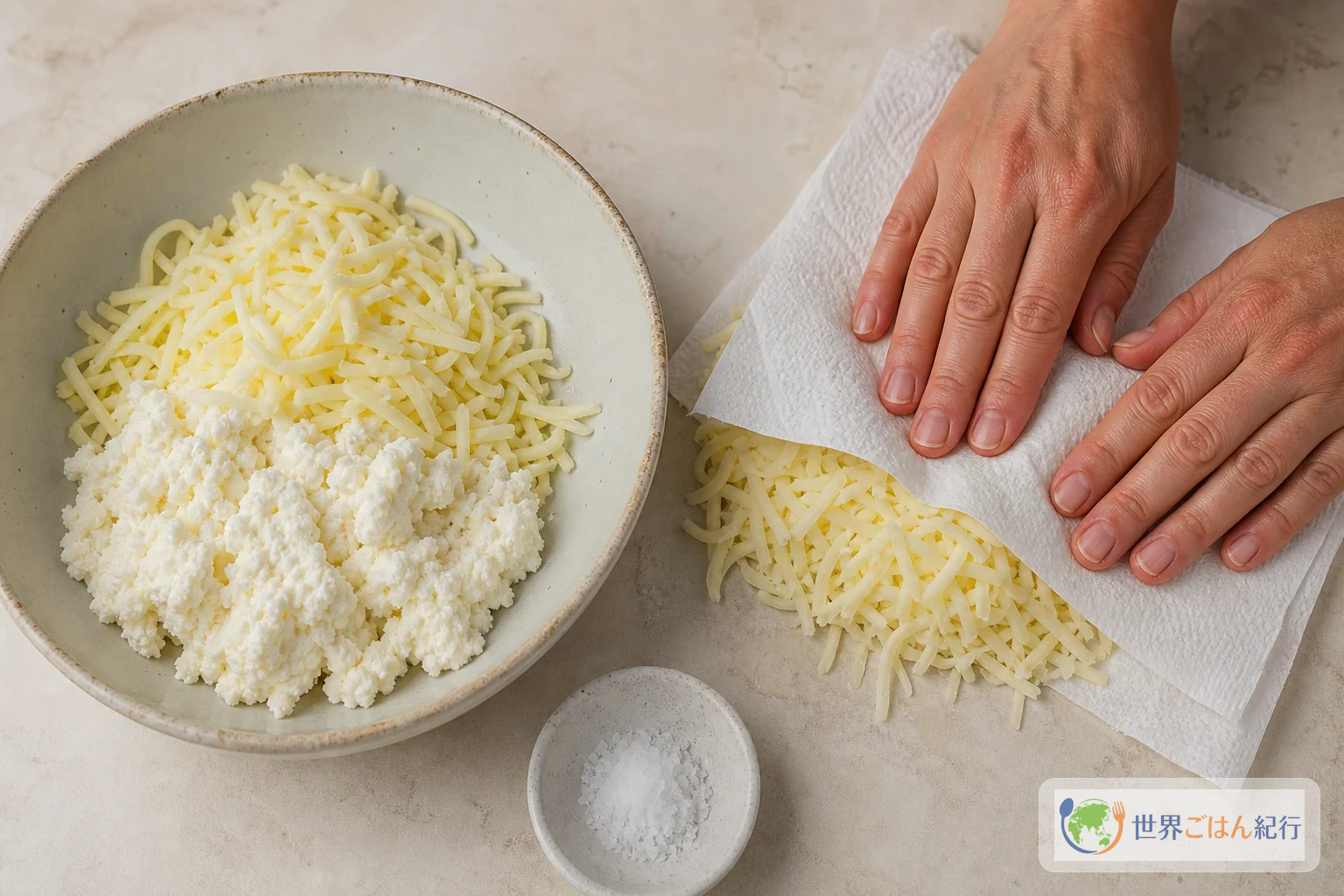
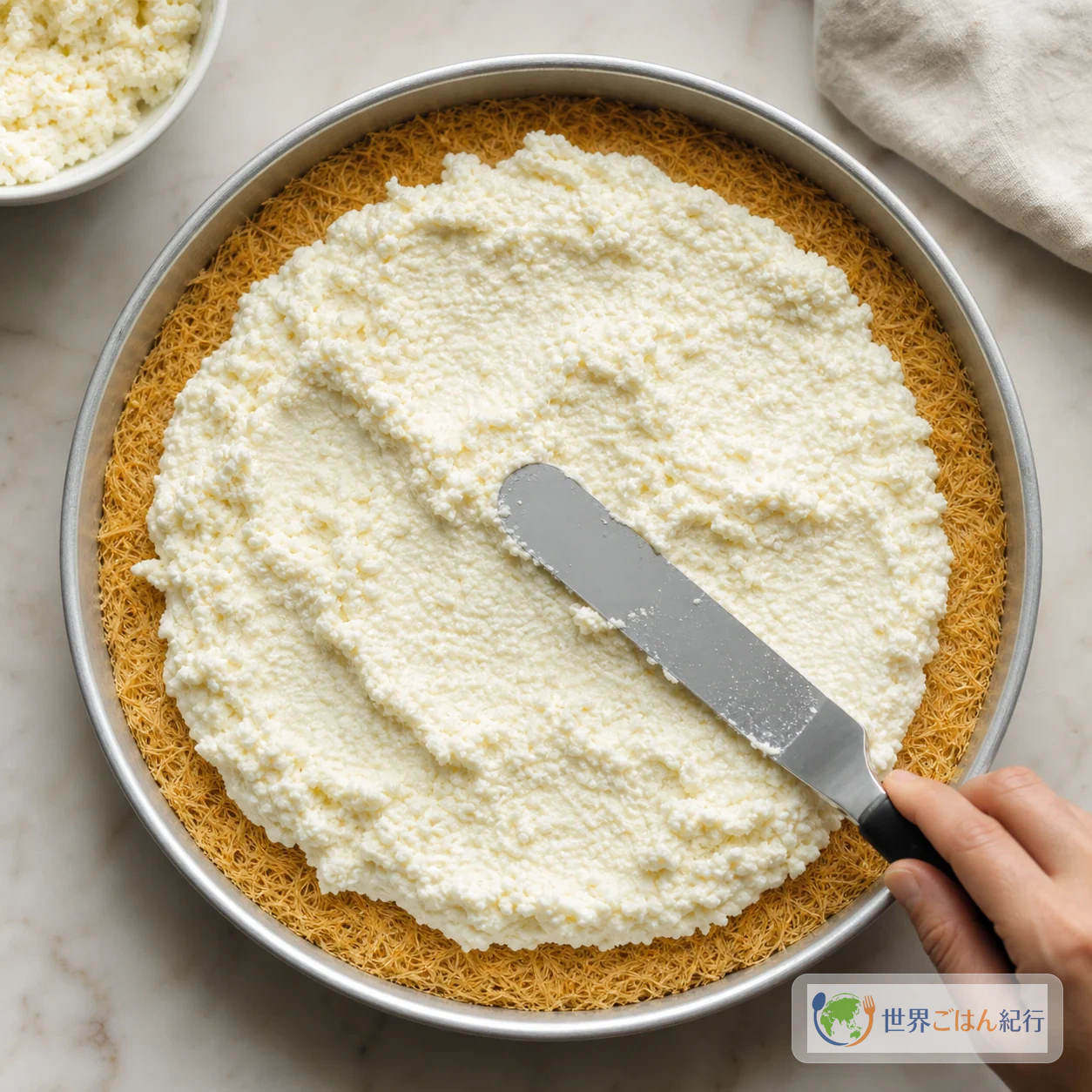
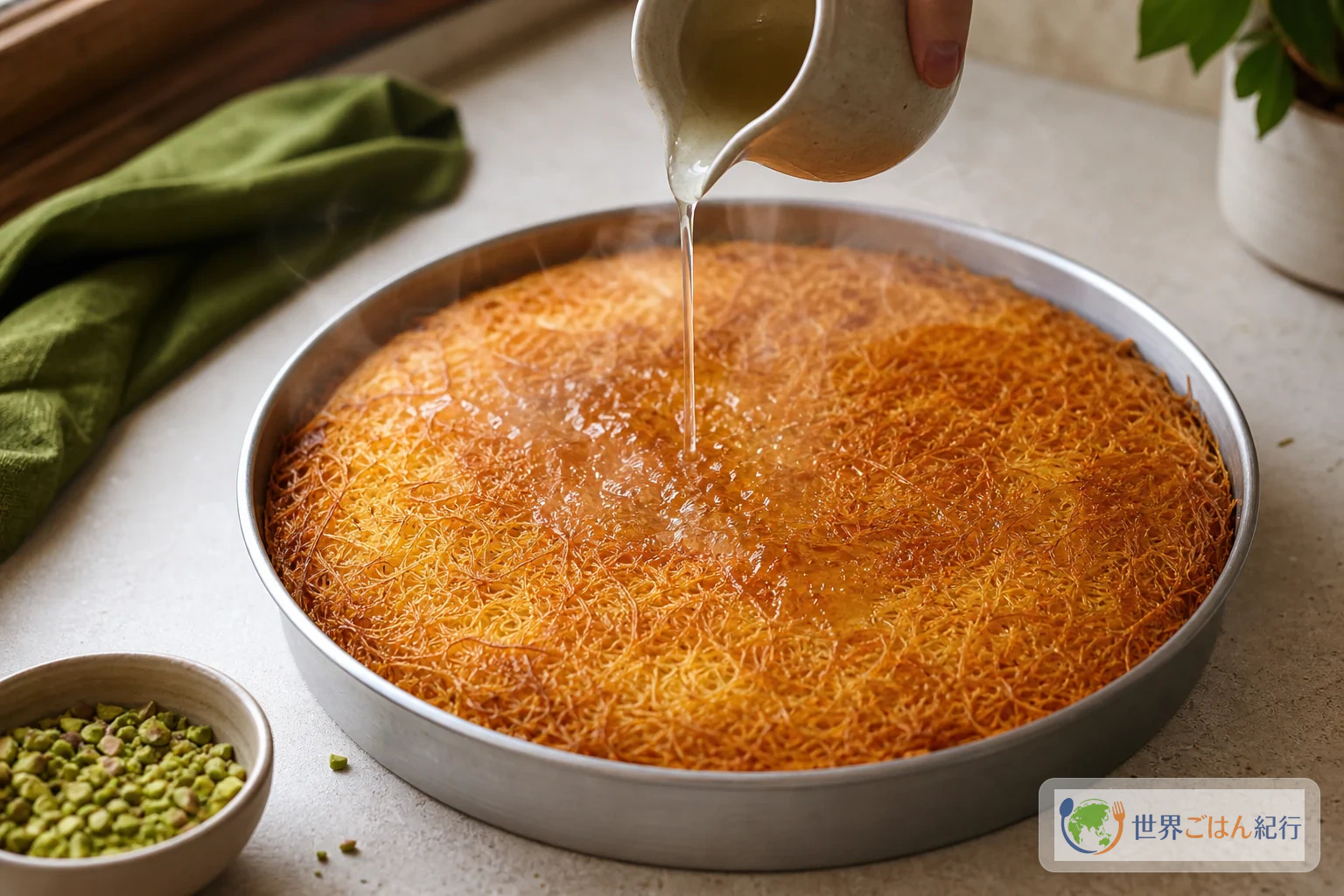
Knafeh is mostly decided by the preparation before baking. Make the syrup first and let it cool, draw the water out of the cheese, and loosen the dough strand by strand with fat before putting it in the pan. When cooled syrup is poured onto hot freshly baked dough, sweetness goes in while the crisp layer on the surface remains.
Branches for Getting Close to the Local Version in Your Own Kitchen
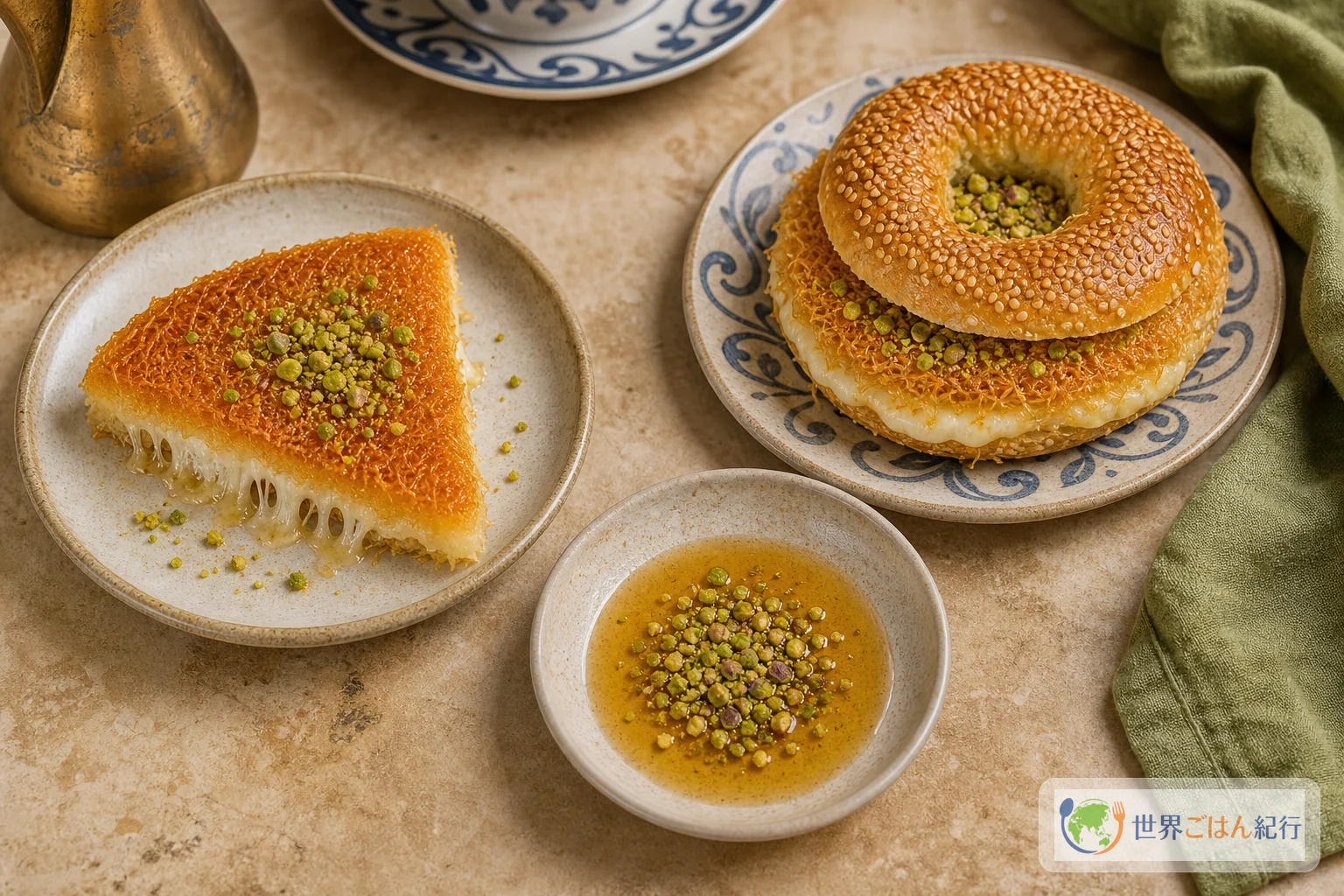
Bringing local recipes straight over, you stumble on the cheese. Nabulsi and Akkawi cheeses are strongly salted and are often desalted before use, while mozzarella from elsewhere has a lot of moisture. Substituting with just the name makes the base watery.
| Local element | Realistic adjustment at home | Why to protect it |
|---|---|---|
| Nabulsi and Akkawi cheese | 300g low-moisture mozzarella and 120g ricotta | Brings out both stretch and dairy sweetness |
| Kataifi dough | Use frozen kataifi | Hard to substitute here. Thin wheat noodles or glass noodles won't make baked layers |
| Clear sugar syrup | Lightly cook sugar and water and add the floral aroma at the end | If reduced too far it becomes candy-like and doesn't soak into the dough |
| Orange-colored surface | Skip coloring and approach golden through the browning | At home, putting toastiness ahead of color is less likely to fail |
| Large round iron tray | A 22 cm shallow metal pan, paella pan, or round tin | The thinner the dough bakes, the more toasty the base |
Eating it tucked in bread is also fun. In Levantine cities there are shops that put knafeh in a round sesame-topped bread. To try at home, tuck a small piece into a warmed round roll and add just a little syrup. It is quite sweet, so rather than as an after-meal dessert, it is just right shared in halves with strong coffee.
Why It Fails: Eliminate Wateriness and Burning First
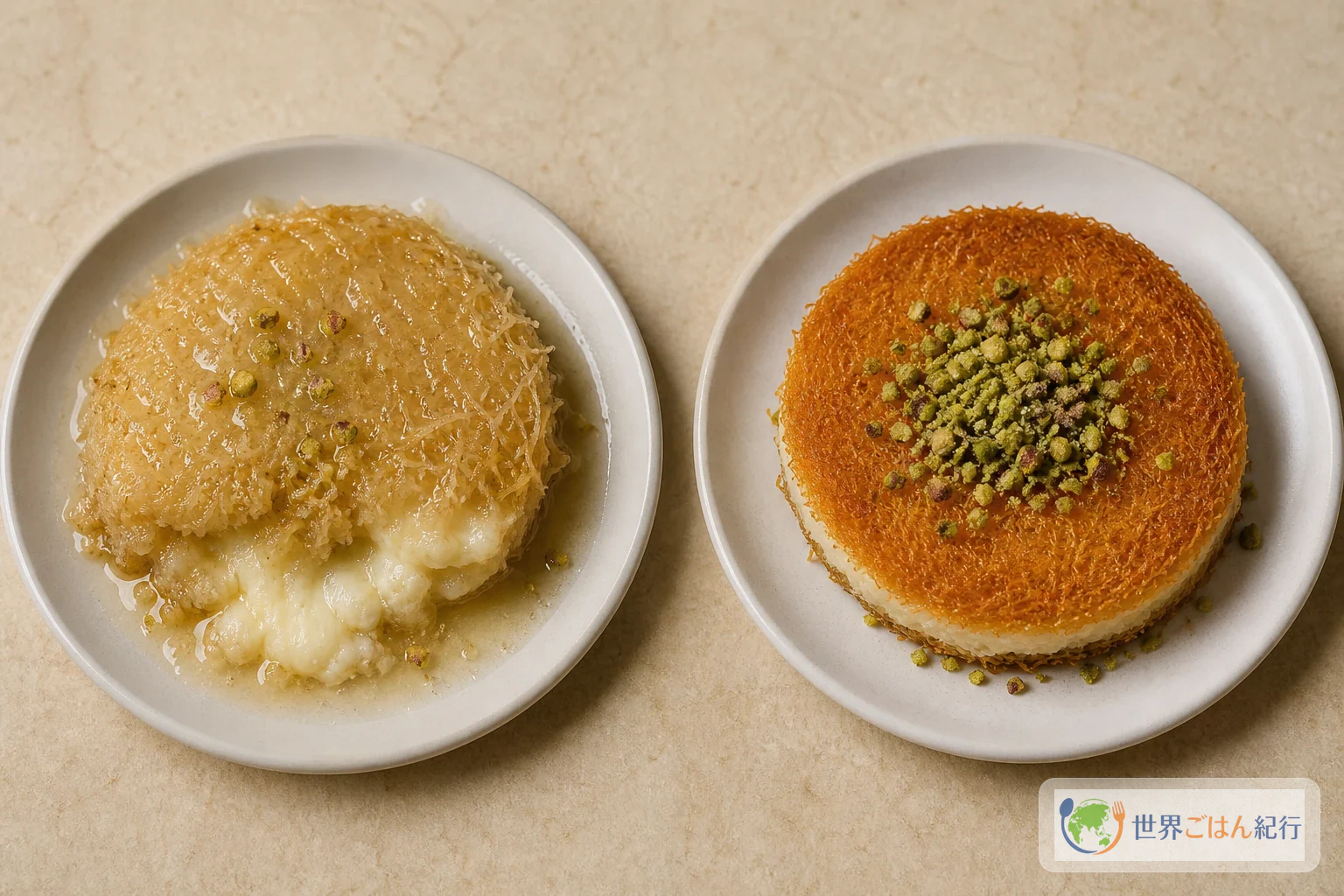
| Failure | Main cause | Fix |
|---|---|---|
| The base is sticky | Cheese had too much moisture, or all the syrup was poured at once | Drain the cheese 5 minutes or more, and start with two thirds of the syrup |
| Dough is white and hard | Too little fat, or pressed down too hard | Coat evenly with 120g butter and press only lightly with your fingers |
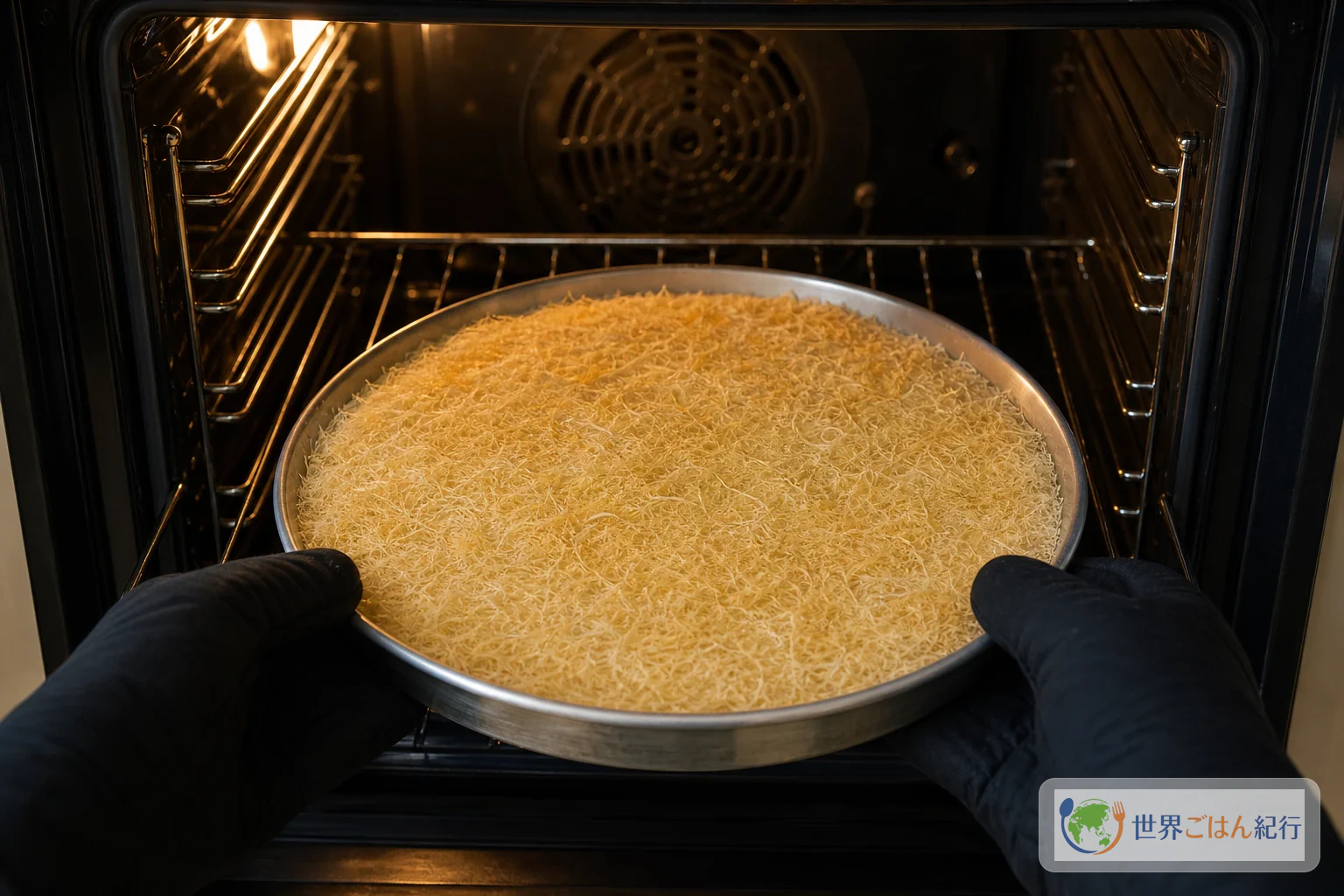
| Only the edges burn | The pan is too thin, or the top heat is too close | Turn the pan around at 15 minutes, and lower from 180 to 170 degrees C when it starts to brown |
| The cheese doesn't stretch | Cut after it cooled, or it set with only low-moisture cheese | Cut within 5 minutes of baking and add ricotta for dairy softness |
| Only sweetness stands out | The floral aroma is too strong, or too little lemon | Keep orange blossom at 1 tsp and rose at 1/2 tsp as the upper limit |
The most common failure is the moisture in the cheese. Increasing the ricotta gives a gentler flavor, but without draining the base turns heavy. Conversely, with only low-moisture mozzarella you get stretch, but it tends to set rubbery when cool. A ratio of about 300g to 120g is easy to handle in a home oven.
Don't judge the browning by the surface alone. The edges become a deep golden and the center a light fox brown. Stop here and the base is toasty and the top not bitter. If you worry about underbaking, before pouring the syrup lift an edge slightly and check whether the underside has colored lightly.
How to Eat, Store, and Frequently Asked Questions
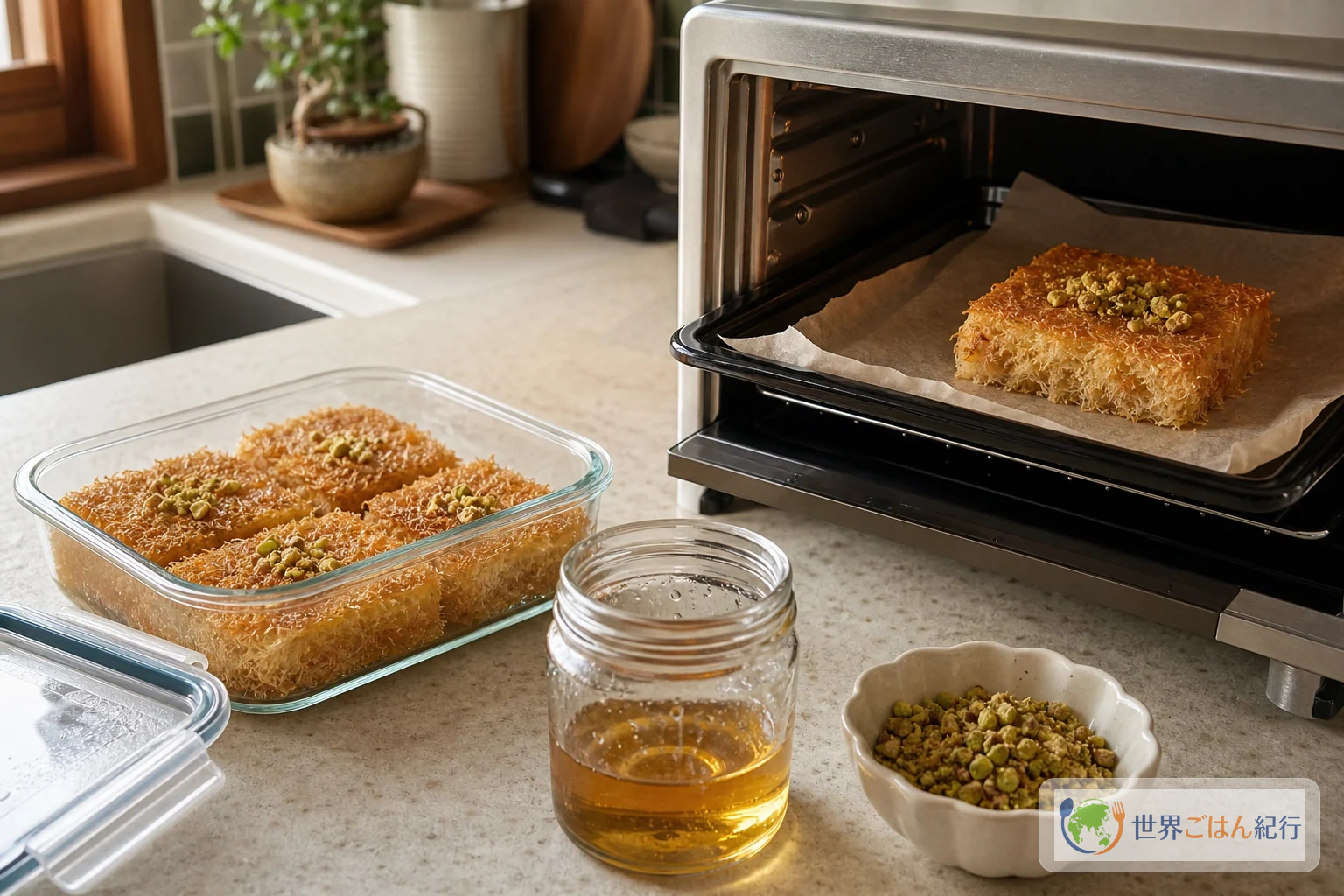
Knafeh is a sweet that is best right out of the oven. Even so, if you won't finish 6 servings at once, not adding the full amount of syrup from the start makes it easier to store. Pour extra syrup only on what will be eaten at the table, and let the rest cool with a restrained sweetness.
| Condition | How to store | Reheating |
|---|---|---|
| Same day | Within 3 hours at room temperature | 5 minutes in a 160 degrees C oven |
| Next day | 1 day in the refrigerator | 8 minutes in a 160 degrees C oven, and 1 tsp syrup at the end |
| Frozen | Wrap each piece, 2 weeks | After thawing in the refrigerator, 10 minutes at 170 degrees C |
Warming only in a microwave brings the cheese back but makes the dough limp. Loosen the cheese first with just 20 seconds at 600W, then warm the surface for 3 to 5 minutes in a toaster oven or oven, and the texture comes back more easily.
If you want to move on to a sweet that uses the same flower water and pistachios but needs no reheating, there is layali lubnan (in Japanese), which chills fine semolina and ashta. If knafeh is a dish to enjoy baked threads of dough and stretching cheese, this is a dish where you quietly cut chilled two layers.
Can I make it without kataifi dough?
A complete substitute is difficult. Thin wheat noodles or glass noodles absorb water easily and won't make the light layer of a baked sweet. If you must try, finely shredded phyllo dough is closer, but it will be something different from the thread-like texture of kataifi.
Is rose water essential?
Not essential. Orange blossom water alone at 1 tsp gives a sufficiently Levantine-sweet aroma. If you add rose water, keep it to 1/2 tsp and avoid a perfume-like strength.
Can I assemble it the day before?
You can go as far as coating the dough with fat the day before. If you press it into the pan and leave it overnight with the cheese on top, the water from the cheese moves to the base. The day before, prepare the kataifi and the cheese separately and assemble 30 minutes before baking, which is safer.
What do I serve with it for a menu?
Since it is a sweet, a light meal with some acidity suits it. Setting out small amounts of tabbouleh, baba ghanoush (in Japanese), and shawarma makes the final knafeh feel less heavy. After a rice dish, you can also see the connection of dairy aroma with something like Jordan's mansaf.
Sources
- Encyclopaedia Britannica, "Knafeh" (accessed 16 May 2026) https://www.britannica.com/topic/knafeh
- Palestine in a Dish, "Palestinian Knafeh Recipe" (accessed 16 May 2026) https://palestineinadish.com/recipes/palestinian-knafeh-recipe/
- Maureen Abood, "Knafeh (Lebanese Recipe)" (accessed 16 May 2026) https://maureenabood.com/lebanese-knafeh-jibneh-with-orange-blossom-syrup/
- 196 Flavors, "Kanafeh" (accessed 16 May 2026) https://www.196flavors.com/fr/kanafeh/