Oshifima: A Porridge Firm Enough to Scoop Sauce With
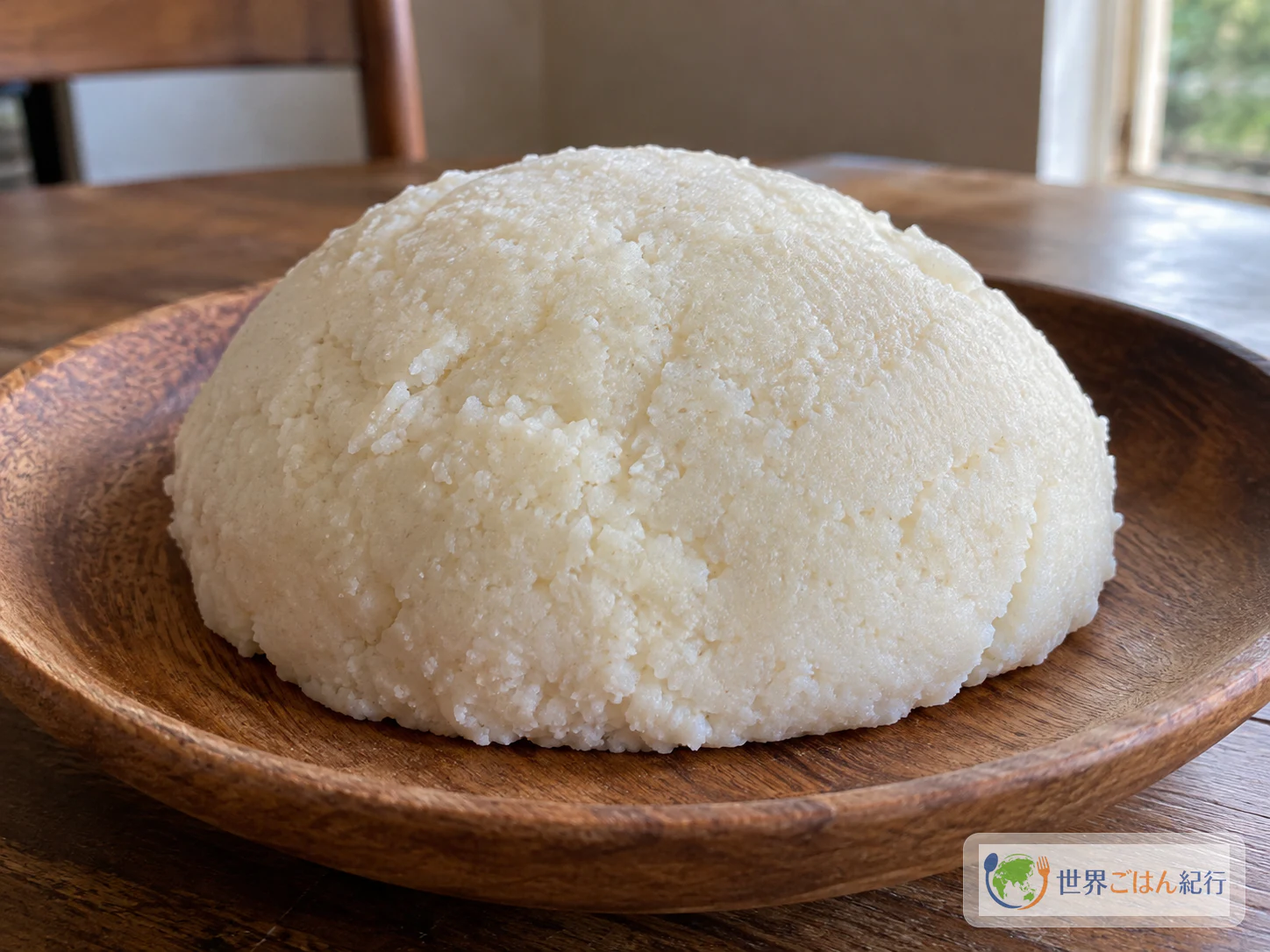
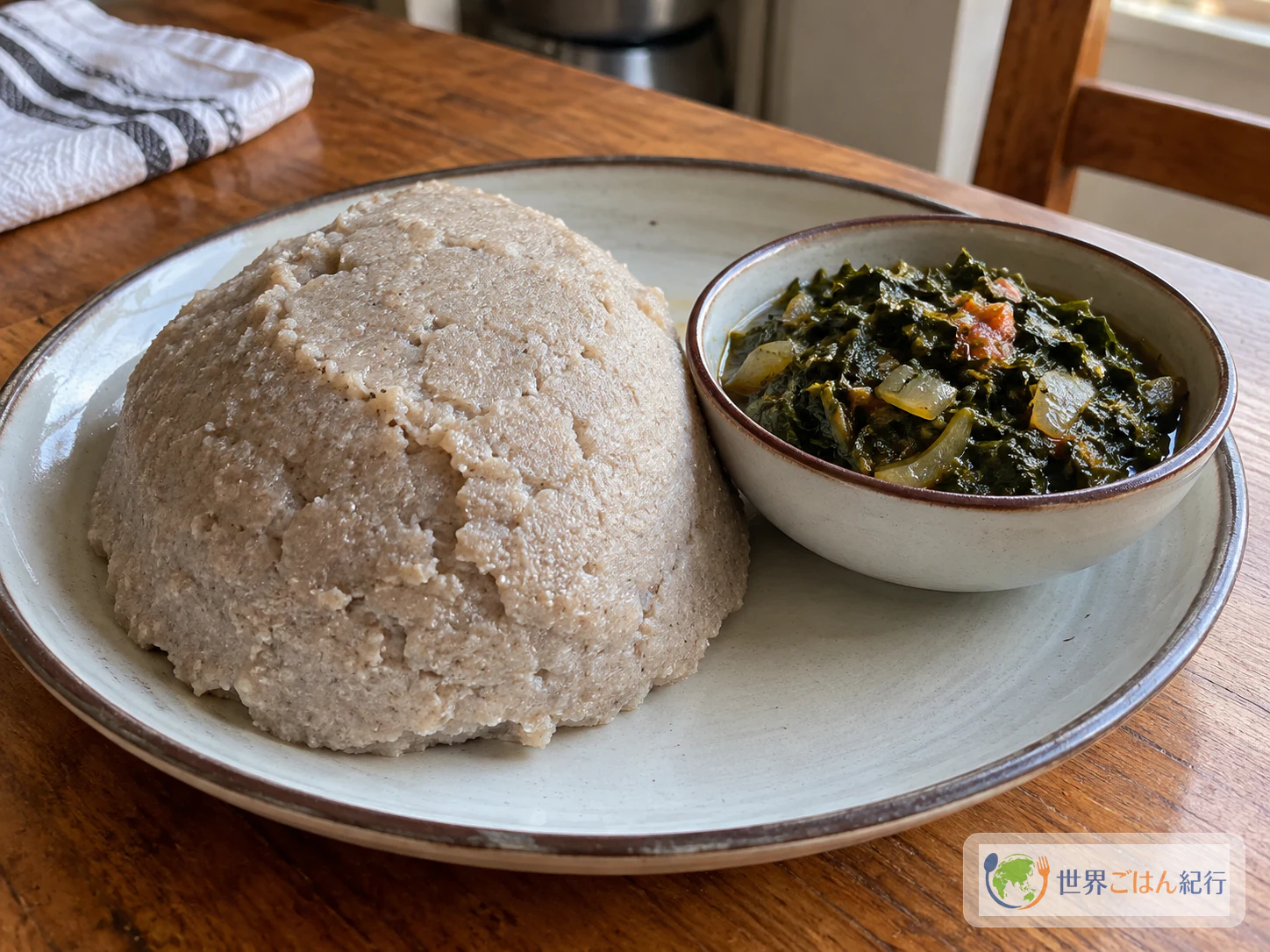
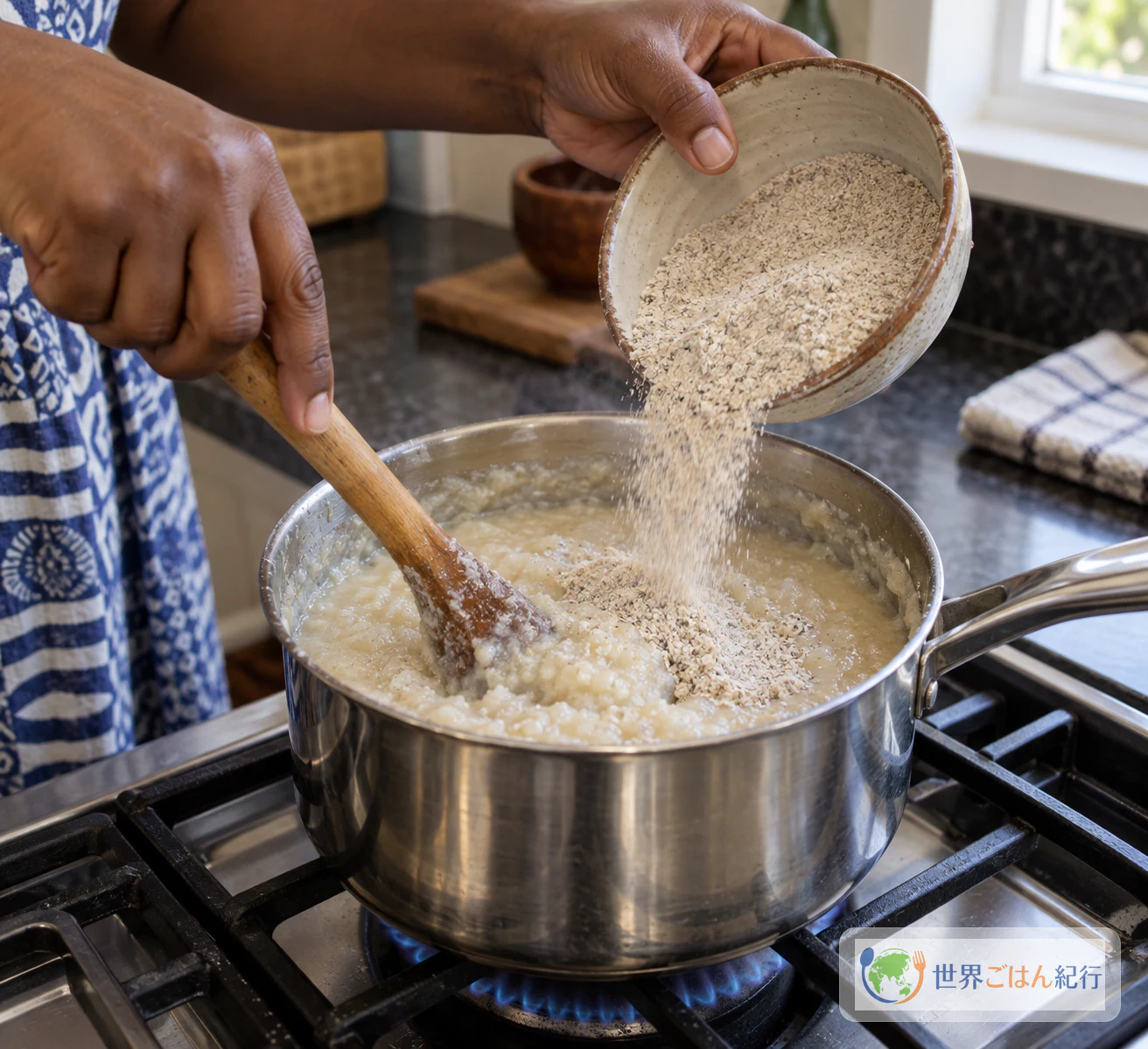
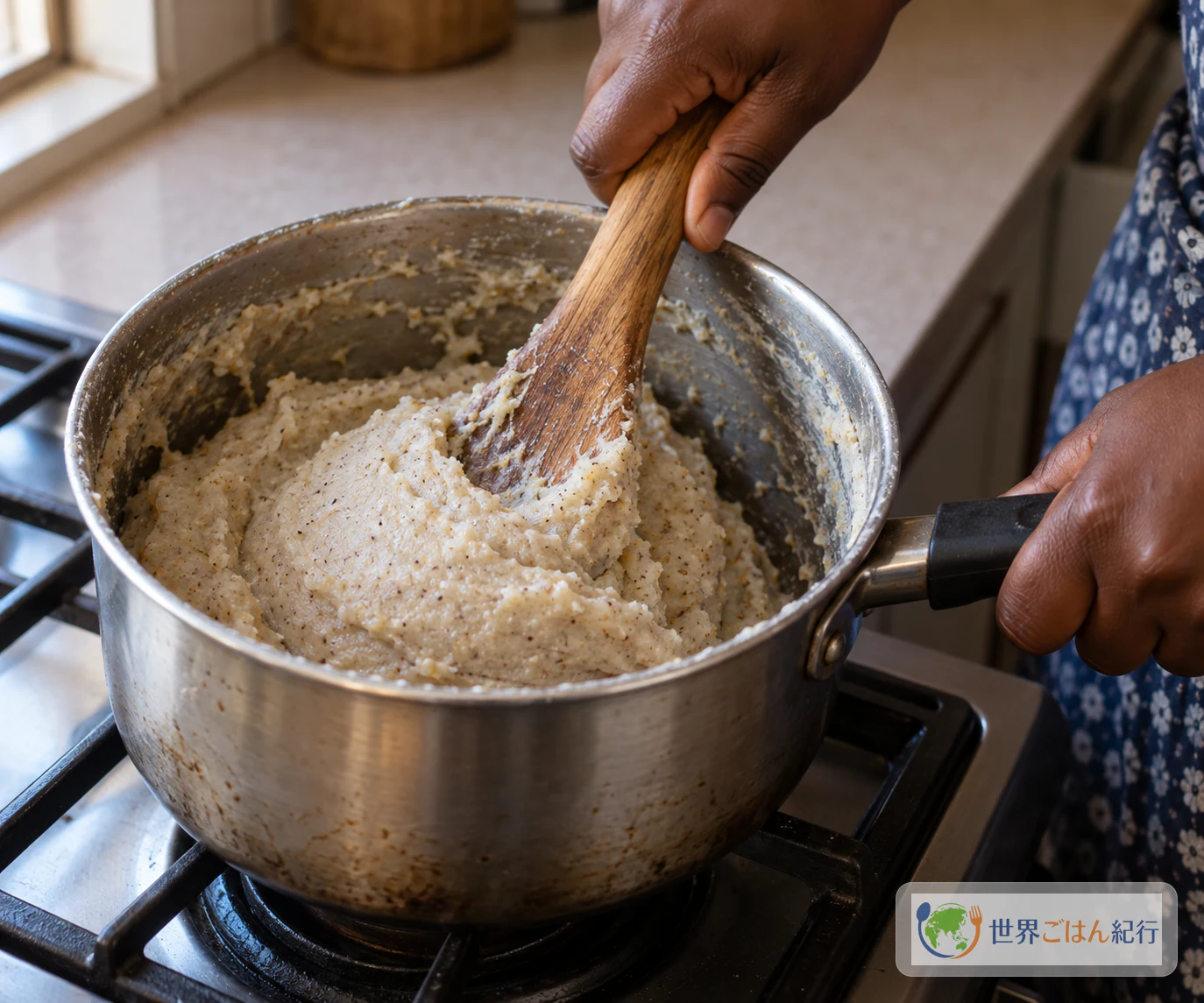
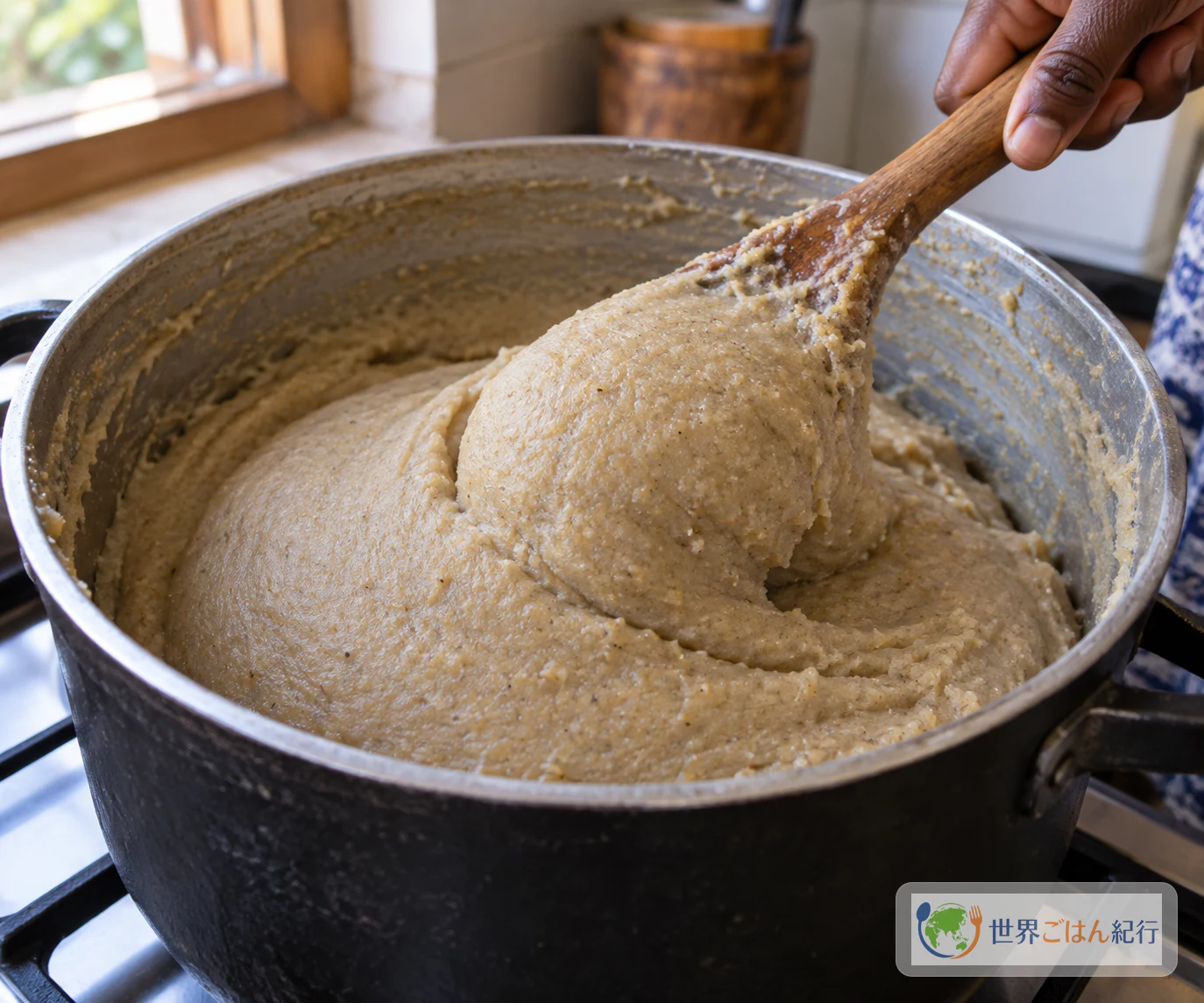
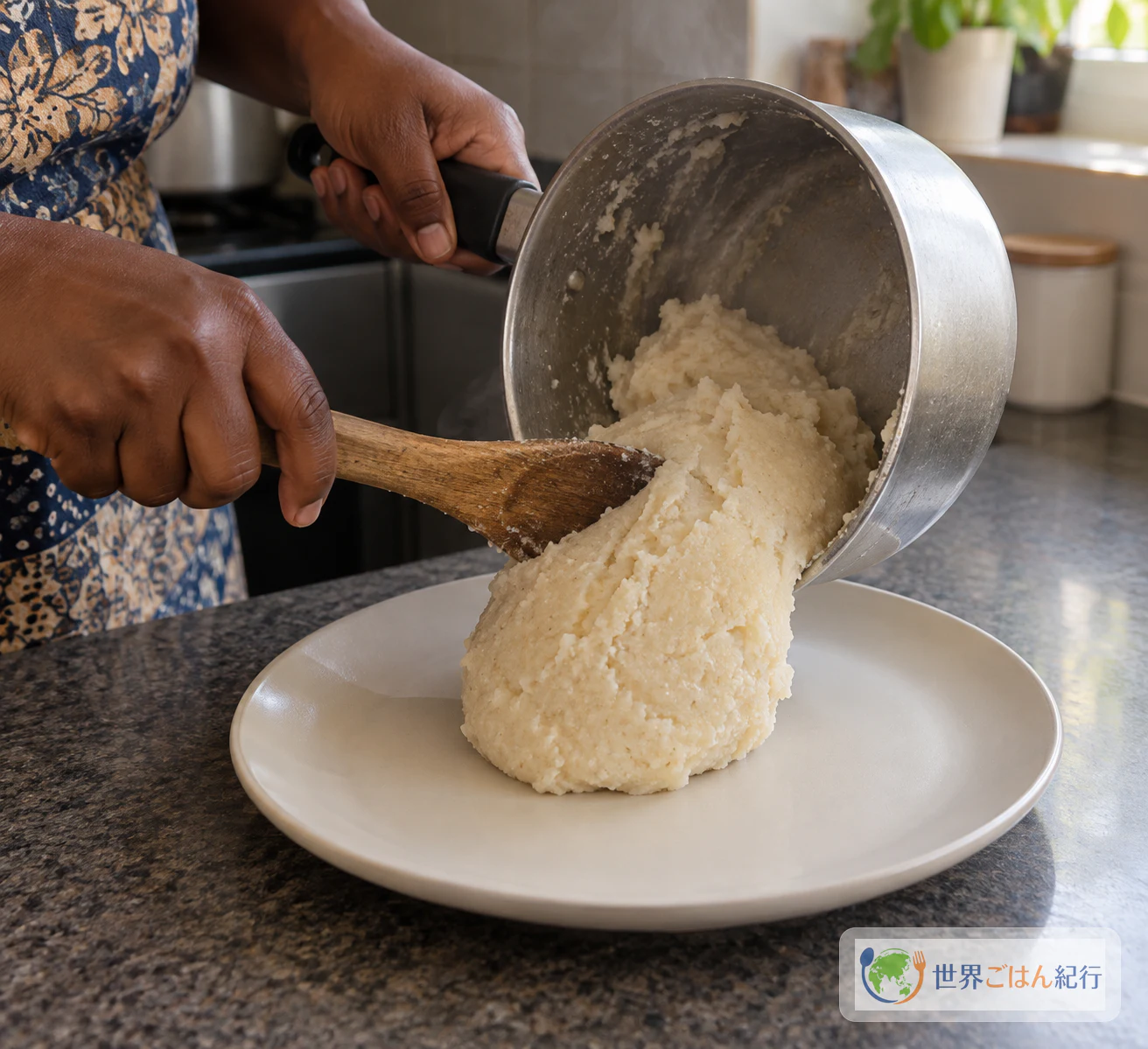
Oshifima should end up as one smooth, cohesive mass that turns out of the pot onto a plate, not a loose porridge you eat with a spoon. Add the mahangu flour a little at a time and keep working it against the pot until it comes together.
The word "porridge" usually suggests something soft in a bowl. Oshifima (Oshifimá) sits on the other side of that line. A language and food-culture study of Oshikwanyama records it as a thick millet porridge and a daily staple for Oshikwanyama speakers. It is eaten by hand: you take a small piece, shape it with your fingers, and dip it into the sauce on the table.
That study describes the dish within the Oshikwanyama-speaking community of northern Namibia. It is not a single national recipe, and this article does not present it as one. Households make oshifima in different ways and with different flours.
The version cooked here is a two-serving home recipe from Ester, a cook who says she grew up in northern Namibia. It combines fine maize meal with mahangu (pearl millet) flour. This is one household version, not the only traditional form. The older recorded method that uses millet flour alone and no salt is described separately below, and so is maize-only mielie pap, which is a different dish.
In English the dish is written Oshifima. The Oshikwanyama study writes it Oshifimá. Searching for "oshifima" together with "mahangu" turns up the flour and the dish more easily than searching for "millet porridge" alone.
Ingredients (2 Servings)
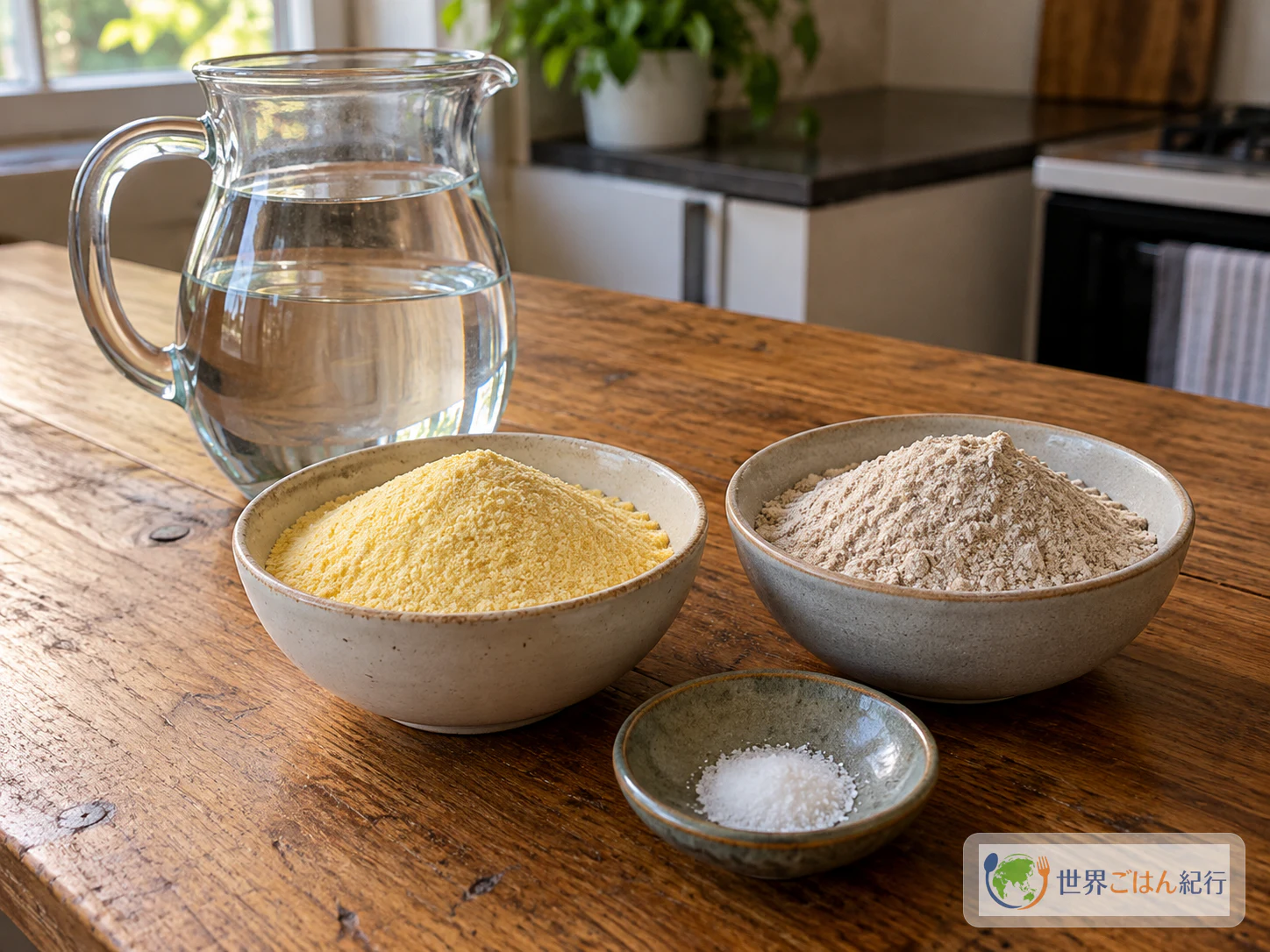
These amounts come from Ester's two-serving recipe and are not scaled. Only the source's grams and millilitres are used here. Measure by weight.
This recipe has not been kitchen-tested by us. It is presented exactly as the source gives it.
The ingredients do not include wheat, milk or eggs. Specialty flours may still be produced in facilities that also handle other grains or allergens. Check the label and any shared-facility statement on each flour you buy.
Equipment
- A heavy saucepan or small pot
- A sturdy, fairly long wooden spoon
- A flat plate or serving dish to turn the porridge out onto
A specially made stirring stick is not needed. The Oshikwanyama study records a word for a porridge-stirring stick (oluko), but an ordinary strong wooden spoon will do the same job at home.
Choosing and Substituting the Flours
Mahangu flour is pearl millet flour. Outside Namibia, look for it under the names "pearl millet flour" or "mahangu flour" at specialty grocers or online. Replacing it with a different grain flour should not be expected to give the same dish or the same flavor.
Fine maize meal is closest to finely ground cornmeal. Coarse cornmeal changes the texture. Fine cornmeal is a practical stand-in, not a guaranteed equivalent of the maize meal used in Namibia.
If you cannot find mahangu flour, making the porridge with maize meal alone takes you away from this recipe. Ester's recipe itself notes that a maize-only version is called mielie pap, so it is a different dish rather than a substitute oshifima.
Grind size differs from product to product, so the same weights may thicken differently. For a first attempt, cook with the stated weights rather than adjusting the water or flour to a ratio of your own.
Method: Adding the Flour Little by Little and Working It Smooth
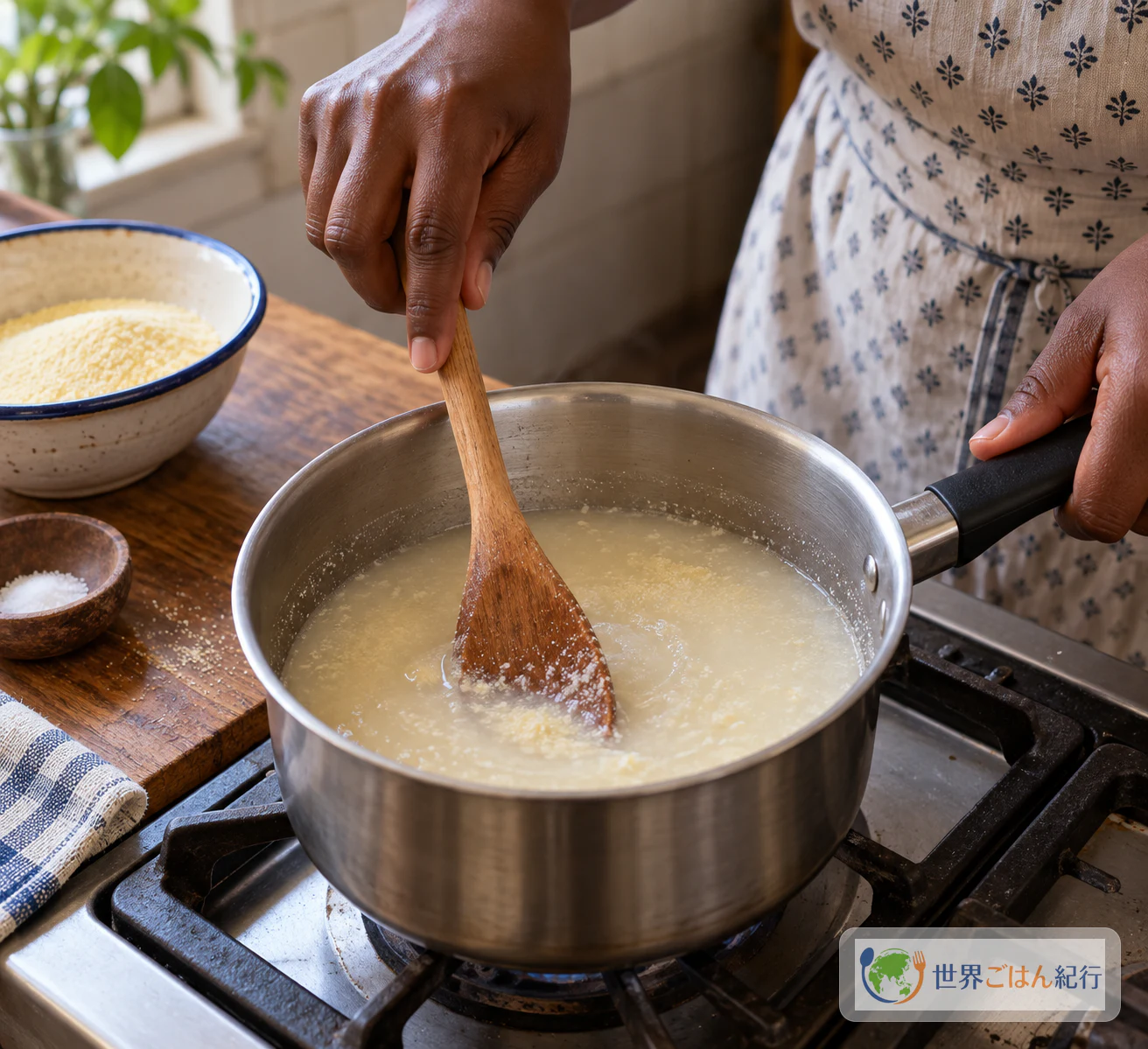
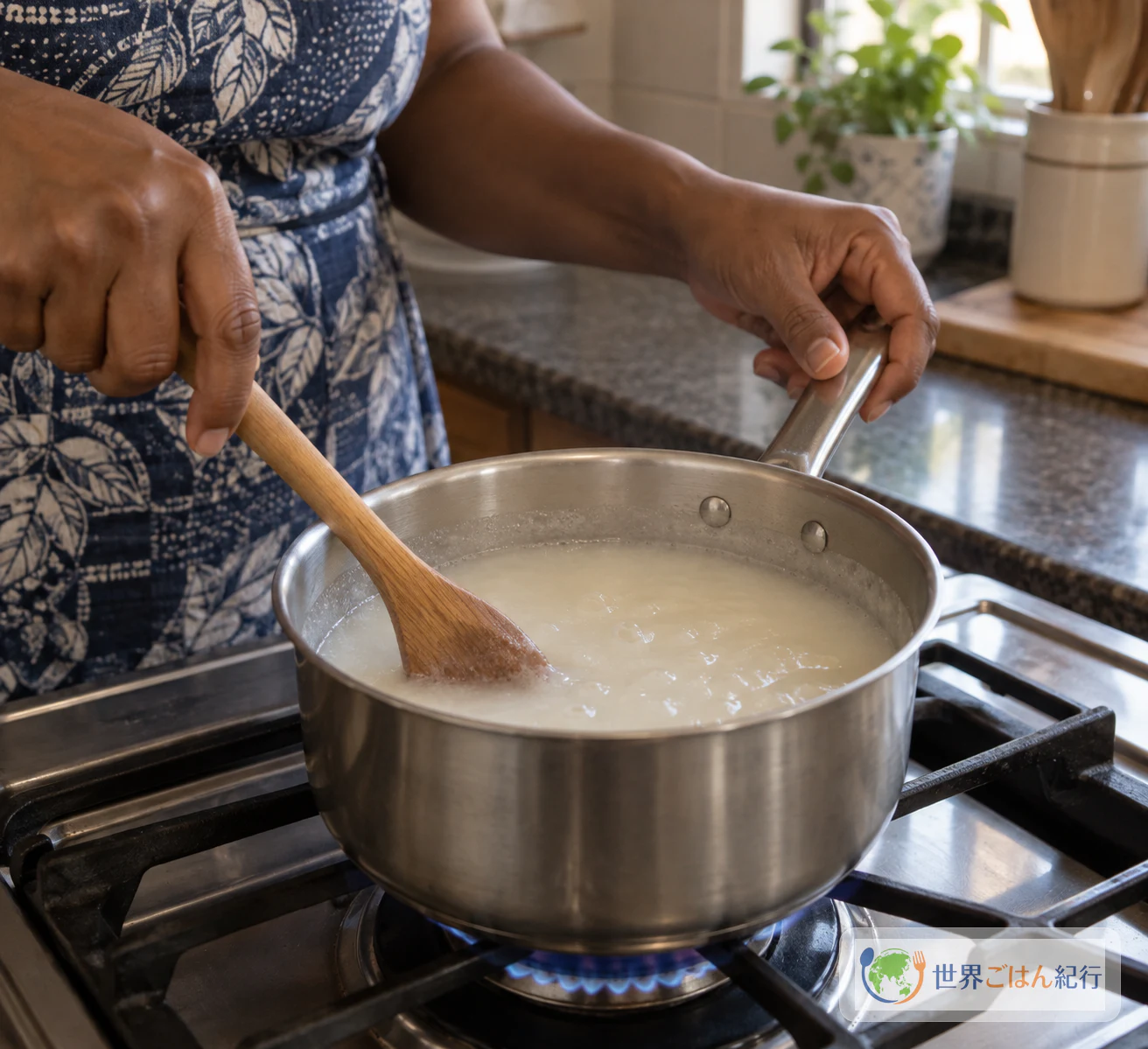
The maize meal goes into lukewarm water at the start and cooks into a thin base. The mahangu flour is stirred in gradually afterwards. Do not combine the two flours beforehand.
Troubleshooting
| Problem | Likely cause | What to do |
|---|---|---|
| Lumps form | The mahangu flour went in too quickly | Next time add it in small amounts and keep stirring while it falls. While it is cooking, keep pressing the porridge against the pot wall with the spoon |
| The bottom catches | The base was not stirred along the bottom while boiling | Scrape the bottom as you stir, especially during the 2-minute boil |
| Still loose, not one mass | Not yet worked enough, or a different grind of flour | Keep stirring firmly through the low-heat stage until it gathers. Do not invent a new flour-to-water ratio. Grind size varies by product |
| Dry flour remains | The flour has not been fully worked in | Keep pressing and folding against the pot until no dry flour is visible |
Because this recipe has not been kitchen-tested by us, no adjustment amounts are given here. Start from the stated weights and judge the result by the endpoint described in step 4.
How to Eat It: Small Pieces Scooped Through Sauce
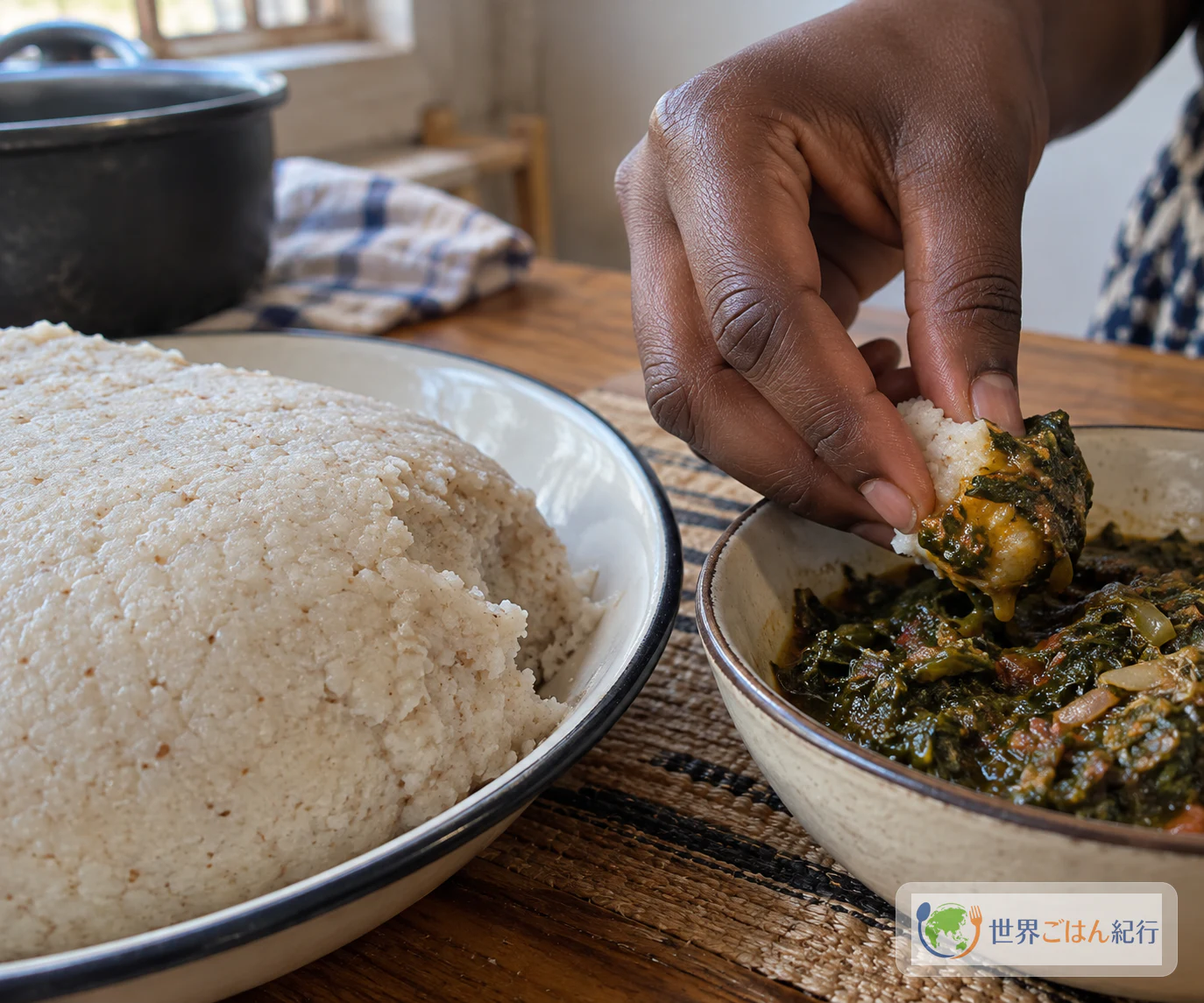
Oshifima is eaten by hand. Take a small piece, shape it with your fingers, and press a hollow into it to hold the sauce, then scoop. Ester also describes eating by hand and dipping into sauce as her family's practice.
The Oshikwanyama study lists vegetable sauce, beans, meat, fish and milk as accompaniments. Ester mentions soured milk, grilled meat, vegetables and stews.
A Namibian embassy gastronomy booklet describes omboga (also ombidi or mutete), a wild spinach commonly stewed in northern Namibia and served as a side dish. It is a natural option to set beside oshifima, though the booklet does not tie it to oshifima specifically.
The traditional version recorded in the Oshikwanyama study contains no salt, and the seasoning comes from what is served with it. If you leave out the pinch of salt, make sure the sauce carries enough flavor.
Leftovers
The Oshikwanyama study notes that oshifima is usually made fresh for a meal, though leftovers are sometimes eaten at breakfast. The sources give no storage period or temperature.
If you have leftovers, put them in a clean, covered container, refrigerate them promptly, and reheat them soon.
The All-Millet Recorded Method and Pap: How They Differ
The same name covers more than one way of cooking. This table sets out the sources side by side without merging them.
| This recipe (Ester's home version) | Traditional method recorded in the Oshikwanyama study | Mielie pap | |
|---|---|---|---|
| Flour | Fine maize meal and mahangu flour | Millet flour | Maize meal only |
| Salt | A pinch, optional | None. Salt comes from the accompaniments | — |
| Method | Maize meal into lukewarm water, boil about 2 minutes, add mahangu gradually, finish on low heat | A little flour mixed with cold water and added to boiling water, cooked to a thin porridge, then more flour added gradually while scraping the pot until cohesive | — |
| Amounts | 400 ml water, 40 g maize meal, 45 g mahangu flour | Water and flour judged by the result. The study separately cites a cookbook ratio of 6 dl millet meal to 1.5 l water | — |
These are differences of ingredients and method, not a ranking. Ester's recipe states that oshifima can be made with pearl millet flour, maize meal or a mixture, and that the maize-only version is mielie pap. The embassy booklet names both pap (maize meal) and omahangu (pearl millet) as accompaniments to meat dishes. A shared broad label like "pap" does not make them the same dish.
The study also records that oshifima was traditionally cooked over a fire and is now also made on gas and electric stoves.
Another African grain staple
For another African grain staple, see Tanzanian ugali. It is a related but distinct dish, not an interchangeable recipe for this mahangu-and-maize version of oshifima.
Frequently Asked Questions
What is oshifima made from?
At its core, oshifima is mahangu (pearl millet) flour cooked with water. Some households mix in maize meal. The weights in this article come from one such home version, which uses 40 g fine maize meal and 45 g mahangu flour in 400 ml water.
What if I can't find mahangu flour?
Fine cornmeal can stand in for the maize meal portion. If you use maize meal alone, though, you are making something closer to mielie pap, and it will not taste the same as oshifima. Look for "pearl millet flour" or "mahangu flour."
Do I need salt?
It depends on the version. Ester's recipe uses a pinch. The traditional method recorded in the Oshikwanyama study adds none and takes its seasoning from the dishes served alongside. Neither is the single correct way.
What should I serve with it?
Choose something you can scoop up. The sources mention vegetable sauce, beans, meat, fish, milk or soured milk, grilled meat, vegetables and stews. A stewed leafy green such as the northern Namibian wild spinach omboga also fits the table.
Can I make it ahead?
The sources say oshifima is usually made fresh, though leftovers are sometimes eaten at breakfast. They give no storage period or temperature. If you keep leftovers, store them in a clean, covered container in the refrigerator promptly and reheat them soon.
Sources
- Riikka Halme-Berneking, "Culinary vocabulary in Oshikwanyama," in Cooking with Linguists, Royal Museum for Central Africa. Supports oshifima as a thick millet porridge and daily staple for Oshikwanyama speakers; usually made fresh, with leftovers sometimes eaten at breakfast; traditionally cooked over fire and now also on gas or electric stoves; eaten by hand dipped in sauce with vegetables, beans, meat, fish or milk; no salt in the described traditional version; the slurry-then-gradual-flour method; and a cited cookbook ratio of 6 dl millet meal to 1.5 l water. https://www.africamuseum.be/sites/default/files/media/docs/research/publications/rmca/series/studies-social-sciences-humanities/book_cooking%20with%20linguists%20pour%20Web.pdf
- Ester, "Namibian stiff porridge (Oshifima)," Ester kocht. A home recipe by an author who grew up in northern Namibia. Source of the two-serving amounts (400 ml water, 40 g fine maize meal, 45 g mahangu flour, a pinch of salt), the method and timings, the pot-soaking tip, the note that oshifima can use pearl millet flour, maize meal or a mix and that maize-only is mielie pap, and the serving suggestions. https://www.esterkocht.com/namibian-stiff-porridge-oshifima/
- Embassy of Namibia in Portugal, "Namibia: A Tour of African Gastronomy." Supports pap (maize meal) and omahangu (pearl millet) as accompaniments to meat dishes, and omboga/ombidi/mutete as a wild spinach commonly stewed in northern Namibia and served as a side. https://consulnamib.pt/wp-content/uploads/2020/11/Gastronomy-booklet-final.pdf