


The story of kilishi: layering fragrance onto dry meat

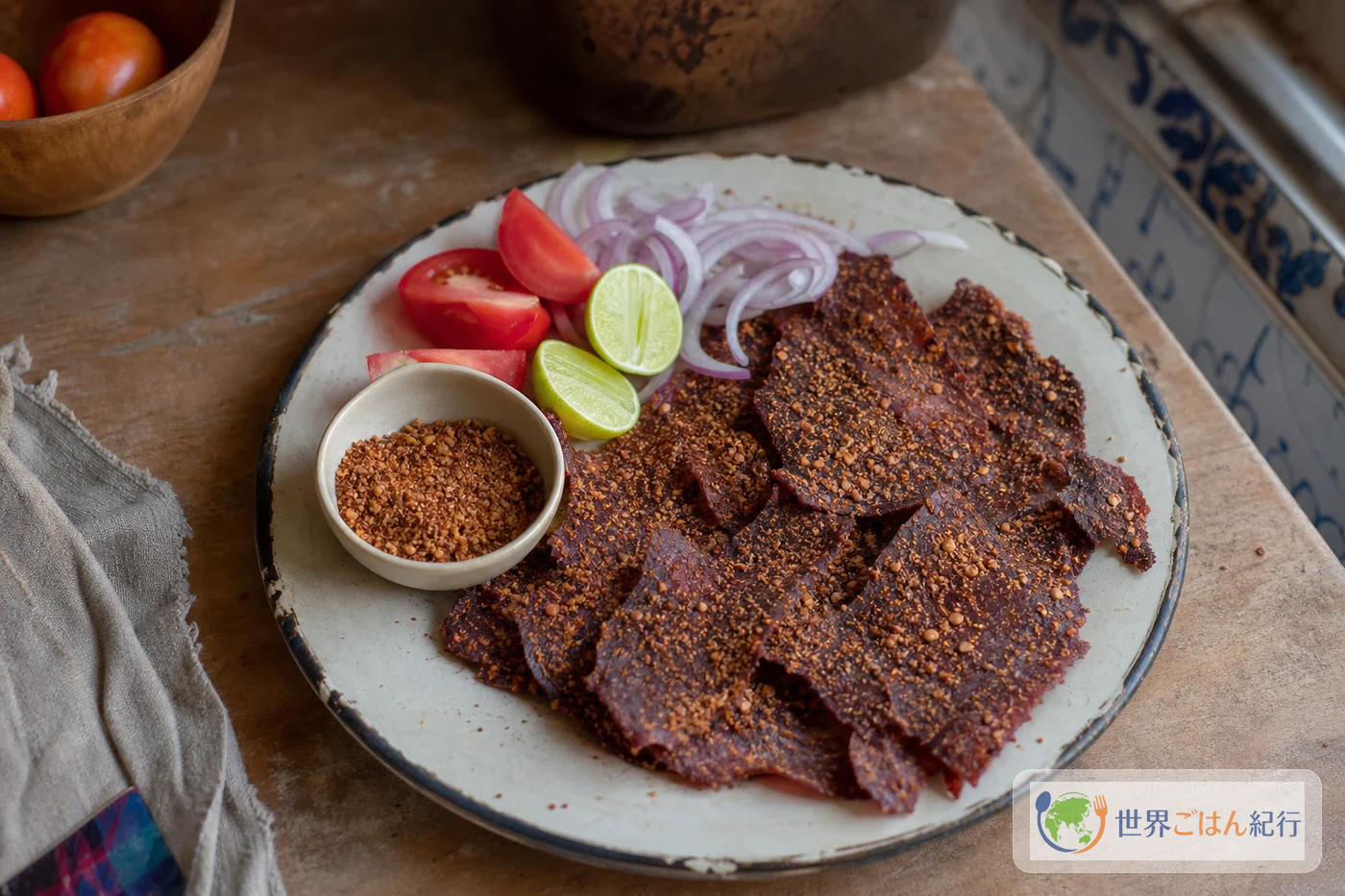
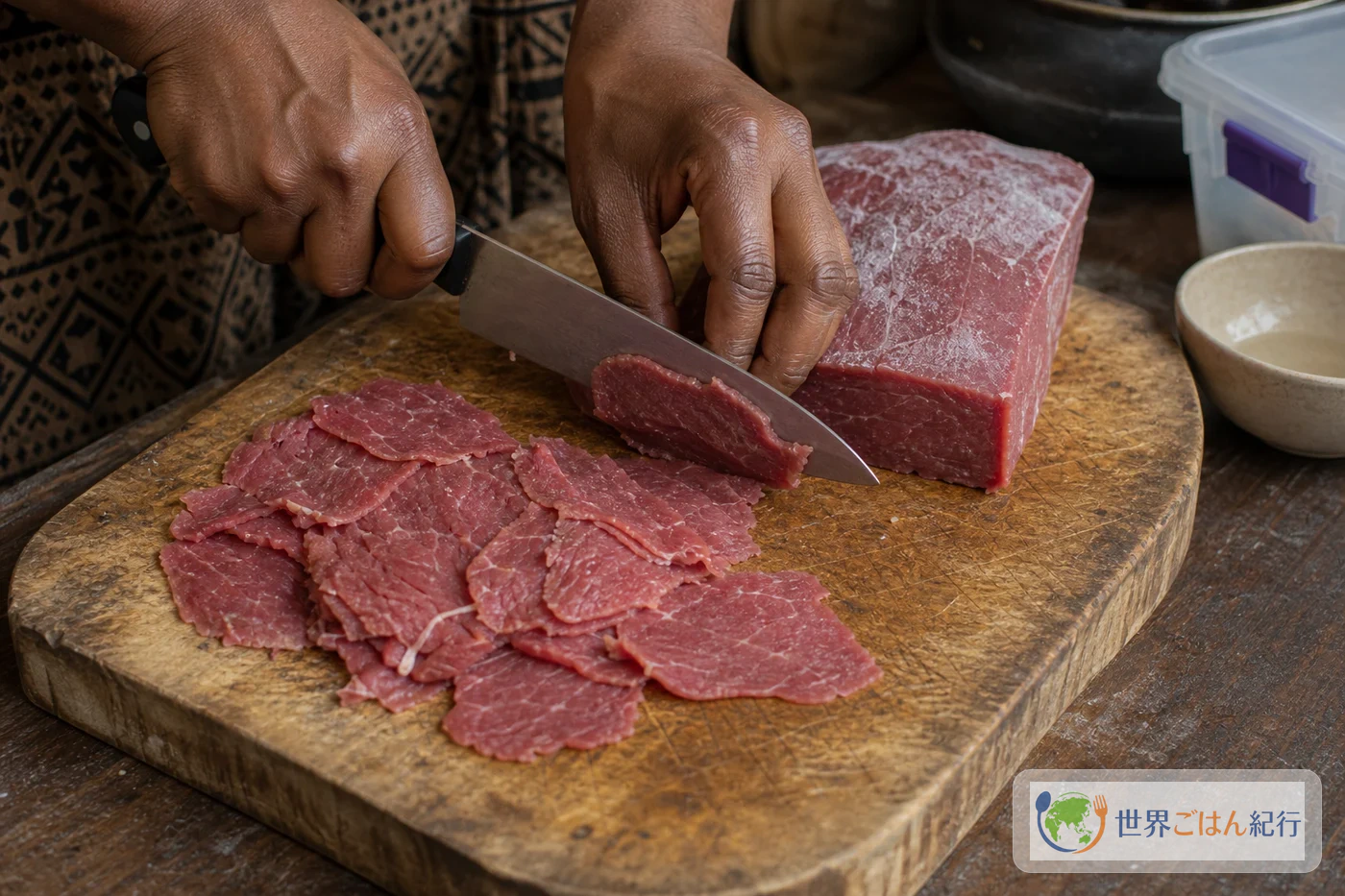
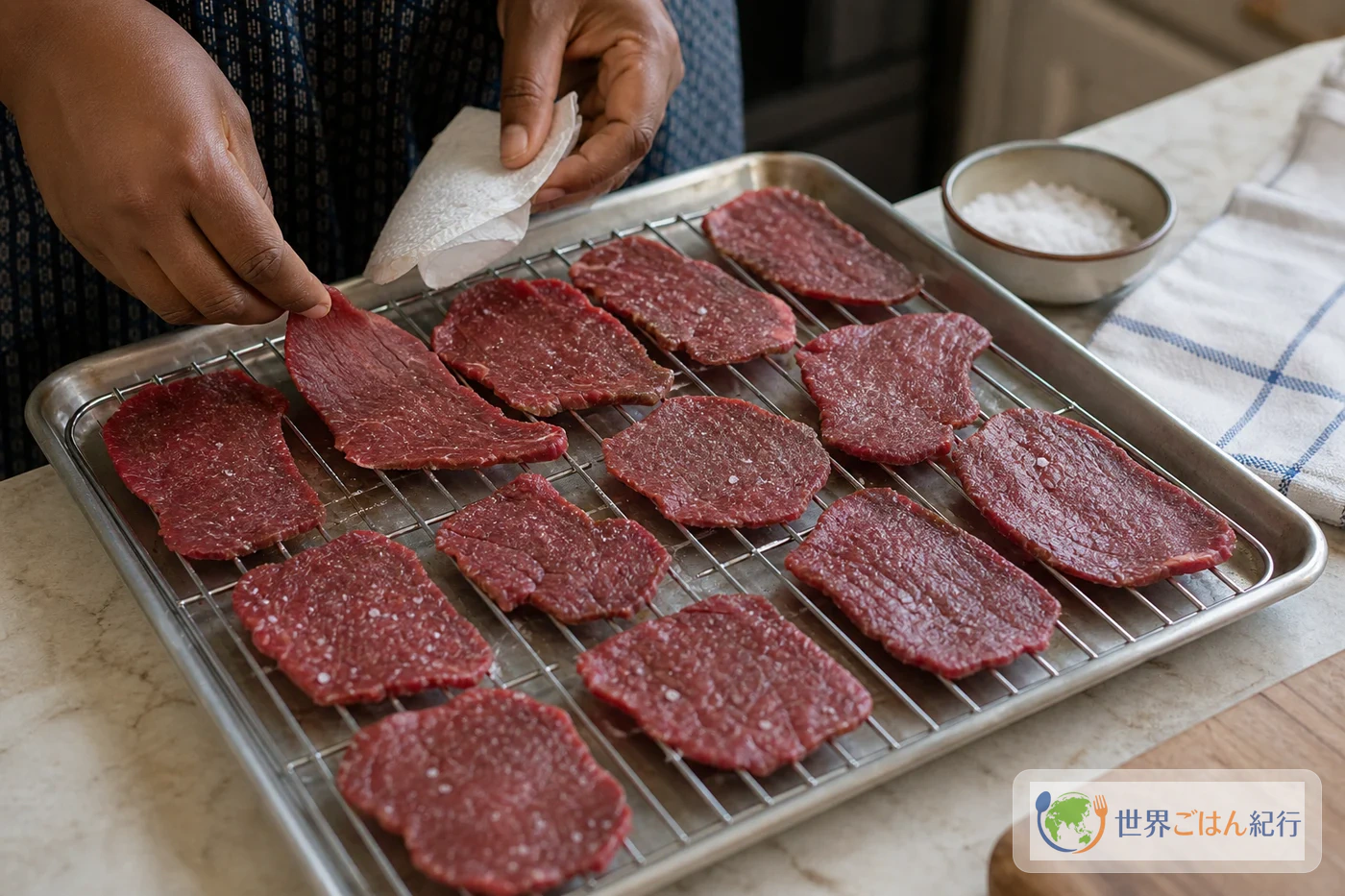
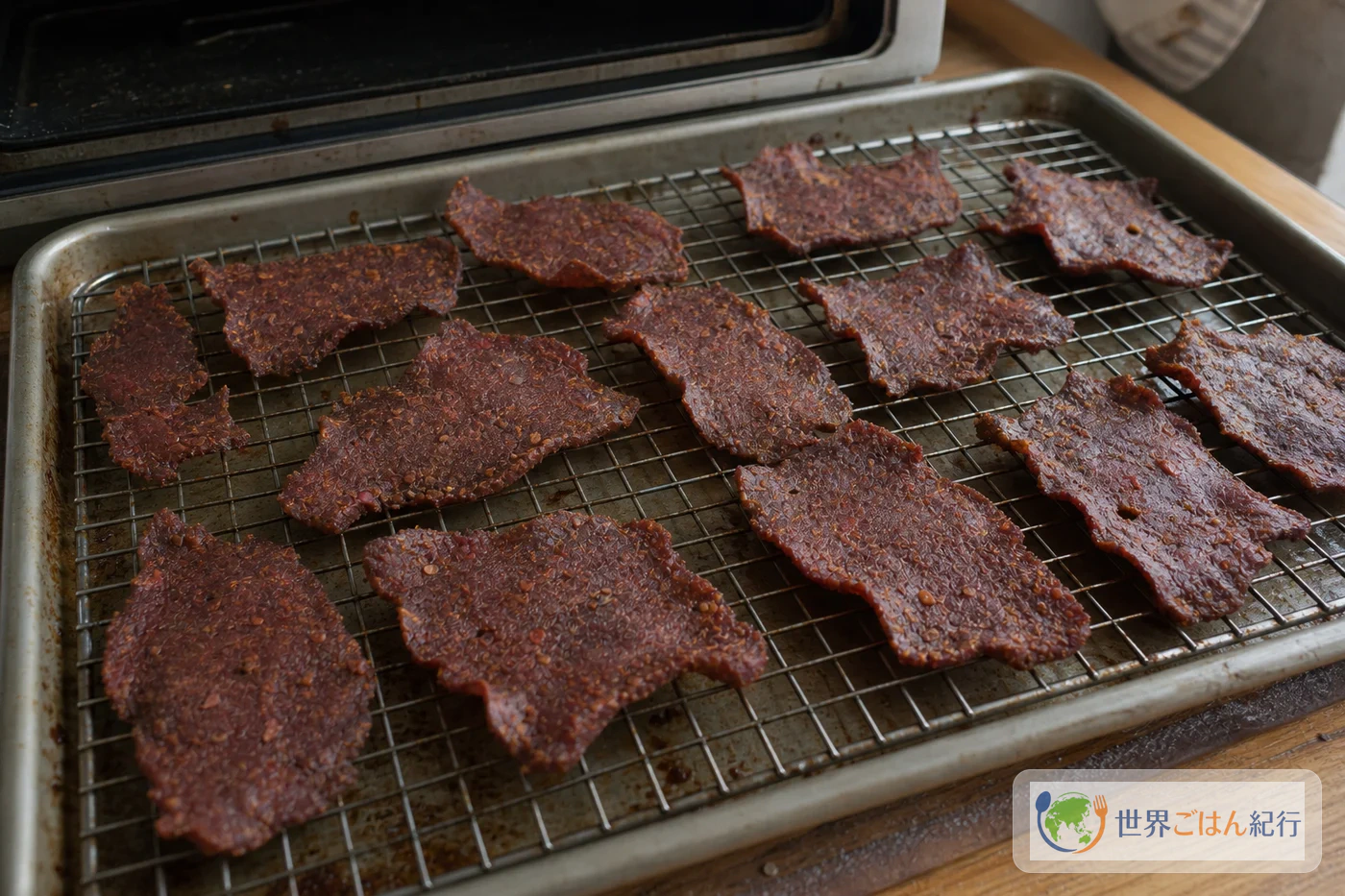
Lay thin slices of beef on a rack and you see that what decides the texture of kilishi is not the browning but the thickness. Thick meat takes longer to dry, and the surface you coat with labu holds moisture. Heat lean meat cut evenly to 2–3 mm at a low temperature, dry the surface, and then layer on a labu of peanut, chile, onion and ginger. That order gives you both chew and aroma.
Kilishi is a spiced dried meat that some sources spell kilichi. A study of Niger's methods breaks it into stages: slicing, first drying, seasoning, second drying and roasting. The Food and Agriculture Organization (FAO) also presents it as a dish in which lean beef, mutton or goat meat is dried, coated with a paste made from groundnuts (peanuts), dried again and then put over a fire. The core of kilishi is not finishing the drying in one pass, but layering aroma by putting the labu in between.
This dish is not confined to Niger. Nigeria's National Institute for Cultural Orientation (NICO) lists kilishi among the dishes of northern states such as Kaduna, Katsina, Adamawa and Borno. It helps to see it as wisdom for drawing the water out of meat in the hot, dry season, handed down in different places within the climate and food culture around the Sahel. Rather than fixing a single place of origin, it comes closer to reality to see it as a way of preserving meat and eating it fragrantly within a broad food culture that includes the Hausa-speaking world.
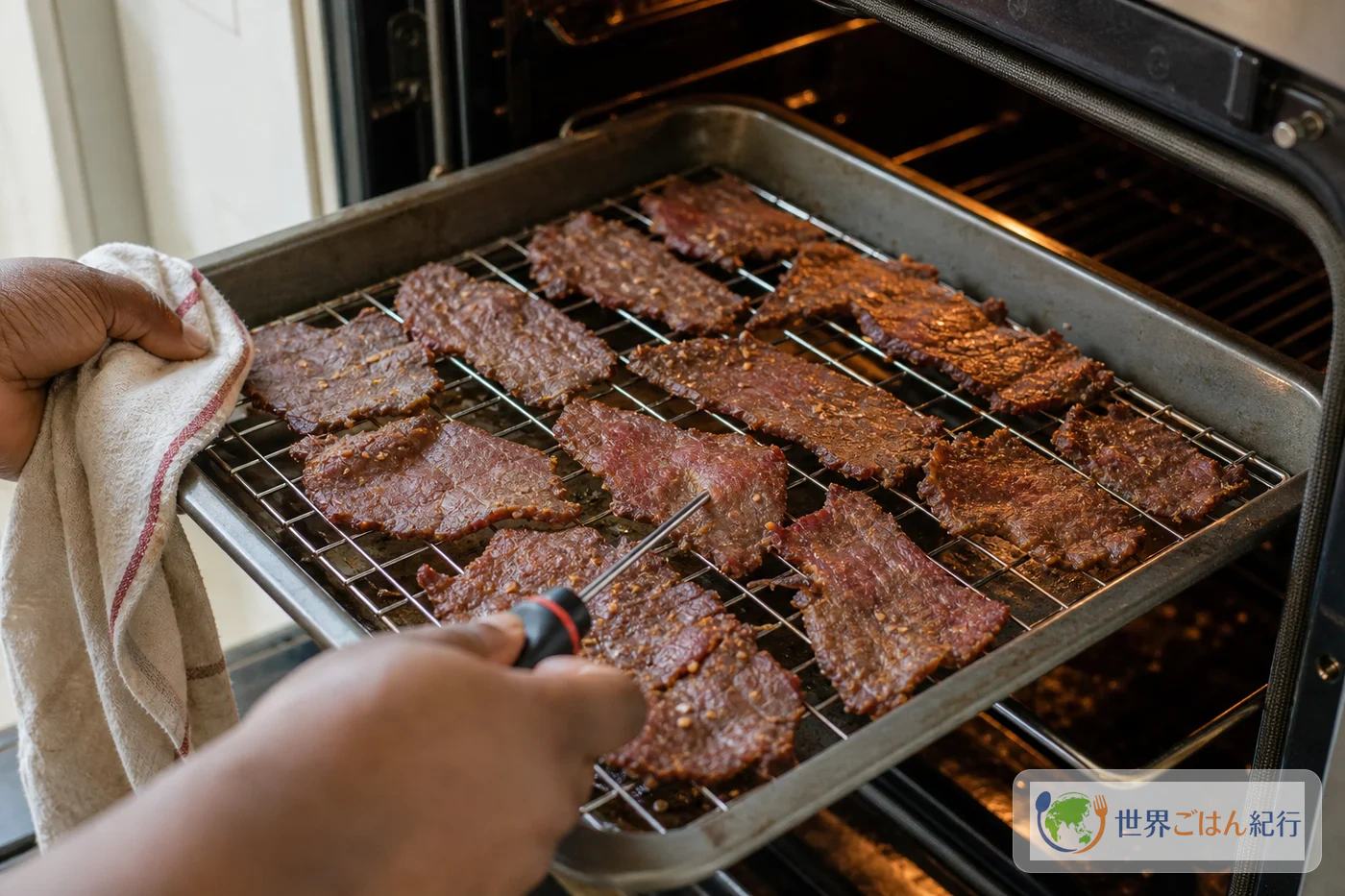
Traditional local drying uses sun and fire, but hanging meat outdoors at home is a method where it is hard to ensure hygienic conditions. Here, thin-sliced beef is heated first in the oven, its center temperature is checked, and only then does it move to low-temperature drying. It is not treated like a shelf-stable commercial product; eat it soon, refrigerated or frozen. This is a recipe that does not reproduce the local method as is, but translates the core of the flavor and the meaning of each step into home equipment.
| What to look at | Kilishi locally | Judgment in a home kitchen |
|---|---|---|
| Meat | Lean beef, mutton or goat cut thin | Cut beef round, rump or lean shoulder to 2–3 mm |
| Drying | Labu applied after the first drying, then a second drying and roasting | Heat, dry at low temperature, apply labu, dry again, in that order |
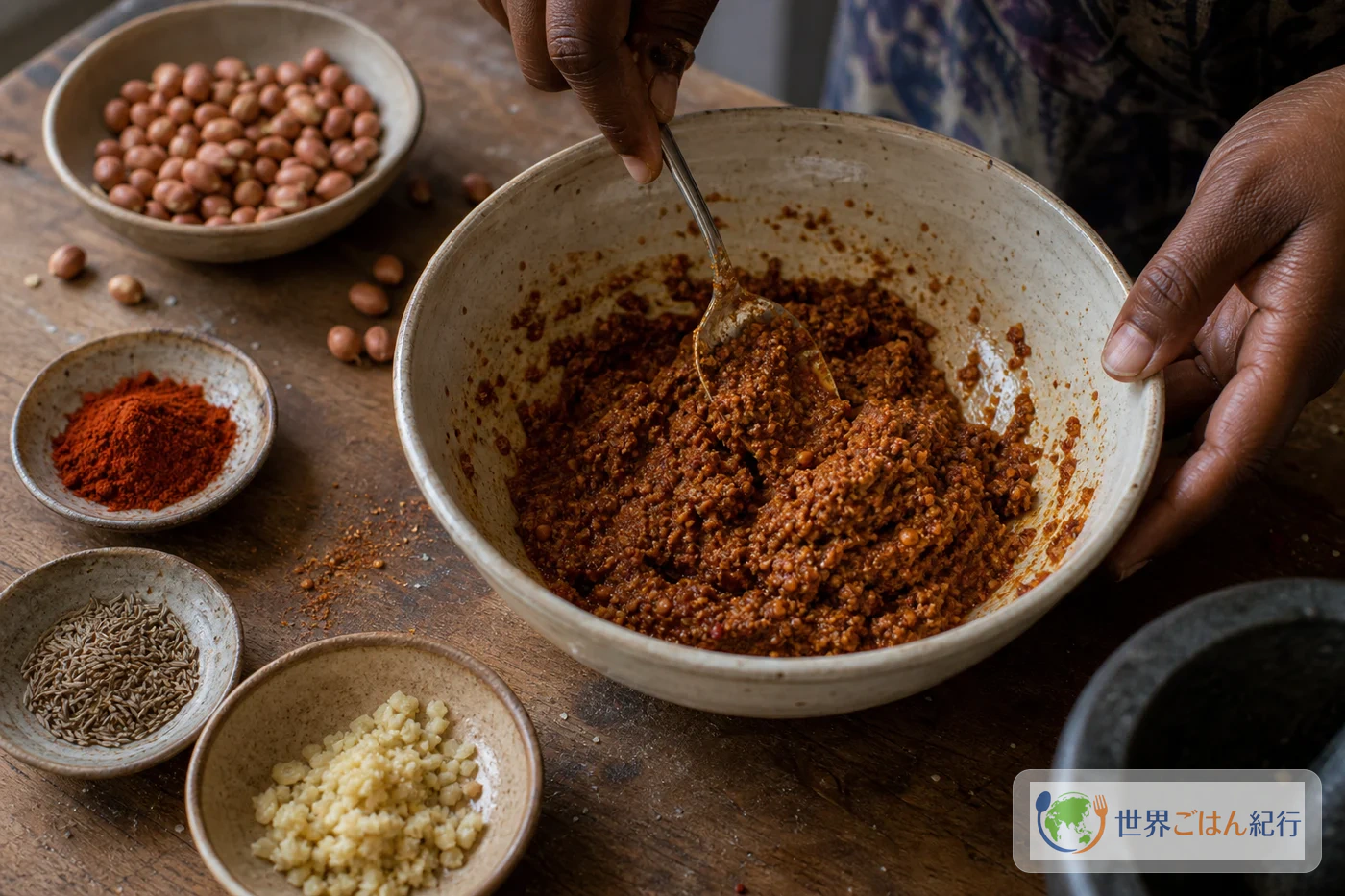
| Labu | Groundnut as the base, with chile, aromatics and spices | Coarsely ground unsalted peanuts, with cumin and paprika for aroma |
| How it is eaten | A dish of northern food culture, nibbled in small amounts | Serve with red onion, tomato and lime, beside a grain dish |
| Storage | Some products are managed for dryness and packaging | At home, do not assume room-temperature storage; plan on 2 days refrigerated and 3 weeks frozen |
If Nigerian suya is a dish enjoyed hot off the grill with seasoned meat, kilishi adds drying time to build chew. It plays a different role from Kenyan nyama choma, which is a dish of meat in a chunk eaten from the fire, and also from a grain dish like Nigerien dambou. Rather than piling it high as a main, eating it a little at a time between bites of moist onion and lime keeps the aroma of peanut and chile from feeling heavy.
This recipe is not for shelf-stable dried meat. Home ovens, cutting boards and storage containers cannot control water activity and hygiene the way commercial operations do, so once finished, cool it slightly and eat it within 2 days refrigerated or 3 weeks frozen. It uses beef and peanuts, so do not serve it to anyone with allergies.
Ingredients (serves 4): shopping so you can make the labu

This is an amount for four to nibble. It is not a dish to heap up as a main, but a portion to set beside onion, tomato and a grain dish. The nutrition values are an approximation from dividing the ingredient list by four, and vary with the fat on the beef and the amount of vegetables served. If the beef has a lot of fat, oil seeps out during drying and the labu won't hold. For a first batch choose beef round or rump.
Choosing unsalted, oil-free peanuts lets you control the saltiness and viscosity of the labu. Beef, onion and tomato are easy to buy anywhere, so they need no special sourcing. Since only 80 g of peanuts is used, a 1 kg bag is not something to finish with this dish alone. It suits someone who will make labu several times or use peanuts in sweets and stir-fries too.
Cumin is not required, but it steers the aroma, which with peanut and chile alone tends to be sweet and heavy, toward something more fitting for a dry meat dish. If you grind whole spices yourself, the aroma comes out differently, so don't start with the same amount as the powder; add a little and adjust.
A mortar is a good tool for finishing the labu with a coarse flour and some pieces left, rather than turning the peanuts into a complete paste all at once. Crushing 80 g of peanuts in several batches in a small mortar works well; an electric mill or a mortar you already have is enough.
Method: heat safely, then dry
Kilishi proceeds in this order: slice thin, cook first, dry, apply labu, dry again. Do not try to make raw meat safe by drying alone; check the center temperature first. Food preservation research likewise shows an approach of using validated recipes and temperature control for jerky, combining heating before drying with additional heating after drying.
Branch points for getting closer to the original in a home kitchen, and storage
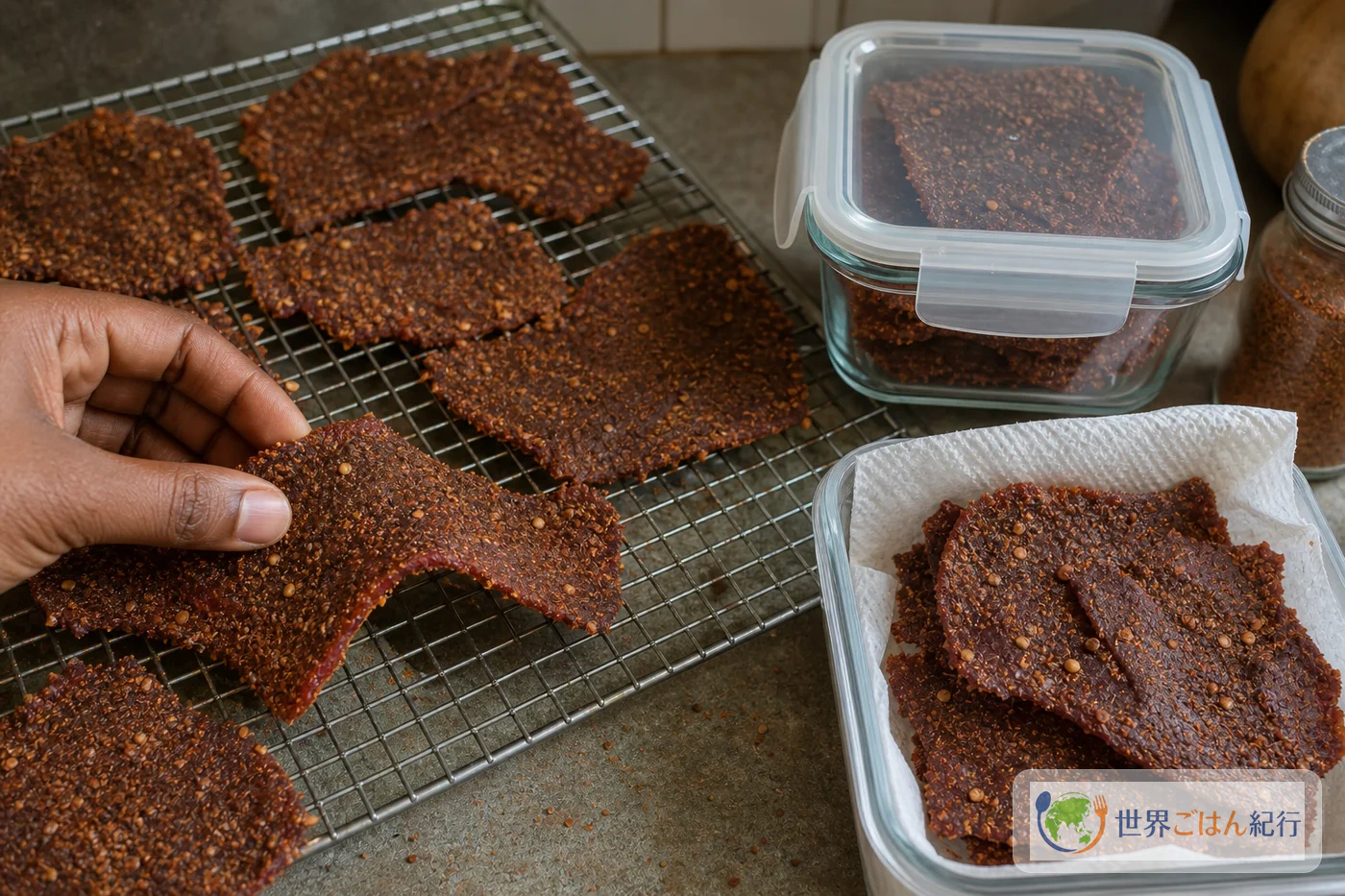
The local sun-drying and use of fire cannot be moved into a home oven as is. Sunlight, wind, the thickness of the meat and the moisture left after drying are all different. A study in Niger compared traditional sun-drying with solar dryers, and the FAO material shows a process that separates first and second drying. At home, rather than greedily approaching a room-temperature dried meat for shelf life, it is easier to handle by checking the heating temperature first and stopping where aroma and chew remain.
Background to the dish
The Niger methods study records kilishi as a continuous series of tasks: cutting, trimming, drying, seasoning, drying again and roasting. Separating the thin slicing from the applying of labu is to hold the aroma on the surface of the meat. Given that Nigeria's NICO lists kilishi among the dishes of the northern states, it can be understood less as a specialty of one particular city and more as a dish rooted in the regional table.
In the FAO method, the groundnut meal is combined with water, garlic, salt, chile, ginger, onion and so on. The design has the paste worked into the dried meat, with the second drying and roasting setting the aroma. The ingredient list here uses roasted peanuts, which is a substitution into a form easy to obtain at home. Adding peanut oil or a sugary peanut butter changes the viscosity and browning of the labu, so grinding unsalted whole peanuts is easier to adjust.
Regional differences and substitutions
| What the cook changes | Range seen in local sources | Substitution at home |
|---|---|---|
| Meat | Beef, mutton, goat. Thin lean slices | Beef round or rump. Use mutton or goat only if it can be cut to the same thickness |
| Paste | Groundnut or groundnut cake, bean flour and aromatics, chile | Unsalted roasted peanuts, onion, ginger, spices |
| Drying | Sun, ventilated drying, solar dryers | An oven or food dehydrator where you can set the temperature |
| Finish | Roasted over fire after the second drying | Additional heating at 135°C, then 180°C for just 2–3 minutes |
| How it is eaten | Meat is preserved as a regional dish and eaten in small amounts | Serve red onion, tomato and lime on the side |
What to keep when reproducing the regional differences at home is not matching every ingredient name. It is not breaking the relationship of thin lean meat, a paste containing groundnut, two-stage drying and a toasty finish. Even when using mutton or goat, picking a fatty cut lets oil seep out during drying and the labu slides off. It is easier to compare results by learning the process with readily available beef round and then changing only the meat.
Cooking tips and how to recover from failures
If only the parts of the meat thicker than 3 mm stay soft, do additional 70°C drying in 10–15 minute steps. Moving to high heat while only the surface is hard and moisture remains in the center cannot be undone, so first judge by how dry it feels to the finger, not by browning. Conversely, meat that is thin and breaks has been overdried, so next time shorten the drying and stop when the surface is dry before applying the labu.
When the labu falls onto the rack, don't add water; add ground peanut 1 tsp at a time to bring back the viscosity. If it has already been applied to the meat, add 5–10 minutes of low-temperature drying and move to the 135°C additional heating once the surface has set. When the aroma is weak, rather than sprinkling chile or cumin on afterward, adding a little cumin to the next labu and using the final 180°C for only 2 minutes avoids a powdery taste.
Storage and reheating
Cool the finished kilishi on the rack for about 15 minutes, let the surface steam escape, and then put it in a shallow container. Keep the red onion, tomato, lime and cucumber in a separate container. If the moisture from the vegetables transfers, the meat you worked to dry will go soft again.
| What is stored | Duration | Handling before eating |
|---|---|---|
| Finished kilishi | 2 days refrigerated | Warm in a toaster oven at 120°C for 3–4 minutes |
| Frozen kilishi | 3 weeks | Thaw in the refrigerator and warm at 120°C for 5 minutes |
| Labu alone | 1 day refrigerated | Contains raw onion, so use up by the next day |
| Side vegetables | Same day | Serve separately from the meat |
For reheating, a toaster oven suits better than a microwave. A microwave returns moisture to the surface and makes the peanut coating heavy. It scorches easily, so cover lightly with aluminum foil and remove it for just the last minute and the aroma returns. If there is an off smell, sliminess or more moisture in the container, don't eat it even within the storage period.
FAQ
How is kilishi different from suya?
The kilishi in this recipe is thin meat that is dried, coated with labu, and dried again to finish. Suya is known as a dish of seasoned meat eaten hot off the grill, so the center of the texture is different. You can choose suya on days you want the sizzling grilled aroma right away, and kilishi on days you want a nibble whose aroma comes back the more you chew.
Can I leave out the peanuts?
For it to be kilishi, better not. Peanuts give not only aroma but also the film of the labu and its slightly rough texture. If you have an allergy, don't make a substitute version; treat it as a different spiced dried meat that uses no peanuts.
Can I make it in a food dehydrator?
Yes. But in this recipe you first check in the oven that the center reaches 71°C or higher before the drying begins. After that, set the dehydrator to 70°C or higher and watch until the surface is dry. Airflow differs by model, so judge by the meat's thickness and the dryness of the surface, not by time alone.
Can I carry it at room temperature?
Do not carry home-made kilishi at room temperature. Keep what is sold locally or traditional dried meat separate from the safety of something made in a home kitchen. Even in a lunch box, use an ice pack and finish it the same day.
Sources
- Food and Agriculture Organization of the United Nations, "Manual on simple methods of meat preservation — Kilishi": https://www.fao.org/4/x6932e/x6932e02.htm (accessed and checked 21 August 2026)
- Sabo Haoua Seini et al., "Comparative study on the processes of manufacturing kilichi (dried meat) in Niger": https://journalcra.com/article/comparative-study-processes-manufacturing-kilichi-dried-meat-niger (published 2018; accessed and checked 21 August 2026)
- National Institute for Cultural Orientation, "Cuisines in Nigeria": https://nico.gov.ng/cuisines-in-nigeria/ (accessed and checked 21 August 2026)
- University of Minnesota Extension, "Meat, fish and poultry": https://extension.umn.edu/preserve-your-own-food/meat-fish-and-poultry (accessed and checked 21 August 2026)



