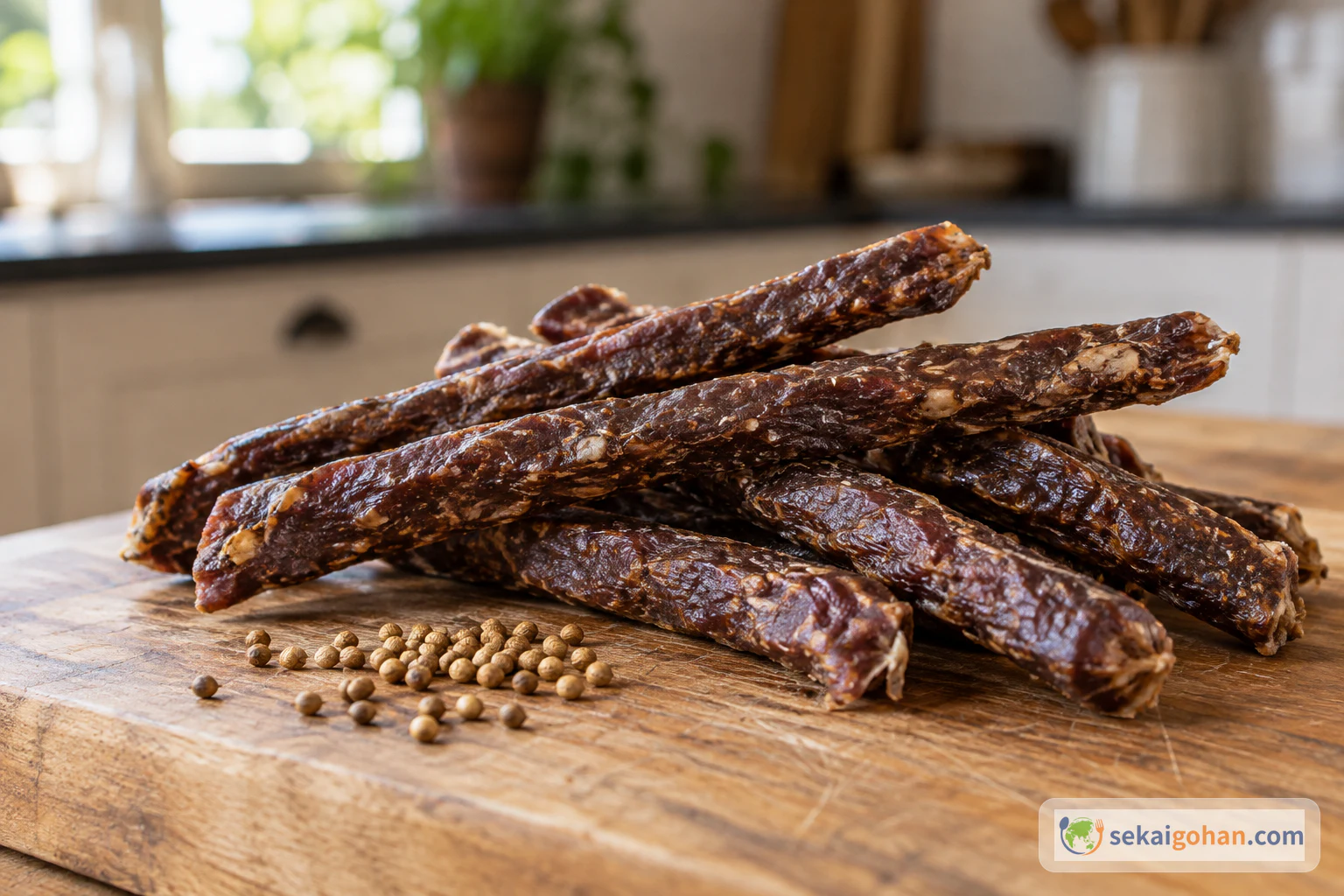
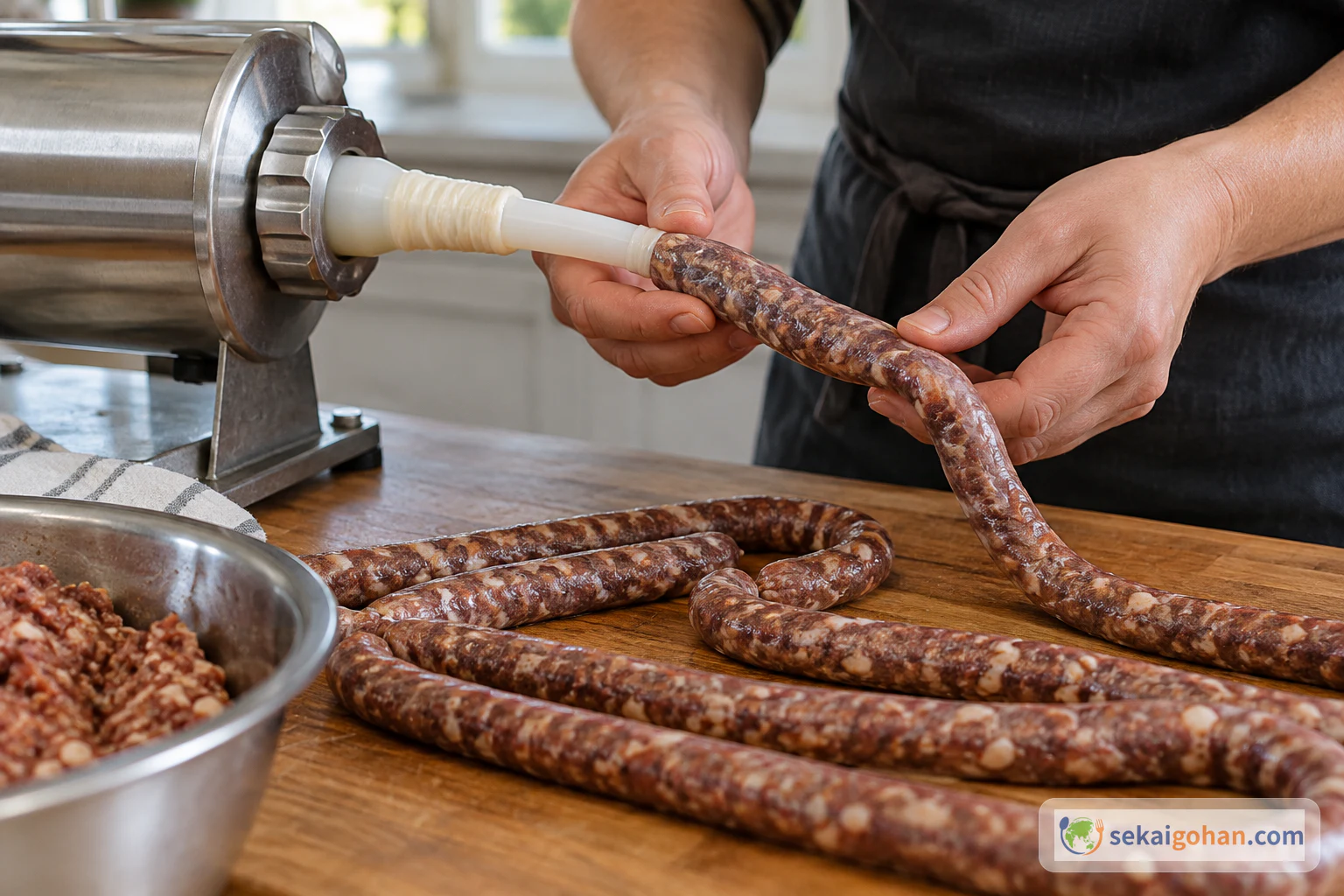
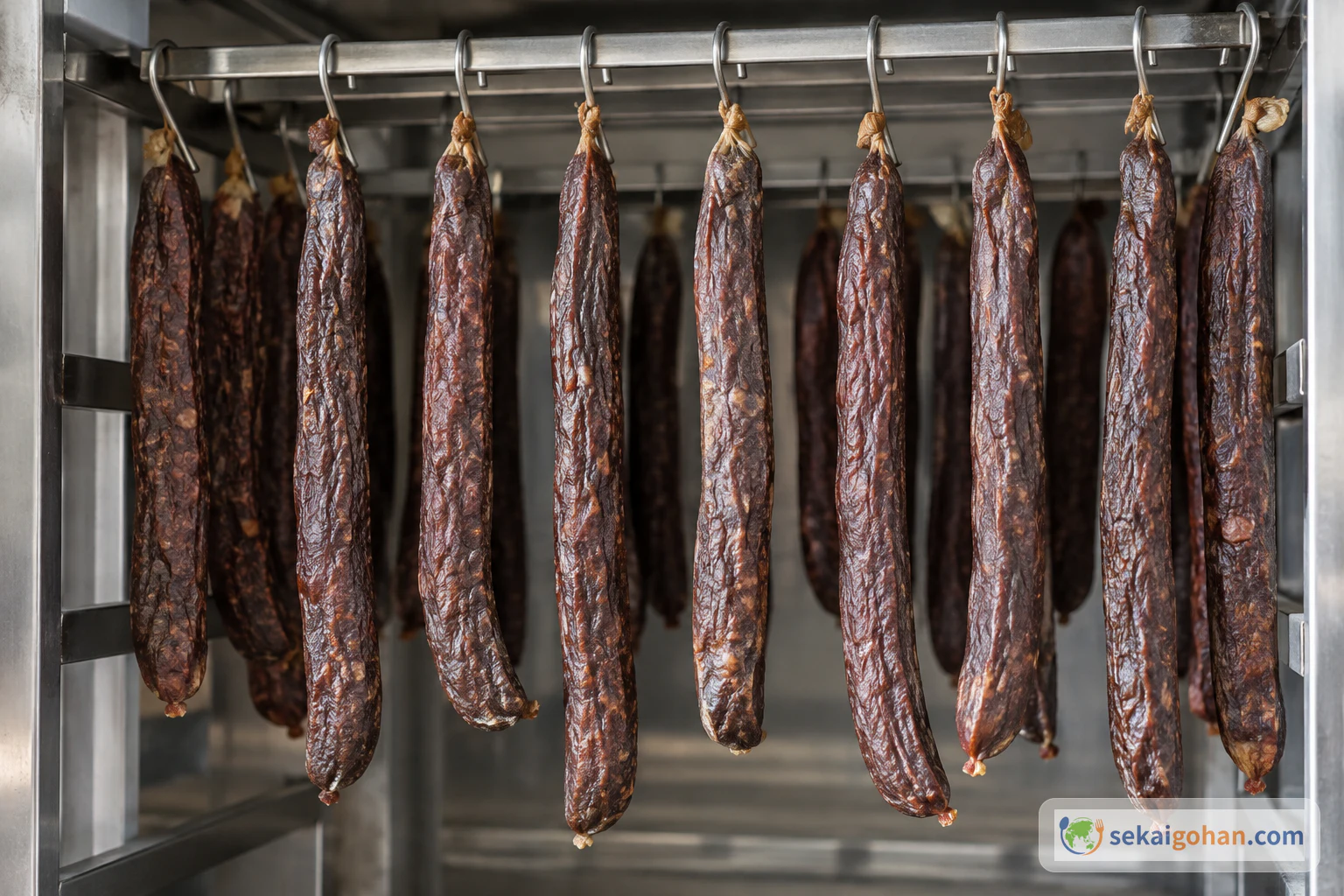
A dark, wrinkled stick of droëwors bends, resists, then snaps in your fingers, and the first thing that reaches you is coriander, warm and faintly citrus, with black pepper behind it and a low note of clove and nutmeg. People break these thin dried sausages into pieces and pass them around as a snack, a stick at a time. Droëwors belongs to the dried-meat cooking of South Africa and its neighbours: coarse beef and beef fat seasoned much like boerewors, packed into narrow sheep casings and hung in moving air until the meat turns dense and chewy. The flavour is concentrated beef and toasted spice, salty and a little sharp from vinegar, with small flecks of fat that soften on the tongue.
Dry Sausage from a Country of Dried Meat
The name is Afrikaans and means simply "dry sausage": droë for dry, wors for sausage. The seasoning will be familiar to anyone who has eaten boerewors off a grill, because the two share the same coriander-led spicing. The difference is everything that happens after the casing is filled. Boerewors is a fresh sausage, coiled and cooked over the coals. Droëwors goes into a much thinner casing and is dried instead of cooked, which turns it into something you carry in a pocket and eat with your hands.
It sits beside biltong in the same tradition, and the two are easy to confuse in a shop window. Biltong is cut from whole pieces of muscle and dried in slabs or strips. Droëwors starts from minced meat and fat, which is why it has its speckled cut face and its even, snapping texture.
| Boerewors | Biltong | Droëwors | |
|---|---|---|---|
| Meat | Coarse minced meat and fat | Whole pieces of muscle | Coarse minced beef and beef fat |
| Shape | Thick fresh sausage, often coiled | Strips or slabs | Thin sausage in sheep casing |
| How it is finished | Cooked, usually grilled | Dried | Dried |
Many hands in the meat cooking
South African meat cooking took shape through many communities at once. The Khoisan and Black African peoples had their own ways with meat long before colonial times; Dutch settlers brought theirs; enslaved people from India and Asia brought spices and techniques of their own. Drying and salting meat ran through all of it as a way to keep food. Droëwors is one form within that wider dried-meat tradition, and where it was first made is not settled. The spice cupboard behind it is the same one that flavours bobotie, the spiced minced-meat bake, and the skewers called sosaties; the slow outdoor pot of potjiekos shows the same love of cooking meat with patience. More dishes from the country are gathered on the South Africa page.
One sausage, many mixes
Every butcher and household has a slightly different mix. Some use 15% beef fat to the total meat, others push it to 20%. Some add only vinegar; others add water and Worcestershire sauce too. One home style works per kilogram of meat, with its own salt and vinegar levels; commercial spice blends lean on coriander and add thyme alongside clove, nutmeg and pepper. The recipe below keeps one mix intact, with the coriander forward and nutmeg and clove clearly present.
You will see it written droëwors, droewors or droë wors. The two dots over the e mark a new syllable in Afrikaans: droo-uh-vors. Searching with "droewors" without the dots brings up most shops and butchers abroad.
Ingredients
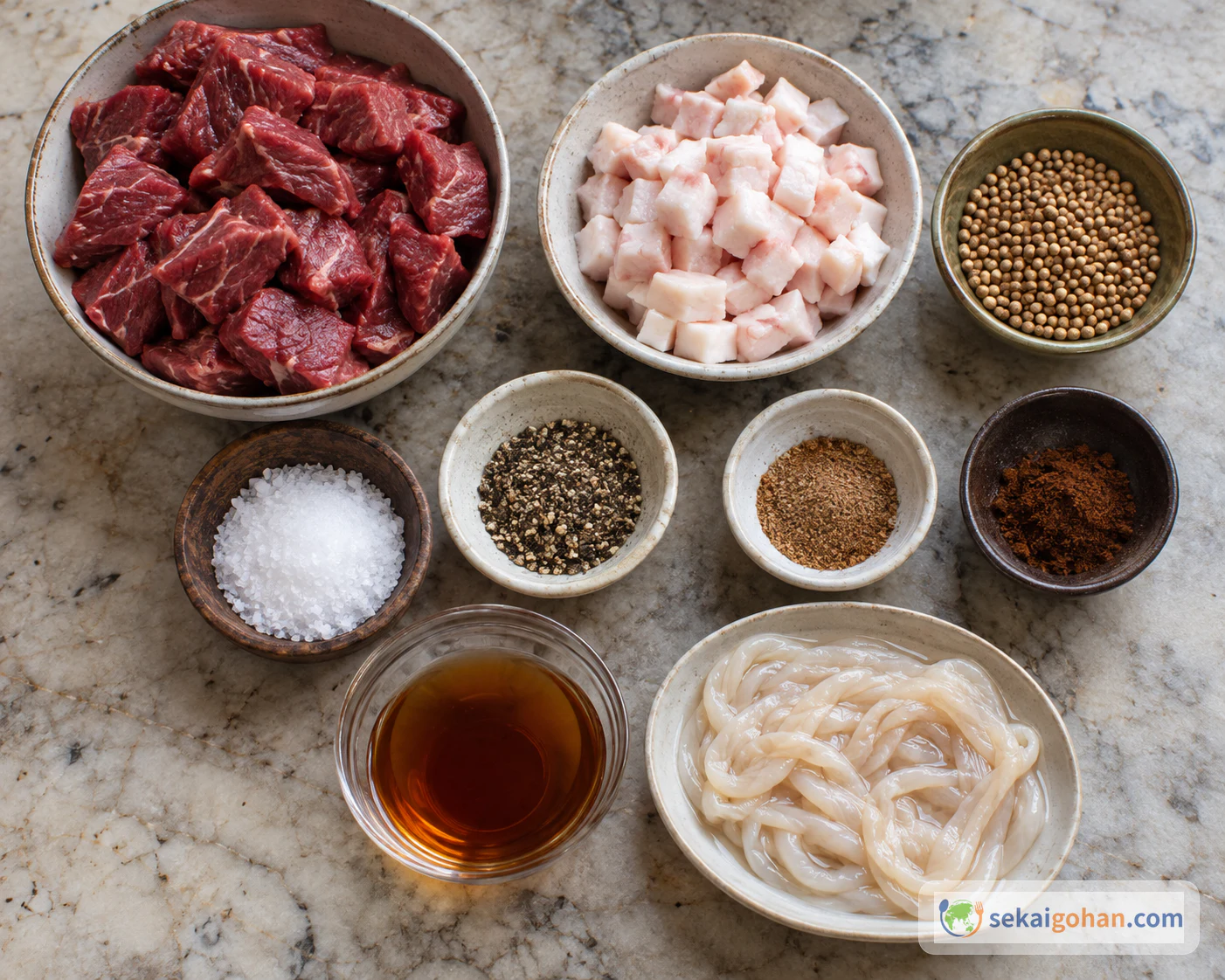
This mix is built on 2 kg of meat and fat. Keep the amounts as they are; the spice, salt and vinegar are balanced against that weight.
Malt vinegar, and some brown vinegars, are made from barley and contain gluten; check the label if that matters at your table. Natural casings are an animal product from sheep. The spices and meat carry no common allergens, but pre-mixed spice blends can; read the pack.
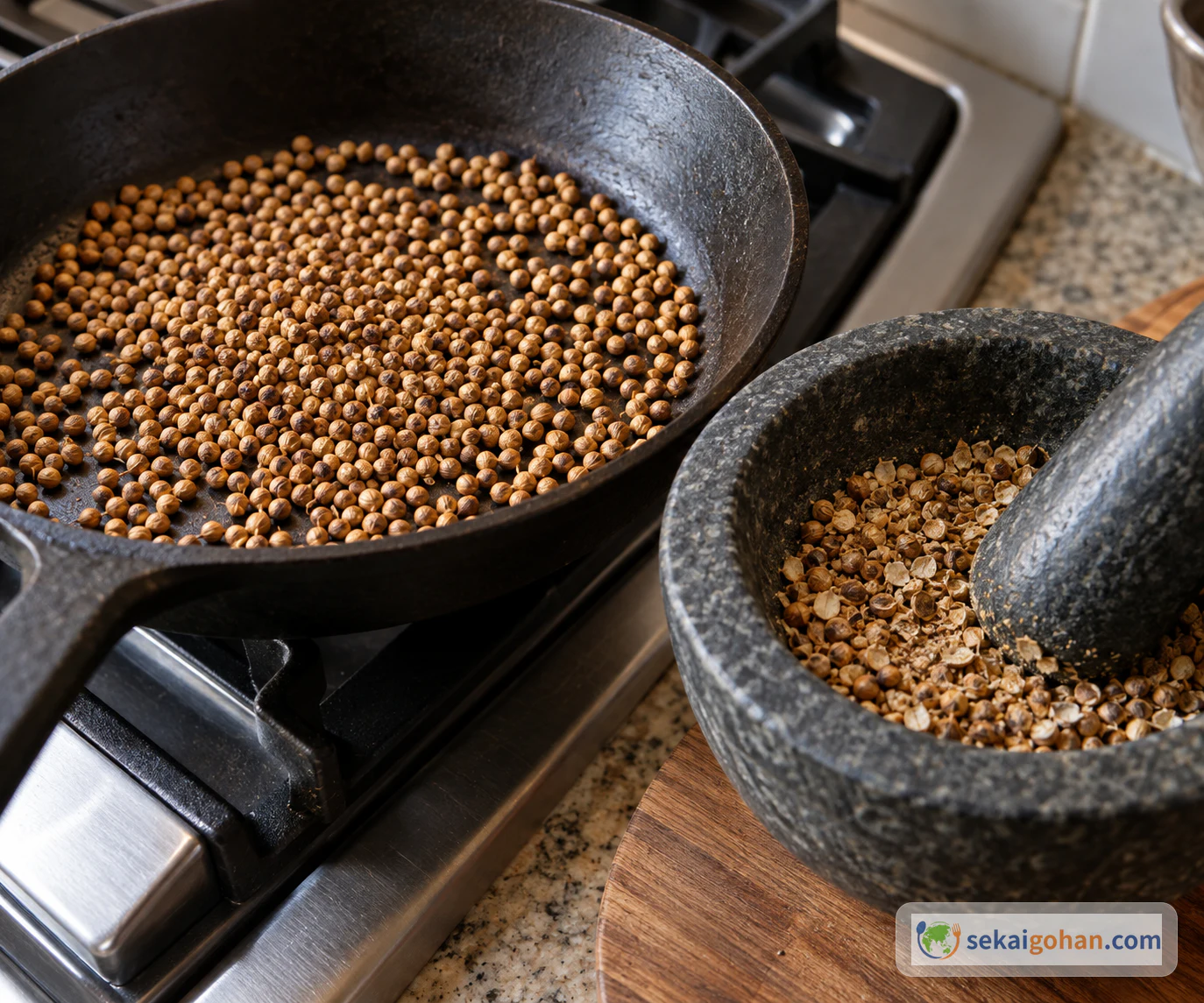
Crack the toasted seeds into halves and quarters, never into powder. Those broken pieces are what you taste first in every bite, and they give the cut face its pale speckle.
Equipment
- Dry heavy skillet
- Mortar and pestle
- Meat grinder with a coarse plate
- Metal tray and a large mixing bowl, chilled
- Cutting board and knife kept only for raw meat
- Sausage stuffer with a narrow nozzle for sheep casings
- Clean hooks, rods or dowels to hang the sausages in an airy spot
Buying and Swapping
The two things worth a special trip are whole coriander seed and sheep casings. Coriander is easy: any spice shop, Indian or Middle Eastern grocer stocks whole seed cheaply. Ground coriander gives a flatter, dustier aroma and loses the crunch of the cracked seed, so it changes the sausage more than you would expect. Sheep casings come from a butcher who makes sausages or from online sausage-making suppliers, packed in salt or brine. Wider hog or collagen casings make a thicker sausage that dries quite differently, and you lose the thin snapping stick that makes droëwors what it is.
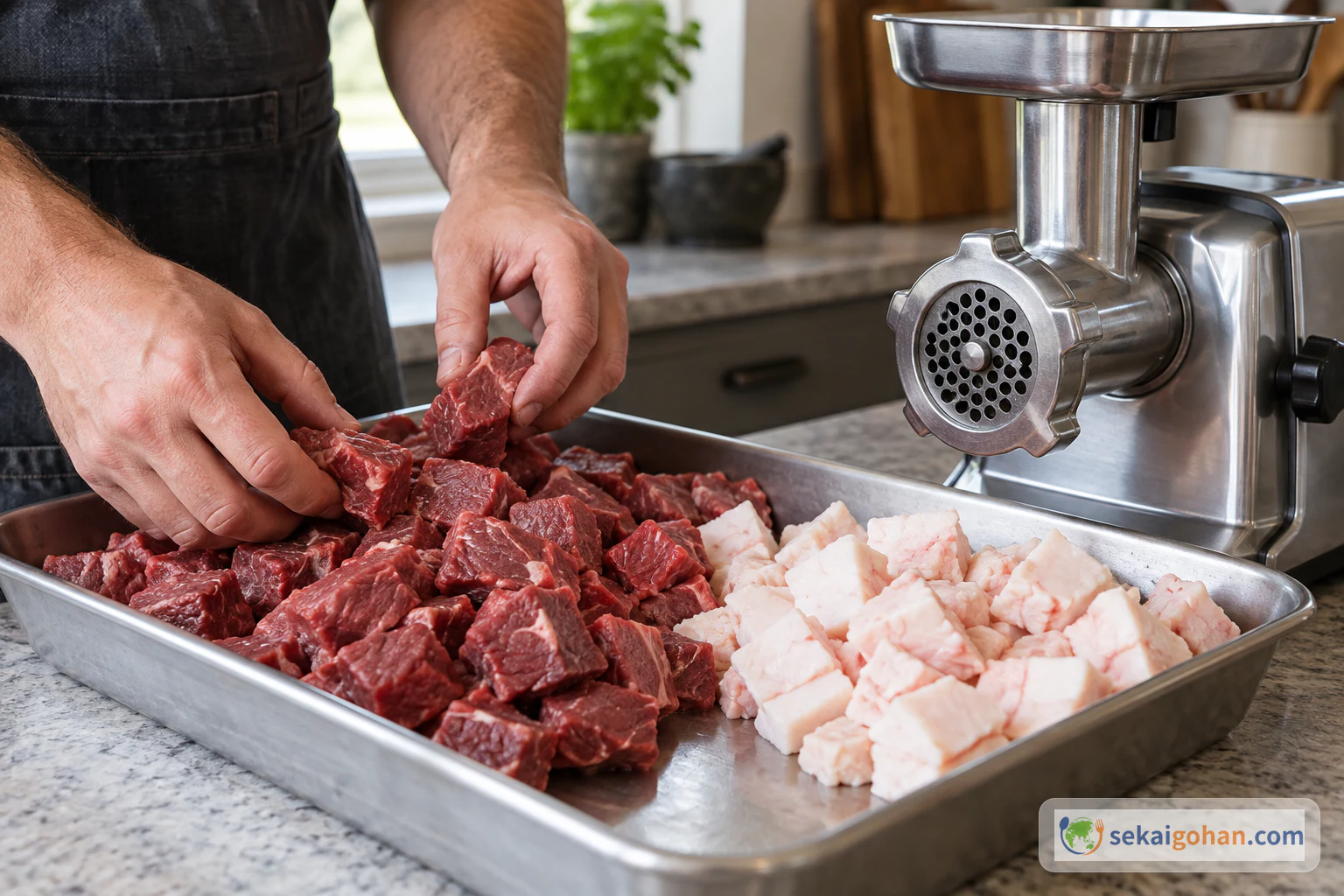
For the meat, ask a butcher for lean beef such as chuck, silverside trim or shin, and for plain beef fat. Keep to beef fat; pork or lamb fat changes the flavour and moves the sausage away from its South African taste. Brown vinegar is the usual choice. Malt vinegar brings a deeper, more bready sharpness. Rice vinegar or plain grain vinegar is lighter and cleaner, and the sausage tastes less rounded with it.
If you would rather buy ready-made droëwors, South African shops, butchers who make biltong, and online biltong sellers carry it. Choose one sold as food with a clear maker and storage label, and follow that label.
Method
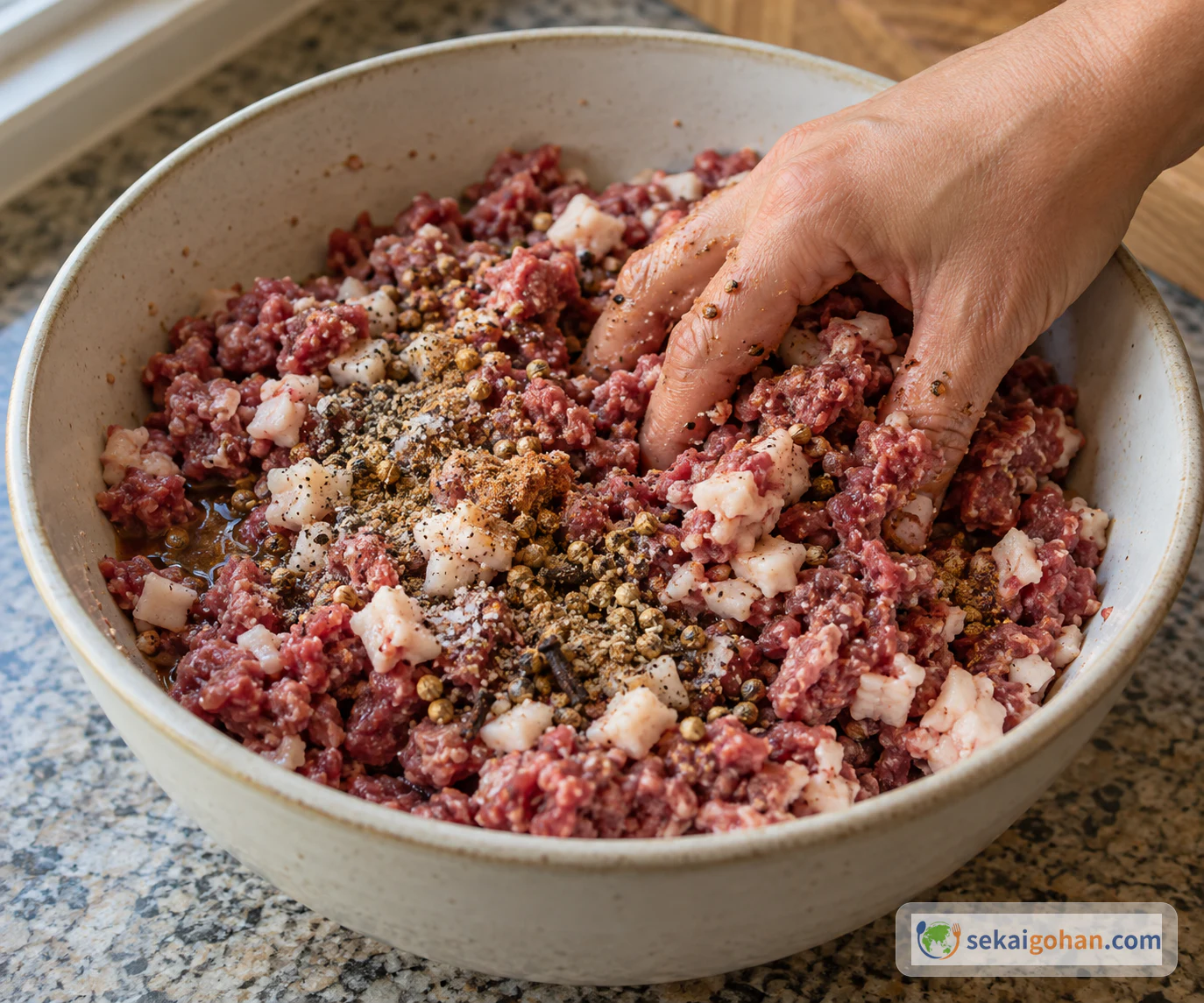
The work runs over two days. Day one is short and cold: toast the spice, soak the casings, grind and mix, then let the mixture rest overnight in the refrigerator. Day two you stuff the casings and hang the sausages, and from there the air does the work while you watch the colour and feel.
When It Goes Wrong
| What you see | Why | What to do |
|---|---|---|
| A greasy, smeared cut face with no clear fat flecks | The fat warmed during grinding or mixing | Grind straight from the freezer and fold only until the spice is even |
| The casing splits while stuffing or drying | Packed too tightly | Fill loosely and let the casing slide freely off the nozzle |
| Pale pockets or hollows inside the sausage | Air trapped in the stuffer or casing | Press the mixture down firmly in the stuffer and prick bubbles as you go |
| Flat, dusty coriander flavour | Seeds ground to powder or left untoasted | Toast until fragrant and crack into pieces, not powder |
| Soft patches where two lengths touched | Air could not reach that spot | Hang every length with space on all sides |
| Off smell, fuzzy mould or odd colour | Spoilage | Throw the whole batch away |
Serving and Variations
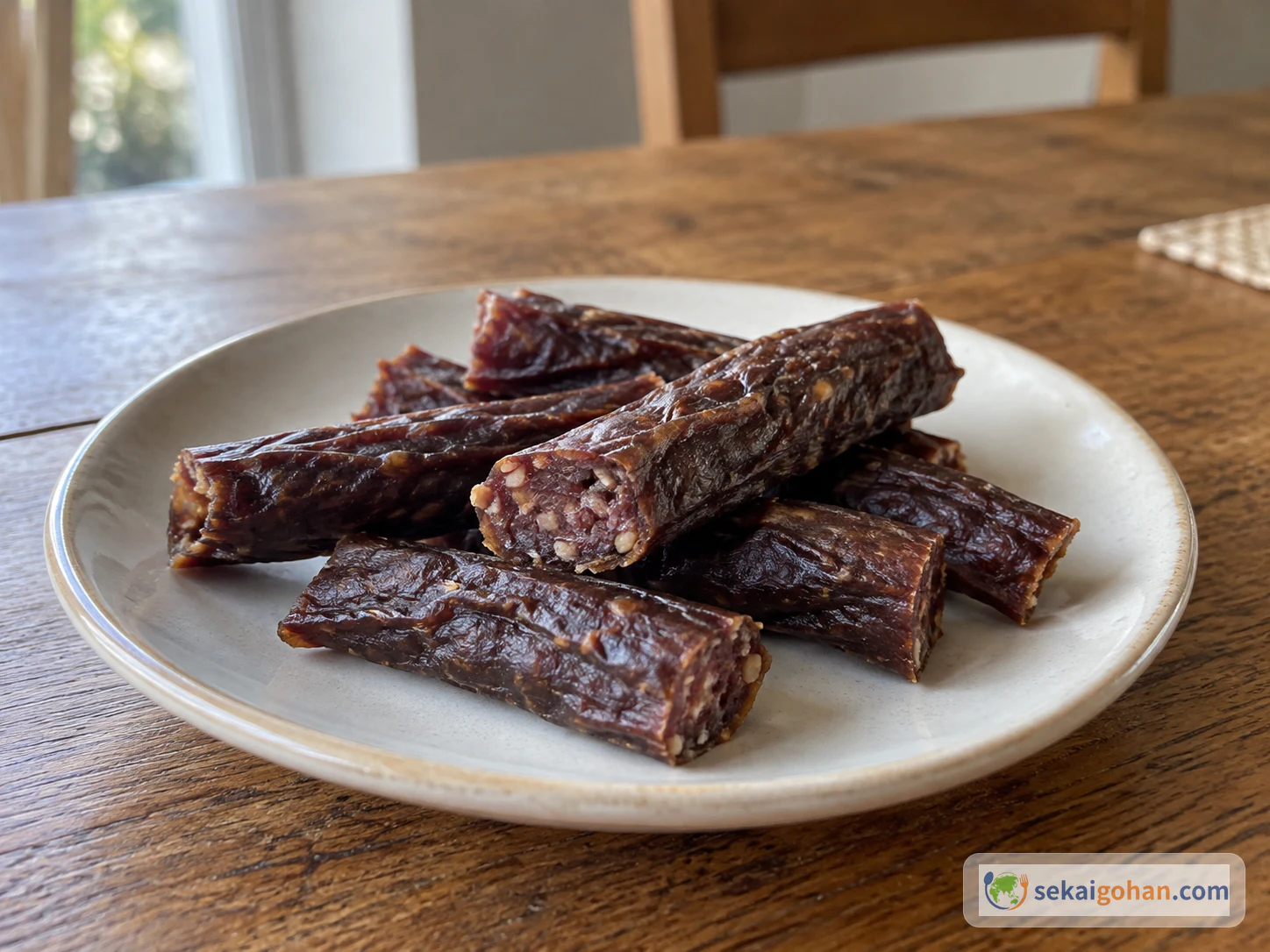
Droëwors is a snack for sharing with your hands. Break a stick into finger lengths or cut it into short bites, put them on a small plate, and let people help themselves. It needs nothing else beside it; the coriander and salt carry it. Bought droëwors is kept as its pack label says, and the same label tells you how to store what is left once the pack is open.
Fine-ground coriander
Grinding the toasted coriander finer spreads the aroma evenly through the meat and softens the bursts of seed. The sausage tastes smoother and less bright, and the cut face loses its speckle.
A peppery butcher's style
Many shop-bought sticks put black pepper in front and keep nutmeg and clove quiet. The mix here leans the other way, with nutmeg and clove present behind the coriander. Tasting one of each side by side shows how much those two small spices round out the beef.
Cooked sausage with droëwors spices
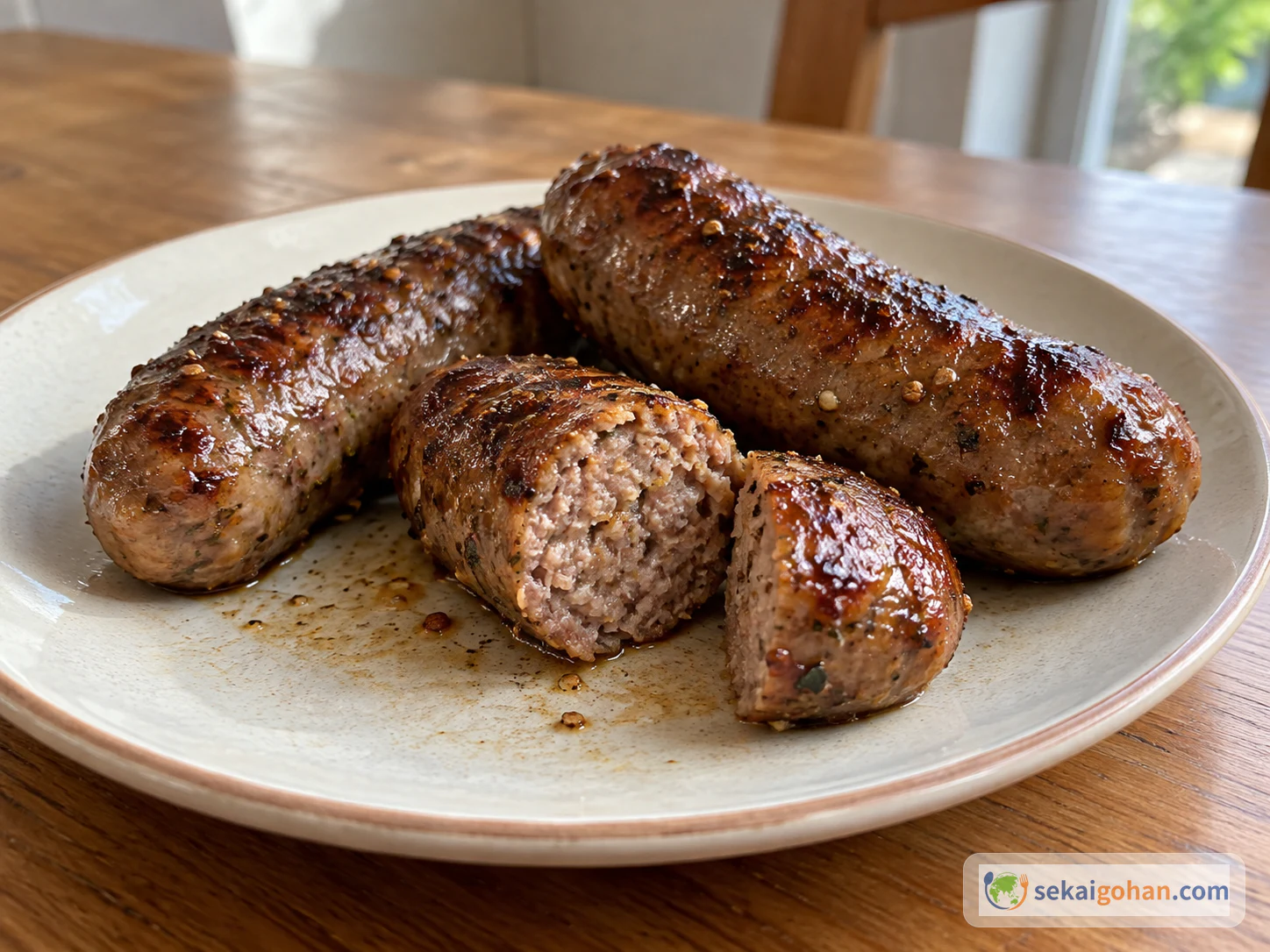
For a version everyone at the table can eat, season fresh coarse beef sausage with the same toasted coriander, black pepper, nutmeg and clove, and cook it instead of drying it. Cook until the centre reaches 160°F (71°C) and the inside is no longer pink, then eat it hot. It tastes of droëwors spice but eats like a juicy grilled sausage; it is a cooked sausage in its own right, close to boerewors.
Frequently asked questions
Why rest the mixture overnight?
The rest keeps the meat cold right up to stuffing and gives the salt, vinegar and spice time to work into it. The mixture comes out firmer and more evenly seasoned, so it feeds through the stuffer cleanly. Keep it covered in the refrigerator the whole time.
Is droëwors spice the same as boerewors spice?
They share the same coriander-led base, which is why the two taste related. Commercial droëwors blends often add thyme alongside clove, nutmeg and black pepper. Boerewors spice works for the flavour, but check its salt before you add the salt in the table.
Can I use thicker sausage casings?
A thicker casing makes a thicker sausage that dries slowly from the outside in and ends up with a different texture. The thin sheep casing gives droëwors its pencil-thin shape and even snap. If sheep casings are hard to find, order them from a sausage-making supplier online.