The Aroma of Pilau Is Not Settled Until You Lift the Lid
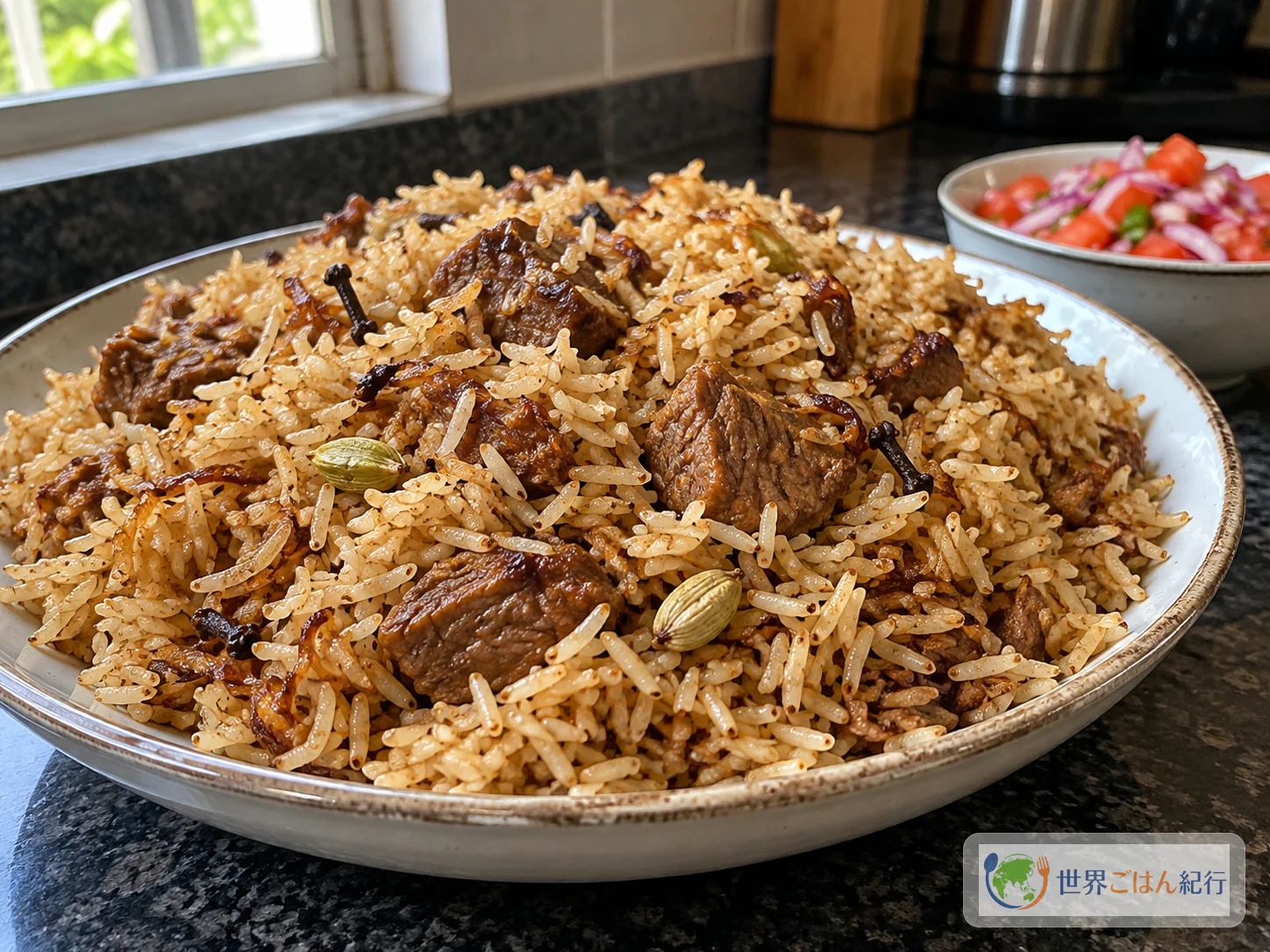
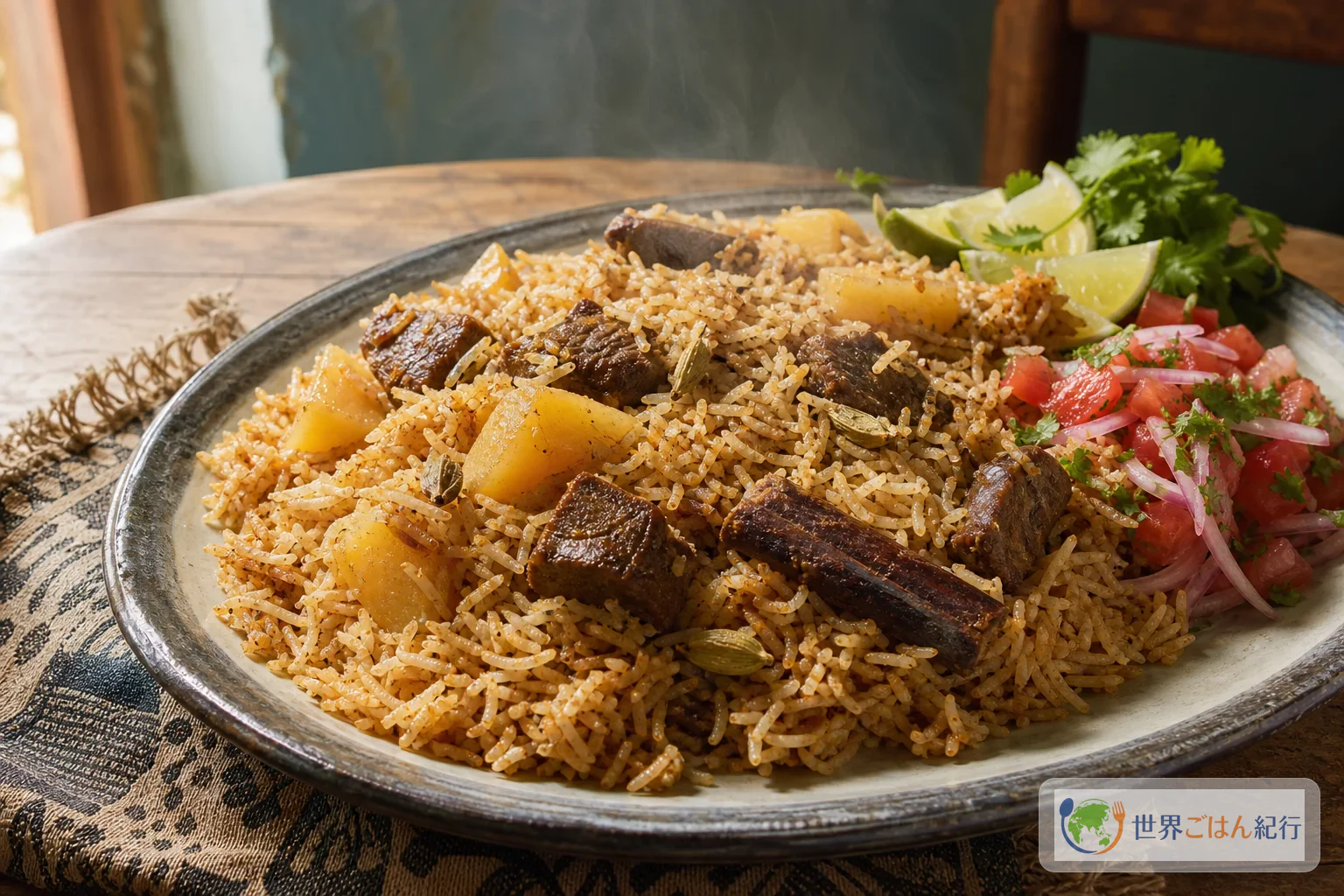
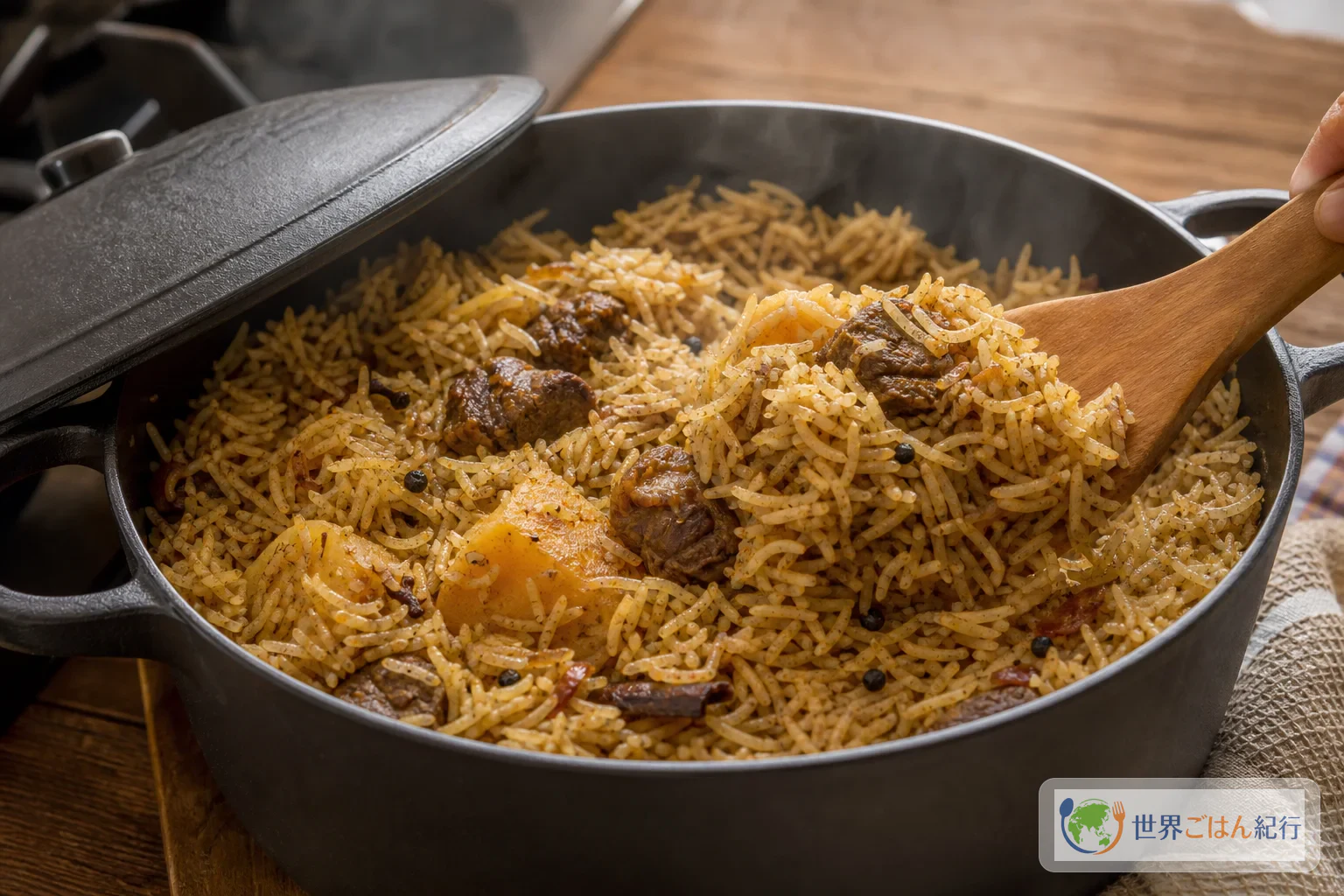
The moment you lift the lid, the sweet scent of cloves rises together with the meat broth. The grains of rice have separated one by one, and a little deeply colored onion clings to the bottom of the pot. Cook toward this picture and you see that pilau is a different dish from rice with curry flavor.
Cooking this at home, it is easy to think that more spices make it more authentic. But scorch the spices first or add too much water, and the aroma turns heavy and the rice turns sticky. For Zanzibar-style pilau, what you settle first is not the amount of spice but the color of the onions, and not stirring once the lid is on.
Pilau is a Tanzanian dish in which rice is cooked together with meat or vegetable broth and spices. In Zanzibar, pilau made with beef, goat or chicken is served at feasts and family gatherings. This recipe uses easy-to-find beef shank and basmati rice to carry the backbone of Zanzibar's aroma into a home kitchen.
Methods vary by household and restaurant, but in Tanzanian food sources, pilau is described as meat and rice cooked together in one pot, while biryani is described as rice and a rich meat sauce finished separately. Here, we use the one-pot method that lets the rice absorb the meat broth directly.
Indian Ocean Trade on the Zanzibar Table
Picture the Zanzibar table, and sea fish and coconut may come to mind first. In fact, dishes using rice and spices are also a major clue to coastal life. On the Swahili coast, Indian Ocean trade with Arabia and India layered over African coastal societies, and a rice-eating culture and a way of using spices grew up.
A research document from the University of Nairobi describes pilau, and wali cooked in coconut milk, being eaten with meat stews and fish at the Swahili table. Rice did not spread here in the same sense as a staple in the interior; its presence grew in the life of ports and islands, in trade, religion and the custom of welcoming guests. This is why a plate of rice carries aromas that local crops alone cannot explain.
In a cuisine guide by Mamis Tours & Travels, pilau is treated as a festive dish made with beef, goat, chicken and so on. It is served at Eid, weddings, baptisms and the meal that ends Ramadan fasting, and is often described as a dish shared from a large platter. This does not mean the bigger the platter the better. It is a dish where meat's savor and rice's fragrance come together in one pot, and the time of serving it out is part of the feast.
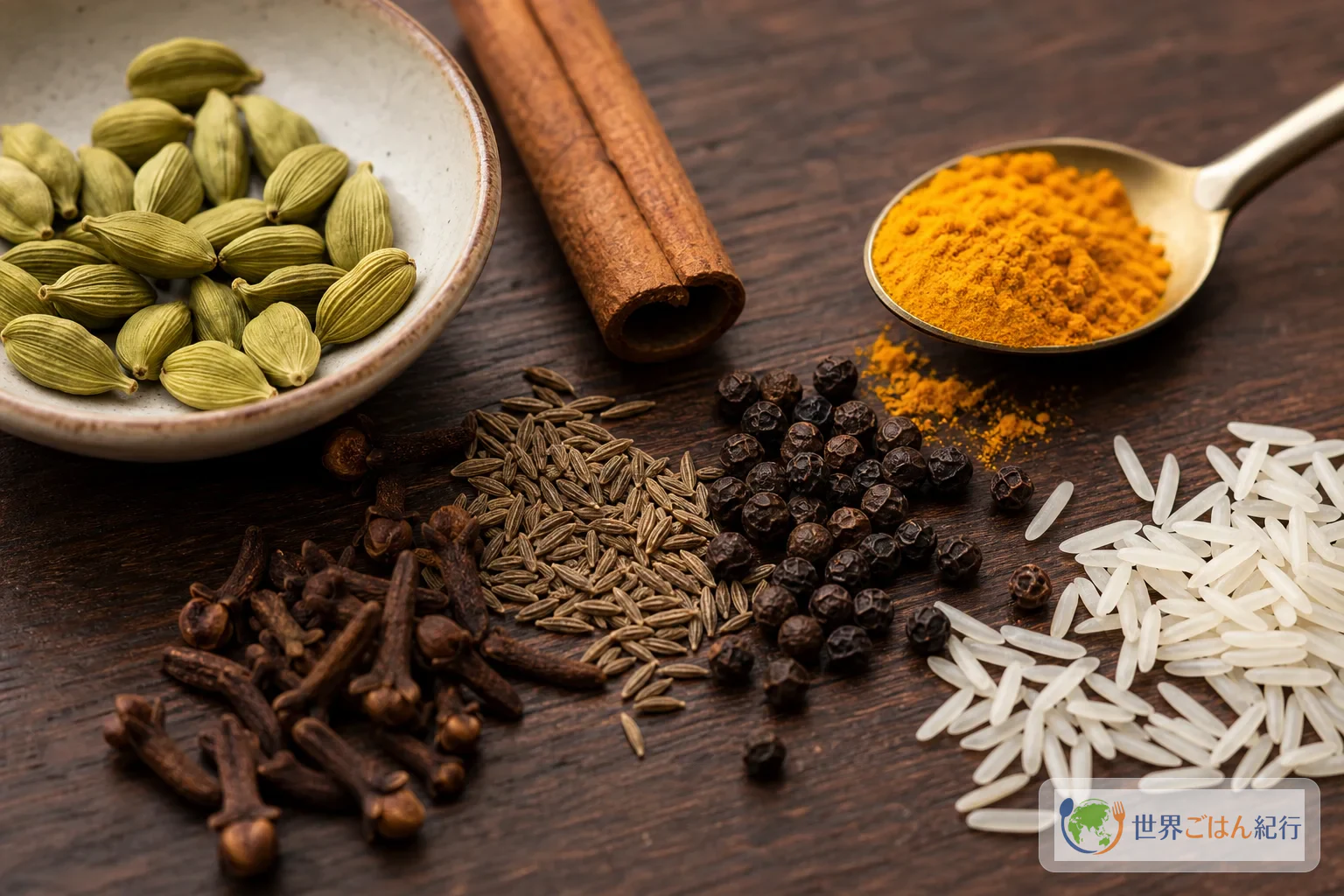
The direction of the spices also differs a little from Indian dishes commonly cooked elsewhere. Cardamom, cloves, cinnamon, cumin and black pepper are central, layering a sweet, dry fragrance rather than heat. Instead of putting a lot of chili into the whole pot, serving it at the table keeps the aroma of meat and rice intact. A National Geographic article ties the scents of clove, cinnamon, nutmeg and black pepper to island life. There, spices are used not as decoration but as everyday ingredients.
A similar rice dish is biryani. Both are fragrant dishes influenced by the Indian Ocean, but biryani has the showiness of layering rice and meat sauce separately, while pilau blends the meat cooking liquid and rice in one pot. The boundary moves from household to household. So rather than deciding there is only one "authentic" method, it is easier in the kitchen to decide the outline you will protect in this pot.
There are three things to protect. Darken the onions to just before they burn, open the whole spices briefly in oil, and do not give the rice too much liquid to absorb. Even if you swap beef shank for goat, the impression of the plate does not collapse so long as these three remain.
Ingredients and Shopping Decisions
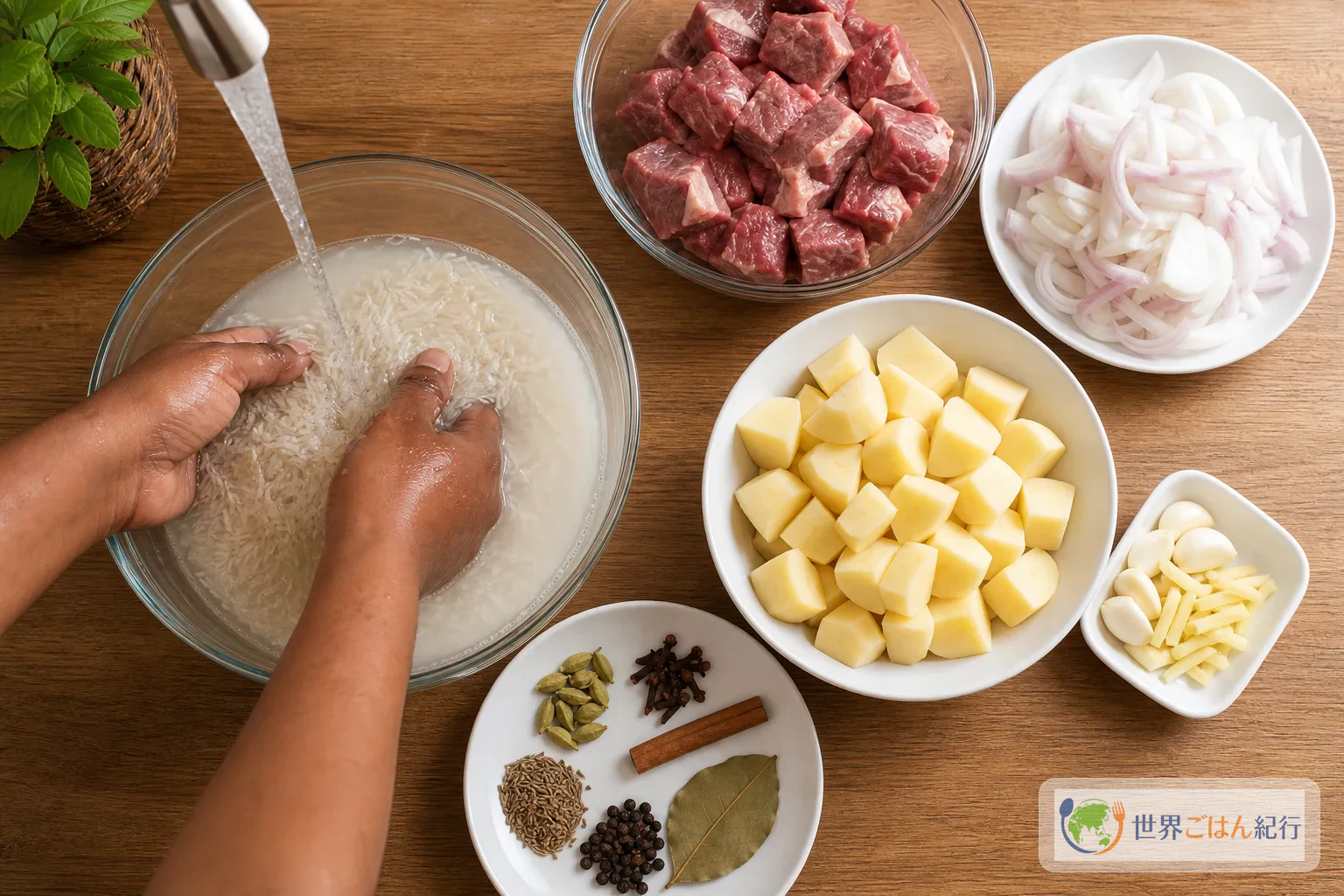
These are the ingredients for 4 servings. Choose braising-type beef shank or shoulder, and avoid very lean meat with too little fat. The rice is washed and soaked for 20 minutes, so clear a bowl before you start cooking.
Do not replace the pilau aroma wholesale with powdered curry blend. Curry powder makes a tasty rice of a different dish, but the cooling note of cardamom, the sweetness of clove and the earthiness of cumin all get buried in one. If you cannot gather all the whole spices, prioritize cardamom, clove and cinnamon, and fill in cumin and black pepper with ground versions on hand.
If you buy cardamom, choose whole-pod cardamom. The aroma escapes less than from powder, and if you crack the pods just before they go in the pot, the whole rice is less likely to take on a medicinal smell.
Do not choose basmati only for its fragrance. The criteria here are that after cooking the grains stay long and slender, and do not clump even after absorbing the meat broth. If you only have short-grain rice, go to the substitution notes below and do not expect the same texture.
Even when bringing the beef toward a Muslim table, some commercial bouillon cubes contain pork-derived ingredients or alcohol. Cooking in water leaves little doubt about ingredients. If you use a bouillon cube, check the labels for meat extract, flavorings and alcohol, according to the needs of the people eating.
Method
Preparation
Color the onions
Braise the meat and build the spice broth
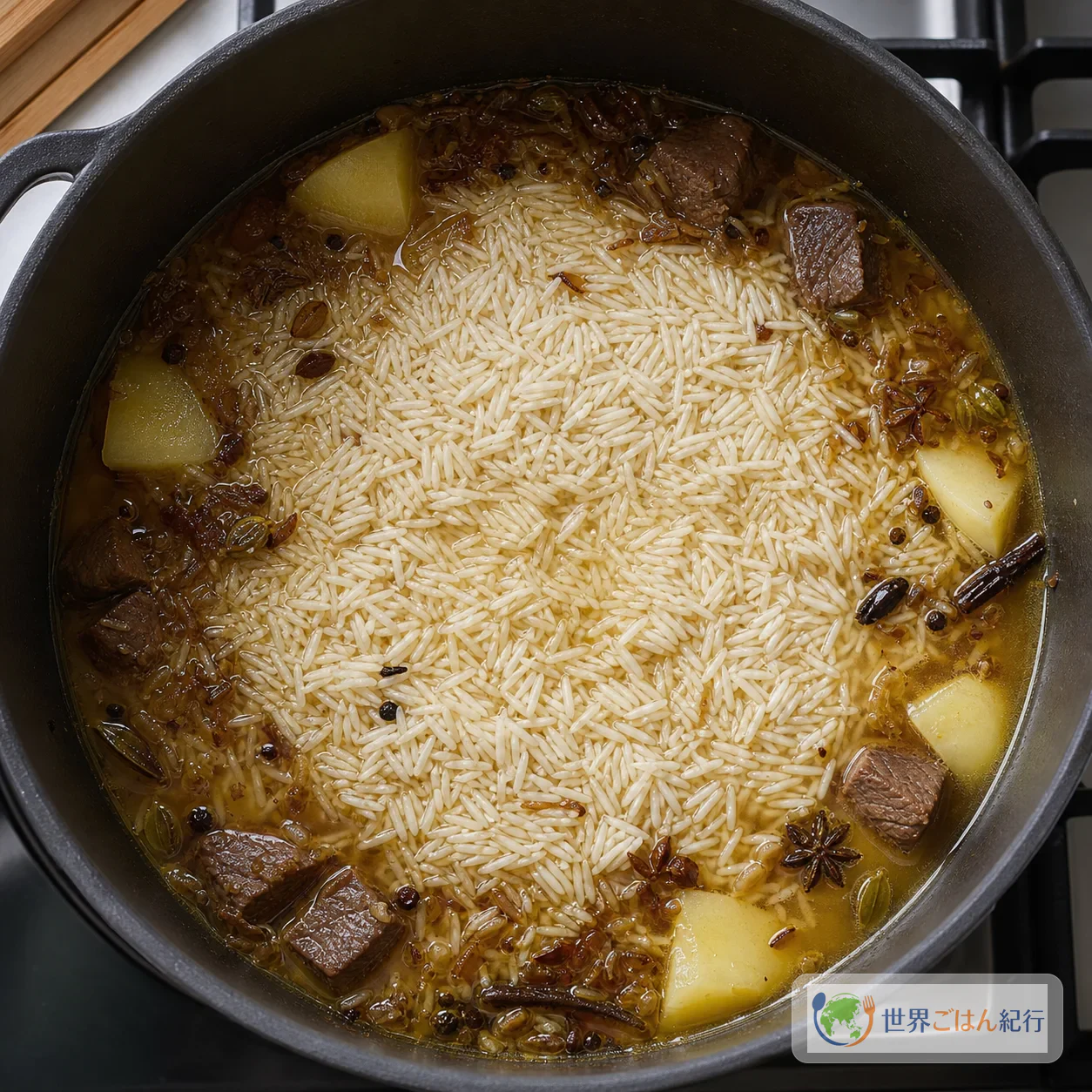
Add the rice and cook
Rest and loosen the grains
Three Keys: Onion Color and Moisture
For the onions sliced in this recipe, a knife is enough. On the other hand, if you want to chop garlic and ginger repeatedly and keep every aromatic the same fineness, a small food processor shortens the work. If you buy one, check the bowl capacity, blade material and number of parts to wash. It suits people who will process aromatics for 4 servings at once and have somewhere to store it. If you only slice the onions or want fewer dishes to wash, make it with the knife you have and skip the gadget.
Brown and black are different things
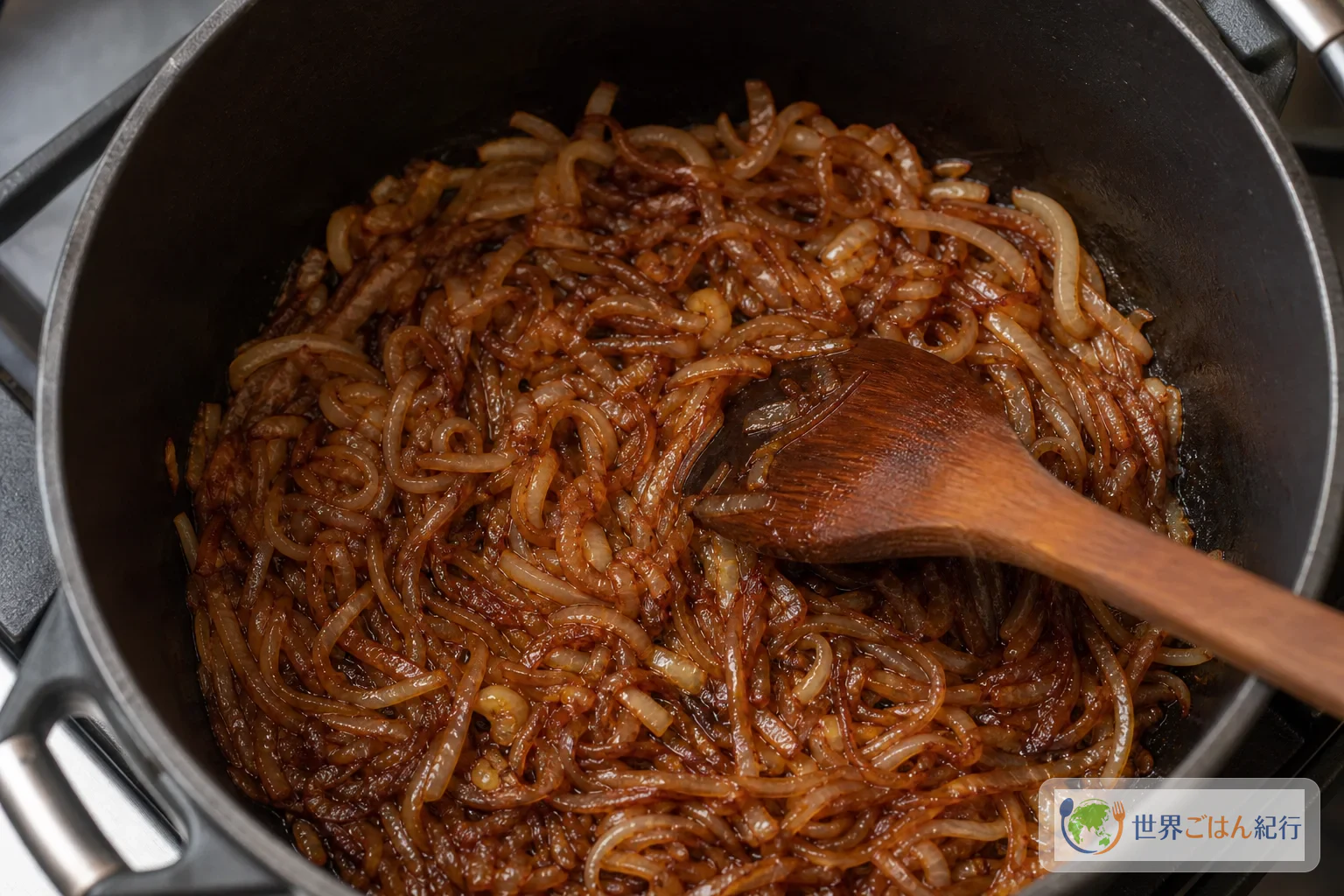
The color of the onions becomes the base of aroma and sweetness. Going to reddish brown gives the beef broth depth. Onions that have burned black, however, bring bitterness, and adding more spice afterward will not bring it back.
If there are only a few black spots on the bottom, add 1 tbsp water to drop the temperature and remove the black bits. If everything has turned black, it is faster to remake the onions than to carry bitterness into the rice. Rather than raising the heat to get a deep color, stirring constantly over medium heat fails less often.
Open the aroma in oil
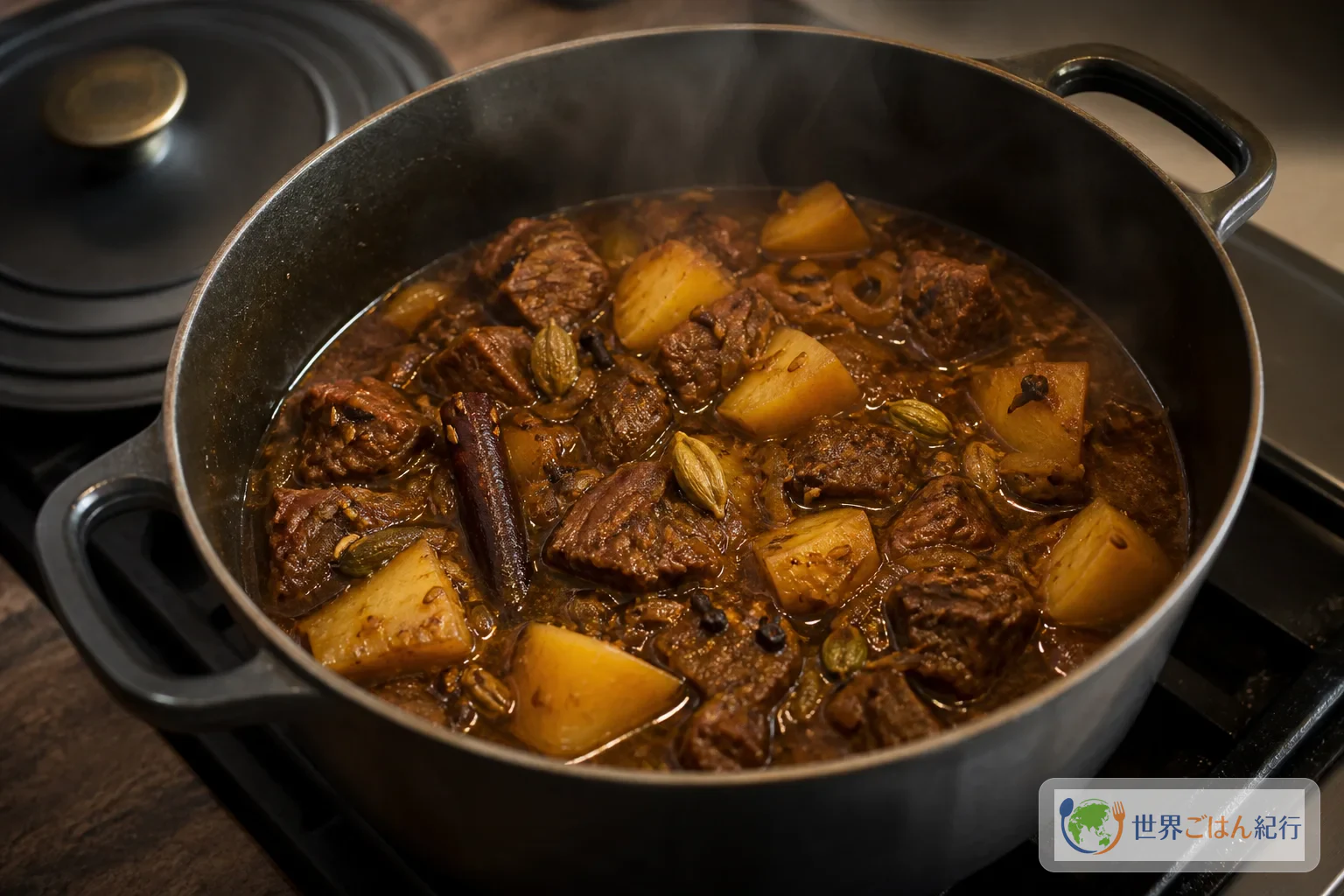
Cardamom and cloves release aroma even if you just put them in water. Added for about 30 seconds to the oil the onions were fried in, though, the aroma moves into the oil first and spreads more readily to the beef and rice. You do not need to fry spices for long. Add the meat or liquid before smoke appears.
If you want a hot dish, do not add more chili to the pot; serve chopped green chili or chili sauce at the table. You keep the outline of the pilau while letting each person set their own heat.
Measure the liquid just before the rice
The liquid left after braising the beef changes with the size of the meat and the pot's lid. Even if you start with 650 ml, the same amount is not necessarily left when you add the rice. So measure the cooking liquid right before the rice goes in.
With 300 g of rice and 500–550 ml of liquid, the rice absorbs the liquid after the pot comes to a boil and the grains tend to settle well during the rest. If more than 1 cm of liquid stands above the rice, the result tends to be soft. If there is too little, adjust by adding hot water 50 ml at a time.
The success of pilau is decided by two things, onions and moisture, more than by the lavishness of the spices. Once you can judge this, you can bring the result back without using the same products or the same pot every time.
Substituting at Home: Keep the Order of the Aromas
If you have no basmati
In place of basmati you can use Thai jasmine rice or another long-grain rice. The aroma changes, but the grain length and low moisture are close. If the rice bag gives a water amount for cooking, do not use it as is; adjust it as the total including the meat's cooking liquid.
It can also be made with short-grain rice. But soaking it for 20 minutes makes it stickier, so after washing, drain it for just 10 minutes and reduce the liquid to 450–500 ml. Mixing the finished rice too much increases stickiness, so limit yourself to turning it from the bottom 2–3 times with a paddle. This is not a dish that reproduces the way long-grain rice separates; enjoy it as a dish that carries the aroma of beef and spices into white rice.
Switching beef for chicken or goat
With chicken thighs, shorten the first braise to 15 minutes, and if the potatoes are hard, simmer them 5 minutes first before adding the rice. Chicken breaks down its fibers if cooked long. Goat varies in toughness by cut, so simmer until a skewer goes through before adding the rice. Whatever the meat, keep the step of measuring the pot's liquid before adding the rice.
If you cannot find pilau masala
Store-bought pilau masala is convenient, but the ratios of cumin, cinnamon, clove and chili differ by product. If you use it, start with 1 tbsp, and do not layer all the whole spices on top. With a salted mix, reduce the salt in the ingredient list from 1 tsp, taste, and then add more.
If you buy spices a little at a time, get cardamom, cloves and cinnamon first. If you only add cumin, the aroma turns earthy and hides the sweet fragrance of pilau.
Serve on a Platter with Acidity
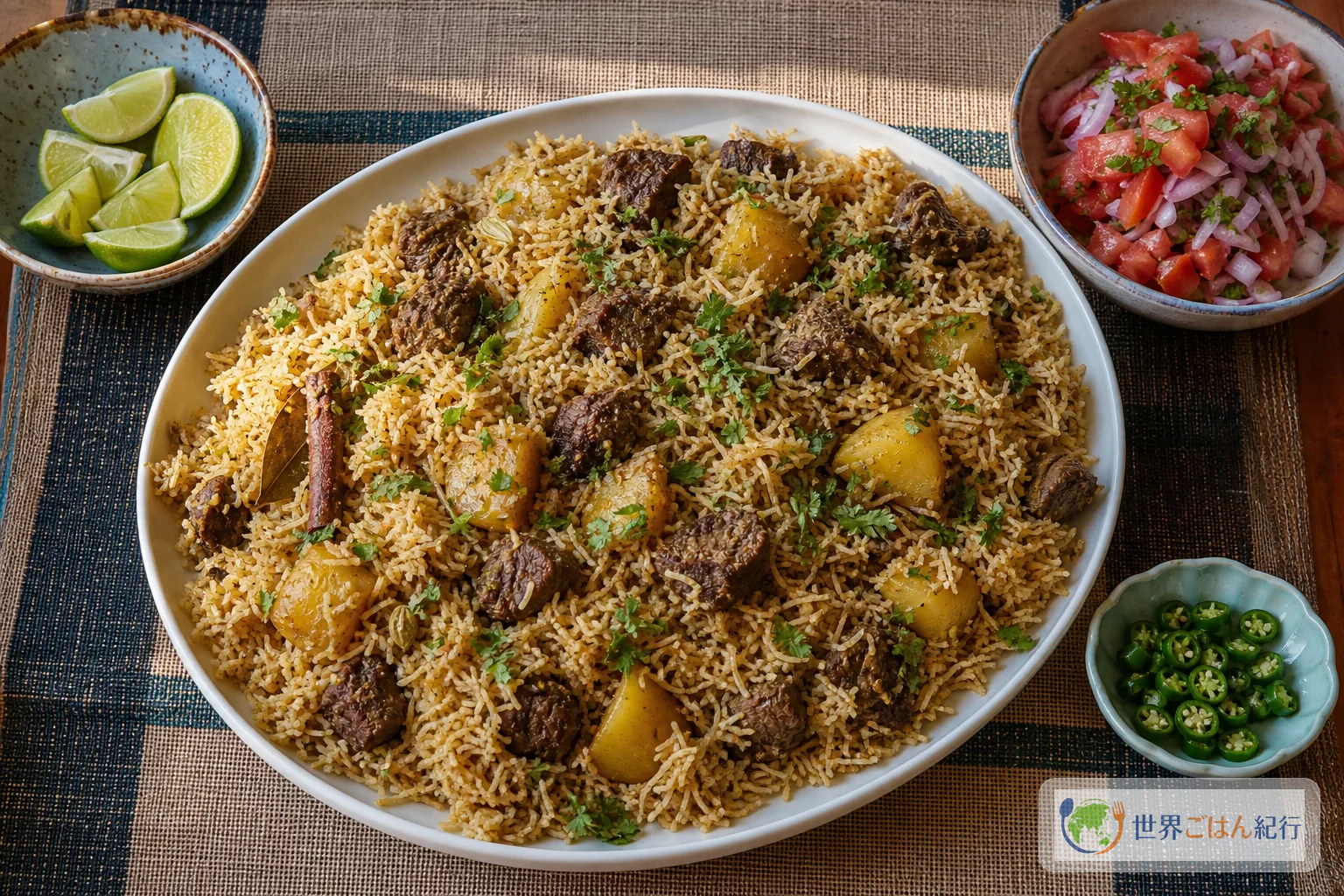
Zanzibar pilau is not finished inside the pot alone. Spread on a big platter, the aroma of the rice escapes and the meat and potatoes are visible. Beside it, put an onion and tomato salad, lemon and chopped cilantro.
The salad can be made with 2 tomatoes, 1/2 onion, 1 tbsp lemon juice and a pinch of salt. If the onion is sharp, slice it thin, soak it in water for 5 minutes and wipe it dry. Acidity and raw crunch join the sweet aroma of the pilau, so the mouth feels less heavy even as you keep eating the meat.
If you use chili, finely chop 1 green chili and mix in only a little to the salad. To separate the heat, serve it on a separate dish. When serving a platter dish family-style, instead of dividing it into individual portions at the start, a large spoon that scoops the meat and rice from the bottom of the pot in one go helps keep the feel of the dish.
Storage and Reheating
Do not leave leftover pilau in the pot; move it to a shallow container and let it cool a little. Once cool, cover and refrigerate, and finish within 2 days. To freeze, wrap individual portions and aim for 1 month.
To reheat, for refrigerated rice sprinkle 2 tsp water per portion, cover loosely with plastic wrap and microwave until hot in the center. For frozen, partly thaw and then reheat the same way, without forcing the tough beef apart. To bring back the aroma, squeeze in a little lemon after reheating.
Cooling and reheating the same portion again lowers the texture of both rice and meat. Take only the amount you will eat and reheat that.
FAQ
Is pilau a spicy dish?
What goes into the pot is mainly the aroma of cardamom, cloves, cinnamon, cumin and black pepper, rather than chili. For more heat, serve green chili or chili sauce at the table. Keeping aroma and heat separate lets children and people who dislike heat eat from the same pot.
Why brown the onions to a deep color?
To carry color and sweetness into the rice. But onions burned black do not make it more fragrant. Stop at reddish brown, and after adding the spices, add liquid within 30–40 seconds.
What changes if I make it with short-grain rice?
Cut the soak to 10 minutes and reduce the liquid, including the meat's cooking liquid, to 450–500 ml. Do not stir while cooking; after the rest turn it from the bottom only a little. The grains do not separate as much as basmati, but it comes together as a cooked rice that has absorbed the meat broth.
Can I cook the rice separately, as for biryani?
You can, but the aim of the dish changes. Boiling the rice separately and layering it with meat sauce moves toward biryani. When you want the pilau-style meat broth to enter the rice evenly, use the one-pot method here.
Can I make it with something other than beef?
You can swap in chicken thighs or goat. Shorten the braise for chicken, and for goat check the tenderness before adding the rice. Switching to fish does not suit the cooking times, so treat it as a different dish.
What can I do with leftover spices?
Cardamom and cinnamon go into tea or milk tea. A small amount of clove can go to a meat stew, and cumin to bean or chickpea dishes. Do not mix leftover spices into a single bag of curry powder; store each kind in a dry place.
What to Cook Next
- Kenyan nyama choma: For a day you want charcoal-grilled meat alongside.
- Kenyan kuku paka (in Japanese): For a day you want a coastal coconut-and-spice dish on the table.
- Yemeni mandi: For comparing dishes where rice is cooked in meat broth.
- Indonesian nasi liwet: For a day you want another fragrant rice dish.
Sources
Food culture and regional sources:
- University of Nairobi. "Incorporating Swahili Culture in Creating Suitable Products for Use at Malindi." pp. 14–15. https://arts-design.uonbi.ac.ke/sites/arts-design.uonbi.ac.ke/files/2021-06/INCORPORATING%20SWAHILI%20CULTURE%20IN%20CREATING%20SUITABLE%20PRODUCTS%20FOR%20USE%20AT%20MALINDI.pdf (accessed and checked 30 July 2026)
- National Geographic. "This idyllic Tanzanian island is the cradle of African Swahili culture, here's why." https://www.nationalgeographic.com/travel/article/why-tanzanias-zanzibar-is-the-cradle-of-african-swahili-culture (accessed and checked 30 July 2026)
- Magical Tanzania. "Swahili Food in Zanzibar: The Complete Culinary Guide." https://magicaltanzania.com/zanzibar/food-cuisine/ (accessed and checked 30 July 2026)
- Mamis Tours & Travels. "A Guide to Swahili Cuisine in Tanzania." https://mamistravel.com/a-guide-to-swahili-cuisine-in-tanzania/ (accessed and checked 30 July 2026)
- Peace Corps Tanzania. "Kumbe! I Can Cook!" pp. 103–104. https://www.maktaba.org/download/file/772/Kumbe_i_can_cook_Peace_corps_tanzania.pdf (accessed and checked 30 July 2026)