Dezhou Yangchangzi Recipe: Shandong Blood-Filled Lamb Intestine

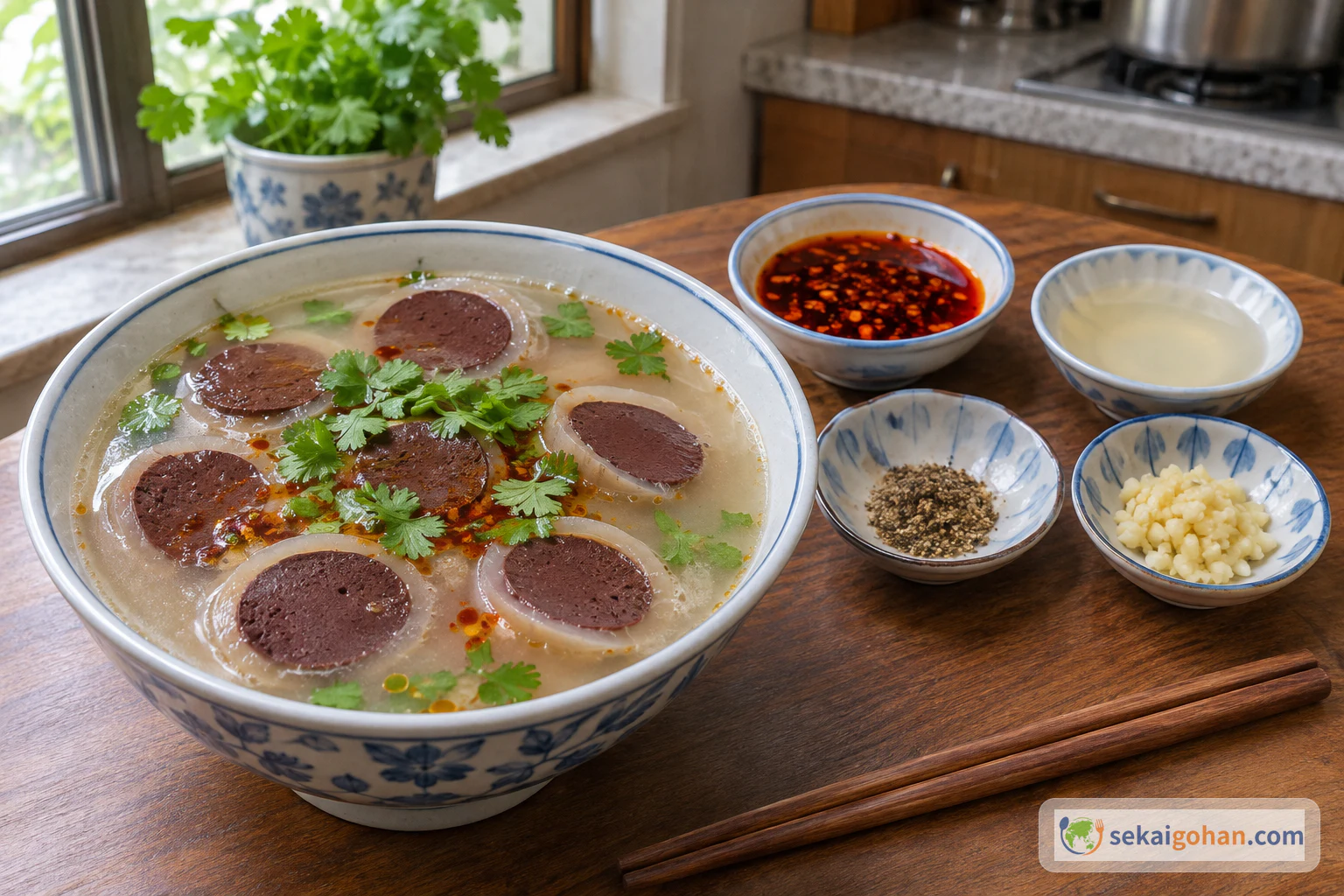
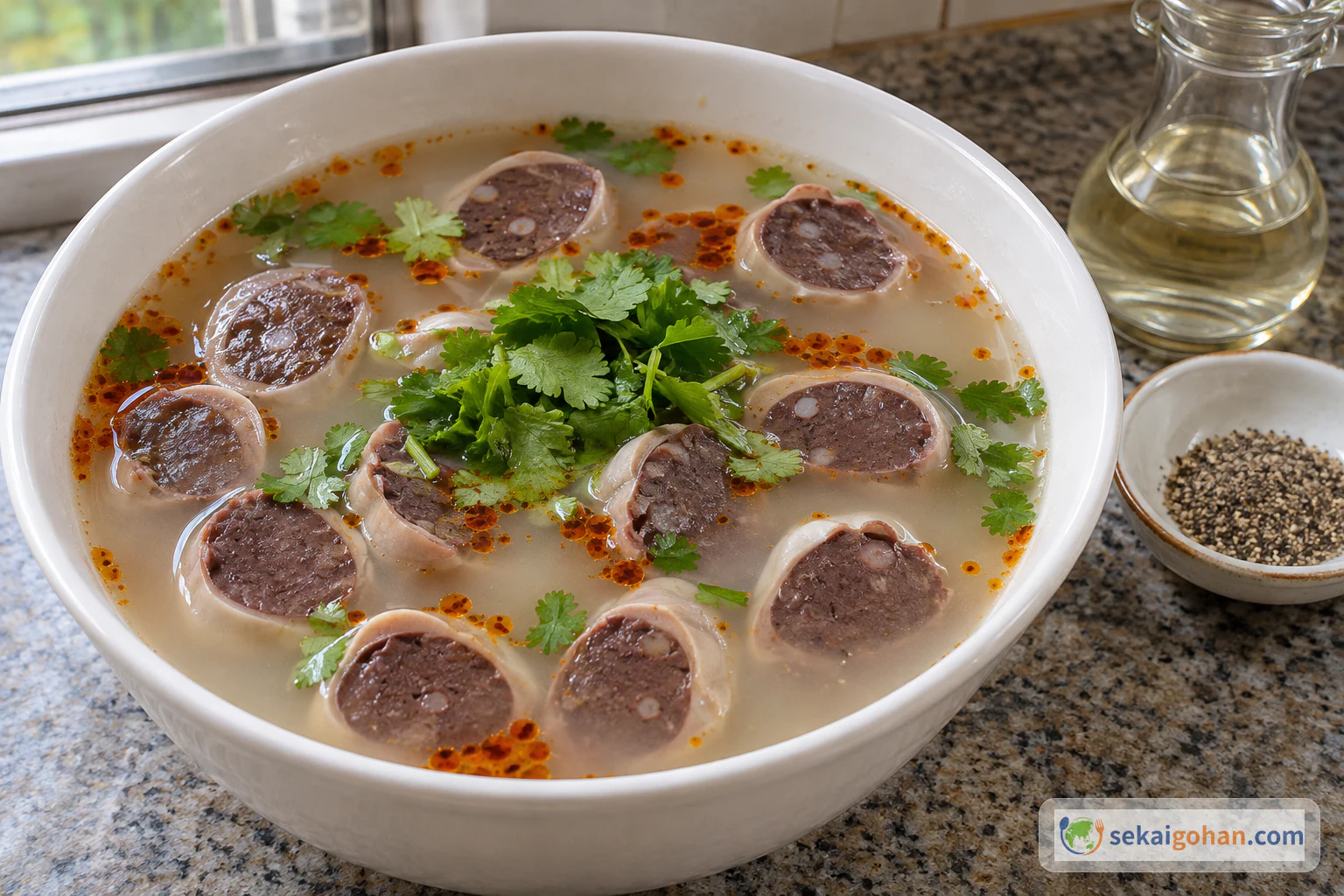
A finished bowl of Dezhou yangchangzi: cloudy pale lamb bone broth with sliced lamb intestine showing its cut faces, coriander and red chili oil
Level
Intermediate
Cuisine
Chinese

Dezhou yangchangzi, from Shandong: lamb intestine filled with blood and simmered in bone broth. How to wash it, fill it, and cook the center safely.

Cooking flow

Cooking steps

STEP 1 1 / 8

Start the lamb bone broth

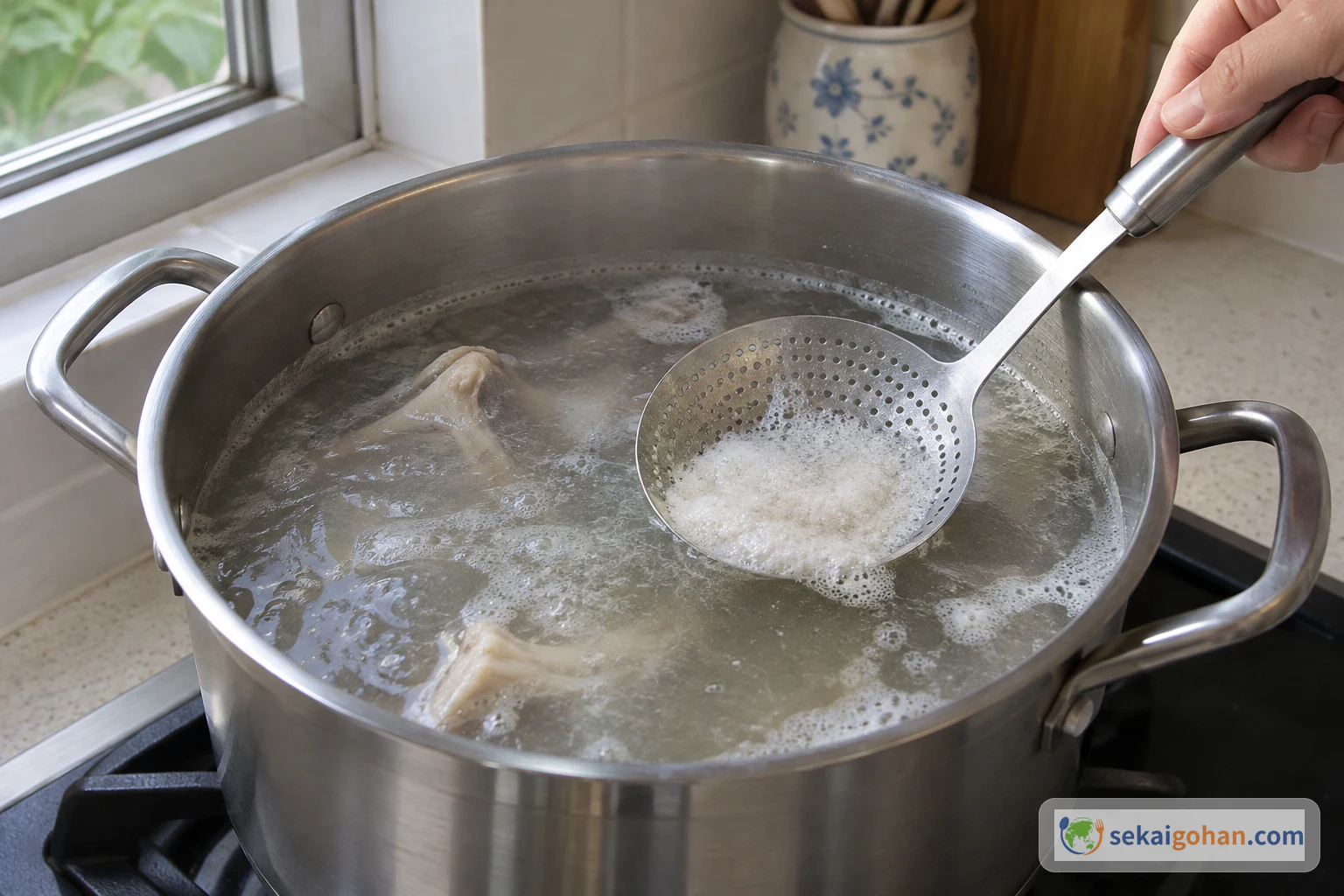
A stockpot of lamb bones covered with water, foam being skimmed with a ladle
Skim while the pot is still coming up to the boil. That is when most of the foam rises.

Put the lamb bones in the stockpot and add cold water to cover. Bring it up over high heat. Grey foam gathers on the surface as it nears the boil. Skim it off with a ladle until the surface stays clean, then turn the heat to low and let it simmer for 3 to 4 hours. Keep it at a gentle simmer for the whole time.

STEP 2 2 / 8

Turn the intestine and scrub it with salt

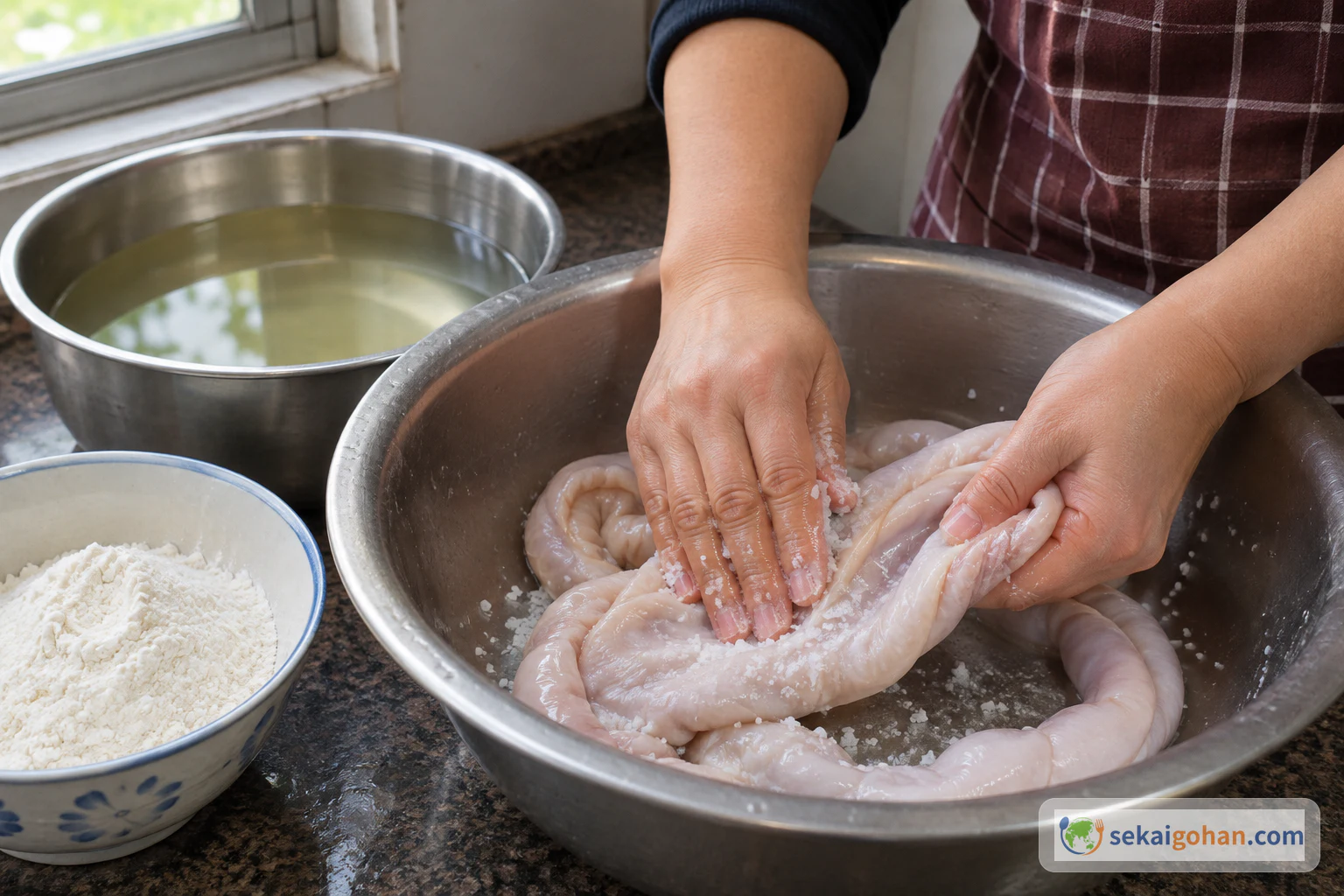
Turn the intestine inside out so the inner wall faces outward. Pile the coarse salt onto it and rub firmly along the whole length for about 10 minutes. Rinse off the salt under running water. Move on when the yellow, slippery coating on the inner wall has started to come away in your hands.

STEP 3 3 / 8

Soak in vinegar water and scrub with flour

Lamb intestine turned inside out, rubbed with salt, next to a bowl of vinegar water and a dish of flour
A well-washed inner wall looks pale and clean, with no yellow film left in the folds.

Stir the rice vinegar into a bowl of water deep enough to cover the intestine, and soak it for about 20 minutes. Lift it out, dust it with a little flour, rub it again and rinse it well under running water. Run your fingers along the inner wall. It is clean when no yellow mucus remains and the surface looks pale. If any is left, repeat the washes.

The wash decides the smell

Every stage of the wash removes more of the odor, so do all of them: salt, then vinegar, then flour. Wash your sink, board and hands well afterward, because raw offal has been all over them.

STEP 4 4 / 8

Mix the blood filling

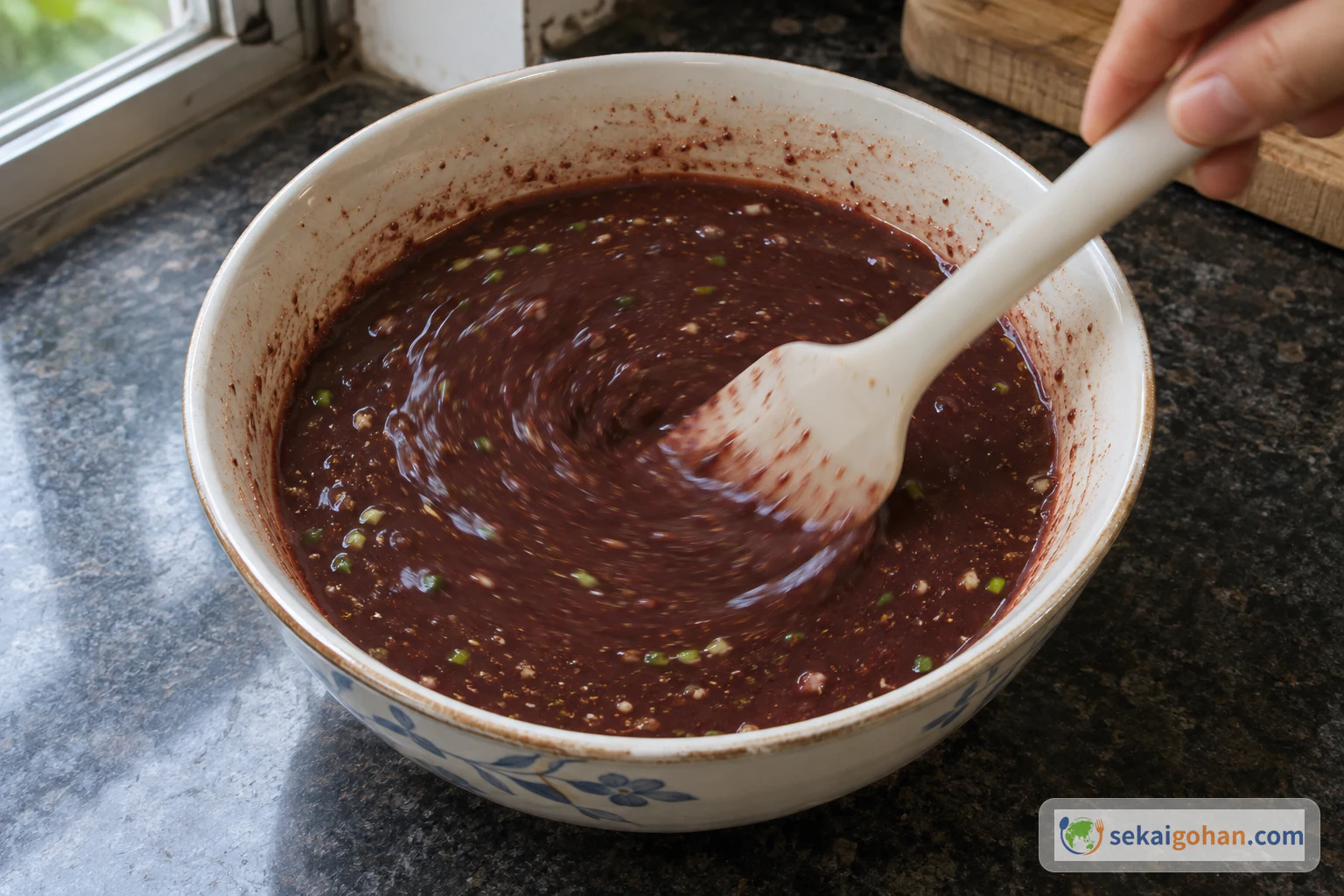
A bowl of dark lamb blood being stirred smooth, with starch slurry, ground Sichuan pepper, scallion and ginger beside it
Draw the spatula through the mixture. It should run smooth with no grains of starch.

Pour the blood into a large bowl. Stir in the cornstarch slurry a little at a time, then add the salt, Sichuan pepper, scallion and ginger. Add the sesame oil, ginger juice and white pepper now if you are using them. Stir until the mixture is smooth and even in color, with no lumps of starch left.

Season lightly here

Use only a little salt in the filling. The real seasoning happens at the table with vinegar, chili oil and white pepper, so a lightly salted filling leaves room for each eater.

STEP 5 5 / 8

Fill and tie the links

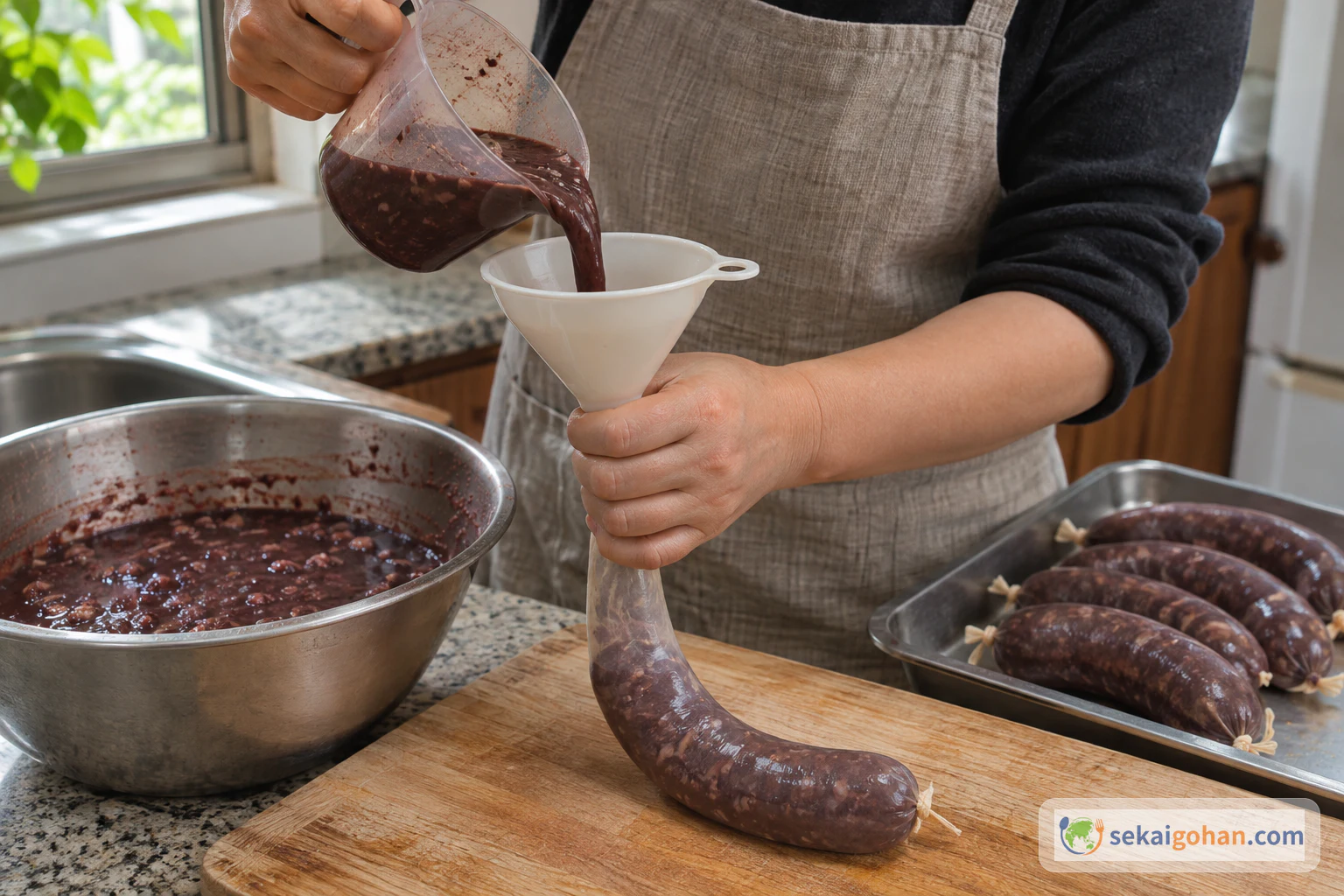
Hands using a funnel to fill cleaned intestine with dark filling, links tied with string on a tray
Filled links lie a little flat on the tray. Rounded, tight links are overfilled.

Tie one end of the intestine tightly with string. Fit the funnel into the open end and pour in the filling until the intestine is 70 to 80 percent full. Tie it off with string every 6 to 8 inches (15–20 cm), so that one length makes 5 or 6 links. Each link should feel soft and slack and give easily under a fingertip.

Stop short of full

The filling swells as it cooks, and an overfilled casing splits in the pot. If a link feels taut, squeeze a little filling back toward the open end before you tie it.

STEP 6 6 / 8

Set the links in boiling broth

Bring the broth back to a full boil. Lower the links in gently with a ladle so they don't hit the bottom of the pot. Keep the heat high for about 10 minutes. This sets their shape.

STEP 7 7 / 8

Simmer until the center is cooked

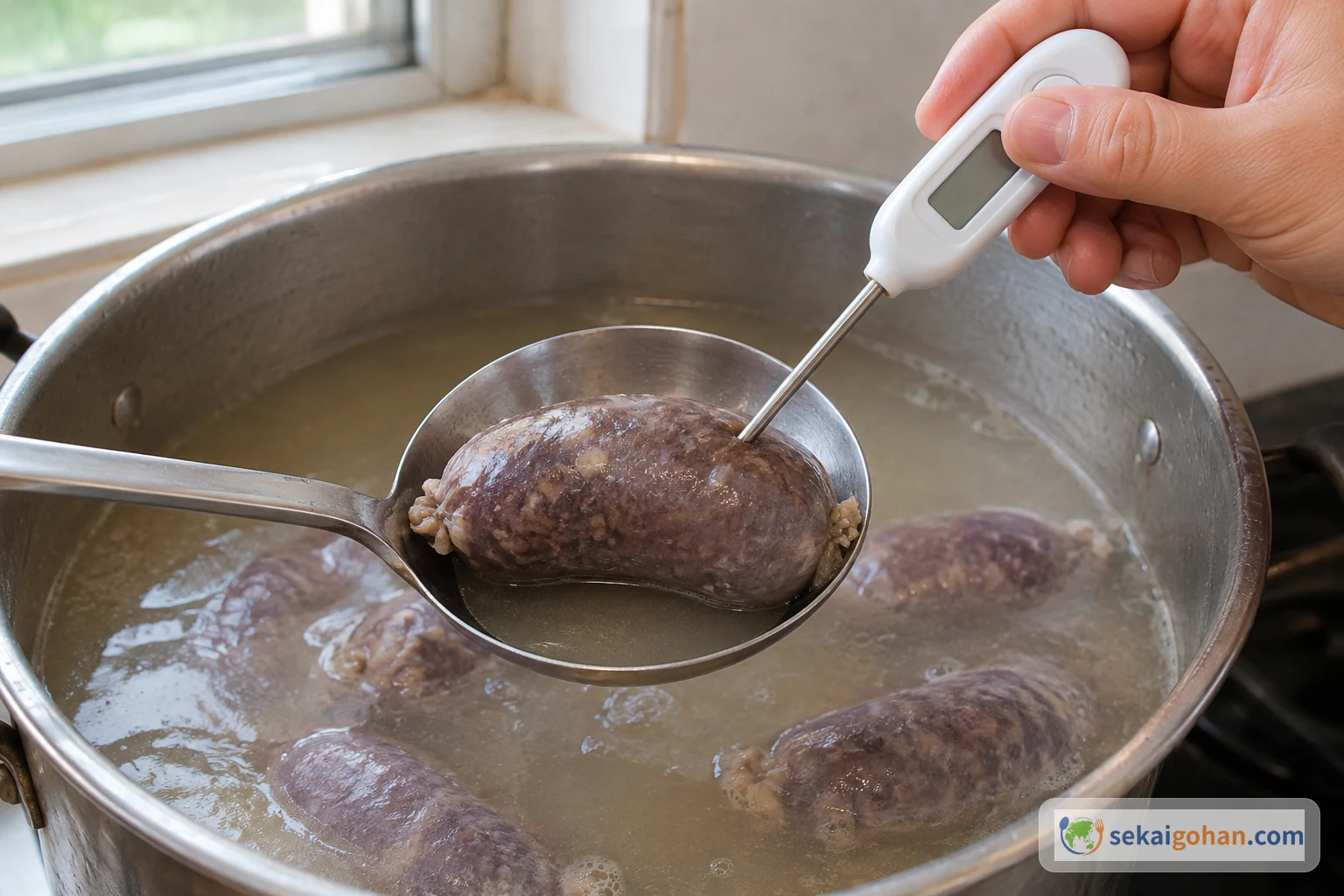
Filled links simmering in pale broth, a bamboo skewer and a thermometer probe in one piece
Test the thickest link. The thinner ones finish first.

Turn the heat to low and simmer for 40 to 60 minutes. Pierce a link with a bamboo skewer. Red liquid running out means it needs more time. Once the juice runs clear, push the thermometer probe into the thickest link. It is done when the center holds 165°F (74°C).

Cook it through

The skewer test helps, but the thermometer has the final word. Keep simmering until the center of the filling reaches 165°F (74°C). Never taste the raw blood mixture or uncooked intestine, and don't eat any part of it rare. Handle the hot broth and links with a ladle and tongs.

STEP 8 8 / 8

Slice and build the bowls

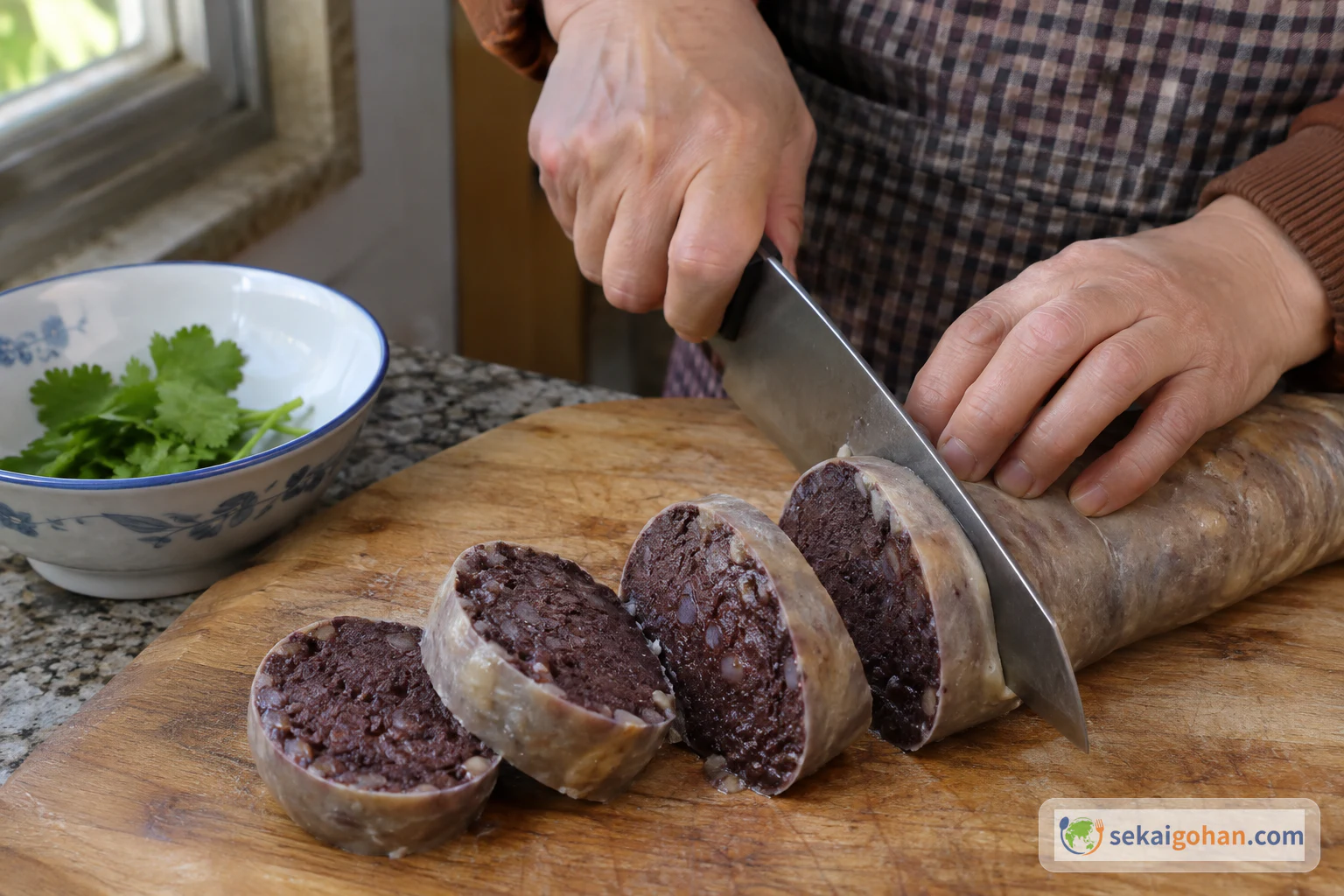
Cooked links being sliced into rounds and placed in a bowl lined with coriander as hot broth is poured over
A clean cut shows filling that is firm and dark all the way through, with no wet center.

Lift the links out and let them cool briefly so the filling firms up for cutting. Snip the strings and cut them into rounds about 1¼ to 1½ inches (3–4 cm) thick. Line each bowl with coriander, add the slices and ladle in hot broth until the coriander wilts and gives off its smell. Set out the chili oil, vinegar, garlic and white pepper so everyone can season their own bowl.

Ingredients

Ingredients

1 / 1

Ingredients

Ingredient Amount Role
Lamb bones (bony cuts with some meat) as needed The broth the links cook in and are served in
Water, for the broth enough to cover the bones Broth
Lamb intestine (羊肠, natural sheep casing) about 1 lb (500 g) The casing
Coarse salt, for washing about 5 oz (150 g) Scrubs the intestine. Almost all of it is rinsed away
Rice vinegar, for soaking about 3½ oz (100 g) Stirred into enough water to cover the intestine. Cuts the smell
Water, for soaking enough to cover the intestine Vinegar soak
All-purpose flour a little Final scrub of the intestine
Lamb blood (羊血), sold as food 1 lb (500 g) The body of the filling
Cornstarch slurry (淀粉水) about 5 oz (150 g) Sets the blood into a sliceable filling
Salt, for the filling a little Seasoning
Ground Sichuan pepper (花椒粉) to taste The main aroma of the filling
Scallion, finely chopped a little Softens the smell of the blood
Ginger, finely chopped a little Softens the smell of the blood
Toasted sesame oil (for 小磨香油) a little, optional Nutty aroma in the filling
Ginger juice (grated ginger, squeezed) a little, optional Brighter ginger note in the filling
Ground white pepper (胡椒粉) to taste Finishing heat
Chili oil (辣椒油) to taste Red heat at the table
Coriander (香菜), leaves and chopped stems as needed Lines the bowl
Rice vinegar or aged vinegar (老陈醋, lao chencu) to taste Sourness at the table
Garlic, grated (蒜泥) to taste, optional Sharp table condiment

On a winter morning in Dezhou, the street stalls open before it is fully light. A pot of lamb bone broth sits steaming on the fire. The cook lifts out a length of dark, plump intestine, cuts it into short rounds and drops them into a bowl lined with coriander. Hot broth goes over the top, and the customer adds red chili oil and a splash of vinegar. That bowl is yangchangzi: lamb intestine filled with lamb blood set with starch and seasoned with Sichuan pepper, scallion and ginger, then simmered until firm. The slices are soft and dark inside, scented with Sichuan pepper. The broth tastes of lamb, and the vinegar and chili oil at the table give it its edge.

A Winter Breakfast from Dezhou

Dezhou sits in northwestern Shandong, and yangchangzi is one of the dishes people there call their own. It is filed under Lu cuisine as a soup dish. People in town say it has been made there for more than a hundred years. Vendors once carried it through the streets on shoulder poles. Today it turns up at early-morning stalls in the cold months, and it is valued as food for cold weather.

Every stall keeps the same basic shape and changes the details. Some cooks pack the bowl with coriander and others use only a little. Some pour rice vinegar and others pour dark aged vinegar. Some spoon in grated garlic and others leave it out. Each of these is the eater's choice, made at the table. The seasoning that matters most goes in earlier, into the broth. Locals say the bone broth is what makes a stall's reputation, and its exact mix is spoken of as a secret. A legend told in Dezhou involves a man named Wu Sanmazi, a hired hand and a closely guarded recipe. Where the dish actually began is not settled.

Three names for one bowl

You will see it written 德州羊肠子 (Dezhou yangchangzi, "Dezhou lamb intestine"), shortened to 羊肠子, or called 德州羊肠汤 (Dezhou yangchang tang, "Dezhou lamb intestine soup"). The older name 清血肠 (qingxuechang) means something like "clear blood sausage" and points straight at the filling.

Shandong has other lamb soups, including the one from Ju County. Its broth is built in a similar way, but in yangchangzi the stuffed intestine is the center of the bowl. If Sichuan pepper and chili oil are what pull you toward this dish, shuizhu niurou uses both in a very different way. For more lamb from the wider region, Mongolian buuz wraps the meat in dough instead of casing. You can find more dishes from across the country on the China page.


Ingredients
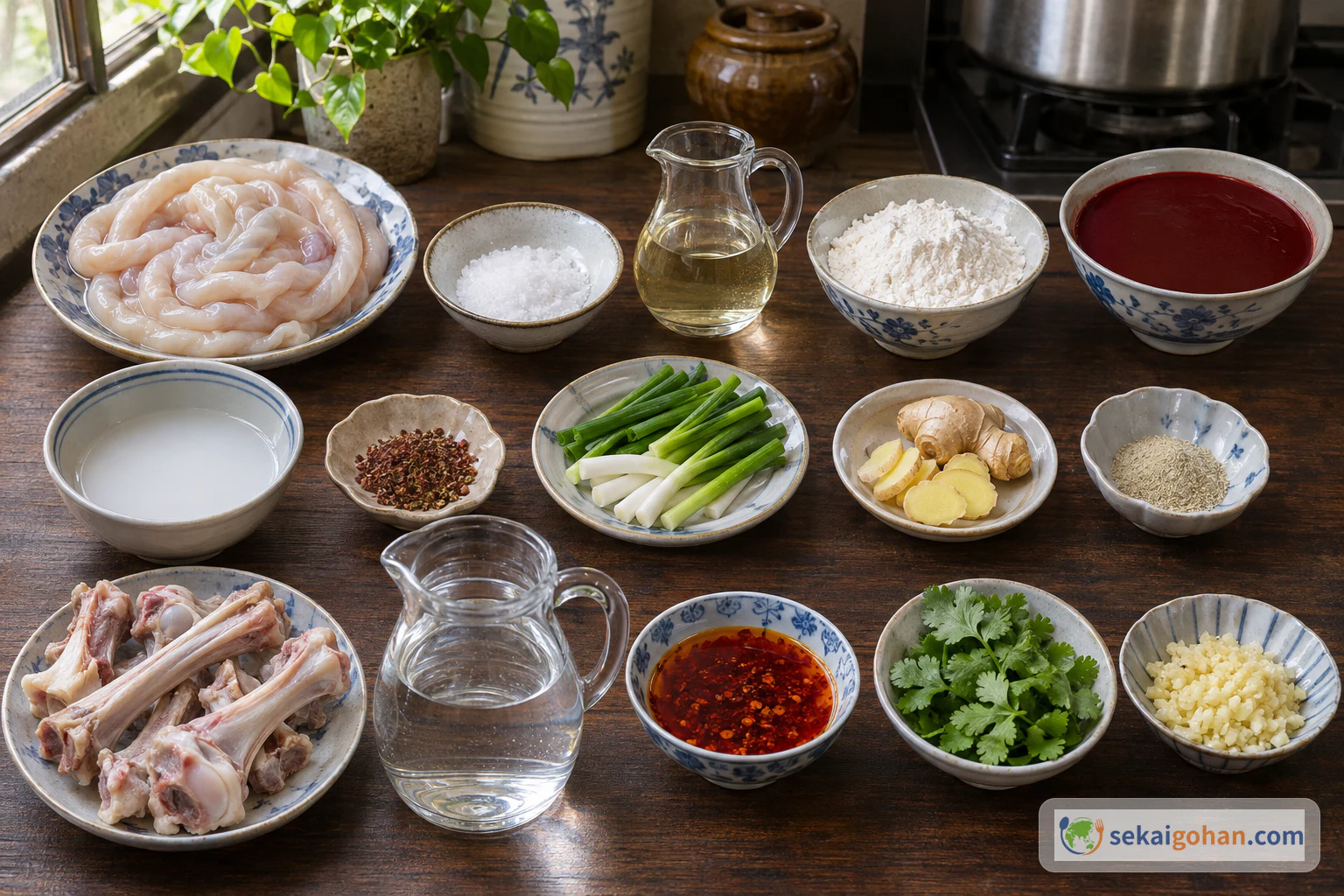
Ingredients for Dezhou yangchangzi: lamb intestine, lamb blood, cornstarch, ground Sichuan pepper, scallion, ginger, coriander, lamb bones and rice vinegar
The blood and the casing are the two things to buy first. The rest comes from an ordinary grocery store.
Which starch

The filling is set with starch, and cornstarch is the one to use. Potato starch is a different product, so keep it out of this filling.

Allergen information

This dish contains blood, lamb, wheat (the flour used to wash the intestine) and sesame (if you add sesame oil). It contains no egg or dairy. Check the labels on store-bought chili oil and vinegar.

Equipment

  • Large stockpot for the broth and for cooking the links
  • Ladle for skimming
  • Large bowl for the soak and another for mixing the filling
  • Funnel with a spout that fits inside the intestine
  • Cotton kitchen string
  • Bamboo skewer
  • Instant-read probe thermometer
  • Cutting board and sharp knife

Buying and Substituting

Start with the casing and the blood, because everything else is easy to find. Natural sheep casing is sold for sausage making, and some butchers who handle lamb offal also stock lamb intestine. Use only blood that is sold as food. If you can't find lamb blood, pig blood or duck blood works in its place. Pig intestine also works as a casing. It is thicker and smells different from lamb, so the links come out larger and the slices taste more of pork.

Item What to look for Supermarket swap and what it changes
Intestine Natural sheep casing or lamb intestine Pig intestine: thicker links, porkier aroma
Blood Lamb blood sold for eating Pig or duck blood, sold for eating: works in its place
Sesame oil Chinese stone-ground sesame oil (小磨香油) Toasted sesame oil: similar nuttiness with a different scent
Sichuan pepper Whole peppercorns, ground just before use, or ready-ground Ready-ground: quicker, less fragrant
Vinegar Aged vinegar (老陈醋) Rice vinegar: the everyday choice, lighter and cleaner. Other dark vinegars change the taste, so keep to these two
Chili oil Homemade 辣椒油 Store-bought chili oil: works fine

Scallion, ginger, coriander, rice vinegar, white pepper and salt come from any grocery store.


Method

The broth takes the longest, so start it first. While it simmers for hours, wash the intestine, mix the filling and tie the links. Once the broth is ready, the links go into it at a hard boil, then simmer gently until they are cooked to the center. The thermometer is what tells you they are done.

When It Goes Wrong

What you see Why What to do
A link splits in the pot It was overfilled Fill to 70–80 percent and keep the links soft and slack before they go in
A strong offal smell in the bowl The wash was too short Do the salt, vinegar and flour washes in full, and repeat until no yellow mucus remains
The filling sets too hard or stays loose The starch slurry was added unevenly Stir the slurry into the blood a little at a time, and mix until fully smooth before filling
Red juice from the skewer, or the thermometer reads low The center isn't cooked yet Keep simmering on low and check again until the center holds 165°F (74°C)
Grey scum floating in the broth Foam wasn't skimmed as it came to the boil Skim carefully at the start. Next time, begin with cold water so the foam rises slowly and is easy to lift off

Serving, Variations and Storage

A table set with a bowl of yangchangzi, small dishes of chili oil, rice vinegar, white pepper and grated garlic
Put the condiments in small dishes so each person can season their own bowl

Yangchangzi is a cold-morning breakfast, eaten while the broth is too hot to rush. Serve it as soon as the broth is poured, with chopsticks for the slices and a spoon for the broth. At the table each person adds chili oil, vinegar, white pepper and, if they like, a little grated garlic. Start with a small amount of vinegar, taste, and add more, because it sharpens the broth quickly.

Variations

  • More or less Sichuan pepper. Adding more to the filling makes each slice tingle and smell strongly of pepper. Using less lets the lamb and ginger come forward.
  • Sesame oil, ginger juice and white pepper in the filling. Adding all three gives a rounder, more fragrant slice. Leaving them out gives a plainer filling that relies on the table condiments.
  • Aged vinegar or rice vinegar. Aged vinegar makes the broth deeper and darker. Rice vinegar keeps it light and clean against the lamb.

Making ahead and storing

The links can be cooked ahead. Cook them through, let them cool, and keep them in a covered container in the refrigerator, put away promptly. At serving time, warm the whole links in lamb bone broth until the center reaches 165°F (74°C), then slice them and build the bowls as usual. Store leftover broth the same way: cool it, cover it and refrigerate it promptly, then bring it back to a full heat before serving.

Frequently asked questions

Can I skip the long bone broth?

The broth is half the dish. The links cook in it and it fills every bowl. Stall cooks treat their broth as the thing that sets them apart. Give it the full simmer, and start it first so the hours overlap with the washing and filling.

Is yangchangzi the same as mutton offal soup?

No. Mutton offal soup (羊杂汤) is mixed lamb offal served in broth. Yangchangzi is made from one piece of intestine filled with a blood mixture and tied into links, and its slices are what fill the bowl.

Does it use soy sauce?

No. The filling is seasoned with salt, Sichuan pepper, scallion and ginger, and its dark color comes from the blood. Chili oil, vinegar, white pepper and garlic are added at the table.
Enjoyed this recipe?

0 likes

Sources

  • Maigoo Encyclopedia, "德州羊肠子" (Dezhou yangchangzi). The dish name and the alternative names qingxuechang and yangchangzi; a filling of lamb blood, starch and seasonings packed into lamb intestine and simmered in lamb bone broth; serving with broth, chili oil and coriander; the local legend of Wu Sanmazi. https://www.maigoo.com/citiao/301969.html
  • Maigoo Encyclopedia, "德州羊肠汤" (Dezhou yangchang tang). Its classification as a Lu cuisine soup dish; blood filling with starch, stone-ground sesame oil, ginger juice and white pepper; lamb bone broth, chili oil and coriander; links cooked, cooled and kept, then warmed in bone broth and sliced to serve. https://www.maigoo.com/citiao/301751.html
  • Sohu, "徳州羊肠子" (2026-06-17). Amounts for intestine, washing salt, vinegar soak, blood and starch slurry; the four-stage wash; filling to 70–80 percent and tying every 15–20 cm into 5–6 links; bone broth from cold water simmered for 3–4 hours; 10 minutes on high heat then 40–60 minutes on low with a skewer test; serving with coriander, chili oil, rice or aged vinegar and garlic; pig or duck blood as a substitute; winter morning stalls and the earlier street vendors. https://m.sohu.com/a/1037877481_121847148/
  • Osaka Prefecture, Food Safety, "食肉の加熱" (Cooking meat). Cooking meat until the center reaches 75 °C for at least 1 minute; the ban on serving raw pork, including offal. https://www.pref.osaka.lg.jp/shokuhin/shokutyuudoku/niku.html