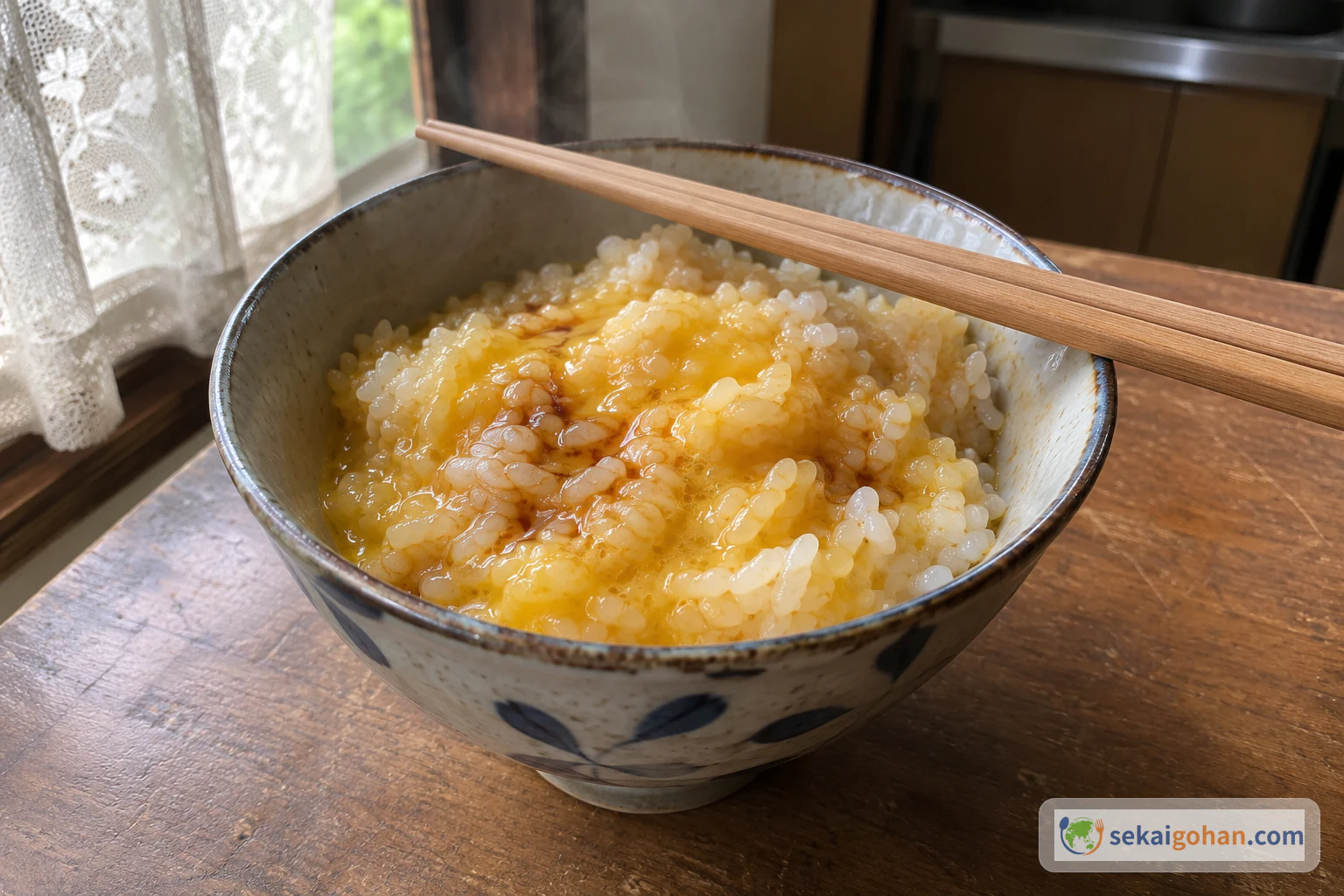
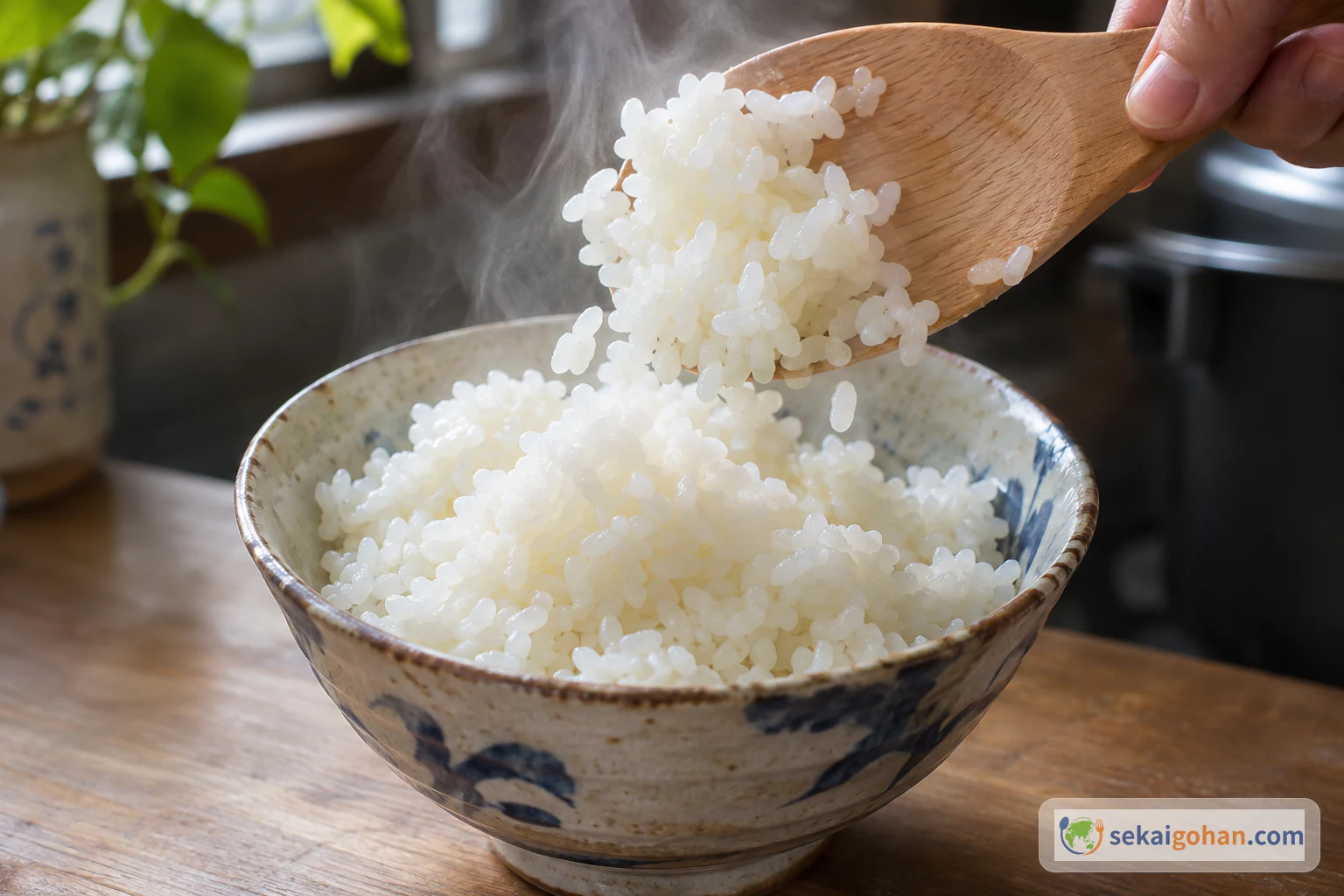
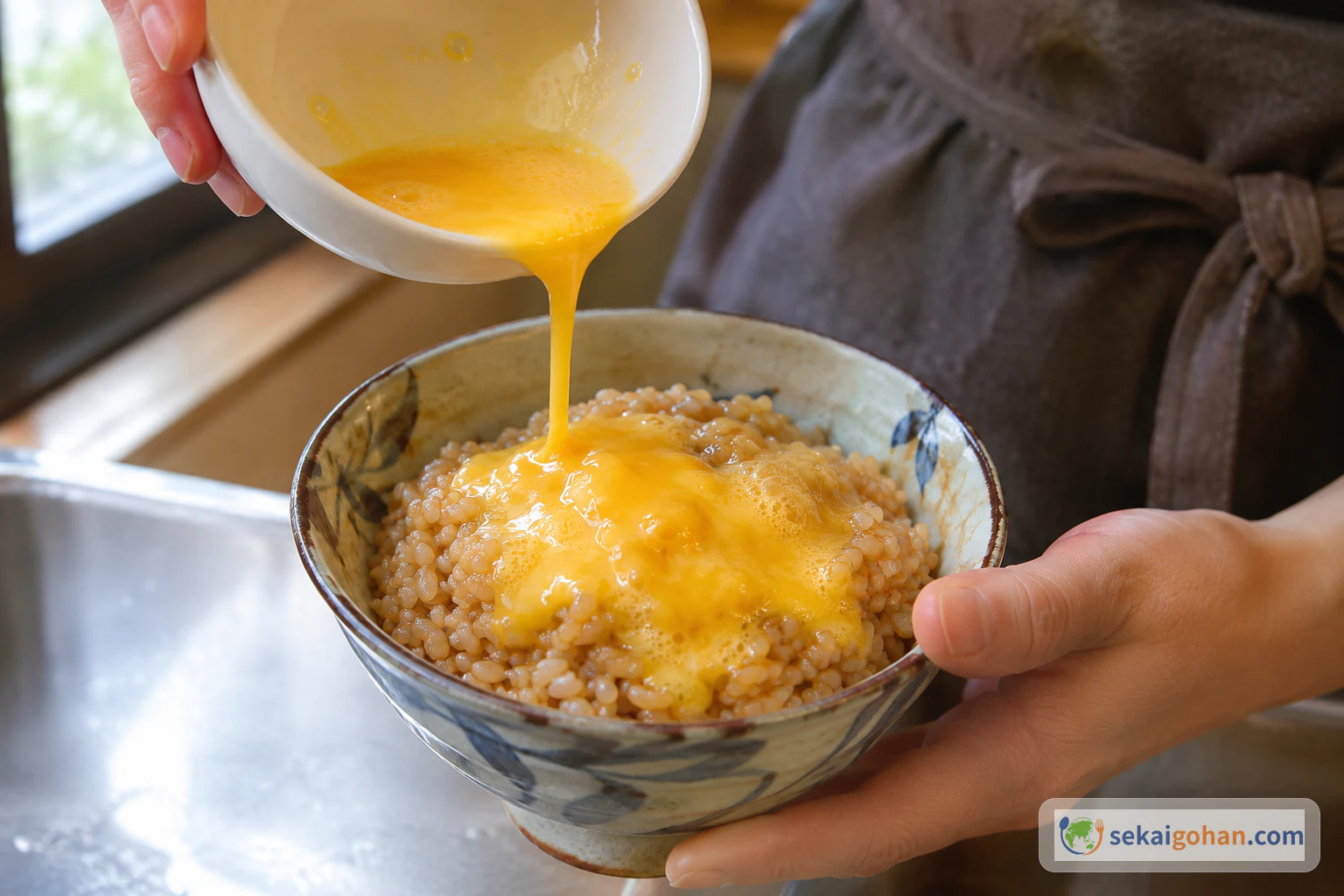
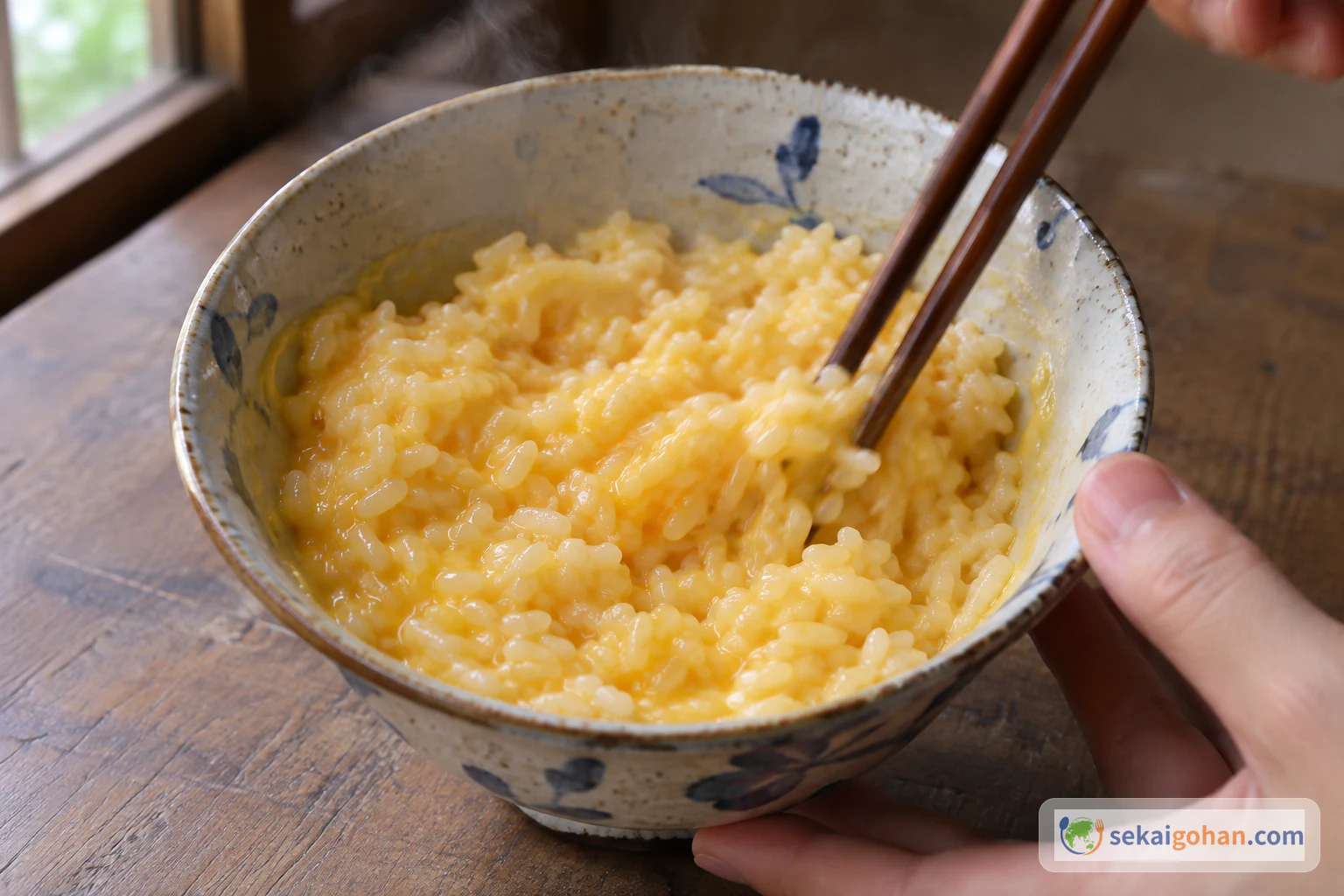
Steam lifts off a fresh mound of rice. Soy sauce goes on first, and the grains turn a pale amber as the chopsticks lift and turn them. Then a lightly beaten egg runs over the top, and a few big folds coat every grain in a glossy yellow sheen. Tamago kake gohan, often shortened to TKG, is hot rice dressed with raw egg and soy sauce. It is eaten in homes all over Japan, at breakfast and whenever someone wants a meal in minutes.
The flavor works in layers. The egg's richness comes first, then the savory soy underneath, and the sweetness of the rice at the bottom. Seasoning the rice before the egg goes in is the one move that changes the bowl, and the rest of this piece builds on it.
From a steamed Edo dish to a bowl with its own day
Rice and egg have a long history together in Japan, but the bowl people eat today took shape slowly. In the early Edo period eggs were precious and treated almost as medicine. A cookbook from 1805 describes tamago-meshi: beaten egg poured over rice, covered and steamed, then served with condiments and soy sauce. That is a cooked dish with a different method, a relative of today's bowl rather than the same thing. A household diary from the Ogi Nabeshima domain in 1838 lists "a bowl, raw egg" served to guests. Whether that matches the modern dish is uncertain.
The modern raw-egg bowl is said to have been spread by Kishida Ginkō in the Meiji era. The earliest form handed down under his name is keiran-ae: rice with raw egg, salt and red chili, with no soy sauce at all. Where and when the dish was first eaten is not settled.
When an egg cost as much as curry
For a long time this was not an everyday bowl. Around 1924 a single egg cost about 7 sen, roughly the price of a plate of curry rice. Poultry farming methods arrived in the Shōwa era and production climbed. By 1970 the average person in Japan was eating more than 250 eggs a year, and a raw egg over rice had become something anyone could have at breakfast.
October 30 is Tamago Kake Gohan Day in Japan. It dates from the first national tamago kake gohan symposium, held on October 30, 2005, by an organizing committee in Unnan, Shimane Prefecture. The Japan Tamago Kake Gohan Research Institute was founded in 2019, and it promotes many different ways of eating the dish.
Misaki, the town that claims the bowl
Kishida Ginkō came from Tochibara, in what is now Misaki, Okayama Prefecture. Misaki presents itself as the birthplace and the "holy ground" of tamago kake gohan, and the town counts around 70,000 visitors a year who come for it. The local bowl is built entirely from the town: rice from the terraced paddies of Ōhaga-nishi, which are listed among Japan's top hundred terraced rice fields, eggs from local farms, local soy sauce, and a bowl of Sakurako-yaki, the town's own pottery. Misaki even runs its town branding on a pun, kifuku, which joins the yellow of the yolk to the word for good fortune.
Misaki also has its own way of eating it. First take one bite from the center of the plain rice to taste the grain. Then drop in the egg, taste a bite of yolk and white, stir it however you like, and add your soy sauce last. Every household in Japan mixes in its own order, and some barely mix at all. Ask ten people how to eat it and you get ten answers.
Tamago is egg, kake means poured over, and gohan is cooked rice. The bowl here is the version called Sunrise, the soy-first method with a medium egg.
Ingredients (serves 1)
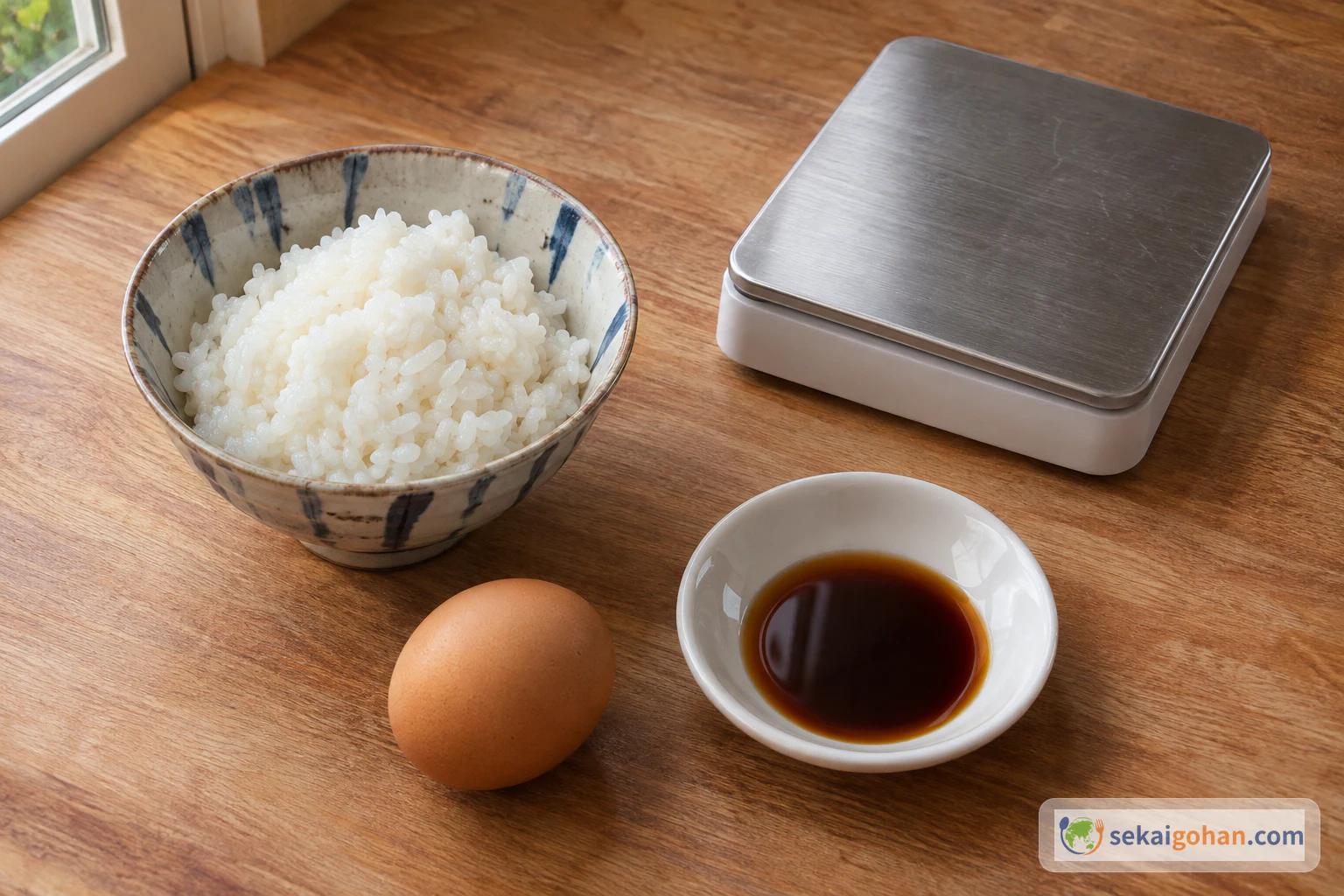
This dish contains egg and soy (soy sauce). Many soy sauces also contain wheat, so check the label. If you add toppings such as nori, mentaiko or ikura, check each label as well.
Equipment
- Rice bowl
- Small bowl for cracking and beating the egg
- Small dish for the soy sauce
- Kitchen scale that reads in 1 g steps
- Rice paddle
- Chopsticks
Choosing soy sauce and eggs
Soy sauce sets the whole bowl. The bottle you already have works. A light-colored soy sauce (usukuchi) or one with a little sweetness suits this bowl best. Light soy gives paler rice. Dashi soy sauce, which is seasoned with stock, adds savoriness, but it carries a different salt balance, so taste before you settle on an amount.
The egg is eaten raw, so how you buy and store it matters as much as how you season it. Pick a carton with clean, uncracked shells and check the laying or packing date and the best-before date. In Japan some cartons are labeled for raw eating. That label is a buying cue, and it does not replace the rules below.
Raw egg can carry salmonella. Symptoms (vomiting, stomach pain, diarrhea, fever) start 6 to 48 hours after eating, and infants and older people can become seriously ill.
- Buy clean, fresh eggs with no cracks. Refrigerate them as soon as you get home, at 50°F (10°C) or below, and use them before the date on the carton.
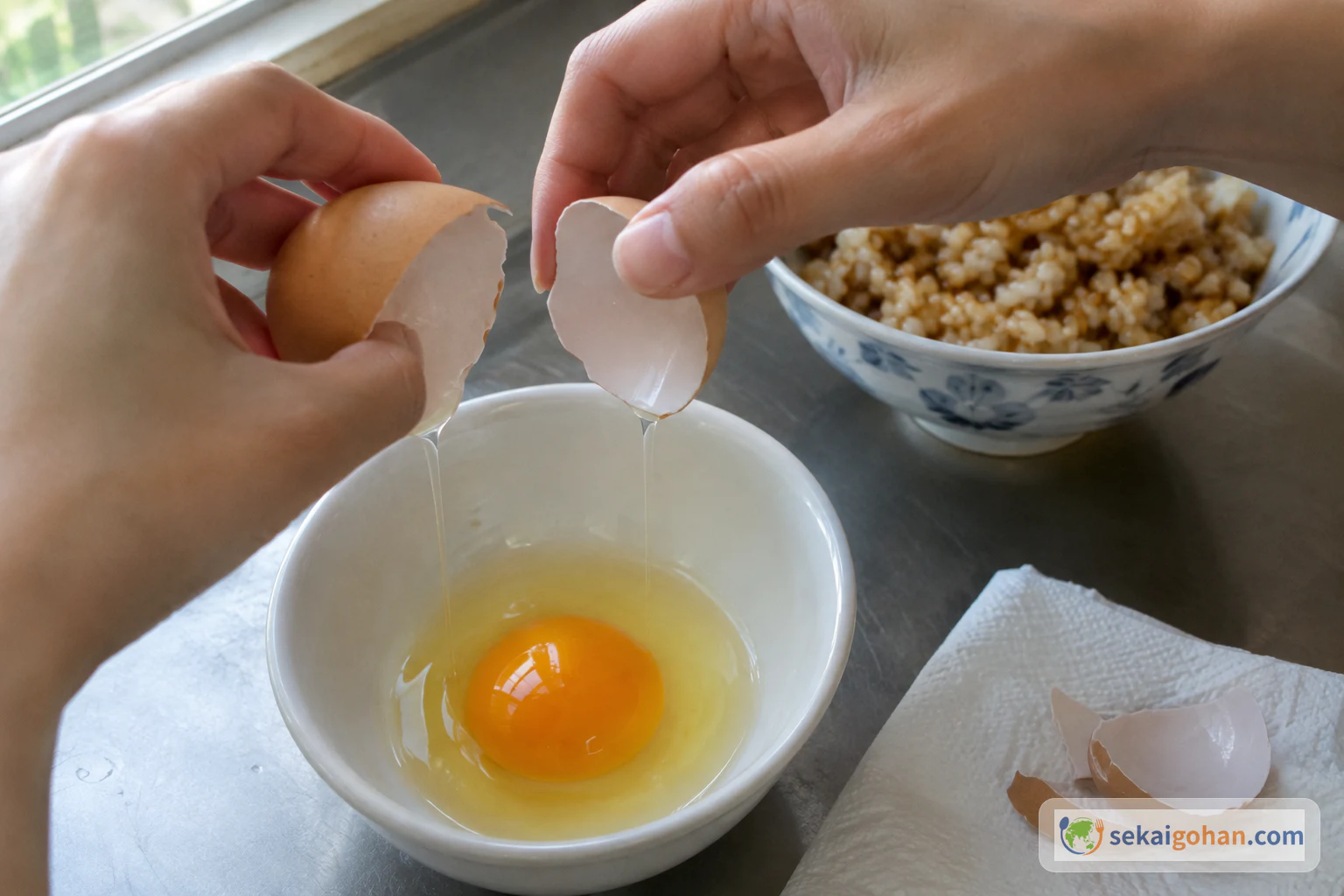
- Never eat a cracked or broken egg raw. Crack the egg right before you eat, crack only what you will use, and do not leave a cracked egg sitting out.
- Eat any egg dish that is not fully cooked within 2 hours of starting to make it.
- Older adults, children aged 2 and under, pregnant women and anyone with weakened immunity should not eat raw egg. Give them a fully cooked egg dish instead.
- Wash your hands and tools after touching raw egg.
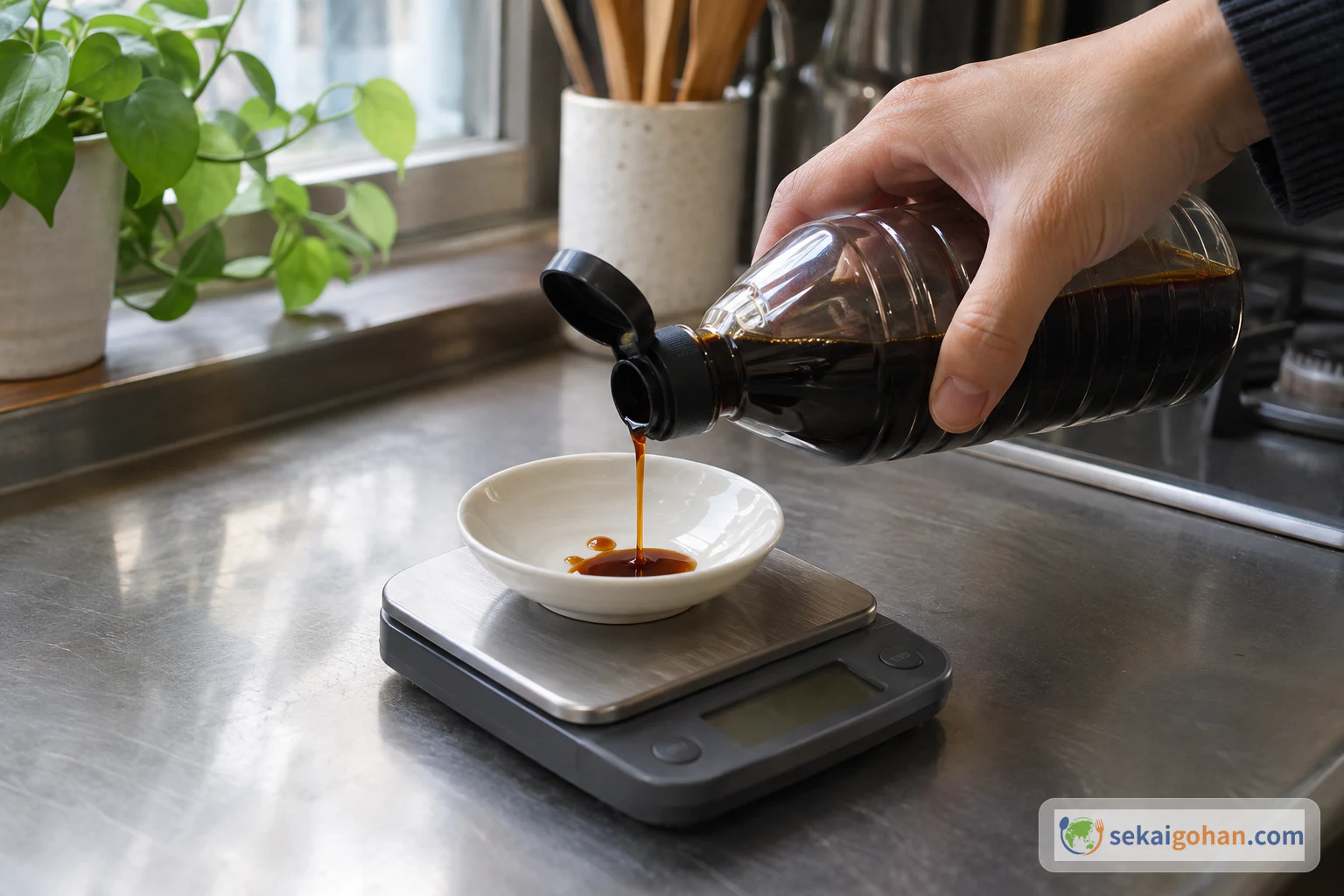
At 7 g, the bowl tastes seasoned all the way through without the soy taking over the egg. Put the dish on the scale, zero it, and pour. Next time, go up or down by 1 g until it suits you.
Method
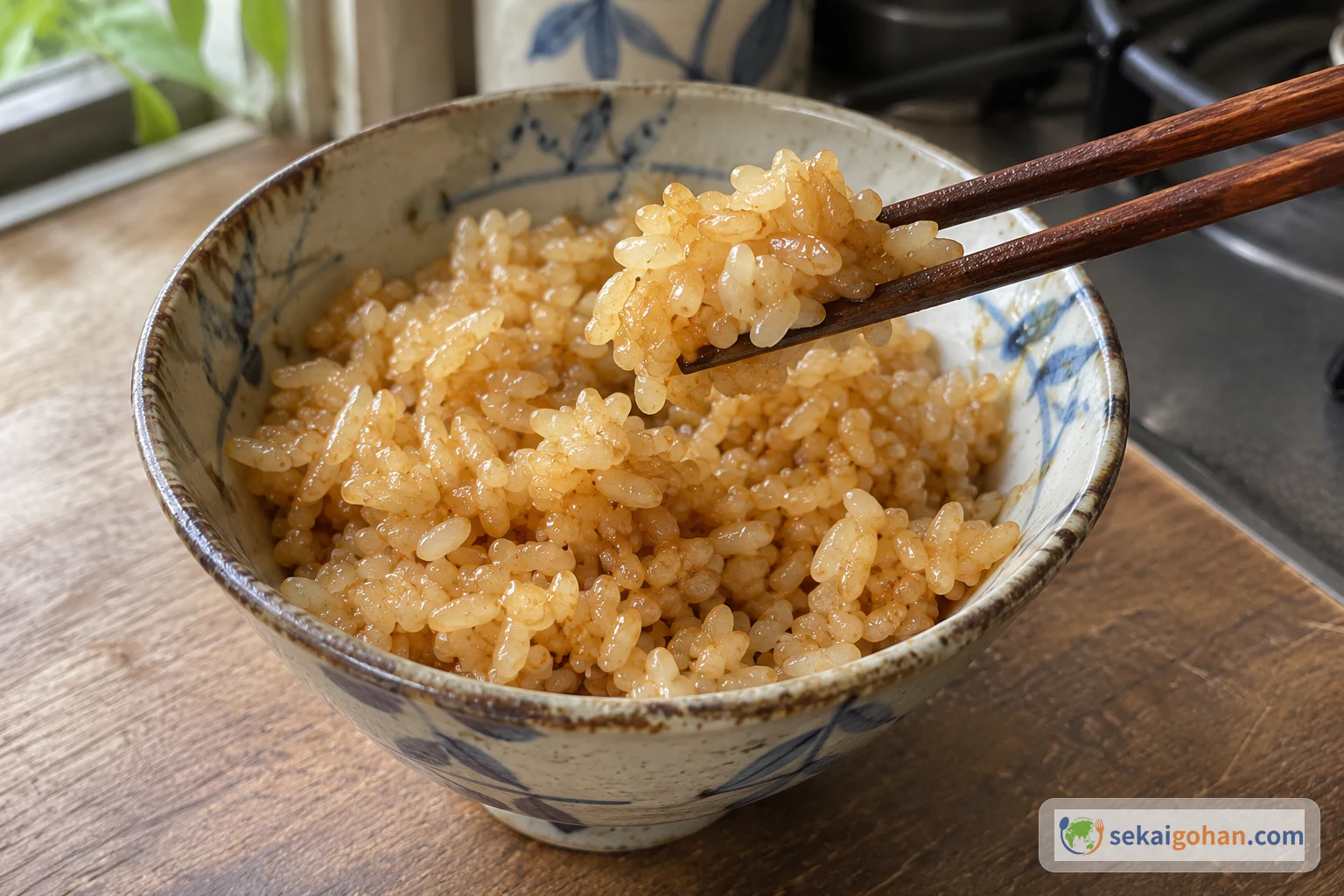
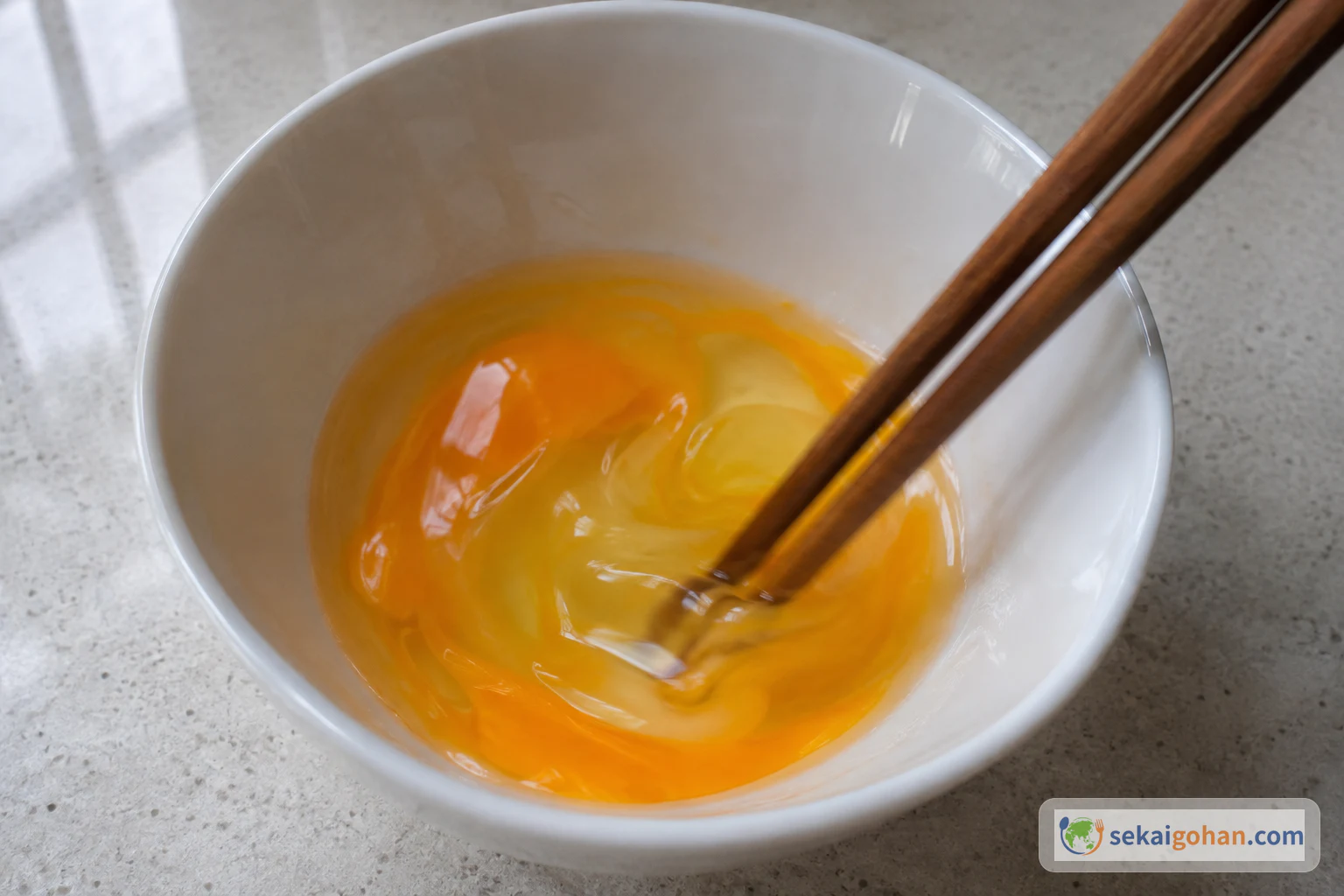
Have the rice cooked and hot before you start, because everything after that moves quickly and there is no waiting time. Season the rice first, then take the egg from the refrigerator and crack it last, so the raw egg spends as little time as possible out of the cold. The finished bowl goes straight to the table.
Mixing the soy into the rice before the egg goes on is what makes this bowl. The rice is seasoned all the way through and the egg coats the outside, so every bite tastes of egg first and soy underneath.
When it goes wrong
| What you see | Why | What to do |
|---|---|---|
| Too salty or too bland | Taste in soy sauce varies from person to person | Change the soy by 1 g next time |
| The egg sits heavy and does not blend in | The rice has cooled, or the egg is very cold against lukewarm rice | Mound the rice while it is steaming. Crack the egg straight from the refrigerator and do not leave it out to warm up |
| The white has gone foamy | Beaten too hard | Cut the white with chopsticks only. Save whipping for the Kintoun version below |
| Liquid pools in the bottom of the bowl | Not mixed enough, or the rice is cold | Fold from the bottom so the whole bowl turns over, and start with hotter rice |
| A raw, eggy smell | The egg is not fresh or was stored badly | Check the dates and the shell. Never use eggs with cracks, dirt or an off smell |
Serving, variations and storage
A bowl of tamago kake gohan is a meal in itself, especially at breakfast. Some people dress it further: a dab of wasabi on the Sunrise bowl, eaten wrapped in or set on seasoned nori. Mentaiko and ikura also work, but go easy with both and eat them in separate bites so neither takes over the egg.
The simple pour
This is the plain, common version. Put the rice in the bowl, crack the egg straight on, pour on soy sauce and mix. The soy and egg blend in one step, so you lose the layer of seasoned rice under the egg, and the bowl tastes more evenly of soy-egg.
Whites first
Separate the egg. Make a hollow in the rice, add the white and mix it through so the rice takes on air and turns fluffy. Then set the yolk on top and pour on dashi soy sauce. The rice becomes light and almost creamy, with the yolk as a rich center.
Kintoun (the cloud)
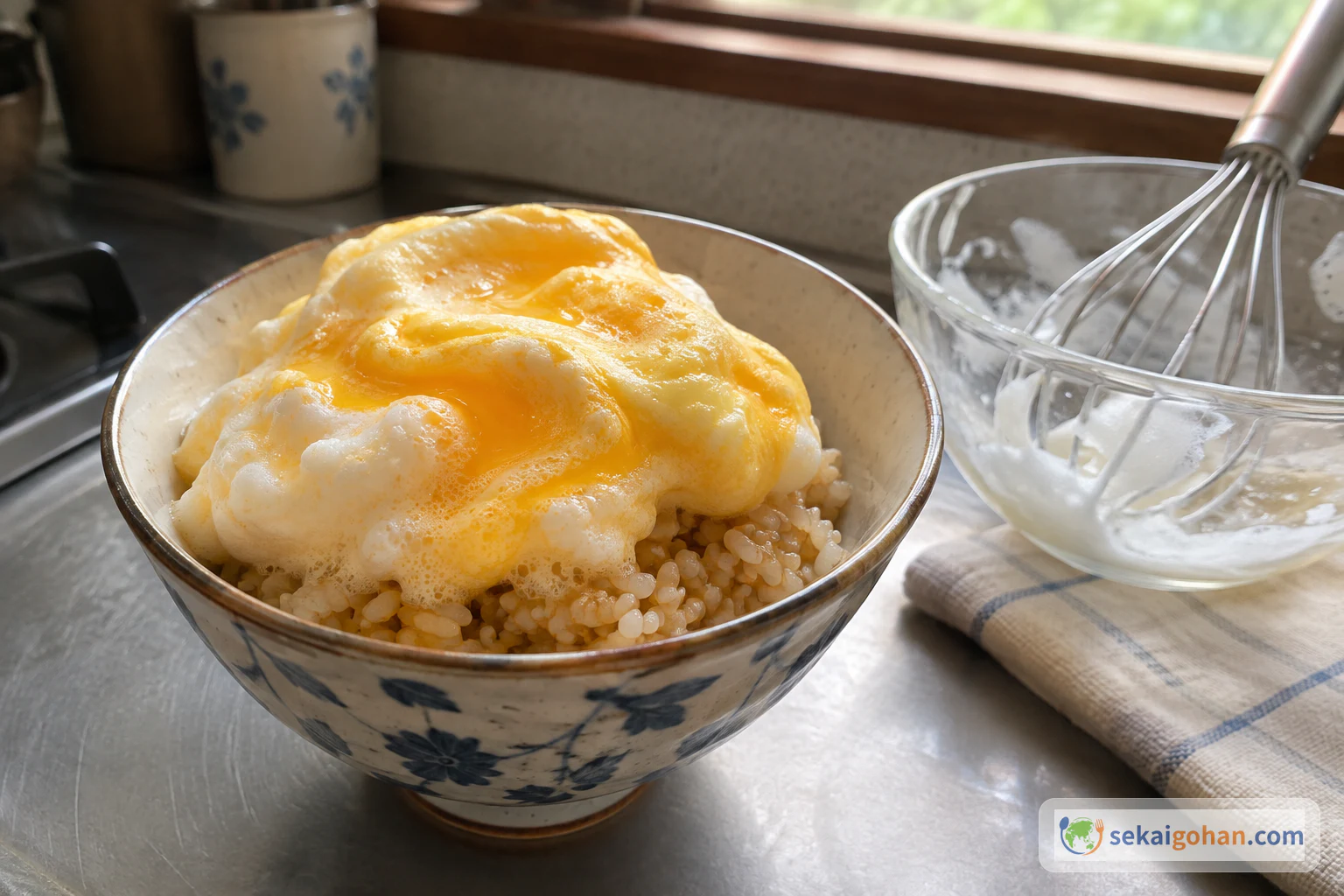
Whip the white with a whisk until it forms a meringue. Fold in the yolk, beaten in a separate bowl, and spoon the cloud over soy-seasoned rice. The bowl is airy and mild, a texture you get no other way. This is still raw egg, so every rule in the raw egg warning applies, and it is eaten as soon as it is made.
Dark Side
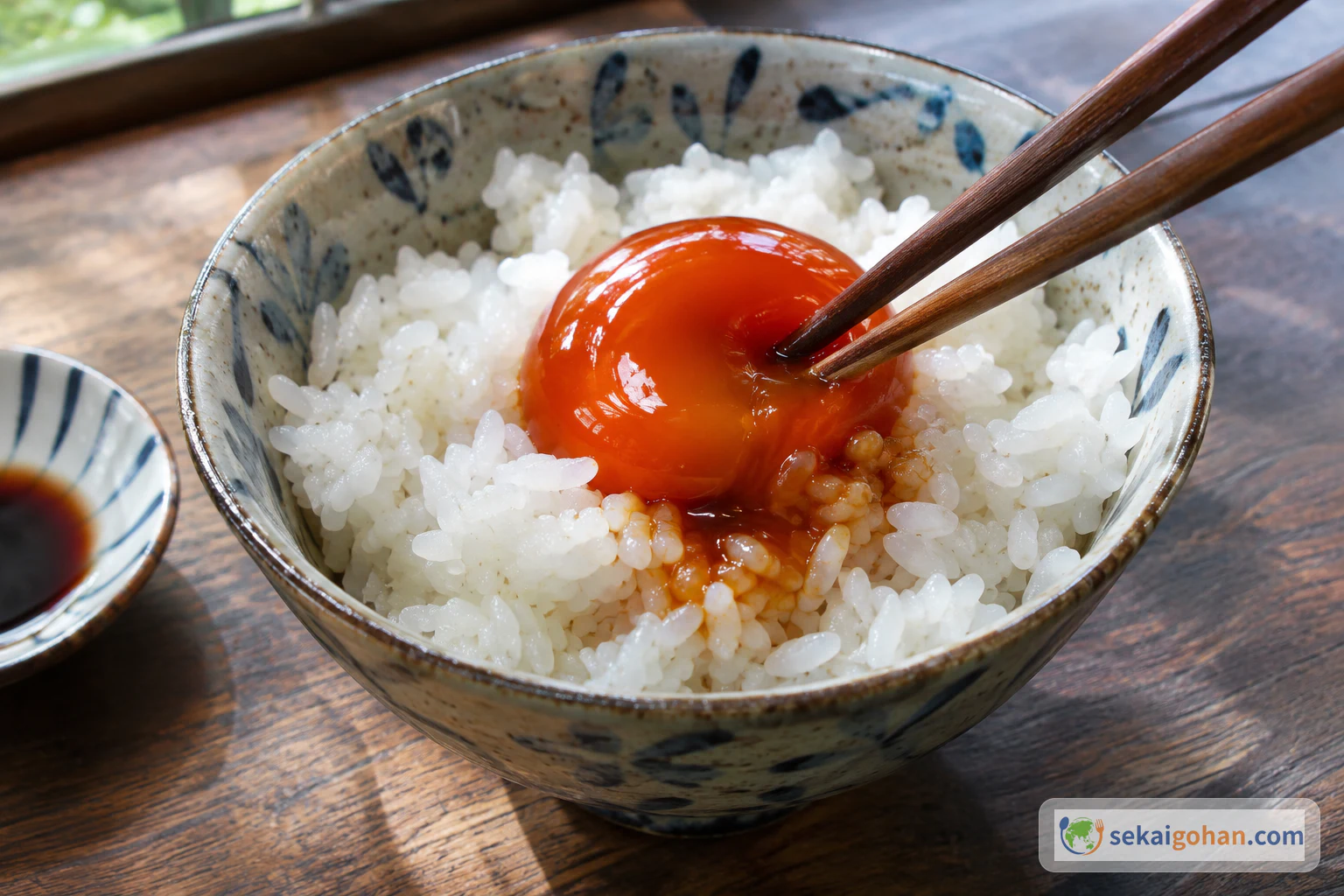
Soak just the yolk in 7 g of soy sauce in the refrigerator overnight. It turns deep amber and slightly firm. Set it on plain hot rice and break it with chopsticks as you eat, letting the dark, thick yolk run into the grains.
Leaving a cracked yolk overnight goes against two raw egg rules above: crack eggs just before use, and eat undercooked egg within 2 hours. Make this only as your own choice. Keep the yolk in the refrigerator the whole time and eat it on the day you take it out. Never serve it to anyone who should avoid raw egg. For a safer bowl, soak a fully cooked yolk instead.
Salt and sesame oil
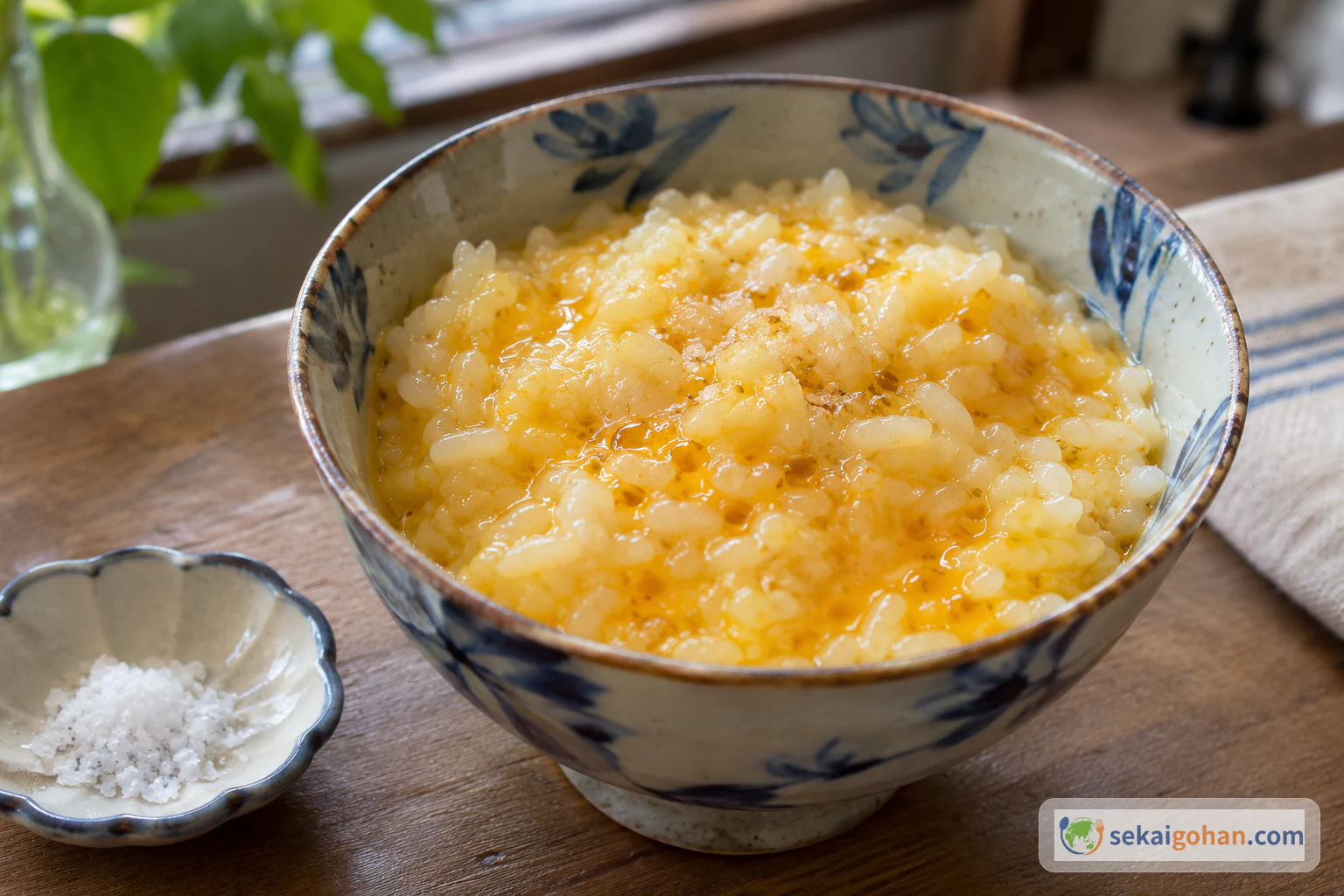
Leave out the soy sauce. Season the egg rice with a little salt and a little sesame oil or olive oil. The bowl comes out pale and glossy, and it eats like a risotto.
Leftovers
Once the egg is on, the bowl is not kept. Eat it right away. If you have soy-seasoned rice left over before the egg goes on, cover it and refrigerate it promptly, without egg. Reheat it until hot, then let it settle for a moment before you add a freshly cracked egg, because rice that is too hot sets the egg halfway. Keep the eggs themselves in the refrigerator and use them by their date.
Frequently asked questions
How many teaspoons is 7 g of soy sauce?
Weigh it instead of converting it. A kitchen scale that reads in 1 g steps gives the same amount every time. Without a scale, add soy a little at a time and taste the rice before the egg goes on.
Do I need a soy sauce made for egg rice?
No. Ordinary household soy sauce makes a good bowl. A lighter or slightly sweet one suits it best, and a dashi soy sauce gives a more savory result.
Can I use a large egg?
Yes, but the bowl will taste of more egg. With a larger egg, 7 g of soy can taste thin, so add a little more soy to keep the balance.
Can I make it with brown rice or multigrain rice?
You can. The grains stay more separate, the egg clings to them less, and the moisture in the bowl is different. Use it hot, the same as white rice.