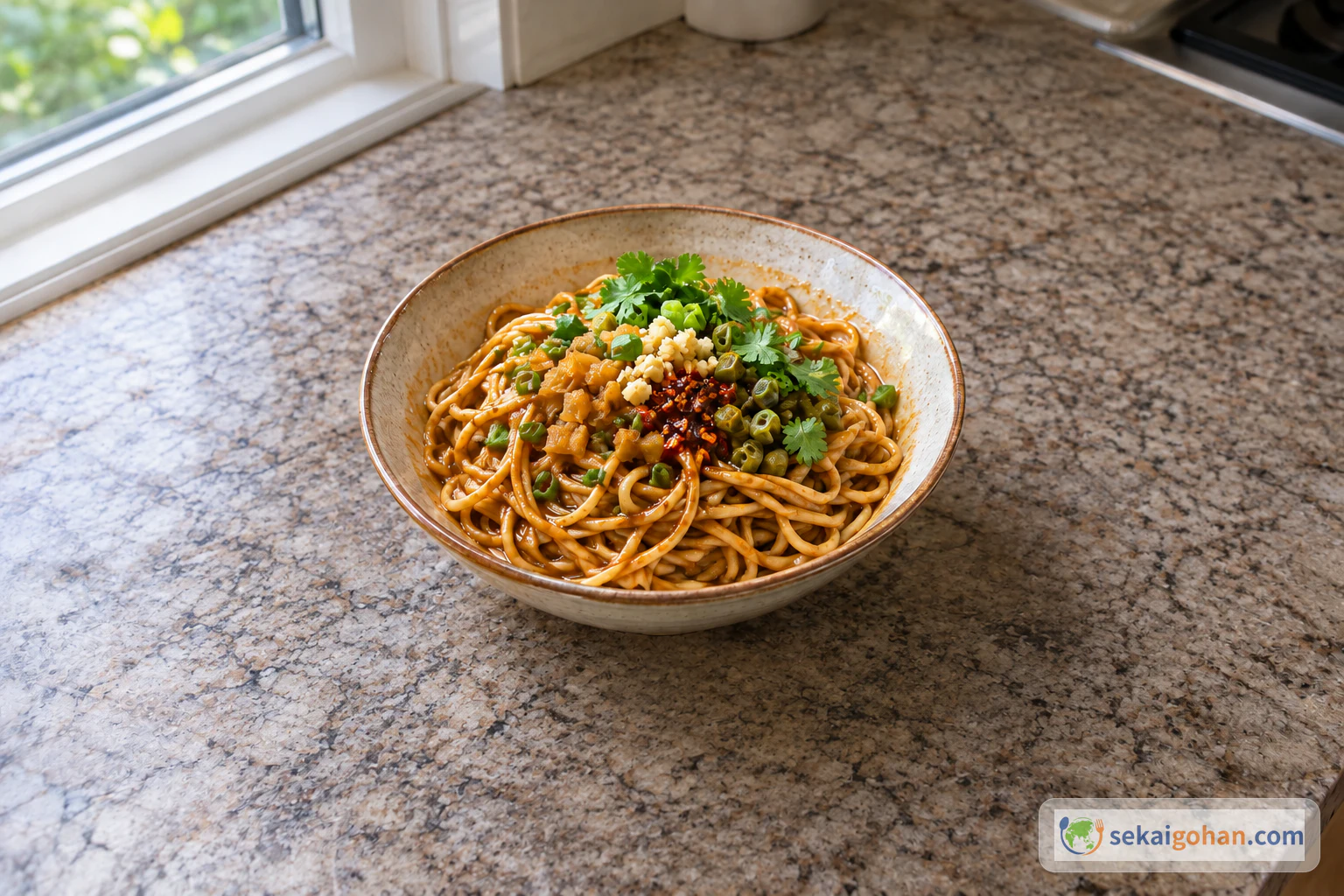
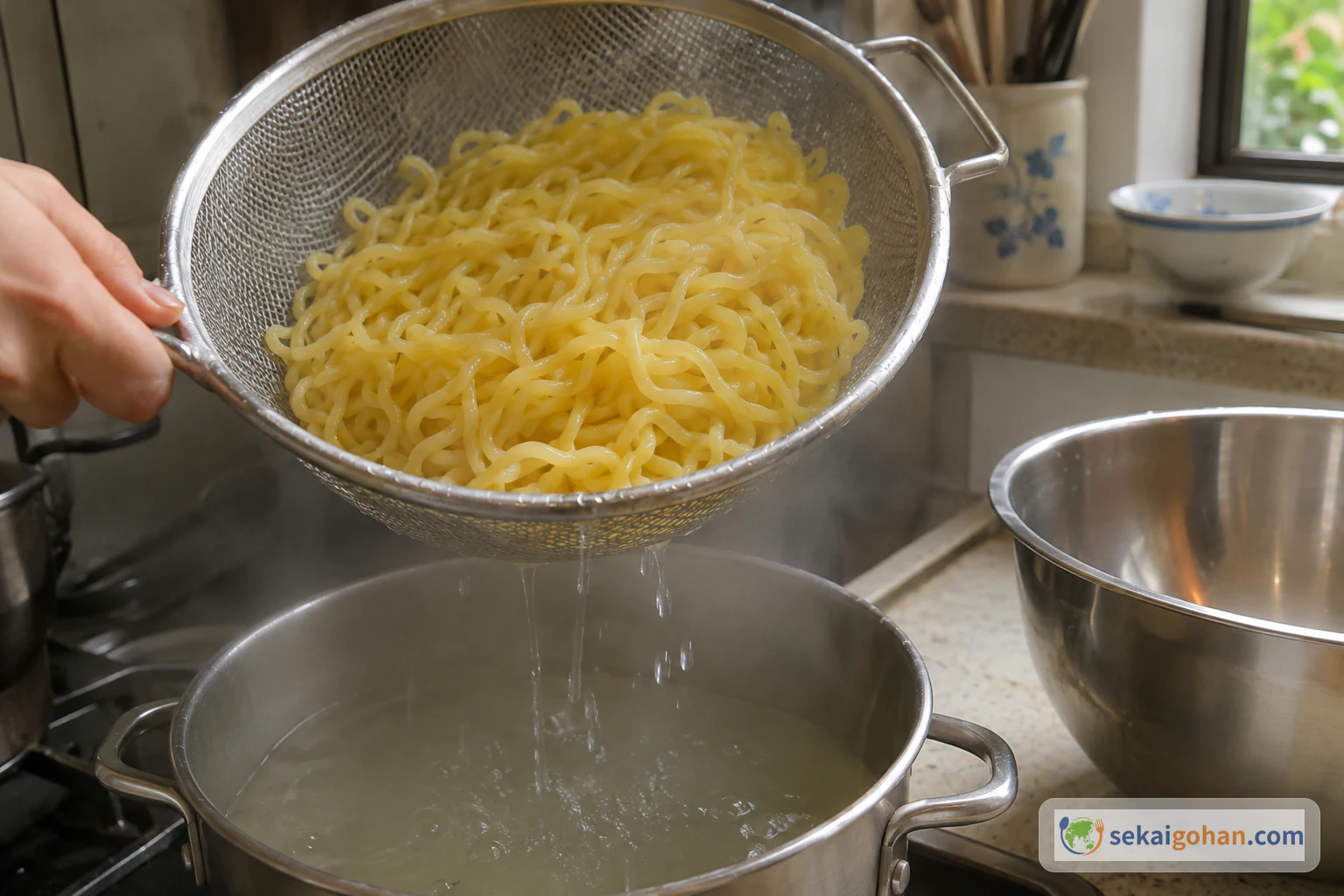
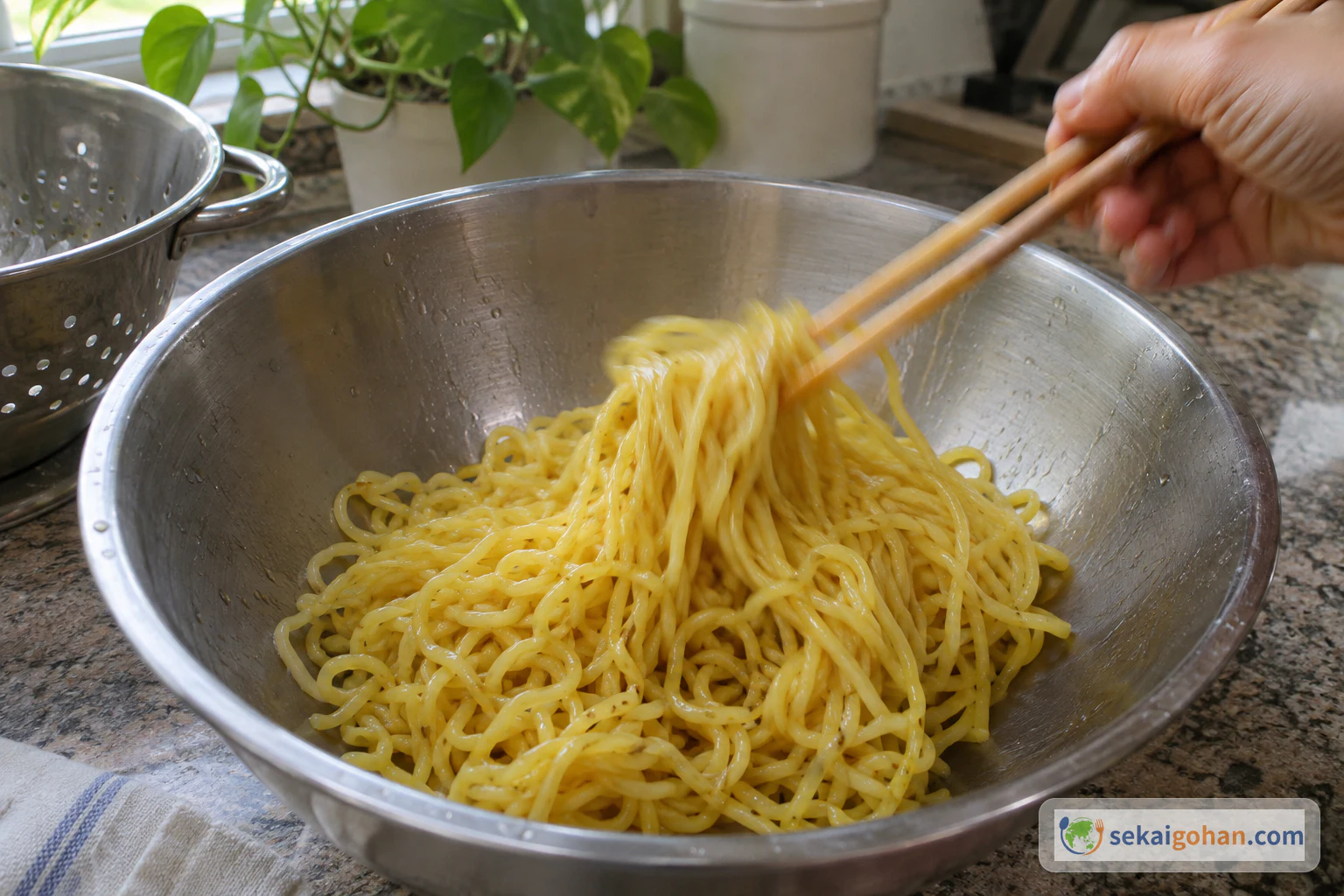
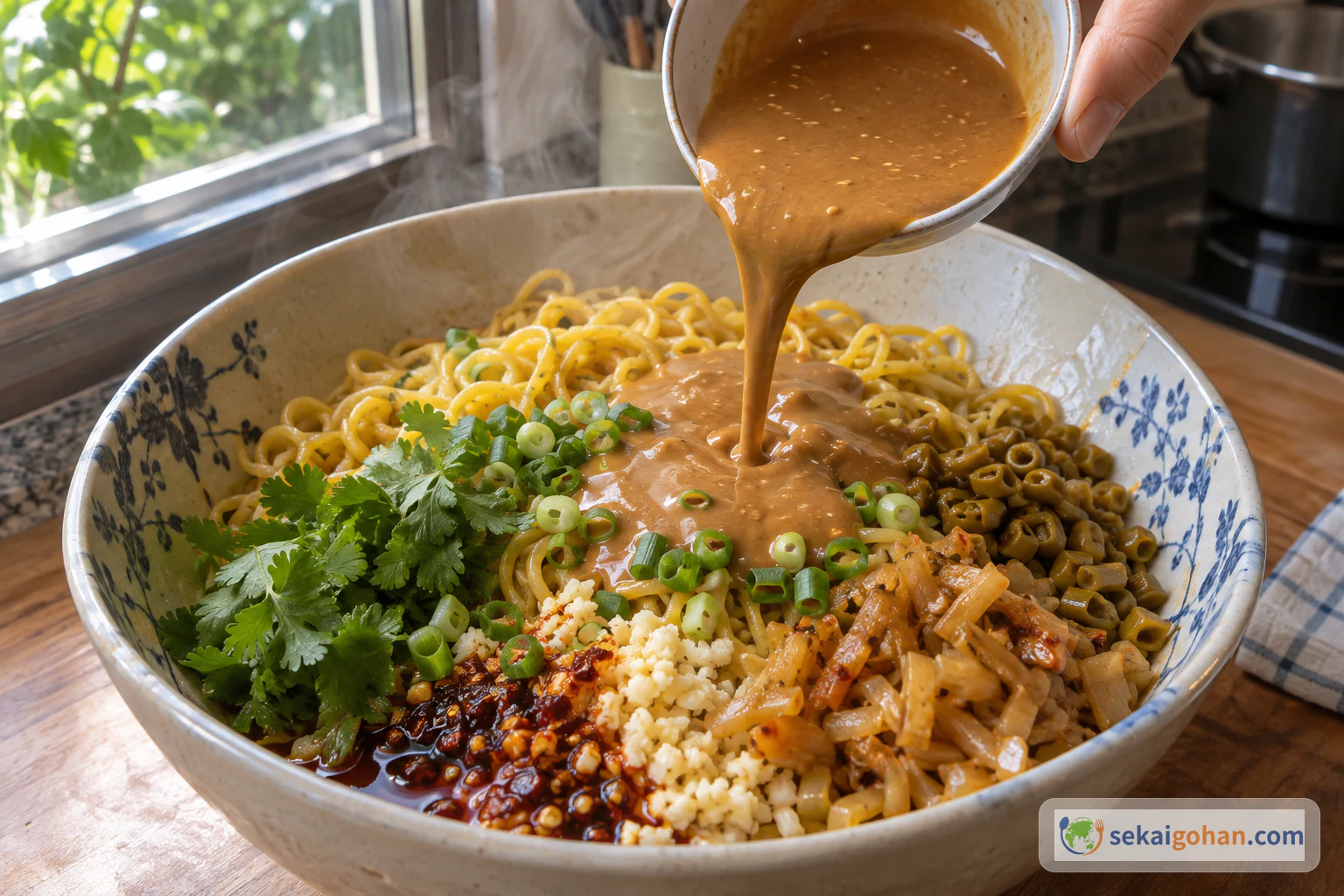
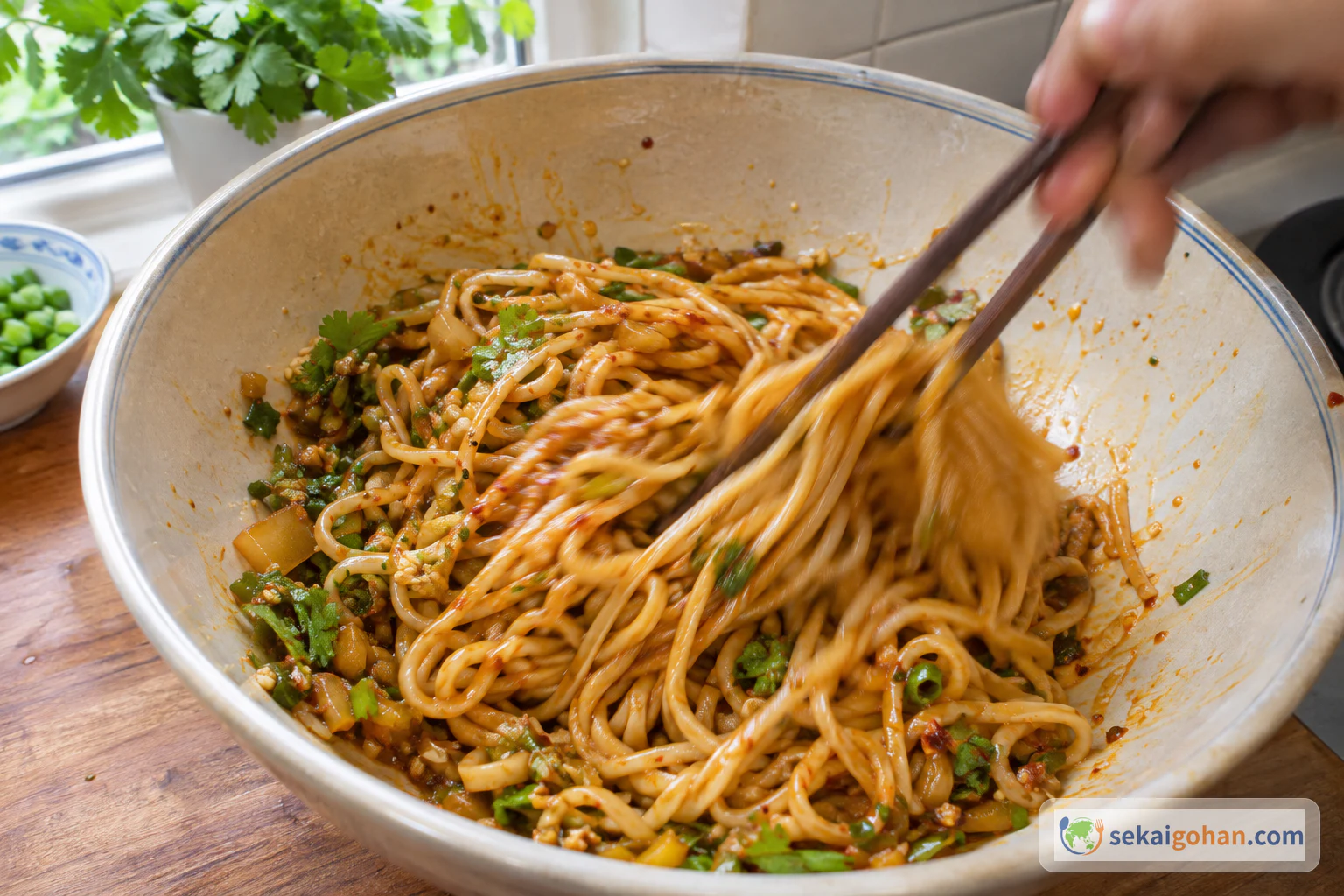
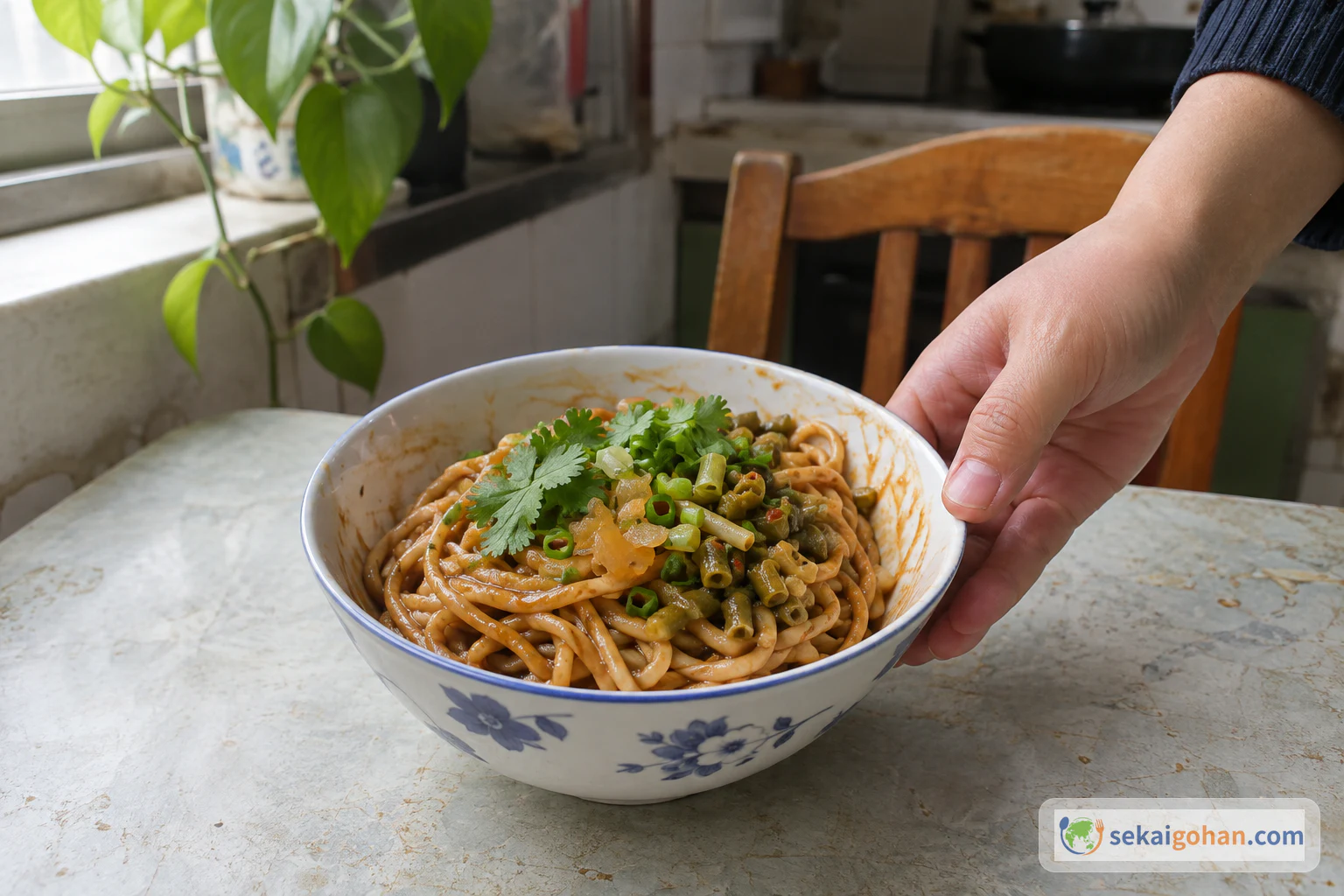
The noodles come out of the pot steaming and springy. You give the colander a hard shake and slick the strands with a little sesame oil. Then a thick, dark sesame sauce goes on top with a handful of chopped pickles, garlic, cilantro and scallion, and you toss everything fast so the sauce clings while the noodles are still hot. That is re gan mian, Wuhan's hot dry noodles. It is a bowl of chewy alkaline noodles dressed in toasted sesame paste and soy, with no broth. It tastes nutty, salty and a little sweet, with sharp bits of pickle and the bite of raw garlic running through it.
A Wuhan Breakfast Bowl Dressed in Sesame
Hot dry noodles belong to Wuhan, the capital of Hubei province, and they are a morning food. In Hubei a bowl of re gan mian is a breakfast choice, and the dish holds a central place in Wuhan's breakfast culture. When the city lists its ten famous snacks, hot dry noodles come first. People treat the dish as a symbol of Wuhan.
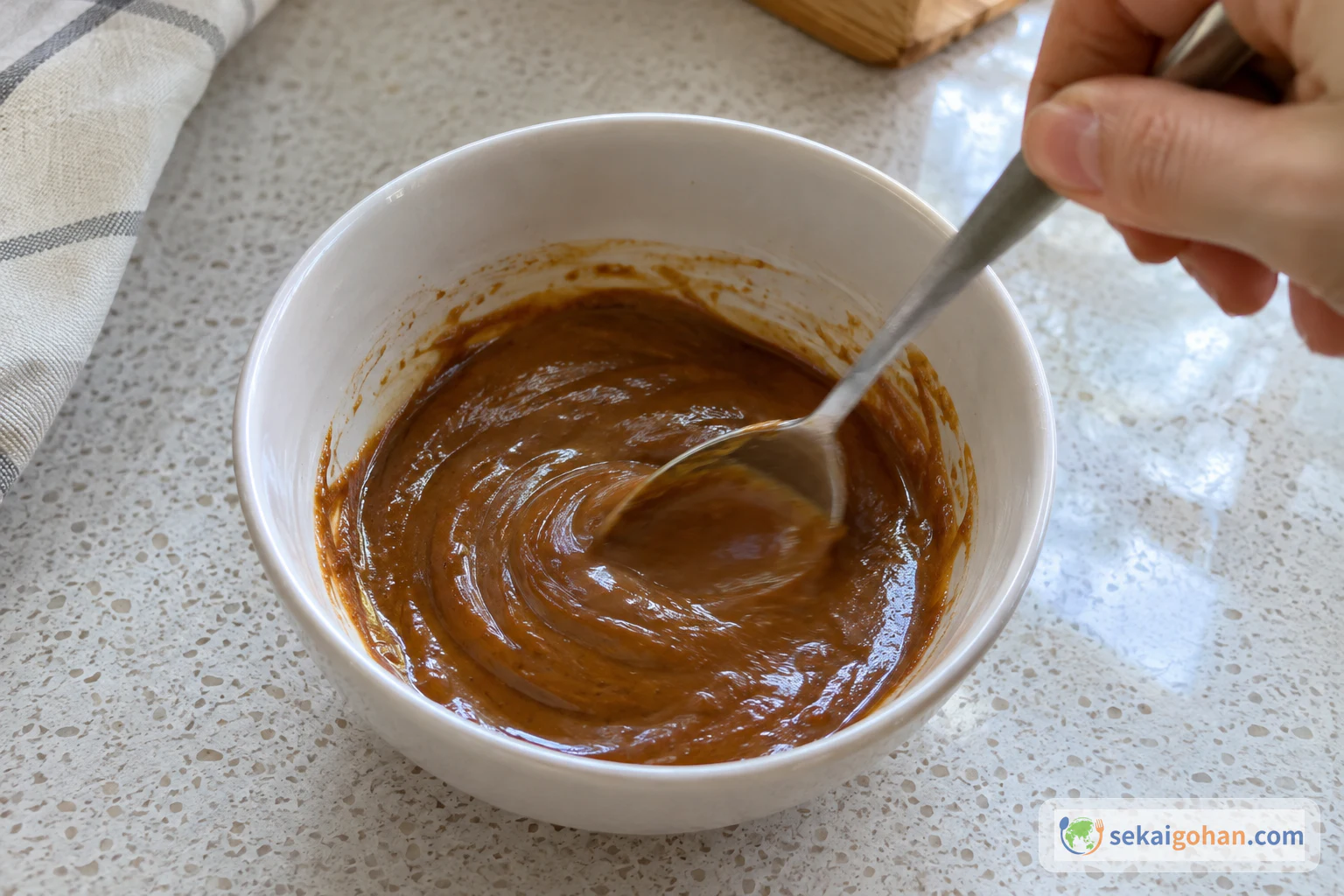
The bowl itself is built from a short list: alkaline noodles, sesame paste, sesame oil, soy sauce, vinegar, chili oil, scallion and chopped pickles. What sets it apart is the way those parts meet. The noodles are dressed rather than sunk in soup, and the toss happens fast, while the strands are hot enough to loosen the paste so it coats every strand.
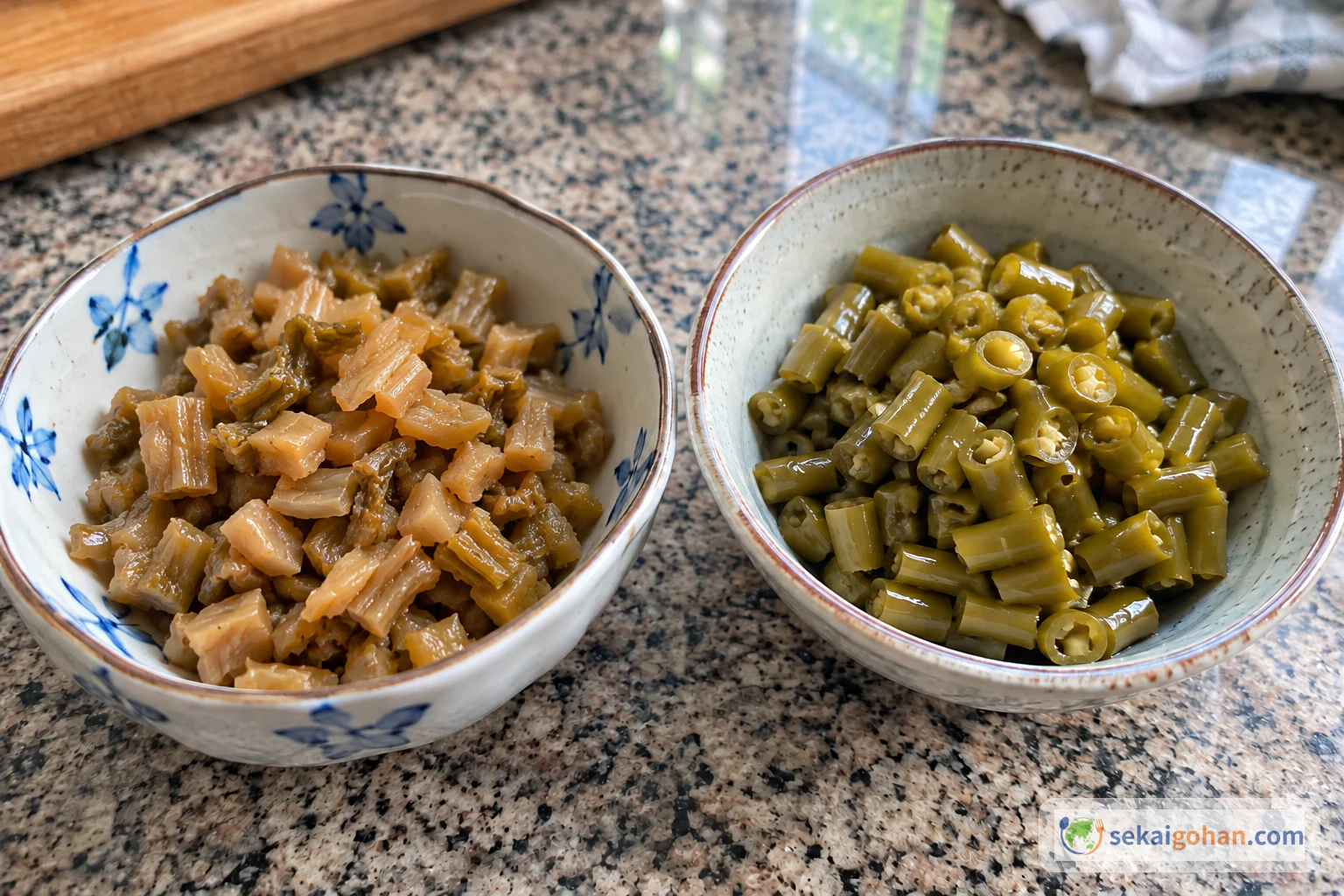
热干面 (rè gān miàn, often written reganmian) translates directly as "hot dry noodles". Hot means the bowl is served straight from the pot. Dry means there is no broth, only sauce. The two pickles in this bowl also have Chinese names worth knowing when you shop: 榨菜 (zha cai), preserved mustard stems, and 酸豆角 (suan dou jiao), pickled long beans.
Its neighbours
Sesame paste and chili oil also turn up in other noodle dishes from China, and that makes the bowls easy to confuse. Sichuan's dandan mian is a different dish, built on Sichuan pepper, chili and a savoury pork topping. Lo mein is a separate family of sauce-tossed noodles. Shaanxi's biangbiang noodles are wide, hand-pulled ribbons. Wuhan's bowl has no meat at all. Its character comes from springy alkaline noodles and toasted sesame paste, with pickles to cut through.
Wuhan tells more than one story about who first made hot dry noodles. The stories point to different people and different shops, and which one is right is not settled.
Ingredients (serves 2)
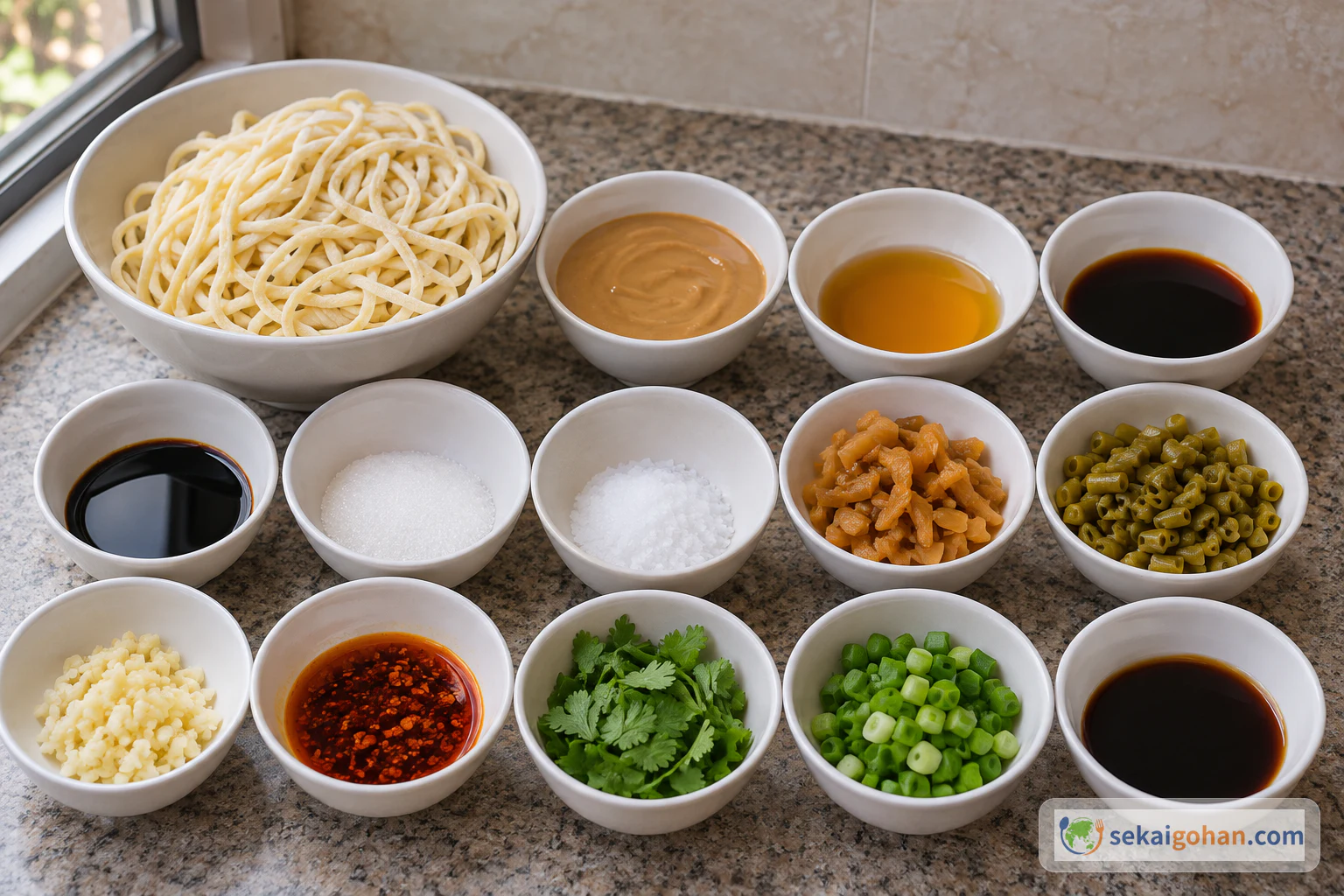
This dish contains sesame (the paste and the oil) and soy (both soy sauces). The noodles are made from wheat. Check the allergen labels on the noodles, pickles, chili oil, vinegar and soy sauces, because ingredients differ from product to product.
Equipment
- A pot for boiling the noodles
- A colander
- A small bowl and a spoon for the sauce
- A large mixing bowl for tossing the noodles
- Chopsticks or cooking chopsticks
- A knife and cutting board for the pickles and herbs
Choosing the Noodles, the Paste and the Pickles
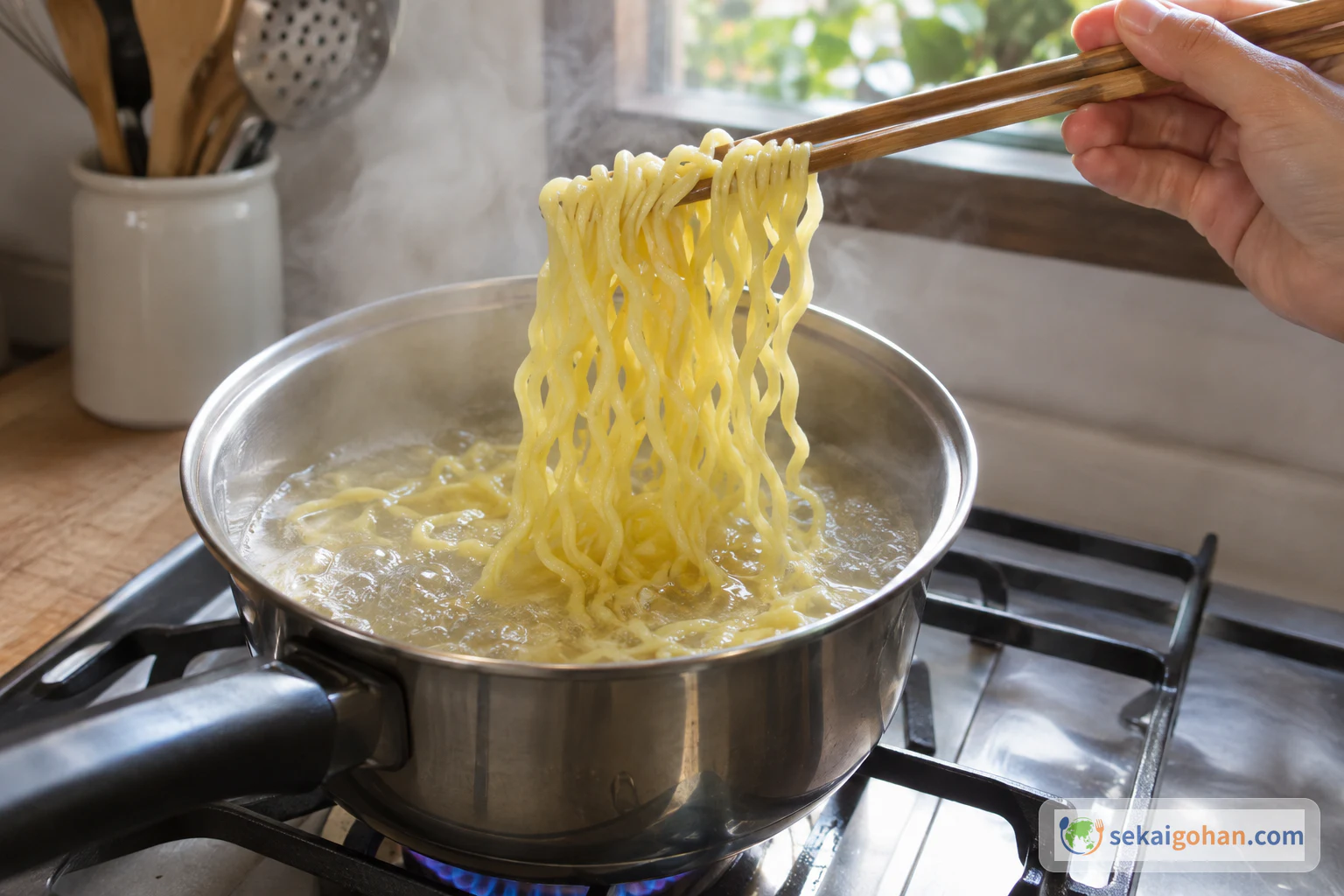
The noodle decides the dish. You need fresh alkaline noodles, and the easiest kind to find is fresh ramen, which is an alkaline noodle and is sold at Asian grocery stores. Read the pack for "alkaline" or 碱水 (alkaline water). The alkali gives the strands their spring and their faint yellow colour, and it lets them stay chewy under a heavy sauce. Fresh ramen and yakisoba noodles are different products, so check what you pick up.
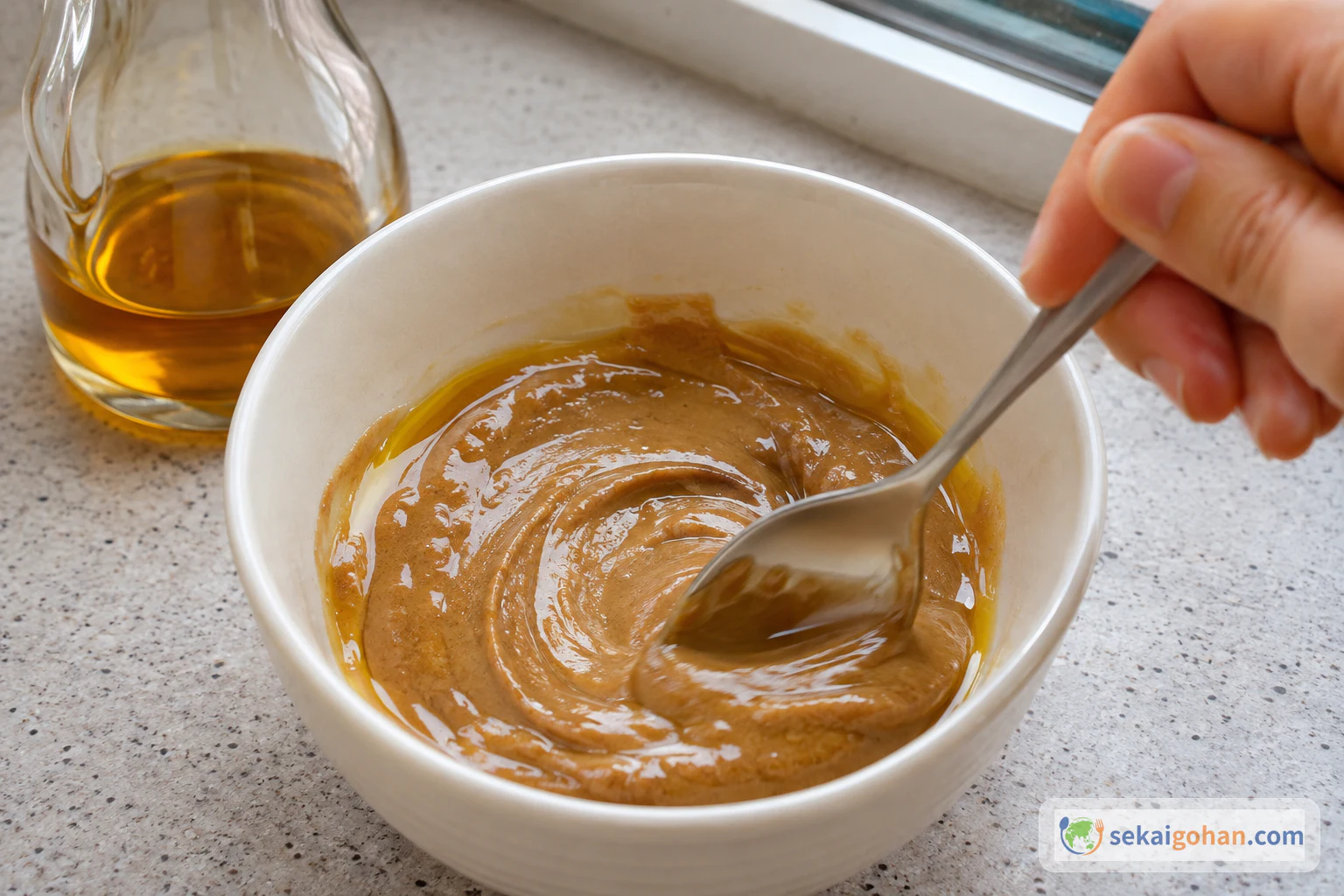
For the sauce, buy Chinese sesame paste, which is made from toasted sesame seeds. Its roasted, almost smoky depth is the taste of the bowl. Tahini is a different paste and gives a different result. Buy both Chinese soy sauces. Light soy (生抽) does most of the seasoning, and dark soy (老抽) adds colour and depth. Japanese soy sauce has a different flavour from Chinese light soy, so keep the Chinese bottles for this bowl.
Zha cai comes in small packs or jars at Chinese grocers. It is preserved mustard stem, crunchy and salty. Pickled long beans are sold as suan dou jiao or 酸豆角 and are sour and soft-crisp. Look for both by those names, because together they give the bowl its sharp, salty lift. For the chili oil and black vinegar, any Chinese bottle you like works.
Method
Make the sauce and chop every topping before the noodles go in the water. Once the noodles drain, the remaining work is a fast, continuous run: shake, oil, top, toss and serve. The bowl is ready in the few minutes after the pot boils, and speed at the end is what keeps it hot.
If raw garlic is too sharp for you, soak the minced garlic in 1 tablespoon hot water while you make the sauce, then add it with the toppings in step 7. This softens its bite.
When It Goes Wrong
| What you see | Why | What to do |
|---|---|---|
| The sauce sits on the noodles in lumps | It is too thick to spread | Next time, loosen it with warm water a few drops at a time until it falls in a ribbon |
| Soft, limp noodles that break as you toss | They cooked for the full pack time or longer | Take them out one minute before the pack time |
| The noodles stick together in a clump | They sat after draining, or skipped the oil | Toss with the reserved sesame oil as soon as they reach the bowl |
| The sauce turns thin and runs to the bottom of the bowl | Water stayed on the noodles | Shake the colander hard until it barely drips |
| The noodles have no spring and feel soft all through | They are not alkaline noodles | Buy fresh noodles labelled alkaline, such as fresh ramen |
| The bowl is lukewarm and the sauce stiff | The toss happened too slowly | Have every topping ready before boiling and toss the moment the oil is on |
Serving and Adjusting
At the table
In Wuhan this is a breakfast bowl, eaten right after it is tossed. Serve it the moment it is mixed, because the sesame sauce is loosest and coats best while the noodles are hot.
Ways to change it
- More or less heat. Chili oil is to taste. A spoonful turns the sauce red and the finish fiery, and a few drops just warm the sesame.
- More pickle. Both pickles can go above or below the amounts in the table. More zha cai makes the bowl saltier and crunchier. More long beans make it sourer.
- Gentler garlic. Soaking the minced garlic in hot water first keeps its aroma and takes the edge off its heat.
Frequently asked questions
Why do noodle shops in Wuhan cook the noodles twice?
Shops pre-cook the noodles quite firm, toss them with sesame oil and fan them until they are cool and dry. When an order comes in, they dip the noodles in boiling water for a few seconds to heat them and dress them right away. That lets a busy breakfast counter serve bowls in moments. At home, a single boil that stops one minute short of the pack time keeps the noodles chewy and is the simpler route.
Can I make the sauce ahead?
Yes. The sesame sauce can be made ahead. Stir it well before using, and loosen it with a few drops of warm water if it has thickened. Cook and toss the noodles only when you are ready to eat.
Can I use pickled radish instead of zha cai?
Pickled radish is one of the toppings the city's food guide lists for Wuhan bowls, alongside fermented long beans. This version uses zha cai and pickled long beans, and does not add pickled radish, so the balance of the bowl stays as written.