Deodeok Gui: A Root Roasted Twice, First in Oil, Then in Red Sauce
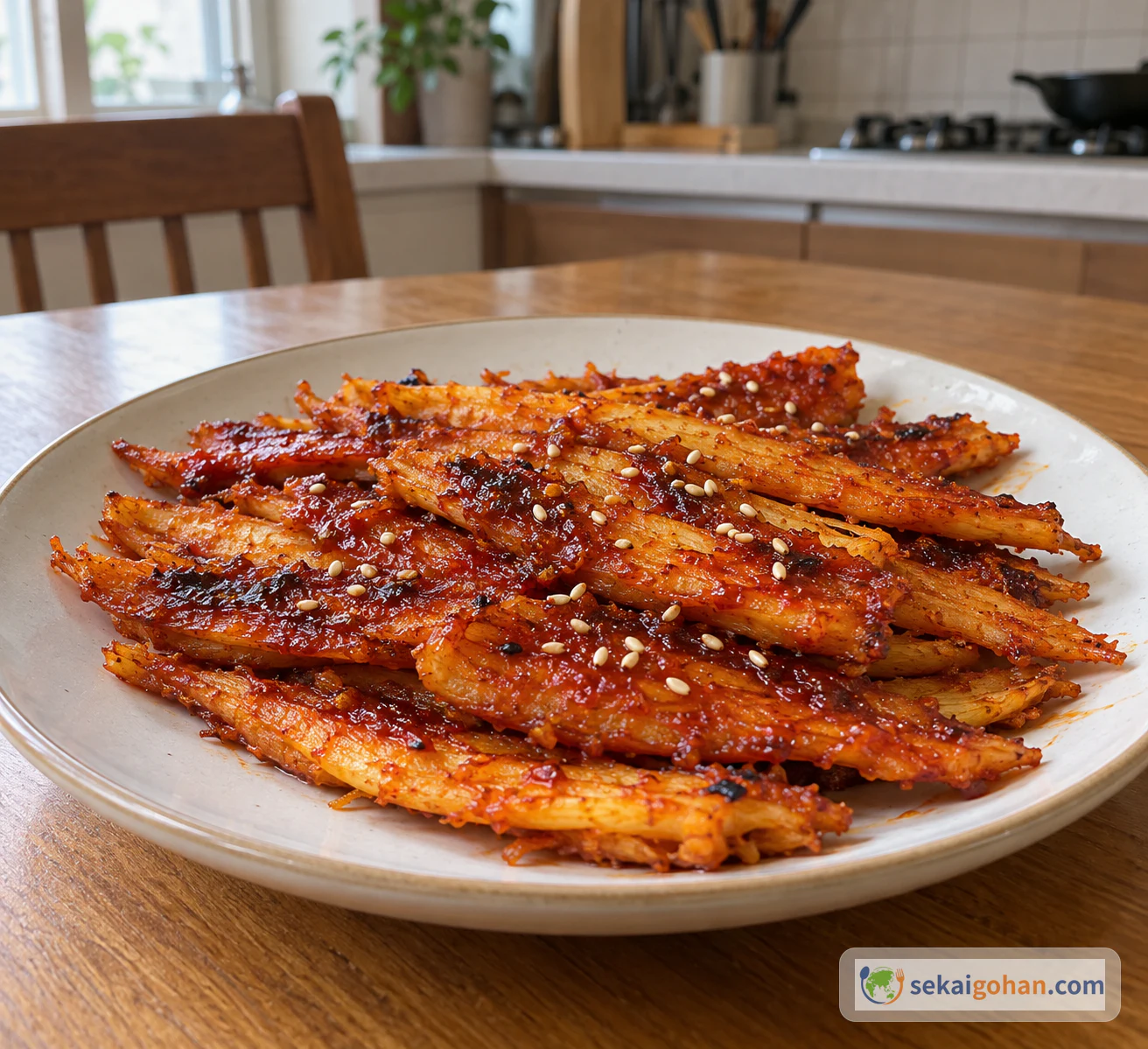
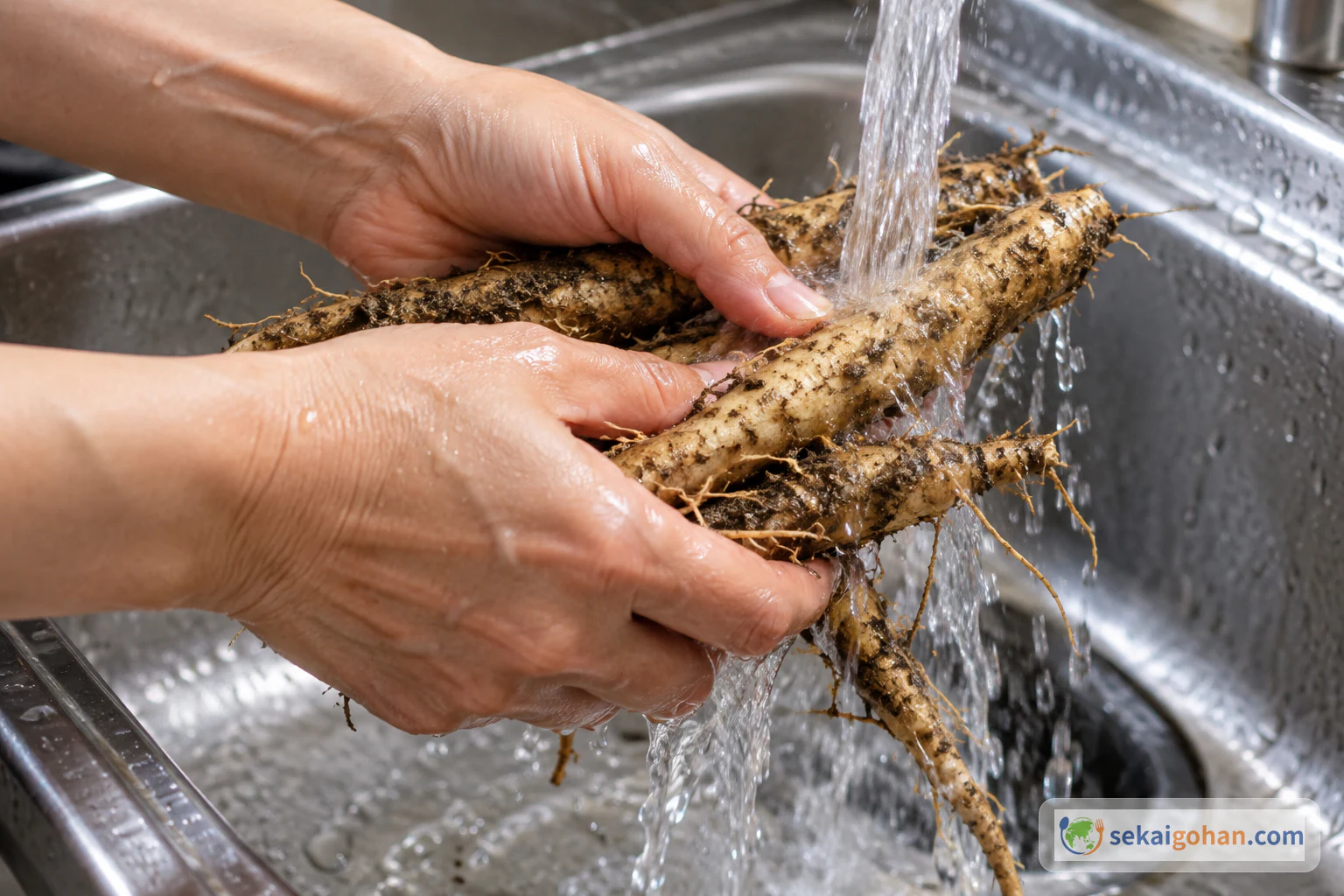
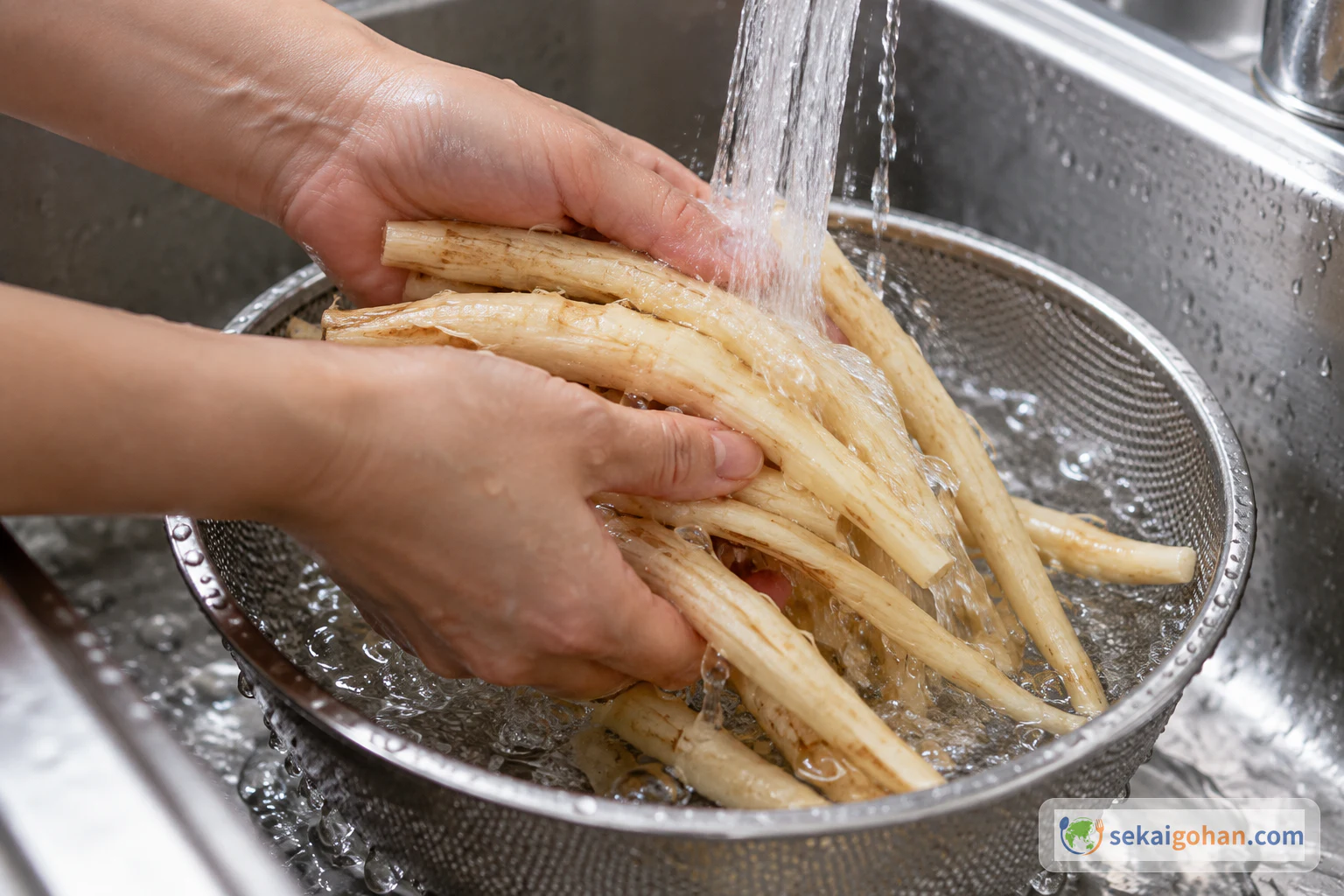
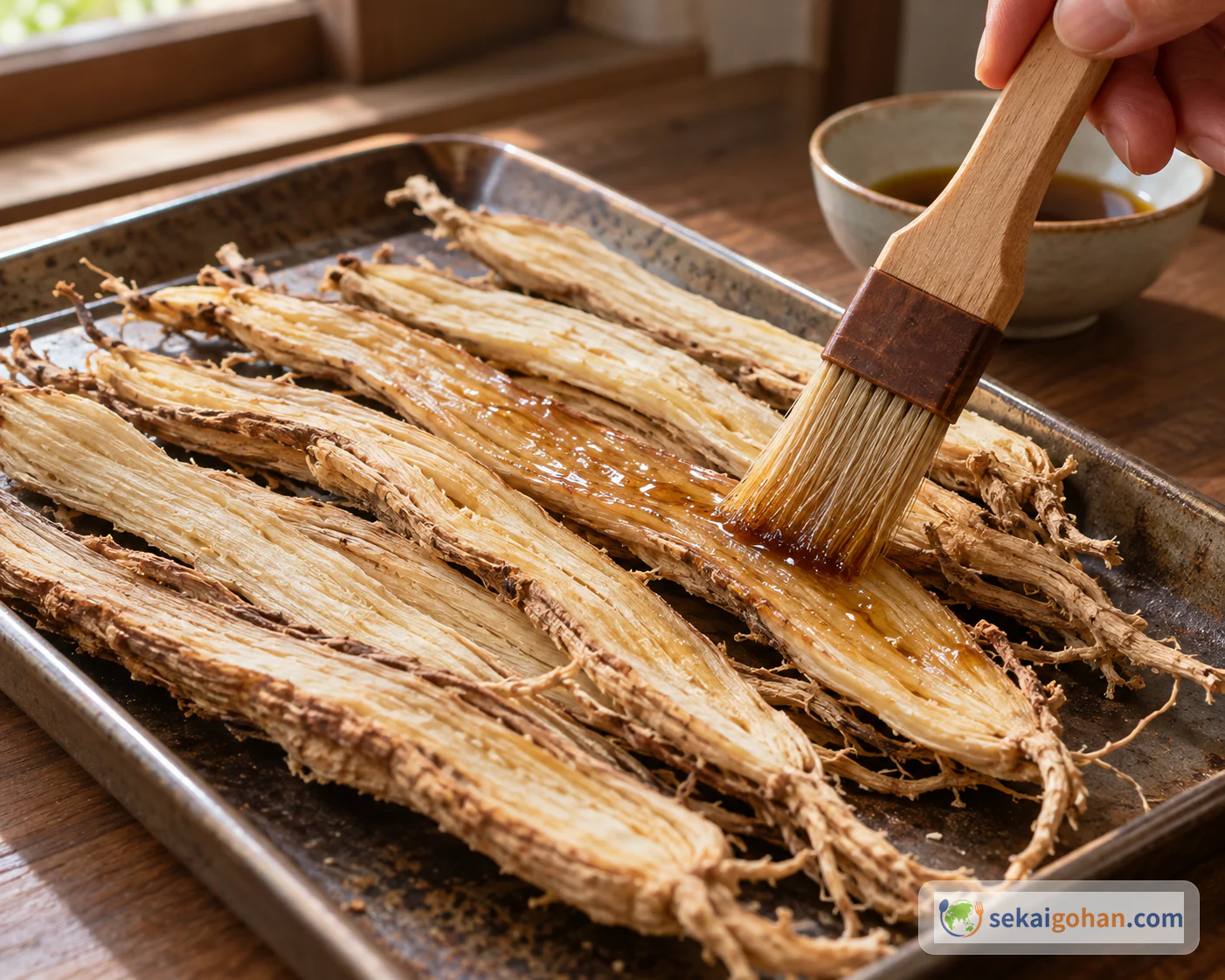
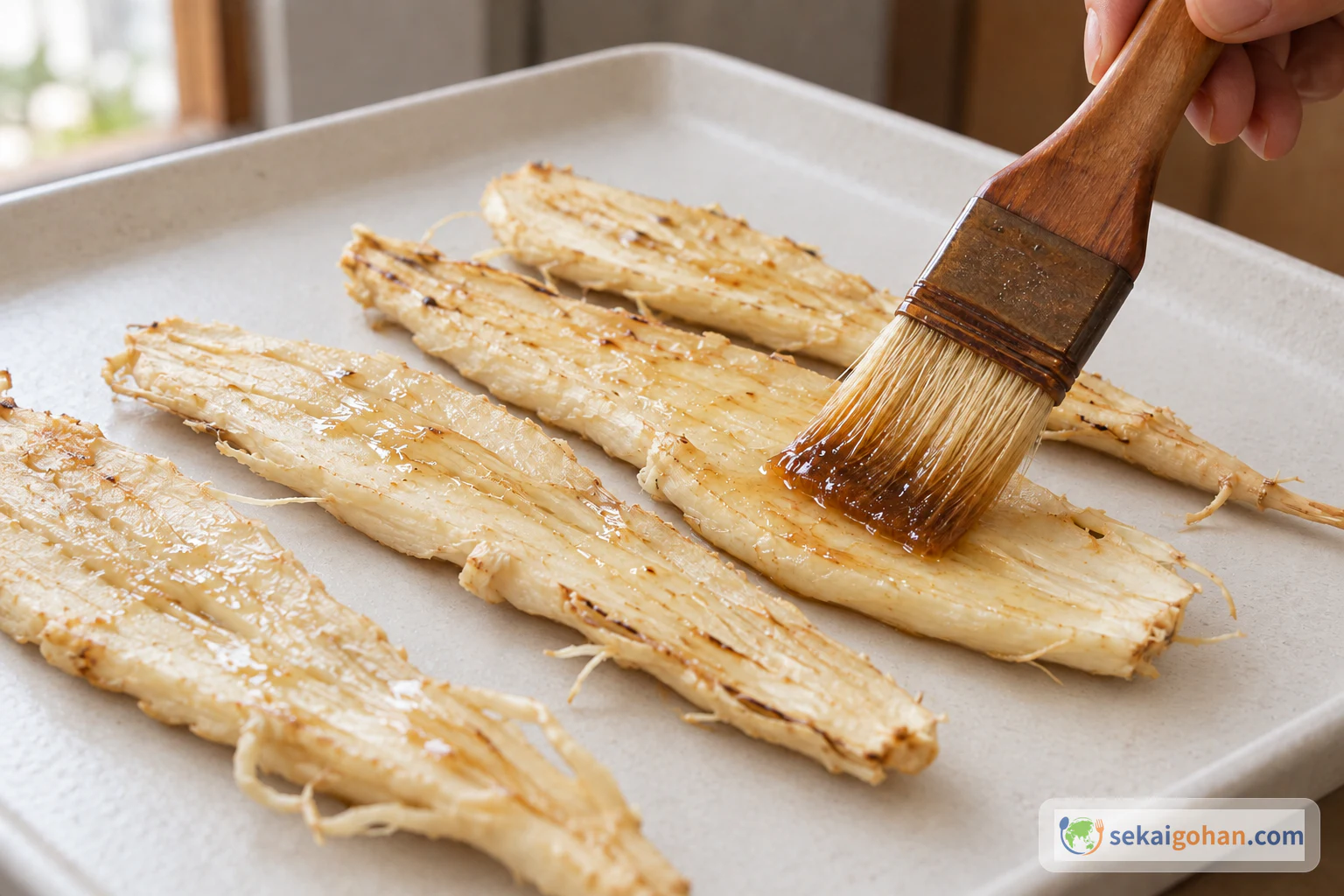
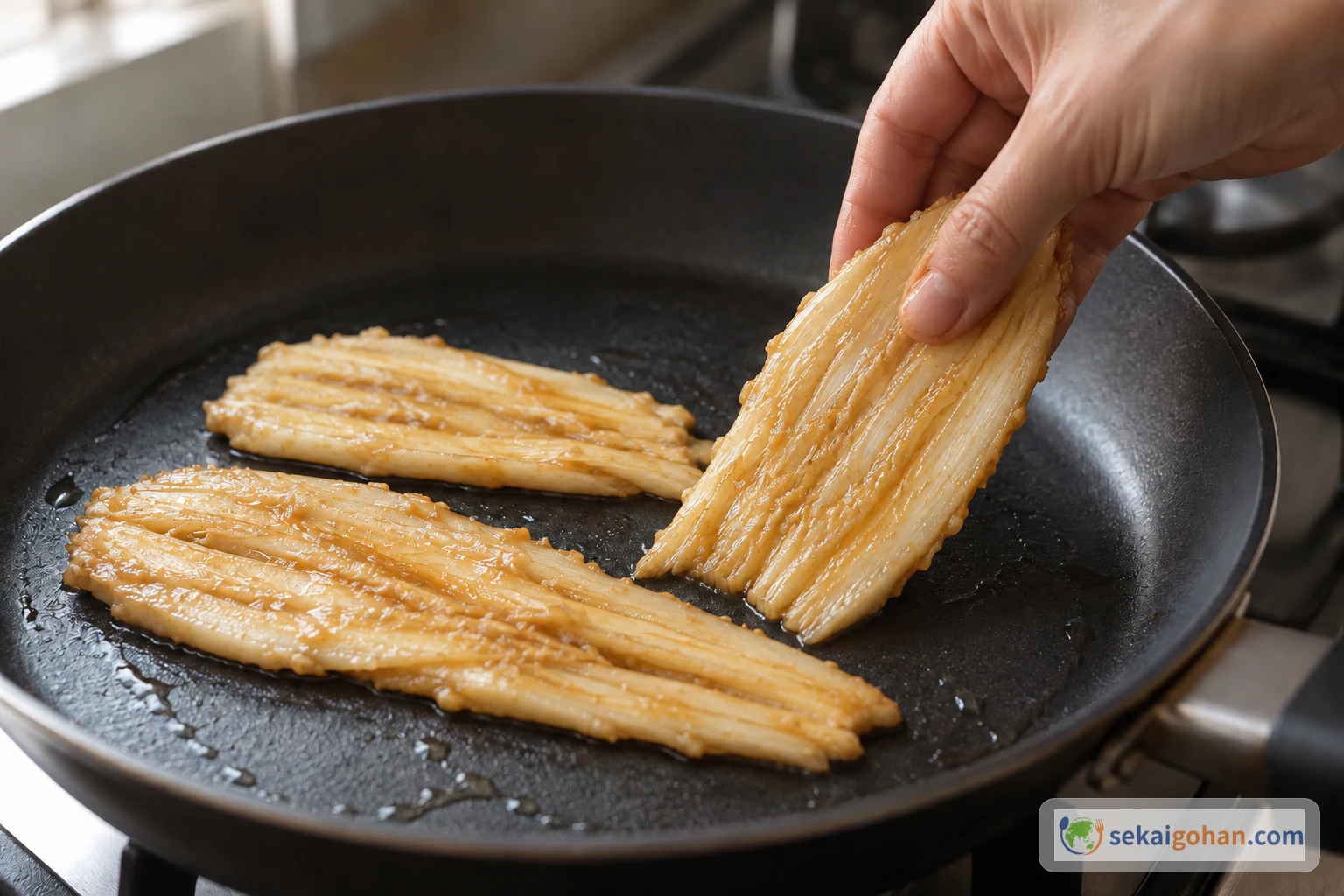
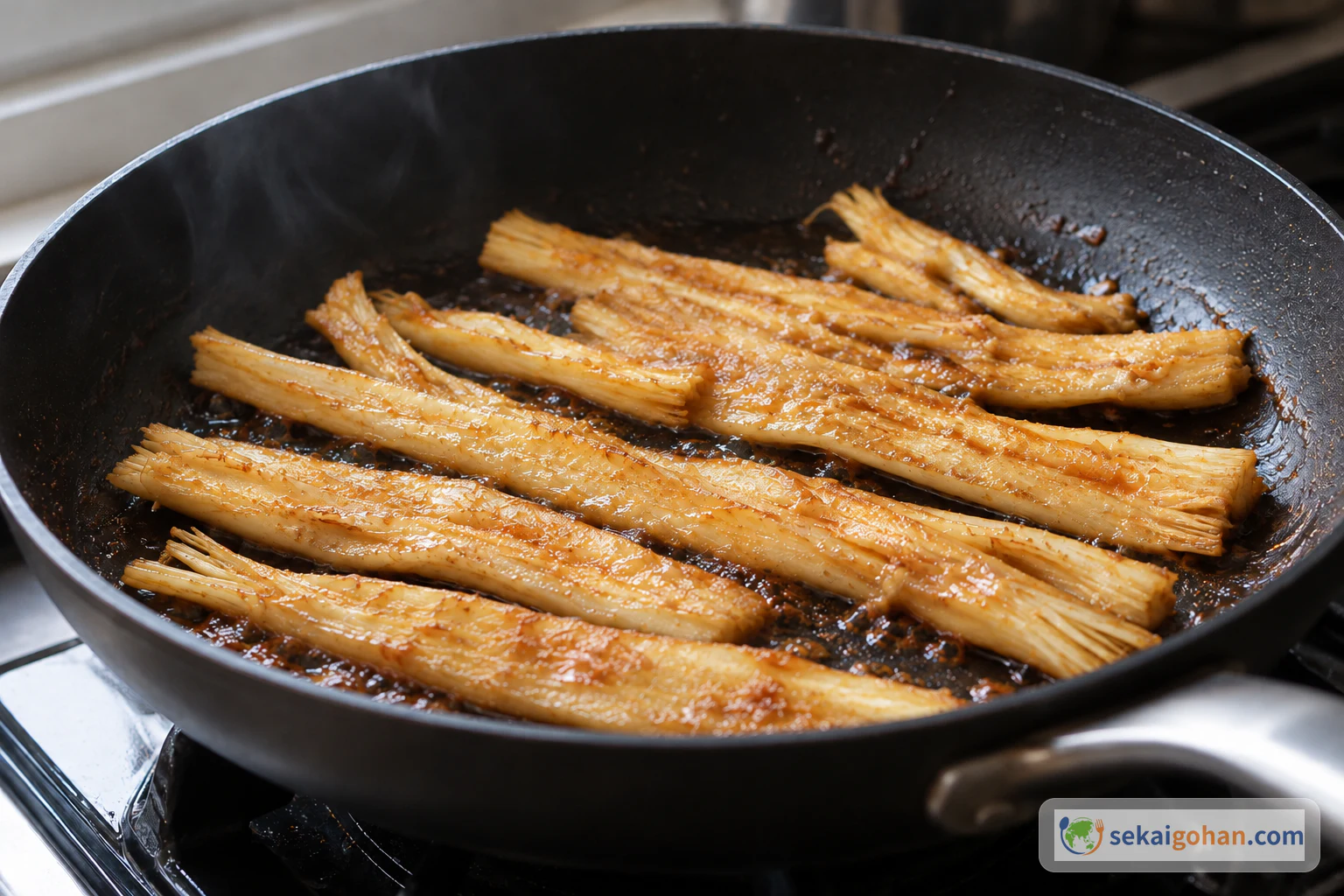
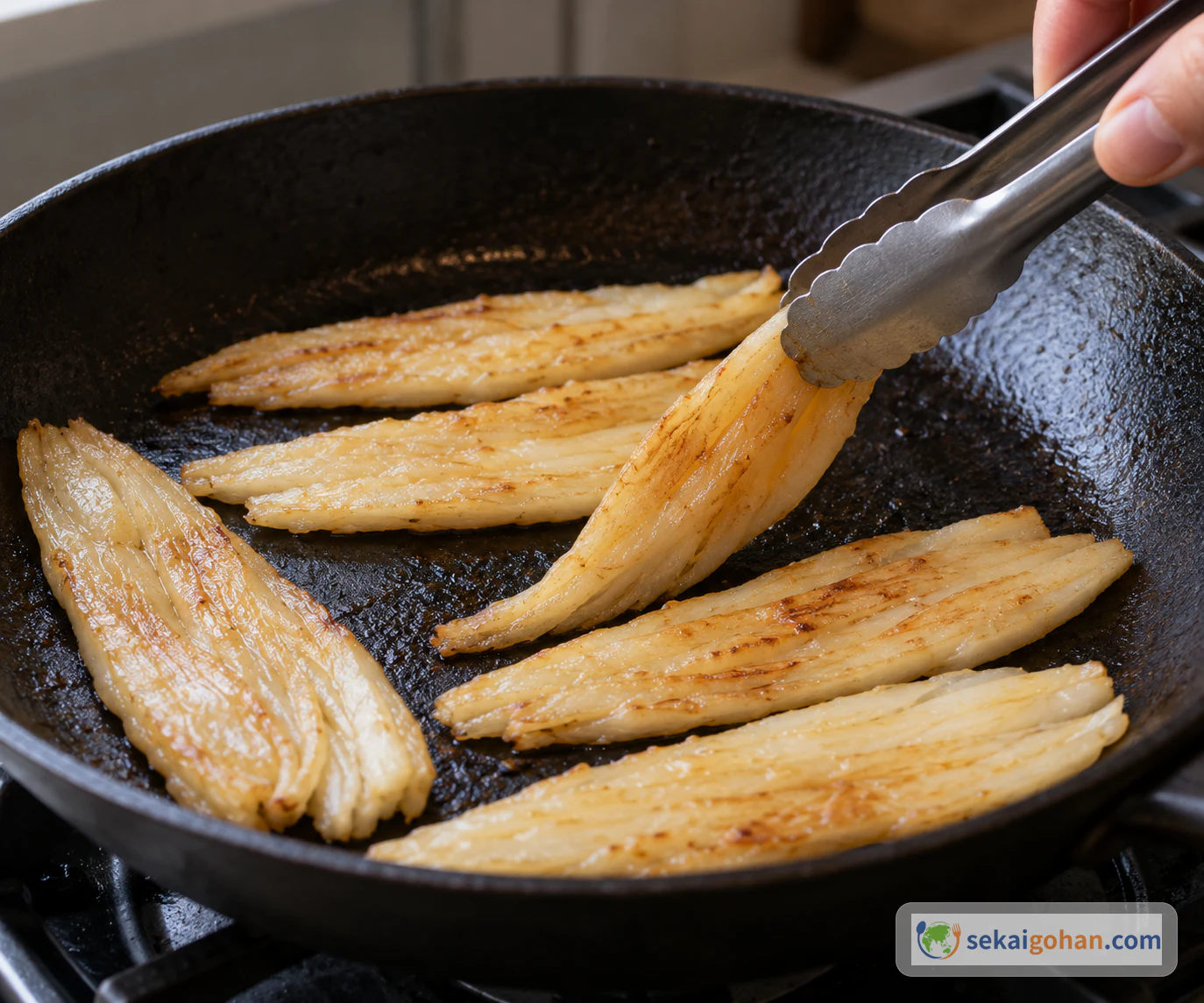
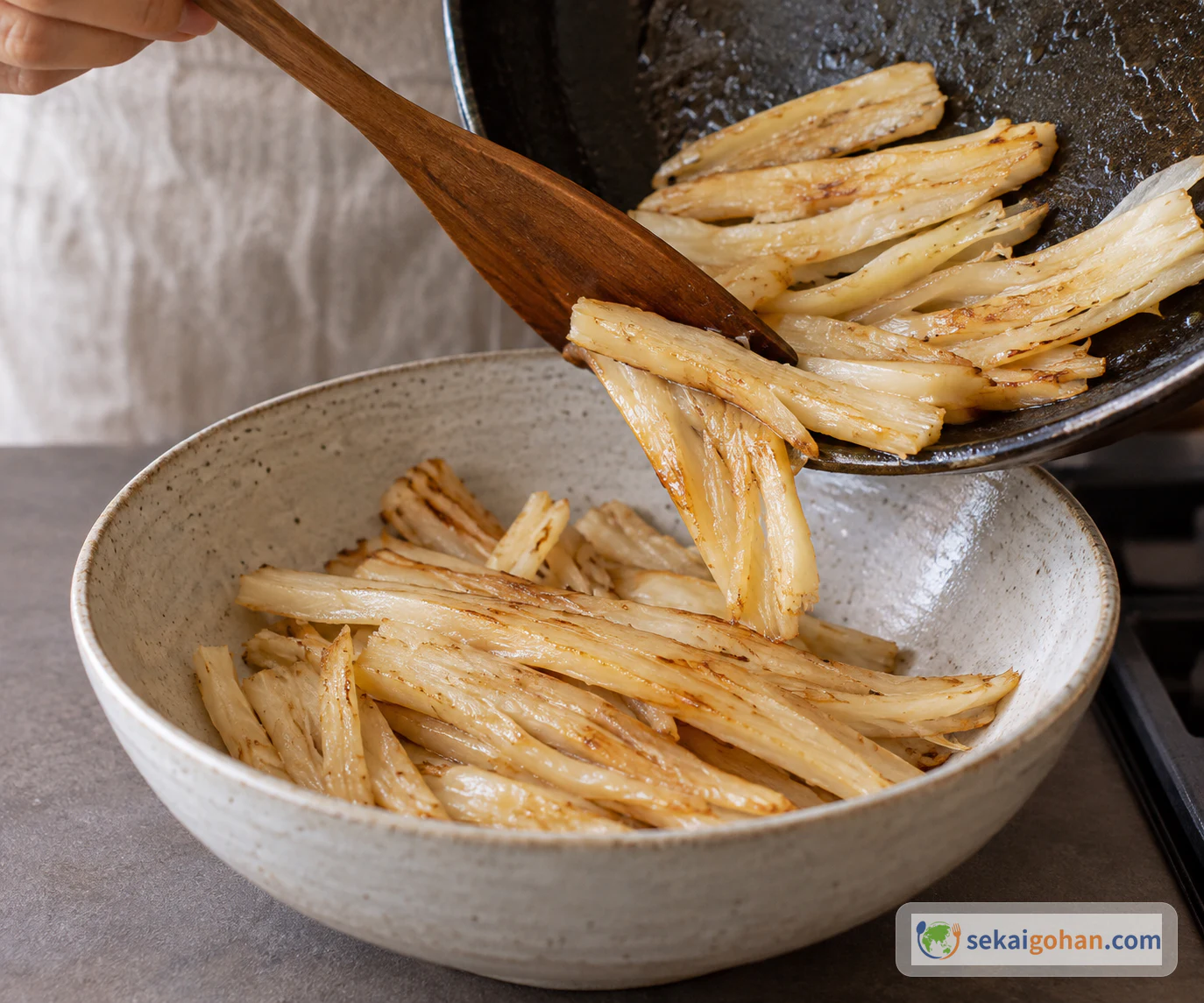
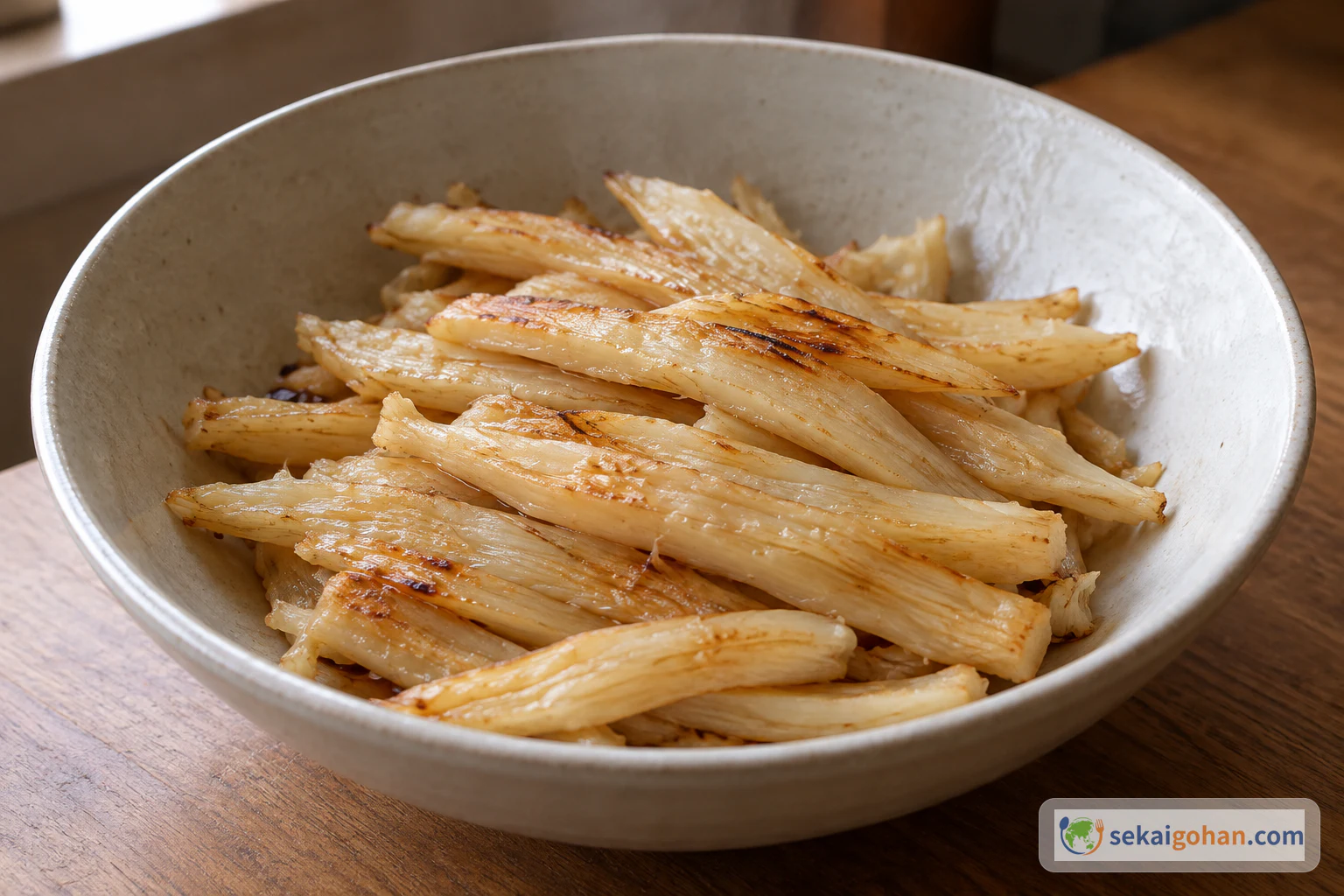
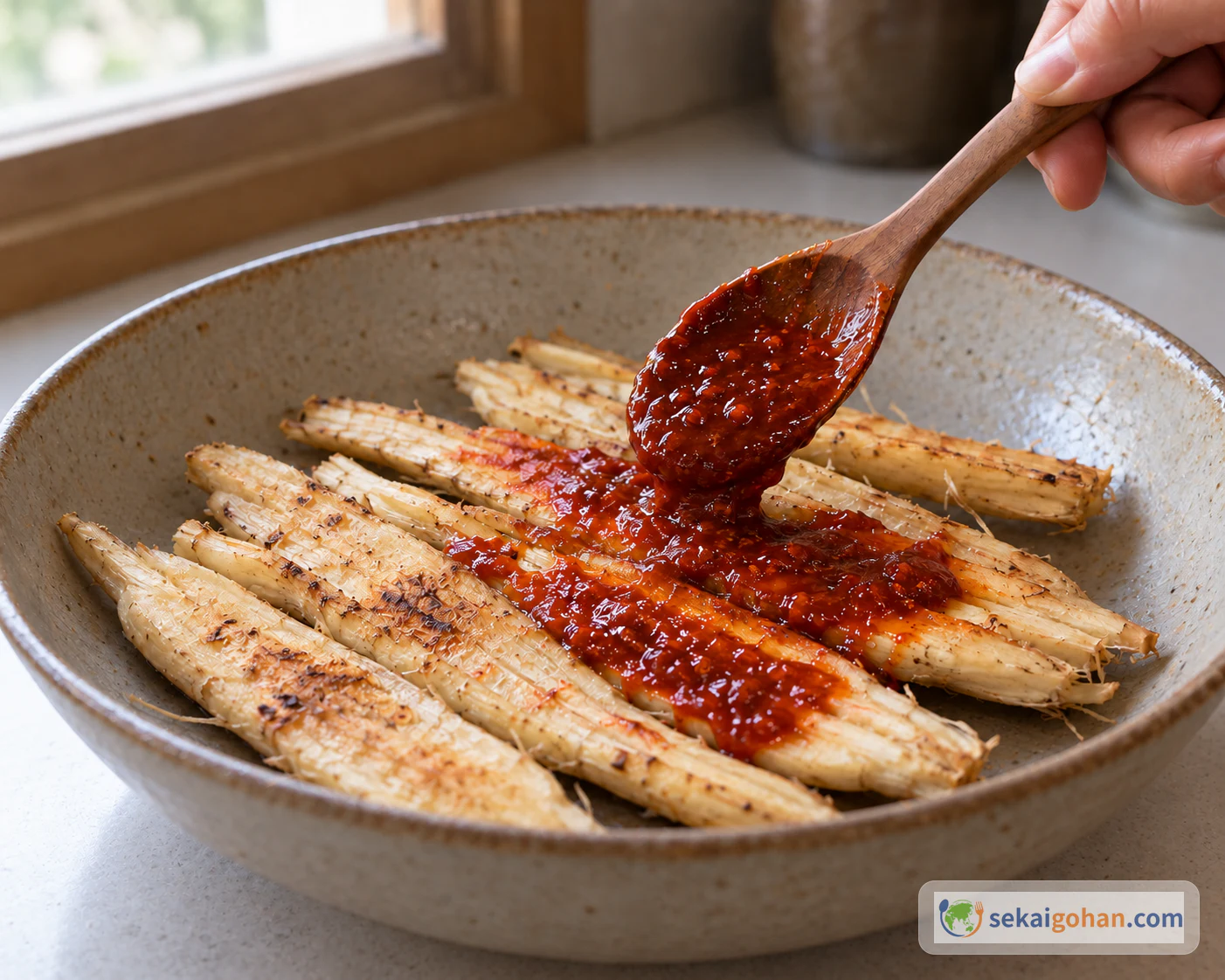
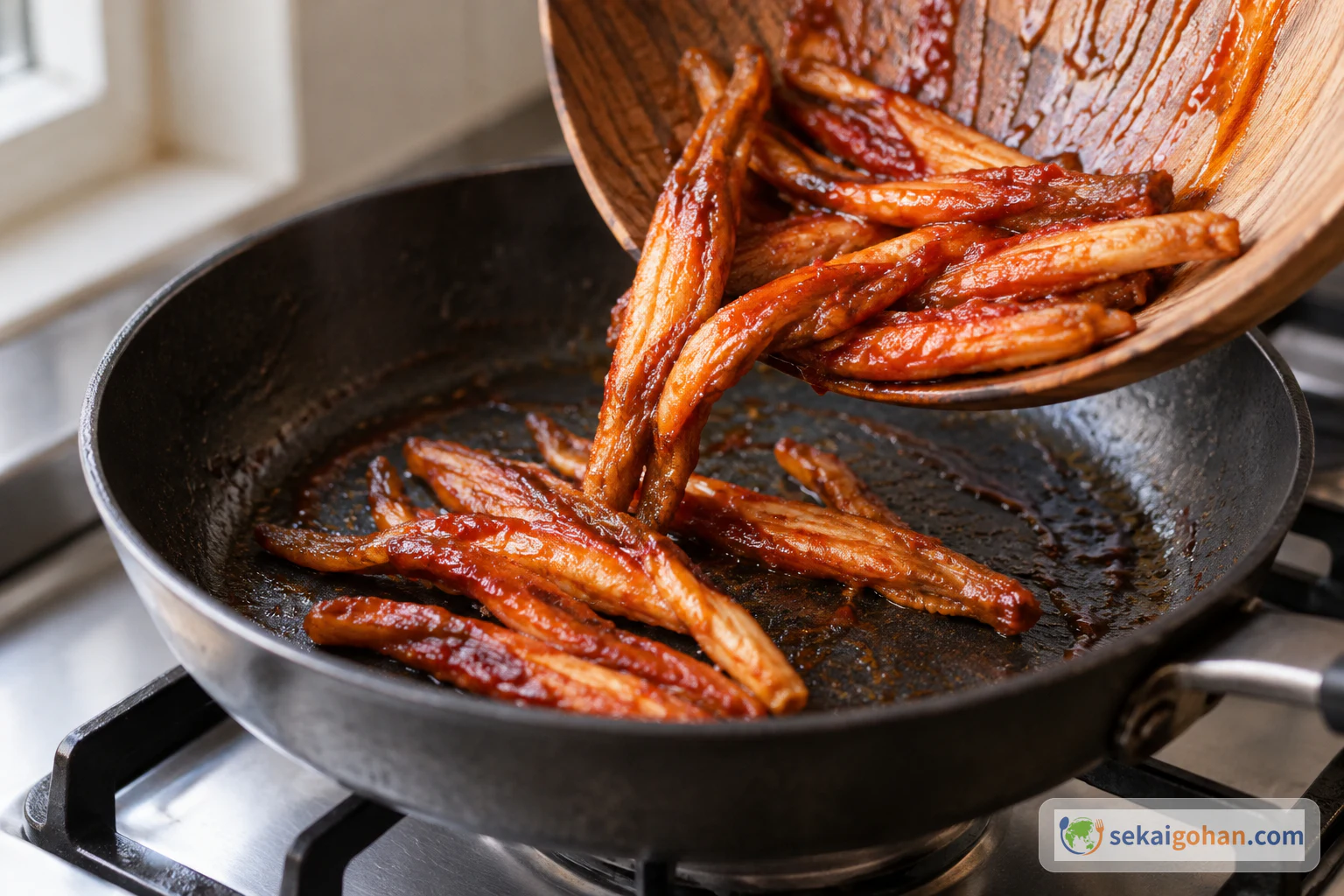
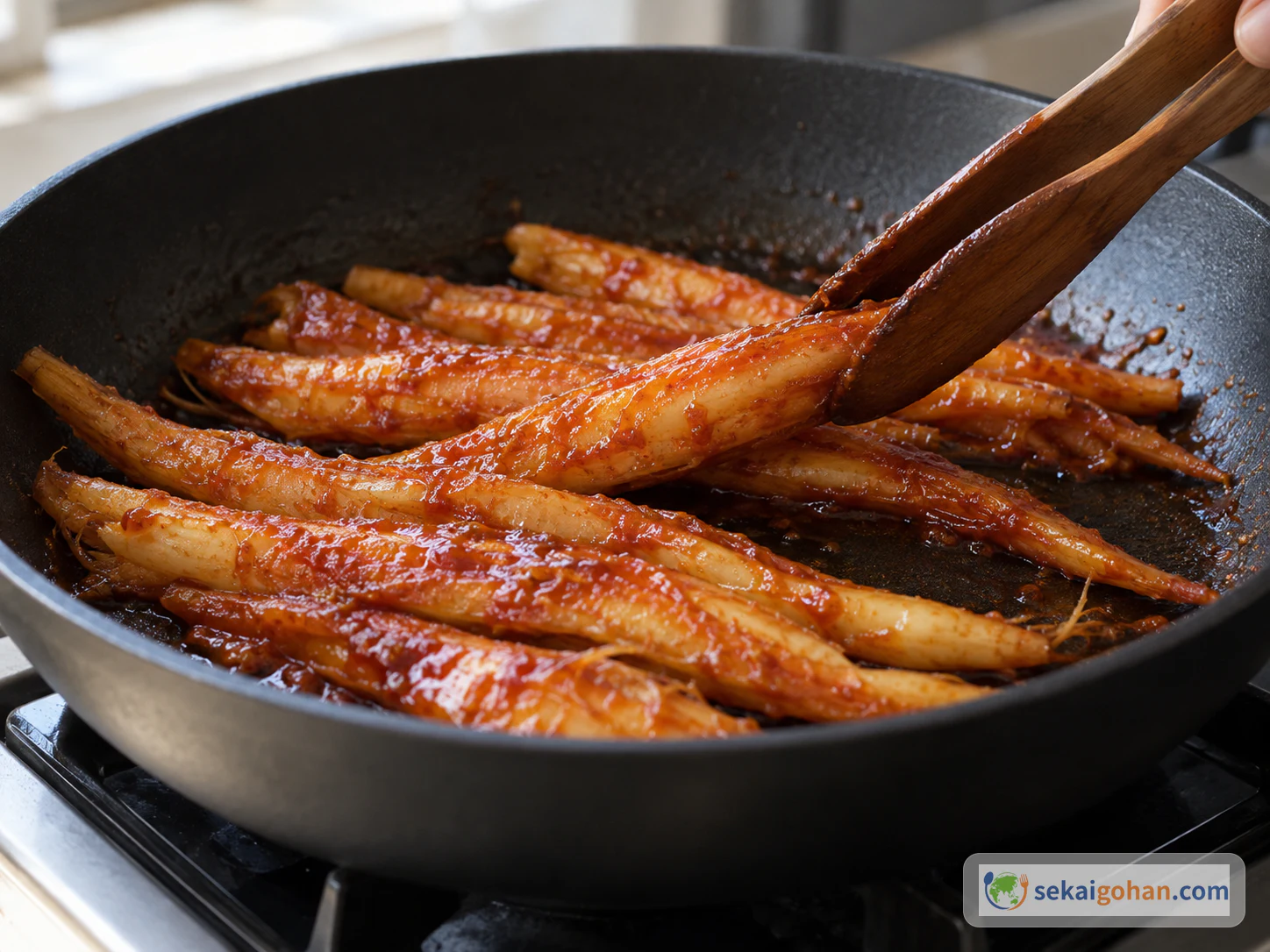
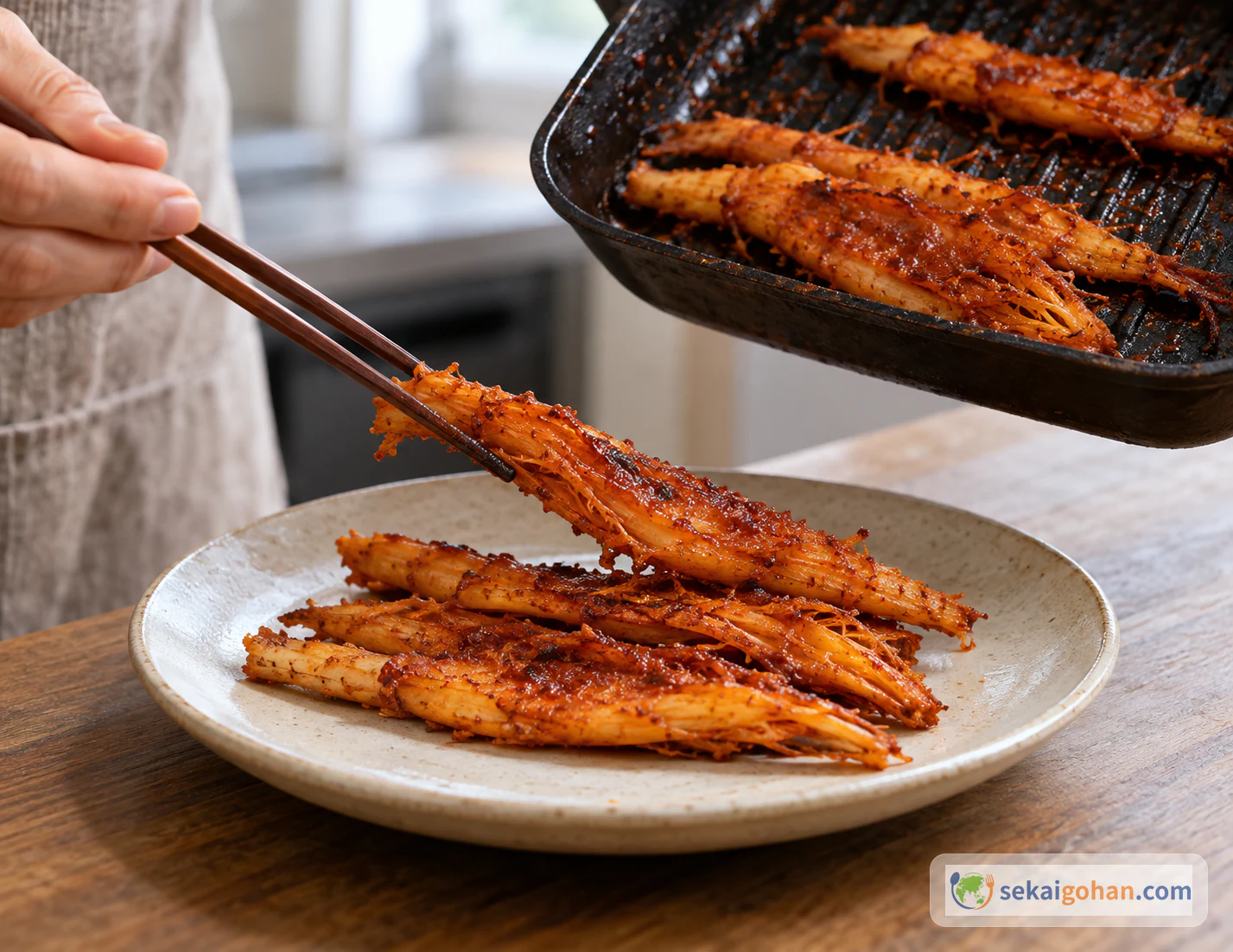
The roots are washed, blanched briefly, peeled, flattened and soaked in salt water. They are roasted once with a light yujang of sesame oil, perilla oil and soy sauce. Only then are they tossed in a red gochujang sauce and roasted a second time. Keep the two stages separate.
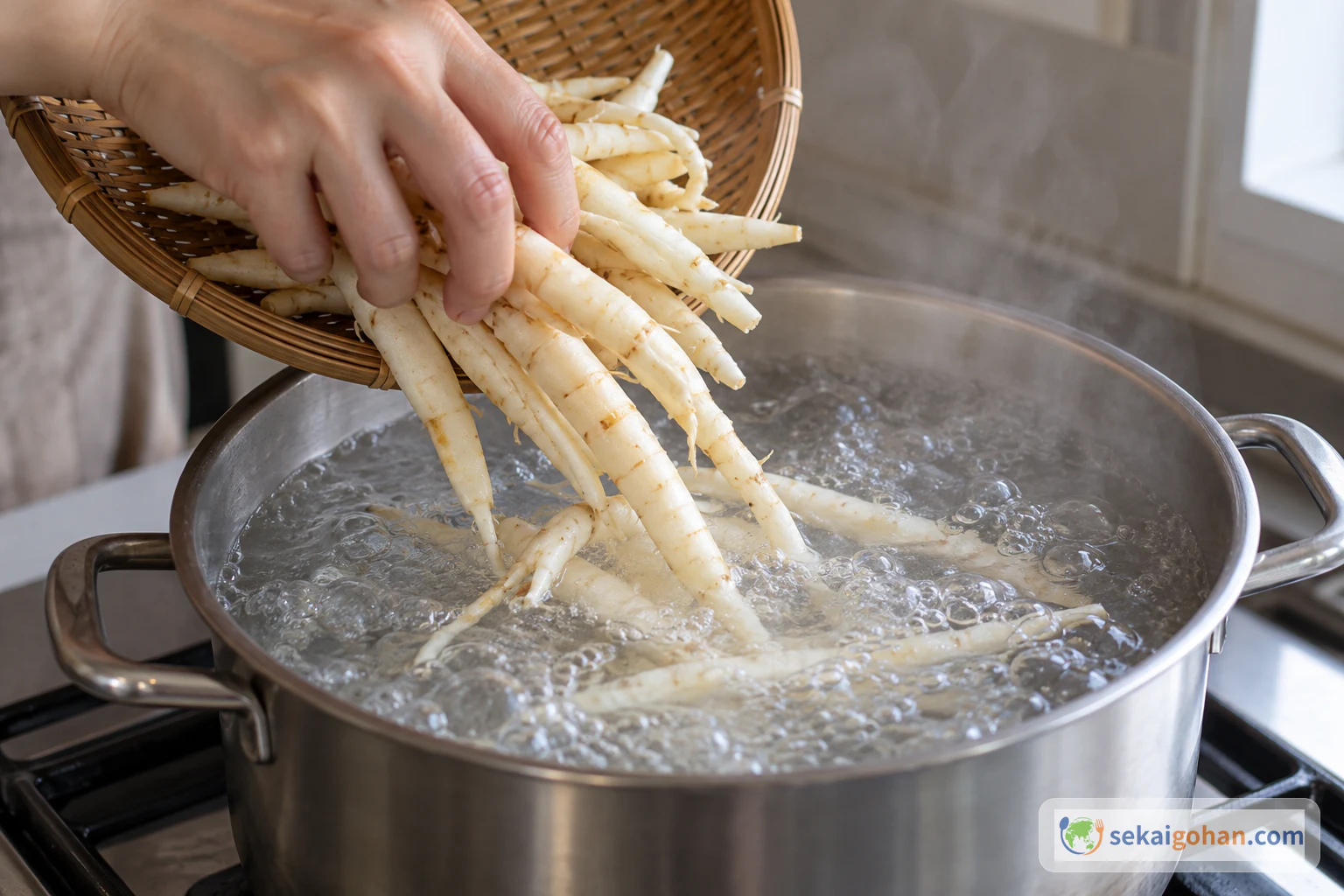
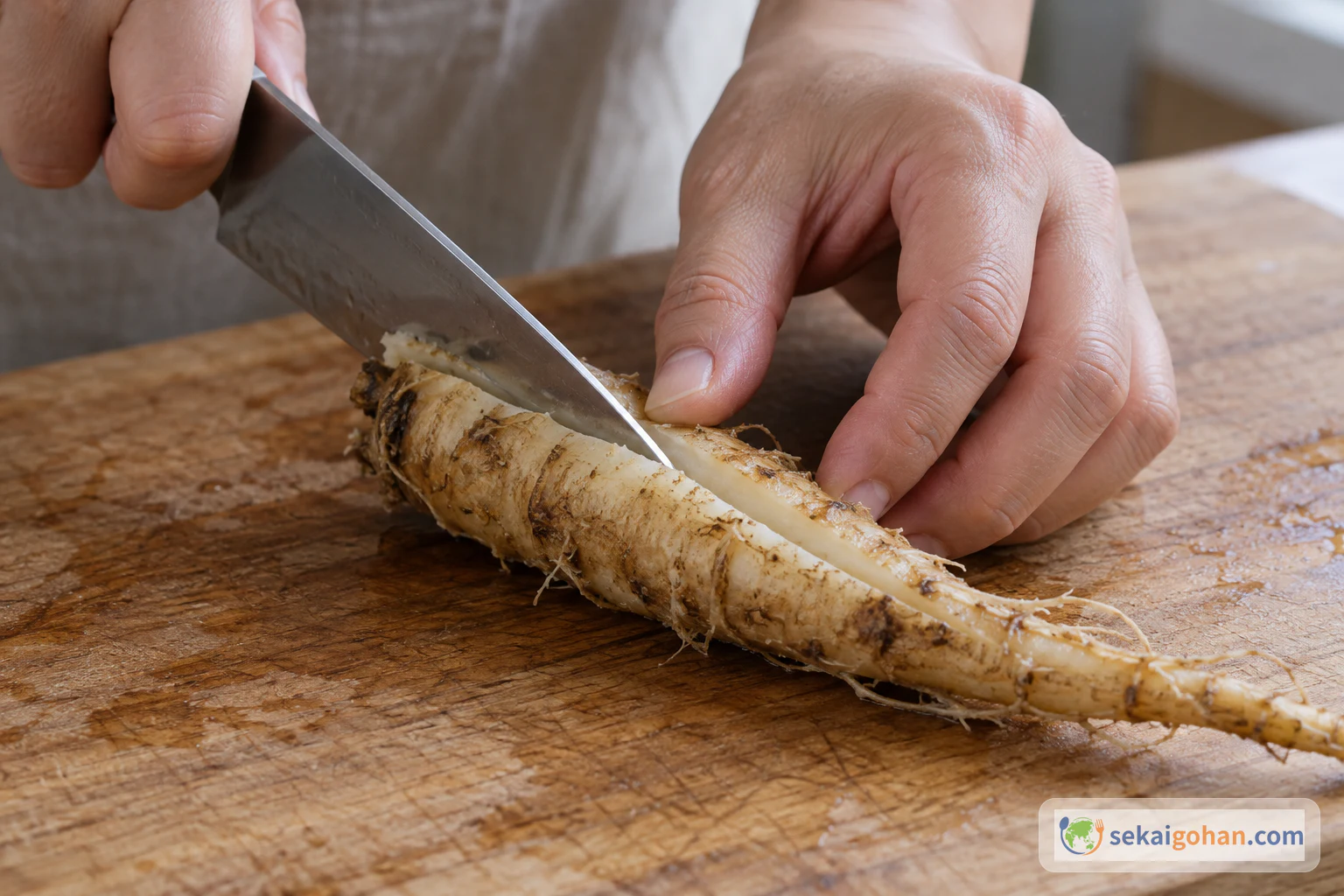
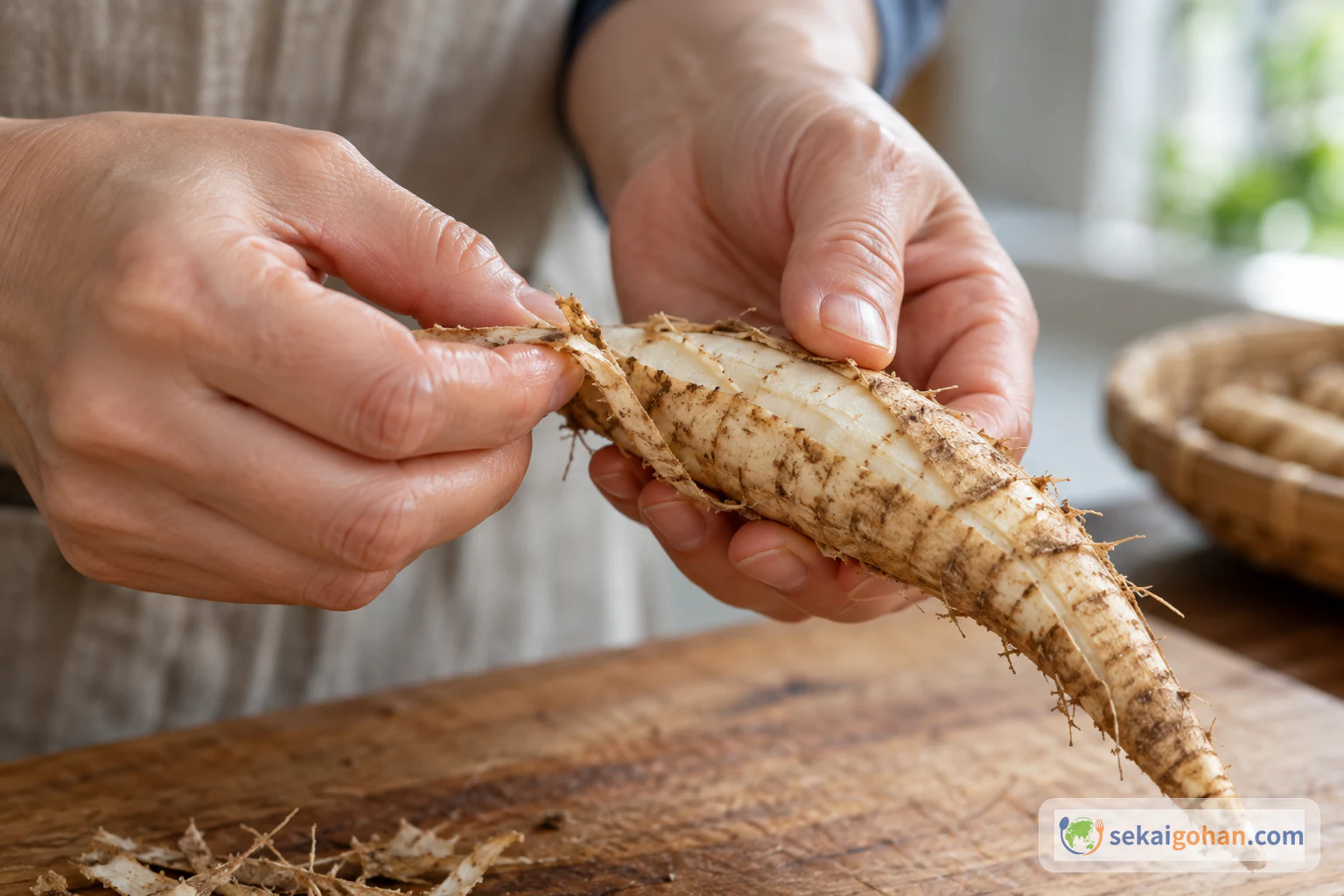
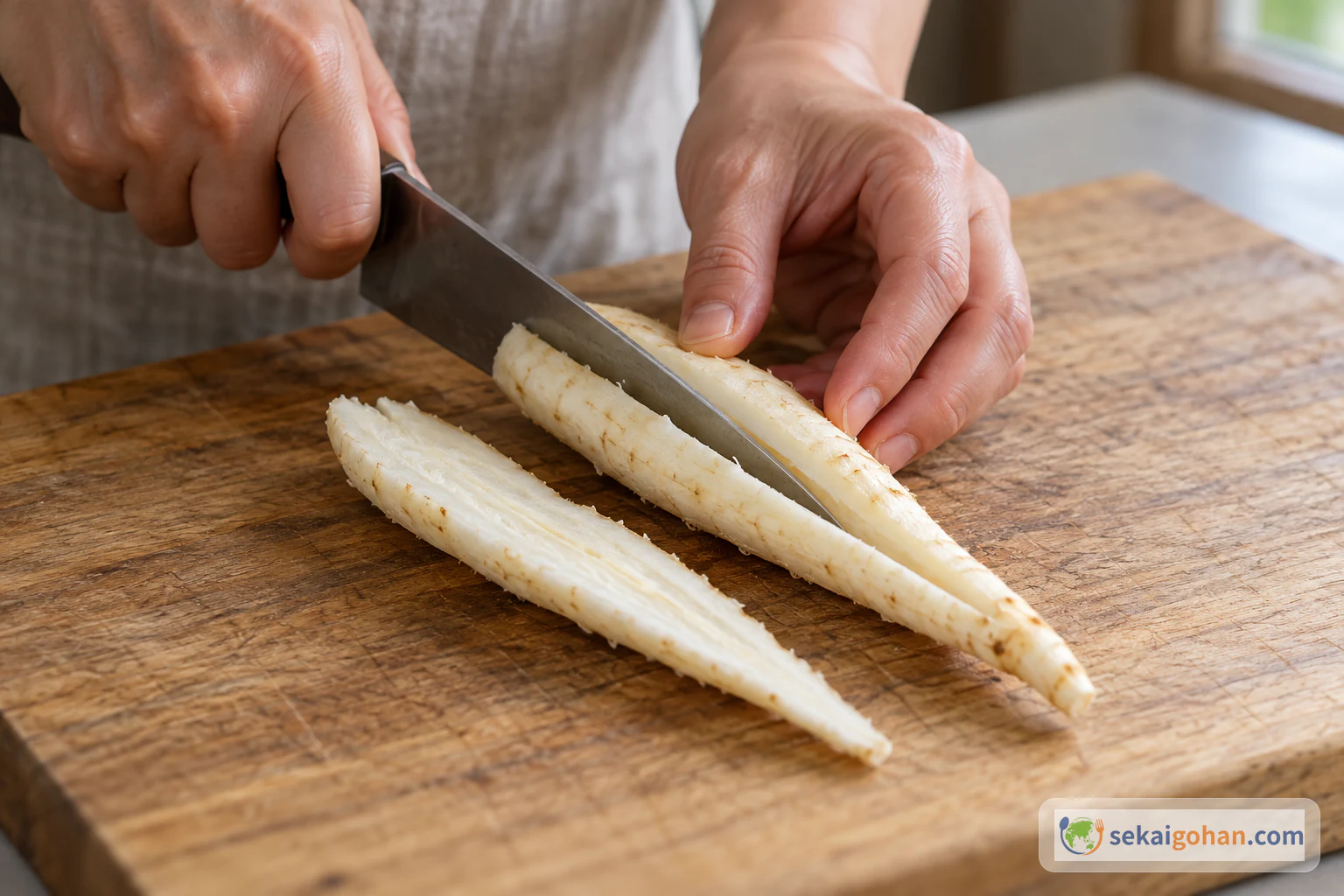
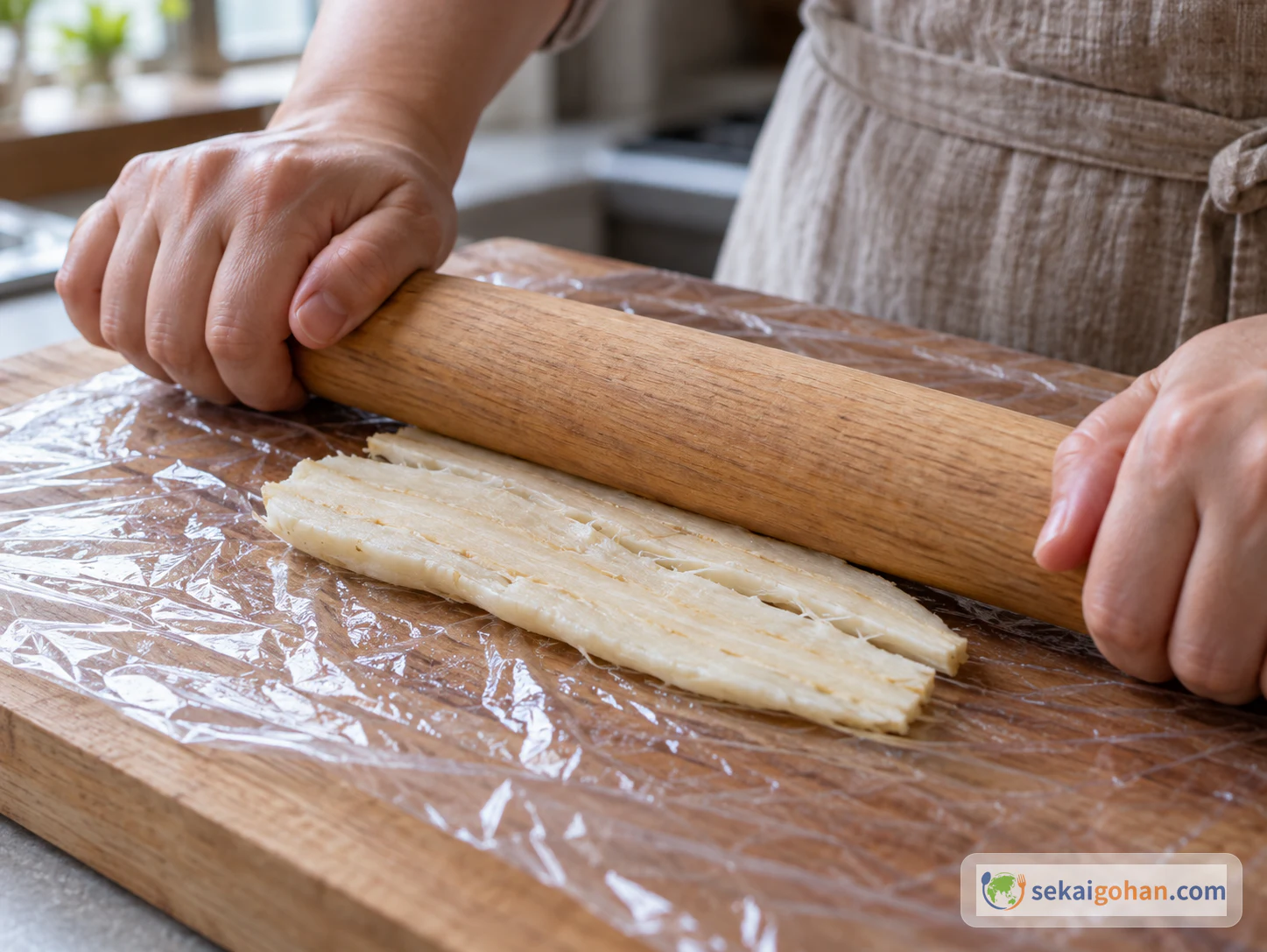
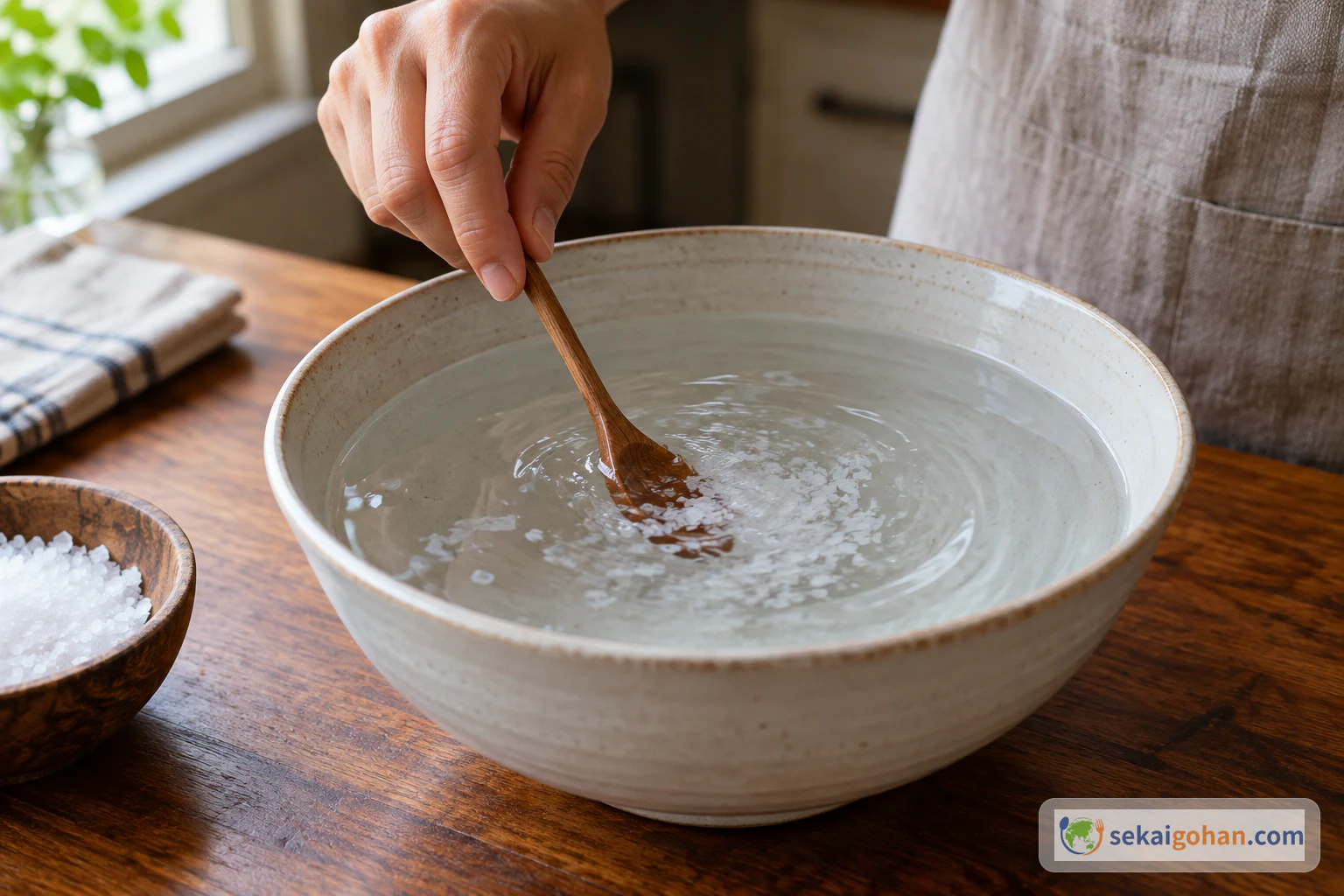
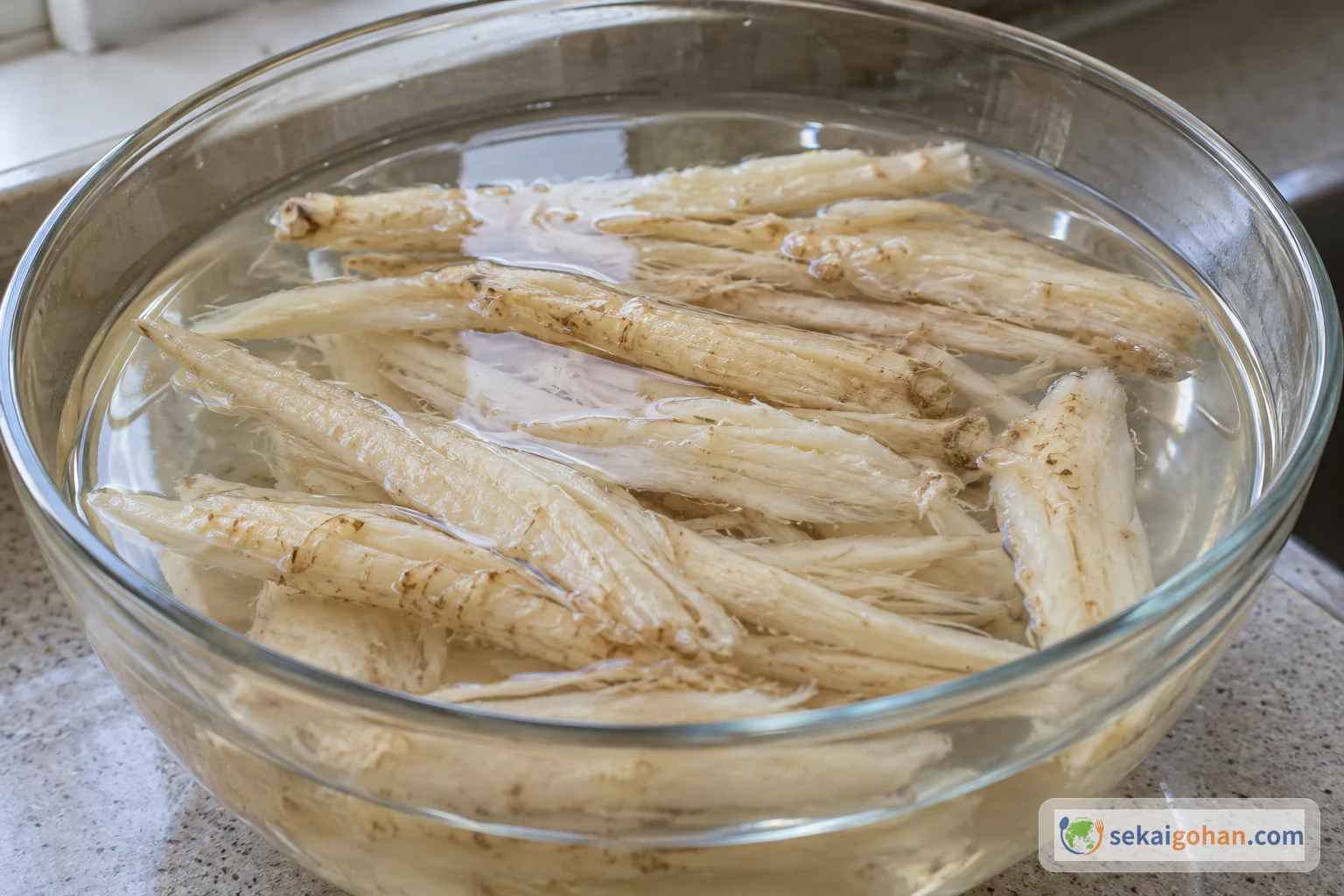
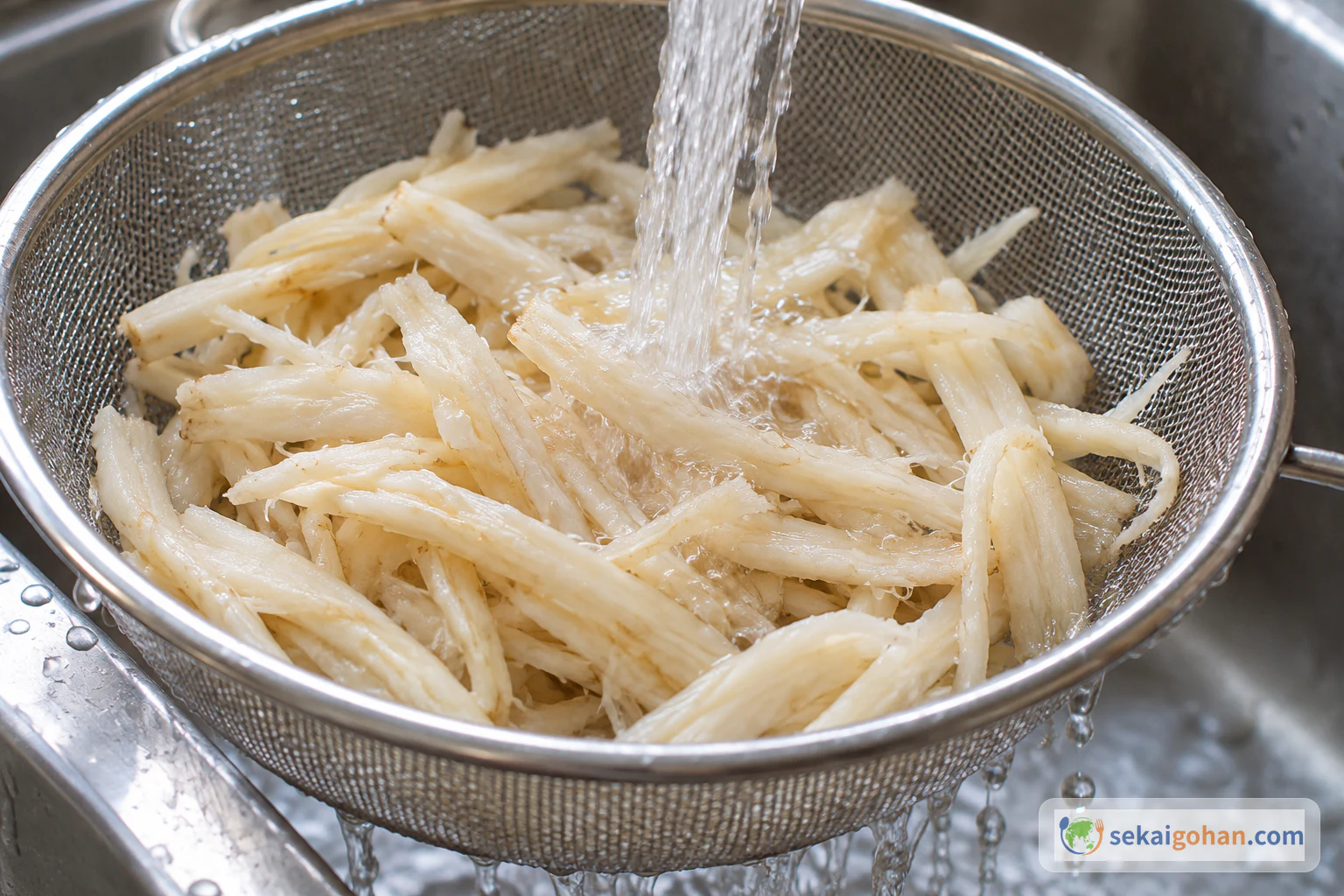
The roots go into boiling water for only 10–15 seconds and come straight out into cold water. After that, each one is slit, peeled, split lengthwise and pressed flat under a sheet of plastic. The flattened roots rest in salt water before they ever see the pan. Deodeok gui (더덕구이) is the Korean dish of deodeok root roasted this way.
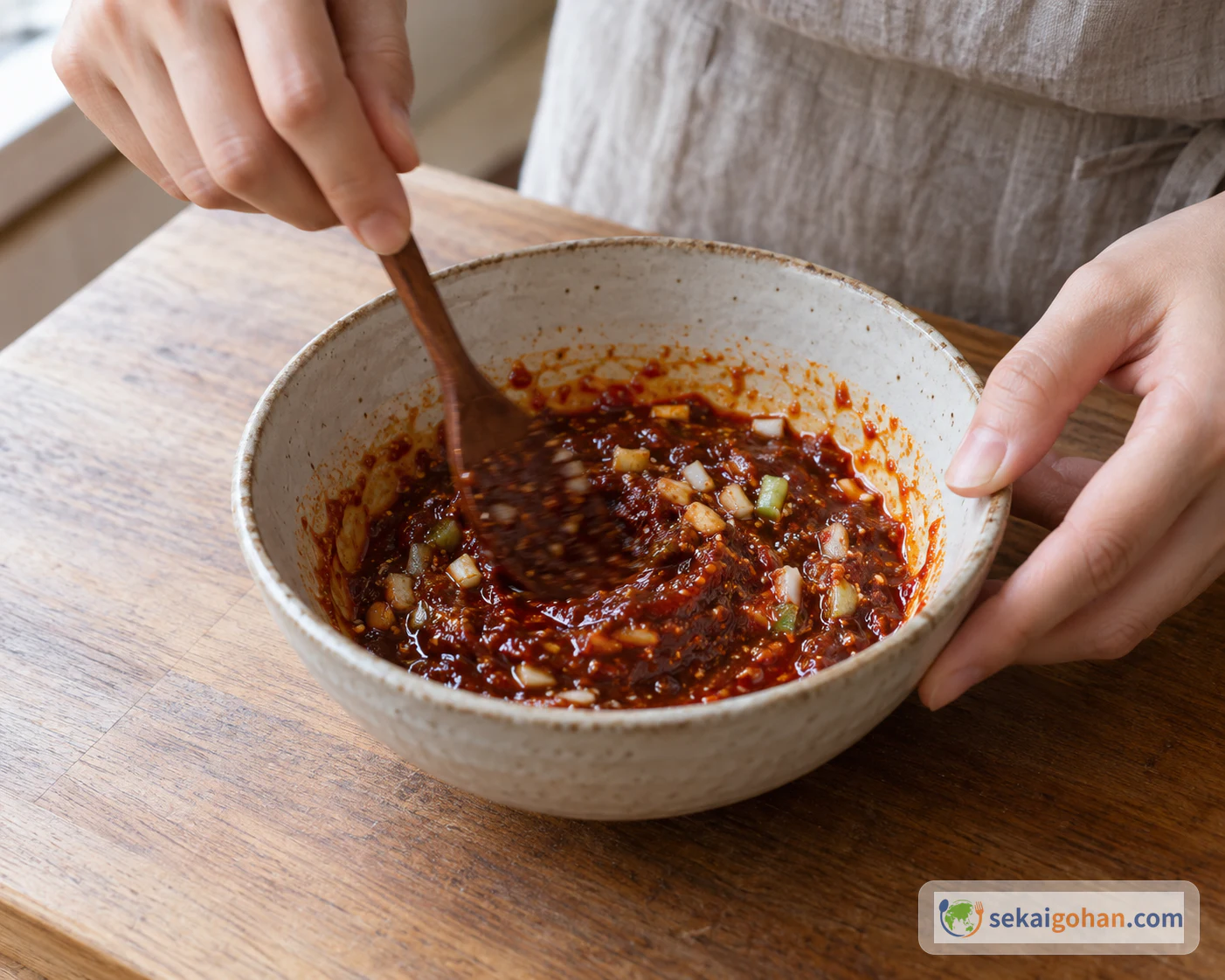
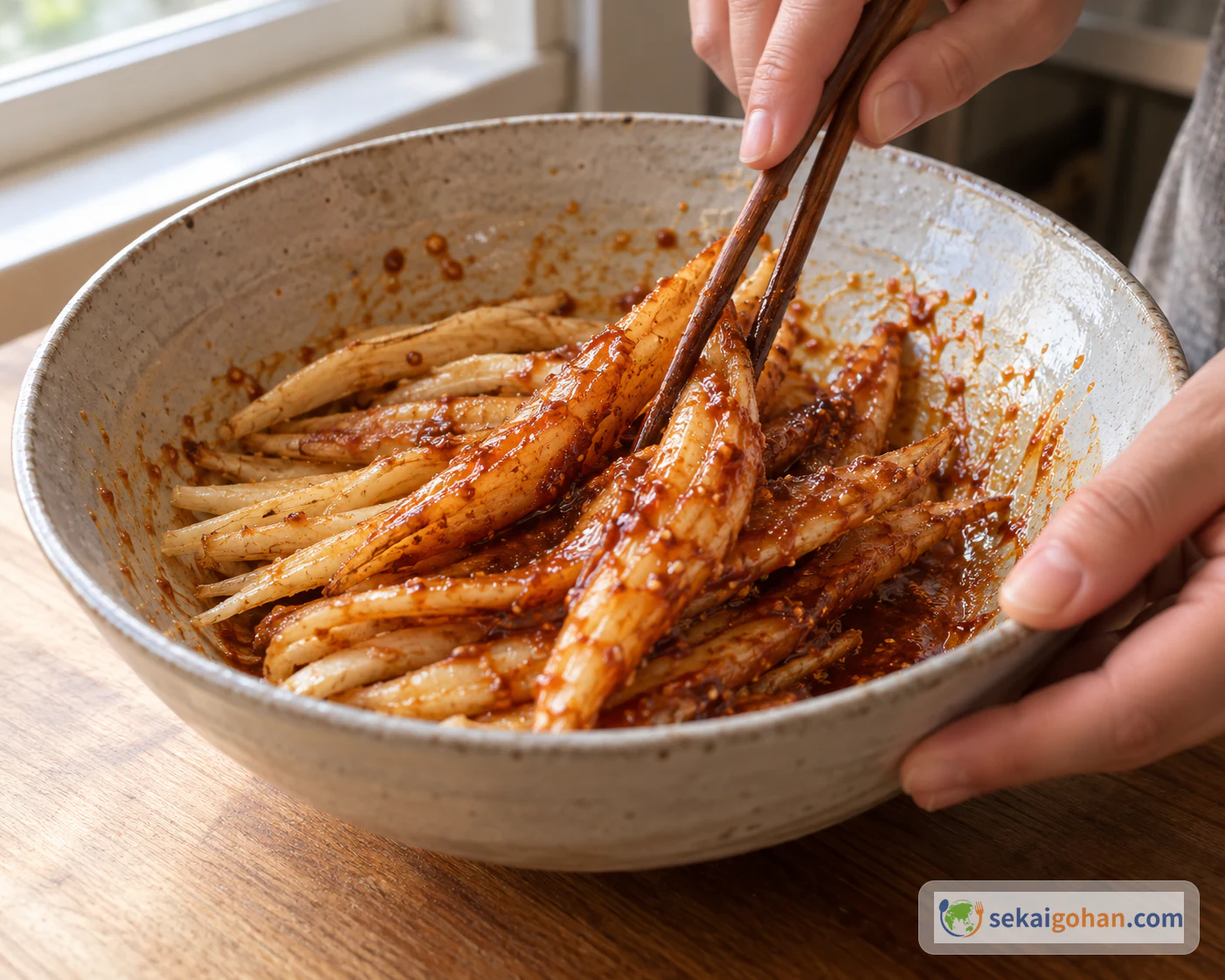
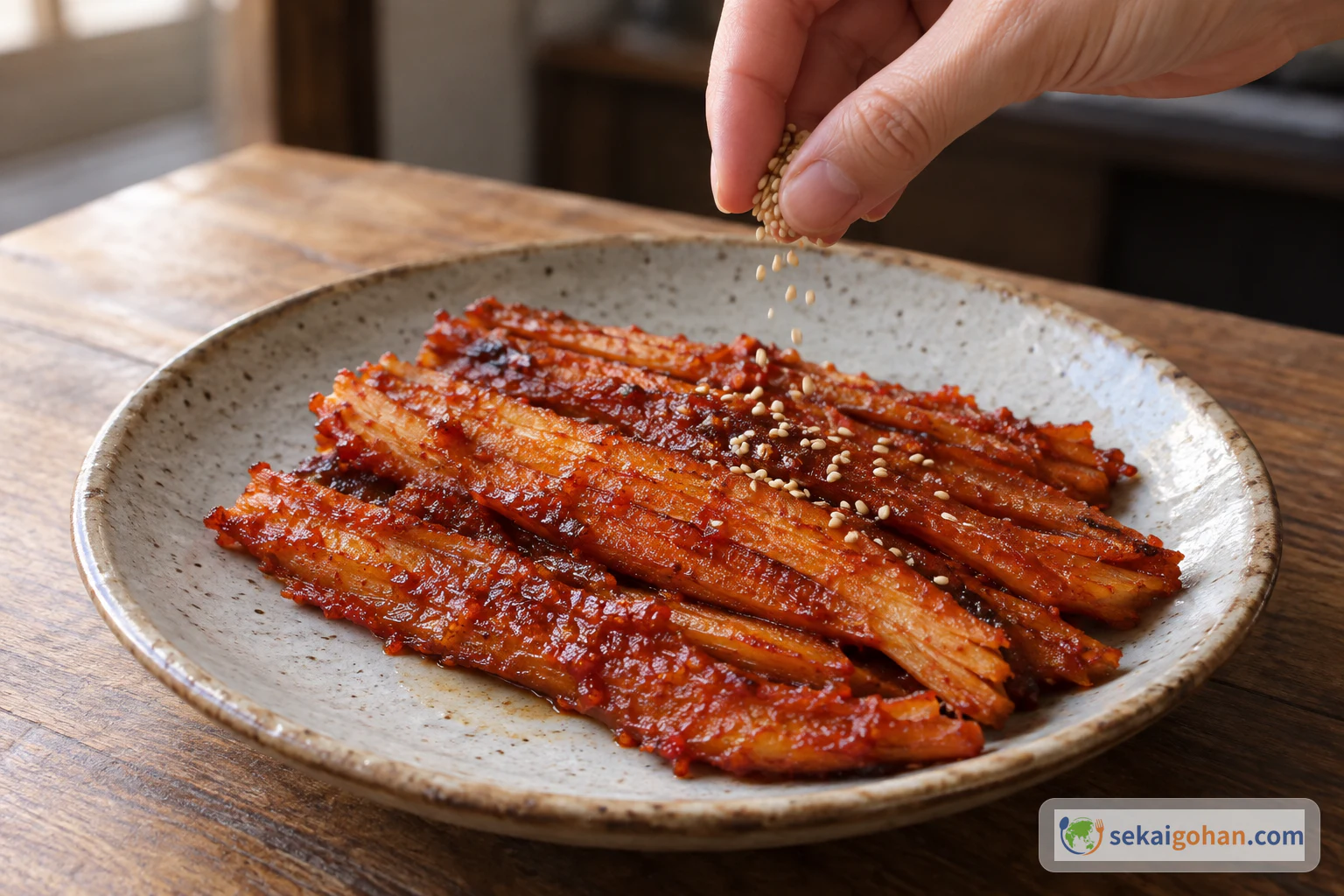
This article follows one complete version of the dish, posted on the Korean recipe site 10000recipe on 2026-10-01 by the home cook 몽글쿡 (Monggle Cook). It uses 300 g of trimmed deodeok root. The roots are first pan-roasted with yujang, a thin coating of oil and soy sauce. They then rest briefly, are tossed in a separate spicy sauce built on gochujang and gochugaru, and are pan-roasted again until the sauce clings. A sprinkle of whole sesame finishes the plate. The author's recipe card shows 3 servings and a time of within 60 minutes. Those are the author's displayed estimates, not measured results.
Sekai Gohan has not kitchen-tested this recipe. The amounts, order, times and heat levels below follow the selected author's version. Where that version gives no number, this article does not supply one.
더덕구이: Pounded Deodeok Root, Grilled with a Red Chili-Paste Sauce
In South Korea, deodeok (더덕) is a root eaten as a cooked dish, and deodeok gui is one way of preparing it. The Korea Tourism Organization (VISITKOREA) describes deodeok as pounded, seasoned with a red-chili-paste sauce and grilled slowly. It identifies the aroma of sesame oil and of the root itself as part of the dish's character. That description is the general picture. Individual recipes differ in their amounts and their order of steps.
The ingredient here is deodeok, and this article keeps that name. It makes no claim about the plant's botanical species. It does not treat deodeok as interchangeable with burdock, carrot or ginseng.
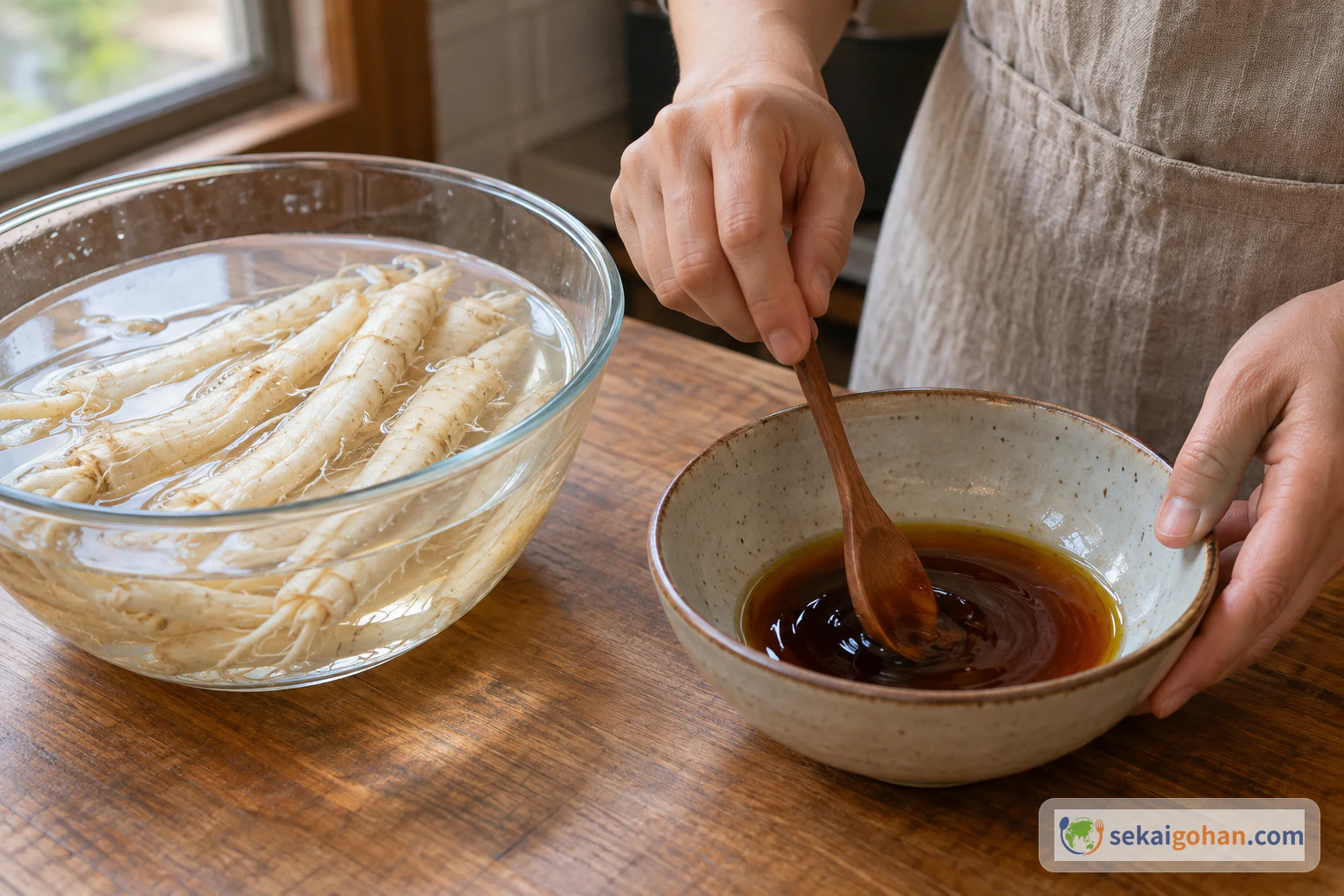
Monggle Cook's version stands out for keeping every stage distinct. Salt goes only into the soaking water. The yujang is mixed while the roots soak. The red sauce is mixed while the first roast is under way. The author also mentions that the dish goes well with rice or with drinks. Those are suggestions for eating it, though, and the recipe itself ends at the plate with sesame on top.
Two small choices were made for this article within the options the author offers. The author lets the sugar range from none up to 0.5 Tbsp, and this article uses the top of that range, 0.5 Tbsp. The author also lists more than one kind of syrup. This article uses mullyeot, the water/starch-syrup option, rather than rice jocheong.
Ingredients: 300 g Trimmed Deodeok in Four Stages
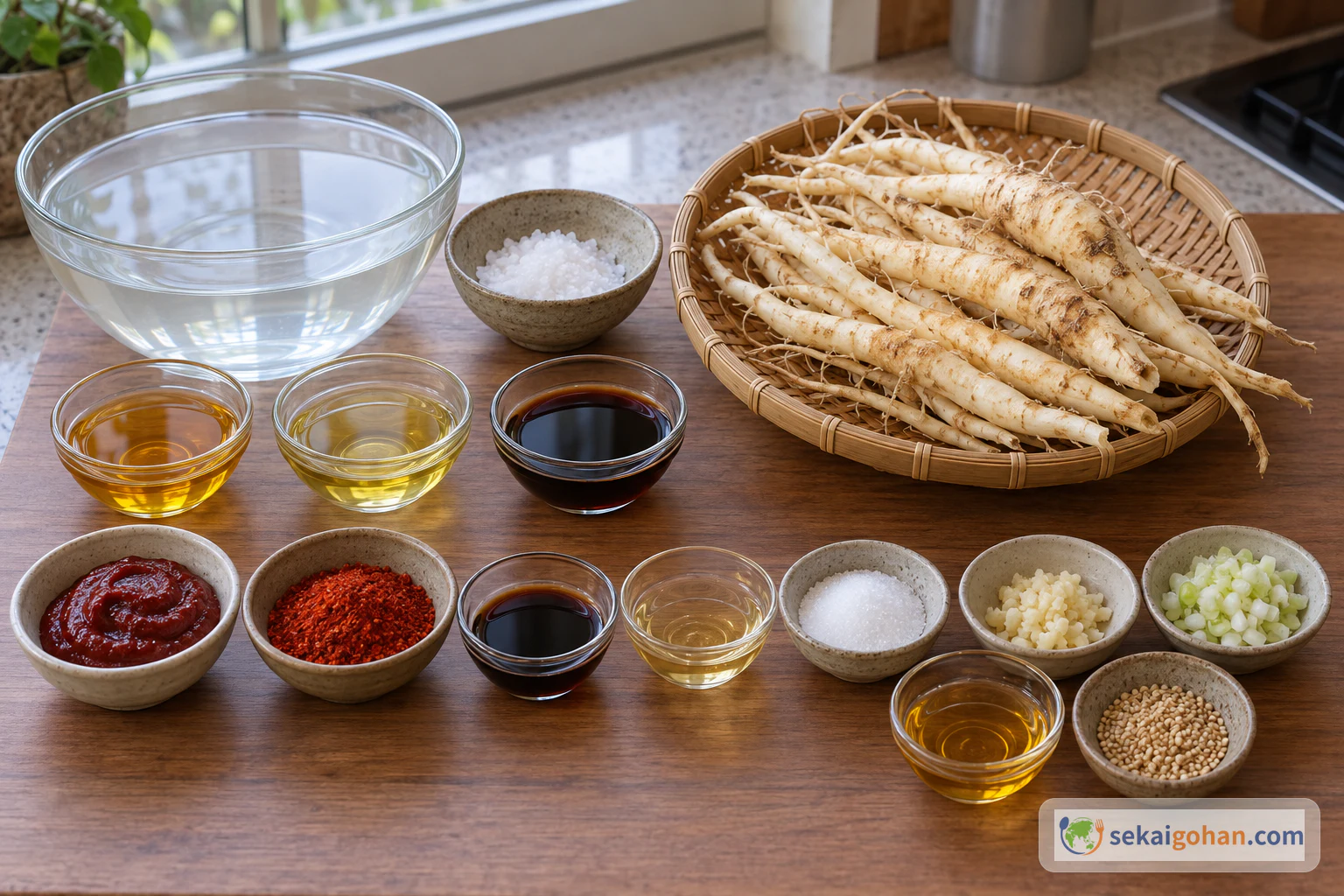
The 300 g of deodeok is the weight after trimming. Sesame oil and jin-ganjang each appear twice. One portion goes into the yujang and one goes into the later sauce. Measure them separately. Don't combine them, and don't add extra oil to the pan.
This dish contains soy sauce, sesame oil, perilla oil and sesame seeds. If you are cooking for anyone with allergies, check the labels of the gochujang, jin-ganjang and other packaged ingredients.
Equipment
- A pot for blanching
- A frying pan
- A knife and cutting board
- A plastic sheet to lay over the board
- A rolling pin or other plain rod
- Bowls for the salt soak, the yujang, the sauce and tossing the roots
- A kitchen towel
Finding the Korean Ingredients
The ingredients most likely to need a trip to a Korean or Asian grocer are deodeok root (더덕), gochujang (고추장), gochugaru (고춧가루), mullyeot (물엿), perilla oil (들기름) and jin-ganjang (진간장). Carrying the Korean names with you makes these easier to match on a shelf or label. This article does not recommend specific shops, brands or products.
- Deodeok: Use deodeok itself. Burdock, carrot and ginseng are different roots, and this article does not offer them as substitutes.
- Jin-ganjang: This is a Korean soy sauce category. Don't assume that Japanese light soy sauce or Chinese dark soy sauce is the same thing.
- Mullyeot: Look for Korean starch syrup labeled 물엿. Don't swap it for rice syrup, and don't assume it is made from any particular starch.
- Perilla oil and sesame oil: These are two different oils with different roles here. Don't use one for the other.
Method: Prepare, Soak, Roast with Yujang, Then Roast in Sauce
Mix the yujang while the roots soak in salt water. Mix the red sauce while the first roast is in the pan. Have all the ingredients measured out before you start so that both overlaps go smoothly.
Checkpoints Along the Way
These checks follow the order of the steps.
| Point in the method | What to check | What to do |
|---|---|---|
| Blanching | The roots are only meant to dip in the boiling water | Take them out after 10–15 seconds and rinse them in cold water right away |
| Pounding | The roots are flattening rather than breaking into pieces | Tap gently. The aim is to spread the fibers, not to tear them |
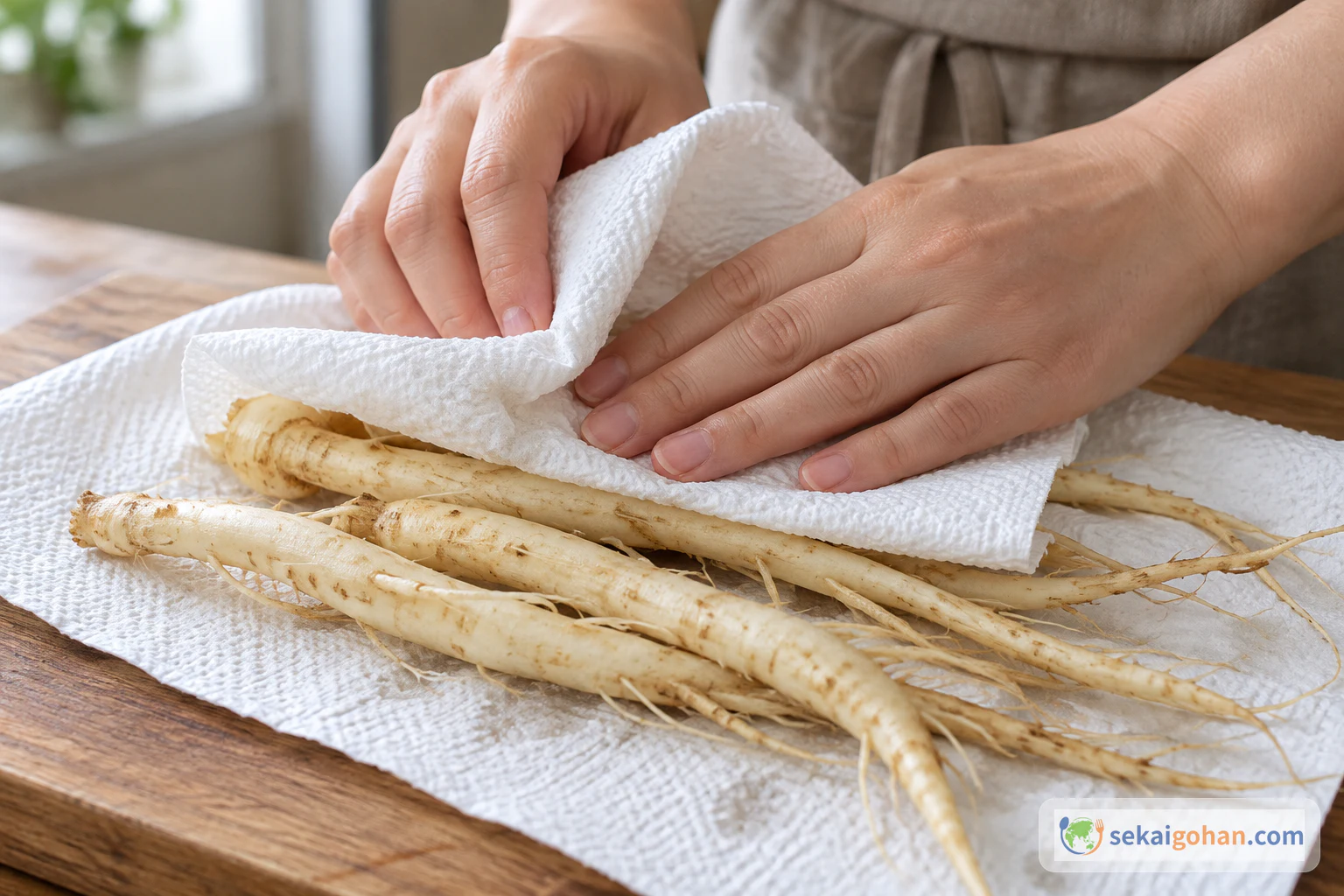
| After the salt soak | The roots are wet when the yujang goes on | Rinse them lightly, then pat them thoroughly dry with a towel before coating |
| First roast | The 3–4 minutes is for both sides together | Turn the roots partway through, and don't roast each side for 3–4 minutes |
| Sesame oil and soy sauce | One portion of each belongs to the yujang and the other to the sauce | Keep the 1.5 Tbsp and 0.5 Tbsp of sesame oil apart, and keep the two 0.5 Tbsp portions of jin-ganjang apart |
| Second roast | The sauce is still sliding around the pan | Keep turning over medium-low until it sets onto the roots, then stop |
Other Recorded Versions, and What This One Leaves Open
There is more than one written recipe for deodeok gui. Two other records were compared with this version but are not mixed into it.
- KBS World (Indonesian service, 2016): This version also uses 300 g of root. Its seasoning includes gochujang, soy sauce, sugar, scallion, garlic, sesame and sesame oil. It peels and pounds the root, roasts it with oil, seasons it and roasts it again, and it describes serving the dish with rice. Its listing doesn't make clear how the sesame oil is split between the first oiling and the seasoning, so none of its amounts are carried over here.
- Korean Traditional Knowledge Portal (record TF10003302, data from the Rural Development Administration): This version uses 200 g of root. Its ingredient list gives 1 Tbsp soy sauce and 2 Tbsp sesame oil for the yujang, while its method states a 1:3 ratio, so the record disagrees with itself. It soaks the roots before splitting them, does the first roast on a foil-lined gridiron, then seasons and roasts at low heat, and cuts the result into bite-size pieces. The record cites a 2004 book, Siuejunsuh, which was not consulted for this article.
If you want a variation within this version, the sugar is the place to adjust it. The author allows anywhere from none up to 0.5 Tbsp, and this article uses 0.5 Tbsp.
Several details are not given in this version, and this article leaves them unspecified rather than guessing:
- The water used for blanching, rinsing and the salt soak
- The number of roots, their size, and their weight before trimming
- How thin to pound the roots
- The pan size and an exact cooking temperature
- How the 3–4 minutes of the first roast divides between the two sides
- The length of the second roast
- The exact amount of finishing sesame
Frequently Asked Questions
Most questions about this dish come back to keeping its stages apart: salt only in the soak, yujang for the first roast, and the red sauce for the second.
Why are sesame oil and jin-ganjang listed twice?
The author uses each of them in two separate mixtures. The yujang uses 1.5 Tbsp sesame oil and 0.5 Tbsp jin-ganjang, together with perilla oil, for the first roast. The later red sauce uses another 0.5 Tbsp of each. Mixing them all together at the start would change the order the recipe depends on.
How long should each side cook in the first roast?
The author gives 3–4 minutes for both sides together, over medium-low. The recipe doesn't say how that time divides between the sides, so turn the roots partway through and keep the total within that range.
How long is the second roast?
No time or temperature is given. Roast briefly over medium-low, turning the roots, and stop when the sauce has set onto them.
Can I use burdock, carrot or ginseng instead of deodeok?
This article doesn't recommend it. The recipe is written for deodeok, and those roots are different ingredients. Using one of them would make a different dish.
Is the sugar necessary?
The author lets the sugar range from none up to 0.5 Tbsp. This article chose the top of that range. You can use less or leave it out.
Which kind of syrup should I use?
The author lists more than one option. This article uses mullyeot (물엿), the water/starch-syrup option, and does not use rice jocheong. Look for a product labeled 물엿, and don't assume it is made from any particular starch.
How many people does it serve, and how long does it take?
The author's recipe card shows 3 servings and within 60 minutes. These are the author's displayed estimates. They were not measured for this article and are not a promise.
Should I serve it with rice?
The author mentions that it goes well with rice or with drinks. That is optional; the recipe itself is complete once the roots are plated and topped with sesame.
How should I store leftovers?
This recipe gives no storage guidance, so this article doesn't suggest one.
Sources
- 몽글쿡 (Monggle Cook), "Deodeok gui," 10000recipe, recipe ID 7084113, posted 2026-10-01. The recipe followed in this article: the 300 g trimmed-root formula with separate yujang and later sauce, the full order of steps from washing to the sesame finish, the stated times and heat levels, and the recipe card's 3 servings and within-60-minutes estimates. https://www.10000recipe.com/recipe/7084113
- Korea Tourism Organization (VISITKOREA), deodeok culinary-context entry, published 2023-10-19. General context for the dish: deodeok pounded, seasoned with a red-chili-paste sauce and grilled slowly, with sesame oil and the root's aroma as characteristic. Not used for amounts, times, health or botanical claims. https://english.visitkorea.or.kr/svc/contents/contentsView.do?vcontsId=178945
- KBS World Indonesian, Korean-food recipe entry "Deodeok gui," published 2016-01-04. Comparison only: a separate 300 g version that roasts with oil, seasons and roasts again, and describes serving with rice; its sesame-oil allocation is unclear. Its formula is not used here. https://world.kbs.co.kr/service/contents_view.htm?board_code=koreanfood&board_seq=10192&id=&lang=i&menu_cate=lifestyle&page=10
- Korean Traditional Knowledge Portal, record TF10003302 "Deodeok gui," data supplied by the Rural Development Administration (portal record 2010, citing Siuejunsuh, 2004). Comparison only: a 200 g version whose listed yujang amounts and method ratio disagree, with a soak-before-splitting order, a foil-lined gridiron and a final cut into bite-size pieces. Its formula and method are not used here. https://koreantk.com/ktkp2014/food/food-view.view?foodCd=TF10003302