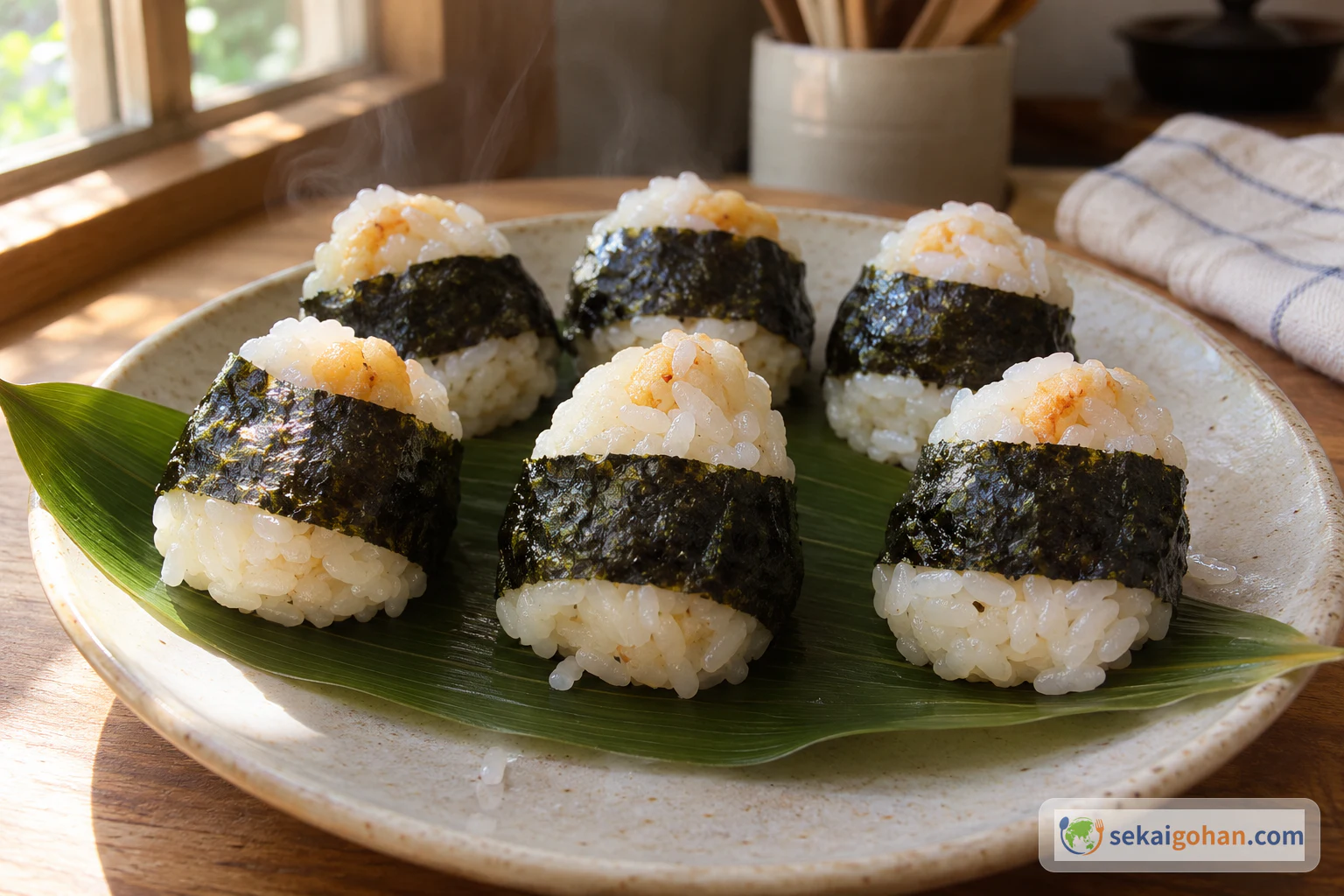
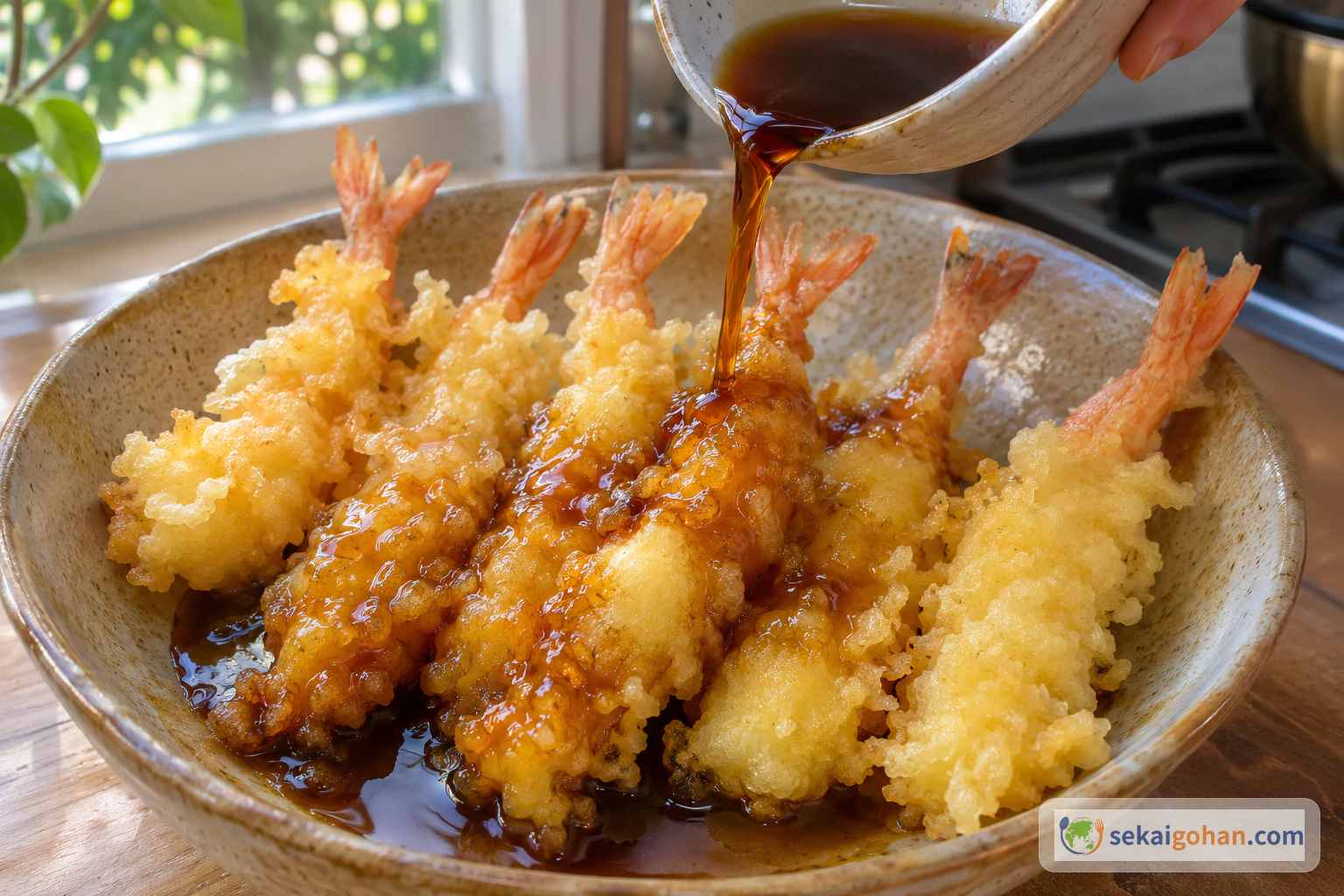
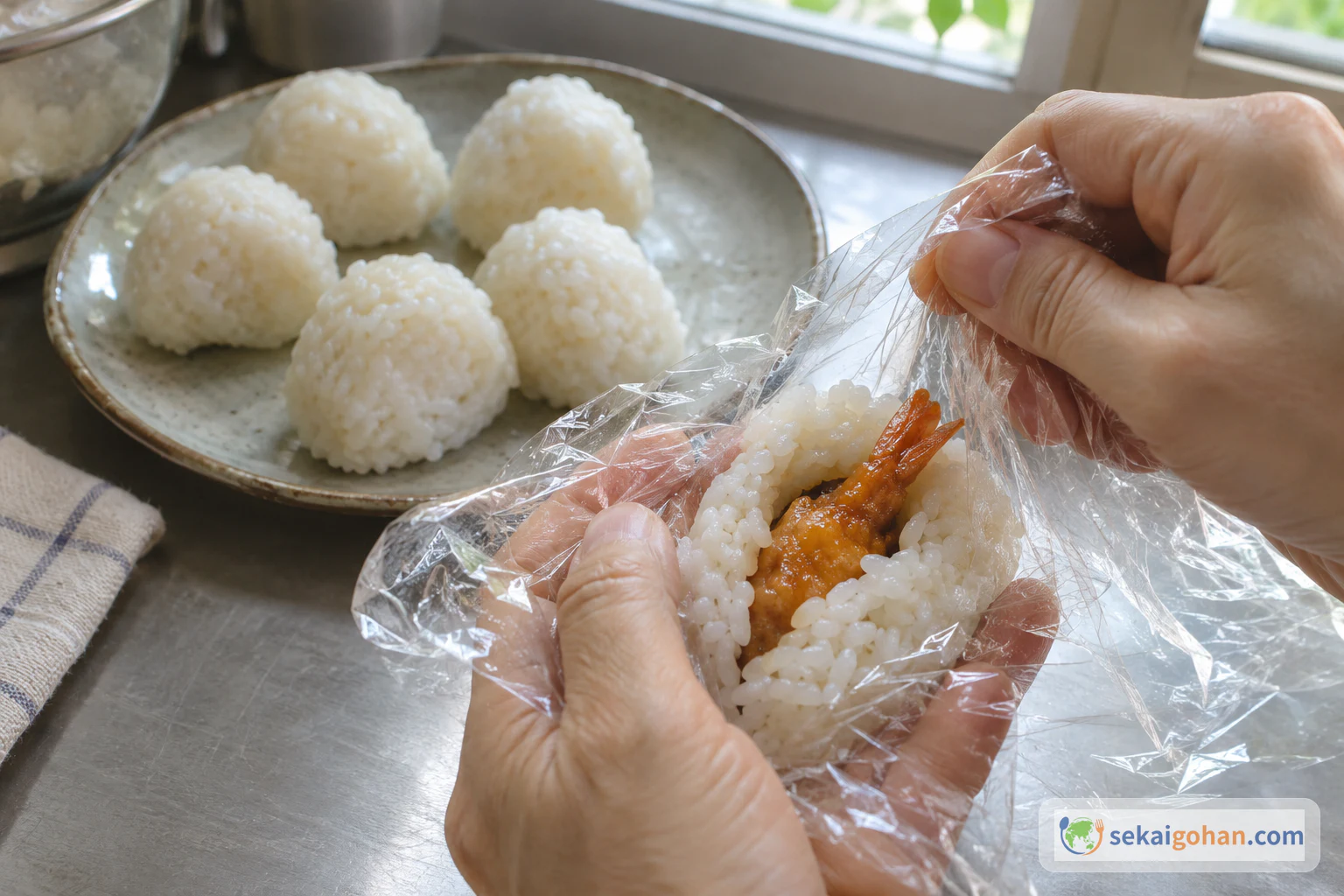
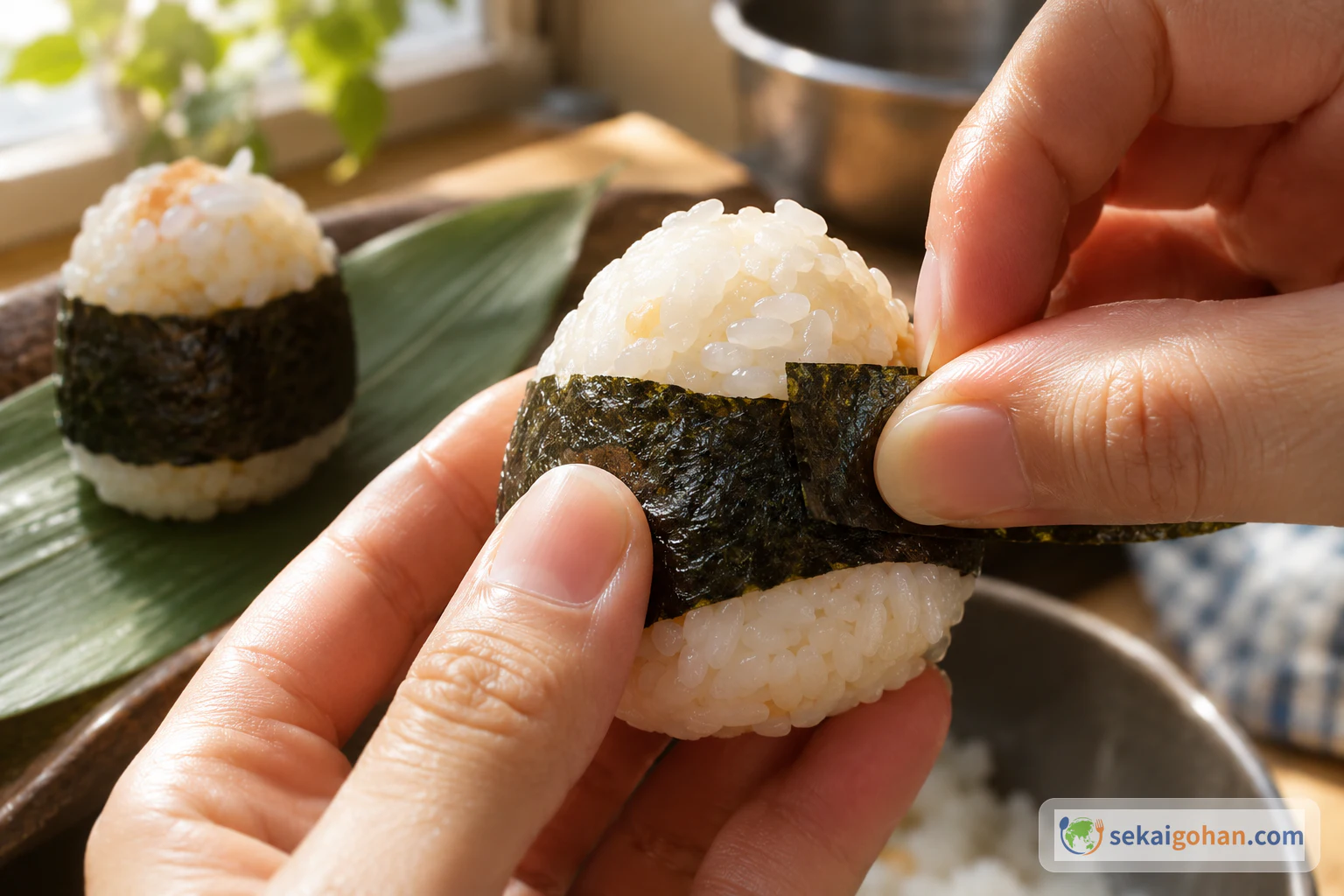
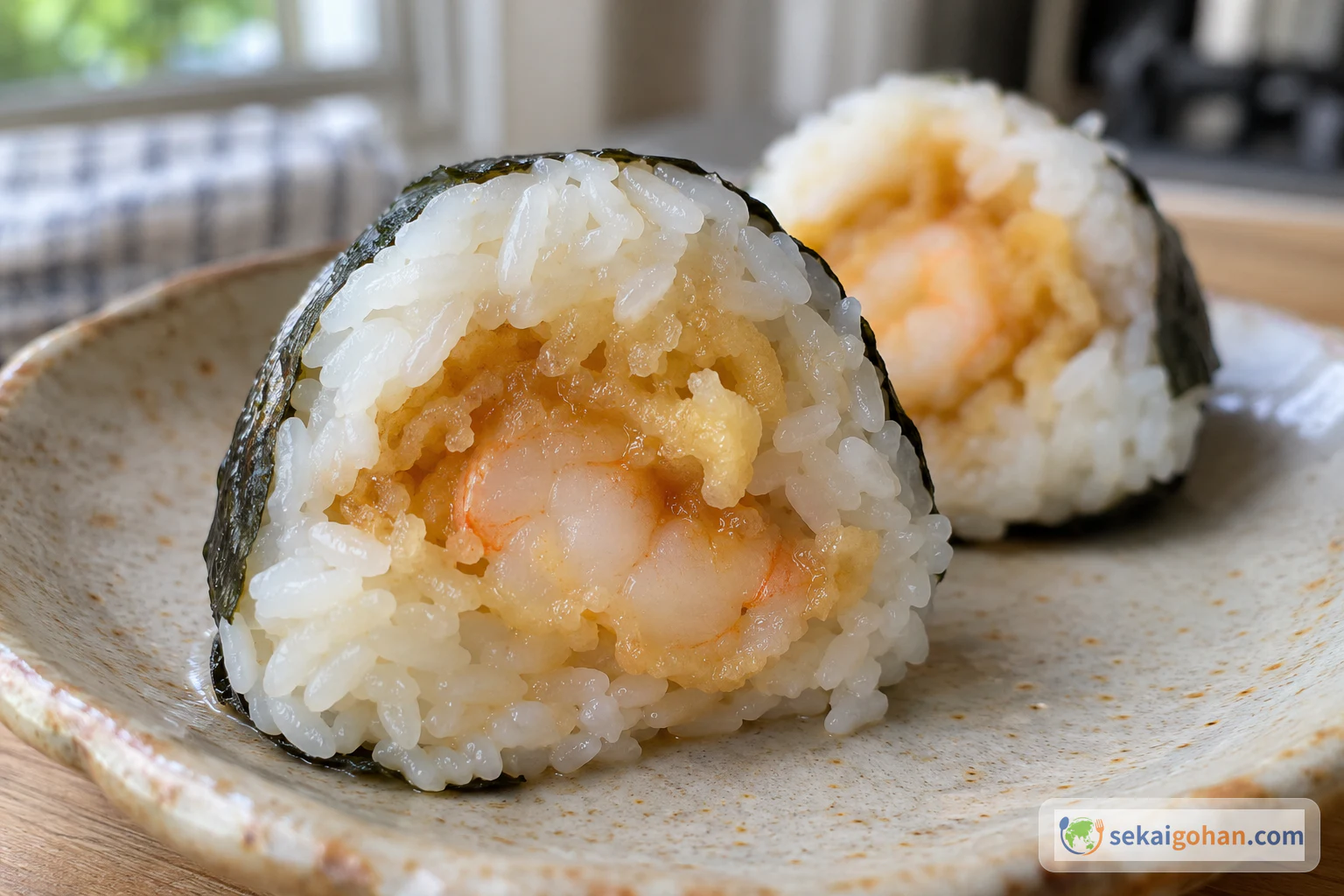
The shrimp comes out of the oil crackling, goes straight into a bowl of dark mentsuyu, and while the batter is still hot it drinks the sauce and turns glossy. Then it disappears into a small handful of salted rice, and a narrow ribbon of nori goes around the middle. Tenmusu is that: a bite-size rice ball with a seasoned shrimp tempura hidden inside, sold by the box in Nagoya as a take-home treat and a gift for the road. The first bite is plain, lightly salted rice; the second reaches the shrimp, sweet and savory from the soy-based sauce, with the soft batter between the two. Some customers say they taste best once the rice has cooled, when the tempura flavor comes forward.
A Staff Lunch in Tsu, a Famous Name in Nagoya
From a tempura counter in Tsu
Tenmusu is known across Japan as one of the dishes of Nagoya, but it was born about an hour away, in the city of Tsu in Mie Prefecture. In the Daimon district, a couple named Mizutani ran a tempura set-meal shop called Senju. On busy lunch shifts, Yone Mizutani wanted to give her hard-working husband something nourishing and easy to eat, and tucked a shrimp tempura into a rice ball as a staff meal. That staff meal became a secret menu item for regulars, then the reason for a shop that sold nothing else.
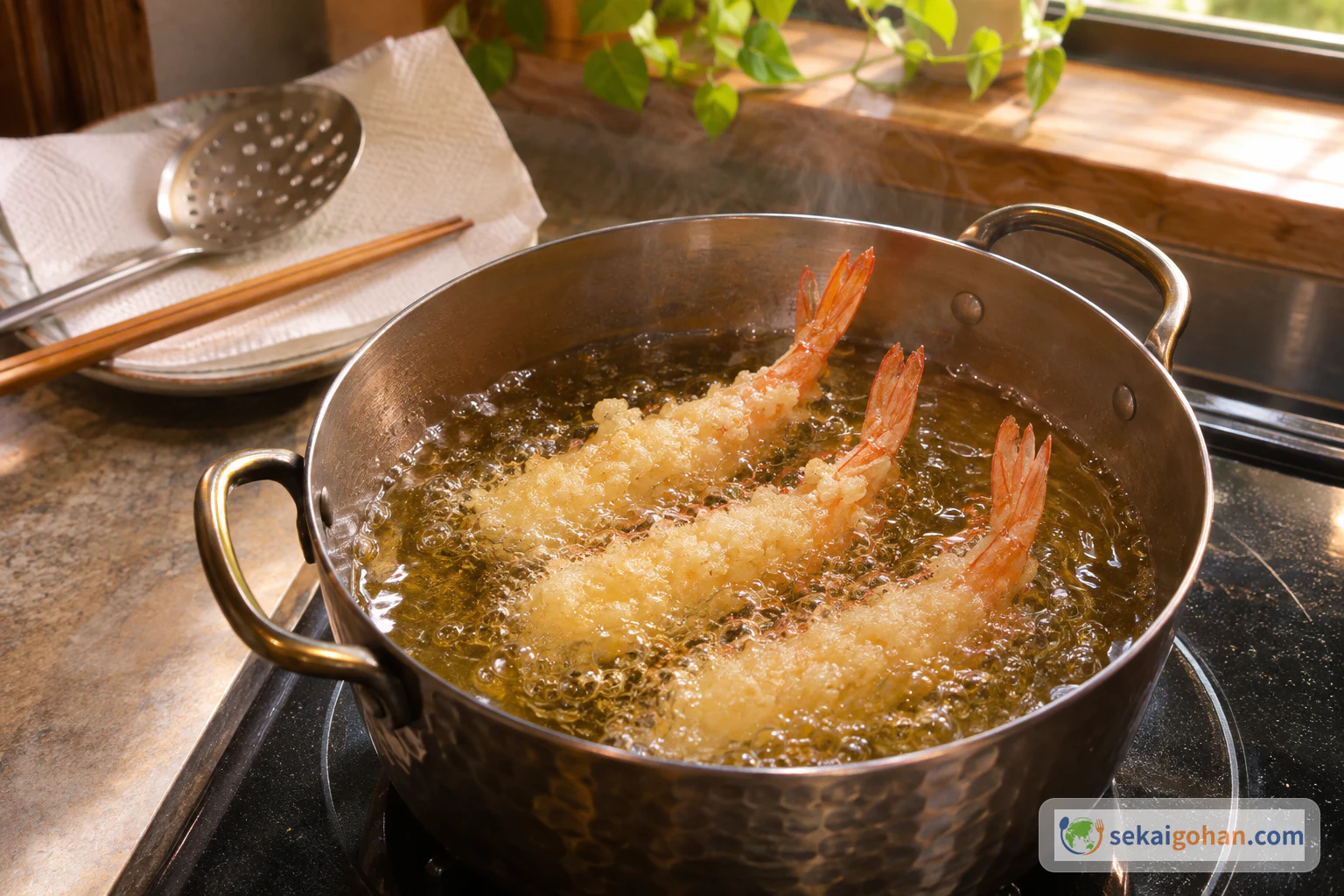
The start is usually placed in the mid-1950s; the exact year is not settled. By around 1959 the recipe had been refined into a finished product, and "Tenmusu" is a registered trademark of the Tsu shop to this day. In Tsu the shrimp sits fully inside the rice, so from outside you see only rice and a strip of nori. The rice balls are shaped to order with nothing but salt on the hands, and the tempura for them uses a slightly firmer batter than ordinary tempura, fried slowly at about 350°F (170°C), since too long in the oil lets the batter soak it up.
In Tsu the nori is twisted at the center of each rice ball. The story goes that the first cook took the idea from the way the then Crown Princess, now Empress Emerita Michiko, wore her stole at the royal wedding of 1959. Tenmusu also comes with kyarabuki, butterbur stems simmered dark in soy sauce, in place of the usual takuan pickle, because the husband at the fryer never liked takuan.
How Nagoya took it up
The road to Nagoya runs through one devoted customer. Akiko Fujimori, who ran a watch shop, fell for the tenmusu in Tsu, asked Yone Mizutani to teach the method, and received permission to open under the same shop name, in Nagoya's Osu district. The Osu shop has been there since 1980. Entertainers such as Shofukutei Tsurube and Shunputei Koasa bought tenmusu there and brought it as a gift, word spread, the press followed, and the little rice balls became a Nagoya specialty. In Osu they still call Tsu the main shop.
Today tenmusu is a picnic food and a souvenir, sold in boxes where five pieces make one serving. Shops add their own touches: rice mixed with black rice, or rice mixed with takana pickled mustard greens. Shops built on the Nagoya style often let the shrimp tempura poke out of the rice instead of hiding it inside.
The name joins tempura and omusubi, the softer word for a rice ball. The Tsu shop's sign reads "meifutsu" (famous product) instead of the standard "meibutsu", a spelling the first owner insisted on.
Salt, oil and the rice that stays good cold
Salt is where cooks part ways. In Tsu the salt is only on the hands. Some home cooks put no salt on the rice at all and let the mentsuyu on the shrimp season the whole ball. This recipe mixes a quarter teaspoon of salt into the rice, which gives every bite an even, light seasoning and is the easiest to repeat at home. Shops in both cities fry in corn oil, and the Osu shop uses Koshihikari rice from Hokuriku and nori from Ise Bay; the shops talk about choosing rice that tastes good cold, because tenmusu are made to be carried and eaten later.
Tenmusu belongs with the other everyday dishes of Japan's home and street kitchens: small, practical, and built around rice.
Ingredients (makes 6)
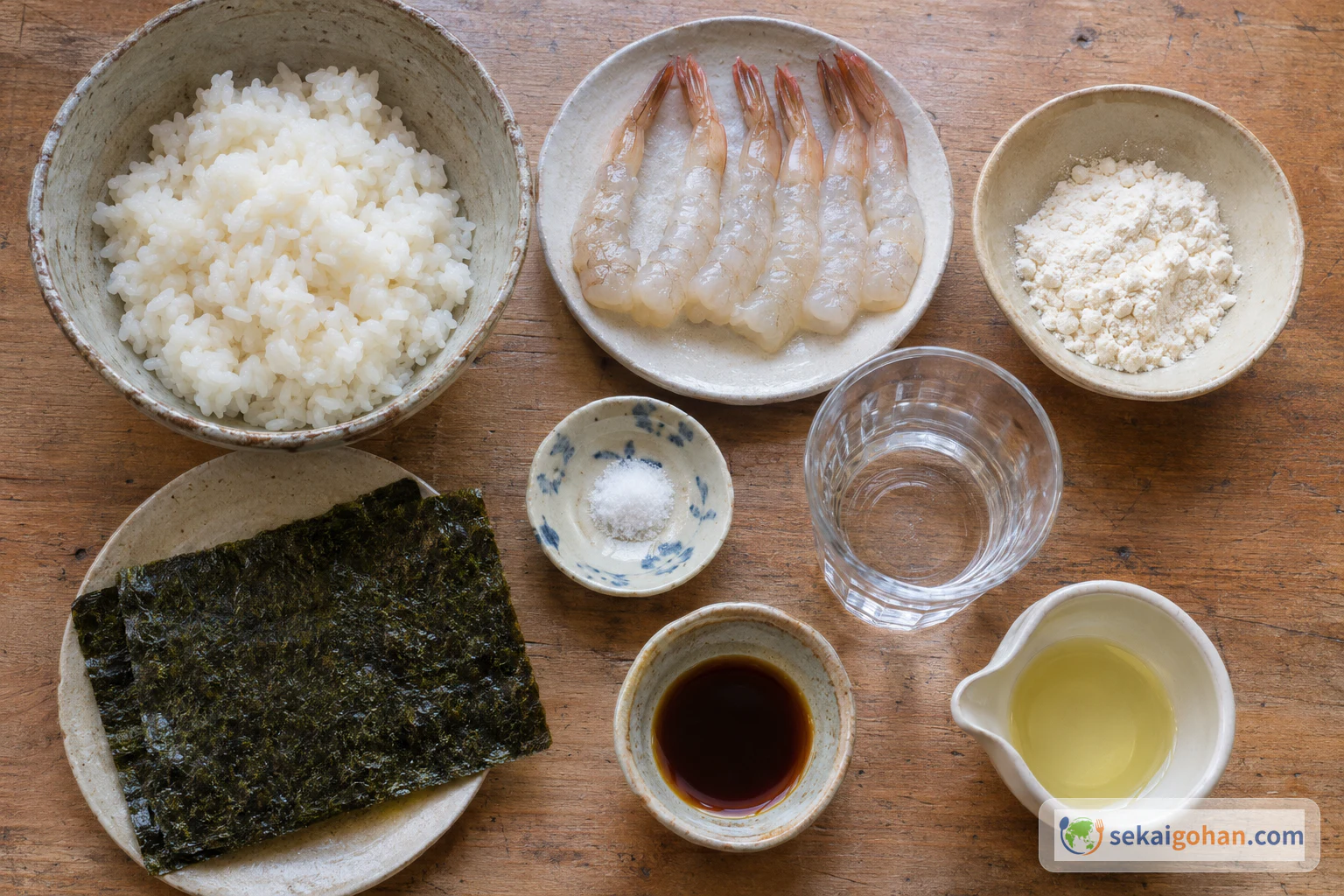
The 14 oz (400 g) is cooked rice. Cook your rice as your rice cooker or package directs, then weigh out what you need; this is what keeps six balls the right size around one shrimp each.
Tenmusu contains shrimp (crustacean), wheat (tempura flour and mentsuyu), soy (mentsuyu) and seaweed (nori). Check the ingredient labels on your tempura flour and mentsuyu for other allergens and shared-facility statements.
Equipment
- Cutting board
- A small deep pot for frying
- Cooking thermometer
- Plastic bag
- Two bowls (one for batter, one for the rice)
- Heatproof bowl or container
- Cooking chopsticks
- Slotted spoon or skimmer
- Paper towels
- Plastic wrap
Choosing and Substituting
The flavor of tenmusu comes down to two bottles and a sheet of seaweed, so those are worth a careful look in a Japanese or other Asian grocery store or online.
Mentsuyu. Buy one labeled 3× concentrate (三倍濃縮). Mentsuyu comes at different strengths, and a 2× product measured by the same spoonful gives a different saltiness. If you have a different strength, dilute it as its label directs to match, and toss it onto the shrimp a little at a time.
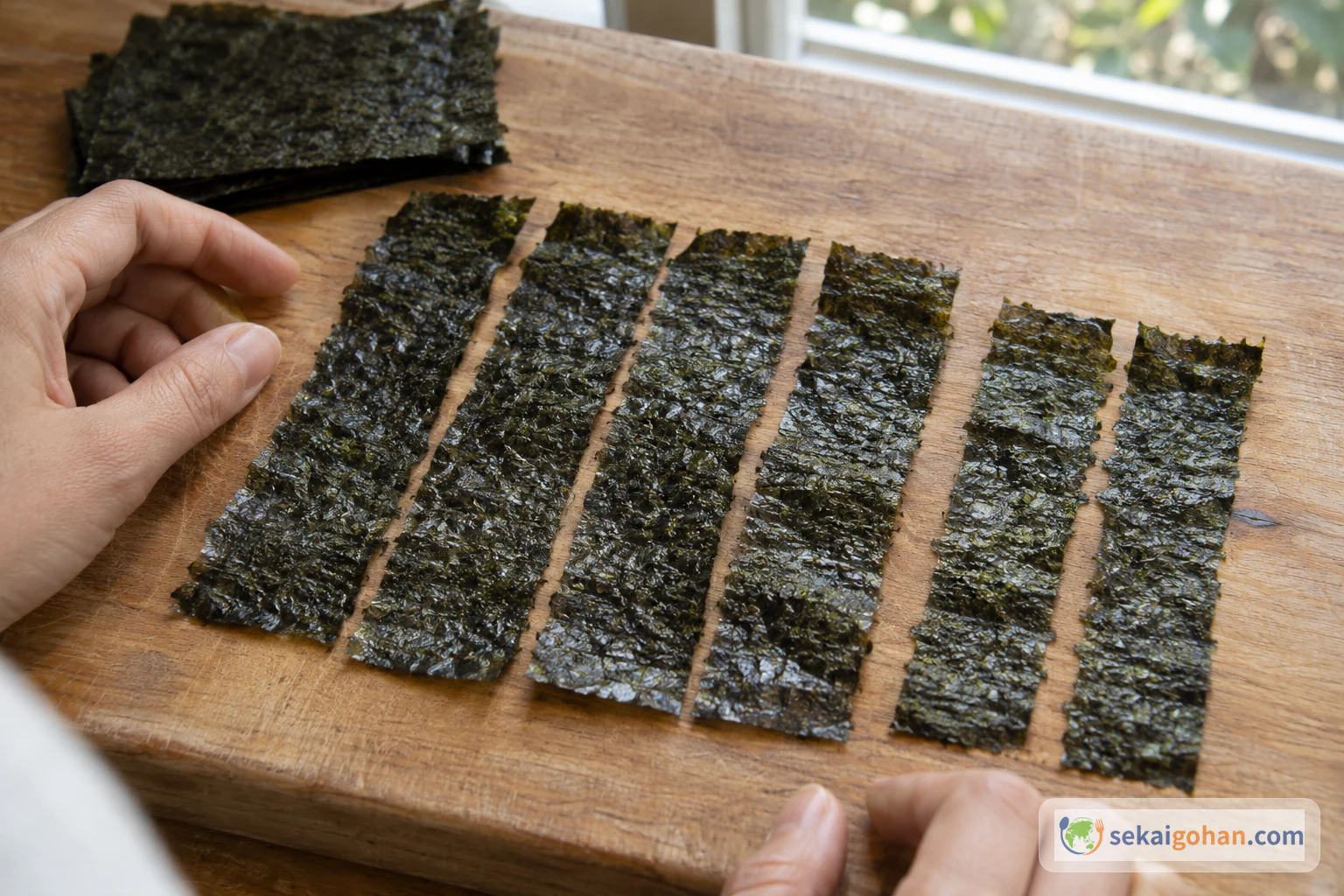
Nori. Buy plain toasted nori in full sheets, because one sheet is cut into four strips. Seasoned nori and Korean-style nori carry oil and salt of their own, and they change both the taste and the way the strip holds on the rice.
Tempura flour. Tempura flour is the main thing that decides how firm the coat is. A small bag is plenty; the rest is good for vegetable tempura.
Shrimp. Frozen peeled shrimp work well: thaw them and pat them very dry. Shell-on small shrimp mean peeling and deveining first. Even shrimp sold for sashimi are fried through here.
Oil. The shops fry in corn oil. At home, any neutral salad oil gives a clean result.
Method
Cut the nori first, while your hands are dry, then prepare the shrimp and batter, and fry. The shrimp goes from the oil into the mentsuyu without a pause, and from there into the rice, so have the rice weighed and the plastic wrap torn off before you heat the oil. The whole run takes about 20 minutes.
When It Goes Wrong
| What you see | Why | What to do |
|---|---|---|
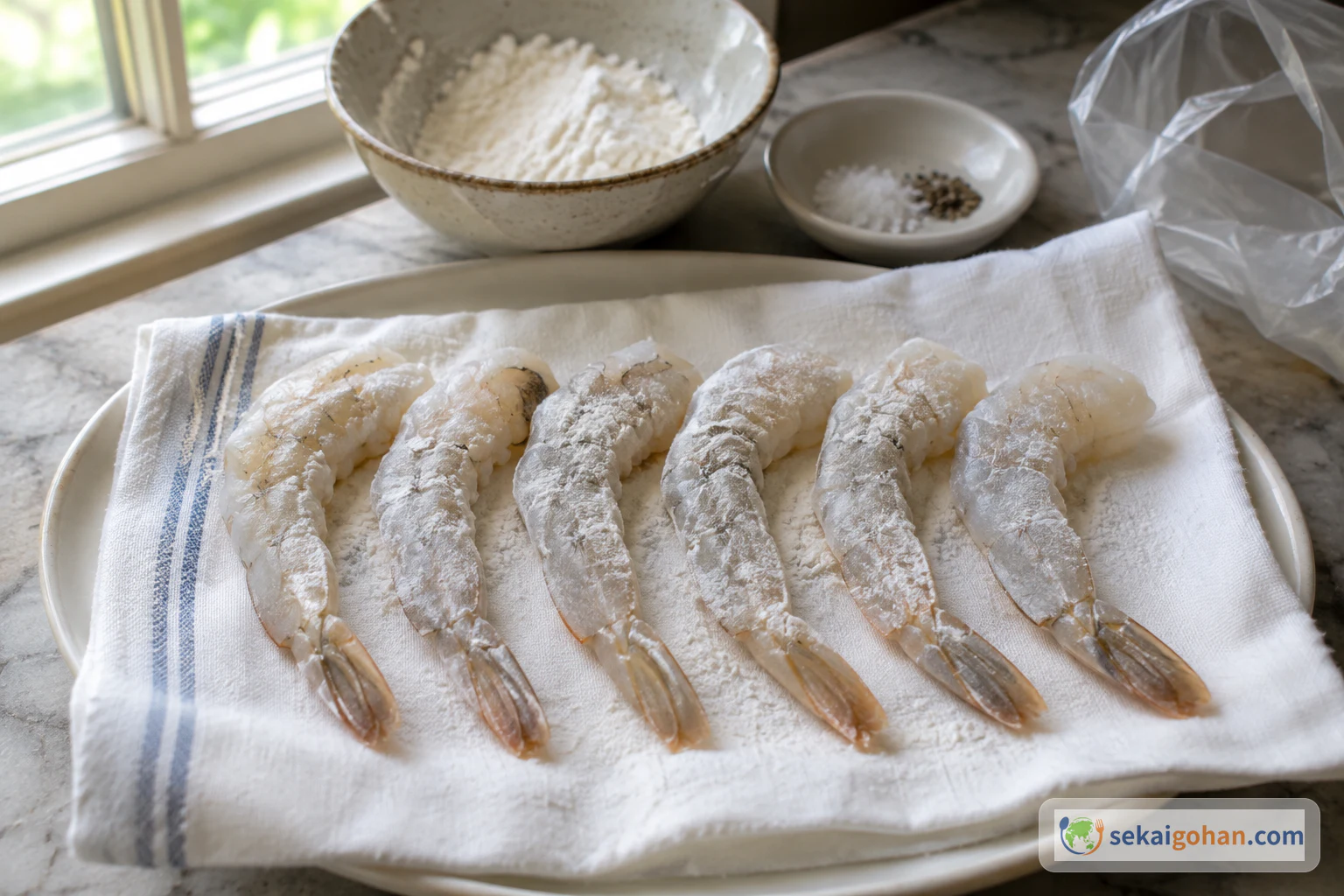
| Batter slides off the shrimp | Wet shrimp, or the dusting was skipped | Pat the shrimp completely dry and dust with 1 tbsp tempura flour before battering |
| Oil spits when the shrimp goes in | Water left on the tails | Dry the tails as carefully as the bodies |
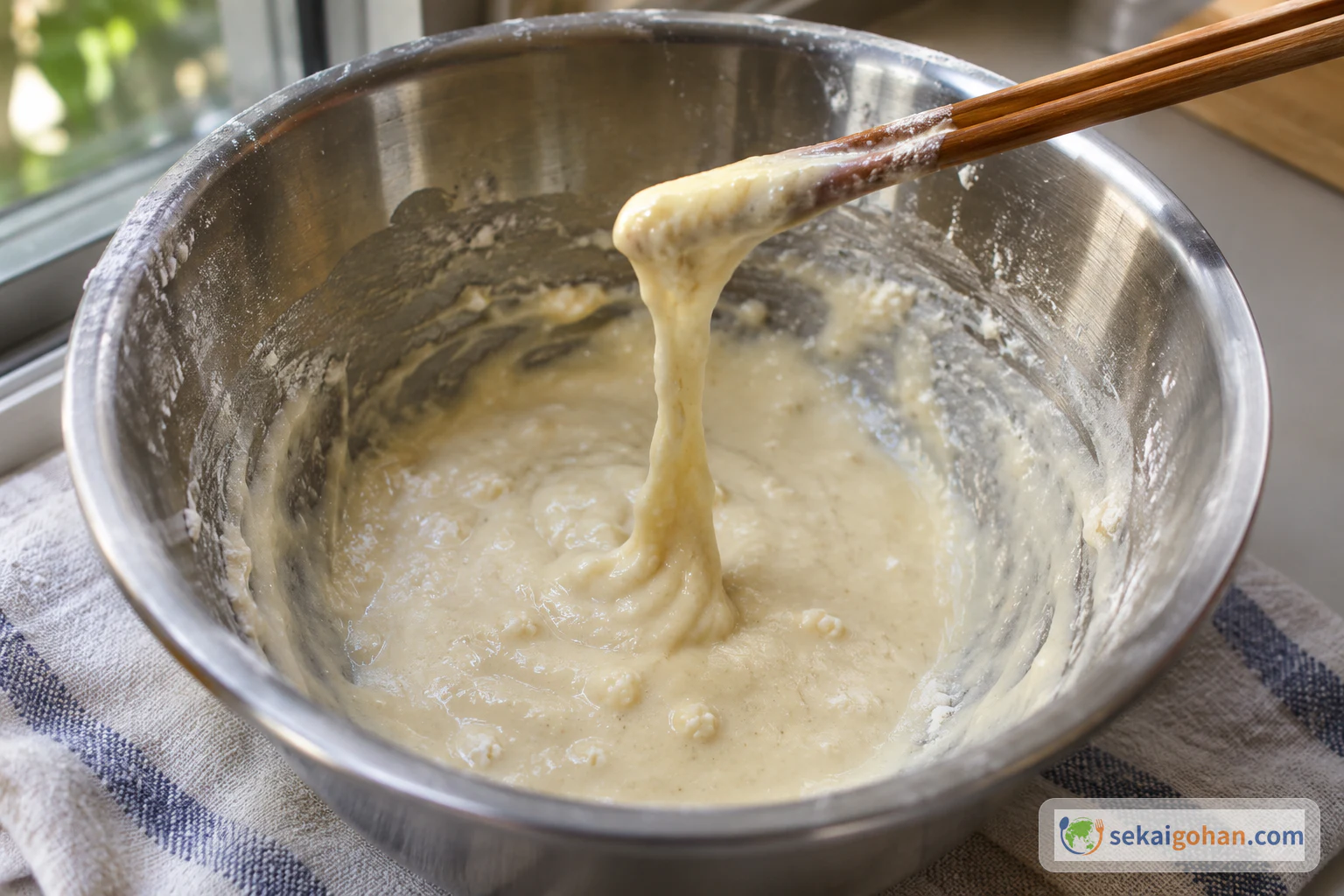
| Coat is greasy and heavy | Batter too thin, or the shrimp stayed in the oil too long | Keep the batter thick enough to ribbon, hold the oil at 340°F (170°C) and lift the shrimp out once the coat is set and crisp |
| Too salty | Mentsuyu of a different strength measured by the same spoon | Use 3× concentrate, or dilute other strengths to match and add it gradually |
| Nori tears around the ball | Strip too wide or brittle, or the ball packed too tight | Tear the sheets into the narrow strips in step 1 and shape the rice firmly but gently |
Serving, Variations and Carrying
At the table and on the road
Set tenmusu out on a plate or bamboo sheath with a little kyarabuki on the side, the way the shops do; its dark, slightly bitter soy flavor cuts the oil of the tempura. Miso soup turns a few pieces into a meal. They are made to travel, for picnics, train rides and gifts, and they taste good warm or after the rice has cooled.
Variations
- Leftover or store-bought shrimp tempura. Skip the frying and toss the tempura with mentsuyu before shaping. These usually carry more batter, so add the mentsuyu bit by bit until it tastes right.
- Black rice tenmusu. Swap part of the white rice for rice cooked with black rice. The ball turns purple-gray and gains a nutty chew.
- Takana tenmusu. Mix chopped takana pickled mustard greens into the rice for a sour, salty bite. Takana is salty, so taste the rice before you add the ¼ tsp salt.
- Hand-salted, Tsu style. Leave the salt out of the rice, wet your hands, rub them with a little salt and shape each ball by hand. The salt sits on the surface, so the first bite is saltier.
Packing and keeping
Let the rice balls cool before you pack them; warm rice shut in a box fills it with steam, and that makes food spoil. Blot away any extra sauce so nothing sits wet in the box. Keep them in the refrigerator or a cool place and eat them soon, and for long trips carry them with an ice pack in an insulated bag. Do not leave them at room temperature for long, before or after cooking.
Frequently Asked Questions
Do I really need a thermometer for the oil?
It is the surest way to hold 340°F (170°C), and that temperature is what lets a thick batter set crisp in 1 to 2 minutes without soaking up oil. A clip-on or probe thermometer also lets you check the shrimp itself if you are unsure it is cooked through.
Should the shrimp stick out of the top?
Either way is right. In Tsu the tempura sits entirely inside the rice, and shops built on the Nagoya style often let it stick out. This recipe wraps the shrimp fully inside the rice.
Can I reheat leftover tenmusu?
Yes. Heat them until the center reaches 167°F (75°C) or above. Reheat only what you will eat, and let the rest go back into the refrigerator promptly.
Can I use sashimi-grade shrimp and fry them briefly?
Fry them the full time until cooked through, whatever the label says. The shrimp in tenmusu is always fully cooked.