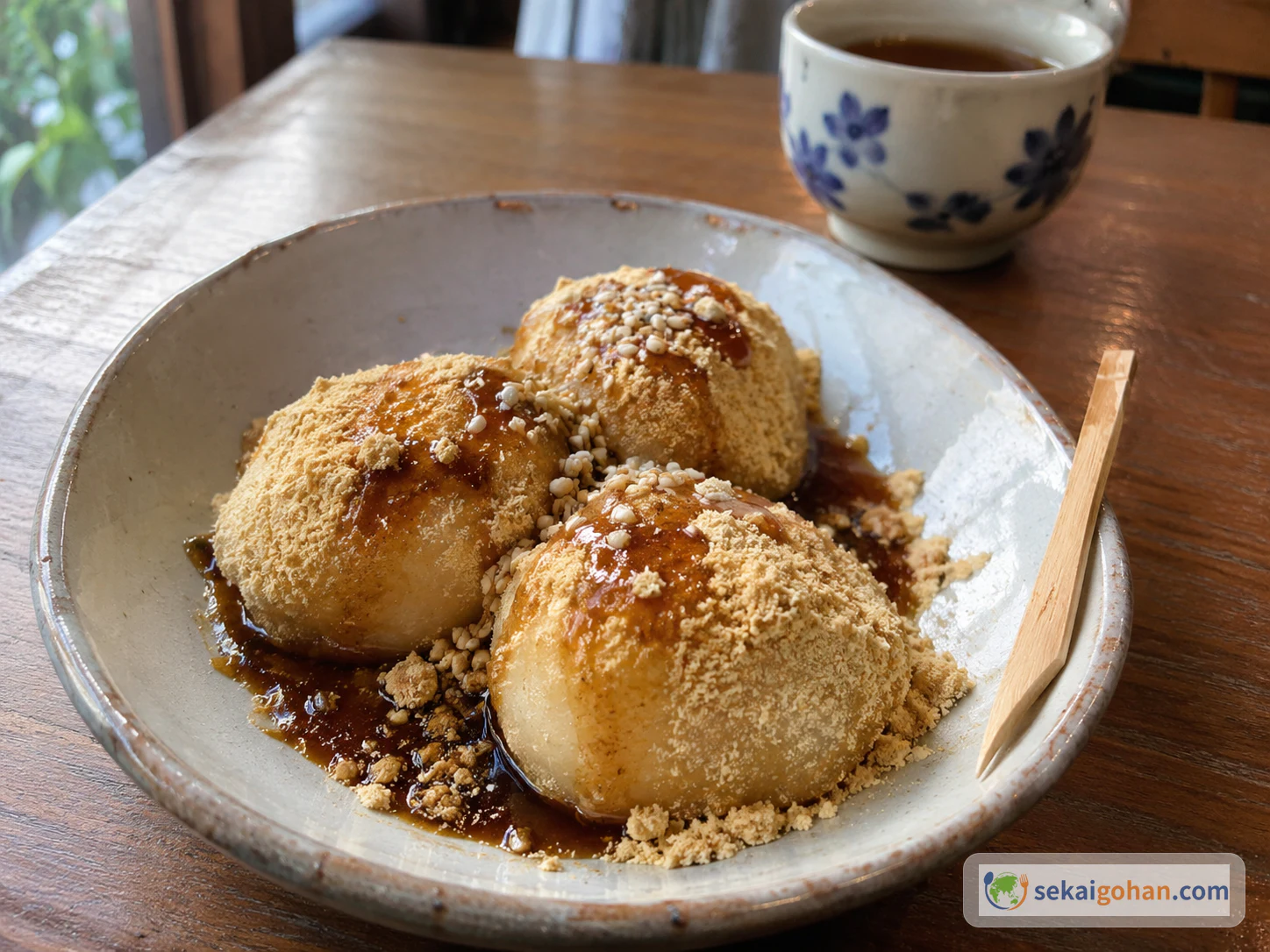
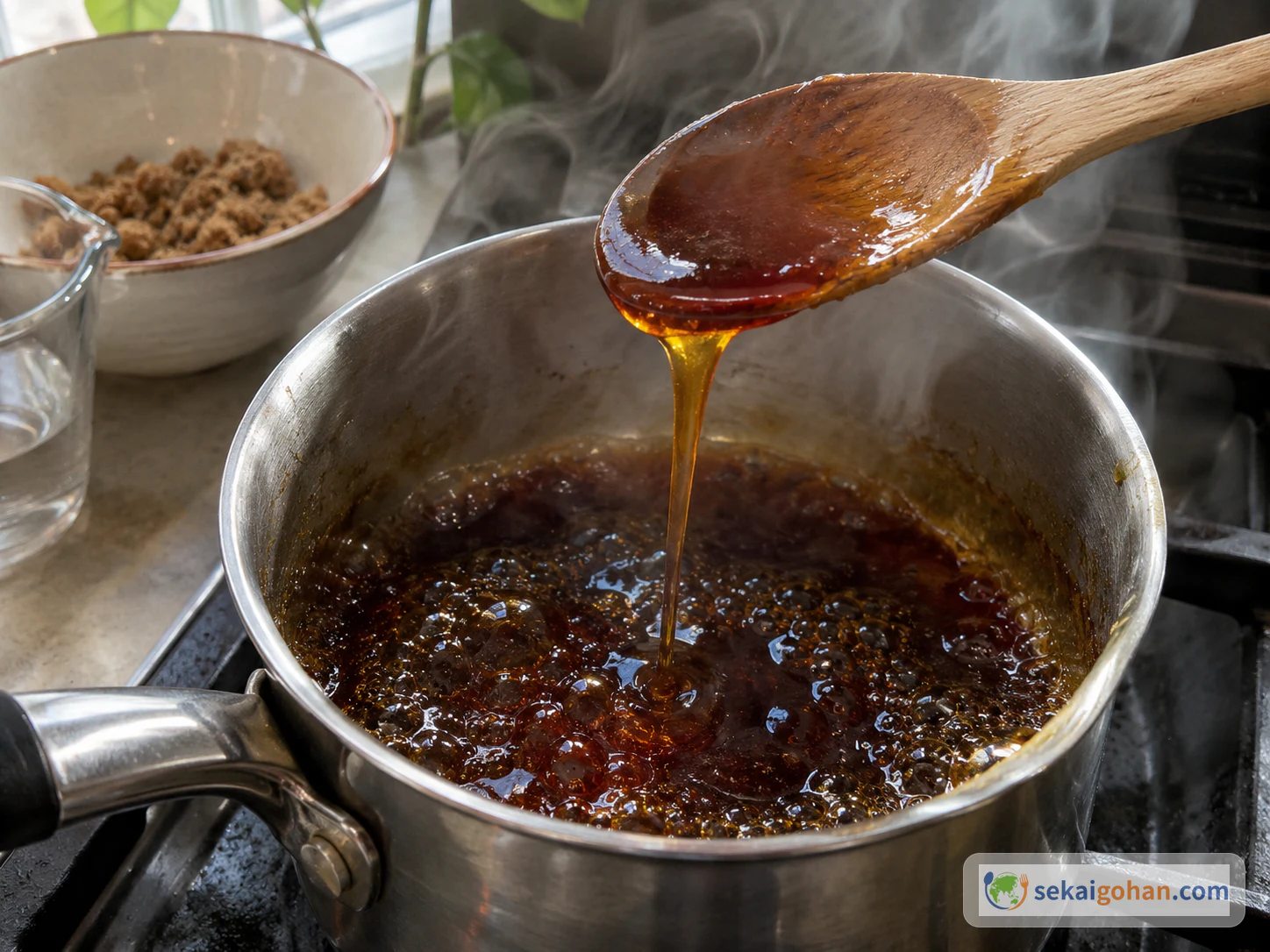
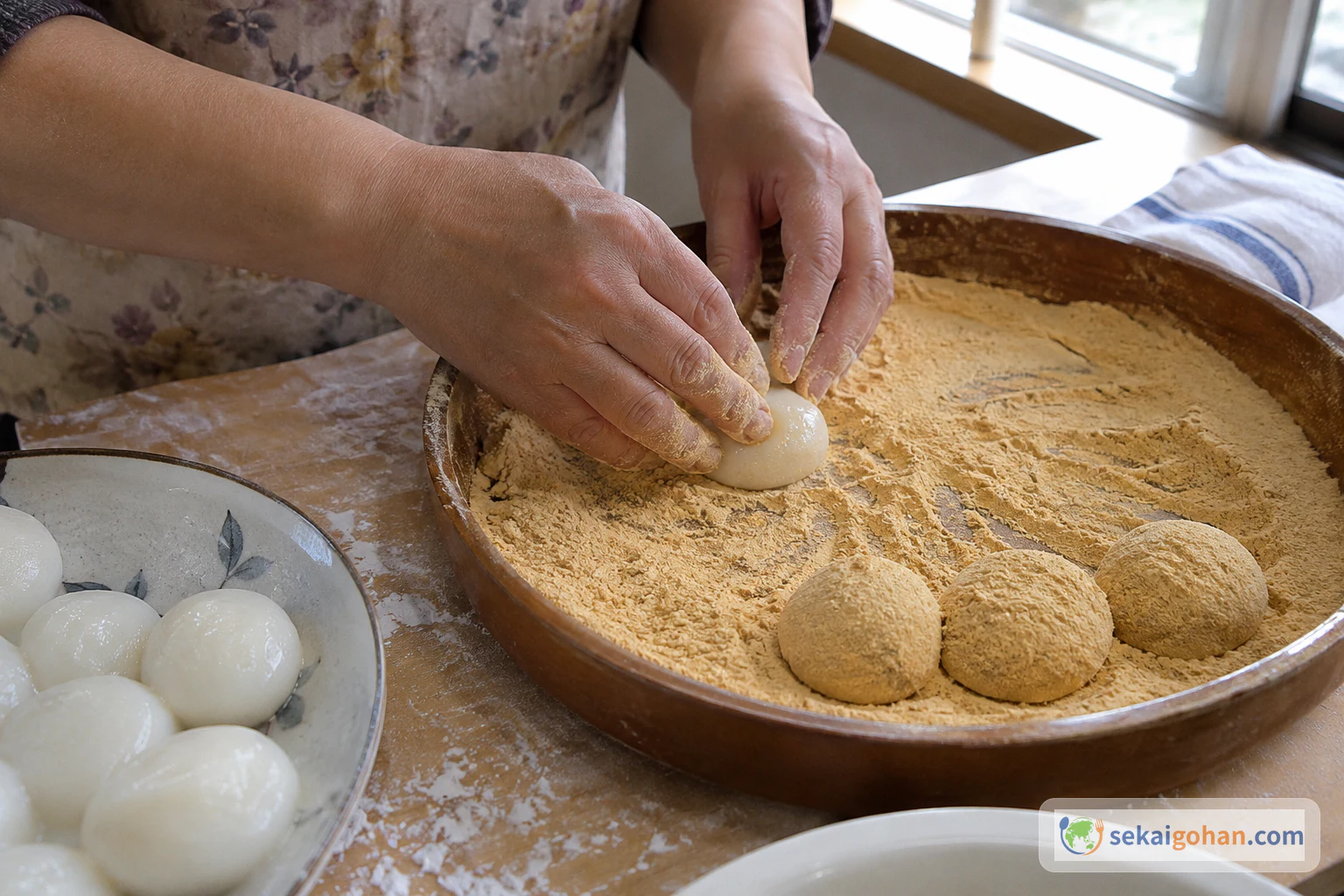
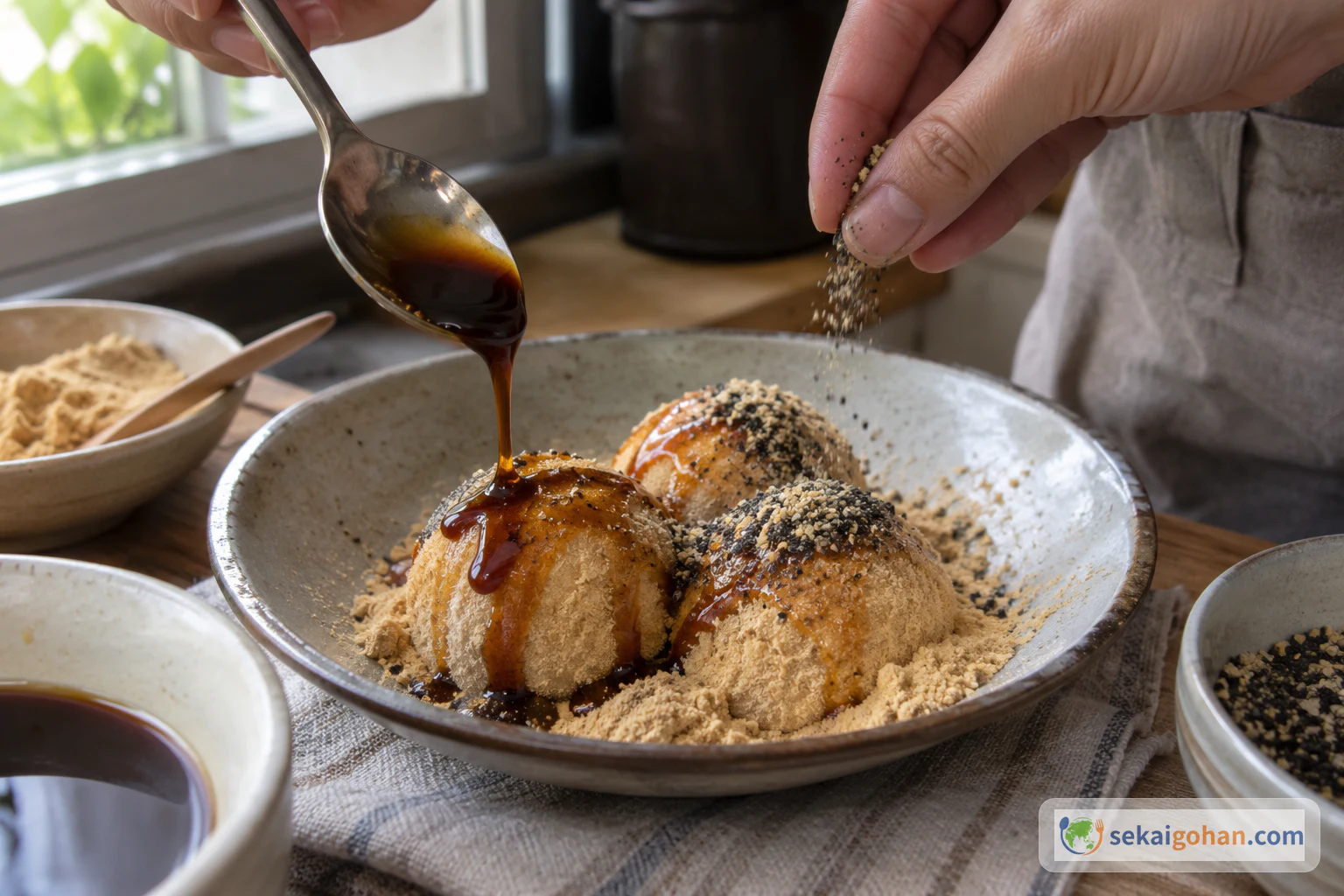
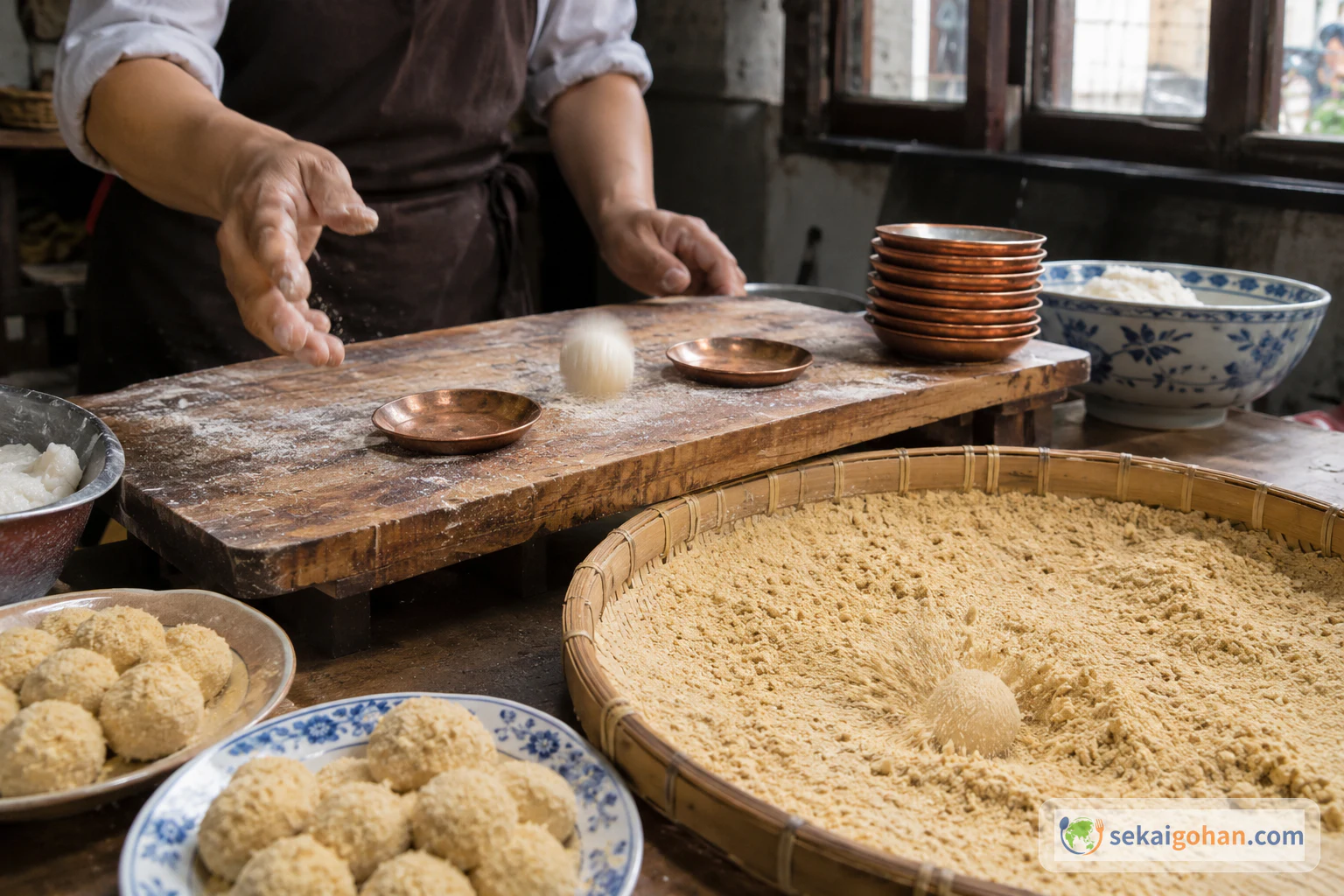
A vendor pulls a piece of warm, sticky rice dough from a white mass and throws it at a wooden board. It strikes a board set with copper, bangs like a firecracker and drops into a wide bamboo tray of golden soybean flour. Two more pieces follow, one after the other, so you hear three bangs in quick succession. Then the three flour-dusted balls go into a small bowl under a pour of dark brown sugar syrup and a pinch of ground sesame. This is sandapao, "three big cannons", a snack from Chengdu in Sichuan. Inside the toasty, nutty coating, the steamed rice pounded into dough is soft and stretchy, and the syrup brings a deep, almost smoky sweetness.
Three Bangs at the Flower Fair
Sandapao belongs to the large family of Chengdu xiaochi, the small snacks people eat on the street, between meals and over tea. Its main ingredients are glutinous rice, yellow soybeans, brown sugar and sesame. In the old days it had an unusual way of being sold: you found it only at the flower fairs, the big seasonal gatherings of the city. There it was one of the crowd favourites, alongside Zhang's cold jelly noodles and sugar-oil fritters. In 1990 it was among the snacks chosen as famous Chengdu xiaochi. It is often called the most theatrical snack in the city, and its traditional making has been recreated at the Sichuan cuisine museum in Chengdu.
Why it is called three big cannons
The name comes from the sound. Each batch of dough is split into three pieces and thrown hard, one after another, so the board rings out three times, dang, dang, dang, like three cannon shots. Accounts differ on what the dough actually strikes. Some describe a copper tea saucer set on the board, some describe copper plates that shake with the impact, and some describe a gong. All of them agree on the three blasts.
The characters are 三大炮: san (three), da (big), pao (cannon). English menus and street signs often just translate it as "Three Big Cannons". The noise is the point. A vendor who skips the throw is still selling the same snack, only without the bangs.
Where you find it now
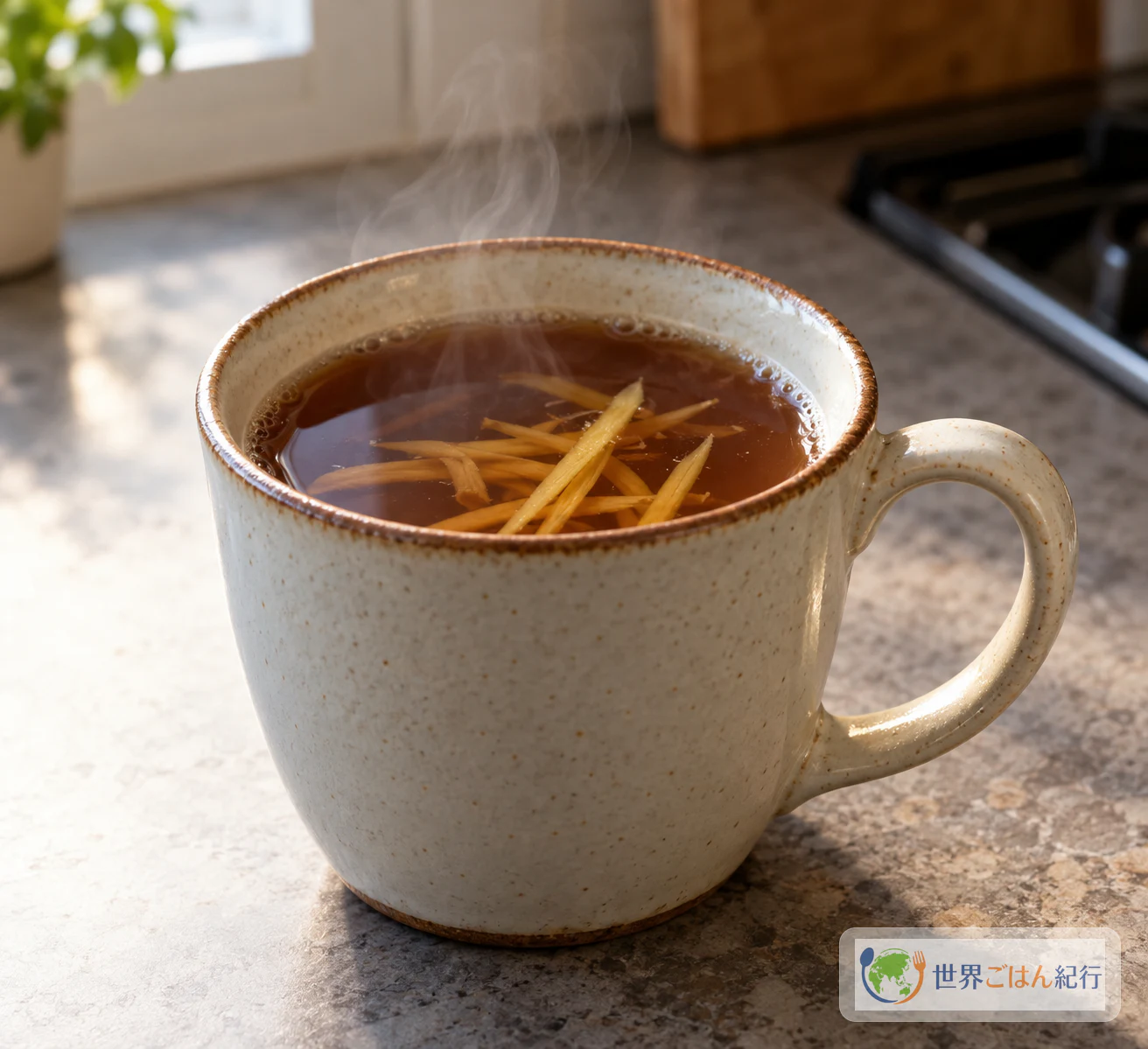
Sandapao is still a snack to watch being made. Reports place it around Jinli, Wenshufang, People's Park and the Kuanzhai Xiangzi lanes, often near teahouses, and some stalls sell it more cheaply without the performance. Check current stalls before you travel. The usual drink alongside is laoying tea (老鹰茶, also written 老荫茶), a toasty, slightly bitter local brew that cuts the sugar. If you are building a Sichuan snack table at home, it gives a sweet end to a spread of dan dan noodles, and it cools the mouth after a numbing plate of mapo tofu. For more dishes from across the country, see China.
How it differs from kinako mochi and rice-flour cakes
Anyone who knows Japanese kinako mochi will recognise the pairing of soybean flour and dark sugar, but the dough is made differently. Sandapao starts from whole grains of glutinous rice, soaked, steamed and pounded, so the texture is close to an unfried ciba rice cake: elastic, with a faint memory of the grain. There is also a Chinese glutinous rice cake made from rice flour and water and finished the same way with soybean flour and brown sugar syrup. That is a separate dish, and it comes out smoother and denser. The sesame is handled in different ways too. Some stalls toss the dough in mixed soybean and sesame powder, while others save the sesame for the very end, over the syrup, as this recipe does.
Ingredients
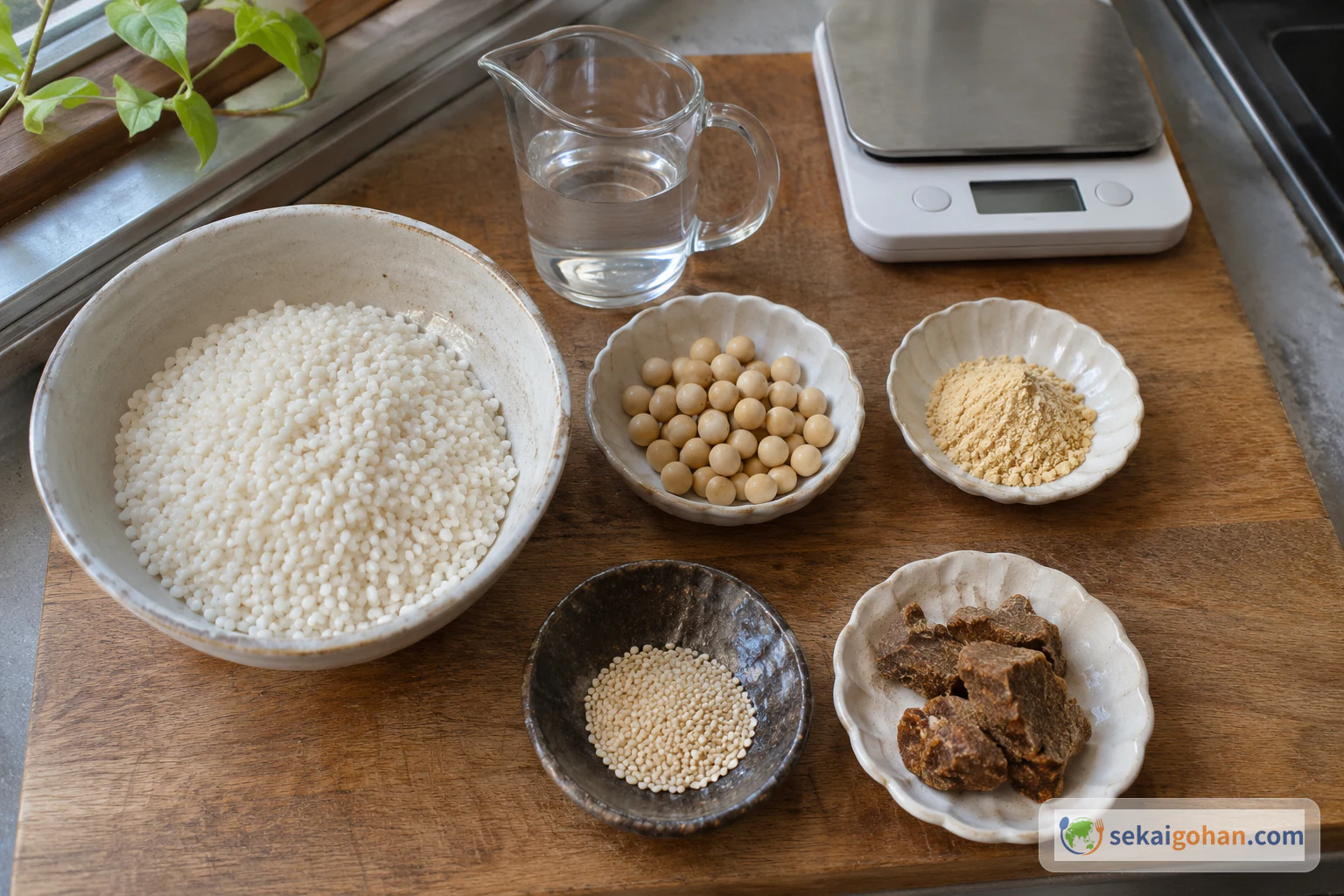
Sandapao contains soy and sesame. If you buy ready-made soybean flour or brown sugar, check the label for other allergens and shared-facility statements. Always use soybean flour that has been roasted. Never use raw soybean flour.
Equipment
- Large bowl for soaking
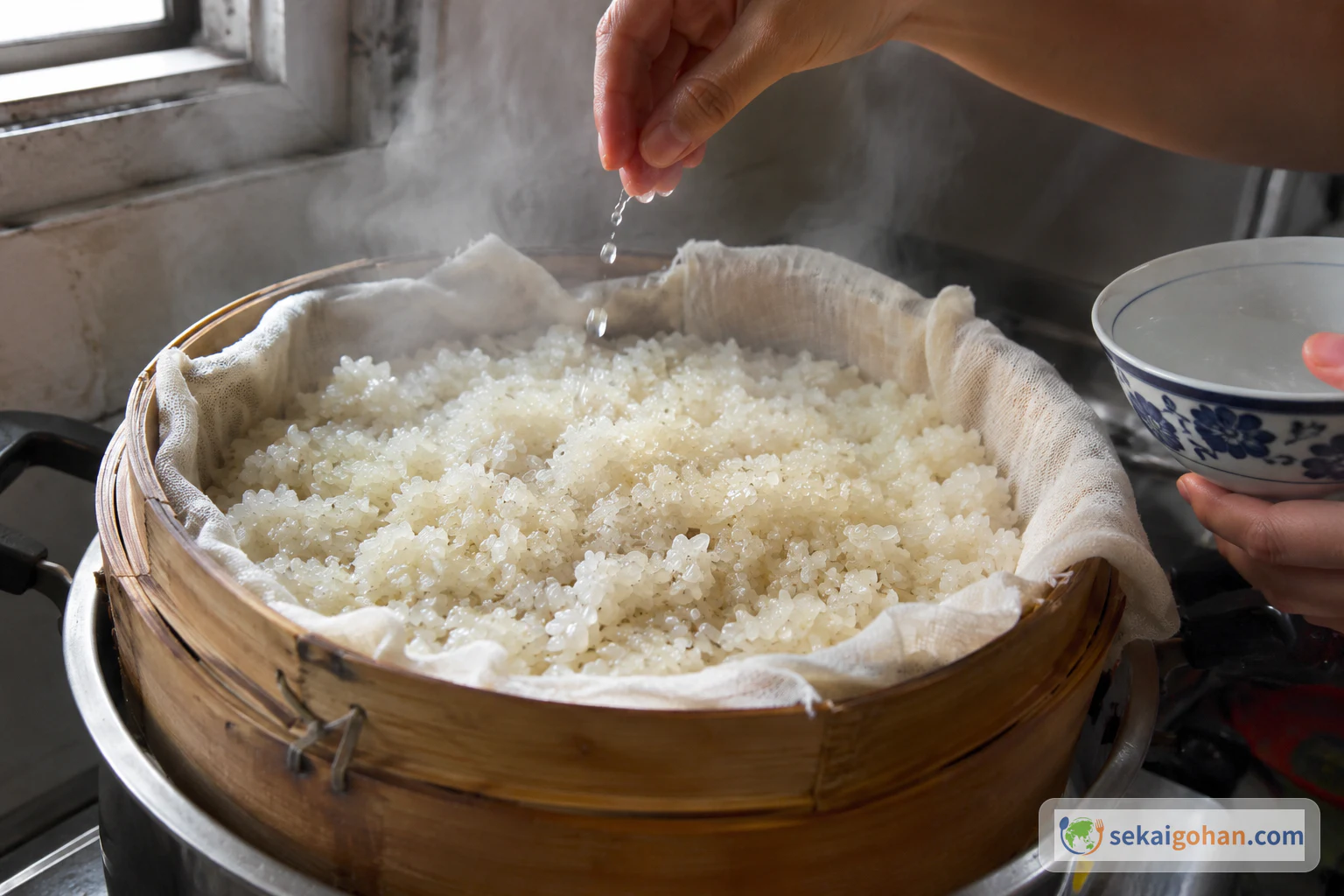
- Steamer (bamboo or metal) set over a pot, with a clean cloth to line it
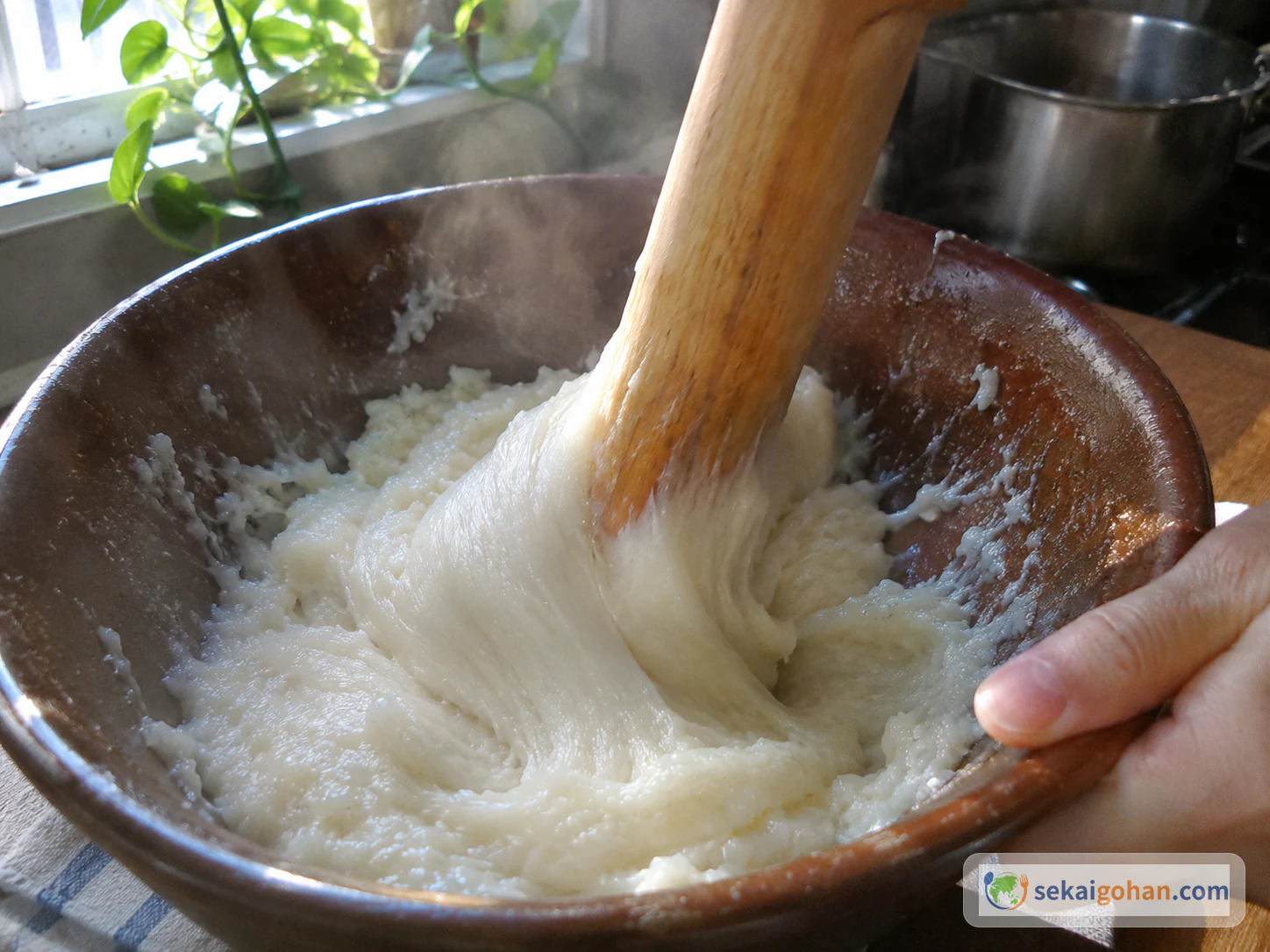
- Large, heavy, sturdy bowl and a wooden pestle, or a food processor
- Dry frying pan (or an oven and tray) for roasting
- Spice grinder or mortar
- Small saucepan
- Wide, shallow tray for the soybean flour
- Kitchen scale
- Small fine sieve for dusting
- Small serving bowls and skewers or small spoons
Choosing and Substituting
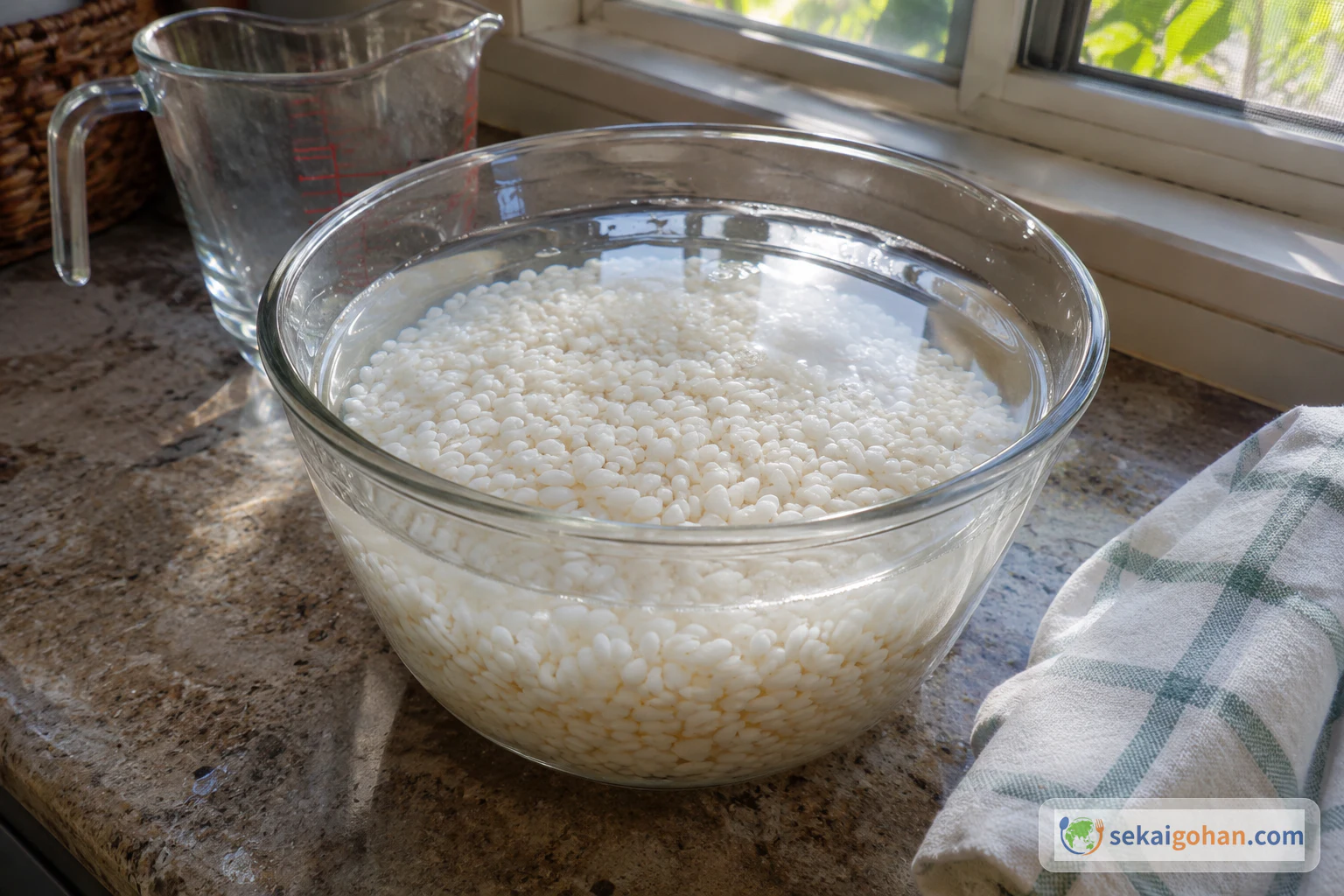
The rice has to be round-grain glutinous rice. Chinese grocers sell it as sticky or sweet rice, and Japanese mochigome works just as well. It is the only ingredient that makes the dough stretch. Glutinous rice flour will not stand in for it, because it gives you the rice-flour cake described above rather than pounded rice.
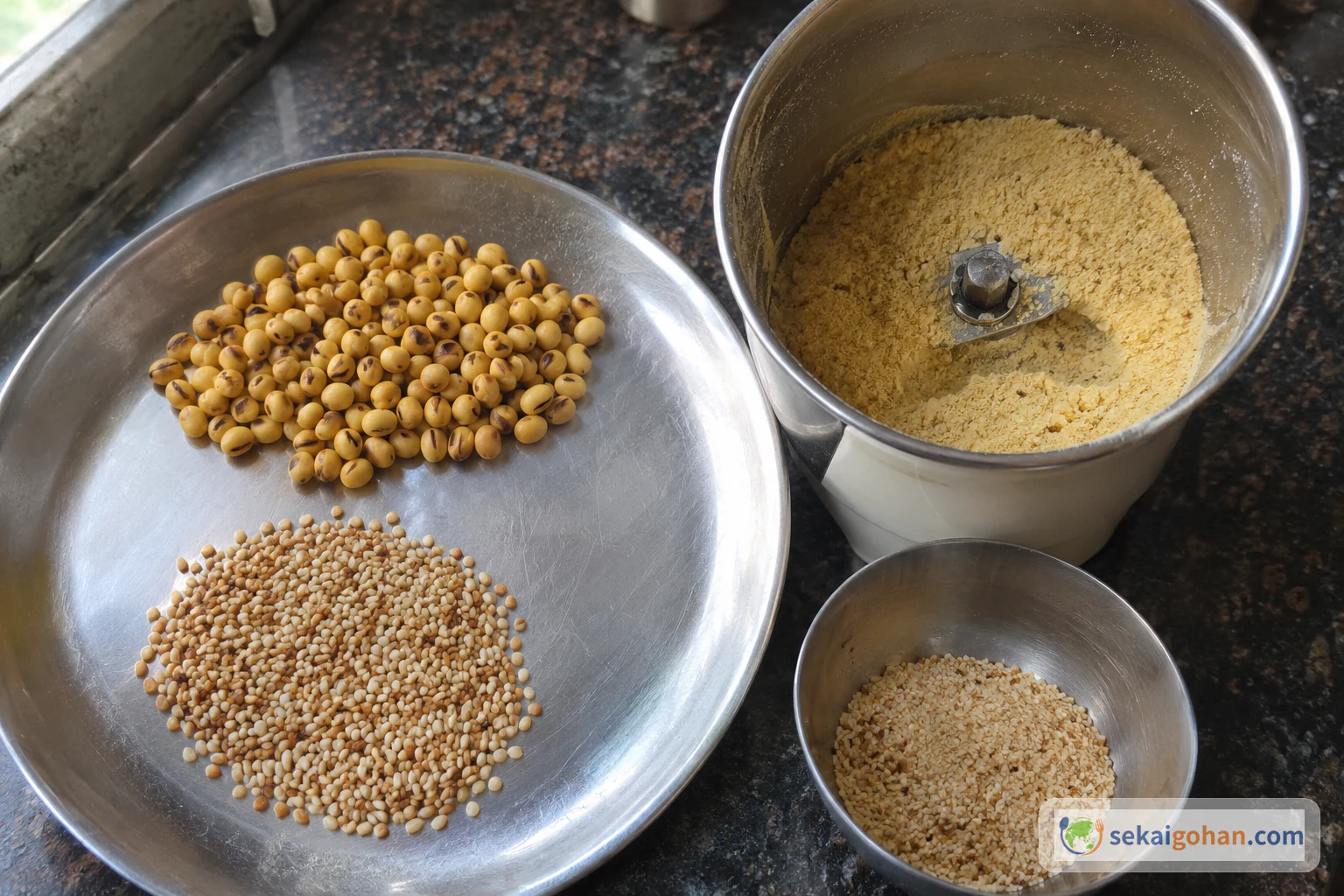
For the coating, roasting and grinding your own dried yellow soybeans gives the freshest, deepest smell. Ready-roasted soybean flour (kinako) is the easy swap and works well. Its colour and toastiness depend on how hard the brand roasts it, so a well-roasted one gives a deeper taste. Freshness matters more than which route you take, and the powder tastes best on the day it is made or opened.
Hongtang is unrefined Chinese brown sugar with a dark, molasses-like depth. Dark muscovado or Japanese kokuto, either powdered or in lumps that you crush, comes closest. Light brown sugar and white sugar give you sweetness without that depth, and the syrup ends up tasting flat and candy-like. White sesame works well. Whichever you use, roast it yourself so the powder smells toasty and fresh.
Method
The rice needs a 12-hour soak, so start it the night before. While it soaks, roast and grind the two powders and cook the syrup, which leaves everything ready for the moment the rice comes out of the steamer. Glutinous rice firms as it cools, so the steaming, pounding and coating should run straight into each other while the dough is still warm.
Steam scalds faster than boiling water. Open the steamer lid away from you, and handle the cloth and the hot rice with care. Brown sugar syrup sticks to skin and holds its heat, so keep children away from the saucepan.
When It Goes Wrong
| What you see | Why | What to do |
|---|---|---|
| A hard, raw centre in the dough | The rice was soaked too briefly, the steam was weak, or the grains dried out in the steamer | Soak the full 12 hours, steam over high heat with a sprinkle of water, and moisten with boiling water before pounding |
| Grains you can feel in the finished ball | The rice was pounded too little or was too dry | Add a little more boiling water and keep pounding until the grains have almost disappeared |
| Dough sticking to hands and pestle | Dry hands, dry pestle | Wet the pestle with water, and dust your hands with soybean flour before shaping |
| Dough tears and won't round up | It cooled before shaping | Shape and coat straight after pounding, and have the flour and syrup ready first |
| Syrup runs off and pools thinly | Not cooked long enough | Return it to low heat and cook until a drop on a plate flows slowly |
| Coating tastes raw or bland | The soybeans were under-roasted, or the kinako is stale | Roast until clearly nutty and fragrant, and grind or open the powder on the day |
Serving and Variations
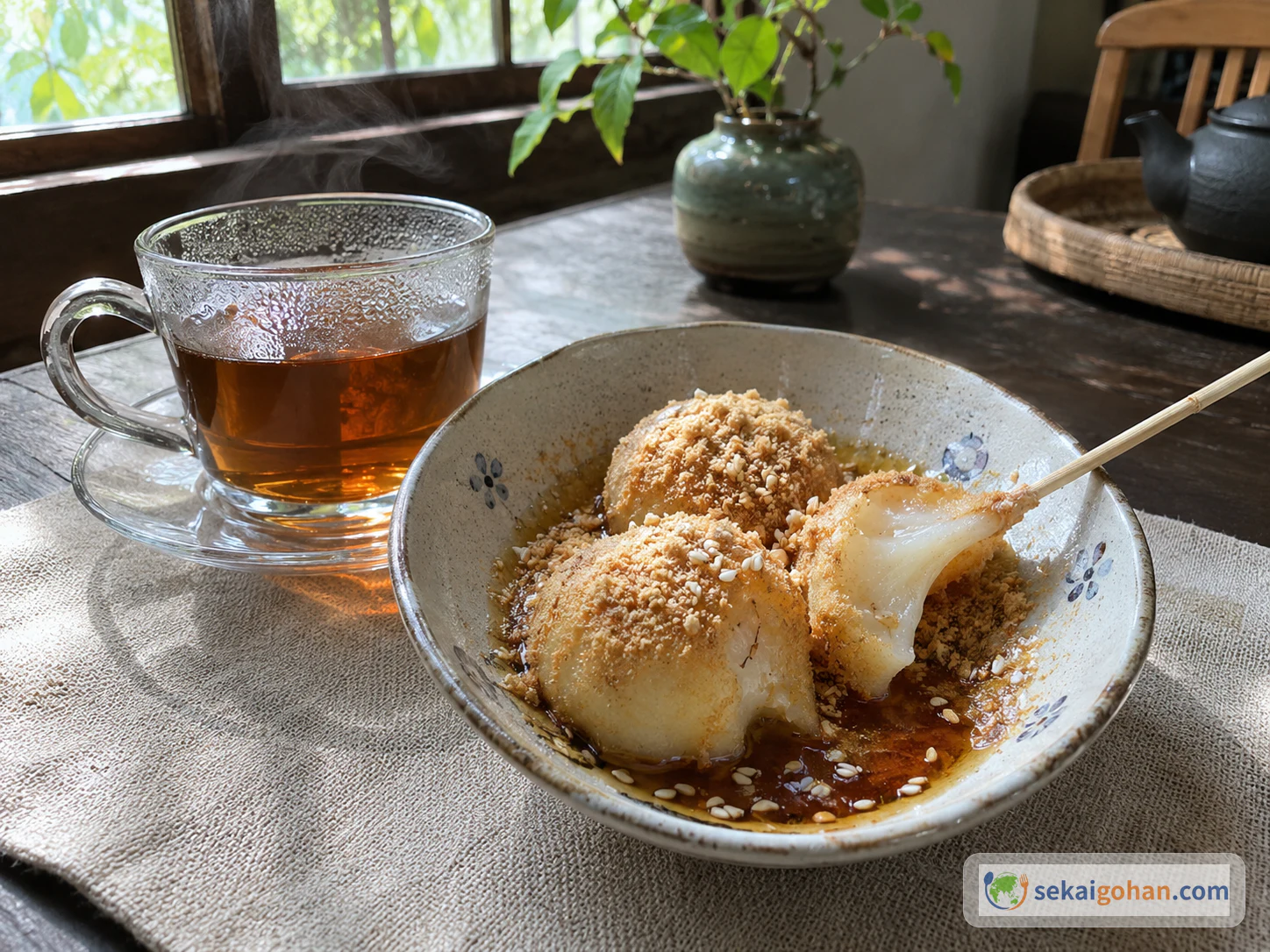
Serve sandapao as a snack or a sweet, three balls to a bowl, with a cup of hot tea. In Chengdu that tea is laoying tea. At home any plain, unsweetened hot tea works, and its slight bitterness balances the syrup. Eat it with a skewer or small spoon, taking small bites.
Sticky rice cakes cause choking accidents, especially among older people. Cut the balls into small pieces, take a sip of tea first to moisten the throat, chew well so the dough mixes with saliva, and eat with someone nearby. Nobody should swallow a ball whole in one bite. Do not give sandapao to small children. If you suspect someone is choking, call emergency services immediately.
Variations
- Sesame in the coating. Mix the ground sesame into the soybean flour and roll the dough in both together. The coating turns darker and nuttier, and the syrup becomes the only thing added at the end.
- Kinako instead of home-roasted soybeans. This saves the roasting and grinding. The flavour follows the brand's roast, so pick a well-toasted one for a deeper taste.
- Kokuto syrup. Cooking the syrup from Japanese kokuto gives a darker, more mineral sweetness, close to Japanese kuromitsu.
Frequently Asked Questions
Can I use glutinous rice flour to save time?
Rice flour mixed with water gives you a smooth rice-flour cake, which is a different snack. It lacks the elastic, slightly grainy bite that comes from steaming whole grains and pounding them. For sandapao, start from whole glutinous rice.
Is a food processor as good as pounding by hand?
It can stand in. A food processor crushes the steamed rice into dough, and it is a sensible choice if you have no heavy bowl and pestle. Add the boiling water first as usual, and stop when the grains have almost disappeared and the dough stretches.
Can I make sandapao ahead?
Eat it freshly made. Glutinous rice firms as it cools, and the soft, stretchy dough is the whole pleasure. You can roast and grind the powders and cook the syrup earlier the same day, then steam, pound and coat just before serving.