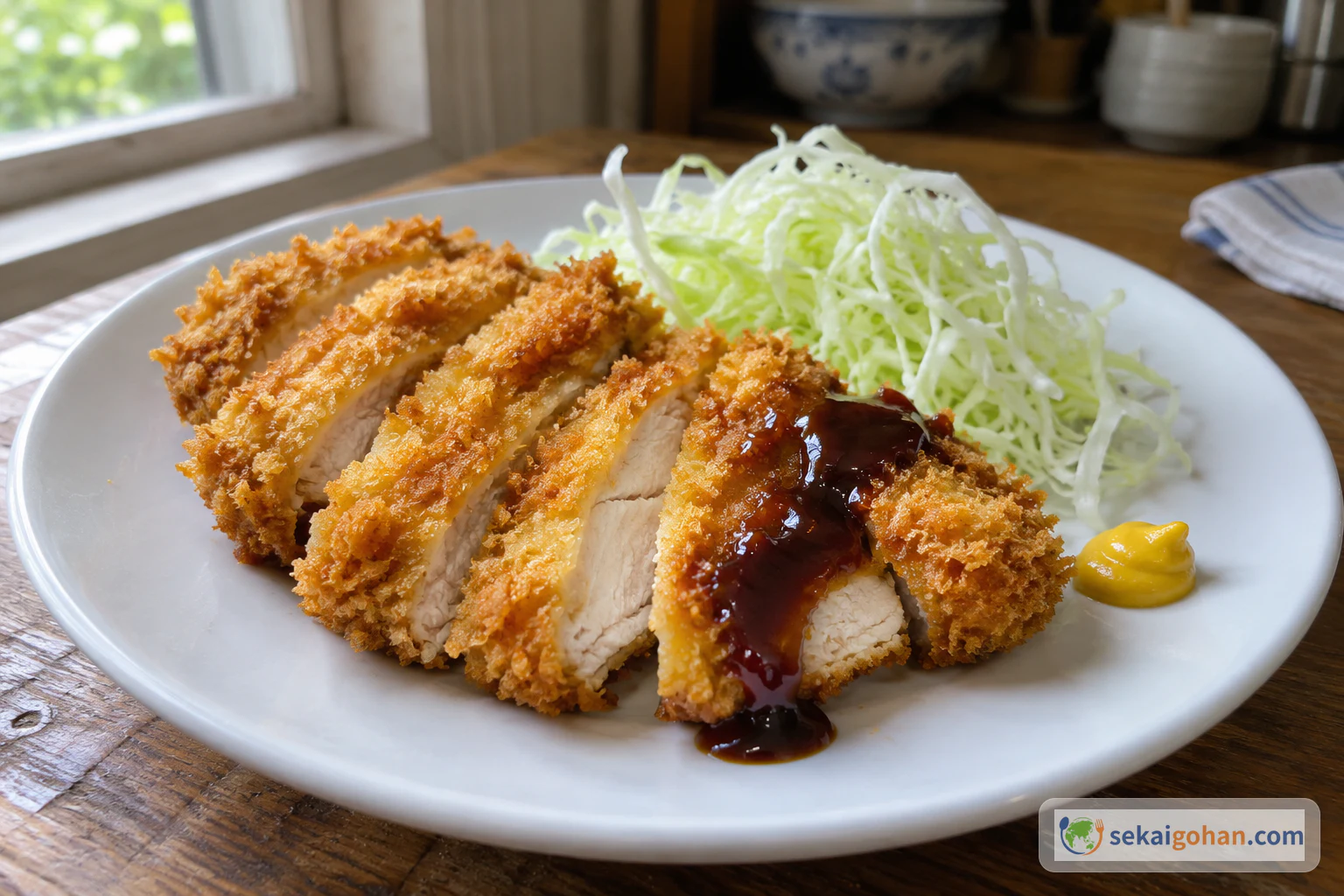
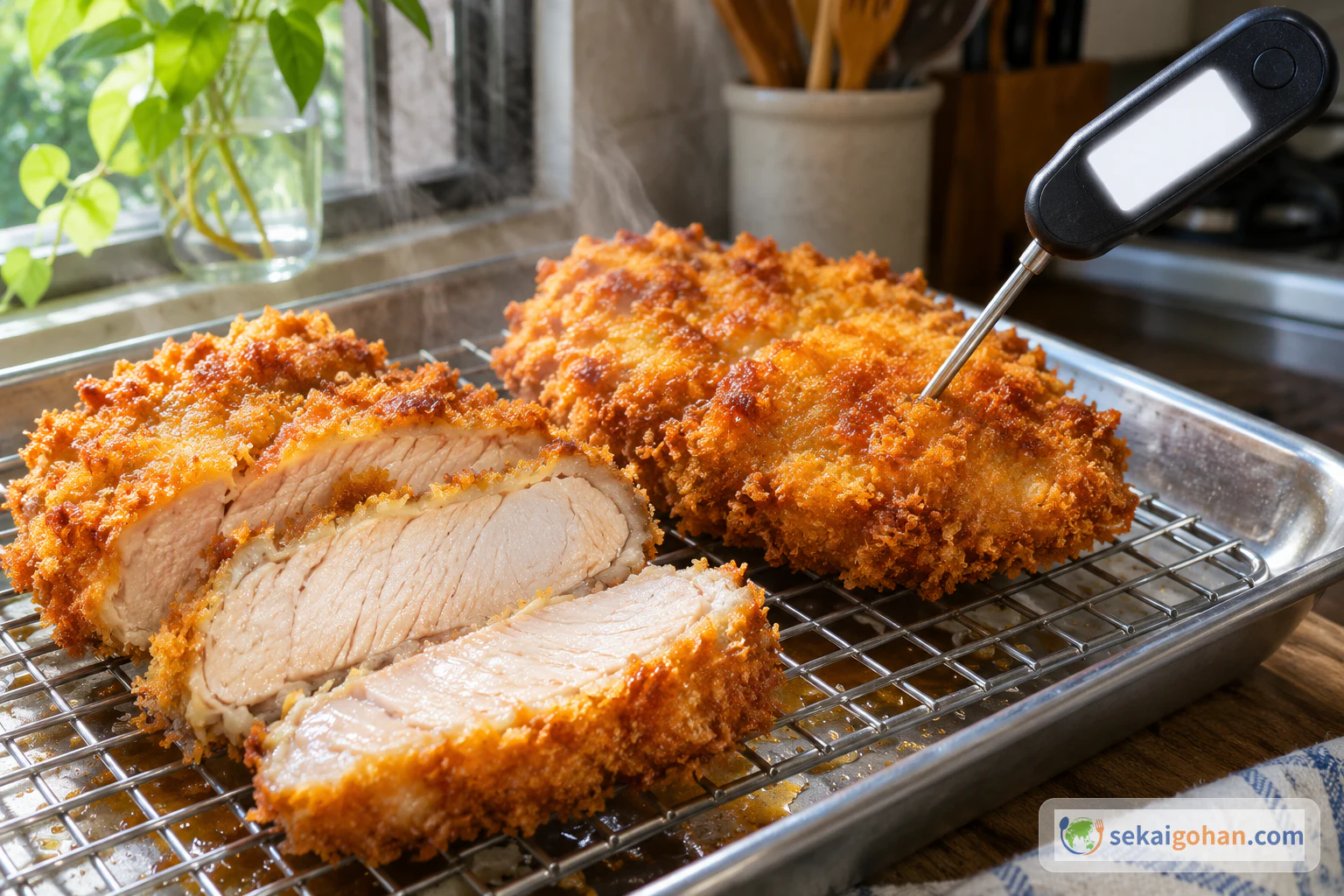
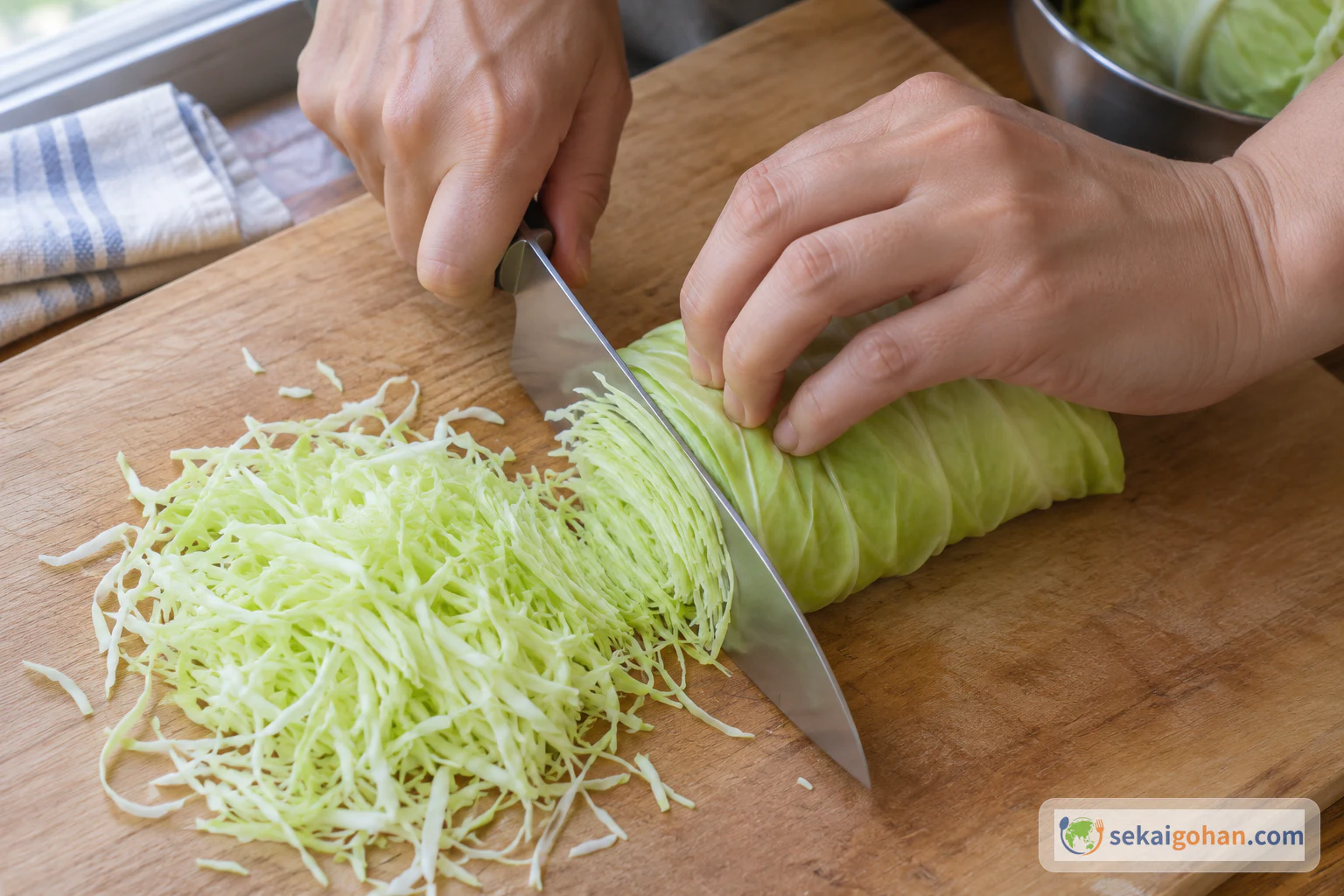
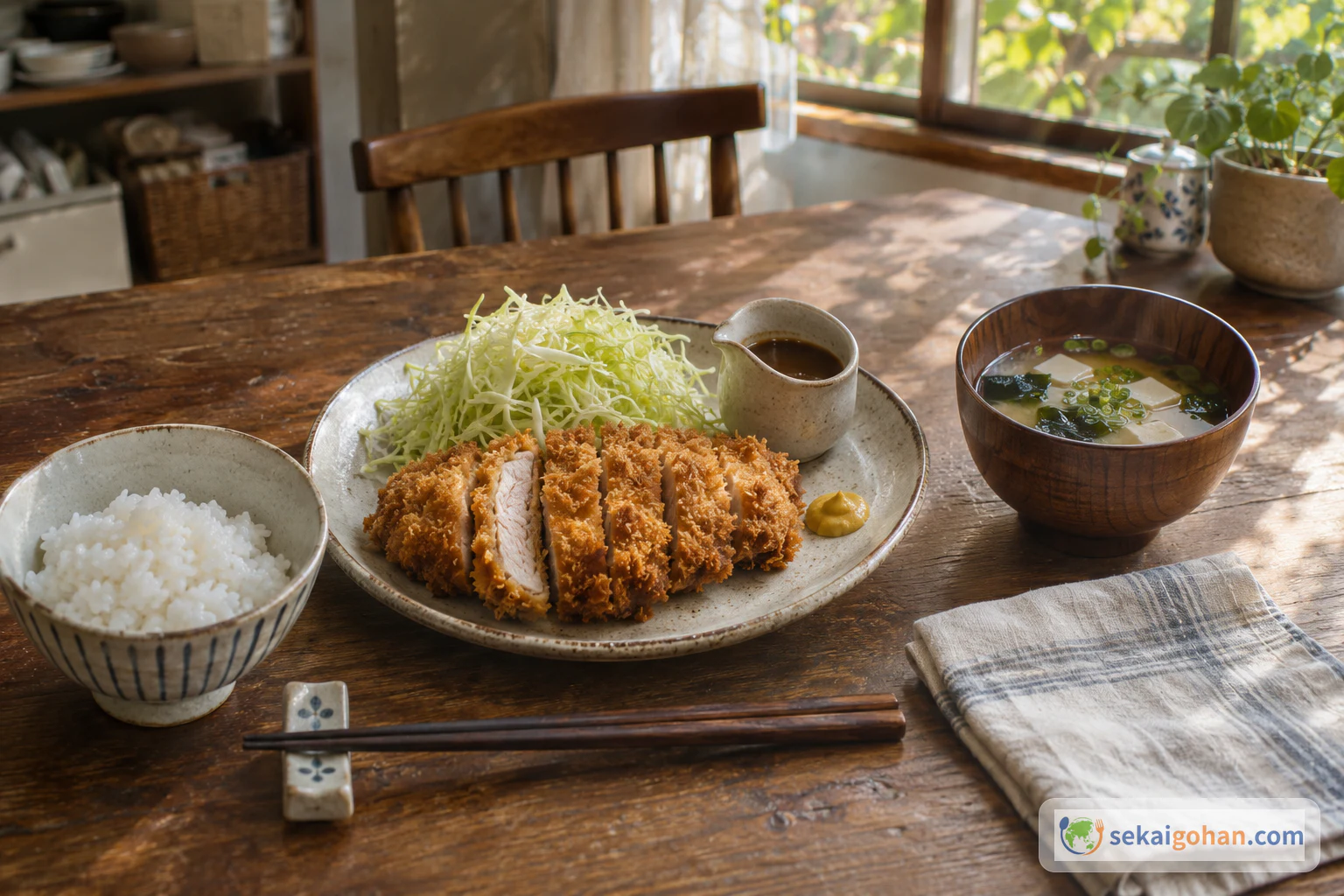
The knife goes through the crust with a dry crackle. As the cutlet falls into strips on the board, steam comes off a cut face that is white all the way through. Beside it sits a loose pile of shredded raw cabbage, pale against the golden crumb. Then comes the thick brown sauce and a dab of yellow mustard at the edge of the plate.
Chicken katsu is a breast cutlet coated in flour, egg and coarse fresh panko, then fried in a frying pan. It belongs to Japanese yoshoku cooking and is a lighter cutlet than pork. The crumb is crisp and the meat is mild and juicy, so the sauce and the sharp mustard do the seasoning at the table. Two things decide it at your stove: meat of even thickness, and a center that reaches the safe temperature before you slice.
A Cutlet from the Yoshoku Table
Katsu is a yoshoku dish. Yoshoku is the Western-style cooking that Japan made its own. In the early Meiji years, Western food belonged to politicians and the wealthy. By the middle of the era it had moved from special occasions into everyday eating. Dishes adjusted to Japanese taste and eaten with rice, a mixed Japanese-Western style, became the base of what Japan now calls yoshoku. You can see the whole idea on one plate of Japanese food: a fried cutlet, a bowl of rice beside it, and cabbage instead of a cooked garnish.
The cutlet itself started as French veal, coated in dry breadcrumbs and pan-fried. A Ginza Western-food restaurant called Rengatei, opened in 1895, changed it from pan-frying to deep-frying, borrowing from tempura. It also switched the coat from dry crumbs to coarse fresh panko and used cheaper pork in place of veal. In 1899 it put the result on the menu as "pork cutlet." It served the cutlet with shredded raw cabbage and nothing else, a Worcestershire-based sauce and rice, and that pairing suited Japanese diners. All of this is the history of pork tonkatsu. When and where chicken first went into the same coat is not settled.
Today chicken katsu is an ordinary main dish at home, and children eat it at school too. In Utsunomiya, chicken katsu with grated cheese mixed into the crumb is part of the city's standard school-lunch menu. Households and kitchens differ mostly in the frying. Some fry a little cooler, some hotter, and small school-lunch cutlets cook faster than a home-sized breast.
Its neighbours are easy to mix up. Tonkatsu uses pork loin. Karaage uses a different coating and a marinade. Chicken nanban goes into sweet vinegar and comes with tartar sauce. Katsudon, katsu sandwiches and katsu curry are ways of eating a cutlet you have already fried. Chicken katsu made with skinless breast is the plainest and lightest of the family.
In Japan it goes by chicken katsu, tori katsu (tori means chicken) and, less often, chicken katsuretsu, from the old word for cutlet. Menus and recipes most often say chicken katsu.
Ingredients (serves 2)
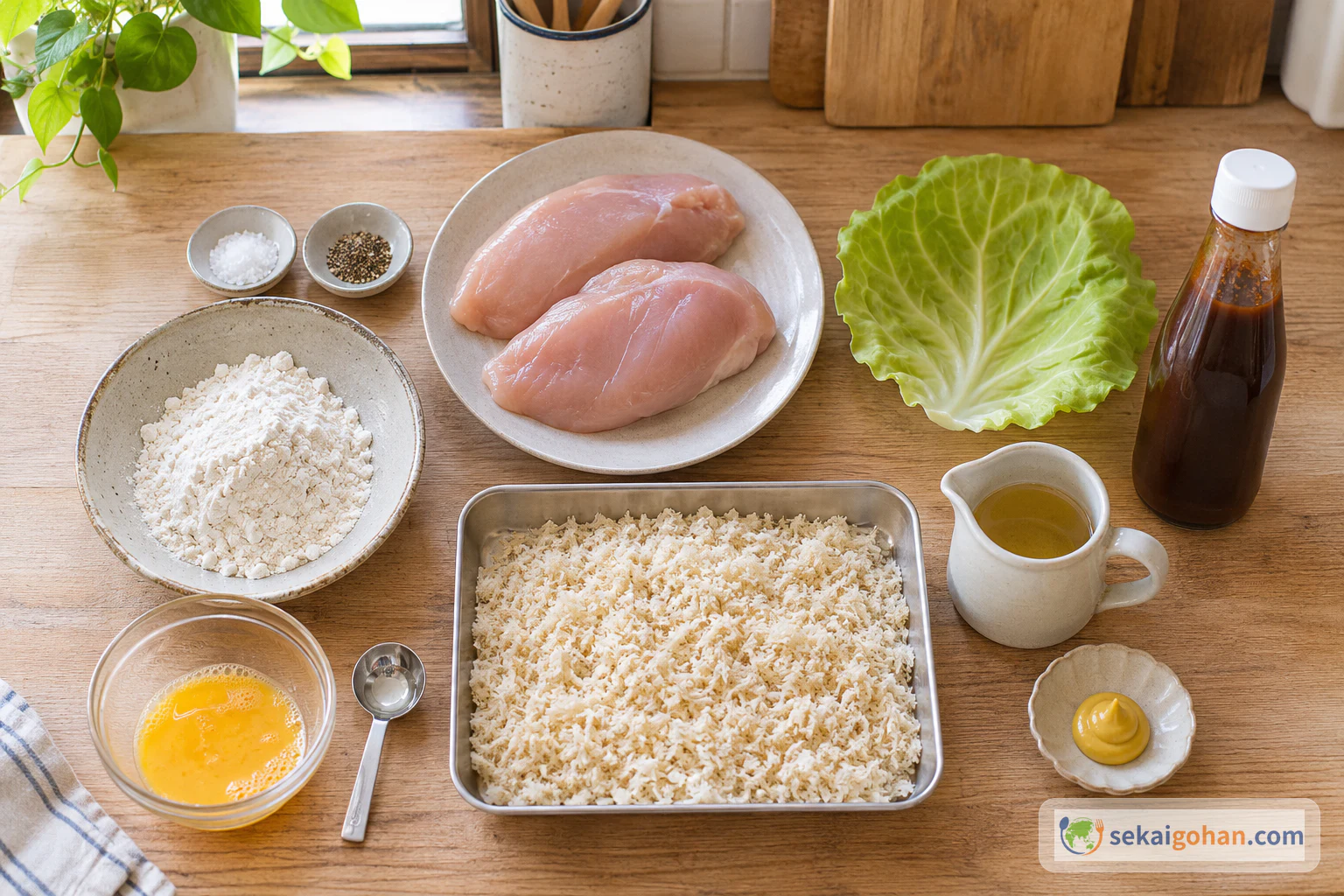
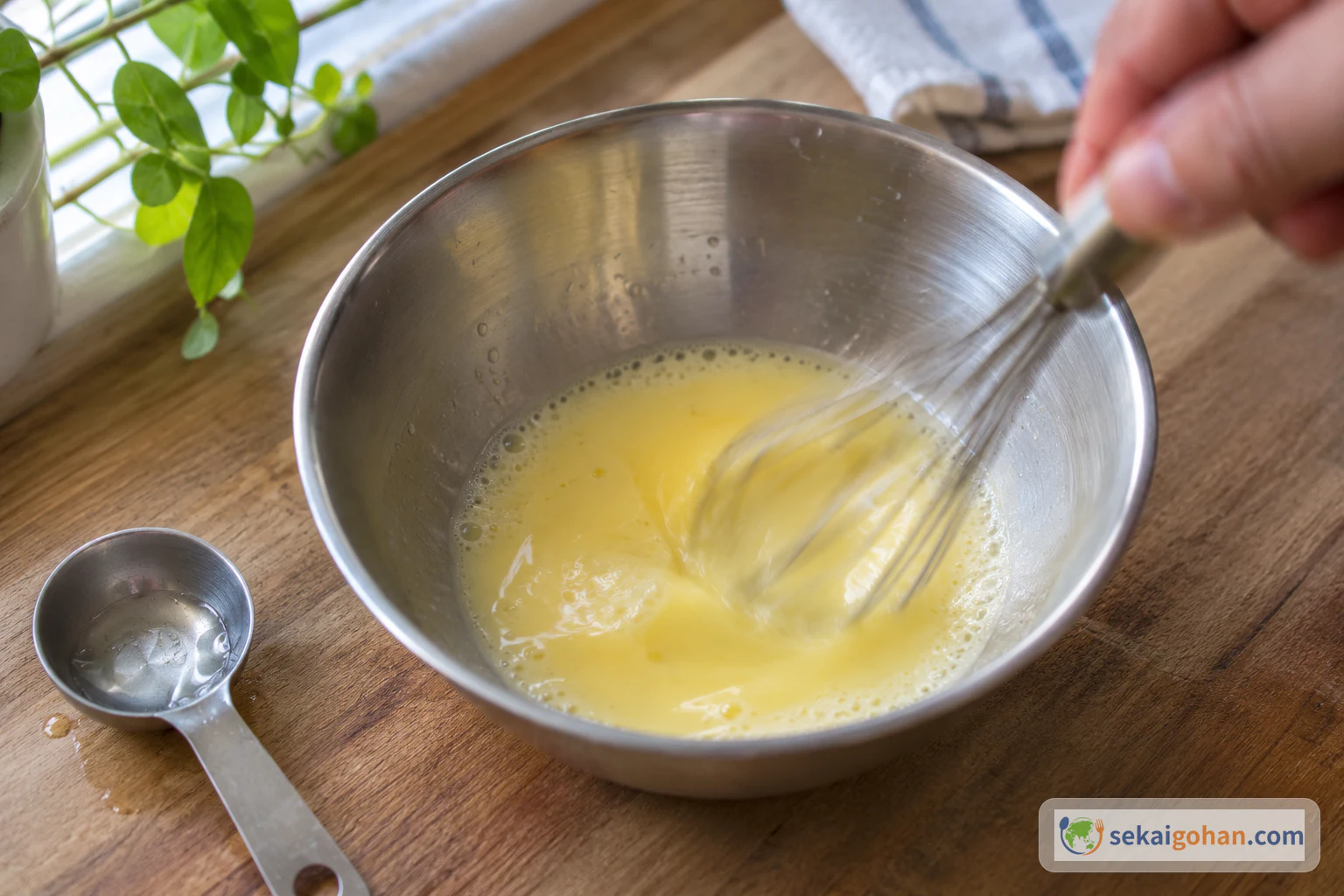
The egg wash is only half a beaten egg loosened with water. It is thin and runny, not a batter. A thin wash grips the flour and holds the panko in one fine layer. A thick wash turns into a heavy, bready coat that pulls away from the meat.
Contains wheat (flour, panko), egg and chicken. Tonkatsu sauce, Japanese mustard and frying oil vary by product, and some frying oils are soybean oil, so read the labels on what you buy.
Equipment
- Deep frying pan
- Deep-fry thermometer
- Thin-probe food thermometer
- Wire rack set over a tray
- Paper towels
- Cutting board and knife
- Small bowl and a small whisk or fork
- Chopsticks or tongs for turning
Choosing and Substituting
Everything on the list is an ordinary supermarket item in Japan. No specialty shop is needed. Buy chicken breast, skin-on or skinless. If it comes with skin, you pull the skin off yourself. The frying times here are for breast. Thigh is fattier and a different thickness, so this rhythm in the pan does not carry over to it.
| If you have | What changes |
|---|---|
| Dried panko instead of fresh | The crust comes out finer and harder, without the loose, airy crumb |
| Plain all-purpose flour | Works as the first layer. Do not swap in potato starch, which changes how the coat behaves |
| Worcestershire sauce instead of tonkatsu sauce | Thinner and less sweet, so it runs off the crust. Treat it as a different sauce, not the same one |
| Mustard powder mixed to a paste | A good stand-in for Japanese mustard paste |
| Any everyday frying oil | Use what your kitchen normally fries in |
What keeps it chicken katsu is fresh, coarse panko and the thick tonkatsu sauce with mustard. Those two make the plate taste like a Japanese home dinner.
Method
Take the chicken out of the refrigerator 30 minutes before you start cooking. Do the skinning, scoring, egg wash and breading in one run, then fry. The frying needs your full attention: one cutlet at a time, with the thermometer within reach. Shred the cabbage and plate once both cutlets are out of the oil.
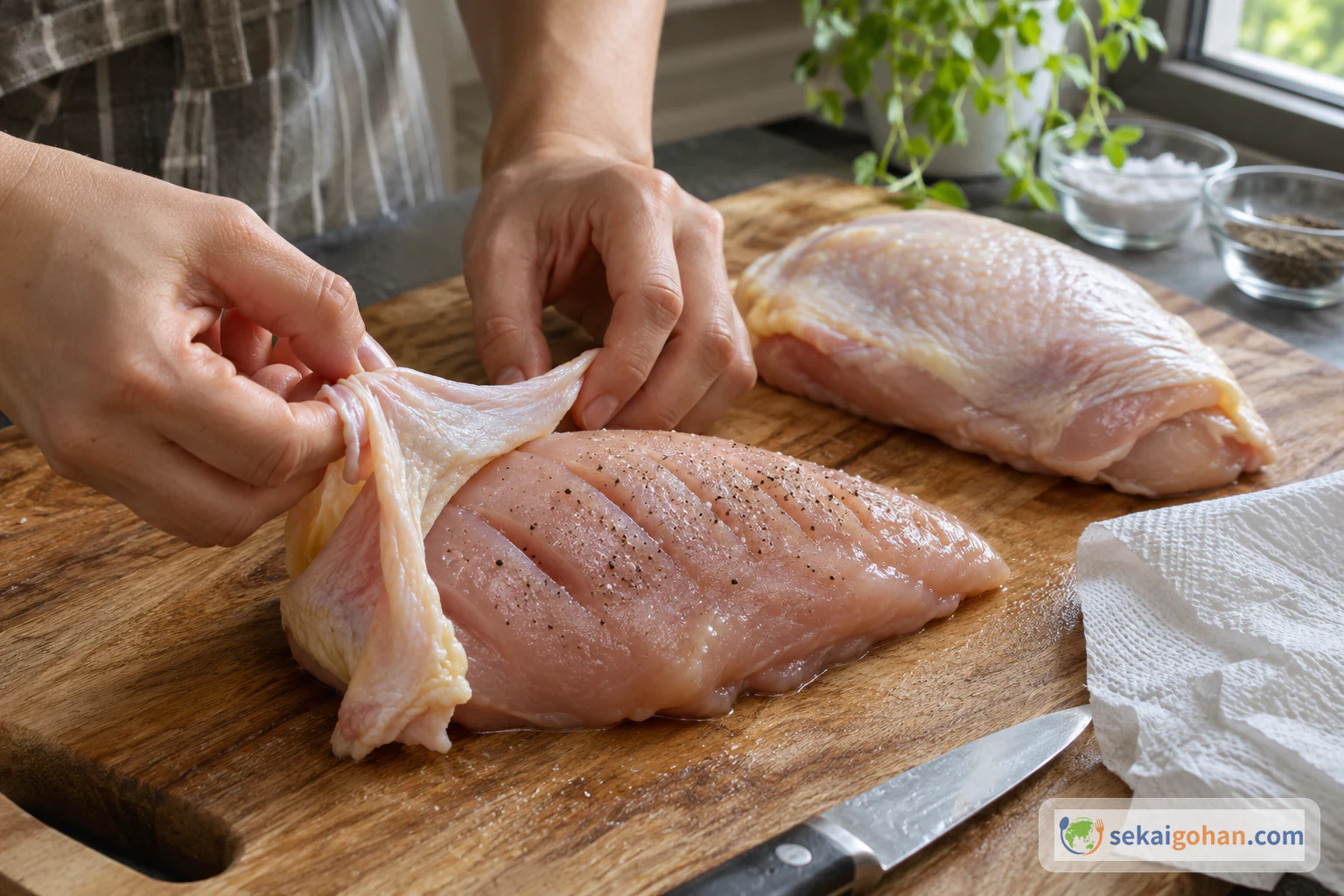
The slits across the thick end are what let the cutlet cook through in the time given. When the thickness is even, the thin end does not dry out while you wait on the thick end. Get the thickness even before you start frying. More time in the oil will not fix it later.
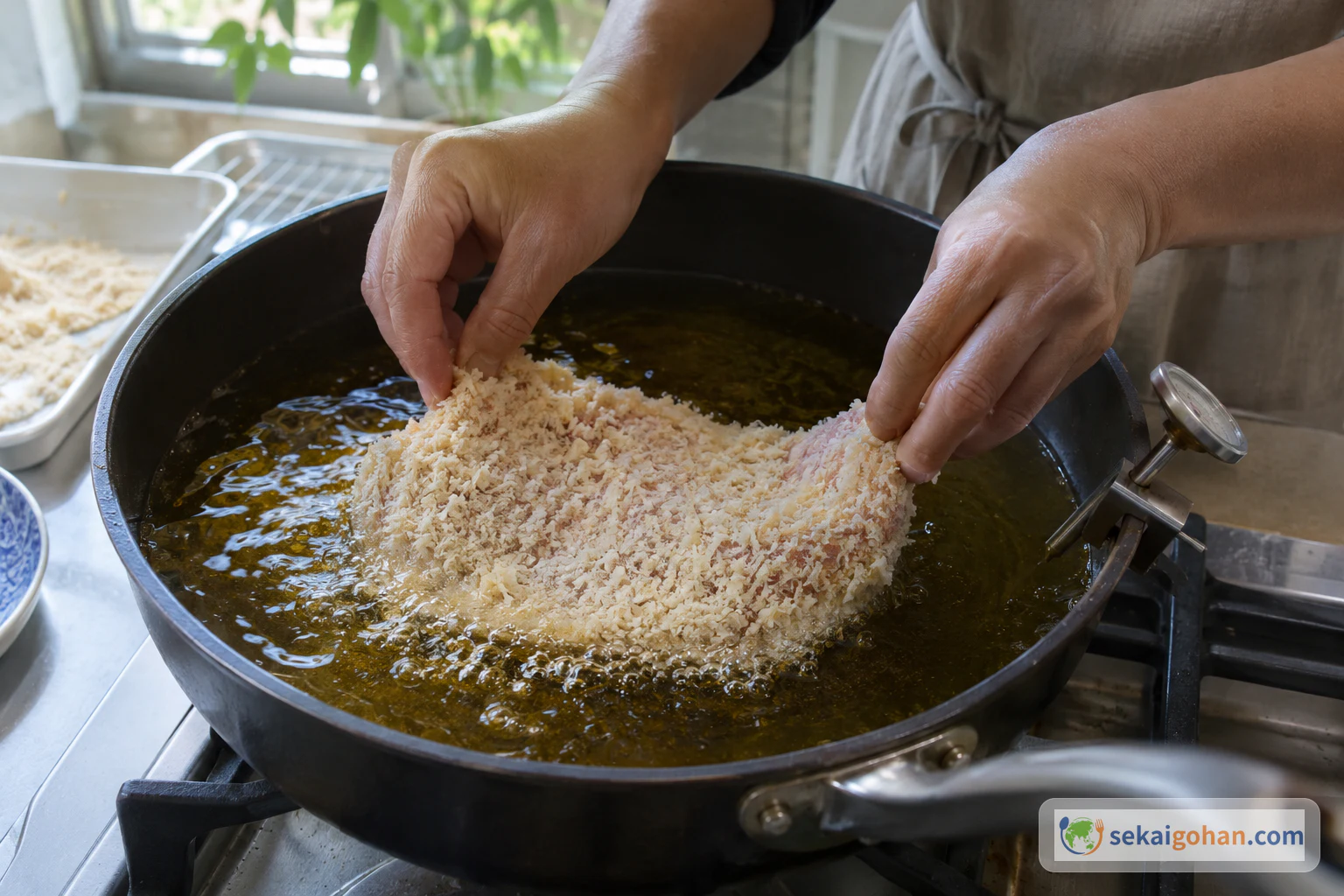
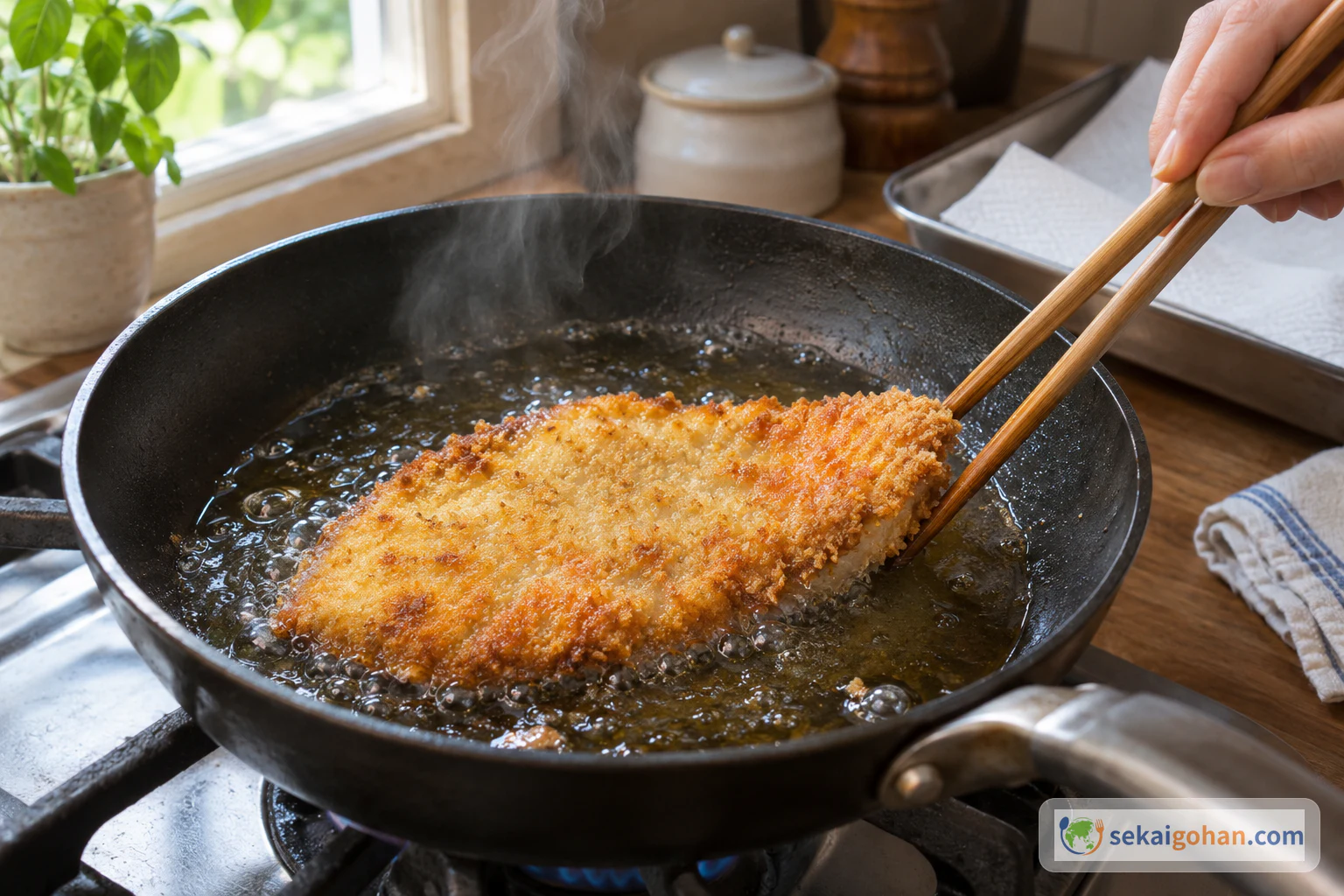
Once the cutlet is in the oil, leave it alone until the first turn. The crumb needs those minutes to set against the meat. Poking or shifting it early is the usual way a crust slides off.
Chicken commonly carries Campylobacter, and the bacteria can be inside the meat, not only on the surface. Cook the thickest part to 167°F (75°C) for at least 1 minute. Never serve it rare or half-cooked, however fresh the chicken is. Wash your hands, knife, board and trays after they touch raw chicken, and keep raw chicken away from the cabbage and anything else eaten raw.
When It Goes Wrong
| What you see | Why | What to do |
|---|---|---|
| The crust slips off in patches | Wet meat, a thick flour layer, gaps in the egg or panko, or moving the cutlet too early | Pat the chicken dry, tap off the flour, coat evenly, and do not touch it until the first turn |
| The center is pink or the probe reads low | The thick end was too thick for the frying time | Return it to the oil until the center holds 167°F (75°C) for 1 minute. Next time, score the thick end properly |
| The meat is dry and stringy | Fried too long | Even the thickness first instead of adding minutes, and pull the cutlet once the center is safe and the juices run clear |
| No sizzle and a greasy, pale crust | The oil was too cool, often from frying two at once | Fry one cutlet at a time and bring the oil back to 340°F (170°C) between them |
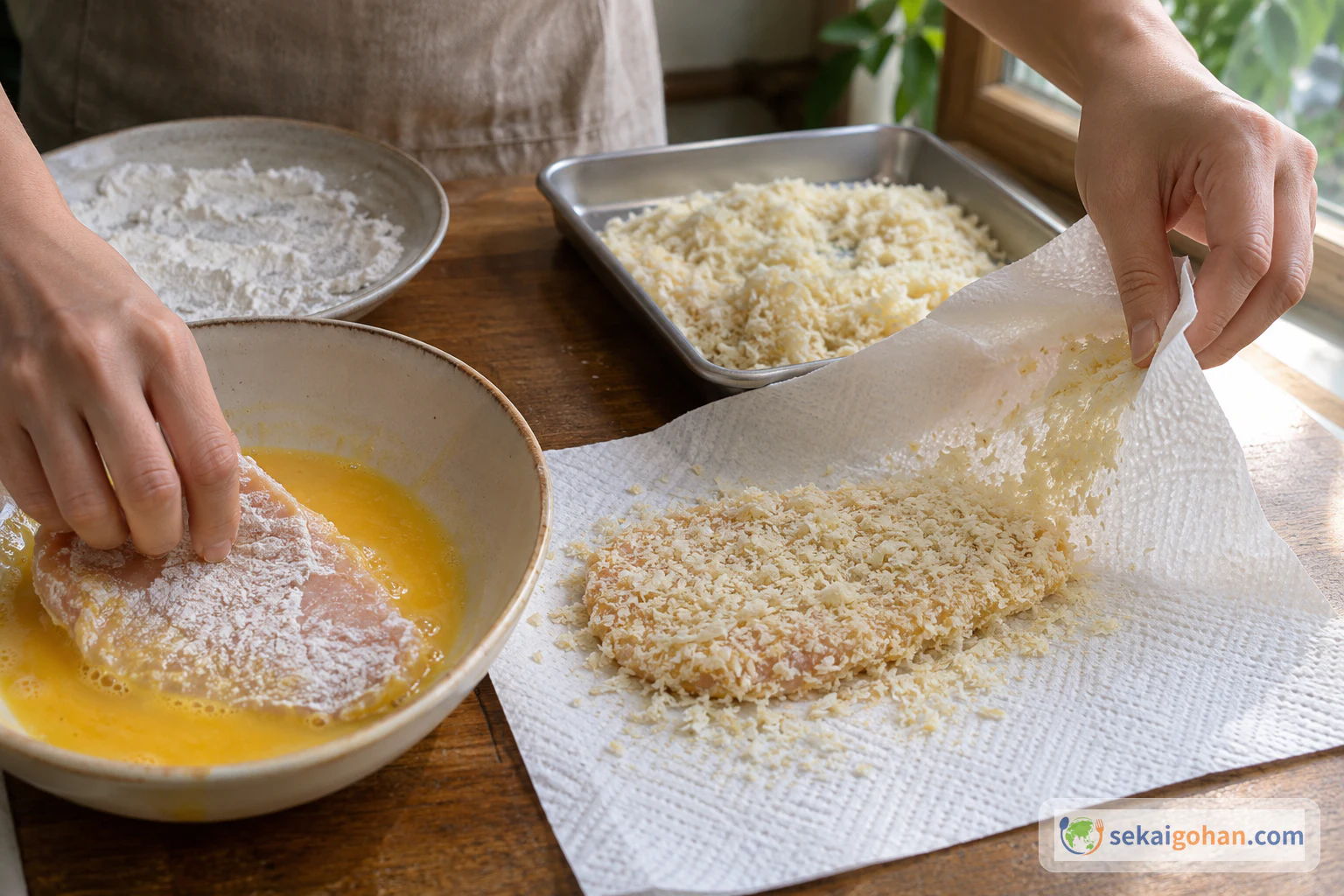
| Panko left over, bare spots on the meat | Crumbs pressed on in clumps | Use the paper-towel roll so crumbs reach every slit. Leave extra crumbs behind instead of forcing them on |
Serving, Variations and Storage
At the table
The plate is cutlet, raw cabbage, sauce and mustard. Eat the cabbage between bites and it cuts through the fried crust. At a home dinner, a bowl of white rice and miso soup sit beside it. A fried cutlet also goes on top of Japanese curry, and chicken katsu fills a sandwich or a rice bowl the same way pork does.
Variations
- Cheese crumb, school-lunch style. Mix 1 tbsp grated cheese into ¾ cup panko and coat small cutlets of about 2 oz (60 g) each. Fry at 355°F (180°C) for 5–6 minutes. The crust turns savoury and browns deeper, and the small pieces cook quickly.
- Lemon and lettuce. Add ½ tbsp white wine or sake to the salt and pepper and let the chicken sit for 10 minutes. Wipe it dry, coat it, and let the coat settle for a moment before frying at 330–340°F (165–170°C) for 4–5 minutes. Serve with leaf lettuce and a wedge of lemon in place of sauce and mustard for a brighter, lighter plate.
- Other sauces. As an editorial suggestion beyond the base recipe, grated daikon with ponzu or a sesame sauce gives a cleaner, sharper finish than thick tonkatsu sauce.
In every version, check the center with the probe the same way.
Leftovers
Let leftover cutlets cool, then refrigerate them promptly in a clean, covered container and eat them soon. Reheat until the center of the thickest part reaches 167°F (75°C) for at least 1 minute, using the general cooking guideline as a reheating target. A microwave heats it through, but the crust softens and loses its crunch.
Frequently asked questions
Can I use chicken thigh?
The rhythm here, 3 minutes, 2 minutes and 1 minute at 340°F (170°C), is built for breast. Thigh is fattier and a different thickness, so these times do not fit it. Whatever cut you fry, the probe decides: 167°F (75°C) in the thickest part for at least 1 minute.
What if I don't have a probe thermometer?
Cut into the thickest part. The meat must be white all the way through and the juices must run clear. The color of the crust and the clock do not tell you the center is cooked. A thin-probe food thermometer is the tool that answers it reliably.
My chicken is very fresh. Can I leave the middle a little pink?
No. Campylobacter is common on chicken and can sit inside the meat, and freshness does not remove it. Cook every cutlet until the center reaches the safe temperature.
What happens to the other half of the egg?
Only half an egg goes into the wash. A whole egg would make more wash than two cutlets need and tempt you into a thicker coat. Keep the rest for another dish.