Dubu-duruchigi: Red Tofu Left Alone to Soak Up Its Broth
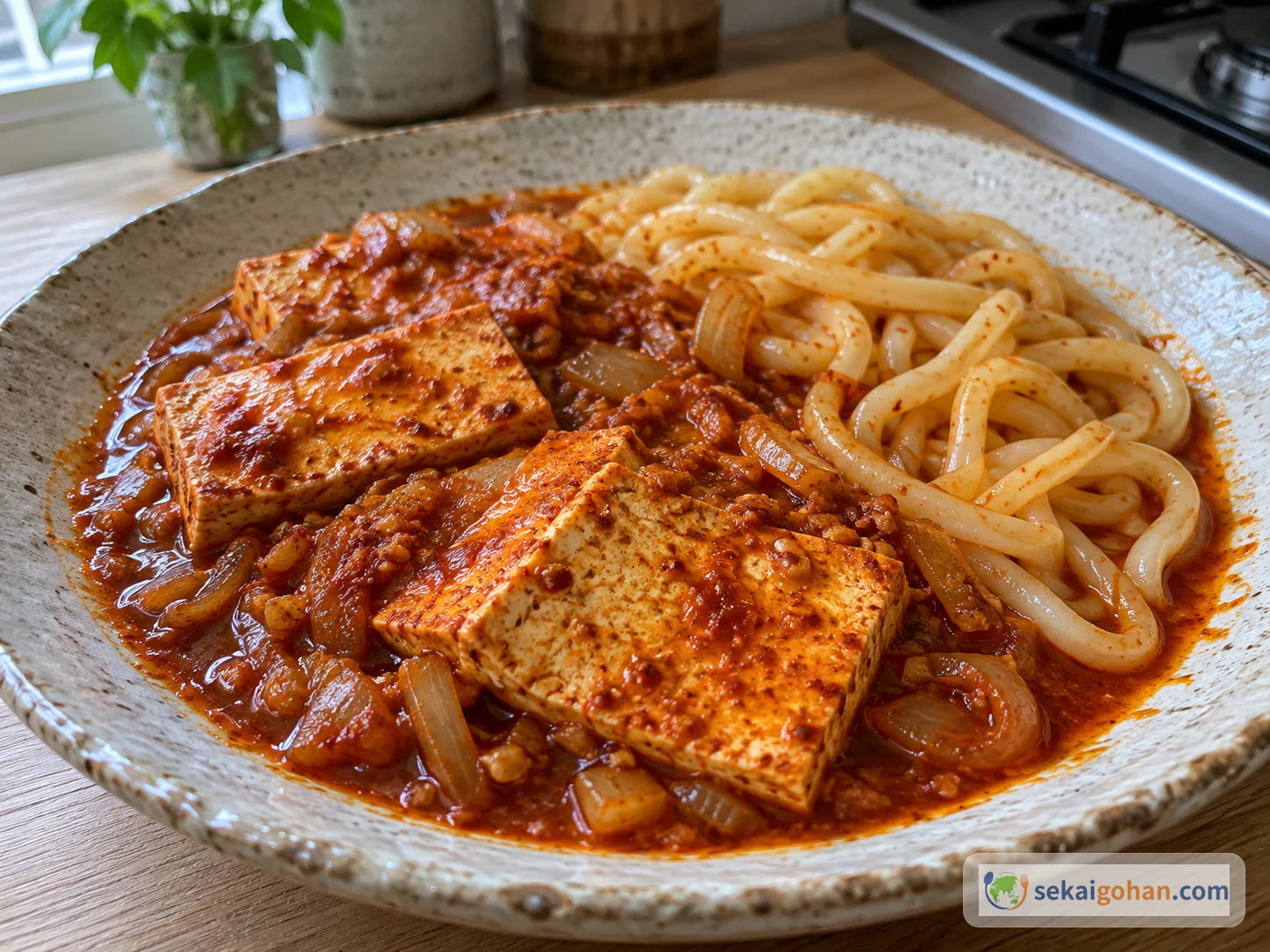
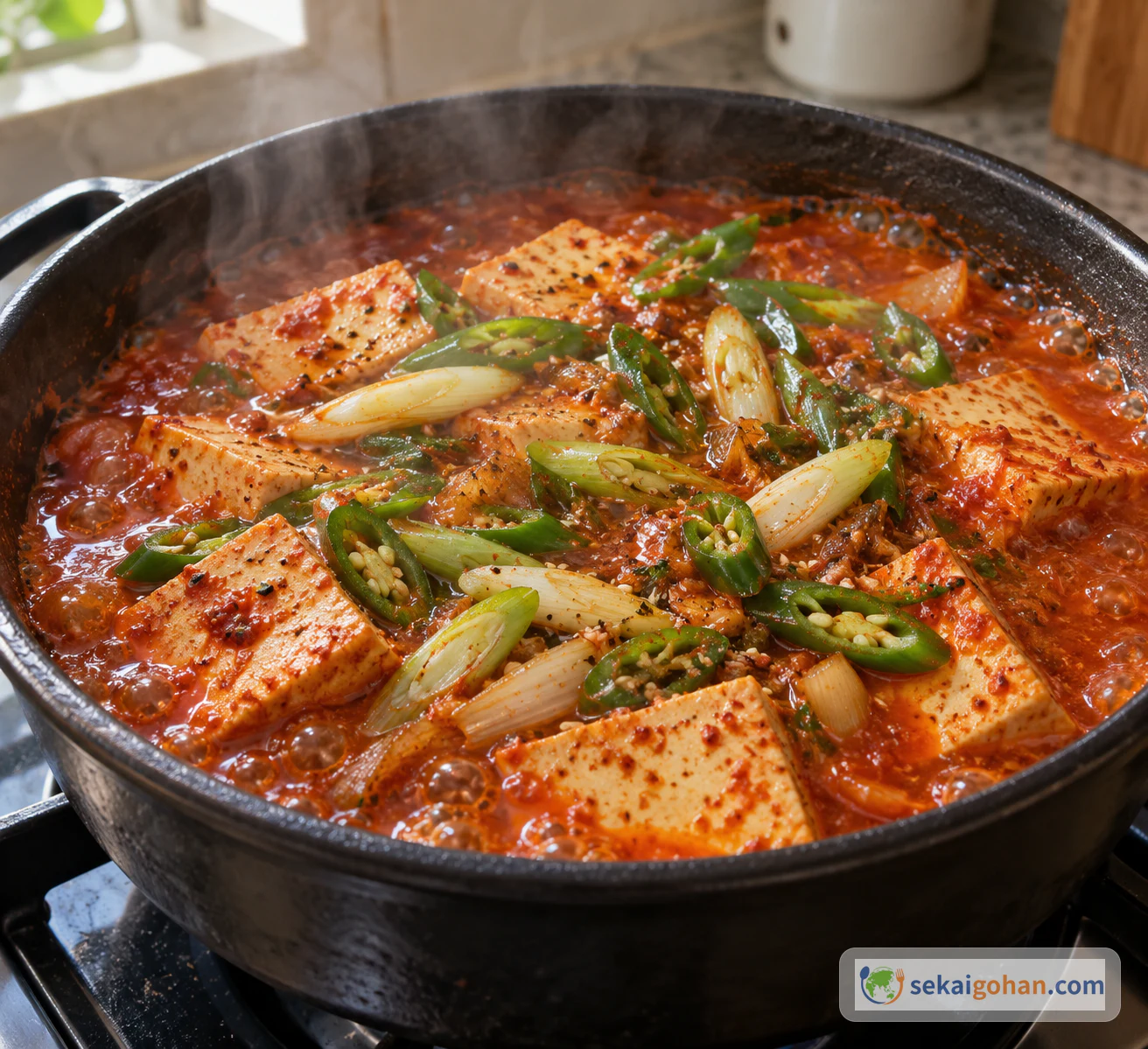
Broad slices of tofu that stay whole and take on a red color. Don't stir while it simmers down; the seasoning dissolves and soaks in on its own.
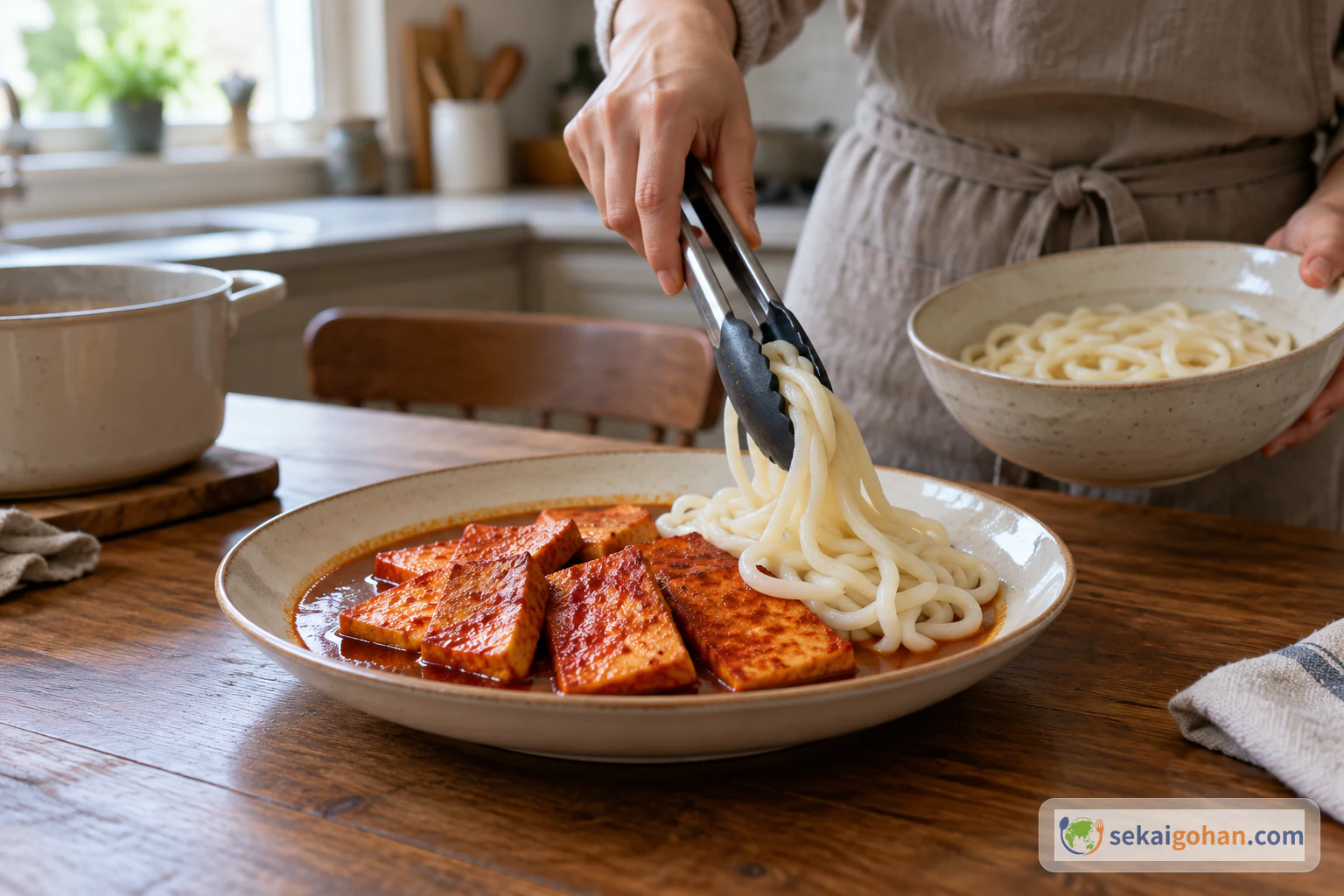
In a restaurant in Seonhwa-dong, Daejeon, a pan of red-stained tofu is shared out at the table, and once the tofu is gone, kalguksu noodles go into the broth that is left. That is the scene Korean cookery researcher Lee Jeong-woong (이정웅) described in a JoongAng Ilbo column, recalling a meal there with anchovy stock behind the broth and suyuk, boiled pork, on the side. It is his own account of one visit, not a description of every Daejeon restaurant.
The dish is dubu-duruchigi (두부두루치기): tofu as the star, cooked in a spicy red seasoning. It should not be confused with pork duruchigi; the version here contains no pork at all. In April 2026, the city of Daejeon named dubu-duruchigi one of its "Three Tastes of Daejeon."
The recipe below is not the restaurant's. In the same column, Lee reworked the dish as his own 2-serving home version, swapping the restaurant's anchovy stock for a simple stock of radish and kelp and seasoning it with matganjang. For more dishes from the same country, see our South Korean recipes.
The amounts and steps follow Lee Jeong-woong's home version as published. Sekai Gohan has not kitchen-tested this recipe or any of the substitutions discussed below.
What Dubu-duruchigi Means in Daejeon
The city of Daejeon's official food guide lists dubu-duruchigi among its "Three Tastes of Daejeon." According to that page, the selection was made in April 2026 after a survey of residents' preferences and review by a committee for developing the city's representative dishes. The page also lists restaurants in the city that serve it.
The city's short description presents the dish as cubed tofu cooked with spicy seasonings such as gochugaru, garlic, soy sauce and sesame oil. Lee's home version works differently: the tofu is cut into broad pieces and simmered in stock. The city's overview identifies the dish; it is not a recipe with amounts. This article follows Lee's steps and does not mix the two.
Where the name comes from and how the dish began are not covered by the sources used here, so this article does not try to explain them.
Restaurant Stock and Home Stock: Reading the Two Apart
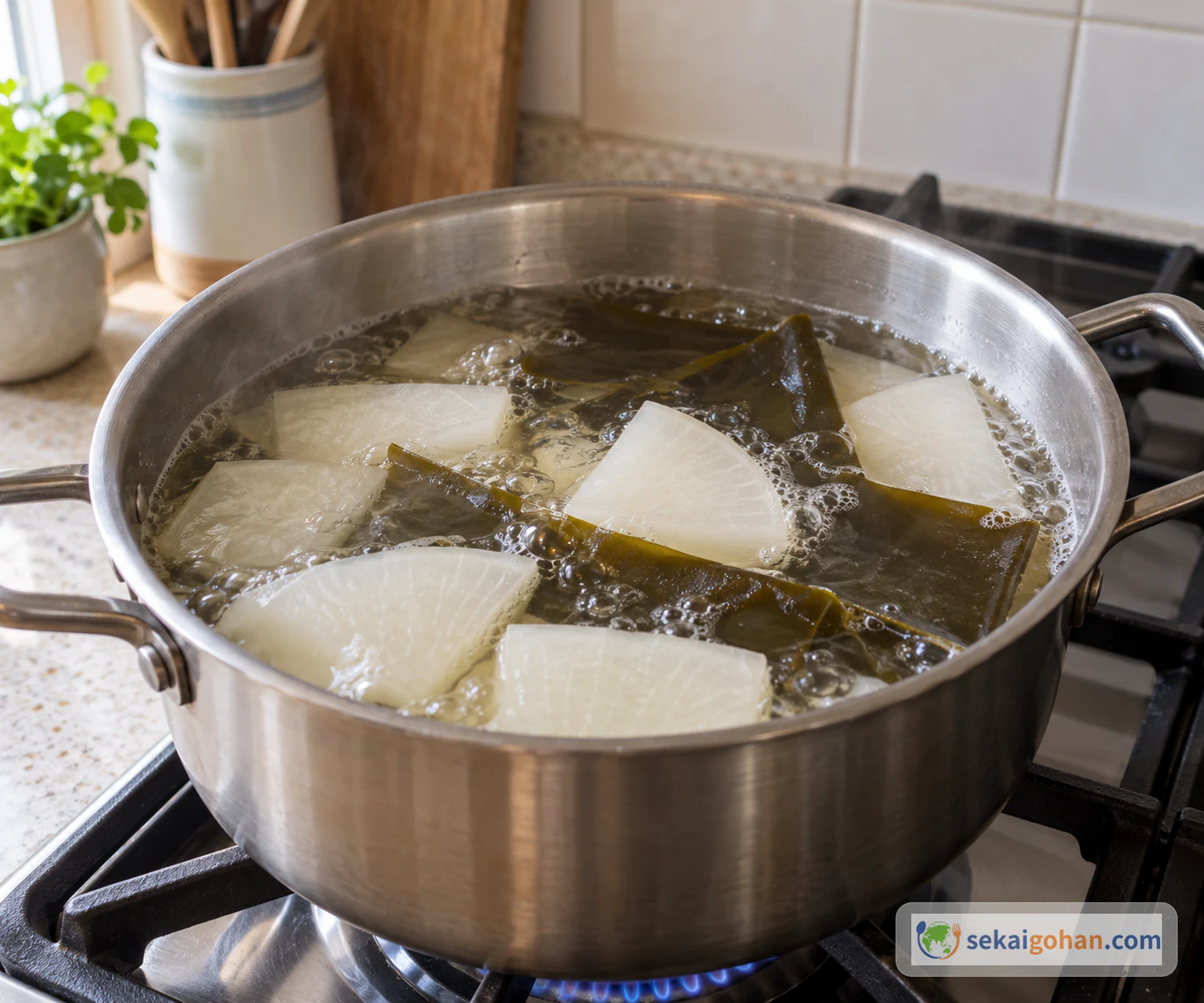
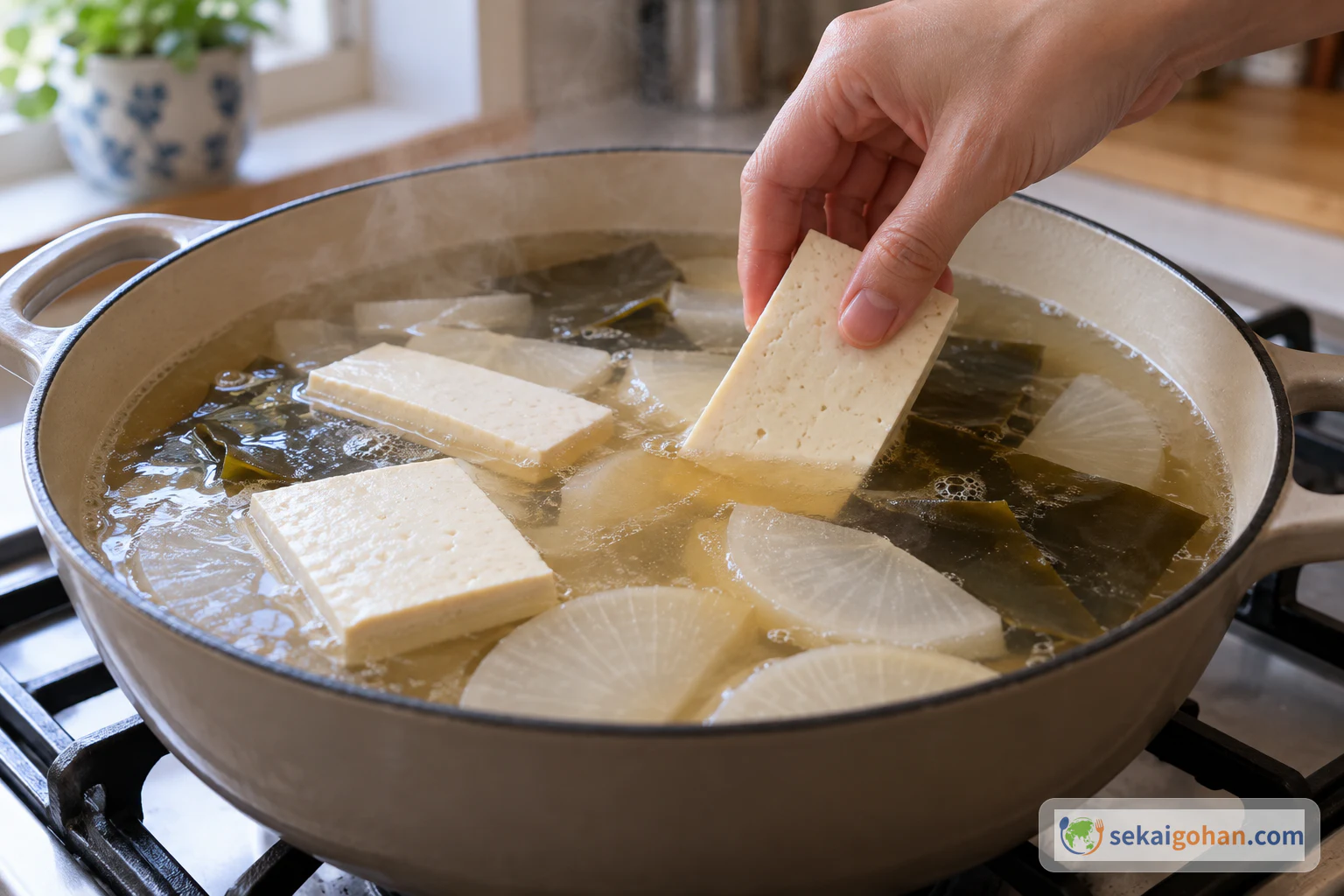
Lee explains that the restaurant he visited uses an anchovy stock (멸치육수). For his home version, he makes stock from 1 L of water with 50g of radish and 10g of kelp, and adds matganjang to the seasoning. These are two different pans: the home version is not a reconstruction of the restaurant's recipe, and the restaurant's amounts are unknown.
His recipe does not say whether to strain the stock or lift out the radish and kelp. It also doesn't say how much stock remains after simmering, how thick to cut the tofu, what heat to use, or how long each stage after the stock takes. Those gaps are left as they are in the method below; only the stock has a stated time, about 20 minutes.
Ingredients for 2 Servings
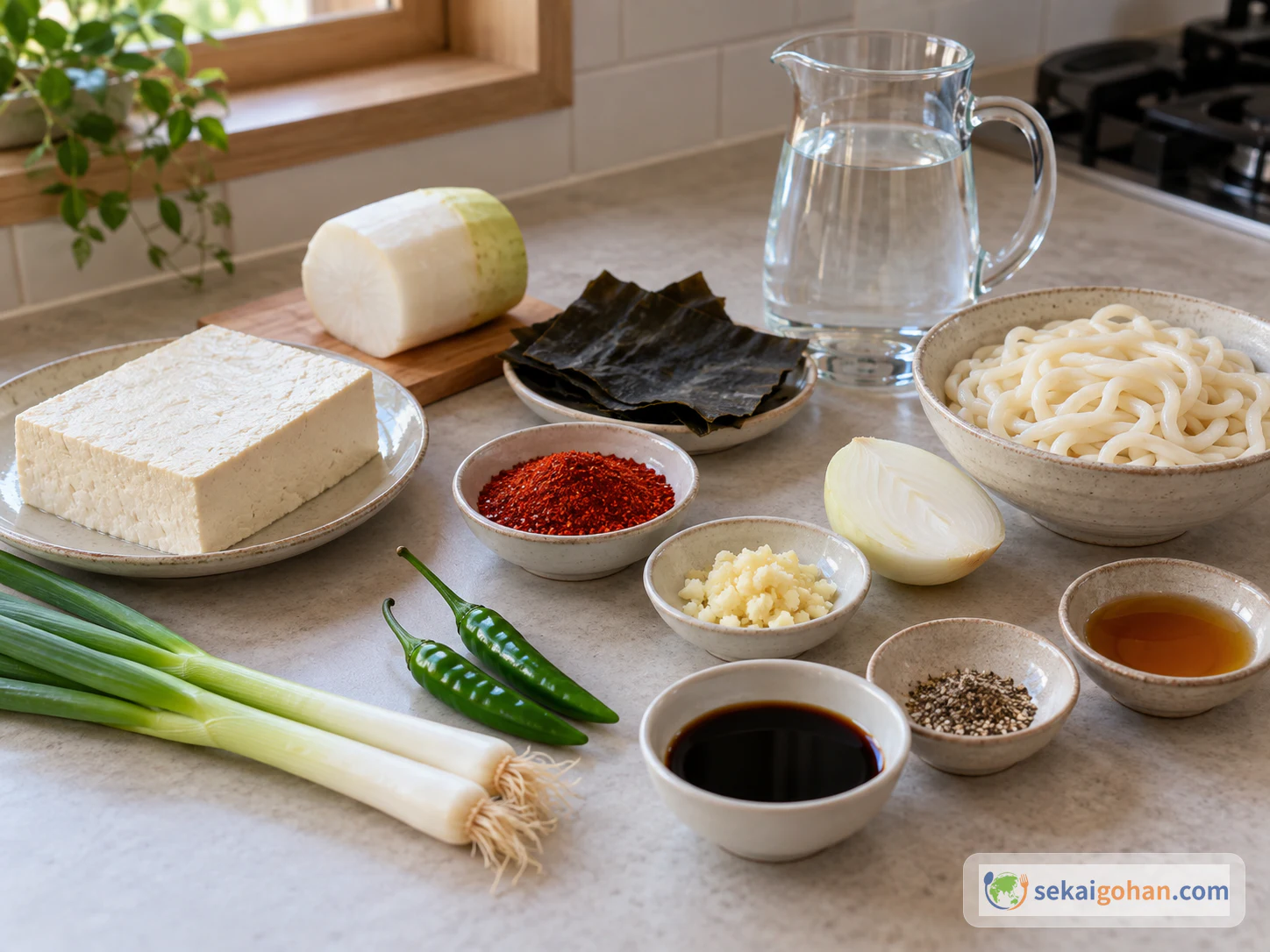
All 13 ingredients, in order.
Equipment
- A pan for the stock, tofu and seasoning (used throughout steps 1–4)
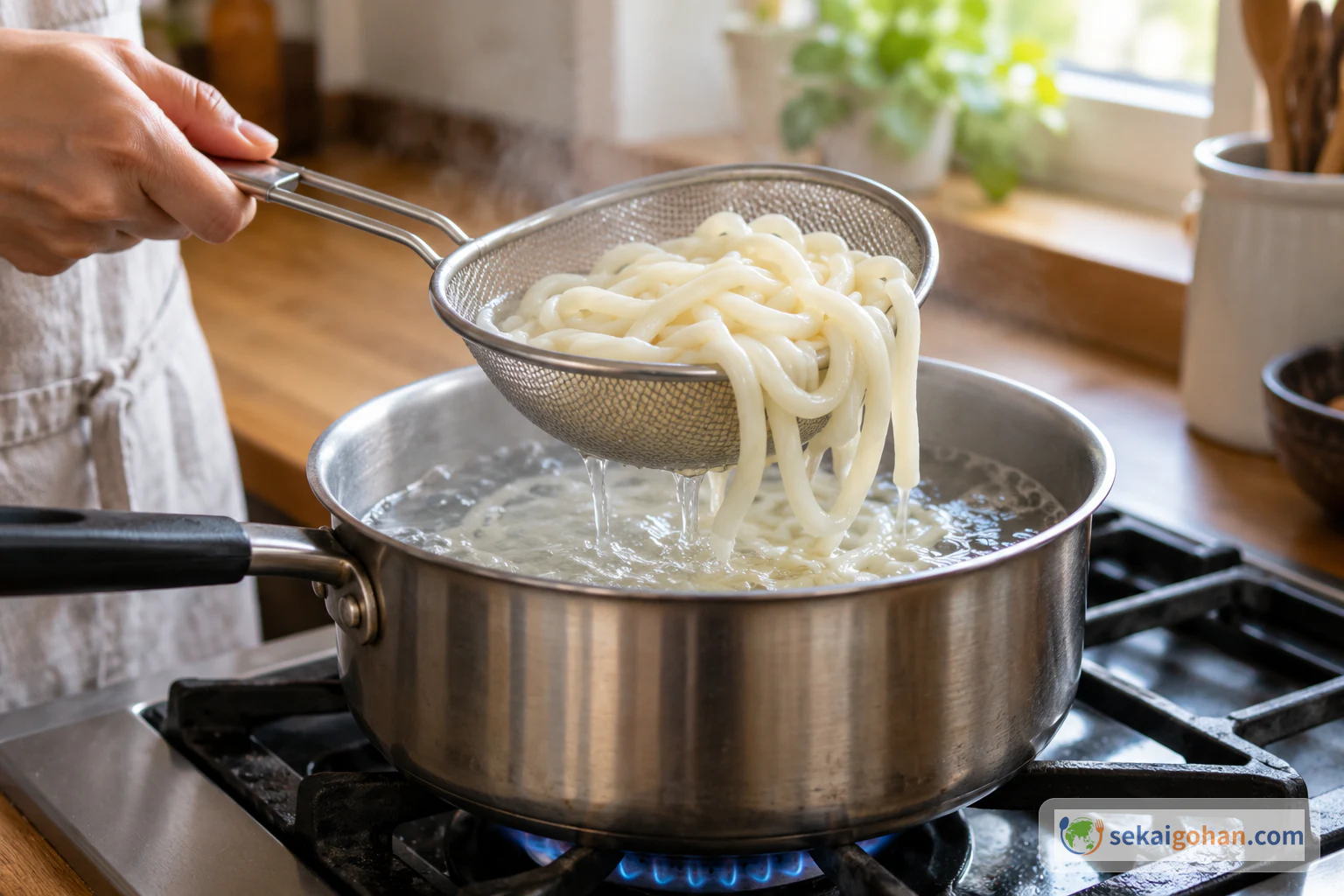
- A pot of water for boiling the udon
- A wide serving plate
- A knife and cutting board
Shopping Notes: Gochugaru, Matganjang and Chilies
Gochugaru (고춧가루). Korean red pepper powder carries most of the heat and red color here. It is not the same product as Japanese ichimi chili powder, so look for it under its Korean name.
Matganjang (맛간장). This is kept by its Korean name on purpose. It is not treated as the same thing as ordinary soy sauce or Japanese dark soy sauce, and there is no confirmed substitute or substitute amount. Searching for "맛간장" or "matganjang" at a Korean grocery or import food shop is the most direct route; stock varies by shop.
Cheongyang chilies (청양고추). If you can't find them and use another green chili, treat that as your own change; it hasn't been tested.
Jjokpa (쪽파). A slender Korean green onion. Don't swap in daepa (대파), the thicker Korean leek-like green onion; they are different ingredients.
Tofu. Use 500g. Choosing firm tofu is a reasonable shopping decision but an untested one.
Tofu, matganjang and udon are processed products whose exact ingredients vary. Check the labels of the products you buy for allergens and shared-facility statements. Do not assume this dish is allergen-free, vegetarian or free of seafood without checking.
Method: Five Steps, and No Stirring
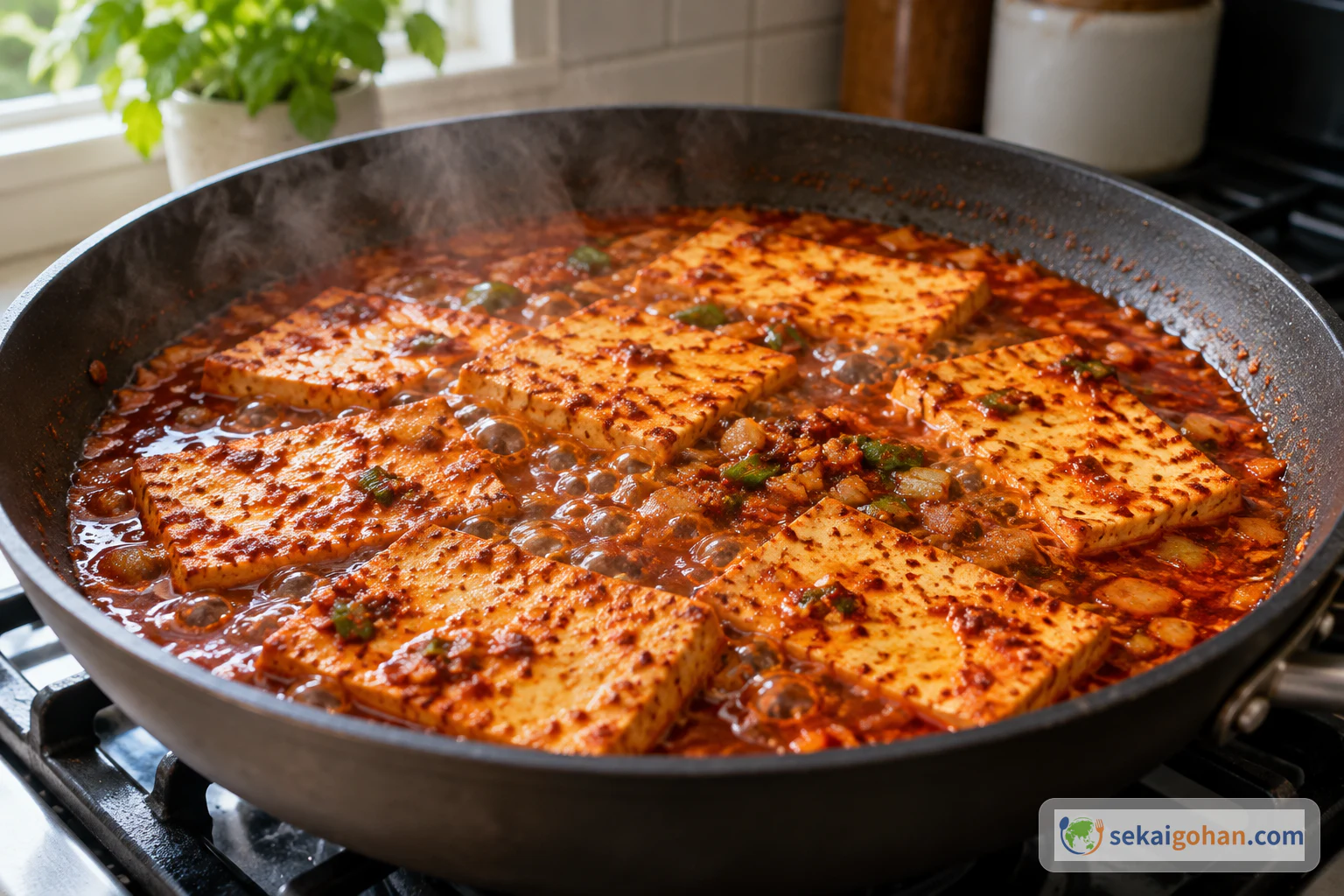
While the seasoning simmers down, leave the tofu alone. Stirring breaks the tofu; the seasoning is meant to dissolve and soak in by itself.
Keeping the Tofu Whole: Points to Watch
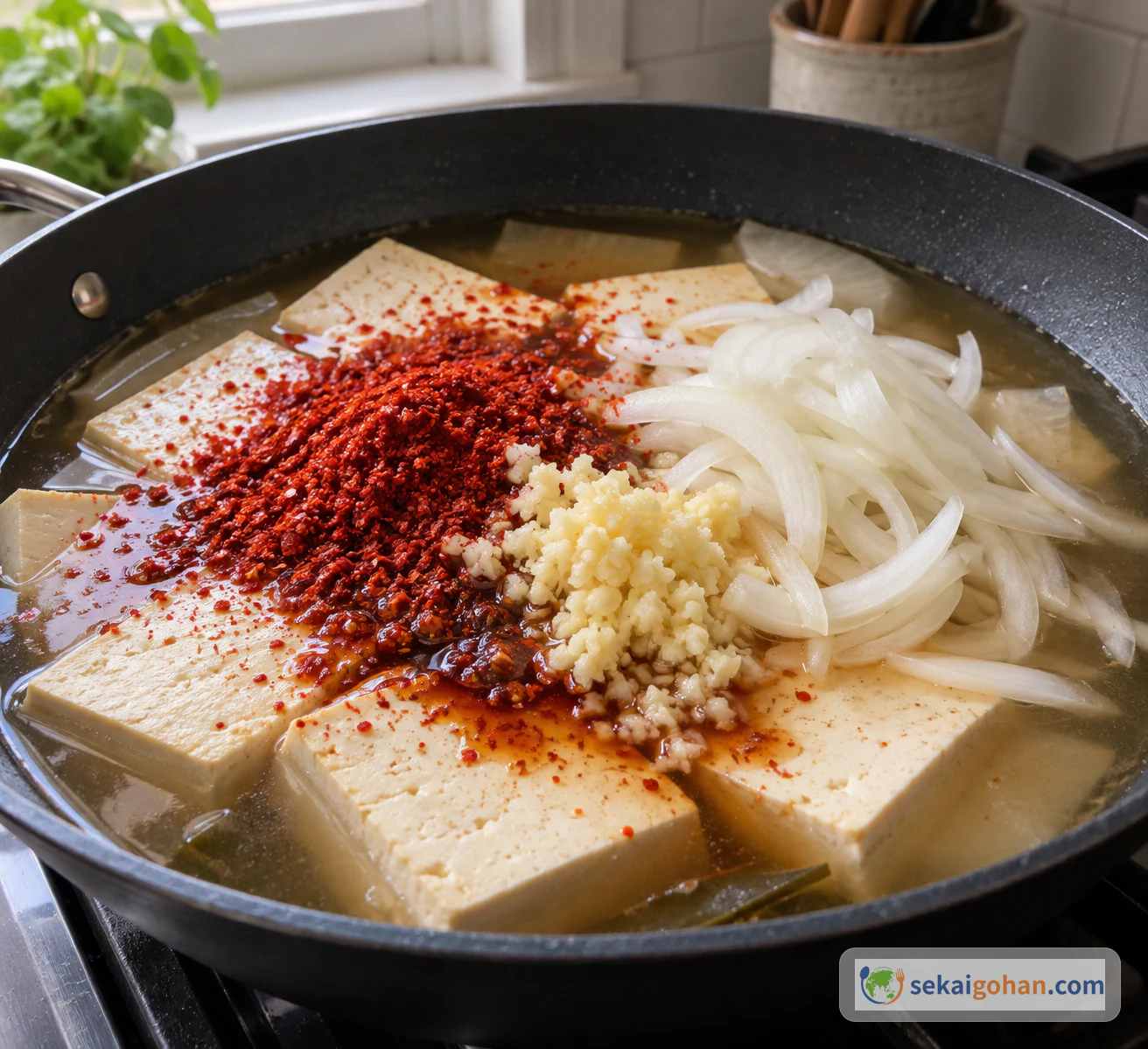
Lee's one firm instruction is not to stir. In his explanation, stirring with a spatula breaks the tofu, and leaving it alone lets the seasoning dissolve naturally and soak in while some liquid remains. He gives it for the simmer-down in step 3.
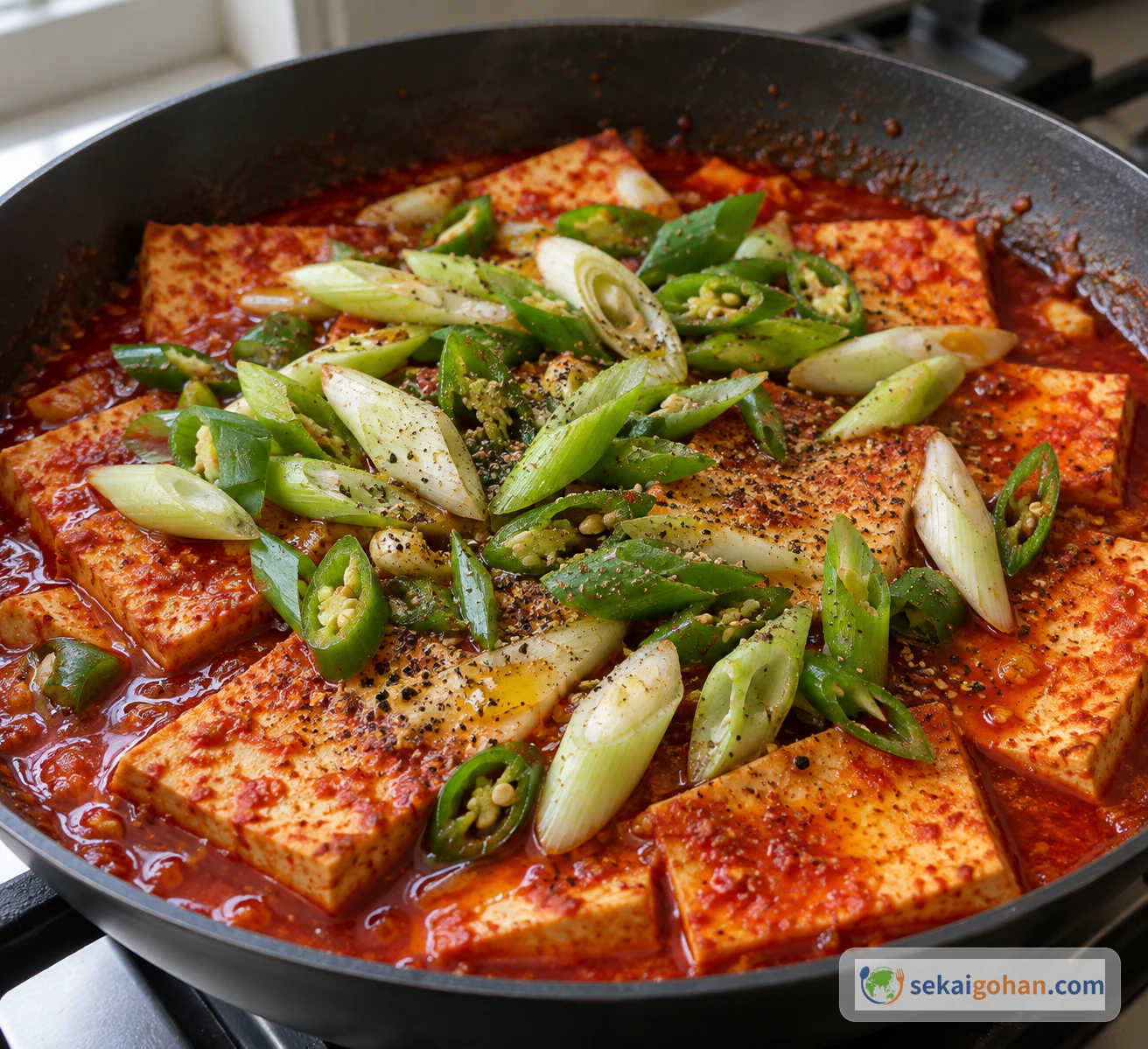
Beyond that, the recipe gives no heat levels, no minutes for steps 2–4 and no target for how much liquid should be left at the end. The cues to watch are the ones the method names: a modest amount of liquid after the tofu simmers in the stock, and a red color in the tofu before the finishing aromatics go in.
| Situation | What to keep in mind |
|---|---|
| The tofu breaks | Stirring is what breaks it, so keep spatulas and spoons out of the pan from step 3 on. No repair method is offered here |
| You want less heat | The recipe uses 8 tbsp gochugaru. Using less makes it a different, untested recipe |
| You can't find matganjang | No substitute or substitute amount has been confirmed |
| You only have anchovy stock | That is the restaurant's base Lee described, not this home version, which uses radish and kelp |
| You're unsure how much udon to cook | No amount is given; cook what suits your meal |
Other Versions: Different Recipes, Not Fixes for This One
Dubu-duruchigi is cooked in many ways, and two home cooks on the Korean recipe site 10,000 Recipe (만개의 레시피) show how far the versions can differ. They are separate recipes, and none of their ingredients belong in Lee's version above.
- 판교댁송블리's version (3 servings): uses gochujang, tuna extract (참치액), soup soy sauce (국간장) and cooking wine (맛술), with a stock of kelp, anchovies and dipori (디포리, a dried fish). The sauce is prepared first, then onion, tofu, sauce, stock and green chilies are layered in the pan, simmered and reduced, with Korean leek-like green onion (대파) added last. The poster also distinguishes this tofu dish from pork duruchigi.
- 어부동김반장's "Daejeon-style" version (4 servings): adds shimeji mushrooms and makes a strong stock of dried anchovies, kelp and dried shiitake, strained through a fine sieve. The tofu simmers in the stock, about two-thirds of a sauce (gochugaru, gochujang, soy sauce, fish sauce, plum extract, oligosaccharide syrup, sugar and garlic) goes in with the vegetables, and the rest of the sauce adjusts the seasoning before sesame oil finishes it. The poster suggests making kalguksu with the leftover broth and adding squid.
The city of Daejeon's own description, with cubed tofu and spicy seasonings, is a fourth picture of the same dish. Lee's version differs from these: its ingredient list has no gochujang, no fish sauce, no sugar and no mushrooms, and the stock comes only from radish and kelp.
Frequently Asked Questions
Can I use less gochugaru to make it milder?
Lee's recipe uses 8 tbsp for 2 servings, and that amount is what gives the dish its heat and red color. Reducing it is possible in your own kitchen, but it changes the recipe, and that change has not been tested.
Should the stock be made with anchovies?
Lee says the Seonhwa-dong restaurant he visited uses anchovy stock, but his home version uses radish and kelp instead. This article follows the home version.
Do I strain the stock or remove the radish and kelp?
The recipe doesn't say. It only gives about 20 minutes for the stock and then has the tofu go into it.
How much udon should I cook?
No amount is given for the udon, and "2 servings" describes the dish as a whole rather than a number of noodle portions. Cook as much as suits your meal.
Can I use regular soy sauce instead of matganjang?
Matganjang is treated here as its own seasoning, not as ordinary soy sauce or Japanese dark soy sauce. There is no confirmed substitute or amount, so any swap is untested.
Can I add pork or kimchi?
Neither is in Lee's 13 ingredients. Pork duruchigi is a different dish; this version keeps tofu as the star.
How do I store and reheat leftovers?
The recipe gives no storage time, temperature or reheating method, so none is stated here. Follow your local food-safety guidance for cooked tofu dishes.
Sources
- JoongAng Ilbo (중앙일보), "[쿠킹] 쉬워 보이지만 제맛내기 어려운 '두부두루치기' 레시피," by cookery researcher Lee Jeong-woong (이정웅). The 2-serving home recipe used here: its 13 ingredients, five steps and the instruction not to stir the tofu; his account of a restaurant meal in Seonhwa-dong, Daejeon, with anchovy stock and noodles; and his choice of radish and kelp stock and matganjang for the home version. https://www.joongang.co.kr/article/25076770
- Daejeon Metropolitan City (대전광역시청), "대전의 맛." Dubu-duruchigi's listing among the city's "Three Tastes of Daejeon," selected in April 2026 after a residents' preference survey and committee review; the city's short description of the dish; and its list of restaurants serving it. https://www.daejeon.go.kr/fod/fodFeatureList.do?menuSeq=160&sctcd=O405
- 10,000 Recipe (만개의 레시피), "대전 맛집 두부두루치기 만들기!!!," posted by 판교댁송블리. A separate 3-serving version with gochujang, tuna extract, soup soy sauce and an anchovy, kelp and dipori stock, used for comparison only. https://m.10000recipe.com/recipe/6854920
- 10,000 Recipe (만개의 레시피), "대전식 매콤한 두부두루치기.," posted by 어부동김반장. A separate 4-serving version with shimeji, a dried anchovy, kelp and shiitake stock, and a sweetened sauce, used for comparison only. https://m.10000recipe.com/recipe/6868139