Basashi: Thin Slices of Raw Horse Meat from Kumamoto
Use only horse meat sold for eating raw, and follow its label and the seller's instructions. Eating raw horse meat carries a risk of food poisoning, and neither freshness nor freezing makes it completely safe. Children, older adults, people with weakened immunity and anyone who is pregnant should choose not to eat it raw.
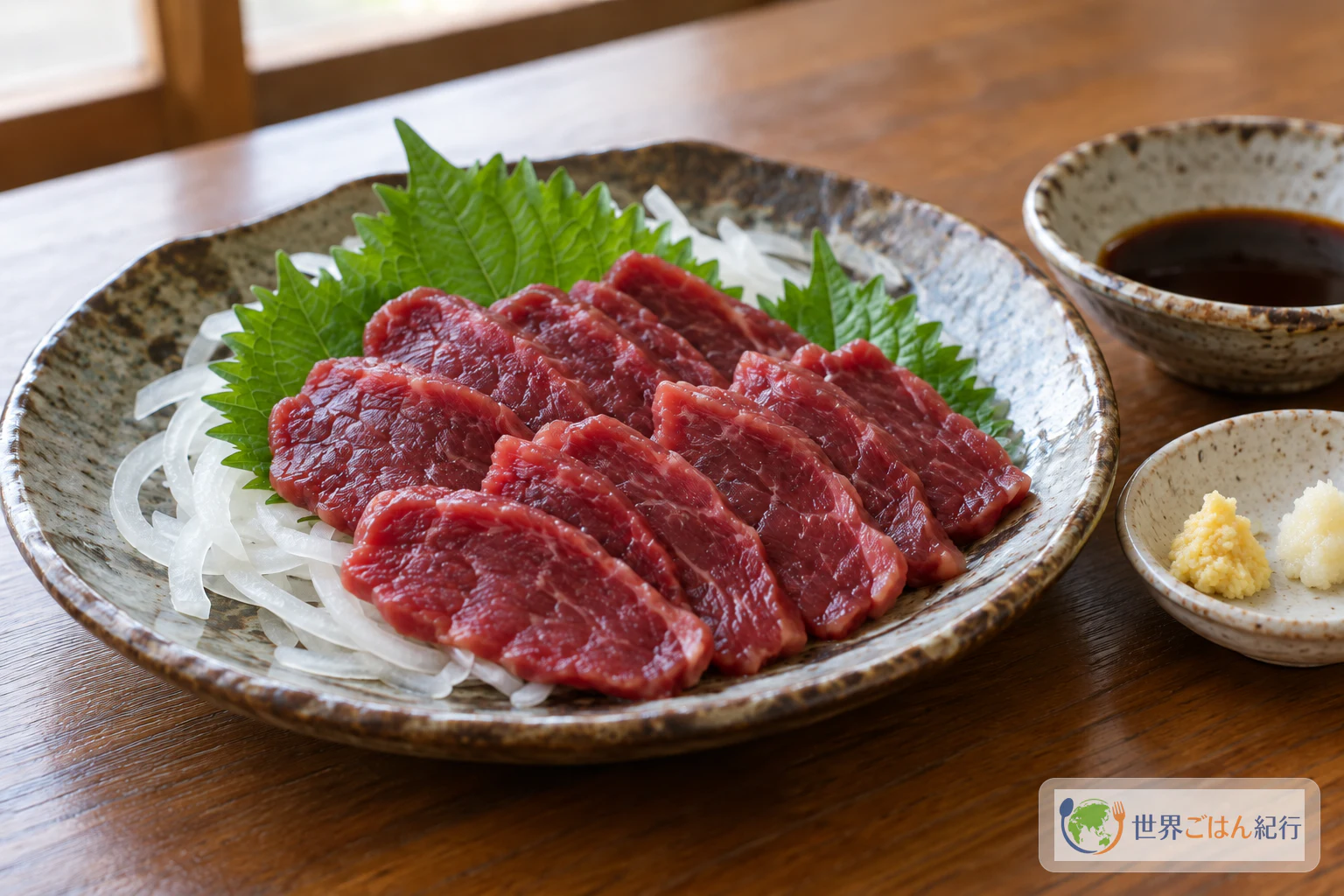
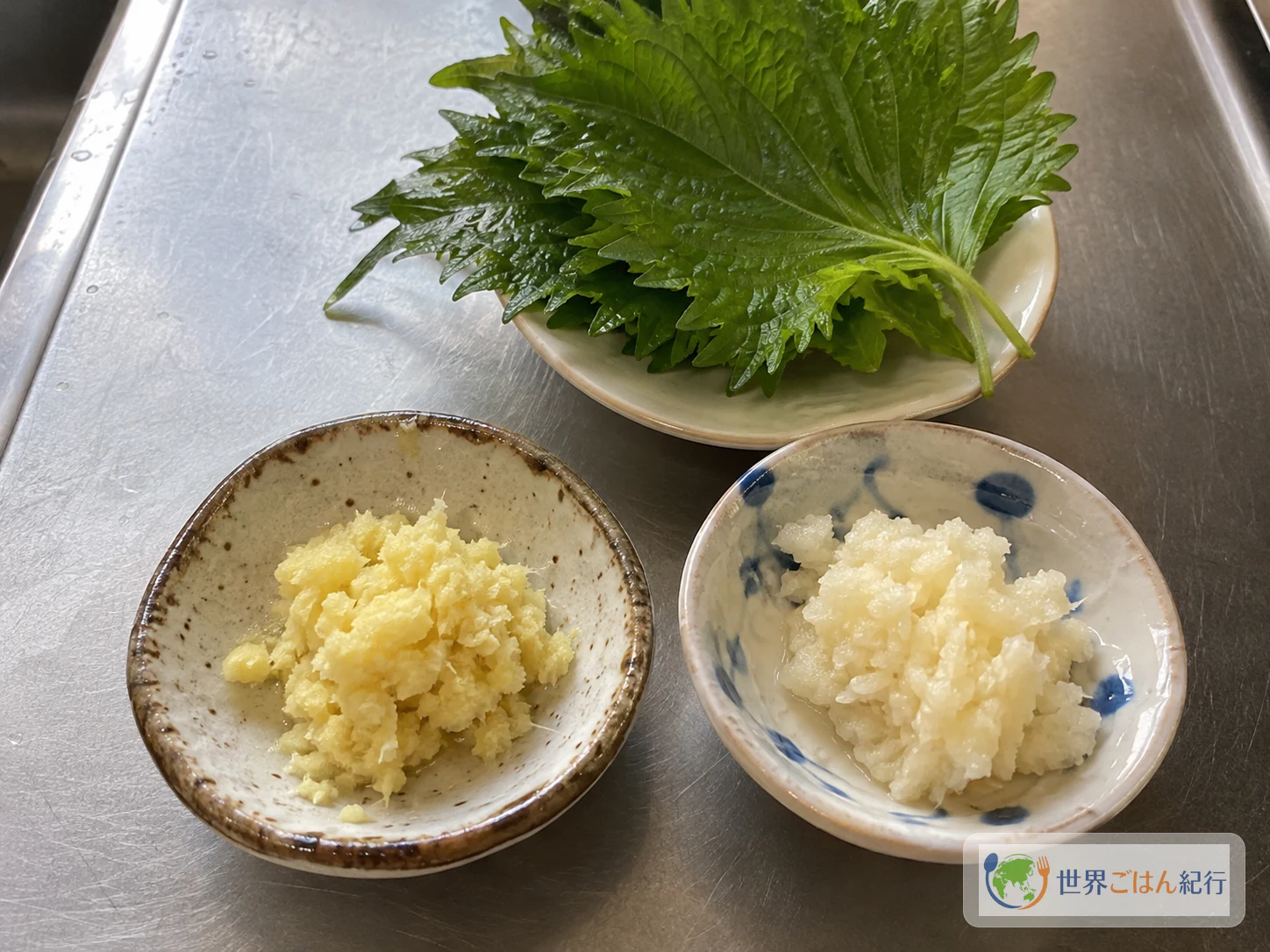
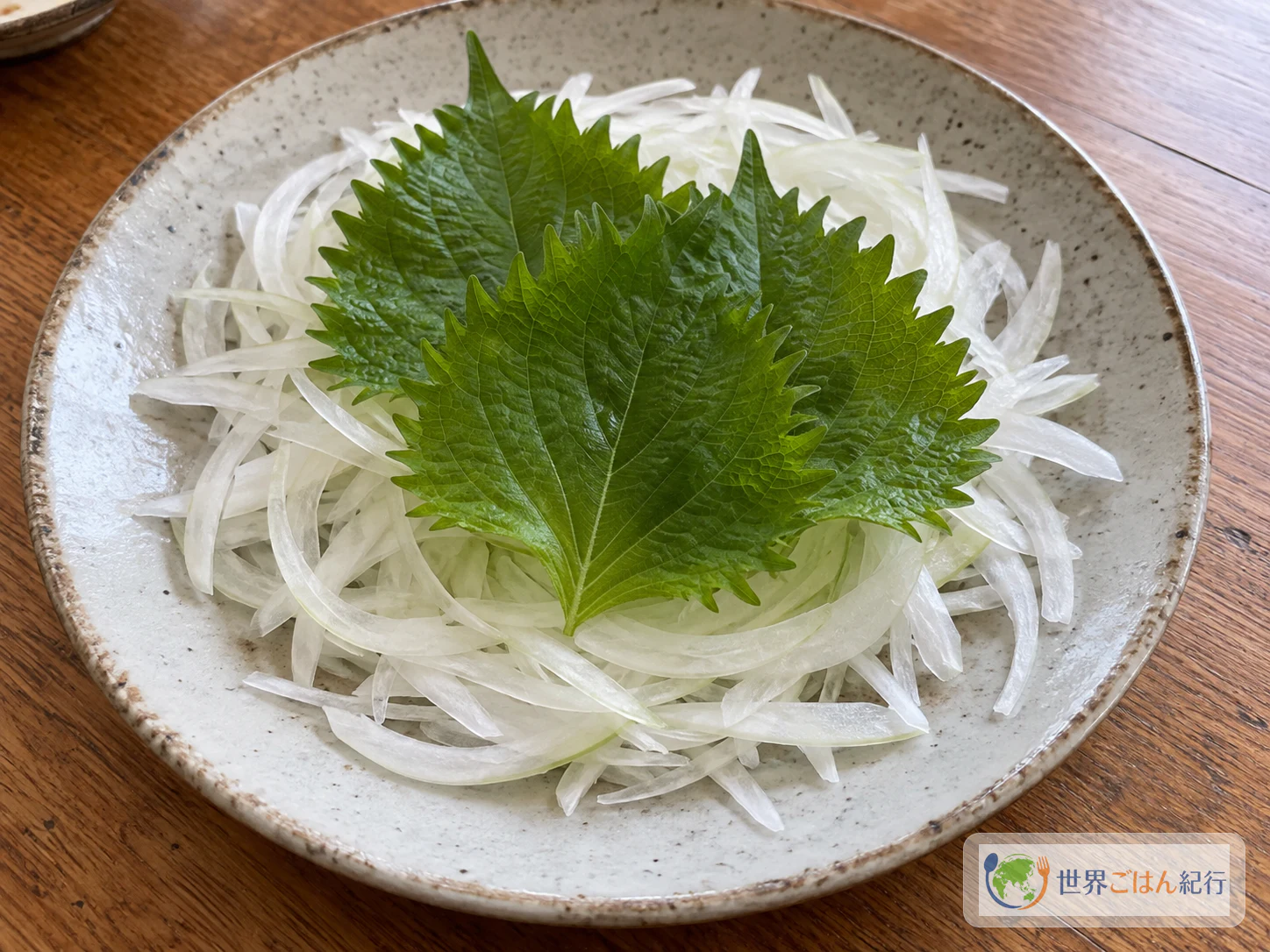
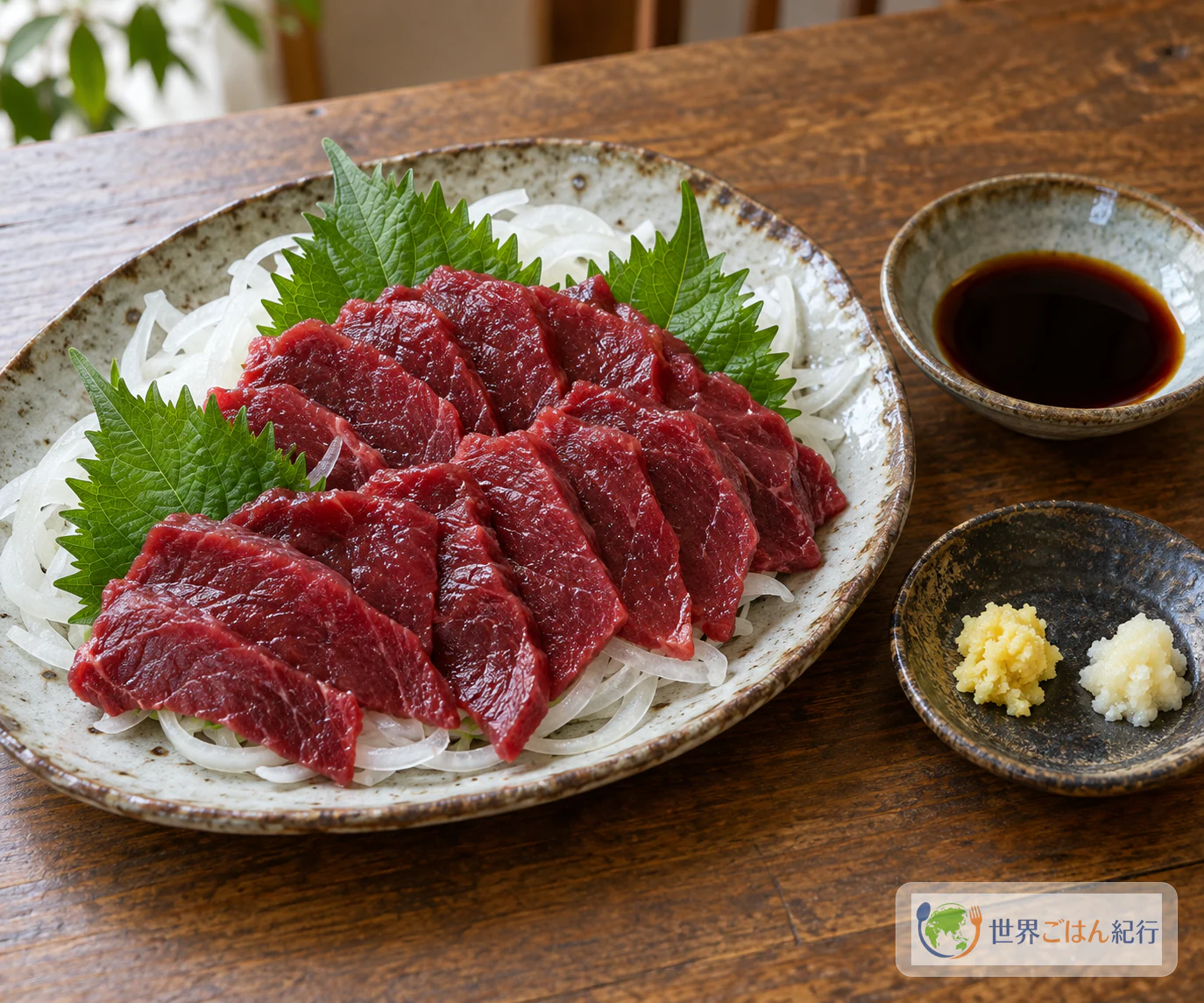
Thin slices of horse meat rest on a bed of sliced onion and shiso, with small mounds of grated ginger and garlic and a dish of sweet soy sauce on the side. This is basashi as Japan's Ministry of Agriculture, Forestry and Fisheries (MAFF) presents it: a traditional dish of Kumamoto City and the Aso region in Kumamoto Prefecture.
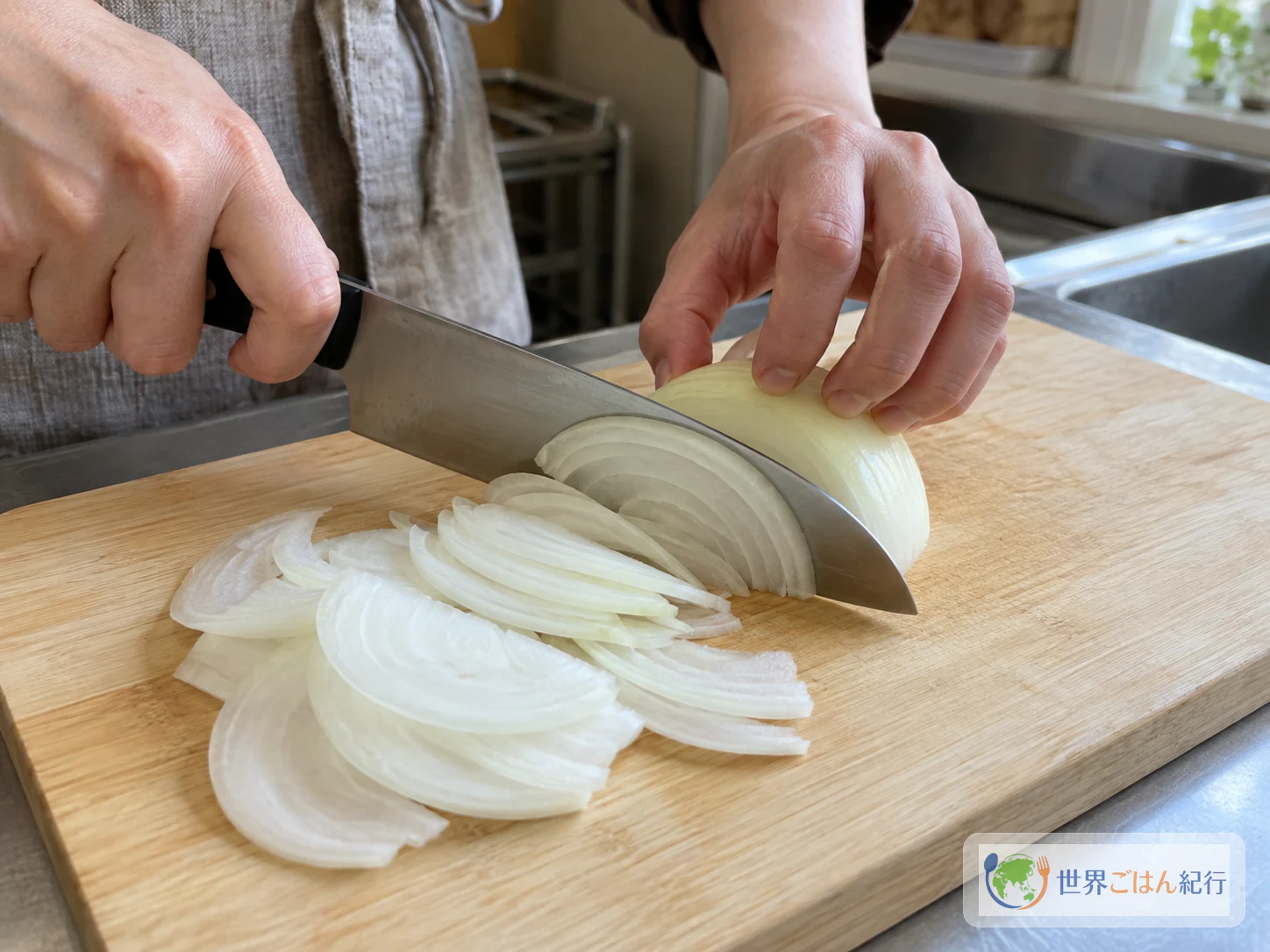
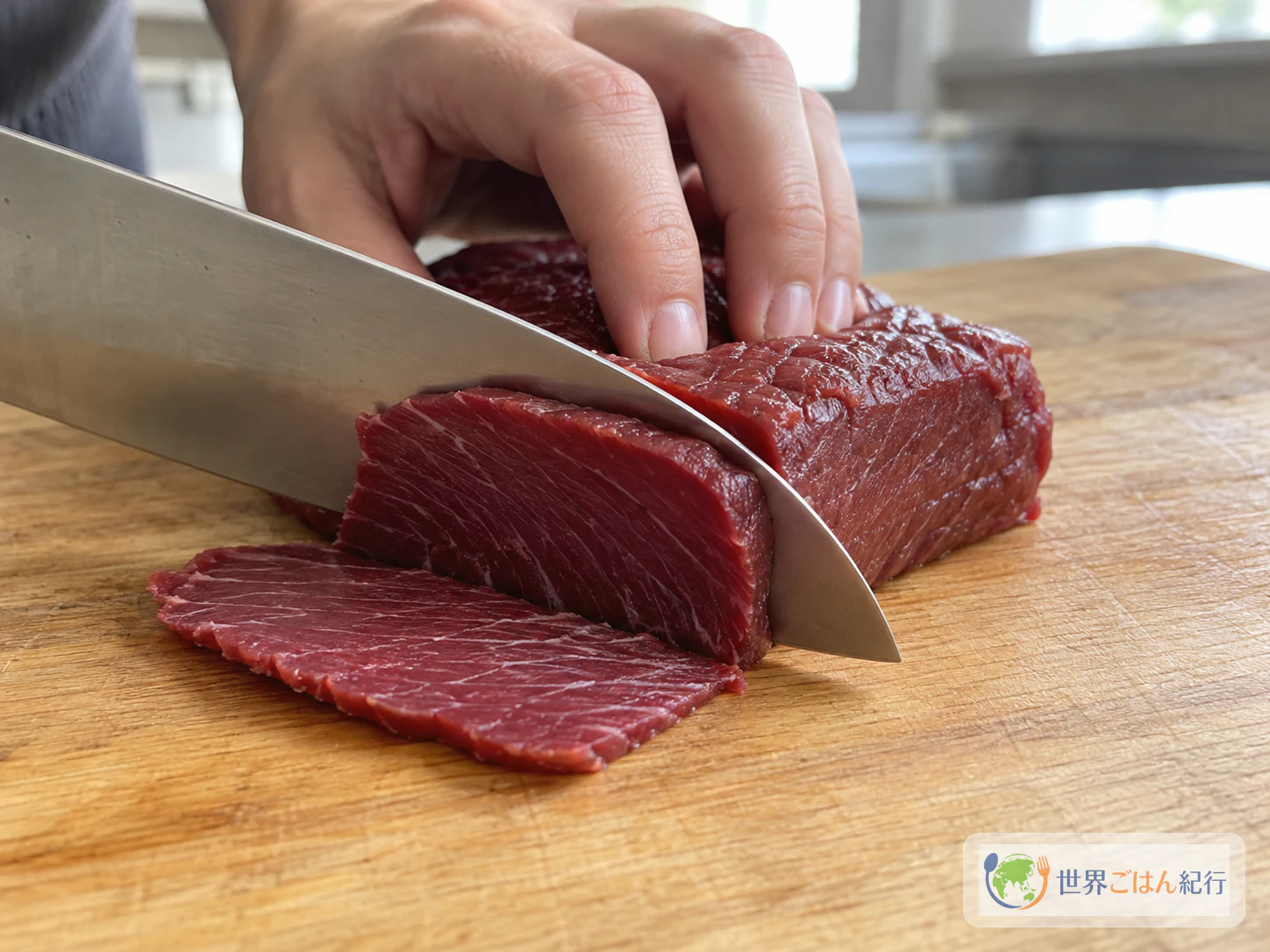
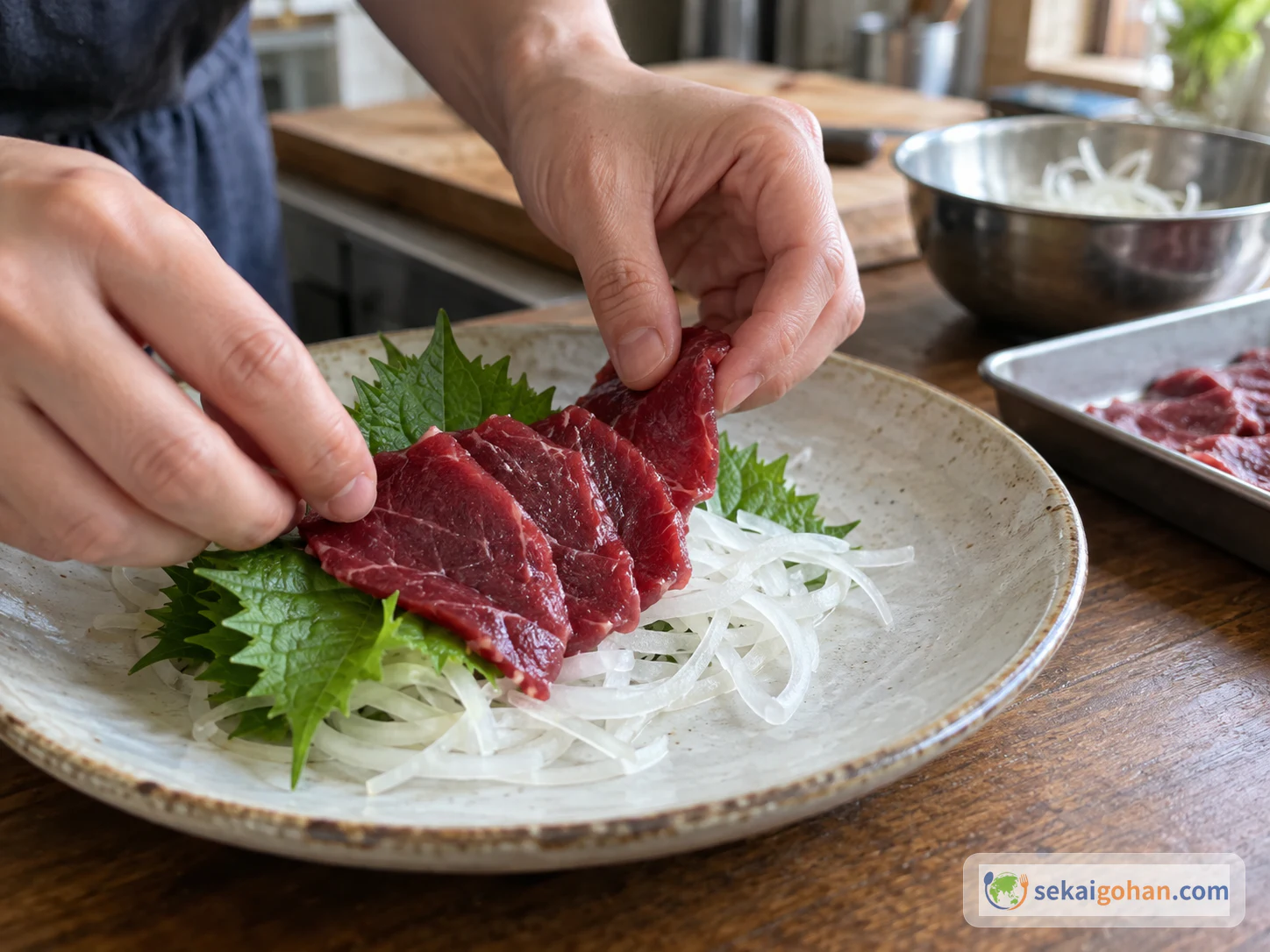
The cooking itself is mostly knife work and arranging. The care lies in the meat you buy and how you handle it. This article uses MAFF's recipe for 4 servings, with 200g of horse meat cut 2–3 mm thick against the grain. MAFF's recipe does not cover the safety steps here, including washing the garnishes, using a dedicated board and knife, and keeping the meat cold. We added them from guidance published by Japan's Ministry of Health, Labour and Welfare (MHLW).
Sekai Gohan has not kitchen-tested this recipe or tasted the result. It is written from the public sources listed at the end. For more dishes from the same country, see our Japan page.
Ingredients (Serves 4)
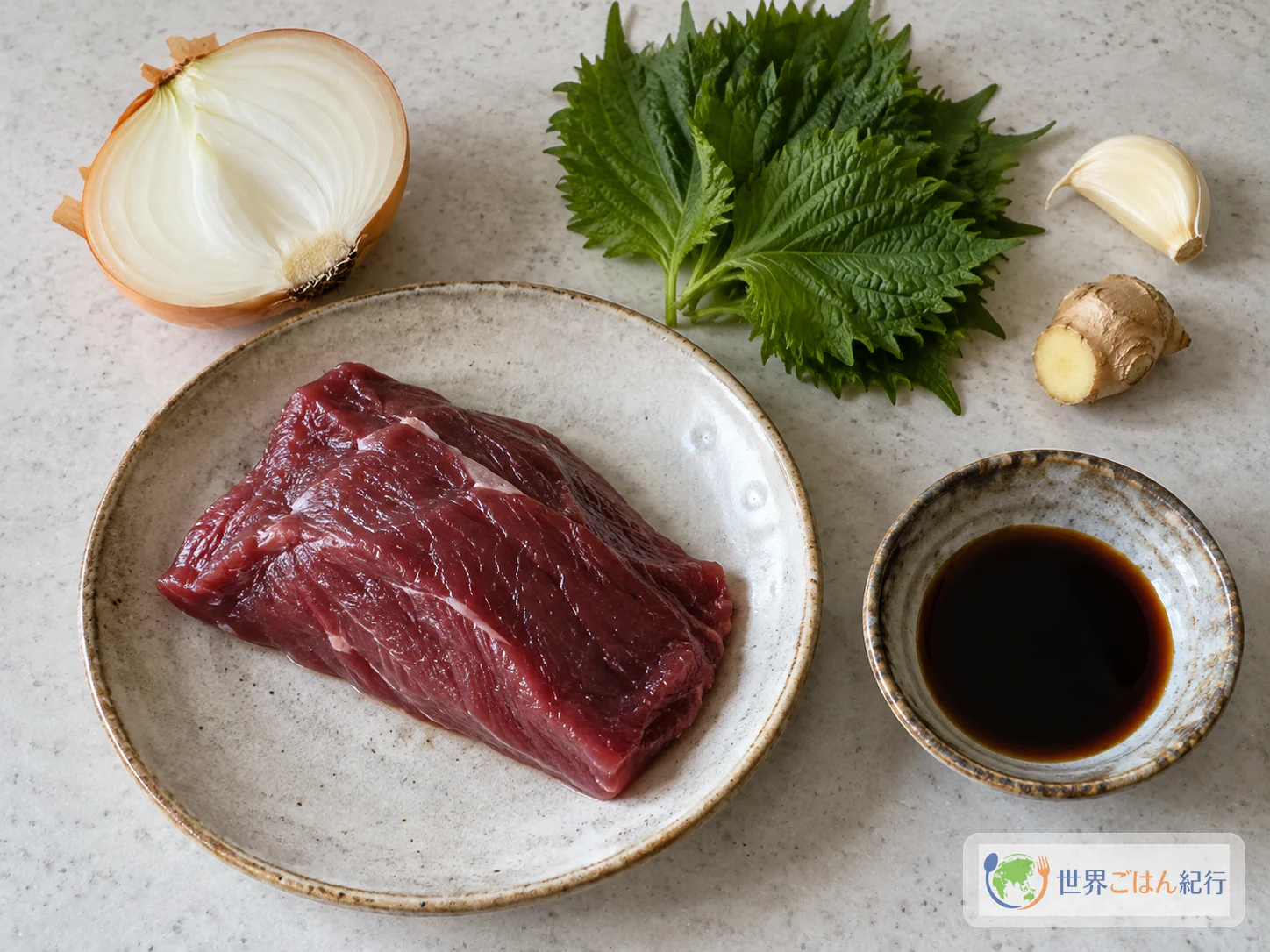
Keep the horse meat cold until you are ready to slice it, and keep it in a bag or container so its juices cannot reach other food.
Equipment
- Cutting board and knife used only for the horse meat
- Separate clean cutting board and knife for the onion
- Grater
- Serving plate
- Small dishes for the condiments and soy sauce
- Kettle or pot of boiling water for cleaning the board and knife
Choosing the Meat and Condiments
Horse meat. Look for meat clearly sold for eating raw, and read its label for storage, thawing and handling after opening. If the label doesn't make this clear, ask the seller. Ordinary horse meat is not a substitute, and neither is any other meat.
Cut. No particular cut is required, so choose whichever raw-sale product you can get. Marbled (shimofuri), lean (akami) and mane (tategami) are examples of cuts, and you can use your preferred one.
Sweet soy sauce. Use a sweet, rich sashimi soy sauce for dipping, to taste.
Eating It Raw: What the Public Guidance Says
MHLW warns that eating raw horse meat, like other raw meat and organ meats, carries a risk of food poisoning. Even hygienic processing cannot completely prevent microbial contamination of meat, and hazards such as parasites are also known. None of the steps above guarantees safety at home.
A 2011 MHLW notice (June 17, 2011) said that the parasite Sarcocystis fayeri was strongly suspected in illness cases linked to basashi. Such cases are to be treated as food poisoning. The notice calls for a freezing step at the distribution stage, and the conditions confirmed to inactivate the parasite include a core temperature of -20°C for at least 48 hours, -30°C for at least 36 hours, and -40°C for at least 18 hours.
These conditions are meant for businesses. Horse meat sold for eating raw is expected to have had this kind of freezing before sale. They are not instructions for a home freezer, and we have no source for home freezing times, so we give none.
According to the same notice, S. fayeri doesn't parasitize humans and not everyone who eats it becomes ill. When symptoms do occur, diarrhea, vomiting or stomach discomfort appear about 4–8 hours after eating. They are described as mild, with quick recovery. Even so, see a doctor if you develop symptoms.
Keep it cold. MHLW's home guidance gives 10°C or below for the refrigerator and -15°C or below for the freezer. Freezing doesn't kill bacteria, so use frozen food early. We give no storage period: follow the label on the meat you buy, eat it as soon as it is sliced, and do not leave it at room temperature.
Keep it separate. The same guidance says to wash your hands after handling raw meat, keep meat in a bag or container so juices don't reach other food, and wash knives and boards and pour boiling water over them after cutting raw meat. It also says not to cut foods eaten raw on them unwashed. It is general guidance rather than advice specific to horse meat. Using a dedicated board and knife and washing the garnishes under running water are additional precautions we have included for this dish.
People who should take extra care. MHLW asks people with weaker resistance, such as children and older adults, to take particular care. Japan's Food Safety Commission advises that during pregnancy, unheated foods can cause listeria food poisoning and should be heated where possible. That advice is general and doesn't name horse meat. On that basis, we suggest that people who are pregnant, infants and young children, older adults and anyone with weakened immunity choose not to eat this dish raw.
Common Problems
| Problem | What to do |
|---|---|
| The label doesn't say the meat is for eating raw | Do not eat it raw. Ask the seller first |
| The meat is hard to slice cleanly | Check the label's thawing instructions. One seller notes that half-thawed meat is easier to cut, but this may not apply to every product |
| The slices are coming out thick | Check the knife is at a right angle to the grain, and aim for 2–3 mm |
| The meat board or knife touched the onion or shiso | Wash the board and knife and pour boiling water over them. Set the affected garnish aside and prepare a fresh portion |
| The plate has been sitting out | Don't count on it being fine, since there is no safe time we can give. Next time, slice just before eating |
Variations
Cut of meat. The Umami Information Center notes the cut can be chosen to preference, with marbled, lean and mane as examples. MAFF and the Umami Information Center both note that flavor differs by cut. The recipe works the same way, and no particular cut is required.
Scallions. The Umami Information Center's version of the dish adds small scallions to the condiments, with onion, garlic, ginger, green shiso and sweet soy sauce. MAFF's recipe doesn't include them, so they are not in the table above.
Basashi in Kumamoto
MAFF presents basashi as a traditional dish of Kumamoto City and the Aso region, eaten with onion, ginger, garlic and sweet soy sauce. It notes that people eat it at New Year and celebrations as well as in everyday meals. Kumamoto Prefecture's local-food site also features basashi as one example of a horse meat dish.
How the dish began is less settled. MAFF states plainly that there are several theories. One links it to the feudal lord Kato Kiyomasa and his military campaign in Korea, and it is best read as a story passed down rather than as established history.
You may also see horse meat called sakura-niku ("cherry blossom meat"), a name that comes from the color of its cut surface.
Frequently Asked Questions
Can I use horse meat from a regular butcher?
Only if it is sold for eating raw. This recipe is not an instruction to eat ordinary horse meat raw. Check the label and ask the seller.
If the meat is fresh or has been frozen, is it safe?
Neither one guarantees safety. MHLW warns of food poisoning risk from raw horse meat. Freezing under the conditions in its notice addresses S. fayeri, but freezing doesn't kill bacteria.
Can I freeze the meat at home to deal with parasites?
We can't advise on this. The published freezing conditions apply to businesses and the distribution stage, and we have no source for home freezers or for refreezing. Choose meat sold for eating raw and follow its label.
How do I thaw it?
Follow the label on your product. As one seller's example, Suganoya advises thawing the unopened pack in ice water in the refrigerator, or under running water if you are in a hurry. It advises against thawing at room temperature or in a microwave. Those instructions are for its own products and may not apply to yours.
How thin should the slices be?
Slice 2–3 mm thick, across the grain, as MAFF's recipe directs. Suganoya gives a similar guide for its blocks, at about 2 mm across the grain.
Can I keep leftovers?
We give no storage period. Eat the meat as soon as it is sliced, do not leave it at room temperature, and follow the label for any meat you have not yet cut.
Sources
- Ministry of Agriculture, Forestry and Fisheries of Japan, "馬刺し 熊本県 | うちの郷土料理" (Basashi, Kumamoto Prefecture). The 4-serving recipe, cutting and plating, how the dish is eaten, its regional background, and the note that there are several theories of its origin. https://www.maff.go.jp/j/keikaku/syokubunka/k_ryouri/search_menu/menu/basashi_kumamoto.html
- Umami Information Center, "馬刺し | 日本の郷土料理とうま味" (Basashi). Kumamoto-style condiments, sweet and rich sashimi soy sauce, examples of cuts, and a version with small scallions. https://www.umamiinfo.jp/japaneseumami/localcuisine/category-06/kumamoto/basashi.html
- Ministry of Health, Labour and Welfare of Japan, "食肉や内臓の生食は食中毒のリスクがあります" (Eating raw meat and organ meats carries a risk of food poisoning). Food poisoning risk from raw horse meat, the limits of hygienic processing, and care for people with weaker resistance. https://www.mhlw.go.jp/stf/seisakunitsuite/bunya/0000050019.html
- Ministry of Health, Labour and Welfare of Japan, "生食用生鮮食品による病因物質不明有症事例への対応について" (Notice 0617-3, June 17, 2011). Sarcocystis fayeri in basashi illness cases, symptoms, and freezing conditions for businesses and distribution. https://www.mhlw.go.jp/topics/bukyoku/iyaku/syoku-anzen/gyousei/dl/110617_02.pdf
- Ministry of Health, Labour and Welfare of Japan, "家庭でできる食中毒予防の6つのポイント" (Six points for preventing food poisoning at home). Refrigerator and freezer temperatures, handwashing, and handling of knives, boards and meat juices. https://www.mhlw.go.jp/stf/seisakunitsuite/bunya/kenkou_iryou/shokuhin/syokuchu/01_00006.html
- Food Safety Commission of Japan, "お母さんになるあなたと周りの人たちへ" (For those becoming mothers and the people around them). General advice on unheated foods during pregnancy; it doesn't name horse meat. https://www.fsc.go.jp/okaasan.html
- Suganoya official online store (千興ファーム), "馬刺しの美味しい食べ方" (How to enjoy basashi). One seller's thawing and slicing instructions for its own products. https://www.suganoya.com/f/how_to_eat
- Kumamoto Prefecture local-food site くまもとのアグリ&フード, "馬刺のタルタル" (Basashi tartare). Basashi featured as one example of a horse meat dish; its tartare recipe is not used here. https://www.kumamoto-agribiz.jp/chisan/kiji003453/index.html