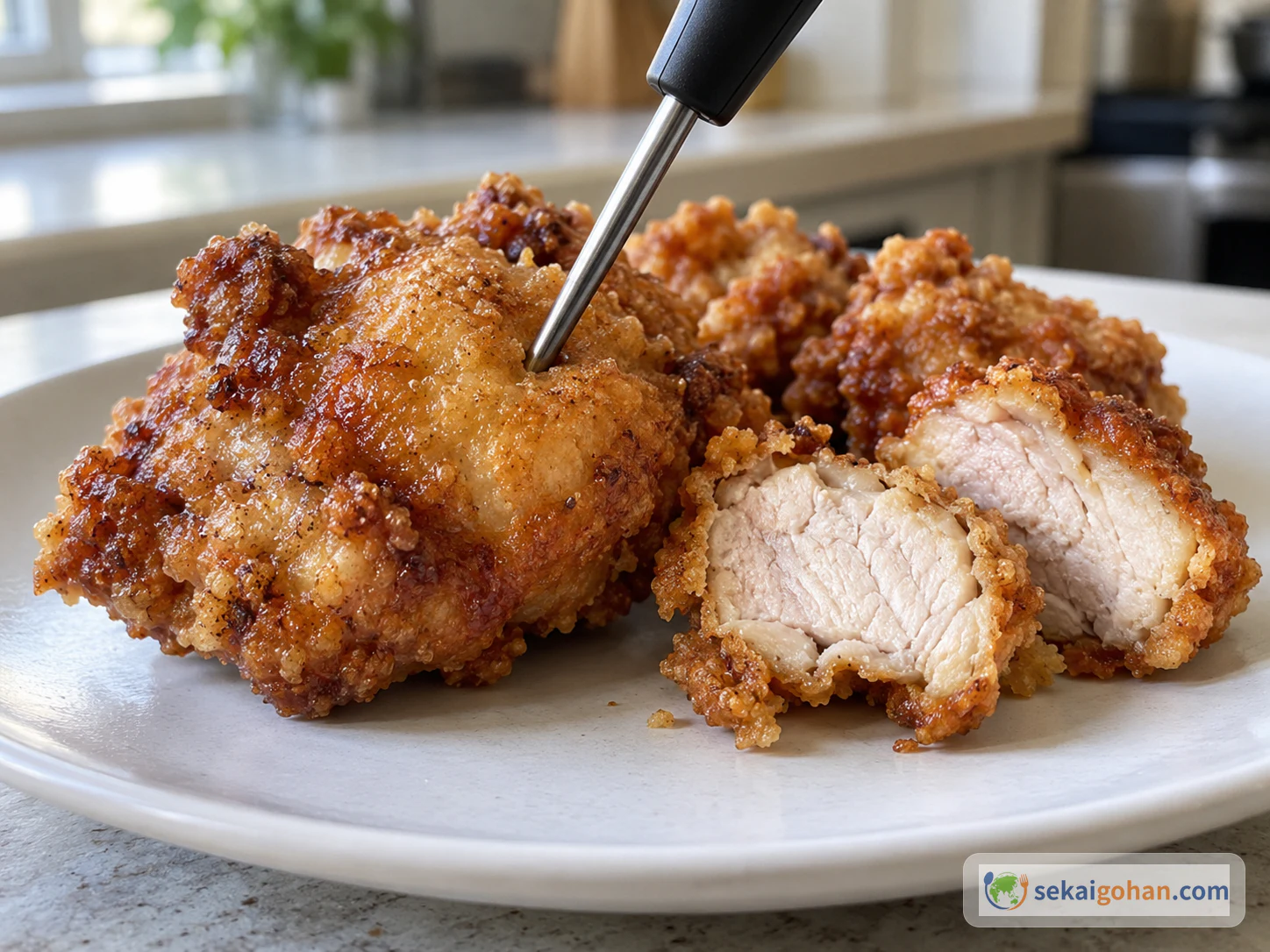
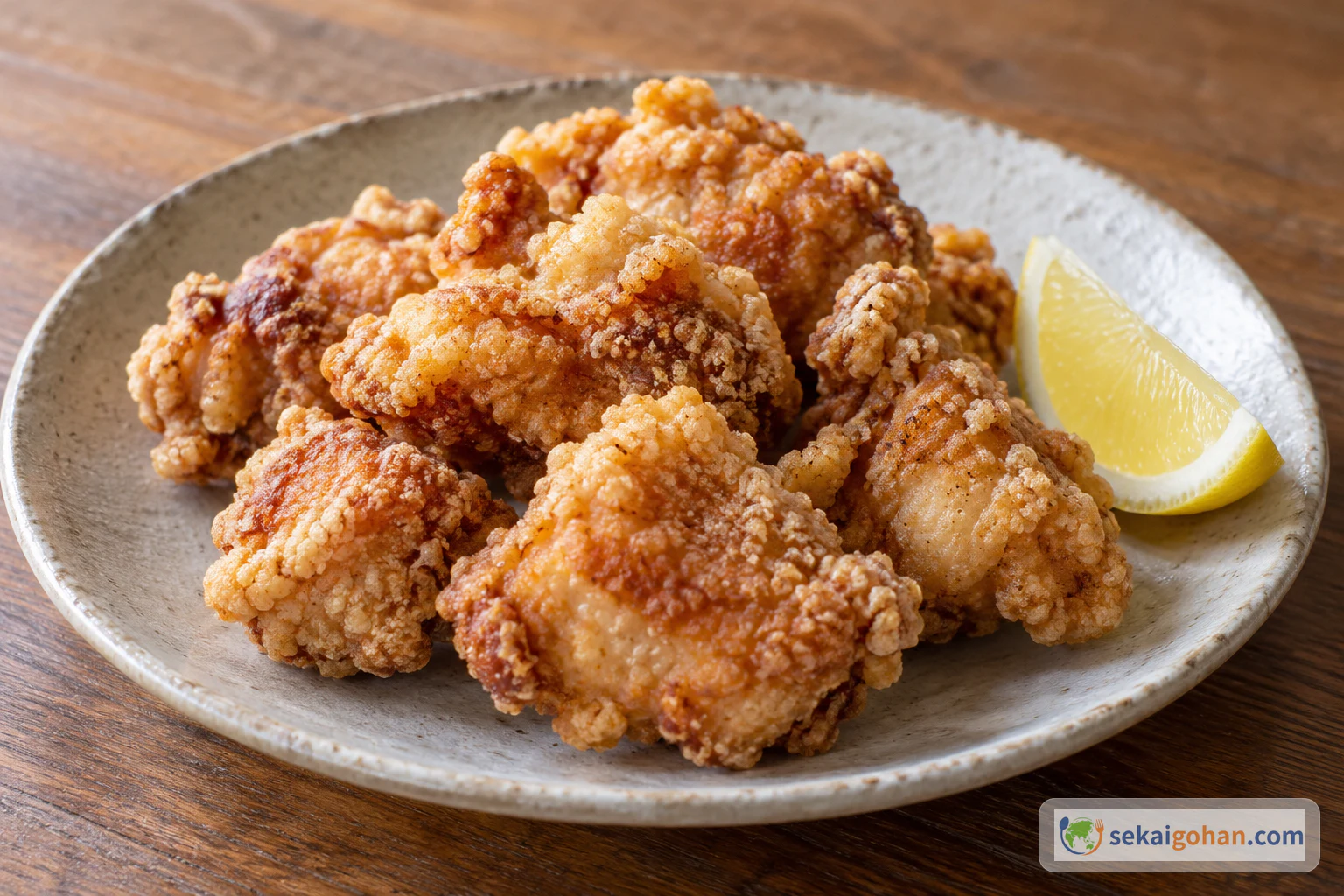
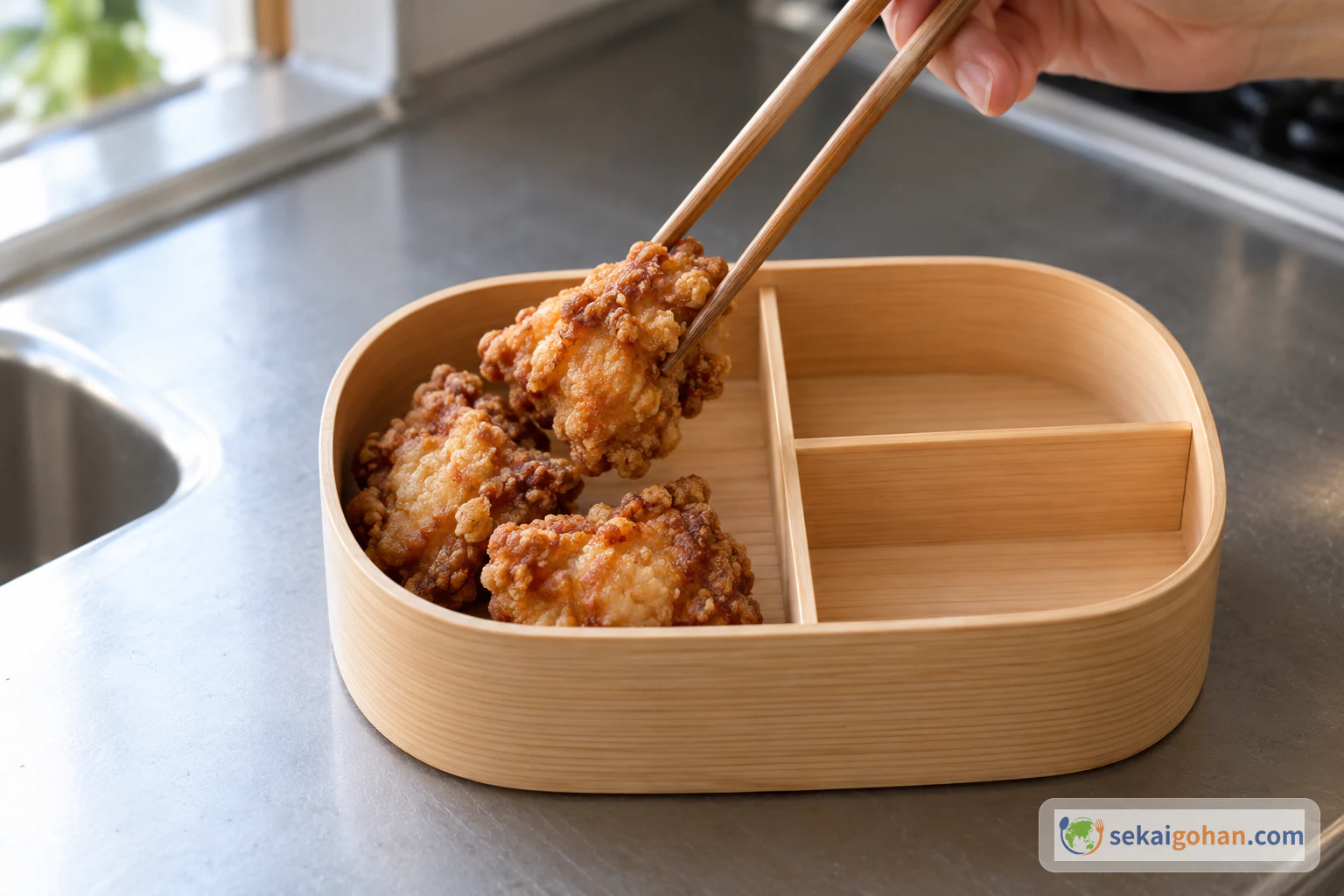
Chicken Karaage Built for the Plate and the Bento Box
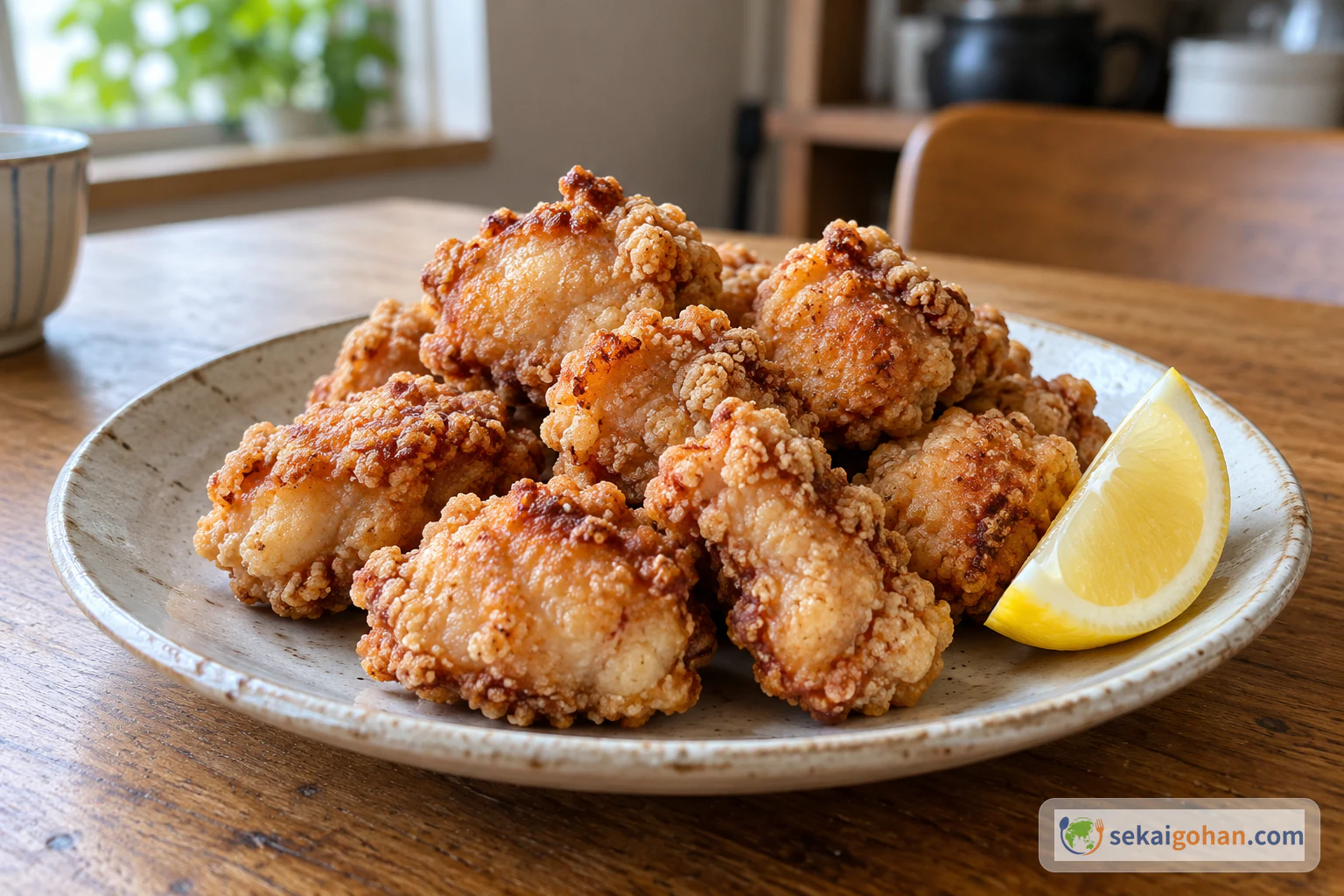
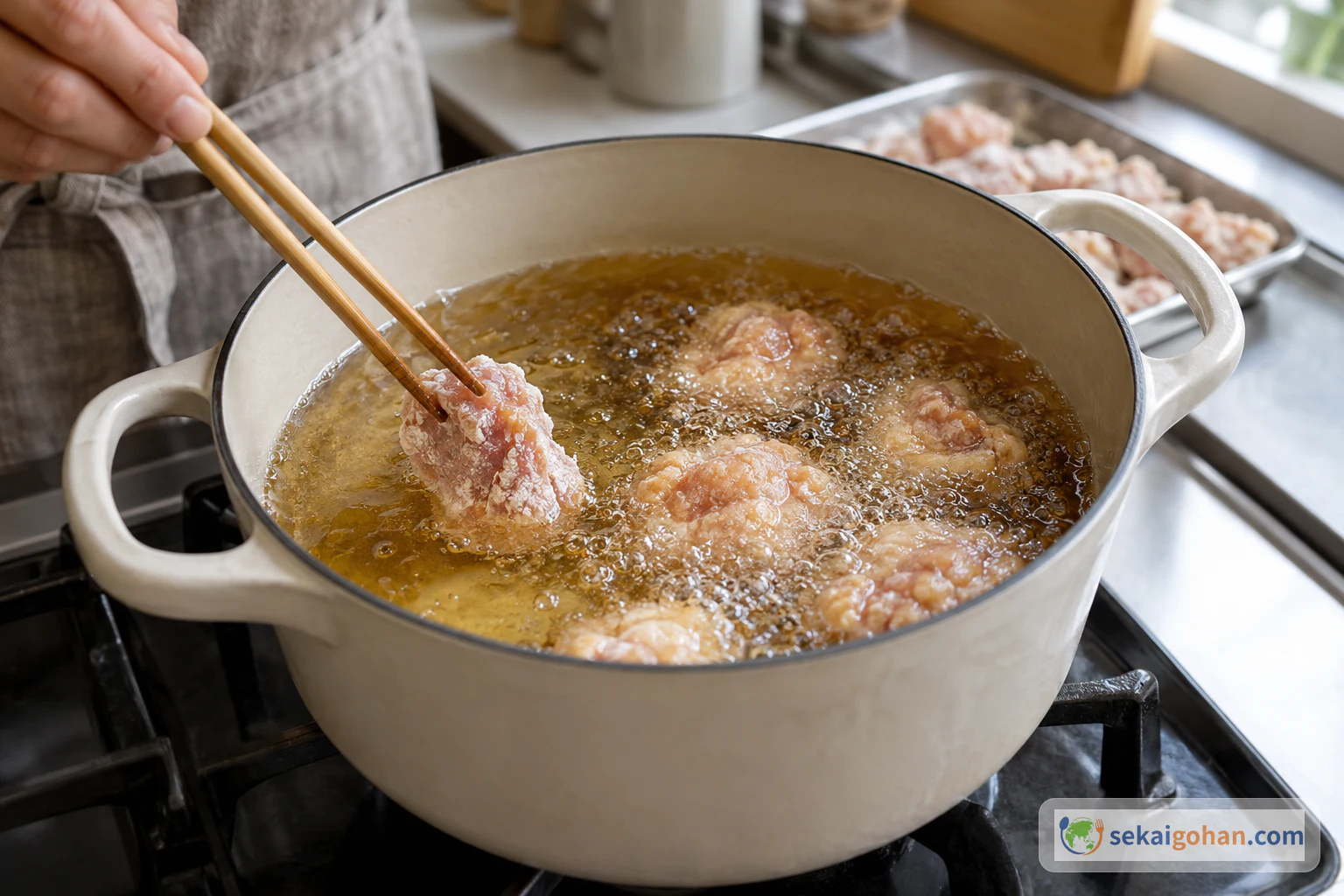
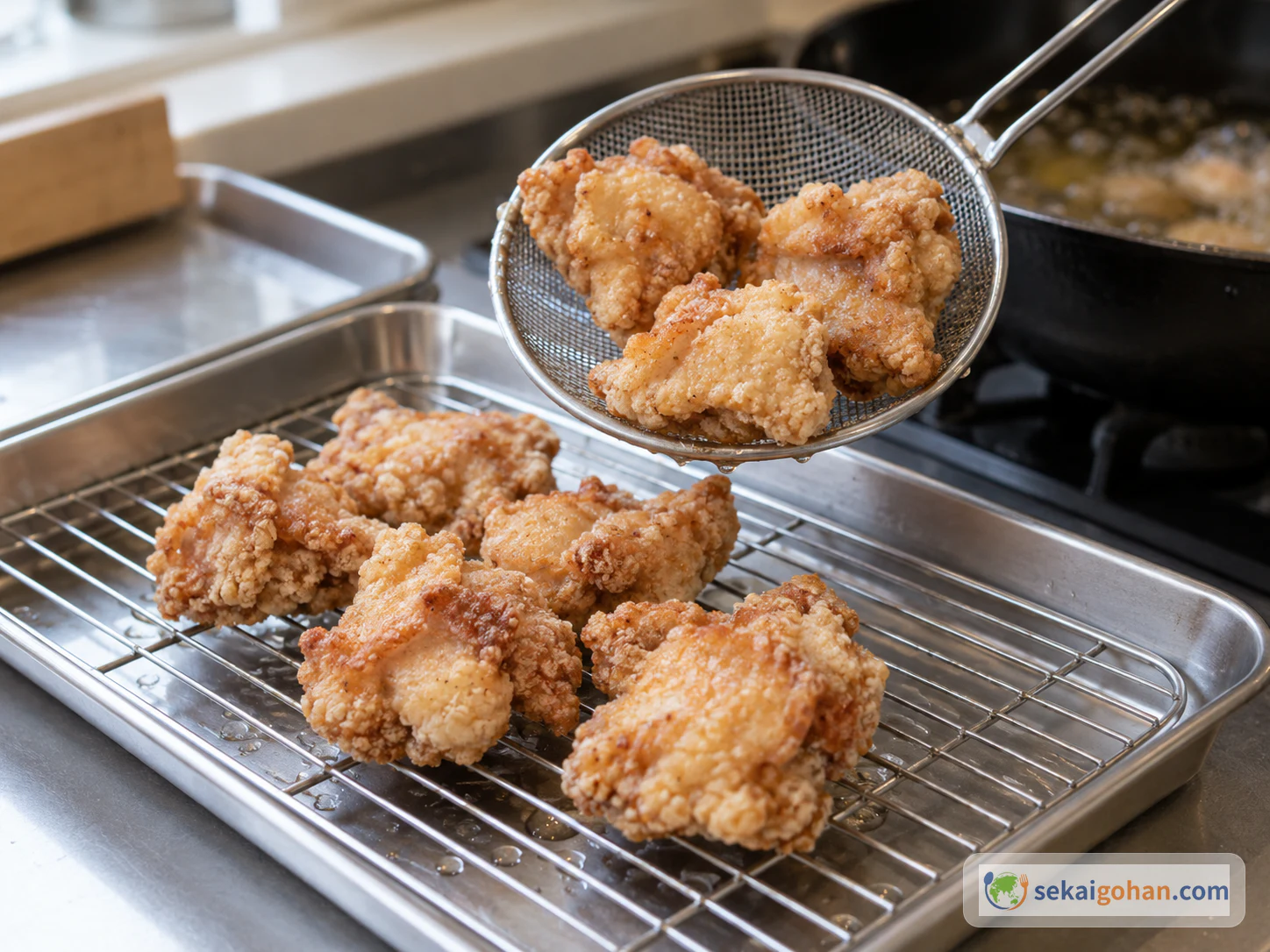
The chicken is seasoned twice. First comes a light rub of salt and lemon juice and a rest in the refrigerator. Then come soy sauce, mirin, garlic, ginger, egg and katakuriko, all worked into the same bowl. The pieces fry at about 160°C until crisp.
Most karaage recipes focus on the moment the pieces come out of the oil. This one also plans for later, when the karaage has cooled and sits in a lunch box. The recipe comes from Chef Kimio Nonaga of Nihonbashi Yukari and is published on Chef Gohan (Gurunavi). The chef explains that rubbing salt and lemon into the chicken first helps it stay tasty after it cools, which is why the recipe is recommended for bento.
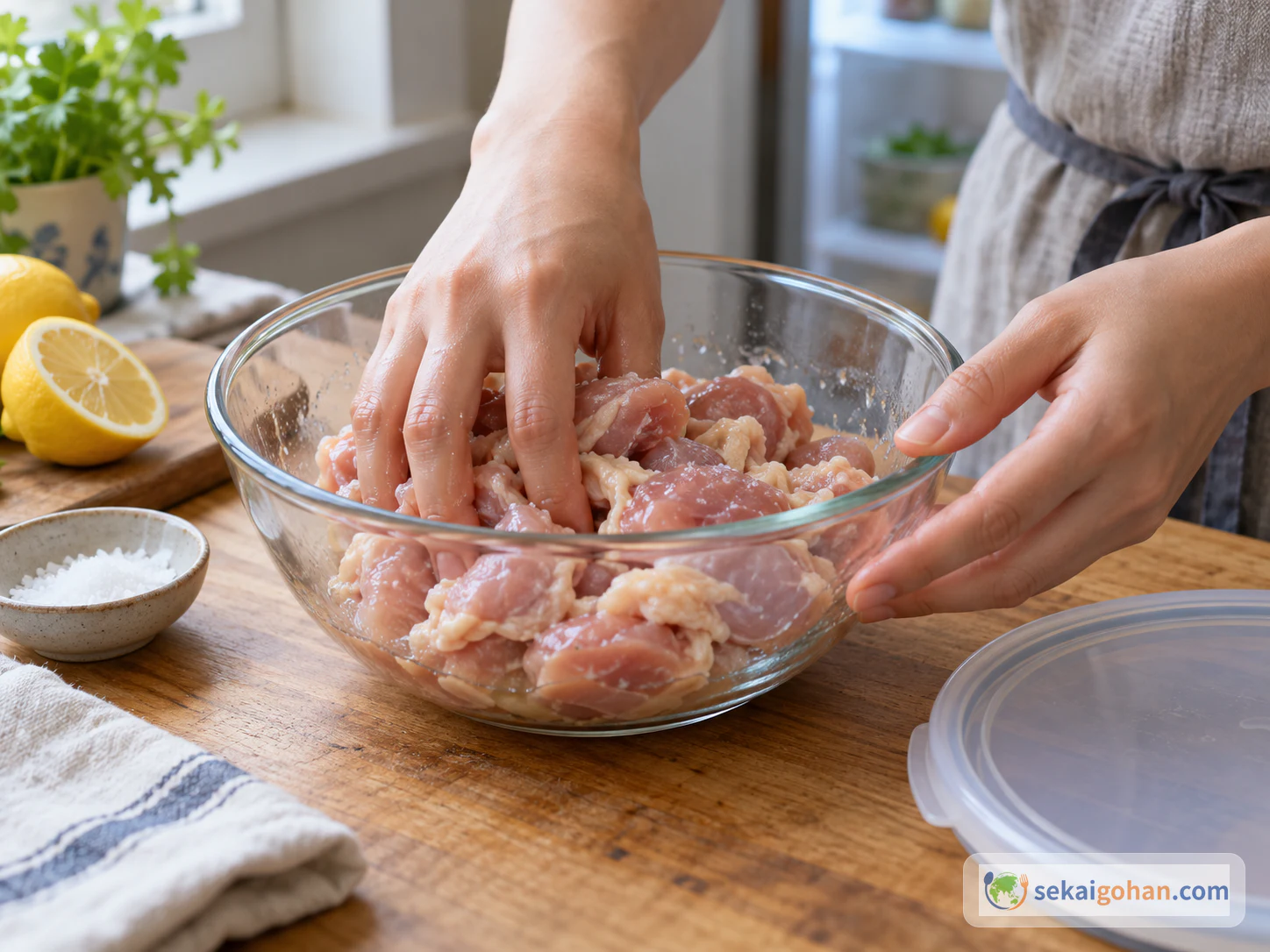
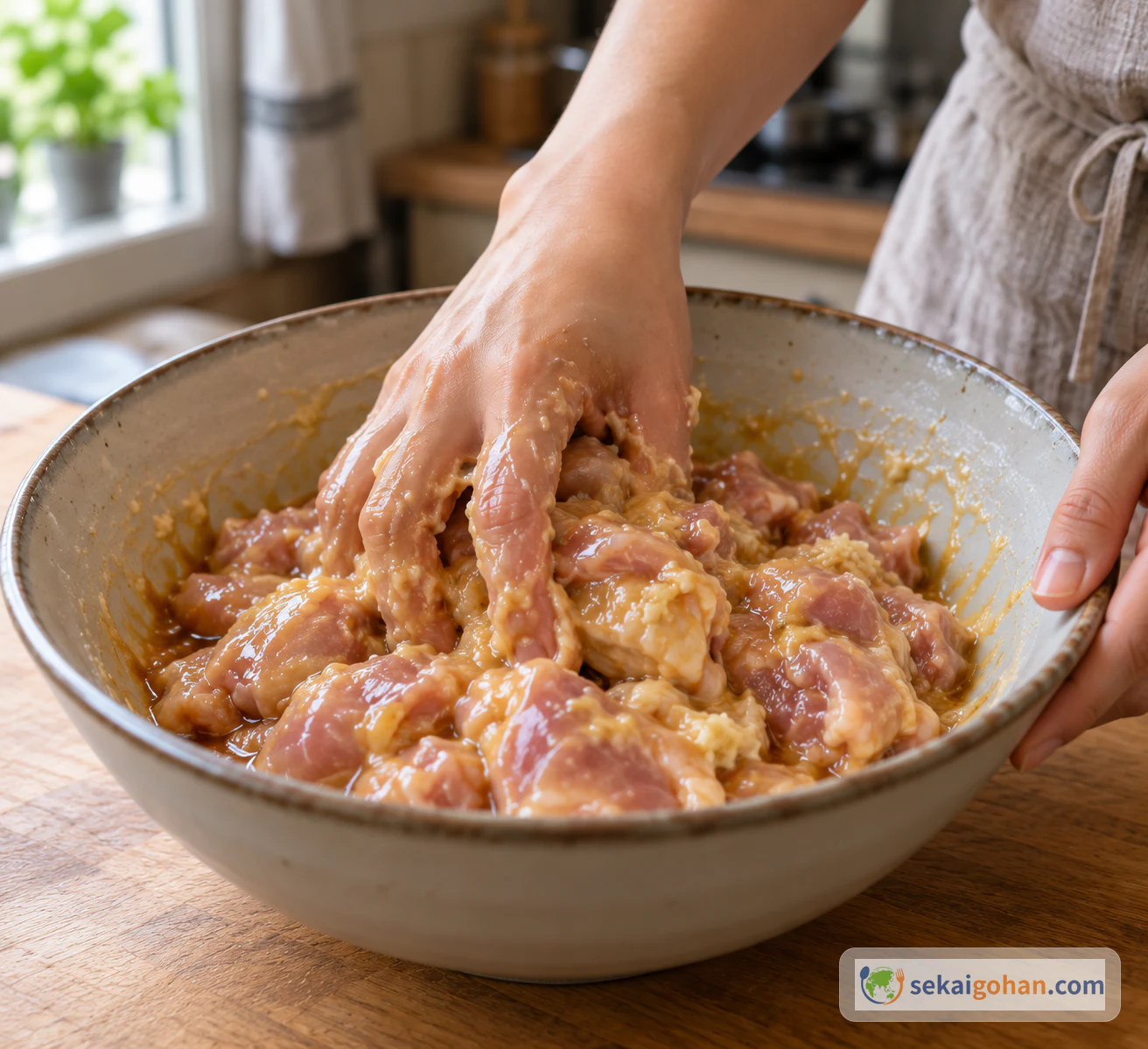
The order is what sets this version apart. It does not stir everything into one marinade. Salt and lemon juice go in first, and the chicken rests in the refrigerator for 1 to 6 hours. Only then are the soy sauce, mirin, grated garlic and ginger, beaten egg and katakuriko worked in, all at once and in the same bowl. The page lists a cooking time of about 15 minutes, but that figure does not include the 1 to 6 hour rest. Plan the rest separately, counting back from when you want to eat. Sekai Gohan has not kitchen-tested this recipe.
For more dishes from the same country, see Japanese food on Sekai Gohan.
What "Karaage" Covers, and Which Plate This Is
The Japan Karaage Association defines karaage broadly. In its explanation, karaage is a cooking method or dish in which food is lightly coated with wheat flour, katakuriko or a similar starch and fried in oil. It is not limited to chicken. That is the association's own definition, not a rule every cook follows. This article stays narrow: one recipe, made with chicken thigh.
The word itself has a longer written history than the dish shown here. A 2017 paper by Yasushi Masuko, which is mainly about the Chinese-style dish yurinchi, touches on karaage in its history section. It describes a "karaage" in Fucha Ryōri Shō (1772) that was tofu, fried and then simmered in soy sauce and sake, and it notes that this is different from today's chicken karaage. Citing writing by Yuko Shibukawa, the paper also says that a chicken cookbook published in 1924 included an example of chicken karaage. These records show how the word was used. They do not prove a single origin for the modern dish, and this article does not claim one.
Recipes that share the name "chicken karaage" can still produce quite different plates. Kikkoman's home-cooking site, for example, offers a two-serving version that uses 280g of chicken thigh, 1 tbsp soy sauce and 2 tsp mirin. In that recipe, the chicken is drained, dusted with katakuriko, and fried at 140°C for 3 to 4 minutes before the heat rises to 180–190°C to finish the surface. Chef Nonaga's recipe differs at every stage: salt and lemon first, egg and katakuriko worked into the meat, and one fry at about 160°C for about 3 minutes. The two methods are not mixed here. Everything below follows the Nonaga version only.
Ingredients for 2 Servings
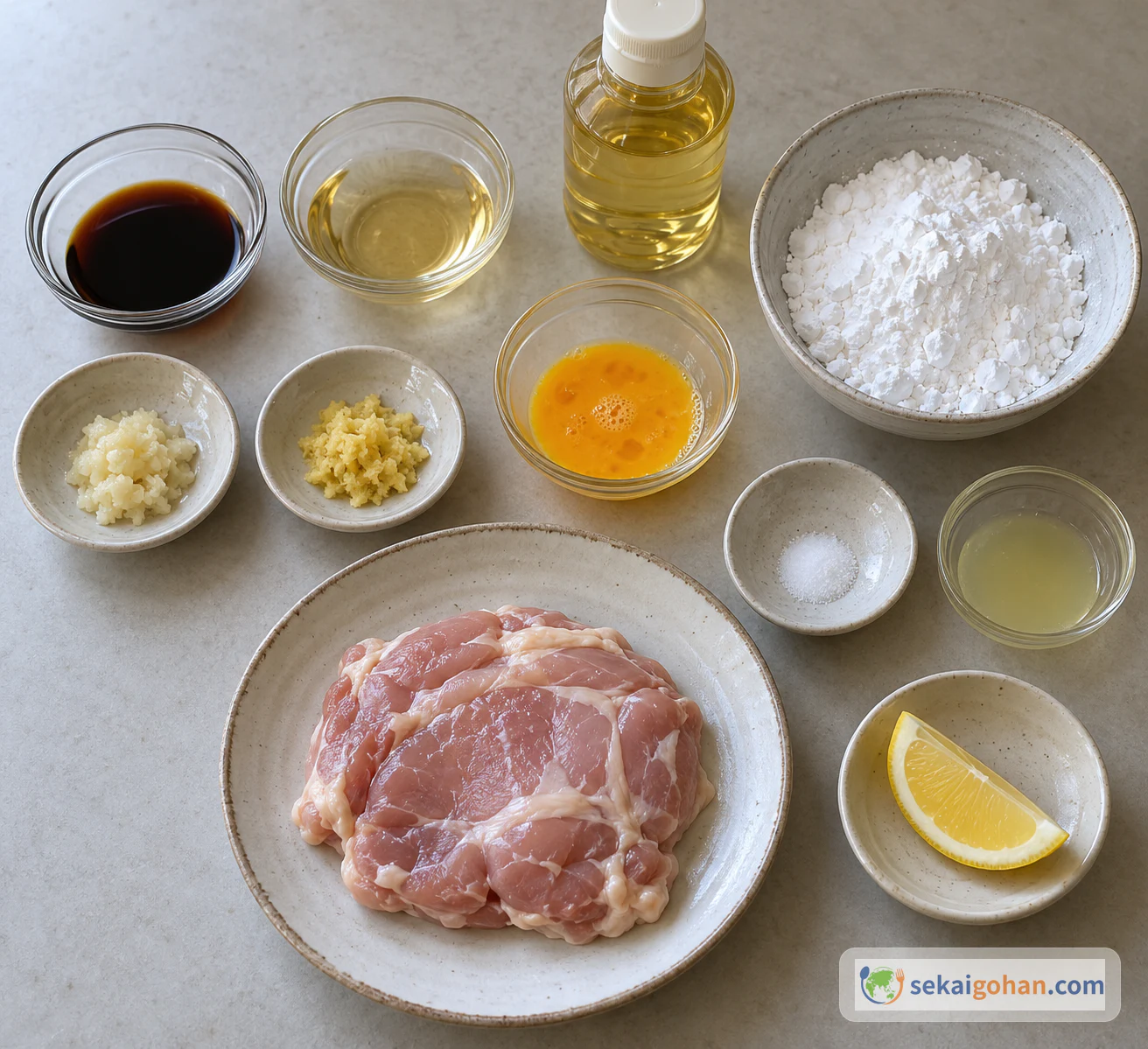
Equipment
- Knife and a cutting board kept for raw meat
- Bowl with a lid or cover, for the refrigerator rest and for mixing
- Pot for frying
- Chopsticks for lowering the pieces into the oil
- Wire skimmer, plus a rack set over a tray for draining
- Food thermometer for checking the center of the chicken
- Kitchen paper
- Bento box, if packing a lunch
Shopping and Substitutions
Everything here is an everyday Japanese grocery item. Nothing calls for a specialty shop. No particular brand of soy sauce, mirin or frying oil is needed, so use what you normally cook with.
Katakuriko is a Japanese cooking starch, so look for a bag labeled katakuriko. This recipe keeps it as the only coating. It does not swap in wheat flour, cornstarch or another starch, and it does not add a separate dry dusting. Changing the starch or the seasonings will give a different result, and there is no guarantee it will taste the same.
The garlic and ginger amounts are given both by spoon and by weight. Use whichever measure suits your kitchen.
Before You Start: Handling Raw Chicken
Do not rinse the chicken. Splashing water can spread bacteria that cause food poisoning around the sink. If the meat juices bother you, pat them off with kitchen paper. Keep raw chicken away from other foods, especially fruit and vegetables that are eaten raw. Use a separate board and knife, or cut the meat last. Store raw chicken so its juices cannot leak, and keep it apart from other foods. After handling raw chicken, wash your hands, then wash and sanitize the board, knife and anything else the meat touched.
Method
About 160°C is the oil temperature, and about 3 minutes is a frying guide. Neither one guarantees that the center of every piece is cooked. For that, check that the center of the chicken reaches 75°C or higher for at least 1 minute.
Troubleshooting
| Situation | What to check | What to do |
|---|---|---|
| The center hasn't reached 75°C for 1 minute | Size of the pieces and the state of the pot | Keep heating and check the thickest piece again with the thermometer |
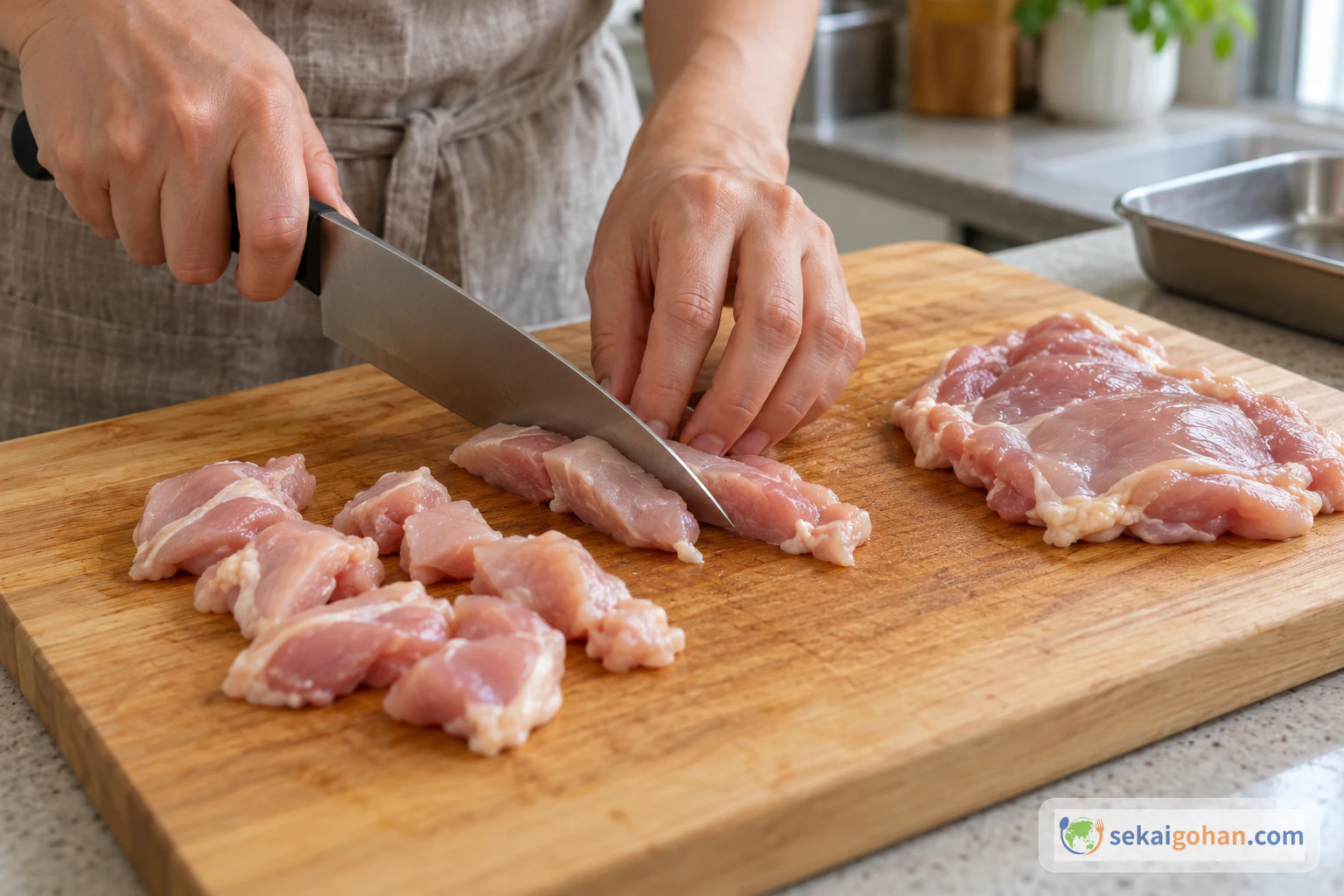
| Pieces cook unevenly | How the meat was cut | Next time, cut it lengthwise into 4 along the grain first, then across the grain into pieces about 3 cm |
| Not enough time for the rest | When you started step 1 | Rest the chicken in the refrigerator for at least 1 hour and no more than 6. Never shorten the rest by leaving the chicken at room temperature |
| The coated chicken looks wet in the bowl | Whether flour or extra starch was added | Fry it as it is, with no draining or dusting |
| You want to rinse the chicken | Juices on the meat | Do not rinse it. Pat it with kitchen paper instead |
| Steam is rising from the karaage in the bento | Whether it was packed straight from the oil | Let it cool before packing |
Planning the Day: Plate or Bento
The rest in the refrigerator is the only long wait in this recipe, so work back from when you want to eat.
| Stage | When | Note |
|---|---|---|
| Cut, then rub with salt and lemon juice | 1 to 6 hours before frying | Keep the bowl covered in the refrigerator |
| Add the seasonings, egg and katakuriko | Right after the rest | Work everything into the same bowl |
| Fry at about 160°C, about 3 minutes | When you are ready to cook | Check that the center reaches 75°C for at least 1 minute |
| Serve, or cool for the bento | After frying | Serve with lemon, or let cool before packing |
At the table, serve the lemon on the side so each person can decide how much to squeeze. For a bento, the karaage goes in only after it has cooled.
Frequently Asked Questions
What coating does this karaage use?
Chef Nonaga's recipe uses 5 tbsp katakuriko and 1/2 beaten egg. Both are worked into the chicken together with the soy sauce, mirin, garlic and ginger. There is no separate dusting and no wheat flour. Other recipes coat the chicken differently. Kikkoman's version, for example, drains the chicken and dusts it with katakuriko.
How long do I fry it?
The recipe gives oil at about 160°C and about 3 minutes, until the coating is crisp. That is a cooking guide, not a safety standard. Japan's Ministry of Agriculture, Forestry and Fisheries and its Ministry of Health, Labour and Welfare both advise cooking chicken until the center reaches 75°C or higher for at least 1 minute. Check with a thermometer, and keep heating if the center falls short.
How long should the chicken rest after the salt and lemon?
Rest it in the refrigerator for 1 to 6 hours. The recipe page lists a cooking time of about 15 minutes, and that does not include this rest.
Why salt and lemon first?
Chef Nonaga gives this first seasoning as the reason the karaage stays tasty after it cools. That is why the recipe page recommends it for bento.
Can I make it for a bento?
Yes. The recipe is presented as good for bento. Let the karaage cool before packing it.
What oil should I use, and how long does leftover karaage keep?
The recipe does not name a type or amount of frying oil, so use what you have, in the amount you need. It also gives no storage period and no method for reheating, so this article doesn't add either. The only guidance given for after cooking is to let the karaage cool before packing it into a bento.
Is karaage always chicken?
Not by the Japan Karaage Association's definition. The association describes karaage as a frying method, with food lightly coated in flour, katakuriko or a similar starch, and says it is not limited to chicken. This article covers only the chicken-thigh version.
Is this the same as two-stage fried karaage?
No. Some recipes fry at a lower temperature first and then finish at a higher one. Kikkoman's recipe does this, frying at 140°C and then at 180–190°C. This recipe uses one fry at about 160°C for about 3 minutes. The two methods are not combined here.
Sources
- Chef Gohan (Gurunavi), "鶏のから揚げ 野永 喜三夫シェフのレシピ" (Chicken karaage: recipe by Chef Kimio Nonaga, Nihonbashi Yukari). The main recipe: 2 servings, listed cooking time of about 15 minutes, all ingredient amounts, the cut, the salt-and-lemon rest of 1–6 hours in the refrigerator, the second seasoning and coating, frying at about 160°C for about 3 minutes, serving with lemon, cooling before packing a bento, and the chef's note on why the first seasoning suits bento. https://chefgohan.gnavi.co.jp/detail/91
- Kikkoman Home Cooking, "鶏のから揚げ【人気のしっかりしょうゆ味】" (recipe by Keiko Iwasaki). A separate recipe used only for comparison: 280g chicken thigh, katakuriko dusting, and a two-stage fry at 140°C and then 180–190°C. Not used for any amount or step in this recipe. https://www.kikkoman.co.jp/homecook/search/recipe/00004682/
- Ministry of Agriculture, Forestry and Fisheries (Japan), "鶏料理を楽しむために~カンピロバクターによる食中毒にご注意を!!~". Cooking chicken until the center reaches 75°C or higher for at least 1 minute; not rinsing chicken; patting off juices with kitchen paper; keeping raw meat away from other foods and separating tools or cutting meat last; storing raw meat so it cannot leak. https://www.maff.go.jp/j/fs/campylobacter.html
- Ministry of Health, Labour and Welfare (Japan), "カンピロバクター食中毒予防について(Q&A)". Heating chicken at home until the center reaches 75°C or higher for at least 1 minute; separating tools and containers for meat; washing hands; washing and sanitizing utensils. https://www.mhlw.go.jp/stf/seisakunitsuite/bunya/kenkou_iryou/shokuhin/syokuchu/campylobacterqa.html
- Japan Karaage Association, "唐揚げとは:唐揚げの定義". The association's definition of karaage as a frying method or dish with a light coating of flour, katakuriko or a similar starch, not limited to chicken. Presented as the association's own view. https://karaage.ne.jp/whats/2011/01/karaage-teigi.html
- Yasushi Masuko, "謎の中華料理 油淋鶏," Kokusai-Joho, vol. 2, no. 1 (2017). The tofu "karaage" in Fucha Ryōri Shō (1772) and how it differs from modern chicken karaage, and a 1924 chicken cookbook example cited from Yuko Shibukawa. The paper is mainly about yurinchi and is not a full history of chicken karaage. https://www.jstage.jst.go.jp/article/kjoho/2/1/2_3/_pdf