Chicken Teriyaki: A Sweet-Savory Glaze Built on Skin-Side-First Thighs
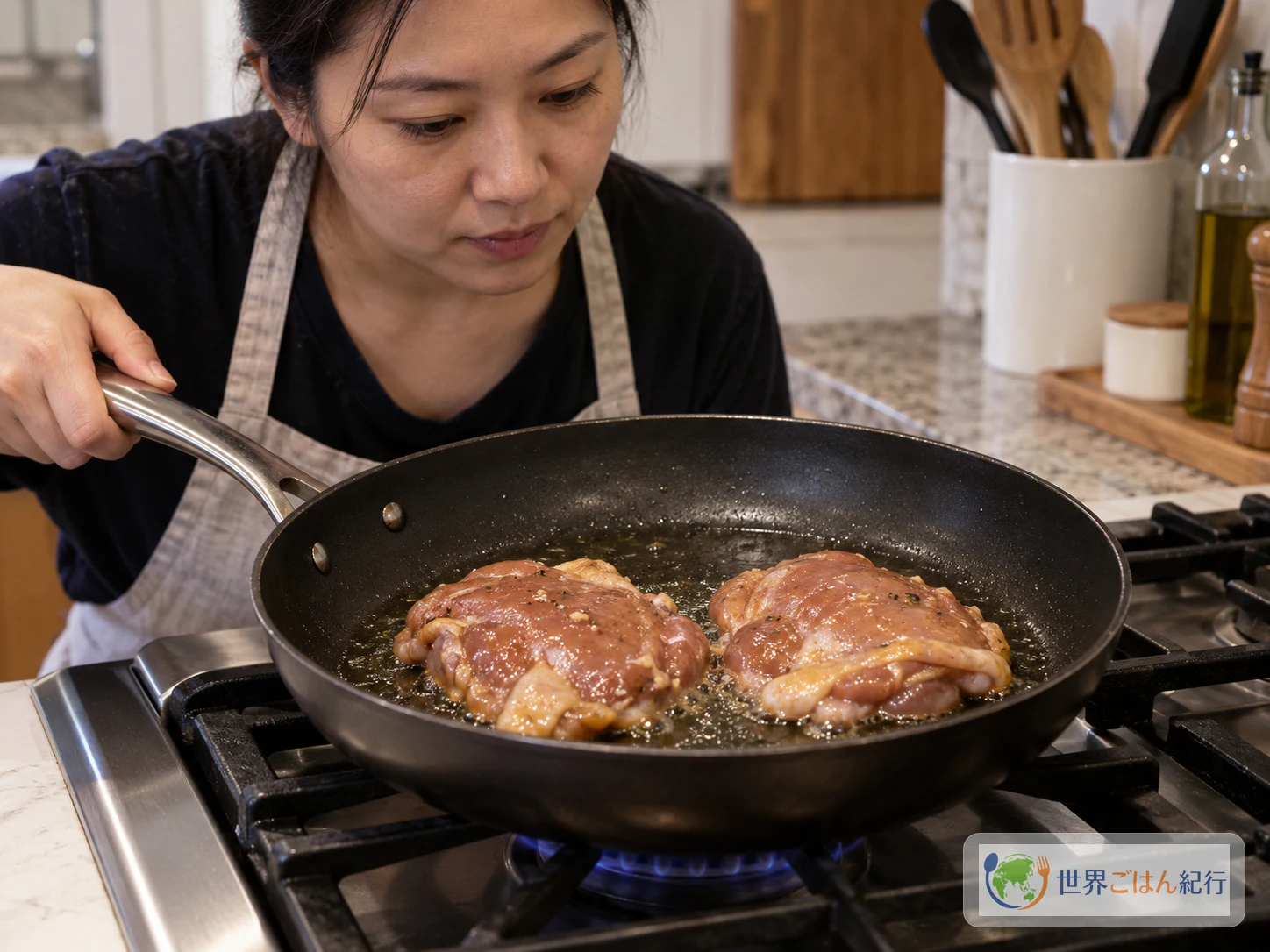
Cook the chicken slowly from the skin side so the sugary marinade does not burn. Then use the same frying pan for the colorful vegetables and the sauce.
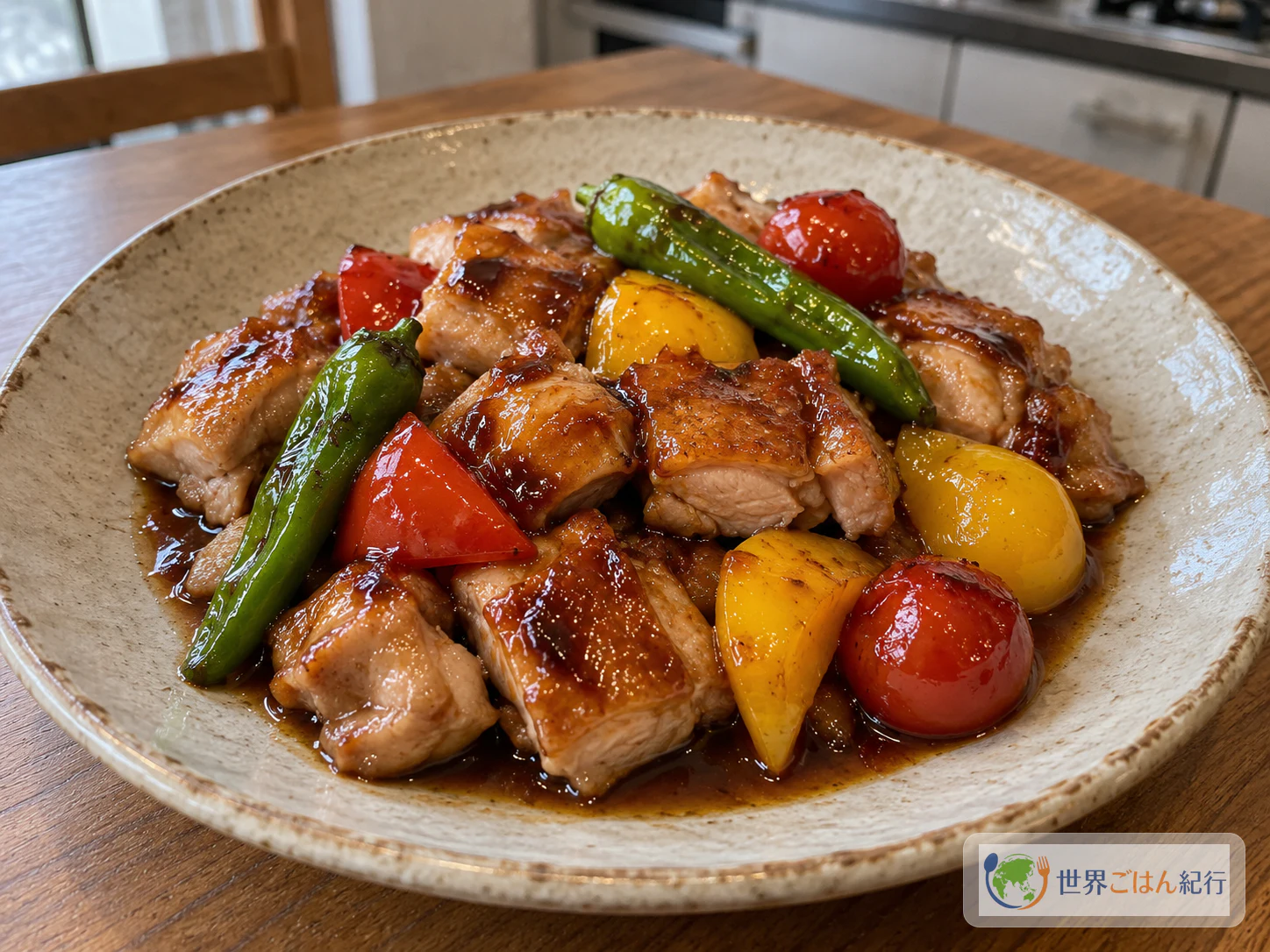
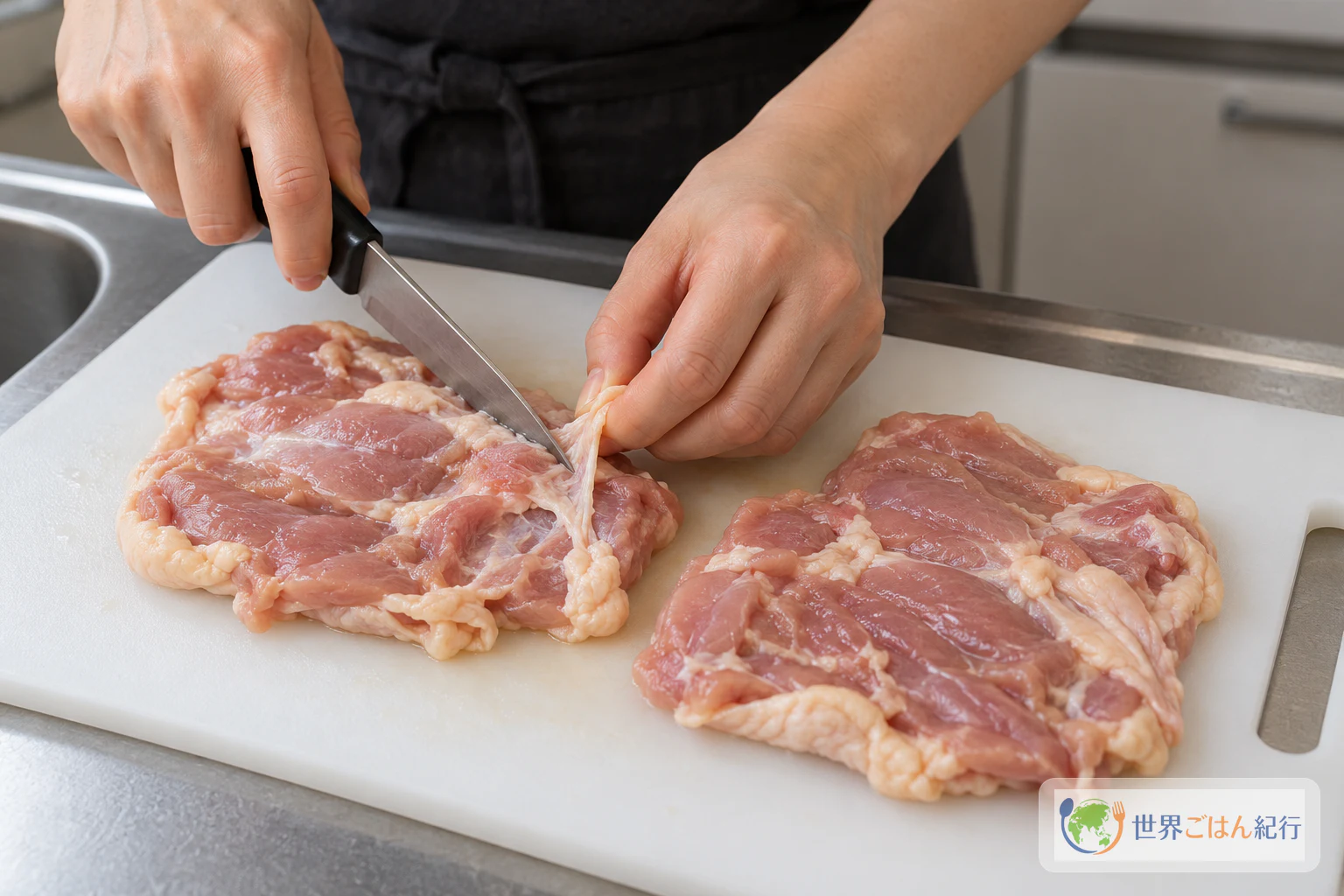
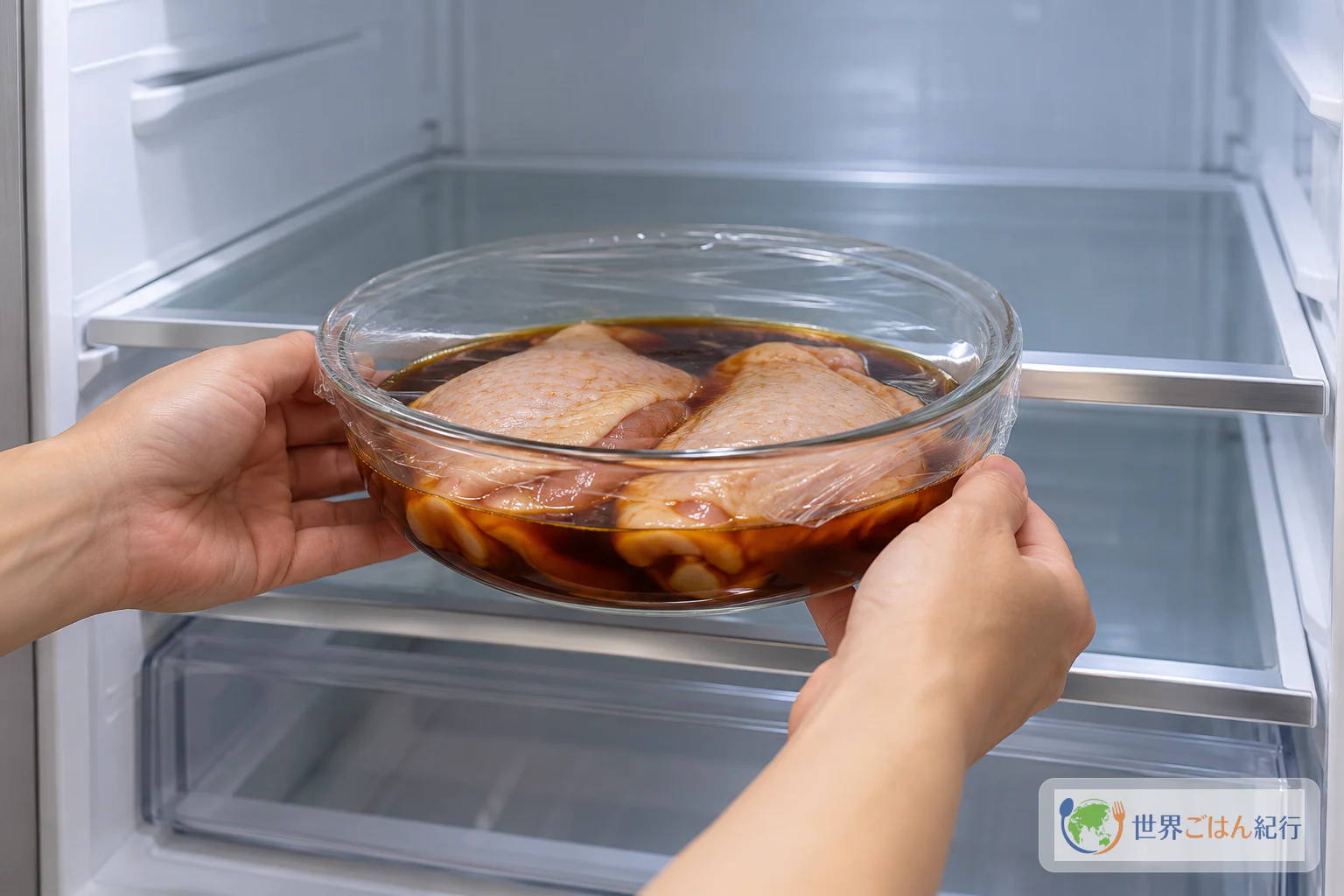
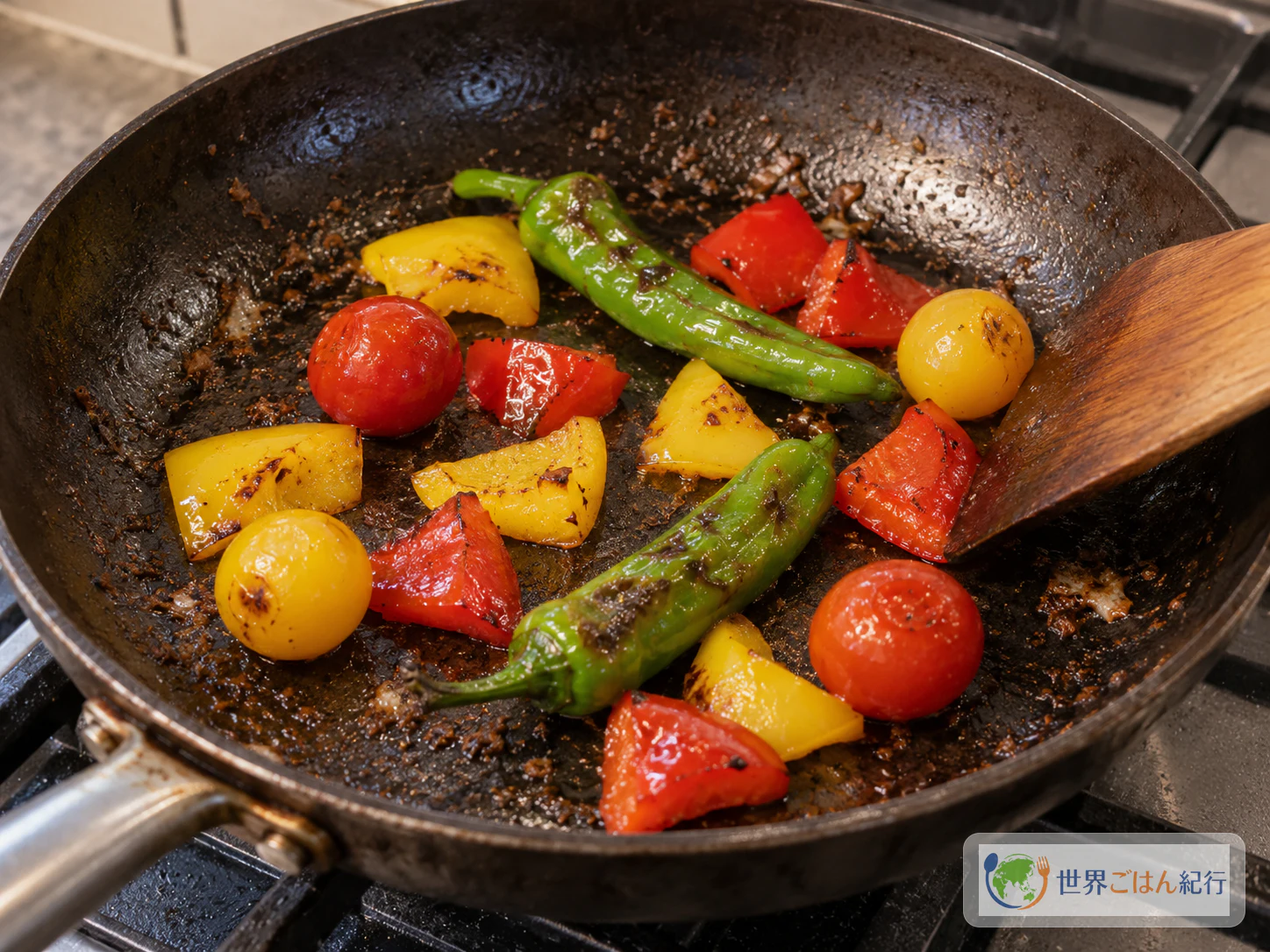
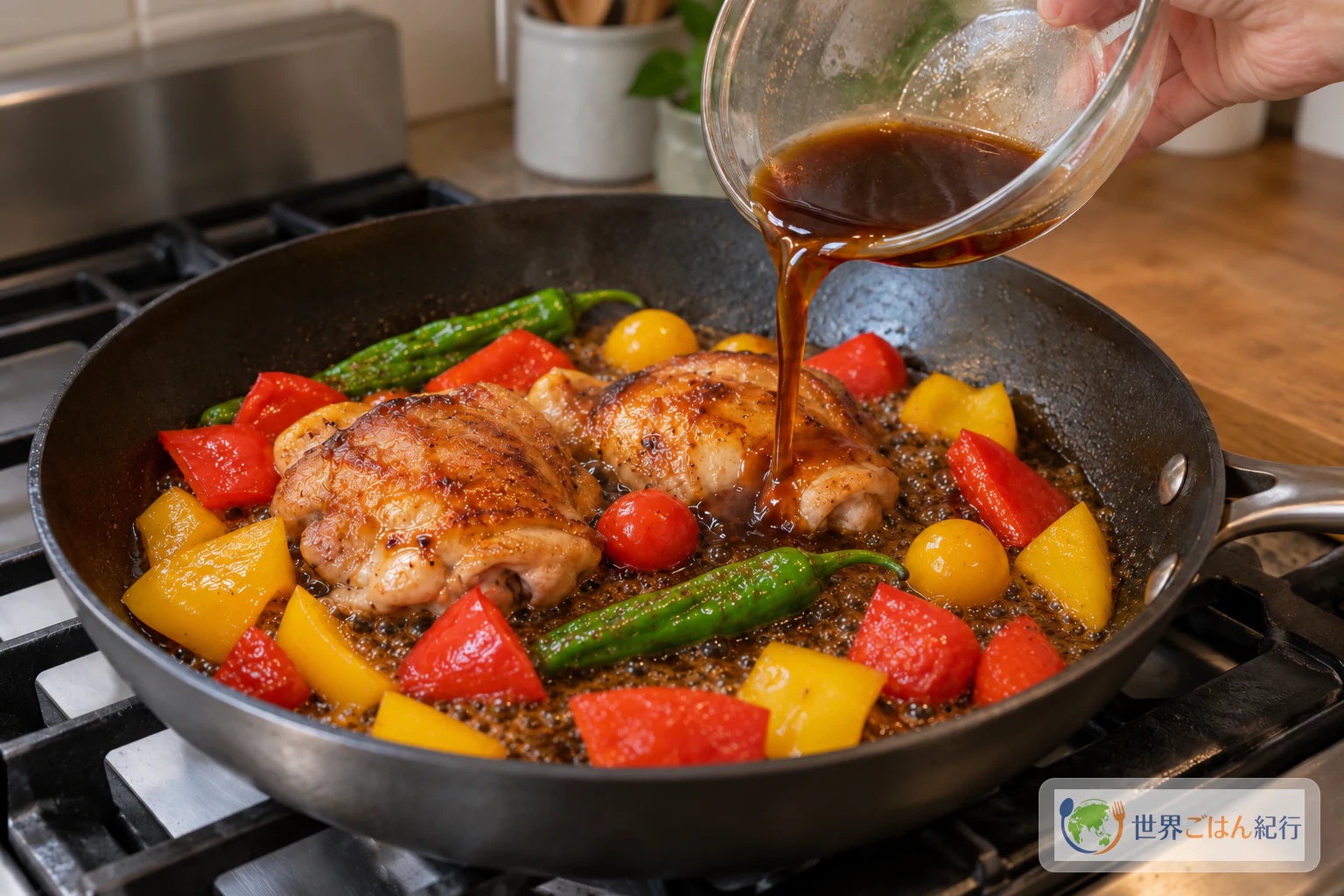
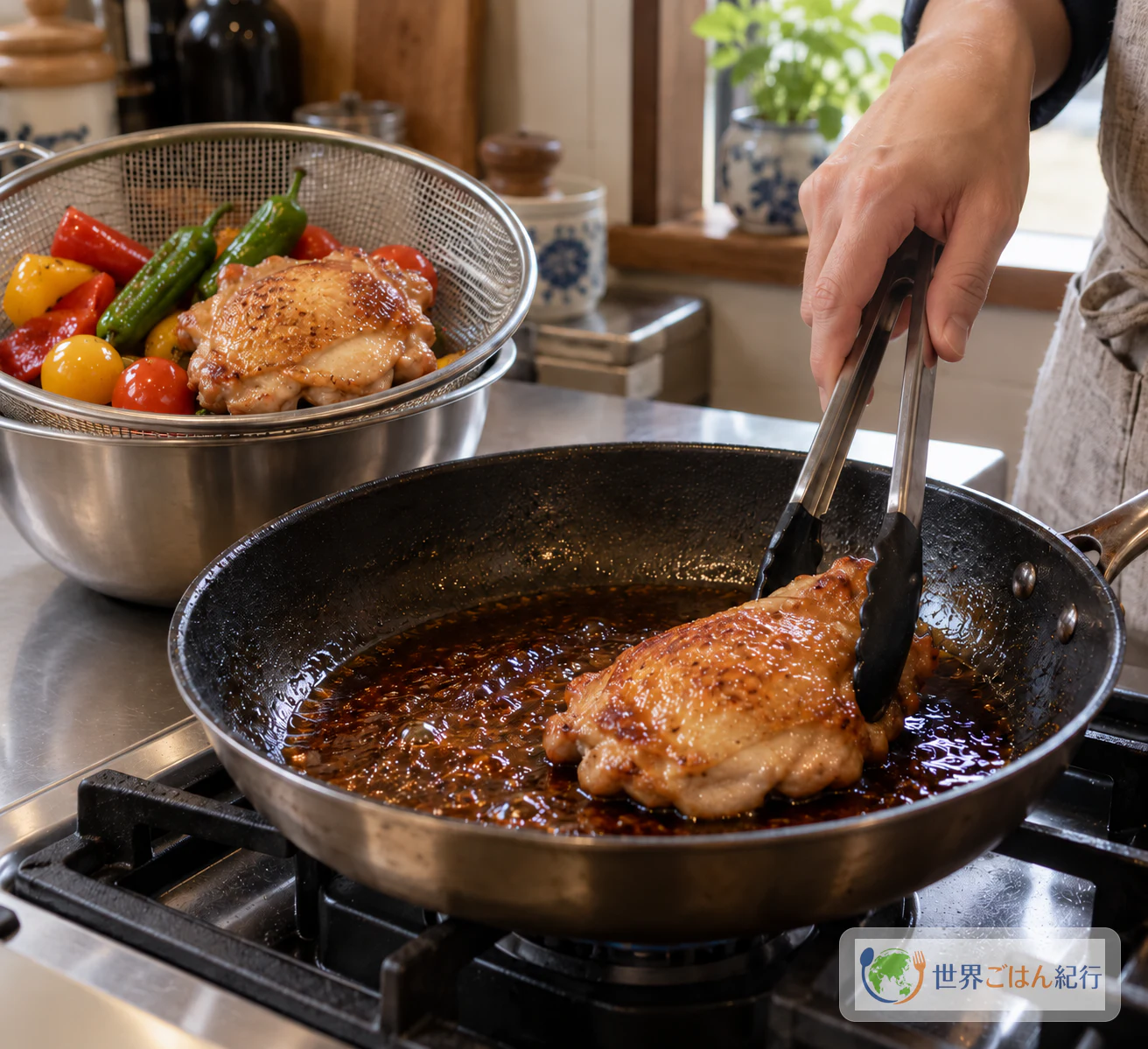
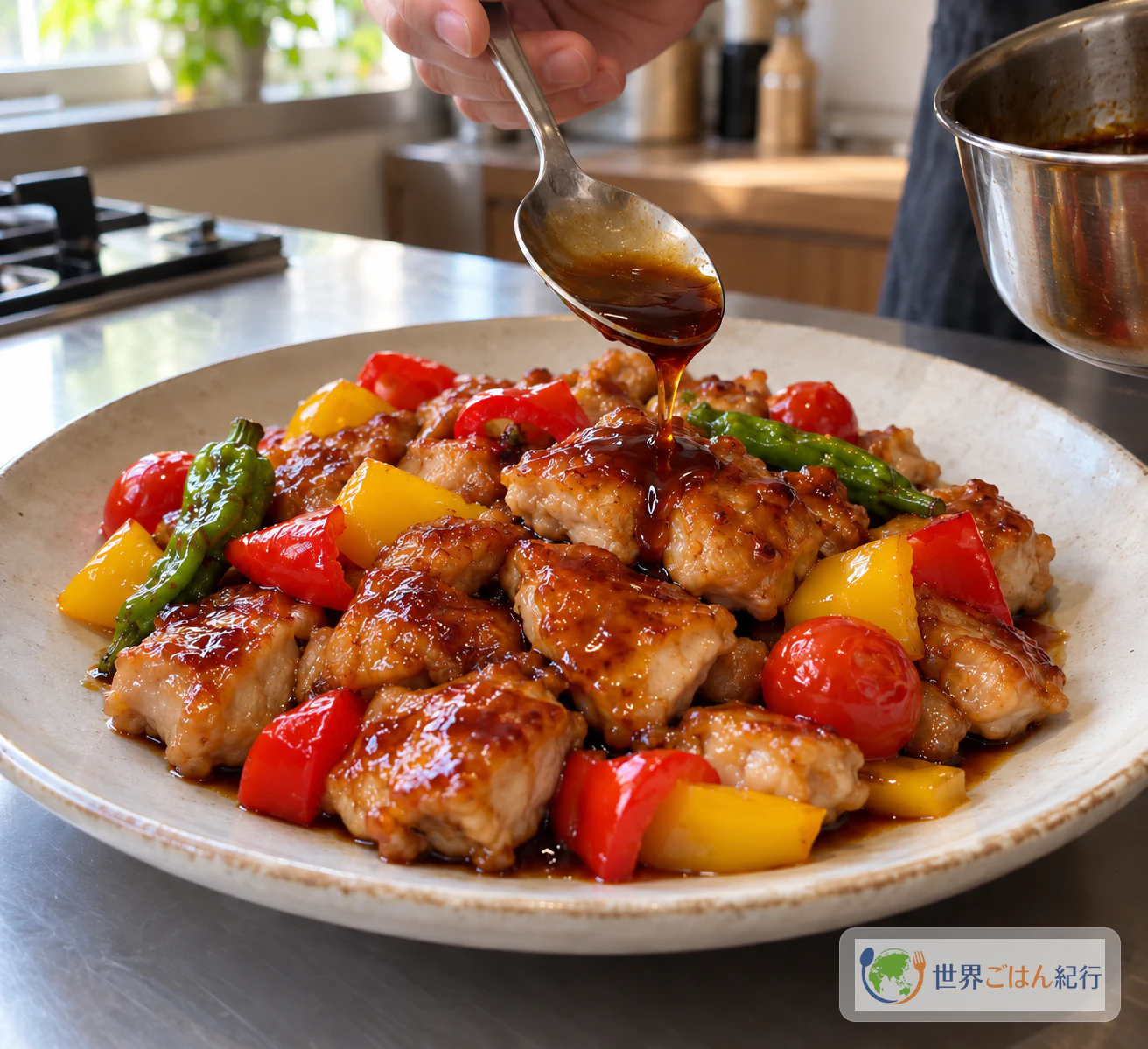
Two chicken thighs, trimmed and evened out, rest for ten minutes in a dark mixture of soy sauce, mirin, sake and sugar. They go into an oiled frying pan skin side down and cook gently over about medium heat. Once the chicken is partly cooked, it comes out of the pan. Green Fushimi peppers, red and yellow bell pepper and red and yellow cherry tomatoes are stir-fried in the same pan. Then the chicken goes back in with the marinade, and everything simmers down together. At the end, the liquid is separated, reduced on its own and used to coat the chicken. The chicken is then cut into bite-size pieces, topped with the vegetables and finished with the glossy sauce.
This is chicken teriyaki as published by Chef 岡元 信 of La BOMBANCE on Chef Gohan (シェフごはん), a recipe site run by Gurunavi. It is one chef's formula, presented here with its amounts and order intact. It is not offered as the single standard way teriyaki is made across Japan, and no other teriyaki recipe has been mixed into it.
This recipe has not been kitchen-tested by Sekai Gohan. The amounts and order below follow the chef's published recipe, and the safety guidance comes from public food-safety agencies.
What the published recipe does and does not say
The chef's recipe lists 4 servings and displays a cooking time of "about 10 minutes." The method itself also includes a separate 10-minute marinade, and the page does not say whether that marinade is counted in the displayed time. For that reason, this article does not give a prep, cook or total time.
The chef's recipe does not give the weight of the chicken thighs, the amount of salad oil, or a time for any individual cooking stage. It also does not include an instruction to turn the chicken over. On the published page, the first method step ends mid-sentence, at "once the chicken has cooked to some extent." The next step clearly continues in the frying pan after the chicken has been taken out. Later steps return the chicken, reduce the sauce, strain, coat, cut and serve. The method below follows that order and does not fill the gap with guessed instructions.
Two handling points in this article come from separate food-safety guidance, not from the chef's recipe:
- Marinating in the refrigerator, and boiling a marinade that has touched raw chicken before using it again, follow the U.S. Food and Drug Administration's safe food handling advice.
- Checking that the center of the chicken reaches 75°C for at least 1 minute follows Japan's Ministry of Health, Labour and Welfare guidance for home cooking.
Ingredients (4 servings)
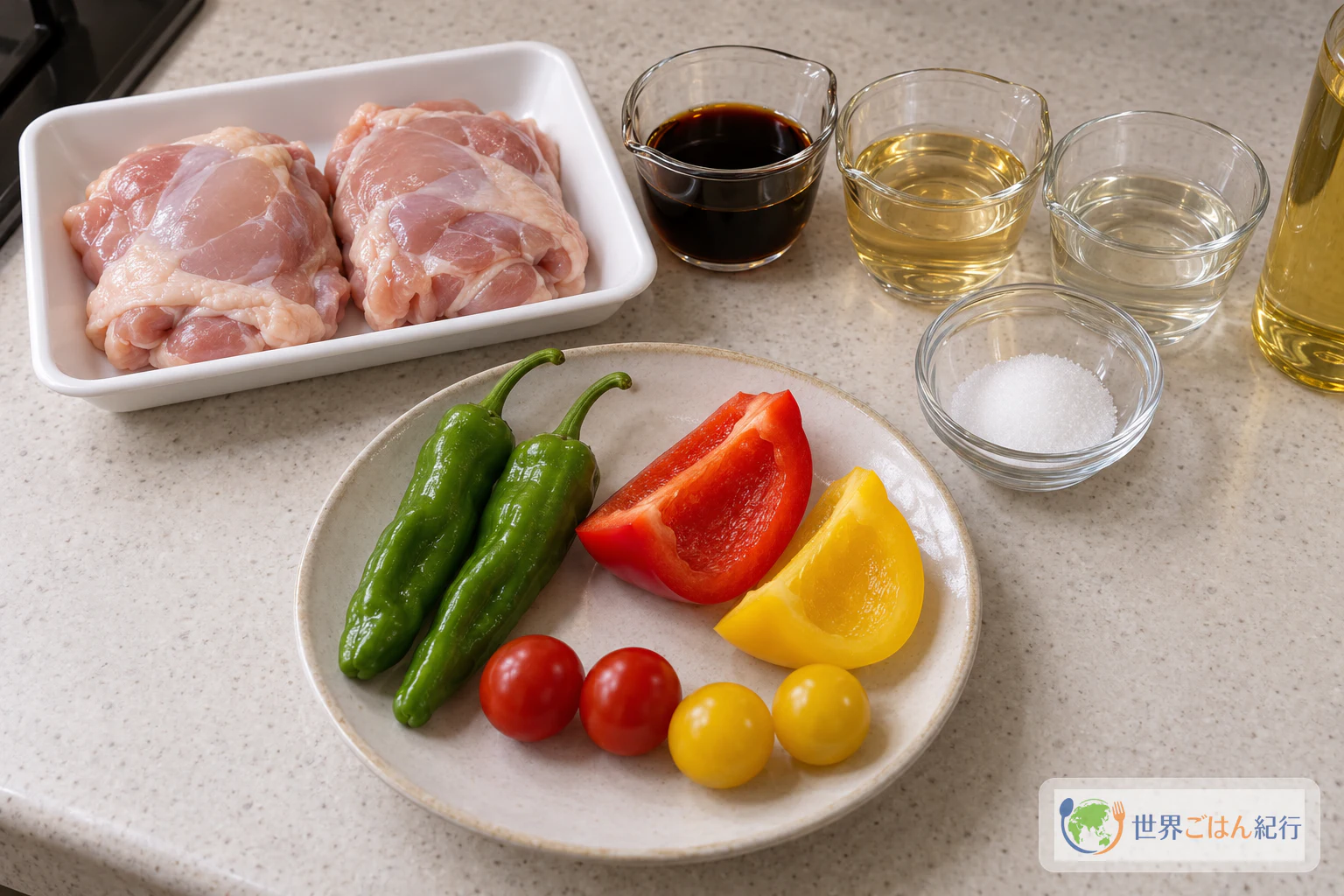
Mix the soy sauce, mirin, sake and sugar before you start. This one mixture is used first to marinate the chicken, then to simmer it, and finally becomes the glaze.
Equipment
- Kitchen knife and cutting board
- Shallow container with a lid, for marinating in the refrigerator
- Frying pan
- Colander set over a bowl
- Tongs
- Food thermometer
- Serving plate
Choosing and Substituting Ingredients
The four seasonings of dark (koikuchi) soy sauce, mirin, sake and sugar are used as listed. Teriyaki depends on how this mixture reduces, so keep the four as written, with no replacements or new ratios.
The green Fushimi peppers, the red and yellow bell pepper and the red and yellow cherry tomatoes are all part of this recipe. You can leave some out or swap them, but then you are making your own version rather than this one.
Method: Marinate for 10 Minutes and Cook Skin Side First
The marinade contains sugar and mirin, so it scorches easily. Cook slowly over about medium heat. For doneness, rely on a thermometer in the thickest part of the chicken rather than the color of the glaze.
Cooking Chicken Safely
A dark, glossy sauce and a browned skin do not tell you the inside is done. Measure the thickest part of the chicken.
Japan's Ministry of Health, Labour and Welfare advises home cooks to heat cooked foods until the center reaches 75°C for at least 1 minute. The ministry also warns about Campylobacter food poisoning from undercooked chicken dishes.
The chef's "about 10 minutes" display, the color of the skin and how thick the sauce looks are all separate from this check. That is why this article uses a food thermometer in the thickest part of the meat.
The same guidance asks you to keep raw meat juices away from foods eaten raw and from foods that are already cooked. Wash knives, cutting boards and other tools that touched raw meat before reusing them.
Two further points come from the U.S. Food and Drug Administration's safe food handling advice: marinate food in the refrigerator, and do not reuse a raw-food marinade unless it has been boiled first. In this recipe, the marinade goes back into the pan in step 5, so it is brought to a full boil there.
These are general handling rules added by this article. They do not change the chef's 10-minute marinade or the amounts in the recipe.
Troubleshooting: Burning, Strong Sauce, Undercooked Centers
| Problem | What to do |
|---|---|
| The marinade on the chicken is scorching in the pan | Lower the heat to about medium and cook more slowly. Chicken that has been marinated burns easily |
| The sauce has become too strong while reducing | Adjust with a little soy sauce or mirin, tasting as you go |
| The flavor does not cling to the chicken | Reduce the separated liquid a little further, until slightly strong, before returning the chicken |
| The outside looks done but the thermometer reads under 75°C | Keep cooking and measure the thickest part again. It needs to stay at 75°C for at least 1 minute |
| You want the sauce sweeter | Add a little sugar at the final tasting in step 6 |
Variations Within This Recipe
The chef's recipe allows two kinds of adjustment, both without set amounts. You can add sugar to make the sauce sweeter, and you can soften a sauce that has become too concentrated with soy sauce or mirin. Make these adjustments by taste, a little at a time. The base mixture of 100 cc each of soy sauce, mirin and sake with 1 tbsp sugar stays the same.
Japan's Ministry of Agriculture, Forestry and Fisheries (MAFF) has published a different dish called 鶏の鍋照り焼 (pan teriyaki chicken) in an article on autumn outing bento. It uses one chicken thigh and 2 tbsp each of soy sauce, mirin, sugar and sake. The chicken is cut into bite-size pieces before cooking, and the sake and seasonings are added in the pan. It is a separate recipe and is not combined with the chef's version here. If you want a small, bento-sized teriyaki, follow that recipe as written instead.
Teriyaki in the Japanese Kitchen
Pan teriyaki chicken appears in current Japanese food-culture writing. The MAFF autumn bento article above lists pan teriyaki chicken as one example of a bento side dish. That article shows how the dish is presented today. It does not establish where teriyaki began or how long it has been eaten. The sources for this article also do not settle the word's origin, a date of origin, or how it differs by region or household, so none of that is stated here.
MAFF's washoku learning material describes five basic cooking methods in Japanese cuisine. Grilling, yaku (焼く), is one of them, and it explicitly includes indirect heating in a frying pan with oil added. In this recipe, the skin-side cooking in the pan and the later reduction of the sauce are separate stages, and they are described separately in the method.
The same material also treats five colors as a visual element in arranging food. This dish puts green Fushimi peppers, red and yellow bell pepper and red and yellow cherry tomatoes on top of the dark glaze. That is a useful lens for the plate, but it does not make this dish an example of all five colors.
Frequently Asked Questions
Does this chicken teriyaki really take 10 minutes?
The chef's recipe displays a cooking time of about 10 minutes. The method also includes a separate 10-minute marinade, and the page does not explain whether that is included in the displayed time. It also gives no times for searing, stir-frying or reducing. For these reasons, this article does not calculate a total time. Judge doneness with a thermometer instead.
How heavy should the chicken thighs be?
The recipe lists 2 chicken thighs for 4 servings and gives no weight. This article does not convert that into grams. Thighs vary in size, so check doneness in the thickest part rather than relying on time.
Do I turn the chicken over?
The chef's published method gives no flipping instruction. Its first step also breaks off mid-sentence, at "once the chicken has cooked to some extent." The following steps make clear that the chicken is then taken out, so that is what the method above does. Whatever you do in the pan, use a thermometer to confirm that the center reaches 75°C for at least 1 minute.
Can I leave out the vegetables?
The Fushimi peppers, bell peppers and cherry tomatoes are part of this chef's recipe and are cooked in the same pan. A version without them would be your own adaptation, not this recipe.
How much soy sauce or mirin should I add when adjusting?
The chef's recipe says to adjust with soy sauce or mirin by taste, and that sugar can be added if you prefer it sweeter, but it gives no amounts. Add a little at a time and taste.
Why marinate in the refrigerator for only 10 minutes?
The 10-minute marinade comes from the chef's recipe. Keeping it in the refrigerator follows separate FDA safe food handling advice to marinate food in the refrigerator, and it does not change the marinating time.
Sources
- Chef Gohan (Gurunavi), "鶏の照り焼き 岡元 信シェフのレシピ" (Chicken teriyaki, recipe by Chef 岡元 信). The recipe used in this article: 4 servings and the displayed time of about 10 minutes; amounts for the chicken, vegetables and marinade; the 10-minute marinade, skin-side-first cooking, stir-fried vegetables, sauce reduction and plating; and the tip to cook slowly over about medium heat because the marinade burns easily. https://chefgohan.gnavi.co.jp/detail/98/
- Ministry of Agriculture, Forestry and Fisheries of Japan (MAFF), Food Culture Office, "歴史を辿り、秋の行楽弁当を愉しむ." A current article on autumn outing bento that includes pan teriyaki chicken (鶏の鍋照り焼) as an example bento side dish. It is a separate recipe and does not establish teriyaki's origin. https://www.maff.go.jp/j/keikaku/syokubunka/culture/wagohan/articles/2209/spe9_02.html
- Ministry of Agriculture, Forestry and Fisheries of Japan (MAFF), Washoku World Challenge (archive), "日本料理に大切な五法・五味・五色・五感." The five cooking methods of Japanese cuisine, including grilling in a frying pan with oil, and the five colors as a visual element in arranging food. https://www.maff.go.jp/j/yusyutu_kokusai/washoku-world-challenge/learning_04.html
- Ministry of Health, Labour and Welfare of Japan, "家庭での食中毒予防." The home-cooking guide of heating the center of food to 75°C for at least 1 minute, keeping raw meat juices away from foods eaten raw or already cooked, and washing tools used for raw meat. https://www.mhlw.go.jp/stf/seisakunitsuite/bunya/kenkou_iryou/shokuhin/syokuchu/01_00008.html
- Ministry of Health, Labour and Welfare of Japan, "お肉はよく焼いて食べよう." A caution about Campylobacter food poisoning from undercooked chicken dishes. https://www.mhlw.go.jp/stf/seisakunitsuite/bunya/0000049964.html
- U.S. Food and Drug Administration, "Safe Food Handling." General guidance to marinate food in the refrigerator and not to reuse a raw-food marinade unless it is boiled first. https://www.fda.gov/food/buy-store-serve-safe-food/safe-food-handling