

Fruit Sando: A Sandwich Built Around the Cross-Section
Dry fruit, cream whipped only to medium peaks, and fruit laid along the line where you will cut. Chill it whole and wrapped, and slice just before serving.
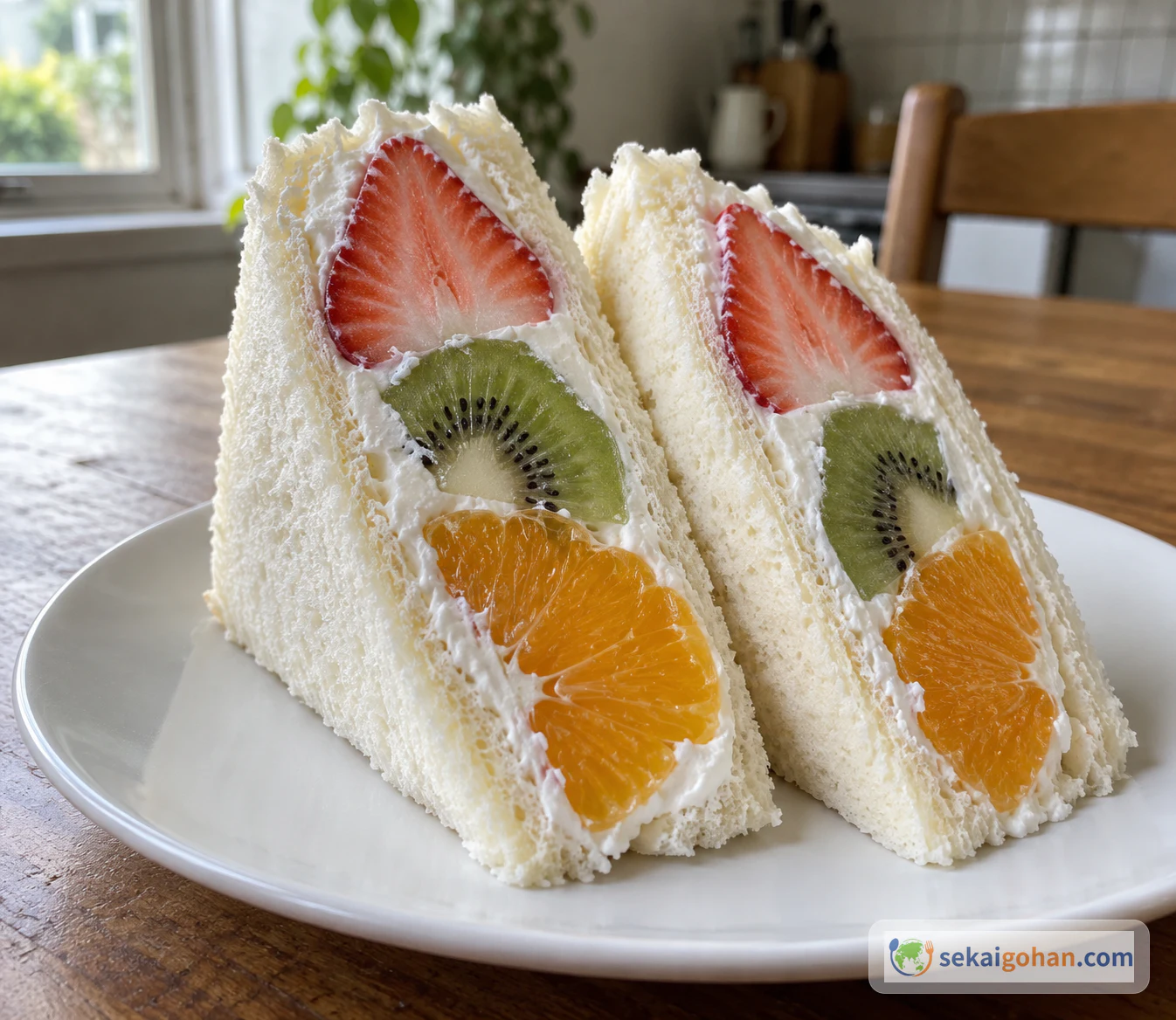
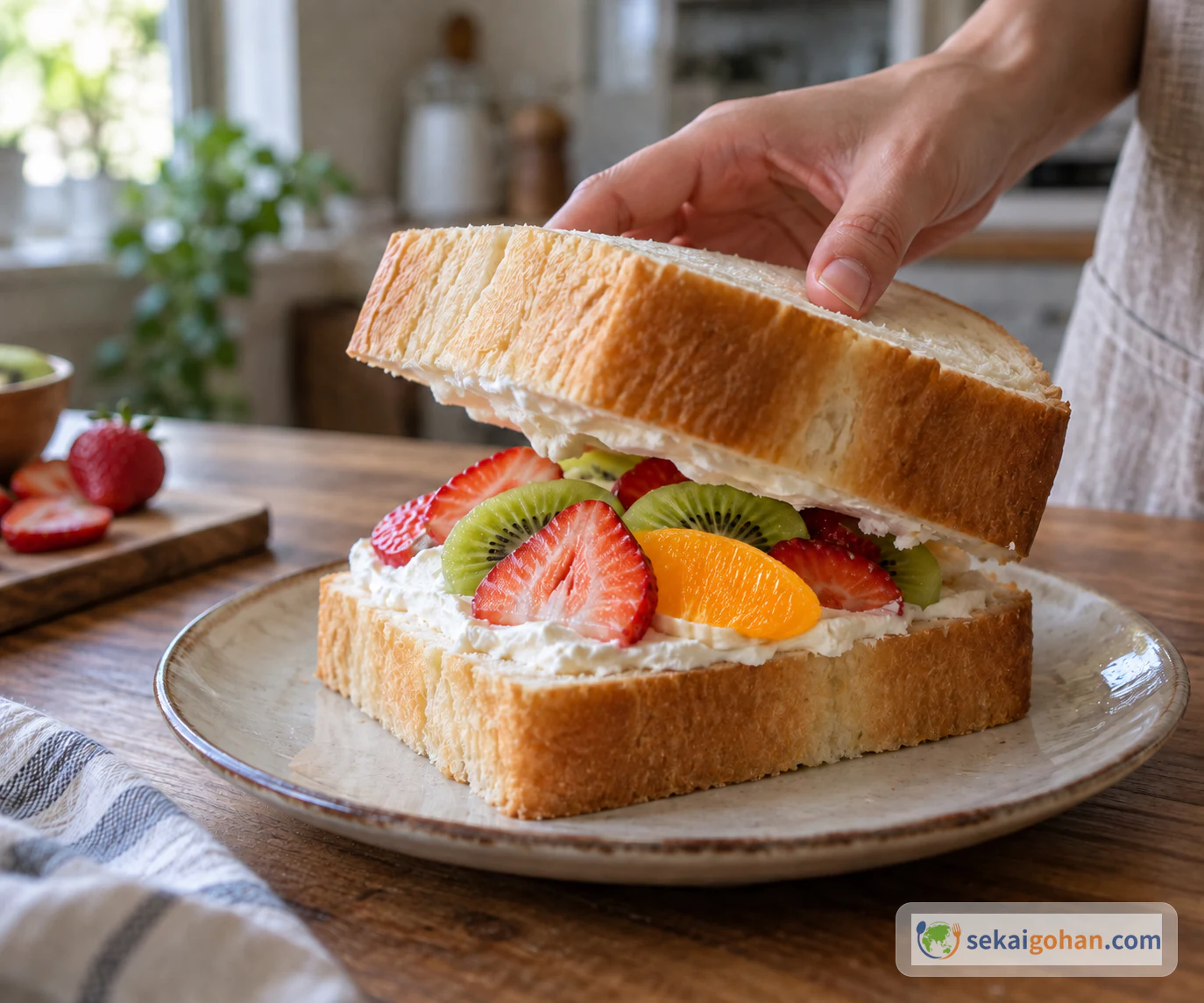
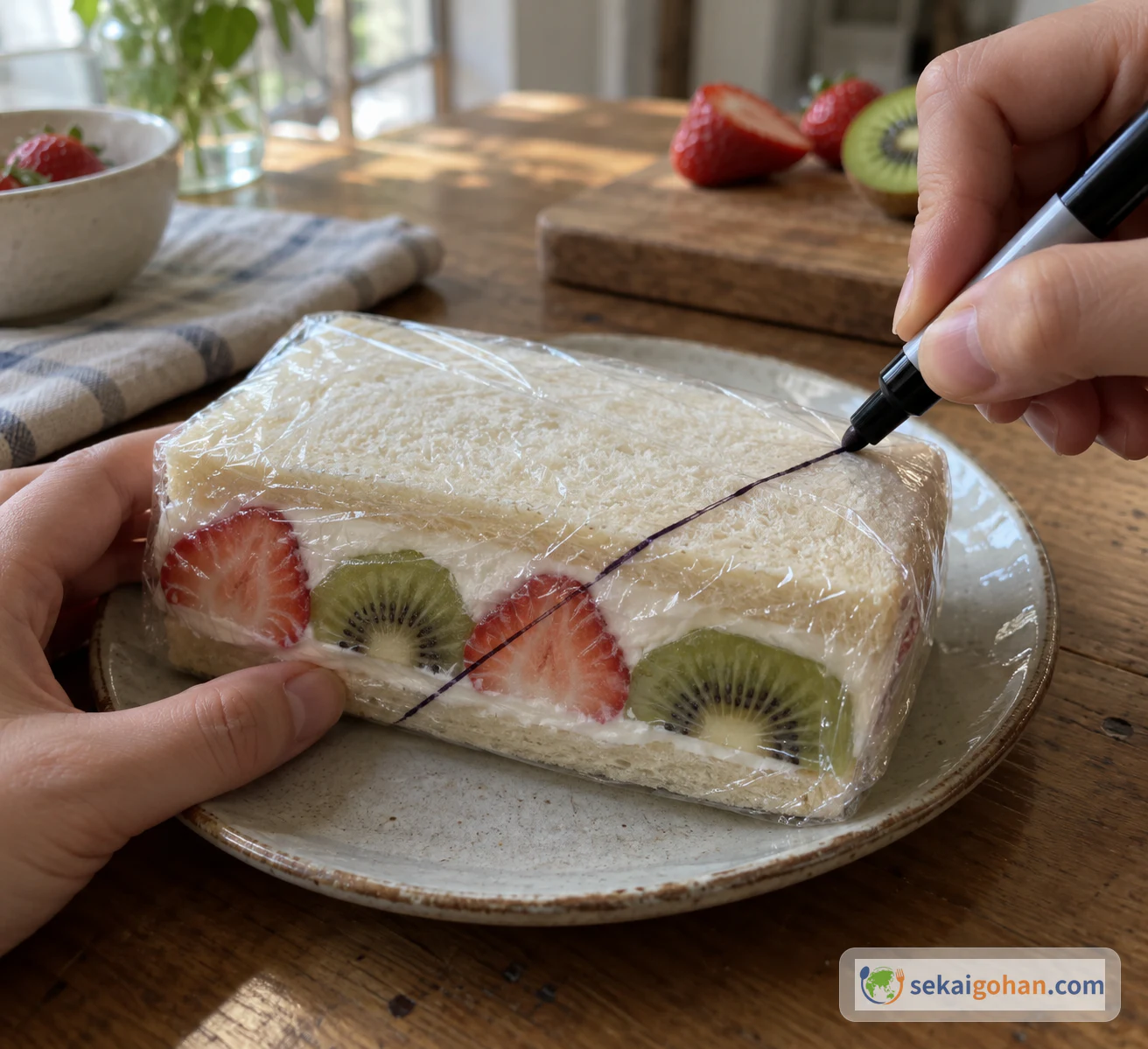
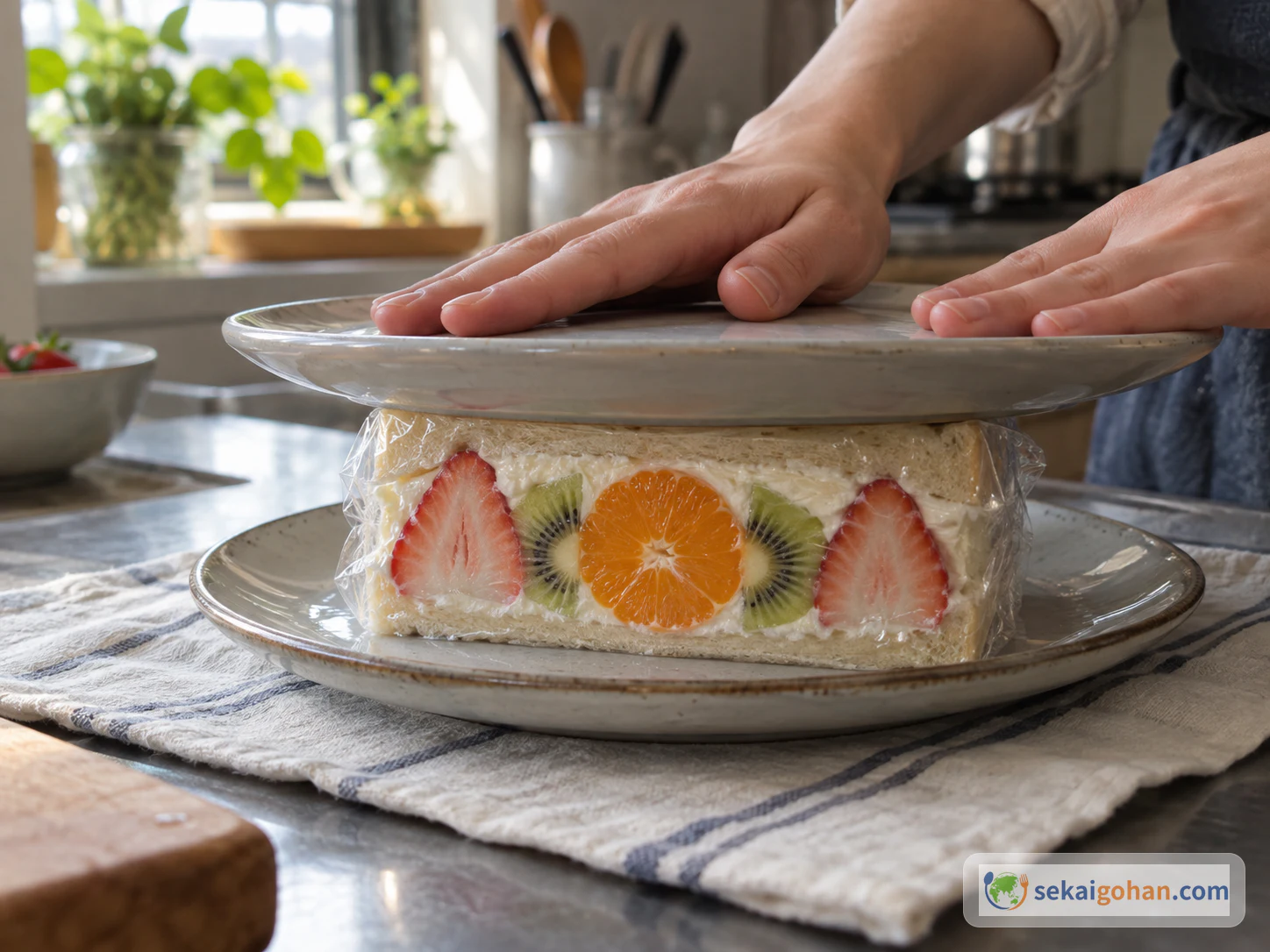
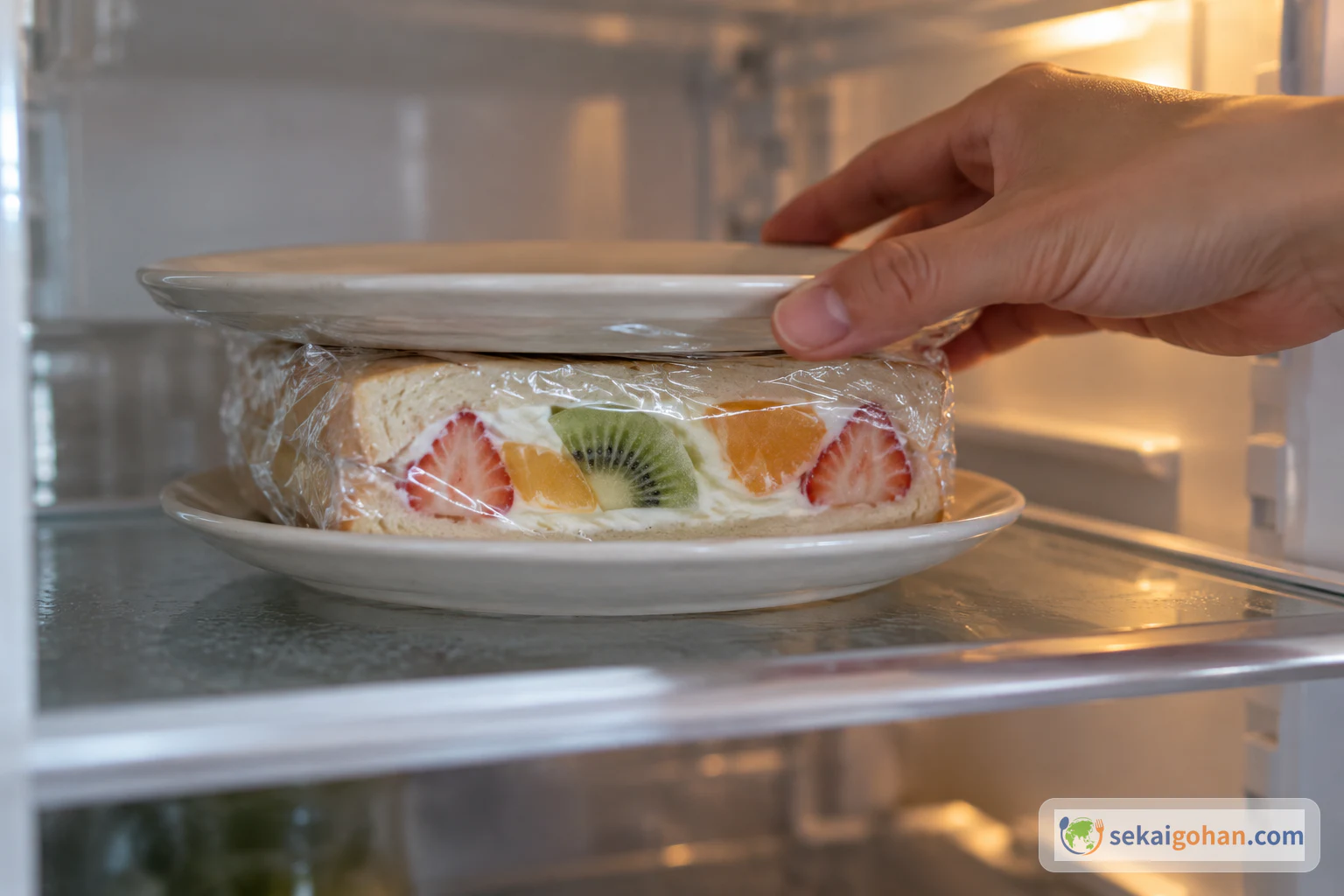
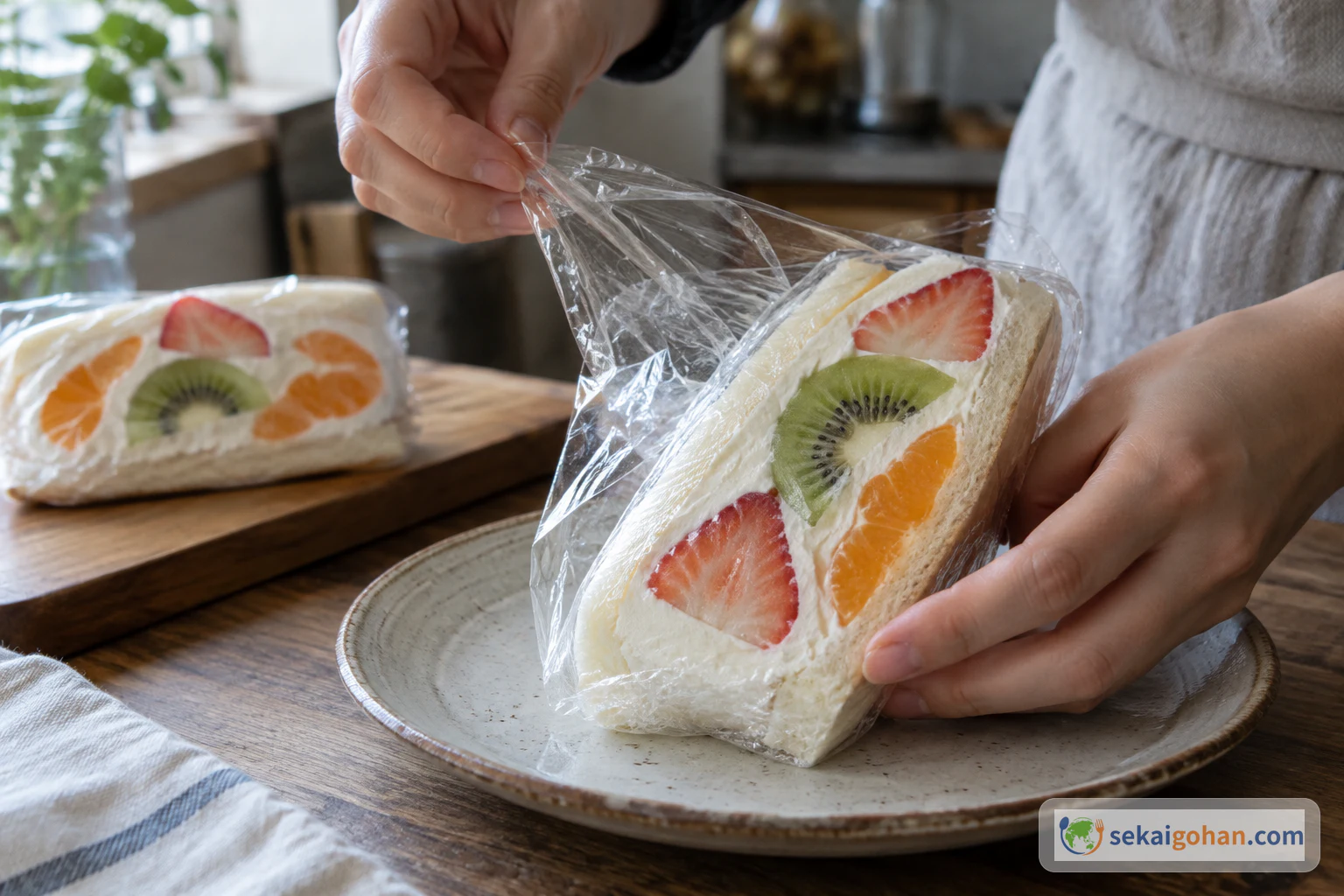
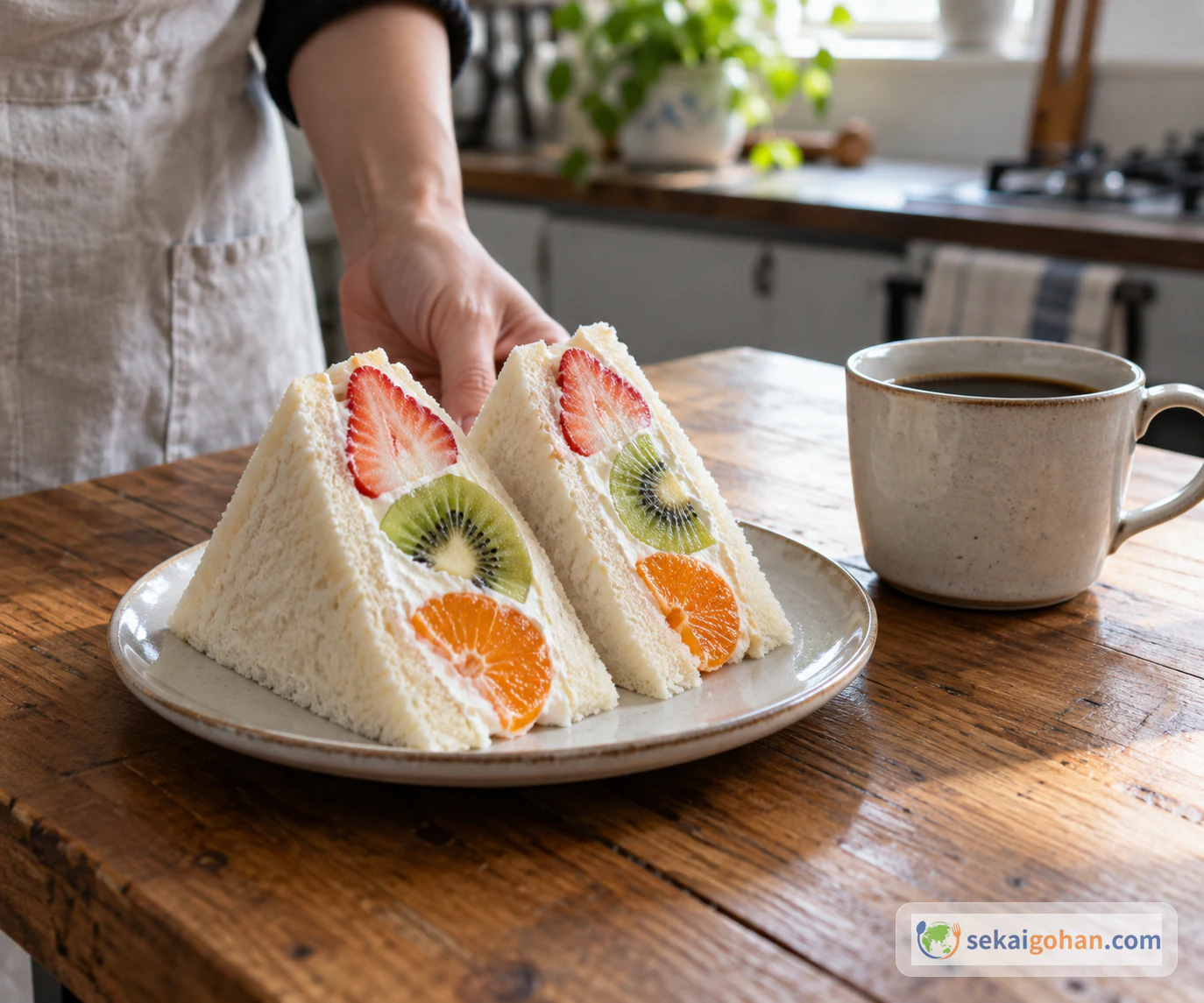
A chilled sandwich comes out of the refrigerator still pressed between two plates. On its plastic wrap is a single line drawn earlier as a marker. The knife follows that line, and when the two halves are finally opened, strawberries, kiwi and orange appear in rows set in white cream between soft slices of bread.
The Japanese fruit sandwich, often called a fruit sando (フルーツサンド), is a sweet sandwich of shokupan (Japanese milk bread), whipped cream and fresh fruit. Just One Cookbook describes it as a snack you can find in Japan at department store food halls, fruit parlors and convenience stores. It is closer to a cake than a lunch sandwich, but it is still assembled, wrapped and cut like a sandwich, and almost every step serves one goal: a clean, colorful cross-section.
This recipe follows a single version published by Namiko Hirasawa Chen on Just One Cookbook, made with strawberries, kiwi and navel orange. The amounts are kept in the cups, teaspoons and counts it uses. For more dishes from the same country, see our Japan page.
Sekai Gohan has not kitchen-tested this recipe as a whole.
What a Fruit Sandwich Is: Shokupan, Cream and Fruit as a Sweet Snack
A fruit sando is shokupan, whipped cream and fresh fruit, served as a sweet snack. It is not a sandwich with a fruit jam or a fruit bread. The bread is soft and plain, the cream holds the fruit in place, and the fruit is placed so that the cut reveals it.
Fruit parlors are one of the places most closely tied to the dish. Sembikiya Sohonten, a long-established Tokyo fruit company, describes its fruit sandwich as one of the popular menu items carried on to the present day in its fruit parlor, which it presents as a place to enjoy fruit at its best. That is the company's own account of its own menu, not a statement about how the dish spread across Japan, but it shows the kind of setting in which the fruit sandwich is still served.
Where and when the dish first appeared is not settled; see the origin section below.
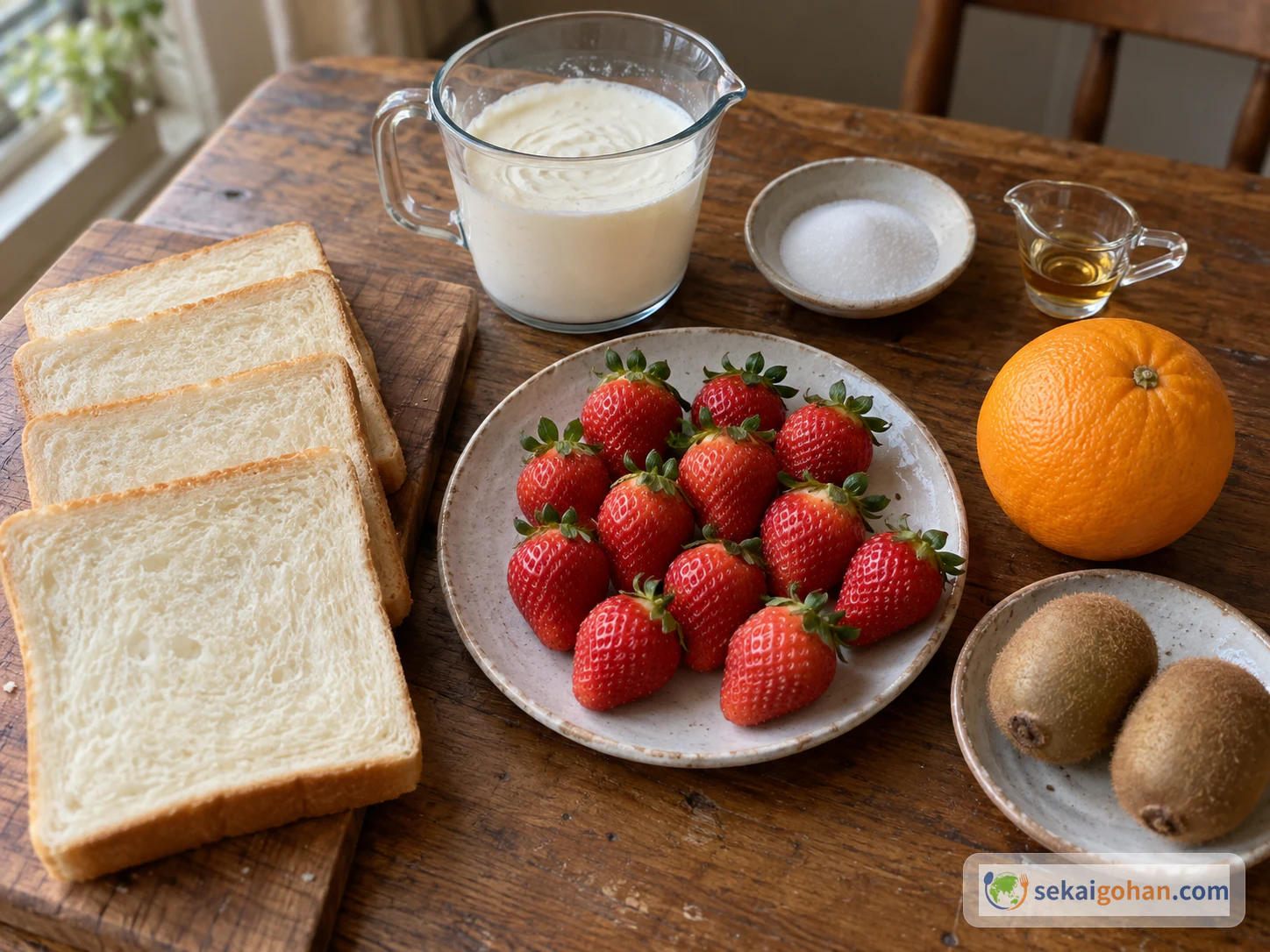
Ingredients for 4 Snack Servings
Equipment
- Small paring knife
- Cutting board
- Paper towels and a tray or plate
- Large bowl and ice water
- Clean, dry medium bowl that sits on the large bowl
- Electric hand mixer
- Hand whisk
- Small spatula for spreading
- Plastic wrap
- Marker for drawing on the wrap
- Plates for pressing the wrapped sandwiches
- Clean kitchen knife
- Hot, wet towel for wiping the knife
Choosing the Bread, Cream and Fruit
Bread. Shokupan from a square loaf cut into 8 slices is the direct choice. Other soft white sandwich breads exist, but this article does not treat them as equivalent to shokupan; if you use one, the result is your own adaptation.
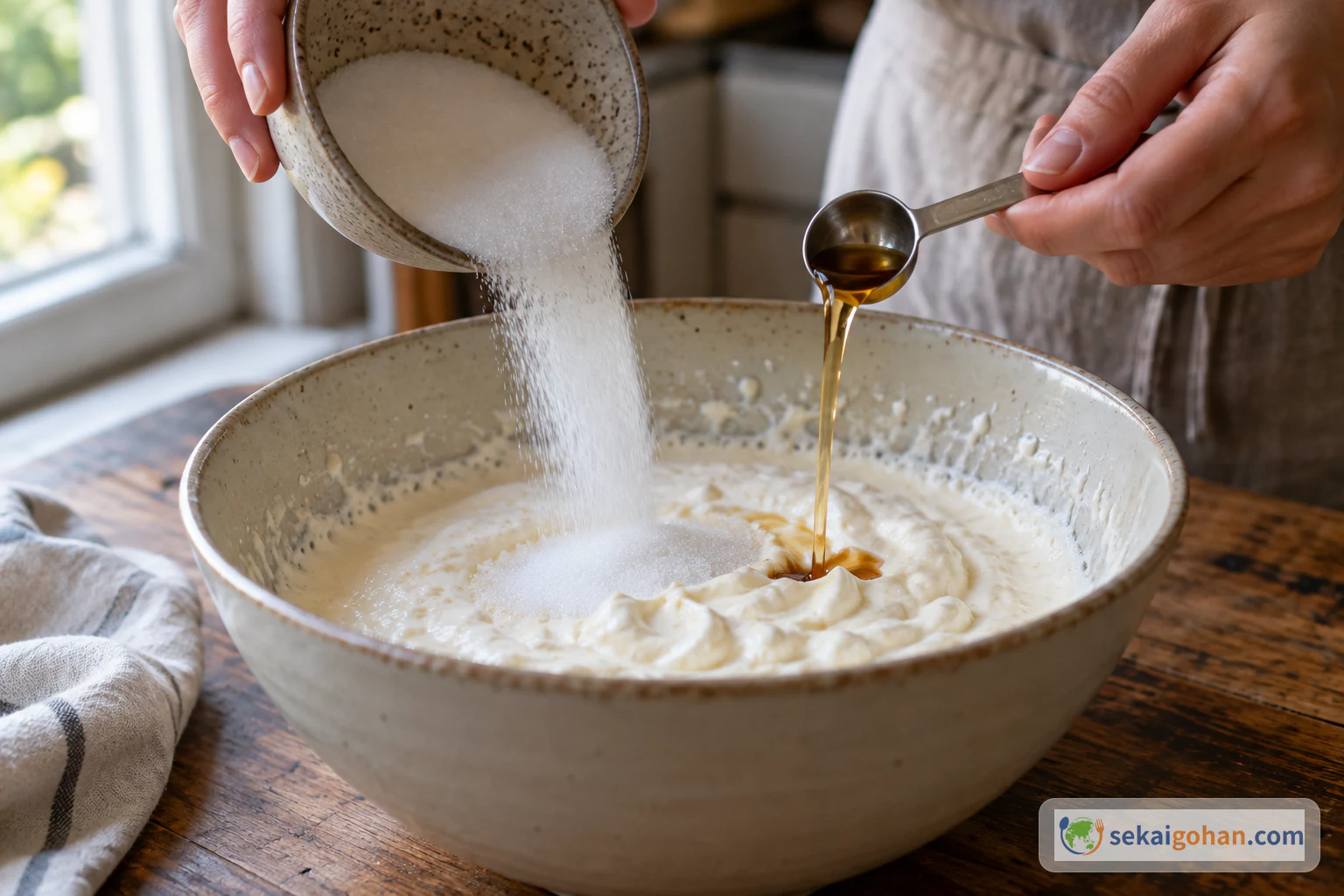
Cream. Use heavy (whipping) cream. The 5 tsp of sugar is 10% of the cream by weight.
Rum. The 1 tsp of rum is optional. The sandwich works without it.
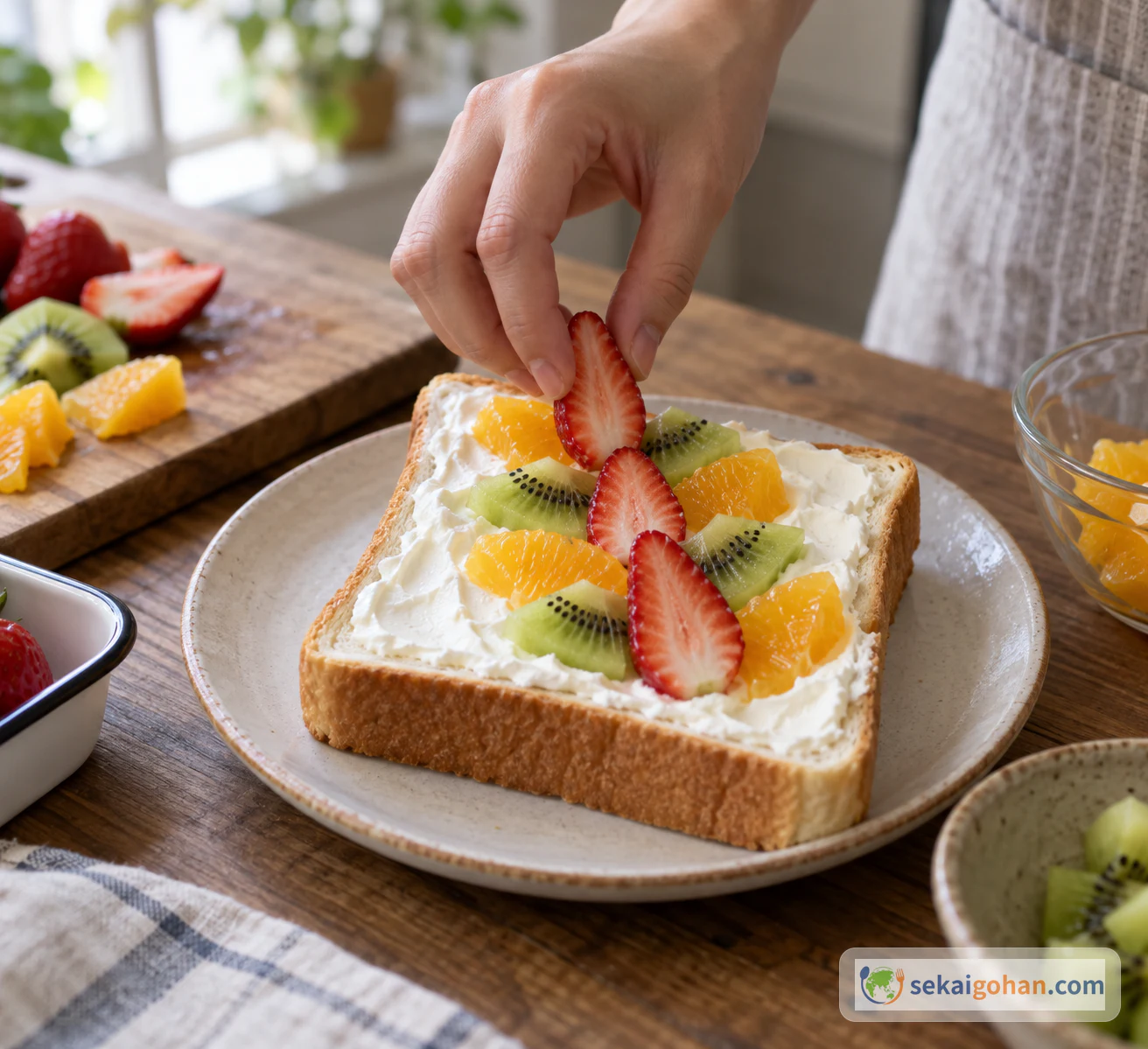
Fruit. The base version uses strawberries, kiwi and navel orange. How many pieces go into each sandwich is up to you, and you do not have to use every piece. For other fruit ideas, see the variations section further down.
Method: Dry Fruit, Medium-Peak Cream and a Planned Cut Line
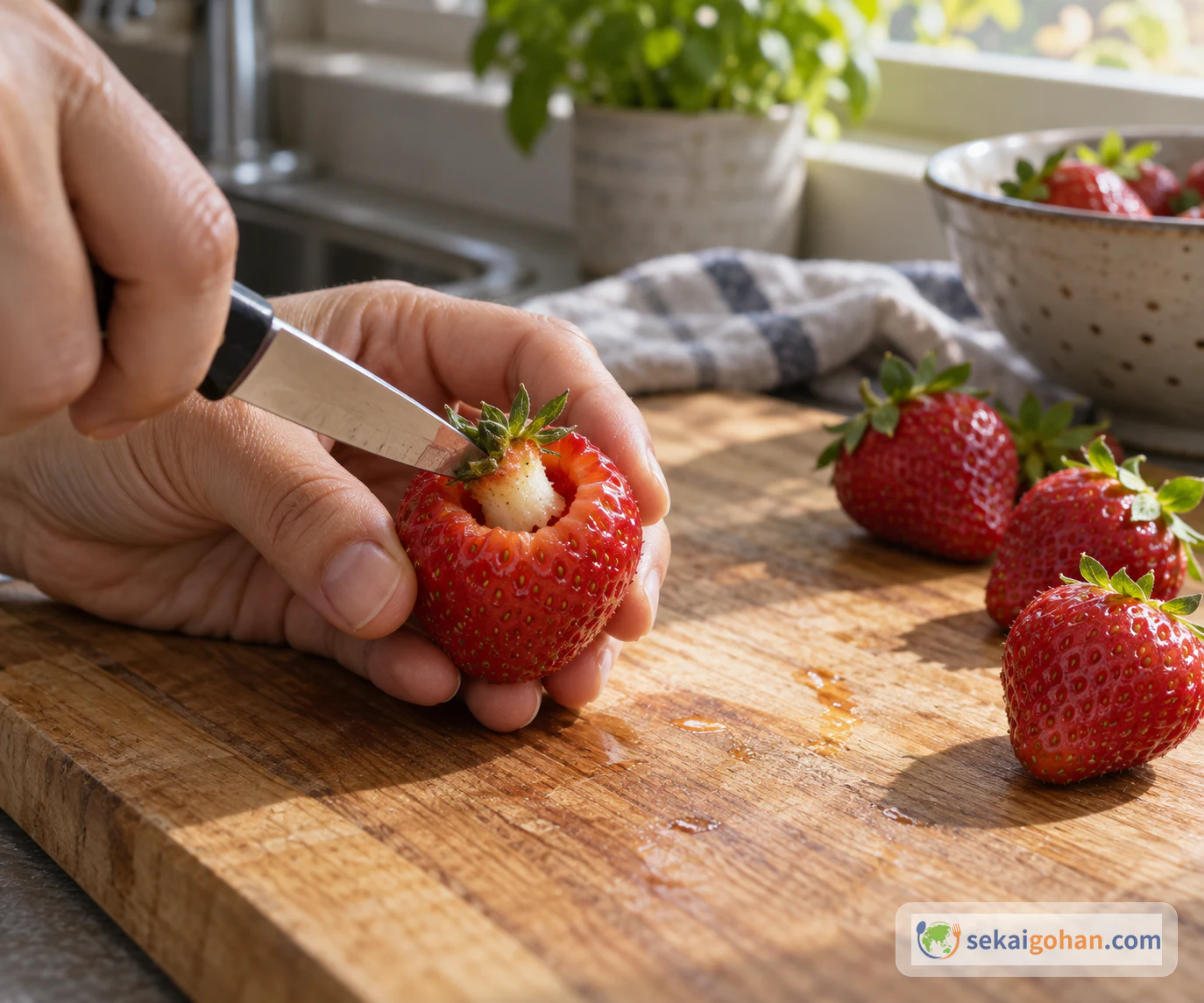
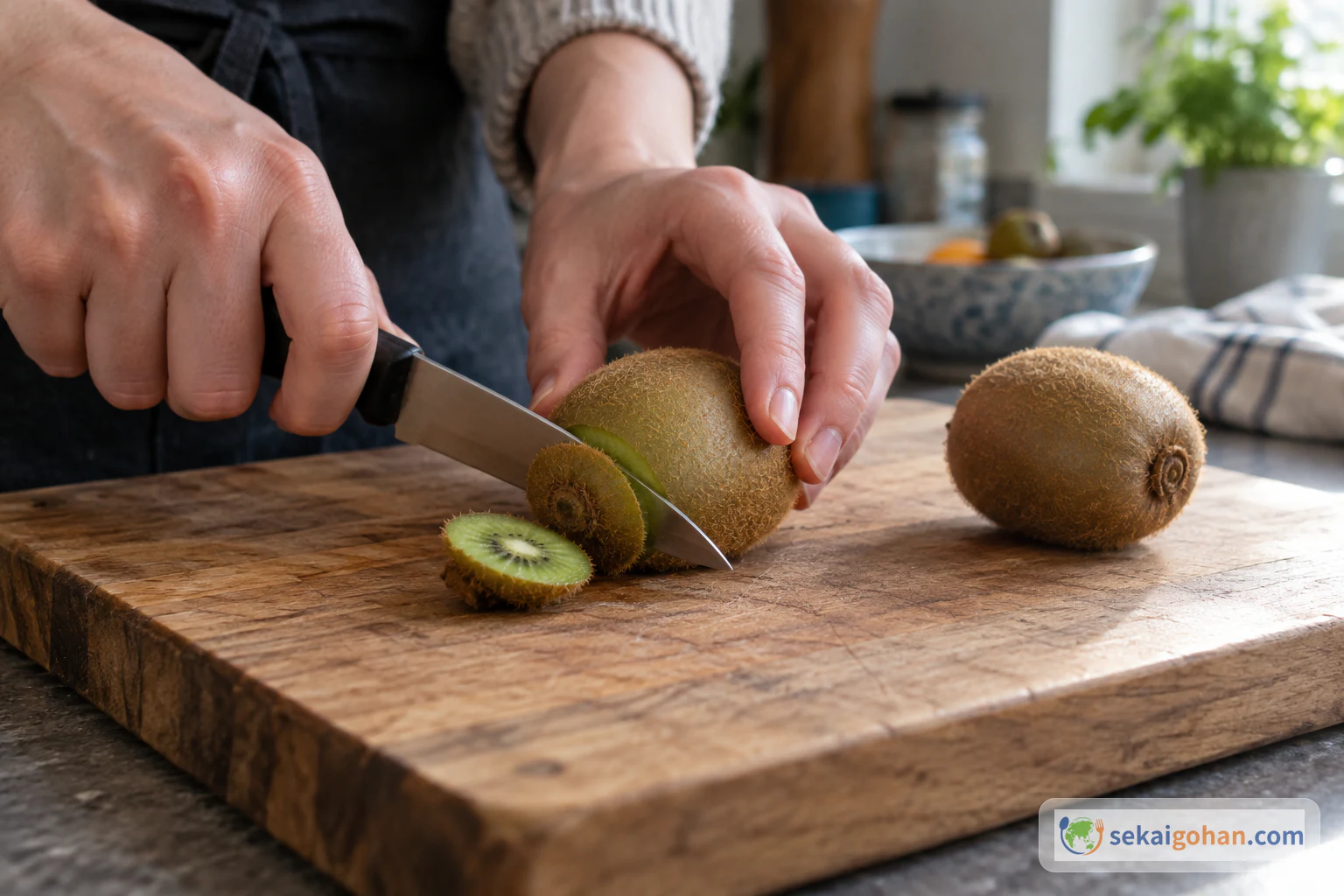
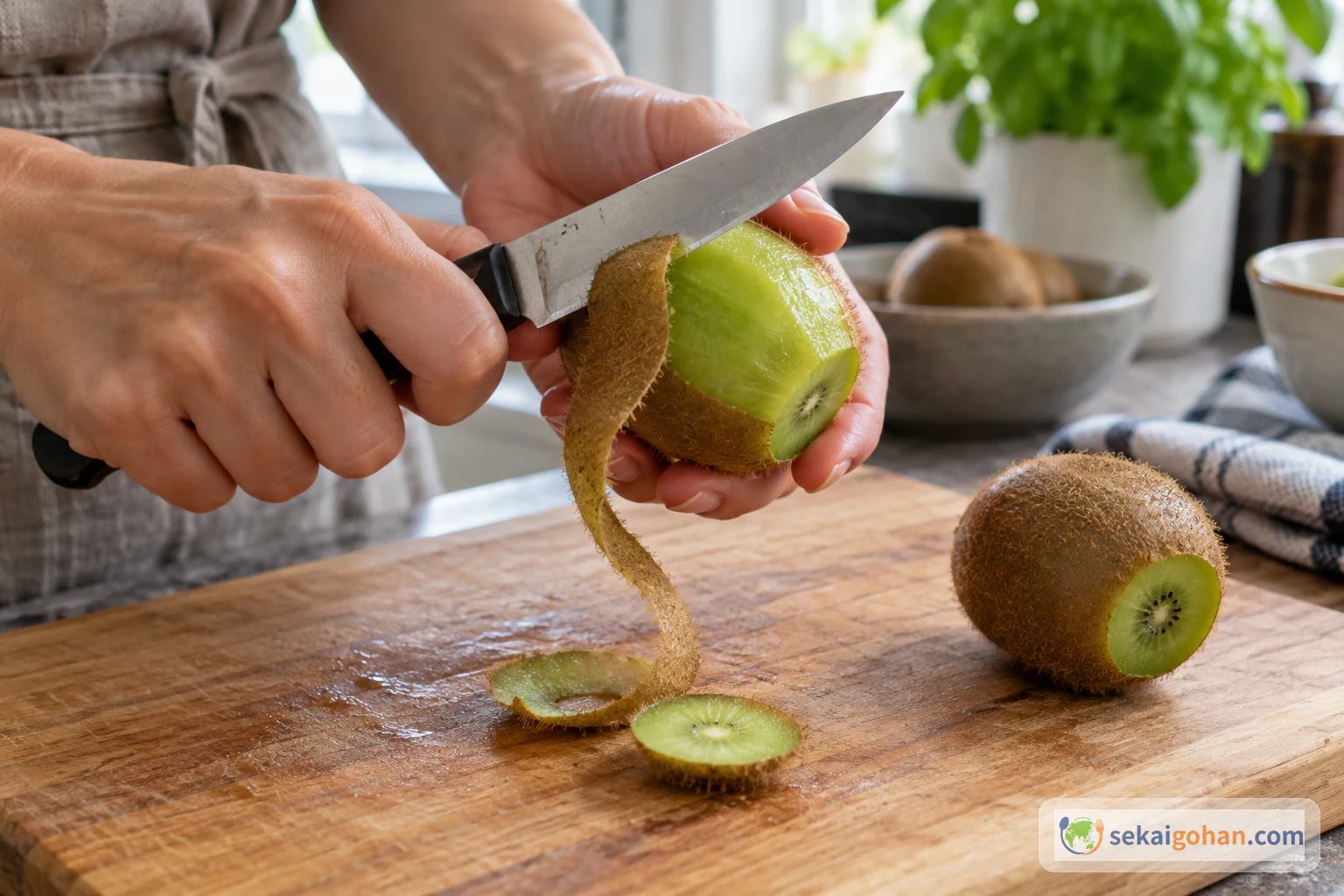
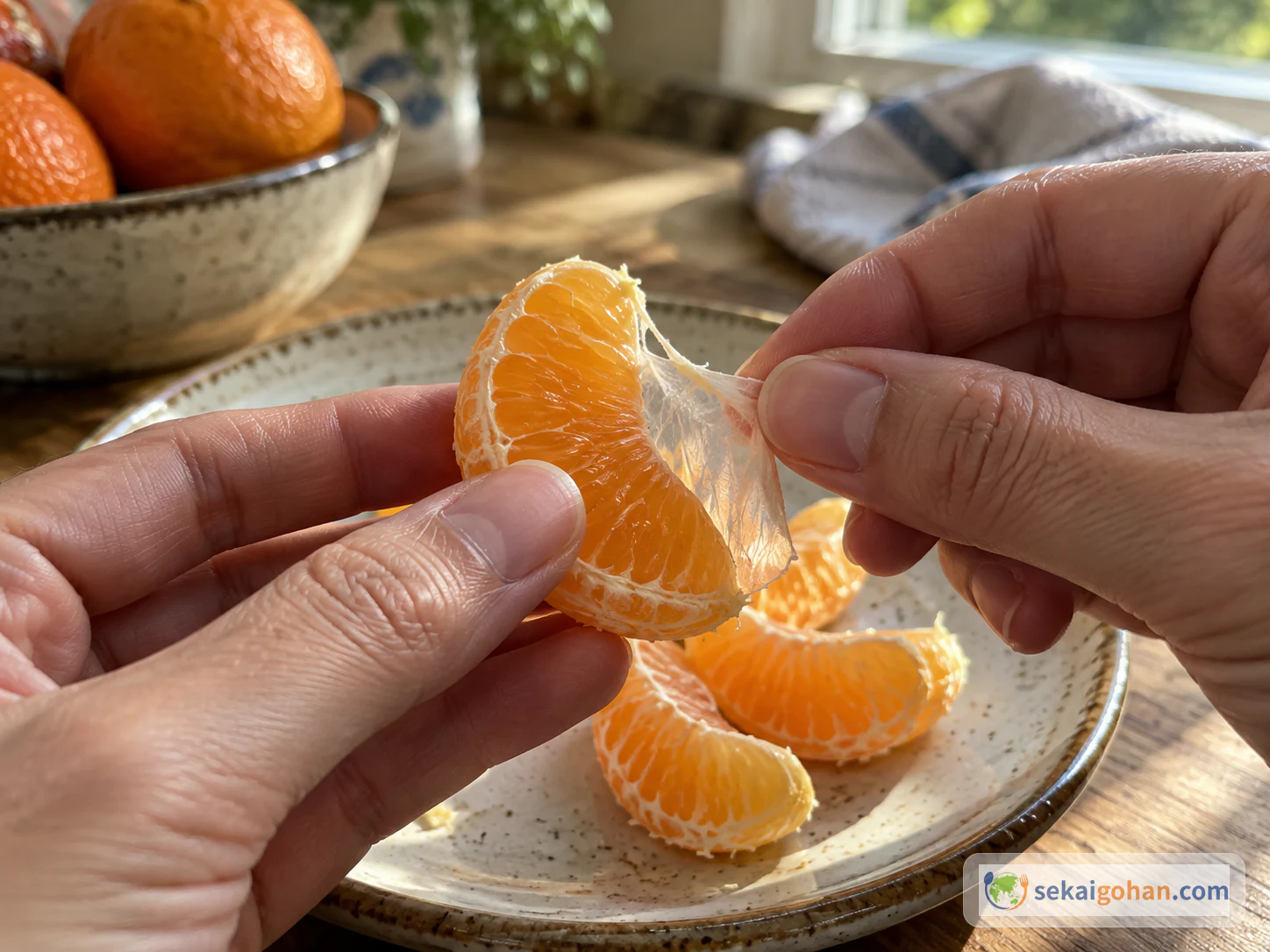
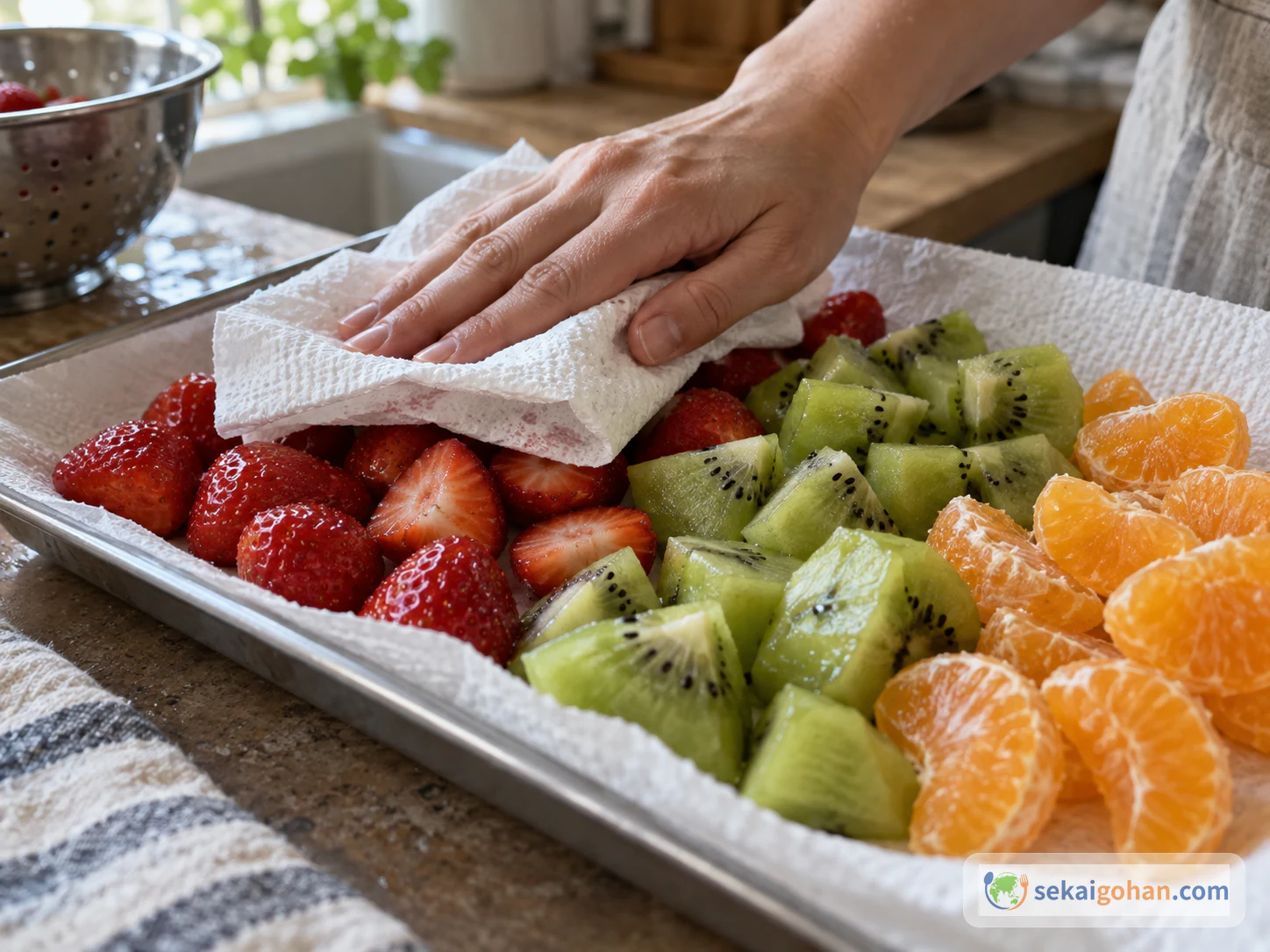
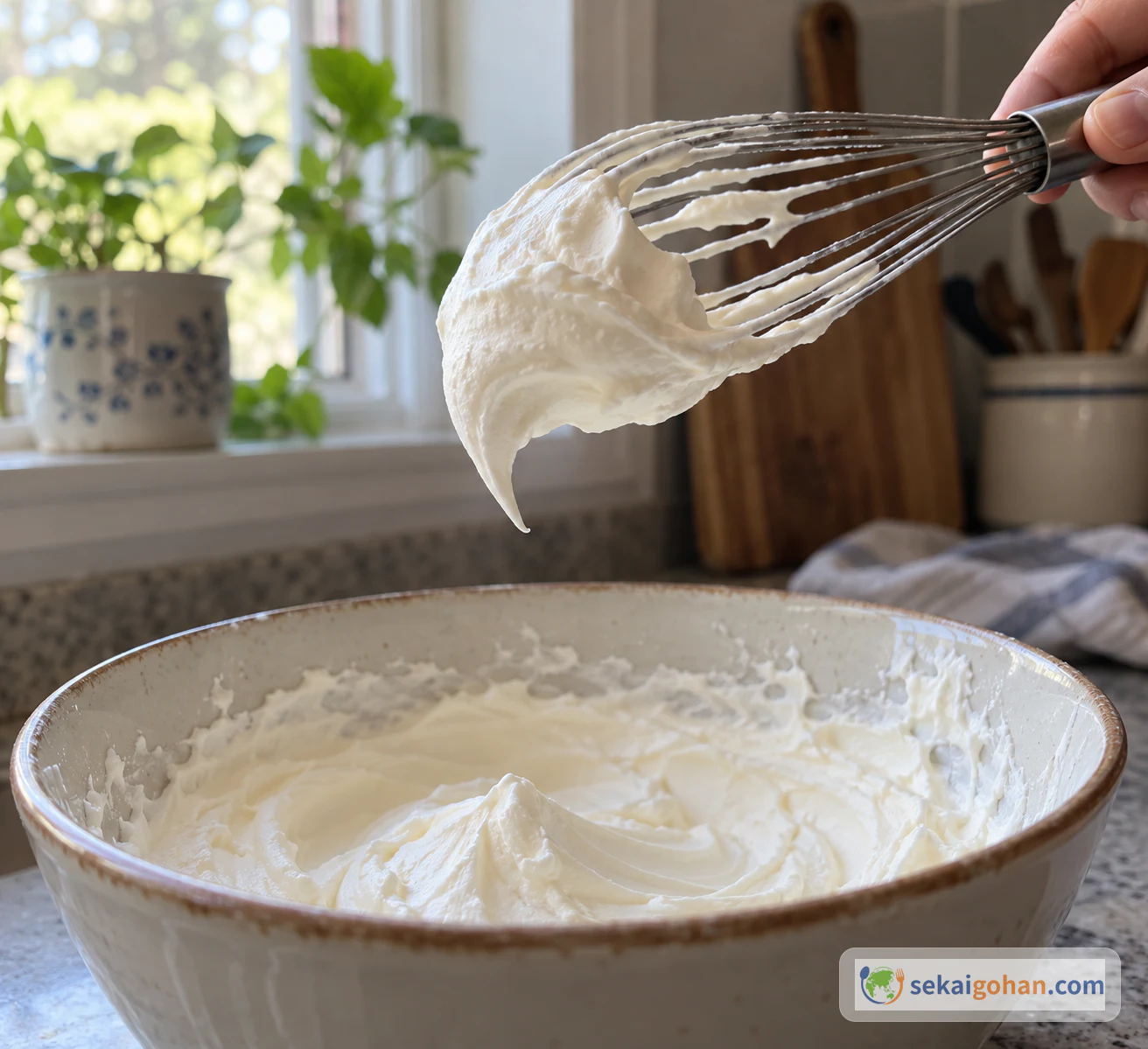
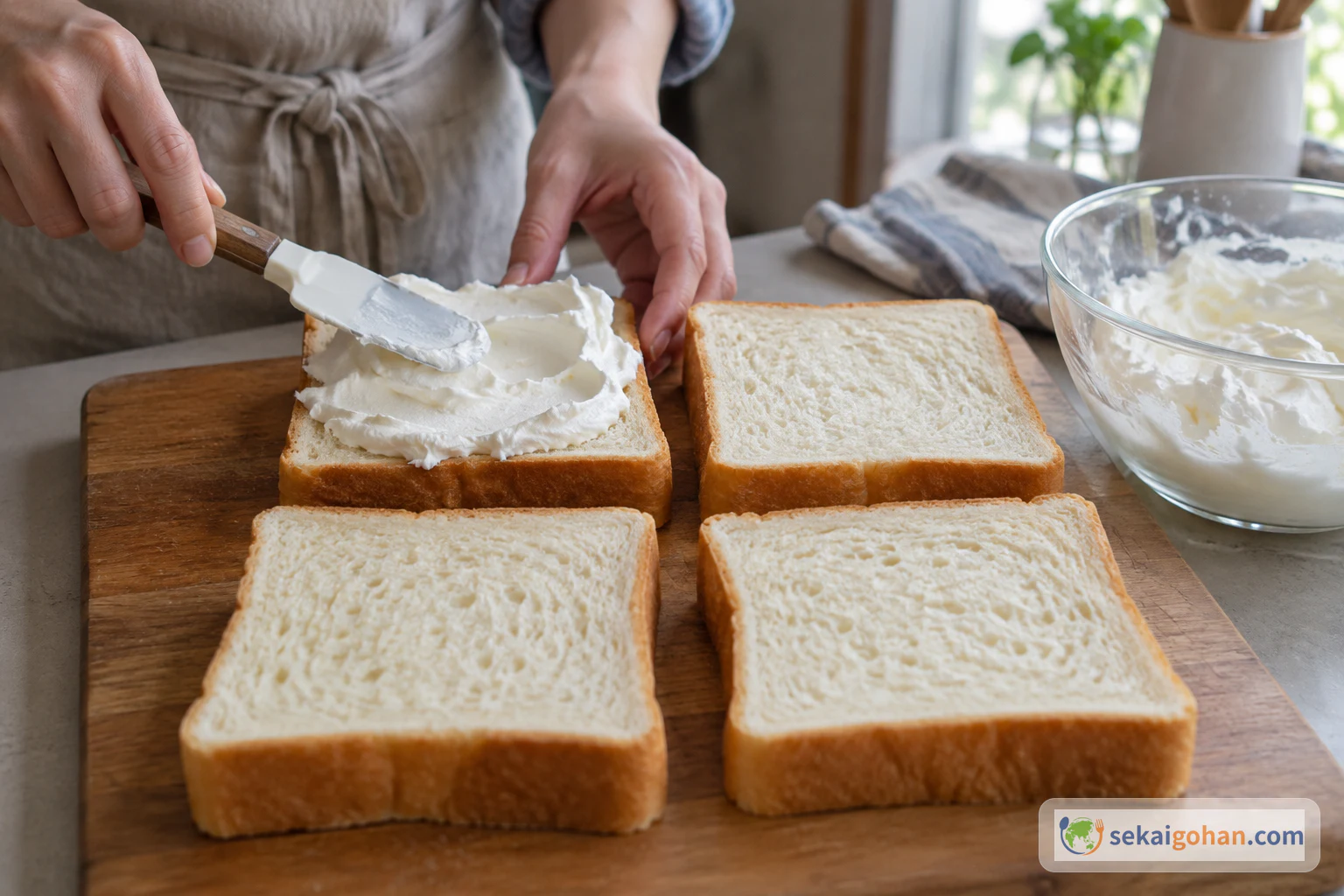
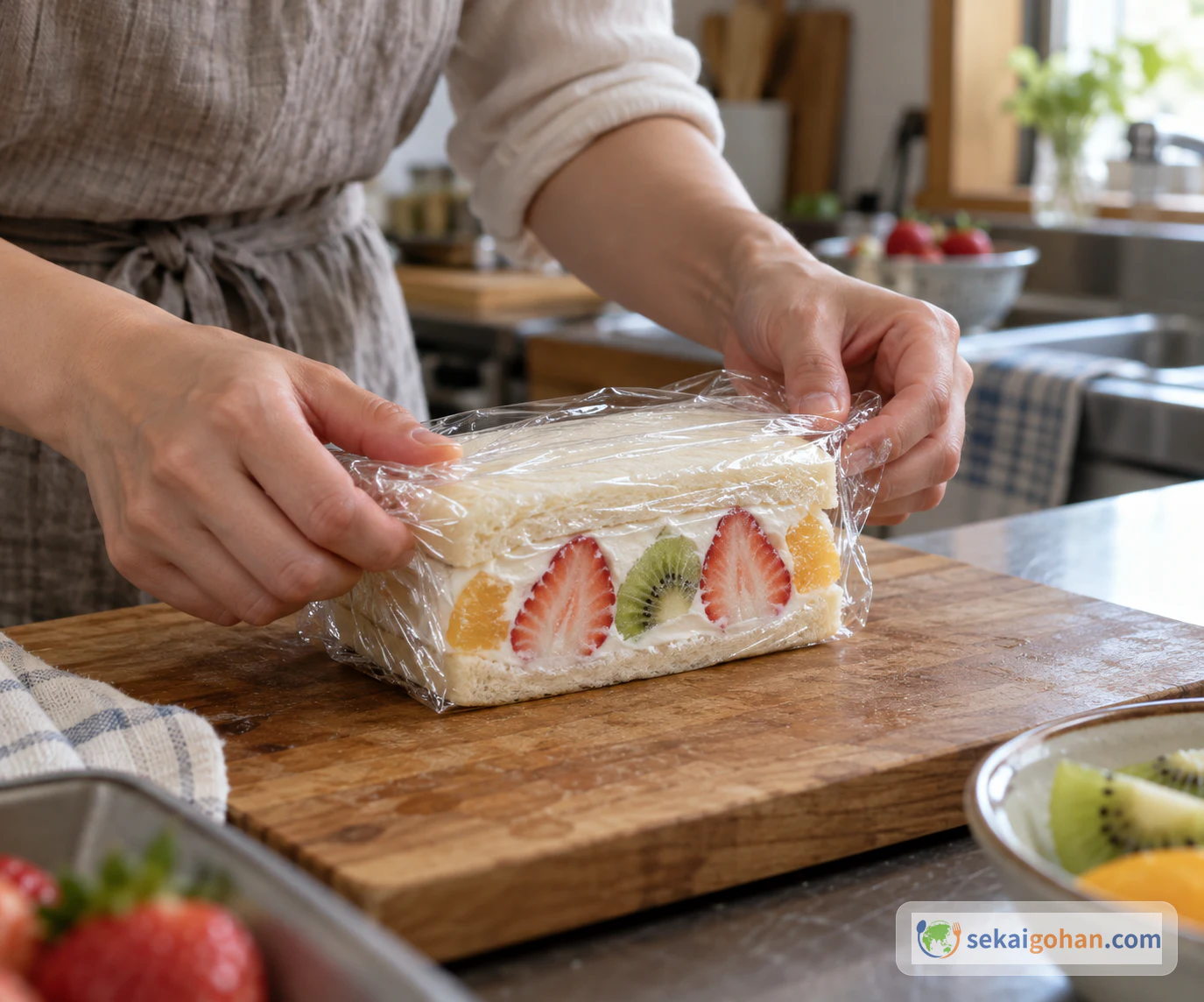
Pat the fruit dry before it meets the cream. Stop whipping at medium peaks, not stiff ones. Decide where you will cut before placing any fruit, then keep the sandwich pointing the same way through wrapping, chilling and cutting.
The steps below run from preparing the fruit to serving. The chilling in step 18 is at least 1 hour and can be as long as overnight, so plan the cutting and serving around it.
Getting a Clean Cross-Section: Cut Lines, Fruit Direction and Fixes
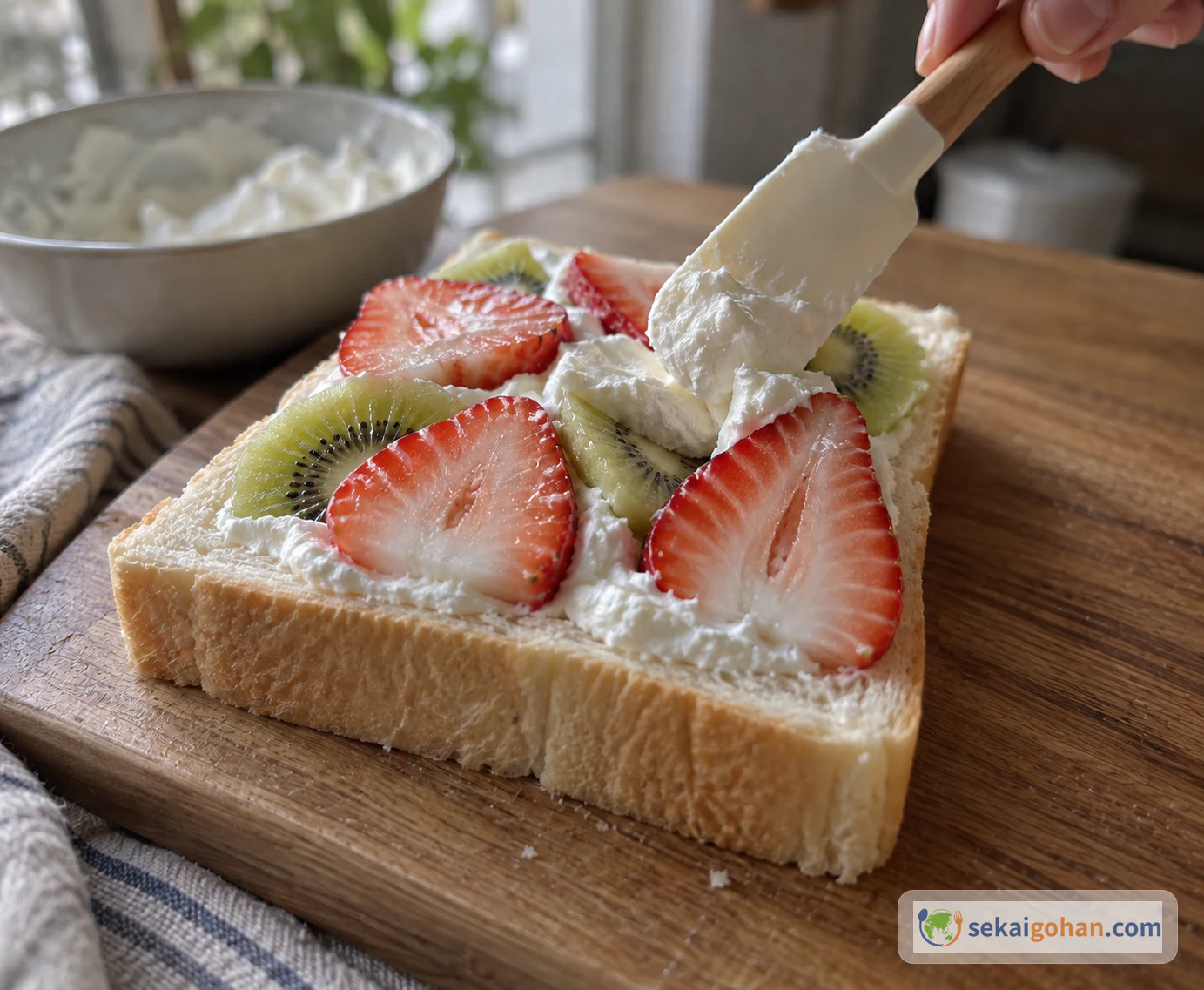
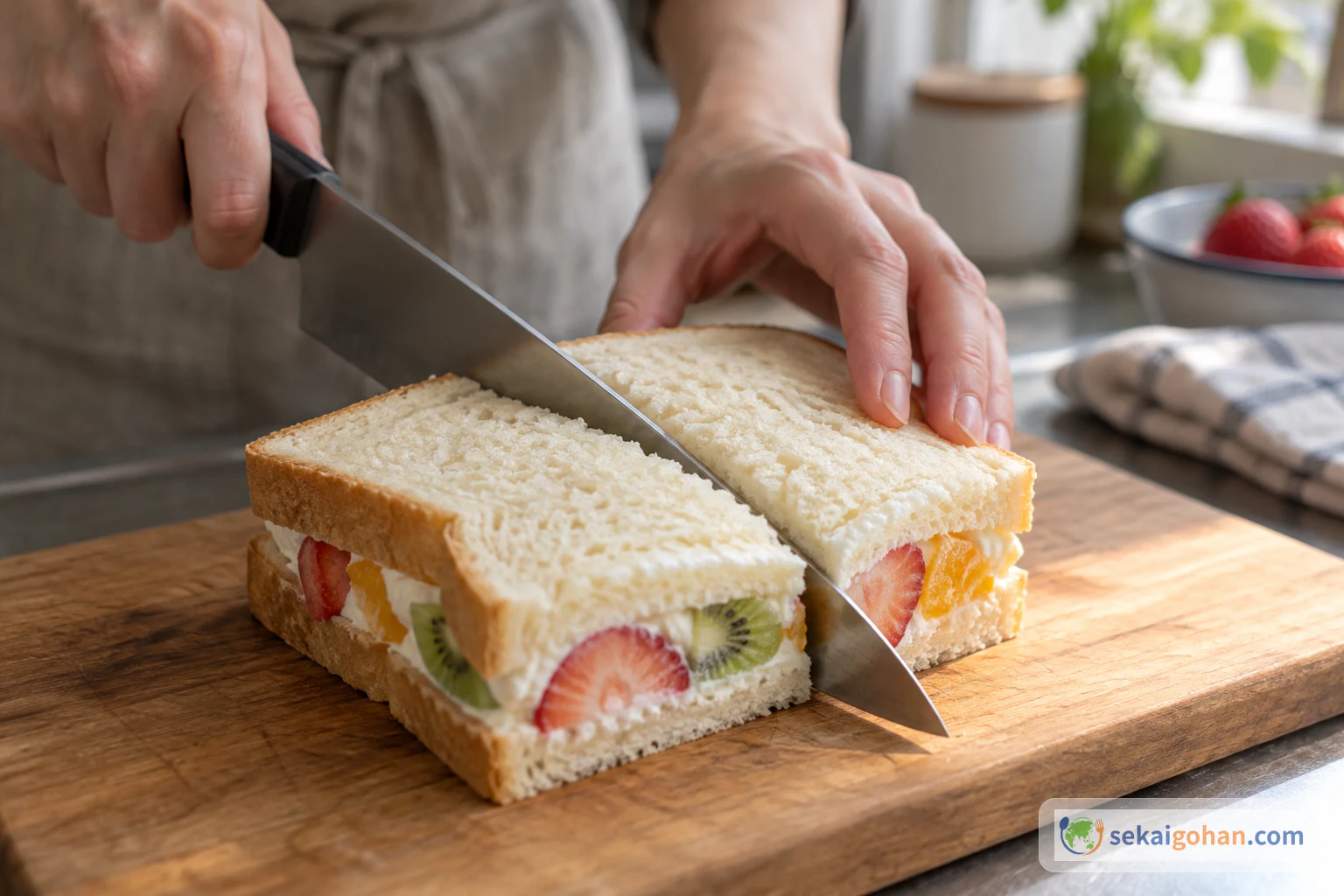
The cross-section is decided before the sandwich is closed. Choose triangles (diagonal center line) or rectangles (horizontal center line) first, then lay the fruit so the knife will pass through it: strawberries lengthwise along the line, kiwi and orange crosswise to it. Once the sandwich is wrapped, keep it facing the same way and draw the line on the wrap so you are not guessing after chilling.
| What you see | Likely reason | What to do |
|---|---|---|
| Bread looks damp around the fruit | Fruit went in with wet surfaces, or a very juicy fruit was used | Pat the fruit dry on paper towels before assembling. Avoid high-moisture fruit such as watermelon or pineapple |
| Cream is too soft to hold the fruit | Whipping stopped before medium peaks | Keep whisking by hand until the peak holds and only the tip bends |
| Cream is hard to spread | Whipped past medium peaks | Stop at medium peaks next time; the cream should still spread easily |
| The cut misses the fruit | Fruit not lined up with the cut, or the sandwich turned during wrapping | Decide the cut line before placing fruit, keep the orientation while wrapping, and mark the line on the wrap |
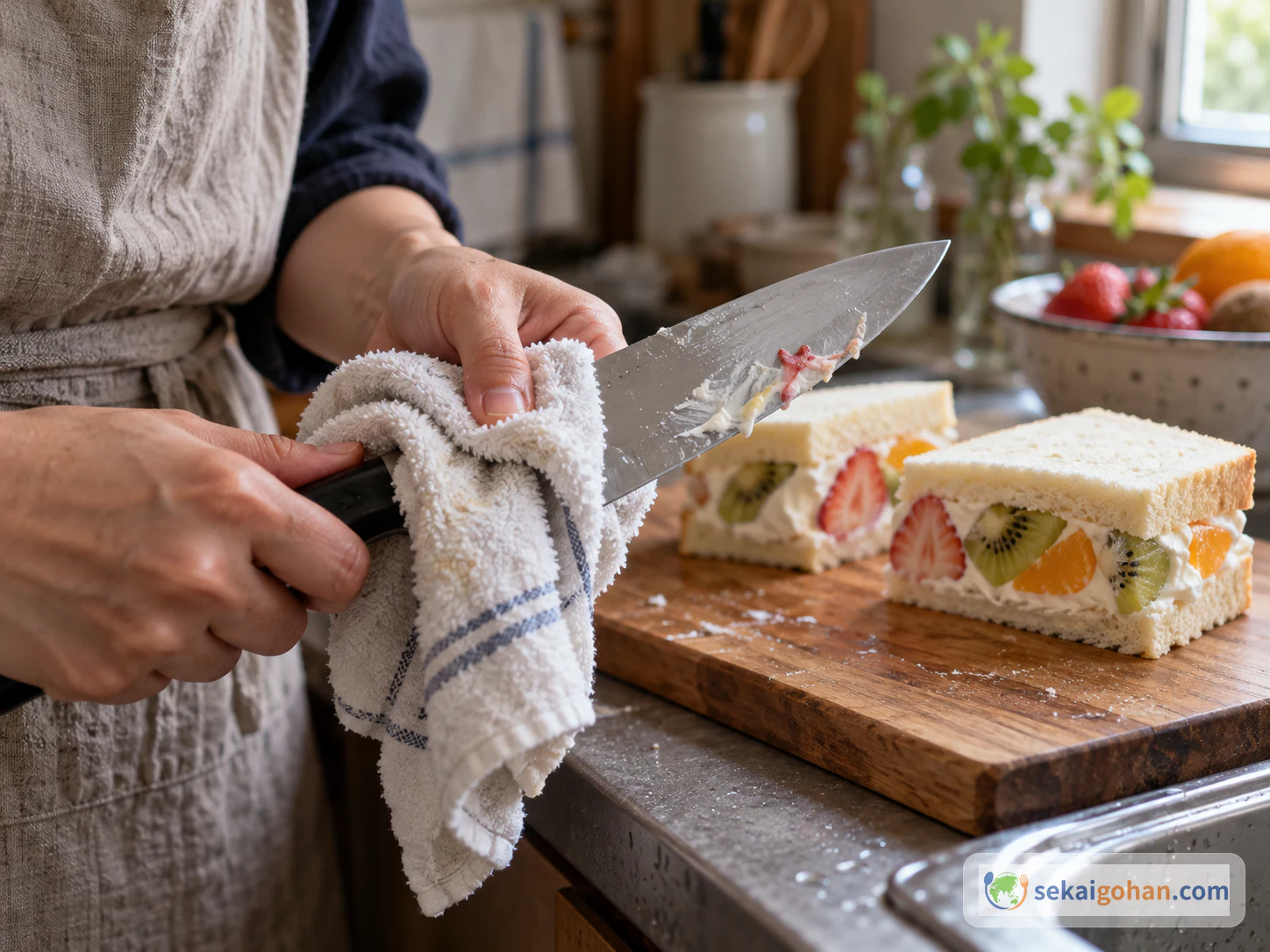
| The cut face looks smeared | Cream left on the knife from the previous cut | Wipe the blade with a hot, wet towel between sandwiches and between cuts |
Storage and Serving
Keep the sandwiches whole and wrapped in the refrigerator until later the same day or up to overnight, then cut them just before serving and serve right away.
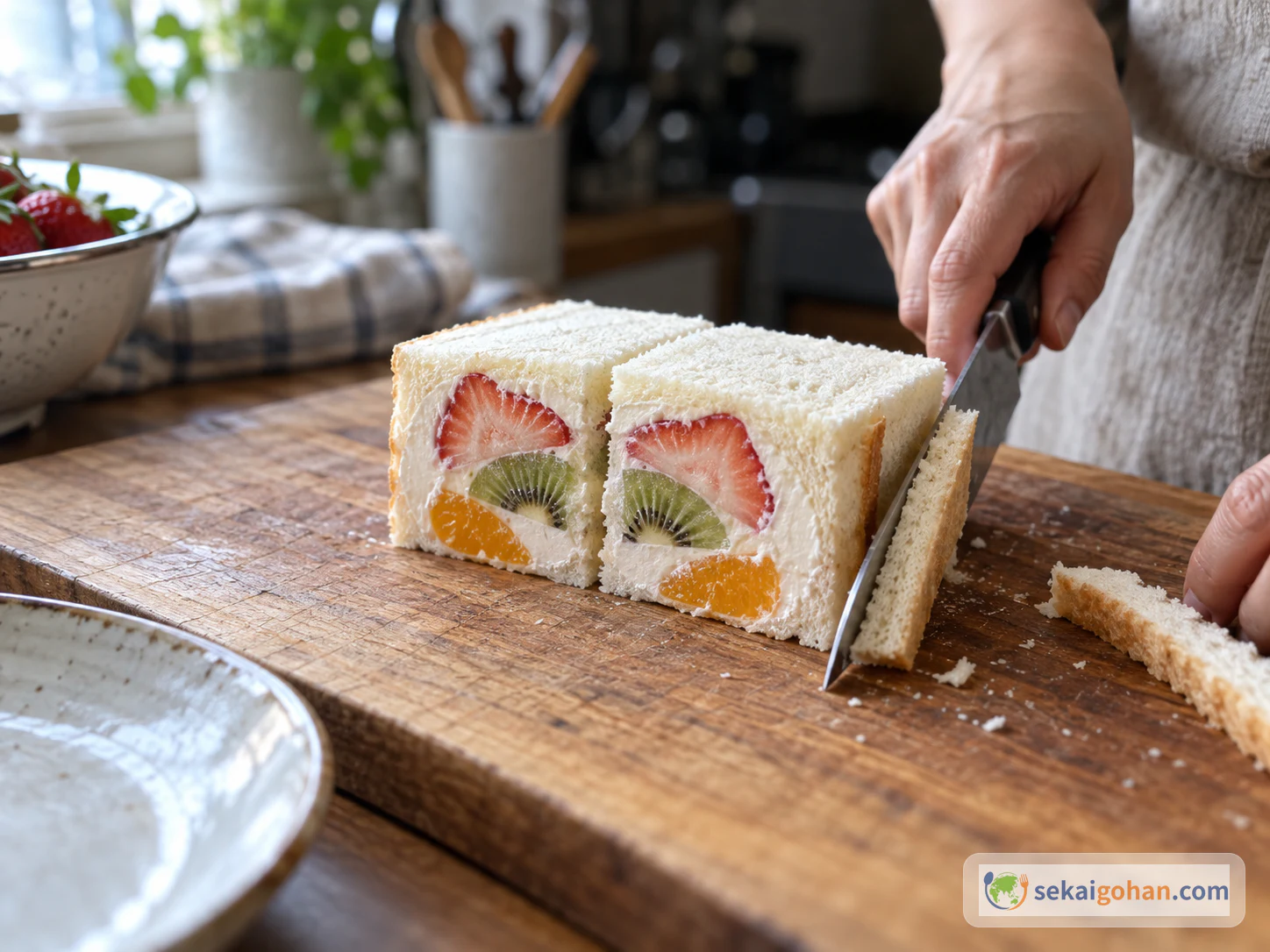
Cutting is the last step for a reason: the halves stay together after the first cut, the crusts come off after that, and the cross-section is only opened at the table. No room-temperature holding time and no longer storage period are given here.
Namiko Hirasawa Chen suggests enjoying fruit sandwiches with coffee. As a sweet snack, they sit naturally alongside a hot drink rather than a full meal.
Variations: Other Fruit and Other Shapes
Shape. Triangles from a diagonal cut are the default here. For rectangles, cut horizontally through the center and arrange the fruit to match that line instead.
Fruit. Just One Cookbook suggests mango, blueberries, grapes or banana as other fruit to try, and advises against high-moisture fruit such as watermelon and pineapple, which can make the sandwich soggy. These are alternatives to the strawberry, kiwi and orange version above; amounts for them are not given, so use your own judgment and follow the same drying and placement steps.
Rum. Leave it out entirely for a plain sweetened cream.
Where the Fruit Sandwich Came From: More Than One Story
The origin of the fruit sandwich is not settled, and this article does not assign it to a single shop, city or year.
Just One Cookbook notes that accounts differ, with one pointing to Kyoto in the 1920s and another to Sembikiya in Tokyo. Sembikiya Sohonten's own corporate history says that the fruit cafeteria it opened in 1868 served fruit sandwiches. Meanwhile, an SBS Food feature by Jessica Thompson reports a Sembikiya spokesperson as saying that it is unknown when fruit and sandwiches first came together, and that it is believed to have been the 1940s.
These dates do not line up, and a company's history describes that company's own menu rather than proving who invented a dish. What can be said with confidence is the dish's present form: a sweet sandwich of soft shokupan, whipped cream and fresh fruit, served in fruit parlors and sold elsewhere in Japan, made around the moment the cross-section is revealed.
Frequently Asked Questions
Can I leave out the rum?
Yes. The rum is listed as optional at 1 tsp, and the recipe works without it.
How long does it take?
The one firm time is the chilling: at least 1 hour, up to overnight. Just One Cookbook's page shows a time of 1 hour, while its recipe card lists 1 hour of prep and 1 hour of chilling with a total of 1 hour. Those figures do not agree, so no total time is given here. Allow time for preparing the fruit and whipping the cream on top of the chilling.
Can I make fruit sandwiches the day before?
You can assemble them ahead. Keep them whole and wrapped in the refrigerator until later the same day or up to overnight, and cut them just before serving.
Why not cut the crusts off first?
The crusts stay on through spreading, assembling, wrapping, chilling and the first cut. They are trimmed only after the sandwich has been halved, while you hold it steady, and the knife is wiped between cuts.
How much fruit goes into each sandwich?
No per-sandwich count is set. Arrange what fits along your cut line on each sandwich; you do not have to use every piece of fruit or all the cream.
Can I convert the cup and teaspoon amounts to grams?
This recipe keeps the cup, teaspoon and count measures as published, without gram or milliliter equivalents. If you convert them yourself, treat the result as your own adaptation.
Sources
- Namiko Hirasawa Chen, "Japanese Fruit Sandwich (Fruit Sando) フルーツサンド," Just One Cookbook. The recipe followed in this article: ingredients, 4 snack servings, steps, cut-line arrangement, medium-peak cream, optional rum, fruit alternatives, storage guidance and the time fields; also the description of the dish and the note that origin accounts differ. https://www.justonecookbook.com/japanese-fruit-sandwich-fruit-sando/
- Sembikiya Sohonten, "千疋屋の歴史" (History of Sembikiya). The company's own account that its fruit cafeteria opened in 1868 served fruit sandwiches; cited as company history only. https://www.sembikiya.co.jp/touch-2
- Sembikiya Sohonten, "フルーツパーラーセレクション" (Fruit Parlor Selection). The company's description of its fruit sandwich as a popular menu item carried on to the present in its fruit parlor. https://www.sembikiya.co.jp/product-info/parlor-menu
- Jessica Thompson, "Sandwich in form, cake in function: meet Japan's fruit sando," SBS Food. Fruit-parlor context and a Sembikiya spokesperson's view that the date fruit and sandwiches came together is unknown and believed to be the 1940s. https://www.sbs.com.au/food/article/sandwich-in-form-cake-in-function-meet-japans-fruit-sando/wub154ax5