Hiyashi Chūka: Noodles Washed Cold, Toppings Laid Out in Color
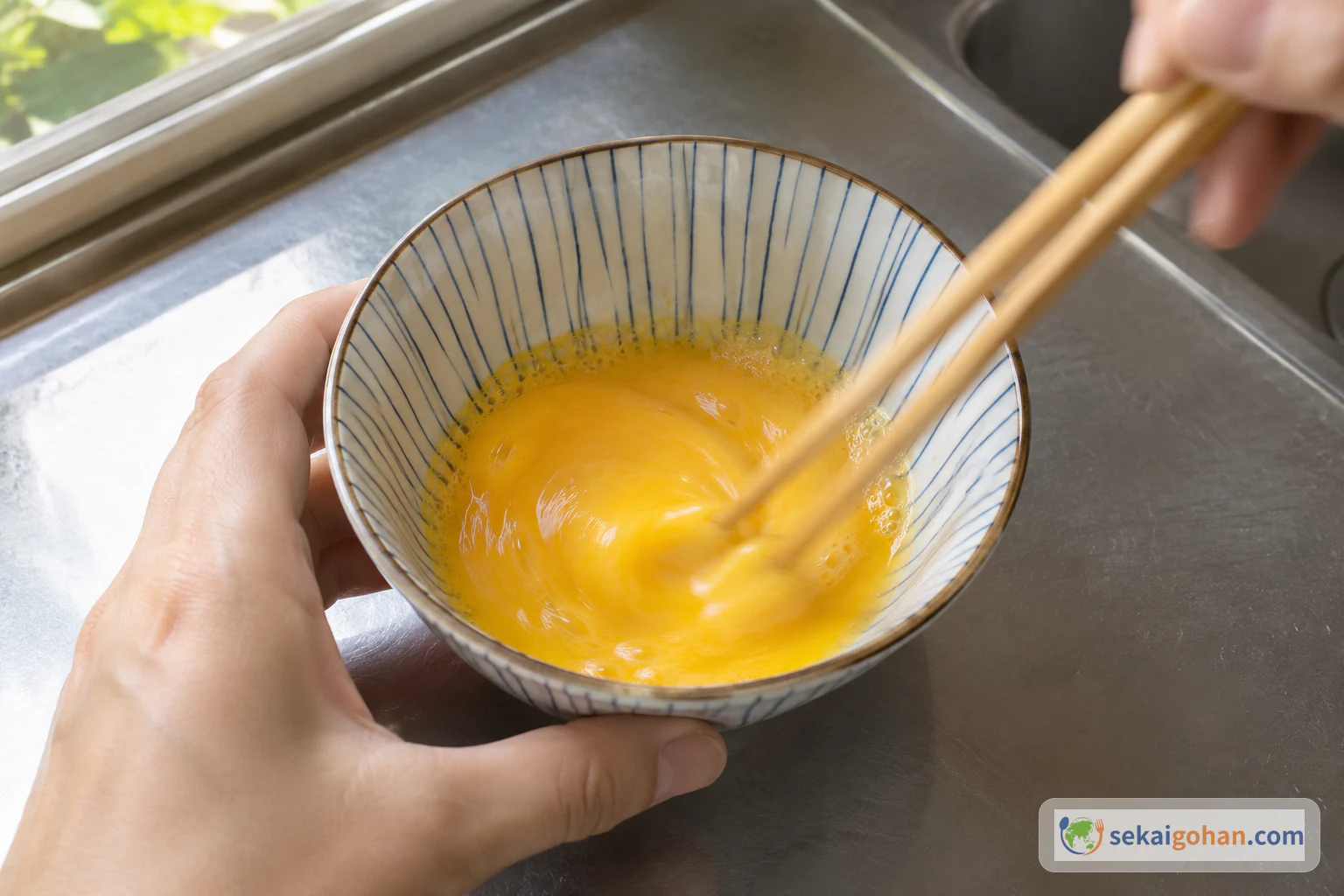
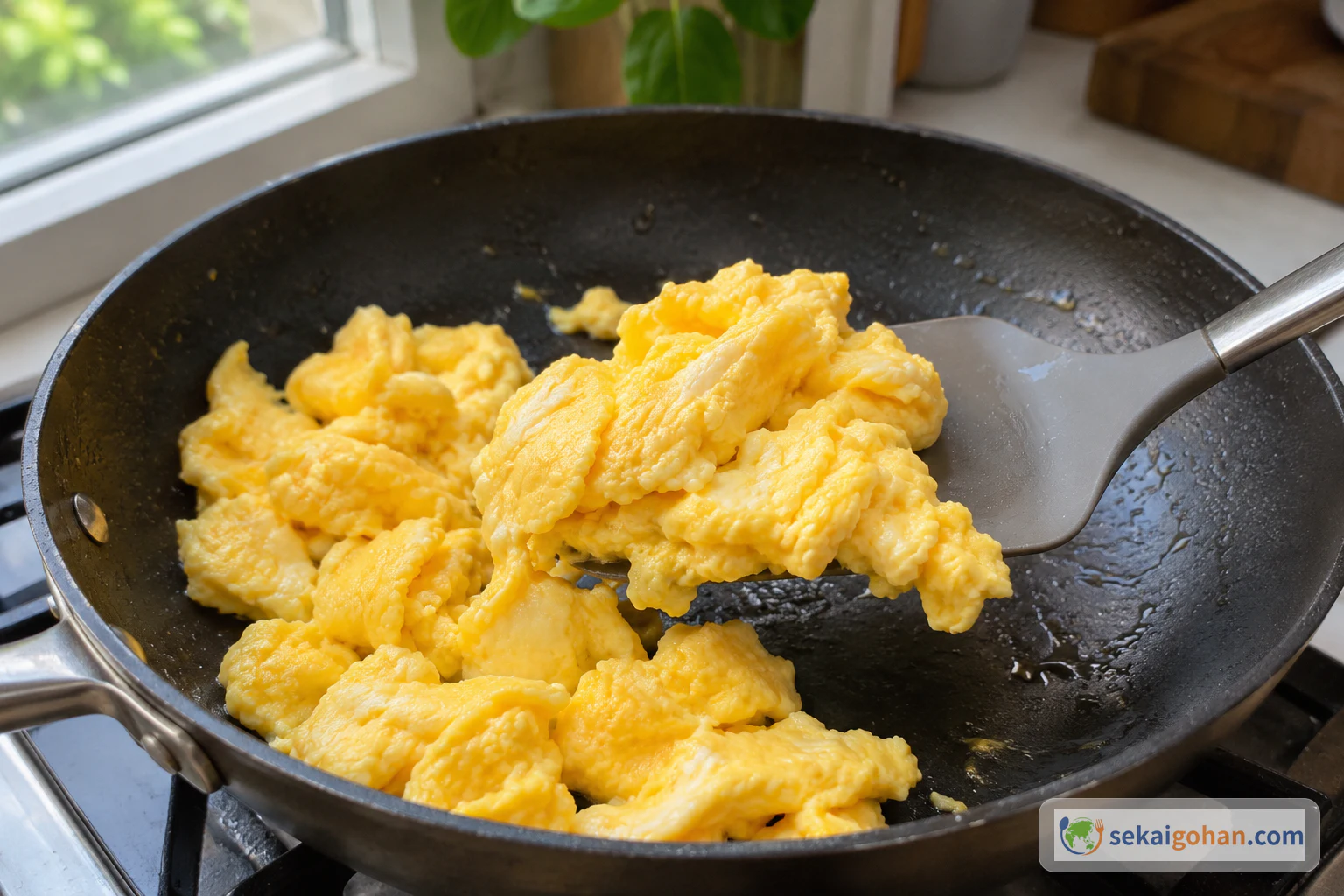
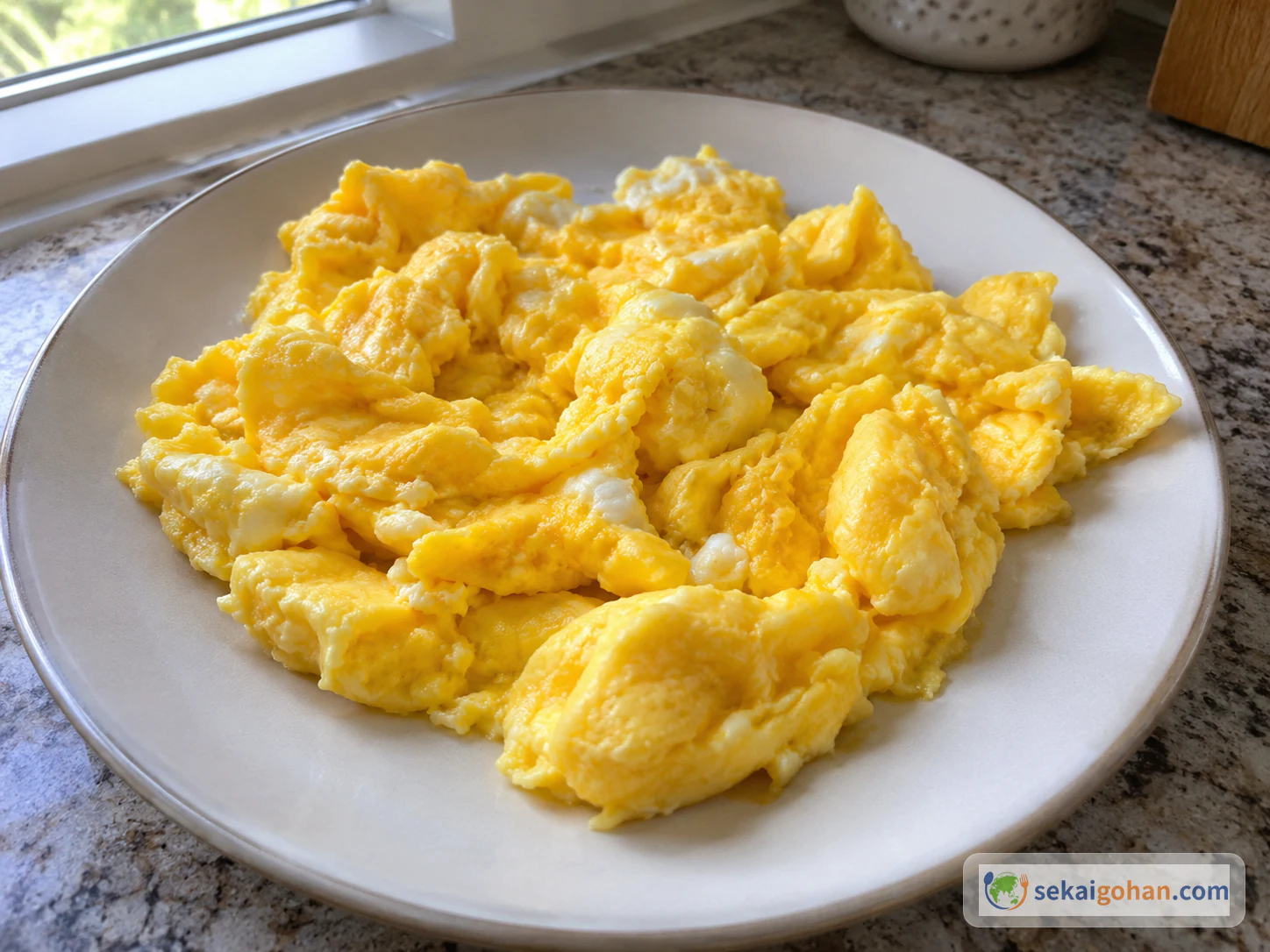
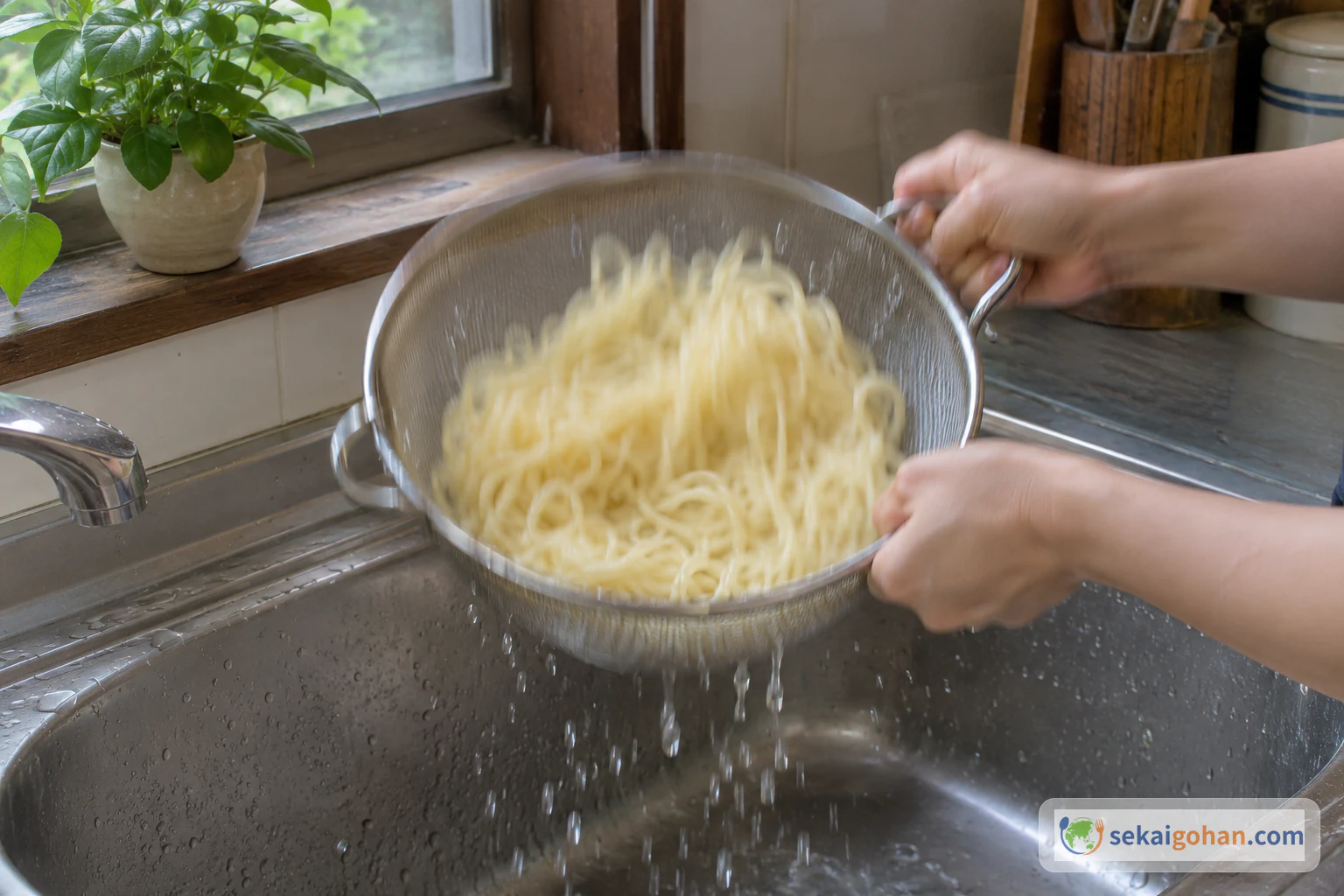
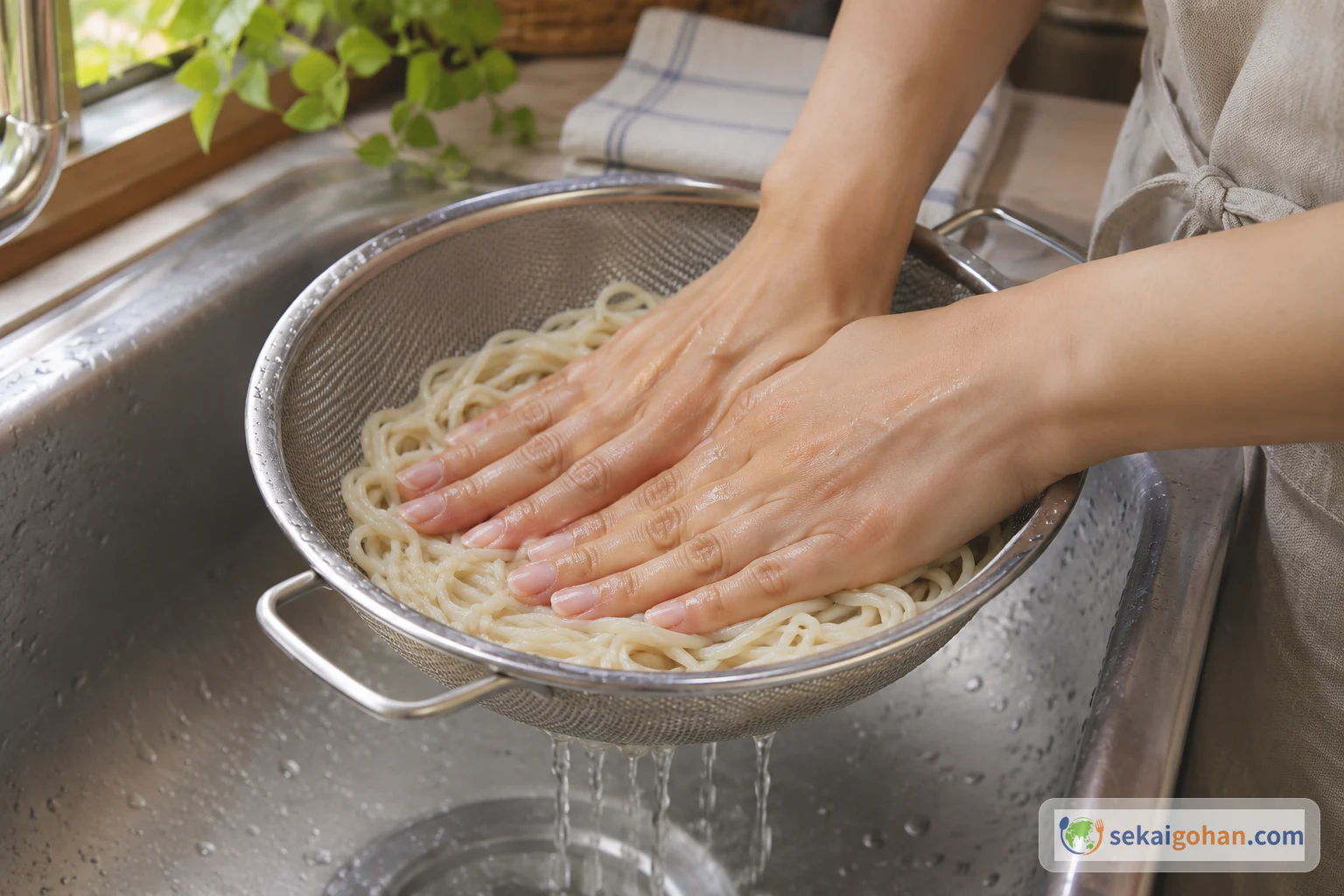
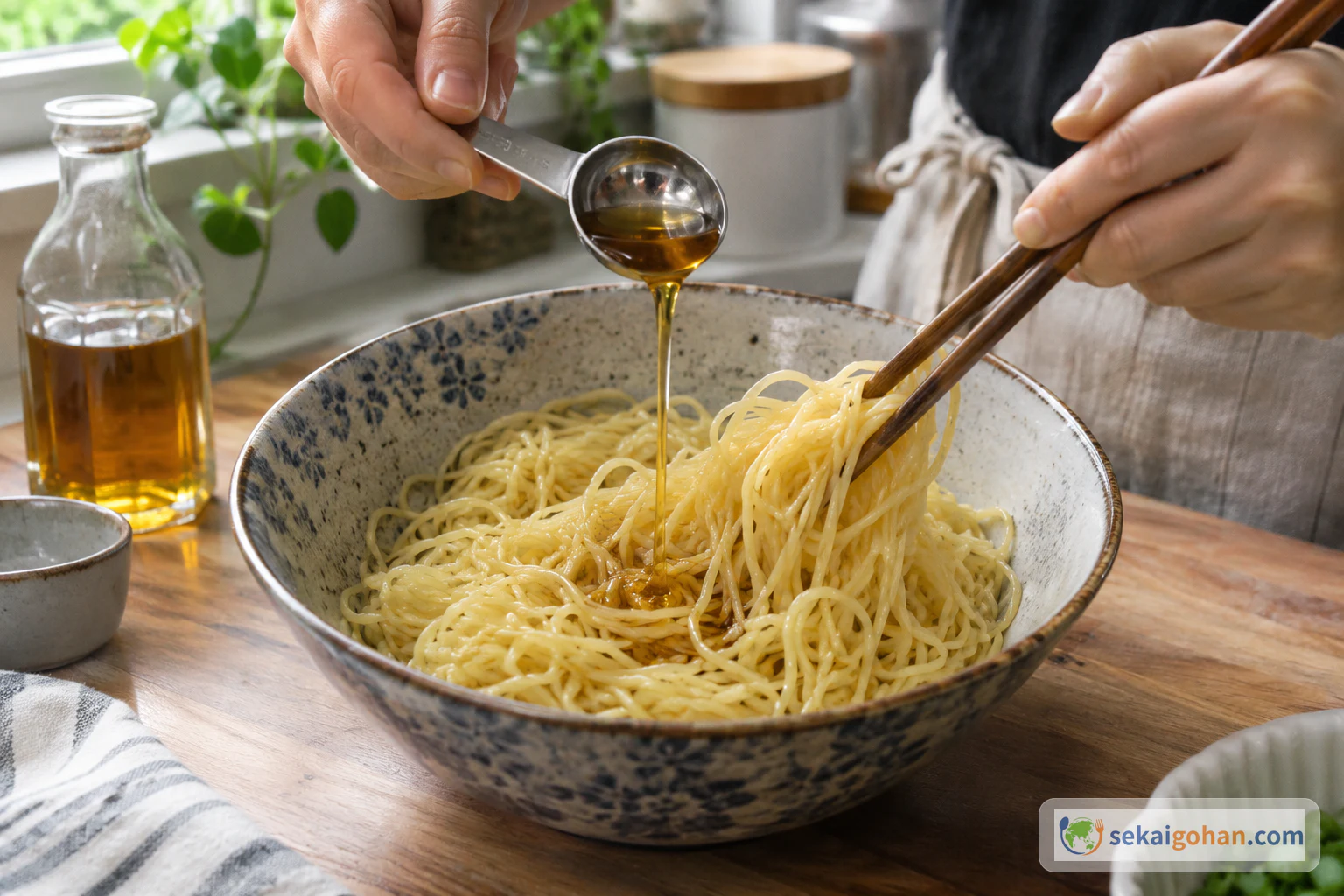
Wash the noodles well and drain them firmly, so the sauce is not diluted. Cook the egg fully, let it cool, and keep the sauce in its own small bowl until you eat.
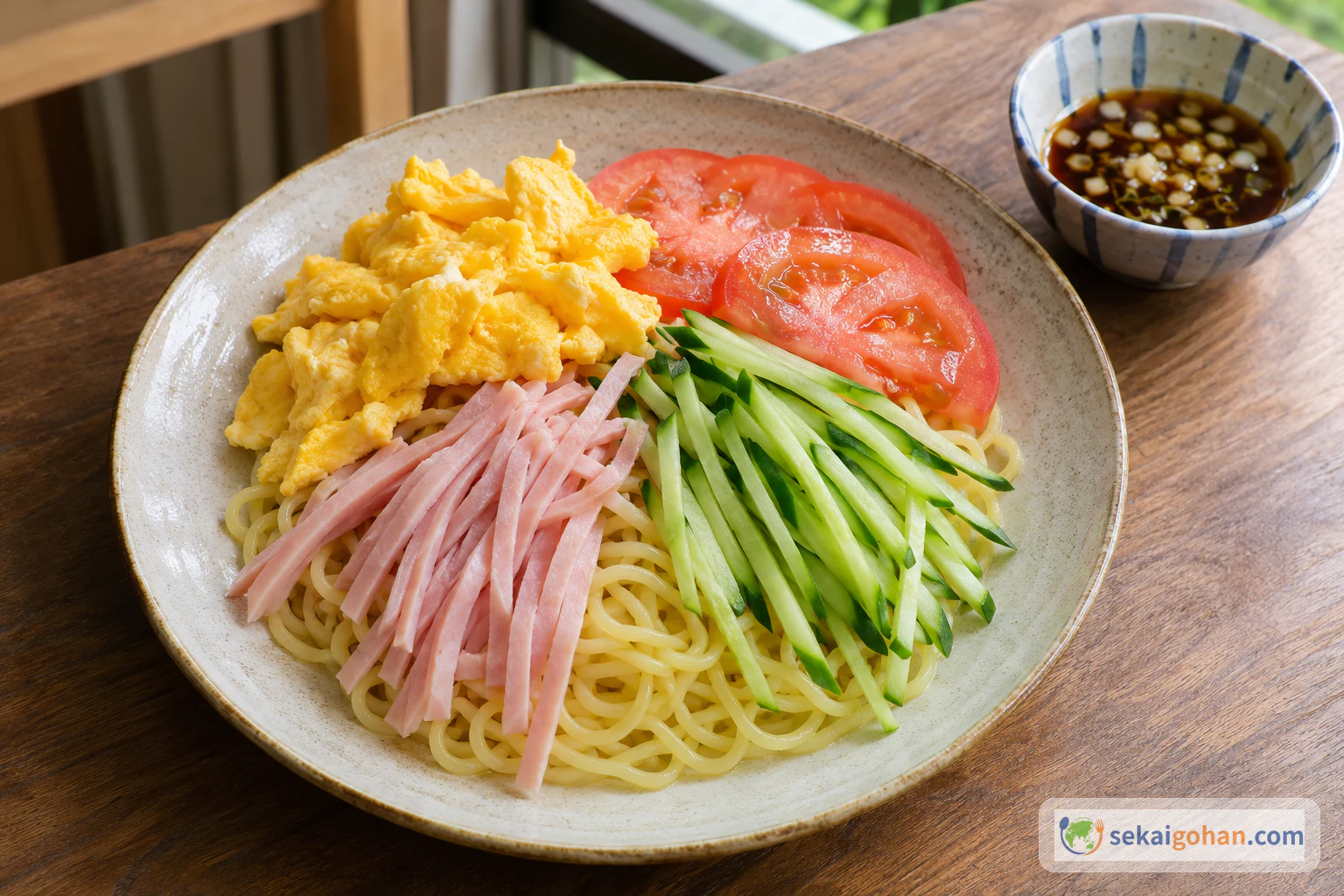
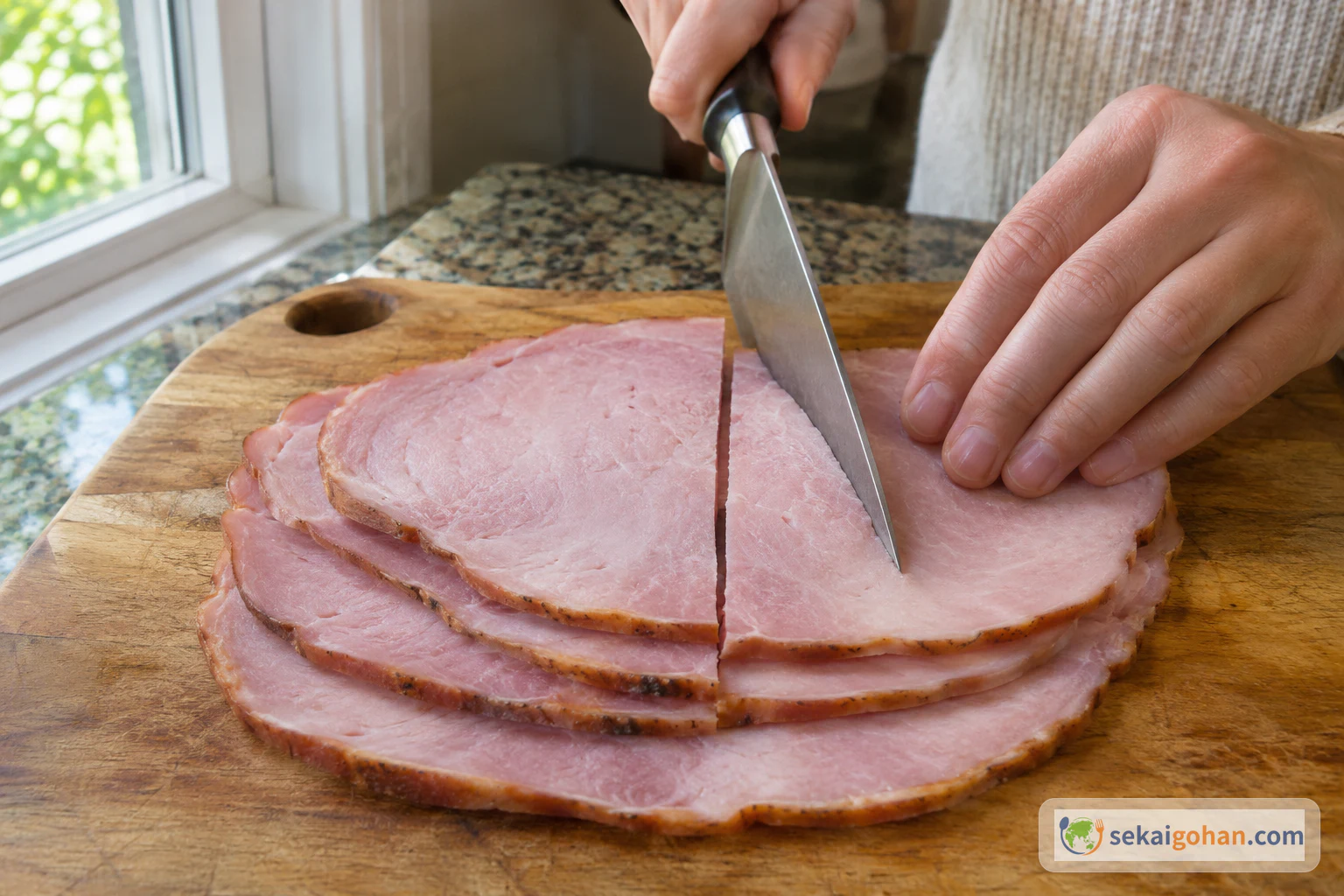
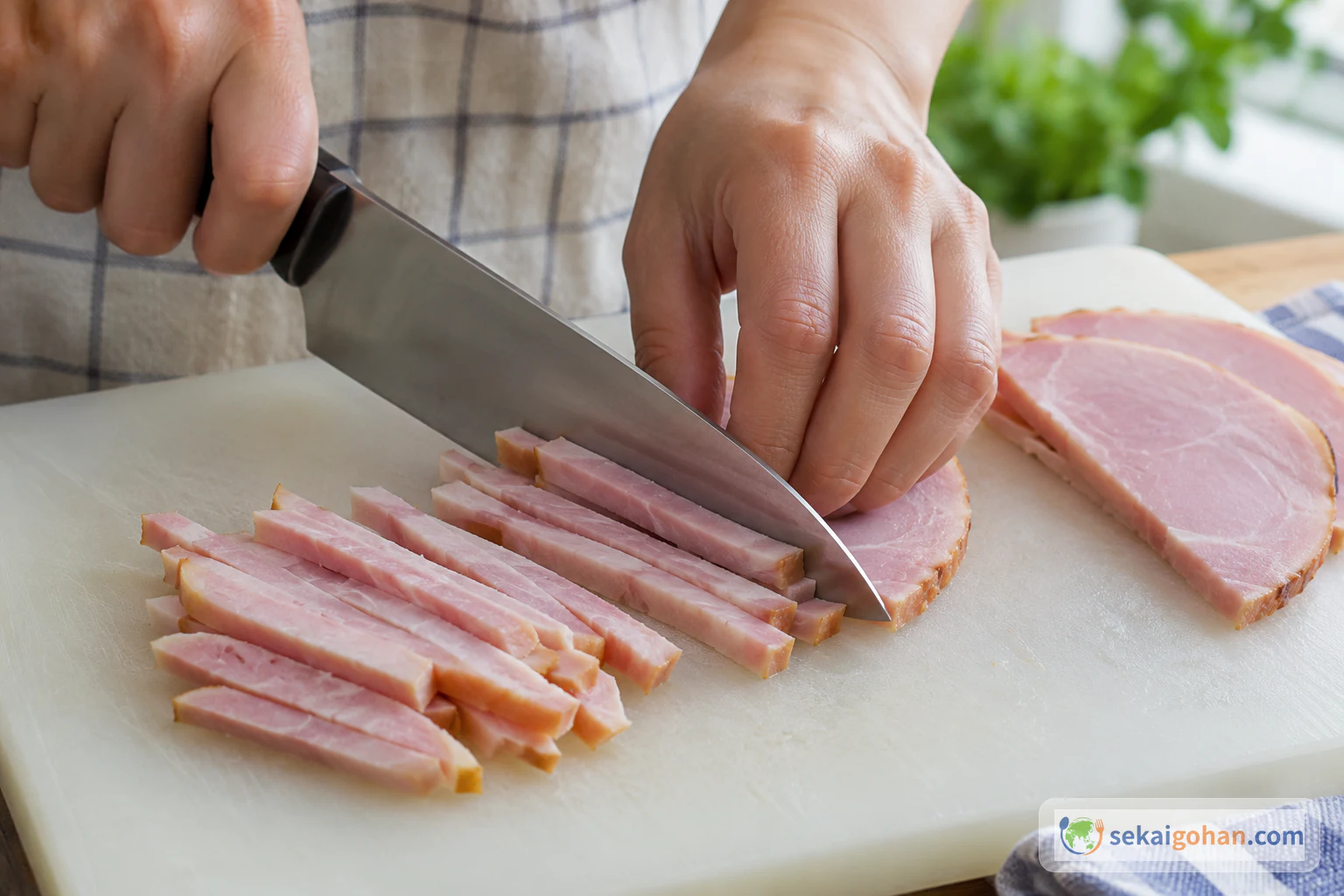
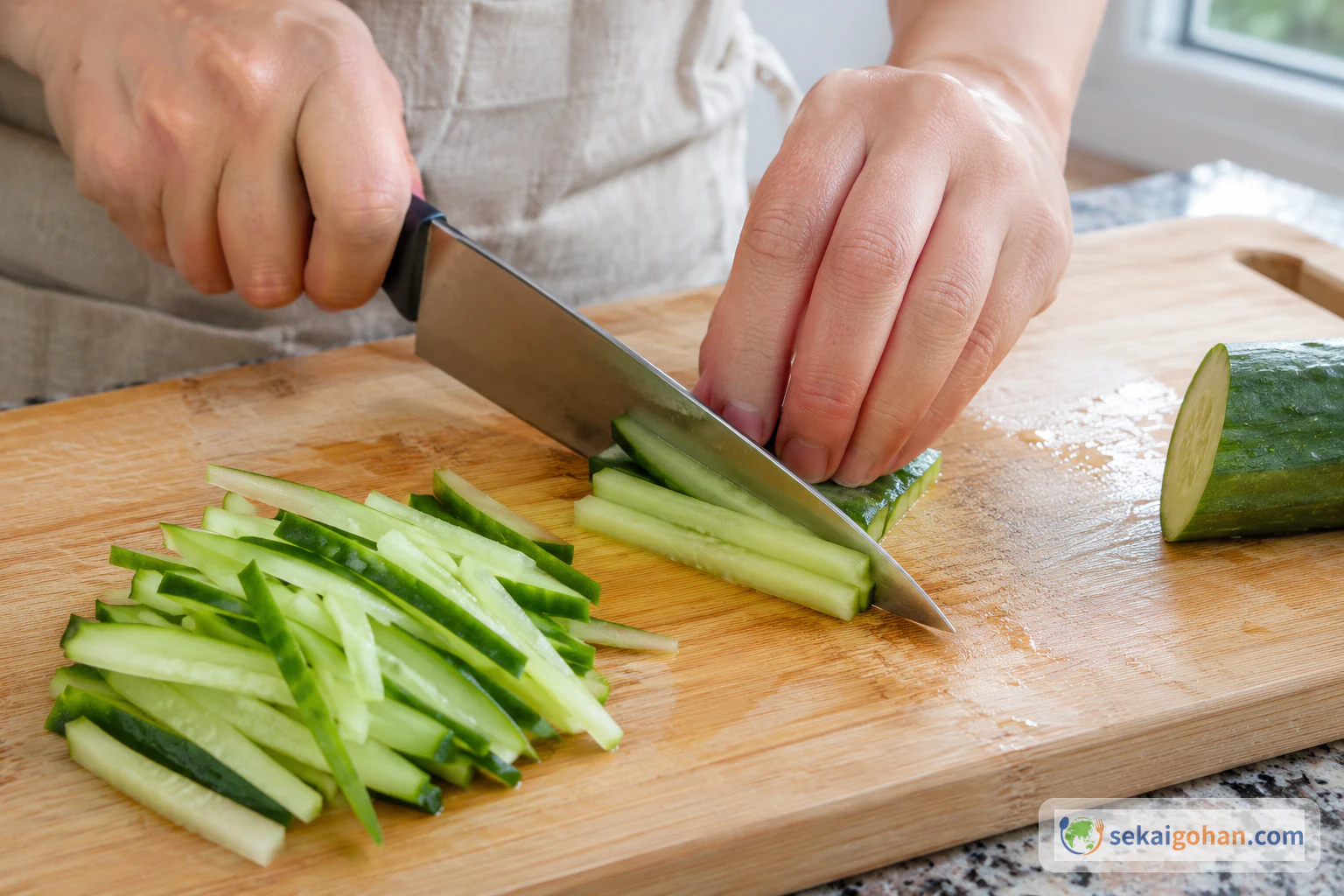
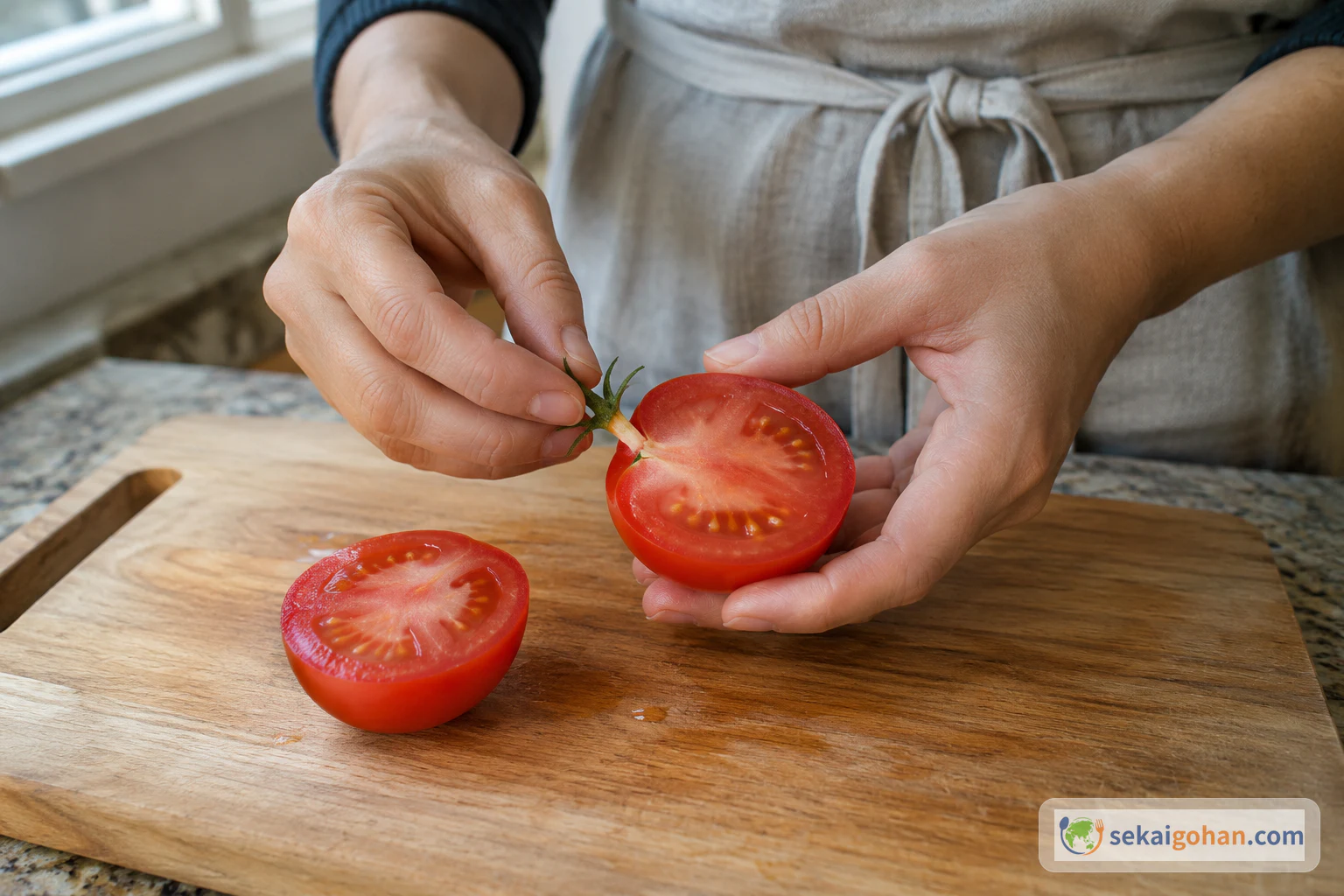
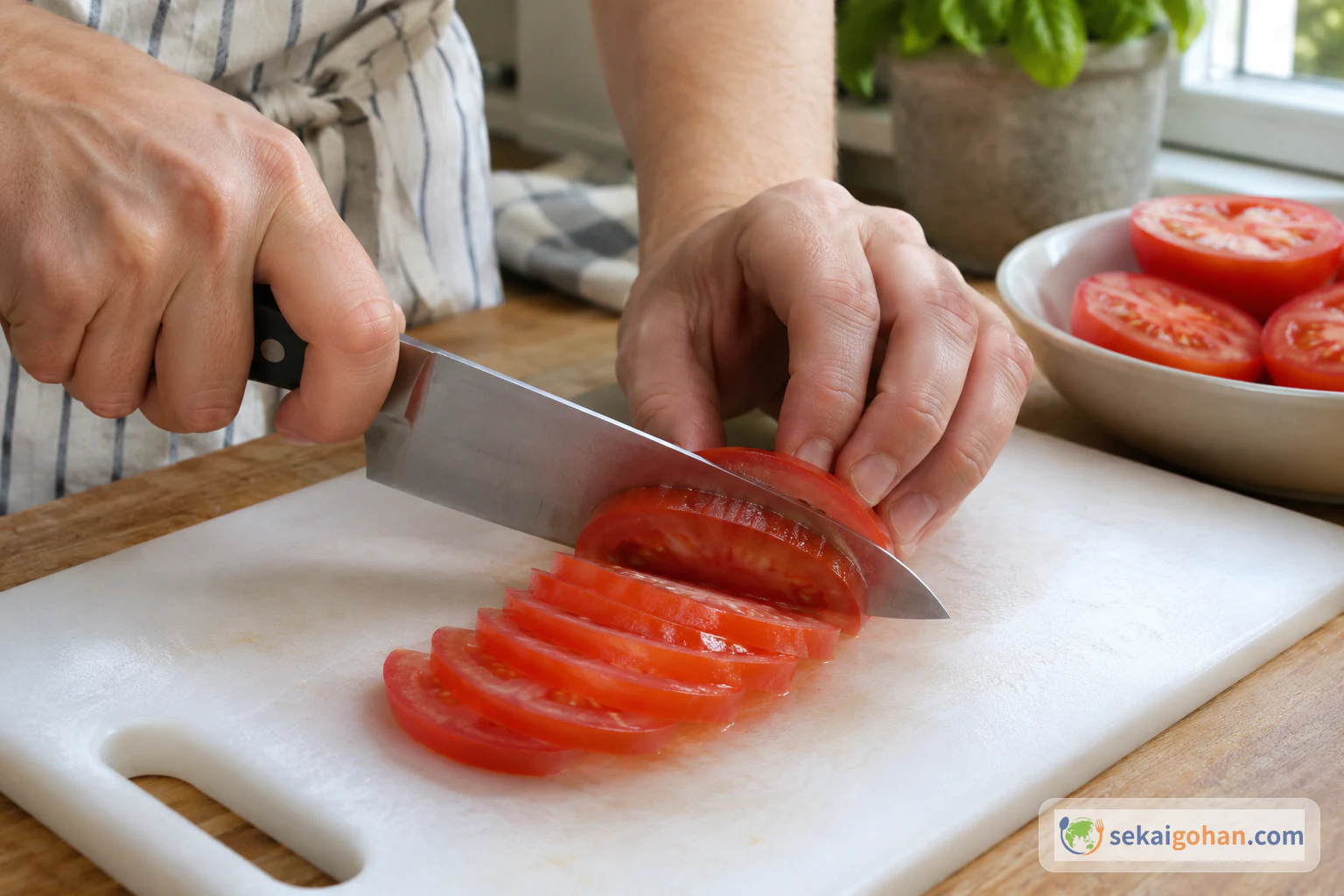
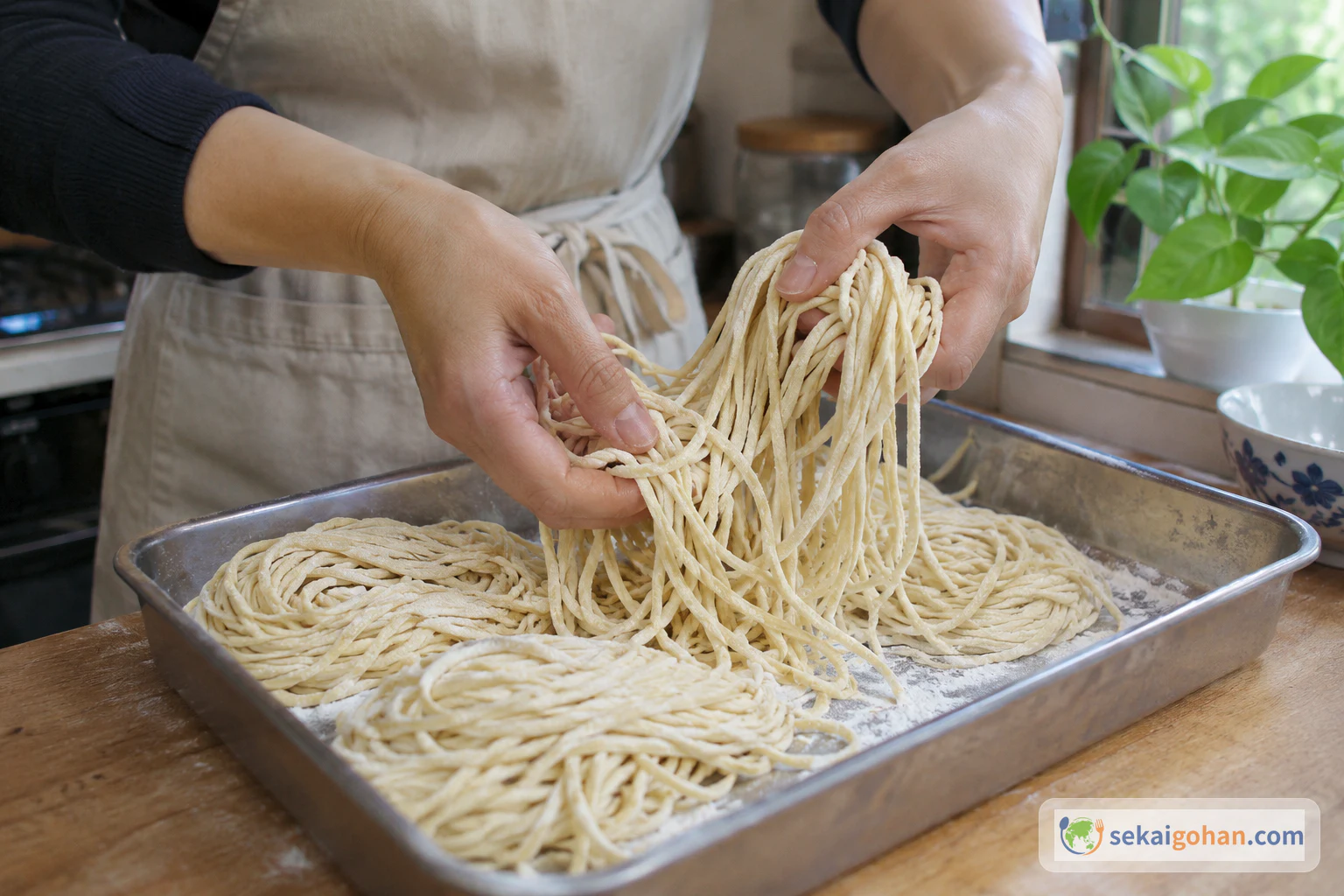
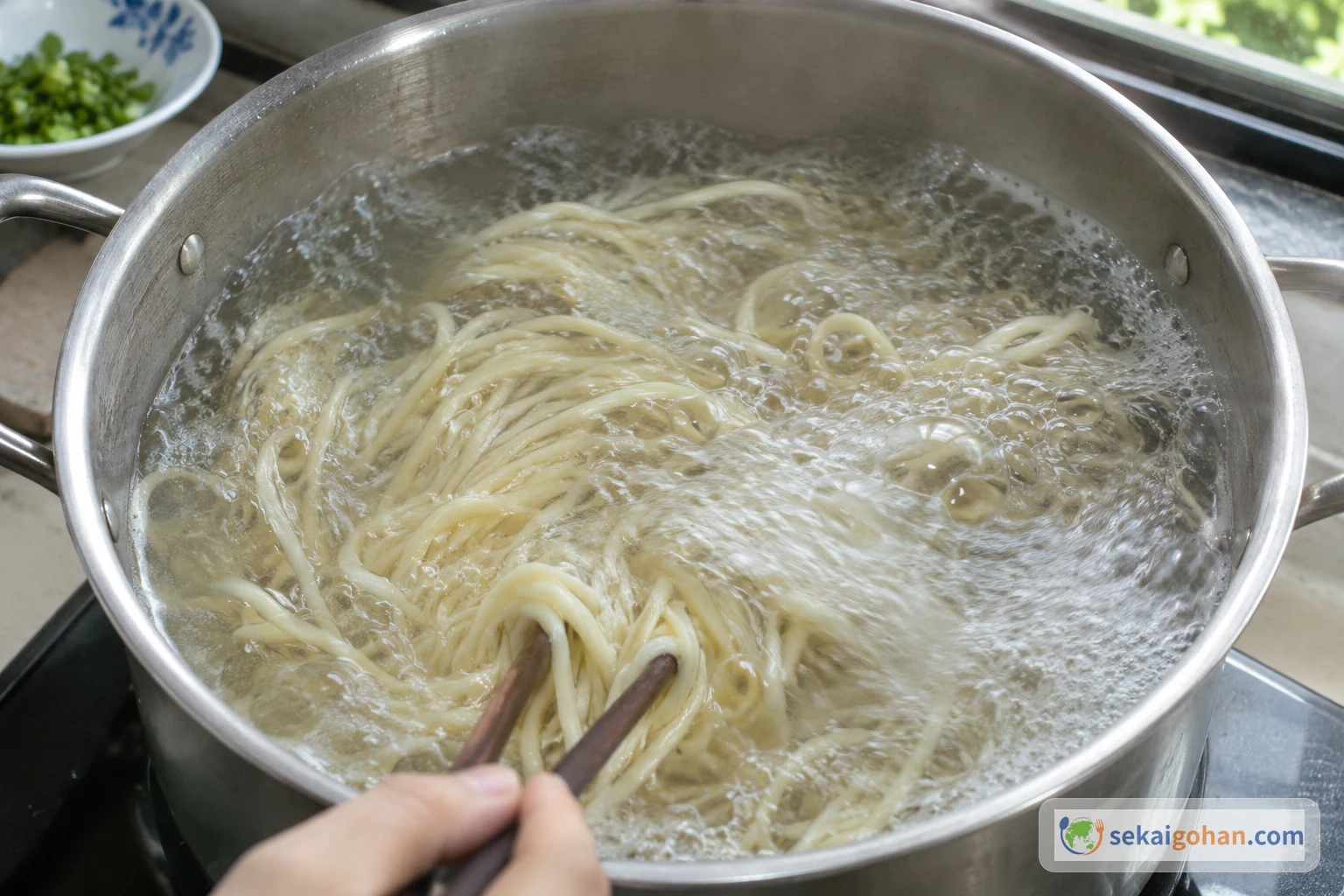
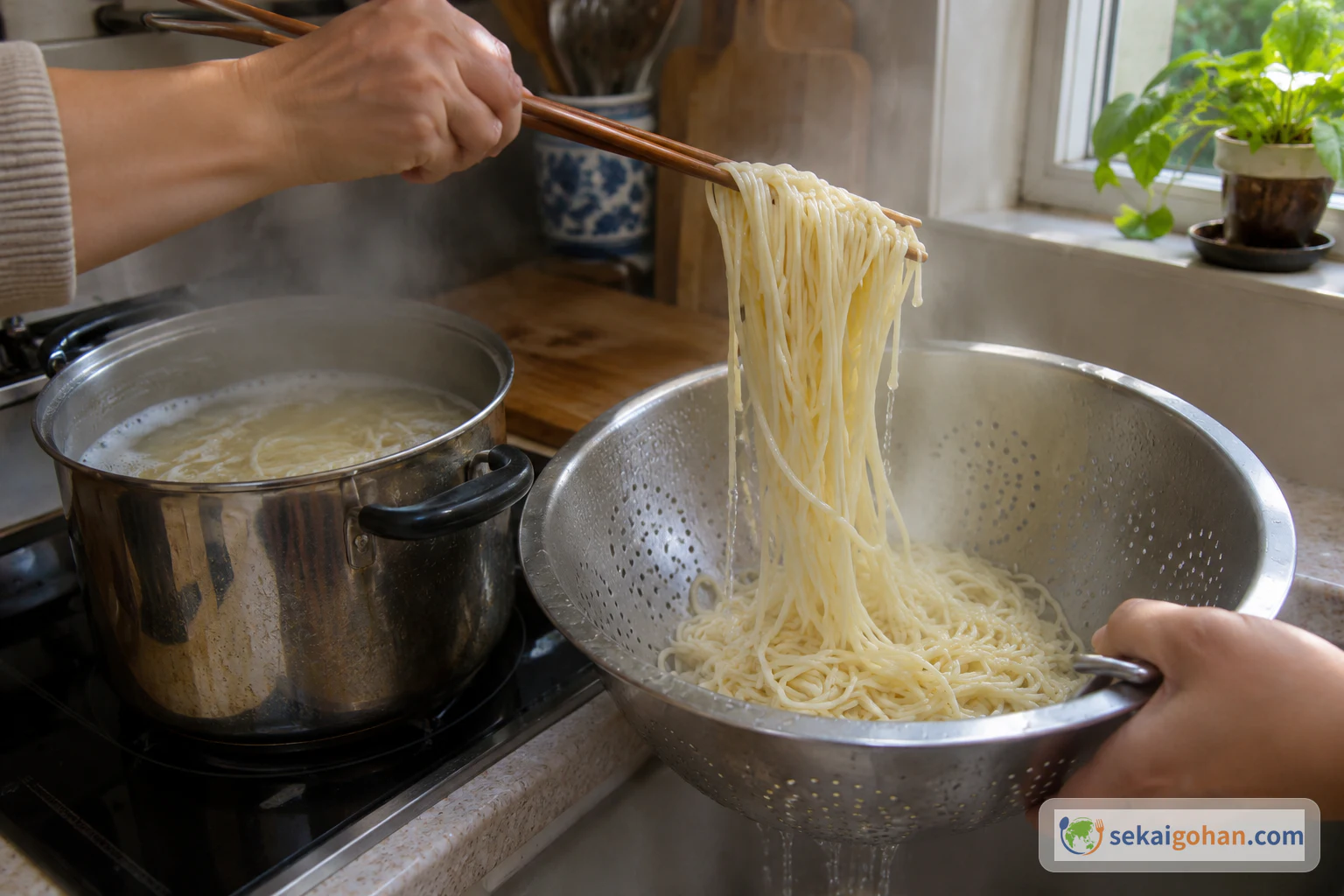
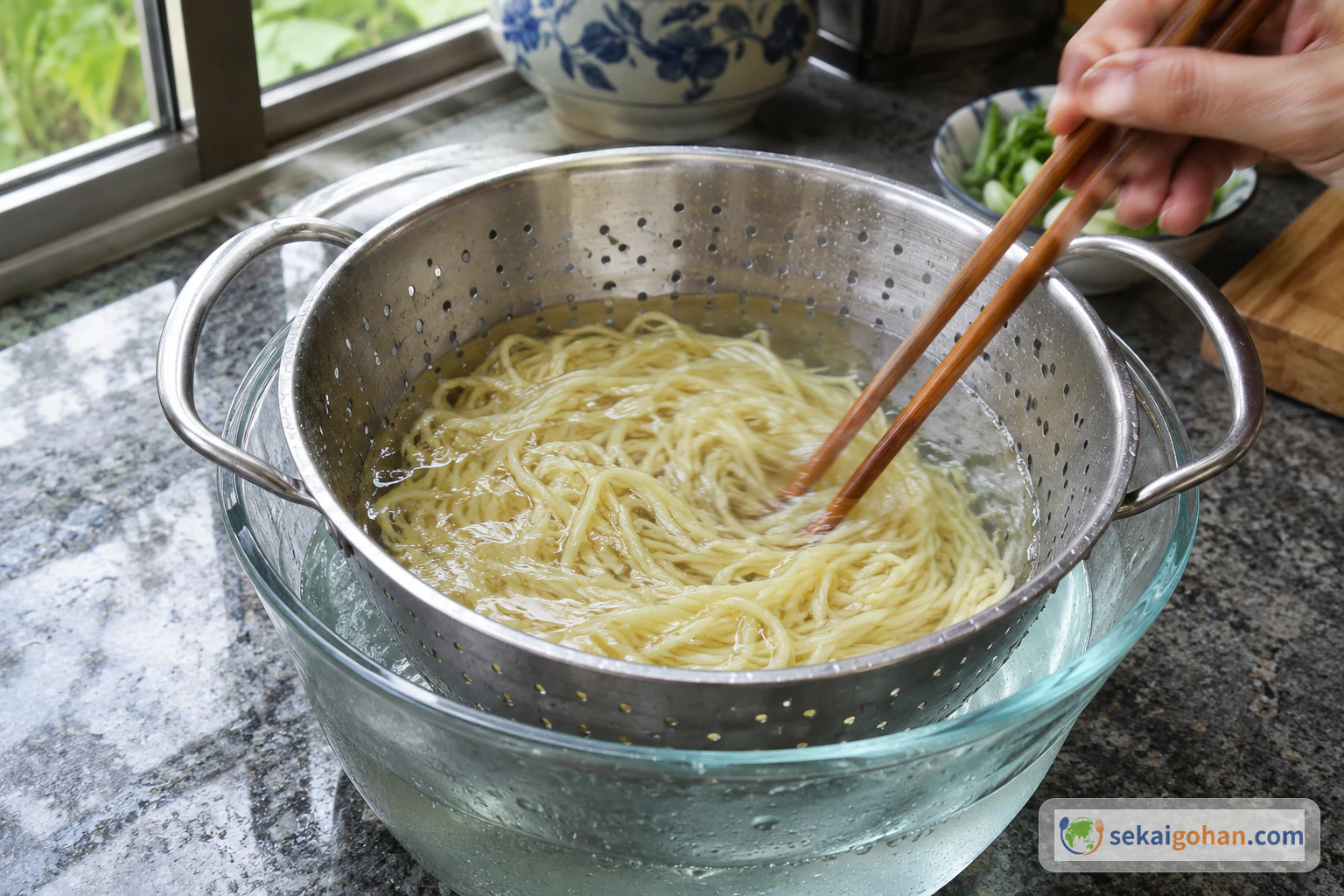
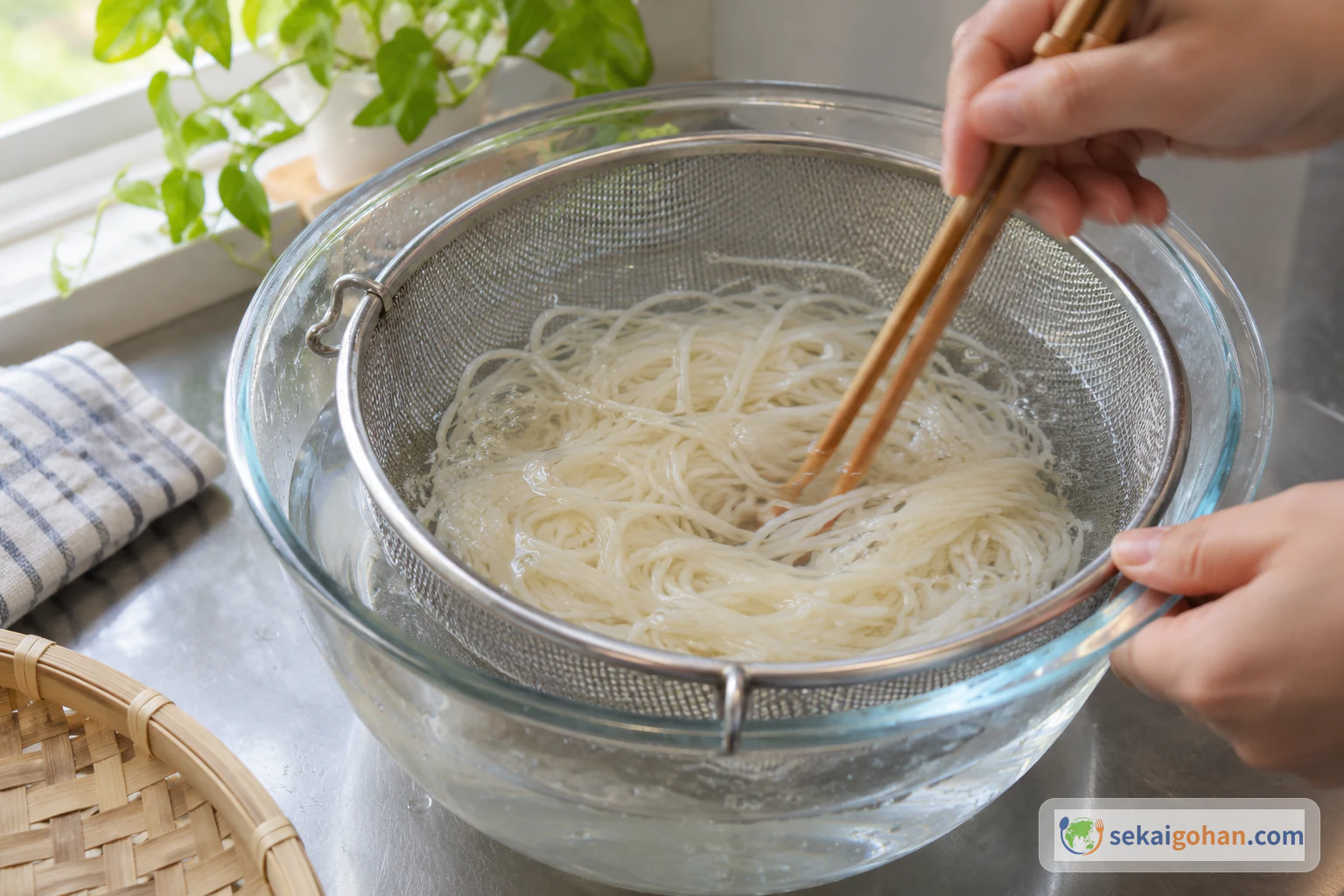
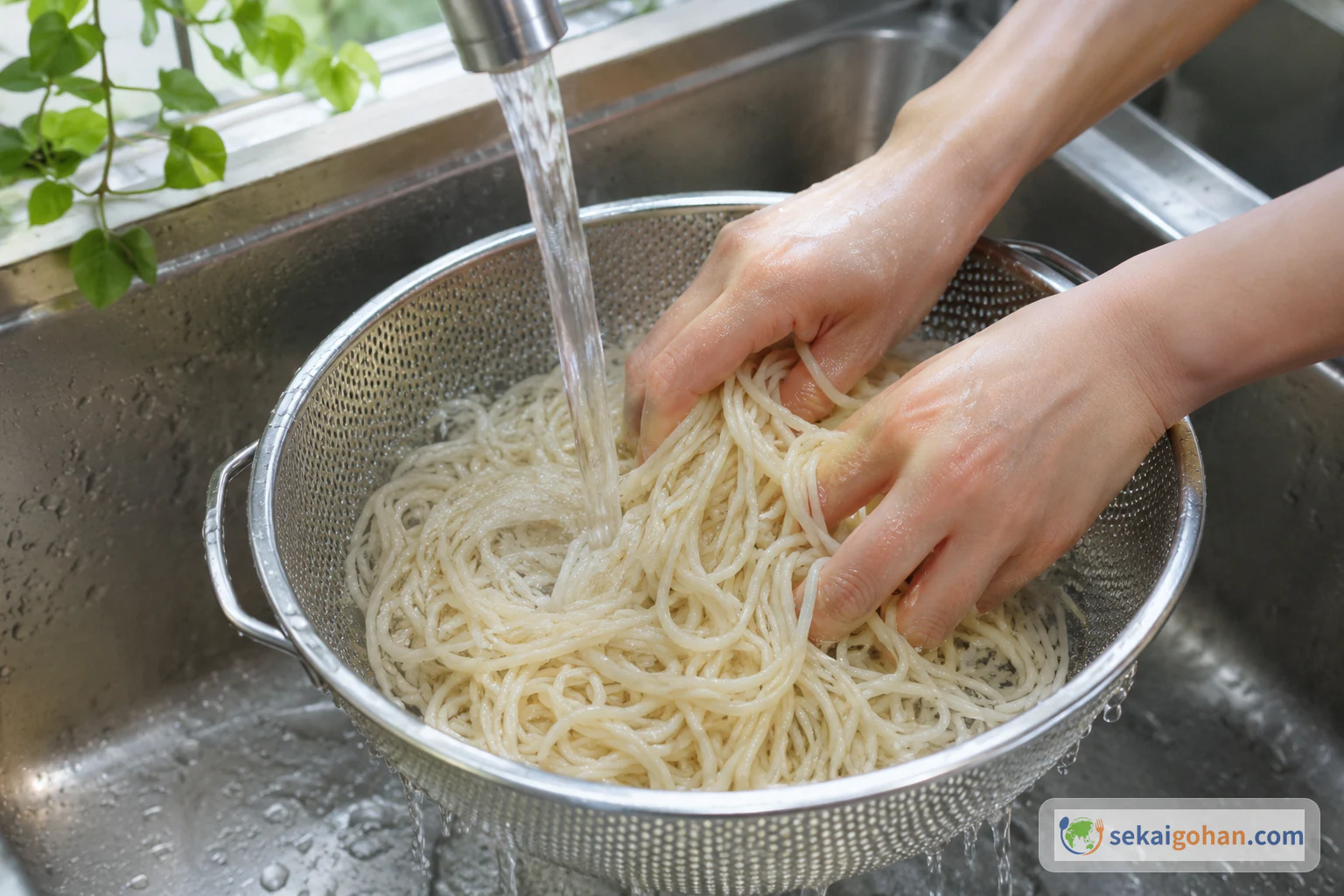
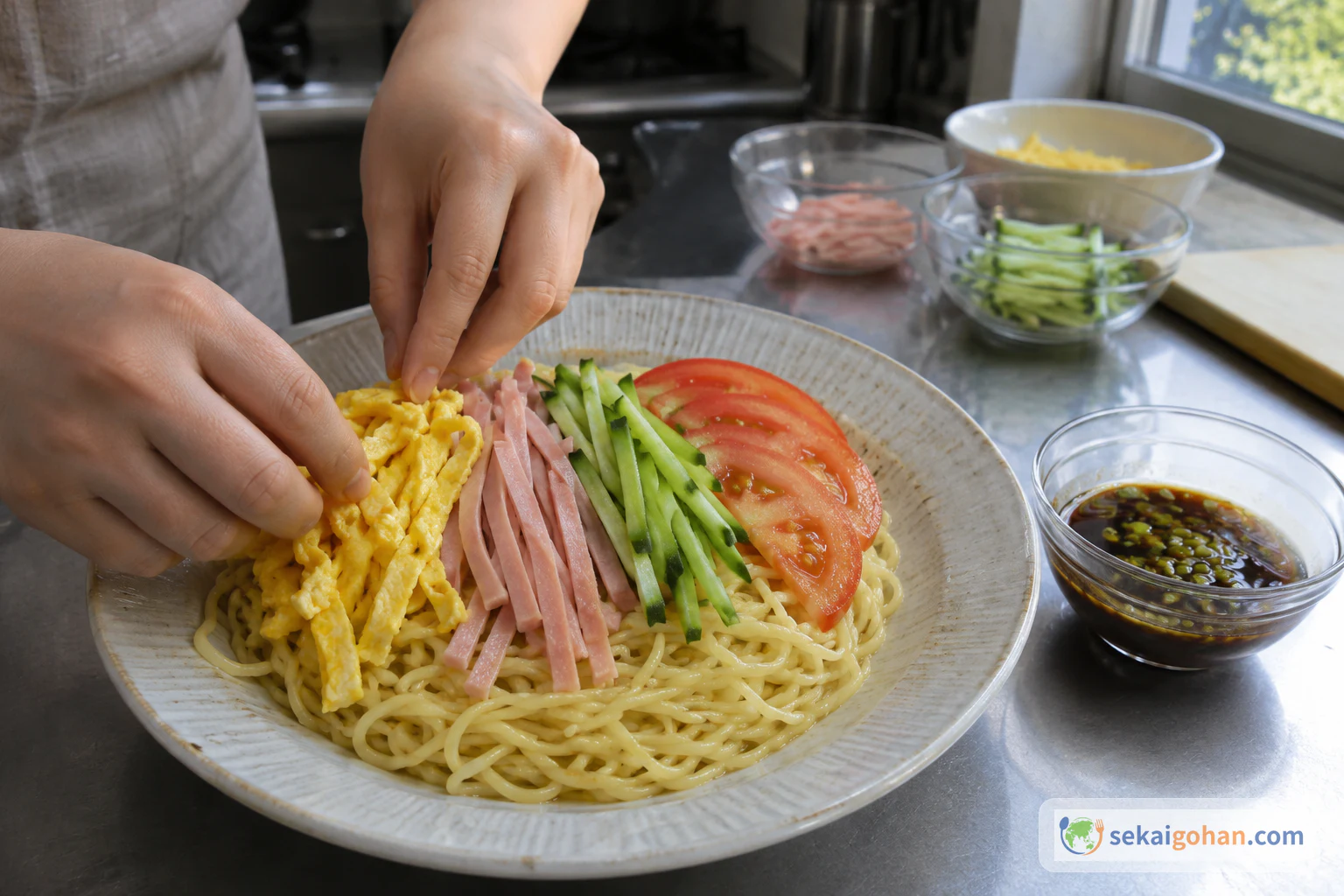
Ramen arrives steaming. Hiyashi chūka goes the other way. On a hot day, the egg is cooked first and cooled, and the noodles are boiled before chilling. The cucumber, ham and tomato are cut while the egg cools on a plate. The noodles then go straight from the pot into cool water. They are washed and drained, then piled on a plate under red, yellow and green toppings. Kikkoman's overview of the dish describes this basic picture: chilled Chinese-style noodles with thin strips of vegetables, ham and egg, dressed with a sweet-sour soy sauce or a sesame sauce. It also notes that the noodles are washed to chill them and remove excess starch.
The name means roughly "chilled Chinese," but this is not a traditional dish from China. Kikkoman places its development in Japanese Chinese-style restaurants during the 1930s and 1940s. Its exact birthplace is still debated, and the history section below covers that.
This Version: Scallion Sauce and Large-Curd Scrambled Egg, for Two
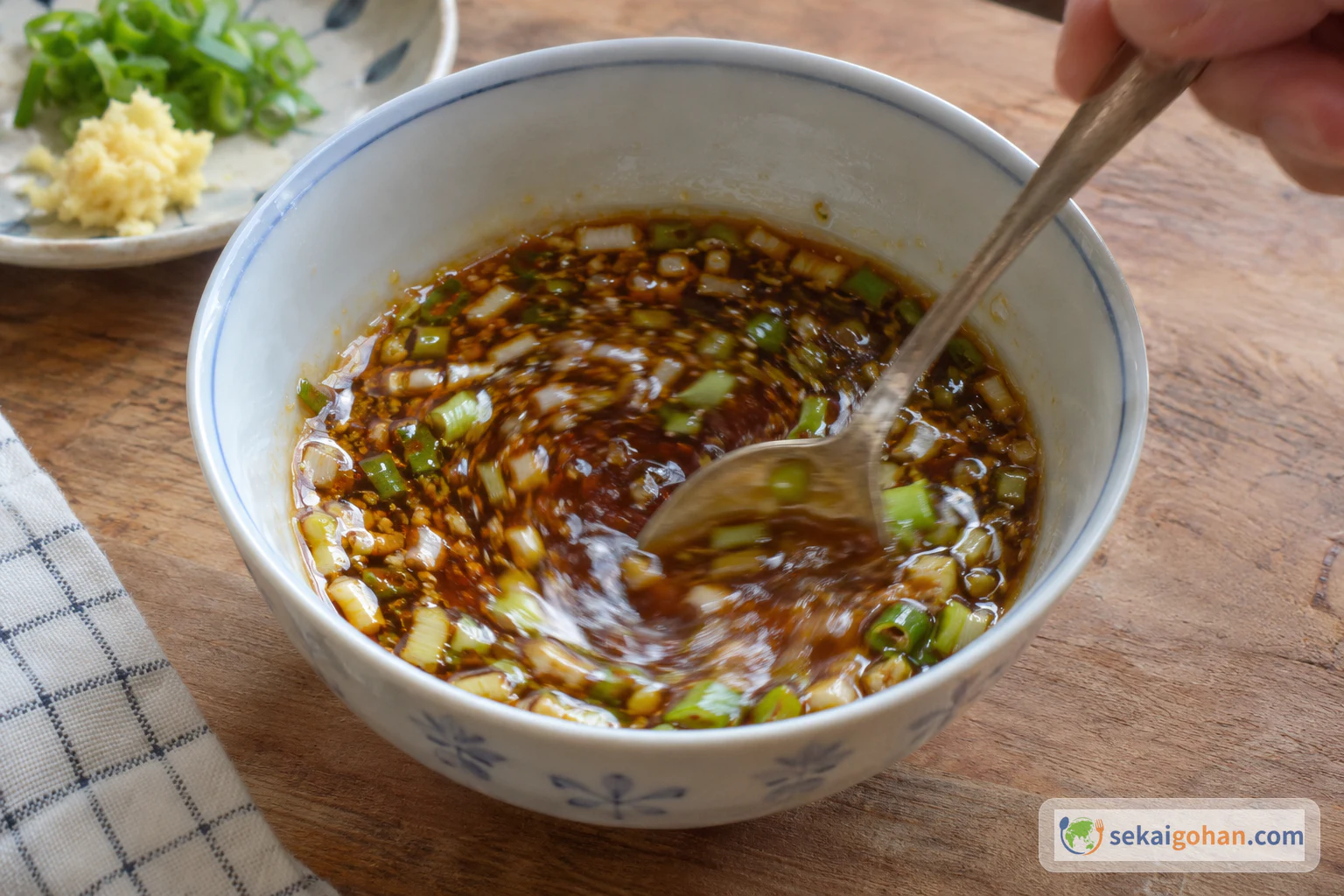
There are many ways to make hiyashi chūka. This article follows one complete home recipe: the two-serving hiyashi chūka by cooking expert Eiko Oba, published by NHK Educational on Minna no Kyō no Ryōri (first broadcast August 5, 2013). Two things set it apart. The sauce is a sweet-sour soy dressing with chopped scallion, grated ginger and a little doubanjiang. The egg is a fully cooked scramble with large curds rather than the thin omelet strips found in many versions, including the one pictured in Kikkoman's general overview.
The published recipe gives a cooking time of 20 minutes, not counting the time for the scrambled egg to cool. It gives no fixed number of minutes for the noodles, which are cooked to the time printed on their package. This recipe has not been kitchen-tested by Sekai Gohan; the amounts and steps below are those of the published recipe.
For more dishes from the same country, see Japan.
Ingredients for 2 Servings
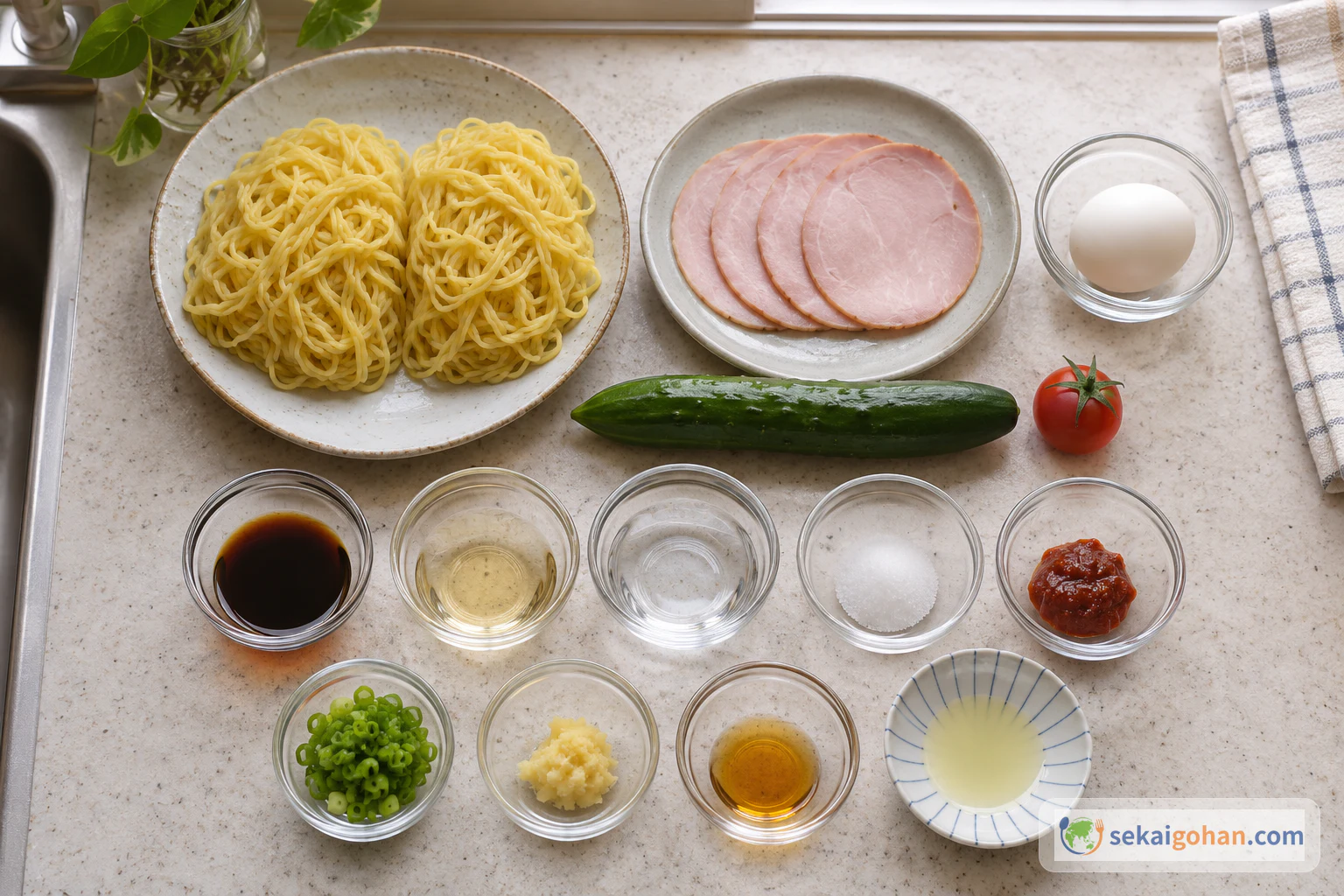
The two 1/2 tbsp portions of sesame oil have different jobs. Measure one into the sauce bowl and keep the other for the noodles.
Choosing Noodles, Vinegar and Doubanjiang
- Noodles: Fresh noodles sold for hiyashi chūka are the first choice. If you can't find them, ordinary fresh Chinese noodles are fine; cook them for the time on their package. Don't swap in steamed yakisoba noodles, which are a different product.
- Vinegar: Japanese rice vinegar is an easy, widely available choice and tends to give a rounder acidity. Grain vinegar can taste sharper. Either is a reasonable reading.
- Doubanjiang: Look for it under its generic name. Use the low end of the range (1/2 tsp) for a milder sauce. You can leave it out, but the sauce then loses both its heat and its fermented-bean depth. Japanese chili miso tastes different and is not a like-for-like swap, so omitting is the simpler choice.
- Ham: Use cooked loin ham. Other cooked meats would make a different variation rather than this recipe.
This dish contains wheat (noodles), egg, pork (ham) and sesame (sesame oil), and usually soy (soy sauce; doubanjiang depending on the product). Check the labels on noodles, ham, soy sauce and doubanjiang for allergens and cross-contact information.
Equipment
- Large pot (for about 2L of water)
- Frying pan
- Small bowl for beating the egg, and a plate for cooling it
- Knife and cutting board
- Bowl for mixing the sauce, plus a small serving bowl
- Large colander, and a bowl large enough to set it in water
- Long cooking chopsticks and a spatula
- Measuring spoons
- Serving plates
Method: Toppings and Sauce First, Then Noodles
The egg is cooked and cooled first, and the toppings and sauce are ready before the noodles go in. The noodles are then boiled, chilled, washed and drained in one continuous run, so they reach the plate cold.
When Something Goes Wrong
| What you notice | Likely reason | What to do |
|---|---|---|
| The sauce tastes thin on the noodles | Water still clinging to the noodles | Next time, shake the colander and then press the noodles firmly by hand before adding the sesame oil |
| The noodles feel warm on the plate | Not chilled long enough in the baths | Judge by touch: keep stirring in cool water, change the water and rinse until the noodles feel cold |
| The egg is still wet in places | Taken off the heat too early | Return it to the pan and cook until no liquid egg remains |
| The egg warms the noodles | Egg plated before it cooled | Cook the egg first so it has time to cool while you prepare the other toppings |
| The noodles are under- or overcooked | Cooking time guessed | Follow the time printed on your noodle package, keeping a lively boil |
Variations Worth Making
- Milder: Use 1/2 tsp doubanjiang, the low end of the range.
- No heat: Leave out the doubanjiang. The sauce still works, but it loses its spice and fermented-bean depth.
- Sauce at the table: This is already the standard way here. Rather than pouring all the sauce over at once, add it bit by bit as you eat.
- Rice vinegar: An easy-to-find choice that usually gives a softer acidity than grain vinegar.
- Ordinary fresh noodles: If you can't find hiyashi chūka noodles, regular fresh Chinese noodles cooked to their package time are fine.
The citrus-based sauce and separate serving of noodles and toppings at Sendai's Ryutei belong to that restaurant's own style. They are not part of this recipe.
Origins and Regional Names
Where hiyashi chūka began is told in more than one way. Kikkoman's food culture overview places its development in Japan's Chinese-style restaurants in the 1930s and 1940s, as a corporate cultural explainer rather than a historical record.
In Sendai, the Chinese restaurant Ryutei says its founder's records note the development of a cold noodle dish called ryōbanmen (涼拌麺) in 1937 (Shōwa 12). The restaurant describes it as a response to the hot season, when sales and appetites at Chinese restaurants dropped, using vegetables and acidity in a cold noodle dish. Today Ryutei serves its own citrus-based sauce, can serve noodles and toppings separately, and adjusts the dish by season. The Miyagi Tourism Association's regional guide also presents Sendai's 1937 origin. It says the dish disappeared for a while during wartime shortages and returned after the war, when the current form with sliced toppings spread. In Sendai, it is promoted as a local specialty eaten all year round.
These are Sendai's accounts, and the tourism guide partly relies on the restaurant's own story. Other origin accounts exist, including one set in Tokyo. The sources here don't settle the question, so no single birthplace is claimed.
Names also vary by region. Kikkoman notes that the dish may be called hiyashi rāmen ("chilled ramen") in Hokkaido and reimen in parts of Kansai. Those names overlap with other cold noodle dishes, such as Korean naengmyeon or chilled ramen served in broth, but they are not interchangeable with the broth-less noodles in this recipe.
Storage and Hygiene
Hiyashi chūka puts cold noodles, cooked egg, ham and raw vegetables on one plate, so it's worth extra care.
- Cook the egg until fully set. As a general guide for heating food, Japan's Ministry of Health, Labour and Welfare gives 75°C at the center for at least 1 minute. That is general household guidance; the recipe itself does not specify an egg temperature.
- Use clean utensils and plates. Keep tools that touched raw egg away from cooked food.
- Never eat fresh noodles without boiling them. Follow the package for handling.
- Eat the dish right after plating and don't leave it at room temperature for long. If any is left over, put it in a clean, shallow container, refrigerate it quickly and eat it soon.
Frequently Asked Questions
What if I can't find noodles made for hiyashi chūka?
Use ordinary fresh Chinese noodles. The NHK recipe allows them; cook them for the time printed on their package.
Why wash the noodles after boiling?
The two water baths and the rinse under running water chill the noodles and, as Kikkoman's overview explains, wash off excess surface starch. Draining well afterward keeps leftover water from thinning the sauce.
Do I pour all the sauce on at once?
No. The sauce is served in a small bowl alongside, so you can add as much as you like while eating.
Can I make it without doubanjiang?
Yes. The sauce loses its heat and the depth of fermented beans, but the dish still holds together. Chili miso tastes different and is not a direct replacement.
Was hiyashi chūka invented in Sendai?
Sendai's Ryutei says its founder developed the dish in 1937, and the Miyagi Tourism Association presents that account too. There are other origin stories, including one from Tokyo, and Kikkoman describes the dish more broadly as a creation of Japanese Chinese-style restaurants in the 1930s–40s. The birthplace remains debated.
Sources
- NHK Educational, Minna no Kyō no Ryōri, Eiko Oba, "Hiyashi chūka" (冷やし中華). The two-serving amounts, preparation of the toppings and sauce, boiling, chilling, washing and draining of the noodles, plating, the 20-minute time excluding egg cooling, and the use of ordinary fresh Chinese noodles. https://www.kyounoryouri.jp/recipe/15726_%E5%86%B7%E3%82%84%E3%81%97%E4%B8%AD%E8%8F%AF.html
- Kikkoman Corporation, Food Forum, "Hiyashi Chuka Chilled Chinese Noodles." The general form of the dish, its development in Japanese Chinese-style restaurants in the 1930s–40s, washing and chilling the noodles to remove excess starch, and regional names. https://www.kikkoman.com/en/culture/foodforum/trends-in-taste/39-2_hiyashi_chuka.html
- Ryutei (龍亭), "About Ryutei" (龍亭のこと). The restaurant's account of its founder's 1937 ryōbanmen, and its current citrus sauce and serving style. https://ryu-tei.jp/about/
- Miyagi Tourism Association, "Hiyashi chūka" (冷やし中華). The Sendai 1937 account, wartime interruption and postwar return, and the dish as a year-round Sendai specialty. https://www.miyagi-kankou.or.jp/theme/detail.php?id=19016
- Ministry of Health, Labour and Welfare (Japan), "Preventing food poisoning at home" (家庭での食中毒予防). General guidance on thorough heating (75°C at the center for at least 1 minute), clean utensils, quick refrigeration, and not leaving cooked food at room temperature for long. https://www.mhlw.go.jp/stf/seisakunitsuite/bunya/kenkou_iryou/shokuhin/syokuchu/01_00008.html