Gyokuro: A Small Pour of Cooled Water over a Generous Measure of Leaves
Use 10g of gyokuro leaves for 80mL of water, bring that water down to 60°C, and count 90 seconds from the moment you begin pouring. Those four numbers belong together and work as one set.
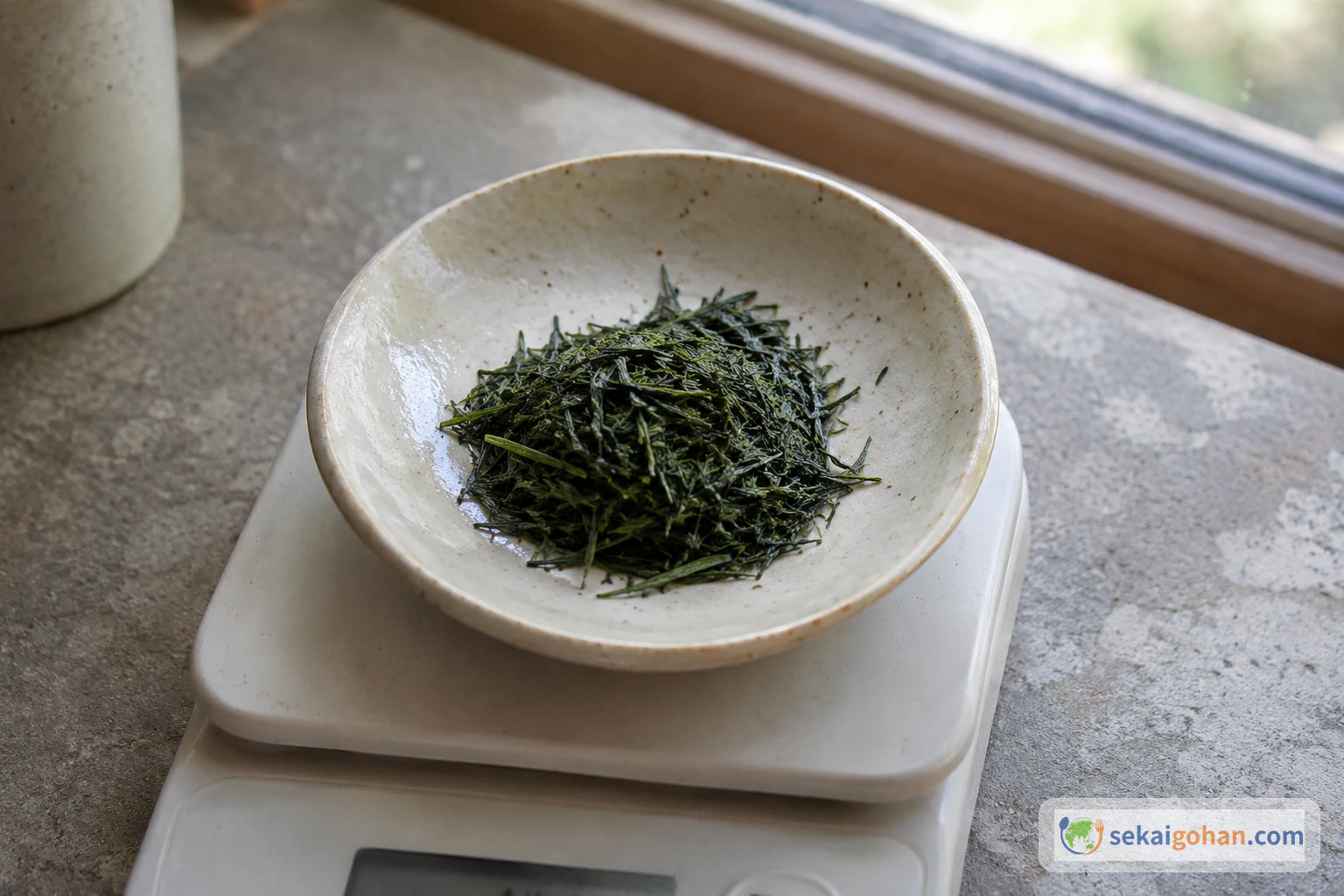
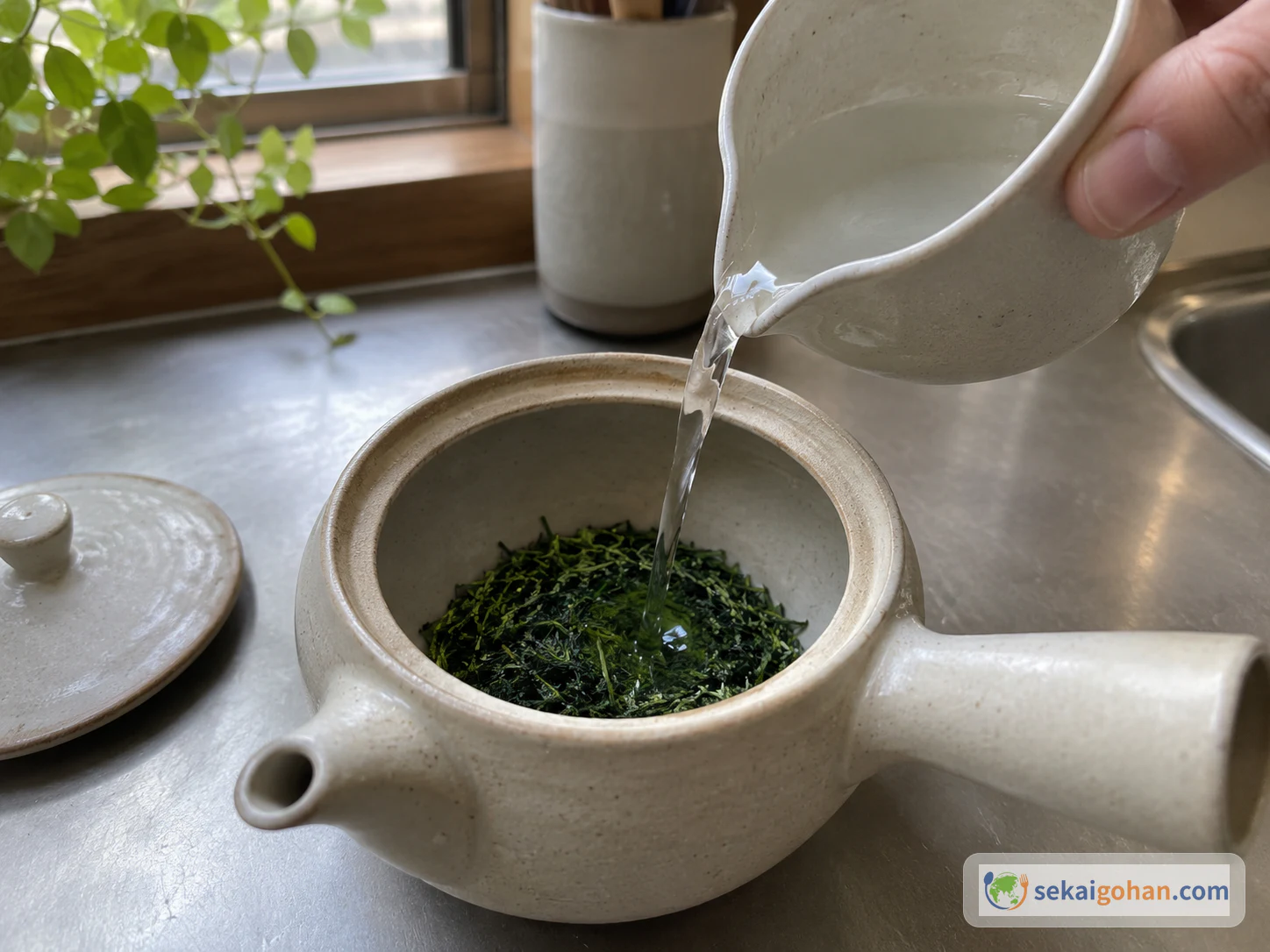
A small dish of dark green leaves goes on the scale, and the kettle that has just boiled is left to cool. Gyokuro (玉露, gyokuro) is brewed with a lot of leaf for very little water, using water at 60°C. This article follows a single recipe for it: the "Basic Gyokuro" recipe published by Ippodo Tea, in Japanese and in English. It uses 10g of leaves, 80mL of water at 60°C, and pours the tea off 90 seconds after you begin pouring the water in.
Gyokuro is a Japanese green tea made from leaves grown under shade. It is not matcha, which is a powder, and it is not genmaicha, which mixes green tea with roasted rice. Here the only ingredients are gyokuro leaves and water, with nothing added.
The count starts when the water first begins to pour onto the leaves, not when you finish pouring or put the lid on. Ippodo's recipe does not give a number of cups, a number of servings, or how much tea you end up with, so this article does not give them either. The 80mL is the water you pour in.
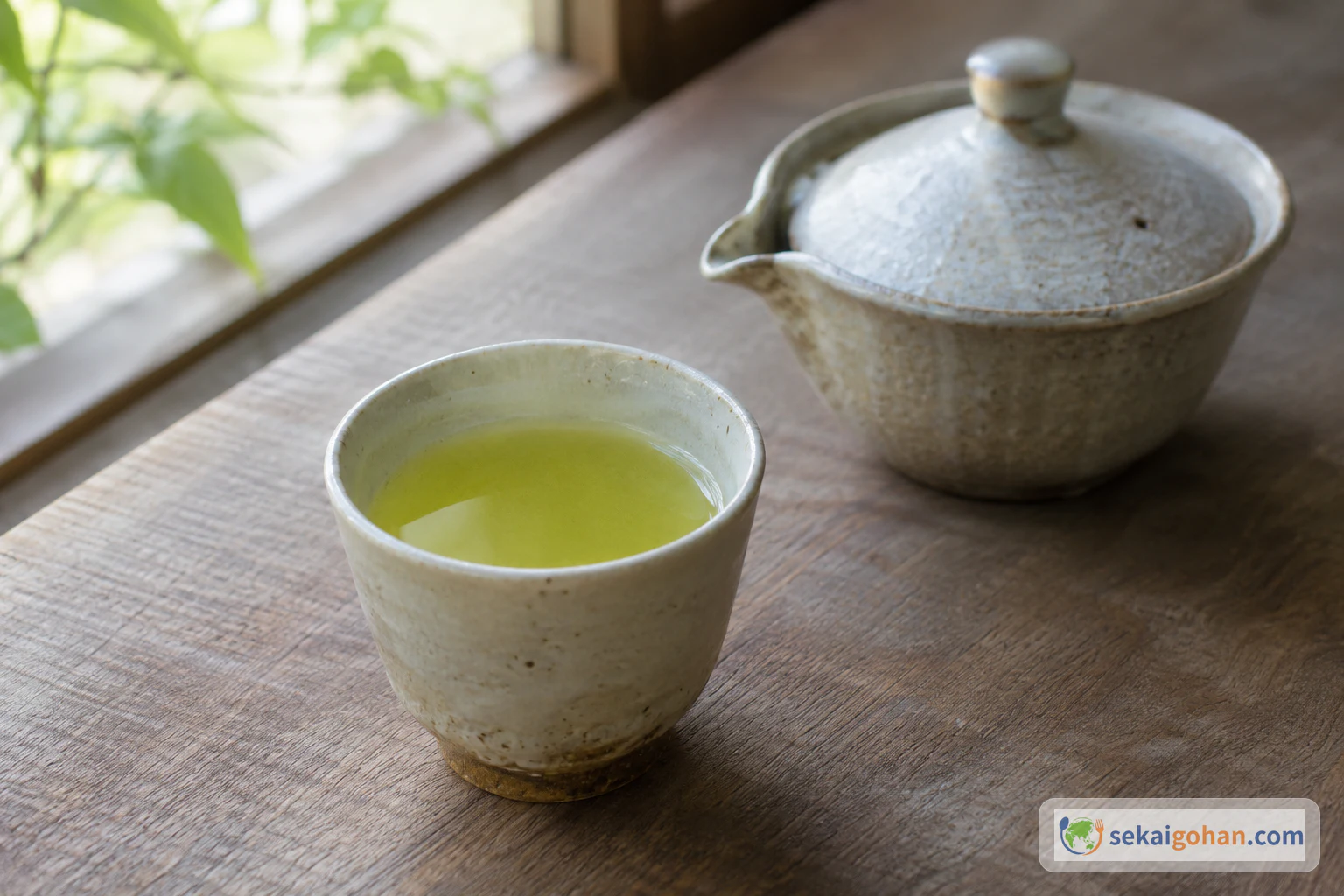
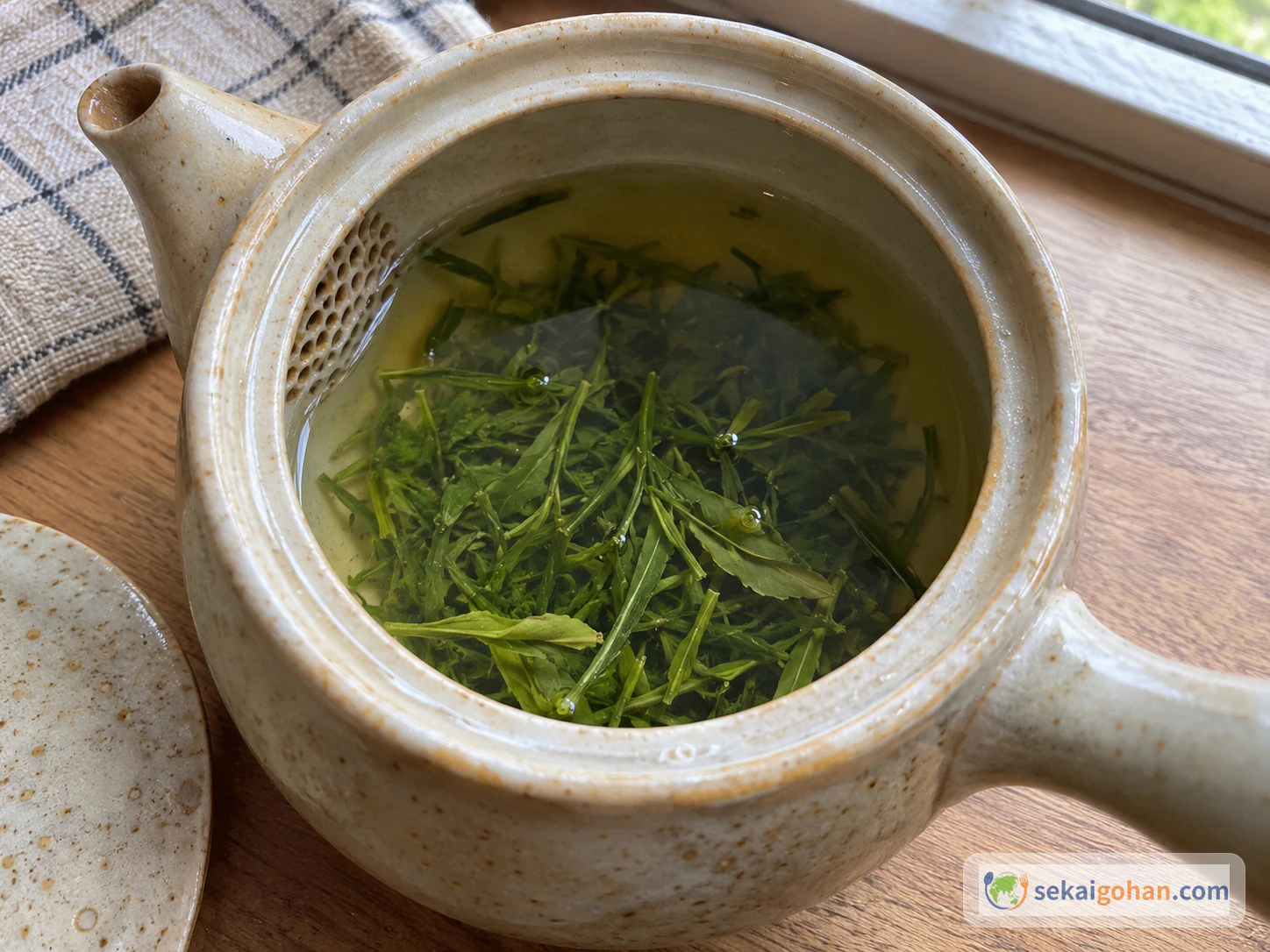
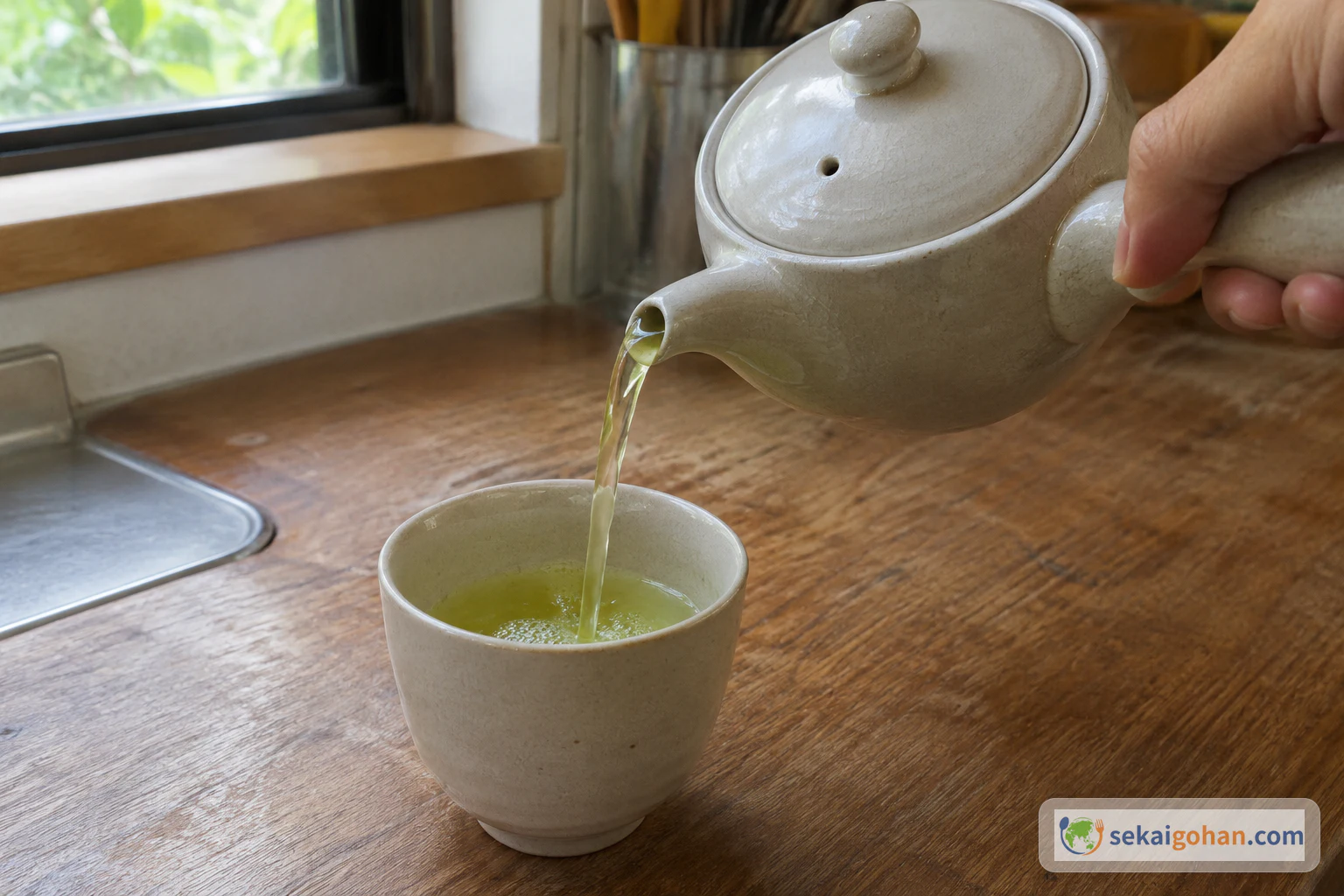
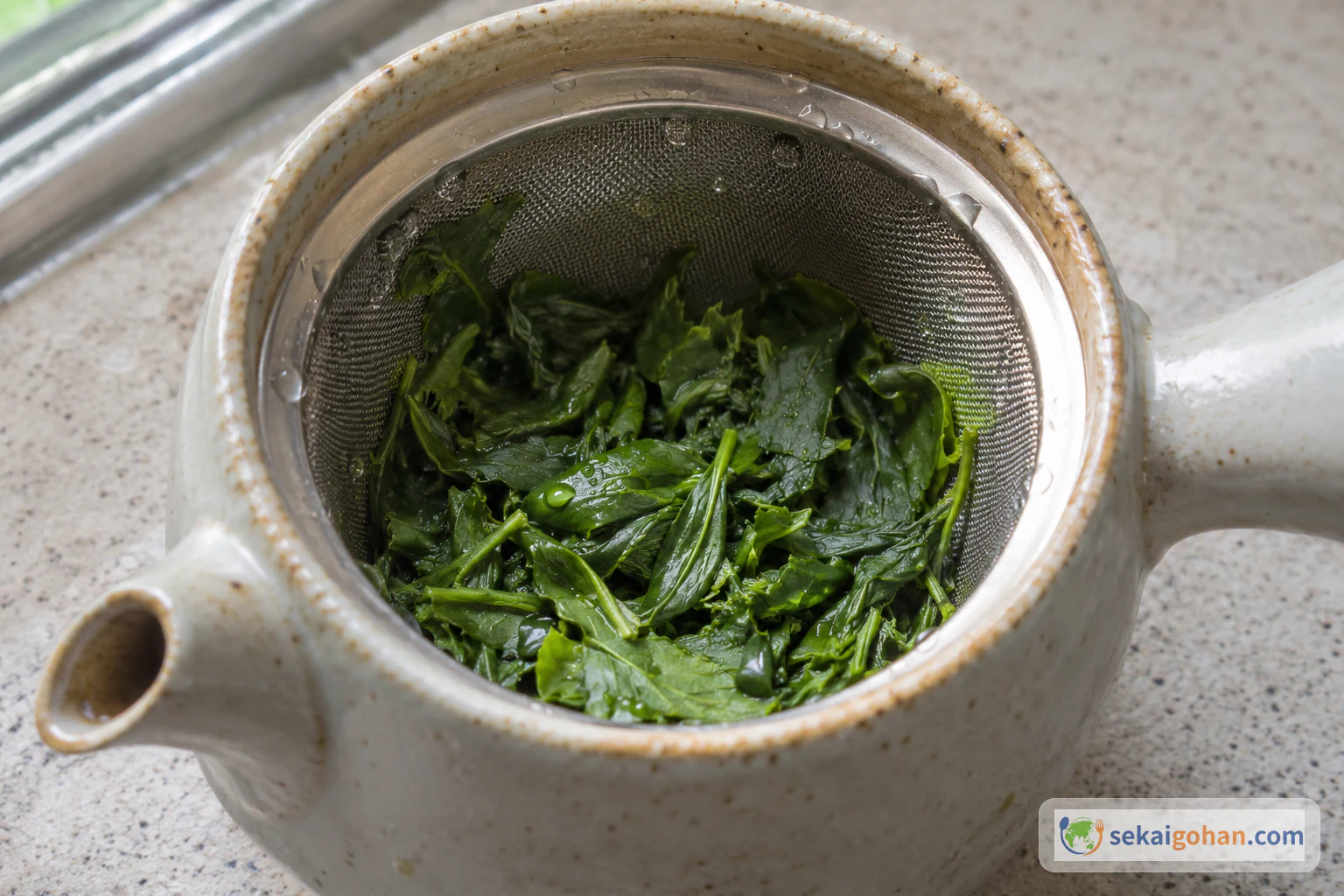
Sekai Gohan has not kitchen-tested this recipe. The amounts, temperature and timing come from Ippodo Tea's published recipe, and the photographs illustrate each action only. They do not show the weight, temperature or elapsed time.
For more dishes and drinks from the same country, see Japan.
Ingredients: Gyokuro Leaves and Water Only
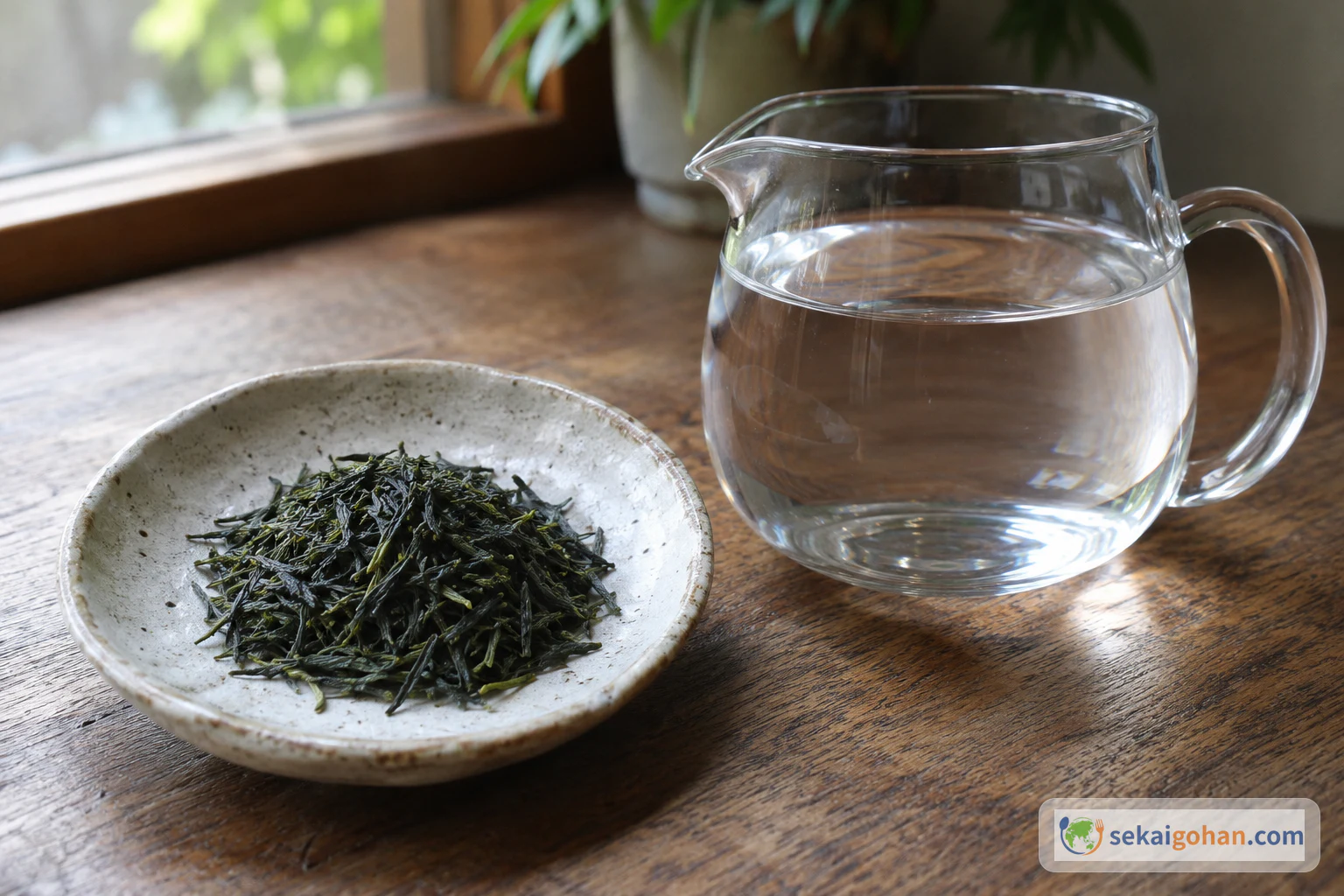
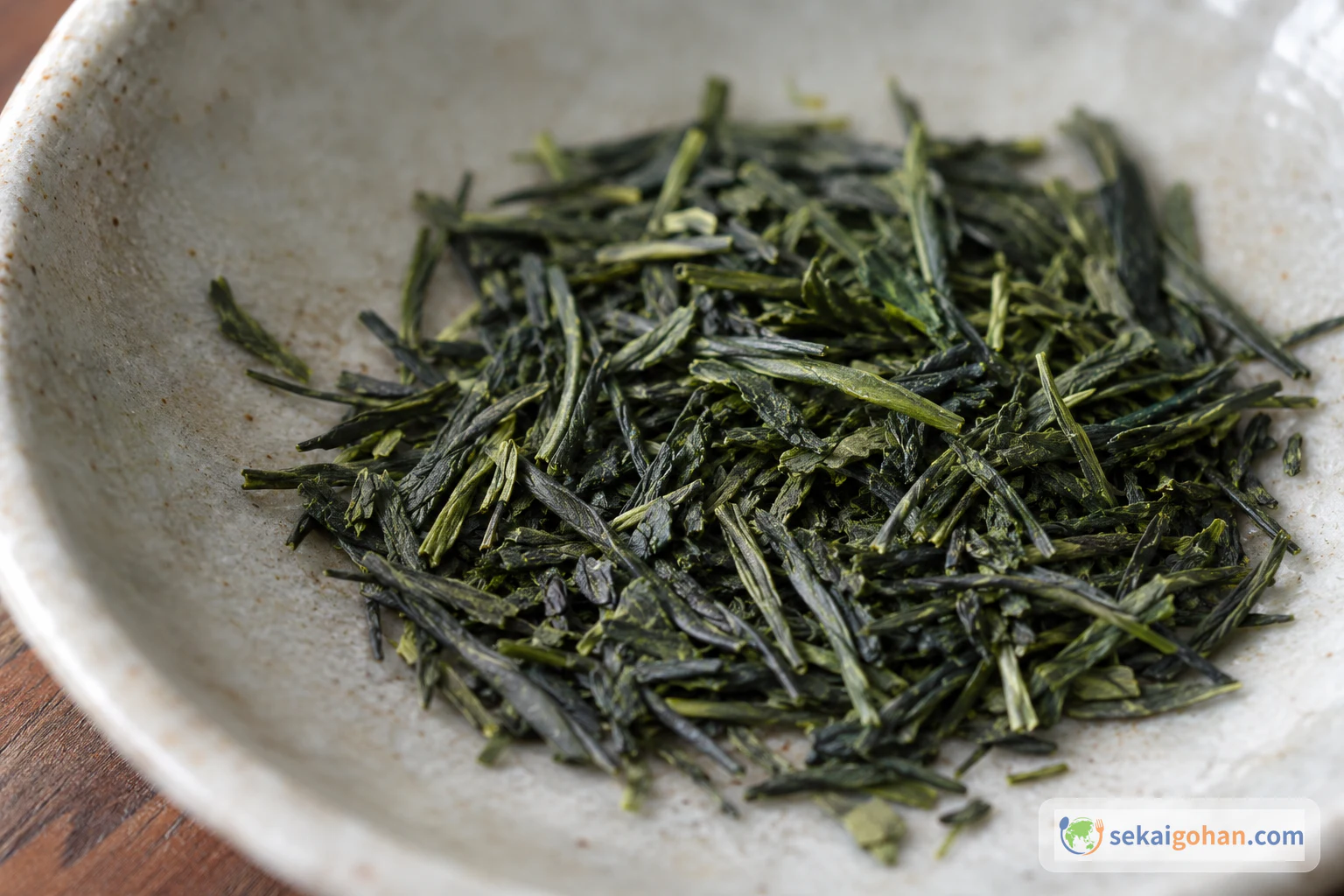
Equipment
- Kitchen scale (makes the 10g easy to get right)
- Thermometer, or a kettle you can set to a temperature (makes 60°C easier to confirm)
- Kettle or pot for boiling water
- A measuring cup for the 80mL
- A brewing vessel with a way to strain the leaves, such as a small teapot you already own
- A cup to serve
None of these has to be a specific item. Plain, practical teaware you already have is enough.
Choosing Gyokuro and Water
Buy loose leaves sold as gyokuro. Sencha, kabusecha and matcha are related Japanese teas, but swapping in any of them gives you a different tea rather than this one. Kabusecha is shaded for a shorter period than gyokuro.
Regional labels such as Uji or Yame, discussed below, tell you something about how and where a particular gyokuro was grown and finished. Use the same brewing method for either regional label.
Use the drinking water you would normally make tea with. If you buy a flavored or blended tea instead of plain gyokuro, check the ingredient label on the pack yourself. This article cannot confirm what any individual product contains.
Method: Weigh, Cool, Pour and Count from the First Drop
Start counting the 90 seconds as soon as the water begins to pour onto the leaves. Do not wait until the pour is finished.
When the Brew Goes Off Course
The usual problems come from changing one of the four numbers without noticing. Check them before blaming the tea.
| What happened | Likely cause | What to do next time |
|---|---|---|
| The count started late | The timer started when the pour finished or the lid went on | Start the timer as the water first begins to pour |
| The water was hotter than intended | Water went in straight from the boil, or was poured before it had cooled | Let boiled water cool well, and confirm 60°C with a thermometer or temperature-set kettle |
| The leaf amount varied from brew to brew | Leaves were measured by spoon | Weigh 10g. A spoon of one tea may not weigh the same as a spoon of another |
| The numbers came from two recipes | Leaf amount from one recipe, water or time from another | Keep one recipe's set together: here, 10g, 80mL, 60°C and 90 seconds |
| The tea looks pale, not bright green | Expectations set by vivid photos | A restrained pale green or yellow-green is natural. A neon color is not something to aim for |
Hibiki-an, a Japanese green tea seller, explains that its lower-temperature approach is meant to bring out sweetness and avoid bitterness. Temperature alone does not guarantee a particular flavor from every tea, though. Leaf, product and water all play a part.
Another Shop's Gyokuro: Keep Each Set Whole
You may see gyokuro brewing guides with quite different numbers. That is not a mistake; tea sellers publish their own ratios. Hibiki-an, for example, gives a separate set for its gyokuro. Read it as a complete alternative rather than something to mix into the method above.
| Ippodo Tea (this article) | Hibiki-an (for comparison) | |
|---|---|---|
| Leaves | 10g (2 tbsp) | 7–8g (1 1/2 tbsp) |
| Water | 80mL | 200mL |
| Water temperature | 60°C | 60–70°C |
| Time | 90 seconds from the start of the pour | 1 1/2–2 minutes |
| Cups | Not stated | 2 cups |
If you want to try Hibiki-an's version, use all of its numbers together. Hibiki-an also describes brewing its own leaves more than once. That guidance is for its products and is not part of this recipe, so this article gives no schedule for second or third infusions.
Where Gyokuro Comes From: Shade, Steaming and Uji
Gyokuro is defined by the shade it grows under. In the Japanese Ministry of Agriculture, Forestry and Fisheries (MAFF)'s explanation of Uji tea, gyokuro is made by covering the new shoots for 20 days or more, then plucking them, steaming them and drying them while rolling them. MAFF's food-culture pages describe gyokuro as a premium Japanese tea because shading takes extra work, and characterize its taste as a mellow umami with sweetness. Those are descriptions of the tea as a category. They are not a promise that every pack will taste the same.
Uji tea has a precise meaning in MAFF's description. It is not simply tea grown in Kyoto Prefecture. It is green tea made from leaves grown in Kyoto, Nara, Shiga and Mie and finished by businesses in Kyoto Prefecture using methods that come from Uji. A gyokuro labeled Uji may therefore include leaves grown outside Kyoto.
MAFF's history of Uji tea connects the Uji processing method, which it dates to 1738, and shade cultivation with the formation of gyokuro in Uji. That is MAFF's account of Uji's own history. It is not presented here as the single origin of every gyokuro made in Japan.
MAFF's broader introduction to Japanese tea also describes brewing tea from leaves at home as a relaxing part of the day. That context fits gyokuro at a home table, but it does not imply a special ceremony or etiquette that belongs to gyokuro alone.
Yame: A Regional Gyokuro with Its Own Rules
In Fukuoka Prefecture, "Yame Dento Hon Gyokuro" (八女伝統本玉露) is registered with MAFF as a Geographical Indication. The registered product is described as covered with rice straw, carrying a distinctive aroma from that covering, and hand-picked, with methods tied to and handed down in its area.
These features belong to that registered product. They are not requirements for all gyokuro. Putting Yame next to Uji shows how much gyokuro can vary by region, even though the brewing method in this article stays the same. Reading the origin and production notes on a pack is a good way into those differences.
Frequently Asked Questions
Check the four numbers first: 10g of leaves, 80mL of water, 60°C, and 90 seconds counted from the start of the pour.
How many cups or servings does this make?
Ippodo's recipe does not say. It gives 10g of leaves and 80mL of water poured in, but no number of cups, number of servings, or amount of finished tea. The 80mL should not be read as the volume you end up drinking.
When do the 90 seconds start?
The moment you begin pouring the water onto the leaves. Do not count from the end of the pour or from when you put the lid on.
How long does boiled water take to cool to 60°C?
No cooling time or cooling method is given. Ippodo's English page says only to cool boiled water sufficiently. A thermometer or a temperature-set kettle is the most direct way to know when you have reached 60°C.
Can I use sencha, kabusecha or matcha instead?
You can brew them, but you would be making a different tea, not this gyokuro recipe. MAFF's Uji tea page separates gyokuro from kabusecha, which is shaded for a shorter period.
I found a different gyokuro recipe. Which is right?
Both can be. Tea shops publish their own sets of numbers. Use one set as a whole. For example, use Hibiki-an's 7–8g, 200mL, 60–70°C and 1 1/2–2 minutes together. Do not combine them with the 10g, 80mL, 60°C and 90 seconds here.
Can I keep the brewed leaves or the tea for later, or brew the leaves again?
The adopted Ippodo recipe gives no guidance on storing the spent leaves or the brewed tea, reheating, or a second infusion. This article does not suggest a method or a time limit for any of them.
Do I need a special teapot?
No specific vessel is required. Any brewing vessel that lets you pour the tea off the leaves will do. The plain teaware in the photos is only for illustration.
Sources
- Ippodo Tea, "基本の玉露" (Basic Gyokuro). The recipe followed in this article: 10g of gyokuro leaves (written alongside as 2 tablespoons), 80mL of water at 60°C, and pouring off 90 seconds after beginning to pour. https://www.ippodo-tea.co.jp/blogs/tea-recipe/%E5%9F%BA%E6%9C%AC%E3%81%AE%E7%8E%89%E9%9C%B2
- Ippodo Tea Global, "Basic Gyokuro - Preparing Tea." The English page for the same Ippodo recipe, used to cross-check its numbers and for the note to cool boiled water sufficiently. No cooling time is given. https://global.ippodo-tea.co.jp/blogs/tea-recipe/basic-gyokuro
- Hibiki-an / Japanese Green Tea, "Brewing - Gyokuro." A separate gyokuro method (7–8g, 200mL, 60–70°C, 1 1/2–2 minutes, 2 cups), used only as a comparison and not mixed into this recipe. https://www.hibiki-an.com/contents.php/cnID/35
- Ministry of Agriculture, Forestry and Fisheries (MAFF), "宇治茶(うじちゃ)|にっぽん伝統食図鑑" (Uji Tea). The definition of Uji tea, the shade-growing, steaming and rolling of Uji gyokuro, MAFF's history of the Uji method, and the distinction from kabusecha. https://www.maff.go.jp/j/keikaku/syokubunka/traditional-foods/menu/uzitya.html
- Ministry of Agriculture, Forestry and Fisheries (MAFF), Let's Washoku Project, "日本茶を楽しむ方法" (Ways to Enjoy Japanese Tea). Gyokuro described as a premium tea because shading takes extra work, its mellow umami and sweetness, and the general home culture of brewing tea from leaves. Its three-infusion example is for sencha and is not used here. https://www.maff.go.jp/j/keikaku/syokubunka/culture/wagohan/articles/2303/spe15_01.html
- Ministry of Agriculture, Forestry and Fisheries (MAFF), "Product Summary (Registration No.5): 八女伝統本玉露." The Geographical Indication registration of Yame Dento Hon Gyokuro in Fukuoka Prefecture, with its rice-straw covering, covering aroma and hand-picking. https://www.maff.go.jp/e/policies/intel/gi_act/register/s5.html