Ise and Tsu Hanpei Salad: A Ready-Made Fish Cake Meets Crisp Vegetables
This is a salad made with a purchased, ready-to-eat regional fish cake. It is not a recipe for making hanpei or any fish cake at home. Nothing here involves raw fish or homemade fish paste.
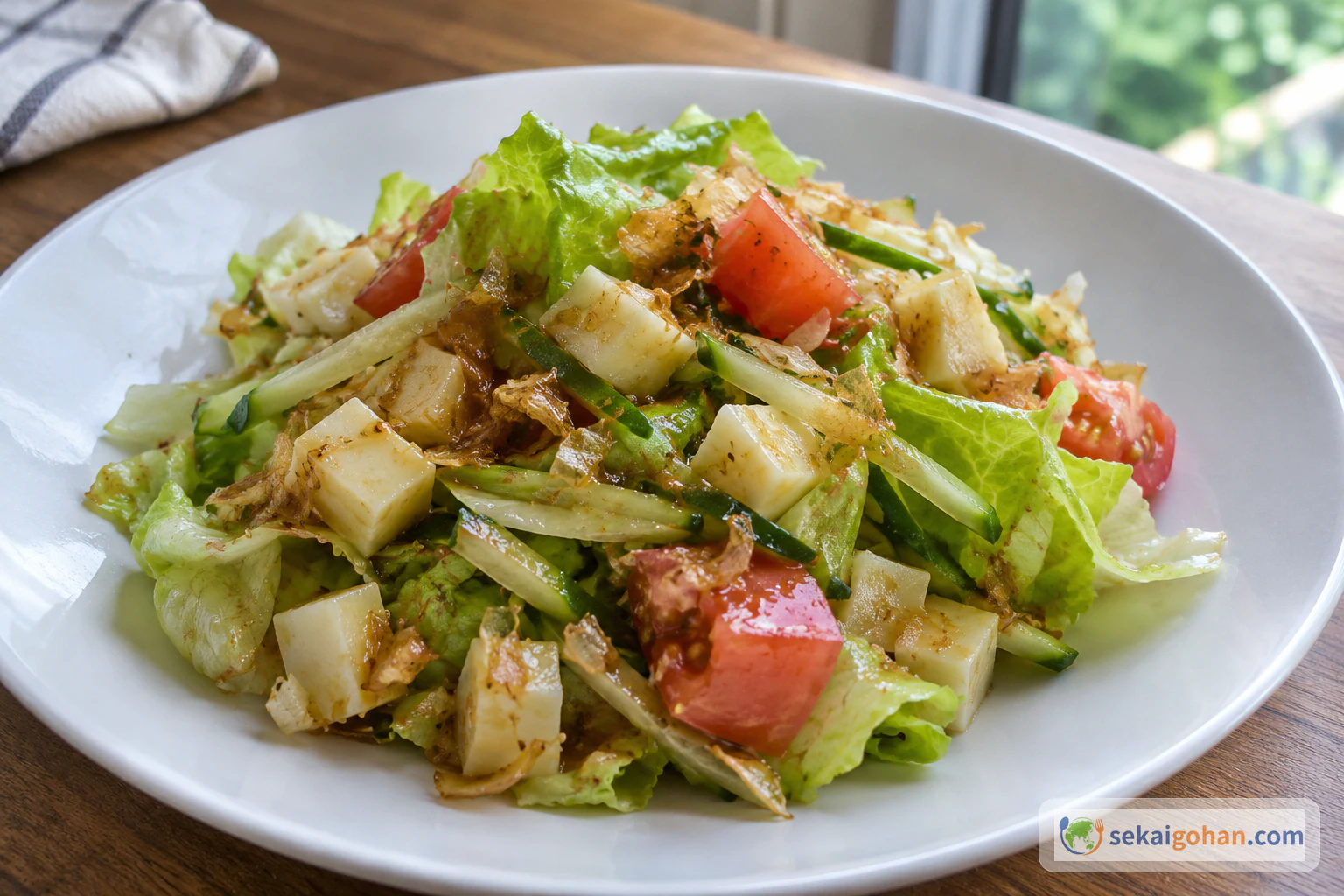
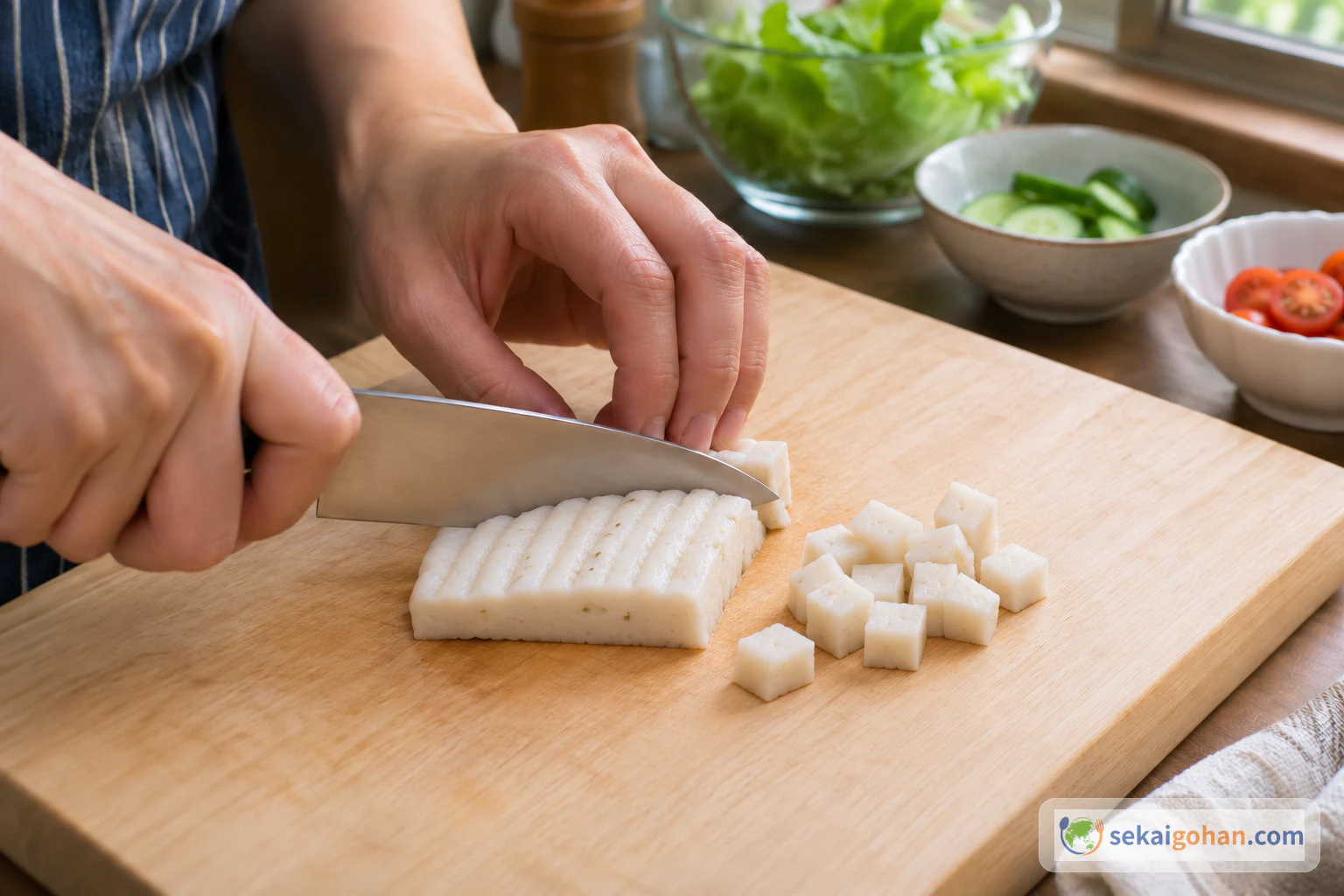
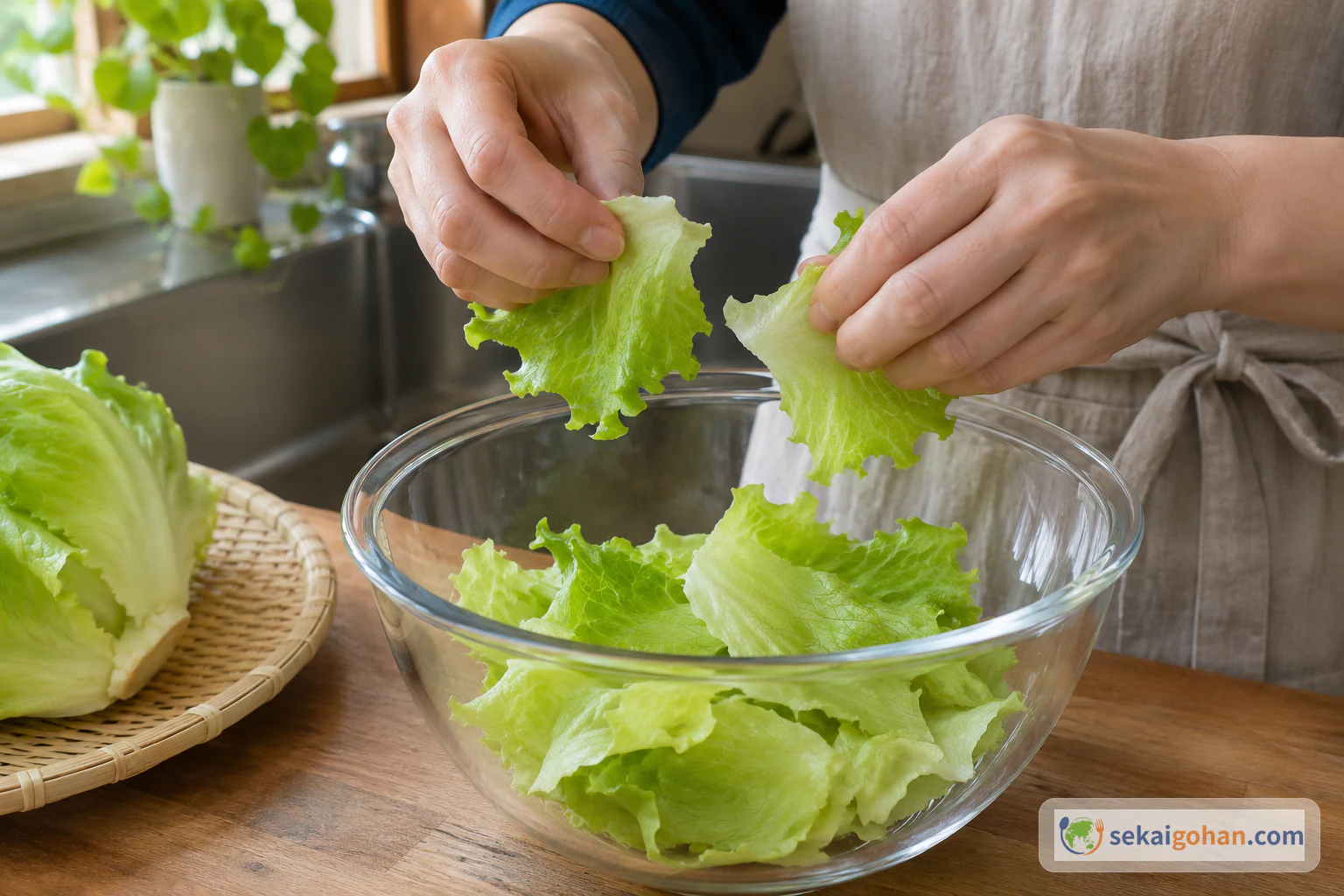
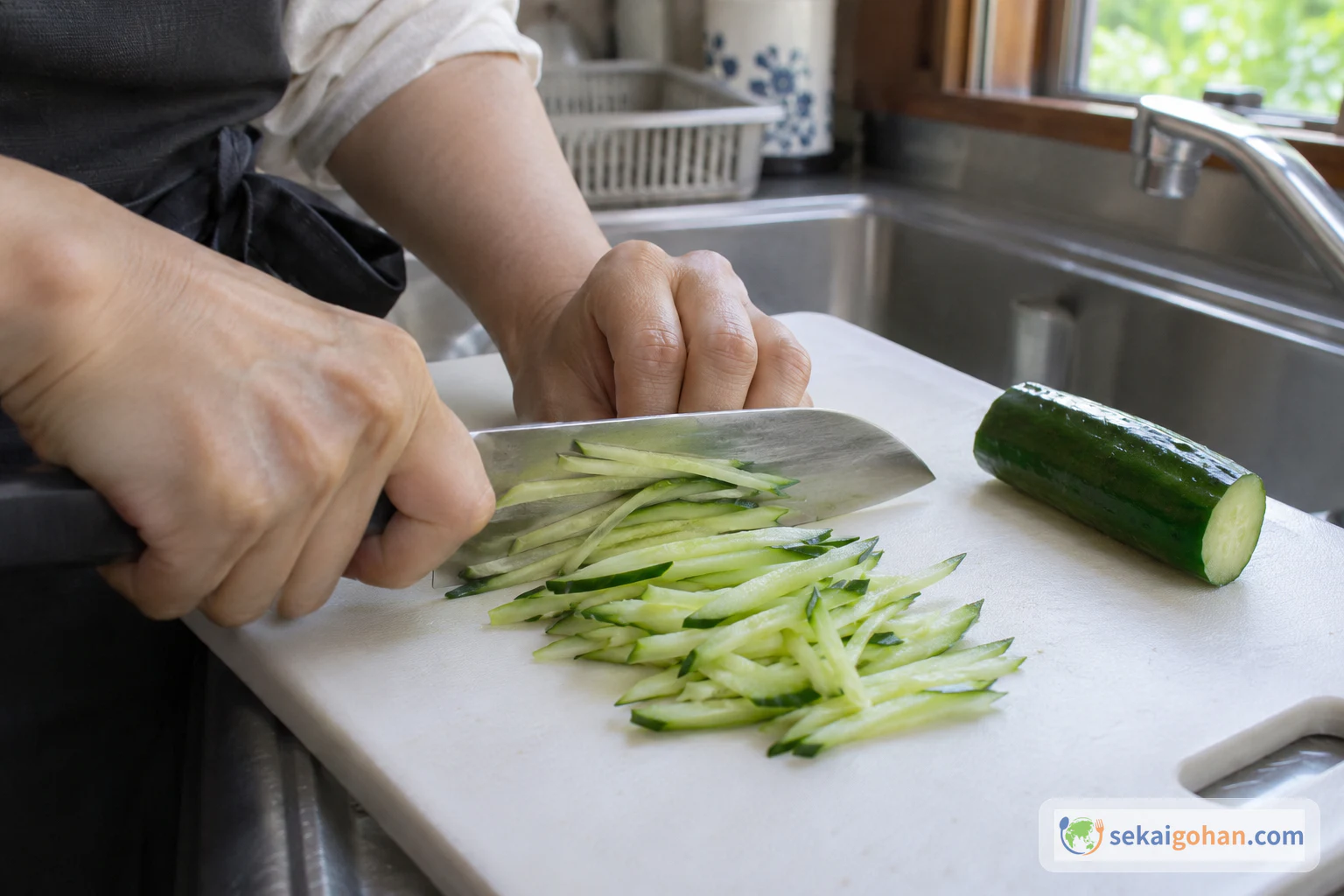
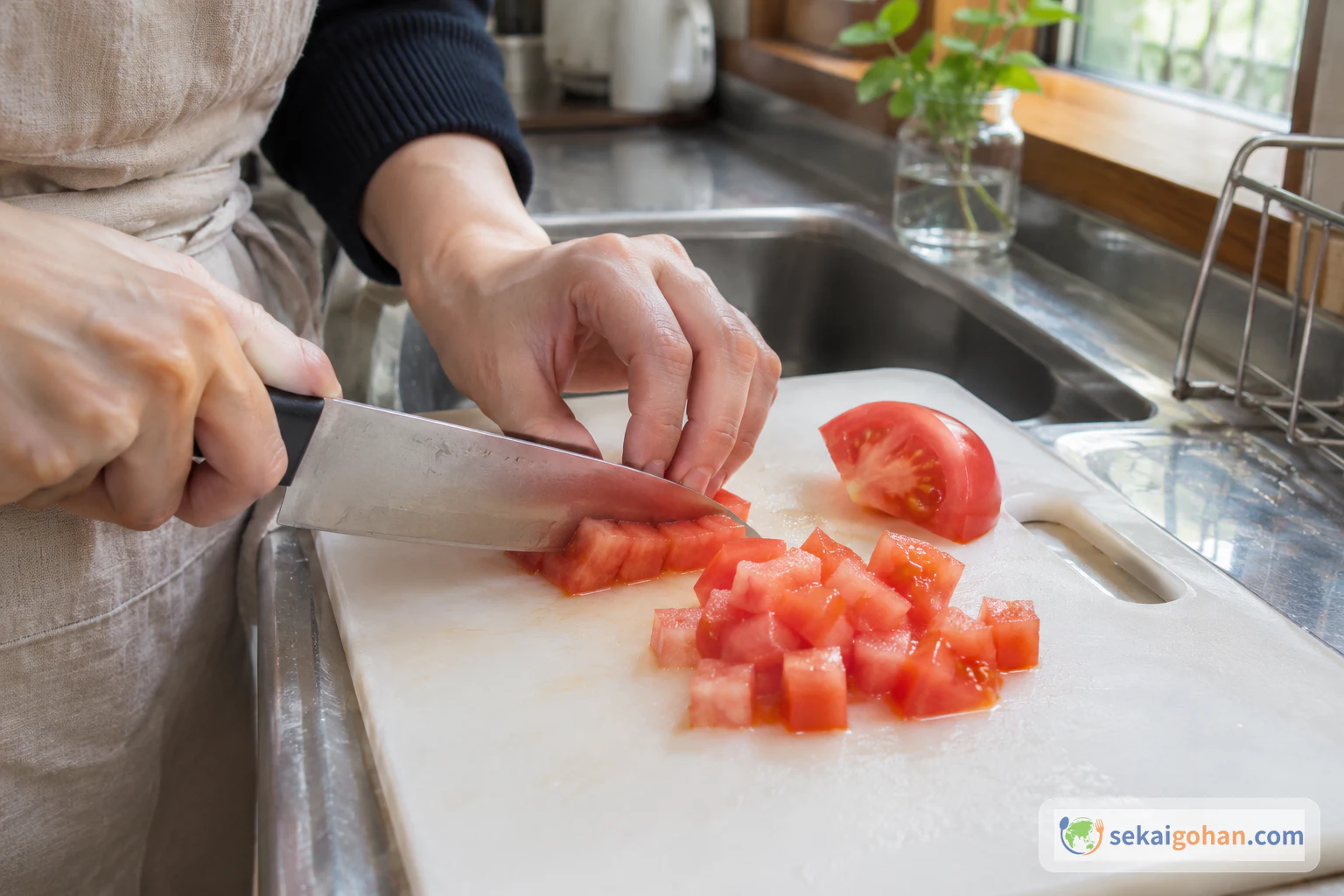
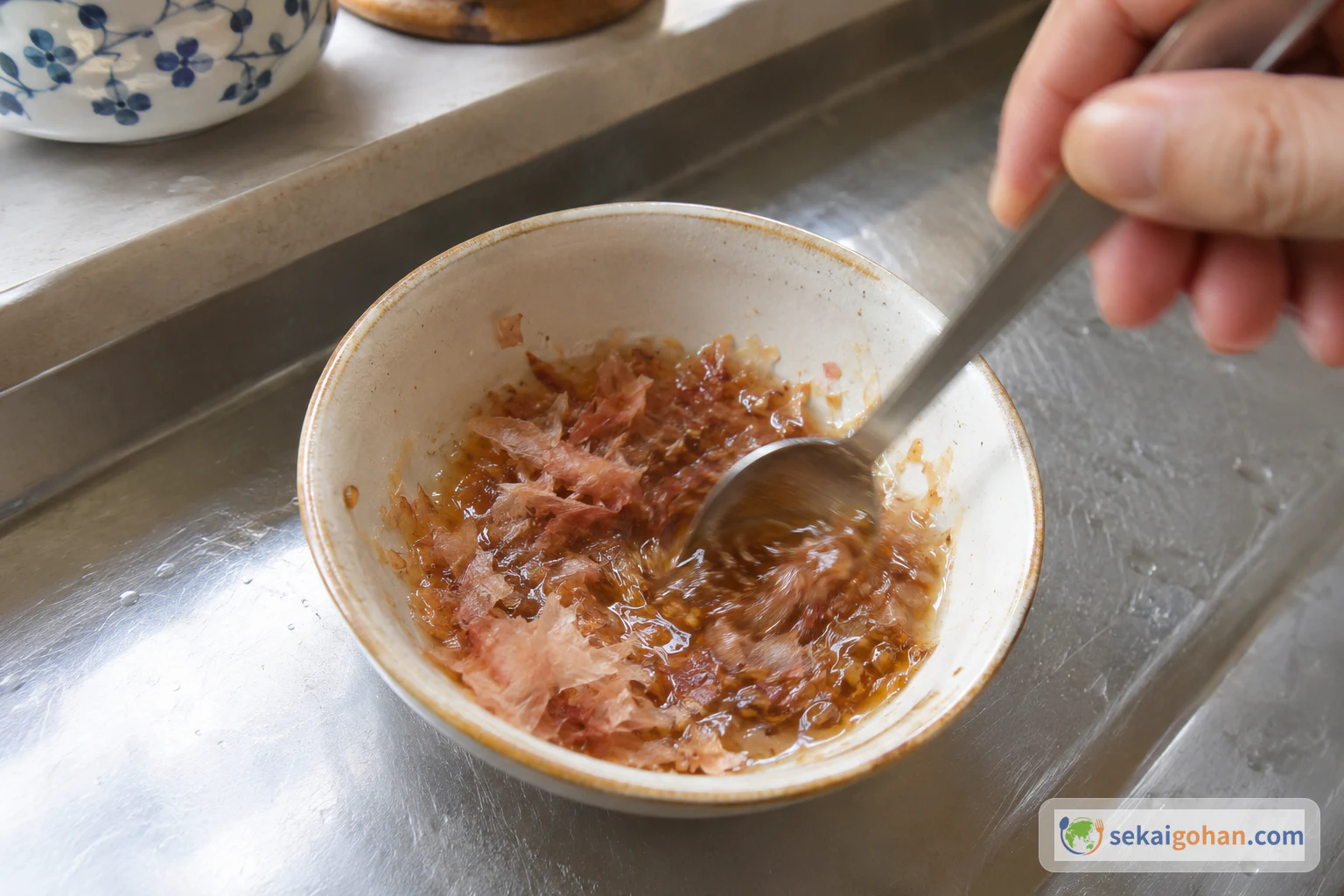
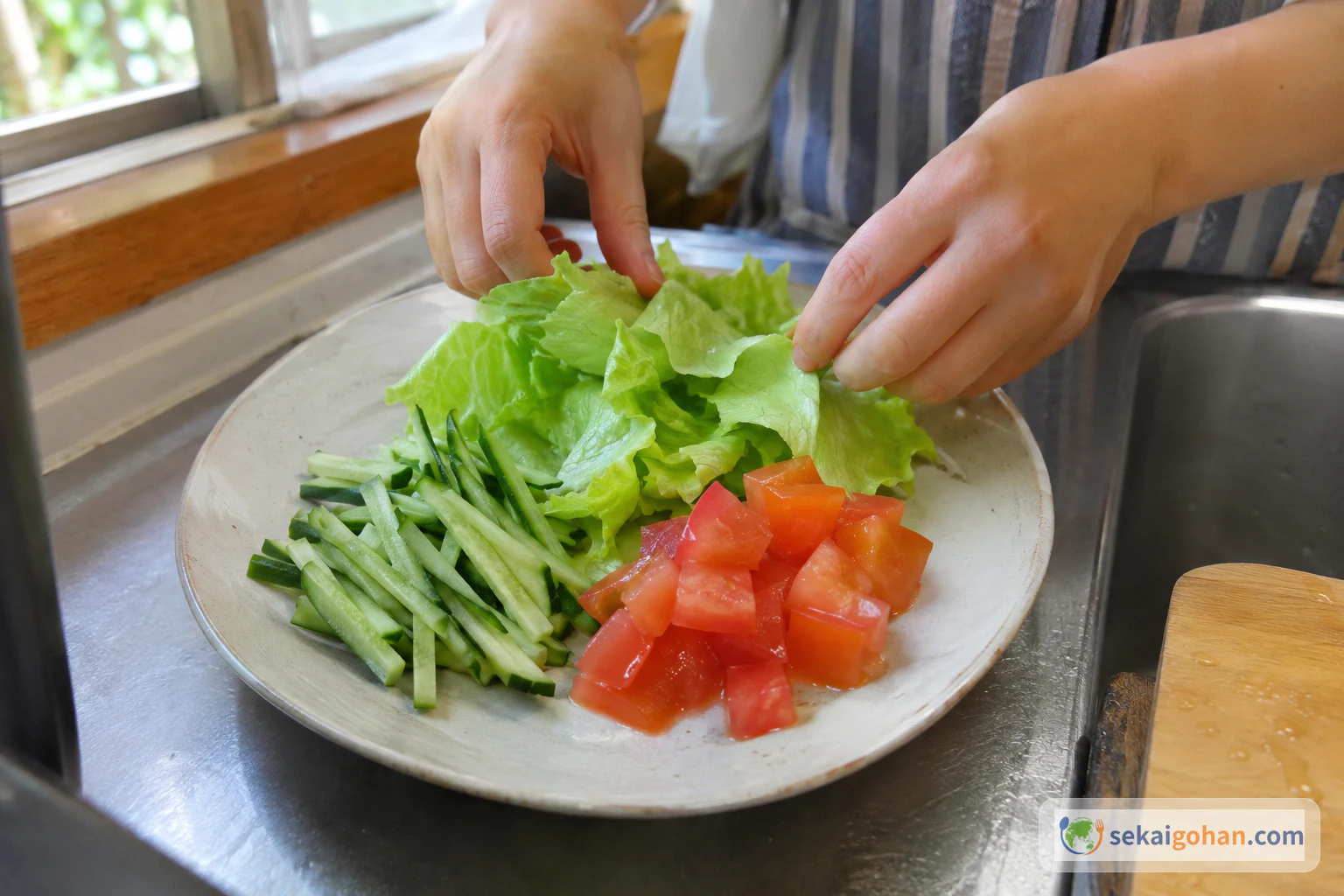
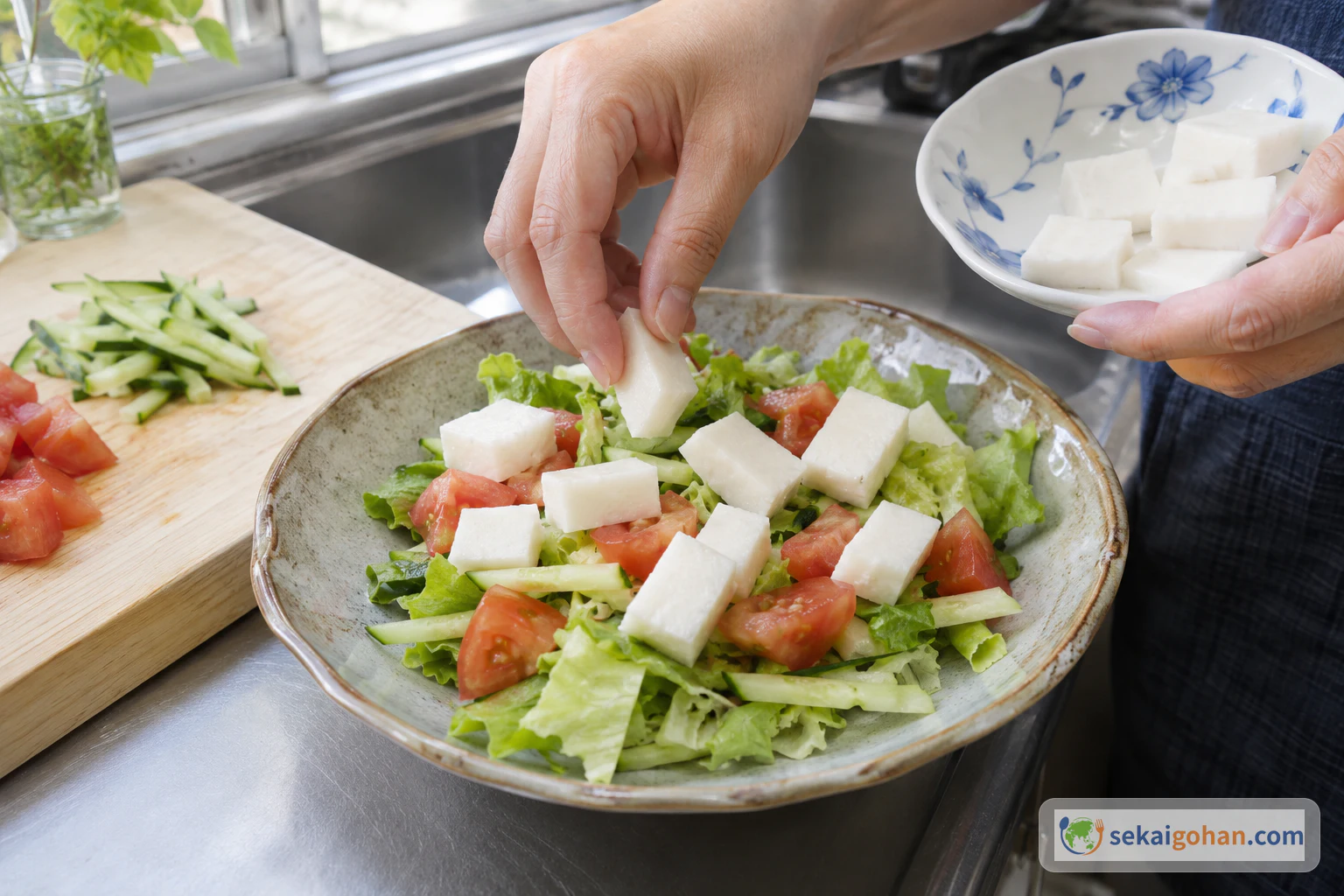
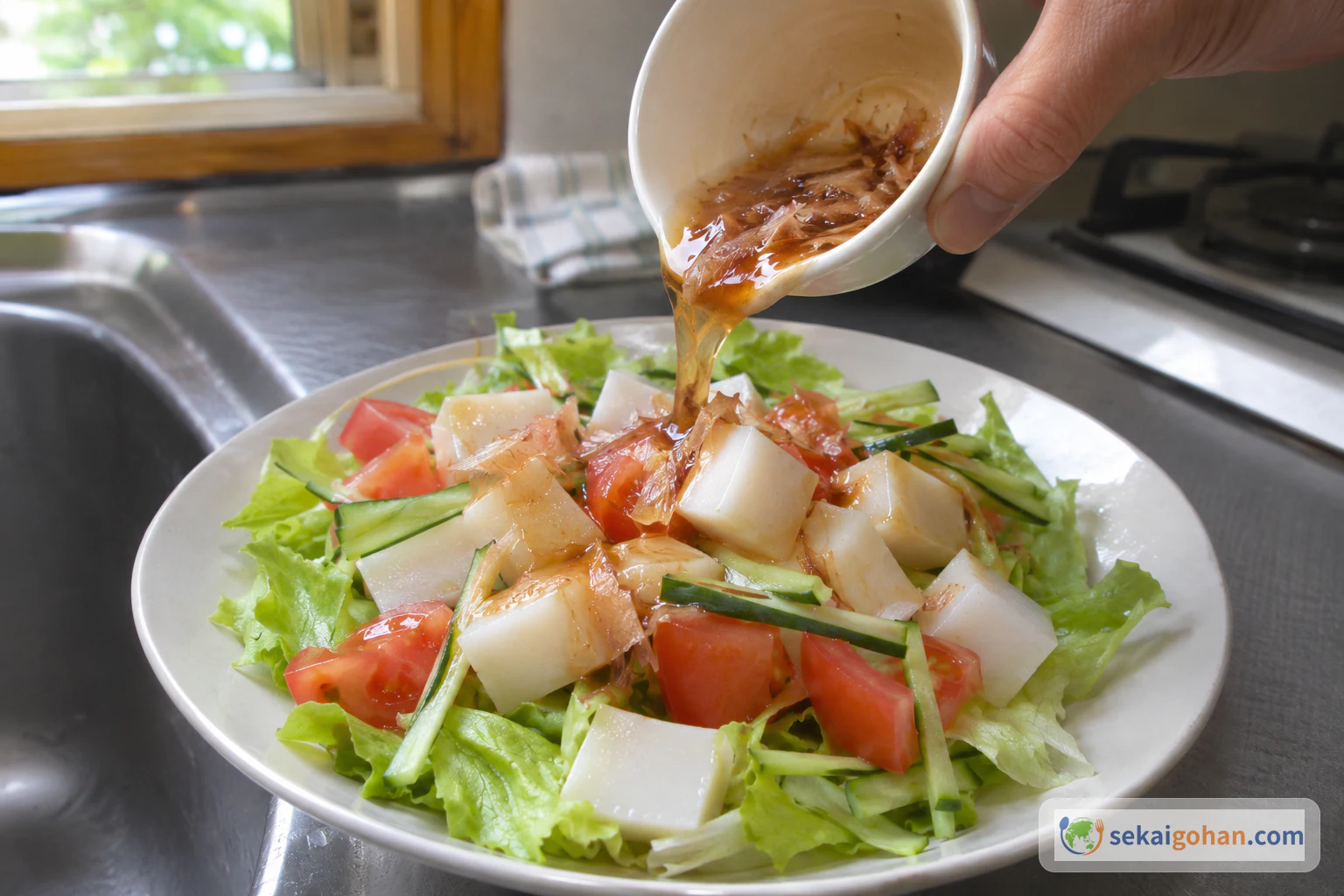
A white fish cake is cut into small cubes and scattered over hand-torn lettuce, thin sticks of cucumber and diced tomato. The dressing is a store-bought Japanese-style dressing with bonito flakes stirred into it, so the flakes arrive on the plate already soaked in the dressing rather than sprinkled on top.
The cake belongs to Ise and Tsu, two cities in Mie Prefecture. Japan's Ministry of Agriculture, Forestry and Fisheries (MAFF) names these cities as the main areas where this food has been handed down, and notes that locally it is called hanpei rather than hanpen. MAFF lists several ways people eat it, including with wasabi and soy sauce, in oden, in chawanmushi, as a butter-fried dish and in salads. This article follows the salad that MAFF publishes on the same page: six ingredients and three short steps.
The salad is one example of how this regional fish cake is eaten. It is not a claim that every household in Mie makes it the same way, or that the Ise and Tsu cake stands for every hanpen in Japan. Sekai Gohan has not kitchen-tested this recipe. For more dishes from the country, see our Japan recipes.
Three Fish Cakes Called Hanpen: Why the Shape and Color Matter
The name "hanpen" covers fish cakes that are made and shaped quite differently. Knowing which one you are holding is the easiest way to avoid buying the wrong product.
According to MAFF, Ise and Tsu hanpei is made mainly from white-fleshed fish paste and mountain yam. No foaming agent is used; the paste is stretched with yam, and the cake is white and shaped like a half-moon. MAFF also describes how specialty shops carry on making it by hand.
The kamaboko maker Kibun describes the Kanto-style "floating" hanpen differently: fish paste and other ingredients are beaten so that they take in air bubbles, then shaped and boiled. The Japan Kamaboko Association, writing about the Kanto type, describes it as made with shark meat and yam, white in color and floated in hot water as it cooks. The association's article also refers to the Edo-period text Morisada Mankō; that is the association's account of the Kanto-style cake, not a history of Ise or Tsu hanpei.
Kibun separates both of these from the kuro-hanpen ("black hanpen") of Shizuoka and the Chubu region, made from sardine or mackerel and grey-white in color with a half-moon shape. It is a different style again, and it is not used in this salad.
Where the word hanpen comes from is not settled. Both MAFF and Kibun present several theories about the name, and none of them is treated here as the answer.
| Style | How the sources describe it | Role in this article |
|---|---|---|
| Ise / Tsu hanpei (Mie) | White-fleshed fish paste and yam, no foaming agent, stretched with yam; white half-moon (MAFF) | The fish cake this salad is built on |
| Kanto floating hanpen | Paste beaten to take in air, shaped and boiled (Kibun); shark meat and yam, floated in hot water (Japan Kamaboko Association) | A possible editorial stand-in only; not the regional type |
| Kuro-hanpen (Shizuoka / Chubu) | Sardine or mackerel, grey-white, half-moon (Kibun) | A different style; not a substitute here |
Ingredients
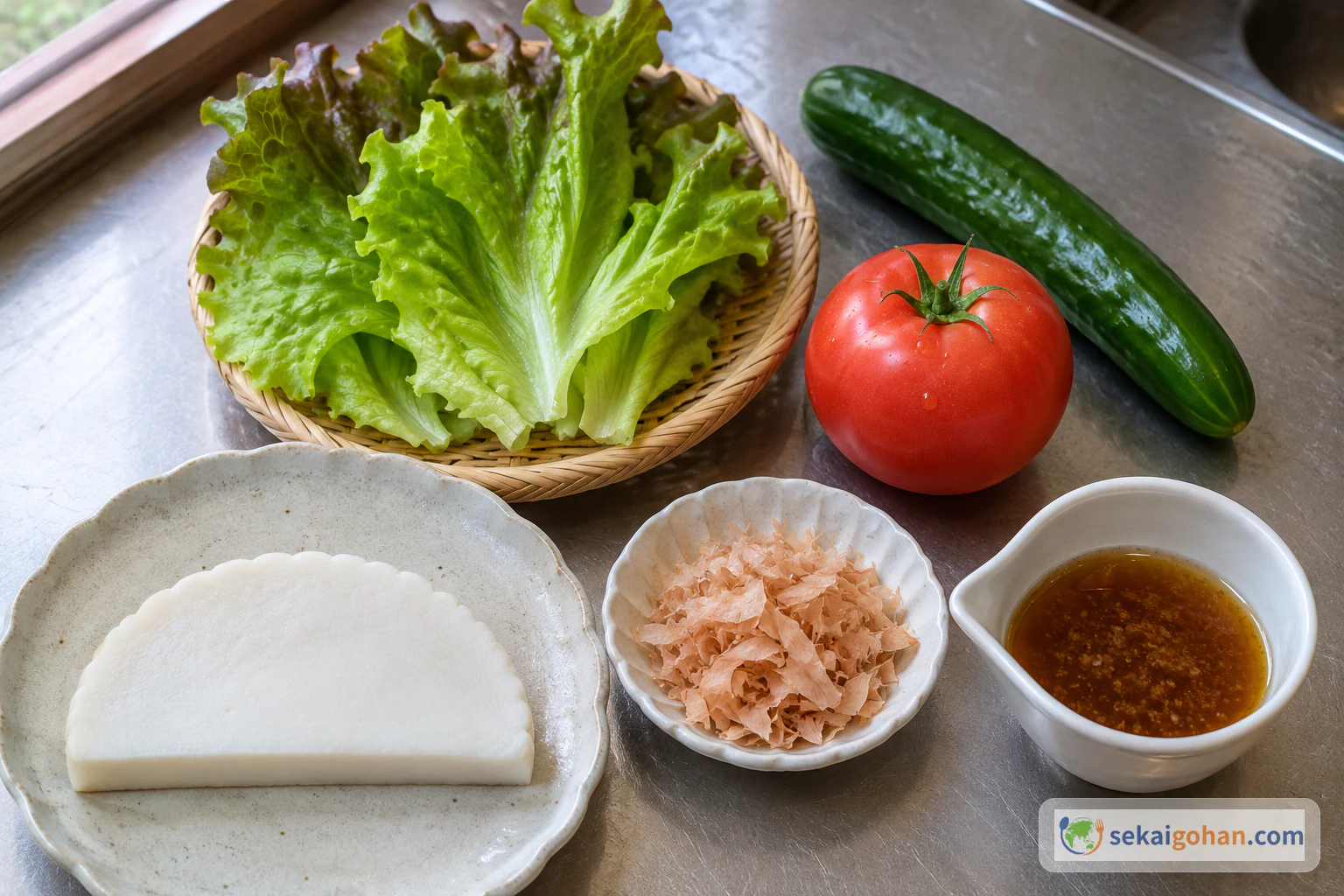
The fish cake is bought ready to eat. Check its label before you start, and follow any handling instructions printed on it.
Equipment
- Knife
- Cutting board
- Bowl
- Serving plate
Choosing the Fish Cake and Dressing
Use one fish cake, and add the dressing as needed.
Fish cake. In Japan, look for products sold as "Ise hanpei" or "Tsu hanpei." No particular brand is required. If you cannot find either, ordinary white hanpen can be used as a substitute, but it is not the Ise/Tsu type. Kanto-style hanpen is aerated, while Ise and Tsu hanpei is stretched with yam and made without a foaming agent, so the cake on your plate will not be the regional type and its shape will differ. Do not use kuro-hanpen as a stand-in; it is a separate style.
Dressing. Use a store-bought Japanese-style (wafu) dressing. Pour a little at a time and taste before adding more; this is a serving suggestion.
Fish cakes and bottled dressings vary by maker. For both the hanpei and the dressing, read the product label for storage conditions, how to handle the product after opening, whether the fish cake is ready to eat as sold, and allergen information. Possible allergens to look for include fish, egg, yam, soy and wheat, but not every product contains the same ingredients, so go by the label of the product in your hand. If the label does not let you rule out an allergy concern, choose a different product or ask the manufacturer. No storage period for the finished salad is given here; follow the labels of the products you use.
Method: Cut, Mix, Plate
Everything is cut separately first. The bonito flakes go into the dressing, not onto the salad, and the dressing goes on last.
Quick Checks Before You Serve
This salad has no cooking stage, so the useful checks are about what you bought and the order of assembly rather than heat or timing.
| What you notice | What it usually means | What to do |
|---|---|---|
| Your fish cake is Kanto-style and aerated | It is not the Ise/Tsu half-moon type | Use it only as a substitute if you cannot find Ise or Tsu hanpei |
| Your fish cake is grey | It is likely kuro-hanpen, a different style | Choose a white hanpei or hanpen for this salad |
| Bonito flakes are on top of the salad instead of in the dressing | They were not mixed into the dressing | Mix them into the dressing before plating |
| You are unsure whether the cake can be eaten as is | Products differ | Check the label and follow it |
Other Ways to Eat Hanpei
MAFF lists several ways this regional fish cake is eaten: with wasabi and soy sauce, in oden, in chawanmushi (savory steamed egg custard), as a butter-fried dish and in salads. Only the salad is given as a recipe here; the others are mentioned so you can see where the salad sits among them. If you buy more than one cake, those serving styles are a sign of how flexible the product is, but follow each package's own handling instructions.
Frequently Asked Questions
How many people does this serve?
No serving count is given for this salad. It is built on one fish cake and one each of cucumber and tomato, but the number of portions is not stated, so this article does not assign one.
Can I use ordinary white hanpen?
As an editorial substitute, yes, but it will not be Ise or Tsu hanpei. The Kanto-style hanpen described by Kibun and the Japan Kamaboko Association is made by taking in air or floating the paste in hot water, while MAFF describes the Ise and Tsu cake as stretched with yam and made without a foaming agent, in a white half-moon shape. Expect a different shape and texture.
Is this a recipe for making hanpei at home?
No. It is a salad that uses a ready-to-eat fish cake bought from a shop. The description of specialty shops making hanpei by hand is background on the food culture, not instructions for making it at home.
Can I use kuro-hanpen instead?
Kuro-hanpen is a separate style, made from sardine or mackerel and grey-white in color according to Kibun. It is not part of this recipe. If you try it, treat it as your own change and understand that it is a different fish cake from the regional one this salad is about.
How much bonito and dressing do I use?
5g of bonito flakes. The dressing is used as needed; pour a little and add more to taste.
How long does the salad keep?
No storage time is given for the finished salad. For the fish cake and the dressing, follow the storage and after-opening instructions on each product's label.
Sources
- Ministry of Agriculture, Forestry and Fisheries (MAFF), Japan, "伊勢はんぺい、津はんぺい (Ise Hanpei, Tsu Hanpei)," Nippon Traditional Food Encyclopedia. The basis for this article: Ise and Tsu in Mie as the main areas where the food is handed down and its local name hanpei; white-fleshed fish paste and yam, stretched with yam without a foaming agent, in a white half-moon shape; several theories on the name; continuation of the craft in specialty shops; ways of eating it; and the salad's six ingredients, amounts and three steps. https://www.maff.go.jp/j/keikaku/syokubunka/traditional-foods/menu/isehanpei_tuhanpei.html
- Kibun Foods, "練りもの図鑑 はんぺん (Fish Cake Encyclopedia: Hanpen)." Used for the general description of Kanto-style floating hanpen (paste beaten to take in air, shaped and boiled), the distinction between Kanto hanpen, Shizuoka/Chubu kuro-hanpen and Mie's Ise hanpen (hanpei), and the existence of several theories on the name. Not used for the salad's ingredients or steps. https://www.kibun.co.jp/knowledge/neri/basics/zukan/hanpen/
- Japan Kamaboko Association, "関東の定番!"ふんわり"おでん種 (A Kanto Staple: The Fluffy Oden Ingredient)." Used only for the association's account of Kanto-style hanpen (shark meat and yam, white paste, floated in hot water) and its reference to the Edo-period Morisada Mankō. Not used for the Ise/Tsu style or the salad. https://www.nikkama.jp/info/%E9%96%A2%E6%9D%B1%E3%81%AE%E5%AE%9A%E7%95%AA%EF%BC%81%E3%81%B5%E3%82%93%E3%82%8F%E3%82%8A%E3%81%8A%E3%81%A7%E3%82%93%E7%A8%AE/