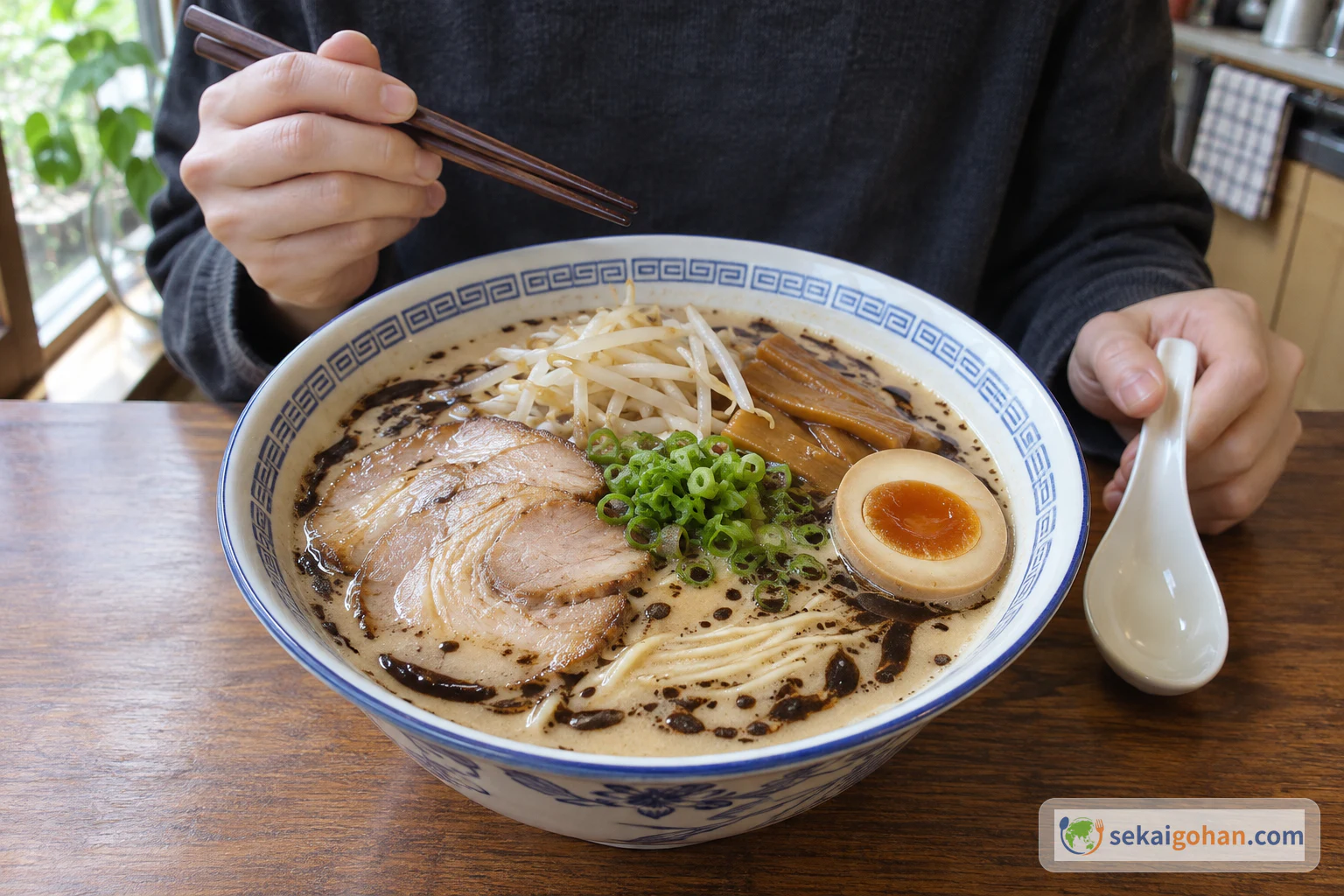
Kumamoto Ramen: A Pale Pork Broth Finished with Dark Ma-yu
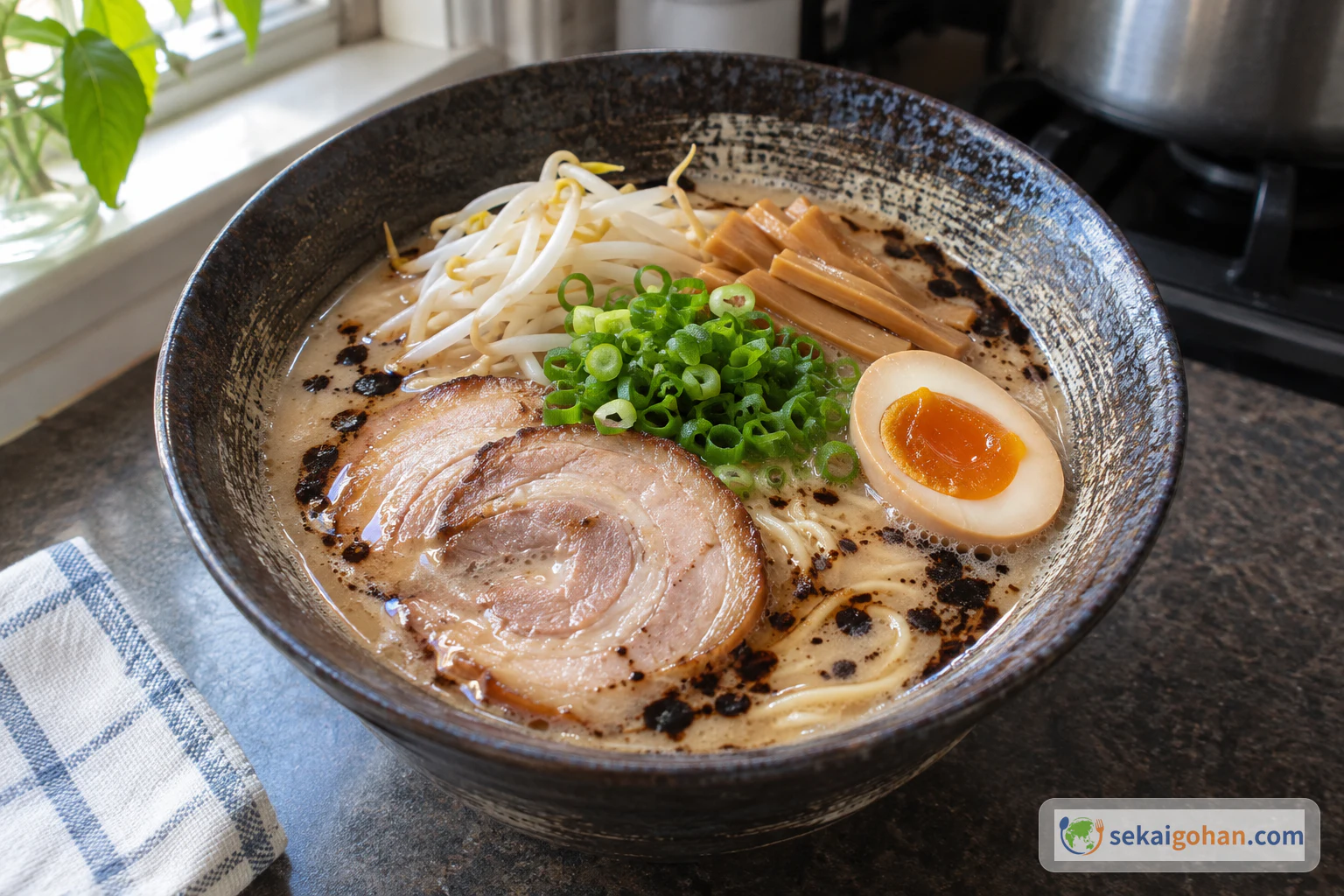
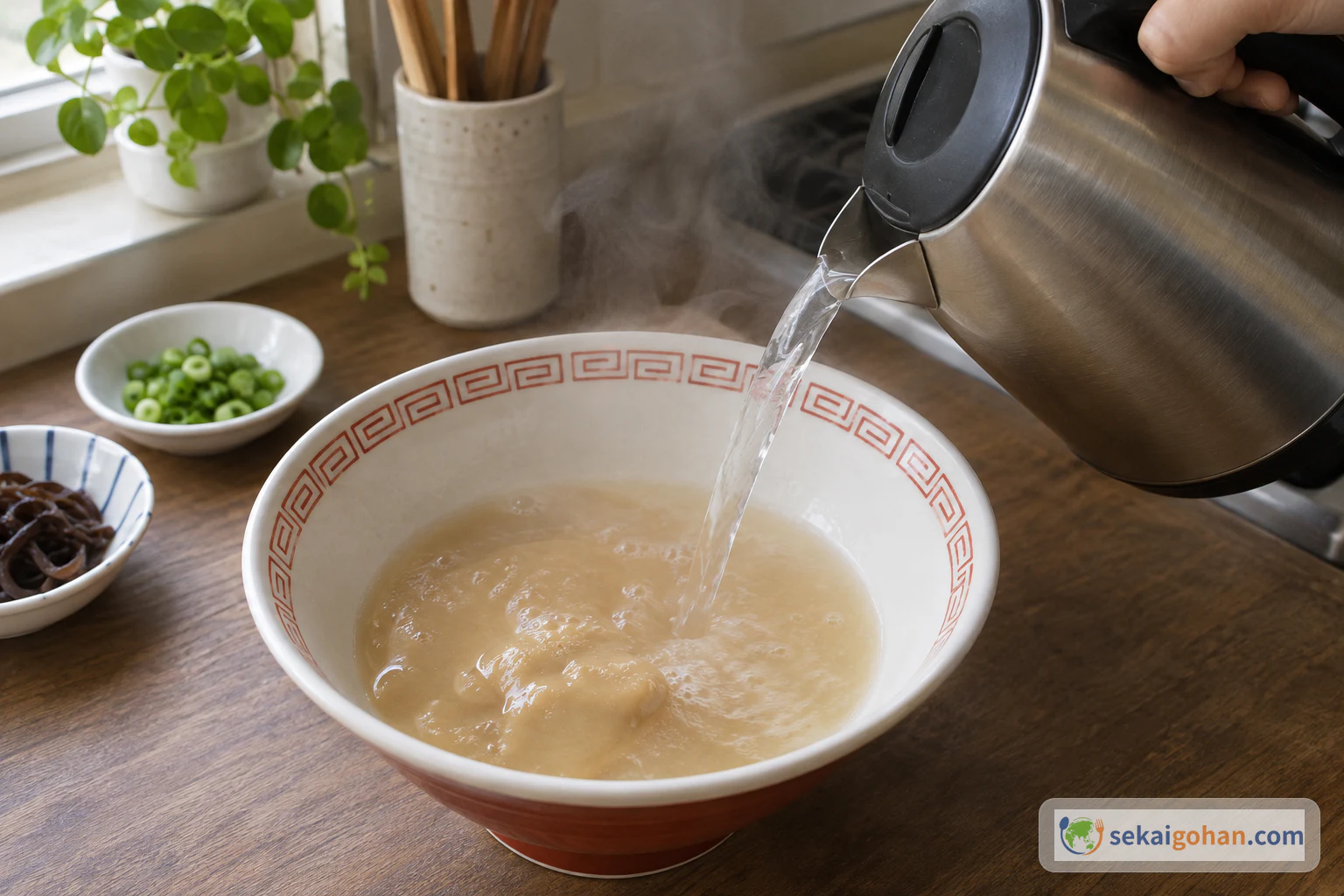
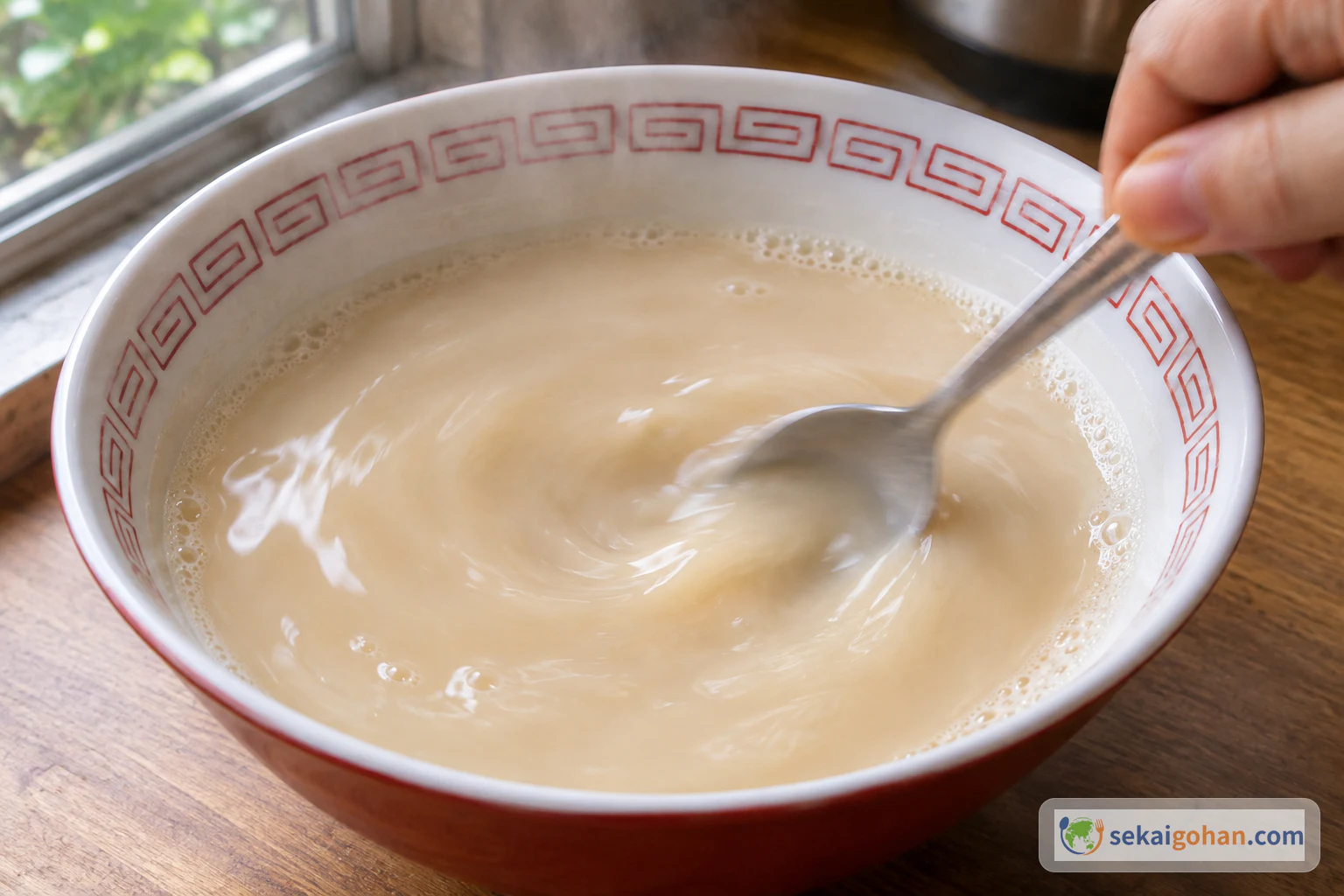
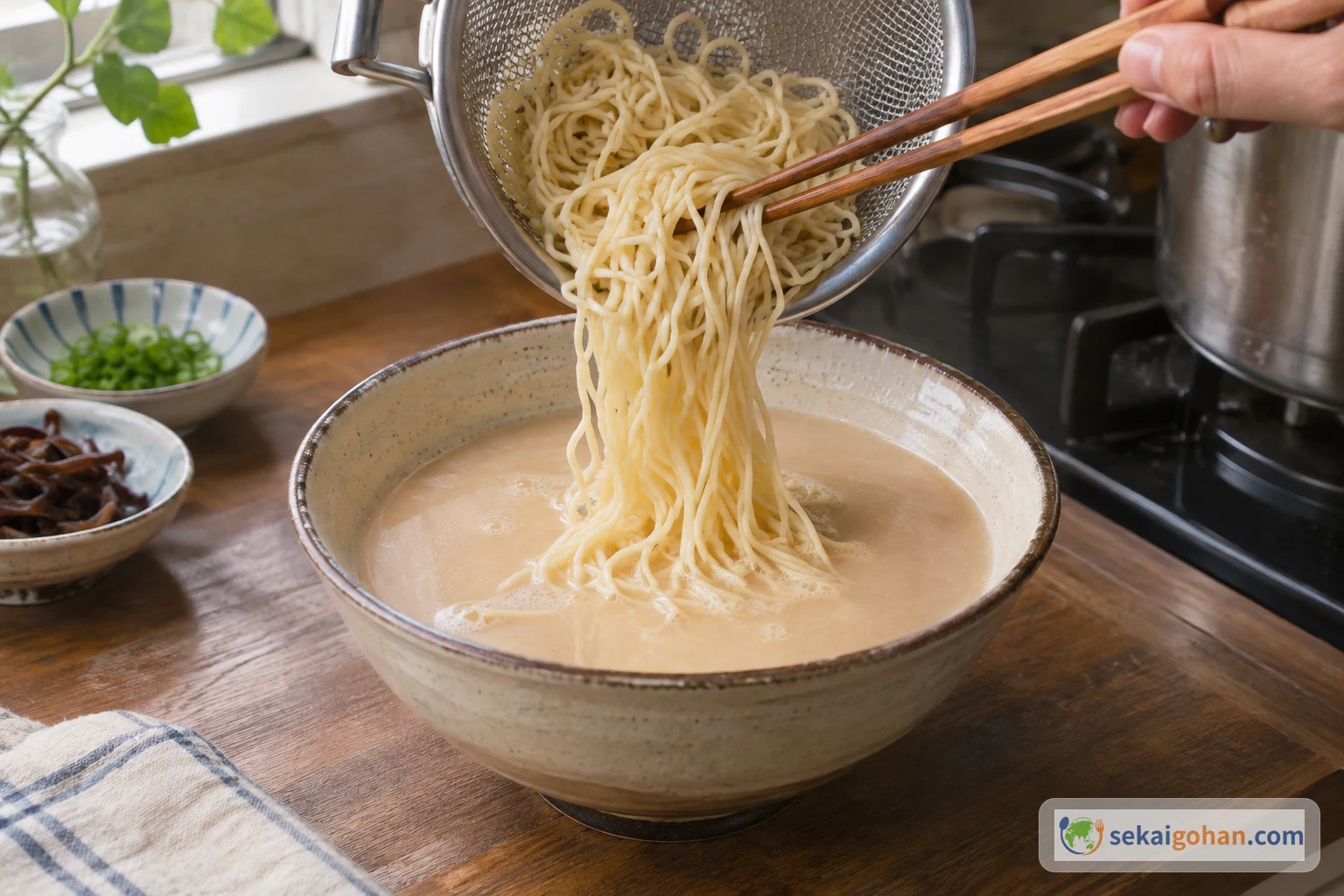
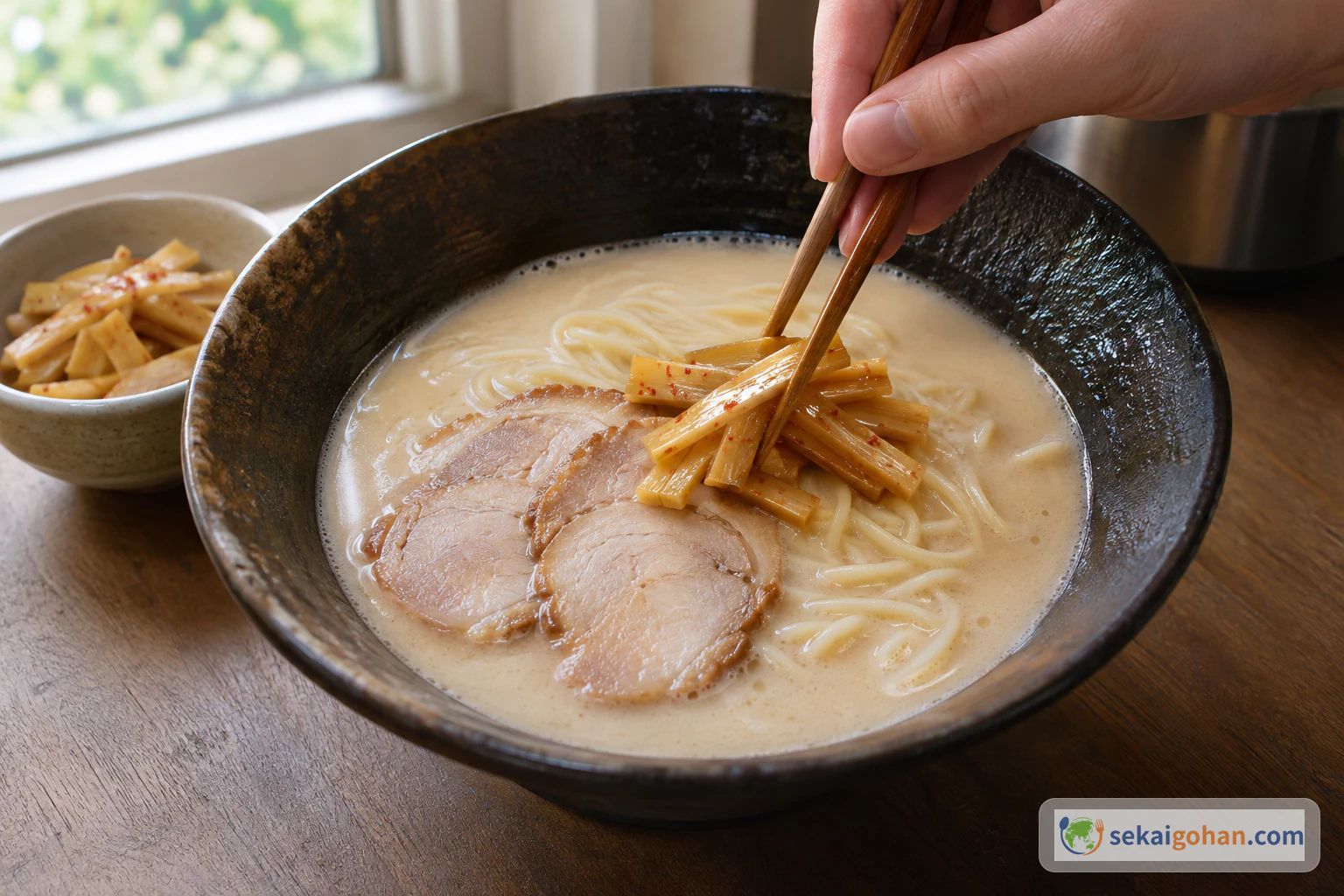
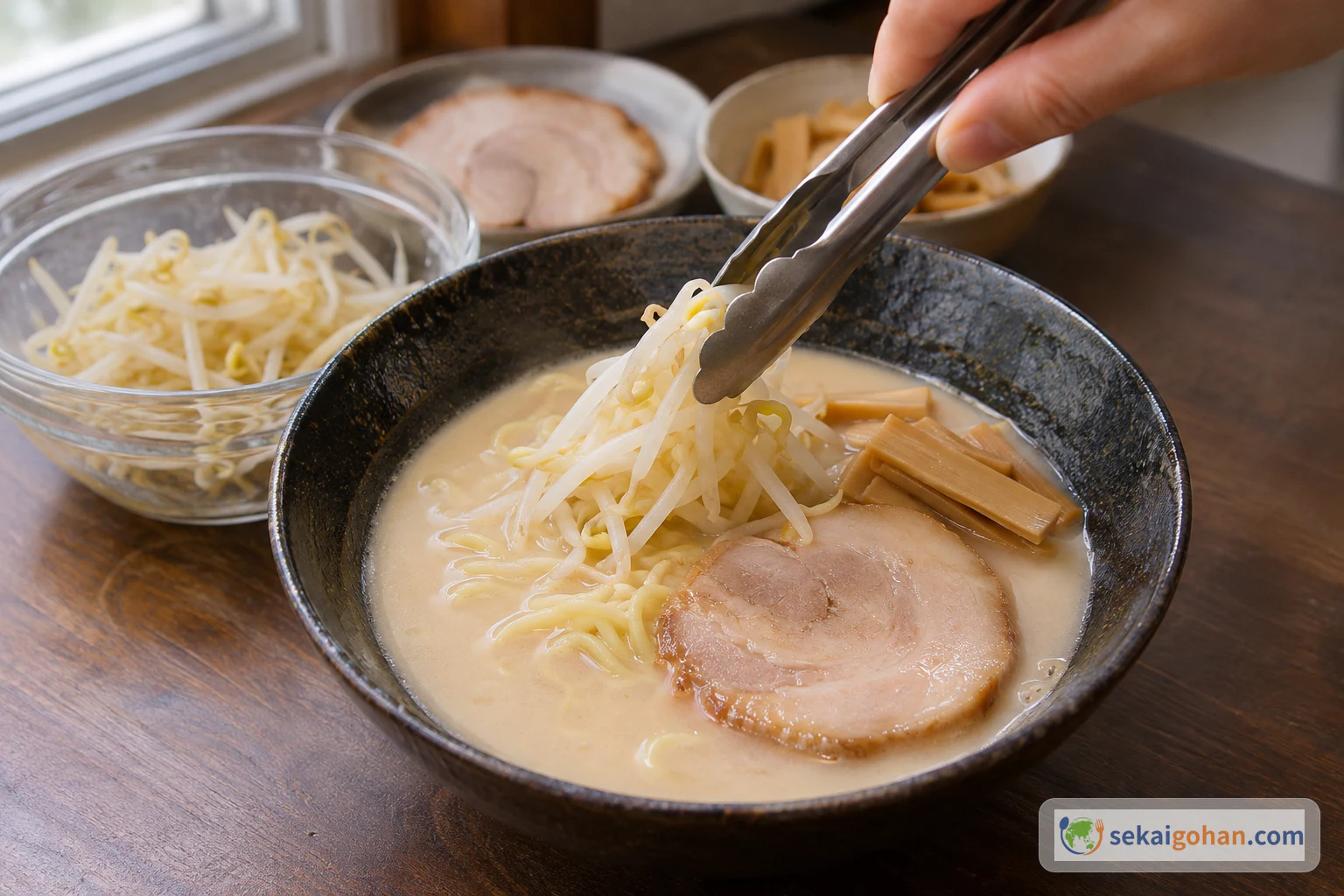
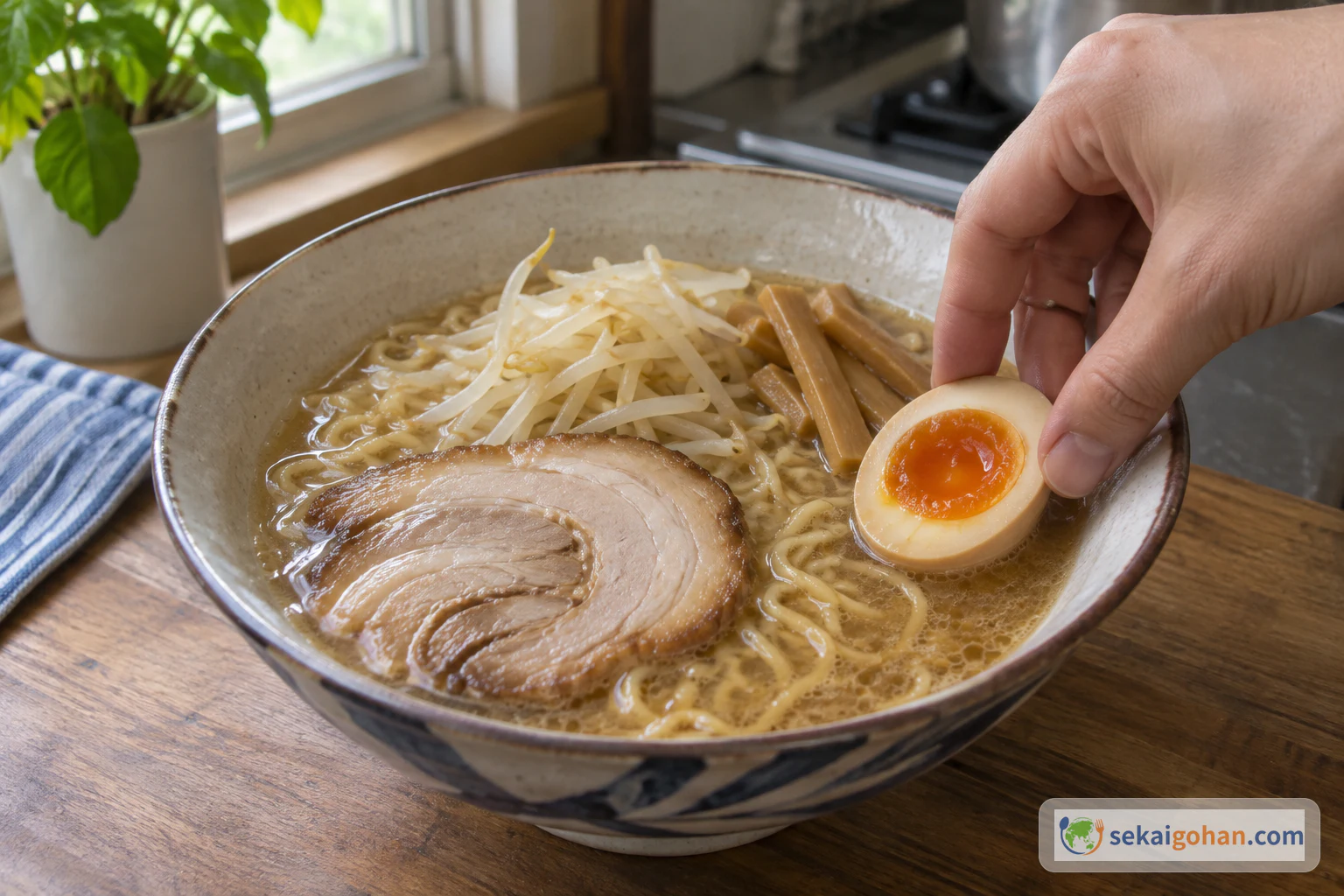
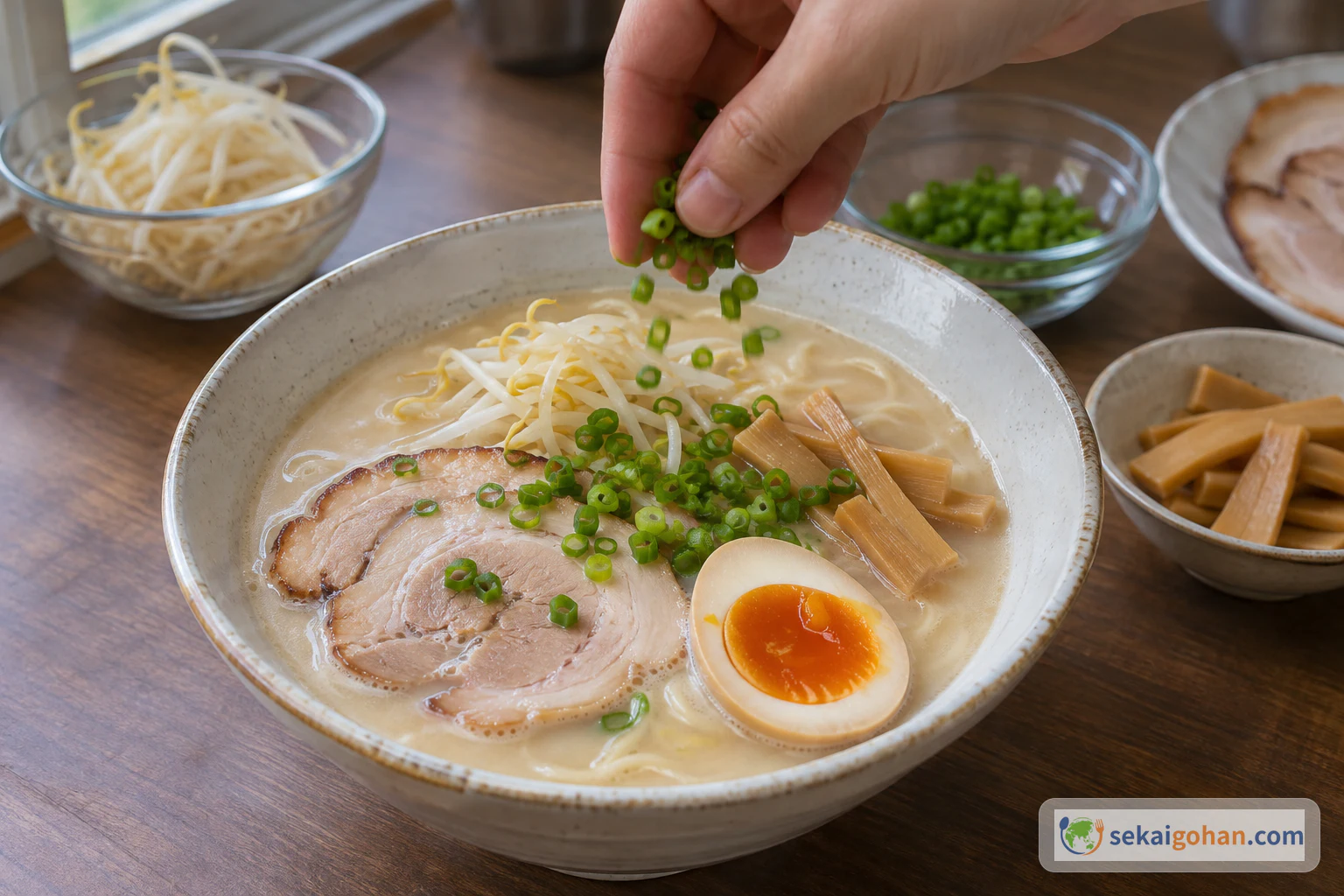
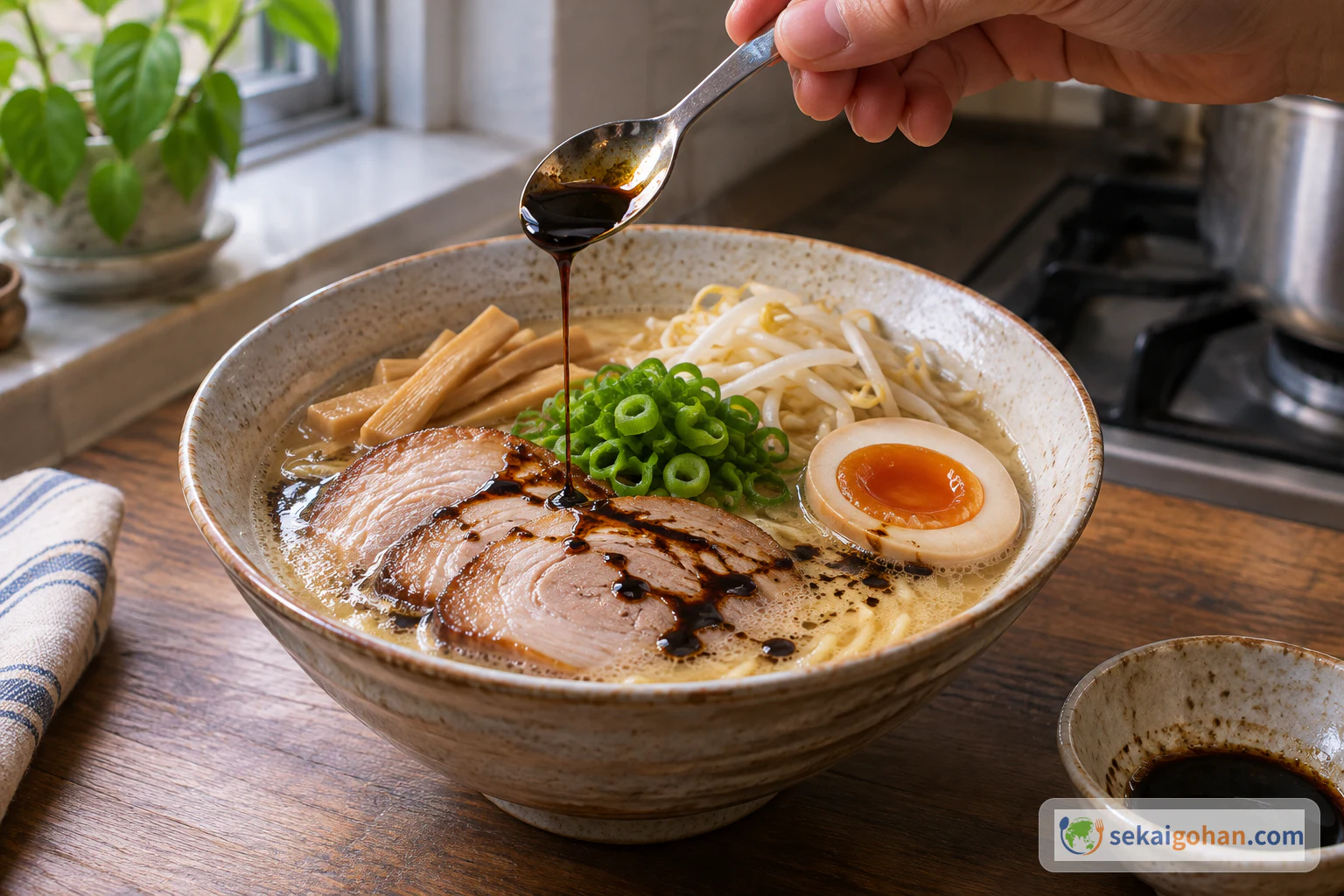
Dissolve the concentrated pork soup directly in the bowl, add the noodles and toppings, and pour the dark ma-yu over everything last.
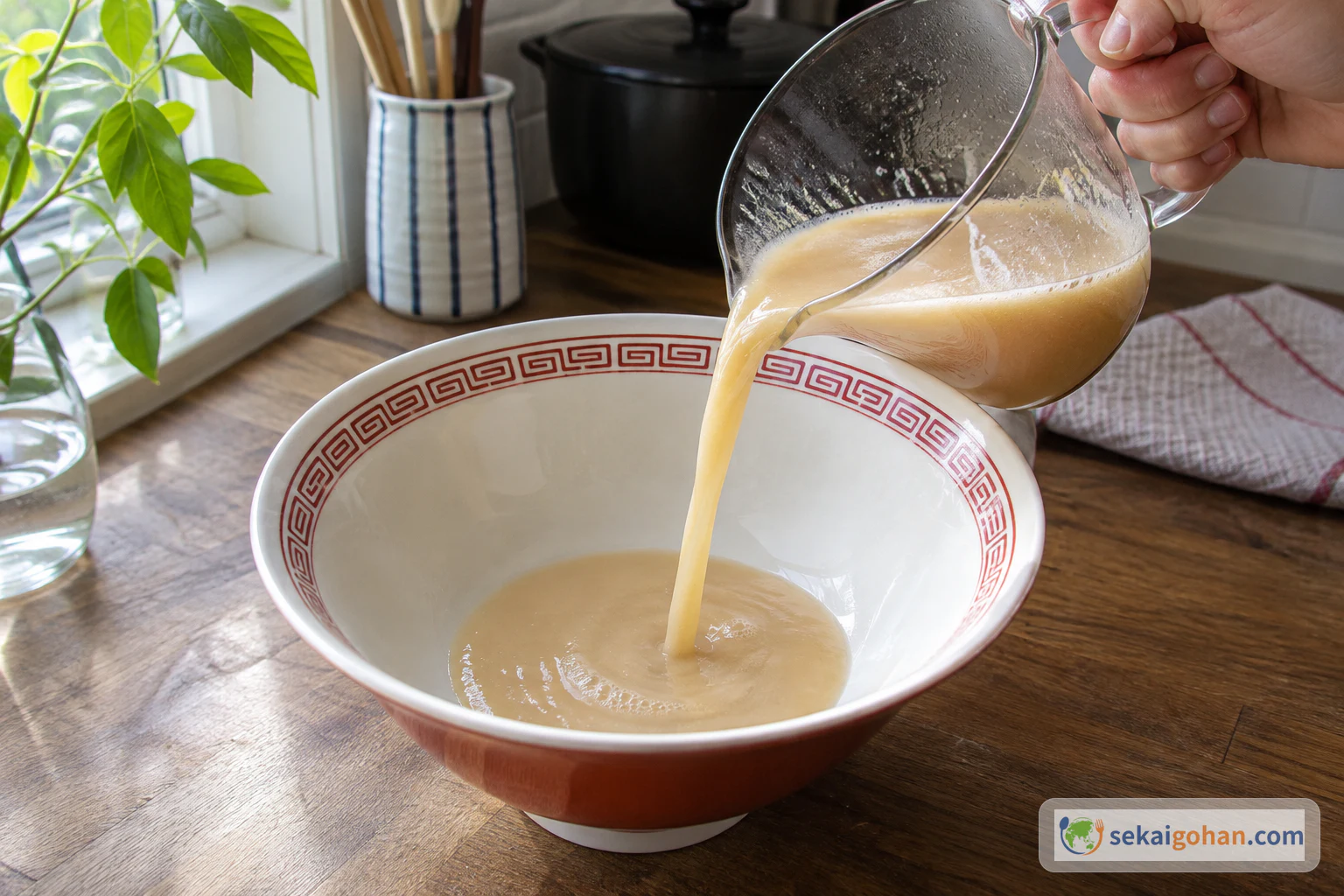
Boiling water is poured over thick pork concentrate in an empty bowl, and a stir turns the two into a cloudy tonkotsu broth. Noodles and toppings follow, and the last thing to land is a drizzle of ma-yu, the dark aromatic oil that gives this bowl its character.
This one-serving recipe comes from Heiwa Food Industry (平和食品工業), a Japanese soup manufacturer, which publishes it as a Kumamoto specialty, "ma-yu tonkotsu ramen." It is a home assembly recipe built on the company's own concentrate and flavor oil. There is no bone-boiling, home fermentation or homemade oil, and it is not a copy of any restaurant's bowl.
This recipe has not been kitchen-tested by us. The photographs show each action, but they do not prove exact amounts, temperatures, times, hygiene or the doneness of the egg.
Ingredients: One Serving
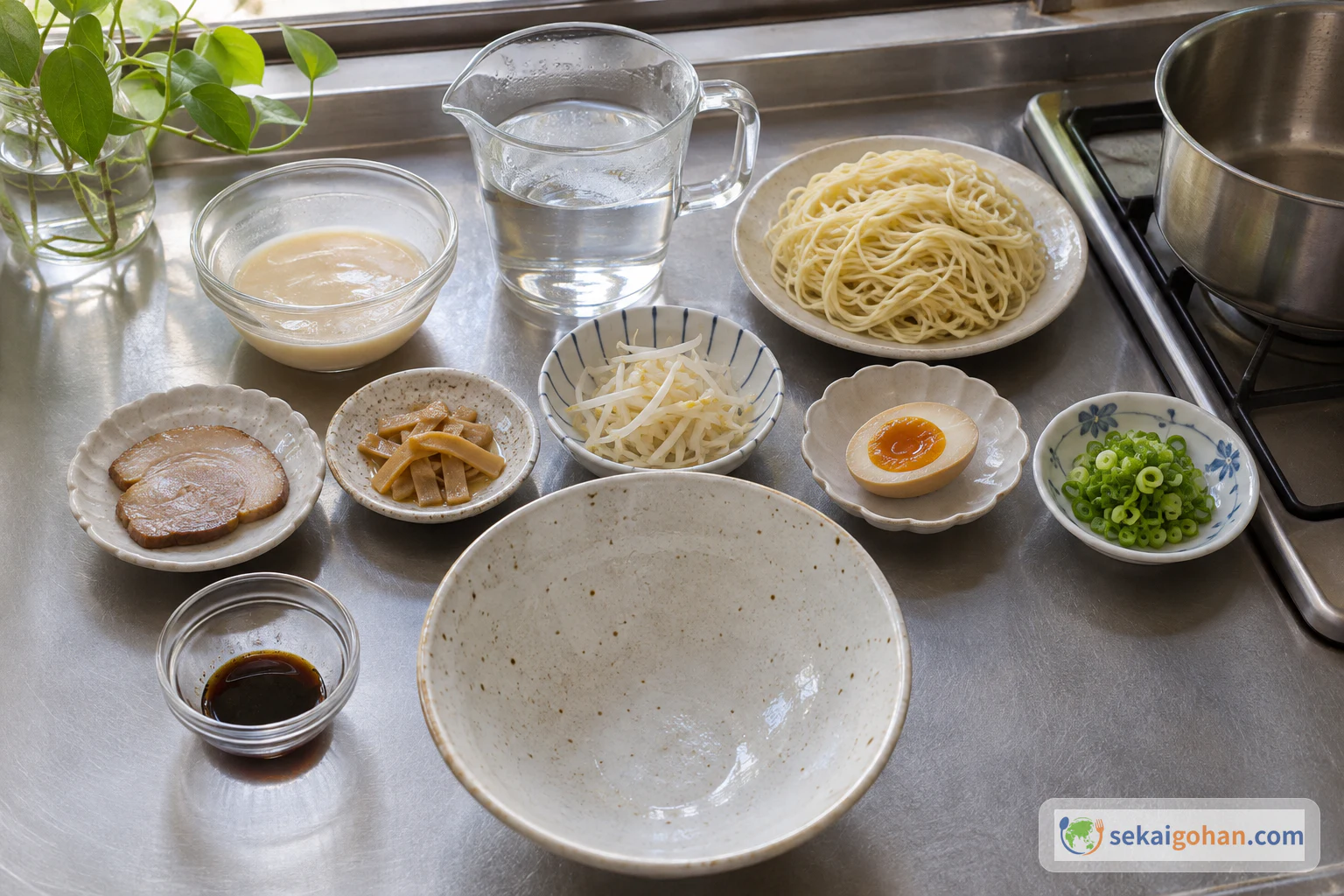
Equipment
- Measuring cup
- Kitchen scale
- Ramen bowl
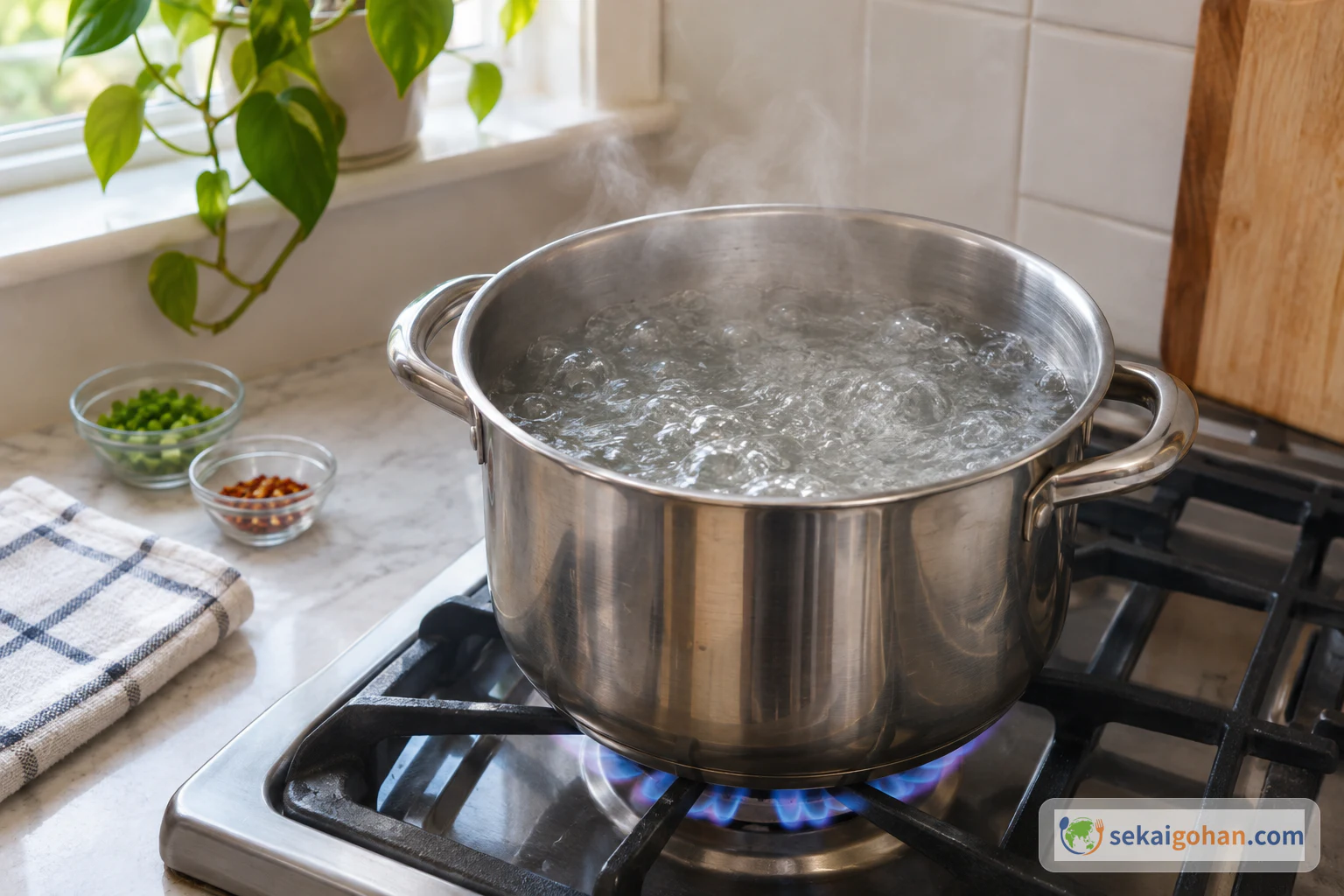
- Pot for boiling the noodles
- Separate small pot for boiling the bean sprouts
- Colander and wire strainer
- Knife and cutting board
- Spoon
Choosing Products and Substitutions
Concentrated soup: The 50 ml to 300 ml dilution belongs to this particular product. It does not transfer to other concentrates, and we give no conversion for them. If you use a different soup, follow its own label.
Ma-yu: This is a prepared flavor oil. Do not treat chili oil or sesame oil as the same thing.
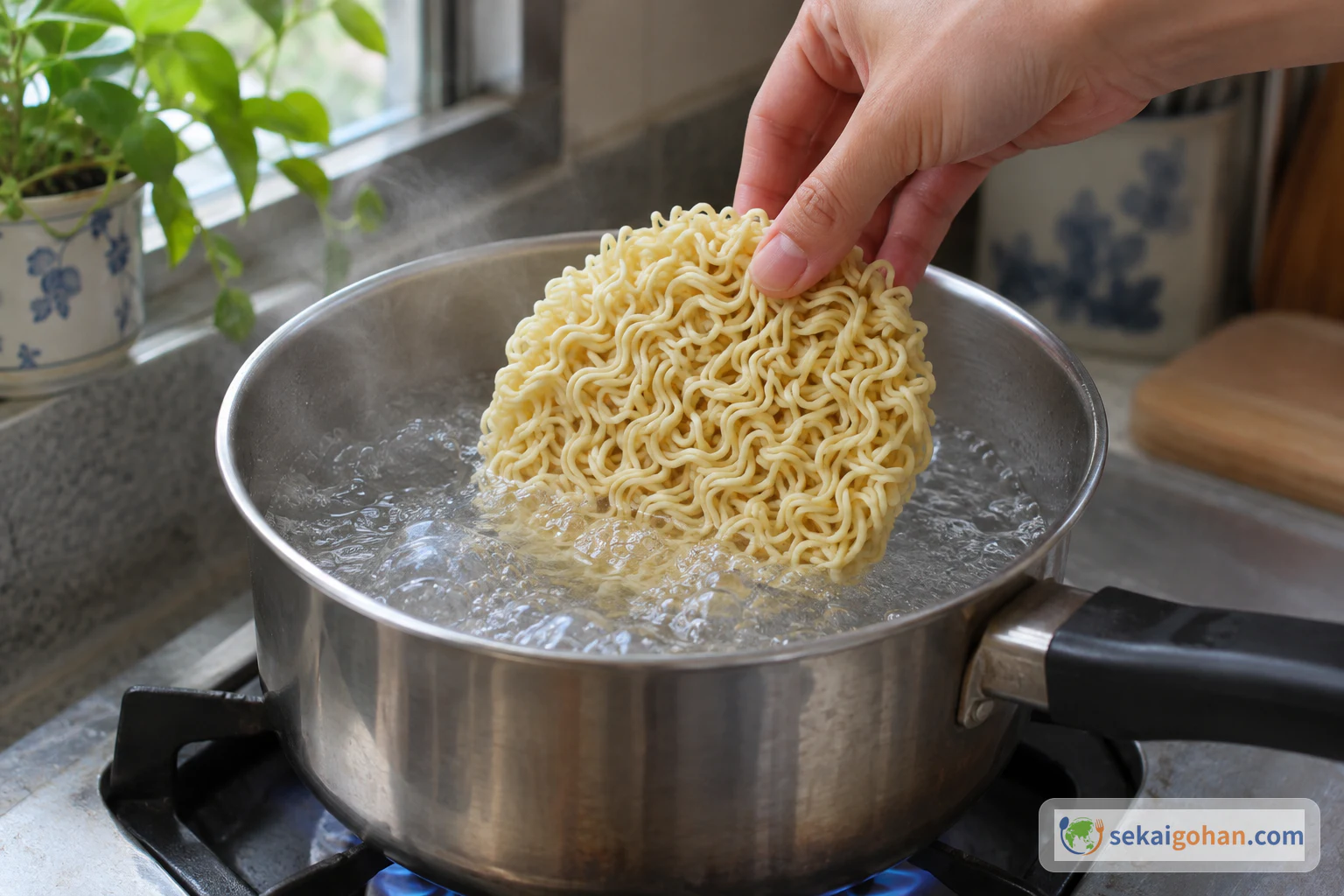
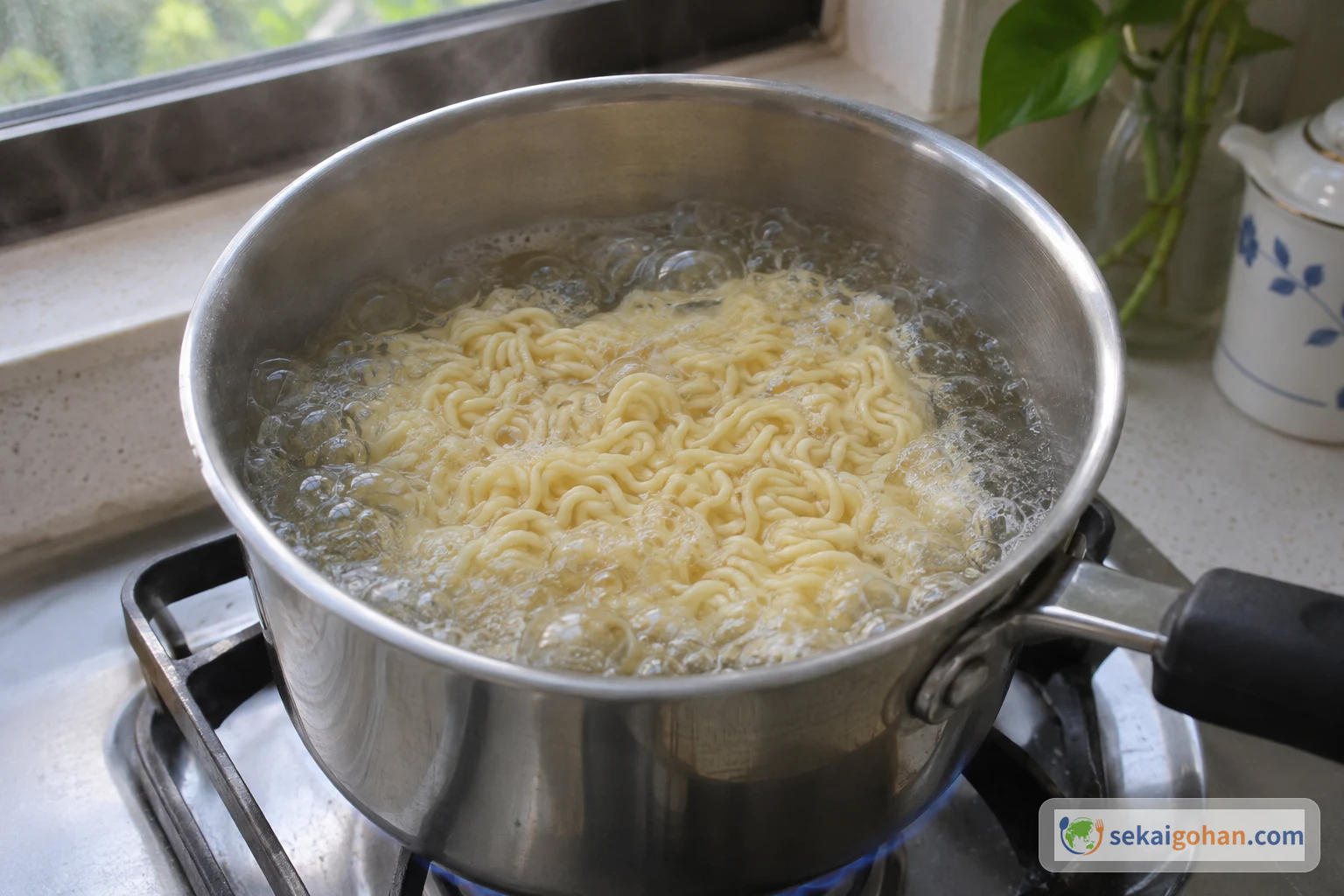
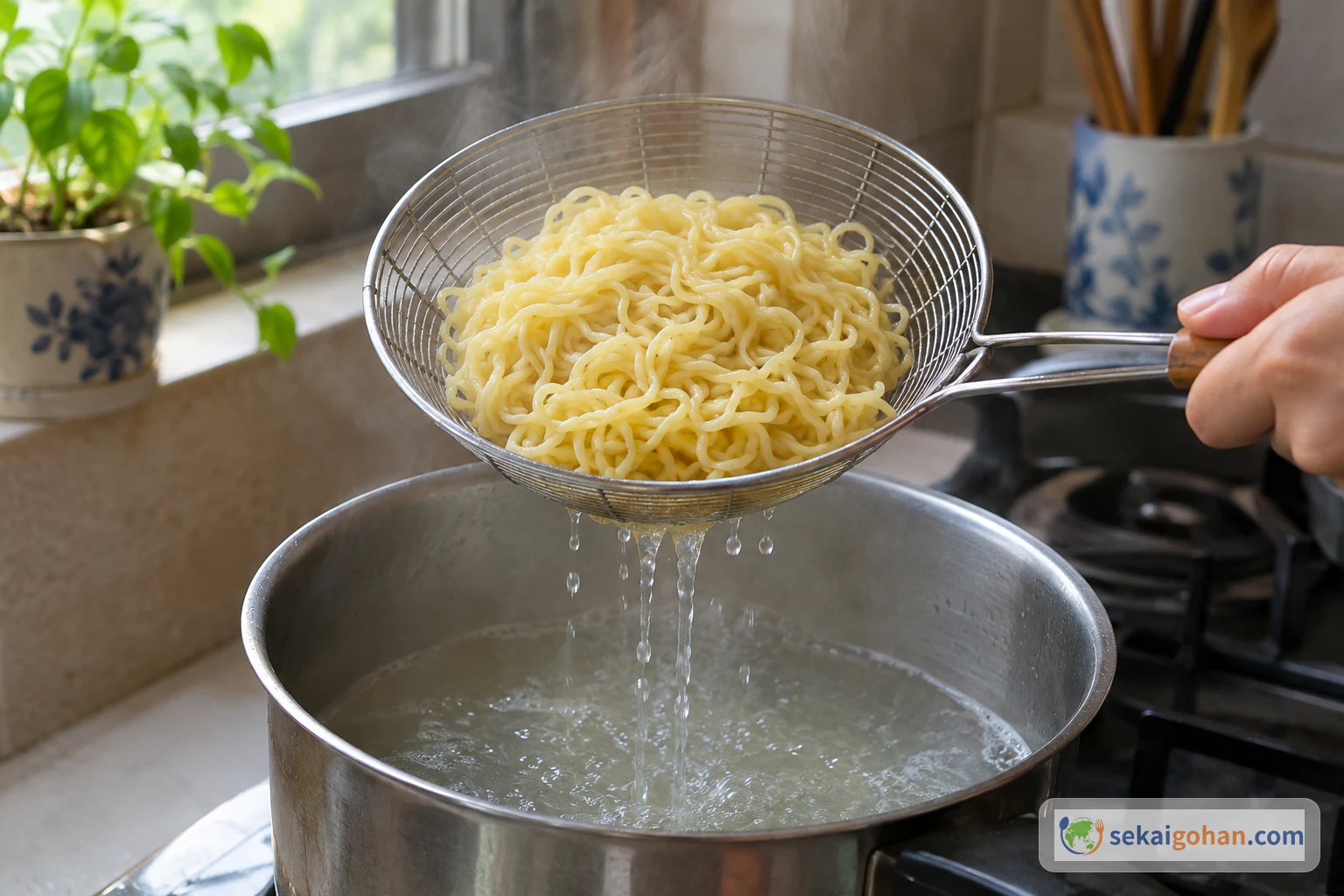
Noodles: Medium-thick straight noodles are our choice, made to lean toward the regional style. No particular thickness is required.
Bean sprouts: Use thin mung bean sprouts. Large-beaned soybean sprouts need longer for the bean to cook through, so they are not used here.
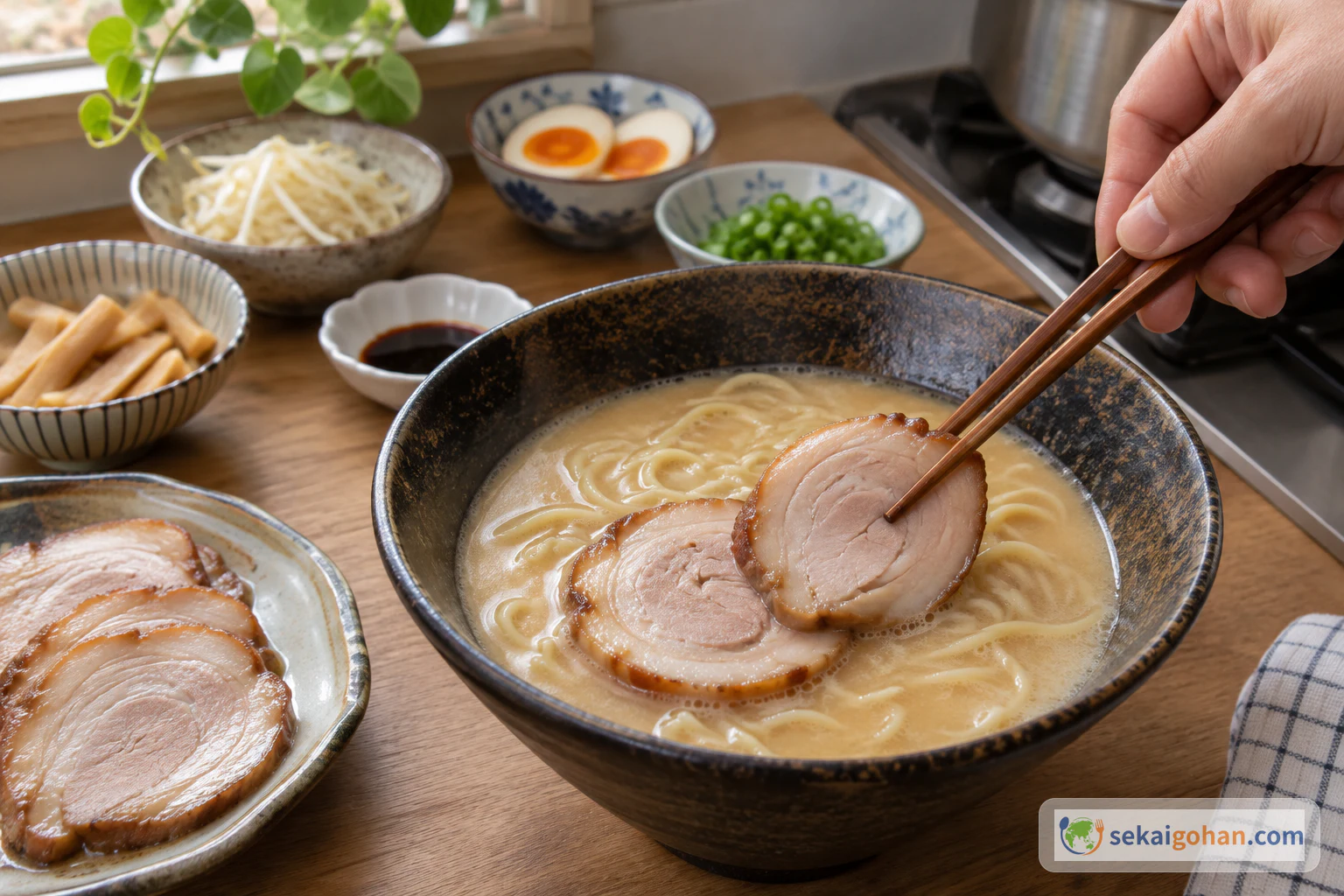
Toppings: The menma, chashu and egg are all bought ready-made, and this article gives no recipes for making them at home. Always read the product label for storage and any heating directions.
Method: From Empty Bowl to Final Drizzle
Bean sprouts are an ingredient to cook, so do not put them in the bowl raw. The boiling time in step 16 is a cooking guide, not a guarantee that bacteria have been killed.
Do not serve the bean sprouts or a soft-boiled egg to anyone who is pregnant, young children, older adults, or people with weakened immunity. For them, leave out the sprouts and either use an egg with a fully set yolk or leave out the egg too.
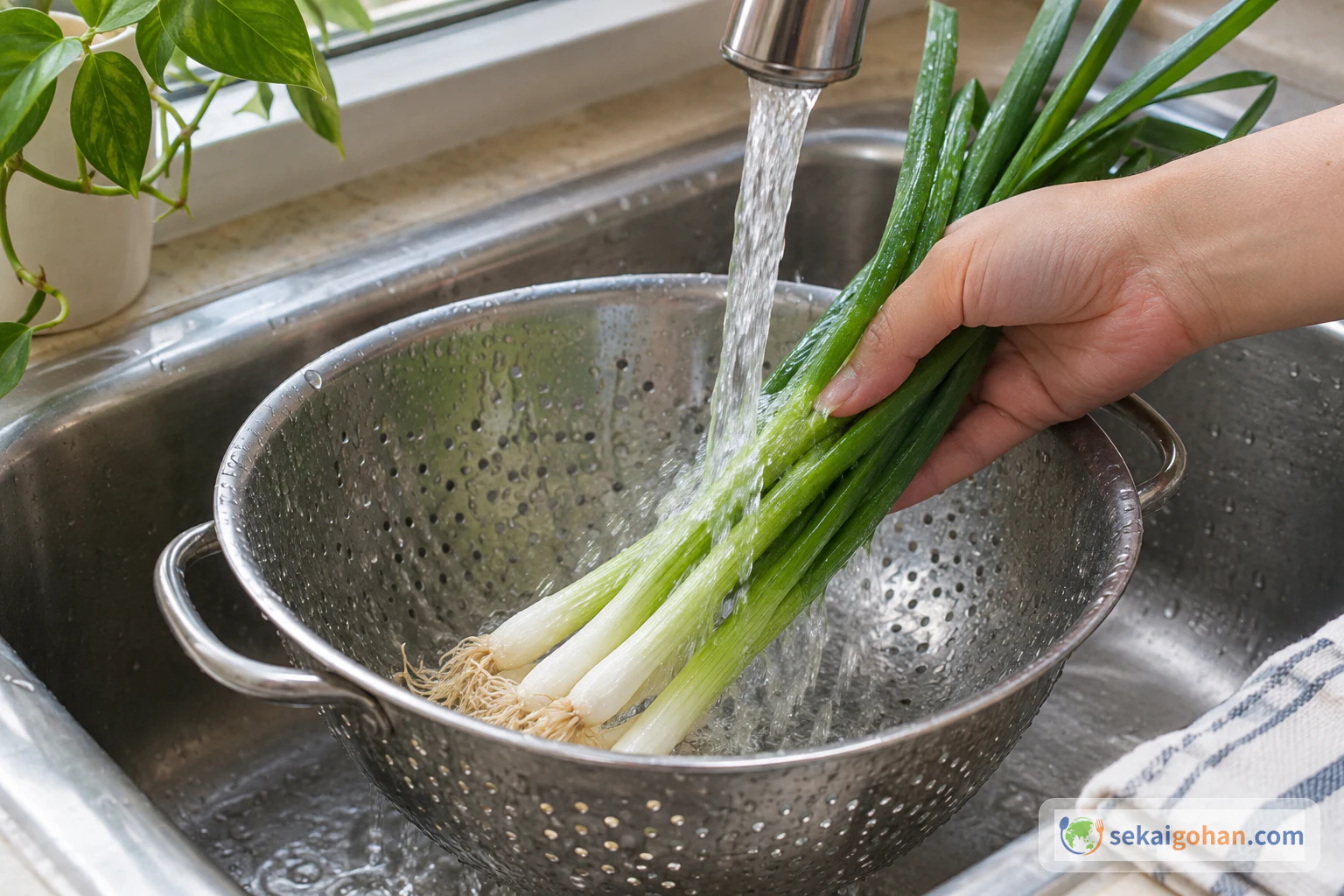
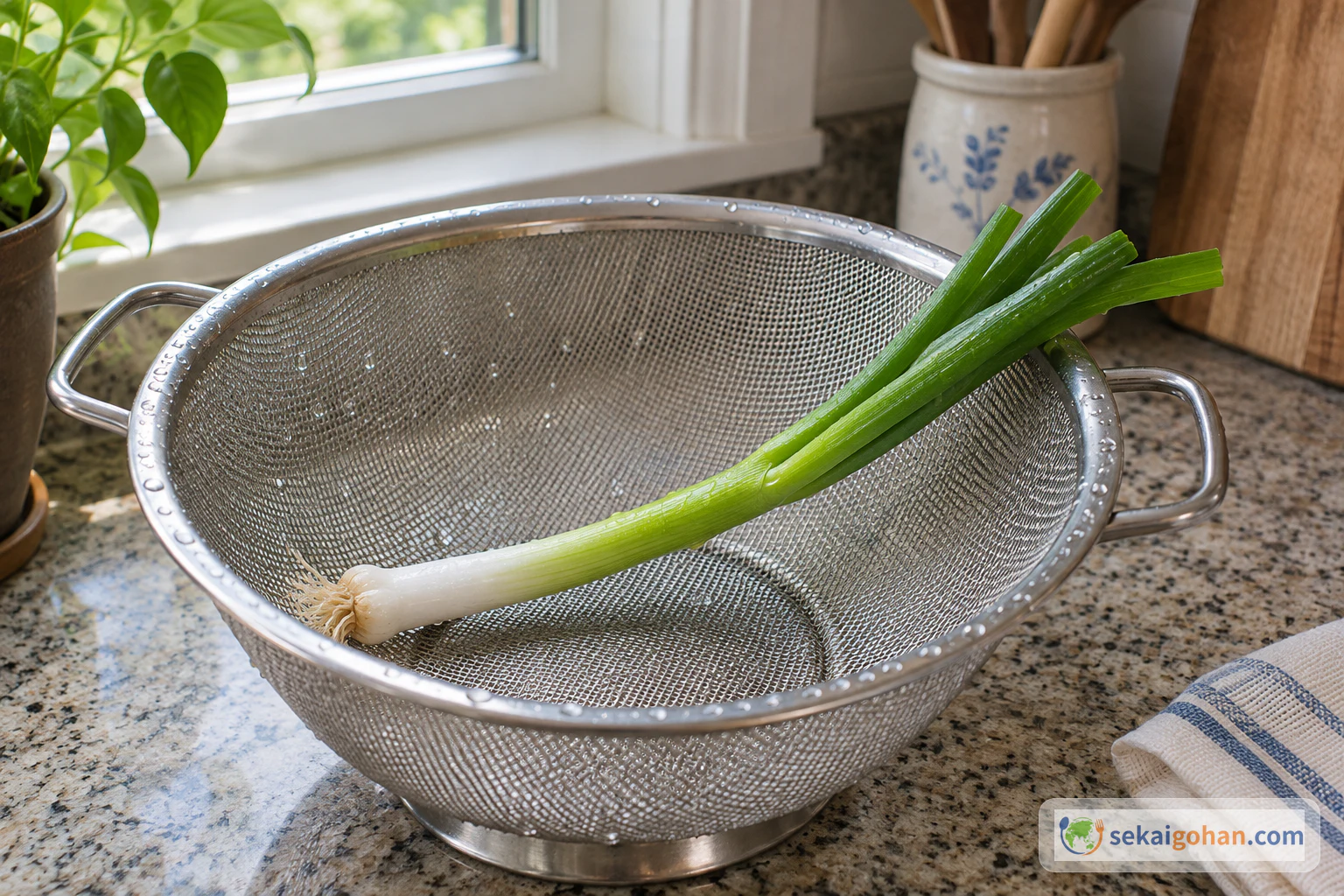
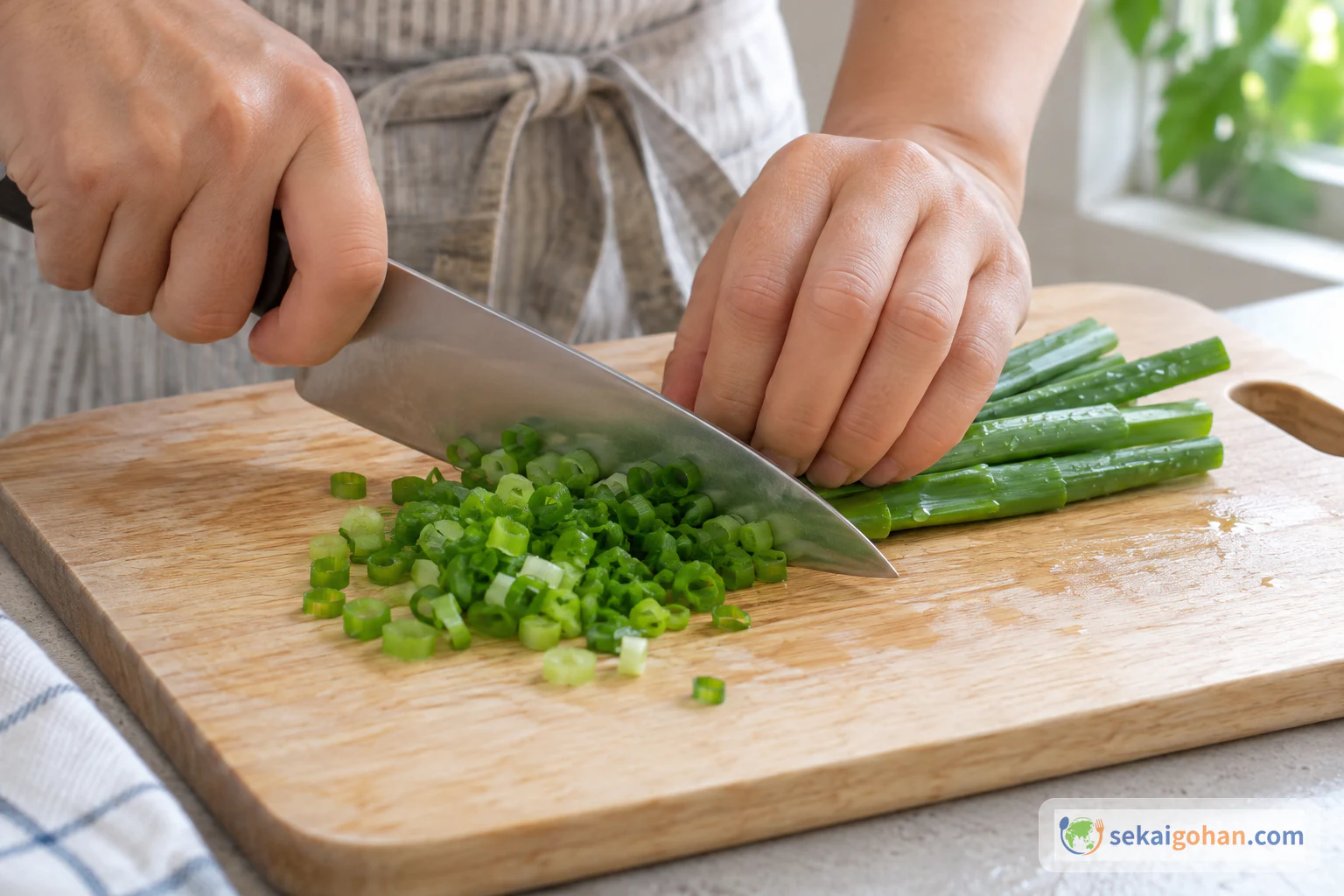
The green onion stays raw. Washing it under running water reduces bacteria but does not remove them.
Troubleshooting
| Problem | What to check | What to do |
|---|---|---|
| The broth looks uneven | The concentrate may not have fully dissolved | Keep stirring before the noodles go in |
| You are using a different concentrate | The 50 ml to 300 ml ratio applies only to the named product | Follow the label on the product you bought |
| You are unsure how long to boil the noodles | Times differ between products | Follow the noodle package |
| The sprouts look brown or smell sour | These are signs of spoilage | Do not use them |
| The chashu or egg package has its own directions | Storage and heating vary by product | Follow the label |
| You want a lighter or stronger ma-yu note | The amount can vary within 10–20 ml | Choose your amount within that range, and add it last |
Variations That Keep the Bowl's Shape
| Change | How to do it | What stays the same |
|---|---|---|
| Boiling water or bone stock | Use 300 ml gara (bone) stock in place of the water, not in addition to it | 50 ml of the named concentrate |
| Lighter or stronger ma-yu | Use anywhere from 10 ml to 20 ml | The oil still goes on last |
| Noodle shape | Use any Chinese noodle you prefer, boiled as its package directs | 1 portion |
| Serving someone who should avoid sprouts and soft-boiled egg | Leave out the sprouts, and use an egg with a fully set yolk or no egg | The remaining toppings and broth |
We do not add garlic chips, chicken stock of our own design, or homemade oil, tare, chashu or egg to this version.
Kumamoto Ramen in Its Regional Setting
The Japan National Tourism Organization (JNTO) describes Kumamoto ramen as a mild soup of pork bones combined with chicken bones or similar, medium-thick straight noodles, roasted garlic chips and garlic oil. It also says several Kumamoto shops opened between 1953 and 1968 and helped form the regional style. That is a general overview, not a single settled origin story or a fixed formula for every shop.
Individual shops show how far the style can vary. Kokutei (黒亭) describes its own bowl as a soup made entirely from pork head bones, with medium-thick noodles and house-made burnt garlic oil, and it keeps its kaeshi seasoning private. Ajisen Ramen (味千ラーメン) tells its story as a Kurume-style flavor with garlic added, and it pairs its own Senmiyu (千味油) oil and fried garlic with pork broth. These accounts describe those shops only, and this recipe does not attempt to reproduce either one.
Heiwa's recipe sits in a different place: a practical home bowl that describes itself in terms of cloudy white pork broth and ma-yu, built from commercial products. You can browse more of the dishes of Japan to see it alongside other home cooking from the country.
Frequently Asked Questions
Has this recipe been kitchen-tested?
No, we have not kitchen-tested it. The amounts for the main recipe come from Heiwa Food Industry, and we have not examined the actual packaging of the products named here.
Can I use bone stock instead of boiling water?
Heiwa lists boiling water or gara stock at 300 ml, as a choice between the two. We chose boiling water, and the two are not meant to be combined.
What noodle thickness and boiling time should I use?
Heiwa does not specify a thickness or a boiling time. We suggest medium-thick straight noodles because that fits JNTO's description of the regional style. Follow the package for the boiling time.
Why are the bean sprouts boiled when the manufacturer's method doesn't mention it?
Heiwa does not say whether its sprouts are raw or cooked, so the boiling step is our addition. Japan's Ministry of Agriculture, Forestry and Fisheries (MAFF) describes bean sprouts as generally an ingredient that is cooked, and producer Salad Cosmo says its sprouts are grown on the assumption they will be heated. The U.S. Food and Drug Administration (FDA) warns that raw or lightly cooked sprouts can carry bacteria that cause food poisoning, and says thorough cooking greatly lowers the risk of illness.
Does one minute make the sprouts safe?
We can't say that it does. About 1 minute is the boiling time in Kikkoman and Minna no Kyou no Ryouri recipes, both for dishes other than ramen. It is a cooking guide, and neither recipe gives it as a condition for killing bacteria.
What kind of seasoned egg should I buy?
Look for a store-bought soft-boiled seasoned egg and handle it according to its package. Horikawa sells one that it suggests for ramen and snacks, and Topvalu's version is labeled for refrigeration at 10°C or below, with a best-before date 31 days after manufacture, counting the day of manufacture. Kewpie has separately announced a different seasoned boiled egg that can be eaten right after opening. These are examples rather than recommendations, and current specifications may differ. We could not confirm the heat treatment of soft-boiled products from public information, so we do not call them pasteurized or safe.
Who should avoid the sprouts and soft-boiled egg?
The FDA advises children, older adults, pregnant people and people with weakened immune systems to avoid raw or lightly cooked sprouts. Japan's Food Safety Commission advises older adults, children aged 2 and under, pregnant women and people with weakened immunity to avoid raw eggs and choose eggs cooked as thoroughly as possible. That guidance is about raw eggs, and applying it to store-bought soft-boiled eggs is our own editorial judgment. For these diners, leave out the sprouts and use an egg with a fully set yolk, or leave out the egg as well.
Does washing make the raw green onion safe?
No. The FDA advises washing produce well under running water, and says this reduces bacteria but does not remove them. MAFF and Japan's Ministry of Health, Labour and Welfare (MHLW) give the same general principles for preventing food poisoning at home: keep bacteria from getting on food, keep them from multiplying, and kill them. Those general principles do not certify any specific product used here.
Sources
- Heiwa Food Industry (平和食品工業), "熊本名物 マー油とんこつラーメン." The one-serving ingredients and amounts, the choice of boiling water or gara stock, and the assembly order. https://www.heiwa-food.co.jp/recipe/detail_145.html
- Japan National Tourism Organization (JNTO), "Kumamoto Ramen." The general description of the regional style and the shops opened between 1953 and 1968. https://www.japan.travel/en/japans-local-treasures/kumamoto-ramen-2020/
- Kokutei (黒亭), "黒亭ラーメンについて." The shop's own description of its soup, noodles, garlic oil and private kaeshi. https://kokutei.co.jp/about/
- Ajisen Ramen (味千ラーメン), "秘伝の味." The shop's own account of its Kurume-style flavor with garlic, Senmiyu oil and fried garlic. https://www.aji1000.co.jp/hiden/
- Ministry of Agriculture, Forestry and Fisheries (農林水産省), "食中毒から身を守るには." General principles for preventing food poisoning. https://www.maff.go.jp/j/syouan/seisaku/foodpoisoning/
- Ministry of Health, Labour and Welfare (厚生労働省), "食中毒." Food poisoning in home meals and the general principles for preventing it. https://www.mhlw.go.jp/stf/seisakunitsuite/bunya/kenkou_iryou/shokuhin/syokuchu/index.html
- Ministry of Agriculture, Forestry and Fisheries (農林水産省), "もやし生産における衛生管理指針." Bean sprouts as an ingredient generally cooked before eating. https://www.maff.go.jp/hokkaido/anzen/kanri/seisananzen/attach/pdf/yasaieiseikanri-10.pdf
- Salad Cosmo (サラダコスモ), "もやしQ&A." Bean sprouts produced on the assumption that they will be heated. https://www.saladcosmo.co.jp/recipe/healthy_recipe/faq_moyashi/
- Salad Cosmo (サラダコスモ), "電子レンジ調理で栄養キープできるって本当?~子大豆もやし芽ぐみの調理方法~." Soybean sprouts taking longer for the bean to cook than mung bean sprouts. https://www.saladcosmo.co.jp/recipe/healthy_recipe/6/
- Kikkoman (キッコーマン), "もやし1袋使い切り! カジュアル和食レシピ." An example of boiling bean sprouts for about 1 minute. https://www.kikkoman.co.jp/homecook/tsushin/0093/
- Minna no Kyou no Ryouri (みんなのきょうの料理), "ゆでもやしのナムル." An example of boiling bean sprouts for about 1 minute and draining them in a colander. https://www.kyounoryouri.jp/recipe/15630_%E3%82%86%E3%81%A7%E3%82%82%E3%82%84%E3%81%97%E3%81%AE%E3%83%8A%E3%83%A0%E3%83%AB.html
- Kikkoman (キッコーマン), "もやしの保存方法(冷蔵・冷凍)!日持ちさせるコツも紹介." Browning and a sour smell as signs of spoilage in bean sprouts. https://www.kikkoman.co.jp/homecook/tsushin/tips0015/
- U.S. Food and Drug Administration, "Selecting and Serving Produce Safely." Risks of raw or lightly cooked sprouts, who should avoid them, and washing produce under running water. https://www.fda.gov/food/buy-store-serve-safe-food/selecting-and-serving-produce-safely
- U.S. Food and Drug Administration, "Fruits, Veggies and Juices - Food Safety for Moms to Be." Not eating raw sprouts, and thorough cooking greatly lowering the risk of illness. https://www.fda.gov/food/people-risk-foodborne-illness/fruits-veggies-and-juices-food-safety-moms-be
- Horikawa (堀川), "半熟味付たまご." A store-bought soft-boiled seasoned egg suggested for ramen and snacks. https://www.horikawa-corp.co.jp/products/3581/
- Topvalu (トップバリュ), "半熟煮たまご." A store-bought soft-boiled seasoned egg, with its refrigeration and best-before information. https://www.topvalu.net/items/detail/4549414297812/
- Kewpie (キユーピー), "「うま辛たまご」「ねぎ塩たまご」新発売." A 2024 announcement of a different seasoned boiled egg that can be eaten right after opening. https://www.kewpie.com/newsrelease/items/2024/items/pdf/2024/newsrelease_20240206_17.pdf
- Food Safety Commission of Japan (食品安全委員会), "生活の中の食品安全 -安心して生卵を食べられる国- その2 Q&A." Who should avoid raw eggs and choose thoroughly cooked egg dishes. https://www.fsc.go.jp/e-mailmagazine/mailmagazine_h2902_r2.html