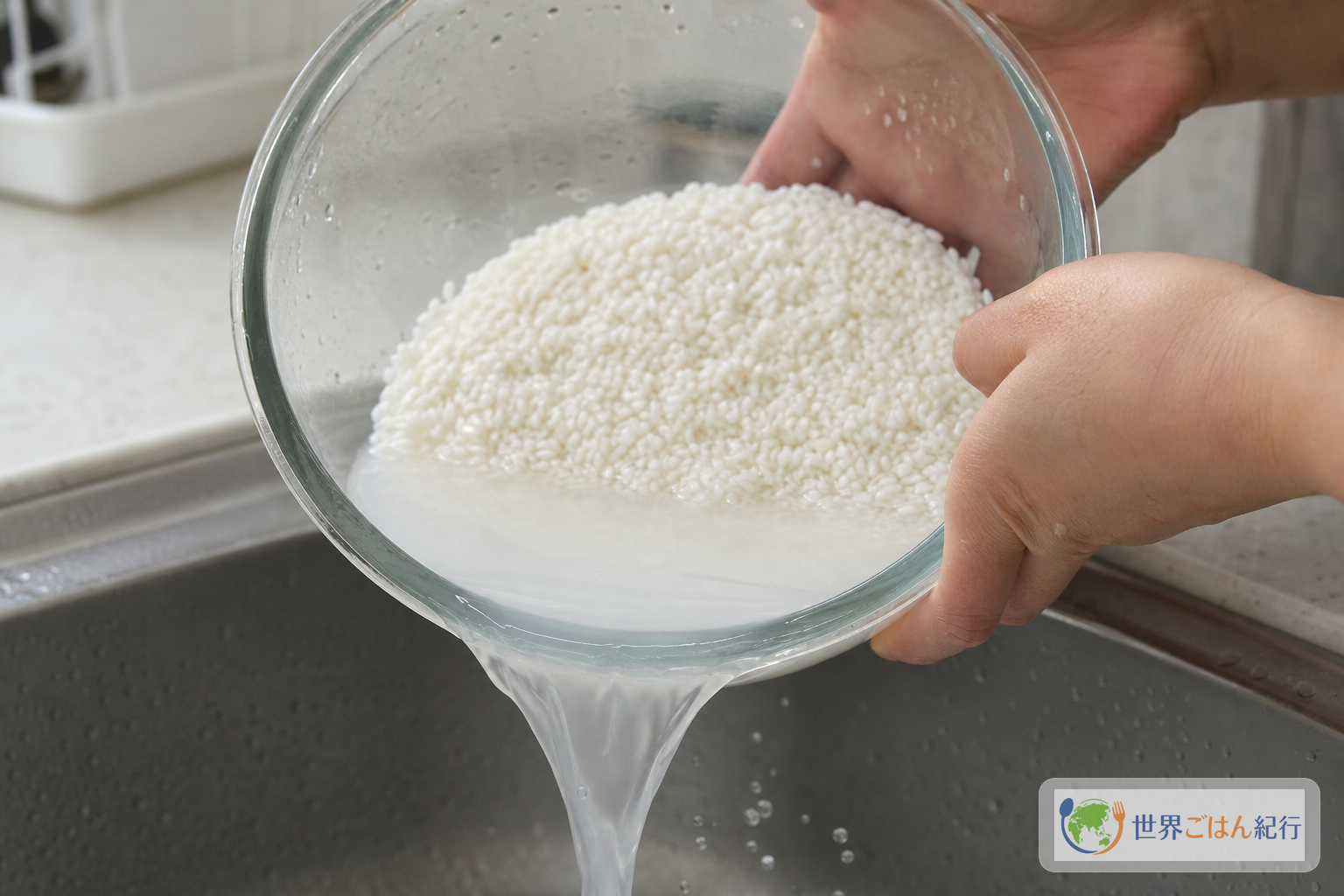
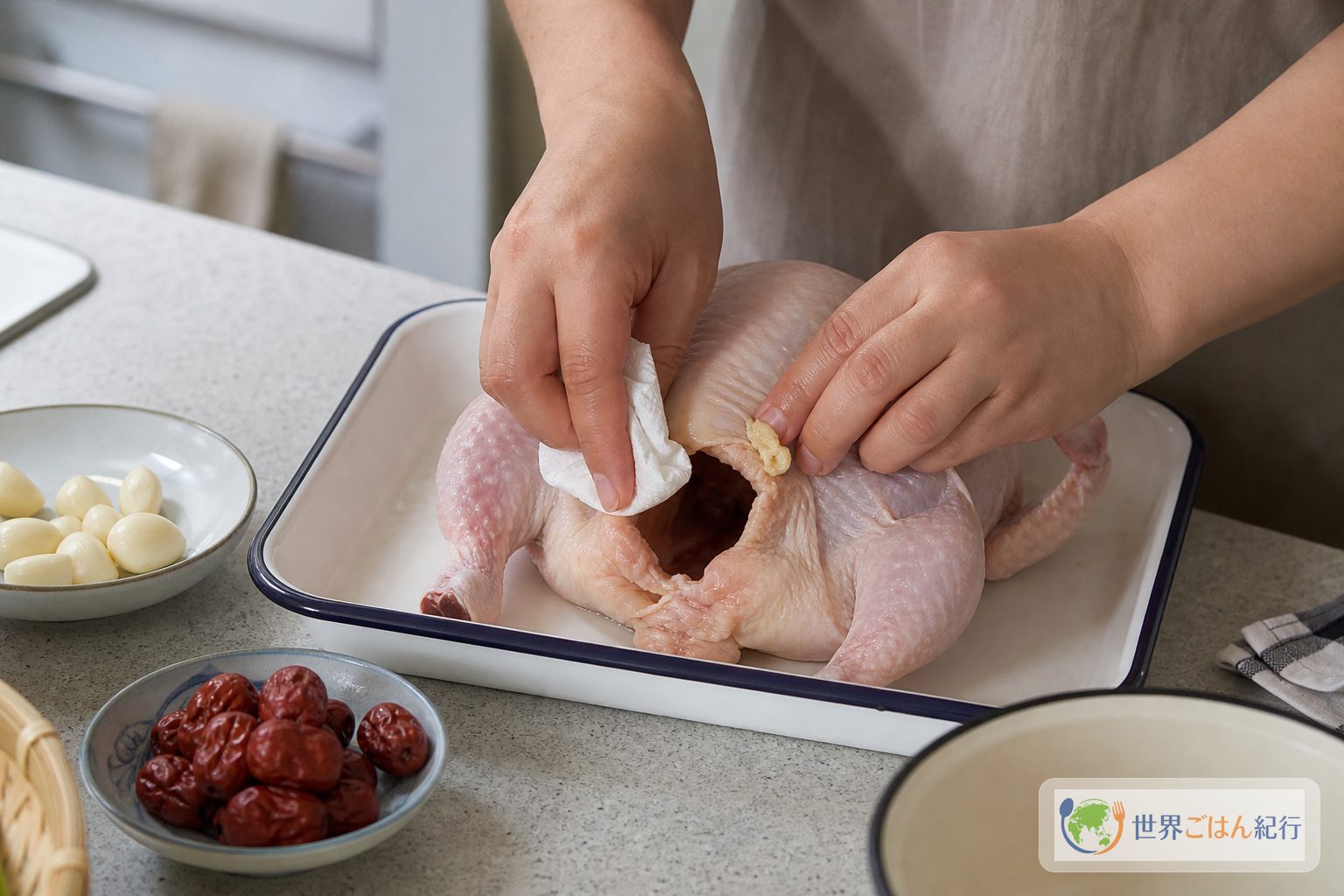
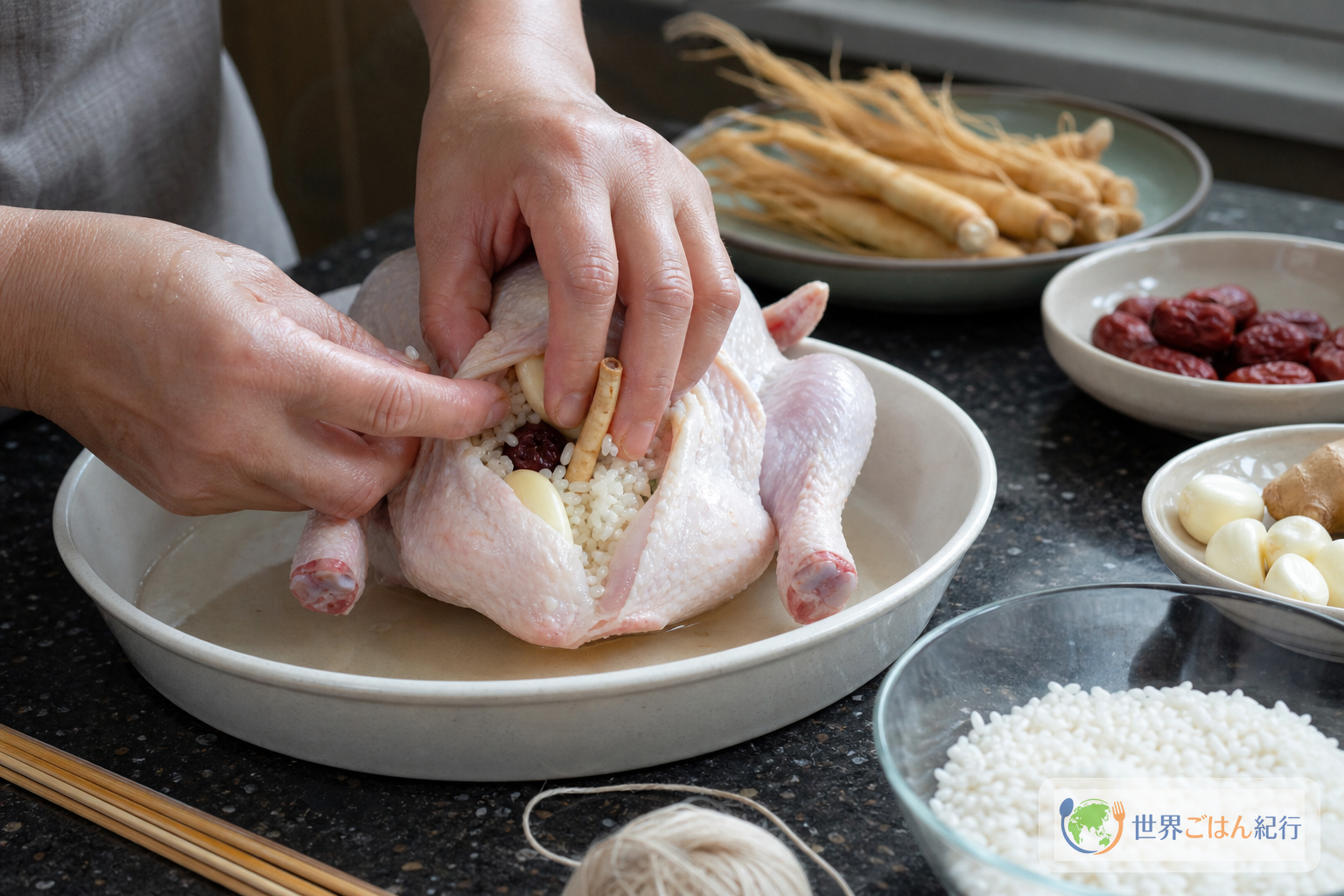
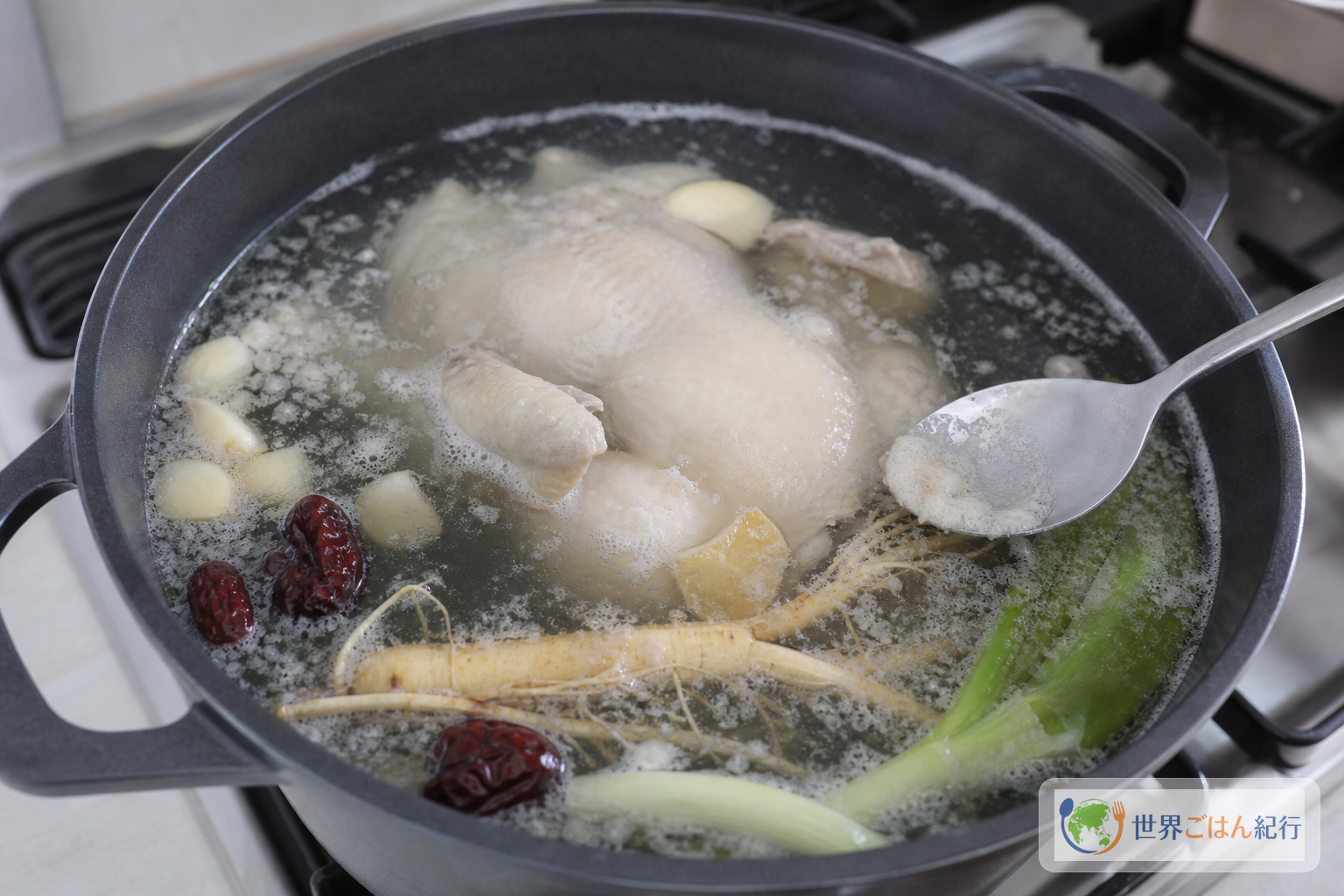
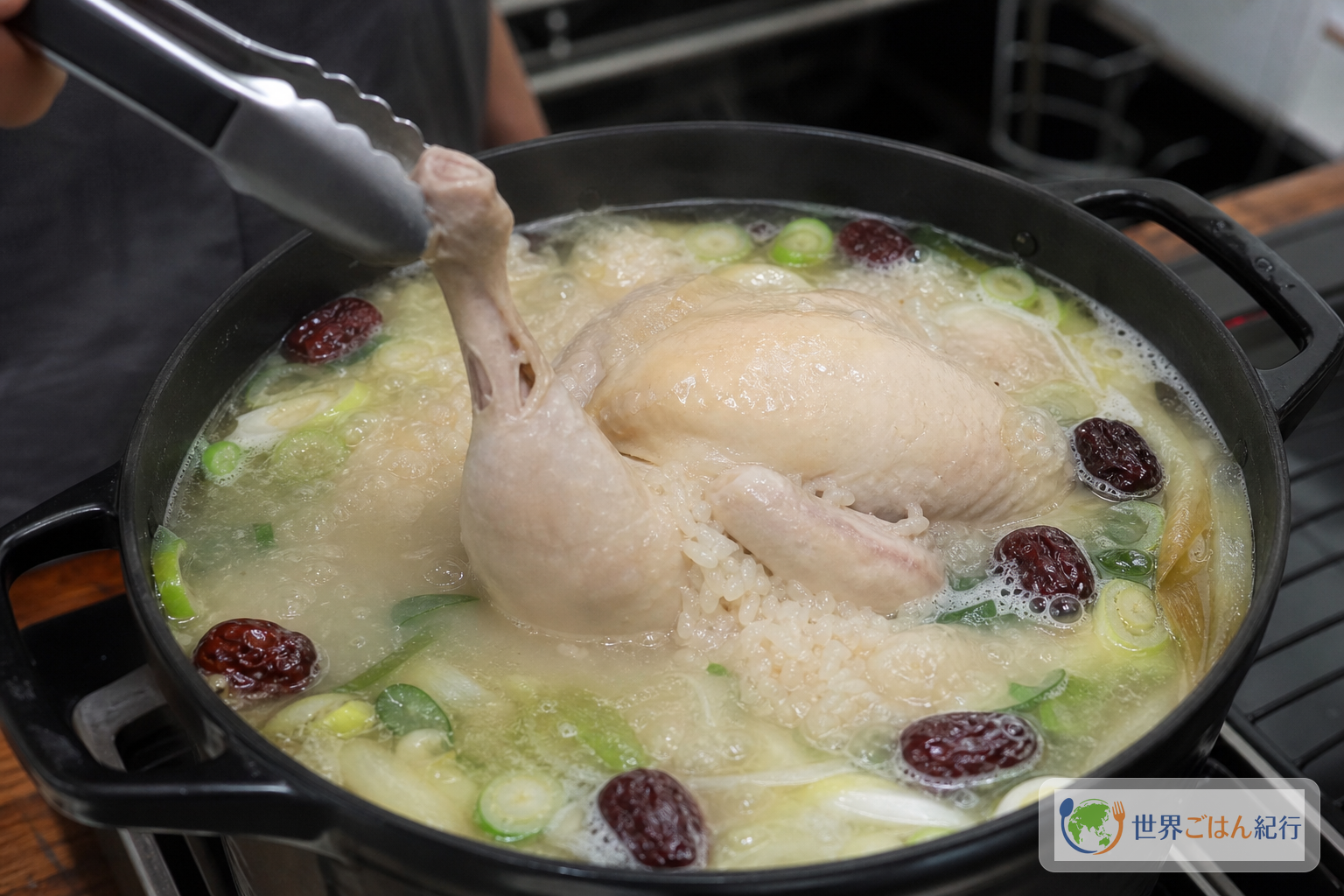
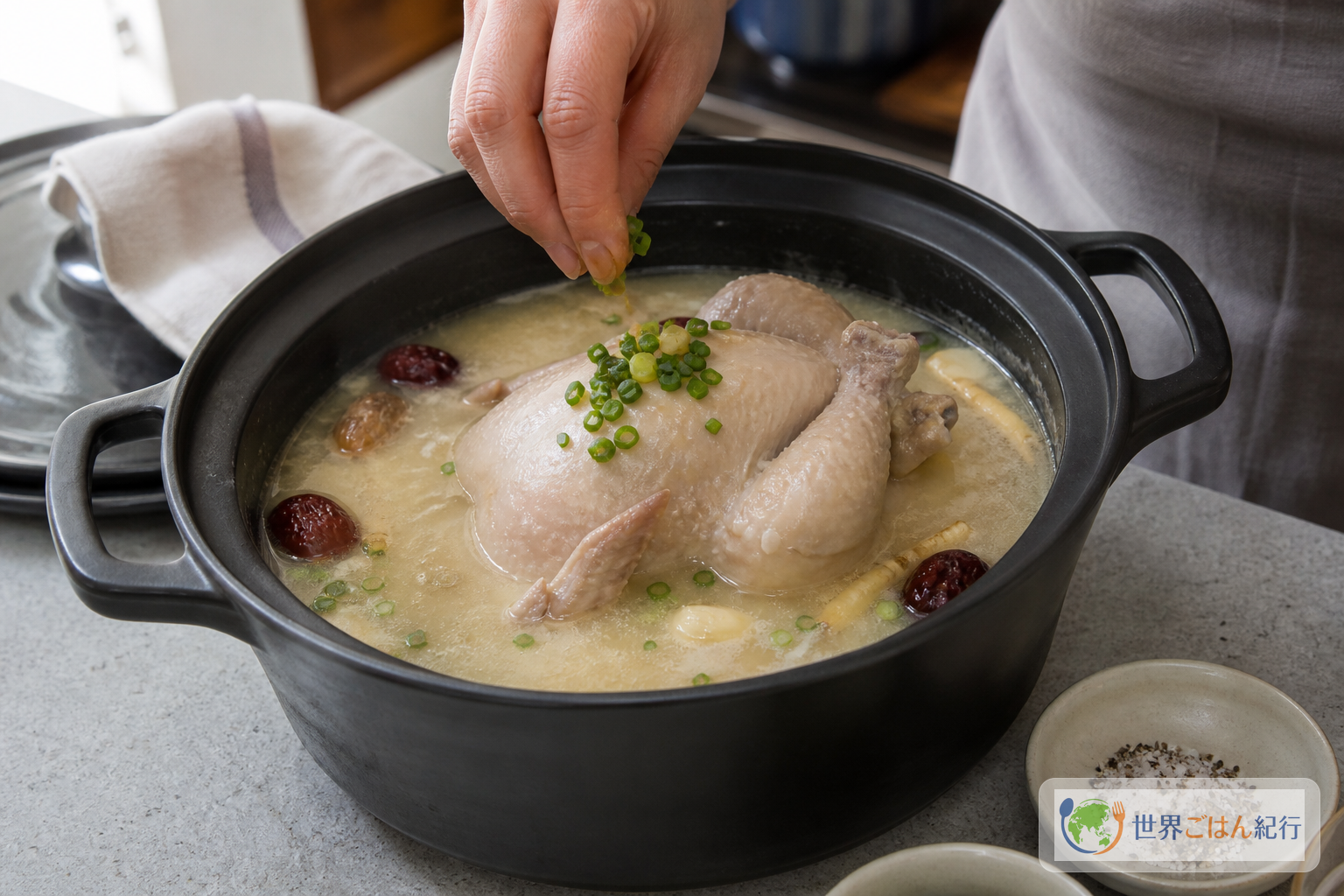
Hot chicken soup on a sweltering day may sound odd, but that is exactly the season Korean samgyetang (삼계탕) belongs to. A whole chicken is stuffed with glutinous rice, garlic, jujubes and ginseng, then simmered quietly until the broth turns milky. Lift the lid and the sweet smell of chicken fat and rice rises up, and suddenly your kitchen feels like a Korean soup restaurant.
What makes it look difficult is the whole chicken and the ginseng. But what really separates success from failure is far more mundane. Don't overstuff the rice. Don't keep it at a hard boil. Don't try to get the seasoning exactly right in the pot. Follow those three rules and even on a home stove you can get close to tender, falling-apart chicken and a gentle, milky broth.
This recipe makes 4 servings from one small whole chicken. It also covers what to do when you can't find ginseng, what to watch for with dried samgyetang herb packs, and how to adapt it to bone-in chicken legs, so you won't be left guessing at the store.
What is samgyetang? Korea's hot chicken soup for hot days
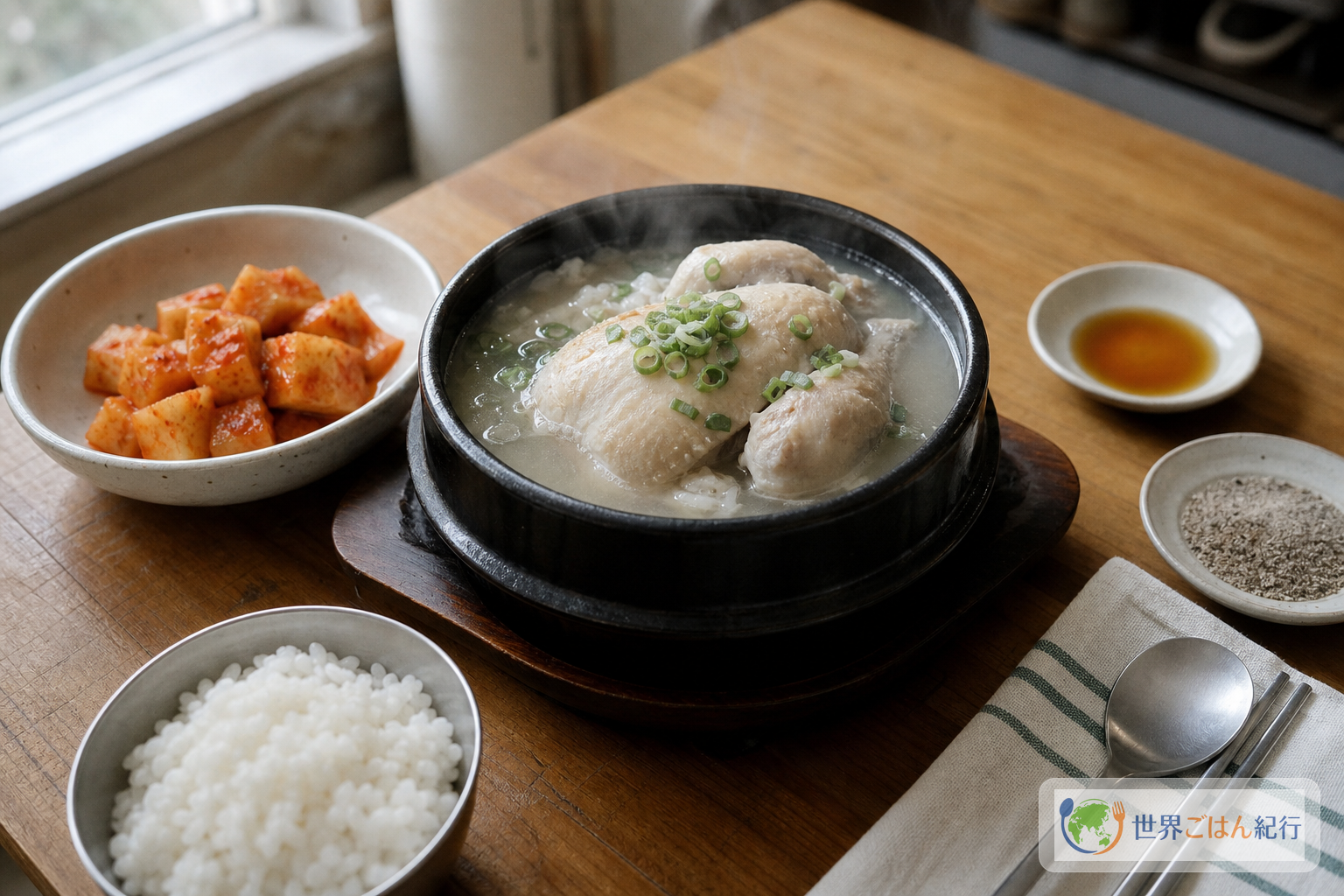
Samgyetang is written 蔘鷄湯 in hanja: sam is ginseng, gye is chicken and tang is soup. A young chicken is stuffed with glutinous rice, garlic, jujubes and ginseng and simmered; at restaurants a small whole bird often arrives in an individual earthenware pot.
In Korea it is tied to the idea of "fighting heat with heat" (iyeol chiyeol), eating something hot in the hottest part of summer. It is often described as part of the food culture of the dog days known as chobok, jungbok and malbok, a way of getting through summer from the opposite direction of cold noodles and shaved ice. This article doesn't make any claims about medicinal or health benefits; it focuses on cooking a good home-style dish. If you have concerns about ginseng, or are pregnant or taking medication, leave it out or ask a professional whether it's appropriate for you as a food.
Among Korean soups and stews, kimchi jjigae (in Japanese) revolves around sourness and heat, and doenjang jjigae around the fermented aroma of soybean paste. Samgyetang keeps the salt low and lets you match the mellow flavors of chicken, glutinous rice and garlic with salt and pepper at the table. Unlike bibimbap (in Japanese), which is finished by mixing, stopping while it still tastes a little underseasoned in the pot is closer to how it's eaten in Korea.
Ingredients and shopping: whole chicken, glutinous rice and jujubes
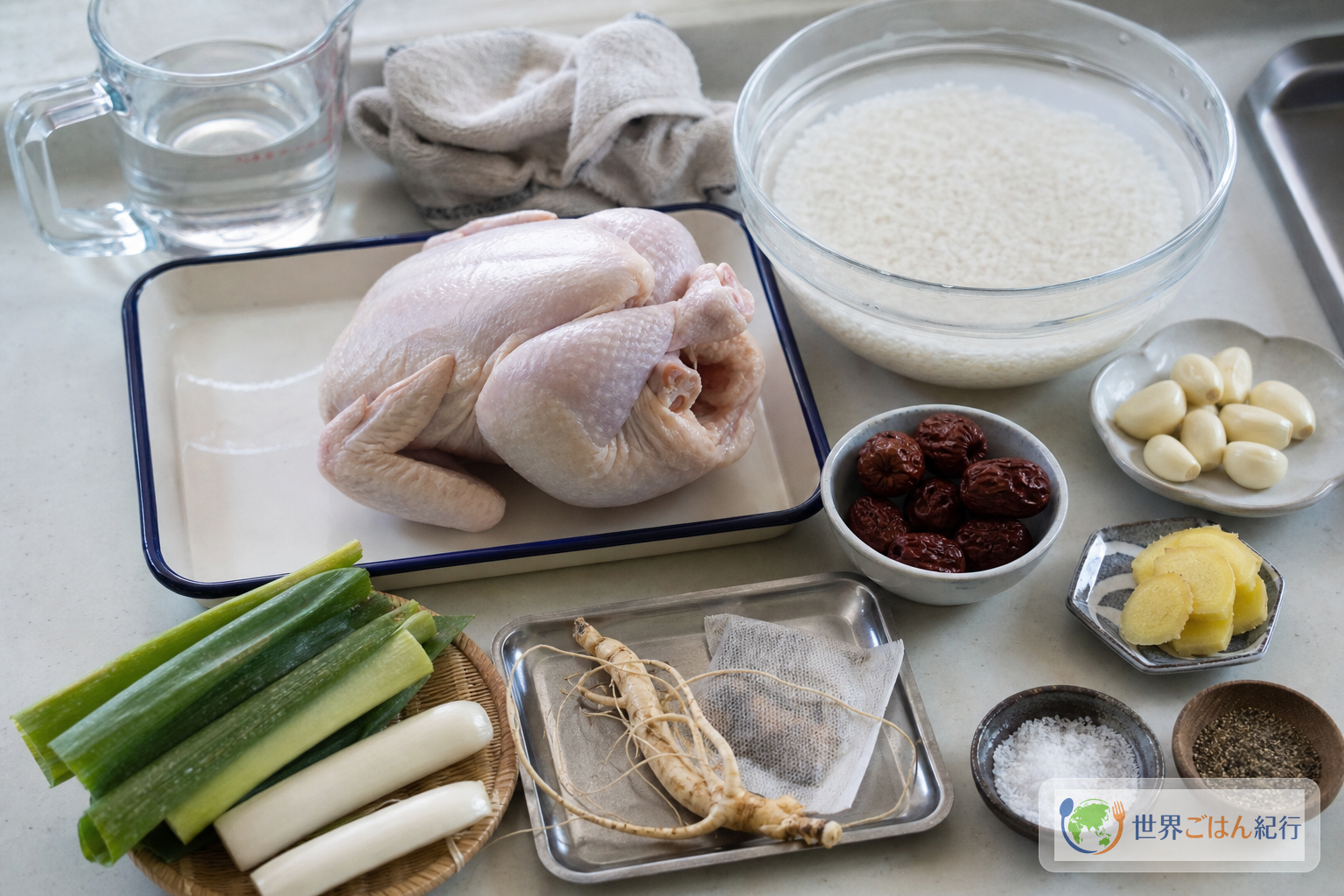
To share among 4 people, an eviscerated whole chicken of 900 g to 1.2 kg (2–2.6 lb) is easiest to handle. Rather than finding one small young bird per person as Korean restaurants do, simmering one chicken and dividing it is easier to shop for and fits in the pot better.
If you can't get ginseng, use one dried samgyetang herb pack instead. These packs may also contain astragalus root, licorice root, jujubes and more, and the aroma varies widely by product. The first time, use the amount on the package; if the herbal aroma is too strong once it's cooked, halve it next time for an easier-to-eat soup.
If you can't find a whole chicken, you can make it with 2 bone-in chicken legs and 4 drumettes. Since there's no cavity to stuff, put the 90 g glutinous rice in a spice or stock bag, or add it directly to the pot after 30 minutes of simmering for a result closer to chicken rice porridge. It drifts a little from whole-chicken samgyetang, but it's plenty to try out the flavor at home.
What you can swap and what to keep
| Ingredient in question | How to substitute | What to keep |
|---|---|---|
| Whole chicken | Bone-in legs and drumettes get the flavor close | Rice stuffed in the cavity is hard to reproduce without a whole bird |
| Ginseng | Try a dried samgyetang herb pack | If you don't like the herbal aroma, leave it out. Don't replace it with another sweet root vegetable |
| Dried jujubes | The soup works without them | Raisins or prunes push the sweetness in a different direction |
| Glutinous rice | Regular rice works in a pinch | Using more turns it into porridge and it won't hold together in the cavity |
| Korean sesame oil | Regular sesame oil is fine | For dipping the meat at the table, Korean sesame oil is closer to the real flavor |
What matters most in this dish is the structure of rice swelling inside the whole chicken and soaking up its broth. Ginseng and jujubes give the soup its character, but not overstuffing the rice and cooking slowly over low heat have a bigger effect on the result.
Buy the chicken, leek, garlic, ginger and kimchi where you can check their condition. For ginseng and jujubes, check what a Korean grocery has or read the labels on samgyetang kits, and if you're not used to them, start with a small amount.
Troubleshooting and storage: rice, heat and the next day
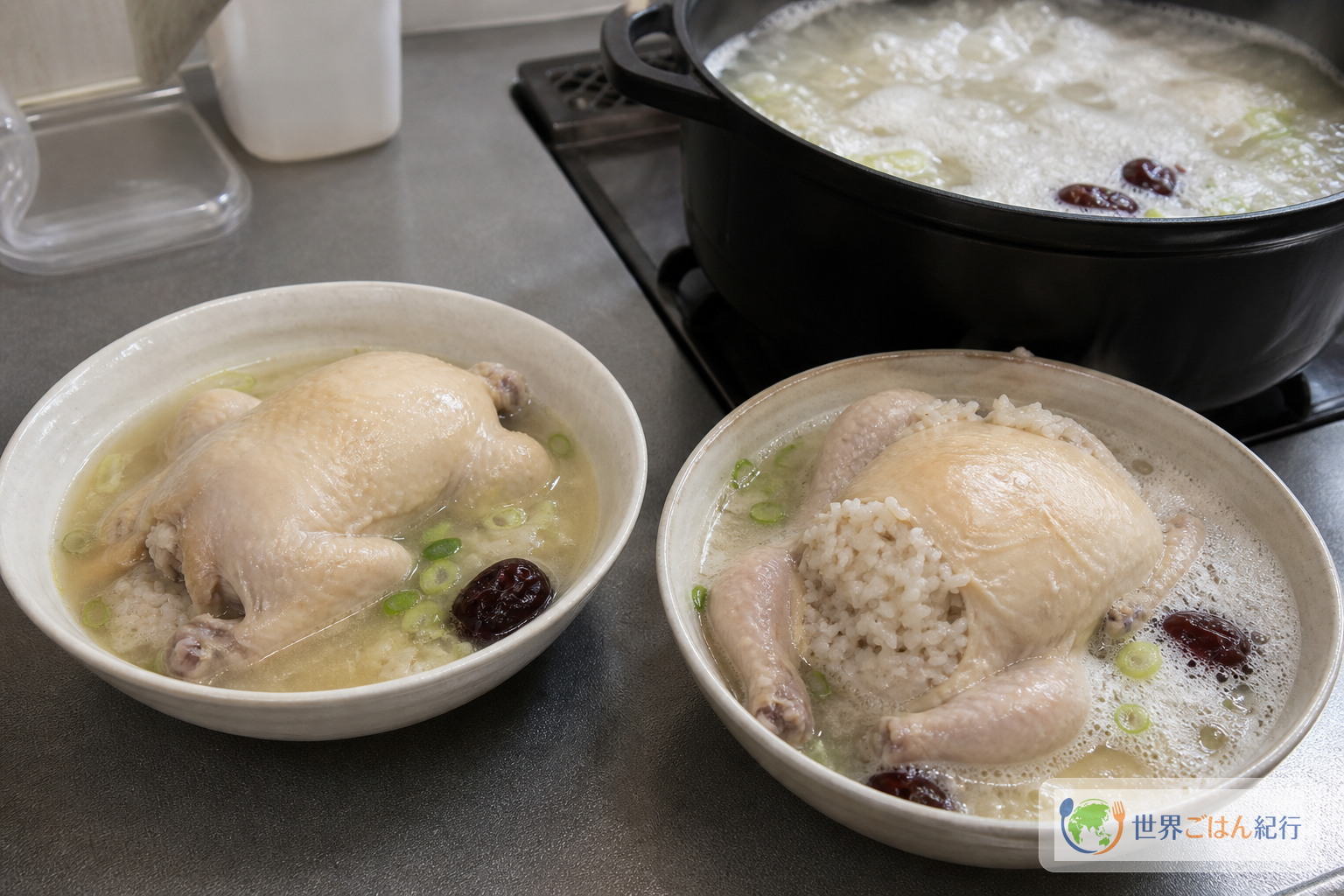
The rice leaks out
There are three causes: too much glutinous rice, a loosely closed opening, and boiling too hard. It's safer not to put all the rice in the cavity, adding about 20 percent directly to the pot. When closing with a skewer, don't pull the skin too tight; just draw the opening loosely together. A hard boil forces the rice out of the cavity, so once it boils, keep the heat low enough for small bubbles at the sides of the pot.
The chicken is tough
This tends to happen when it's boiled hard for a long time. Use medium heat only until it boils, turn it down to low after skimming, and if you have a thermometer, use 75°C (167°F) as your guide. If it's already tough, shred the meat back into the broth and eat it as porridge with the glutinous rice, so nothing goes to waste.
It smells too herbal
Too much ginseng or herb pack pushes the herbal aroma ahead of the chicken. The first time, use about 10 g ginseng, or stick to the labeled amount for one herb pack. If bitterness bothers you, adding salt and pepper at the table restores the outline of the flavor better than adding more salt to the pot.
Making it with bone-in chicken
When you don't have a whole chicken, use 2 bone-in chicken legs and 4 drumettes. Put the glutinous rice in a stock bag, or add it directly to the pot 30 minutes after you start simmering. Plan on 10 minutes over medium heat, 35 minutes over low heat and a final 10 minutes over low heat. It won't look like a whole bird, but you can still fully enjoy the combination of chicken broth and glutinous rice.
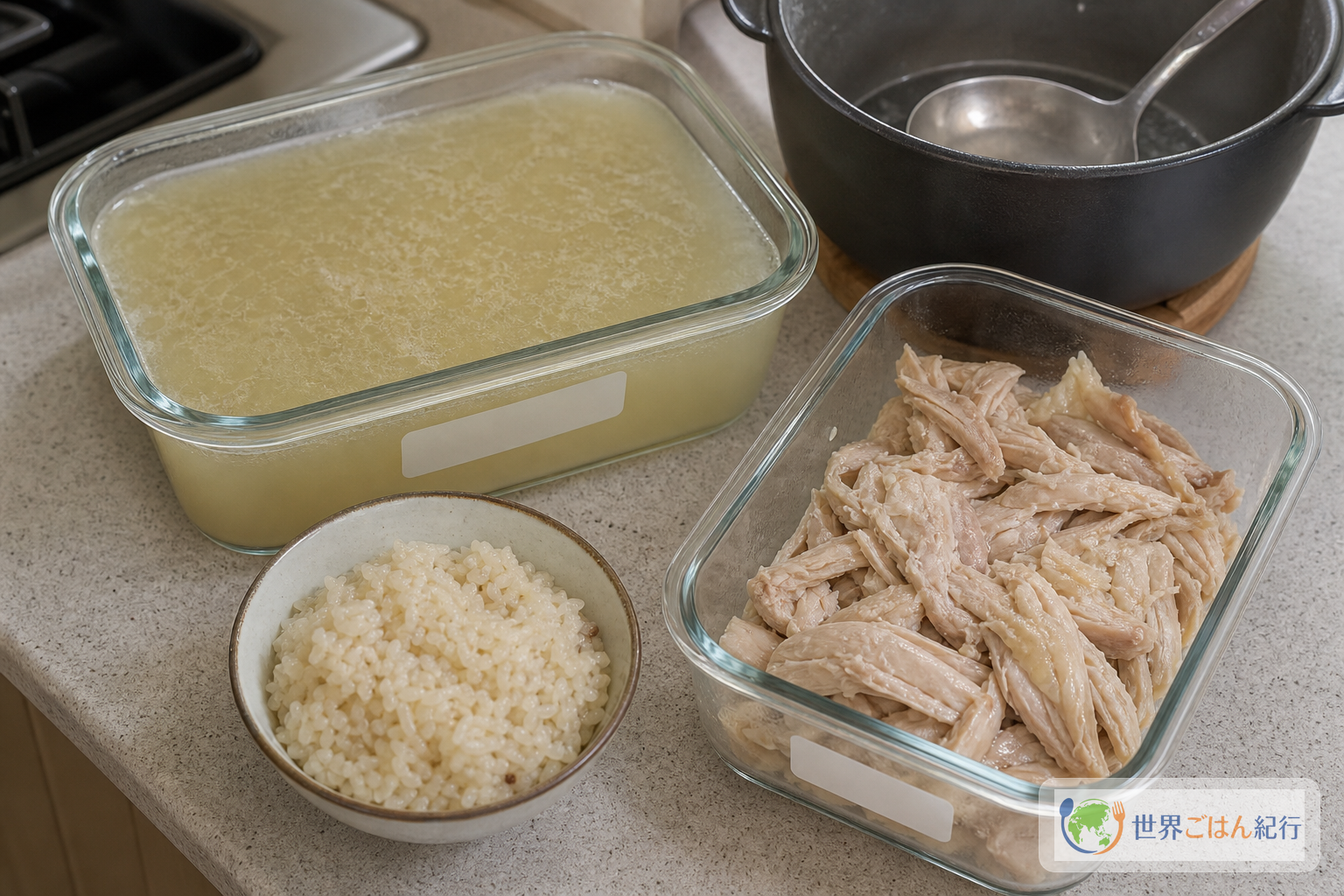
For storage, it's easiest to let it cool slightly, then separate the chicken, broth and glutinous rice. Keep for 2 days in the refrigerator or 2 weeks in the freezer. To reheat, warm the broth in a pot over low heat; when it's bubbling gently, return the chicken and heat for 5 minutes. Blasting it in the microwave tends to tighten the meat, so on days when you have time, the pot gives a better texture.
The next day, use more scallions and slightly more salt and pepper to keep the flavor from going flat. The sourness of kimchi or kkakdugi keeps the white broth from getting monotonous. For a lighter dinner, serve it with a green vegetable namul, roasted seaweed and quick-pickled cucumber.
More to cook
- How to make mandu - Keep cooking from the same country's table.
FAQ: can you make it without ginseng?
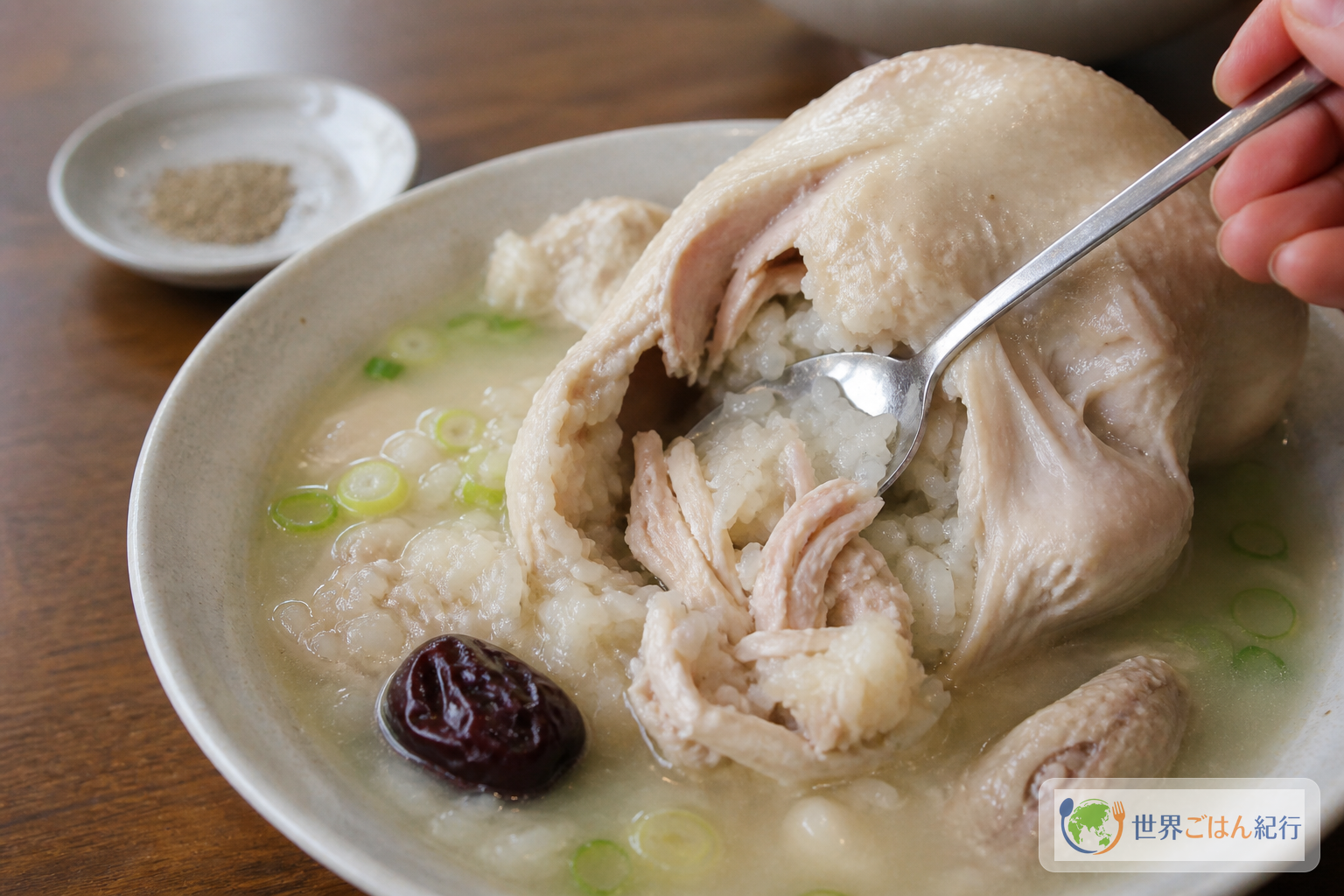
Is it still samgyetang without ginseng?
Without ginseng, you can still make a delicious soup of chicken, glutinous rice, garlic and jujubes. The aroma that makes Korean samgyetang distinctive will be weaker, though. Rather than buying expensive ginseng the first time, start with a small amount of a dried samgyetang herb pack from a Korean grocery to judge whether you like the aroma.
Can I use regular rice?
You can, but the texture changes. Glutinous rice holds together plumply inside the chicken and gives the broth a soft body. Regular rice alone tends to fall apart, making it closer to chicken porridge. If regular rice is all you have, reduce it to 70 g, soak for 30 minutes and don't overstuff.
Can I use a pressure cooker?
You can, but a regular pot is recommended the first time. A pressure cooker gets the chicken tender quickly, but you can't check midway how much the rice has swollen or whether the skin has torn. If you use one, keep the water below the pot's maximum line, cook at pressure for about 15 minutes, let the pressure release naturally for about 10 minutes, then open the lid and adjust the seasoning over low heat for about 5 minutes.
Can I add a samgyetang kit as is?
Follow the amount on the package. Products that mix dried jujubes, ginseng, astragalus, licorice and so on can have a strong aroma. The first time, use the labeled amount, or half of it for a small chicken, and increase it next time if it seems lacking; that's the safer approach.
If it tastes bland, should I add salt to the pot?
Only a little. Samgyetang is seasoned with salt and pepper at the table, so if you fully season it in the pot, it tends to feel heavy toward the end. Put no more than 1/2 tsp in the pot, and add coarse salt, black pepper and sesame oil a little at a time in the bowl.