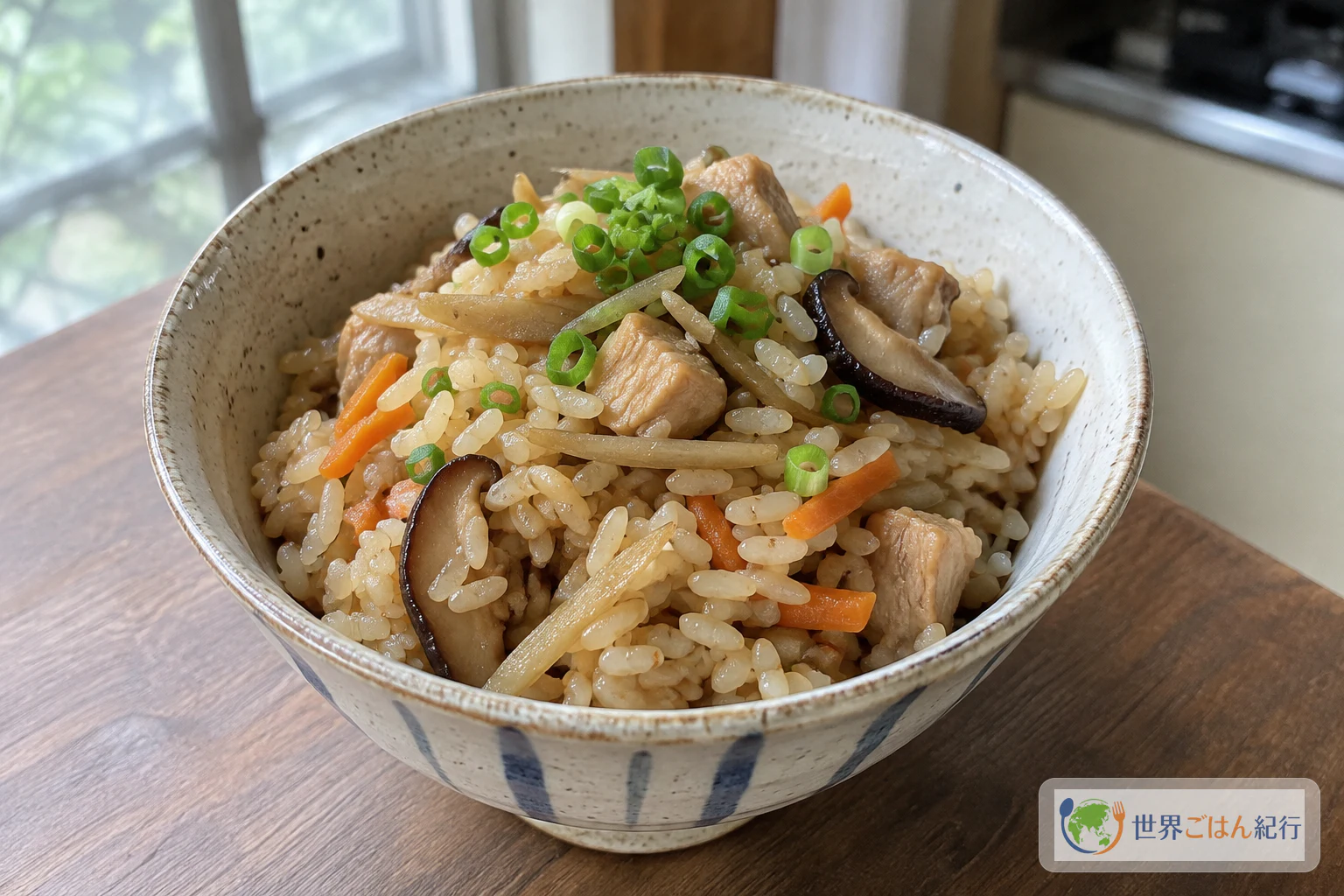
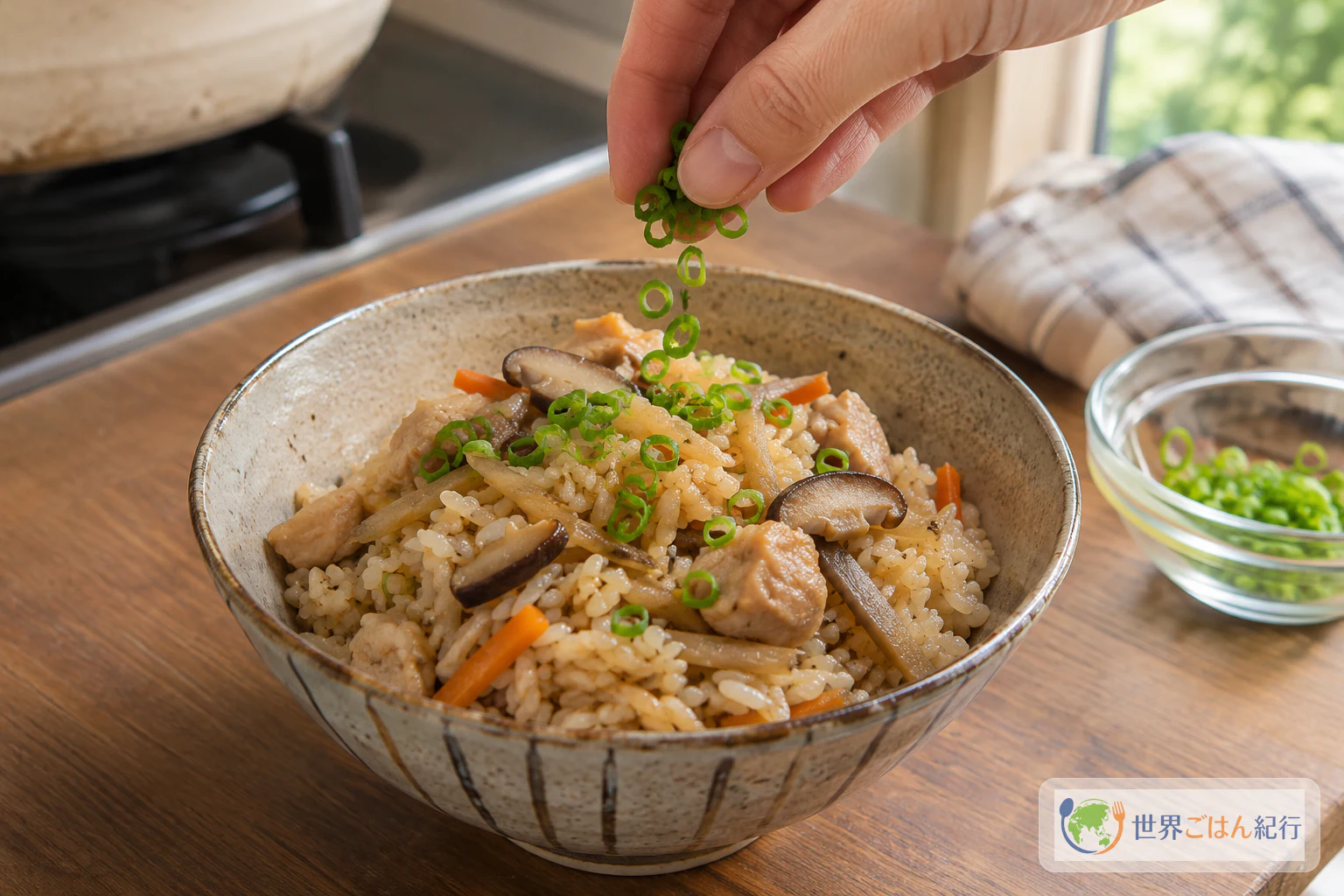
Kashiwameshi: Sweet-Savory Chicken and Burdock Folded Through Hot Rice
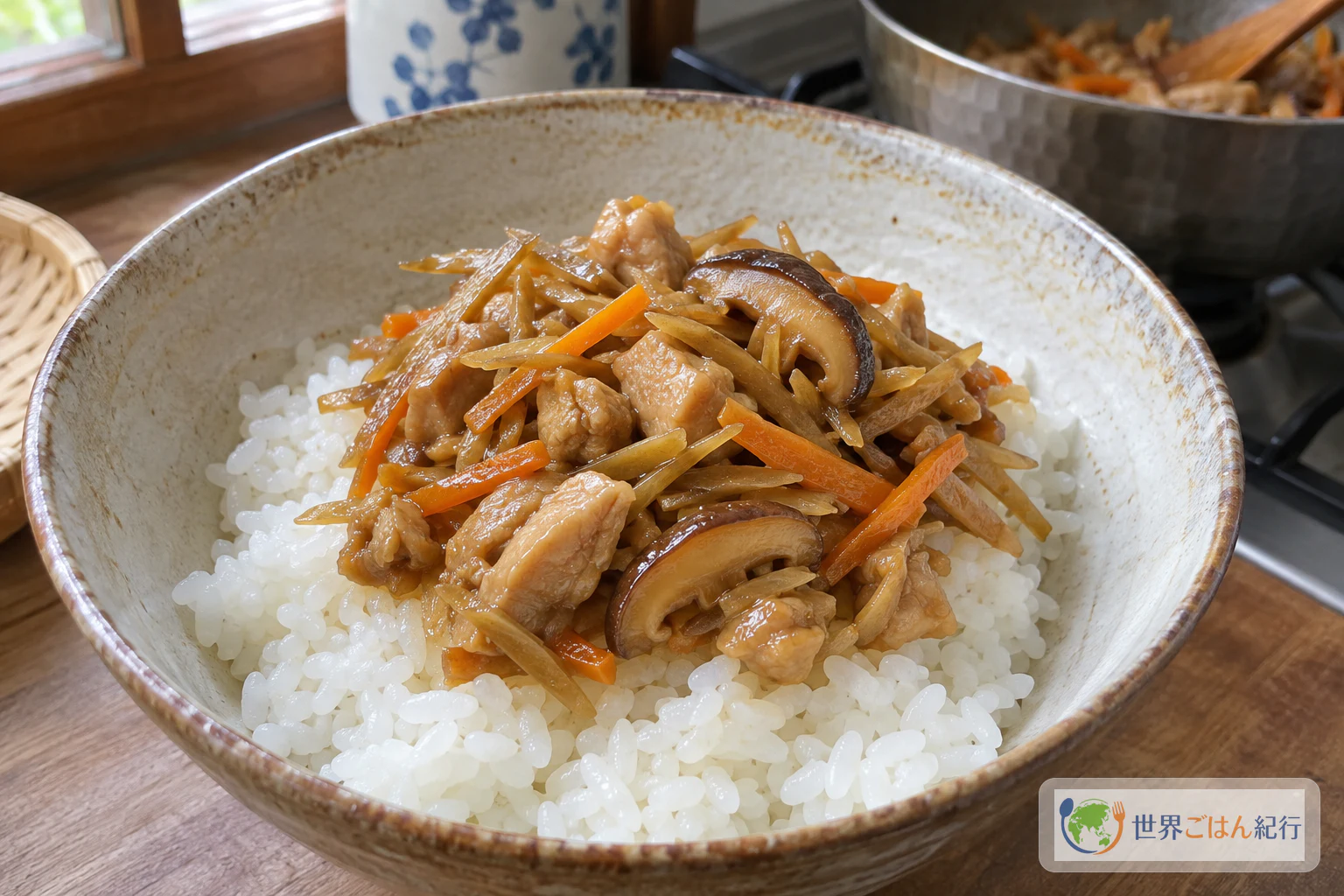
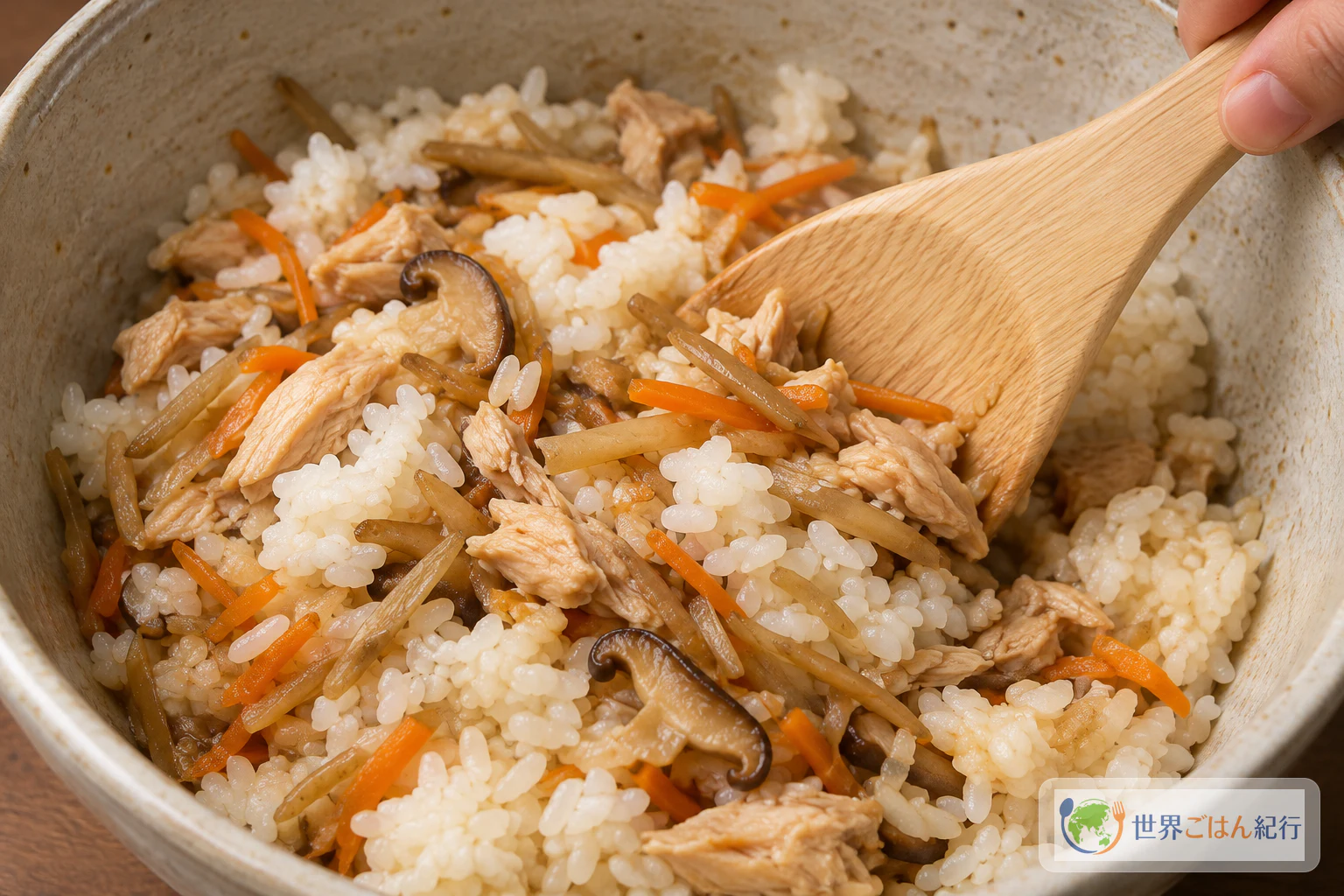
The rice is cooked plain and on its own. The chicken and vegetables are simmered separately in a sweet-savory sauce, mixed through the cooked rice, and finished with raw scallions.
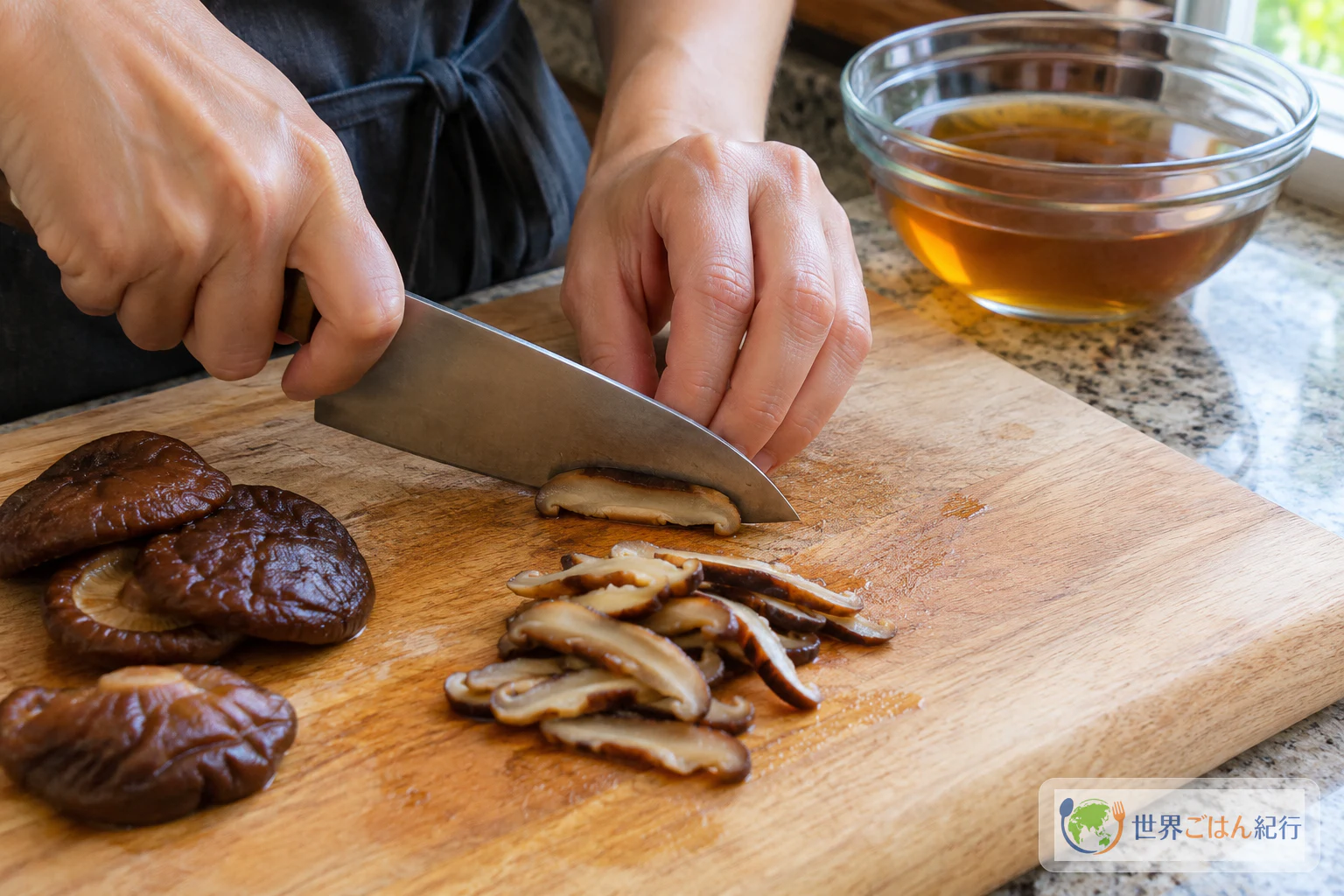
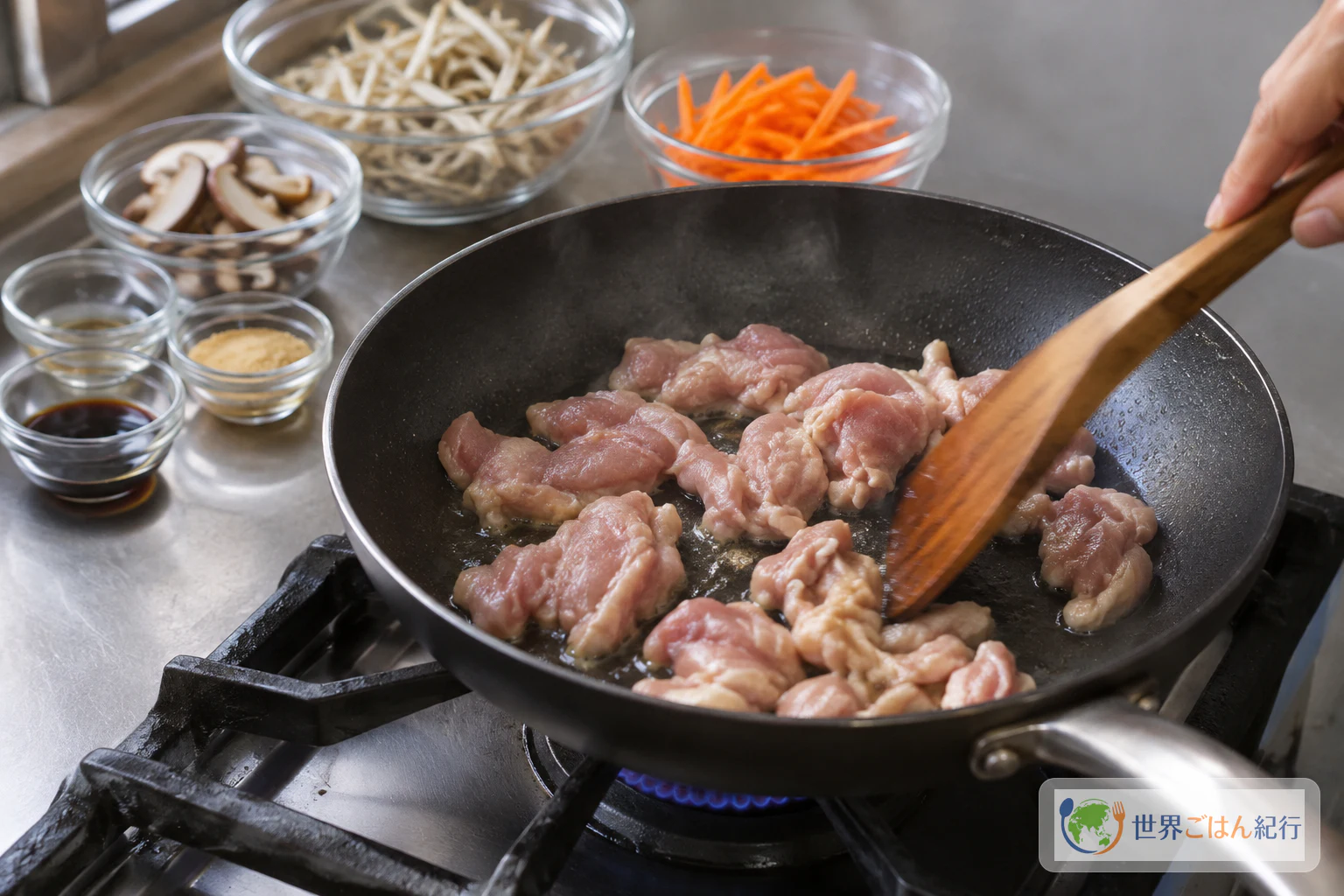
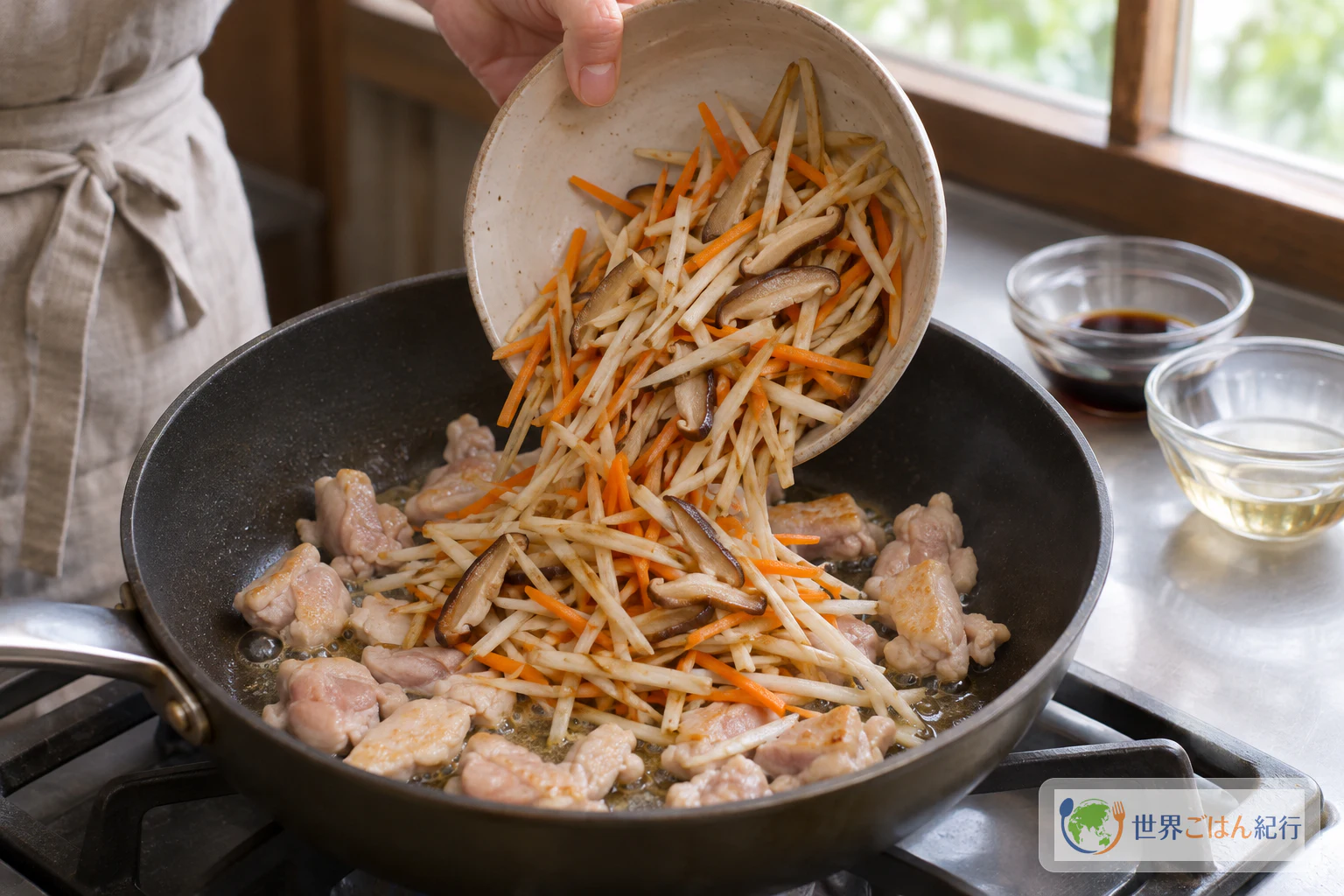
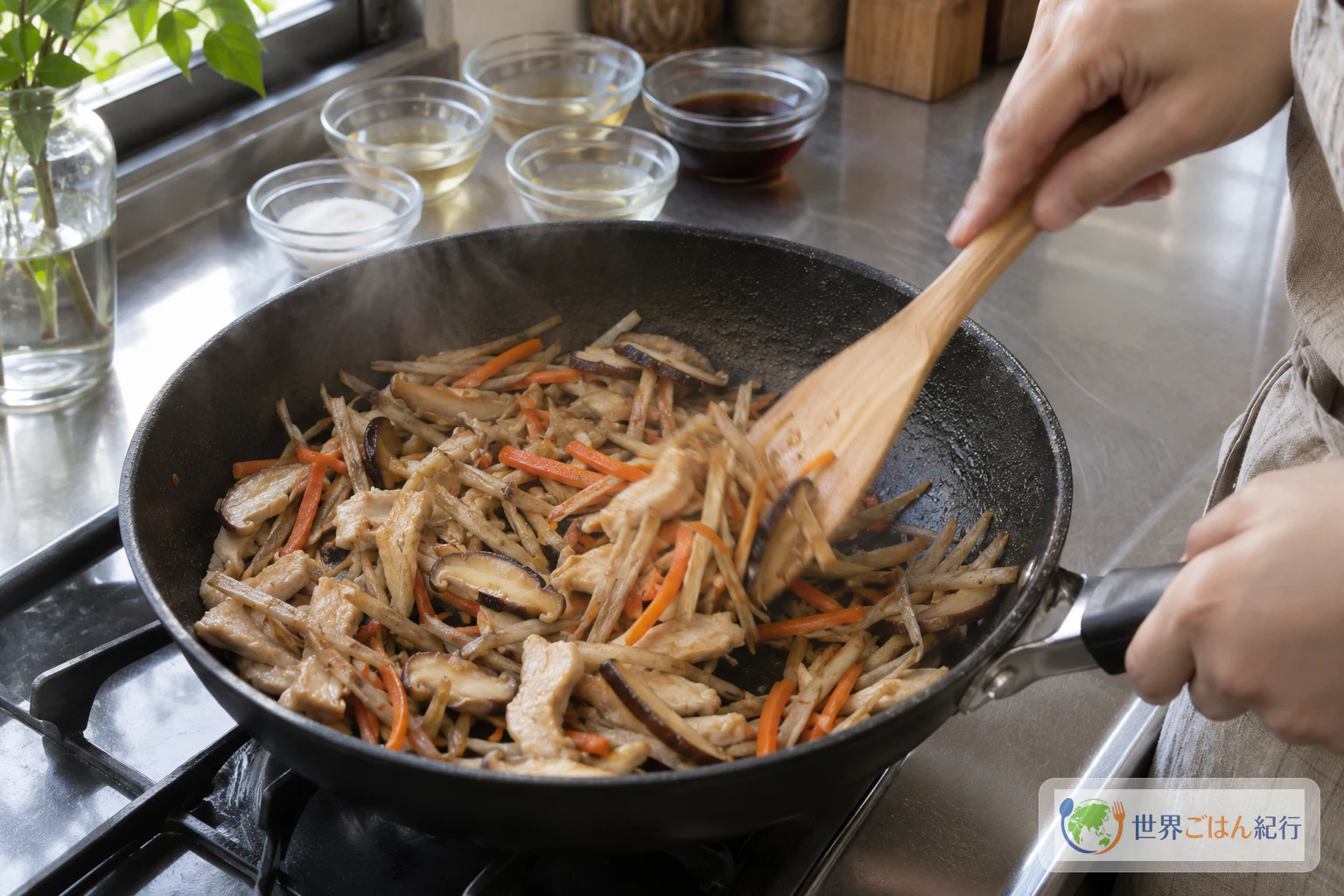
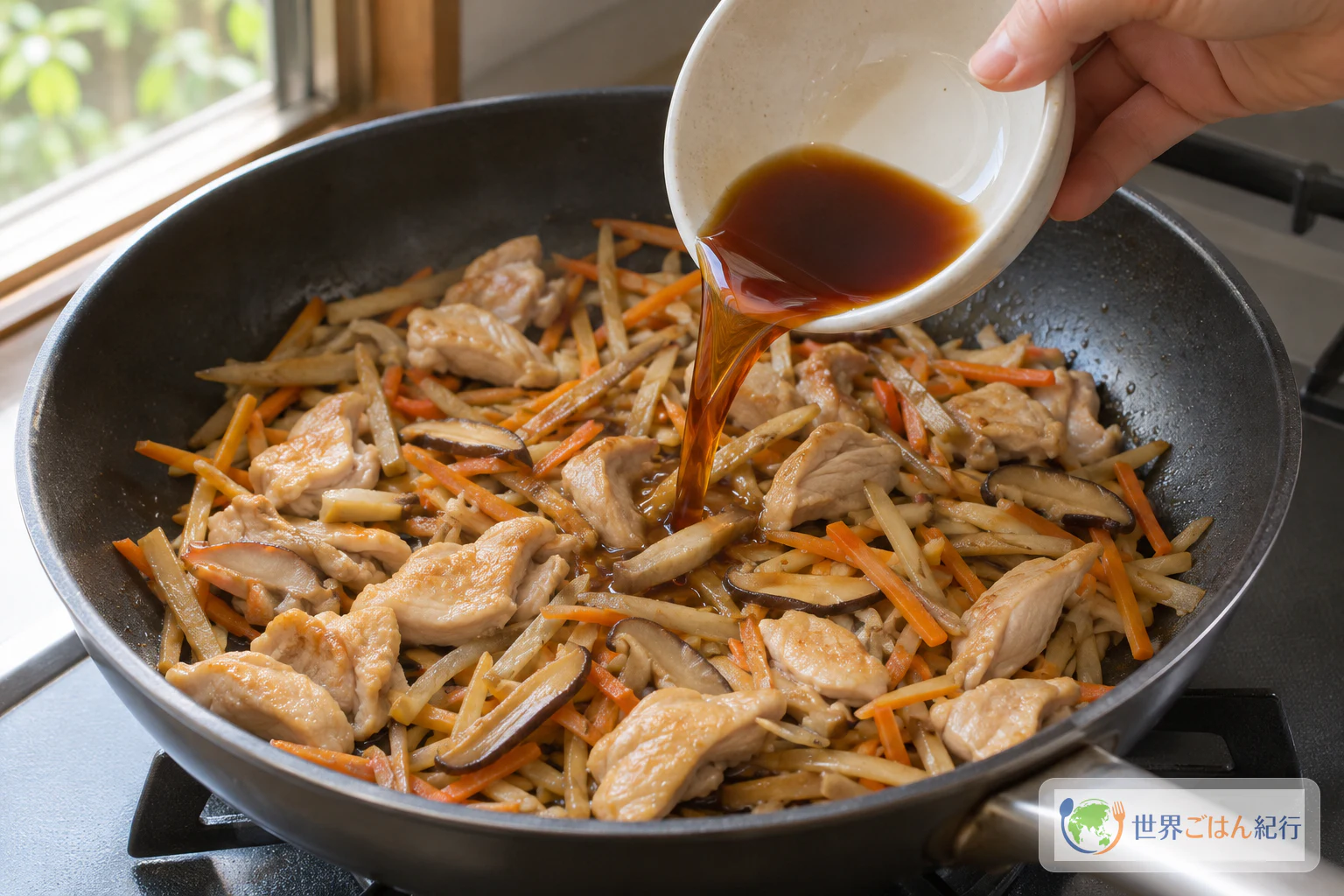
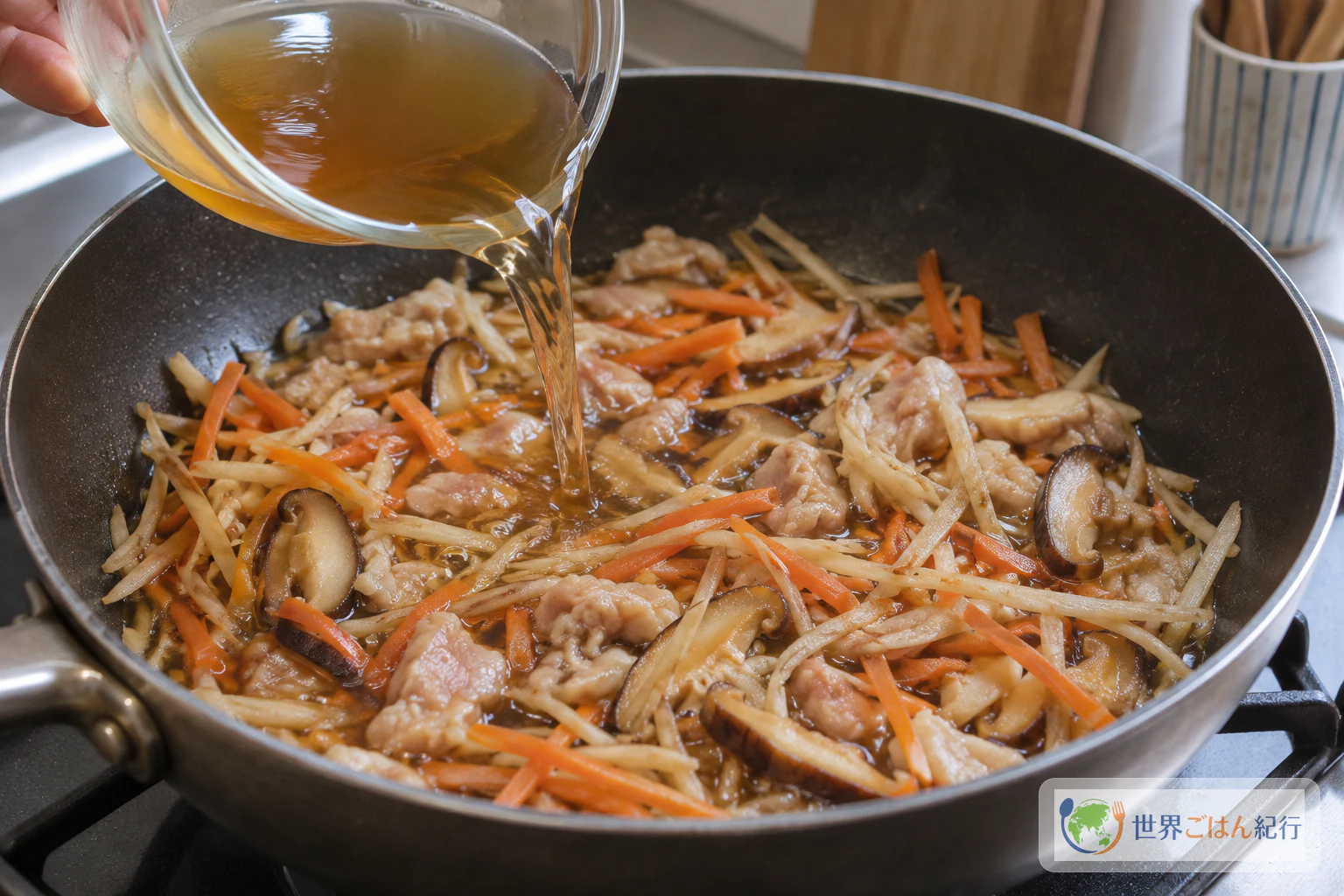
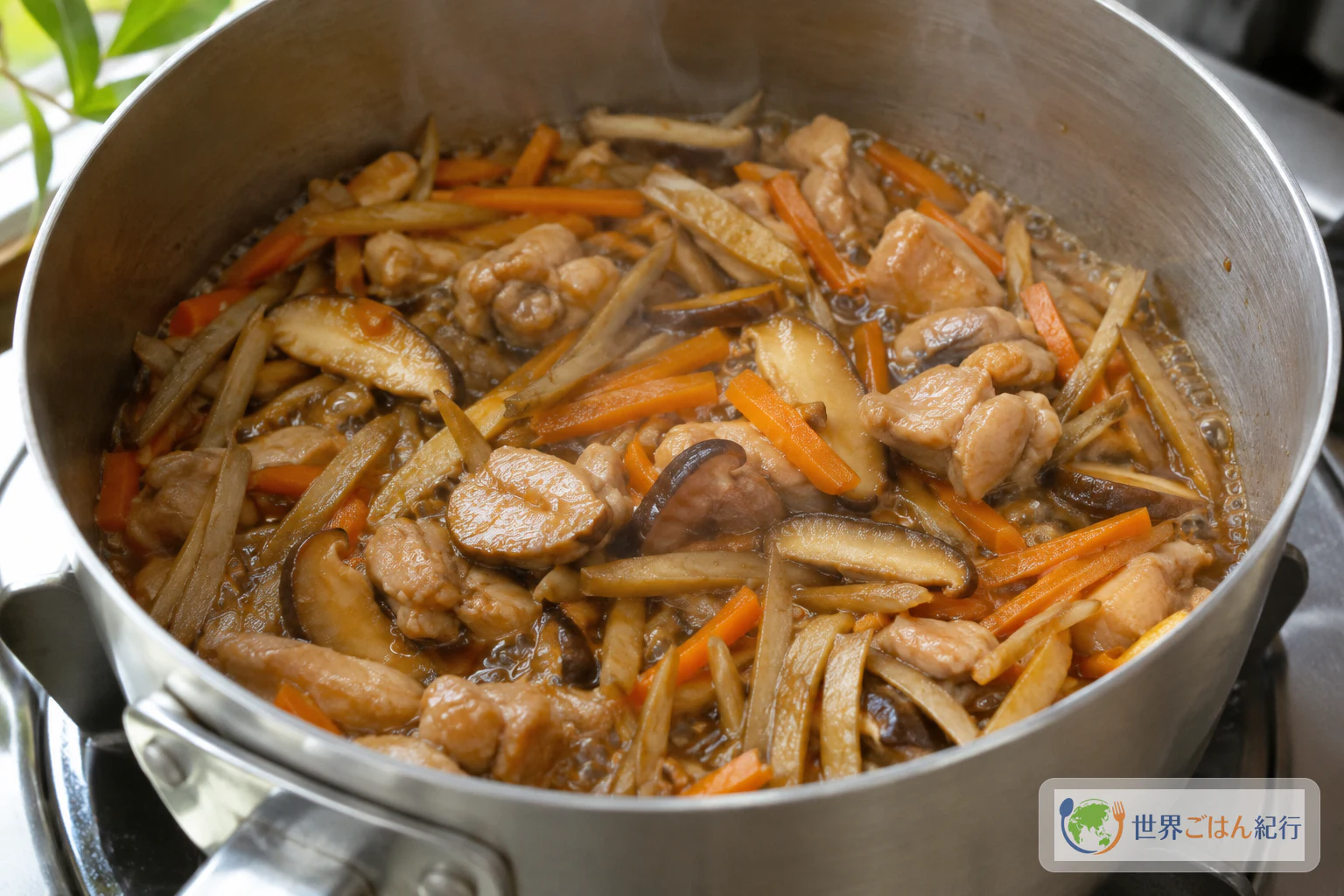
Steam rises from a pot of plain white rice while, in a frying pan nearby, chicken, burdock, carrot and dried shiitake simmer down in sake, sugar, mirin, soy sauce and the mushrooms' own soaking liquid. Once the sauce has reduced and clings to the filling, everything goes into the rice and is folded through. That is kashiwameshi in the form presented here: a mixed rice, not a dish where the chicken cooks in the pot with the grain.
The recipe is the 4-serving version provided by the Health Promotion Division of Fukuoka City's Public Health and Medical Bureau and published on the regional-food pages of Japan's Ministry of Agriculture, Forestry and Fisheries (MAFF). Those pages note that ingredients and methods differ by area and household, so this is one representative version, not the only authentic one.
We have not kitchen-tested this recipe. The amounts and order of cooking follow the published recipe, and the food-safety notes come from separate public guidance.
Ingredients for 4 Servings
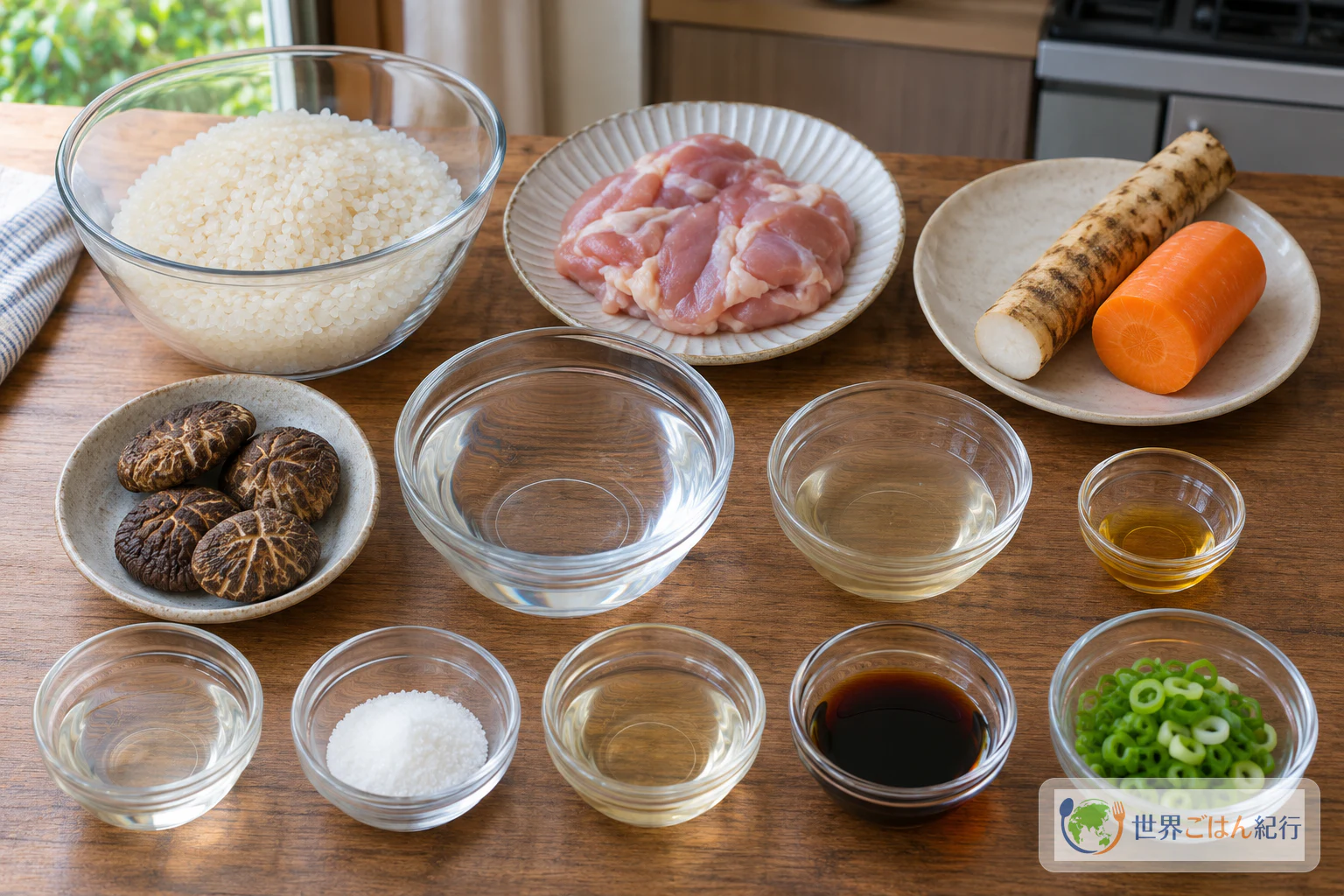
Choosing and Substituting
- Rice: Use ordinary non-glutinous Japanese rice. No particular variety is needed.
- Chicken: Ordinary chicken thigh works. Local Hakata jidori is not required.
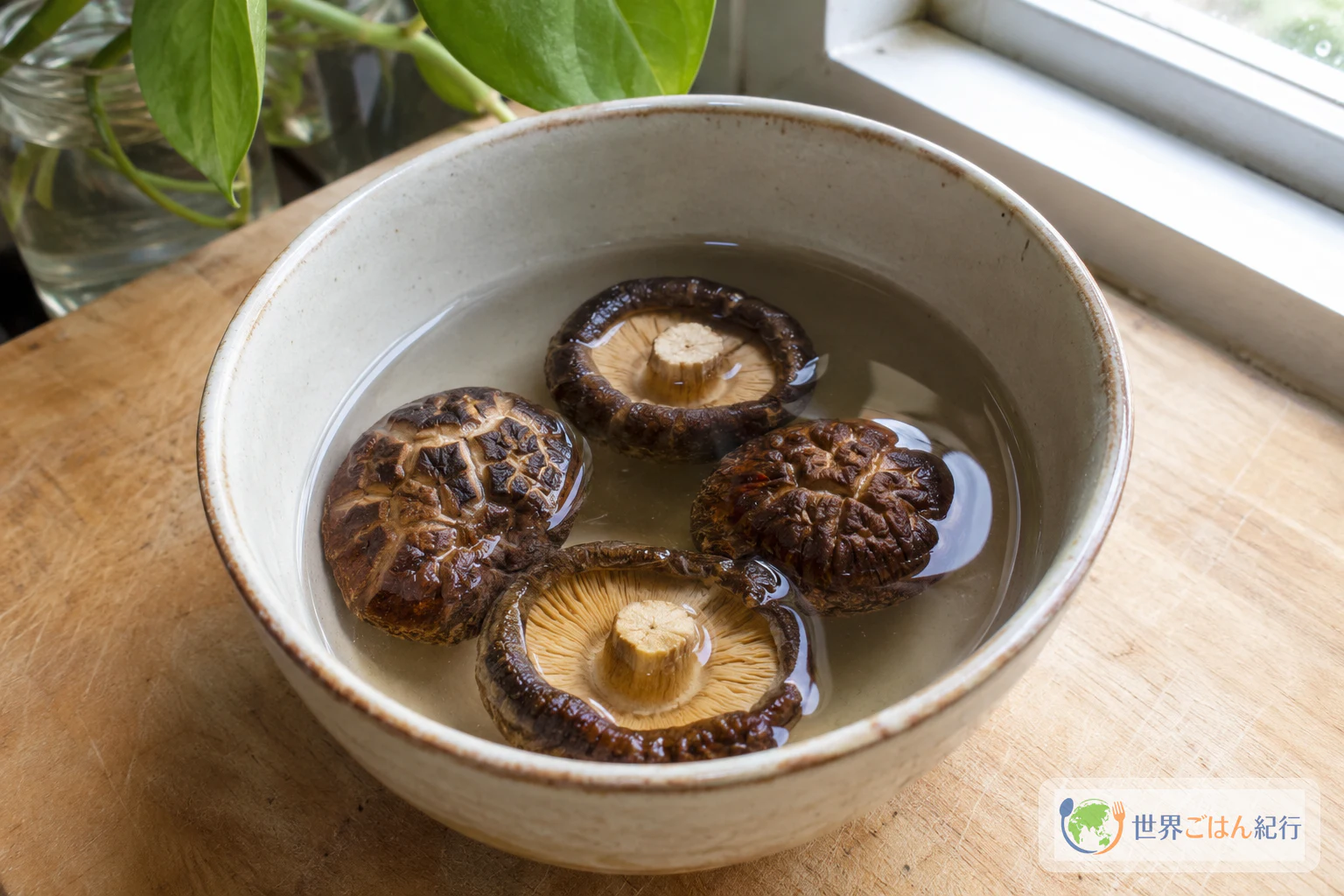
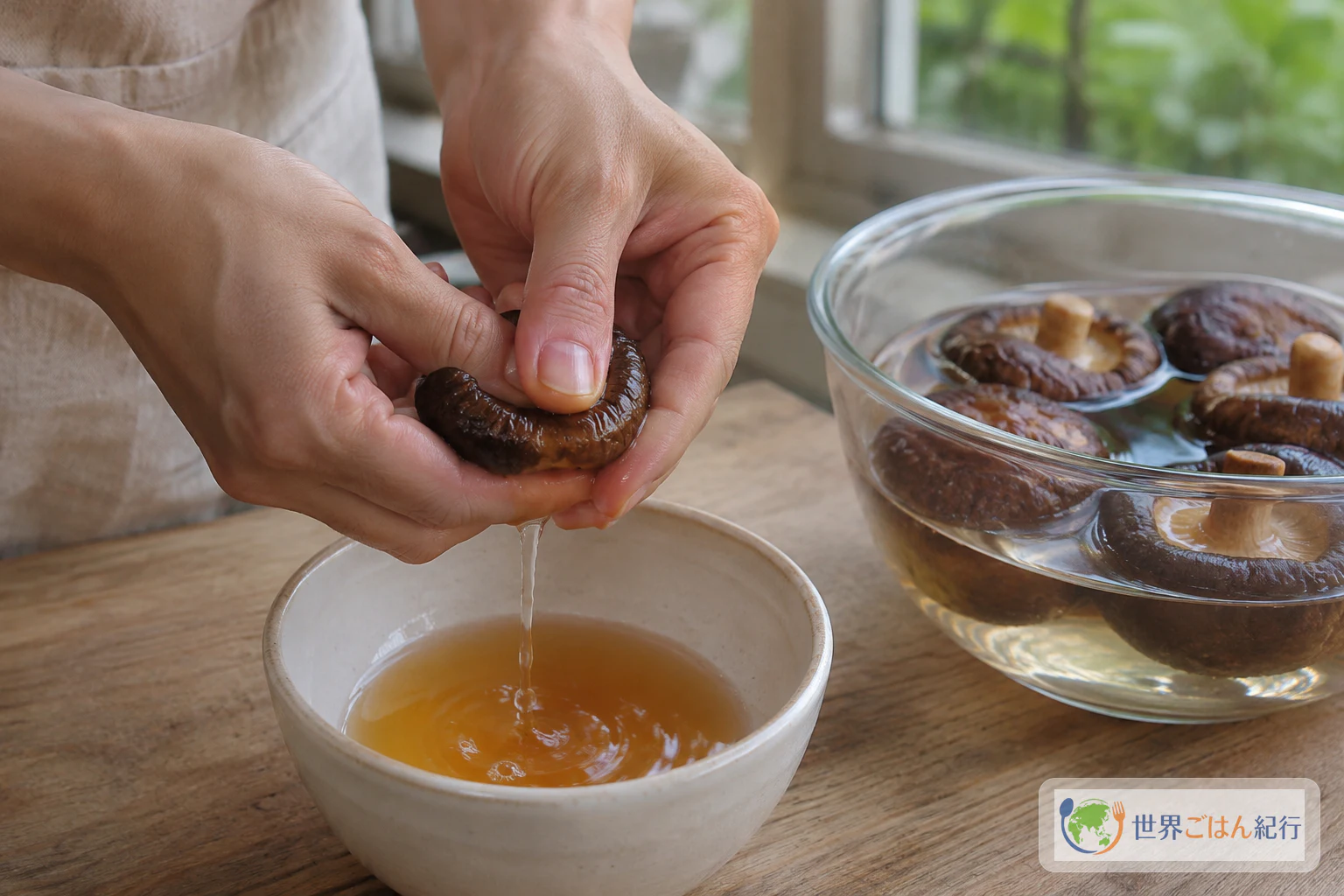
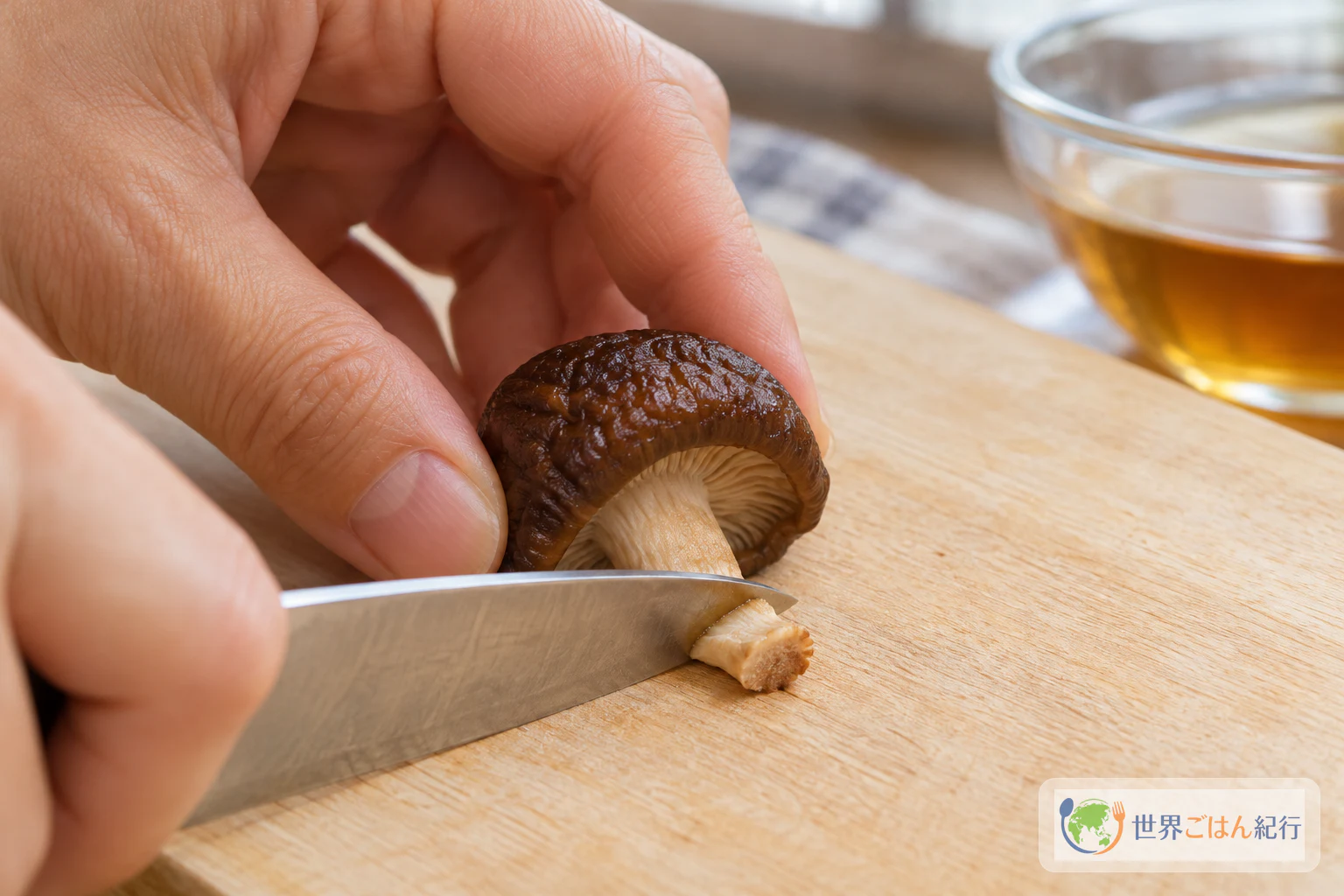
- Dried shiitake: Keep these. They provide both the mushrooms and the soaking liquid, so fresh shiitake or granulated stock is not a standard swap.
- Soy sauce: Regular dark soy sauce (koikuchi) is the suggested household choice. Don't try to convert the amount for light soy sauce.
- Sugar: Ordinary white sugar works, in the same amount.
- Sake: Use drinking-style Japanese sake if you can. Cooking sake varies by product, including in salt, but don't add extra salt to compensate.
- Mirin: Choose true mirin (hon-mirin). Mirin-style seasonings are not the same product.
- Allergies: Soy sauce can contain soy and wheat. Check the labels on your soy sauce, sake and other products.
Salt, stock, ginger, konjac, fried tofu, egg and nori are not part of this version.
Equipment
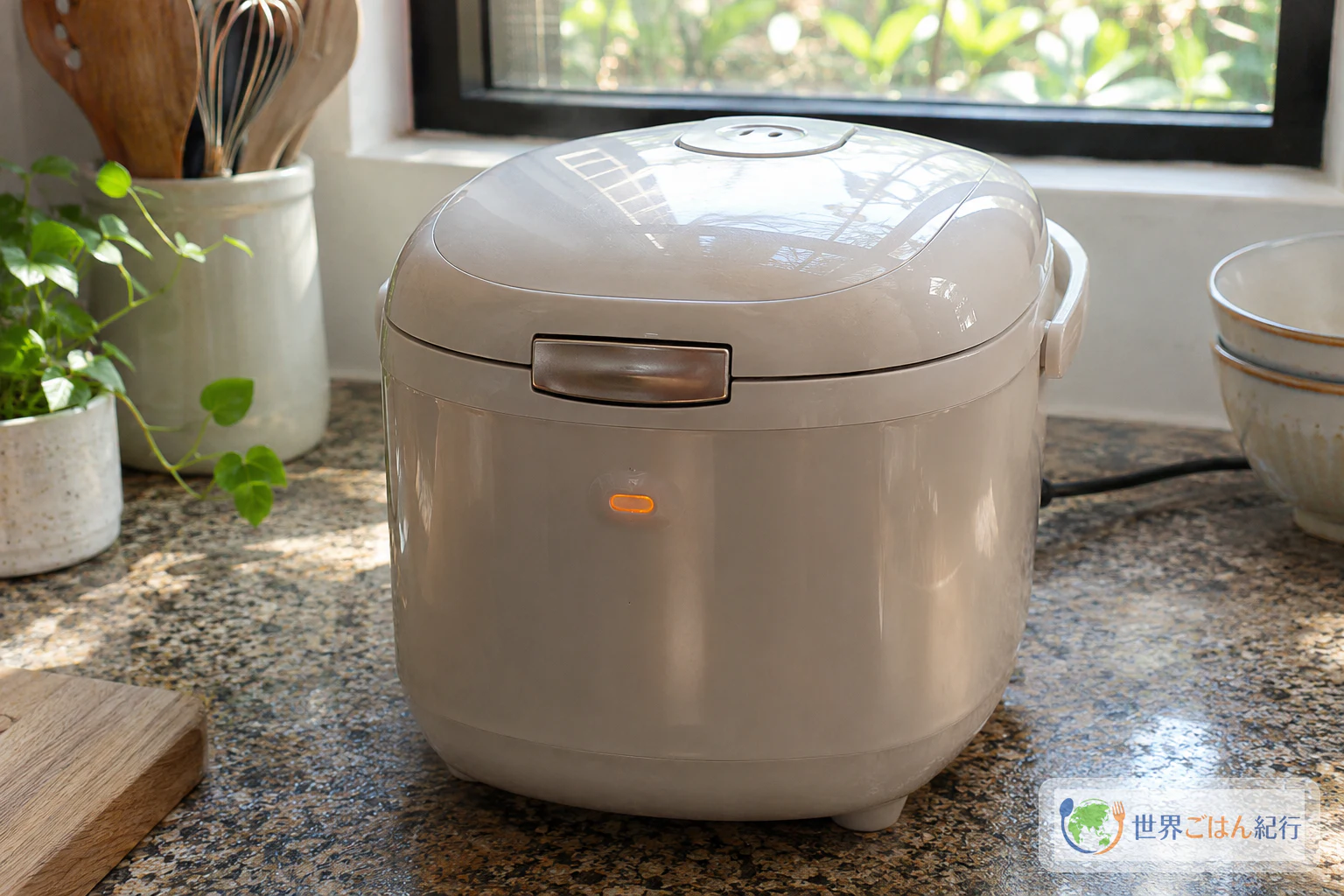
- Rice cooker
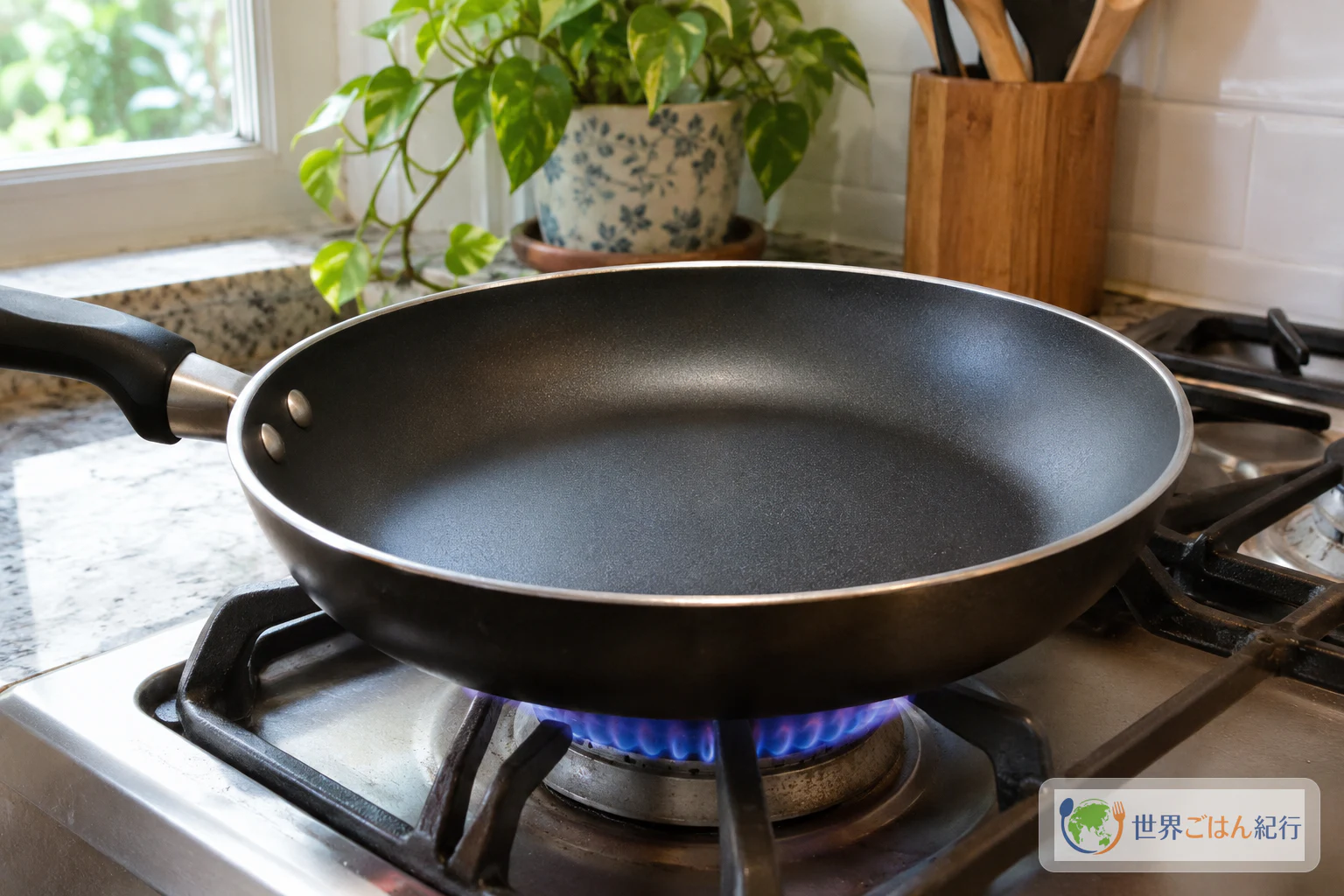
- Frying pan
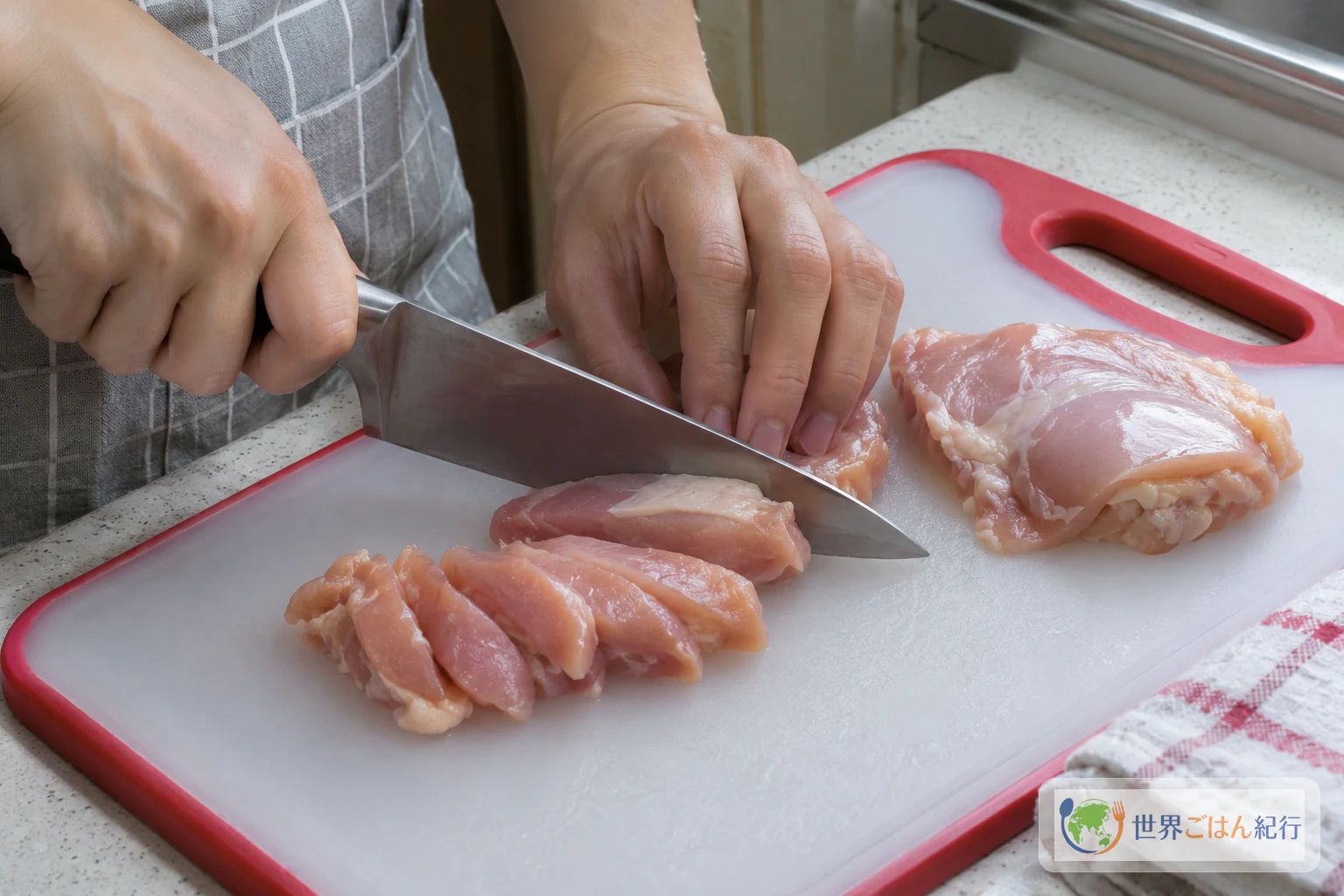
- Knife and cutting board reserved for raw chicken
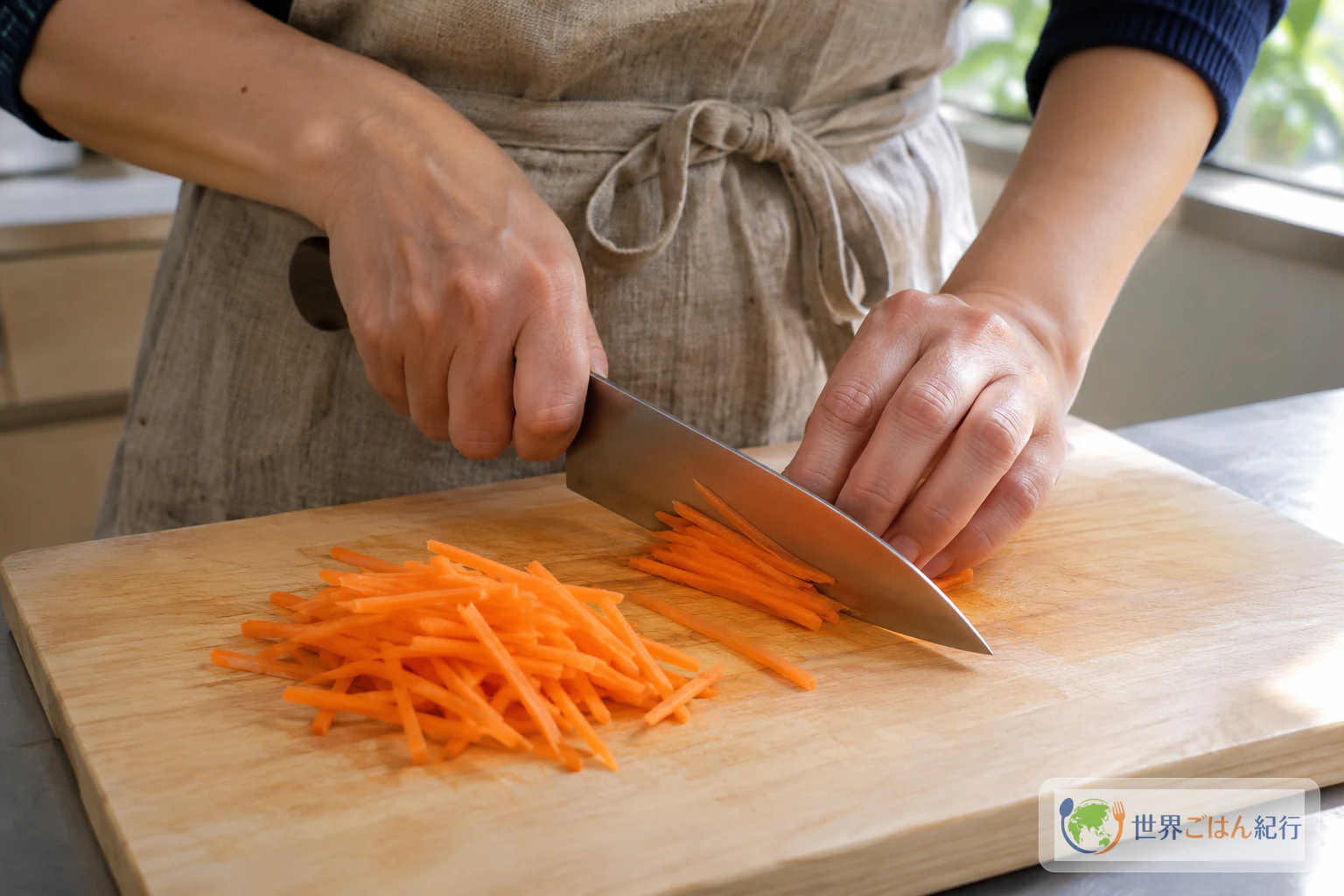
- Separate clean knife and cutting board for vegetables
- Bowls, including small ones for the soaking liquid and seasoning
- Colander
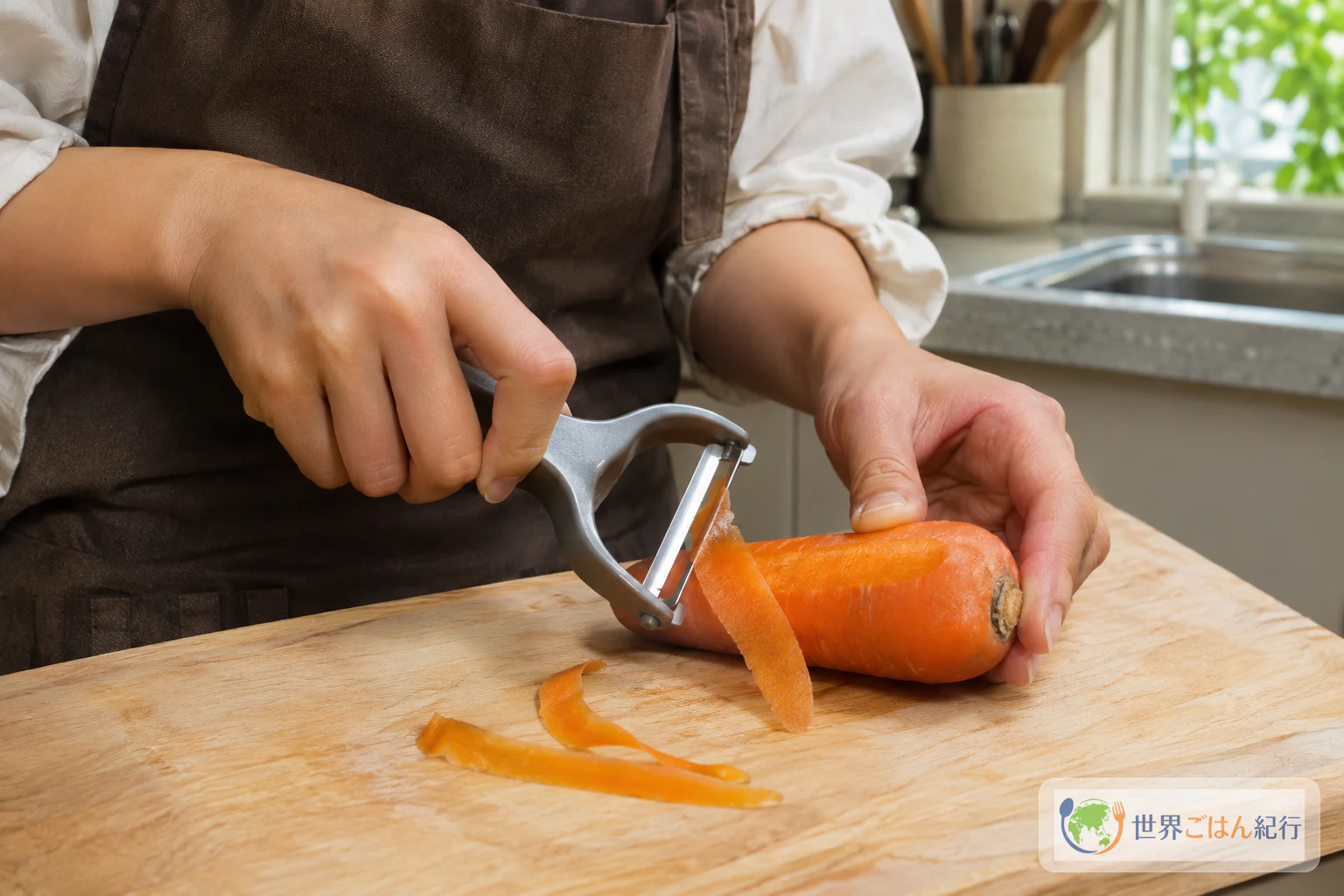
- Vegetable peeler
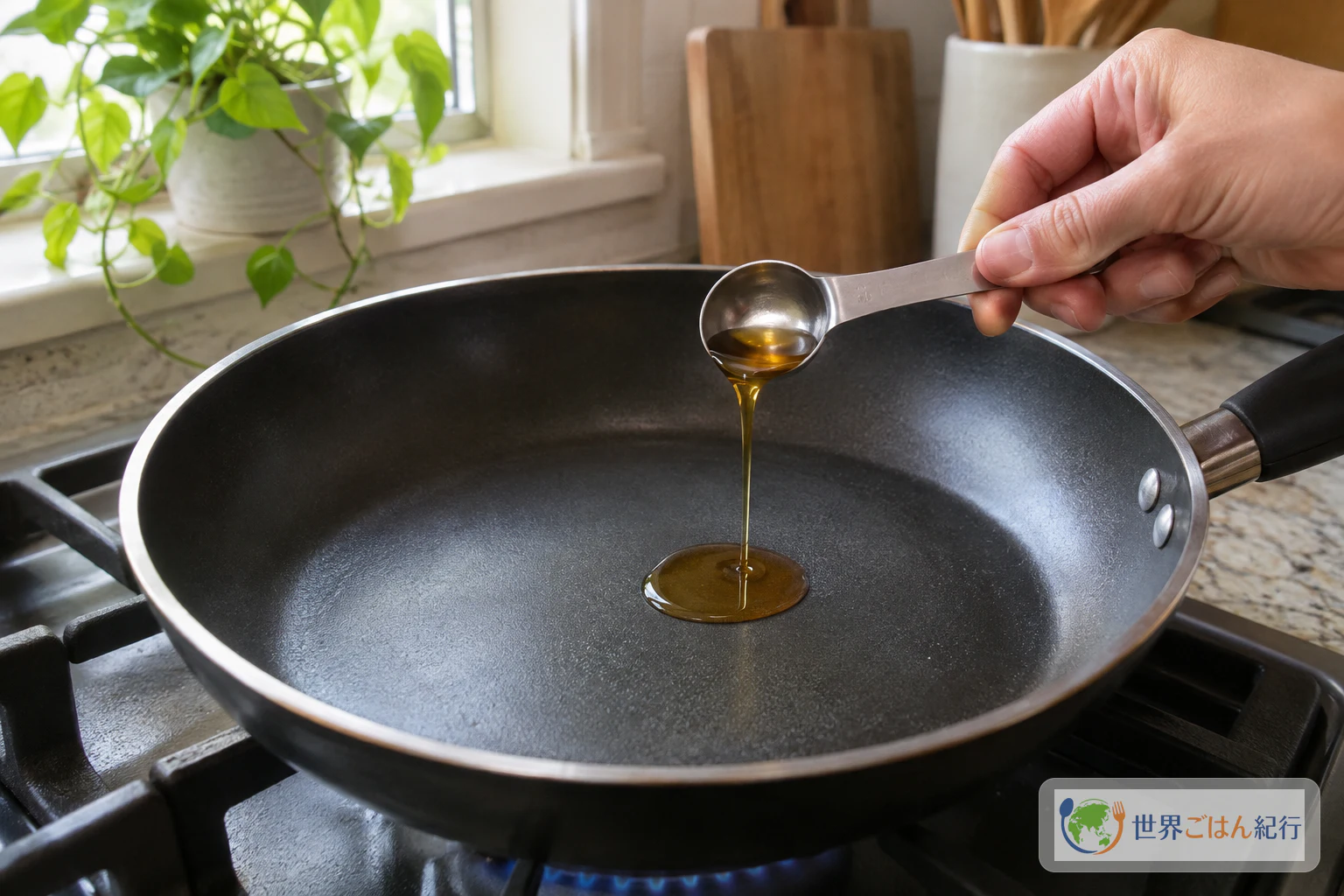
- Measuring spoons
- Kitchen scale
- Spatula
- Clean rice paddle
- Food thermometer
Method: Cook the Rice, Simmer the Filling, Then Mix
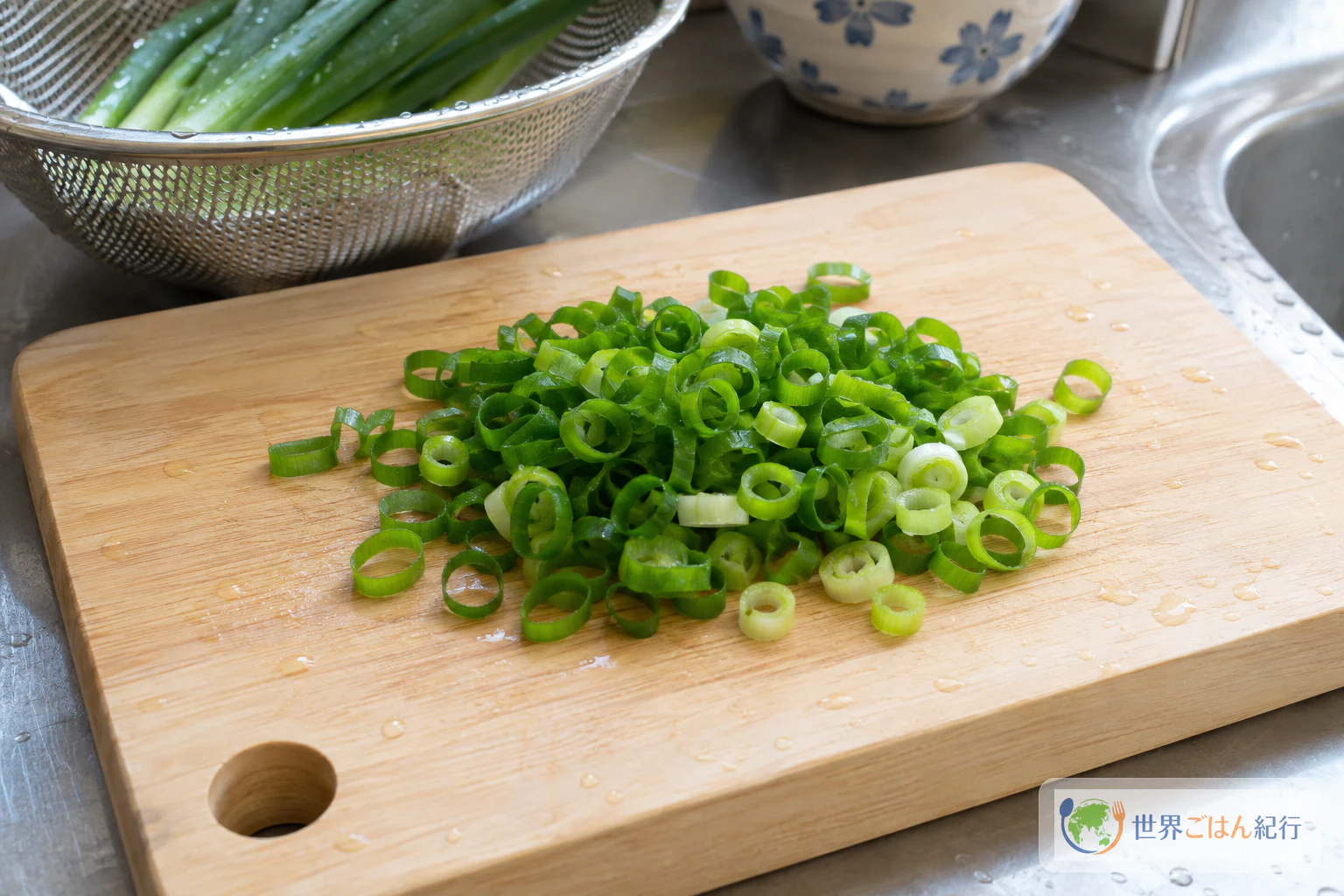
Don't eat chicken raw or undercooked. Heat it until the center reaches 75°C or higher for at least 1 minute, and check with a thermometer: color, photos and cooking time alone can't confirm that it is safe. Don't wash raw chicken, because splashing water can spread contamination. Keep raw chicken and the tools that touched it away from other foods, including the cooked rice and scallions, and wash your hands after handling it. The scallions are eaten without further cooking, so wash them well under running water and cut them with a knife and board that have not been used for raw chicken.
Troubleshooting
| Problem | What to do |
|---|---|
| The sauce is close to scorching | Lower the heat and stir. |
| A lot of liquid remains in the pan | Keep simmering over low heat until the sauce clings to the filling. |
| The chicken looks done, but you are unsure | Check the center with a thermometer. Color and time alone can't confirm safety. |
| The chicken hasn't reached the safe temperature | Keep heating until the center has been at 75°C or higher for at least 1 minute. |
| You discarded the soaking liquid | Don't swap in separate stock as if it were the same. Save the liquid at step 6 next time. |
| The scallion knife or board touched raw chicken | Don't use it for the scallions. Switch to a clean knife and board that have not touched raw chicken. |
This recipe has no set correction for a filling that tastes too strong or too mild, so we don't give extra seasoning amounts.
Variations and Other Forms
Only the first row is a change you can make within this recipe. The others are different forms of kashiwameshi, so don't combine their ingredients or steps with the amounts above.
| Form | What changes | How to treat it |
|---|---|---|
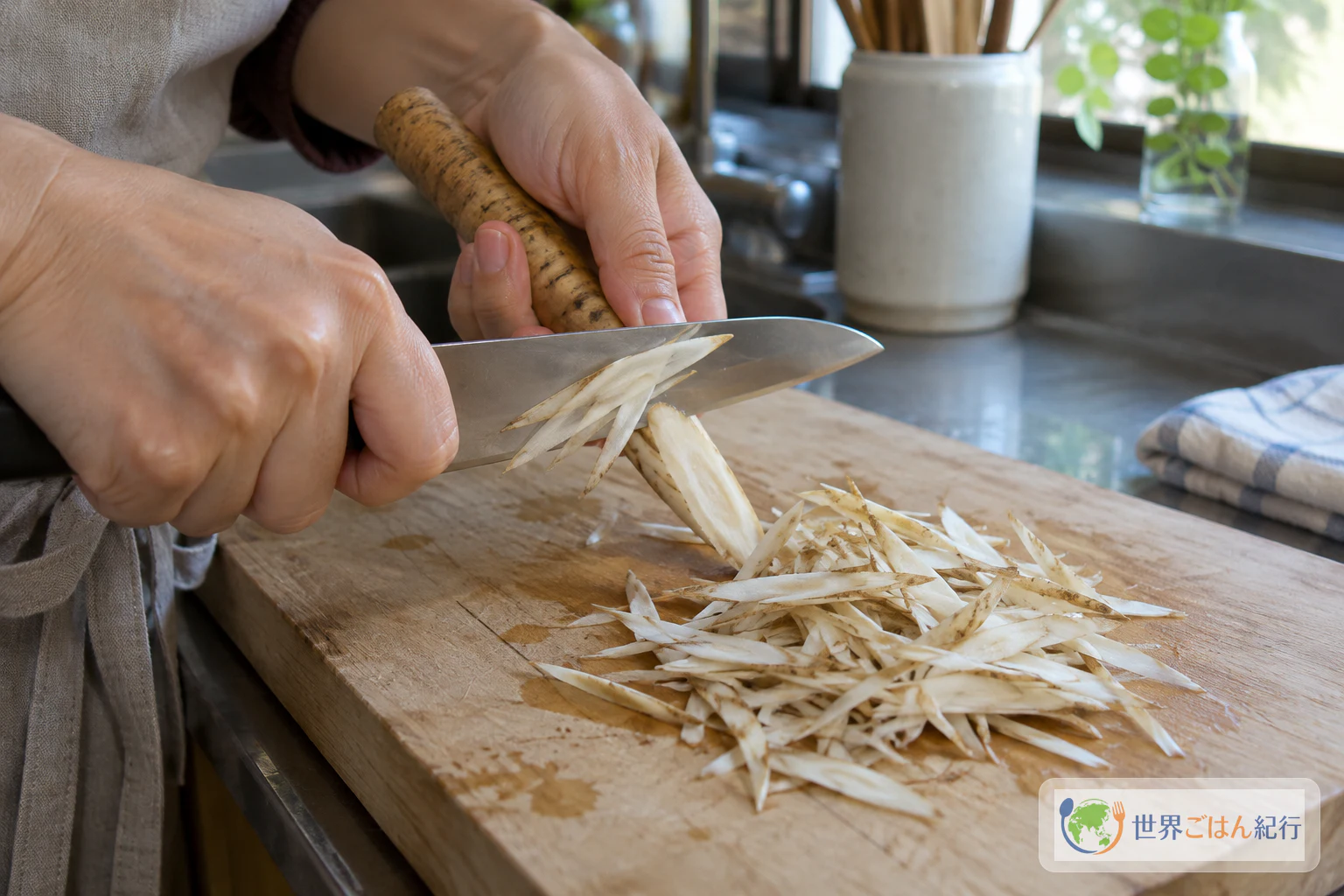
| Burdock in thin strips | The published recipe allows thin strips or shaved curls | An easy option. This article uses curls |
| Rice-cooker kashiwameshi | The chicken and vegetables cook in the rice cooker with the rice | A different recipe, not a shortcut for this one |
| Orio station bento | Rice cooked in chicken broth, topped with chopped chicken, shredded egg and nori | A separate style for comparison |
Kashiwameshi in Fukuoka
"Kashiwa" is the word for chicken in Kyushu, so the name points directly to the dish's main ingredient. MAFF describes kashiwameshi as a dish found across Fukuoka Prefecture, made as an everyday meal in homes and casual restaurants and also eaten at festivals, school sports days and other special occasions. Its regional description also mentions local Hakata jidori chicken. For more from the country, see our Japan page.
The same name covers quite different dishes. A recipe by cooking expert Hideko Oba, published by the Japan Umami Seasoning Association, marinates the chicken and cooks it with the vegetables and rice in a rice cooker. The same page says kashiwameshi may be made into rice balls and eaten with udon.
Northern Kyushu also has a station-bento form. Fukuoka's official tourism site, Crossroad Fukuoka, describes the kashiwameshi sold on the platform at Orio Station in Kitakyushu as rice cooked in chicken broth, topped with chopped chicken, shredded egg and nori. The site traces that platform sale back to 1921, a date that belongs to this one tradition and is not an origin for kashiwameshi as a whole.
The name may also bring chicken rice from elsewhere to mind. Singapore's Hainanese chicken rice and Wenchang chicken rice from Hainan are different dishes, built around cooked chicken and rice prepared with its broth or fat. Fukuoka's mixed version takes a different route, with a stir-fried and simmered filling and plain rice.
Frequently Asked Questions
Does the chicken cook with the rice?
Not in this version. The filling is simmered separately, then mixed into the cooked rice. Rice-cooker versions exist, but they are separate recipes with their own amounts.
What does "go" mean, and can I convert it?
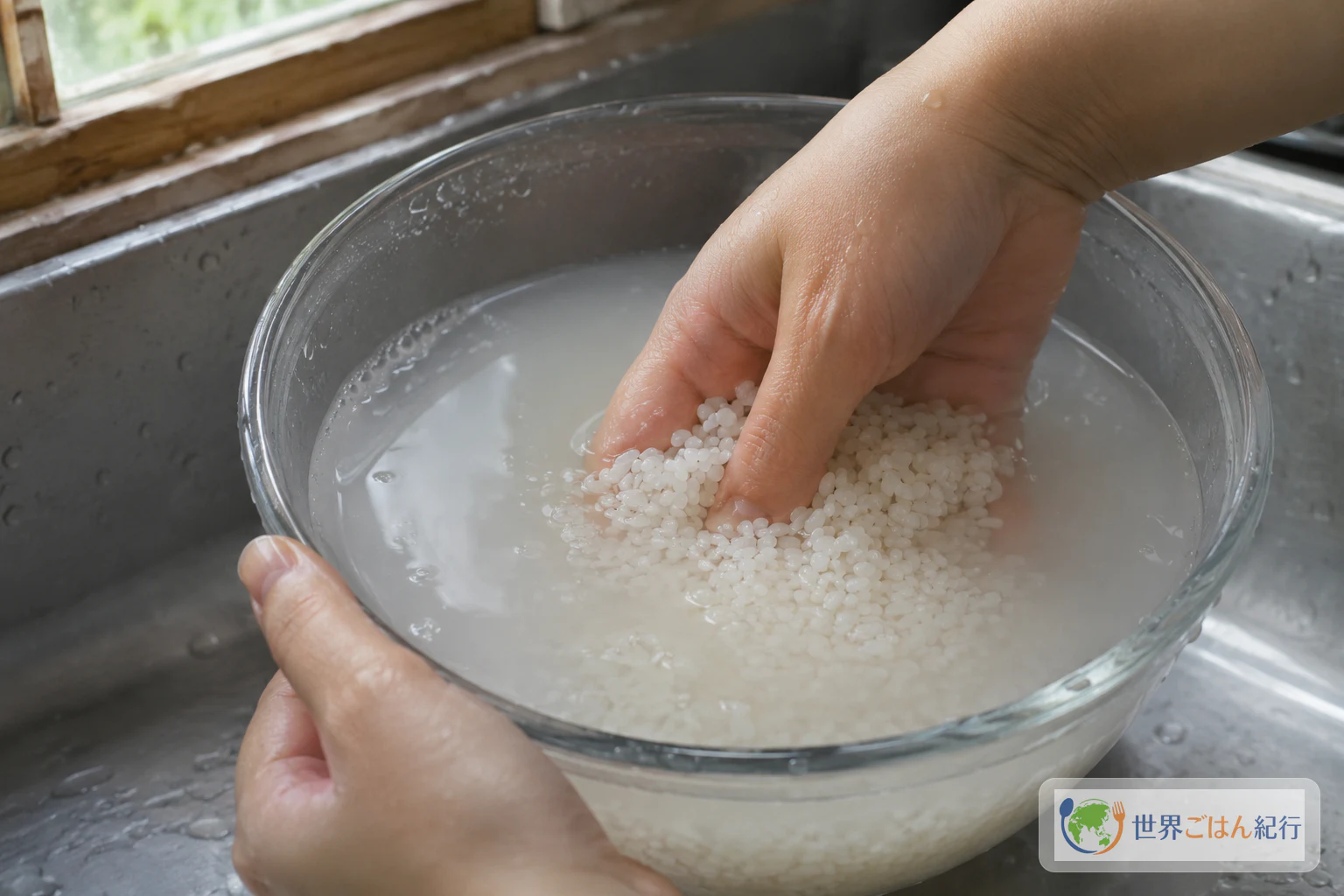
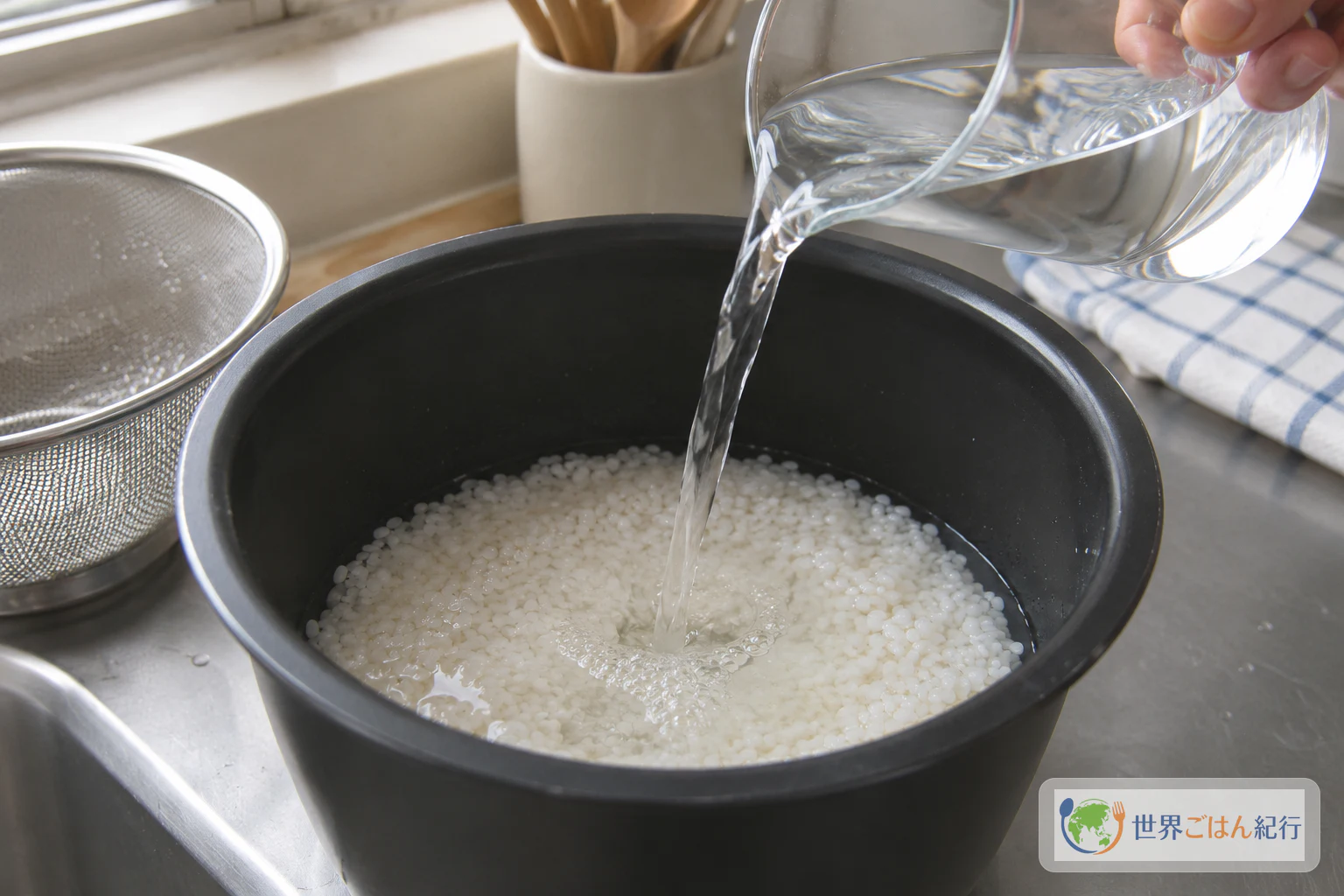
A go is a Japanese volume measure used for rice. The published recipe uses 1.7 go and gives no conversion, so we haven't added one. The water should be the same volume as the rice, whatever container you measure with.
How much water do I need to soak the shiitake?
The published wording on the soaking water can't be read as a clear amount. Using enough water to cover the mushrooms is our practical suggestion, not a measurement from the recipe. The amount that matters for the sauce is clear: 4 tbsp of soaking liquid.
How long do the rice and filling take to cook?
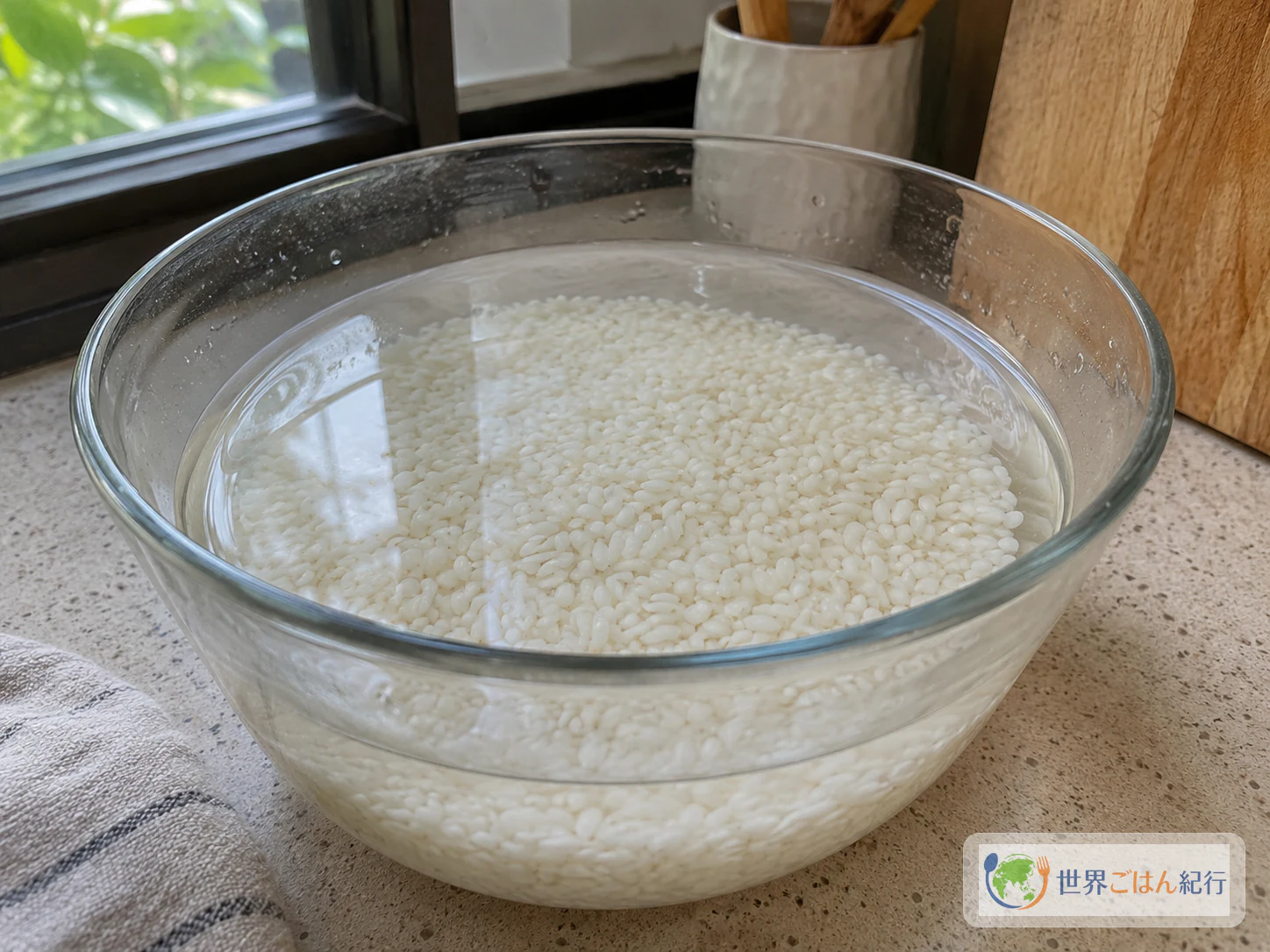
The recipe gives about 30 minutes for soaking the rice, but no time for cooking it or for reducing the filling, so we don't add any. Follow your rice cooker's normal setting. The description of the sauce clinging to the filling is our own visual guide, not part of the published recipe.
Why are the seasoning and soaking liquid added separately?
Mixing seasoning A in a bowl first, then adding it and the soaking liquid one after the other, is our way of laying out the work. The published recipe adds them together at this stage, and the amounts are unchanged.
Which soy sauce and sugar does the recipe use?
The published recipe doesn't name a type of soy sauce or sugar, and it doesn't name a chicken brand. The suggestions in this article are editorial choices for home cooks.
How do I heat the chicken safely?
MAFF's food-safety guidance says to heat chicken until the center reaches 75°C or higher for at least 1 minute. It also advises against washing chicken and calls for keeping raw meat from touching other foods. This temperature is a separate safety note, not a cooking time from the recipe.
Why wash the scallions and use a separate board?
The published recipe finishes with scallions and has no heating step after them. Washing them and using a board and knife that have not touched raw chicken is our safety addition. It is based on MAFF's guidance on separating tools and on Japan's Ministry of Health, Labour and Welfare (MHLW) home food-poisoning guidance, which covers washing raw vegetables under running water and separating meat and vegetable cutting boards.
Can I store the leftovers?
The recipe gives no storage or reheating guidance, so we don't state a storage period or reheating method. This article presents kashiwameshi as a dish to serve freshly made.
Sources
- Ministry of Agriculture, Forestry and Fisheries of Japan (MAFF), "Kashiwameshi, Fukuoka Prefecture" (かしわめし 福岡県), Our Regional Cuisines (うちの郷土料理); recipe provided by the Health Promotion Division, Public Health and Medical Bureau, Fukuoka City. The basis for the 4-serving ingredients and method, the meaning of "kashiwa," the dish's place in Fukuoka home cooking and occasions, and the note on regional and household differences. https://www.maff.go.jp/j/keikaku/syokubunka/k_ryouri/search_menu/menu/kashiwa_meshi_fukuoka.html
- Japan Umami Seasoning Association, "Kashiwameshi" (かしわめし), recipe by Hideko Oba. Used only for comparison, as a rice-cooker version with different ingredients, and for its note on eating kashiwameshi as rice balls with udon. https://www.umamikyo.gr.jp/recipe/2859/
- Crossroad Fukuoka (Fukuoka Prefecture official tourism site), "Kashiwameshi Platform Sales" (かしわめしの立ち売り). Used for the Orio Station bento and the site's own account of the platform sale's 1921 start. https://www.crossroadfukuoka.jp/spot/11604
- Ministry of Agriculture, Forestry and Fisheries of Japan (MAFF), "To Enjoy Chicken Dishes: Beware of Campylobacter Food Poisoning" (鶏料理を楽しむために~カンピロバクターによる食中毒にご注意を!!~). Used for heating chicken to 75°C or higher at the center for at least 1 minute, not washing chicken, and keeping raw meat and its tools away from other foods. https://www.maff.go.jp/j/fs/campylobacter.html
- Ministry of Health, Labour and Welfare of Japan (MHLW), "Six Points for Preventing Food Poisoning at Home" (家庭でできる食中毒予防の6つのポイント). Used for the general points on washing raw vegetables under running water and separating cutting boards for meat and vegetables. Summarized, not quoted. https://www.mhlw.go.jp/www1/houdou/0903/h0331-1.html