Kiritanpo Nabe: Rice Shaped on Chopsticks, Grilled, Then Simmered
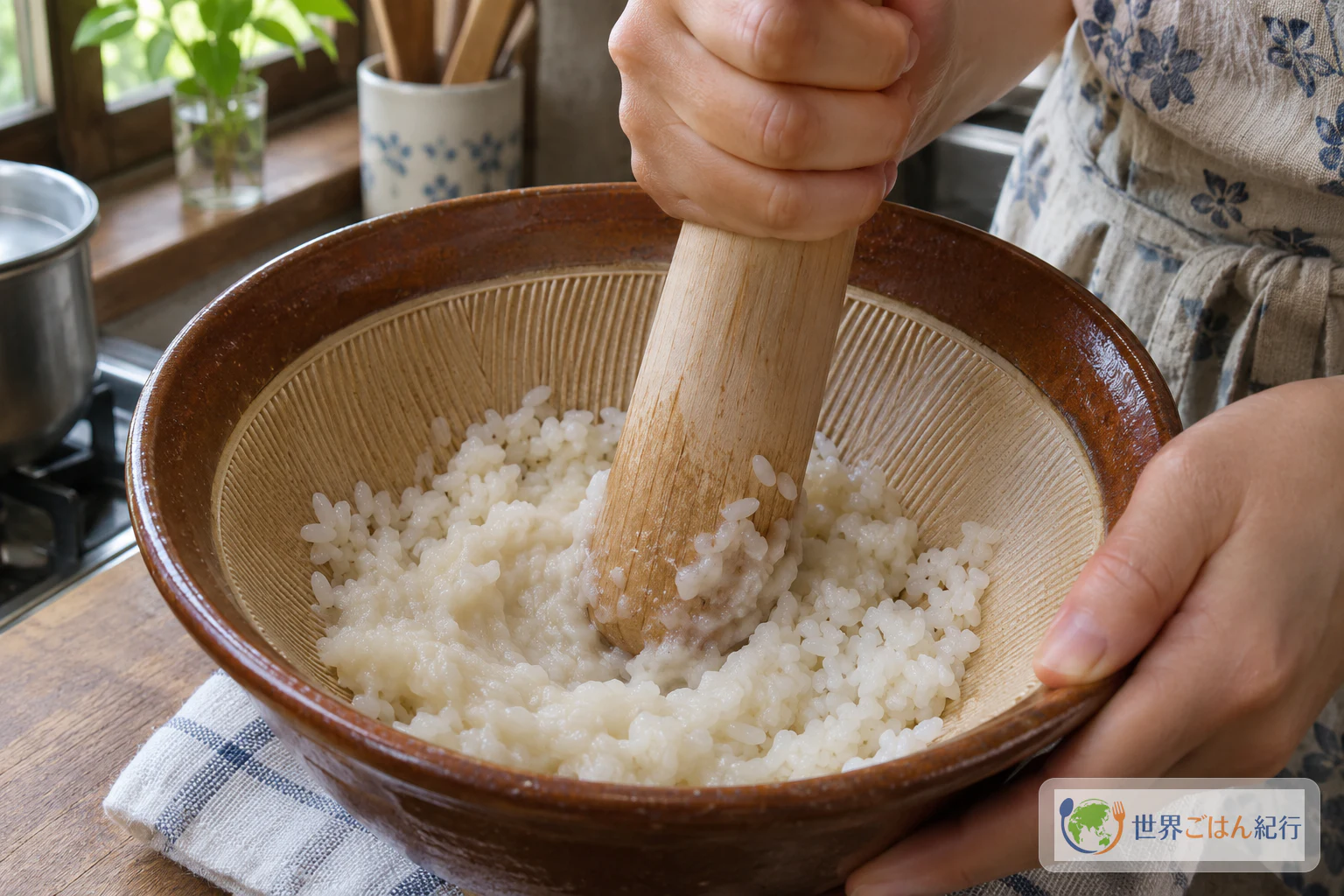
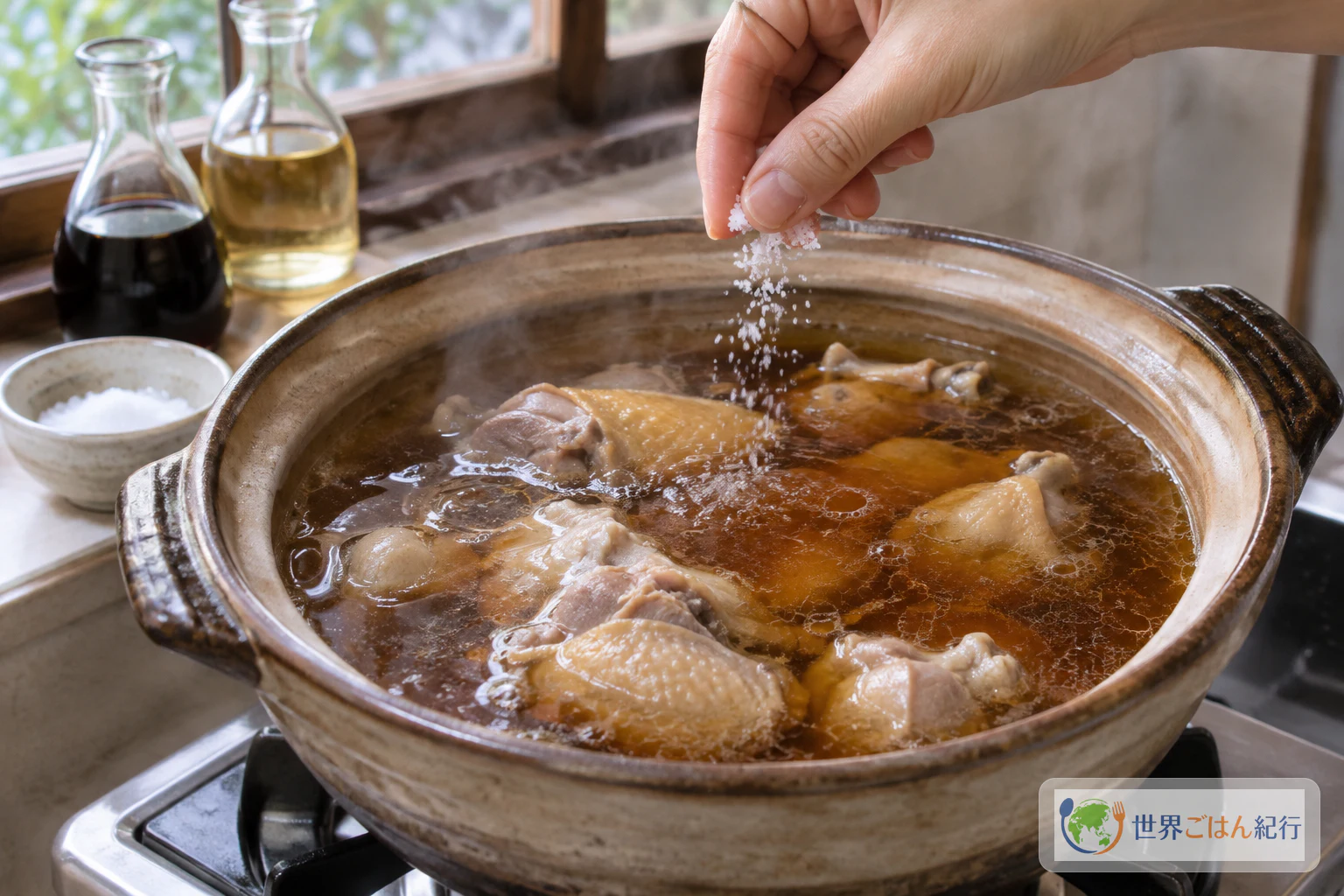
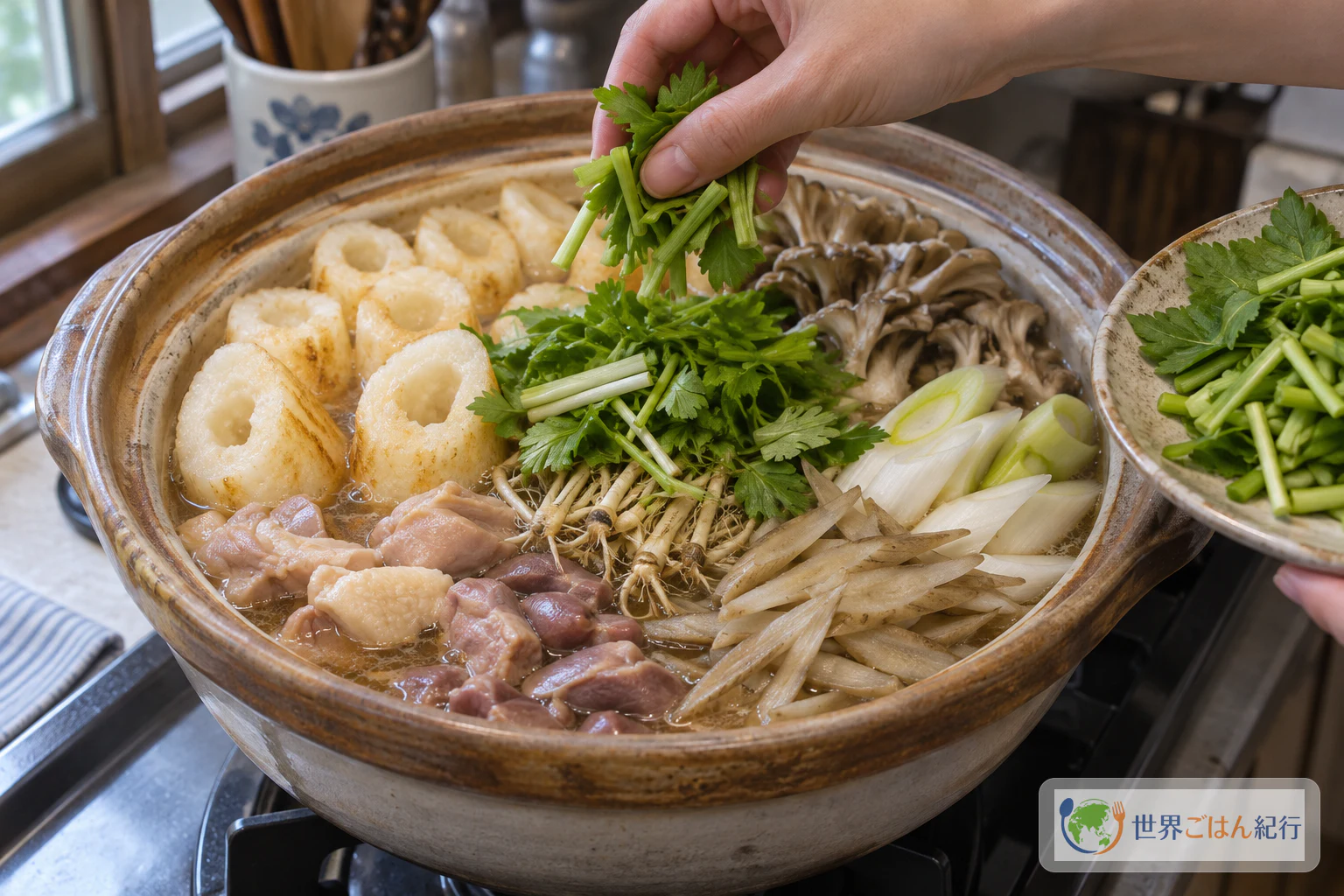
The rice keeps about 30 percent of its grains. The shaping saltwater stays out of the pot, the bone-in chicken stays in it, and the seri leaves go in last.
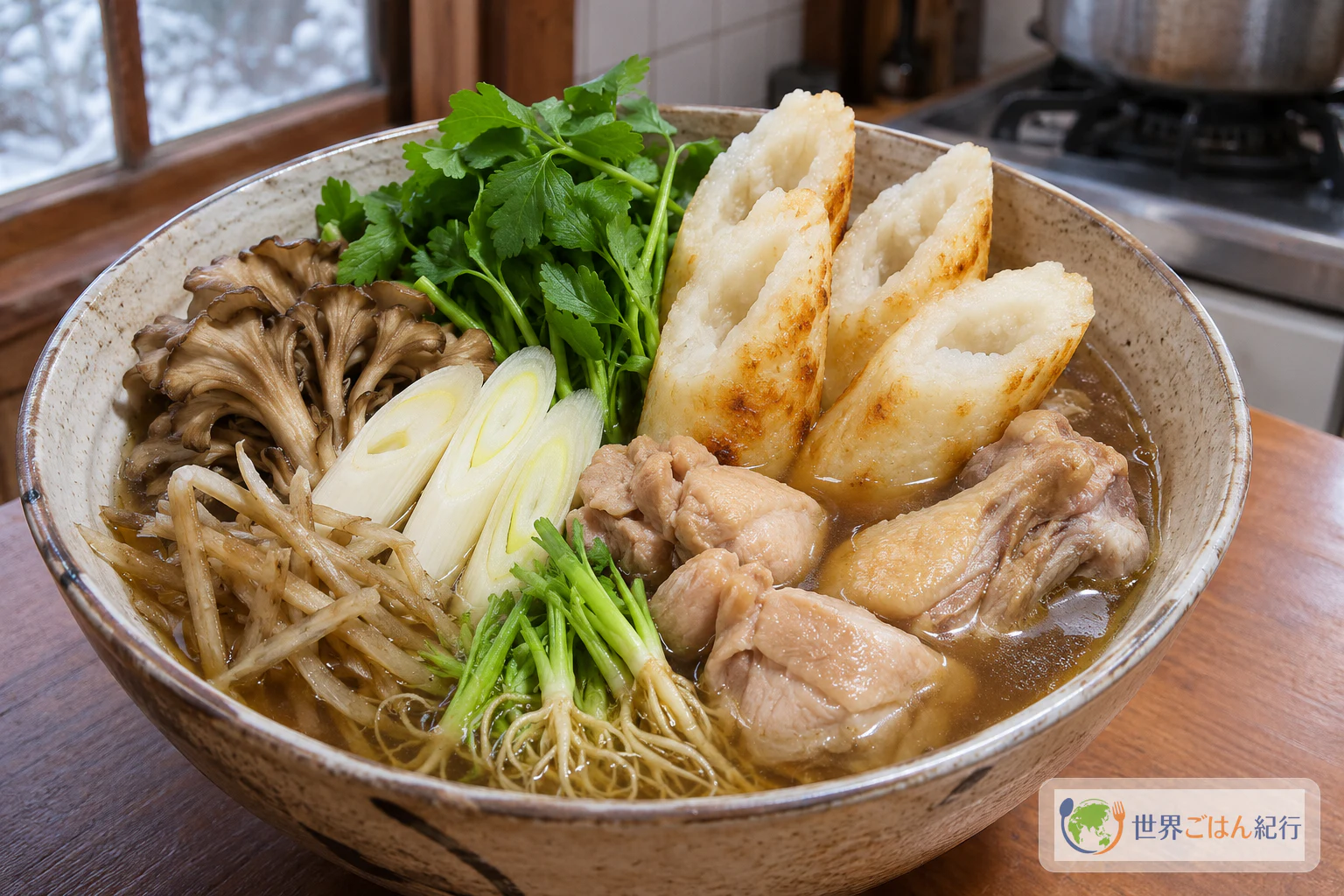
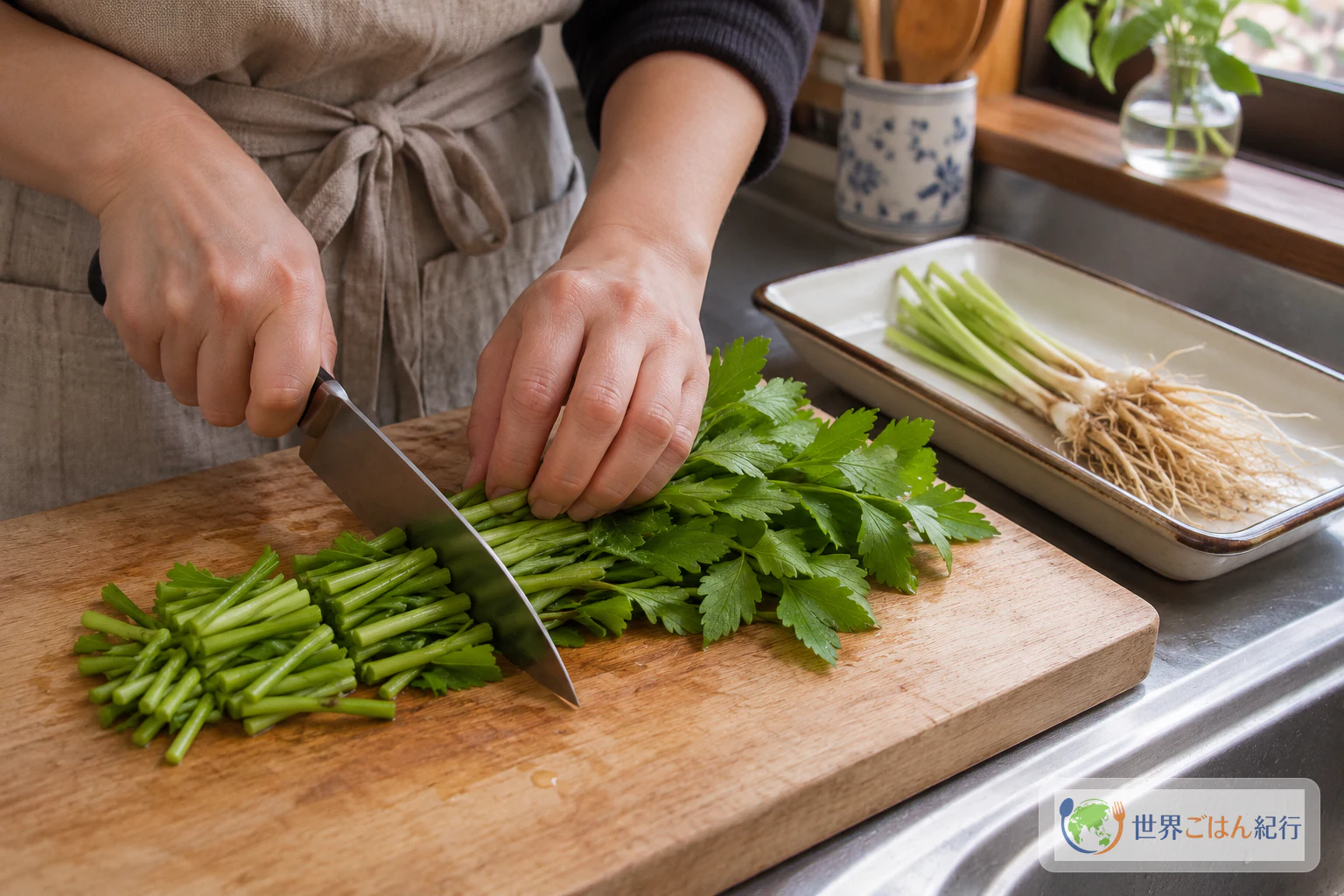
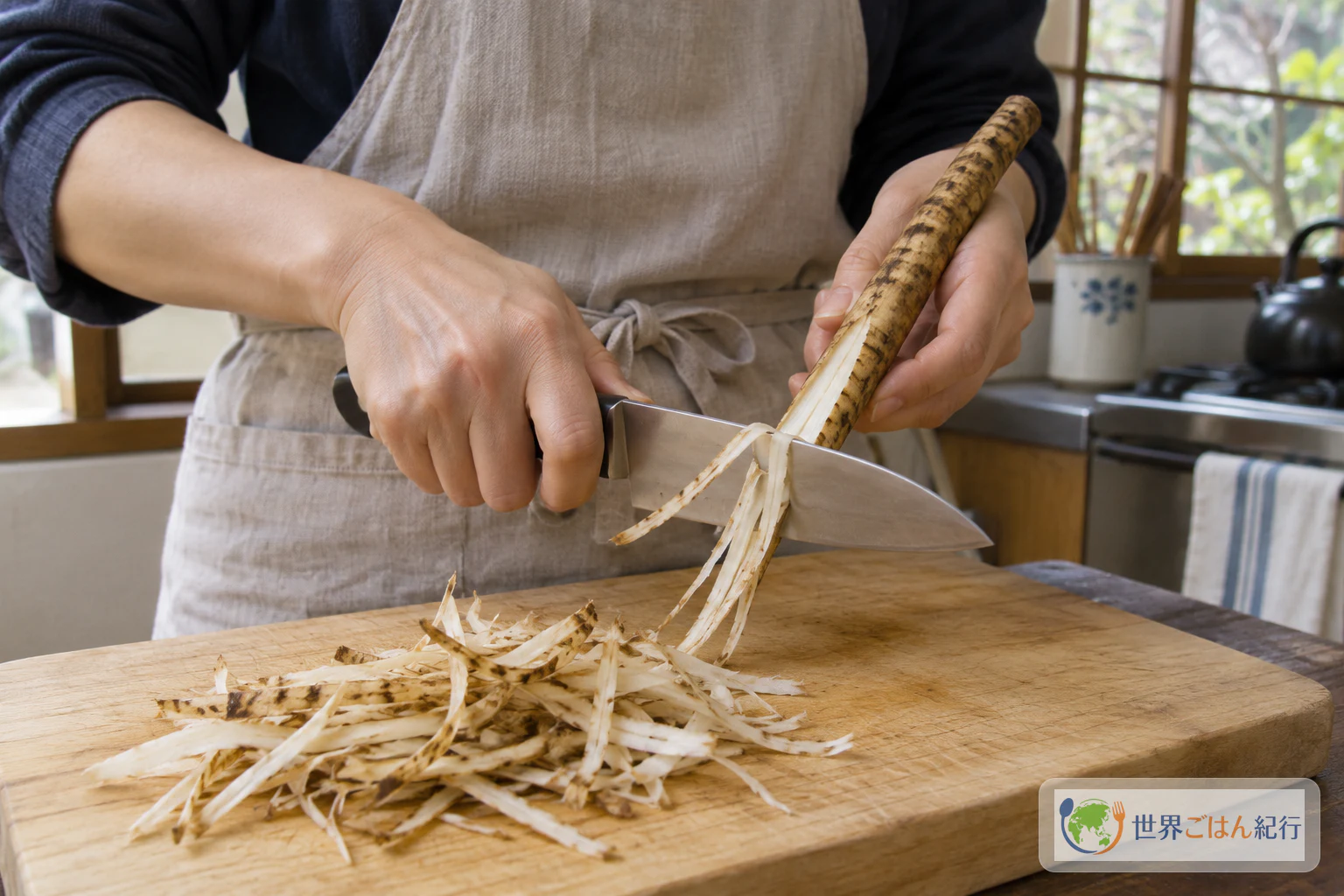
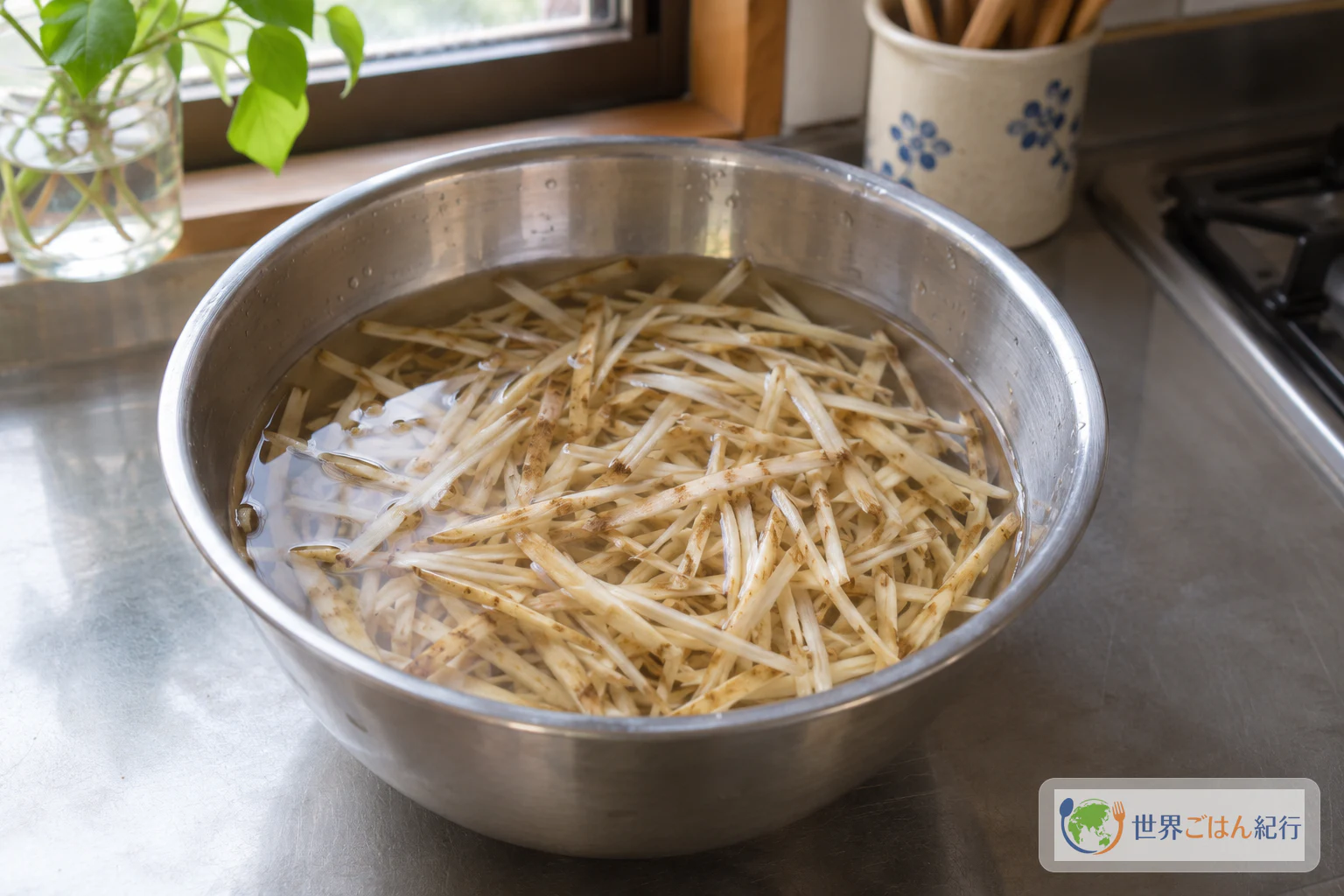
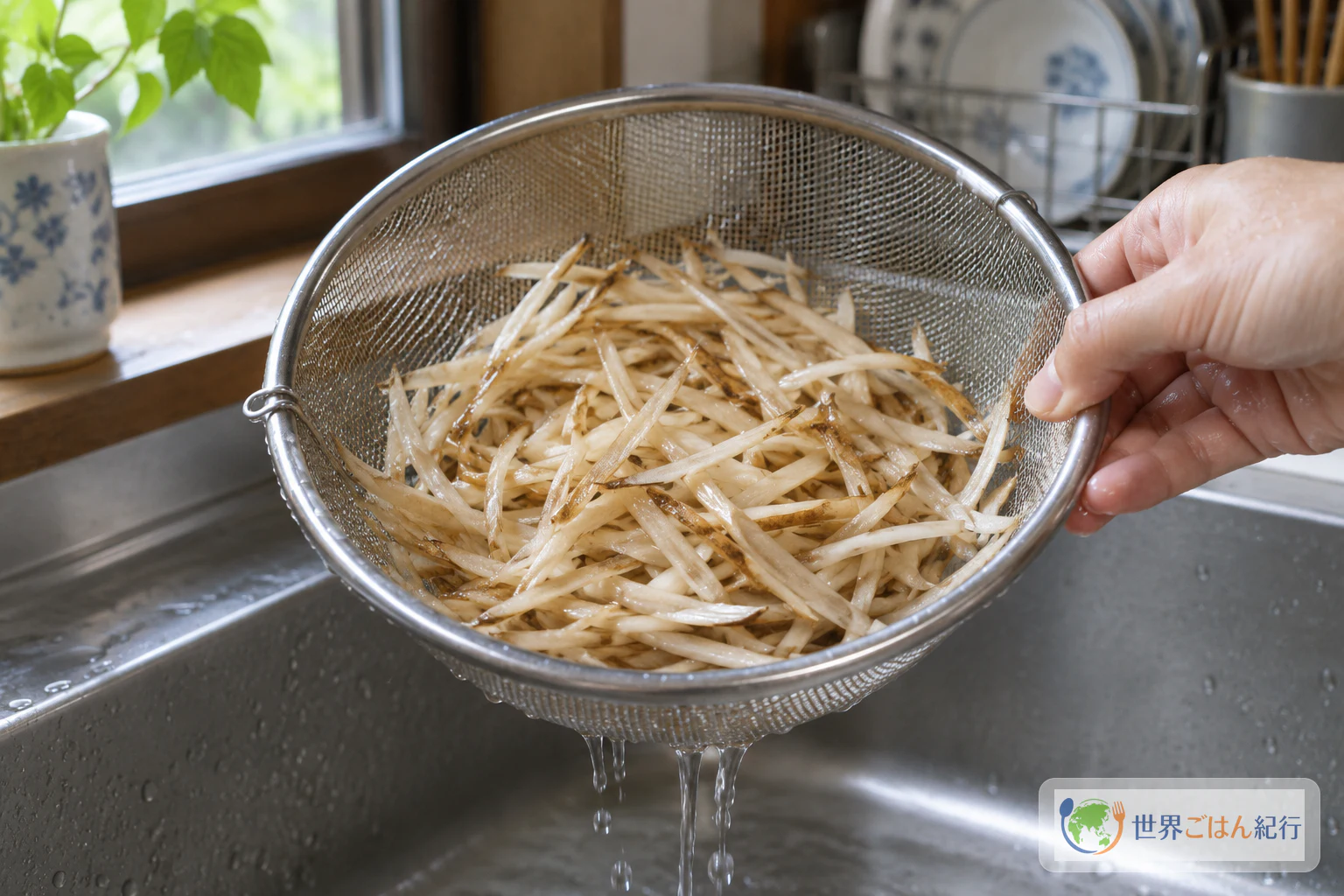
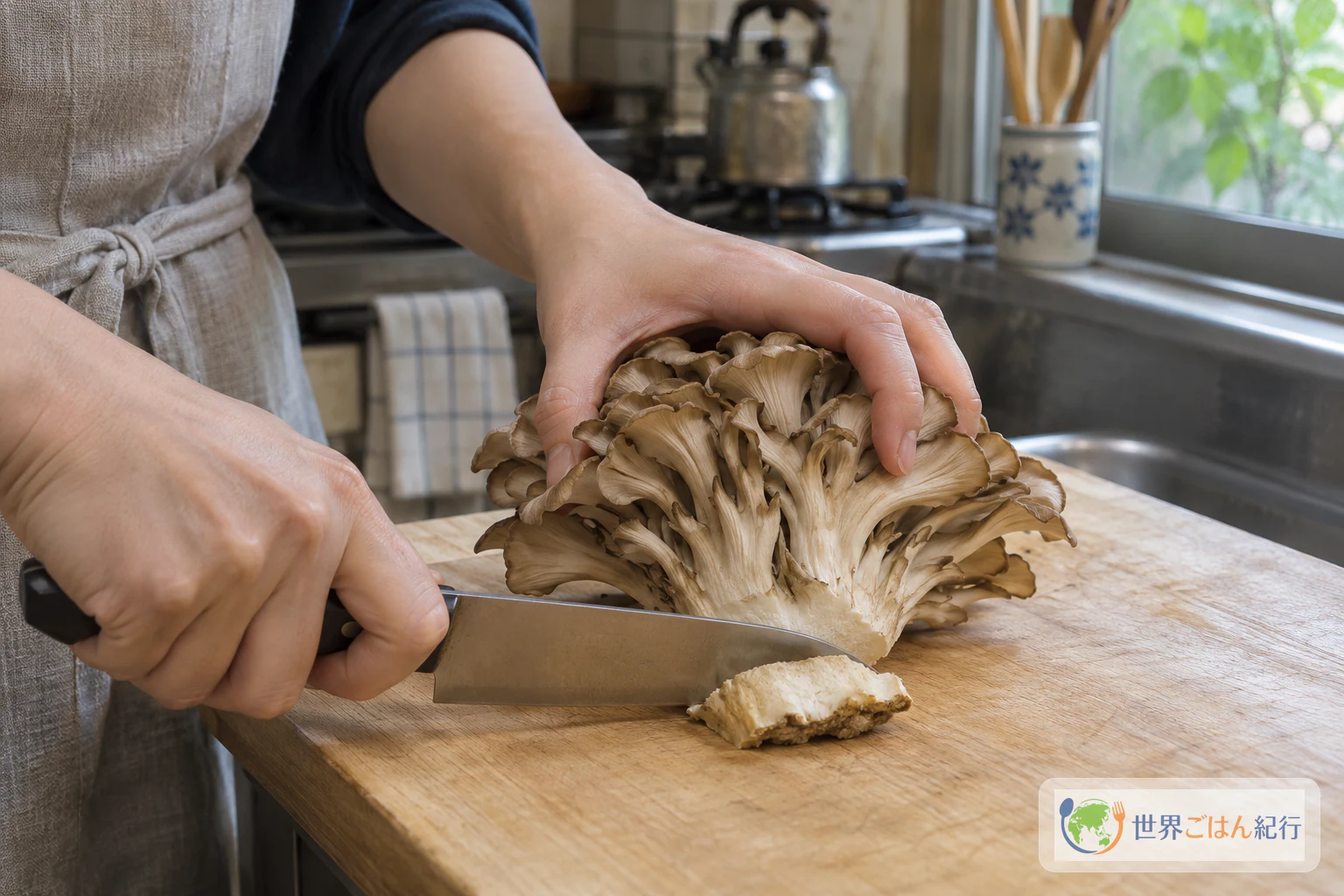
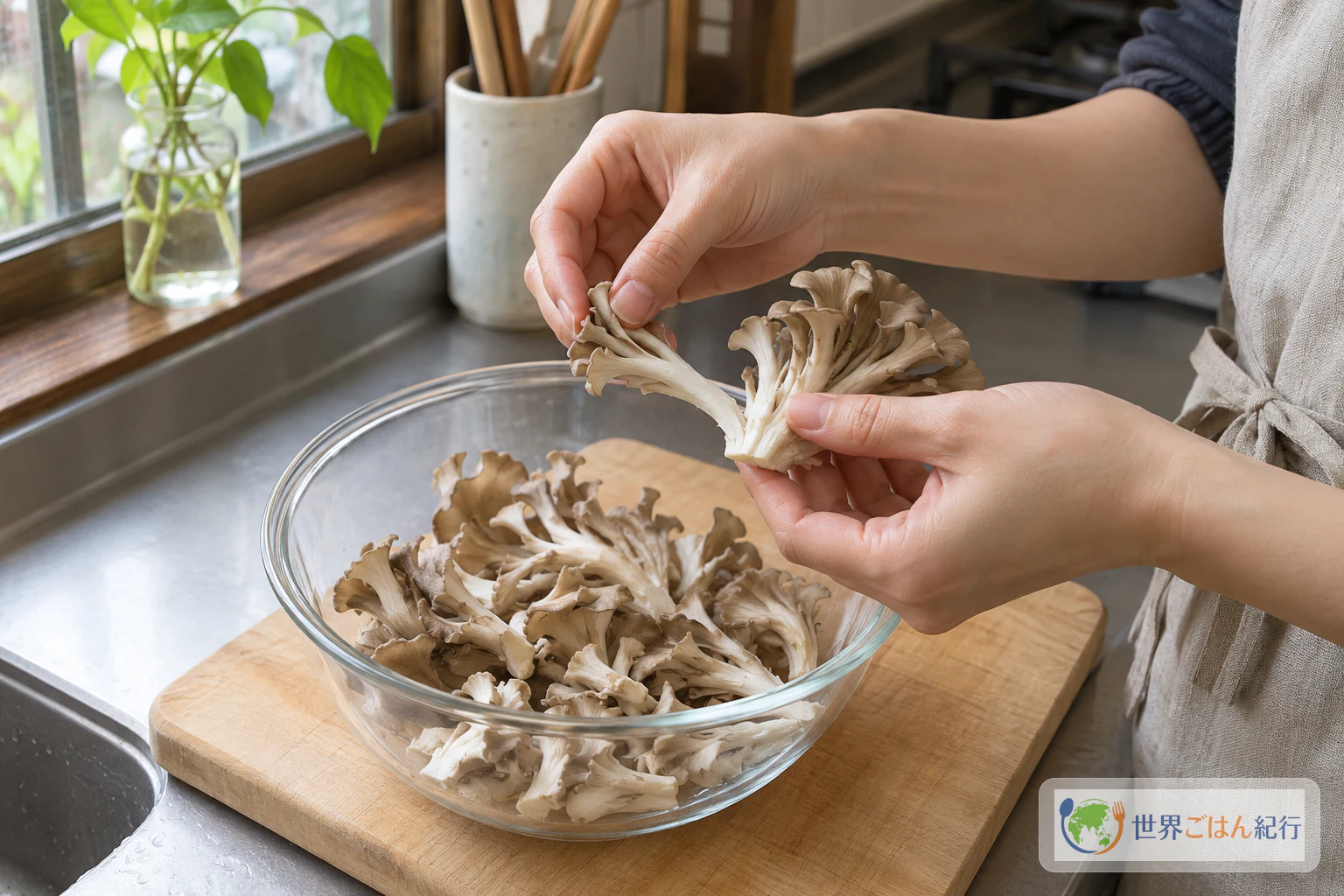
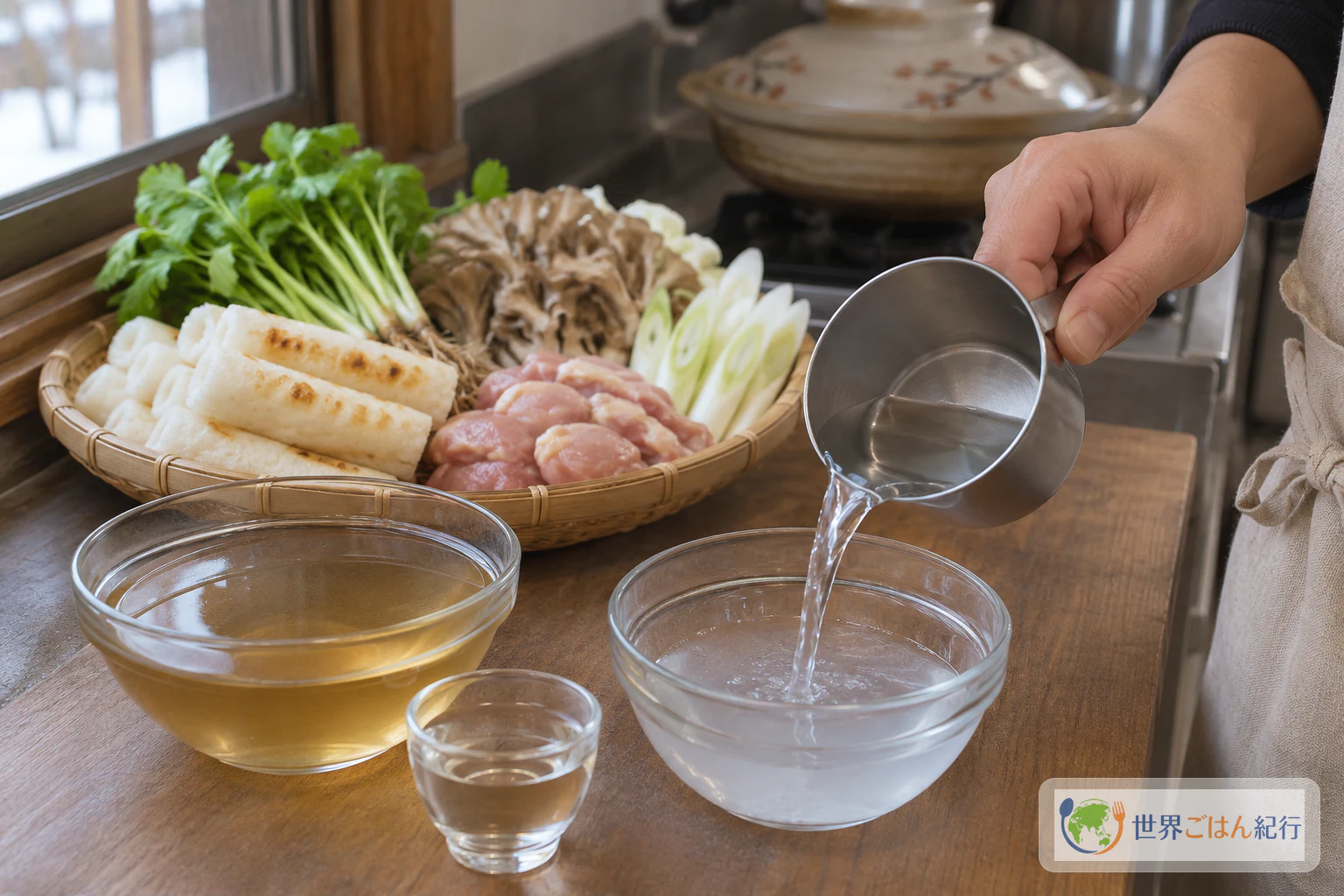
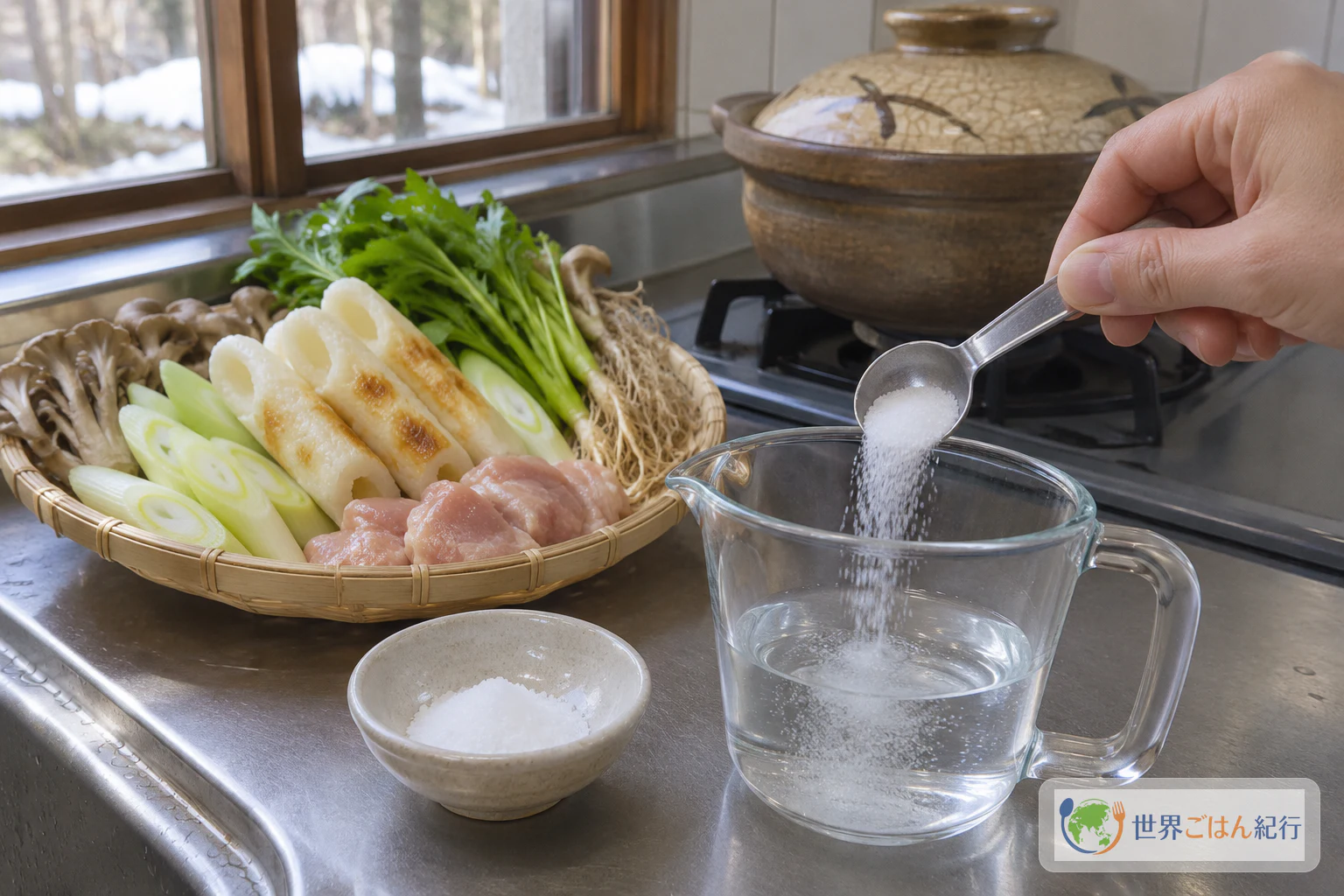
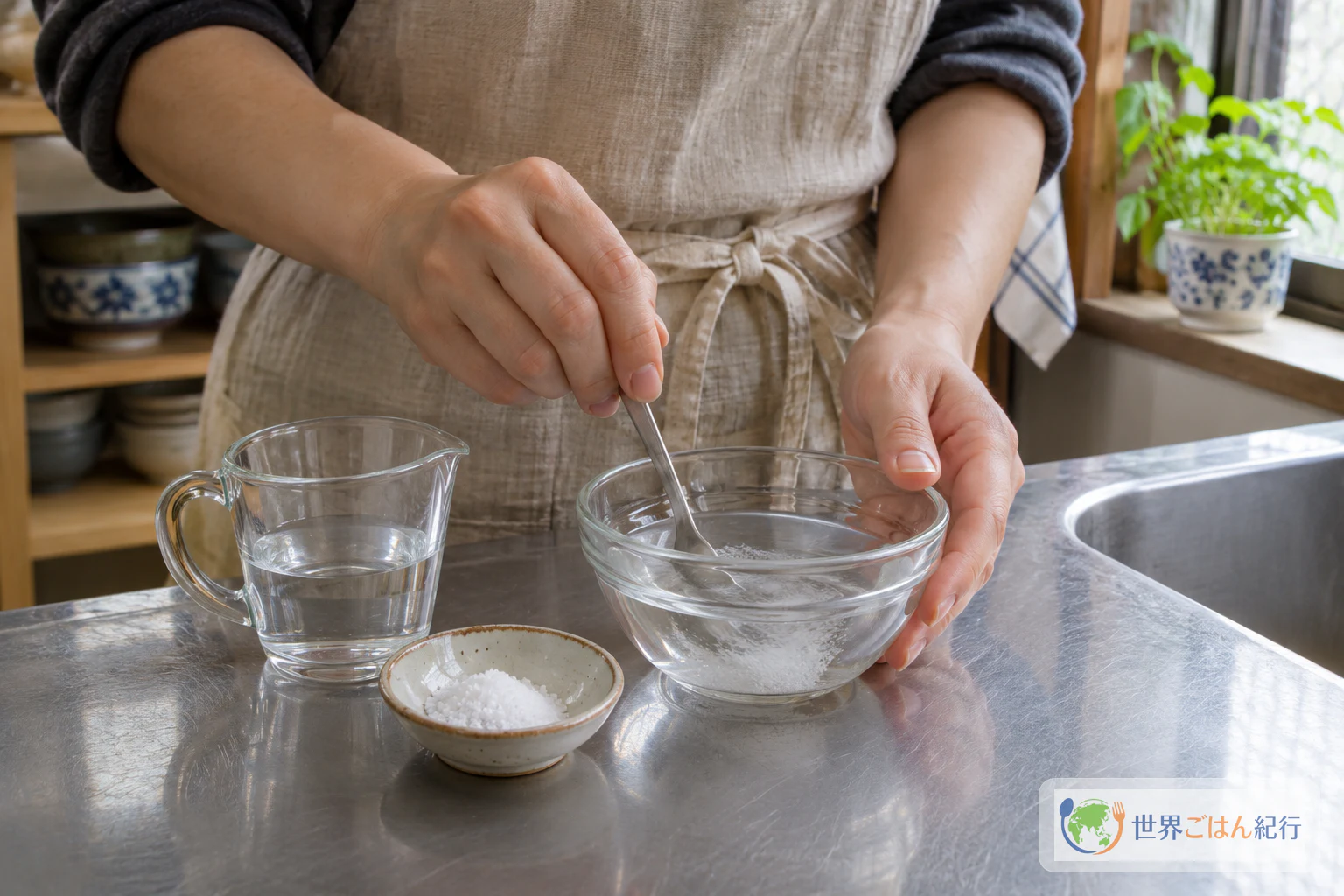
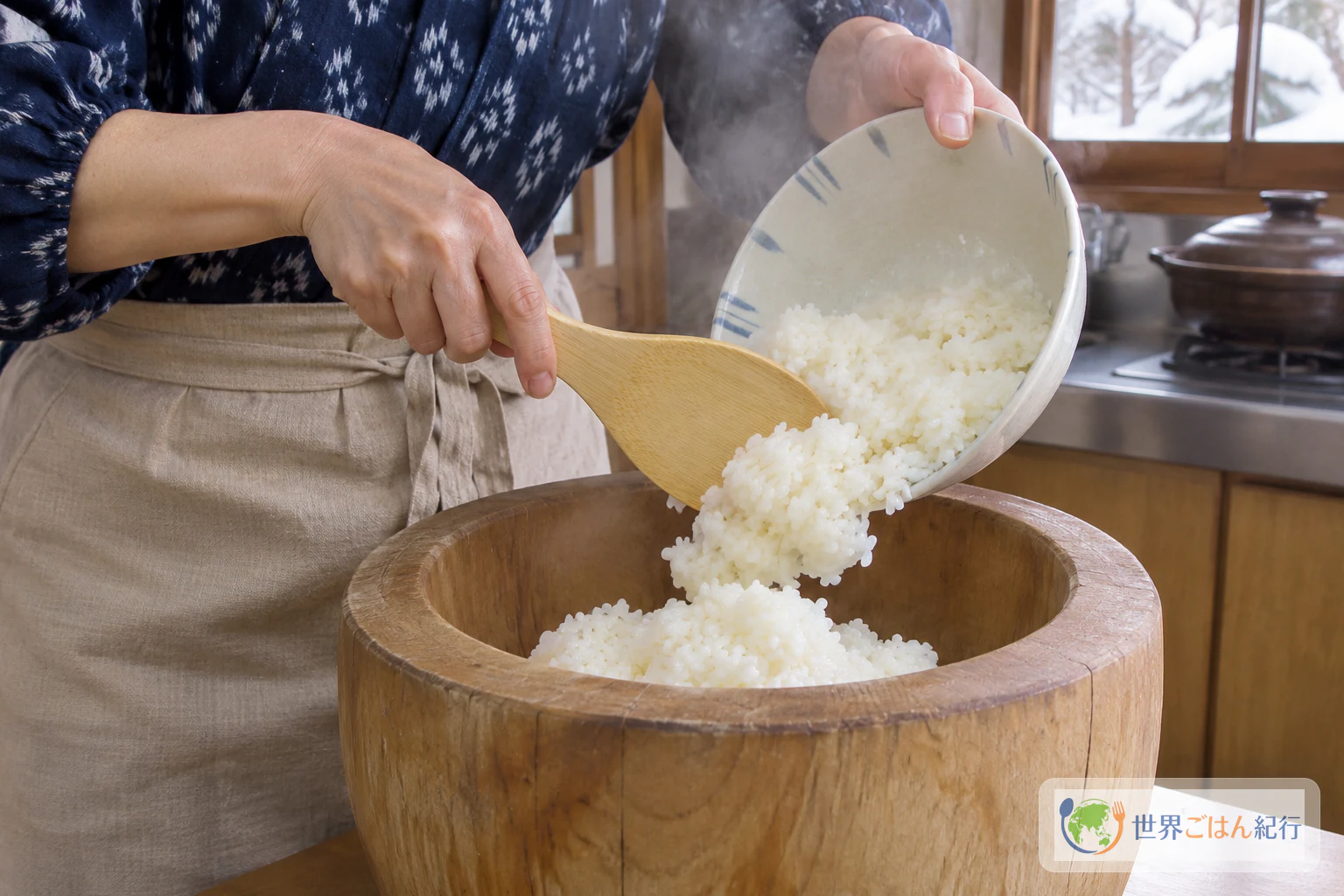
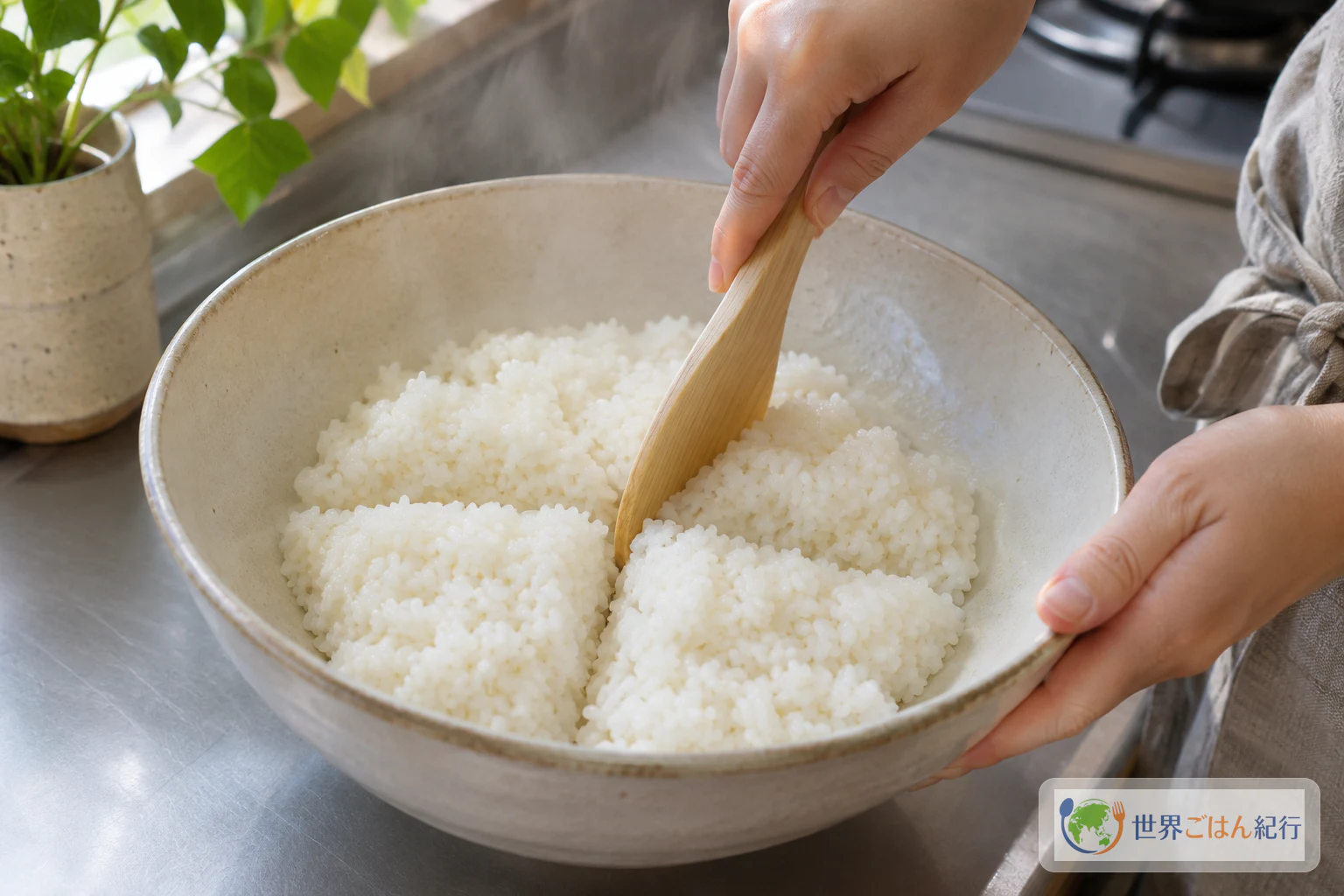
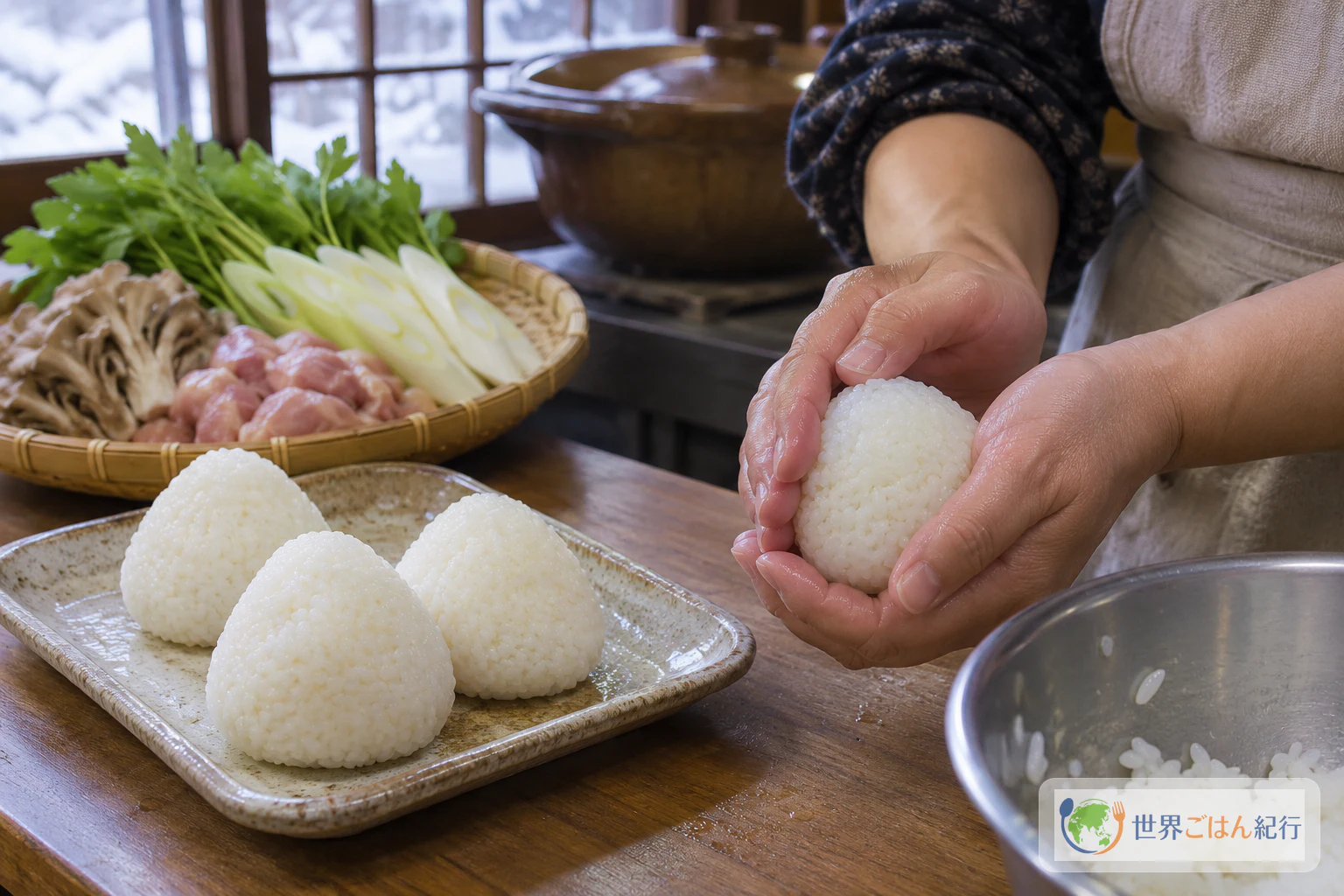
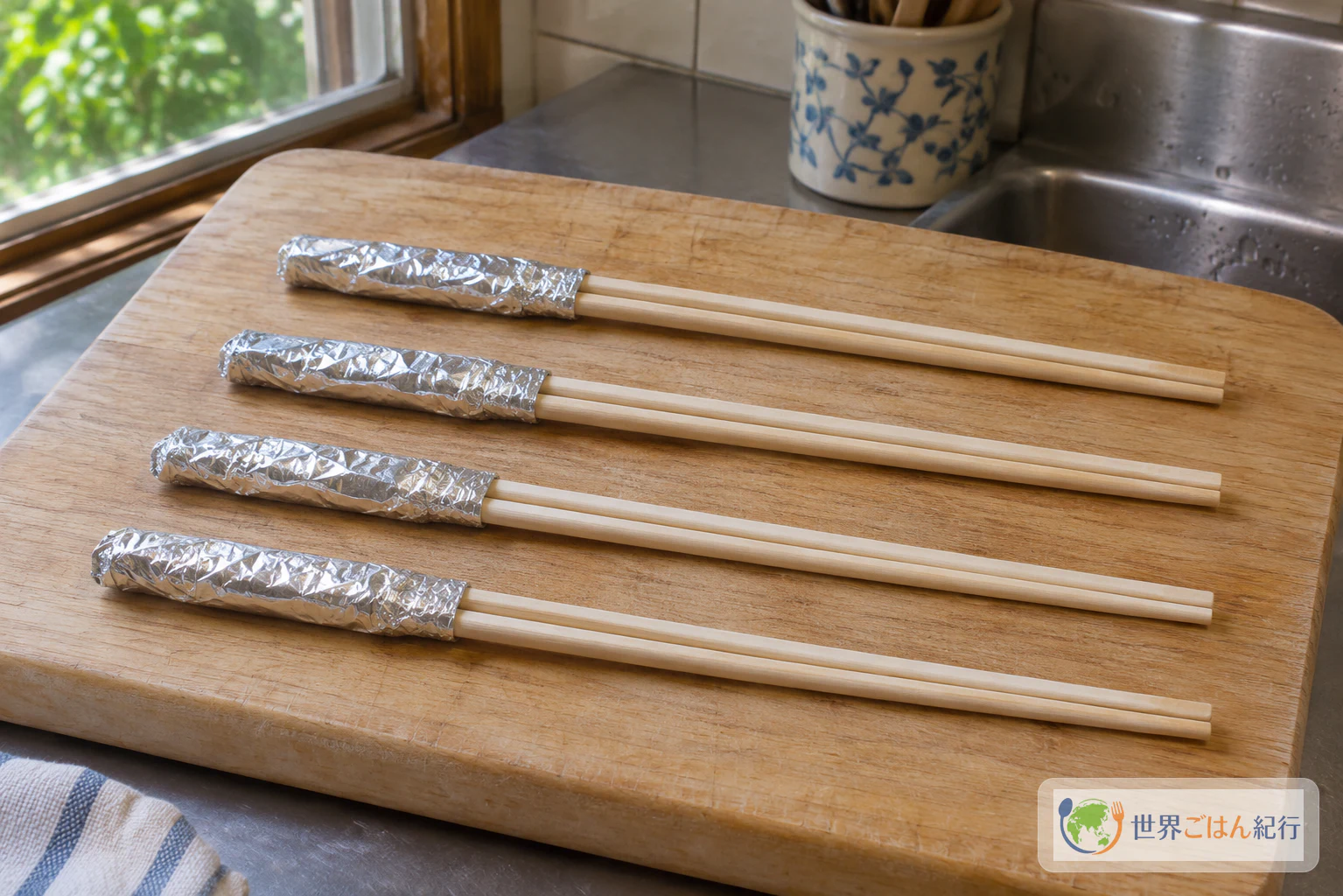
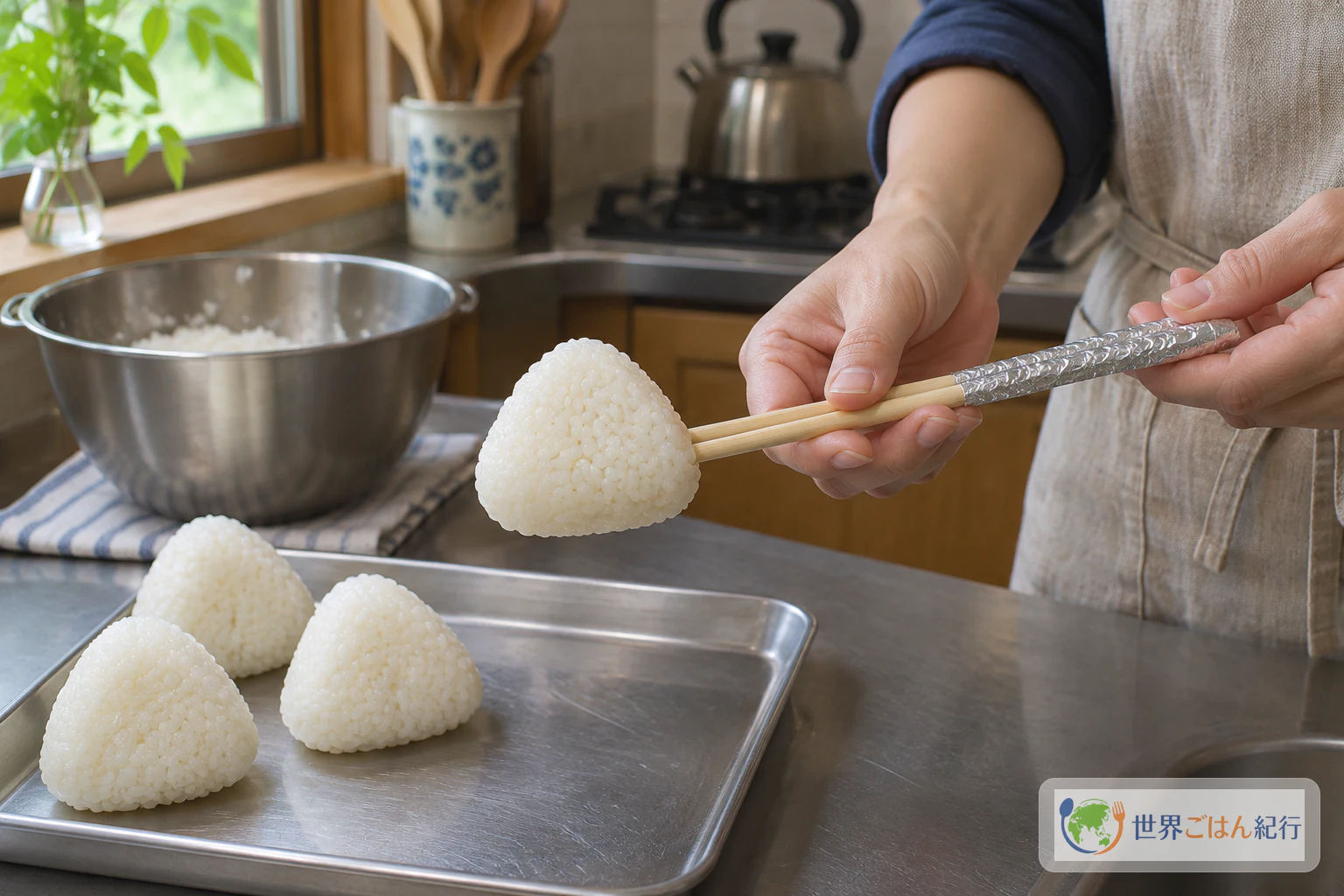
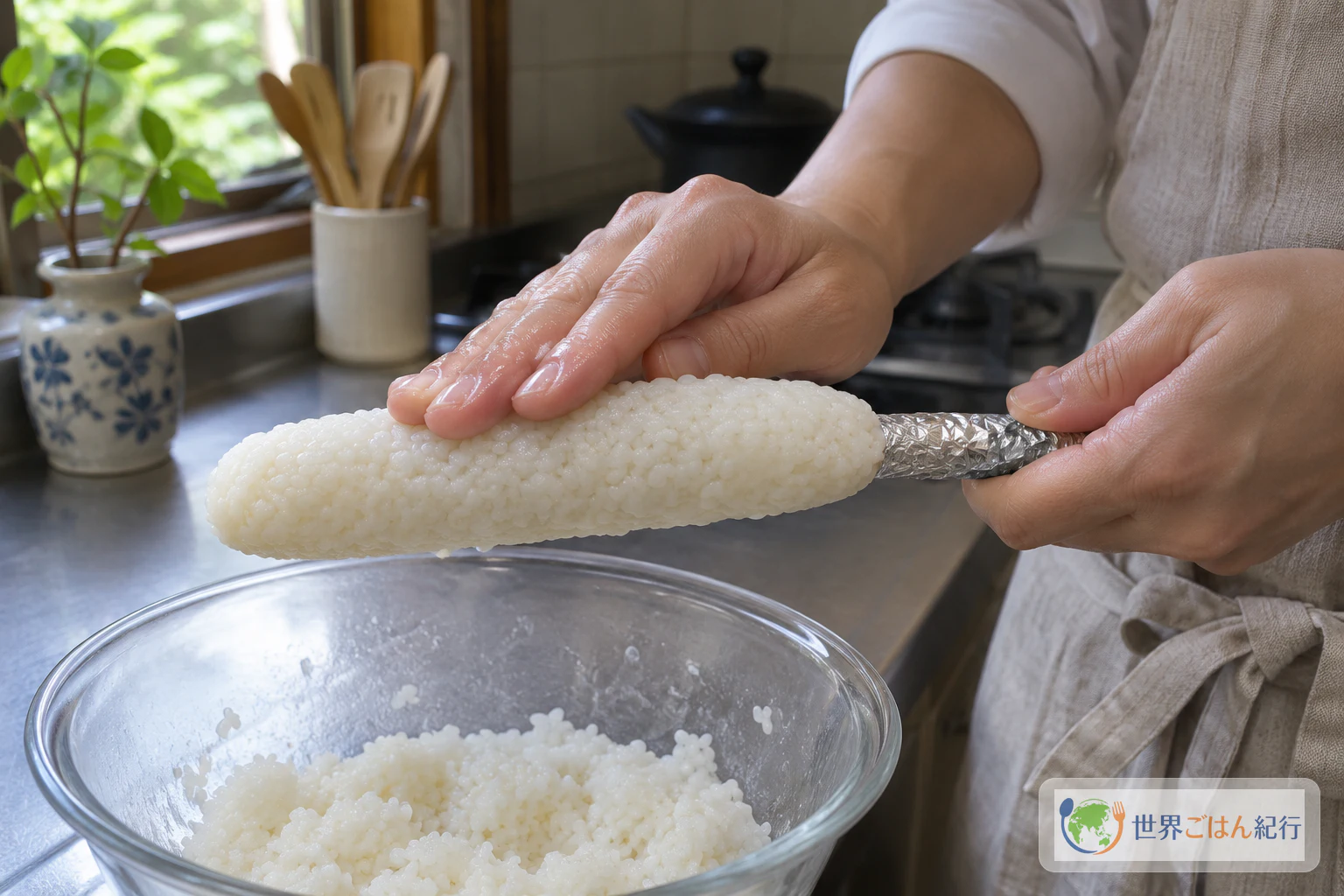
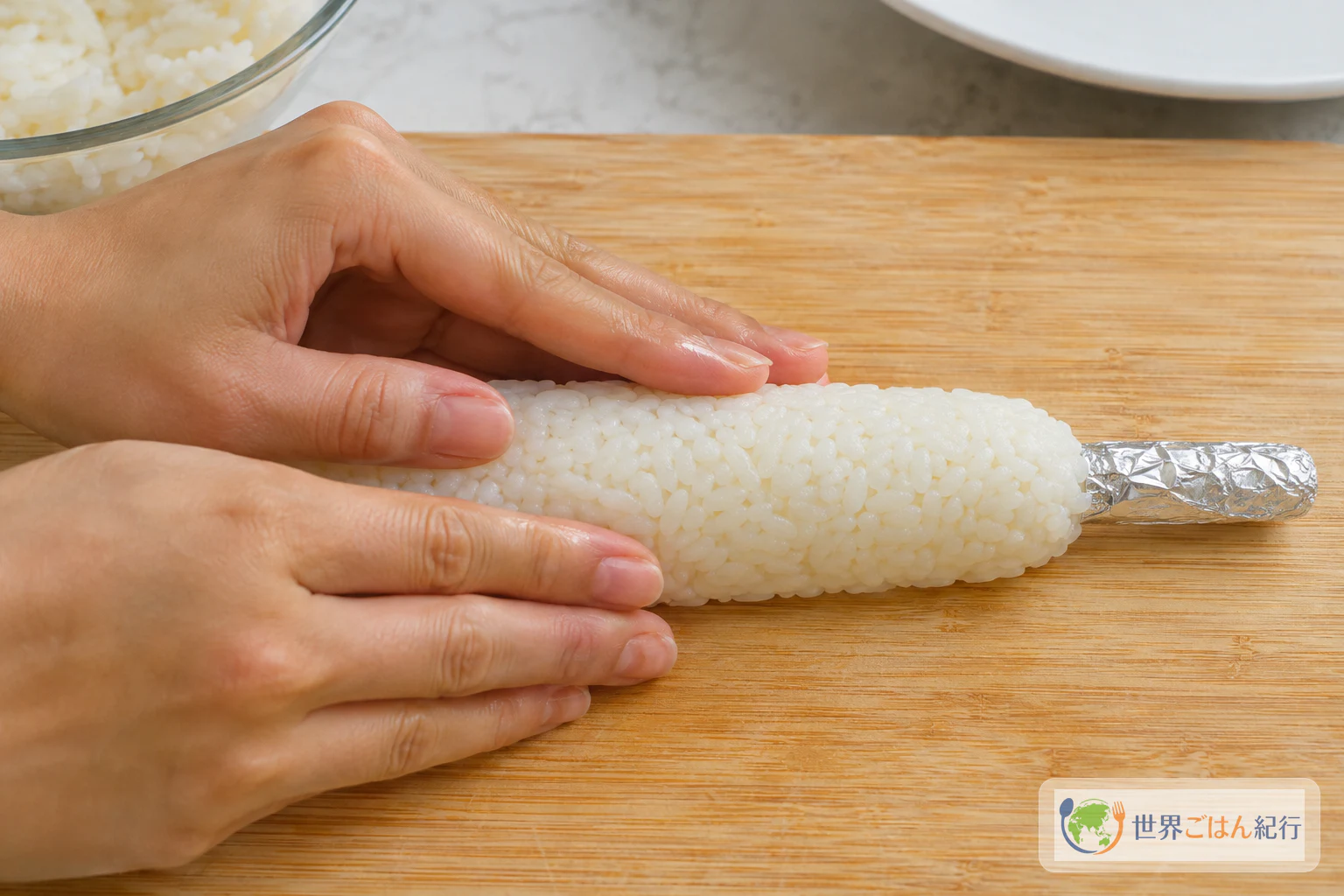
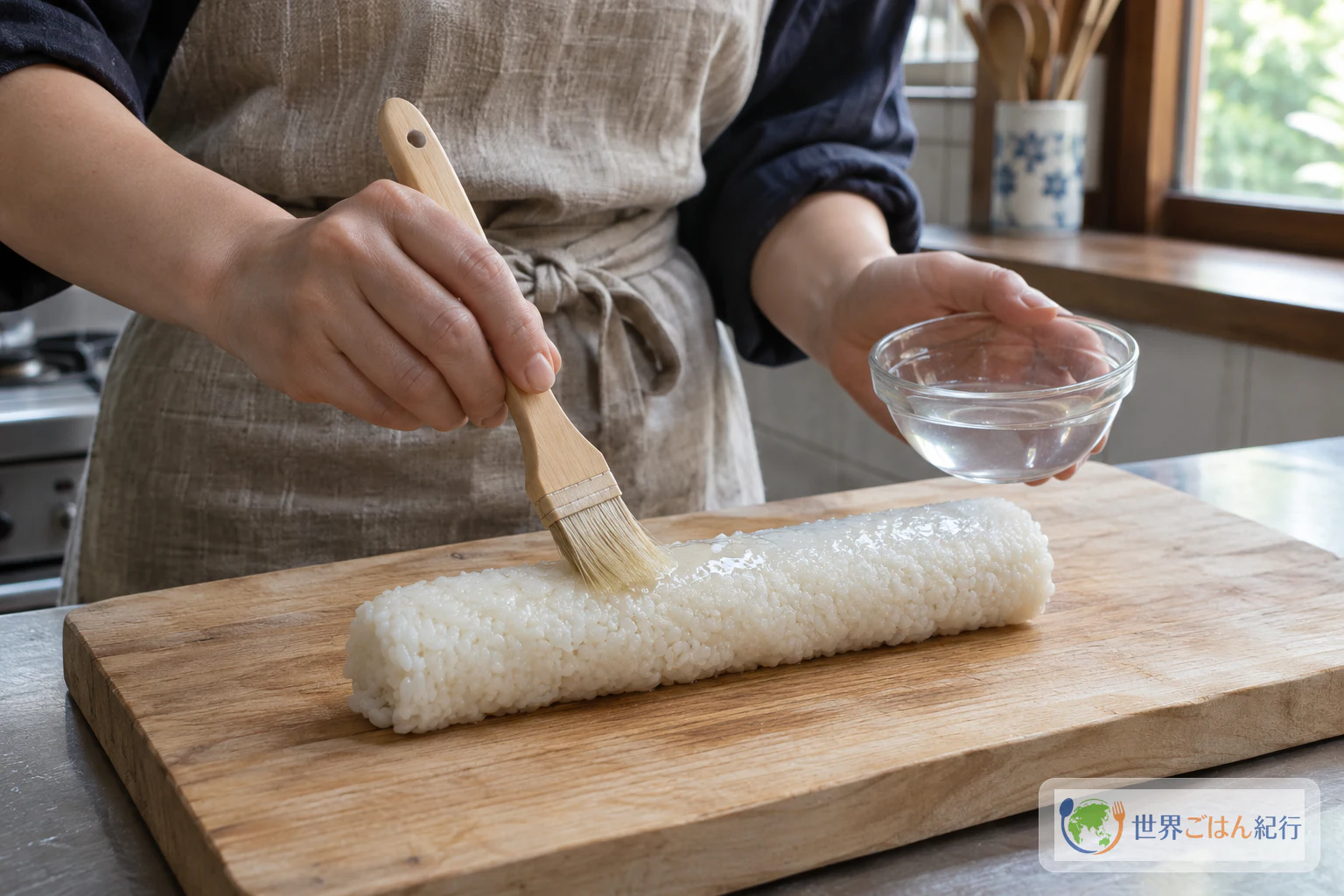
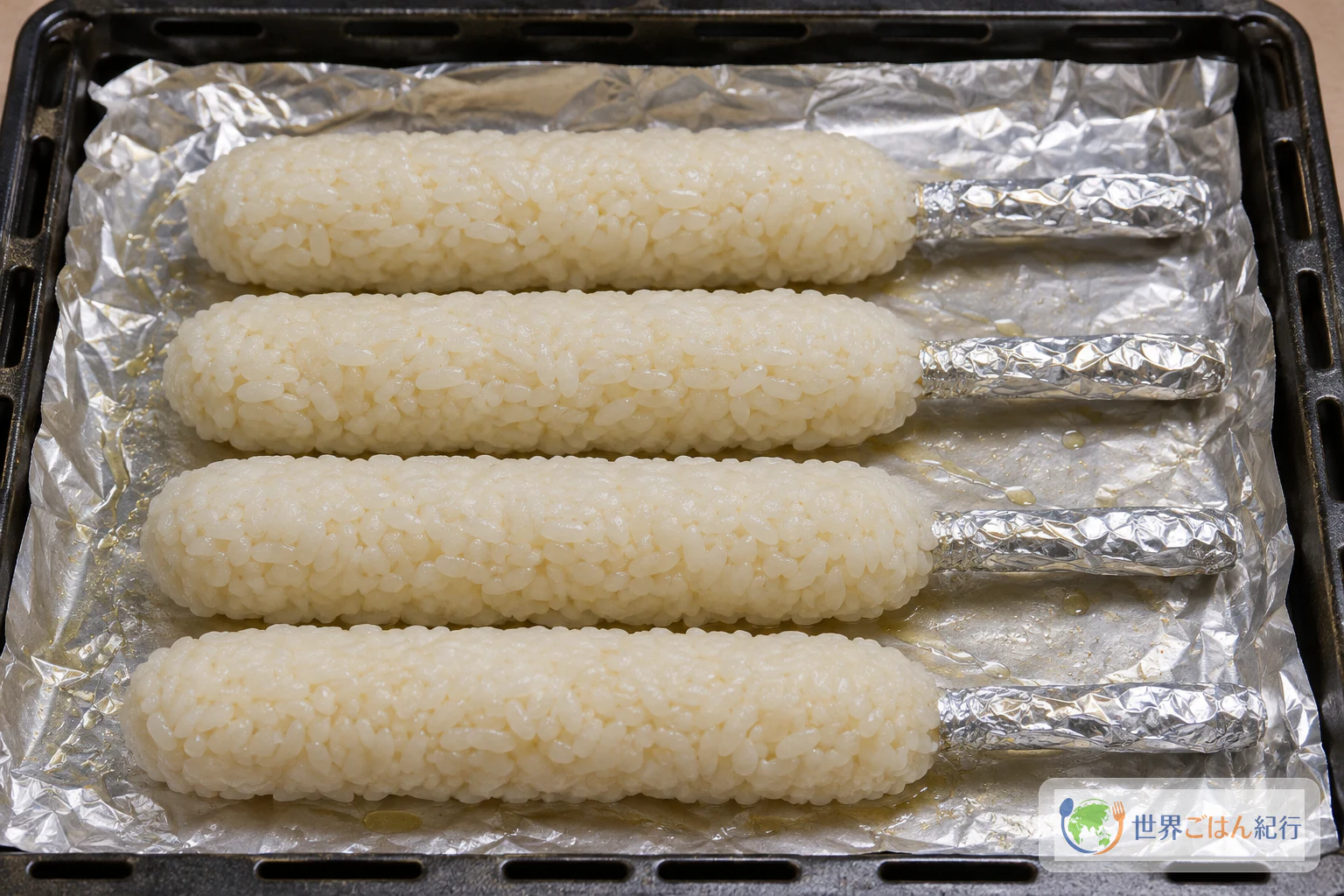
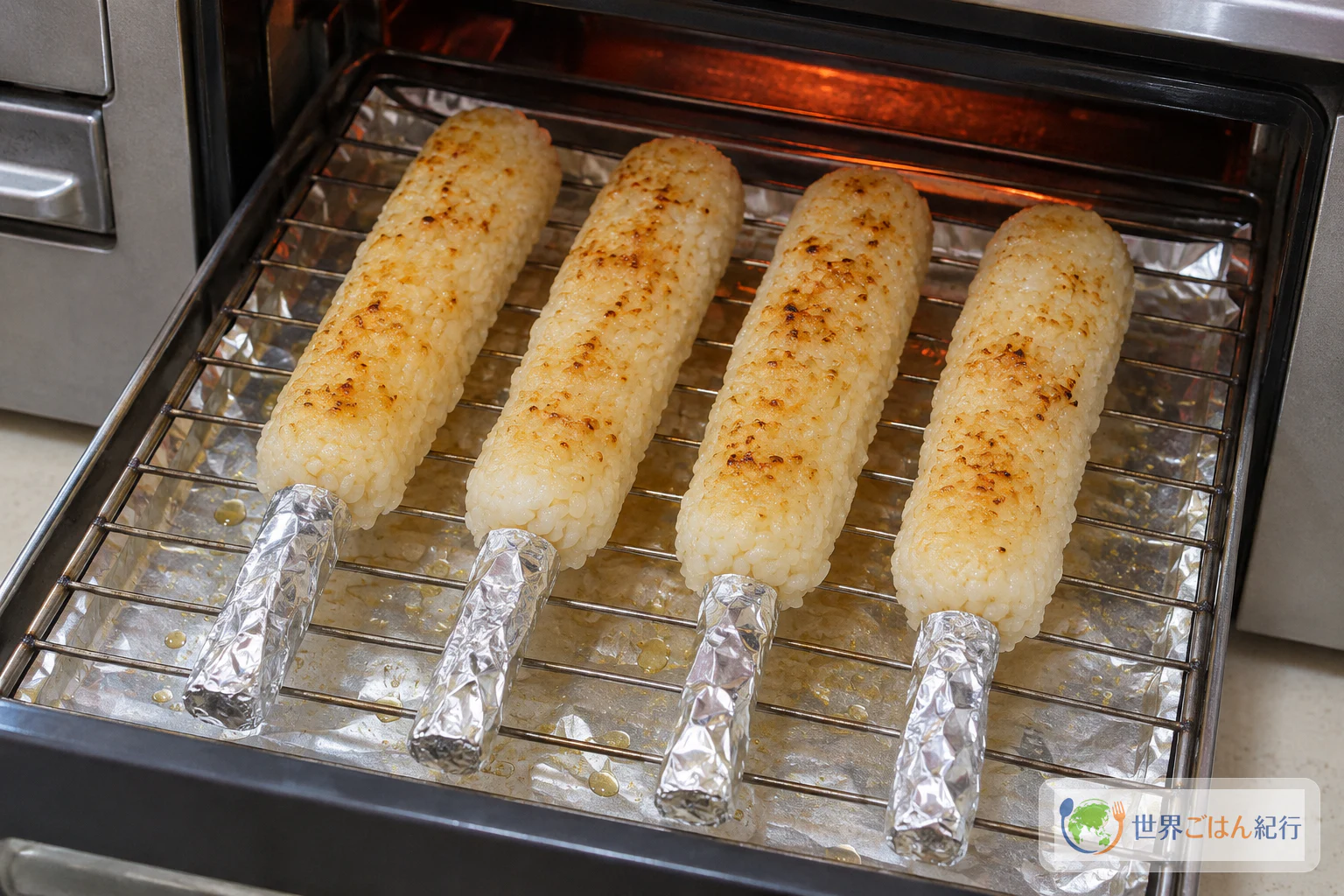
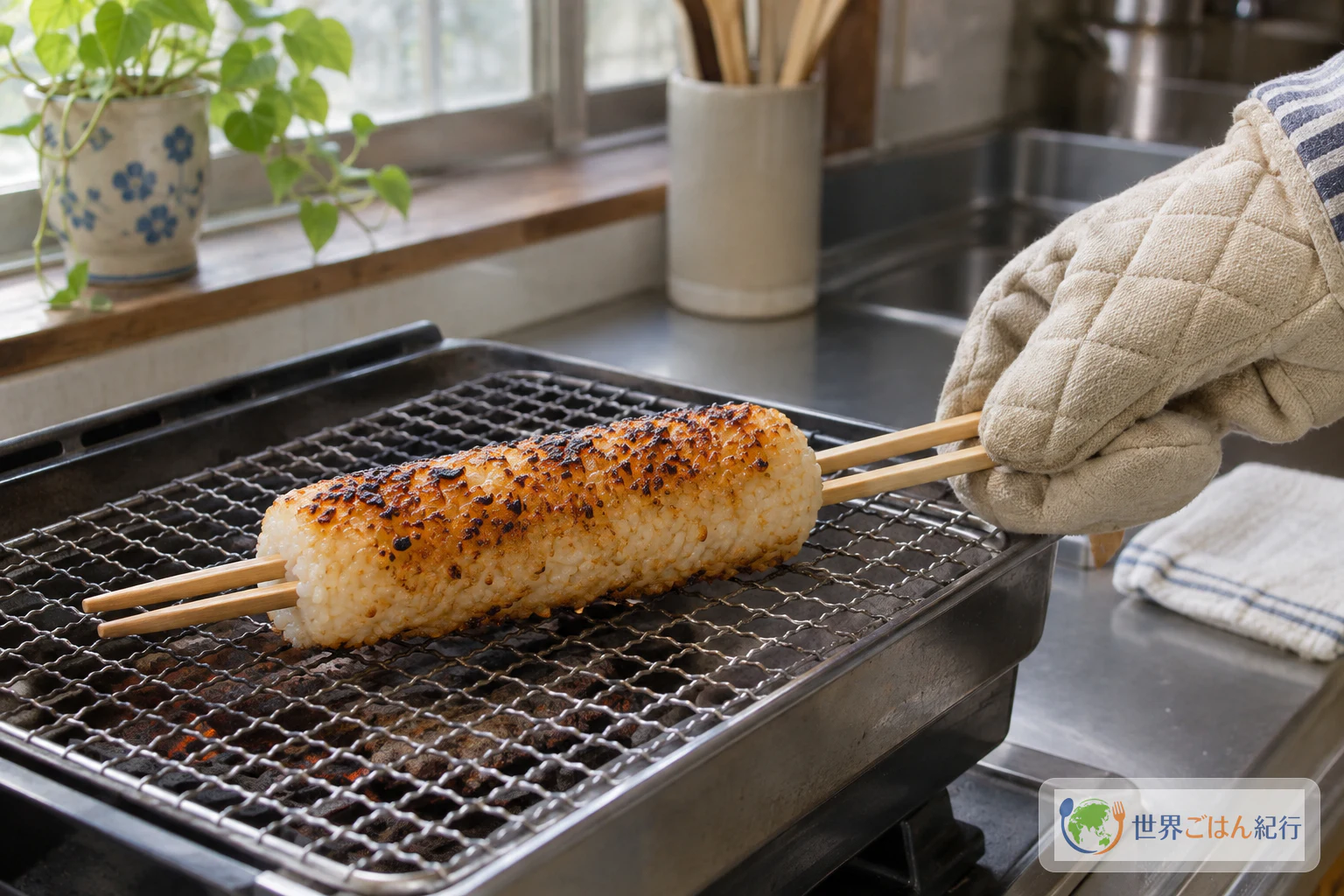
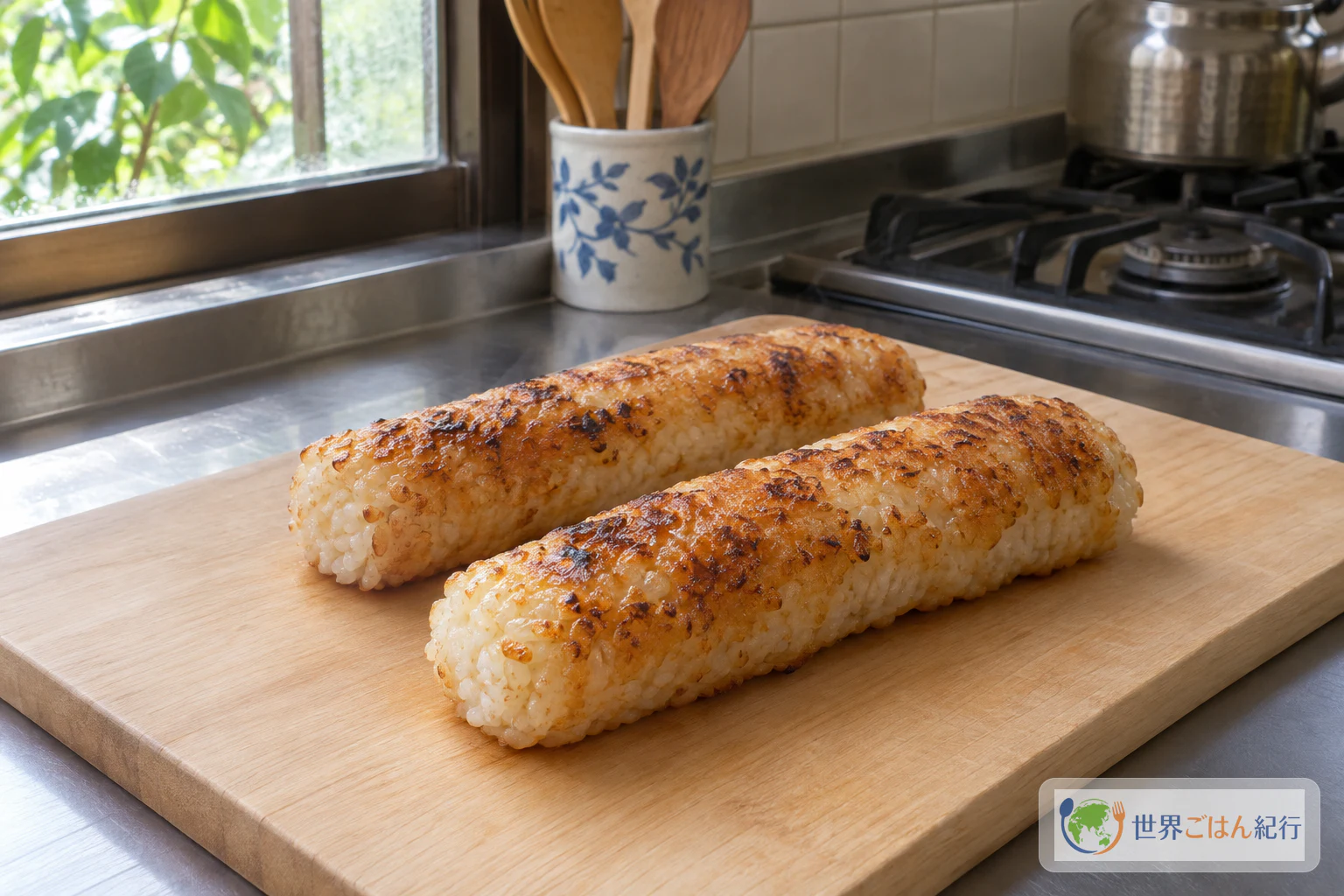
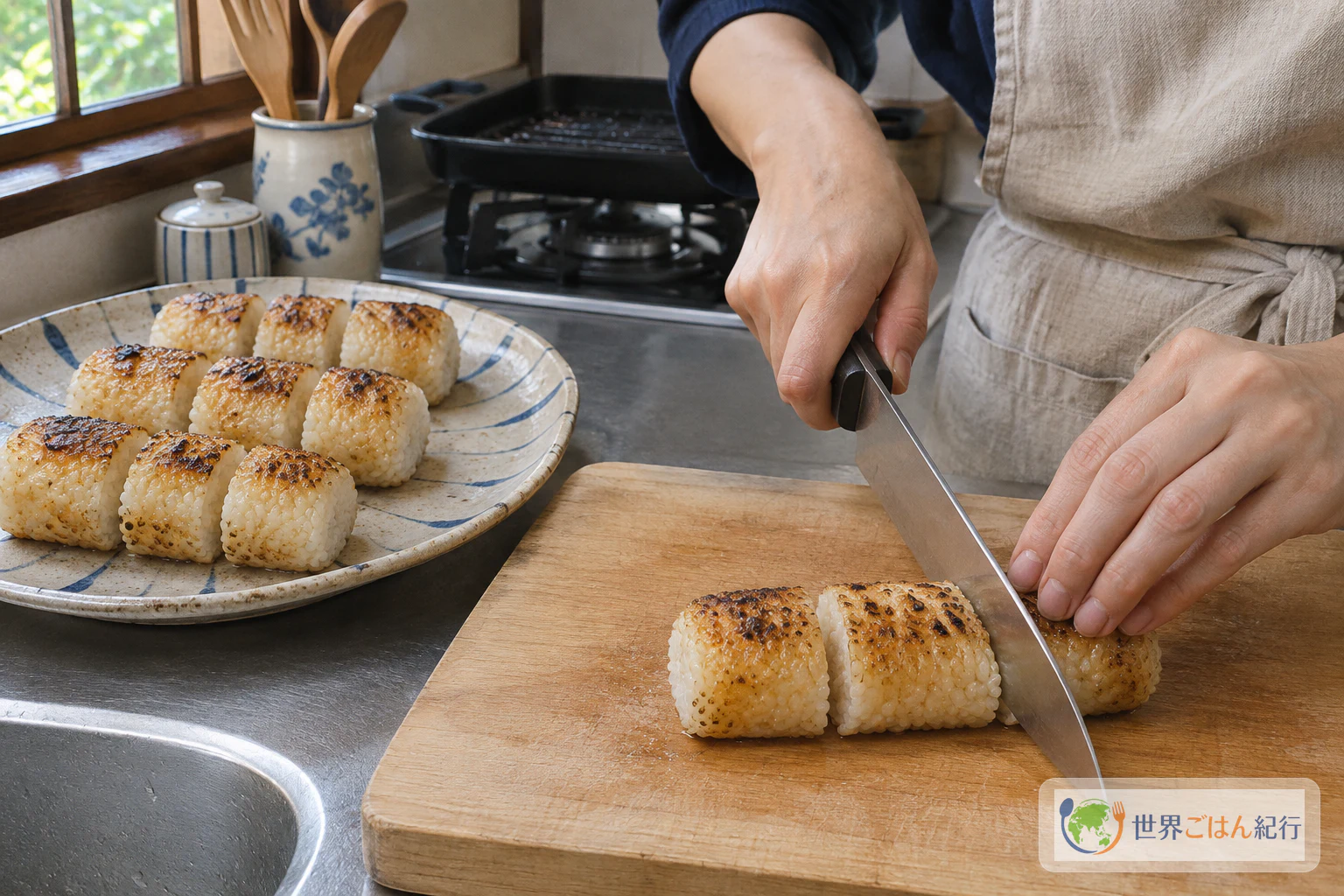
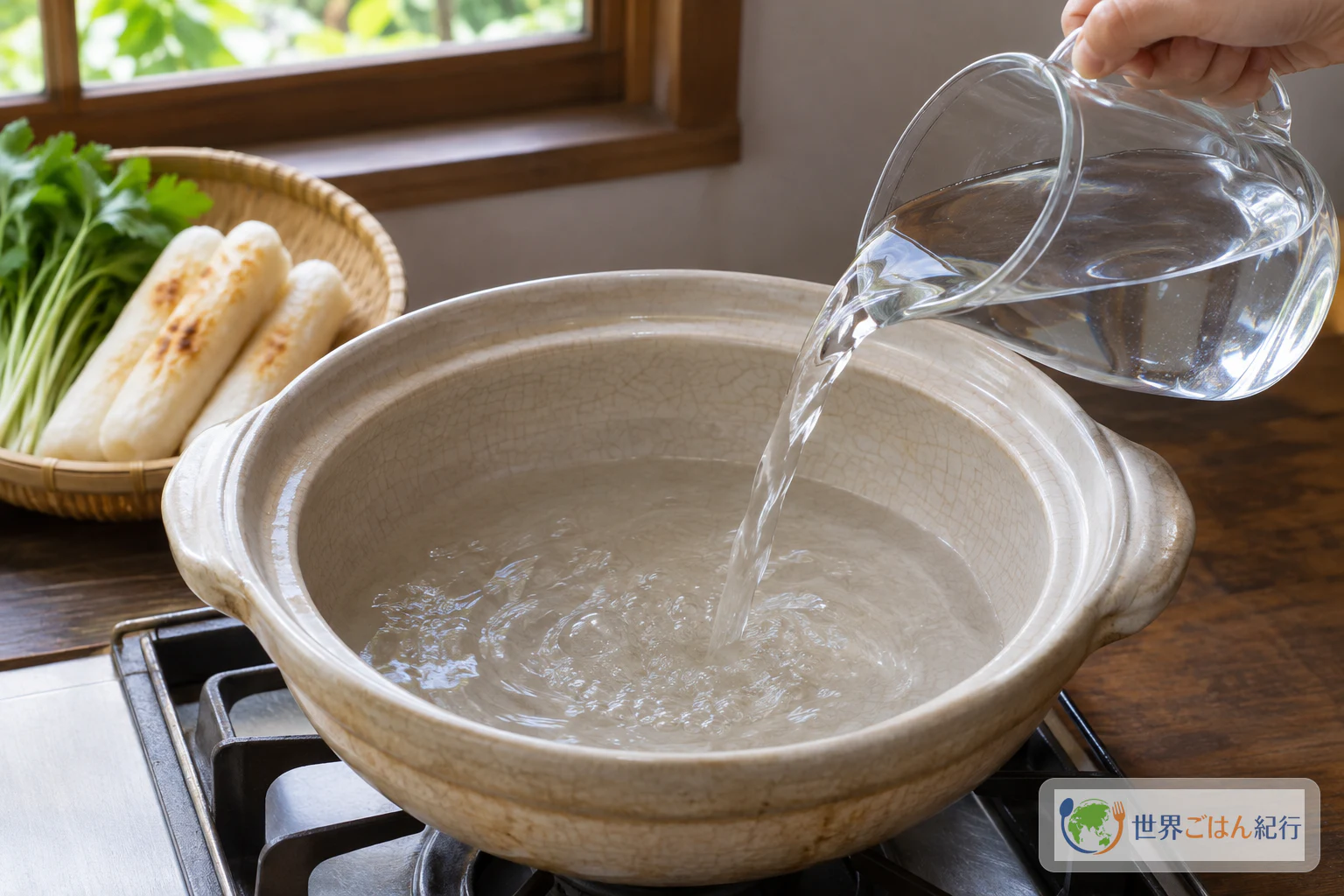
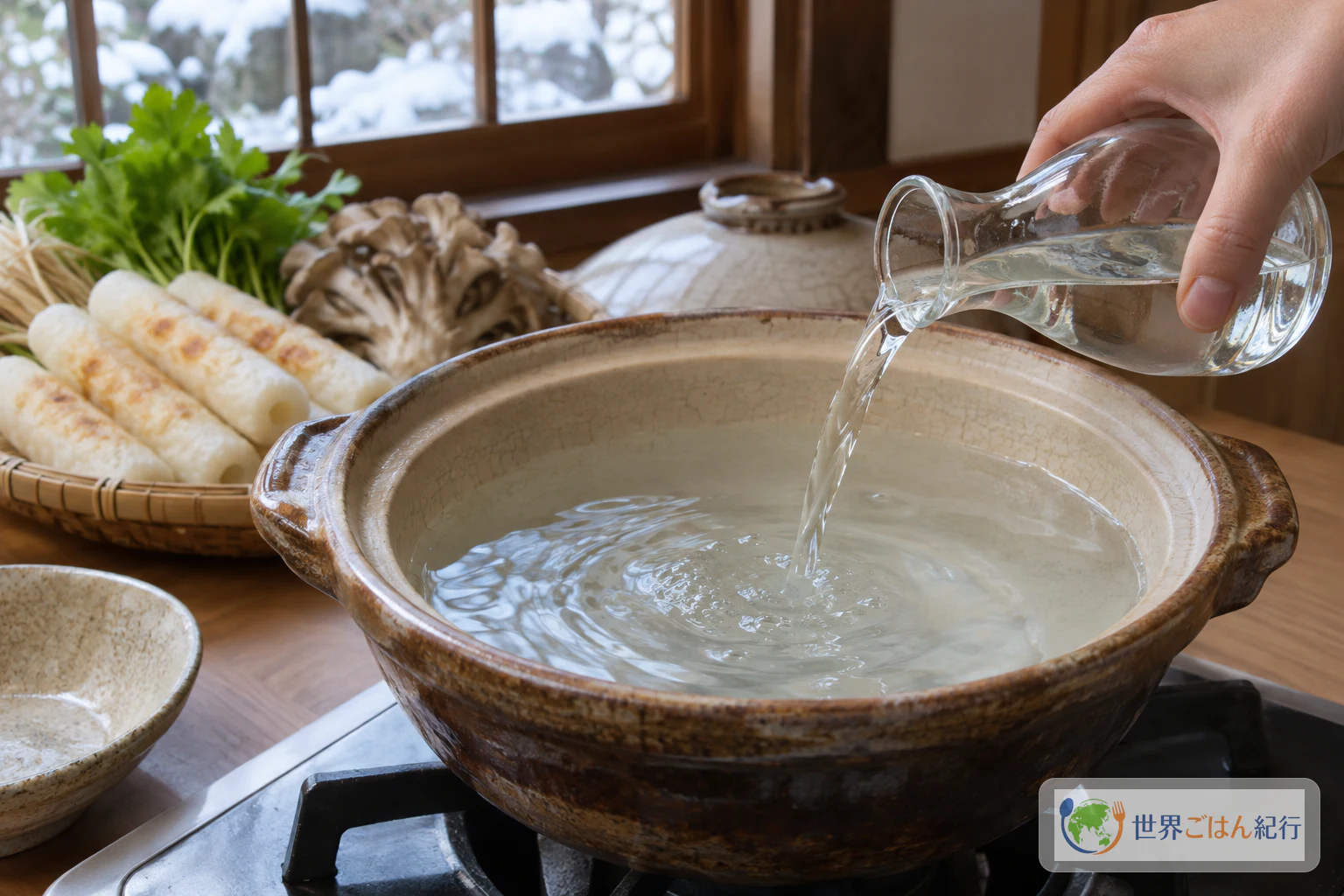
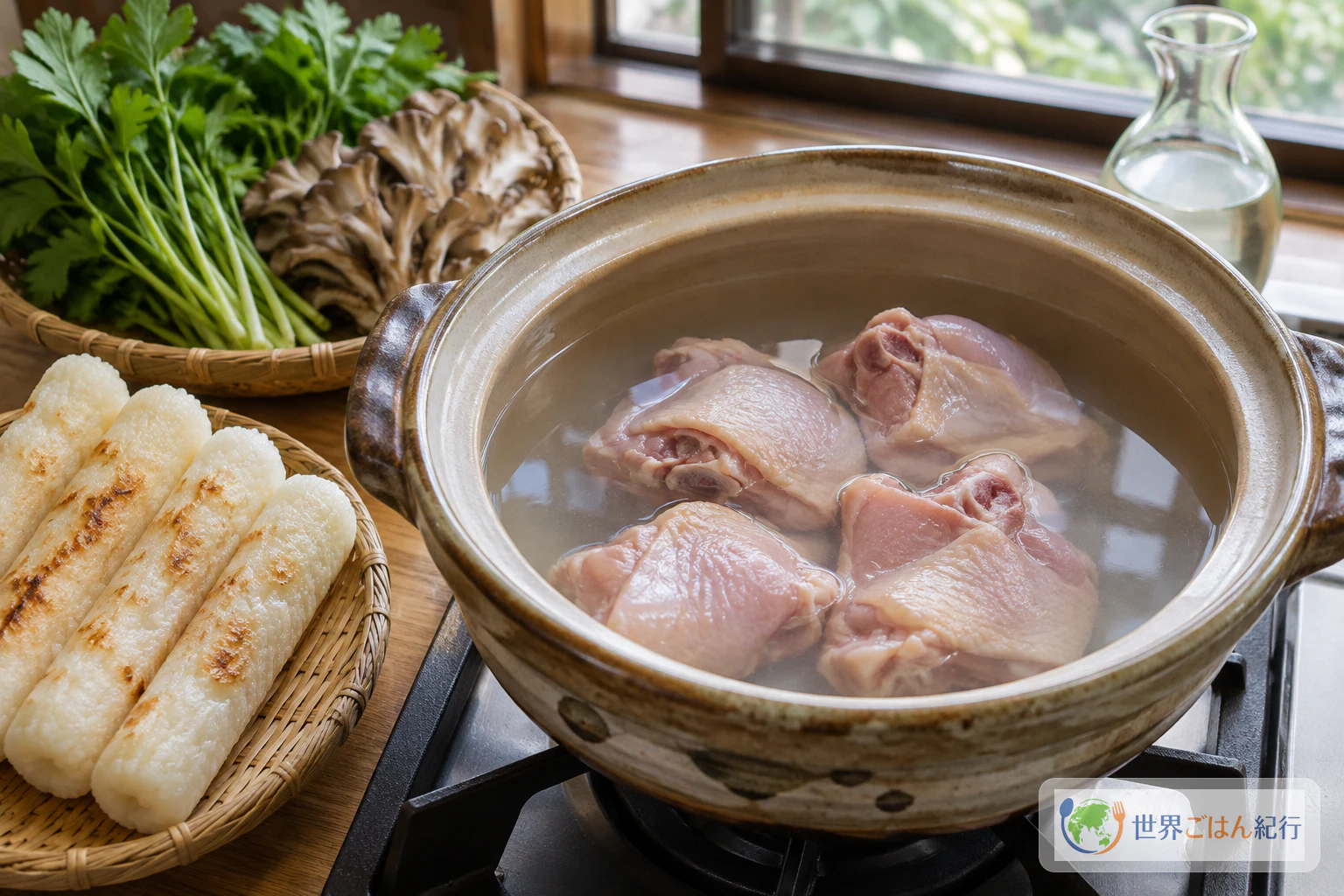
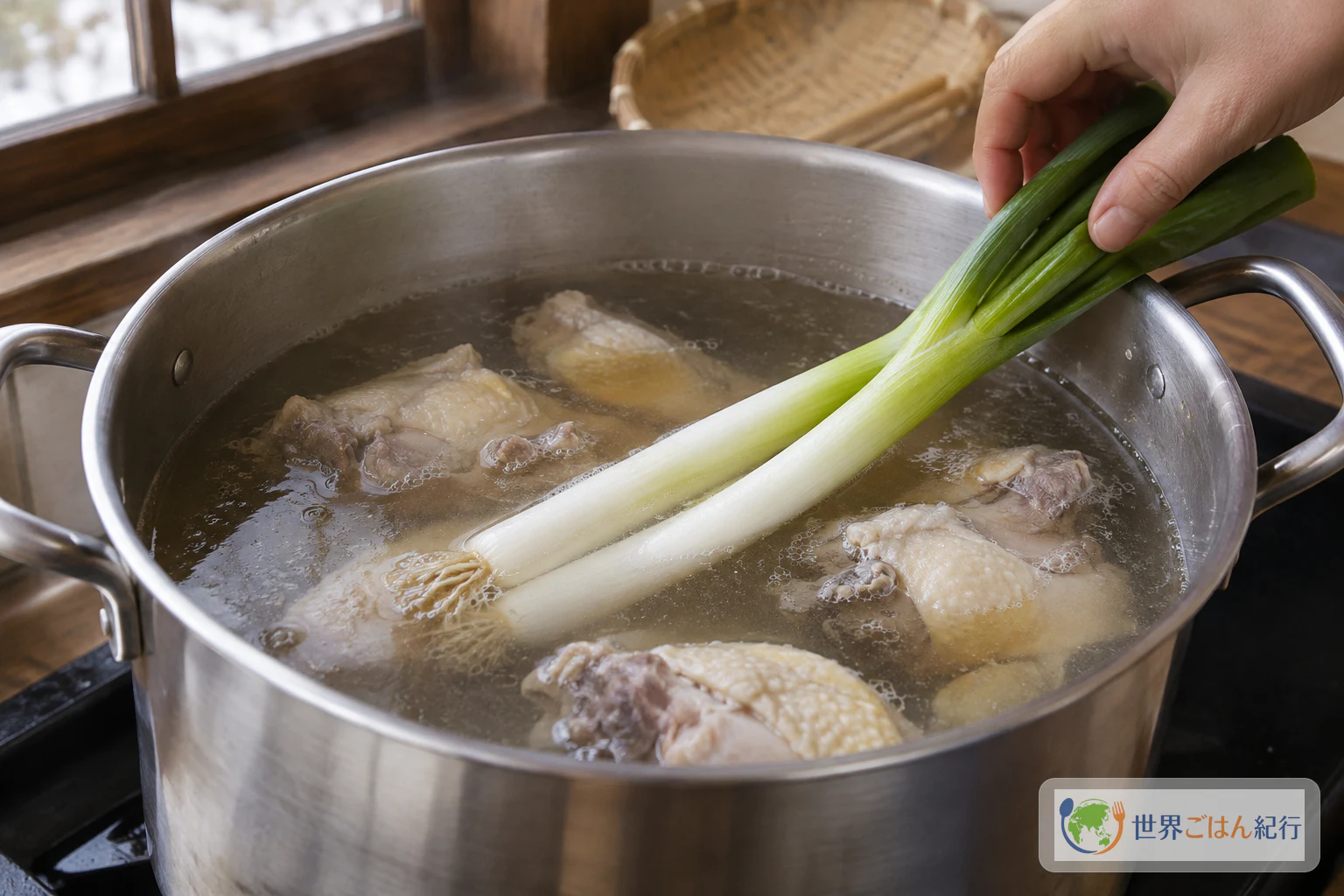
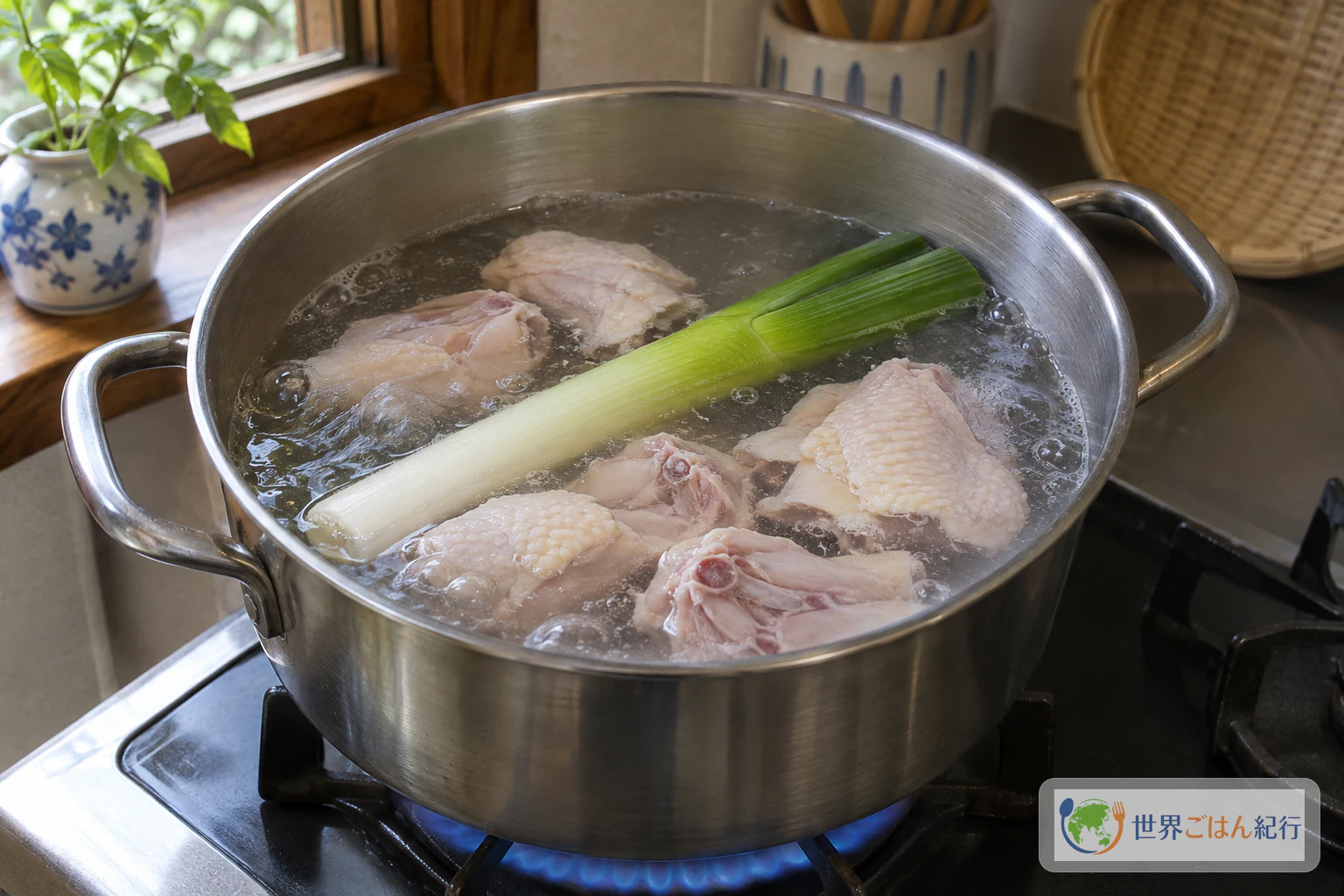
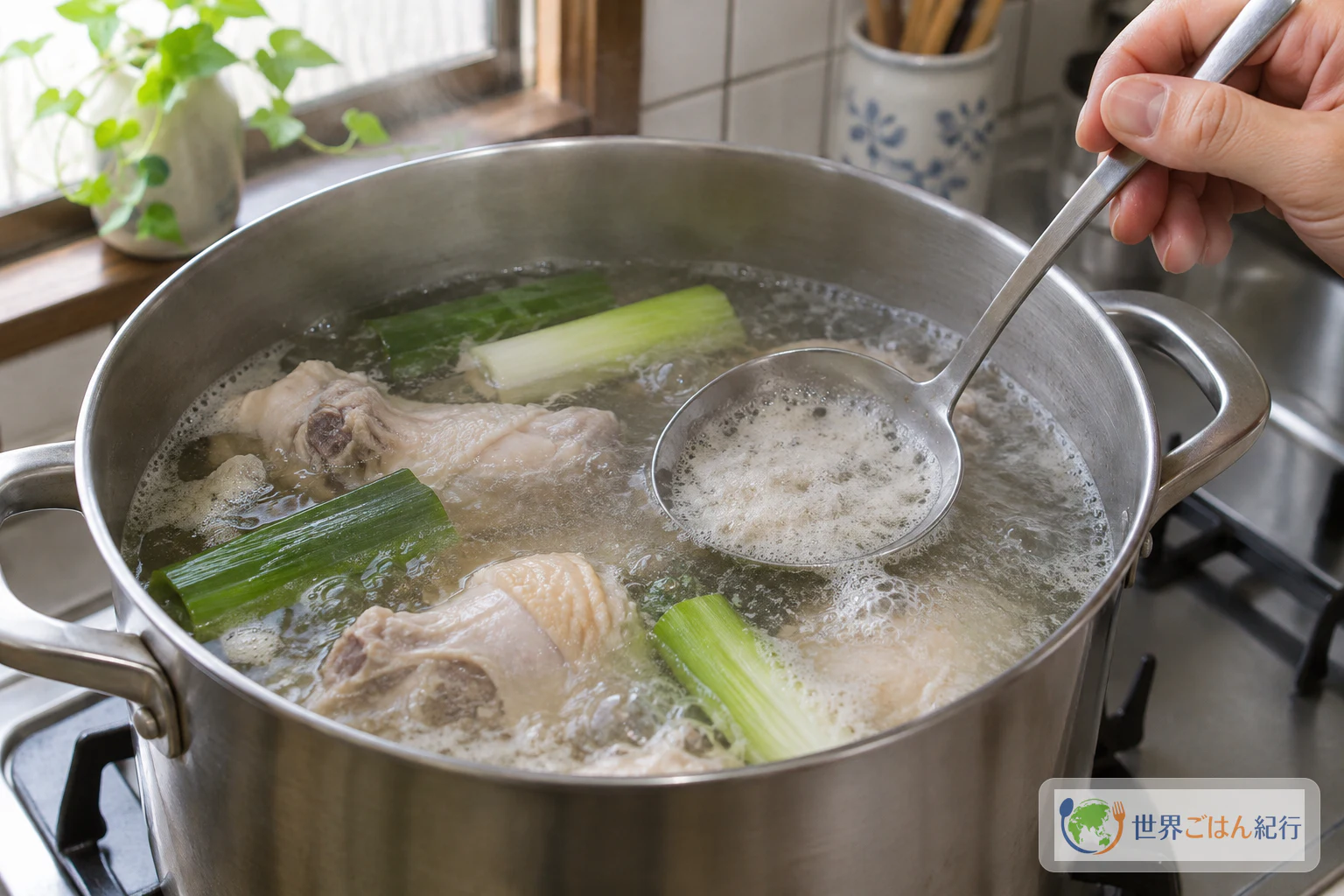
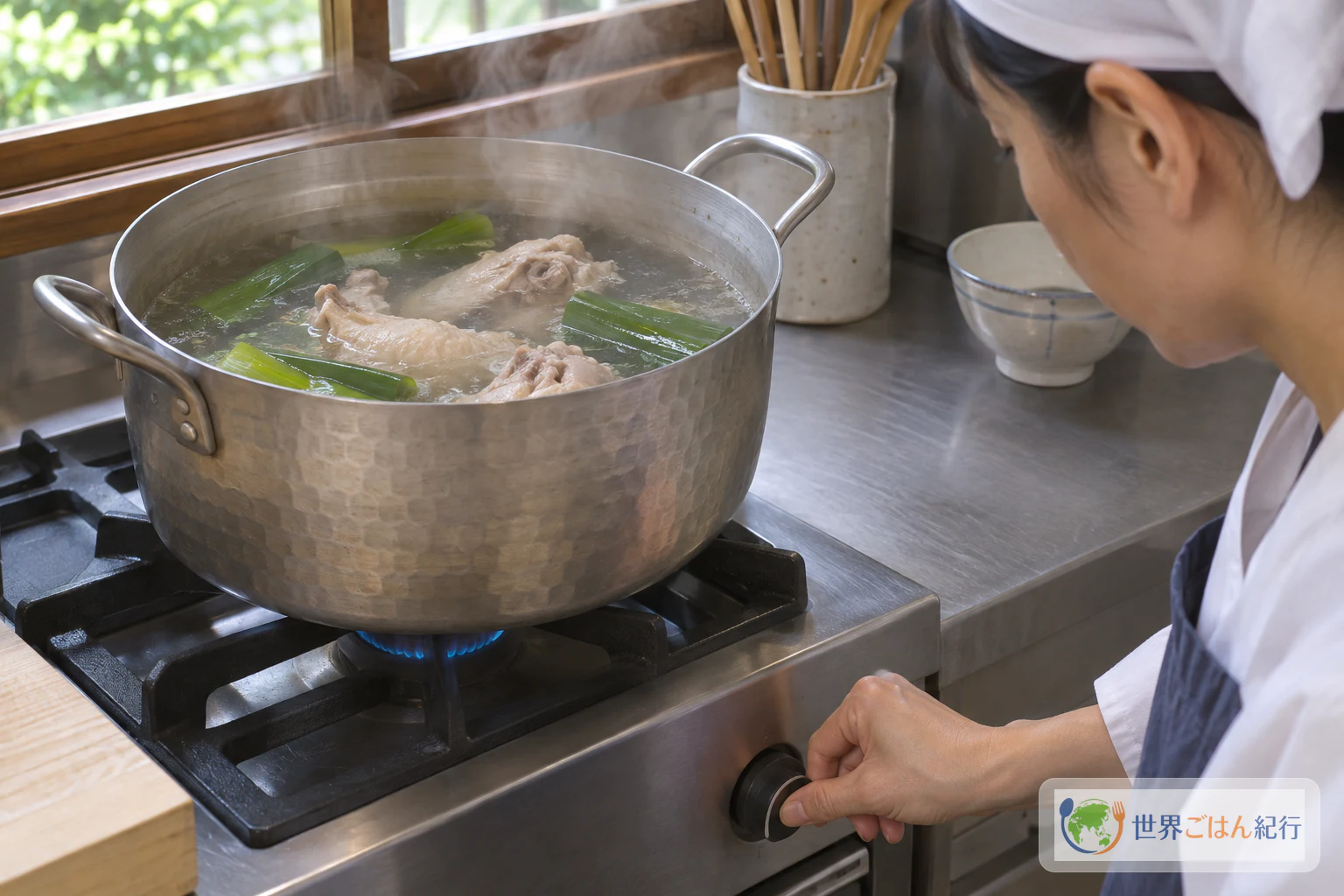
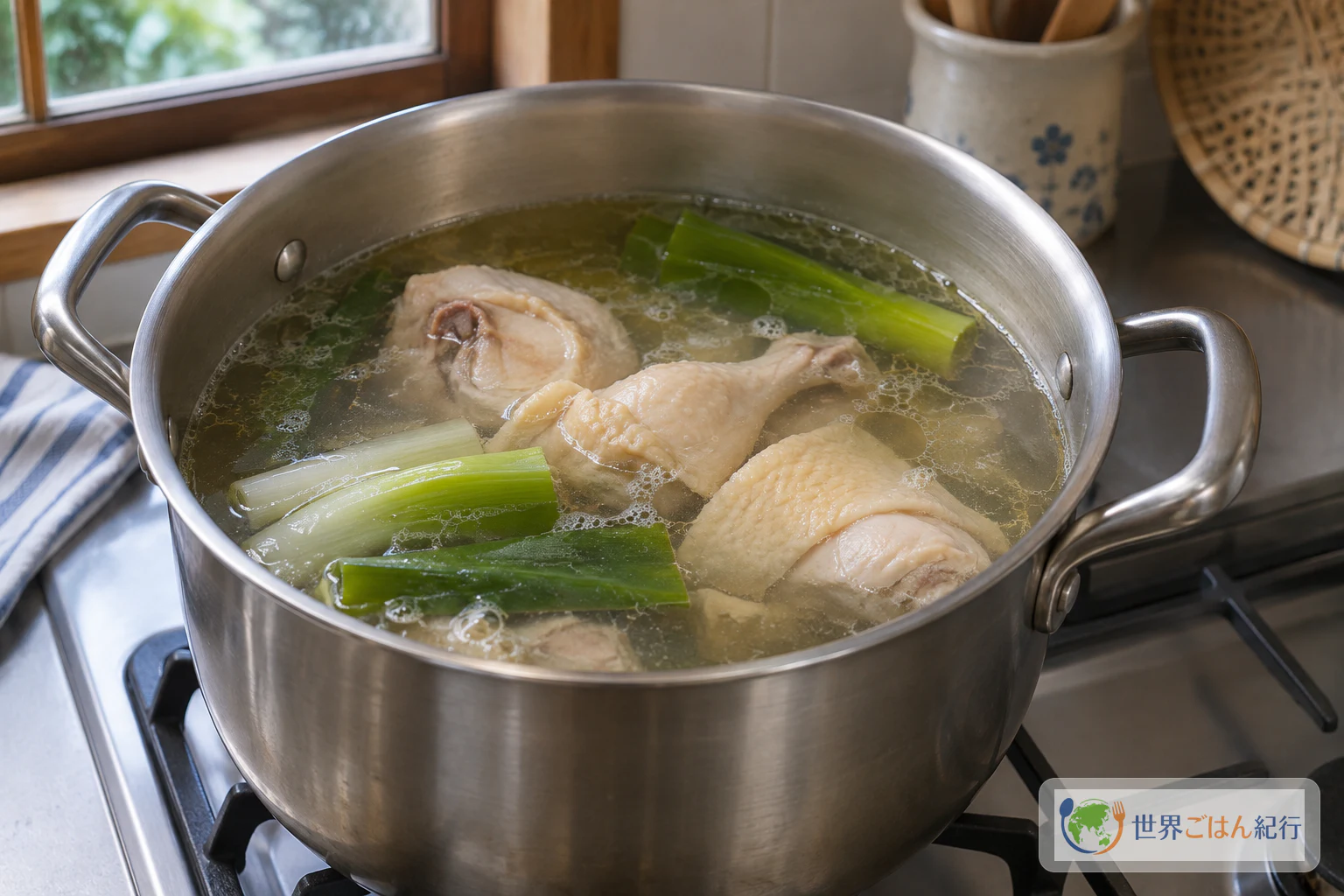
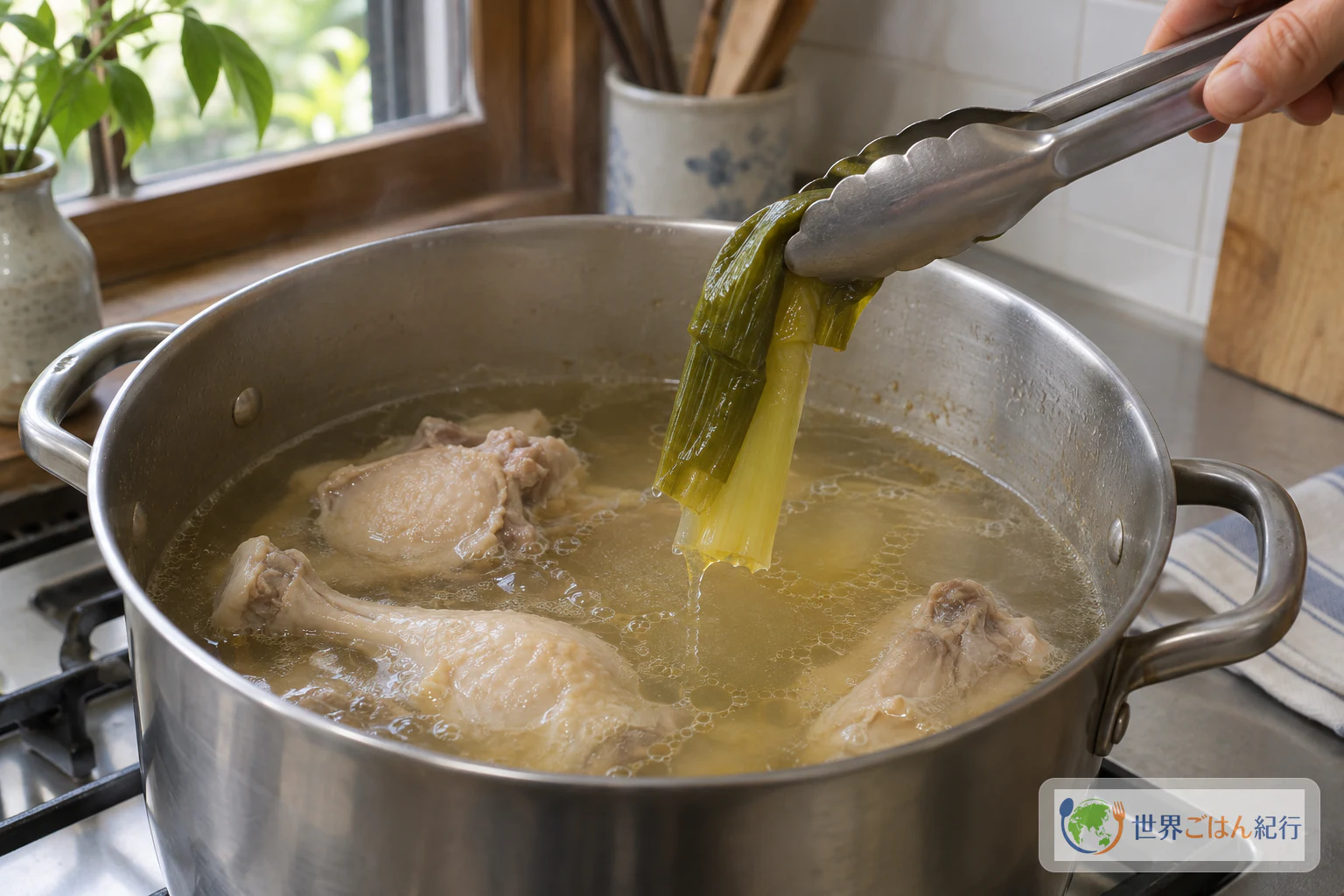
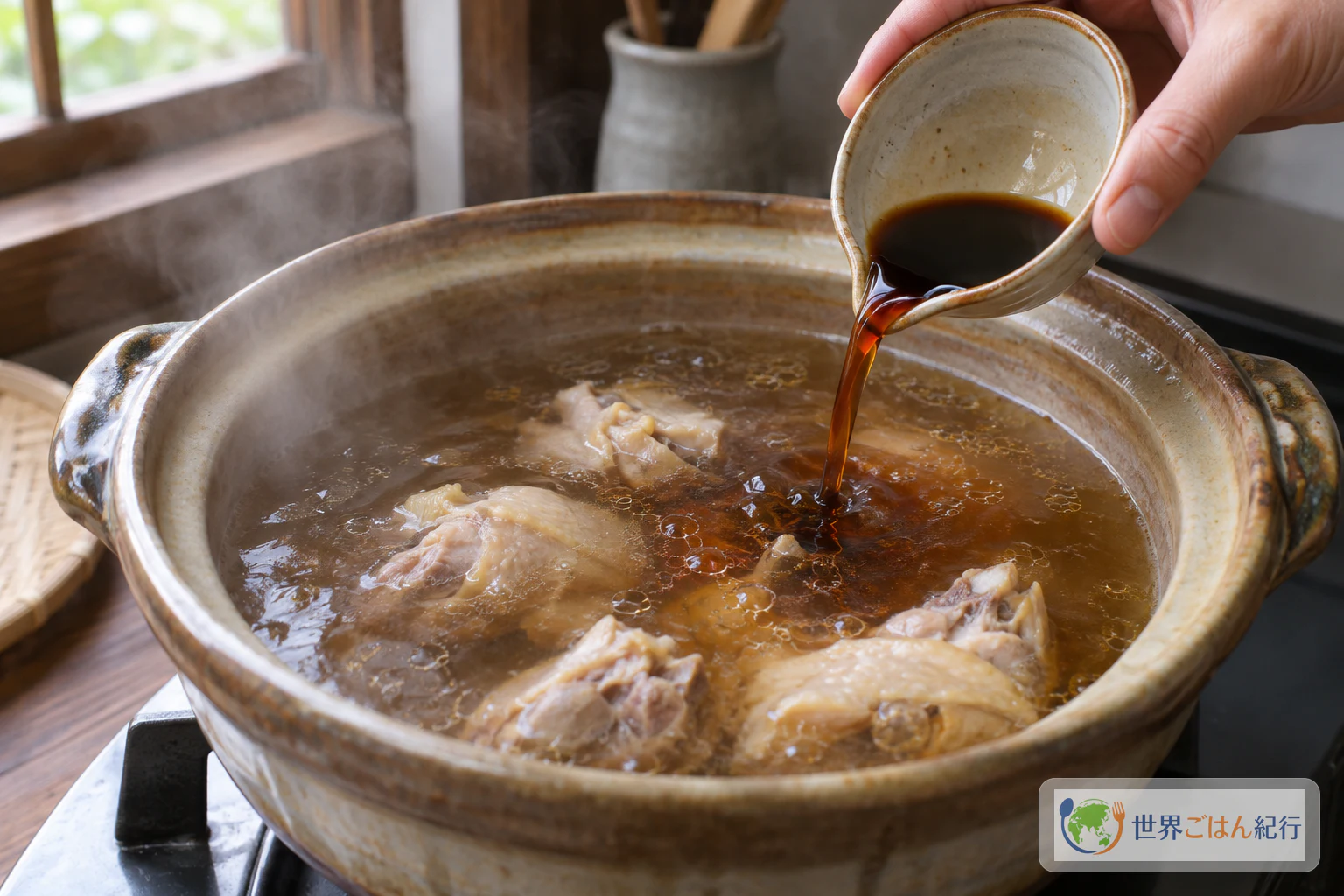
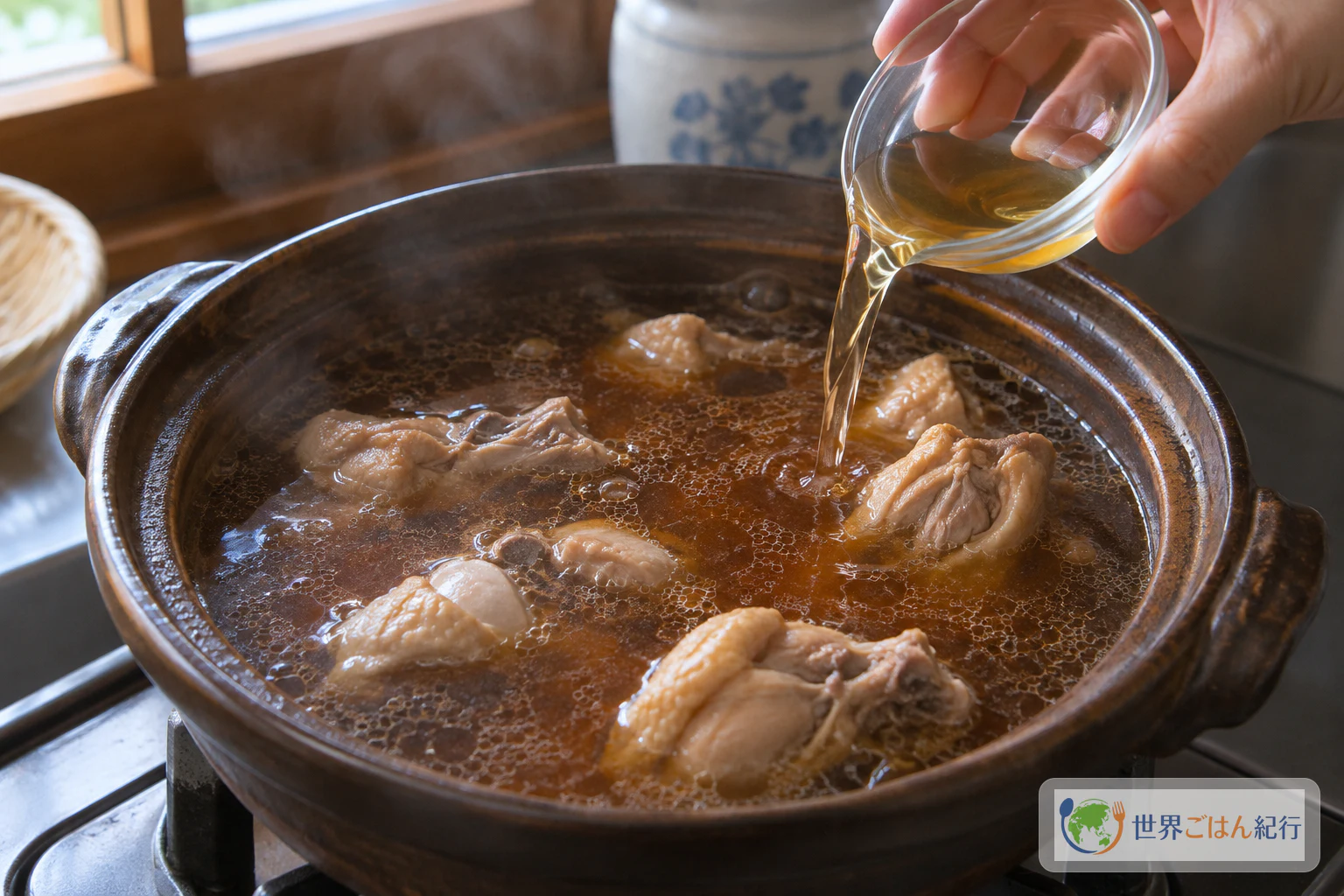
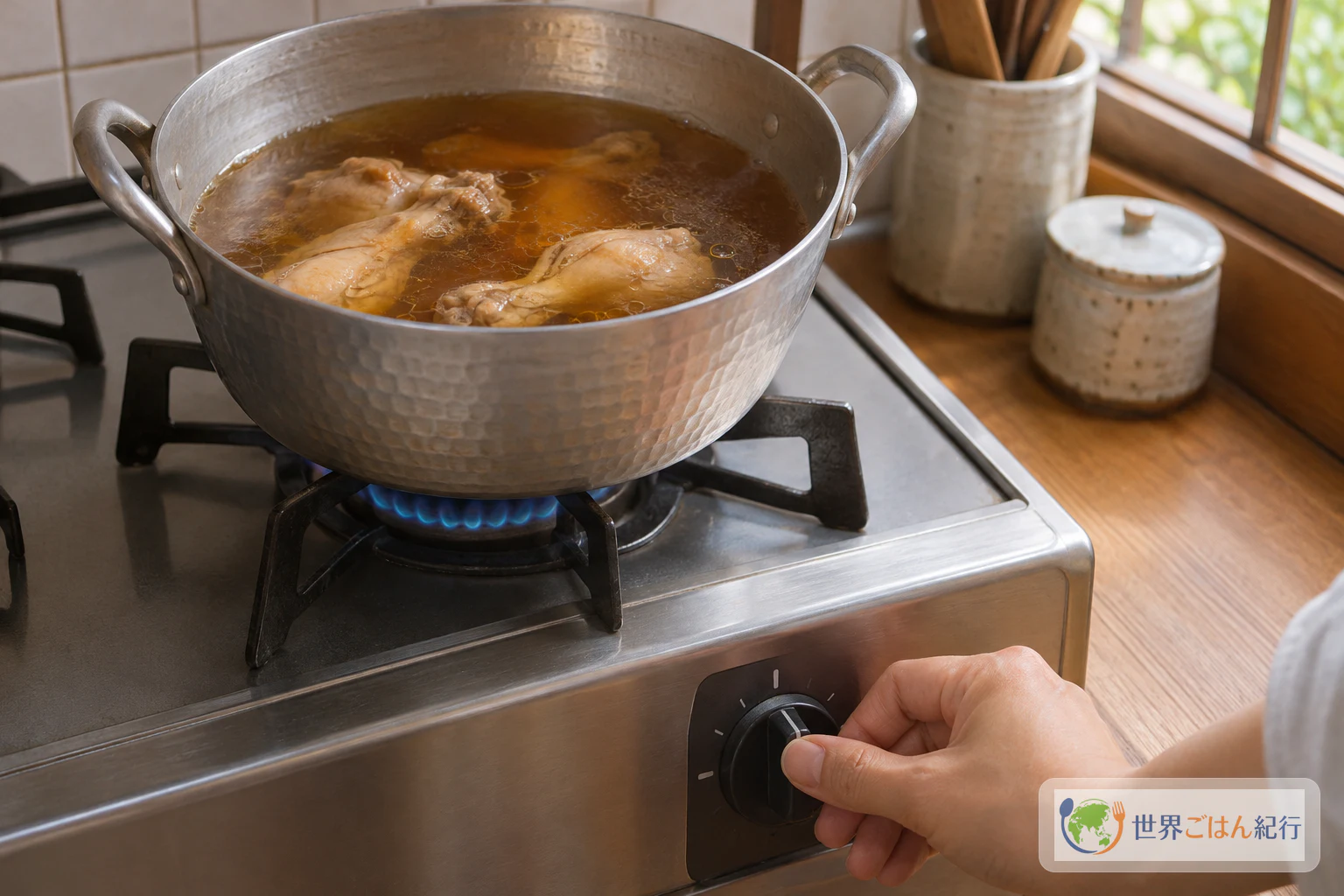
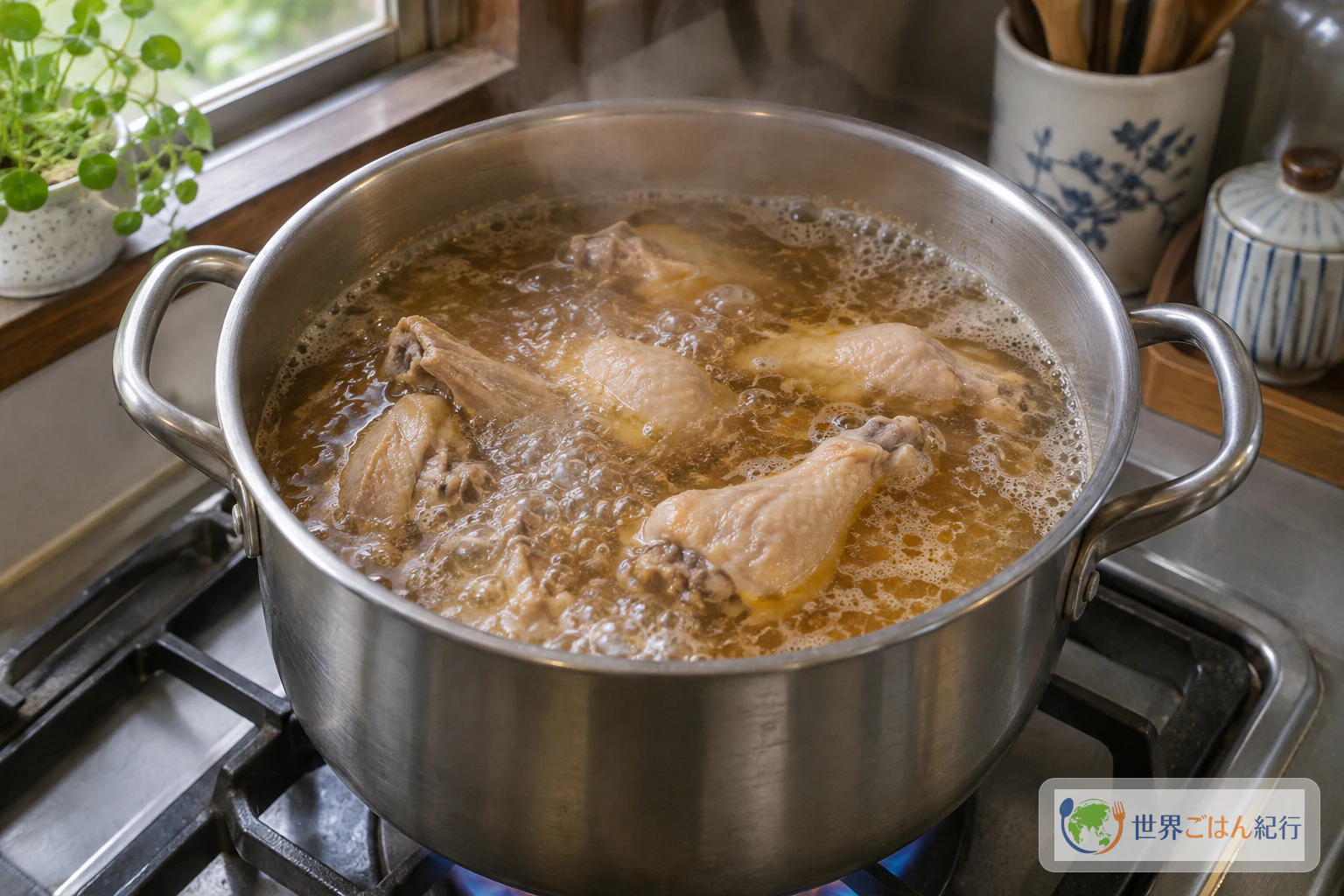
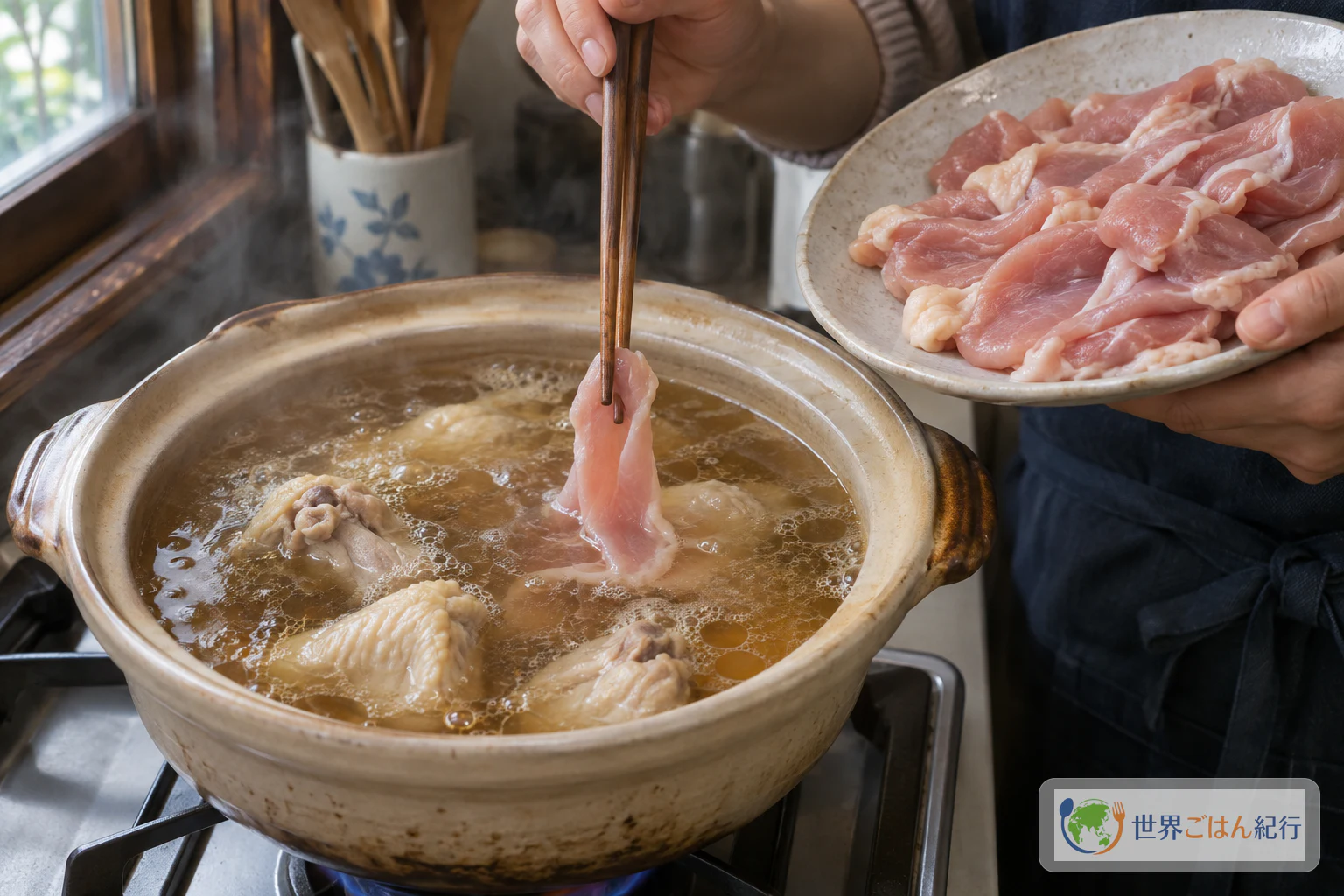
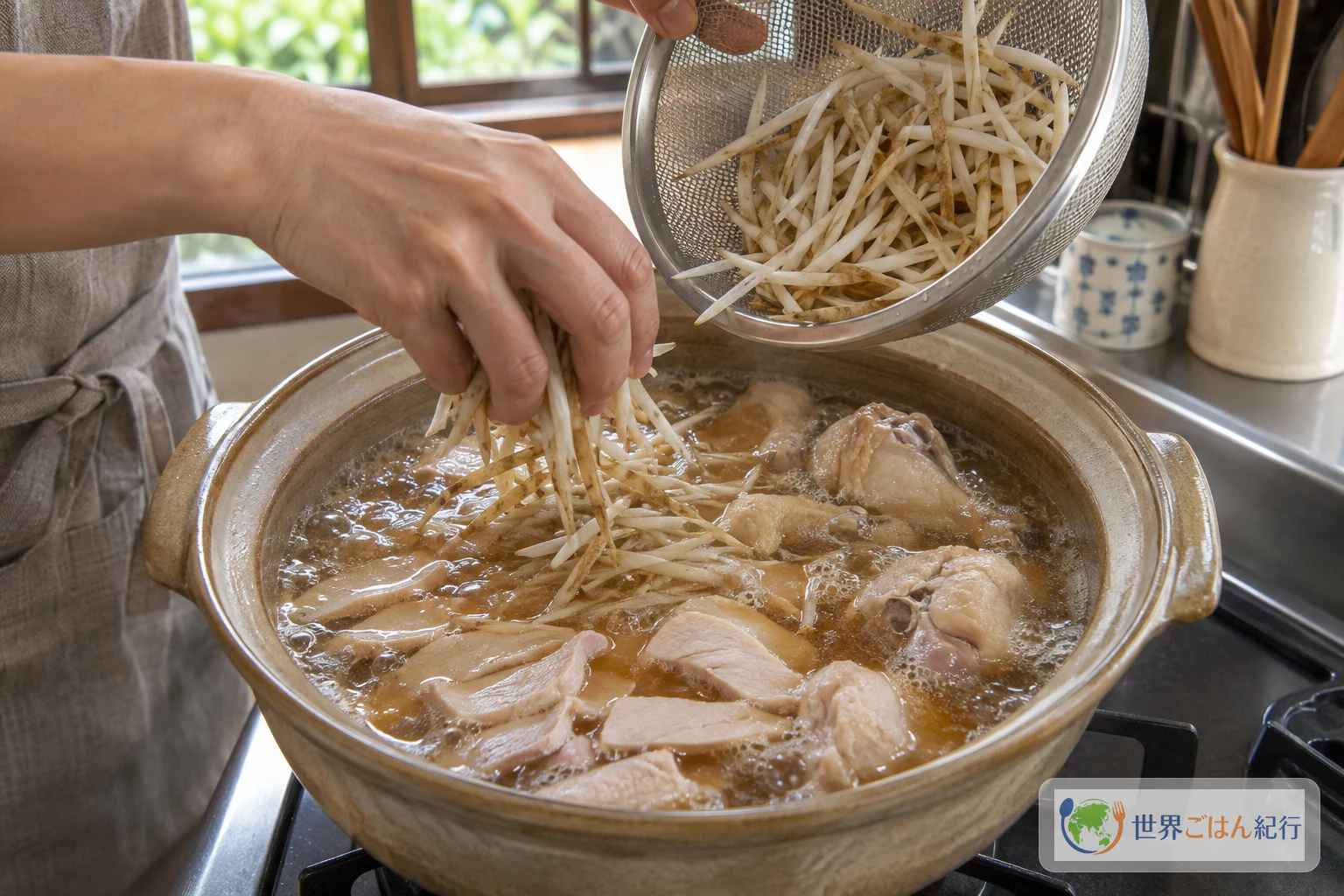
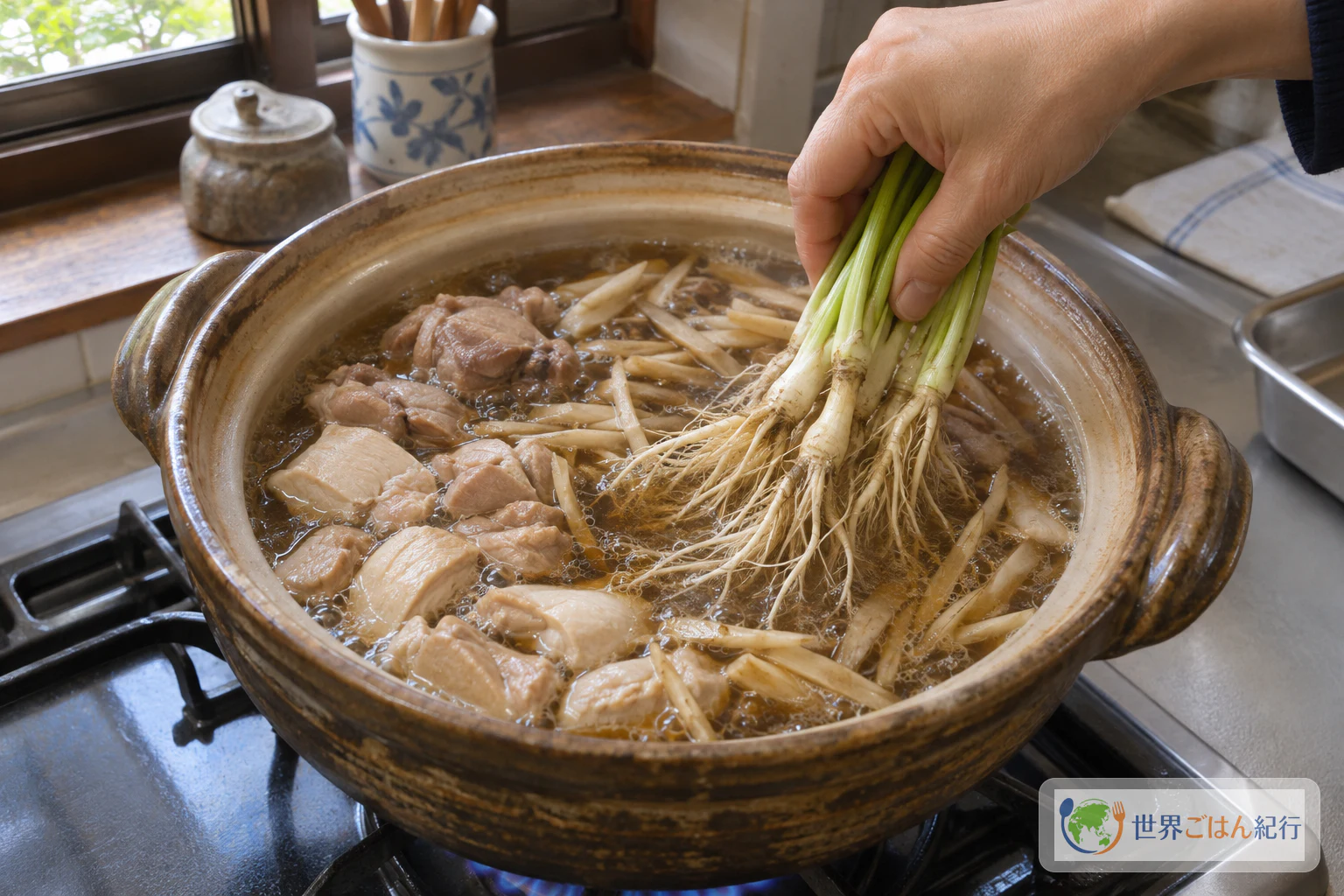
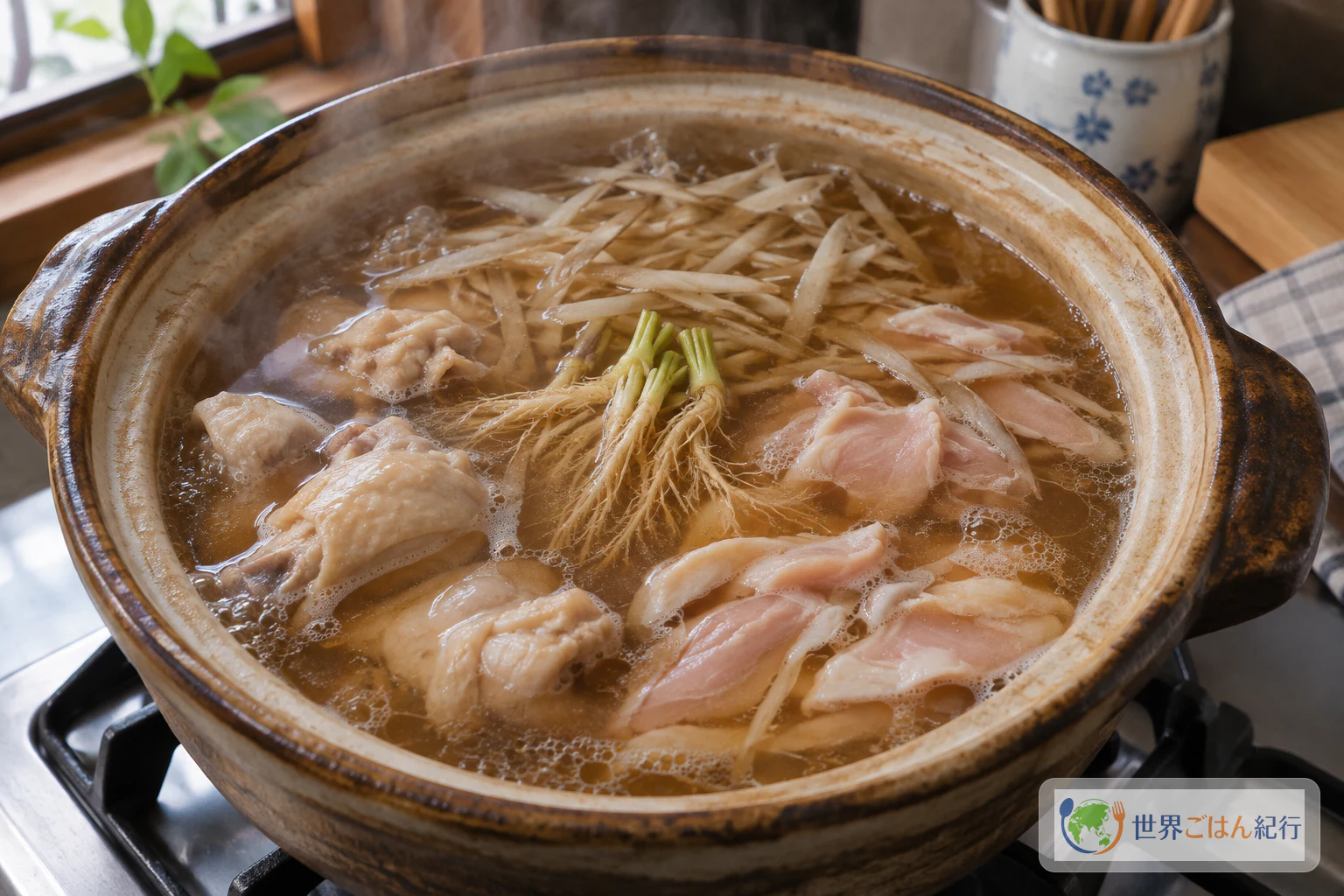
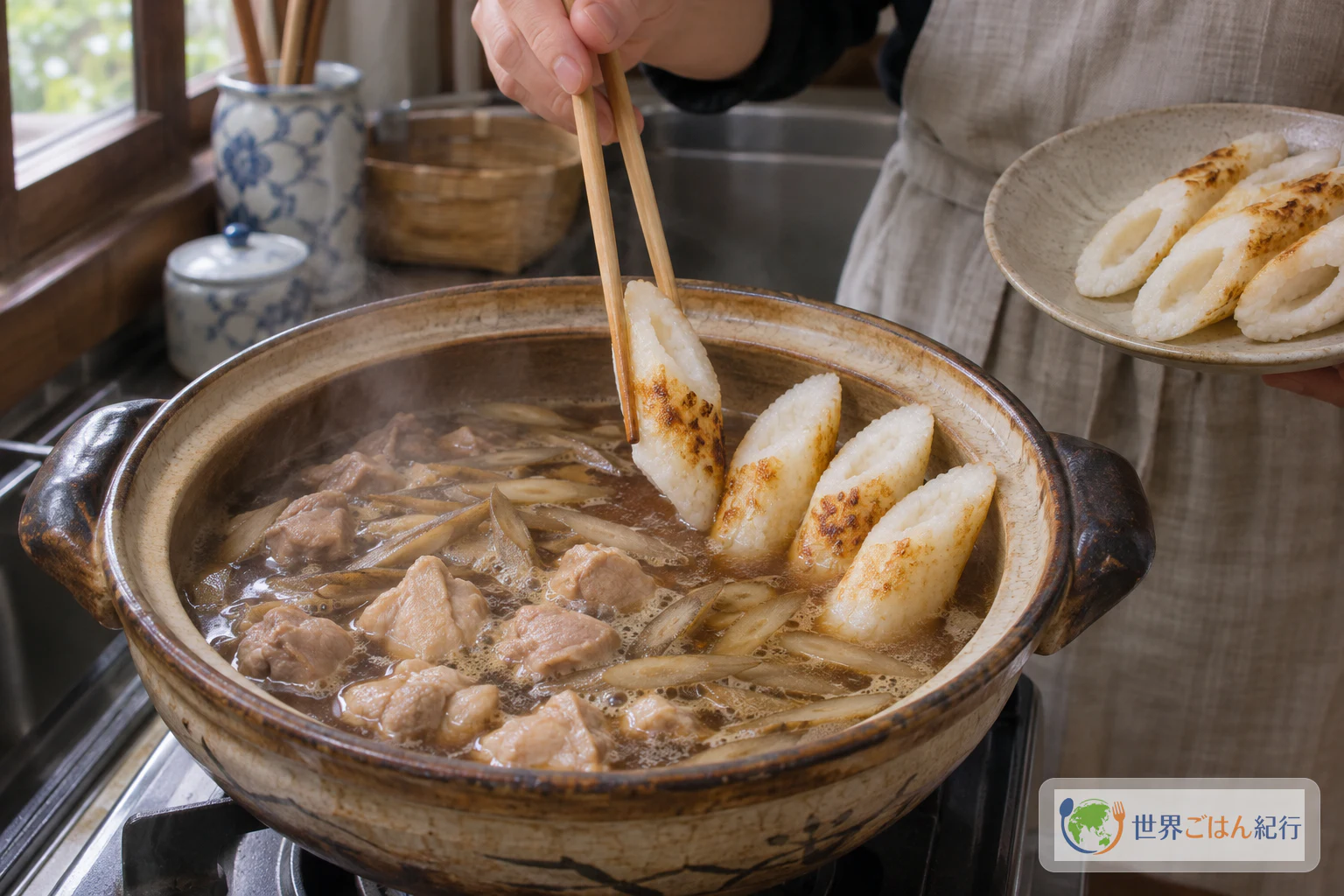
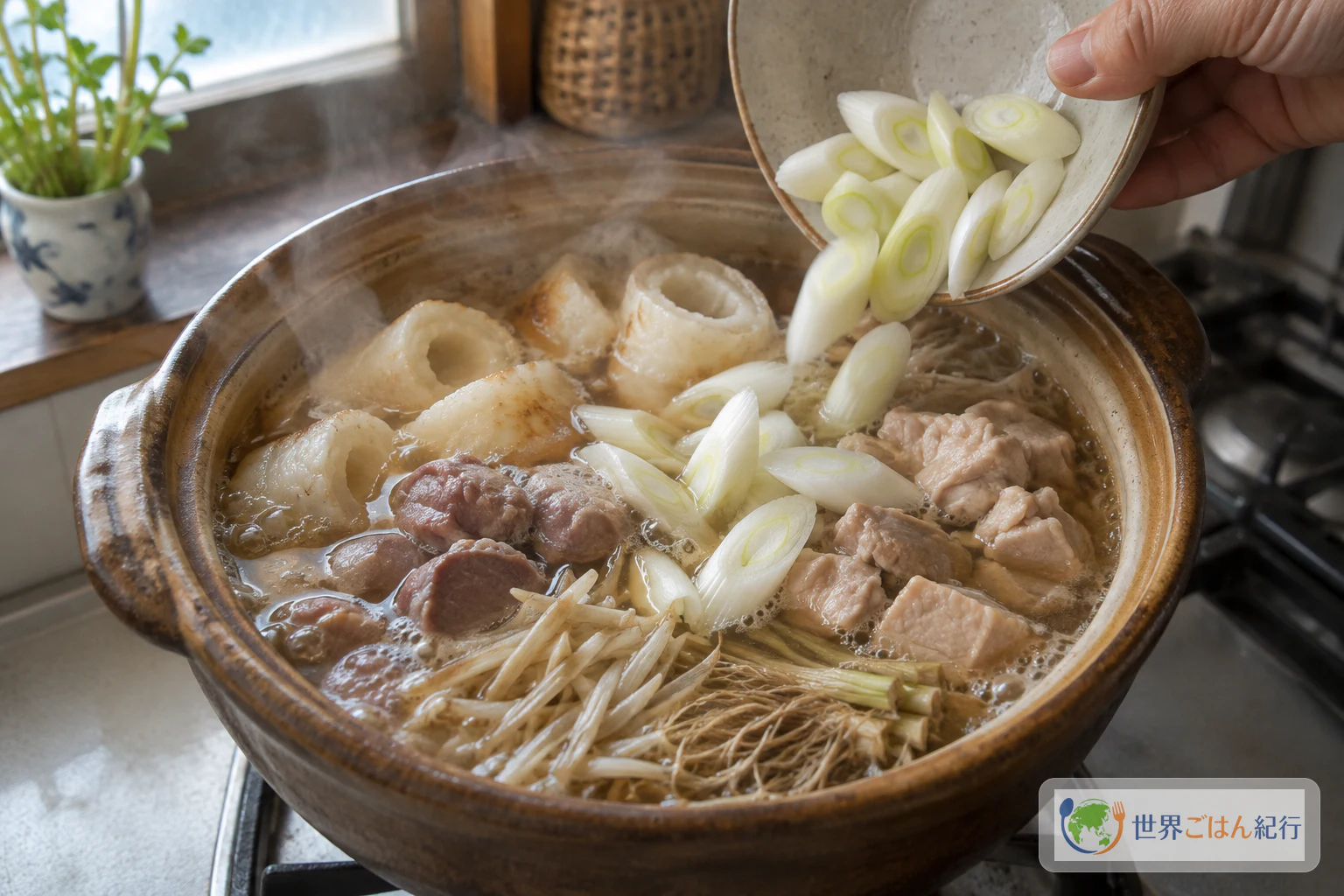
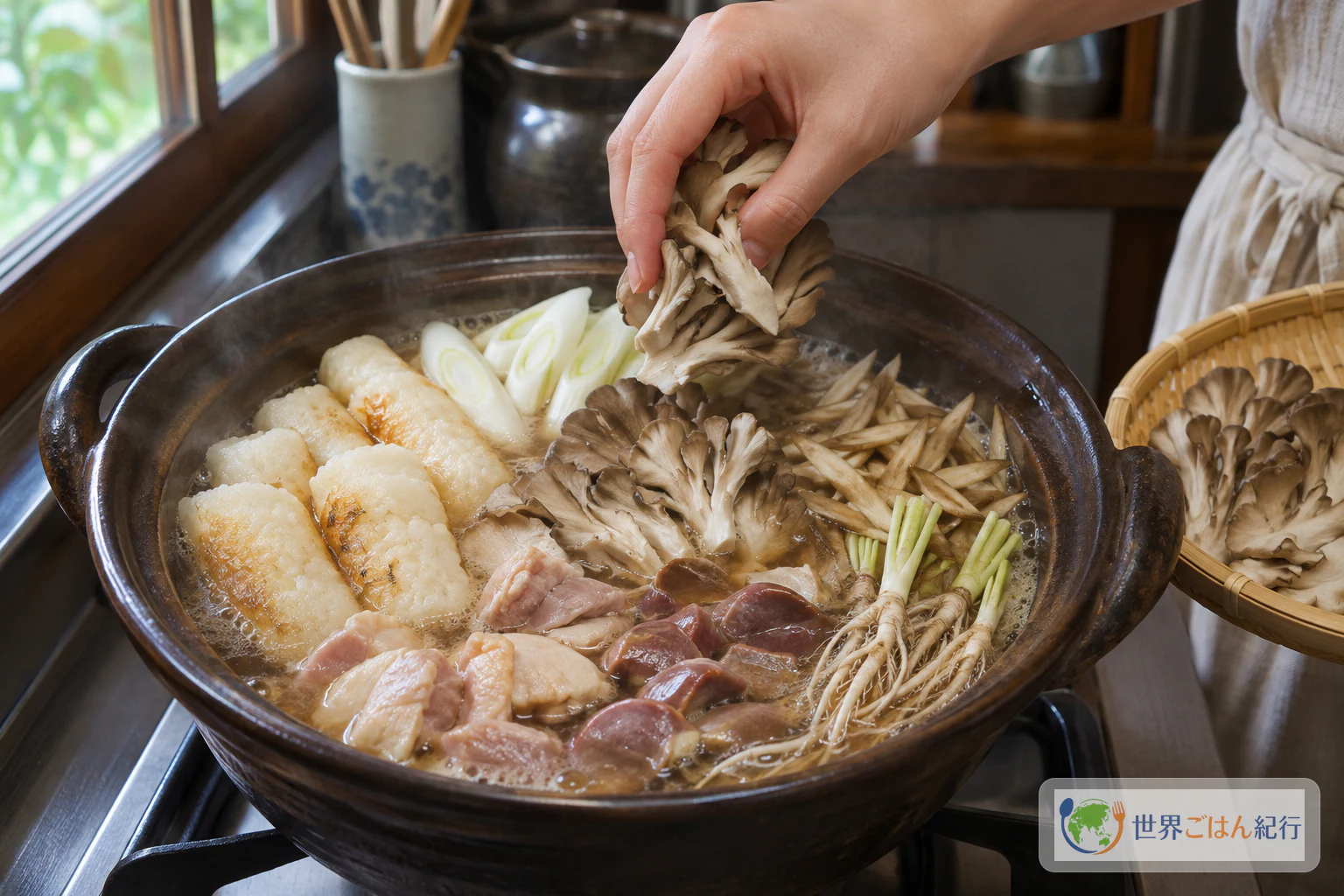
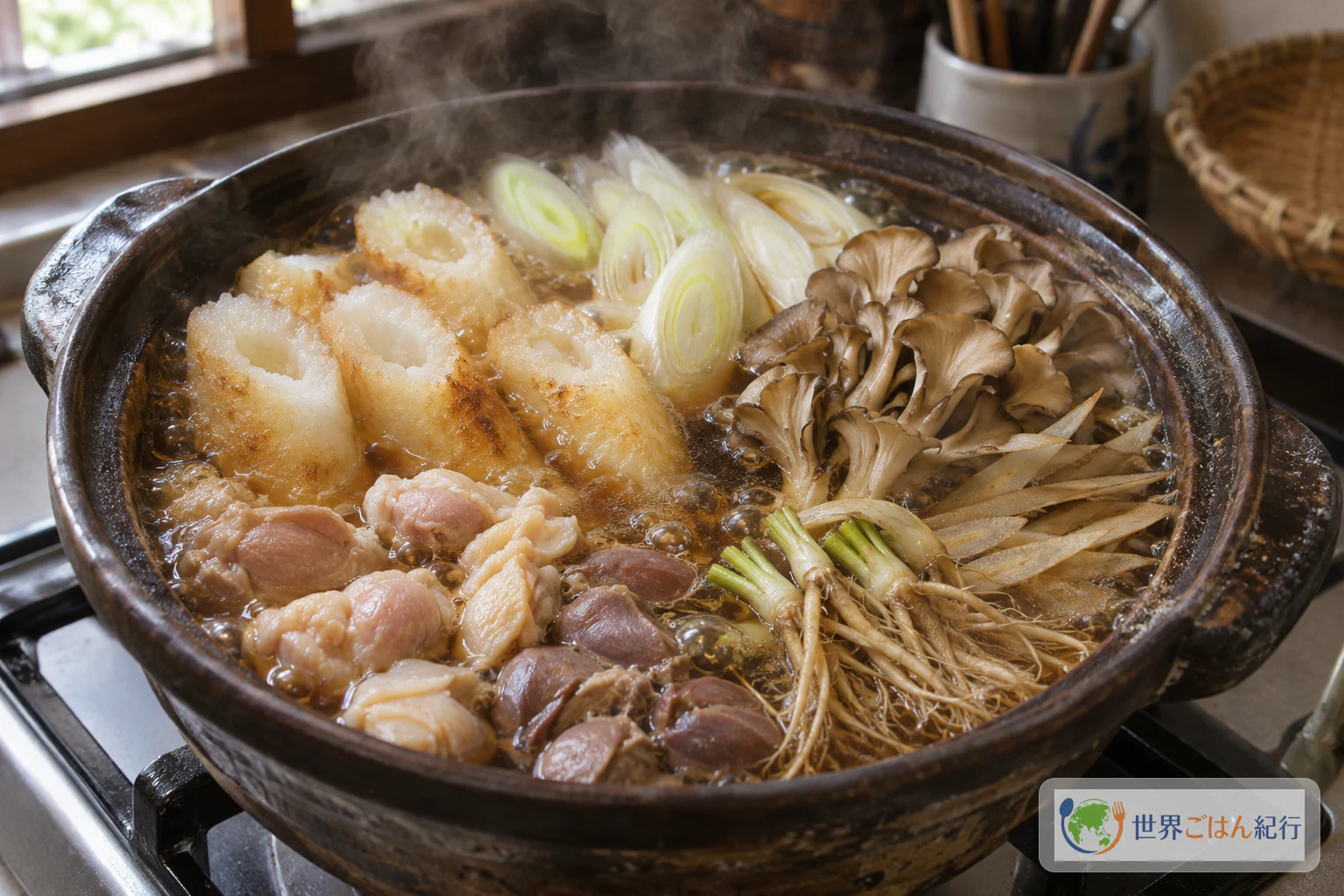
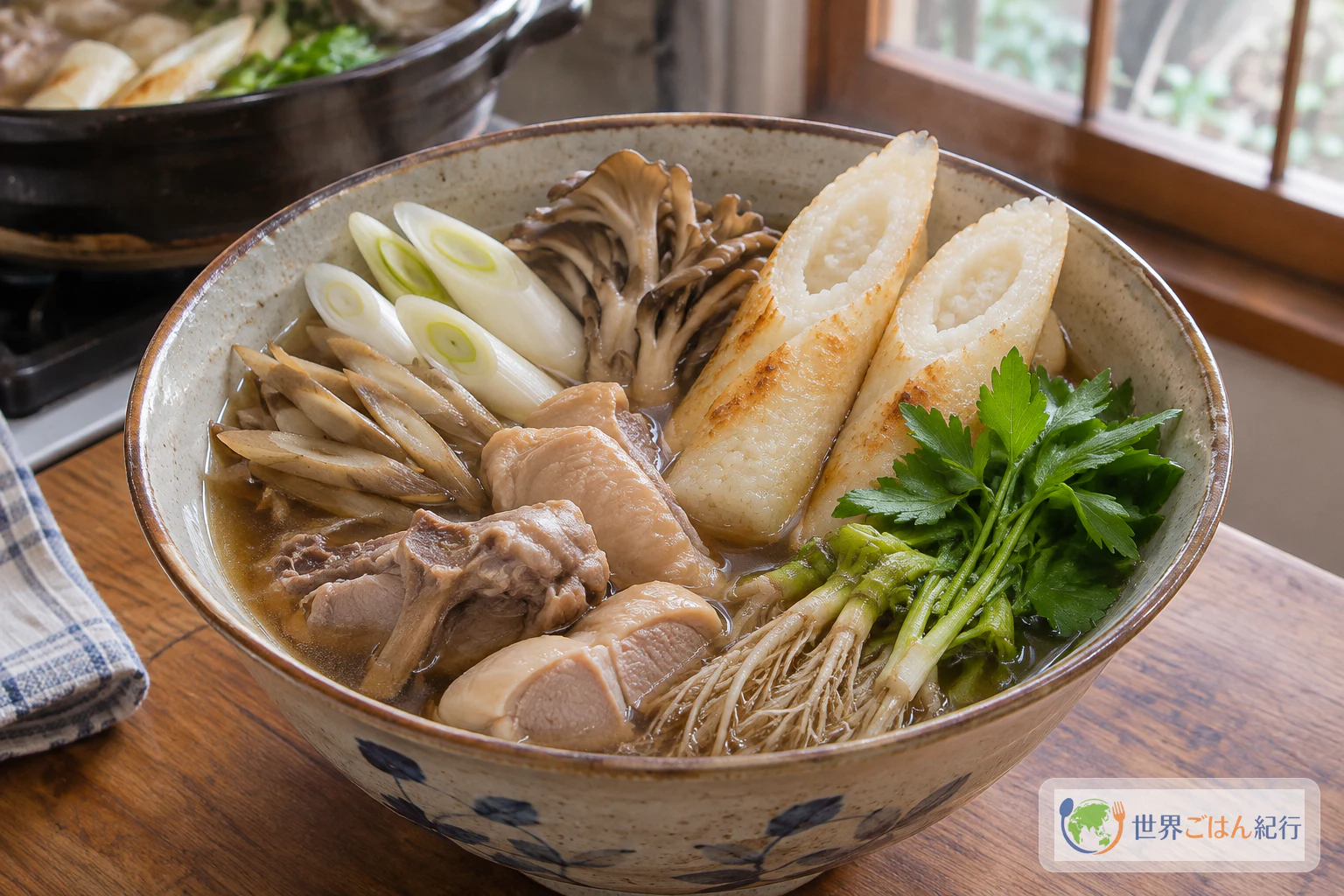
Freshly cooked rice is mashed until only about 30 percent of the grains remain, then pressed around paired wooden chopsticks to make four cylinders. They are grilled, slipped off the chopsticks while hot, and cut on the diagonal. The pieces then join a pot of stock made from sake, water, bone-in chicken and green leek, along with boneless chicken, burdock, white leek, maitake and seri. This is kiritanpo nabe, a hot pot from Akita Prefecture in northern Japan.
The amounts and method here come from one recipe for 2–3 servings, published by JA Kyosai for Akita. Sekai Gohan has not kitchen-tested this recipe. The safety guidance comes separately from public food-safety sources, and we explain below which instructions come from where.
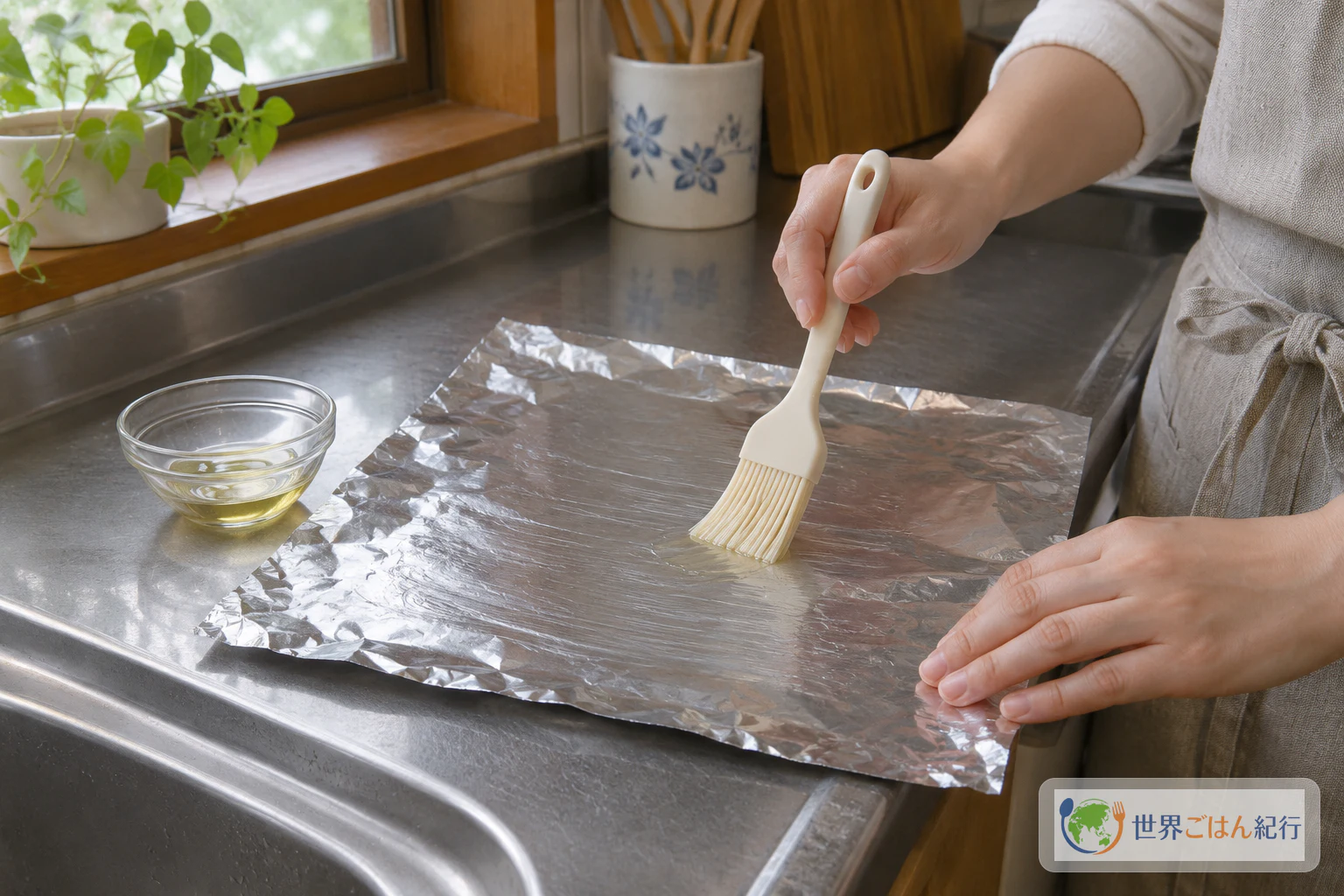
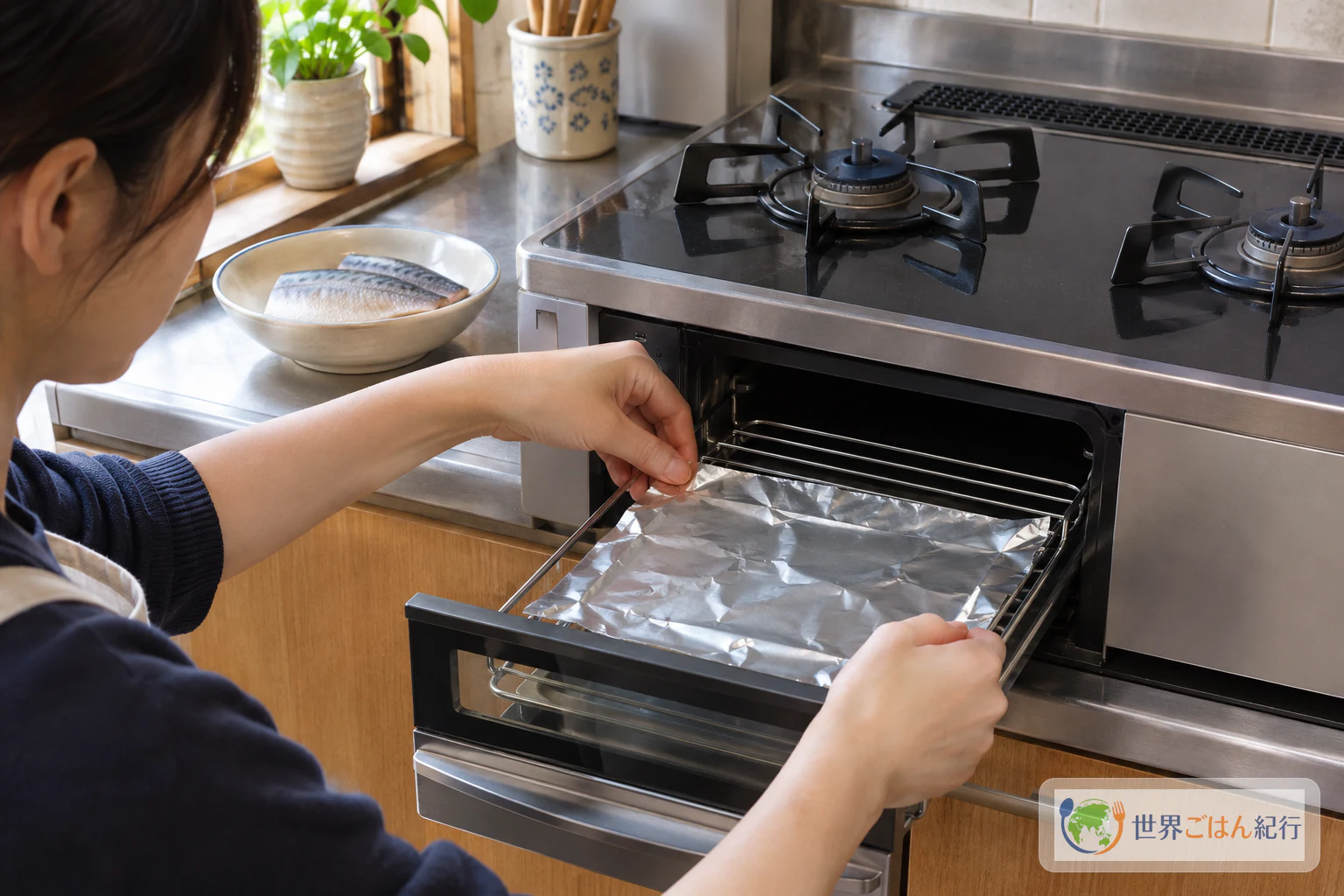
The kiritanpo are grilled on oiled foil in a fish grill. Do this only if your grill's manual allows foil and the way you plan to place it. If the manual doesn't allow it, or you can't tell, don't do the grilling step.
Ingredients (2–3 Servings)
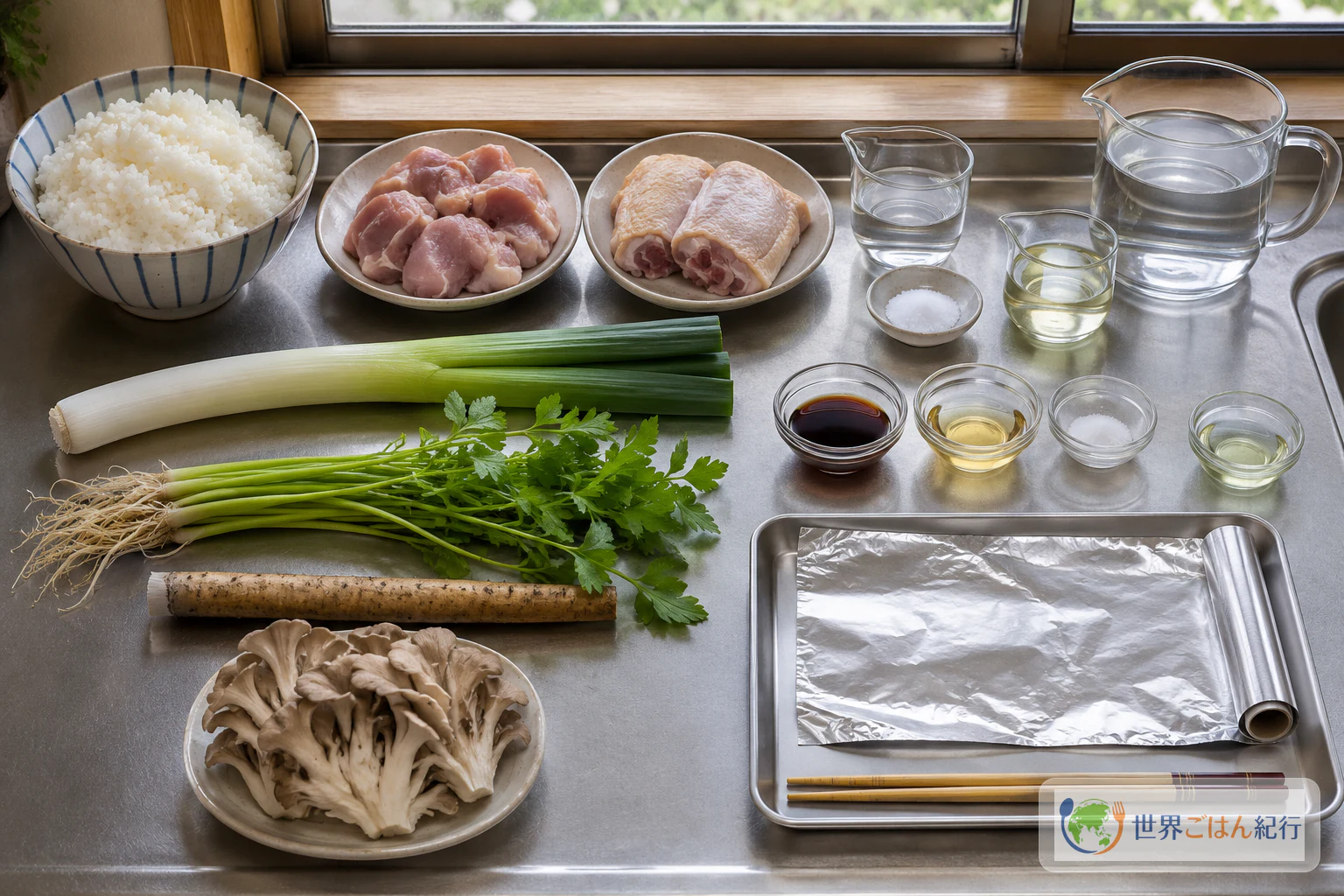
The letters A, B and C mark three separate groups. A is for shaping the rice, B makes the stock, and C seasons it.
Equipment
- Separate cutting boards and knives for raw chicken and for other foods, if you have them
- Mortar and pestle
- Small bowls and a colander
- Measuring cup and measuring spoons
- 4 pairs of disposable wooden chopsticks
- Aluminum foil
- Brush for the oil and saltwater (fingertips also work for the saltwater)
- Fish grill, if its manual allows the foil use described here
- Oven mitt or long cooking chopsticks
- Large pot, skimmer or ladle, and tongs
- Clean cooking thermometer
Choosing Seri, Chicken and Cups
Seri: Buy seri sold as food. This article doesn't cover foraging or plant identification, and nothing here means that every root is safe to eat.
Chicken: The two cuts do different jobs. The bone-in pieces simmer in the stock for about 1 hour, while the boneless slices go in much later. Using one cut for both makes a different pot.
Cups: Use the same cup for the A and B liquids.
Additions: There are no tested substitutions for this version. Anything not in the table, including extra stock or miso, moves it away from what is written here.
Food Safety Before You Cook
The timings in the recipe tell you when to move to the next stage. They aren't a food-safety guarantee, and neither are the photos on this page, which only illustrate each action.
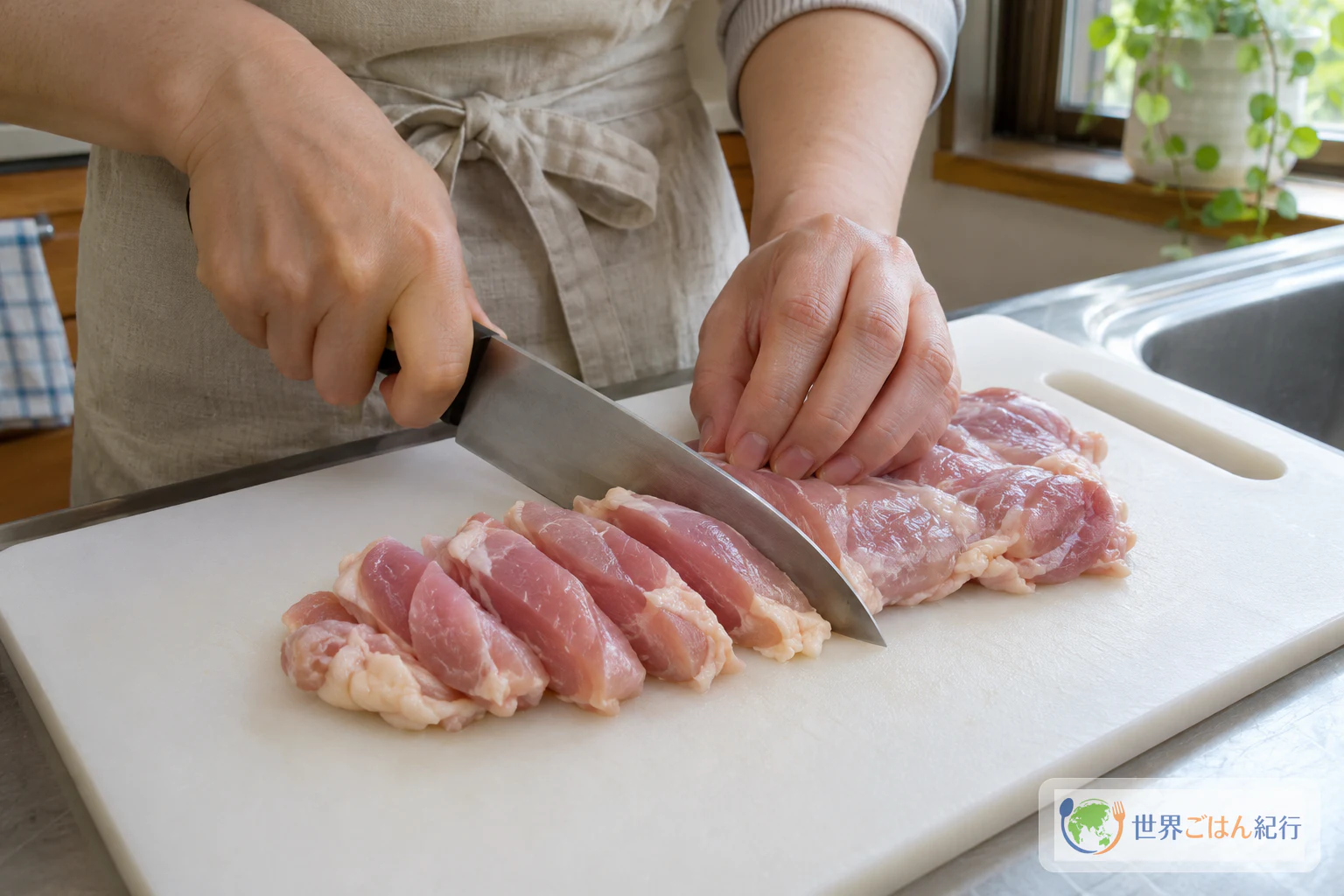
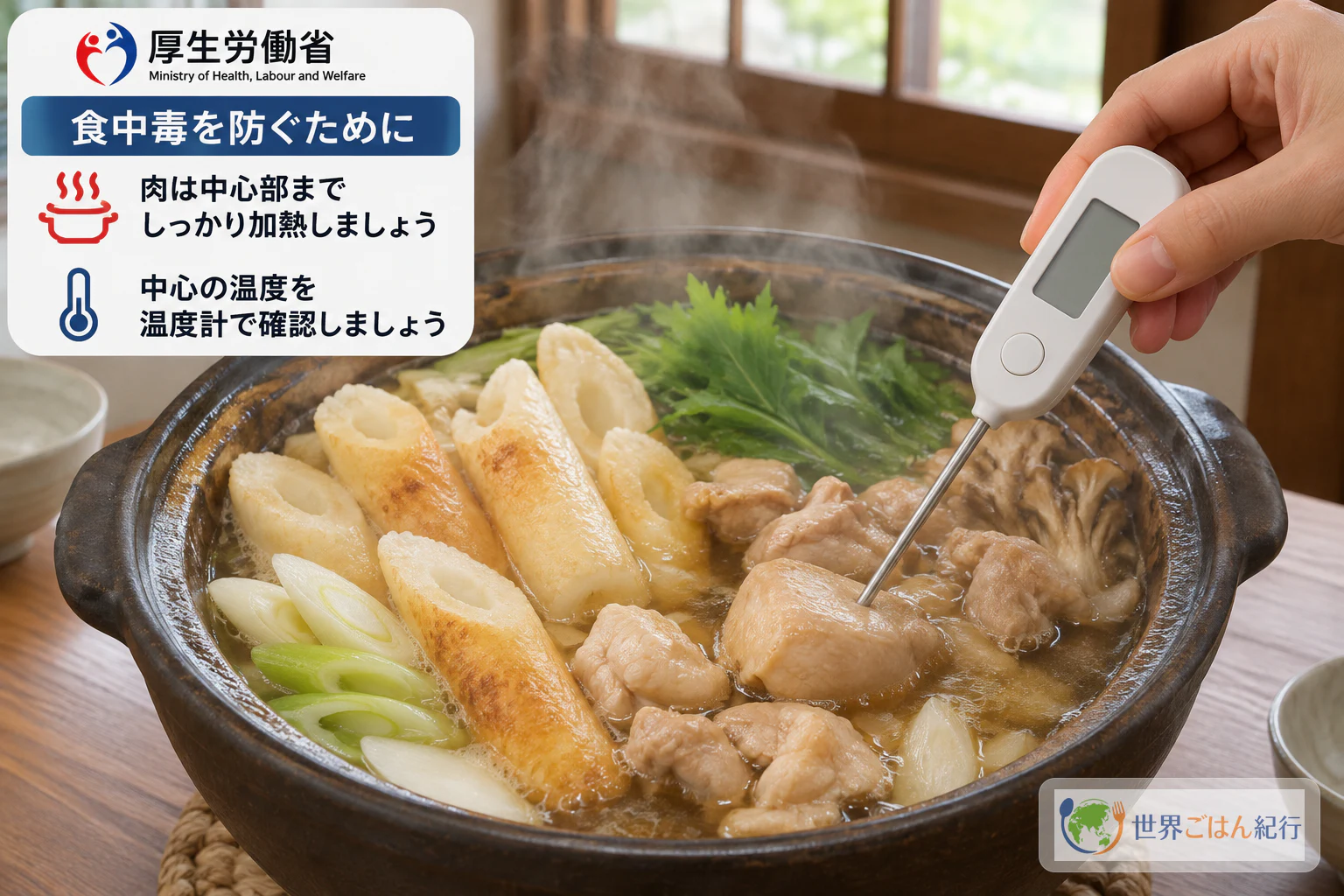
Chicken. Japan's Ministry of Health, Labour and Welfare advises heating meat until the center reaches 75°C or above for at least 1 minute. Keep tools and containers for raw meat separate, wash your hands after handling meat, and wash and sanitize your tools. Don't wash raw chicken. Step 56 shows where to take the temperature.
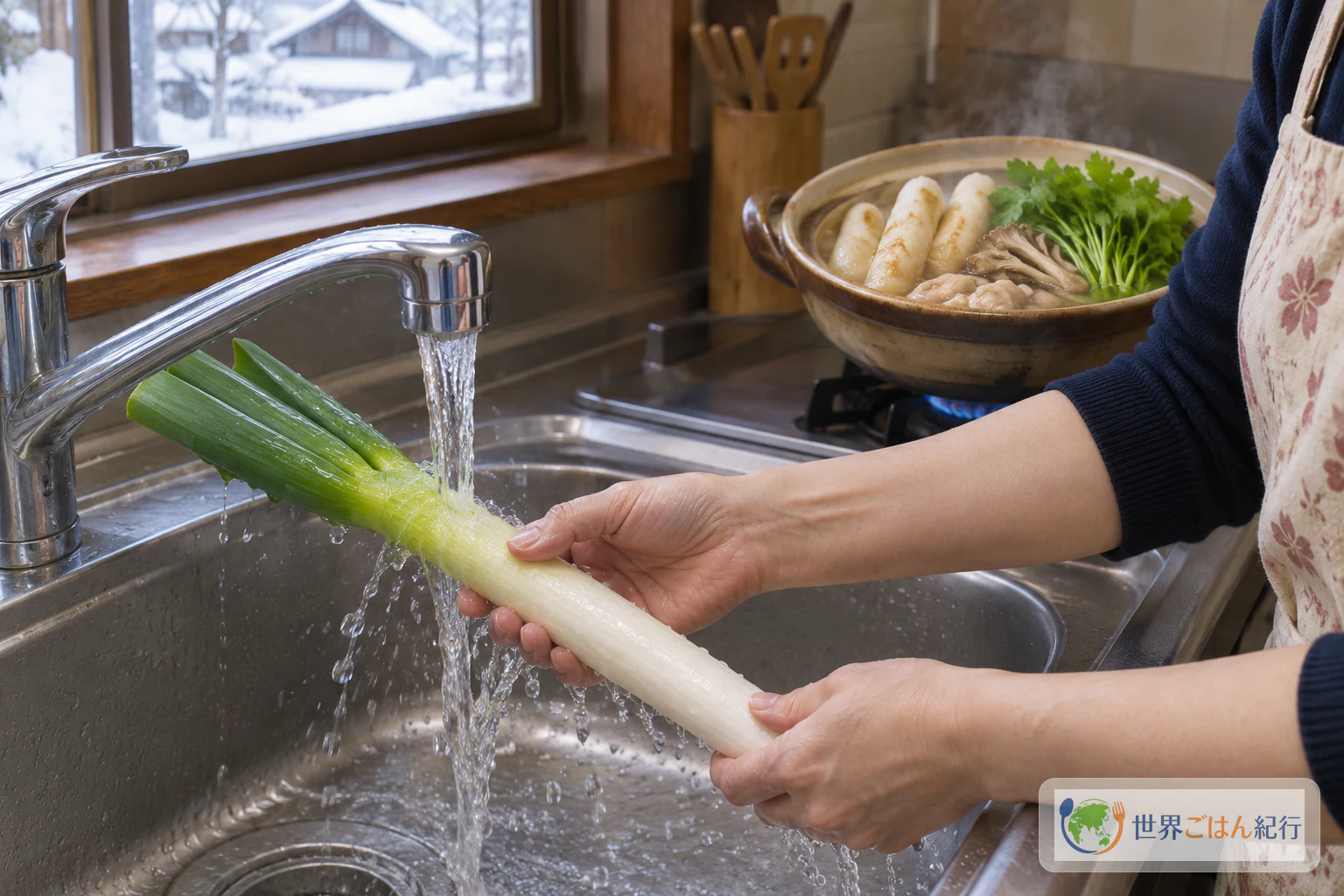
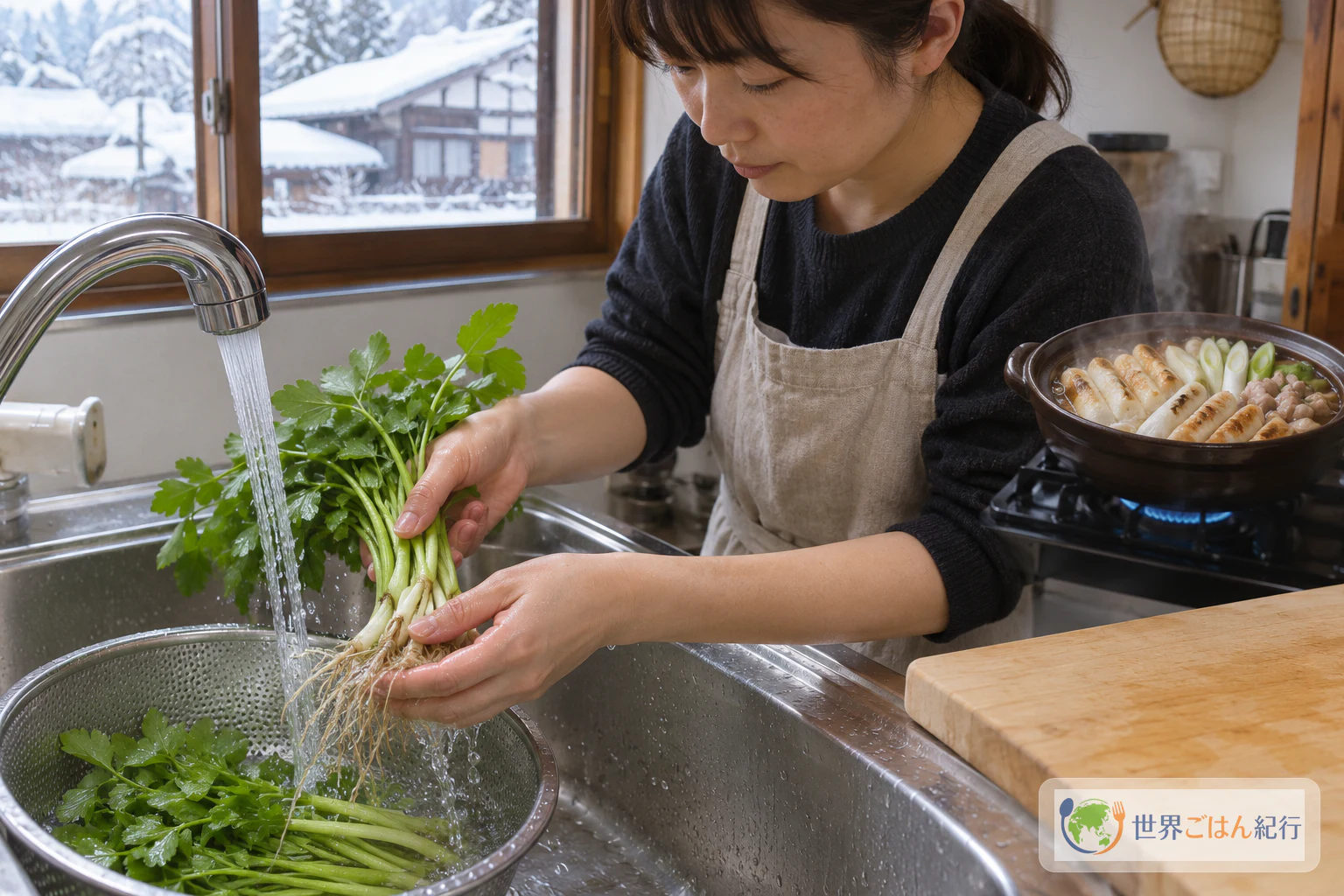
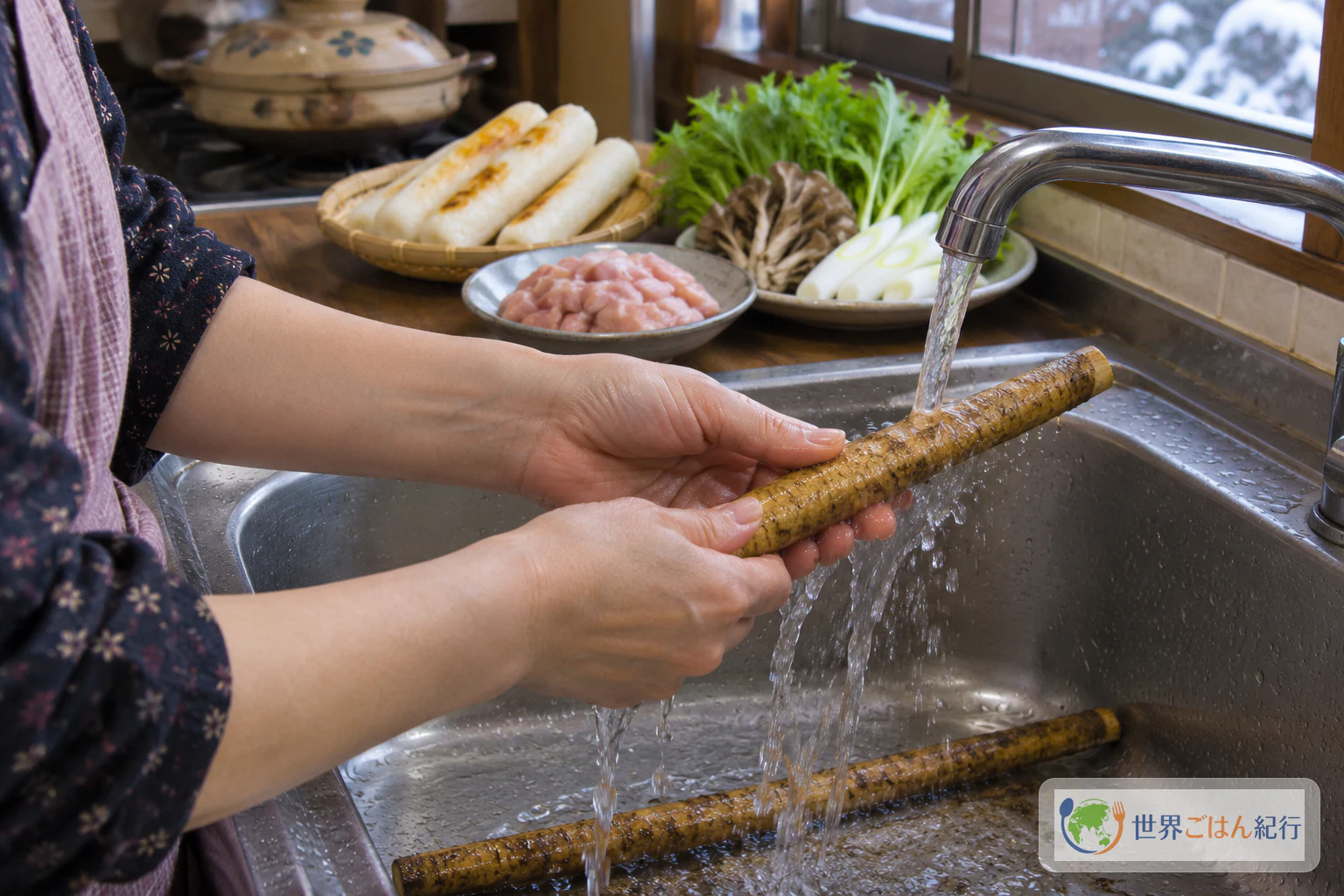
Produce. The US Food and Drug Administration advises washing fresh produce well under running water, without soap, detergent or commercial produce wash. If a board or tool has touched raw meat, wash it with soap and hot water before using it on produce, and use a separate board if you can. Wash your hands for at least 20 seconds. This advice isn't specific to seri, and washing reduces bacteria without removing them all.
Foil. Foil is allowed only where your own grill's manual allows it. Permission for another brand or model doesn't carry over to yours, and the photos don't show that any grill is compatible.
Method: Prepare, Shape, Grill, Then Build the Pot
Each step is a single action, so the list is long but each step is short. Steps 33–36, 42–44, 47–49 and 51–53 each split one stage into separate additions so you can see each one.
If Something Goes Off Track
| What you notice | What to do |
|---|---|
| Bare wood shows between the rice and the foil handle | Before rolling, press and rotate the rice again until the wood is covered |
| You rolled the cylinder after adding saltwater, or lost track of the order | For the next cylinder, roll on the board first and add saltwater after |
| Your grill's manual doesn't mention foil | Treat it as unclear and don't do the grilling step |
| The handles are still hot when you pull the chopsticks | Keep using a mitt or cooking chopsticks, not bare hands |
| Saltwater is left over | Keep it out of the pot; it is for shaping only |
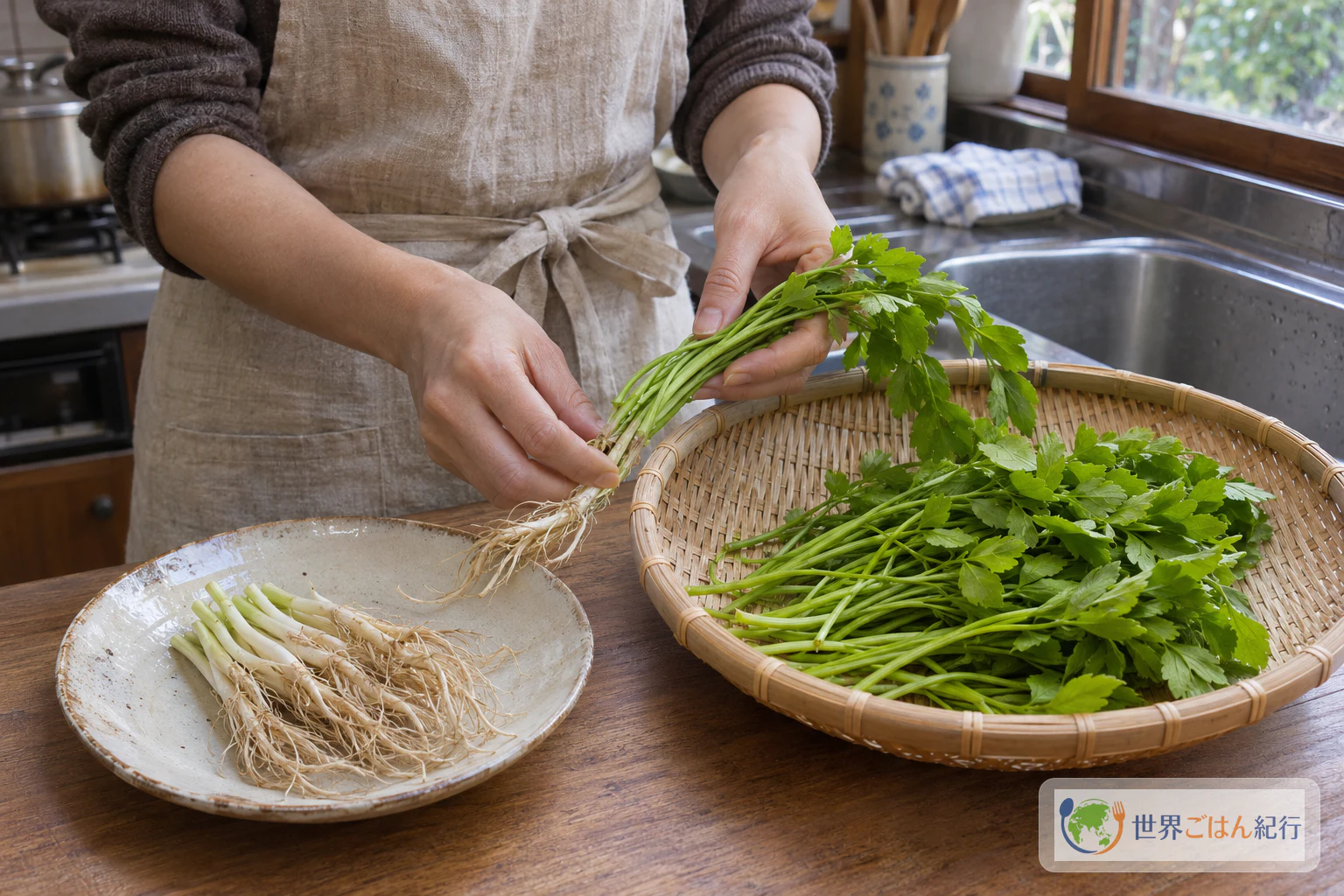
| Soil is still clinging to the seri roots | Soak in water for a few minutes, loosen, and rinse again under running water |
| A board or tool touched raw chicken and you need it for produce | Wash it with soap and hot water first, or switch to a separate board |
| The thermometer touched bone or the pot | Reposition it in the center of the thickest meat and read it again |
| The chicken is below 75°C, or you aren't sure | Keep heating and check again; don't go by the color or the clock |
Other Forms of Kiritanpo
Each of these has its own amounts and method, so make them from their own pages rather than mixing them into this pot.
| Version | How it differs | How to treat it |
|---|---|---|
| JA Kyosai Akita nabe (this article) | Stock from sake, water, bone-in chicken and green leek | The only basis for the amounts here |
| Ministry of Agriculture, Forestry and Fisheries (MAFF) regional nabe | Chicken-carcass stock, a different ingredient balance, with items such as Hinai chicken and shirataki-style konjac noodles | A comparison, showing that the pot varies |
| Sweet miso-grilled kiritanpo, Cabinet Office Gender Equality Bureau | The shaped rice is spread with sweet miso and grilled, not simmered in a nabe | A different way of serving kiritanpo; no miso goes in this pot |
Kiritanpo in Akita
Japan's Ministry of Agriculture, Forestry and Fisheries lists kiritanpo nabe among its regional dishes, and names the cities of Odate and Kazuno in Akita Prefecture as the main areas where it has been handed down. Accounts of how the dish began are tradition rather than settled history, so we don't name a definite origin here. Its recipe, too, adds seri at the end, which matches the order in this article.
For more from the same country, see Japanese dishes on Sekai Gohan.
Frequently Asked Questions
Has this recipe been kitchen-tested?
Sekai Gohan has not kitchen-tested it. The amounts, stages and recipe timings are JA Kyosai's, and the safety guidance comes from the public sources listed below.
What if my grill's manual doesn't allow foil?
Don't do the grilling step. JA Kyosai's method uses foil in a fish grill, and we don't offer a confirmed alternative. Permission from another model's manual doesn't apply to yours.
Do the 5- and 4-minute simmers mean the chicken is safe?
No. Those are recipe timings. The 75°C for at least 1 minute target is separate guidance from Japan's Ministry of Health, Labour and Welfare, measured in the center of the meat.
How long should the seri leaves cook?
JA Kyosai adds the leaves last and gives no further cooking time, so we don't add a number. Wash them under running water and add them to the bubbling broth. MAFF's page also adds seri last but doesn't cover washing, so the washing advice comes from the FDA's general produce guidance and a DELISH KITCHEN prep note.
Does the order inside each group of additions matter?
JA Kyosai groups the stock ingredients, the C seasonings, the chicken with burdock and seri roots, and the kiritanpo with white leek and maitake. We split them into separate steps to show each action, and the order inside a group is our layout, not an order set by the recipe.
Why are the amounts in cups, with no milliliters?
JA Kyosai lists 1/2 cup, 1/4 cup and 6 cups without stating a cup capacity, so we haven't invented a conversion.
Do I need Hinai chicken?
JA Kyosai's recipe doesn't call for it. Hinai chicken appears in the separate MAFF recipe.
Can I pick my own seri?
This article doesn't cover foraging or plant identification. Use seri sold as food.
Sources
- JA Kyosai (JA共済連), "Akita Kiritanpo Nabe." The only source for this article's ingredients, amounts, stages and recipe timings. Its cup capacity isn't stated, and its timings aren't safety guarantees. https://social.ja-kyosai.or.jp/prefecture/recipe/akita/
- Ministry of Agriculture, Forestry and Fisheries of Japan, "Our Regional Cuisines: Kiritanpo Nabe, Akita Prefecture." Used for the regional context of Odate and Kazuno, the placement of seri at the end, and comparison with a separate recipe. Its amounts aren't used here. https://www.maff.go.jp/j/keikaku/syokubunka/k_ryouri/search_menu/menu/29_6_akita.html
- Gender Equality Bureau, Cabinet Office, Japan, Akita Prefecture recipe page. Used to identify homemade kiritanpo grilled with sweet miso as a different way of serving it. Its amounts and method aren't used here. https://www.gender.go.jp/public/otouhan/recipes/akita.html
- Ministry of Health, Labour and Welfare of Japan, "Campylobacter Food Poisoning Q&A," Q8. Separate safety guidance on heating meat to a center temperature of 75°C or above for at least 1 minute and on preventing cross-contamination. https://www.mhlw.go.jp/stf/seisakunitsuite/bunya/kenkou_iryou/shokuhin/syokuchu/campylobacterqa.html
- U.S. Food and Drug Administration, "Selecting and Serving Produce Safely." General guidance on washing produce under running water without soap or detergent, cleaning boards and tools after raw meat, and washing hands. It isn't specific to seri. https://www.fda.gov/food/buy-store-serve-safe-food/selecting-and-serving-produce-safely
- DELISH KITCHEN, article on preparing seri. A supplementary note from a commercial recipe site, not an official standard, on removing soil from the roots, loosening them, rinsing, and soaking for a few minutes if needed. https://delishkitchen.tv/articles/1737