Kukicha: One Cup of Stem Tea, Poured to the Last Drop
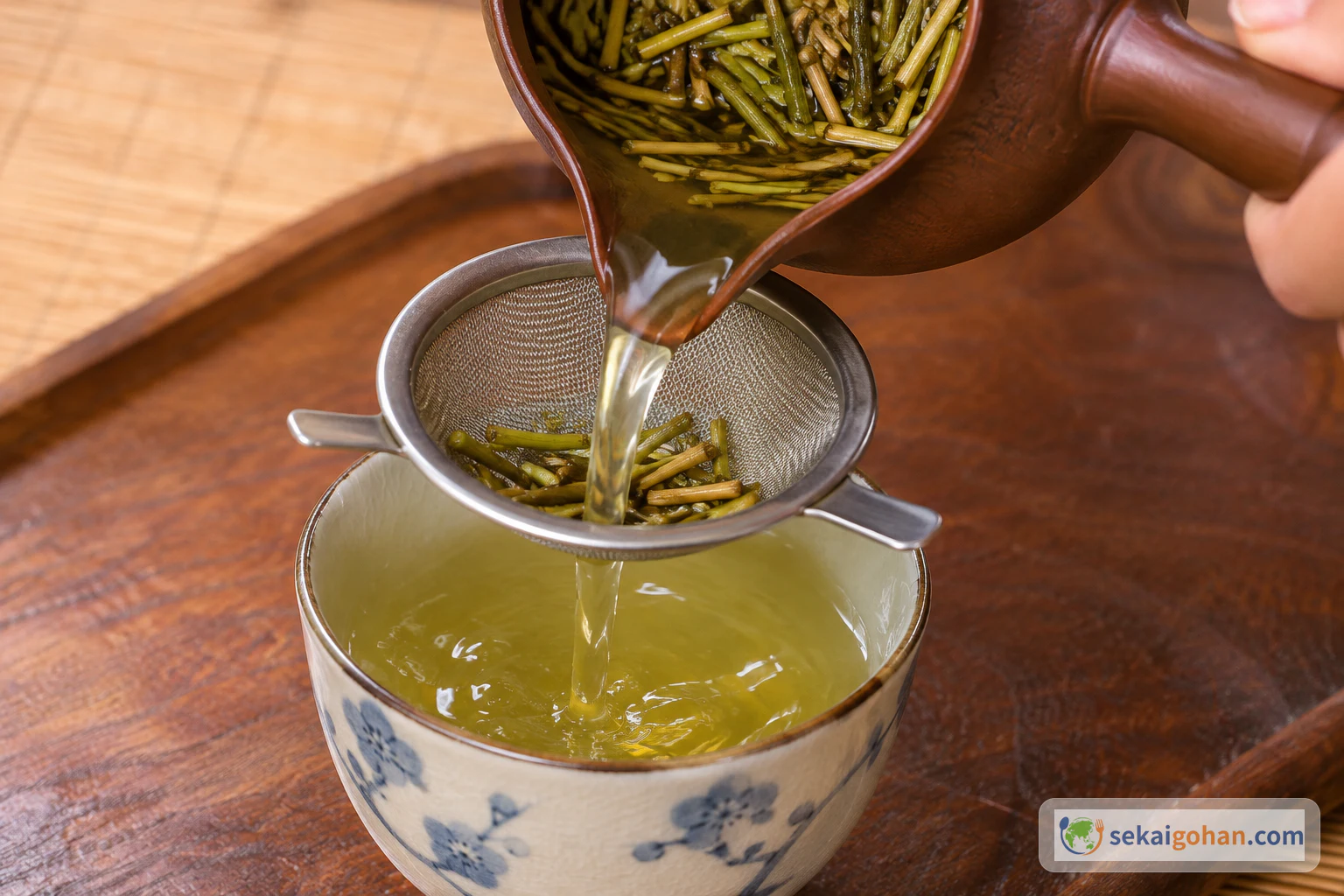
Weigh a small amount of unroasted stem tea, bring boiled water down to 80–90°C, steep briefly, and pour every drop out of the pot. That is the whole method, and each step has its own job.
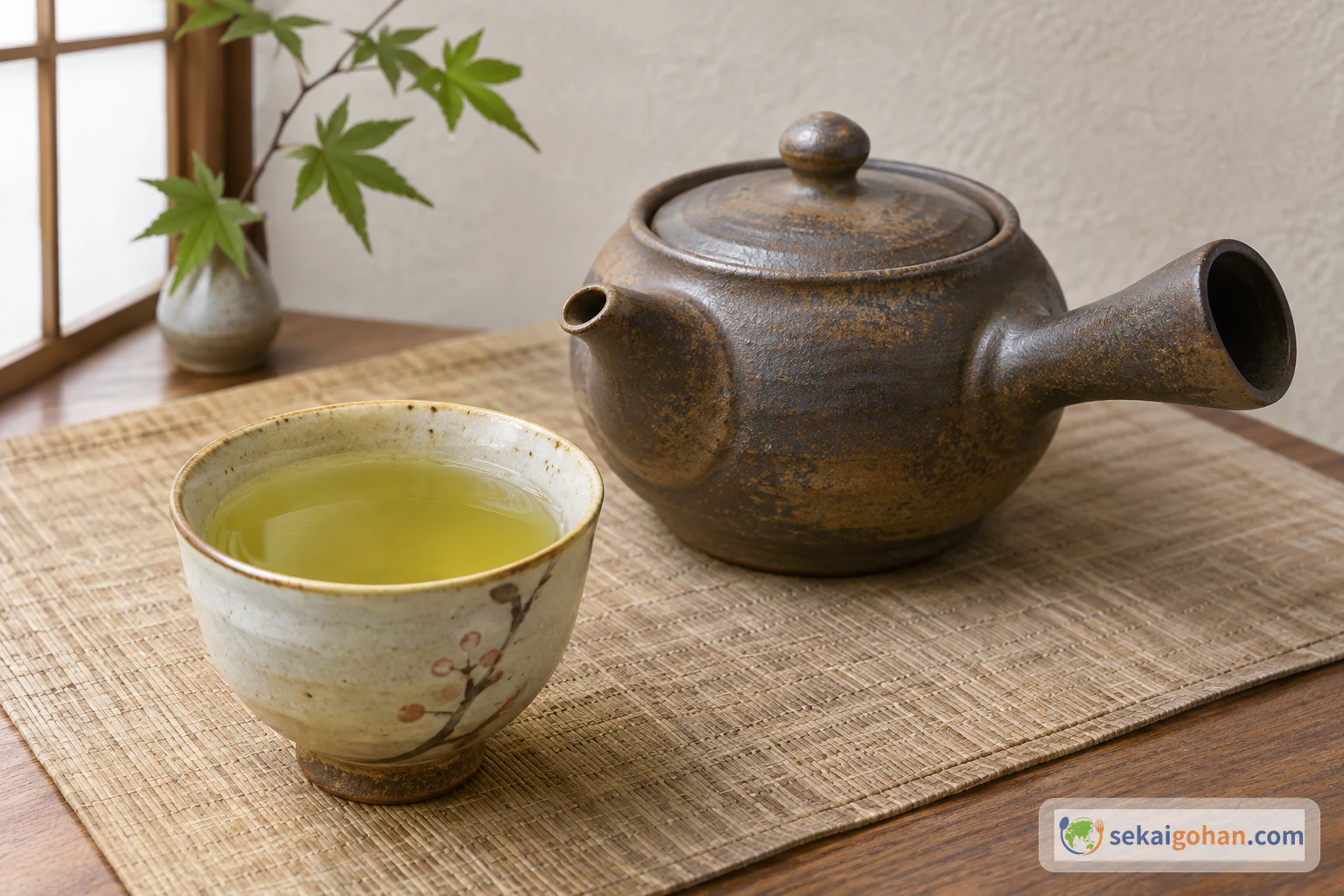
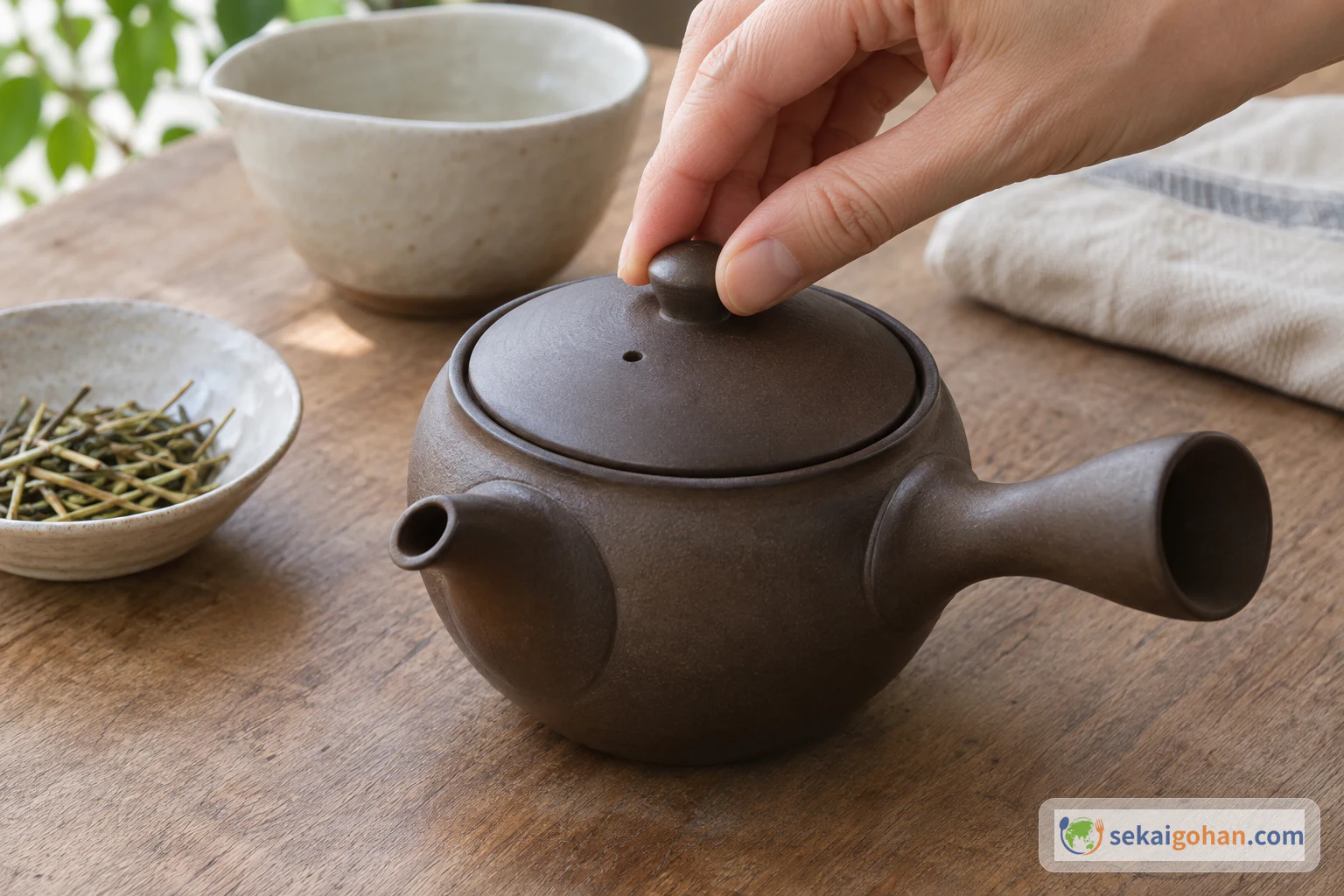
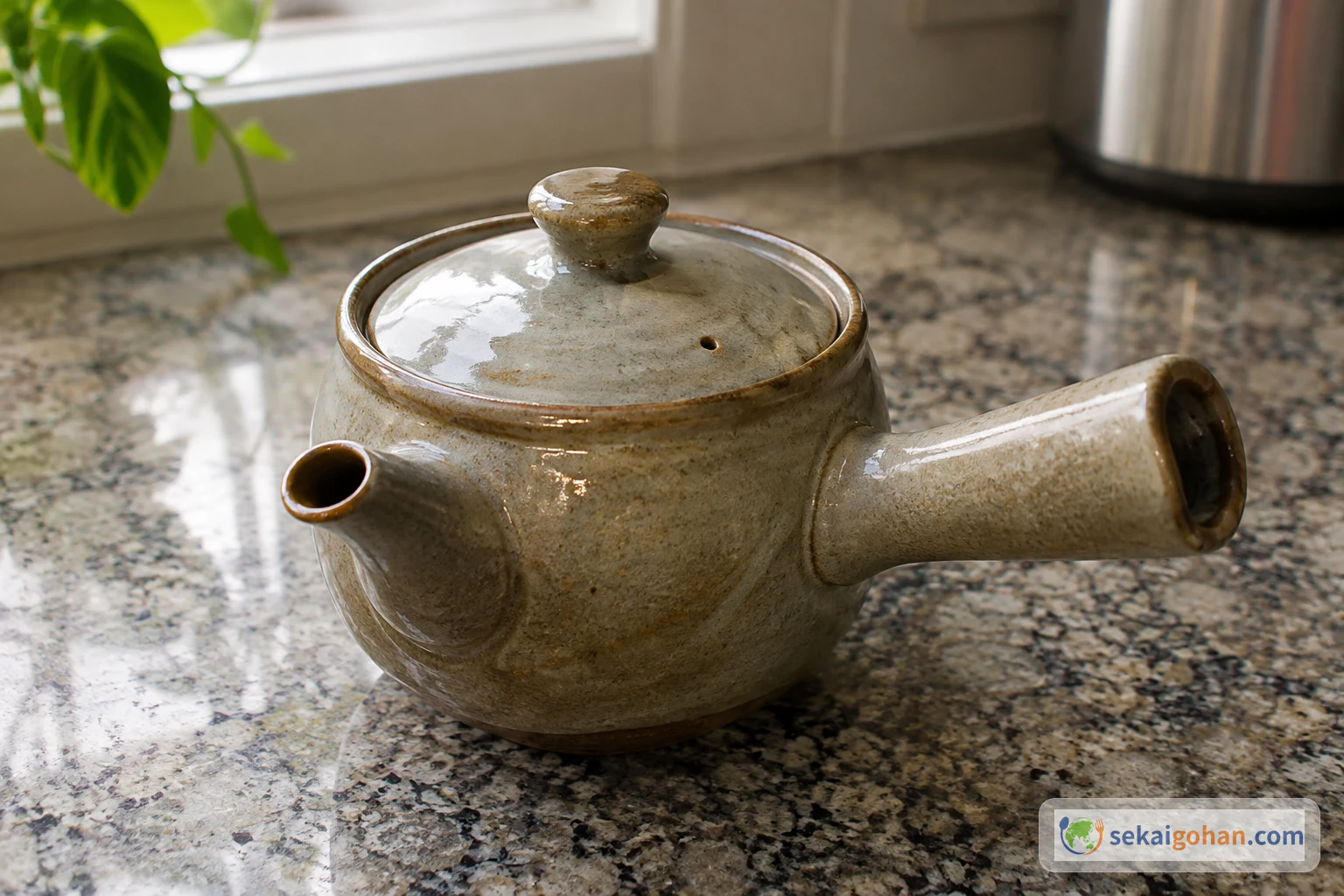
A pinch of pale stems and leaf fragments, a small teapot, and water that has been boiled and then allowed to cool a little: kukicha (茎茶, also written kuki-cha) is a Japanese green tea made with the stems, stalks and twigs of the tea plant, often with some leaf mixed in. This article brews a single cup of the ordinary, unroasted kind in a kyusu, the Japanese side-handled teapot.
The amounts and conditions here come from the kukicha row of the brewing table published by HOKUSAN & CO., a Japanese tea wholesaler in Shizuoka: 2–3 g of tea per person, 80 ml of water, 80–90°C, and 60–120 seconds. Those conditions are given as ranges, so this recipe keeps them as ranges and leaves you room to adjust for the tea you have and the taste you like.
This recipe has not been kitchen-tested by Sekai Gohan. It covers one fresh, hot infusion served right away. It makes no claims about health effects or caffeine content, and it does not cover second infusions or keeping brewed tea for later.
For more dishes and drinks from the same country, see Japan.
What Kukicha Is: Stems, Leaf, and Names That Overlap
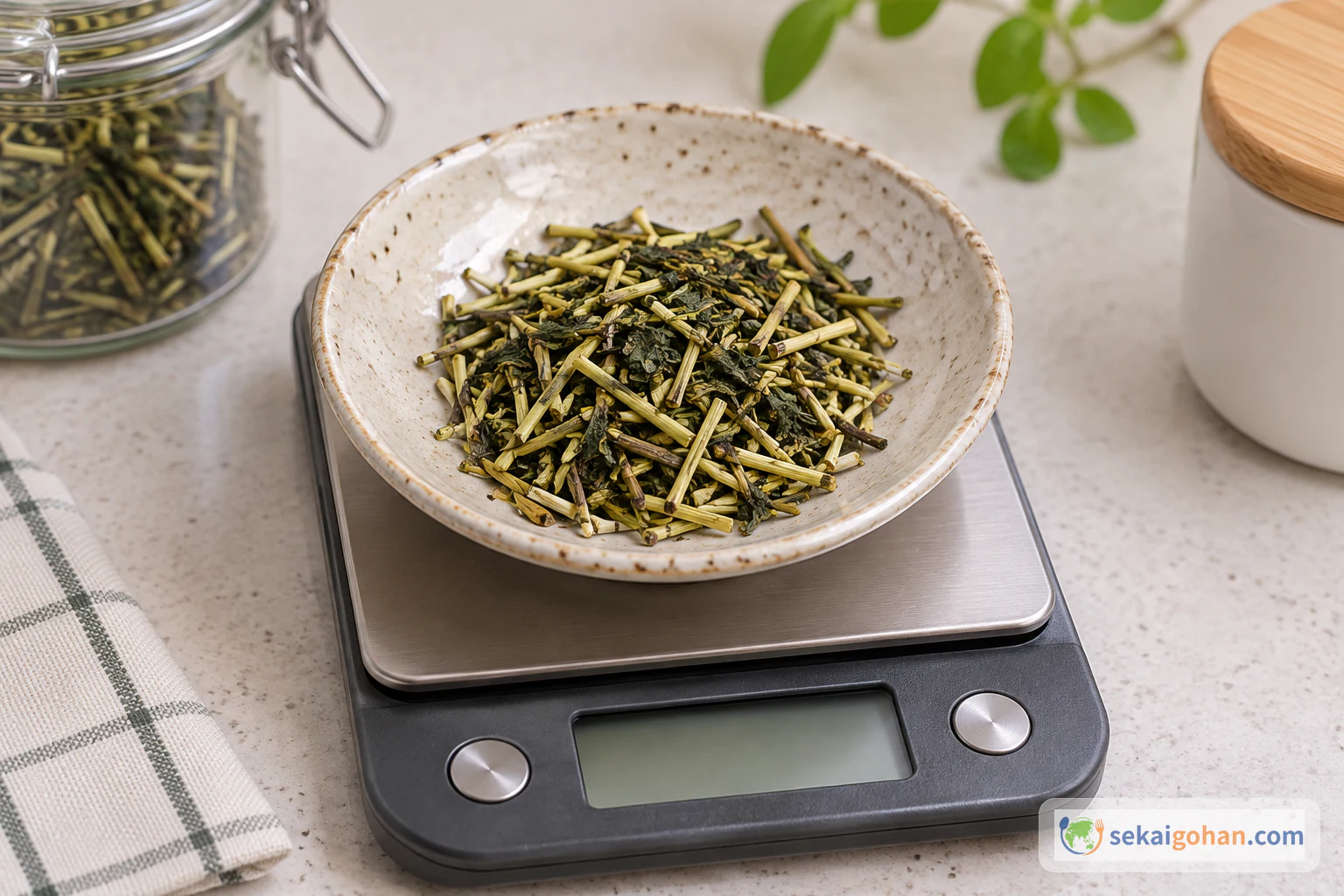
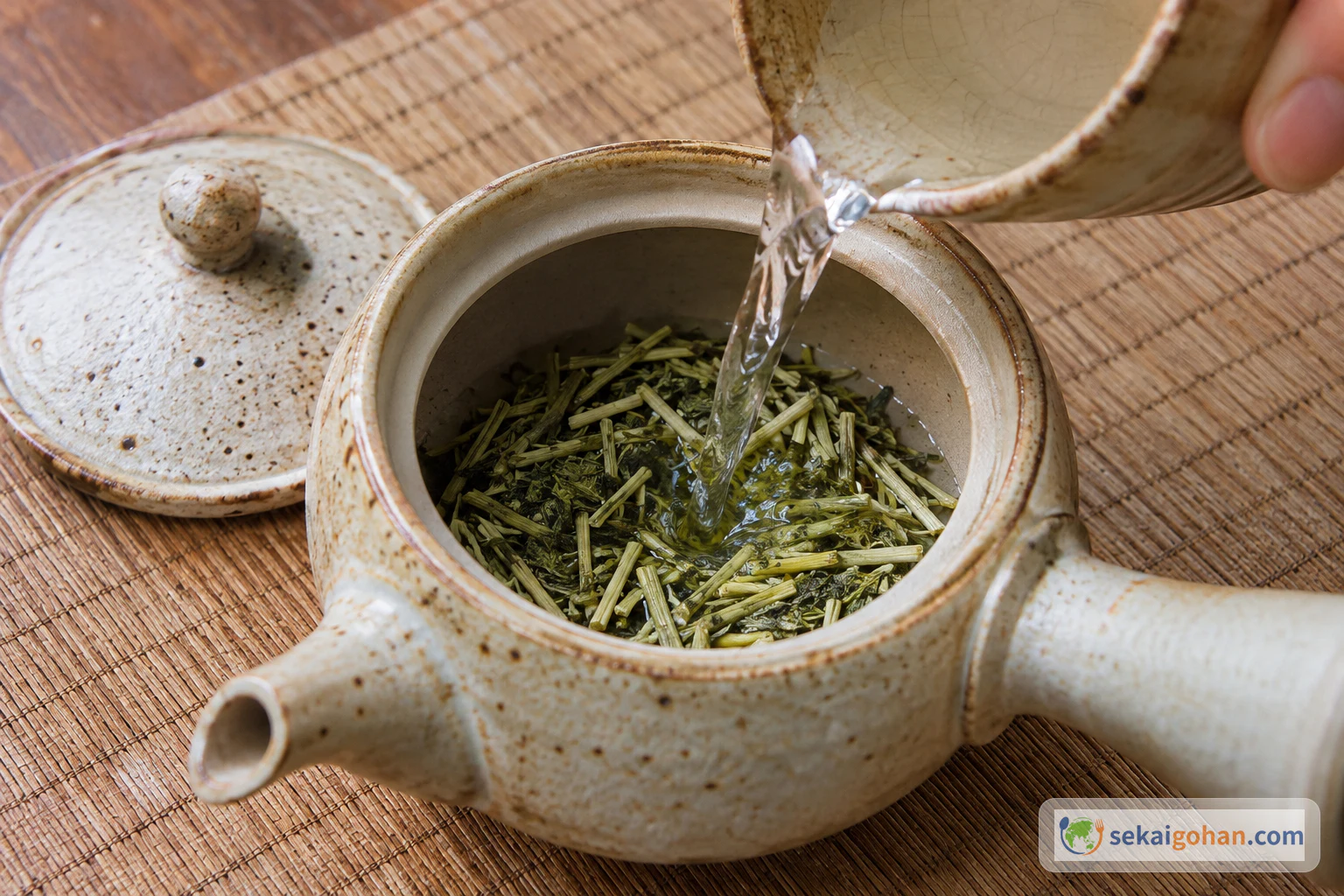
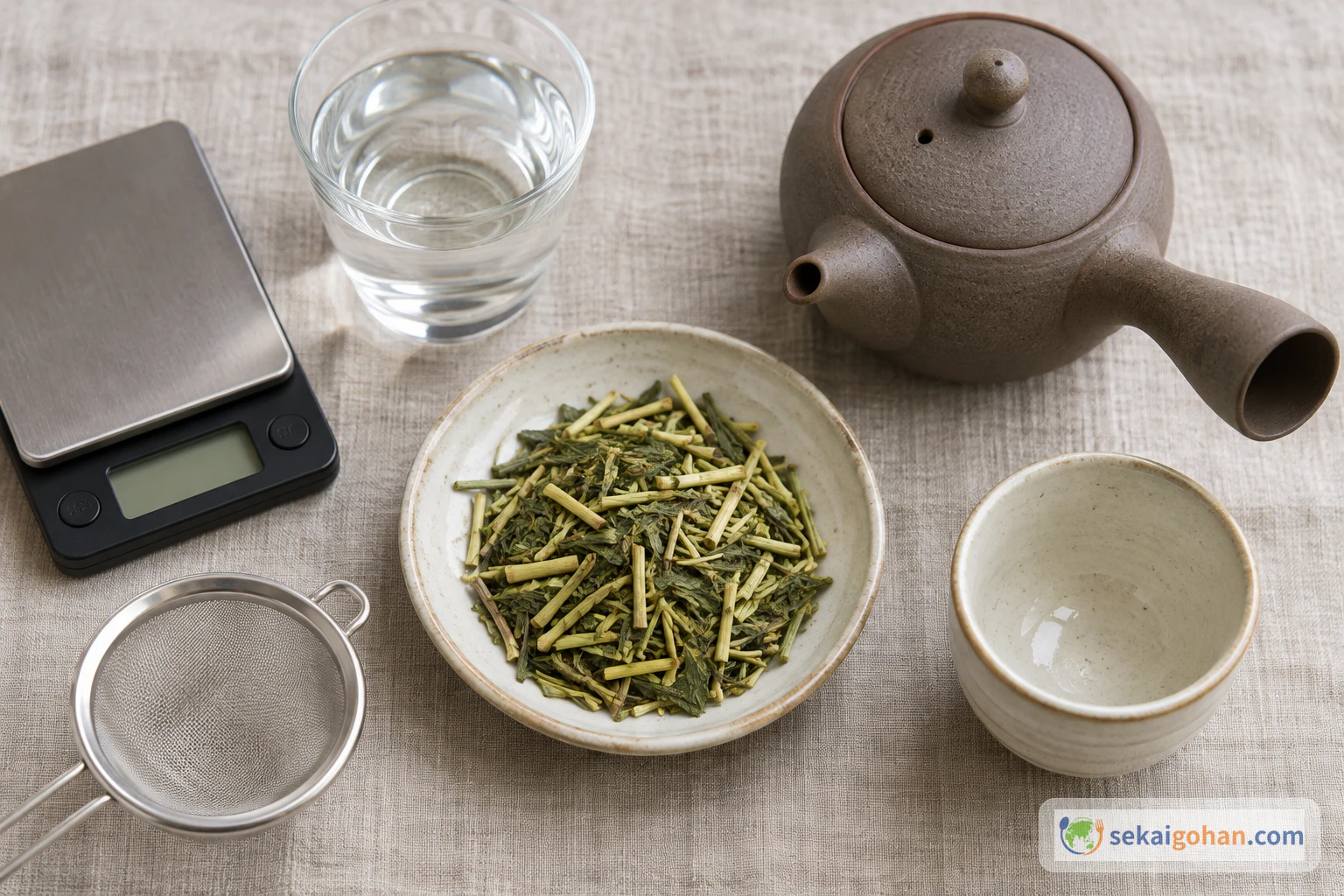
Kukicha is a green tea in which stems and leaf stalks take the leading role. Tealife SG's guide to kukicha and karigane describes it as including stems, stalks and twigs. Because commercial kukicha often contains some leaf as well, a bag you buy may look like a mix of pale green sticks and small dark-green fragments.
The names around this tea overlap rather than line up neatly. The same Tealife guide notes that karigane historically refers to kukicha made from the stems of gyokuro leaves, and that roasted bōcha is one regional example of stem tea. How these names are used varies with the raw material, the quality grade and the producing area, so they are best not treated as simple synonyms for kukicha. Roasted bōcha in particular is a different, brown, toasted tea; it is one example of a stem tea, not a definition of all of them. This article brews only general unroasted kukicha, without mixing in roasted stem tea or premium gyokuro-based karigane.
Why steeping guidance differs from seller to seller
Different tea sellers publish different conditions for kukicha, and they should not be averaged together:
| Publisher | Amount and water | Temperature and time | How it is used here |
|---|---|---|---|
| HOKUSAN & CO. (kukicha row of its brewing table) | 2–3 g per person, 80 ml | 80–90°C, 60–120 seconds | Adopted for this recipe |
| HOKUSAN & CO. (general explanation for one person) | 4–5 g | — | Not used; the dedicated kukicha row is given priority |
| Tealife SG | 4 g / 200 ml in its method | 70–80°C, 30 seconds | Comparison only; its table and body text give different amounts (8 g / 200 ml and 4 g / 200 ml), so neither is used |
| Kagoshima Tea (product page) | 1 g / 100 ml for its own product | 80°C, one minute | Comparison only; specific to that product |
Choosing the dedicated kukicha row over HOKUSAN's general one-person amount is an editorial choice. The spread across sellers is a reminder that the best conditions depend on the product and grade; the ranges in this recipe are one well-defined starting point, not the single right answer for every kukicha.
Ingredients: Tea and Water for One Cup
Equipment
- Kitchen scale, ideally reading in 0.1 g steps
- Kyusu (Japanese teapot) with a lid, clean and dry
- Kettle
- Heat-safe cup or vessel for cooling the boiled water
- Thermometer
- Heat-safe measuring cup
- Tea strainer (if your kyusu has no built-in strainer)
- Teacup
Choosing Kukicha and What Not to Swap In
Look for a bag labeled 茎茶 or kukicha, with pale green stems and some leaf. If an ordinary supermarket does not carry it, Japanese tea shops and online Japanese tea sellers are the places to search. Avoid roasted stem tea (such as roasted bōcha or hōjicha-style stems, which are brown) and powdered tea for this recipe; they are different teas.
Sencha, made from the leaf, can also be brewed as a green tea, but it is not a substitute for kukicha. It has a different flavor and is a different kind of tea, so treat it as a separate cup rather than this recipe made with another ingredient.
You will be handling boiling water, a hot kettle and hot vessels. Use heat-safe cups and measuring cups, hold the kettle and kyusu by their handles, and keep your hands clear of steam when pouring.
Method: Weigh, Cool, Steep, Pour
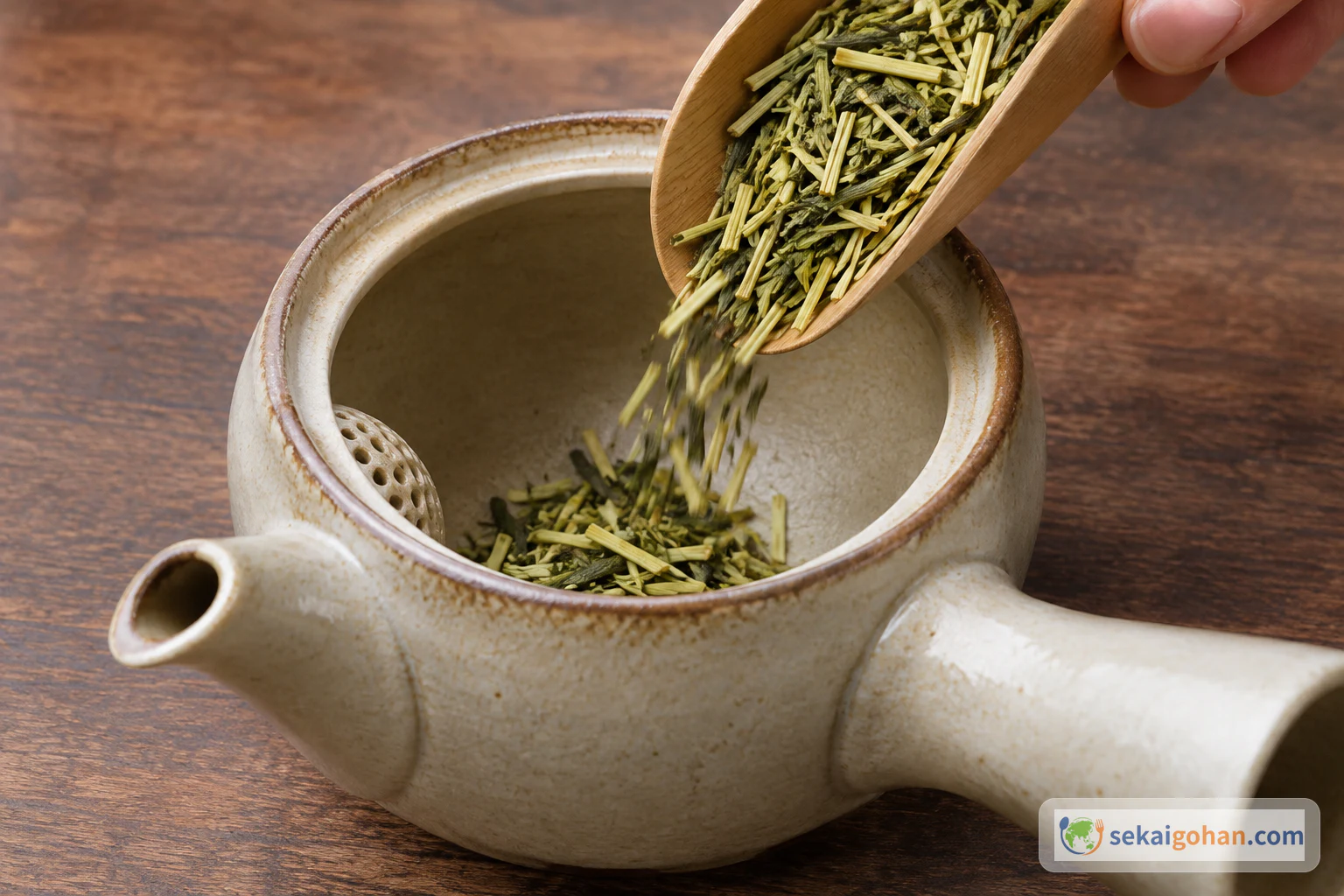
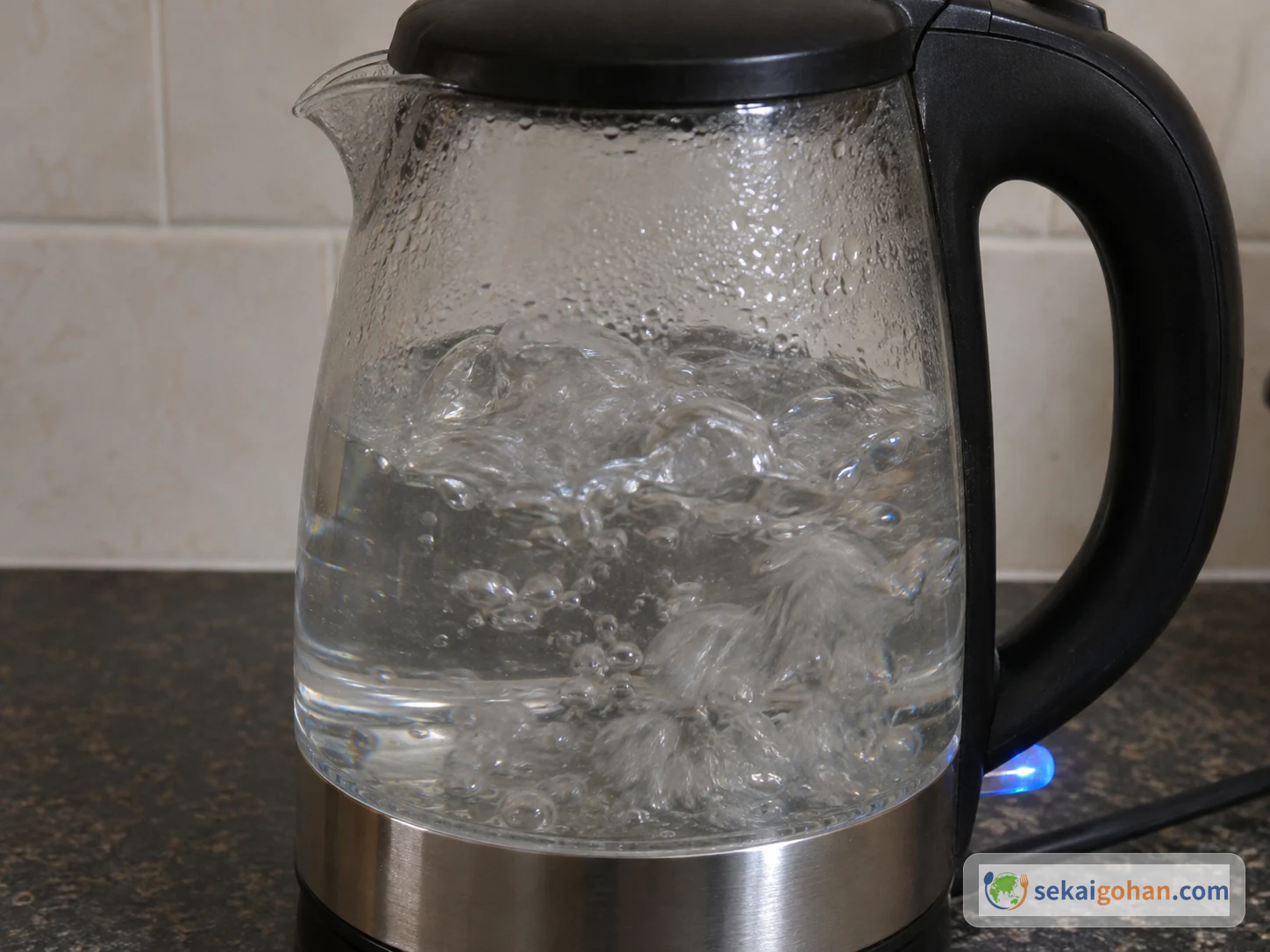
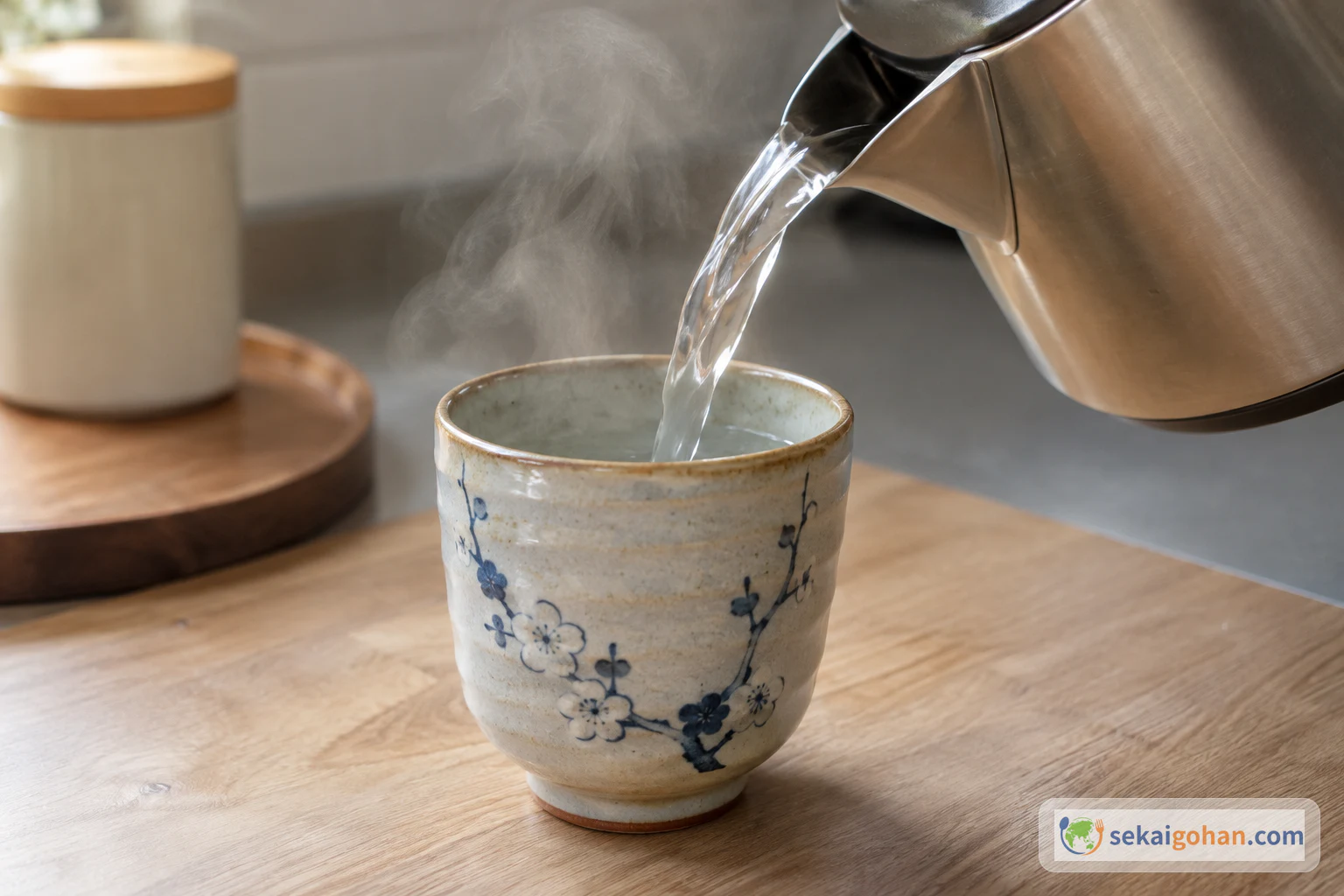
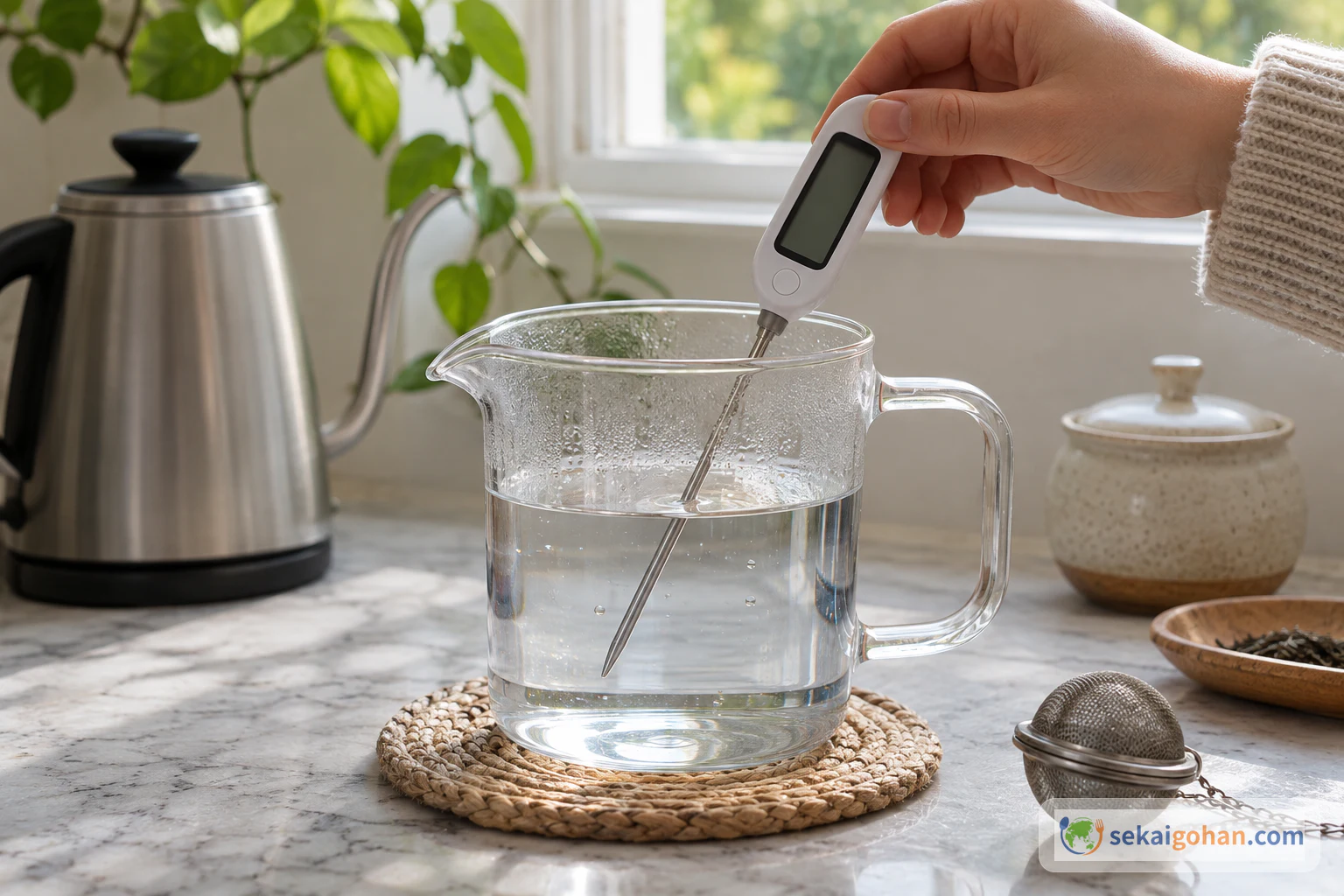
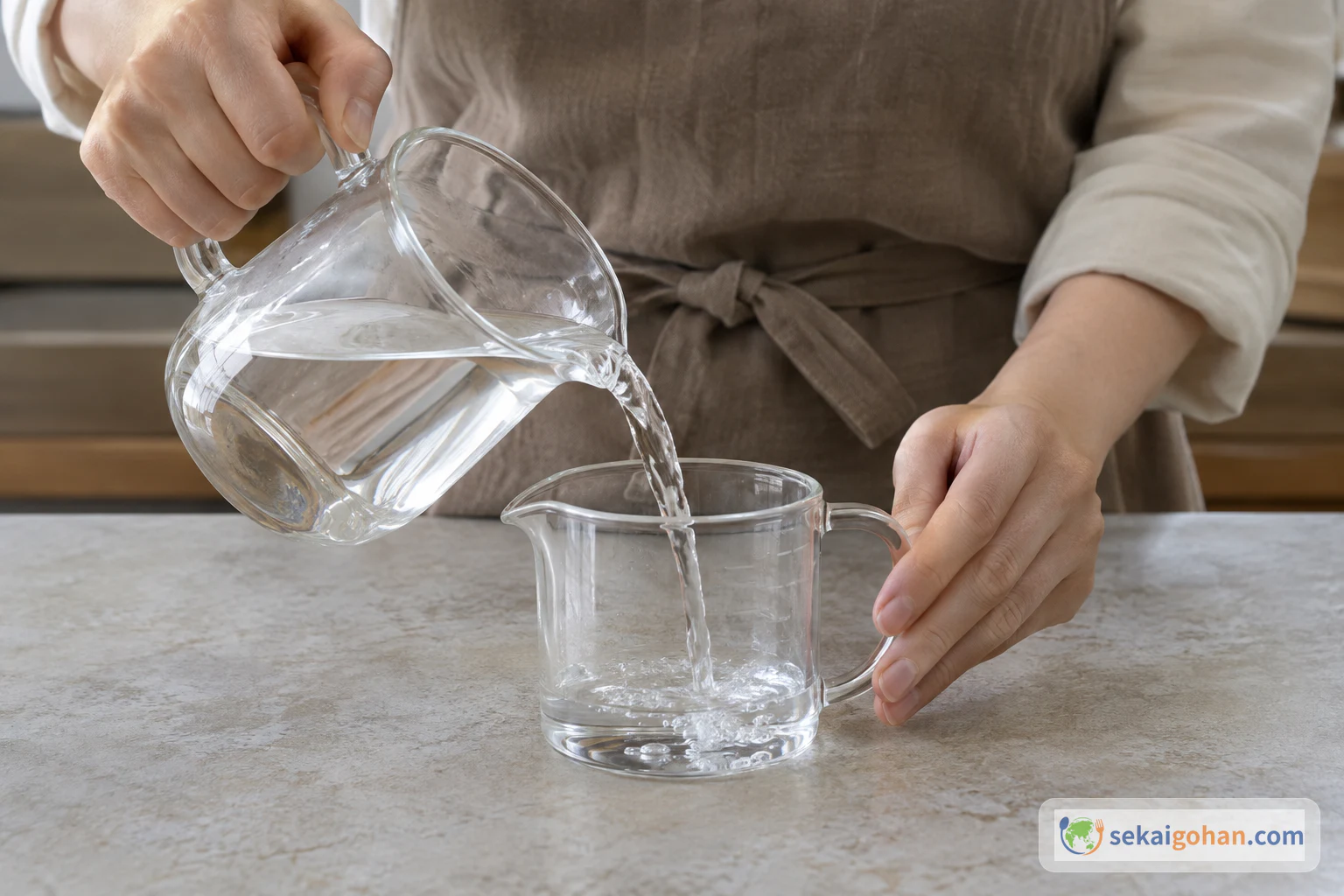
Put the dry tea in the pot first. Boil the water, cool it in a separate vessel, check the temperature, and only then measure the 80 ml that goes into the pot.
The 80 ml is the water you pour in, not a promise of 80 ml in the cup. The tea absorbs some water, so the amount you drink will be somewhat less.
When the Cup Doesn't Come Out Right
| What happened | Likely point to check | What to do next time |
|---|---|---|
| The water was still above 90°C at the temperature check | Not enough cooling time, or a vessel that holds heat | Wait and check again, or move the water to another vessel; always confirm with the thermometer |
| The water dropped below 80°C | Too long between cooling and pouring, or too many transfers | Check the temperature again just before measuring and pouring, and move straight on to the pot |
| Some stems stayed dry or floated on top | The water did not cover all the tea | Pour so that all of the tea is soaked before closing the lid |
| The cup tasted thinner or stronger than you like | Tea amount and steeping time at one end of the range | Adjust within 2–3 g and 60–120 seconds rather than going outside the ranges |
| Tea was left sitting in the pot | The kyusu was not fully emptied | Tilt the pot all the way and pour to the last drop |
| No thermometer at hand | Cooling by transferring vessels only | Transfers give only an approximate drop; a thermometer is the more reliable check |
Teas differ by product and grade. If a particular kukicha you buy comes with its own brewing instructions, those reflect that seller's view of their tea; compare them with the ranges here rather than mixing the two recipes.
Variations and Serving More Than One
This recipe is written for one person. HOKUSAN's guidance gives the tea amount per person, and when pouring for several cups, it suggests pouring a little into each cup in turn so the strength comes out even. For a single cup, simply pour to the last drop.
Because this article covers only a first, fresh infusion, it does not include a second brew, roasting the tea, or adding sugar or milk. If you want a roasted stem tea, look for bōcha as its own tea rather than altering this one.
Frequently Asked Questions
Is kukicha the same as karigane?
Not exactly. Tealife SG explains that karigane historically refers to kukicha made from gyokuro stems, and how the names are used varies with raw material, grade and region. This recipe is for general unroasted kukicha, not for premium gyokuro-based karigane.
Why use 2–3 g when other guides use more?
HOKUSAN's page gives a general one-person amount of 4–5 g, but its brewing table has a separate kukicha row with 2–3 g per person. Sekai Gohan follows that dedicated kukicha row. Other sellers' figures, such as Tealife SG's 4 g / 200 ml or Kagoshima Tea's 1 g / 100 ml for its own product, are different methods and are not blended into this one.
Can I skip the thermometer and just pour between cups?
You can use vessel transfers as a rough method. HOKUSAN describes each transfer as lowering the temperature by about 10°C, but the actual drop changes with the room and the vessels, so it is only an approximation. A thermometer is the more dependable way to land within 80–90°C.
Can I brew the same leaves a second time?
Kagoshima Tea describes a second infusion separately for its own product. This article covers only the first infusion, so it gives no amounts or times for a second one.
Can I use sencha instead?
Sencha can be brewed as a green tea, but it is a leaf tea with a different flavor. It is a different cup, not a kukicha substitute.
Does kukicha have particular health benefits or a set caffeine level?
This article makes no claims about health effects or caffeine content.
Sources
- HOKUSAN & CO., LTD. (Shizuoka Japanese tea wholesaler), "How to Serve Japanese Green Tea." The adopted brewing method: the kukicha row of its brewing table giving 2–3 g per person, 80 ml of water, 80–90°C and 60–120 seconds; the advice to pour the teapot out fully; and the approximate cooling of about 10°C each time water is moved to another vessel. The table gives ranges, not one exact time or temperature, and does not name a specific cultivar or product. https://hokusan-trade.jp/howto/
- Tealife SG, Yuki Ishii (founder and CEO), "The Ultimate Guide to Kukicha and Karigane." Used for background: kukicha includes stems, stalks and twigs; karigane historically refers to kukicha from gyokuro stems; roasted bōcha is one regional example of stem tea. Its own brewing method (4 g / 200 ml, 70–80°C, 30 seconds) is shown for comparison only; its table and text give different amounts, and neither is adopted. Health claims on the page are not used. https://japanesetea.sg/japanese-tea-pedia/kukicha-and-karigane/
- Kagoshima Tea, "Kukicha." A merchant's product-specific brewing suggestion (1 g / 100 ml, 80°C, one minute) and a separately described second infusion, shown for comparison only and not adopted into this recipe. https://kagoshimatea.com/pages/product-kukicha