Curry Bread: A Panko-Crusted Bun Around a Cooled Curry Filling
Make the curry filling first and let it cool thoroughly. Add the dough butter and the cooked rice at two separate moments. Proof twice, coat in panko without any egg wash, and fry at 180°C for about 4 minutes.
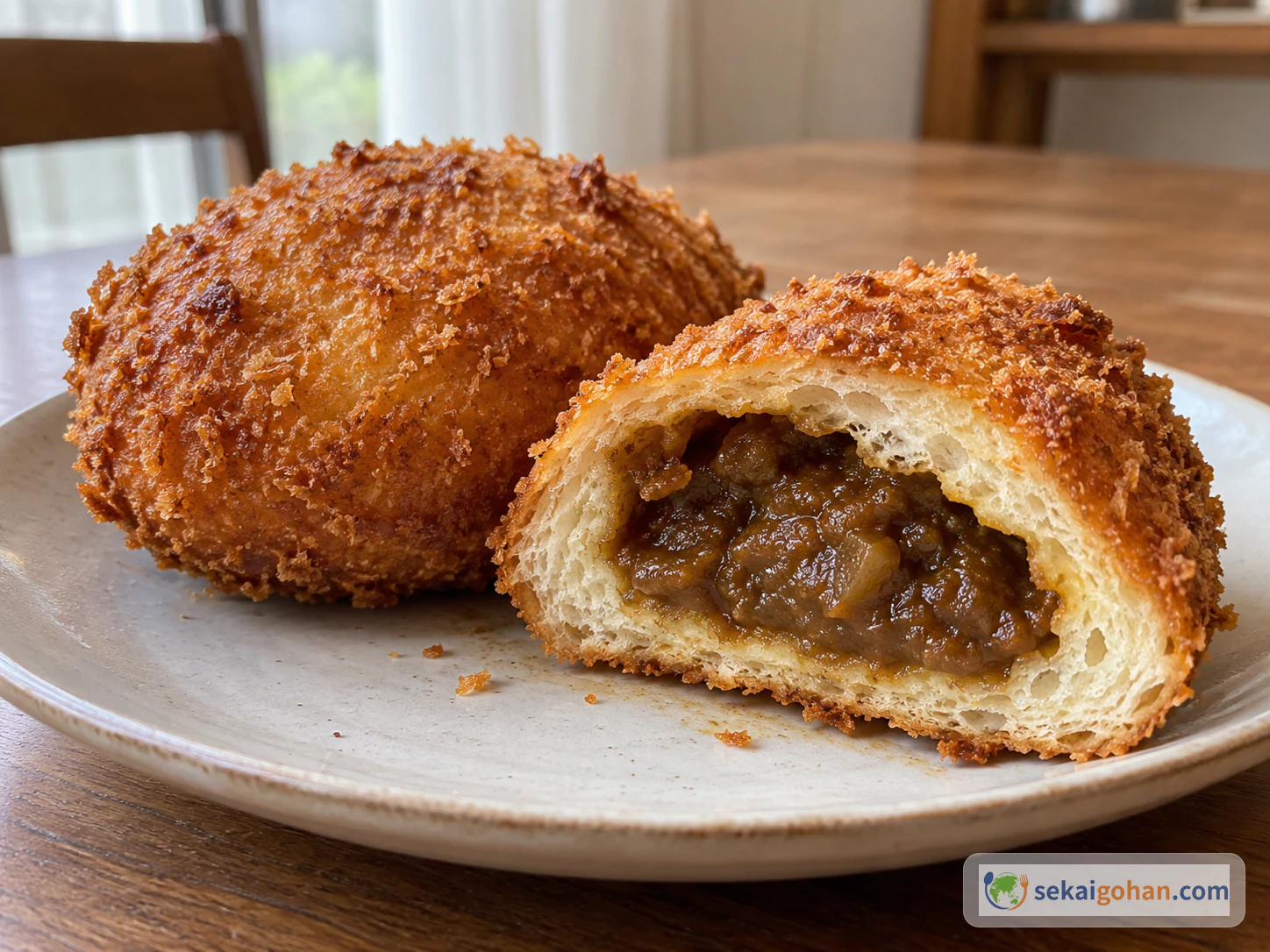
A curry bread is a soft bread dough wrapped around curry, rolled in panko breadcrumbs and fried until the crust turns golden. This article follows one specific published recipe: the six-piece curry bread by Toshiyuki Komori, chef-boulanger of Café de Crew, published by Tokyo Gas on its Uchikoto recipe site.
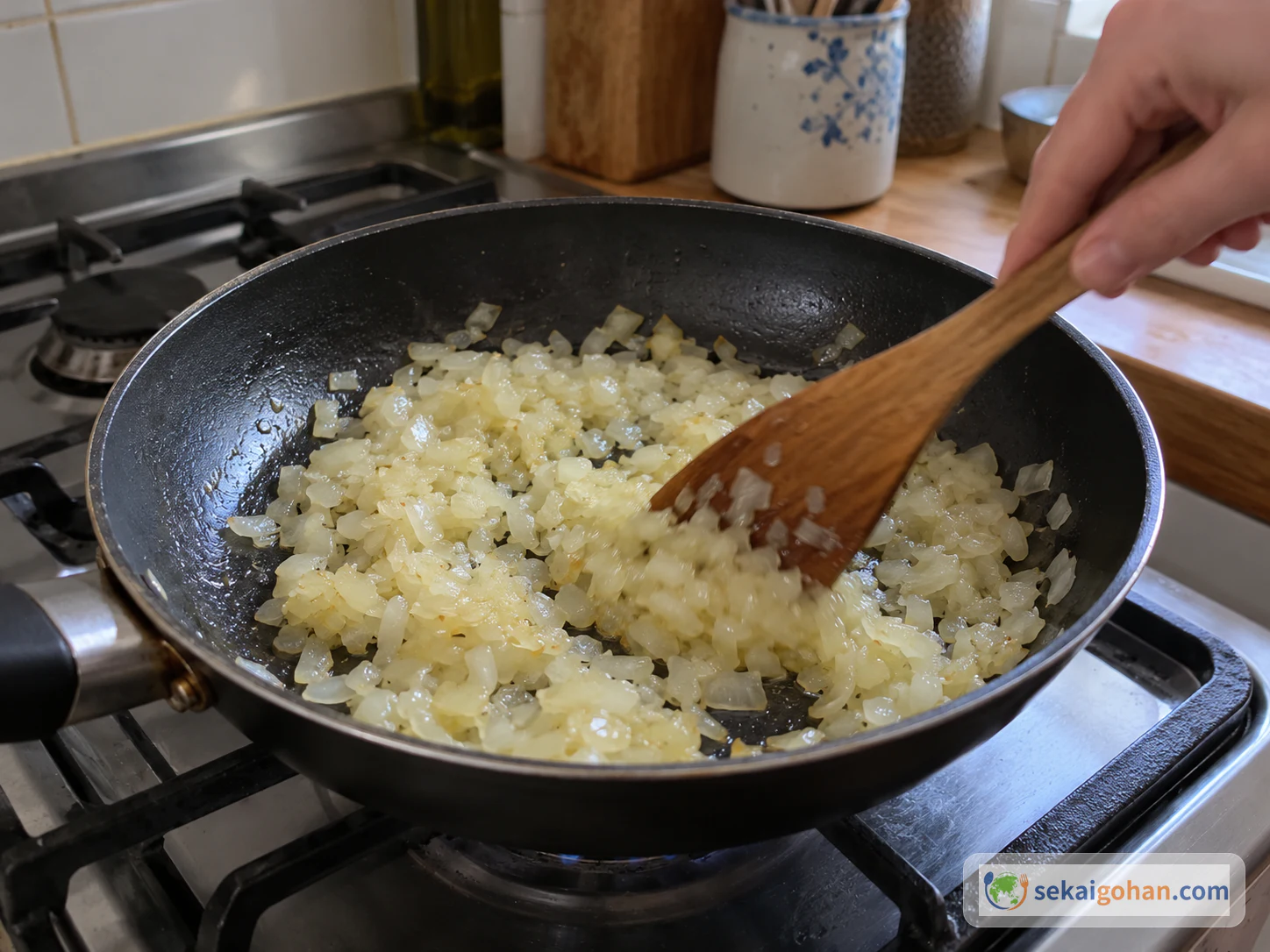
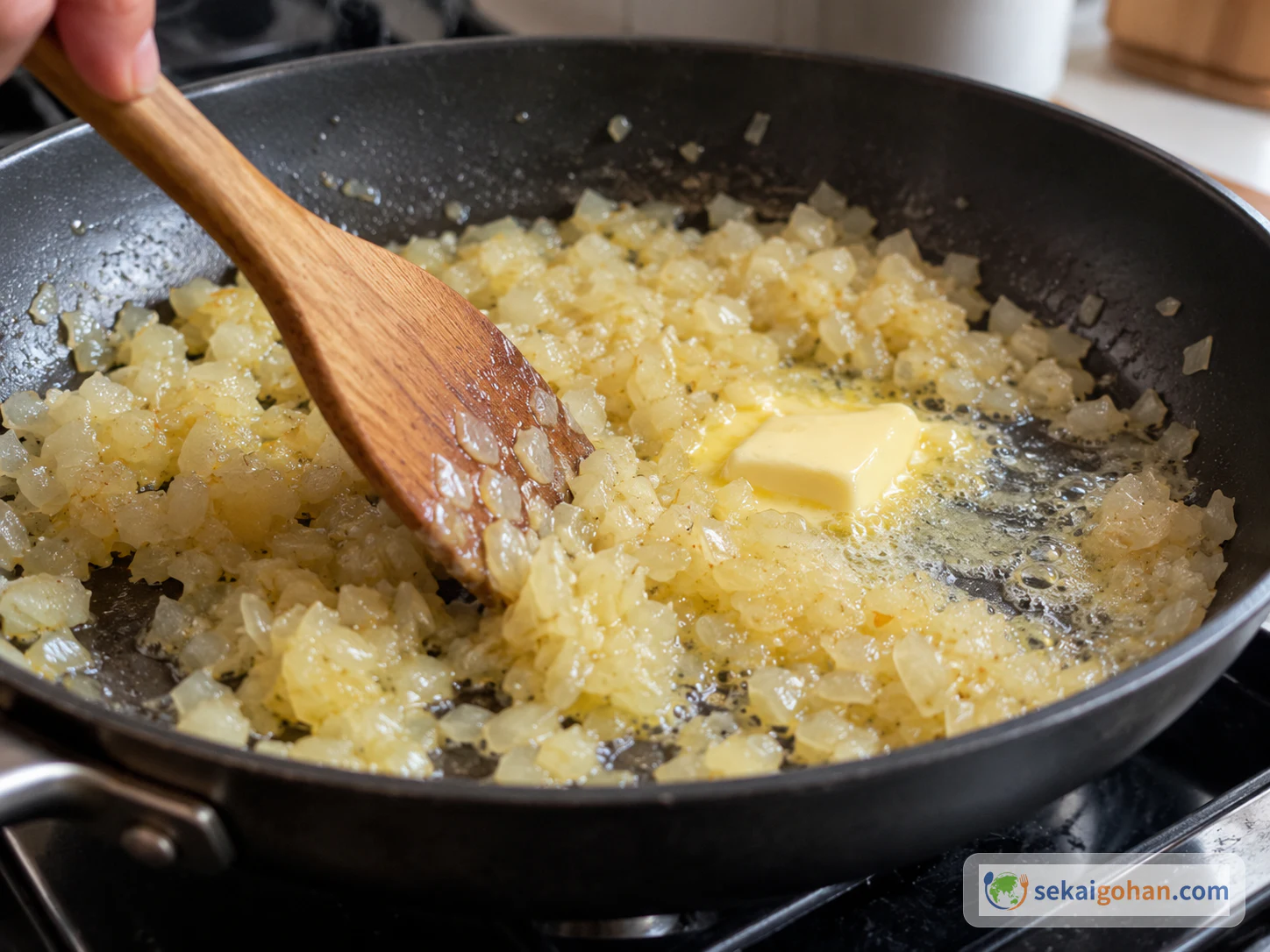
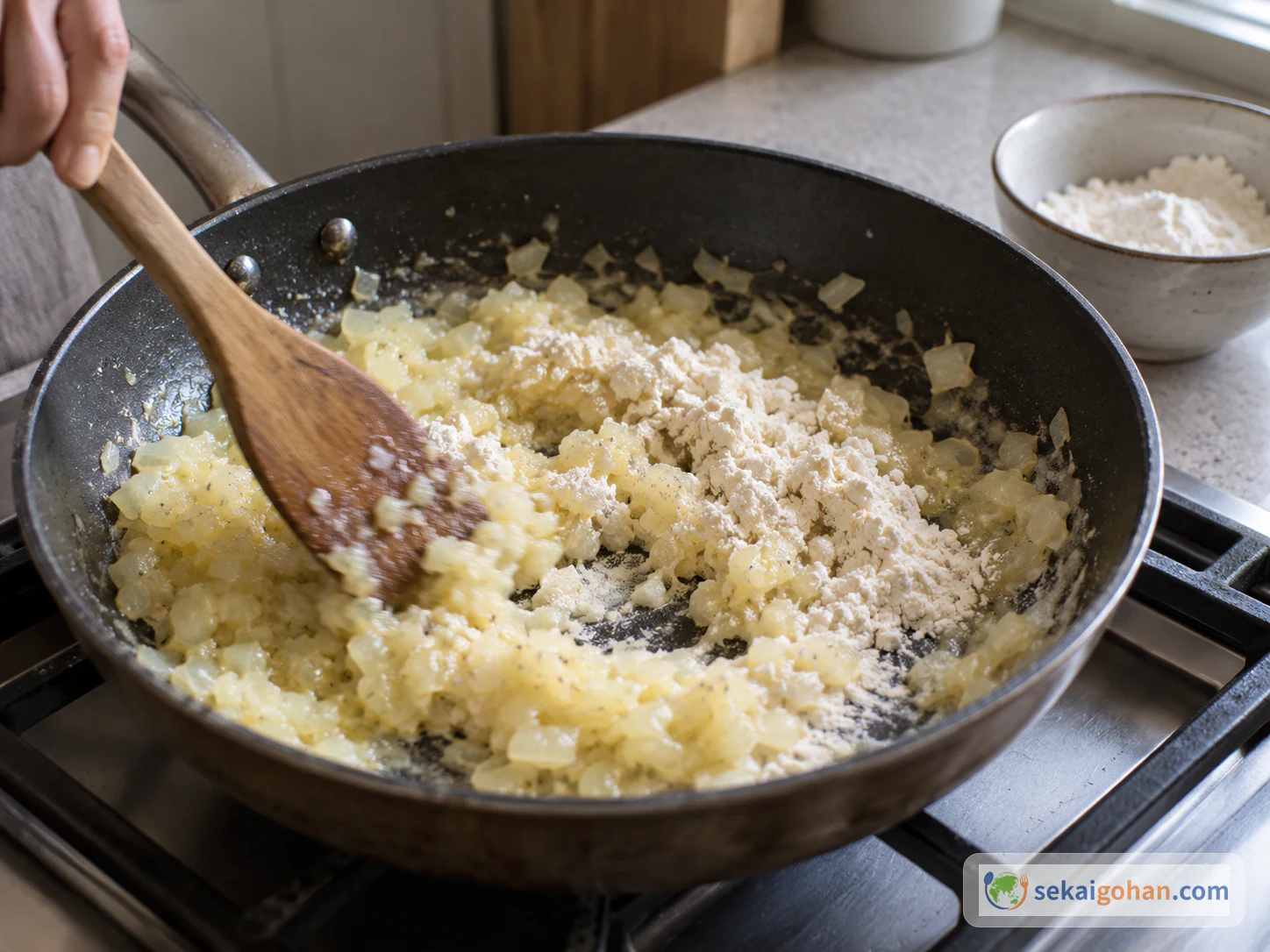
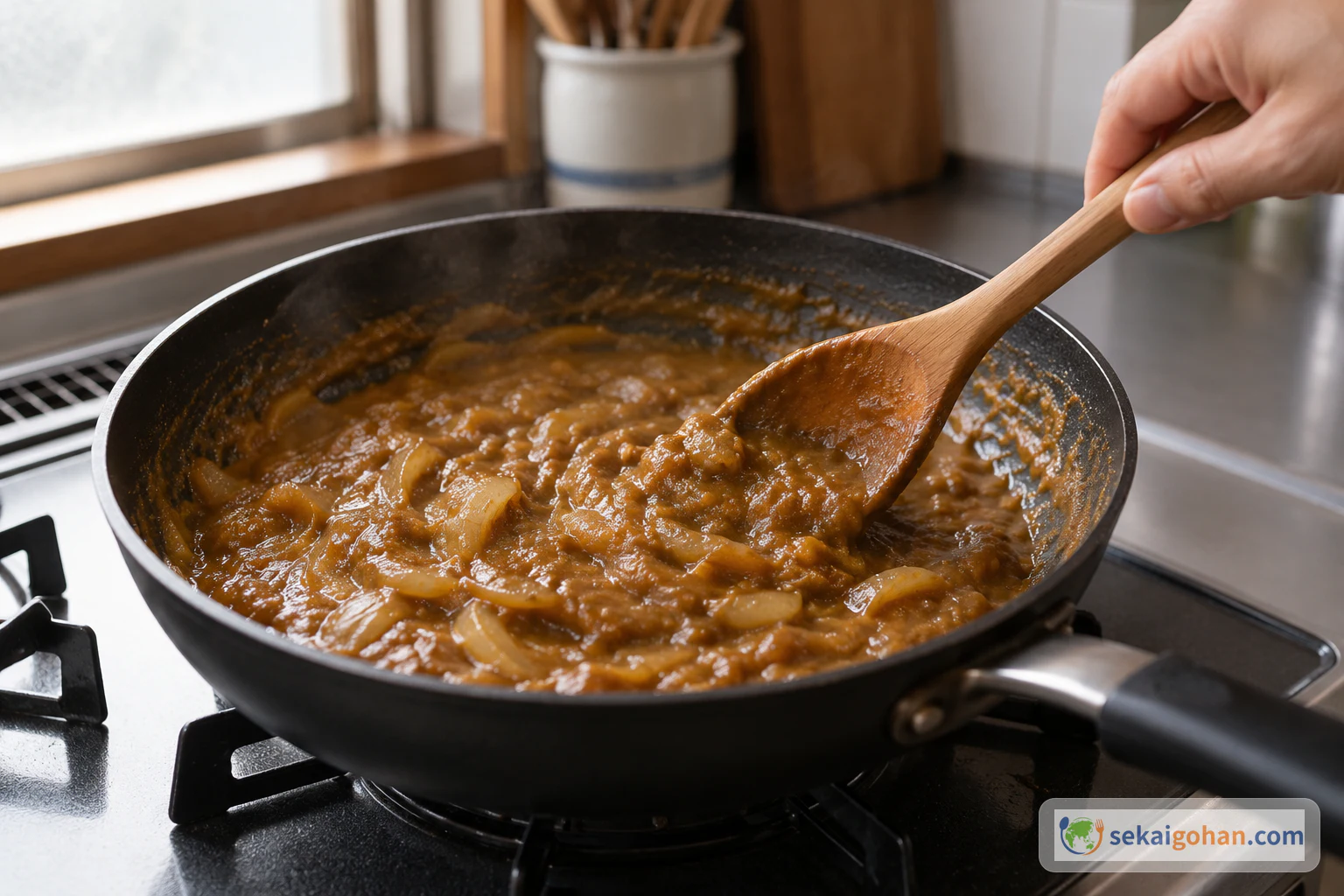
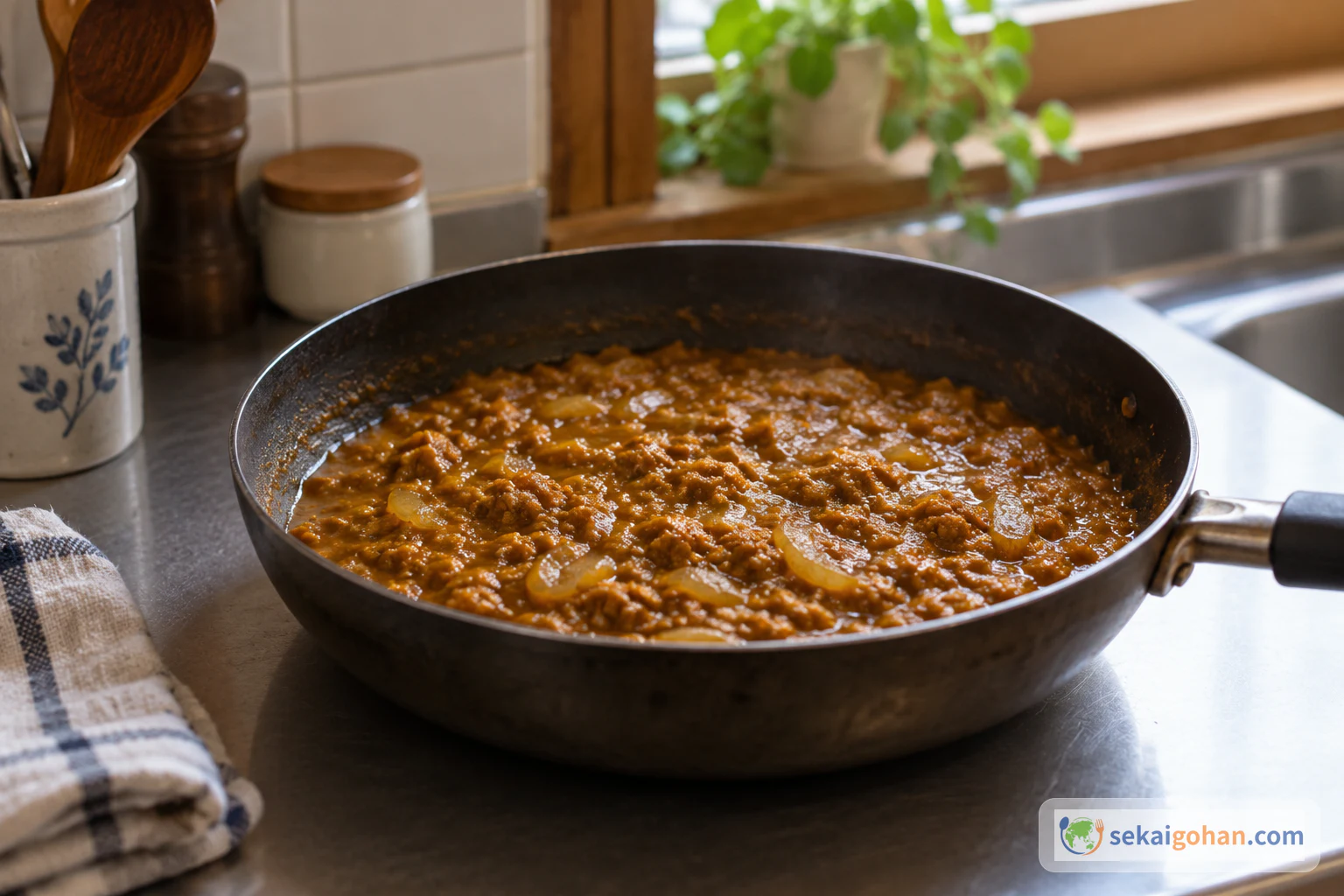
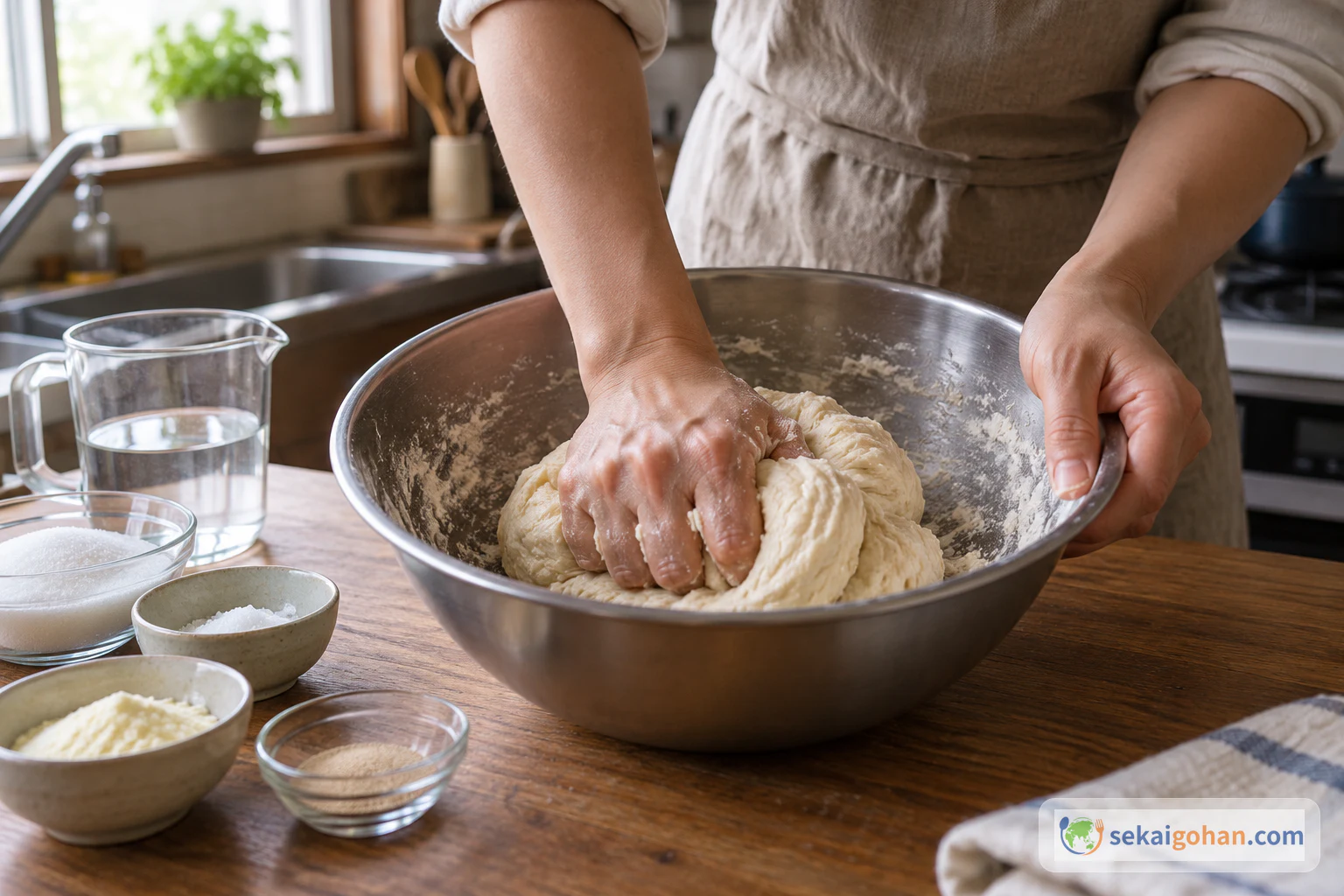
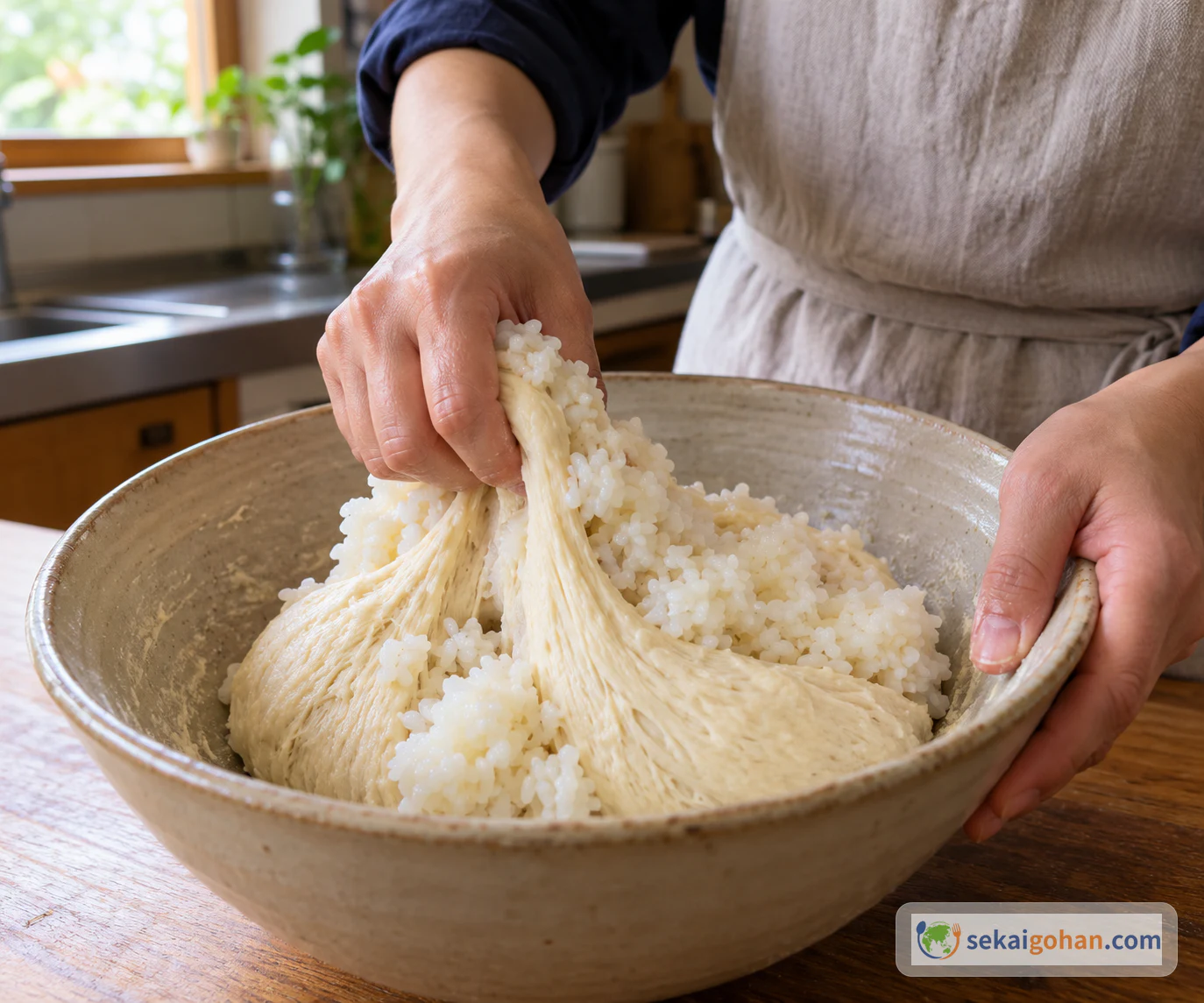
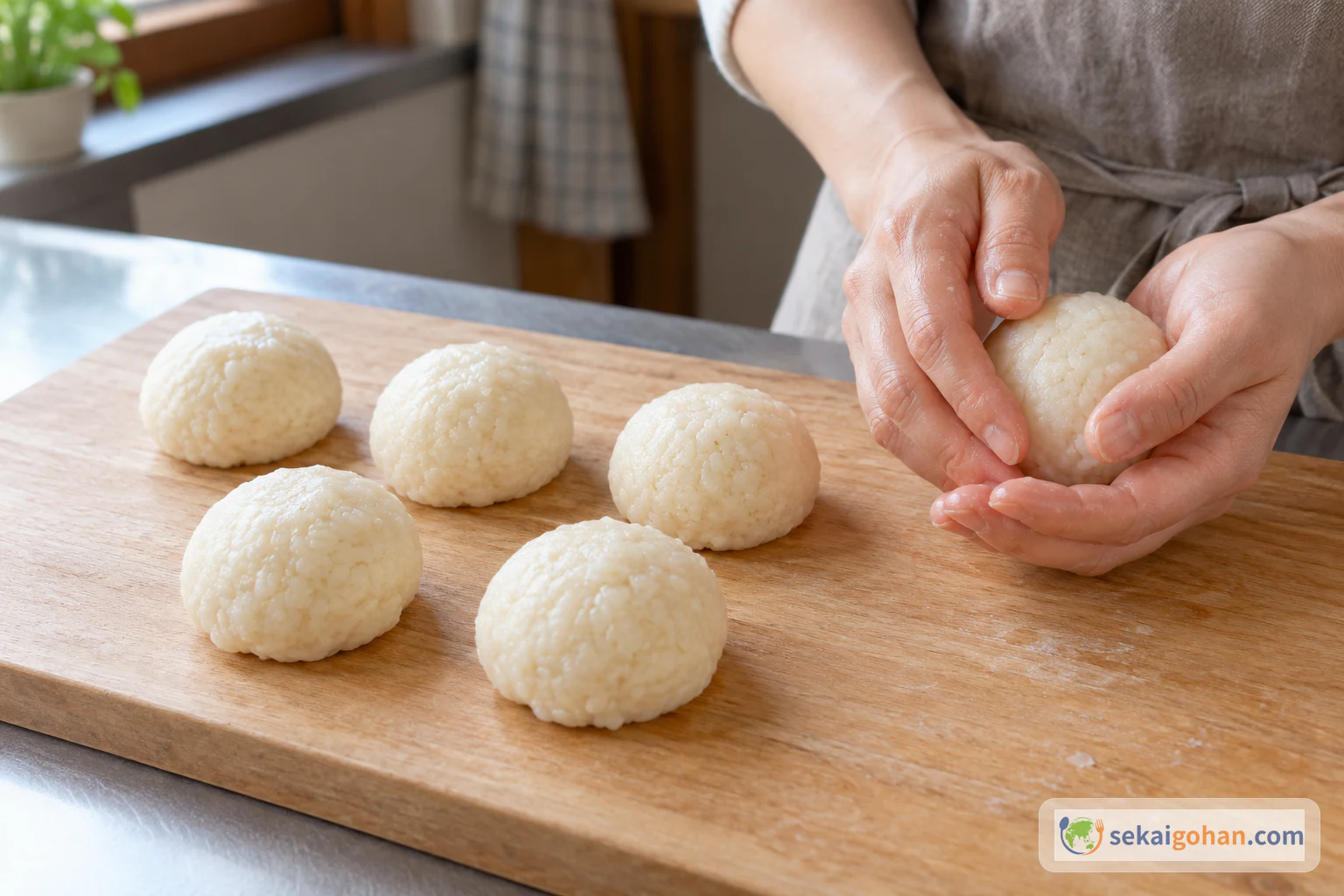
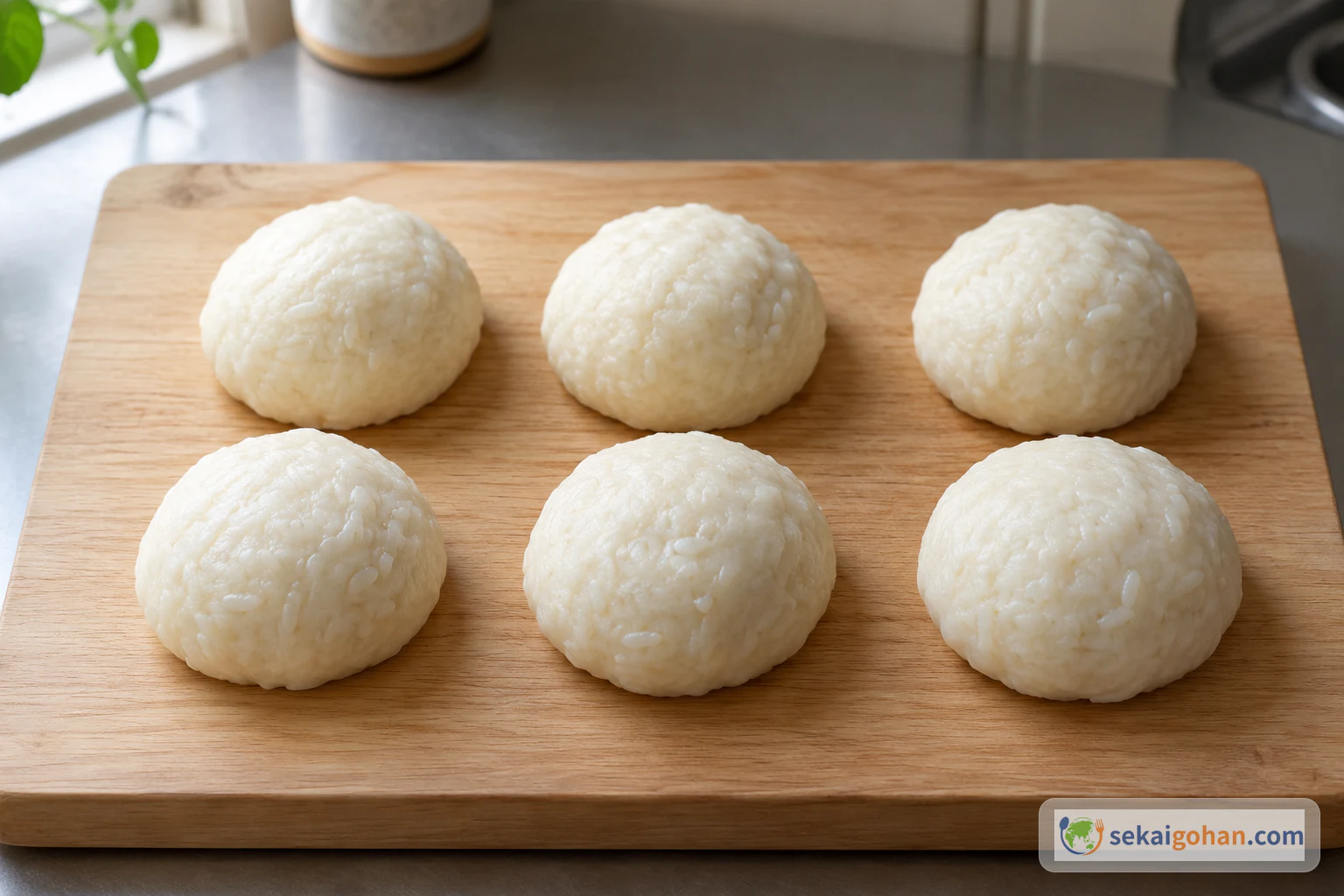
Two things set this version apart. The filling is not curry straight from the pot: chopped onion is cooked down, butter and cake flour are worked in, and then prepared homemade curry is added before the whole mixture is cooled. And the dough has 45g of cooked rice folded in once it has firmed up. That is cooked rice, not rice flour.
Sekai Gohan has not kitchen-tested this recipe. The amounts, order and times below follow the published version, and anything it leaves open, such as proofing temperature or the type of frying oil, is marked as open rather than filled in from another recipe. For more dishes from the same country, see our Japan page.
What This Curry Bread Is, and Why This Version
The version here is one chef's recipe, not a standard formula. The Tokyo Gas page credits it to Toshiyuki Komori and gives a complete list of ingredients for six pieces, divided into a dough, a filling and a coating, along with the order in which each goes in. That level of detail is the reason it was chosen: a home cook can follow it from start to finish without guessing at the structure.
Other cooks make curry bread quite differently. Namiko Hirasawa Chen of Just One Cookbook, for example, describes curry bread as something you find in Japanese bakeries and convenience stores, and her own recipe is a separate eight-piece version. Those differences are covered further down; none of their amounts or methods are mixed into the recipe below.
The chef's profile on the same Tokyo Gas page mentions locally grown rice flour in a different context. It has nothing to do with this recipe's ingredient list, where the rice is plain cooked rice.
Ingredients for 6 Curry Breads
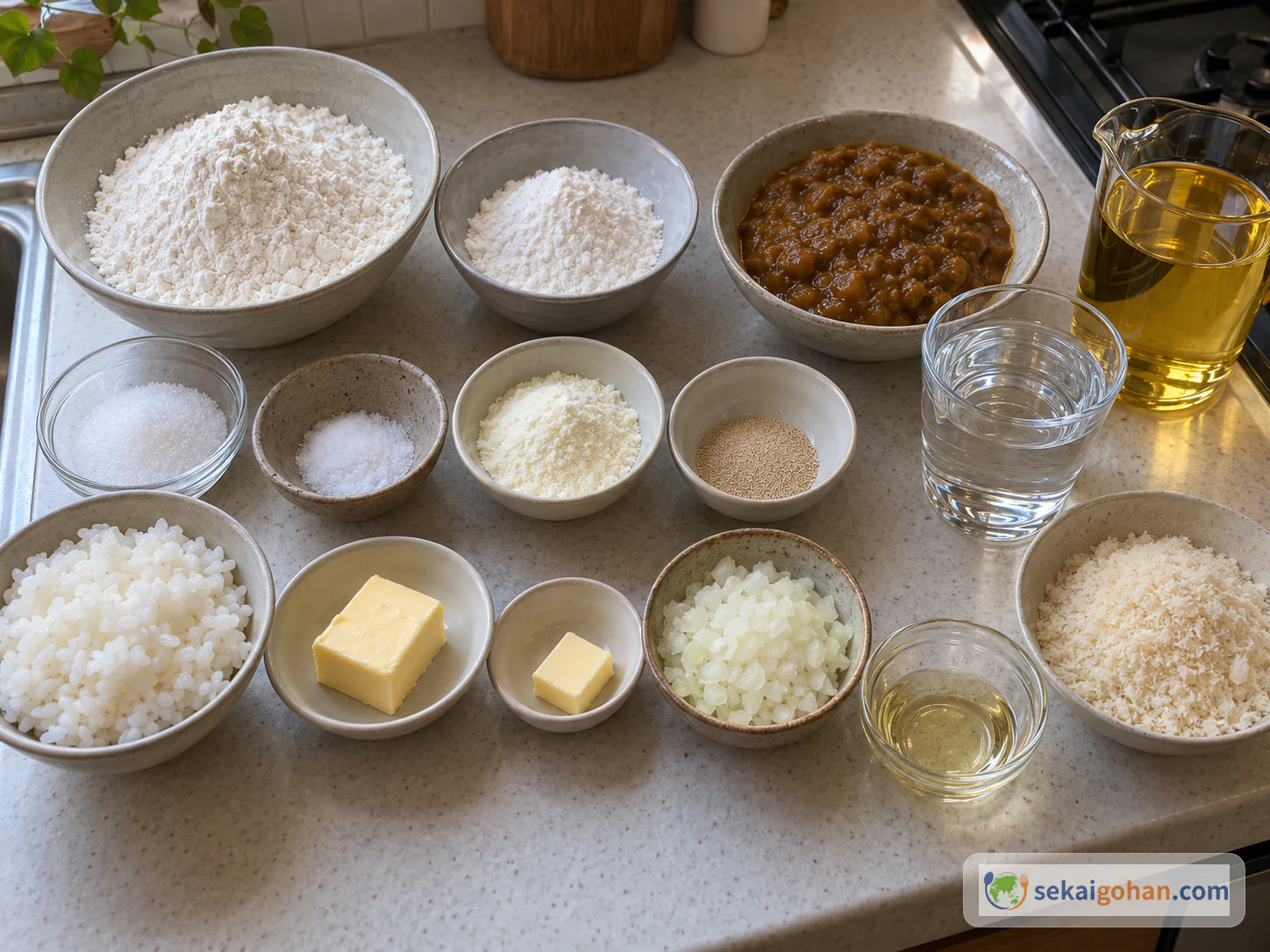
Makes 6 pieces. Weigh the dough butter and the filling butter separately, and keep the bread flour for the dough and the cake flour for the filling apart.
Keeping the Ingredients Straight
Cooked rice, not rice flour. The 45g of rice goes into the dough as ordinary cooked white rice. Don't swap in rice flour or uncooked rice.
Two flours with two jobs. Bread flour forms the dough. Cake flour only goes into the filling, where it is worked in a little at a time to bind the onion, butter and curry.
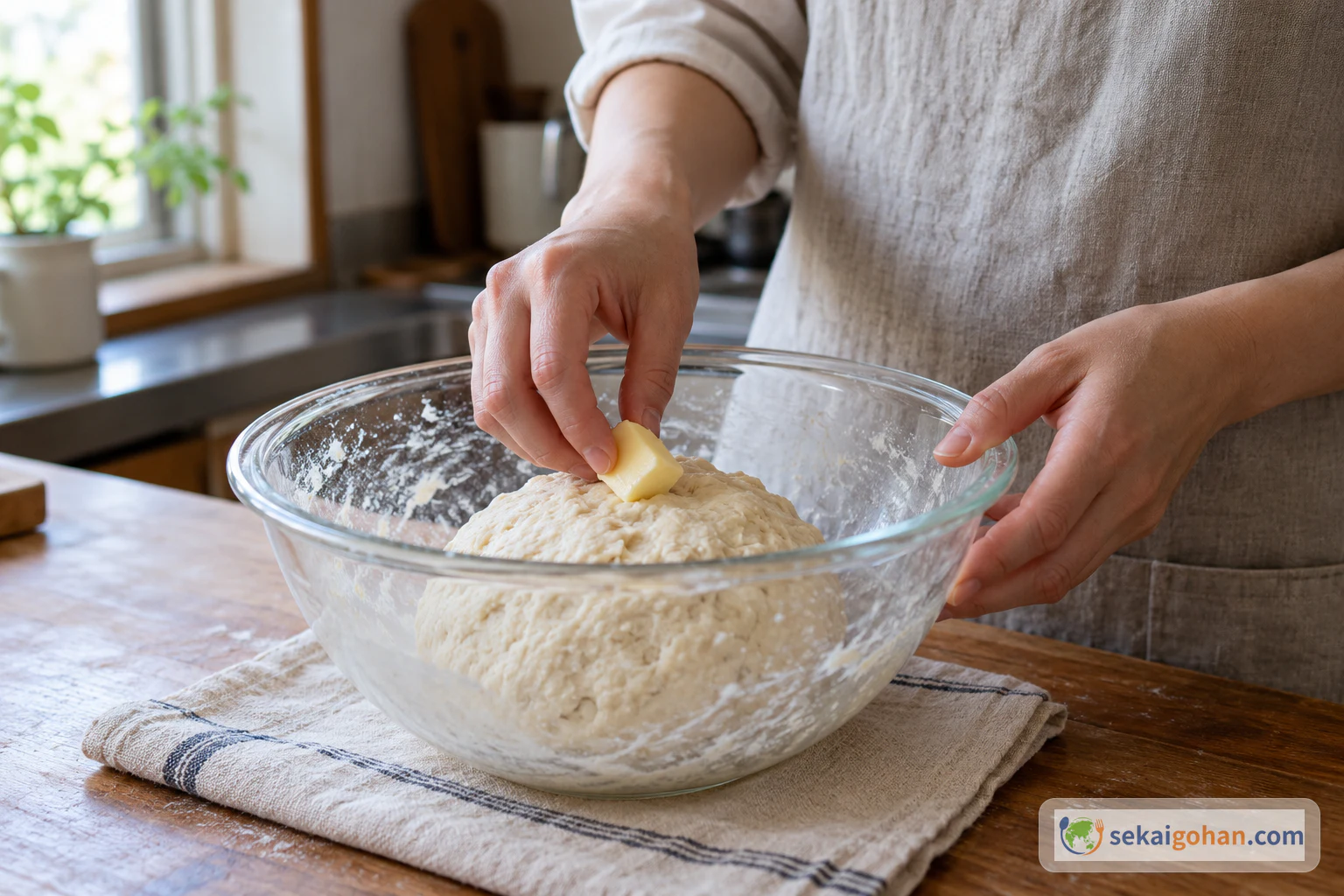
Two portions of butter. The 7.5g portion belongs to the dough; the 25g portion belongs to the filling. Measuring them into separate dishes before you start makes it hard to mix them up.
The curry is already made. The 200g of homemade curry is a prepared ingredient. Use curry you have made yourself; no particular meat, vegetable or roux is required.
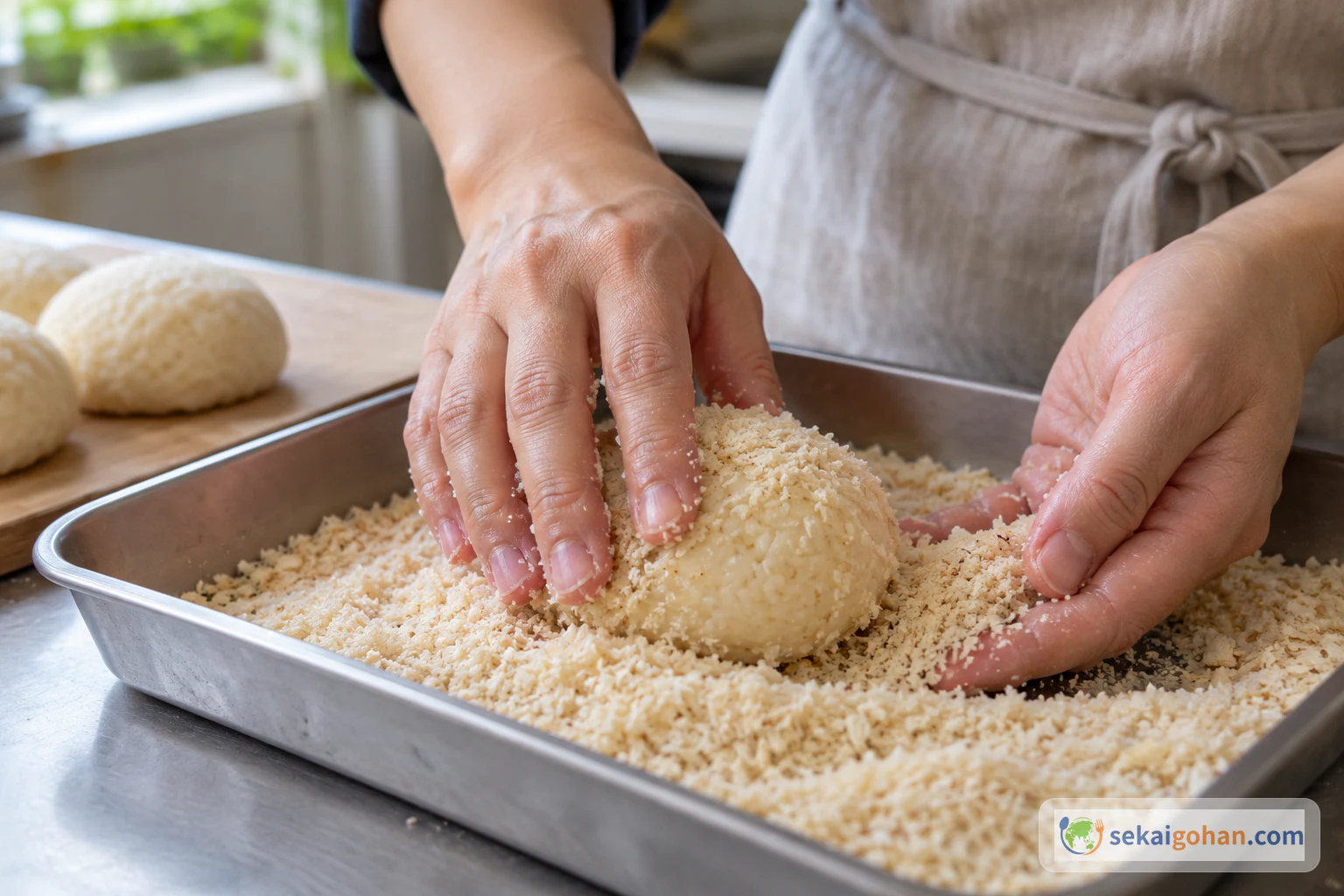
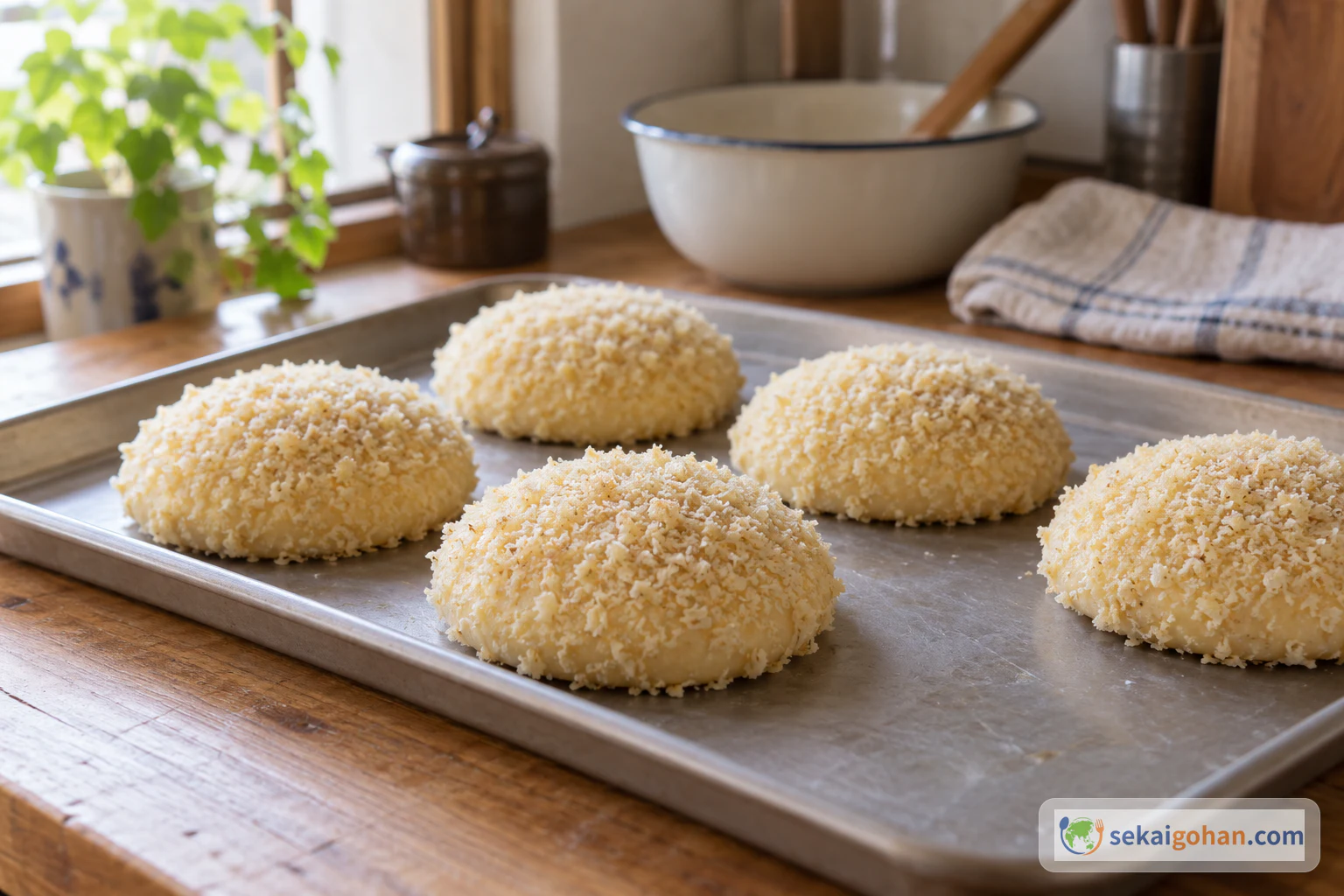
Panko only. The buns go straight into the breadcrumbs. The buns take no egg or water coating.
Equipment
- Mixing bowl
- Frying pan
- Spatula
- Bench scraper
- A pan for deep-frying
Method: Filling First, Then the Rice Dough, Then Frying
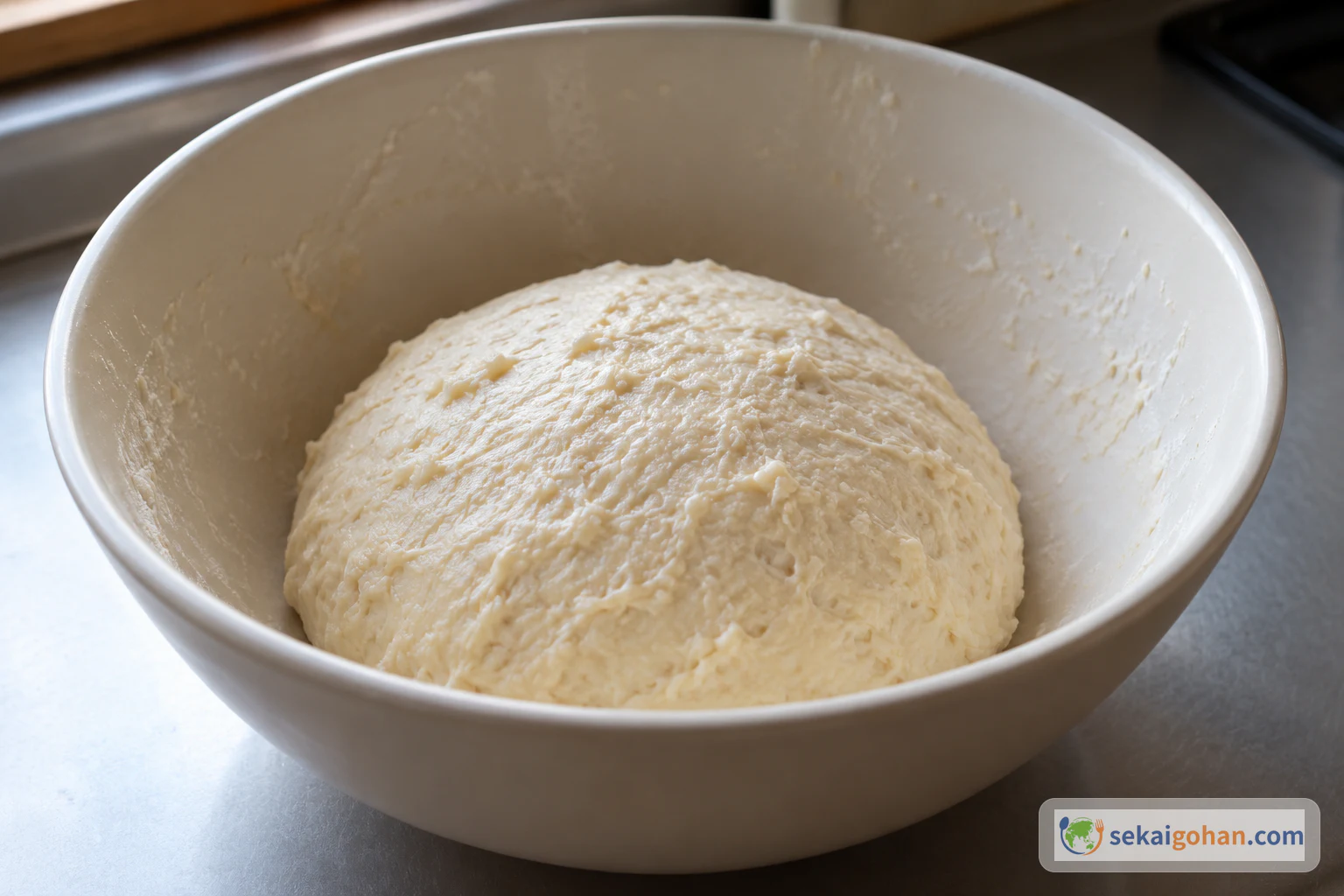
Steps 1–5 make the filling, which must cool thoroughly before it is wrapped. Steps 6–9 make and proof the dough. Steps 10–15 shape, coat, proof again and fry.
Common Mix-Ups and How to Check Them
Look back over three points: the filling was fully cooled before wrapping, the rice was cooked rice, and nothing but panko went on the outside.
This recipe gives times and an oil temperature but leaves several conditions open. The table separates what it does specify from what it doesn't, so you can spot a mix-up rather than fill gaps from a different recipe.
| What to check | What this recipe does | What it leaves open |
|---|---|---|
| Rice in the dough | 45g cooked rice, added after the dough is firm | — |
| Butter | 7.5g into the dough, 25g into the filling, at different stages | Salted or unsalted |
| Filling | Onion, butter, cake flour in 2–3 parts, then curry; cooled thoroughly off the heat | What the homemade curry contains; how long to cool or where |
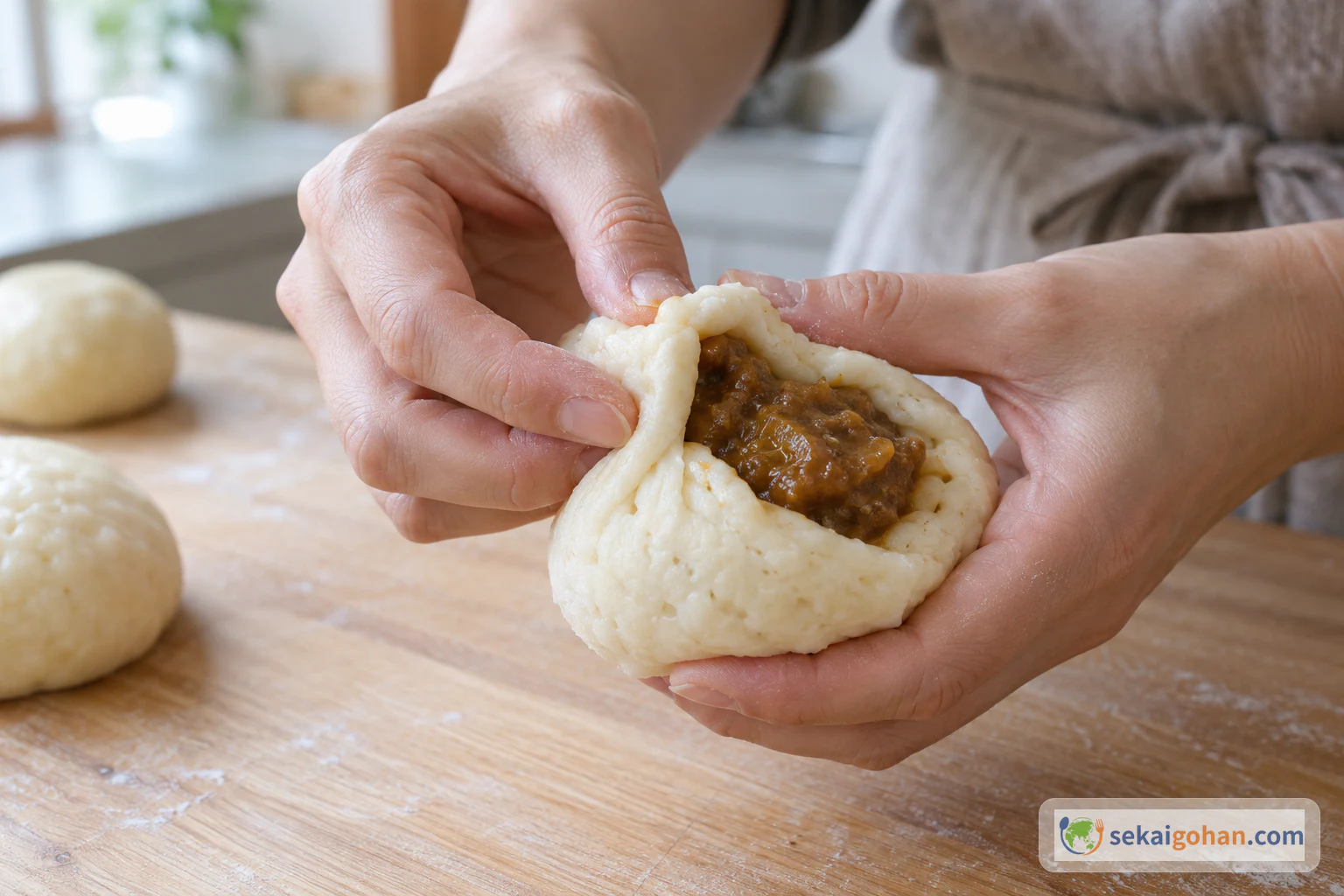
| Filling per bun | 30g each for 6 buns | Whether the whole batch is used; what to do with any extra |
| Proofing | About 40 minutes, then about 30 minutes | Temperature, how much the dough should grow, how to judge the end point |
| Shaping | Divide into 6, round, rest about 10 minutes, wrap | Dough thickness, size, how to seal |
| Coating | Panko only | — |
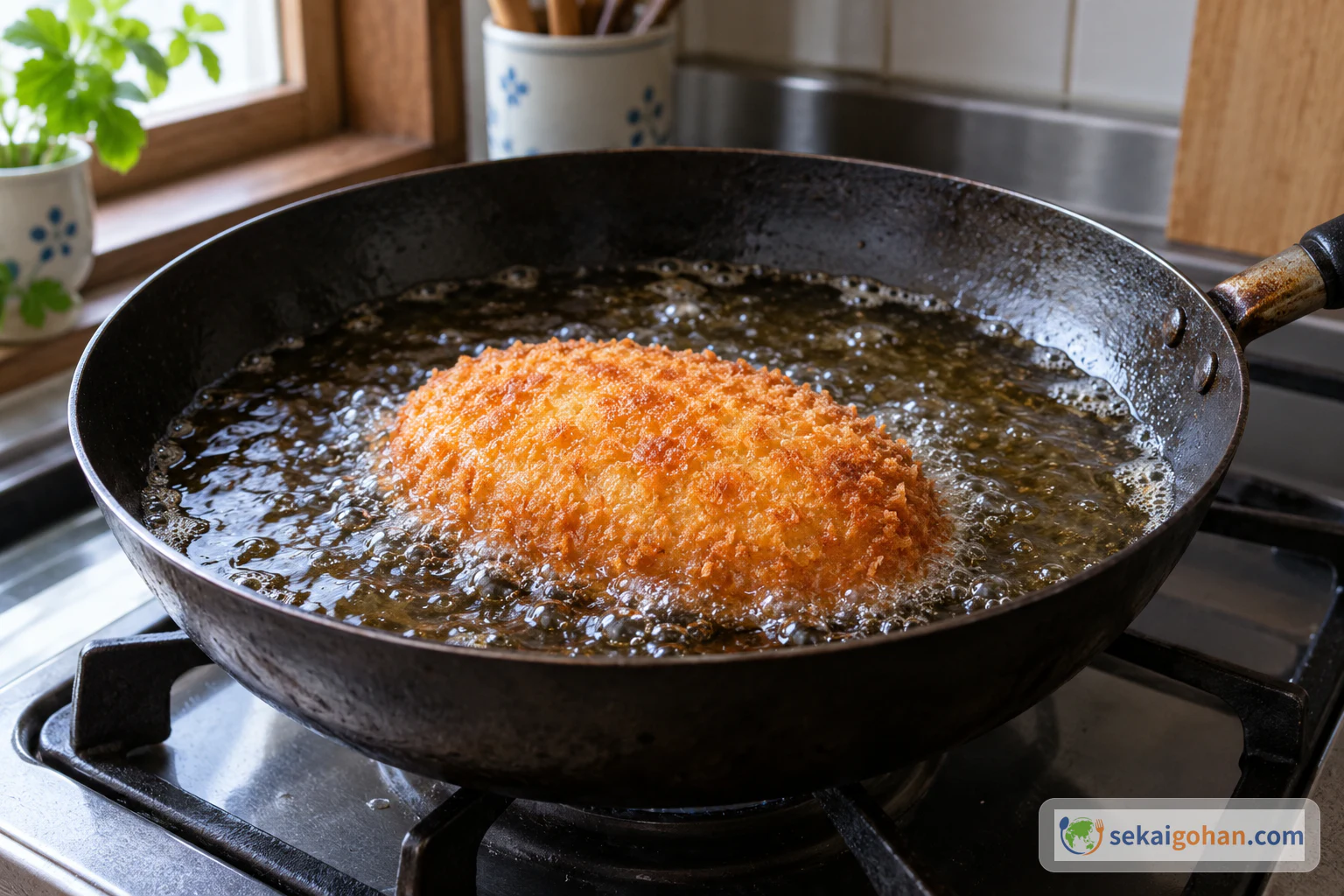
| Frying | 180°C, about 4 minutes | Type and amount of oil, how many buns at once, whether or how often to turn |
The 4 minutes is the frying time as a whole, not 4 minutes per side.
Other Versions of Curry Bread
Curry bread varies a great deal from cook to cook, and the two other recipes consulted while preparing this article show how far apart versions can be. They are mentioned here only to show the range; none of their measurements, temperatures or techniques belong in the recipe above.
- Just One Cookbook (Namiko Hirasawa Chen): an eight-piece version that uses Japanese curry made the day before and chilled overnight, worked into a thick, scoopable filling. The dough uses bread flour, cake flour, milk and butter, and the buns get an egg coating before the panko. Its proofing, shaping and frying instructions are its own.
- Karen's Kitchen Stories: a version built on leftover curry stew, making 10–12 buns from a dough with a different mix of flours. It uses an egg-and-water coating before the panko and has its own frying method and temperature.
Against these, the recipe here stands out for its rice-enriched dough, a filling bound with onion, butter and cake flour, and a coating of panko alone.
Where Curry Bread Is Eaten
According to Namiko Hirasawa Chen of Just One Cookbook, curry bread is something you come across in Japanese bakeries and convenience stores, and it is eaten for breakfast, lunch or as a snack. That is one writer's description of how it is eaten today rather than a survey of Japanese habits. The sources consulted for this article do not establish where or when curry bread began, or where its name comes from, so this article makes no claim about its history.
Frequently Asked Questions
Is the rice in the dough rice flour?
No. The ingredient list calls for 45g of cooked rice (gohan). The chef's profile on the Tokyo Gas page mentions locally grown rice flour, but that is a separate topic and not part of this recipe.
Do I have to make the curry from scratch?
The recipe lists 200g of "homemade curry" as a prepared ingredient, but the page does not include a recipe for the curry itself or say what goes into it. Use a curry you have made; there is no specified meat, vegetable or roux to match.
How much filling goes into each bun?
30g per bun, for 6 buns. The recipe does not say whether the whole batch of filling is meant to be used, or what to do with any that is left over.
Do I dip the buns in egg before the panko?
Not in this version. Egg is not among the ingredients; the filled buns are coated directly in panko. The egg coatings in other cooks' versions are different methods and are not part of this recipe.
What temperature and how long do I fry them?
180°C for about 4 minutes. That is the frying time overall, not per side. The recipe does not specify the type or amount of oil, how many buns to fry at once, or whether or how often to turn them.
At what temperature should the dough proof?
The recipe gives only times: about 40 minutes for the first proof and about 30 minutes for the second. It does not give a temperature, a target size or a visual end point.
Should the butter be salted or unsalted?
The recipe does not say. It only lists butter, in a 7.5g portion for the dough and a 25g portion for the filling.
Sources
- Toshiyuki Komori (chef-boulanger, Café de Crew), "〖プロのレシピ〗小森俊幸さん「カレーパン」," Tokyo Gas Uchikoto, published 2018-04-02, updated 2023-02-06. The recipe followed in this article: the six-piece ingredient list for dough, filling and coating, the order of additions, the proofing and resting times, and frying at 180°C for about 4 minutes. https://uchi.tokyo-gas.co.jp/recipes/topics/5752
- Namiko Hirasawa Chen, "Curry Bread (Kare Pan) カレーパン," Just One Cookbook, updated 2024-07-07. A separate eight-piece version using chilled, day-old curry and an egg coating; cited only to show how other versions differ and for the author's description of where curry bread is found. Not used for any amount or step in this recipe. https://www.justonecookbook.com/curry-bread/
- Karen, "Kare Pan | Japanese Curry Buns," Karen's Kitchen Stories, 2017-04-16. A separate version using leftover curry stew, making 10–12 buns with an egg-and-water coating; cited only to show how other versions differ. Not used for any amount or step in this recipe. https://www.karenskitchenstories.com/2017/04/kare-pan-japanese-curry-buns.html