Sencha: Japanese Steamed Green Tea Brewed in a Kyusu

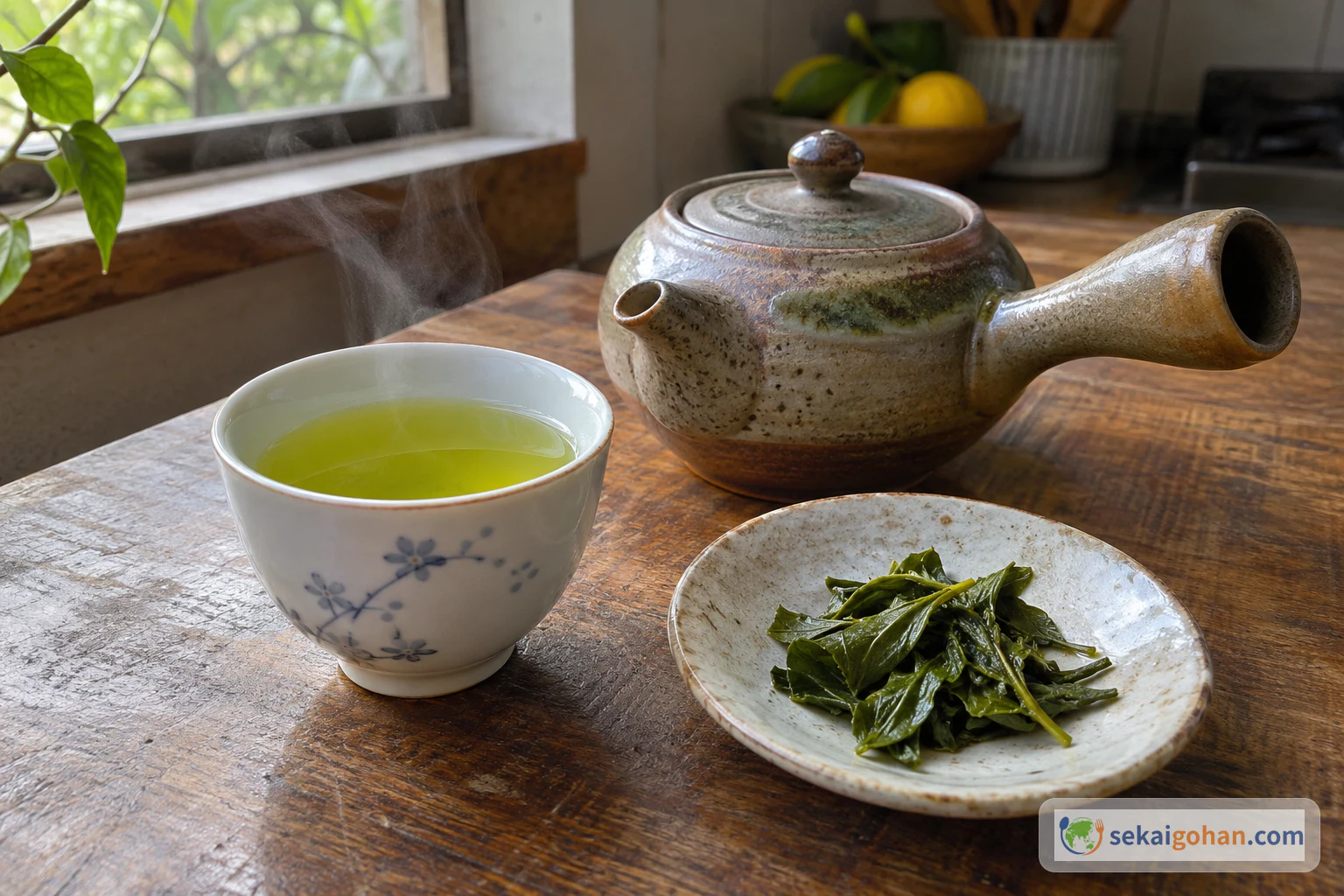
Sencha poured into a finished teacup, with a kyusu teapot and tea leaves
Level
Beginner
Cuisine
Japanese

How to brew Japanese sencha in a kyusu: measuring leaves by the scoop, cooling water by pouring between cups, a 90-second steep and the alternating pour.

Cooking flow

Cooking steps

STEP 11 / 6

Measure the leaves into the kyusu

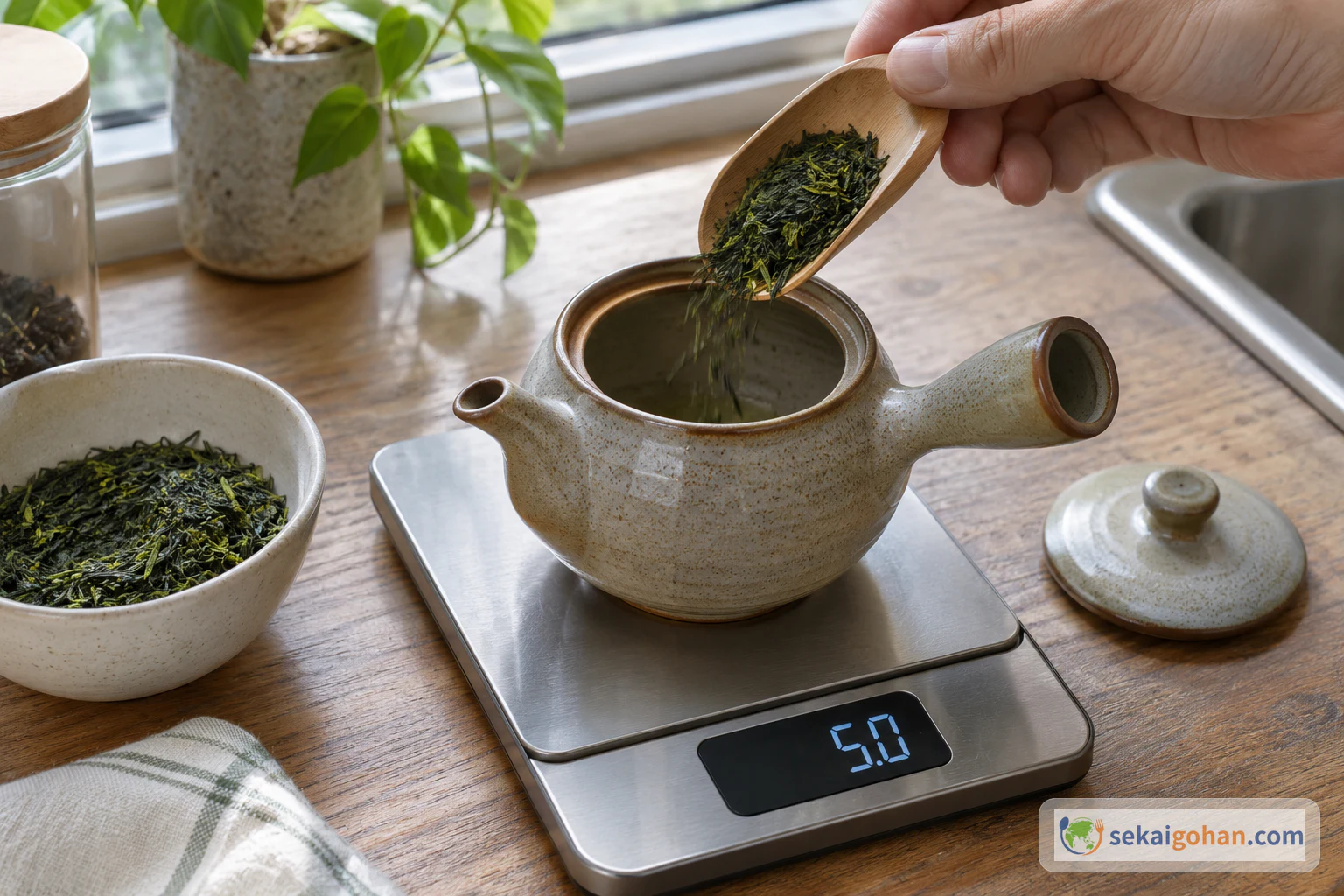
Measuring tea leaves with a tea scoop, about 5 g for two cups
Tip the scoop low over the pot so the fine pieces land inside rather than on the counter

Set the empty, dry kyusu on the counter, or on a scale if you have one. Scoop in about 2½ tea scoops of leaves, about 5 g. Shake the pot gently so the leaves settle in an even layer over the strainer. Stop when the leaves lie loose and dry across the bottom with no clumps.

STEP 22 / 6

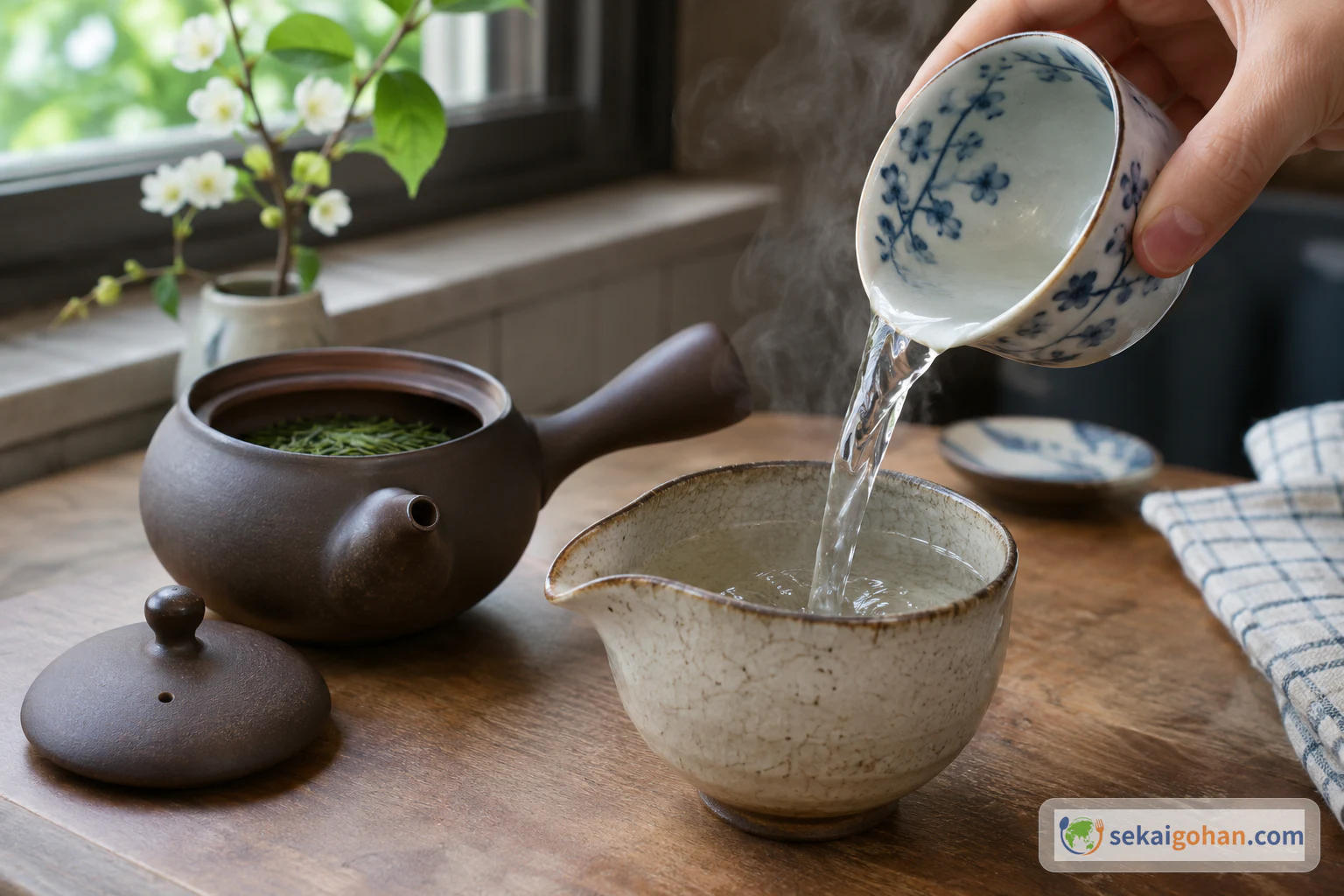
Fill the two teacups to 80% with boiled water

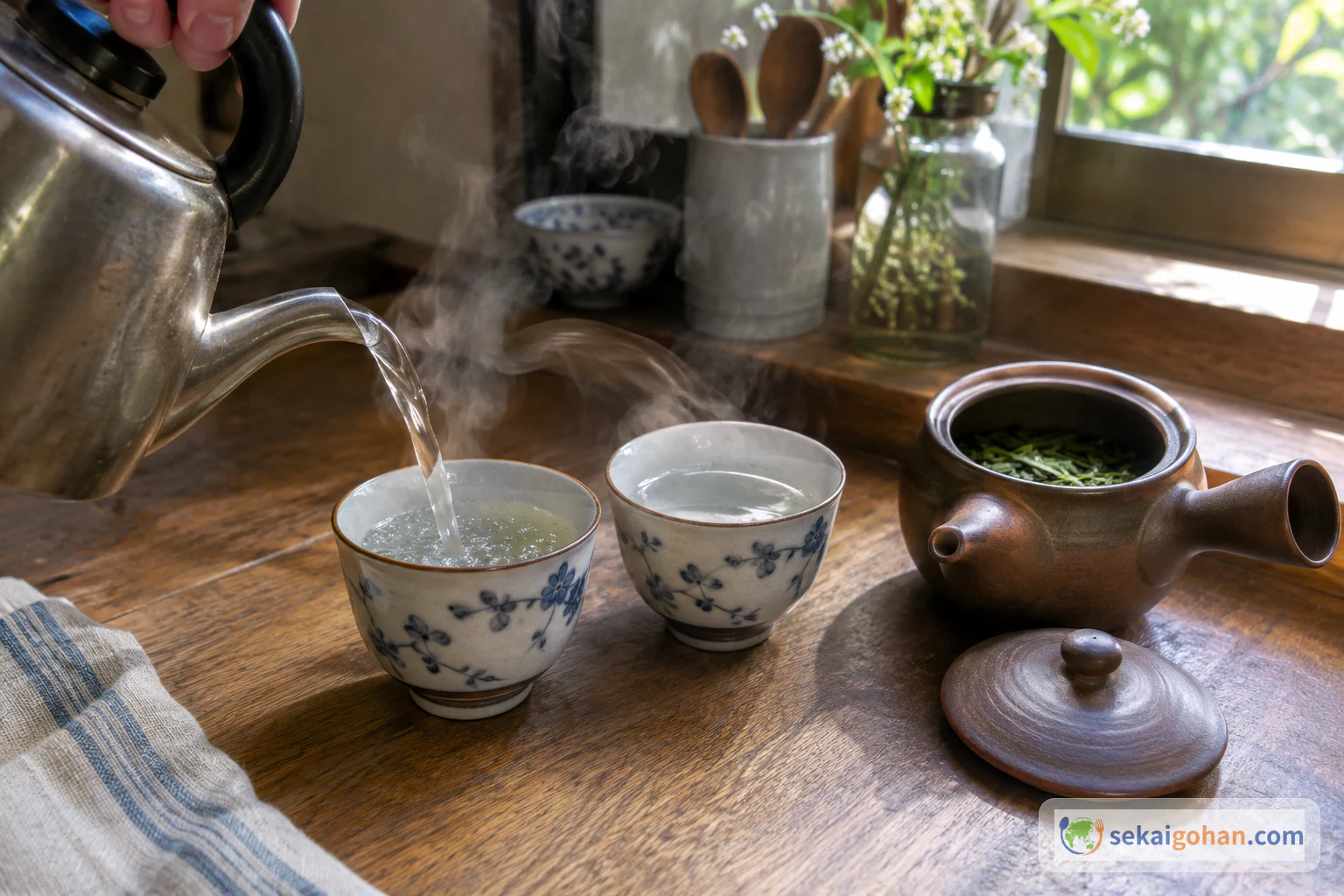
Boiled water poured into two teacups to 80% to measure it and bring the temperature down
Leave a clear gap below the rim; that space is your measure for each cup

Bring the soft water to a full boil. Pour it into the two teacups until each is about 80% full, leaving a clear band below the rim. This measures exactly the water you will drink and warms the cups at the same time, so the tea does not lose heat when it lands. The cups are ready when they feel hot through the sides and steam rises steadily from both.

STEP 33 / 6

Cool the water by moving it to another vessel

Hot water moved into a yuzamashi (or a teacup) to lower its temperature
Pour from a little height in a steady stream; the water gives up heat on the way down

Pour the water from both cups into the yuzamashi or a spare teacup, and add the extra splash from the kettle. The leaves soak up about four times their own weight in water, so this splash keeps your two cups full at the end. Each move between vessels drops the water about 10–20°F (5–10°C). Aim for about 160°F (70°C) for superior sencha, which needs one more move after this one. Medium grade wants about 195°F (90°C), which the water already reaches after the first pour into the cups, so for medium grade skip this move: add the splash to the cups and pour the cup water straight over the leaves in step 4.

Count the pours, not the degrees

The vessels are your thermometer. Boiling water poured once lands at about 195°F (90°C), and poured again it reaches about 175°F (80°C). Keep the same cups and pitcher each time, and you will learn exactly how many moves your grade of sencha wants.

STEP 44 / 6

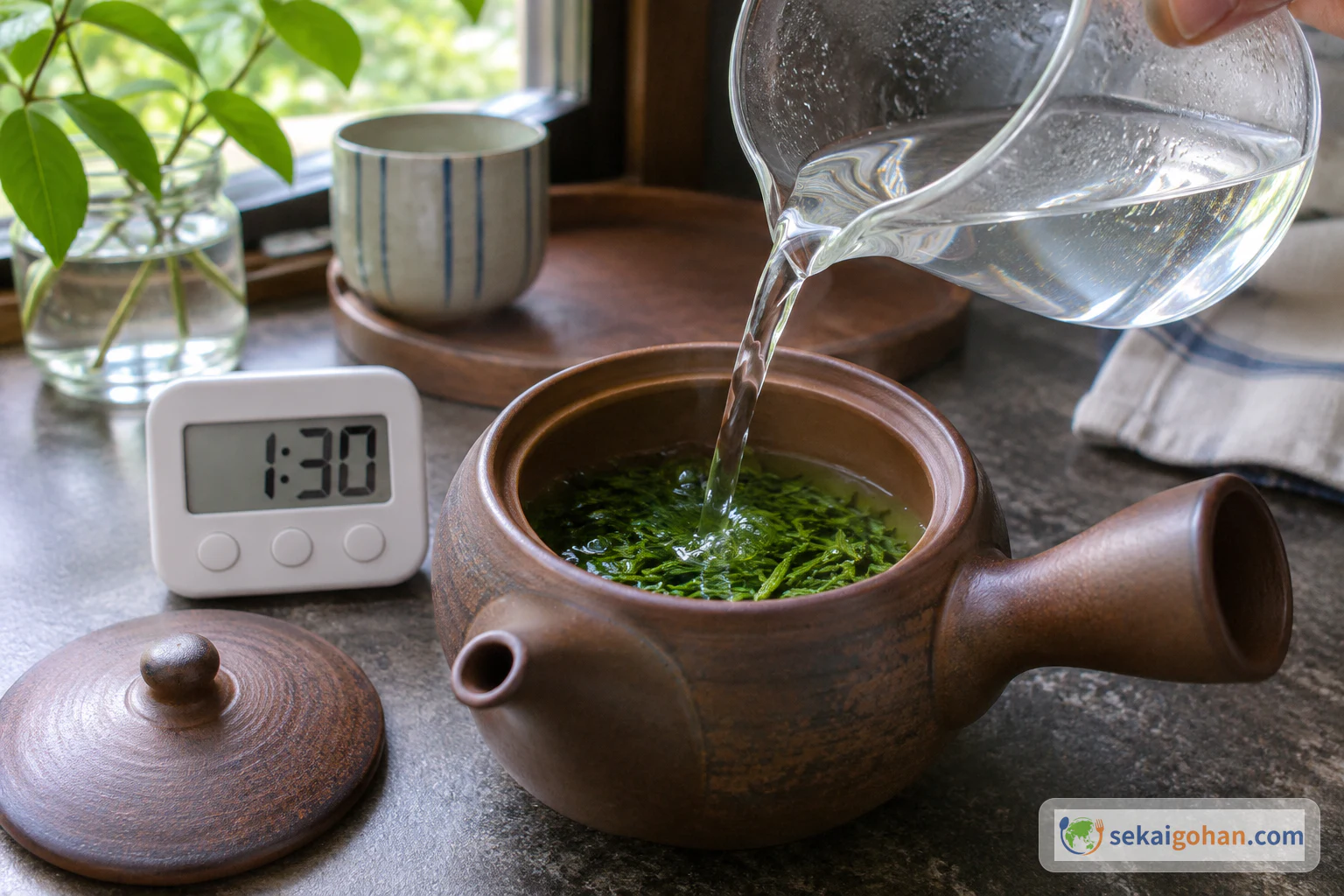
Pour over the leaves and wait 1 minute 30 seconds

Pouring water into the kyusu and waiting 1 minute 30 seconds
Pour low and slow onto the leaves so they wet evenly without being churned up

Pour the cooled water gently over the leaves in the kyusu. Put the lid on and start the timer for 1 minute 30 seconds. Leave the pot where it is, with the lid on, and do not swirl or shake it. When you lift the lid at the end, the leaves have softened and opened into flat, bright-green pieces.

STEP 55 / 6

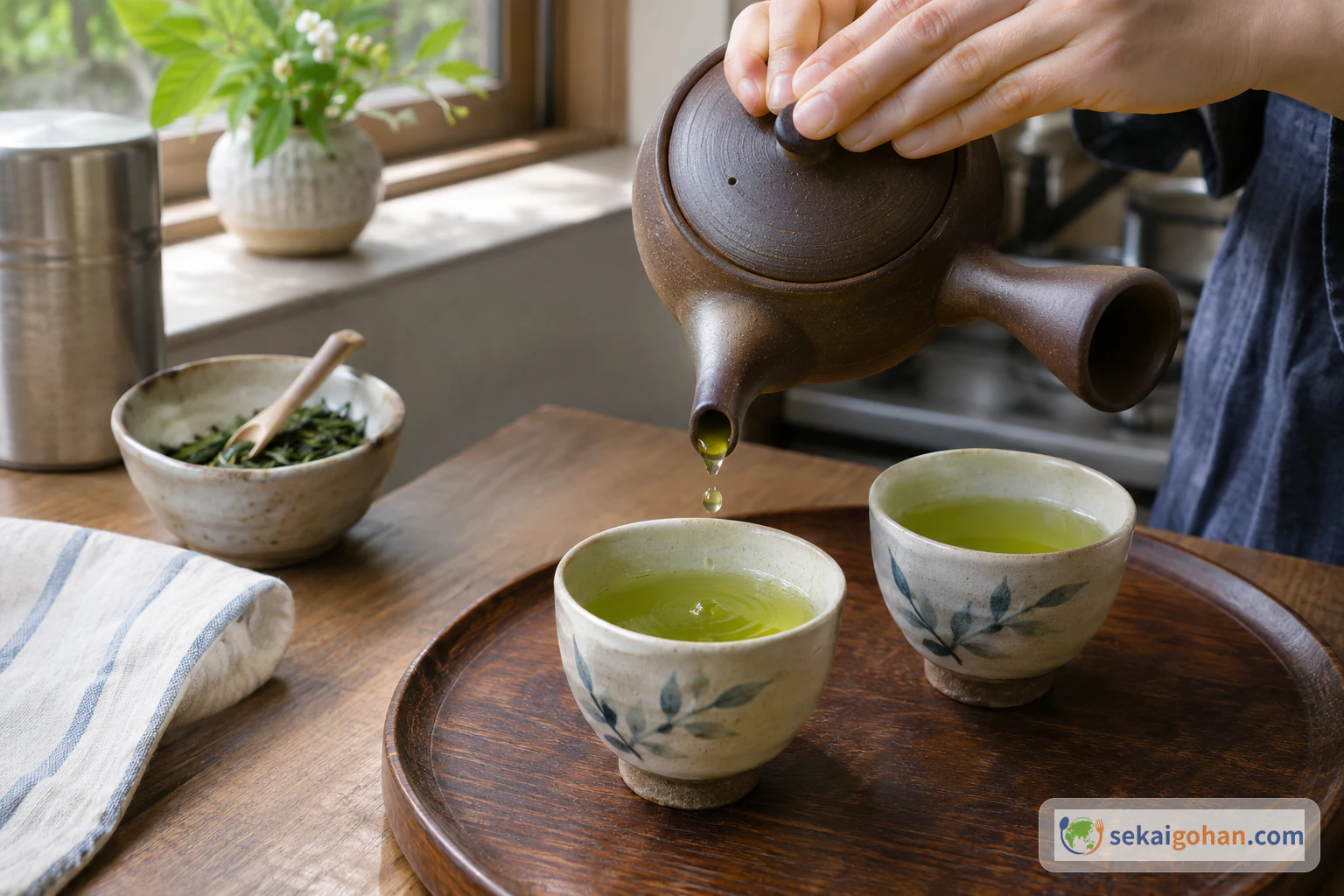
Pour into both cups in turn, down to the last drop

Pouring a little at a time into two teacups in turn, down to the last drop
Tilt the pot fully at the end and wait for the slow last drops; they carry the richest flavour

Hold the lid with one finger and pour a little into cup 1, then a little into cup 2. Come back the other way, cup 2 and then cup 1, and keep going back and forth in small amounts. The tea at the bottom of the pot is stronger than at the top, and this alternating pour shares it out evenly. Pour until the last drop leaves the spout. You are done when both cups match in colour and the pot drips nothing more.

The last drop protects the second cup

Tea left sitting in the kyusu keeps steeping, and the second infusion comes out harsh. Draining the pot completely leaves the leaves damp but empty, ready for fresh water.

STEP 66 / 6

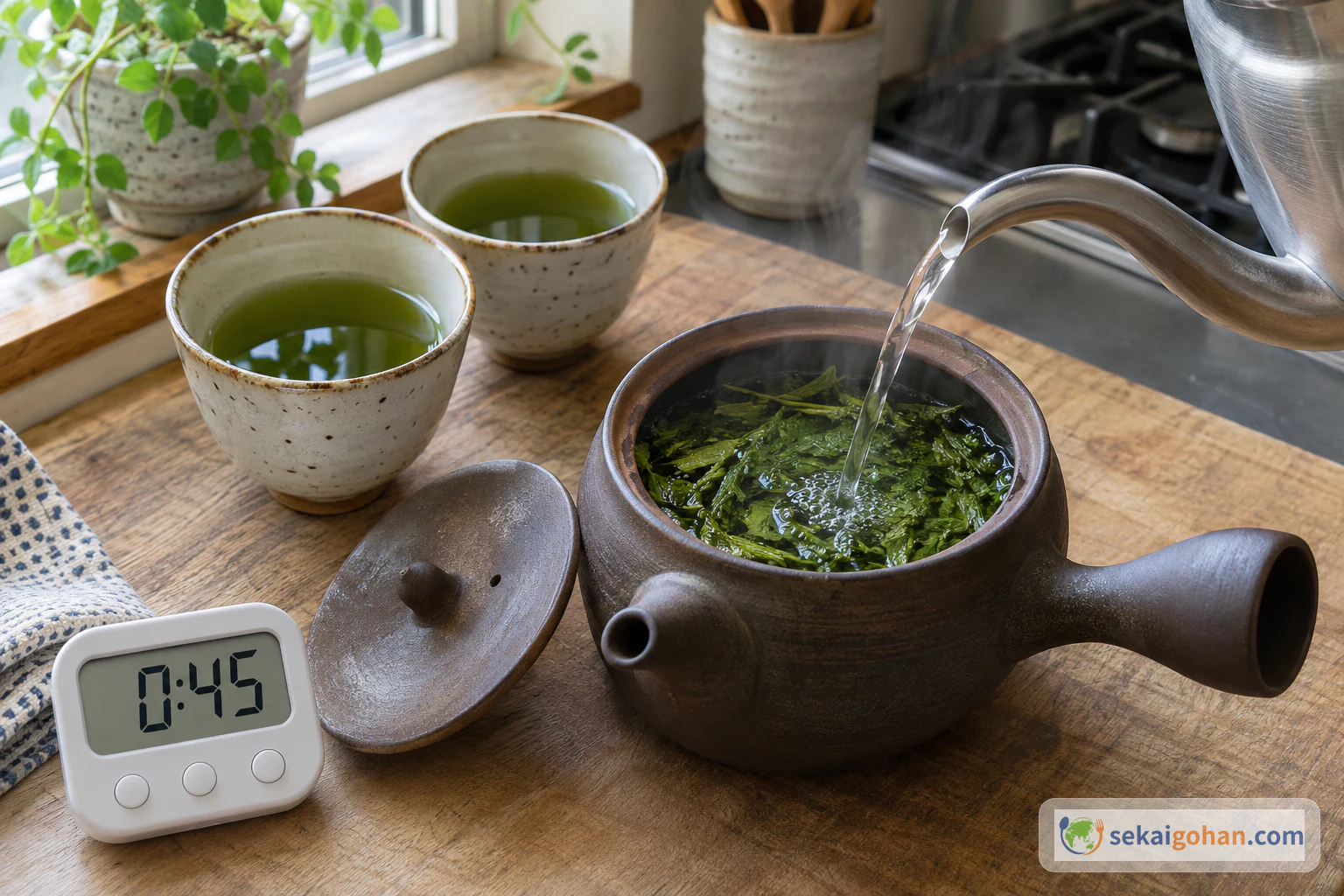
Brew the second infusion with hotter water

Second infusion: slightly hotter water for about 45 seconds, over opened leaves
The leaves are already open, so the hotter water draws them fast; start pouring the moment the timer ends

The cups now hold the first pour, so pour a little more boiled water into the empty yuzamashi (or spare teacup) instead, enough for two cups. With only one move it lands slightly hotter than the first time. Pour it over the opened leaves and put the lid on. Steep for about 45 seconds, then pour into the two cups in turn, down to the last drop, just as before. The second cup pours a deeper green than the first.

0 / 0
Ingredients

Ingredients

1 / 1

Ingredients

Ingredient Amount Role
Sencha leaves (煎茶) about 2½ tea scoops (about 5 g) The tea itself; one scoop holds about 2 g
Soft water, freshly boiled (水) enough to fill two teacups to 80%, plus a splash Draws out the sweetness and astringency; also warms the cups
0 / 0

The kyusu tips forward, and the last drops fall from the spout into the second cup. Both cups now hold the same clear yellow-green, and a thin thread of steam carries a grassy, sweet smell across the table. Sencha is the everyday green tea of Japan, the pot people brew at home between meals and after them. Brewed with water that has been cooled a little, it tastes of sweetness and gentle astringency in balance, with a clean, slightly bitter finish that leaves the mouth ready for the next sip.

The Tea Japan Drinks Every Day

Sencha took shape in the Edo period and grew into the mainstream of Japanese tea. One firm date marks its story: in 1738, Nagatani Soen succeeded in producing high-quality sencha. In Japan, the fresh leaves are steamed, rolled, dried and sorted, and the thin, dark-green needles you shake into the pot are the result.

Steaming depth and the season of the leaf

How long the leaves are steamed shapes the cup. Asamushi is lightly steamed, chumushi sits in the middle, and fukamushi is steamed two to three times longer than regular sencha. The longer steam breaks the leaf into finer pieces, so fukamushi brews faster and pours cloudier and deeper green. Where exactly each category begins and ends is not settled, and the names on a bag tell you more than any number.

The picking season matters as much. Early-picked leaves are richer in amino acids and are counted as higher quality, which is where much of the sweetness comes from. Summer-picked leaves carry slightly more tannin, so the cup leans more astringent. The first flush, ichibancha, includes shincha, the new tea of the year, which arrives from early April to late May.

Hachijuhachiya, the 88th night

Shincha season is tied to hachijuhachiya, the 88th day counted from Risshun, the traditional start of spring. It sits within the shincha season.


Ingredients
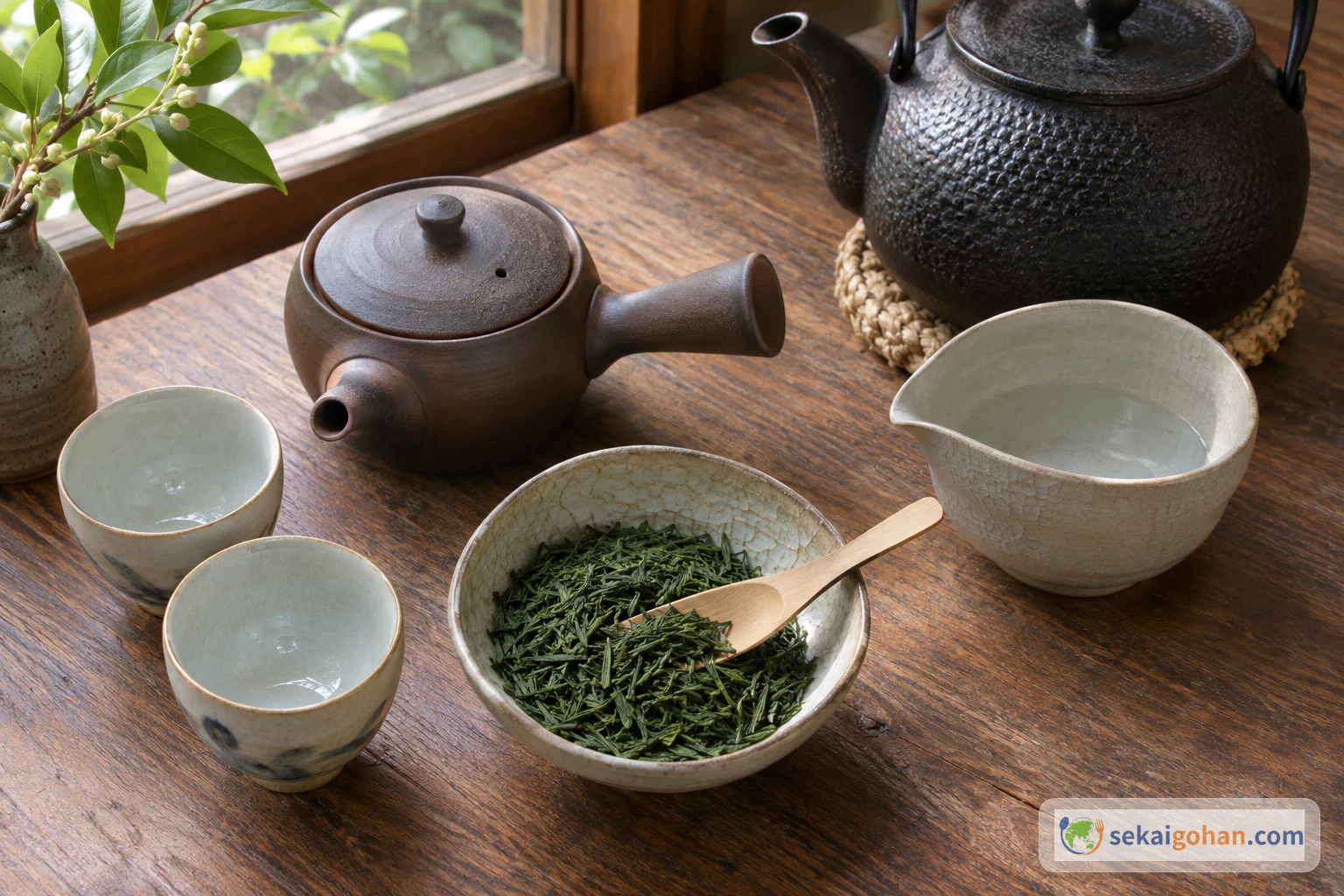
Ingredients and tools: sencha leaves, a tea scoop, a kyusu, teacups, a yuzamashi cooling pitcher and soft water
Dry sencha should look like thin, dark-green needles, with no dust gathered at the bottom of the bowl

These amounts brew two cups. The rule behind them is 2–3 g of leaves for every scant ½ cup (100 ml) of water, one cup per person.

Hot water

You handle water straight from the boil several times. Hold cups and the cooling pitcher by their bases or rims, pour away from your hands, and keep the kettle spout pointed at the vessel, never at yourself. Keep the lid on the kyusu with a finger while pouring.

Equipment

  • Kyusu teapot with a built-in strainer
  • 2 teacups, each holding a scant ½ to ⅔ cup (100–150 ml)
  • Yuzamashi (water-cooling pitcher), or a third teacup in its place
  • Tea scoop, or a kitchen scale
  • Kettle
  • Timer

Choosing Leaves and Water

The grade on the bag decides your water temperature, so read it before you boil anything. Superior sencha wants cooler water; medium-grade sencha takes it hotter, and the method shows both. If you want a sweeter, rounder cup, look for early-picked leaves or shincha in spring. Summer-picked leaves give a brisker, more astringent cup.

Check the steaming depth too. Regular sencha, asamushi or chumushi, follows the method below. Fukamushi follows its own amounts and a much shorter steep, set out under variations; brewing it on the regular timing pulls it too far.

Water changes sencha more than most people expect. Soft water, under 100 mg/L hardness and ideally 30–80 mg/L, is what this tea is made for. Hard water gives a pale cup and flattens the aroma. If your tap water is hard, buy a bottled water whose label lists its hardness in that range.

For tools, a kyusu with a built-in strainer is the one piece worth buying from a tea shop or online. A yuzamashi is pleasant to have, and a plain teacup does the same job. A kitchen scale can stand in for the scoop.


Method

The work is short and all at the counter. Measure the leaves into the dry pot first, then let the water do its travelling: kettle to cups, cups to pitcher, pitcher to pot. The only waiting is the 1 minute 30 seconds with the lid on, and the second infusion follows straight after the first is poured.

When It Goes Wrong

What you see Why What to do
The tea is bitter and sharp The water was too hot, or the leaves steeped too long Move the water one more time before it meets the leaves, and pour on the dot of 1 minute 30 seconds
The tea is pale and thin Too few leaves, or too short a steep Go back to about 2½ scoops for two cups and let the full time run
The second infusion is harsh Tea was left in the pot after the first pour Drain the kyusu to the last drop every time
One cup is stronger than the other One cup was filled before the other Pour back and forth in small amounts until the pot is empty
The colour is weak and the smell flat The water is hard Switch to soft water, under 100 mg/L hardness

Serving and Variations

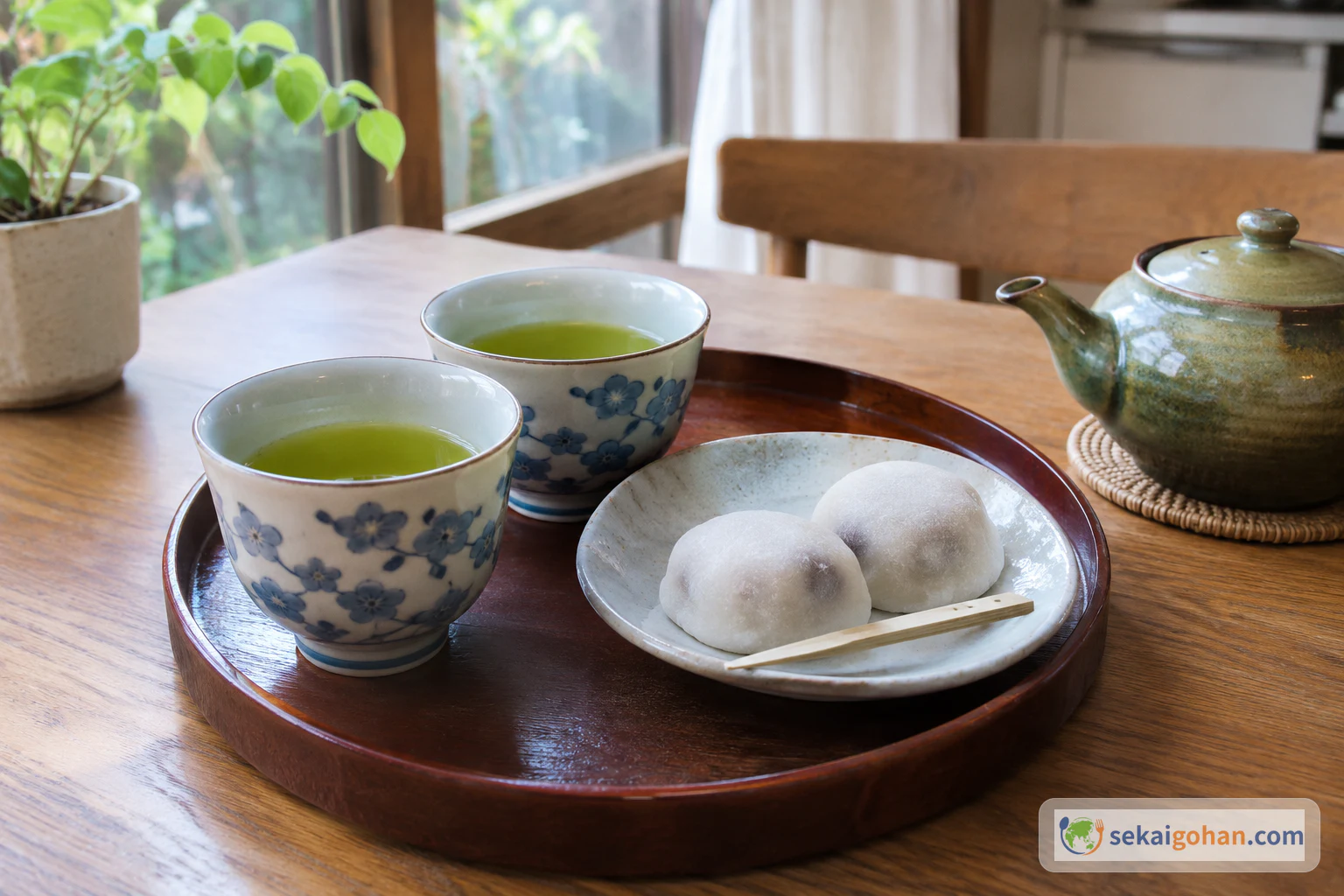
A tea table with Japanese sweets
A small sweet between sips softens the astringency and brings the green aroma forward

Sencha goes on the table on its own, in small cups, and the second infusion follows the first within minutes. A small Japanese sweet, a plain mochi or a slice of yokan, sits well beside it; the sugar meets the tea's astringency and each makes the other taste cleaner. It is also the pot to brew after a meal, when its light bitterness clears the palate.

Fukamushi sencha
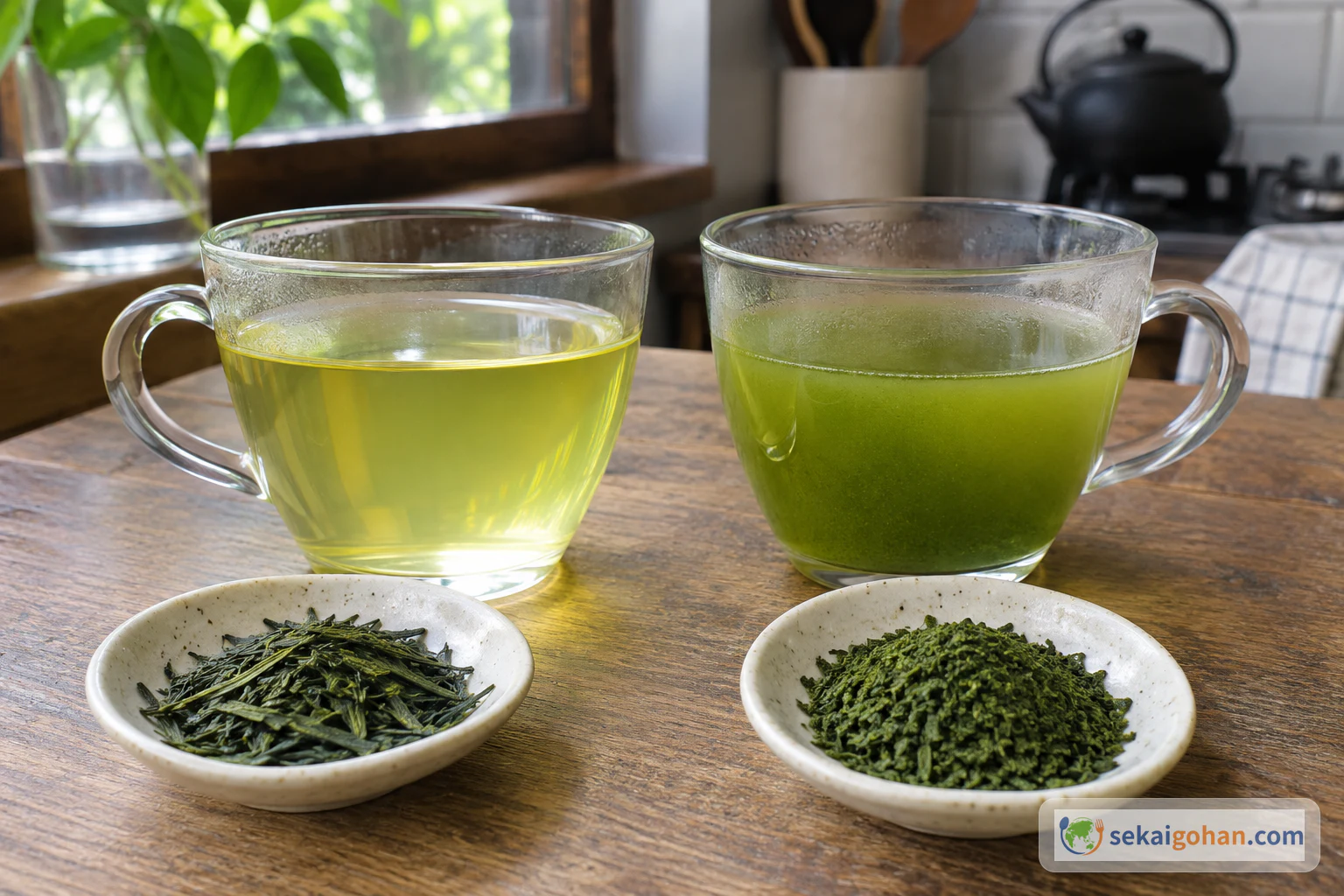
Cloudy fukamushi sencha next to regular sencha
The fine particles that cloud fukamushi settle quickly; pour all of it while it is still moving

Fukamushi leaves are fine and break apart, so they brew fast. Use 2 g of leaves for every ¼ cup (60 ml) of water and steep for 30 seconds, keeping these numbers apart from the regular method. The cup is cloudier and a deeper green, with a fuller body and less sharpness than regular sencha.

Cold-water fukamushi

Fukamushi also takes well to brewing in cold water. Cold water draws out less astringency, so the cup tastes softer and sweeter, a good choice for warm days.

Superior leaves at their cooler temperature

Brewing a superior sencha at about 160°F (70°C) instead of the hotter medium-grade temperature brings the sweetness to the front. Keep the steep the same and let the temperature do the work.

Frequently asked questions

How much tea do I use for just one cup?

Use 2–3 g of leaves, about 1 to 1½ tea scoops (one scoop holds about 2 g), for a scant ½ cup (100 ml). If you want a second infusion from that one cup, put in 4–5 g instead. The rest of the method stays the same.

Do I need a thermometer?

No thermometer is needed. Use the yuzamashi or a teacup: every move between vessels lowers the water about 10–20°F (5–10°C). Count your pours and the temperature follows.

How much caffeine is in a cup of sencha?

A cup of sencha holds an estimated 20–30 mg of caffeine.

Can I keep brewing after the second infusion?

The leaves and timings here cover two infusions. Once the second cup is poured to the last drop, empty the leaves out and start fresh for the next pot.
Sources

  • Ministry of Agriculture, Forestry and Fisheries of Japan (MAFF), "The proper way to brew Nihoncha (tea_export-7)." Leaf amounts per person and per scoop, filling cups to 80%, leaf water absorption, water temperatures by grade and per transfer, the 1 minute 30 second steep, the alternating pour to the last drop, the second infusion, soft water, fukamushi amounts and timing, the Edo-period origin of sencha, and early versus summer picking. https://www.maff.go.jp/j/seisan/tokusan/cha/attach/pdf/tea_export-7.pdf
  • o-cha.net, "Japanesetea sencha (How to brew sencha)." Brewing around 70°C for balanced sweetness and astringency, warming the cups and pouring in small amounts, and hotter, shorter later infusions. https://www.o-cha.net/english/culture/Japanesetea-sencha.html
  • Kyoto Prefecture, Kyoto Prefectural Tea Research Institute, "History timeline." Nagatani Soen's success in producing high-quality sencha in 1738. https://www.pref.kyoto.jp/chaken/history.html
  • Wikipedia, "Sencha." Steaming categories, the steaming, rolling, drying and sorting process, the shincha season and hachijuhachiya, and the estimated caffeine per cup. https://en.wikipedia.org/wiki/Sencha