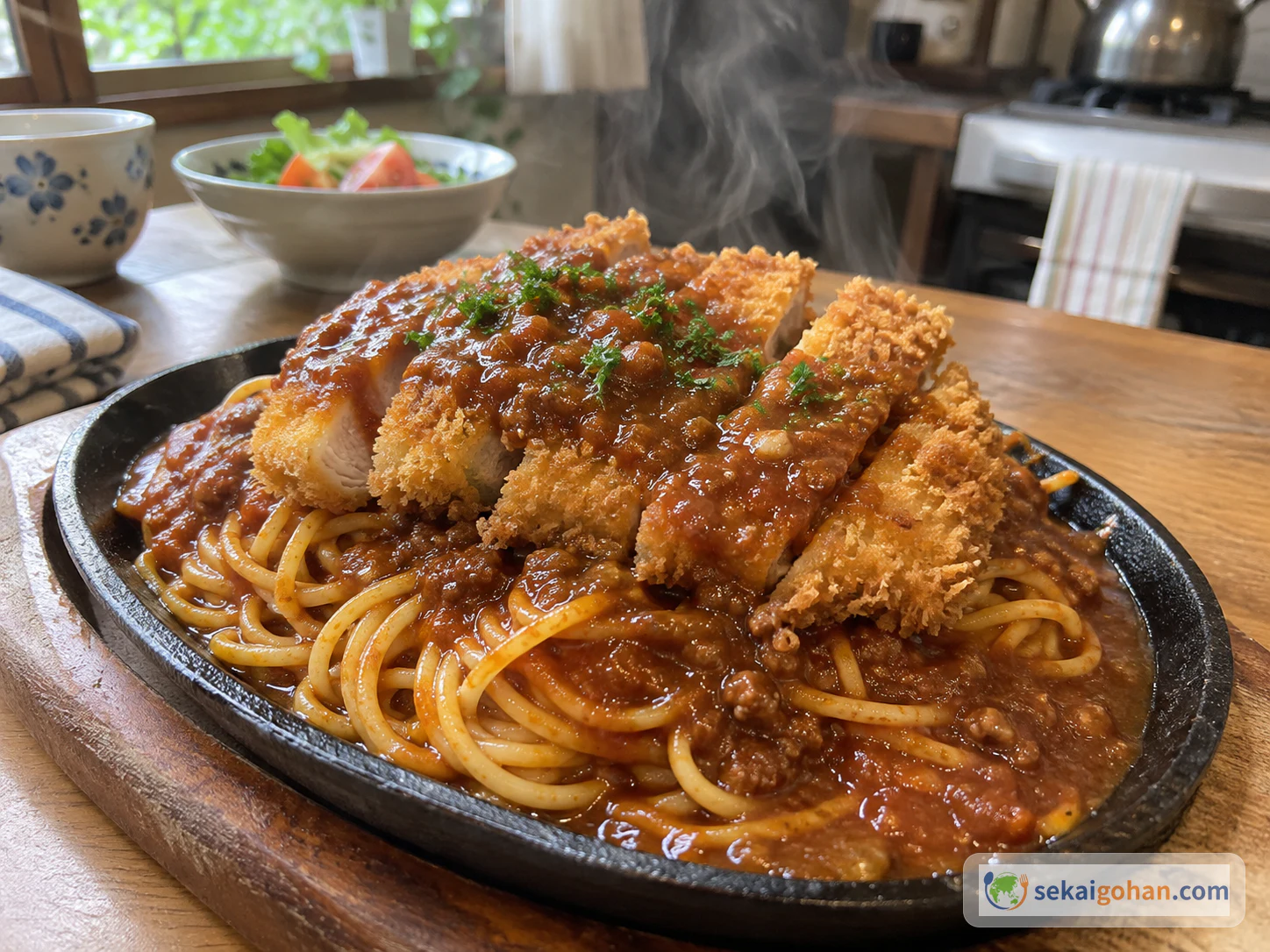
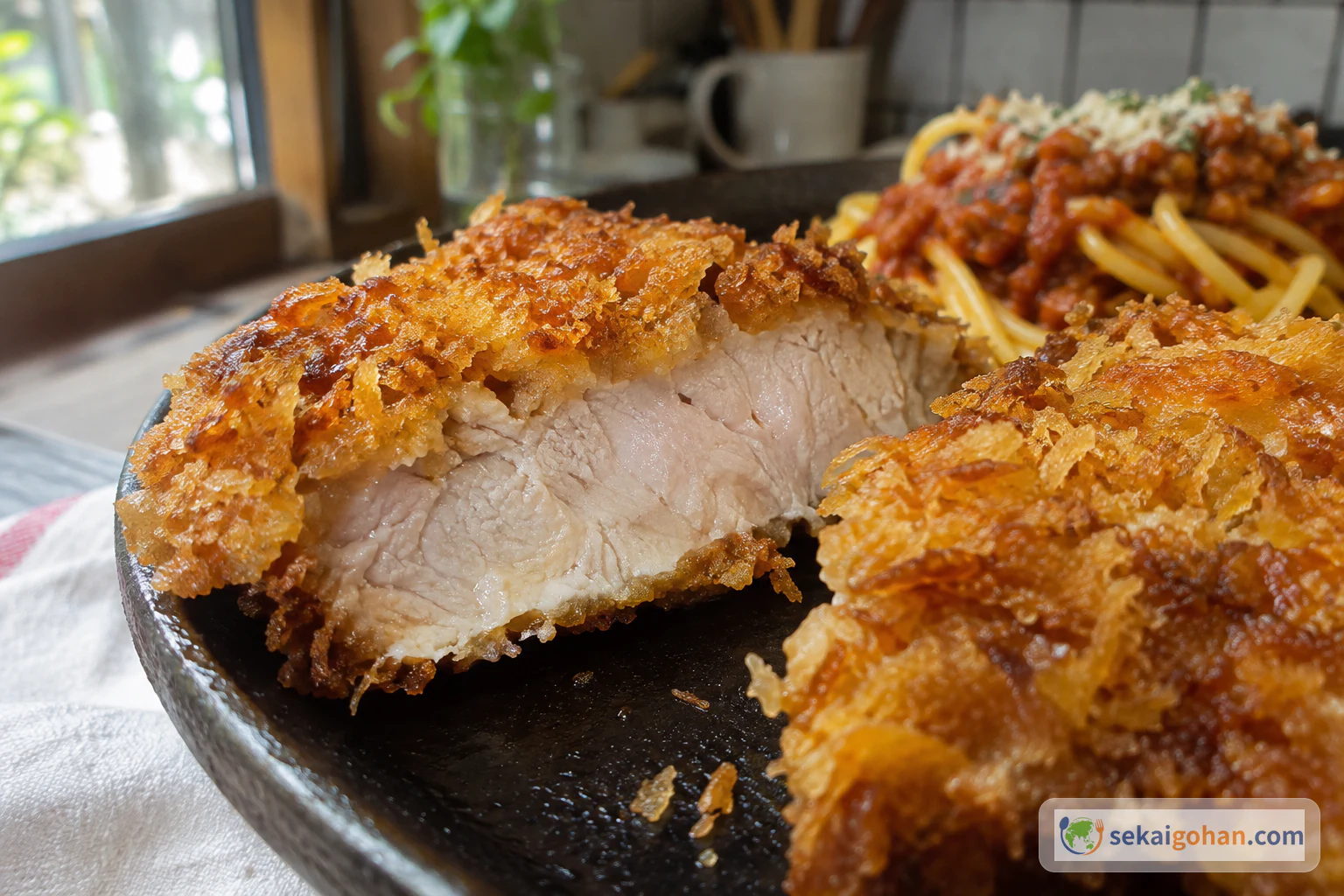
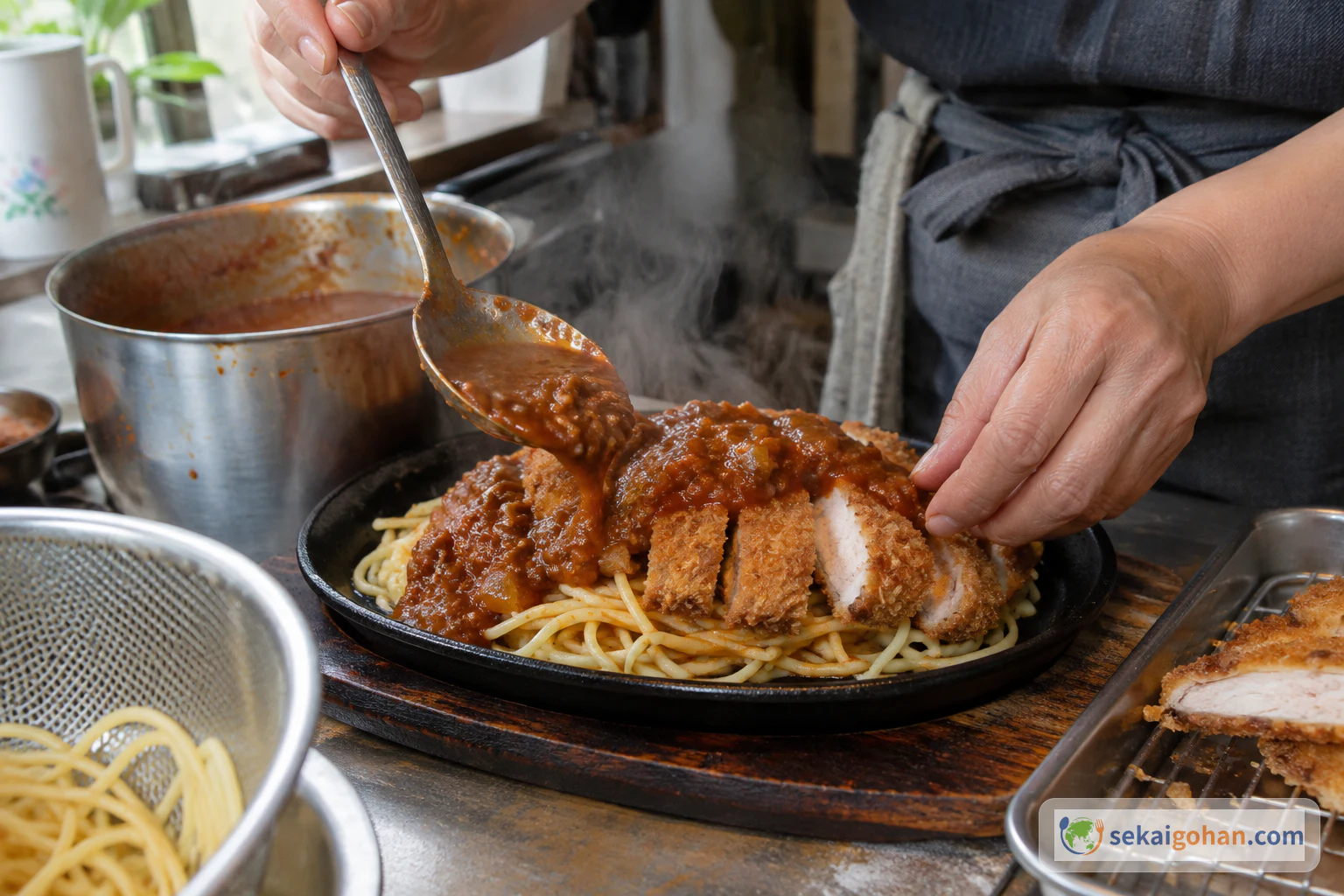
The plate reaches the table still hissing. Meat sauce bubbles at the rim of the iron, steam lifts off the spaghetti, and a golden pork cutlet lies across the top, piled so generously it looks ready to spill over the edge. This is Supakatsu, the hot-plate meal of Kushiro in eastern Hokkaido. It brings together thick, rich meat sauce and spaghetti with a crisp cutlet. The strands touching the iron toast a little as you eat, and those slightly crisp bits at the bottom are part of the reward.
A Hot Plate for a Cool City
Supakatsu began at Restaurant Izumiya, a Western-style restaurant at Suehiro-cho 2-chome 28 in Kushiro. Izumiya opened in 1959, and the dish was born there in the Showa 30s (1955–1964). Kushiro is a cool place. Sea fog rolls in, and even summer days often stay below 77°F (25°C). Spaghetti was still an unfamiliar food at the time. Serving it on an iron plate kept it warm to the last bite, even in Kushiro's chill.
The cutlet had its own reason. Pork was expensive in those years, and a fried pork cutlet laid over the spaghetti was meant to make diners feel they were treating themselves. The portion is generous too, piled high enough to look ready to spill over the edge of the plate.
The full menu name is スパゲティミートソースカツのせ, roughly "spaghetti with meat sauce, cutlet on top." Supakatsu is the nickname, made from the first sounds of supageti (spaghetti) and katsu (cutlet). You will also see it spelled Spakatsu.
What lands on the table
In Kushiro restaurants the spaghetti is on the thick side, the cutlet is large, and a house meat sauce goes over everything. Izumiya's house sauce is its own. The iron plate belongs to the dish. Kushiro's Supakatsu is defined by being served sizzling on that plate, and that sets it apart from a plain cutlet served with spaghetti. It sits in the same family of Japanese Western-style cooking (yoshoku) as Japanese curry. More dishes from across the country are gathered on the Japan page.
Today the dish is eaten by everyone in town, from grandparents to small children. Besides Izumiya's main restaurant, you can order it at Polone, the Italian restaurant in Izumiya's basement, at the restaurant of Tsurui Northern Village HOTEL TAITO, and at the café Elm. In fiscal 2024 it was named a "Future 100-Year Food", a national title for regional dishes expected to last another century. The city, its business and tourism bodies and Izumiya applied for it together.
Izumiya's main restaurant is open from 11:00 to 21:00, last order 20:30, and closes one Tuesday a month. Prices are not posted publicly, so ask at the restaurant or call ahead.
Ingredients (serves 2)
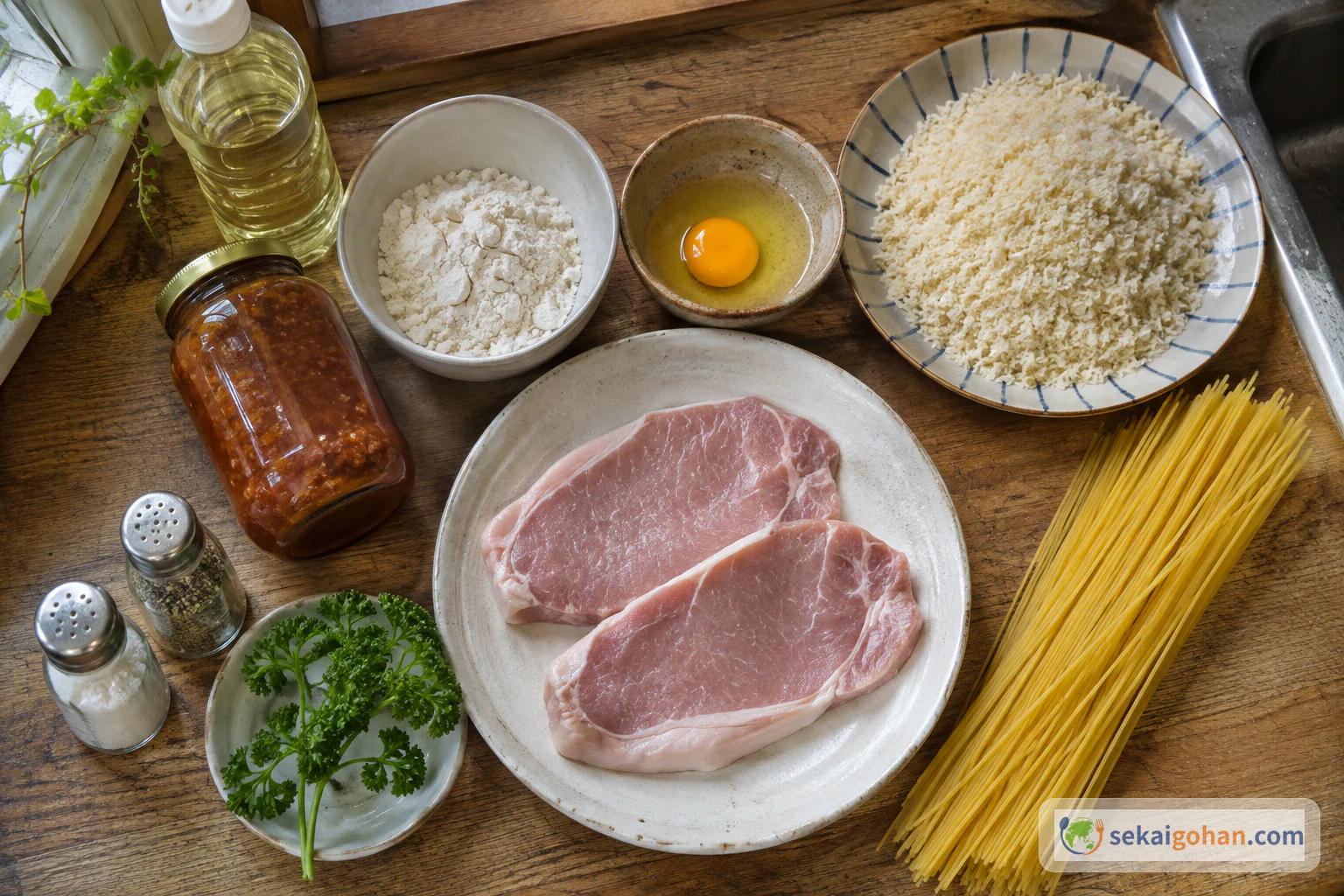
This dish contains wheat (flour, panko and spaghetti), egg and pork. Ready-made meat sauce can contain other allergens, so read the label on the jar.
The vegetable oil appears twice: a pot of it for frying the cutlets, and a small drizzle over the drained spaghetti. Keep a separate bottle by the pasta pot so the frying oil stays where it is.
Equipment
- Cutting board and sharp knife
- Three shallow dishes for flour, beaten egg and panko
- Deep pot for frying, with a deep-fry thermometer
- Wire rack or paper towels for draining
- Large pot and colander for the spaghetti
- Tongs
- Small saucepan for the meat sauce
- Two small iron plates, or a small cast-iron skillet
- Wooden trivet or board to set the hot plate on
What to Buy and What You Can Swap
Every ingredient here is sold in an ordinary supermarket. What decides the dish is the hot iron under it, the crisp pork cutlet on top and a thick meat sauce over both. Those three are worth keeping. The exact flavor of the sauce is the part you can let go of, since this home version uses a ready-made sauce. A good jarred meat sauce that is thick enough to sit on top of the cutlet works well.
For the pork, buy loin cut into cutlet slices. Kushiro restaurants serve a thick cutlet, so choose slices with some heft if you want that generous look. Panko gives the light, crackling crust; fine dried breadcrumbs give a flatter, denser one. Spaghetti 1/16 inch (1.6 mm) thick is easy to find and cooks quickly. Thicker spaghetti puts you closer to what Kushiro restaurants serve.
If you have no iron plates, heat a small cast-iron skillet and use it as the plate. A skillet is heavy and stays very hot, so bring it to the table on a trivet. A regular warmed dinner plate gives you the same flavors without the sizzle or the toasted bottom strands, and the food cools sooner.
Method
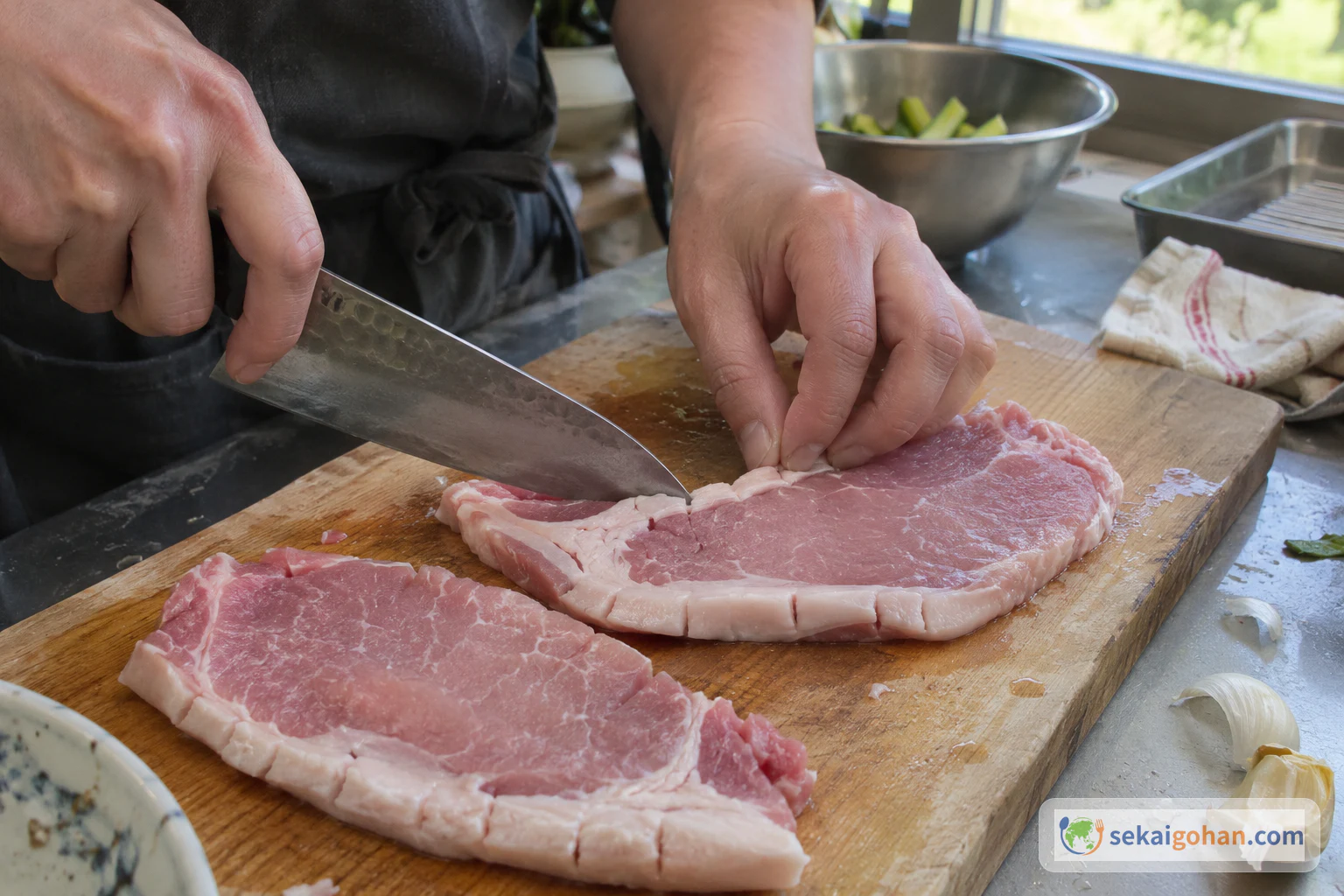
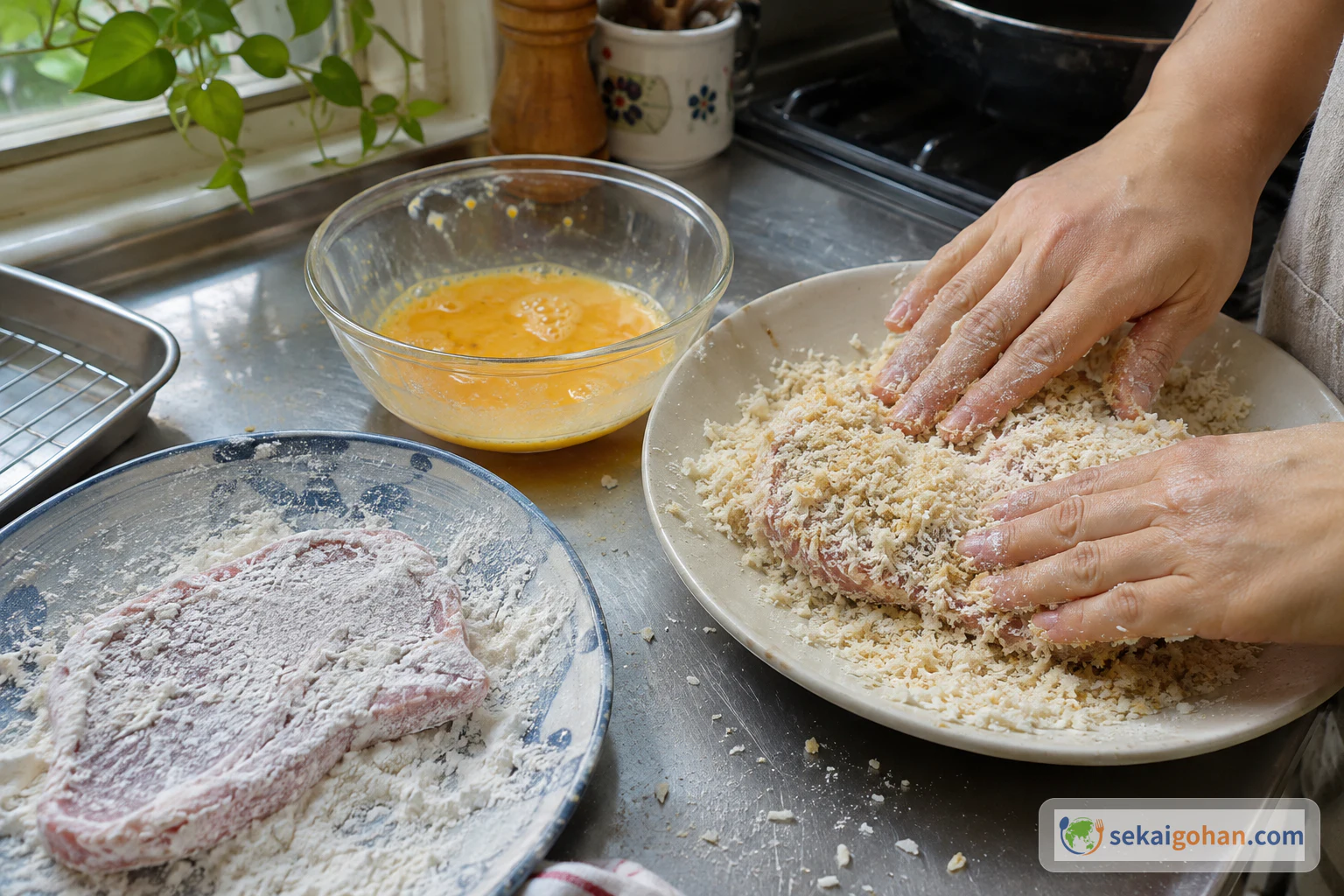
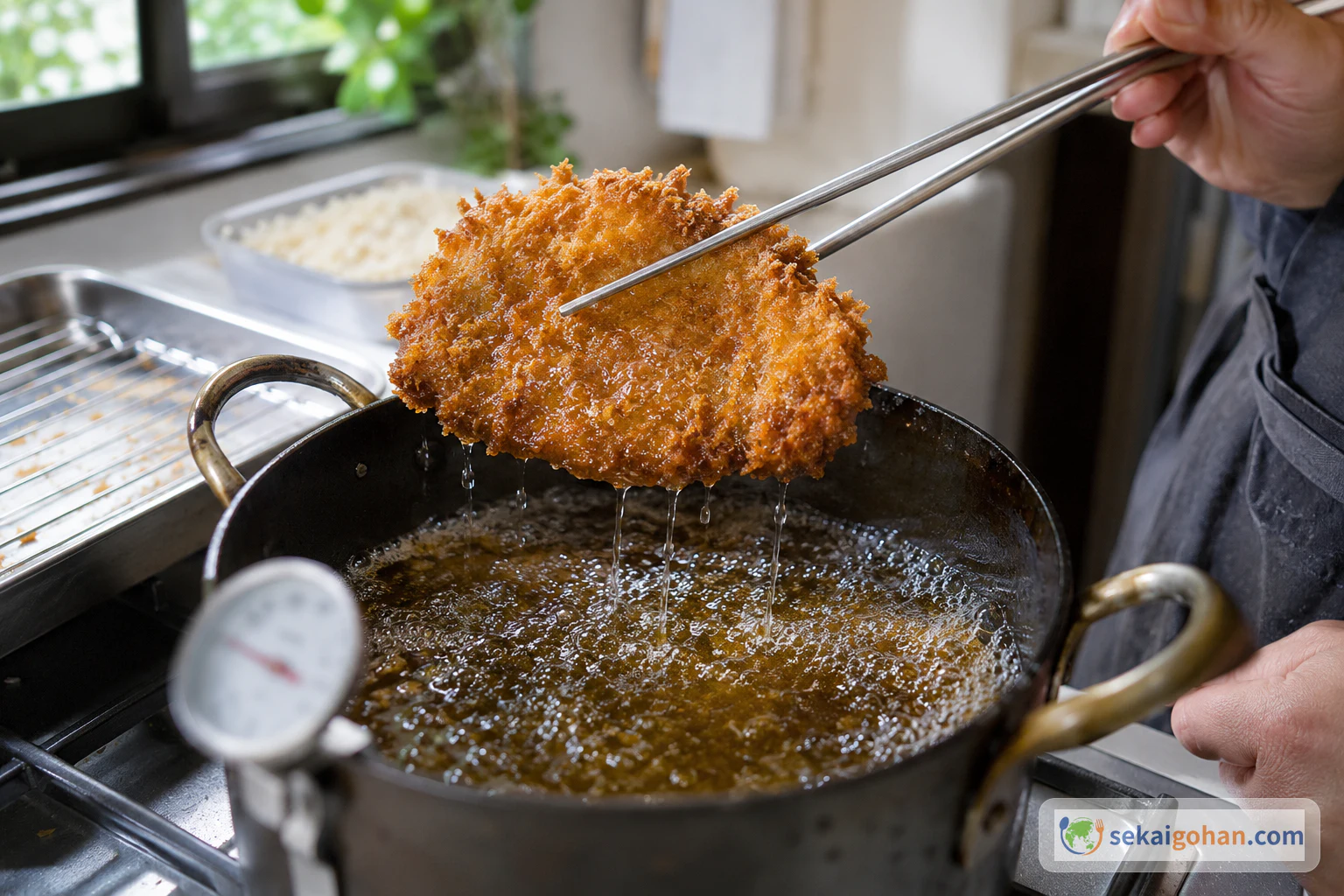
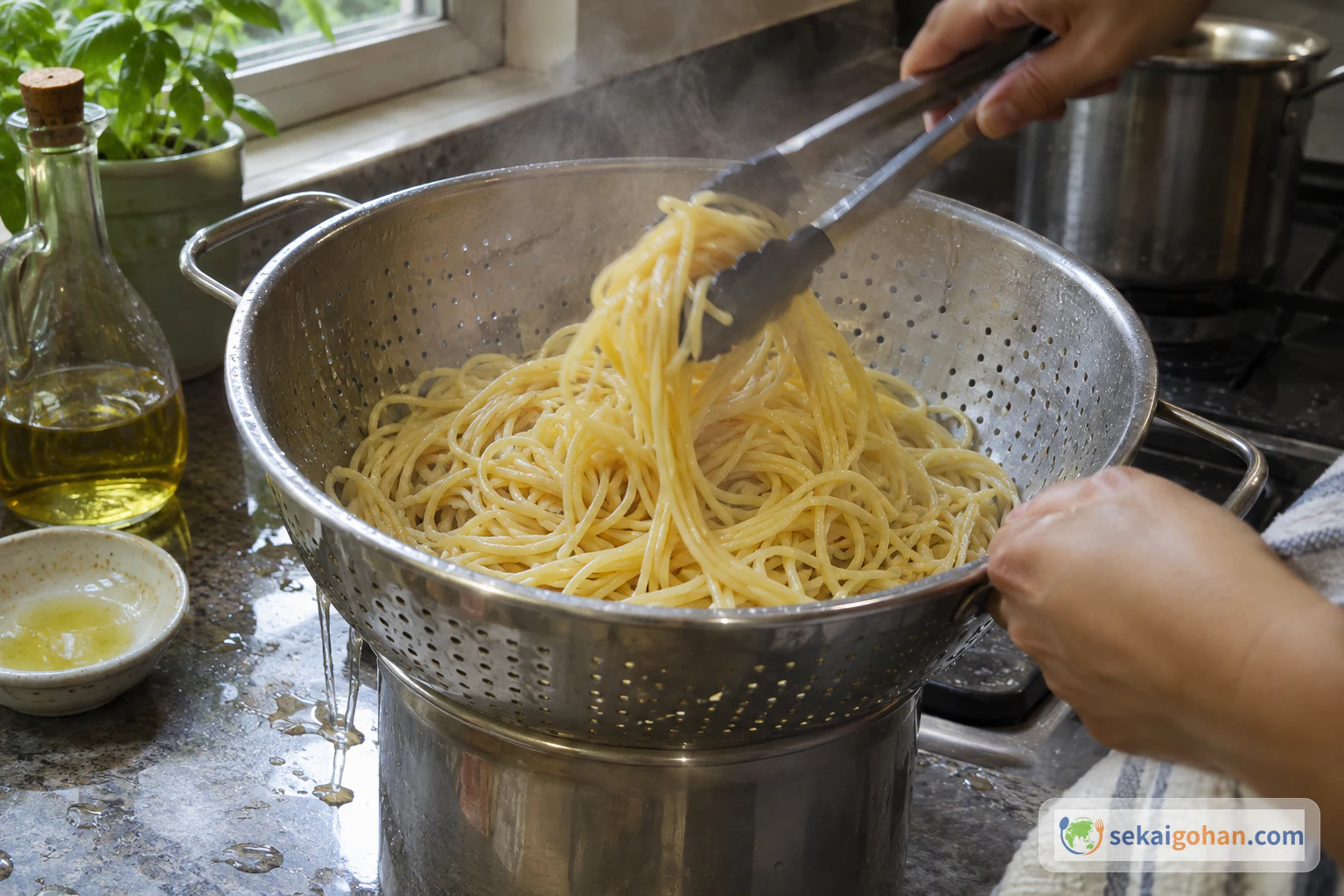
The cutlets come first: score, bread and fry them, then let them drain while the spaghetti boils. The pasta's cooking time is your hands-off window to warm the sauce and heat the iron plates, so everything comes together hot at the end. From start to finish it takes about 30 minutes.
The plate is what keeps Supakatsu hot to the last bite. Give it time on the stove while the pasta cooks. If the spaghetti does not sizzle when it lands, the plate needs more heat.
Keep the frying pot at the back of the stove and stay with it while the oil is hot. Lower the cutlets in gently so the oil does not splash, and keep water and wet utensils away from it. Turn the heat off as soon as you finish frying, and let the oil cool completely in the pot before you move it.
When It Goes Wrong
| What you see | Why | What to do |
|---|---|---|
| The cutlet curls up in the oil | The sinew along the fat line was left intact | Cut through the fat-and-lean border on both sides before breading |
| The breading slips off or has bare spots | A coat was skipped or the sinew was left uncut, so the meat shrank away from the crust | Coat in flour, egg and panko in that order, press the crumbs on, and score the pork first |
| The crust is pale and greasy, or dark before it is crisp | The oil drifted away from 340°F (170°C) | Watch the thermometer and adjust the heat to hold the oil near 340°F |
| The spaghetti sticks in a clump | It sat in the colander without oil | Toss with a little oil the moment it is drained |
| The plate goes lukewarm halfway through | The iron was not heated enough, or the sauce went on cold | Heat the plate thoroughly and warm the sauce until it bubbles |
Serving and Variations
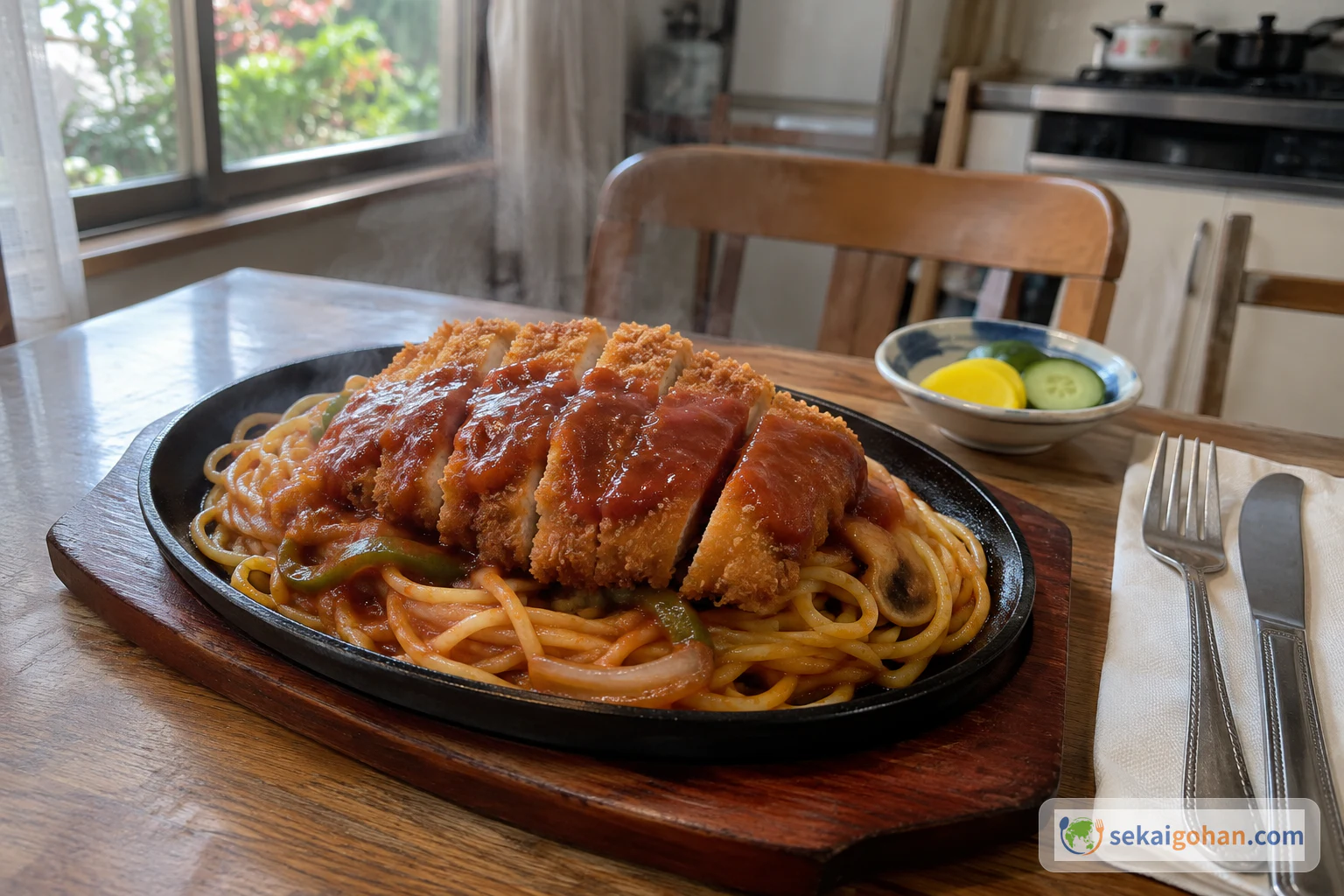
Supakatsu is a whole meal on one plate. Set it down with a knife and fork, cut into the cutlet and pull up spaghetti from underneath, so every forkful catches meat sauce. Save the toasted strands at the bottom for last; by then they have crisped against the iron.
The plate is still very hot when it reaches the table. Do not touch the rim. Keep it on its trivet, and when you set one in front of a child, tell them it is hot and keep small hands away from the edge.
Variations
- Bite-size cutlets. Cut the cutlet into small pieces instead of strips. Each piece takes on more sauce.
- One serving. Use 3½ oz (100 g) spaghetti, one cutlet and half the sauce on a single iron plate. This is handy for a lunch for one.
- Darker sauce. Stir a little demi-glace into the jarred meat sauce while it warms. The sauce turns deeper in color and tastes richer.
Frequently asked questions
Is Supakatsu the same as the katsu spaghetti served elsewhere in Japan?
They share the idea of a cutlet on spaghetti. In Kushiro, the dish includes the hot iron plate that keeps it sizzling to the end. Serve it on a regular plate and you have a cutlet with spaghetti, but not Supakatsu as Kushiro knows it.
Can I put the sauce under the cutlet instead of over it?
The dish is built with the sauce spooned over the cutlet and the spaghetti.
Is Supakatsu related to Escalope from Nemuro?
No. Escalope is a different dish from Nemuro, a town near Kushiro. Supakatsu is its own dish, born at Izumiya.