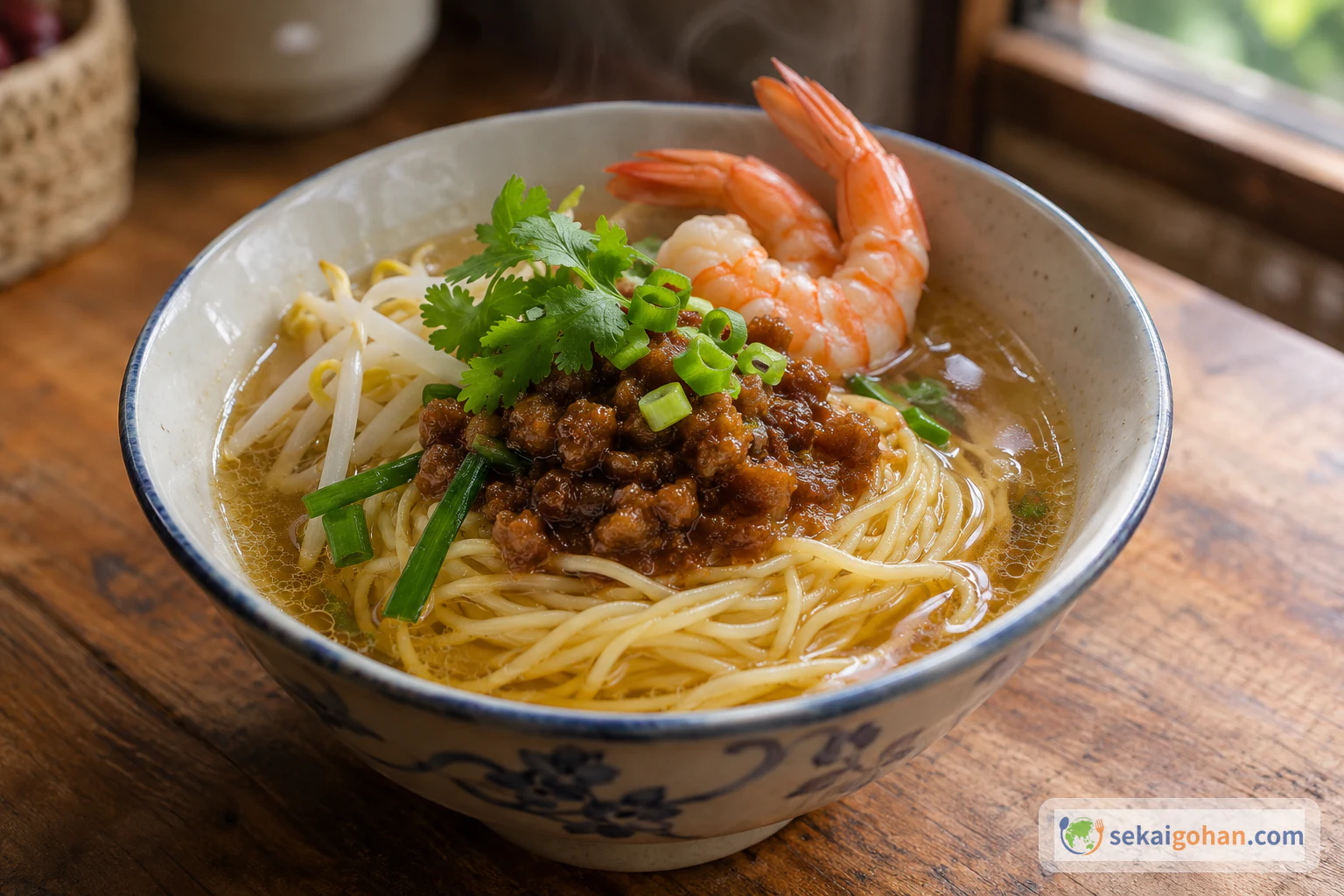
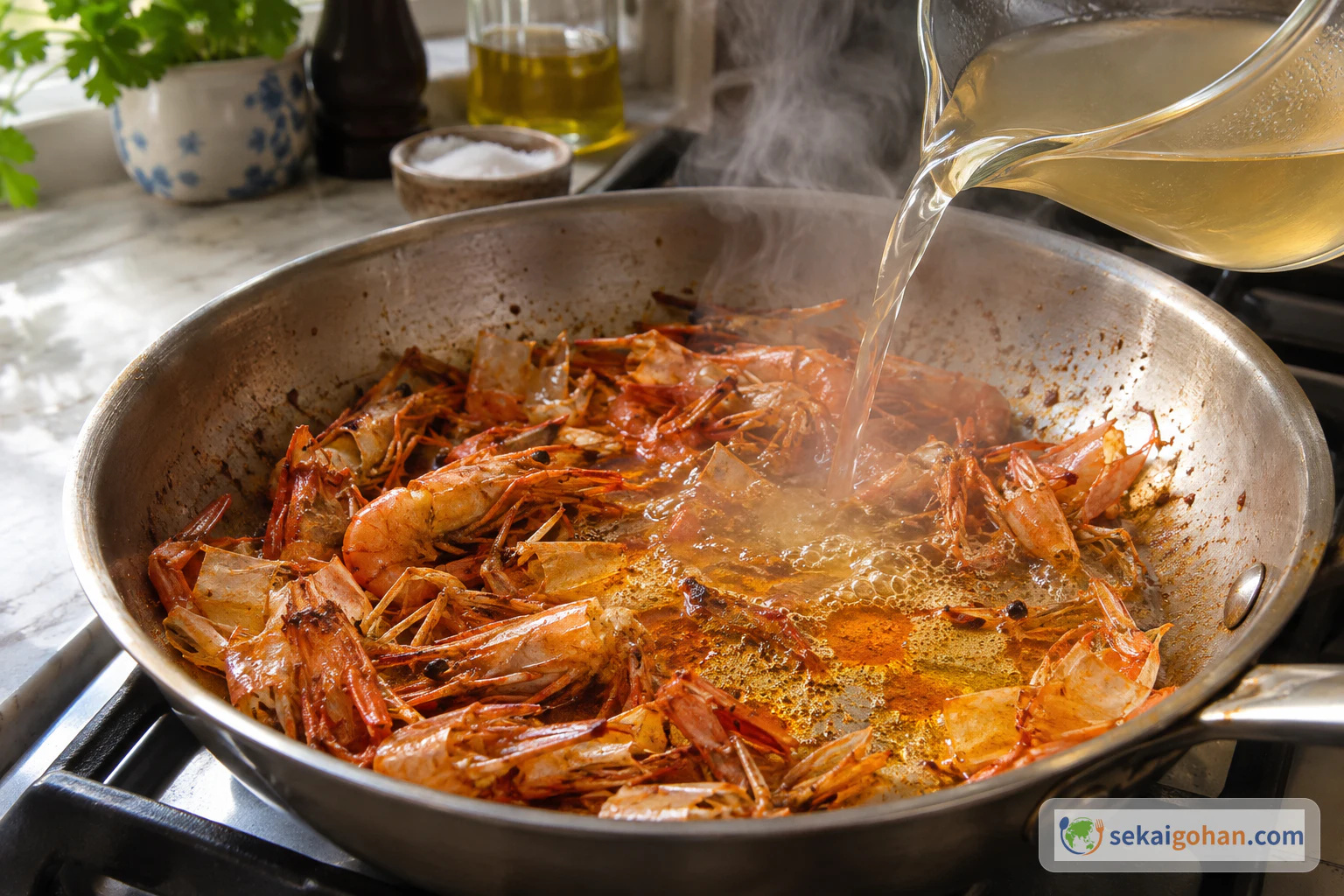
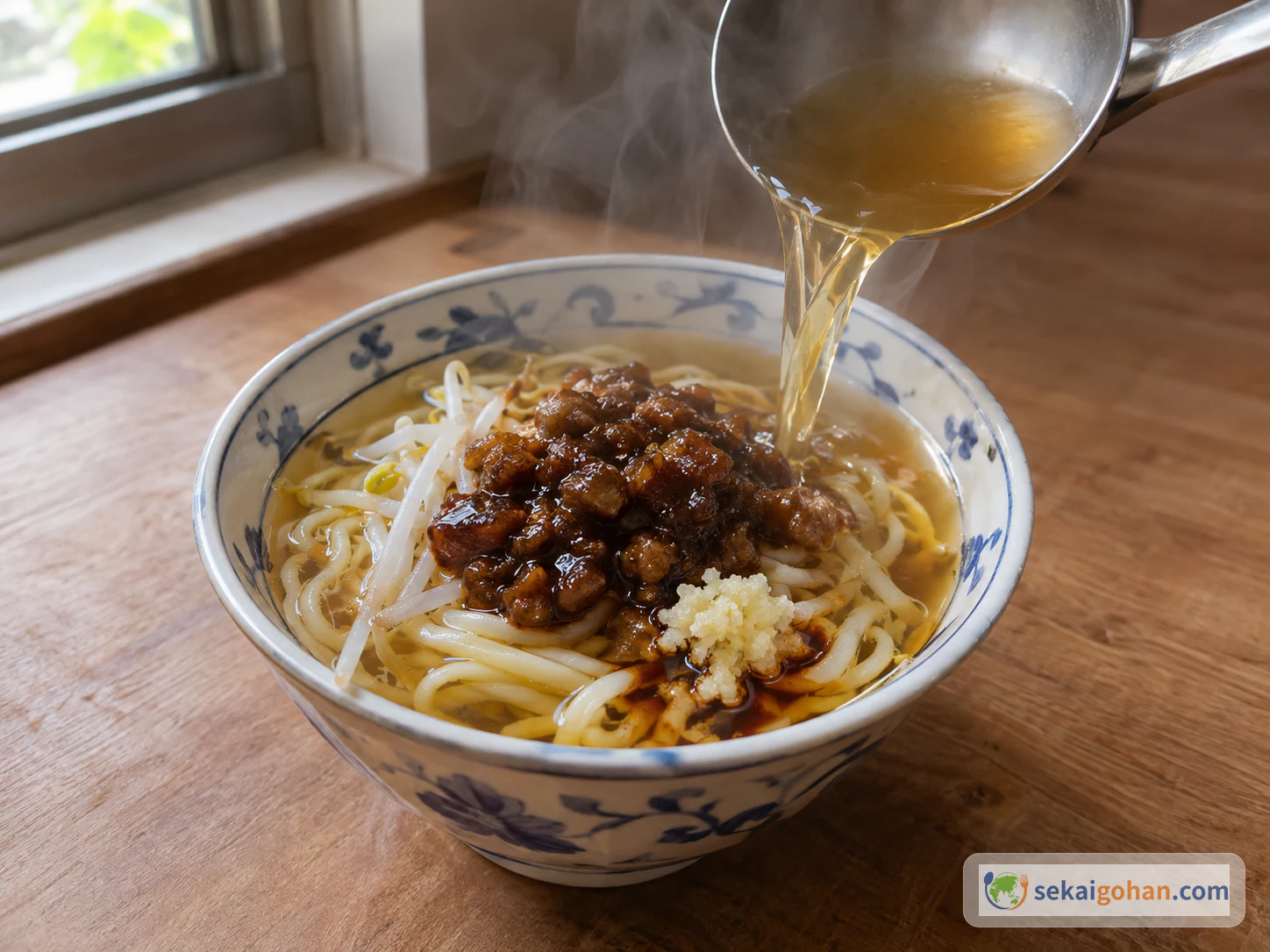
Shrimp heads and shells crackle in a little oil until they turn coral red. Then hot stock goes over them in a rush of steam that smells of the sea. That broth ends up in a bowl small enough to hold in one hand: a nest of thin yellow noodles over bean sprouts, a spoonful of dark braised pork, a shrimp with its tail fanned out, and a few leaves of cilantro. Ta-a-mi, also called danzai noodles, comes from Tainan in the south of Taiwan, where people eat it in the afternoon when they get peckish or late at night as a snack. It tastes of sweet shrimp and savory pork, with raw garlic and a few drops of black vinegar waiting under the broth to sharpen every mouthful.
A Snack Sold from a Carrying Pole
A fisherman, a pole and a lantern
The name comes from the ta-a (擔仔), the shoulder pole a street seller balanced two loads on. In Tainan the story always starts with a fisherman named Hong Yu-tou. When the sea was too rough to fish, he hung a noodle stall from his pole and walked the streets calling out his noodles, then set up in front of the Shuixian Temple. The year usually given is 1895, late in the Qing dynasty's Guangxu reign. Which season kept the boats ashore is not settled. Some accounts point to the typhoon months of summer and autumn, and others to the weeks around the Qingming festival.
Fishermen called the lean season when they could not go out the "small month" (小月). Selling noodles was how Hong got through (度) it, so he wrote 度小月 on his lantern. The shop still carries that name, and the family is now in its fourth generation.
The shop pot and the home pot
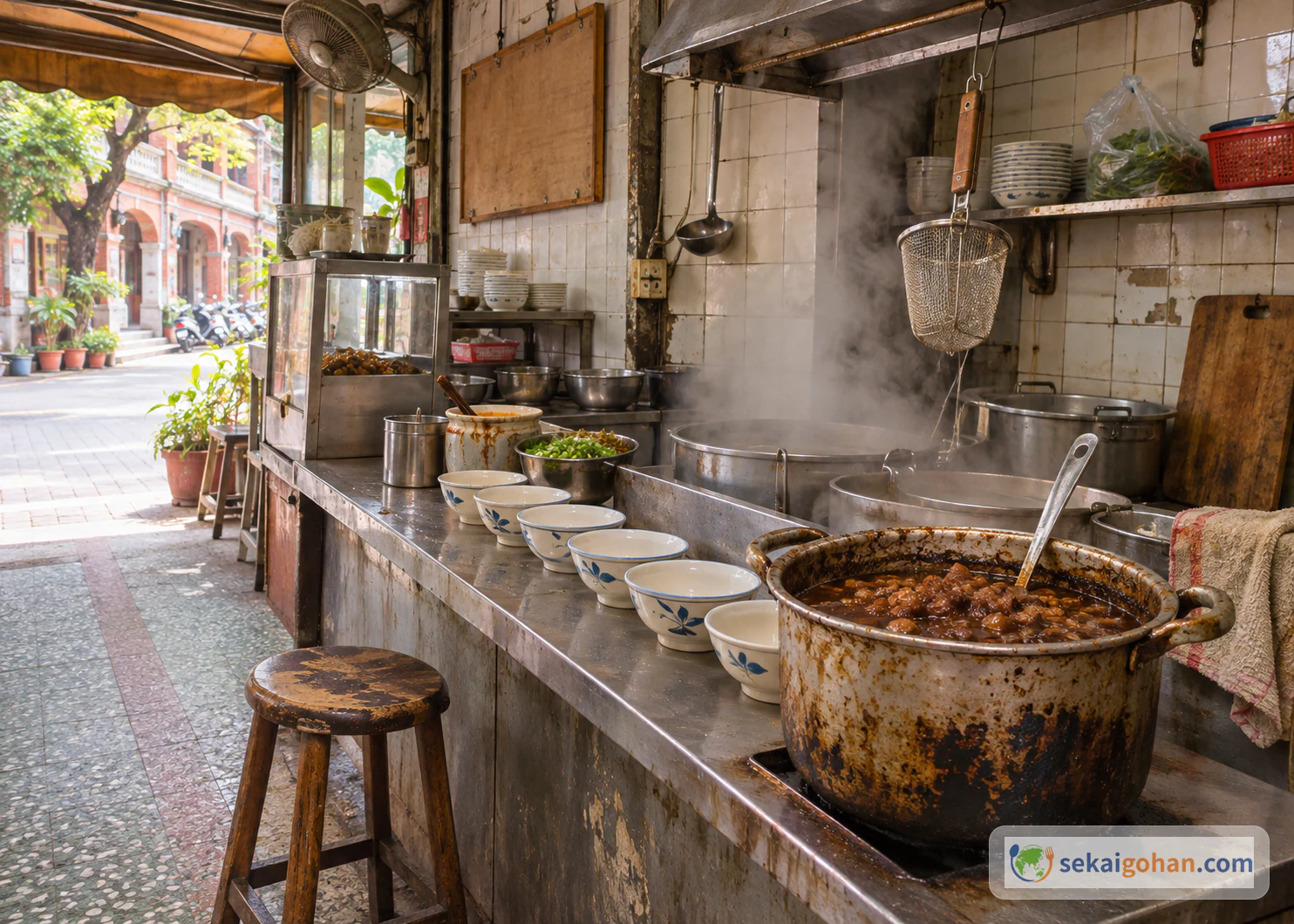
At the Du Hsiao Yueh shop on Zhongzheng Road, the meat sauce sits in a small pot that is never washed. Fresh sauce goes in day after day, and the layer on the sides keeps thickening. That is a shop practice for a pot in constant use, and it stays in the shop. At home, wash the pot and keep the sauce in a clean container. The family's own history records that the first generation braised the pork in a small clay pot, since replaced by cast iron. A later pot, used by the second and third generations, served until 1995. The scoop for dipping noodles in hot water is still in use. The flavor a home cook can rebuild comes from the broth. Toast the shrimp heads and shells and pour hot stock over them.
A bowl meant to stay small
Ta-a-mi is a snack. A traditional bowl holds two or three mouthfuls of noodles, a shrimp, the braised pork and a broth built on pork bones and shrimp heads. Tainan is known as the capital of xiaochi, the small dishes people eat at stalls and counters around town, and a bowl this size lets you move on to the next one or order a second. The noodles are yellow egg noodles made with alkaline water (lye water), sold in Taiwan as oil noodles (油麵). In shops the shrimp is most often velvet shrimp, though white and grass shrimp are common too. Cooks choose a size that balances the mound of noodles and lay it on top with the tail fanned out. The dish has long since traveled north, and you can find ta-a-mi in Taipei, including on Huaxi Street.
Two bowls that get mixed up
Tshik-a-mi (切仔麵) is the northern cousin, and it uses the same noodles. Its broth is pork bone and pork belly, scented with fried shallot, and the portion is large enough to fill you up. Its name comes from the cook dipping the strainer of noodles in hot water and shaking it eight times. Ta-a-mi stays small, and its broth leans on shrimp. Dan dan noodles from Sichuan share a character in the name but are a different dish altogether. The braised pork in ta-a-mi belongs to the same family as the sauce spooned over rice in lu rou fan, which is why one pot of sauce feeds several dishes.
Ingredients (serves 2)
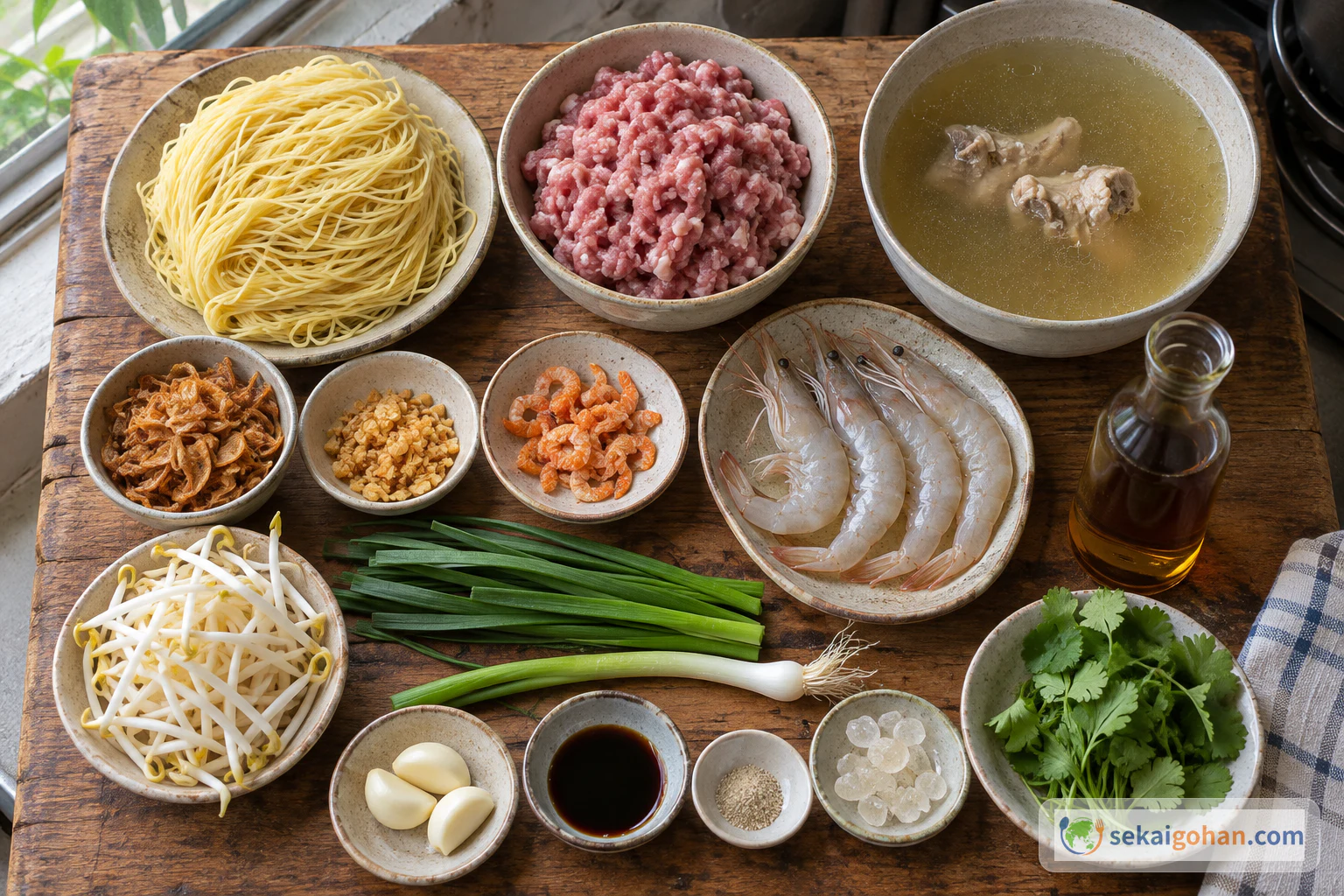
The braised pork sauce is a make-ahead batch. Two bowls use only part of it, and the rest keeps for rice, greens and dry noodles.
This dish contains shrimp (fresh and dried), wheat (noodles, soy sauce), egg (in the noodles and the braised egg), soy (soy sauce) and pork. It also uses garlic, Chinese chives and cilantro. Check the labels on noodles, fried shallots and fried garlic for other allergens.
Equipment
- Stockpot
- Wide, deep pan for toasting the shrimp shells
- Heavy saucepan with a lid for the pork sauce
- Large pot of boiling water and a small pot for the chives
- Wire noodle strainer basket
- Fine-mesh strainer and a skimmer
- Fine grater for the garlic
- Two small bowls holding about 1 to 1⅔ cups (250–400 ml) each
Choosing and Substituting
Thin oil noodles, fried shallots, dried shrimp and black vinegar are easy to find at Taiwanese or Chinese grocers and online, often all from one shop. The swaps below are what to do when they are not on hand.
| Hard to find | Use instead | What changes |
|---|---|---|
| Oil noodles (油麵) | Thin Chinese wheat noodles made with alkaline water (kansui) | The closest match. Udon or rice noodles turn it into a different dish |
| Fried shallots (油蔥酥) | Store-bought fried shallots (紅蔥酥) | Fried onions work, but the sweetness turns rounder and less shallot-sharp |
| Fried garlic (蒜頭酥) | Store-bought fried garlic | Same thing |
| Dried shrimp (蝦米) | Small Chinese dried shrimp | Same thing. Leave it out for a lighter broth |
| Taiwanese soy sauce | Japanese dark soy sauce | May be saltier and differs in color. Braise at this ratio first, then taste |
| Black vinegar | Chinkiang (Zhenjiang) vinegar | Closest. Rice vinegar gives a thinner, sharper sourness |
| Dried flounder (扁魚) | Leave it out | Slightly less depth |
What has to stay for the bowl to taste of Tainan is head-on, shell-on shrimp, the alkaline noodles and the fried shallots in the pork. The flounder and the dried shrimp are refinements. For the pork, choose a mince with visible fat. Lean pork turns dry and stringy in the braise.
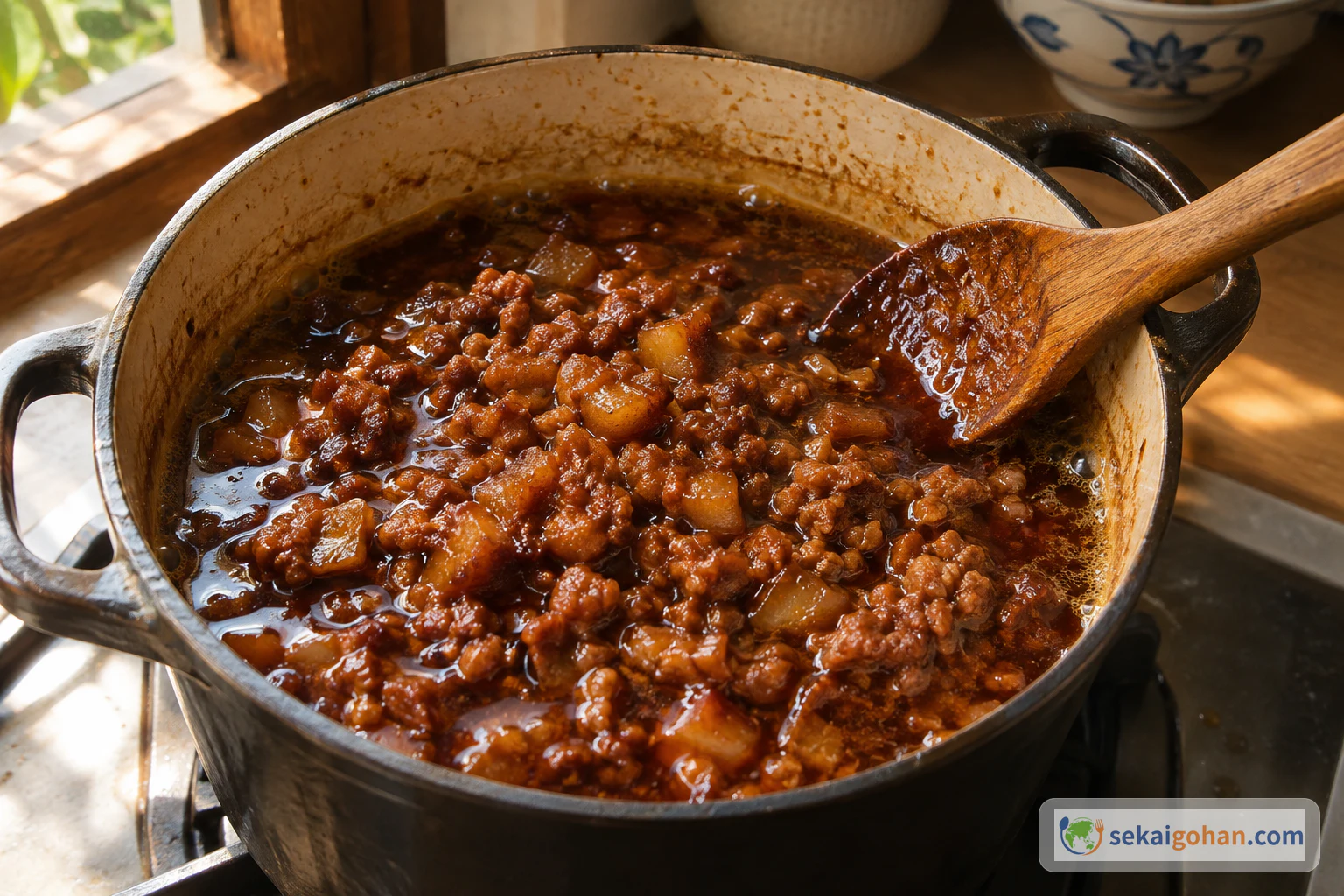
The pork sauce is a ratio of 1 bowl soy sauce, 1 bowl fried shallots and 2 bowls water. Pick one rice bowl and use it for all three, and the balance holds whatever its size.
Method
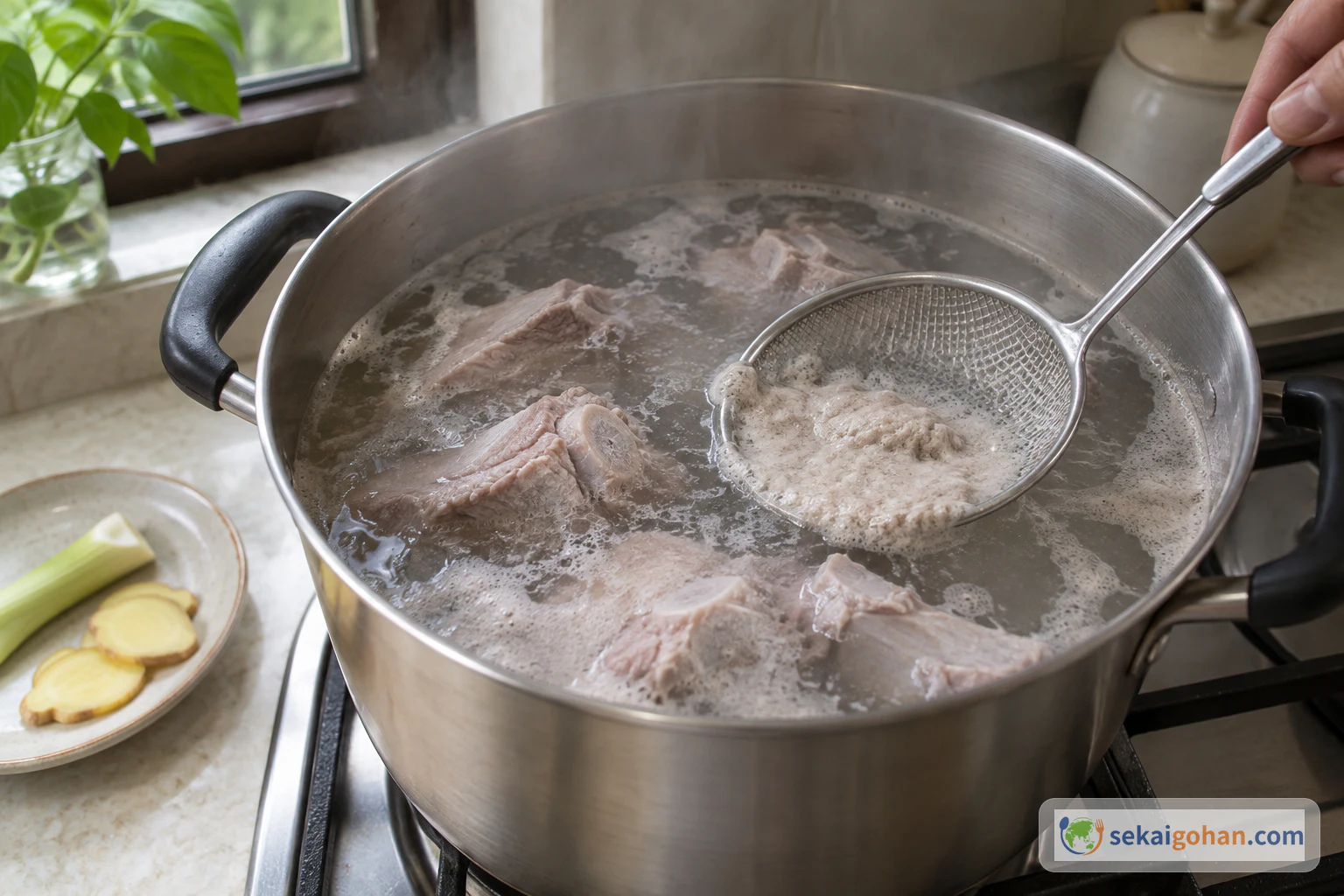
Start the stock first. While the bones simmer, make the pork sauce in a second pot. It can be made a day ahead. With the two running side by side, the cooking should take about an hour (an estimate, not a timed figure). The shrimp, toppings and noodles all happen in the last few minutes, so have the bowls, garlic and vinegar ready before the noodles go in the water.
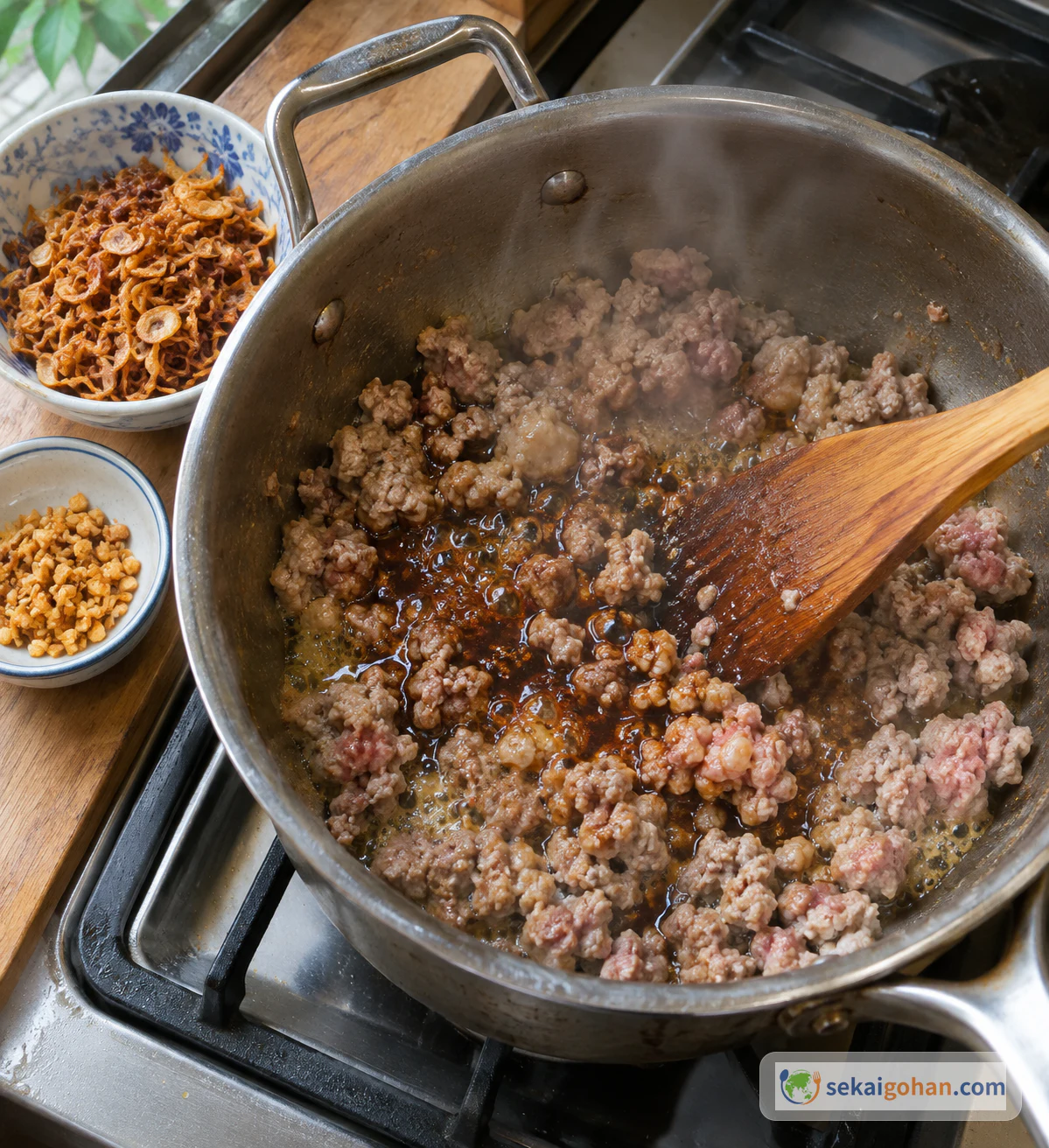
Pour the stock over the toasted shrimp shells while both are still hot. Lukewarm stock dulls the toasted shrimp smell, and that smell is the whole reason for this step.
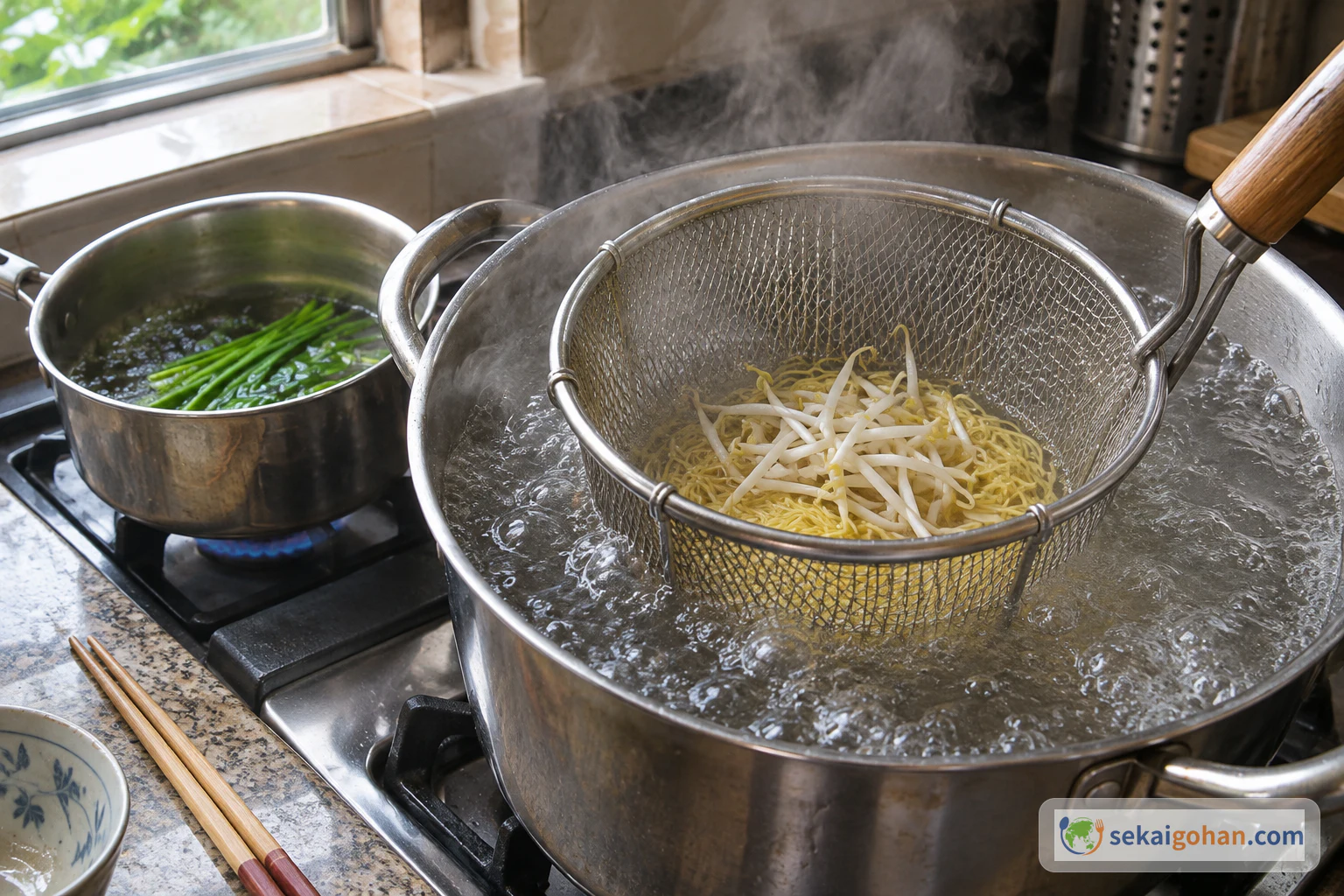
Cook the shrimp bodies until they are opaque all the way through. No raw shrimp goes into the bowl, and the heads and shells are toasted and simmered too. Blanch the bean sprouts and chives before they go into the bowl. The garlic goes on raw, so grate it just before serving and keep to a small amount, because it is sharp.
Cook the noodles only when everything else is in place and the broth is hot. A filled bowl that sits for a few minutes turns the noodles soft and swollen.
When It Goes Wrong
| What you see | Why | What to do |
|---|---|---|
| Cloudy, gamey stock | The bones were not blanched, or the stock boiled hard | Blanch and rinse the bones every time, and keep the simmer gentle |
| Faint shrimp flavor | The shells went in damp, or the stock was not hot | Toast the shells until dry and red, and pour the stock in hot. Keep the heads |
| Salty pork sauce | The soy sauce may be saltier than Taiwanese soy | Loosen it with a little water. Next time, make it at the same ratio and adjust from there |
| Dry, stringy pork | Mince too lean | Choose pork with visible fat |
| Soft, swollen noodles | The bowl sat before serving | Dip the noodles just before building the bowl and serve right away |
| Flat-tasting broth | Under-seasoned | Adjust with salt and white pepper in the broth. More soy sauce only darkens the pork |
Serving, Variations and Storage
At the table
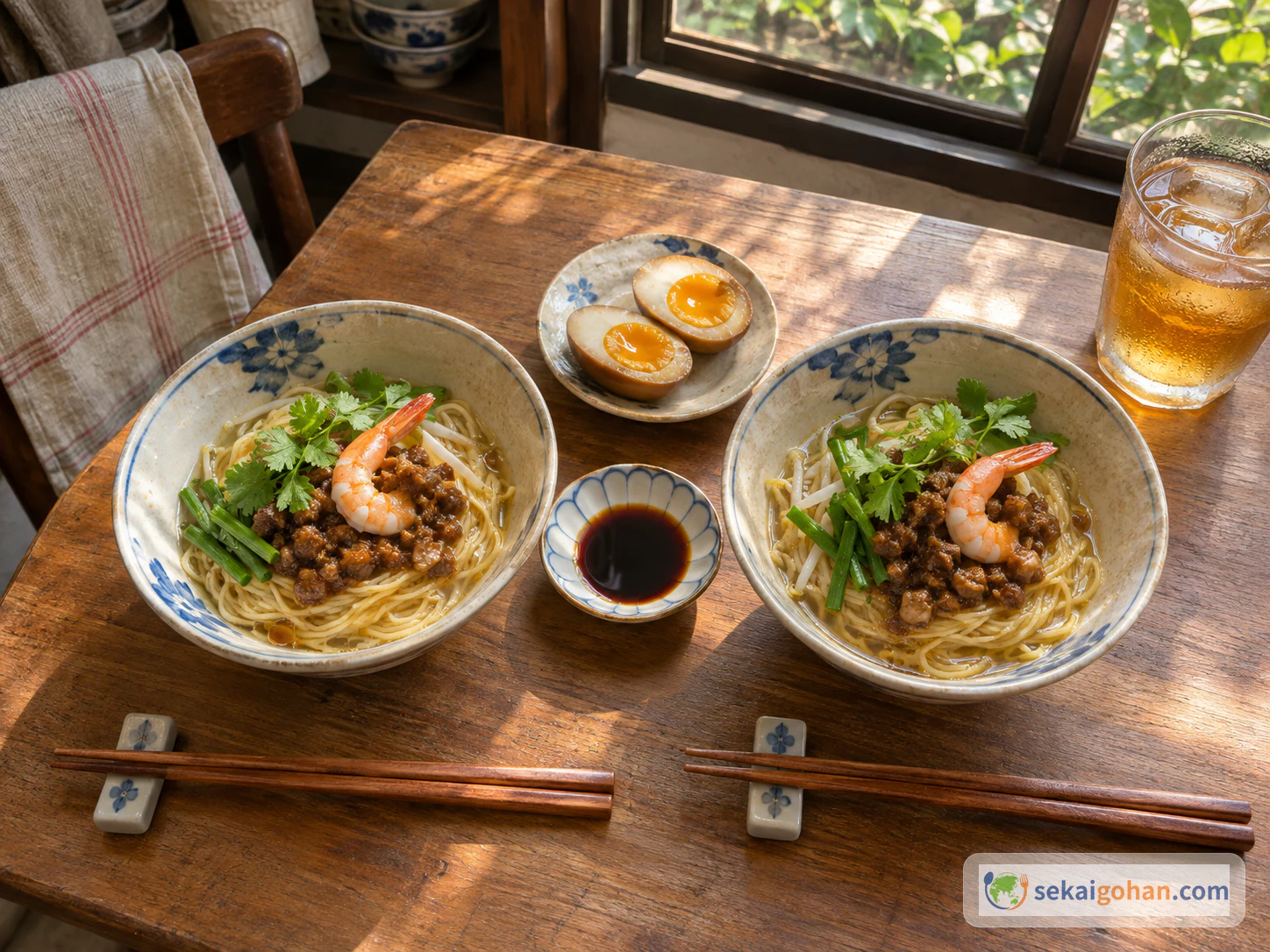
Serve one small bowl each, with a soy-braised egg on the side if you like. Because it is a snack, ta-a-mi sits well beside other small dishes. When people want more, make a second round of small bowls instead of one large bowl.
Variations
- Dry-tossed. Use only a little broth and toss the noodles with the pork sauce. Add ½ tsp sweet chili sauce for a sweeter, sticky bowl.
- With a braised egg. In shops, eggs are braised in the pork liquid for 1–2 hours, far longer than this sauce cooks. Braise them in a separate pot or use a store-bought soy-braised egg.
- More shrimp. White or grass shrimp both work. More heads and shells make a stronger, sweeter broth.
- Lighter broth. Skip the bones and make the broth from shrimp shells and dried shrimp alone. It comes out lighter and more purely shrimp.
- Garlic and vinegar on the side. Set them out in small dishes so each person decides how sharp their bowl gets.
Storage
Keep the pork sauce and the broth separately. Use clean utensils, let each cool, and refrigerate them promptly in clean, covered containers. Take out only what you will eat with a clean spoon, and reheat until hot right through to the center. Assemble bowls only when you are ready to eat, because the noodles do not hold.
Frequently asked questions
Is ta-a-mi spicy?
No chili goes into this recipe. The flavor comes from shrimp, pork, raw garlic and black vinegar. Shops set out their own condiments, so the heat in a shop bowl depends on what you add at the table.
My bowls are smaller. How much broth do I need?
For bowls holding about 1 cup (250 ml), about 2 cups (500 ml) of broth covers two servings. Keep the same order and toppings, and reduce the noodles and pork sauce so they still sit in balance with the broth.
What do I do with the rest of the pork sauce?
Spoon it over hot rice, as in lu rou fan. Use it over blanched greens, or toss it with plain noodles for a dry bowl. Take out only what you need each time and reheat it until it is hot through.