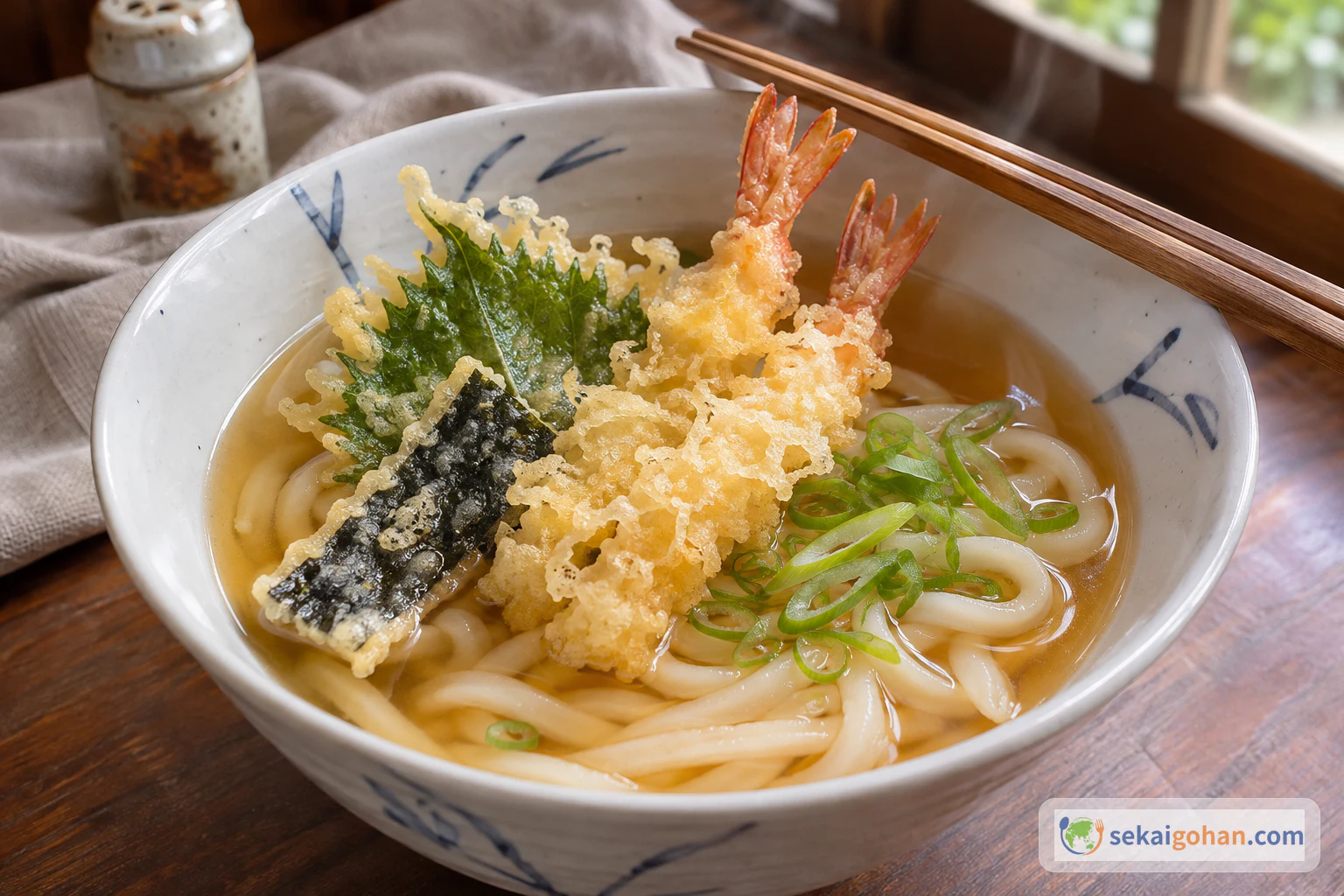
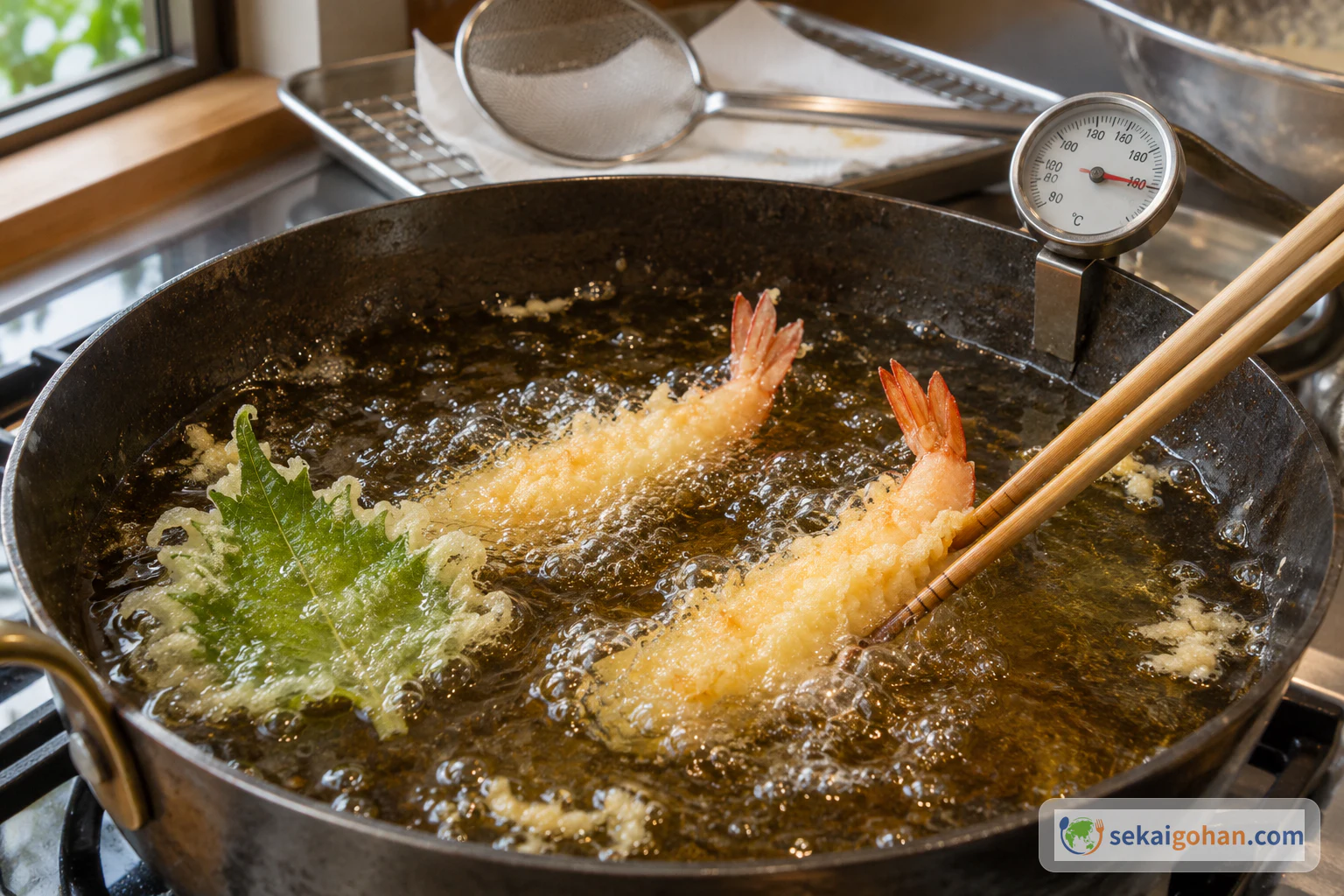
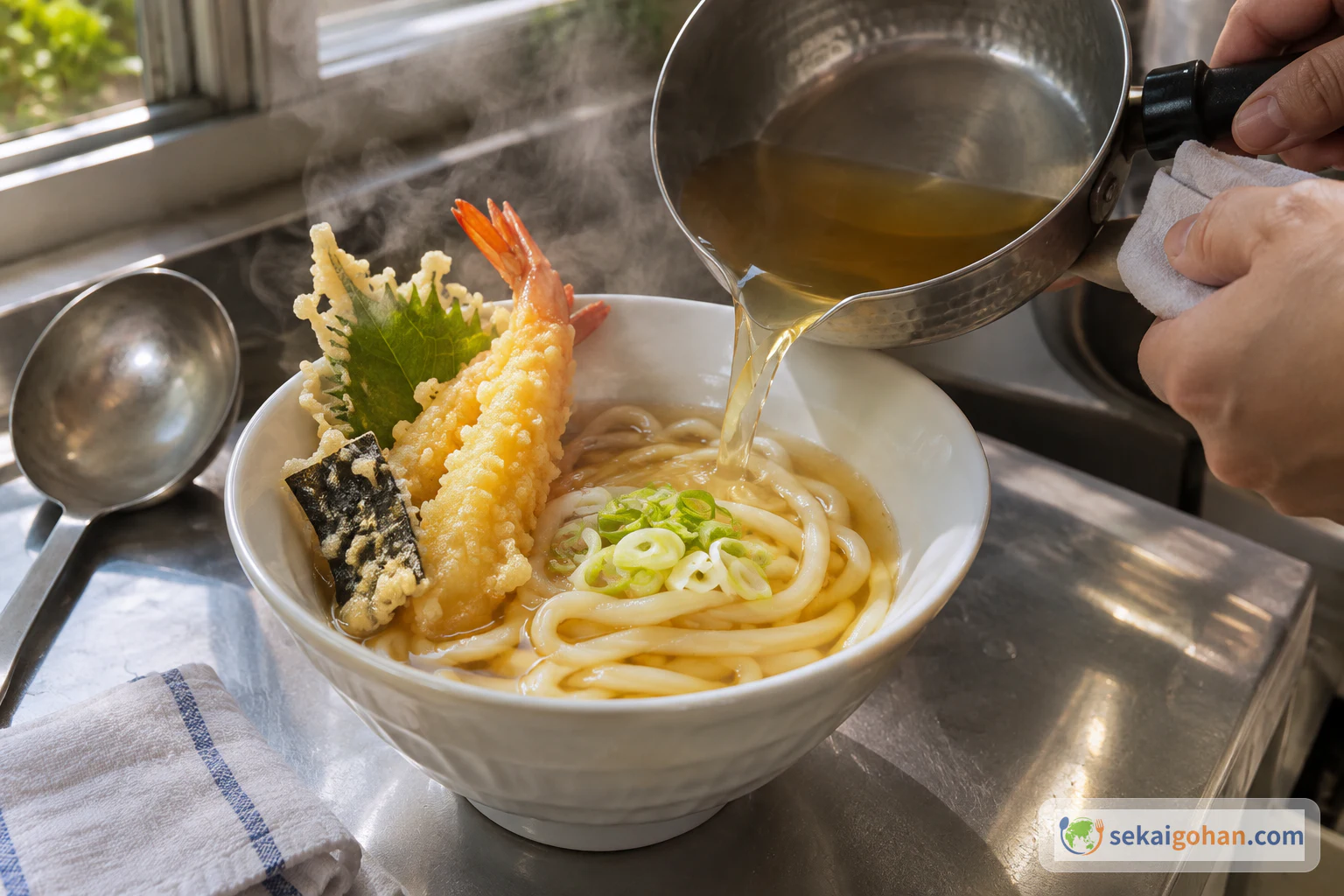
The shrimp come out of the oil pale gold and still crackling, and the bowl beside the stove is already steaming. Broth the color of weak tea goes in around thick white noodles, the tempura leans against the rim, and the first bite gives you crisp batter on top and batter gone soft with broth underneath. Tempura udon is that bowl: hot kake udon in a dashi of iriko and bonito, seasoned with light soy sauce so the broth stays pale and smells of the sea, crowned with shrimp, shiso and nori fried at the last minute. In Kagawa, where about half the udon shops let you pile on your own tempura, it is an everyday choice at the counter.
Wheat, Iriko and Festival Days in Sanuki
Kagawa, the old province of Sanuki on the island of Shikoku, gets little rain, and rice was hard to grow there. Farmers planted wheat in its place, and the same coast gave salt and small dried sardines. Udon there is made from nothing but flour, salt and water, the dough worked underfoot to build the springy bite locals call koshi. Of all the noodle traditions across Japan, this is the one that shaped the broth in this bowl.
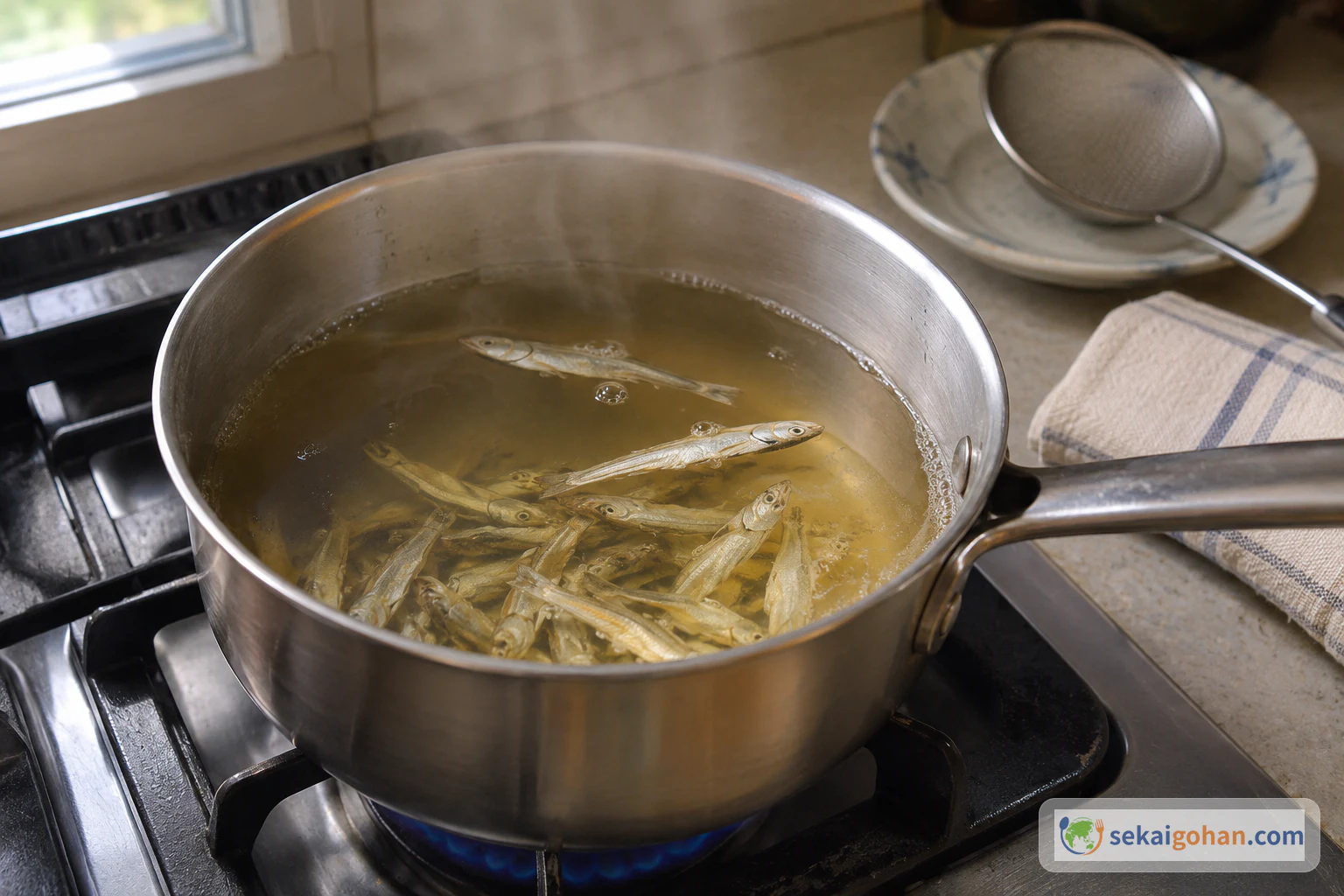
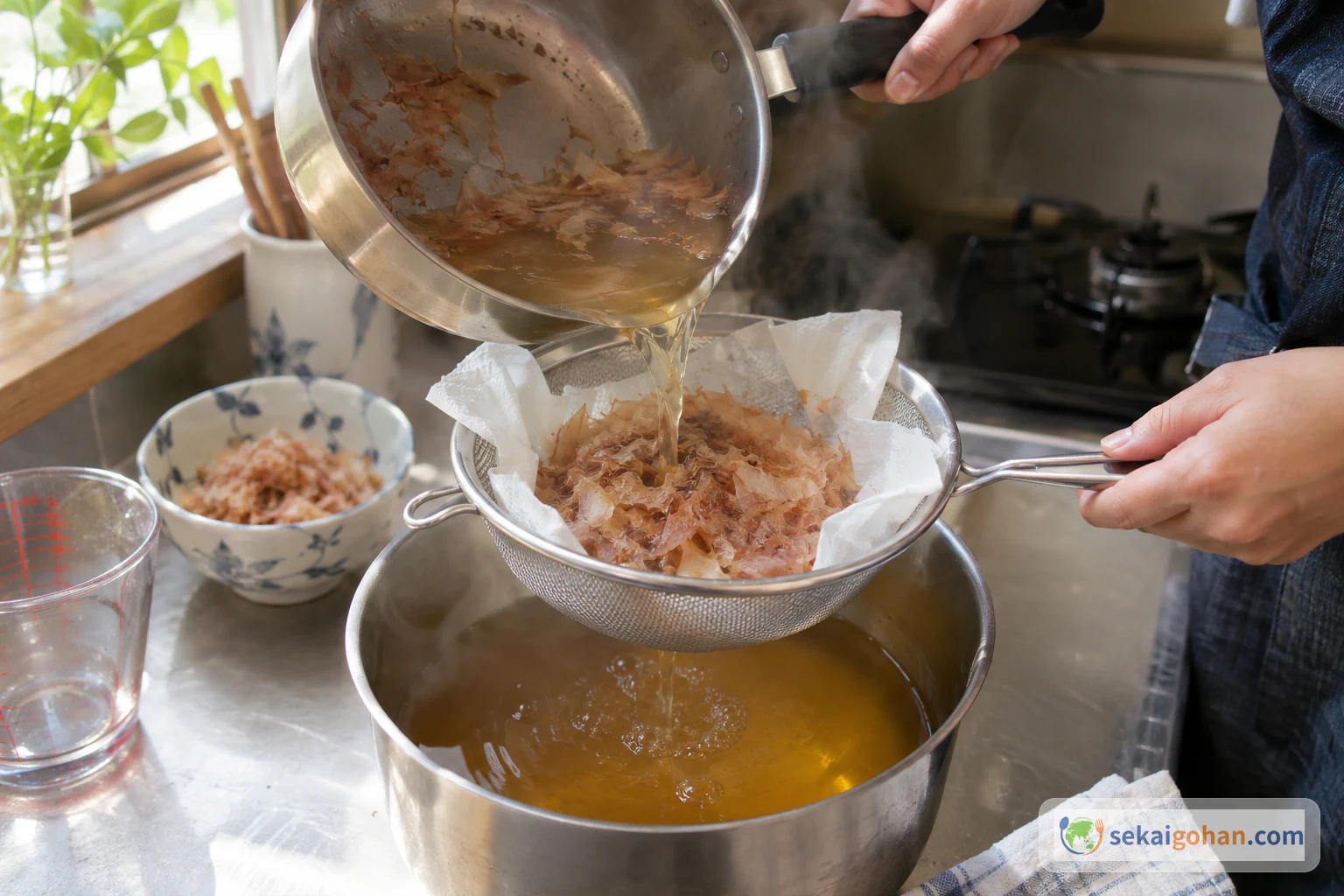
Sanuki udon broth starts from iriko, dried small sardines, where much of the country builds dashi on bonito and other dried fish flakes. The Seto Inland Sea was a rich ground for Japanese anchovy, and that is where the fishy depth comes from. This recipe lays katsuobushi on top of the iriko for a smoky second note, then seasons with usukuchi, the light-colored soy sauce used in Kansai-style udon broth to let the fish flavor come forward while the color stays clear.
Noodles for good days
Because they are thick and long, udon noodles became a wish for long life. They were the food of special days: farming rites, festivals, New Year, Hangeshō in early summer, Obon, memorial services, and the meal after a day of shared work. A folding screen painted about 300 years ago, showing a festival at Kotohira-gū shrine, already includes an udon shop making noodles the way they are made now. Pilgrims on the road to Konpira ate udon at the shrine gate and, as the story goes, carried the taste back to their home towns.
A legend credits the monk Kūkai with bringing the method for making udon back from China in 806. It is told as a founding story, and where udon truly began is not settled.
How the tempura got on top
Tempura grew popular in the Edo period (1603–1867) as street-stall food eaten standing up, and specialist tempura houses later refined the frying. Its dipping sauce, tentsuyu, is dashi, soy sauce and mirin. The kake broth here has the same three at its center, softened with sugar and salt, which is why shrimp tempura sits so easily in it. Kagawa has around 600 udon shops, and in the self-service ones you take your noodles and add tempura, scallion, ginger or egg yourself.
Udon in Sanuki is eaten hot or cold, dipped or with broth poured over. This bowl is the hot, poured version. Tempura soba uses buckwheat noodles instead. Tenzaru puts cold noodles beside a stronger sauce for dipping. Kakiage udon tops the bowl with a fritter of mixed pieces rather than single pieces fried one at a time.
Ingredients (serves 4)
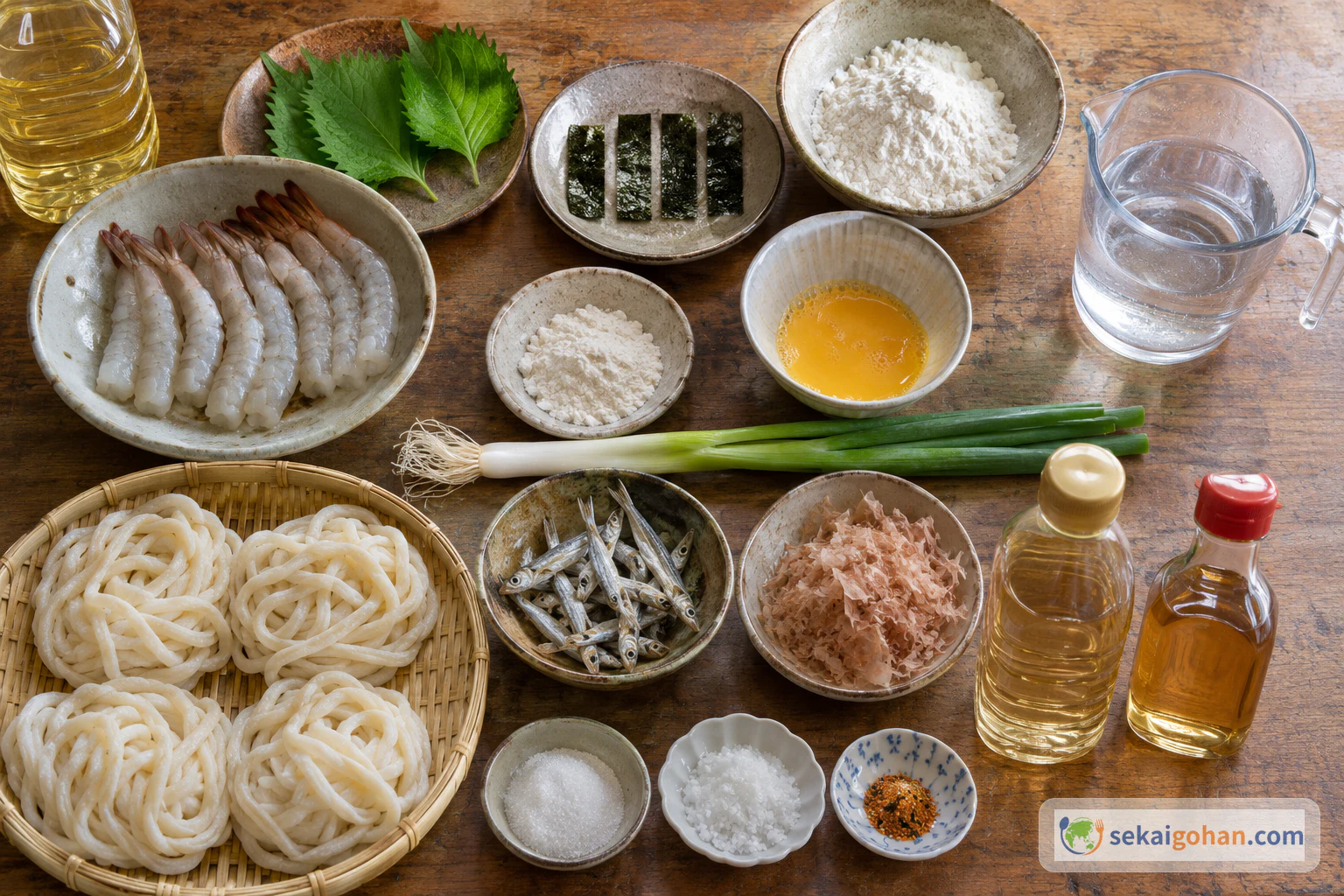
This dish contains wheat (udon, batter, dusting flour, soy sauce), egg (batter), shrimp, soy (soy sauce) and nori. Check the label of your shichimi tōgarashi for its ingredients as well.
Equipment
- Deep pot for the dashi, and a second pot to strain into
- Fine-mesh strainer lined with damp paper towel or a cloth
- Deep frying pan or pot for the oil
- Wire skimmer, plus a rack set over a tray for draining
- Kitchen thermometer (handy for holding the oil temperature)
- Measuring cups and spoons
- Long cooking chopsticks
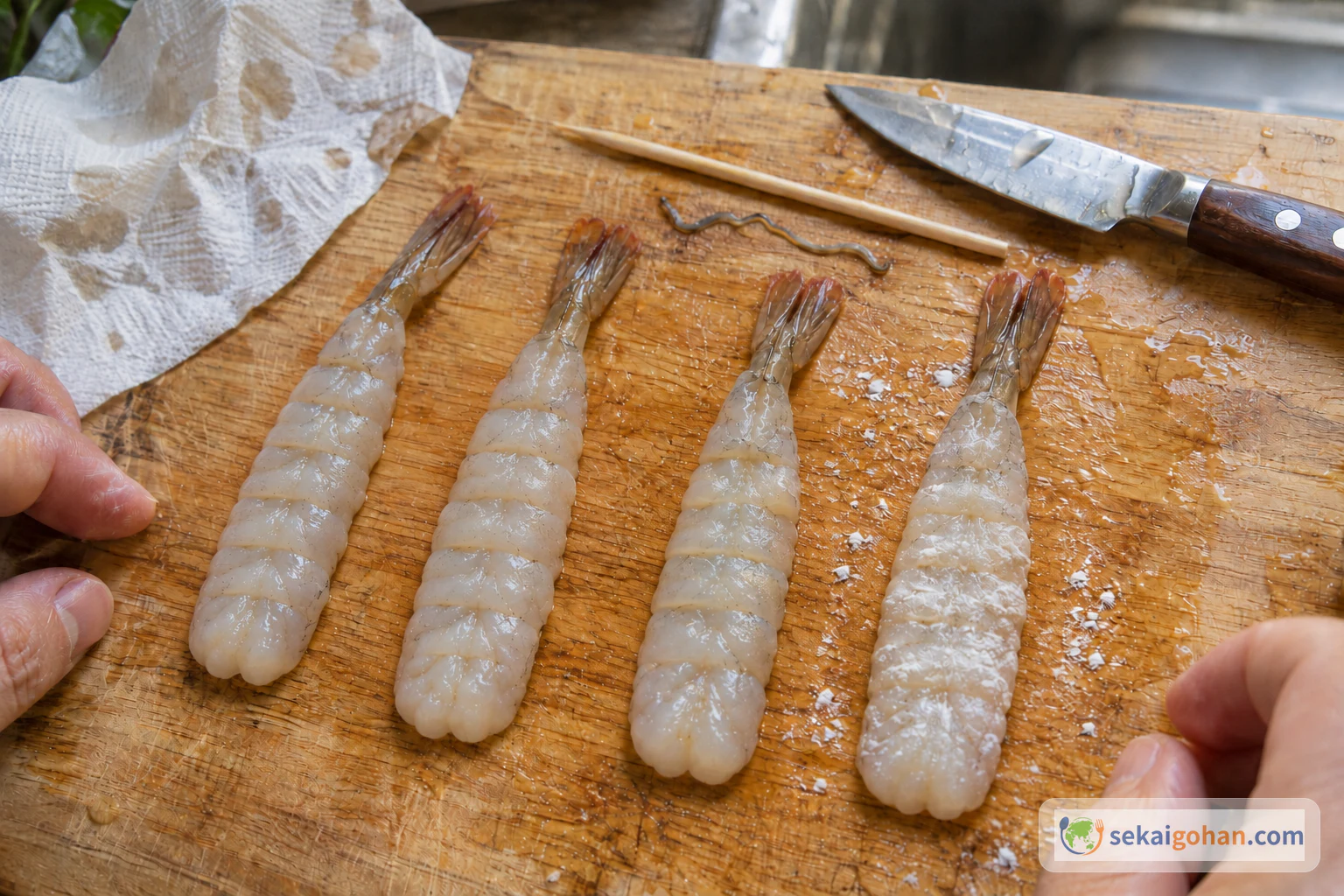
- Knife, cutting board and a bamboo skewer for deveining
- Large pot for warming the noodles
- Four deep noodle bowls (donburi)
Shopping and Swaps
Iriko come from a Japanese grocer or online, often labeled niboshi. Their size and how they were processed change the taste of the broth, so read the ingredient label and pick a pack of plain dried sardines. Katsuobushi sold as hanakatsuo is the easy choice; different cuts of flake bring different aromas.
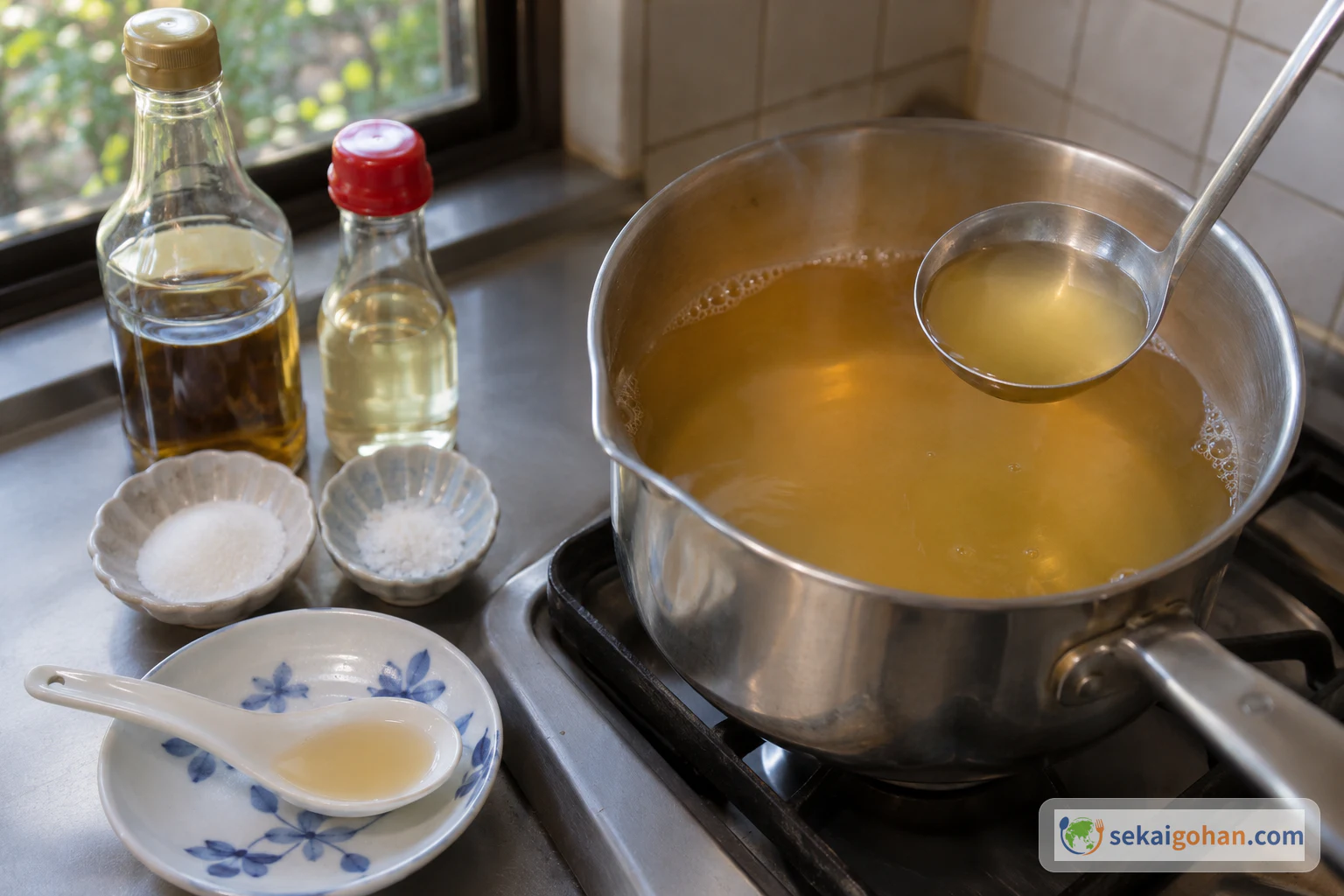
Usukuchi soy sauce is what keeps this broth pale. Regular dark soy sauce (koikuchi) works in a pinch, but the broth turns noticeably darker and moves away from the light Kansai look. Use hon mirin, true mirin, for the rounded sweetness. For the batter, keep to cake flour rather than bread flour.
For the noodles, boiled udon or frozen udon in portions of about 7 oz (200 g) both work. Shiso is easiest to find at a Japanese grocer. A dashi powder makes a faster broth, but it is a different bowl with its own seasoning; the amounts here are built for dashi made from iriko and katsuobushi.
Three things carry this bowl: iriko in the dashi, usukuchi for the pale color, and ice-cold batter mixed at the last moment. The rest bends to what your shop has.
Method
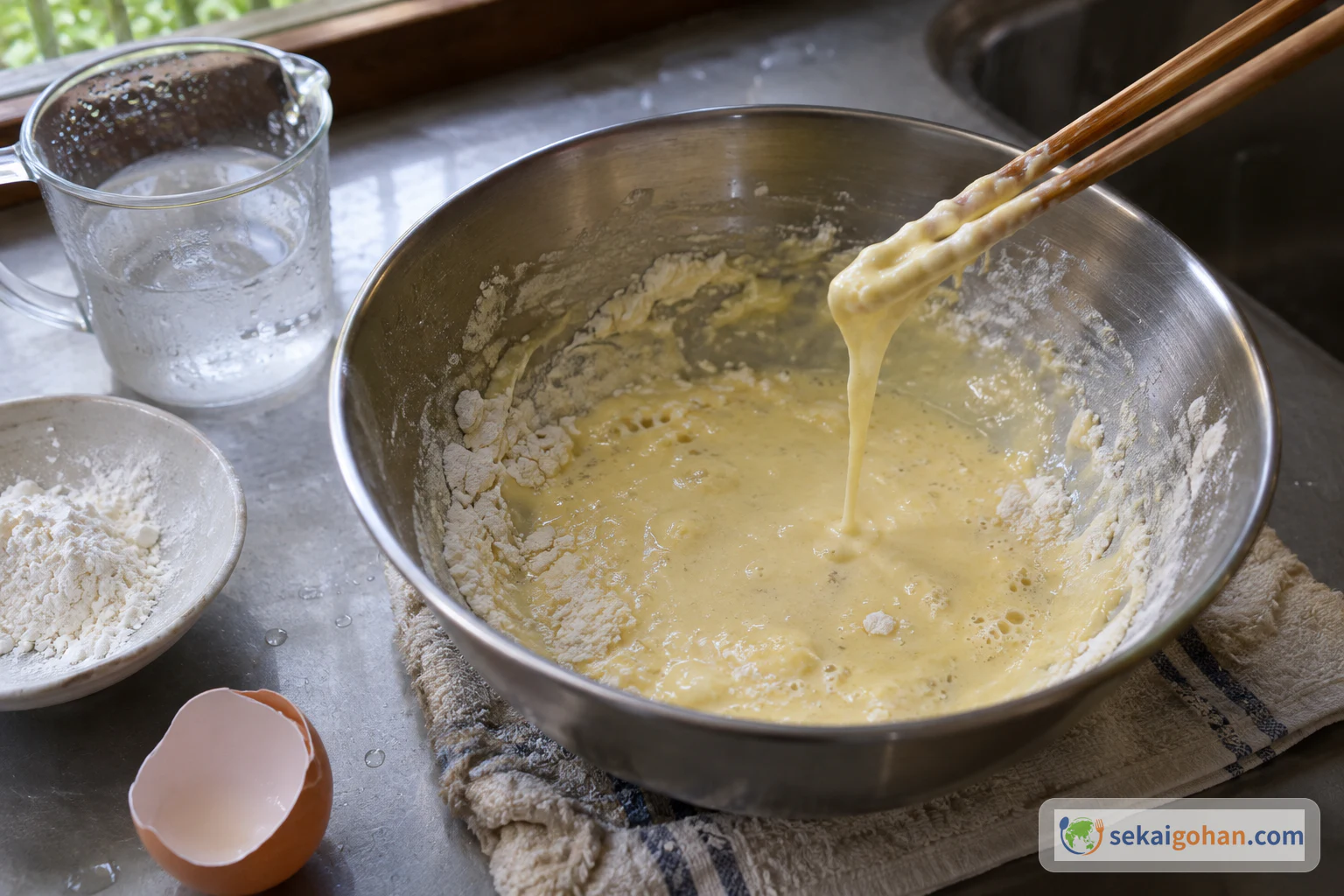
The dashi takes longest, and most of that time is hands-off. Clean and straighten the shrimp while the iriko simmers, then keep the seasoned broth warm on the lowest heat. Mix the batter only once the oil is heating, fry, and put the bowls together straight away so the tempura reaches the table crisp.
When It Goes Wrong
| What you see | Why | What to do |
|---|---|---|
| Batter is sticky and greasy | Batter overmixed, water not cold, or oil too cool | Mix only until lumpy, chill the water with ice, hold the oil at 355°F (180°C) and fry a few pieces at a time |
| Batter slides off the shrimp | Shrimp still wet, or too little dusting flour | Pat dry first, then dust lightly before battering |
| Oil spatters hard | Water trapped in the tail or around the shell; nori curling | Trim the tail tips, dry the shrimp, lower the nori in slowly |
| Shrimp curl up | Belly cuts too few or too shallow, body not pressed | Make the shallow cuts ¼ inch (5 mm) apart and press each shrimp straight |
| Broth too strong or too weak | Boiled down, or seasoning measured unevenly | Taste before adding salt. Thin strong broth with dashi; add a little usukuchi to weak broth |
| Noodles soft and bloated, tempura limp | Noodles warmed too early, cold bowls, tempura fried ahead or sunk in broth | Warm noodles and bowls just before serving, fry right before eating, keep tempura at the rim |
At the Table, Variations and Leftovers
Serving
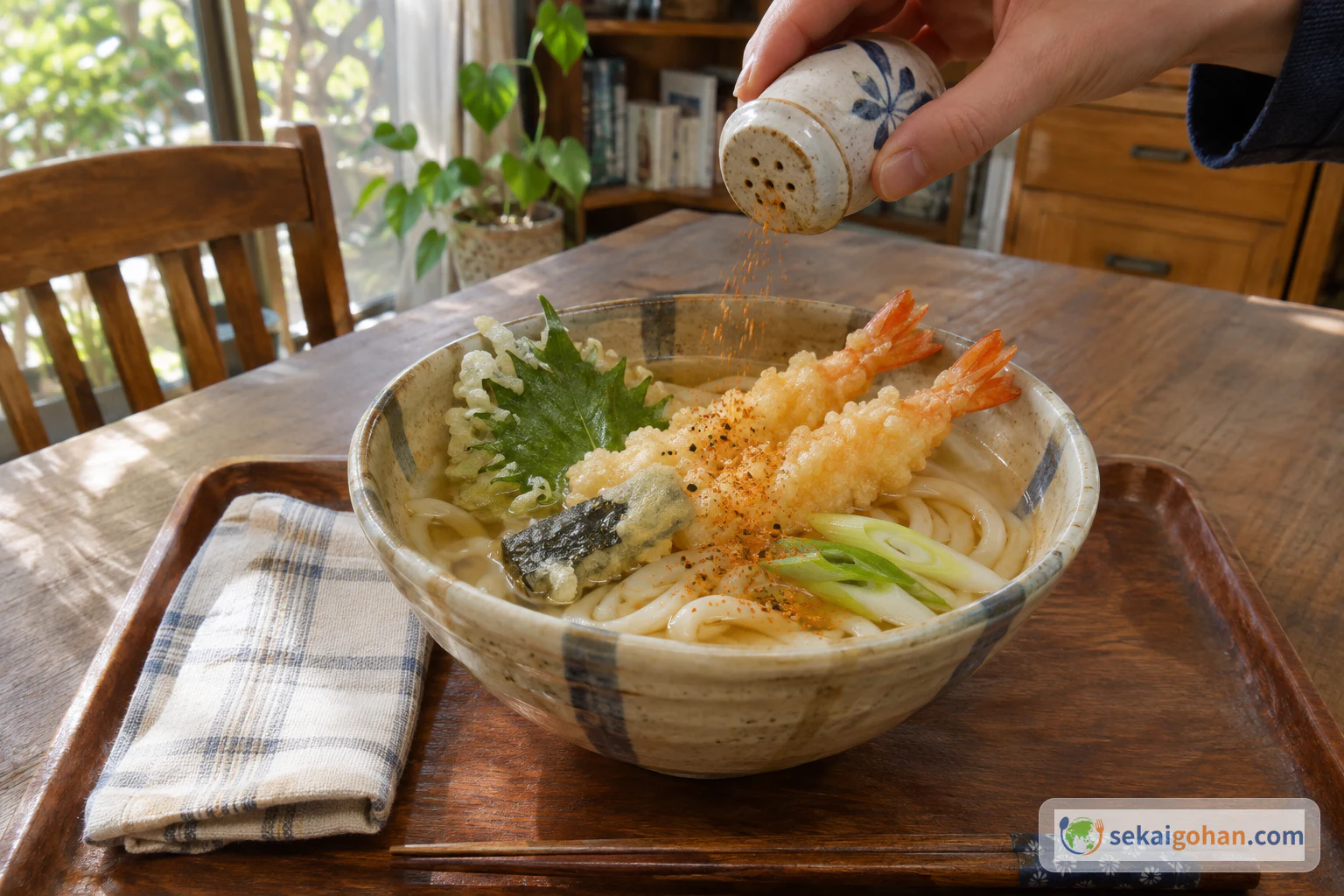
Eat tempura udon the moment it is assembled, with the broth steaming and the batter still crisp. Start with a bite of tempura, then let a piece soak in the broth for contrast. Shichimi goes in at the table, a shake at a time. How much salt you take in depends on whether you drink the broth to the bottom of the bowl, so leave some behind if you are watching it.
Variations
- Kakiage udon: fry shrimp and onion together as a mixed fritter. The batter amount and frying change, so the timings above for single pieces no longer apply.
- More herbs: add mitsuba or myoga as garnish alongside the shiso tempura. The broth stays the same; the bowl gets brighter and greener.
- Other tempura: kisu (Japanese whiting), eggplant or kabocha squash. Anything thicker than shrimp needs longer in the oil, so fry by color and crispness rather than the 1½ minutes.
- Darker broth: add a little more usukuchi for a stronger seasoning. The broth darkens and moves away from the pale Kansai look.
- Cold tenzaru style: serve cold noodles with a stronger dipping sauce on the side. The kake broth is seasoned for hot noodles, so make the sauce stronger instead of simply chilling it.
Leftovers
Cool leftover broth, then refrigerate it in a covered container and heat it thoroughly before eating. Tempura soaks up moisture as it sits and loses its crispness, so fry it just before eating rather than ahead. Dispose of used frying oil according to your local rules.
Frequently asked questions
Can I use mentsuyu instead of making the broth?
Yes, but the bowl changes. Mentsuyu dilution differs from product to product, so follow the bottle and taste rather than using the amounts here. This broth is built from dashi, usukuchi, mirin, sugar and salt, and its pale color and fish-forward smell come from that combination.
Can I add kombu or use a dashi pack?
Both make good broth, and Japanese households vary widely here: iriko alone, iriko with bonito, kombu added, or a dashi pack. Any of them will carry the seasoning. The amounts in this recipe are balanced for iriko and katsuobushi dashi, so taste and adjust if your stock is lighter or stronger.
How do I make it for two?
Scale every ingredient by the same factor, the dashi included. Keeping the ratios together keeps the broth's balance and the batter's texture. For two, halve everything and fry the shrimp in one or two small batches.
Why do the shrimp go into the oil with a back-and-forth sweep?
Sweeping each shrimp back and forth twice as it enters the oil keeps it from bending. Combined with the belly cuts and pressing the body straight, it keeps the shrimp long and flat so it lies neatly across the noodles.