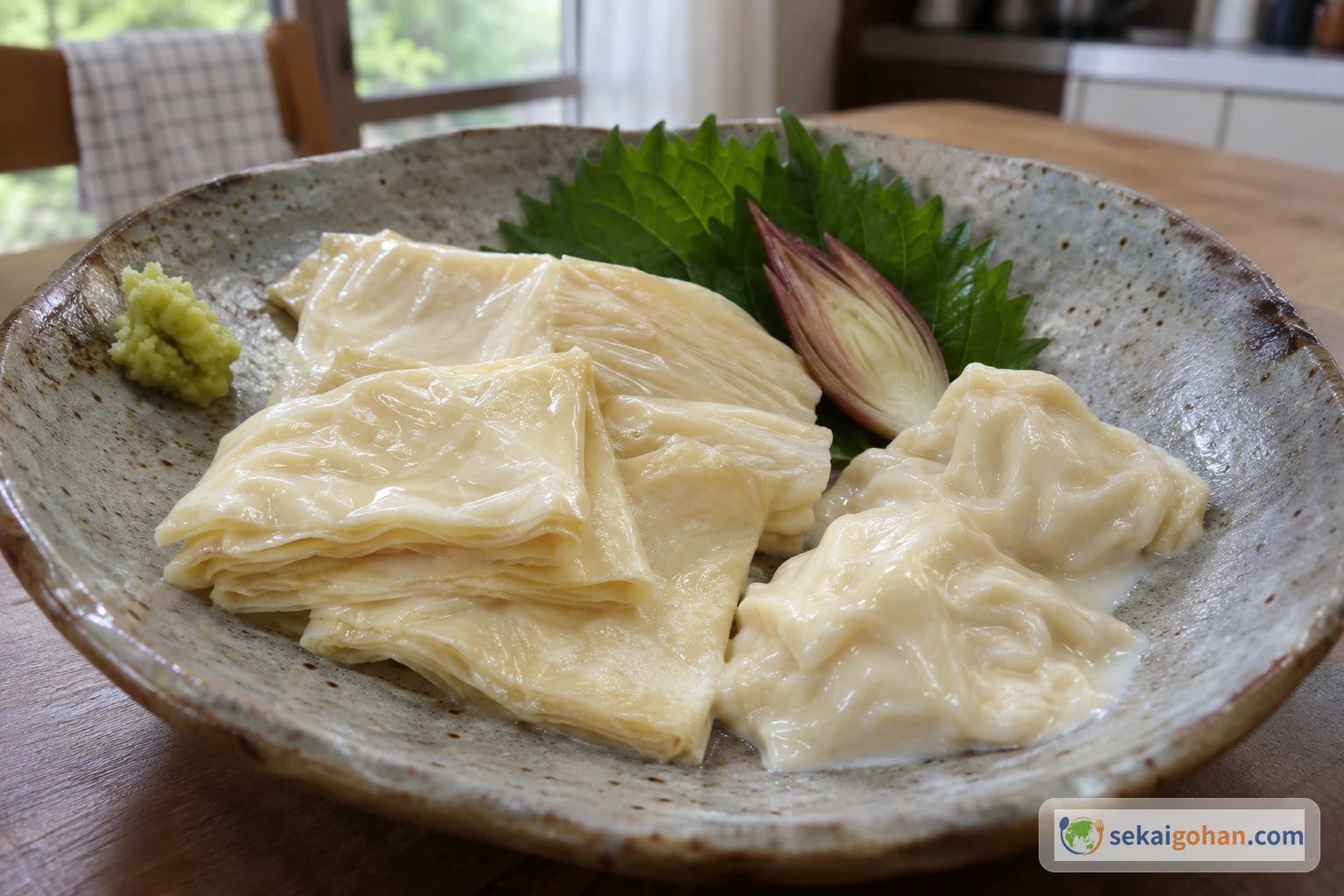
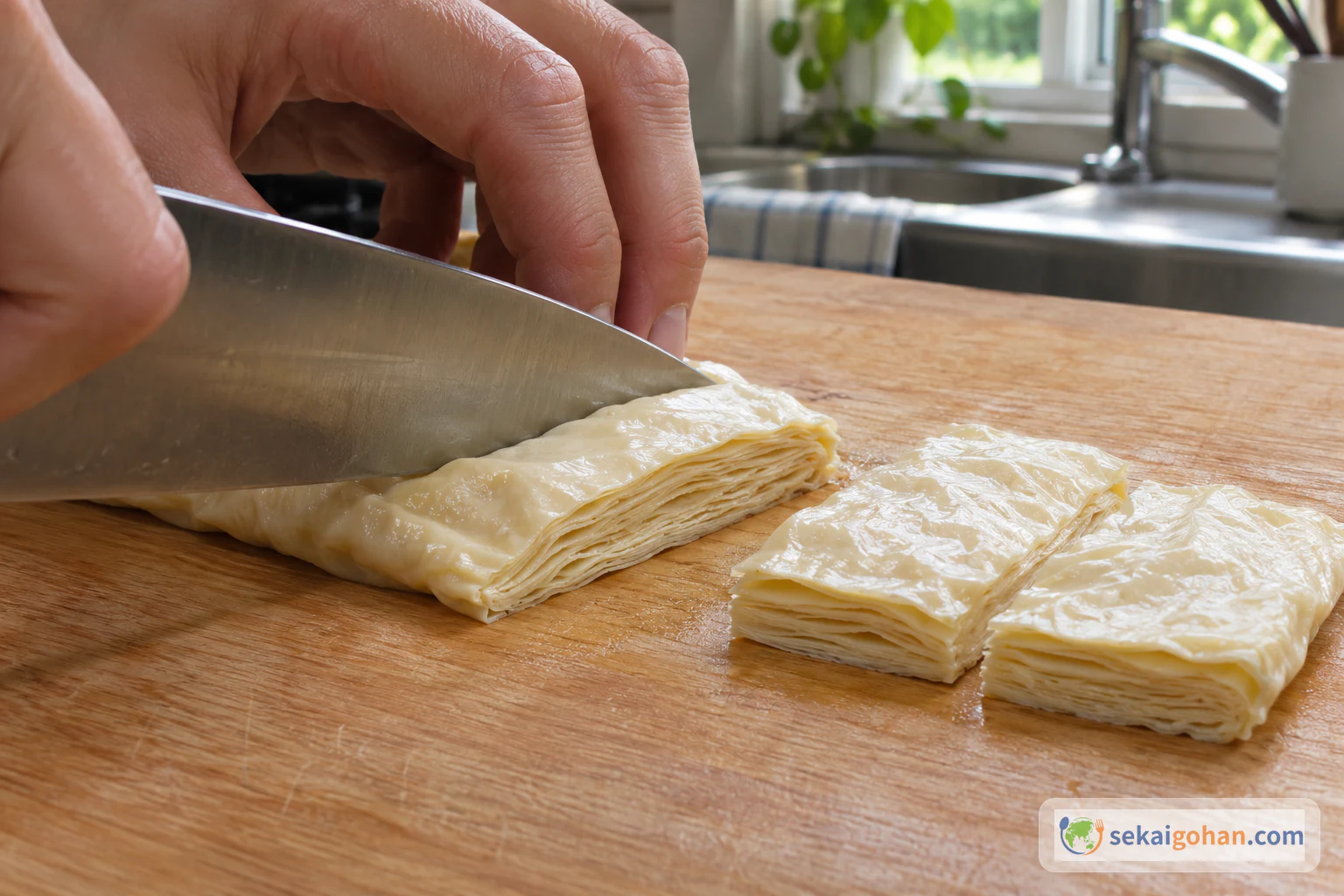
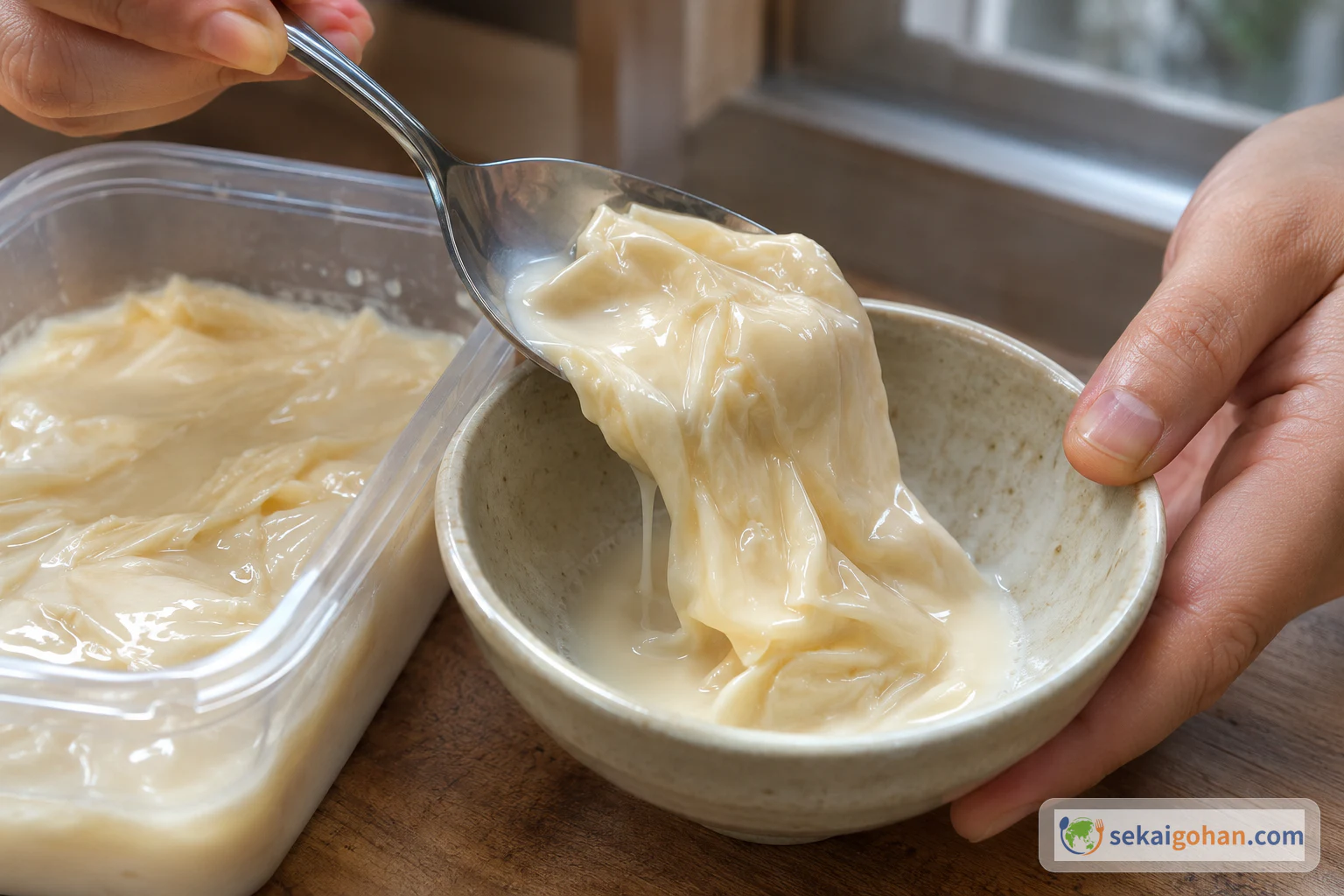
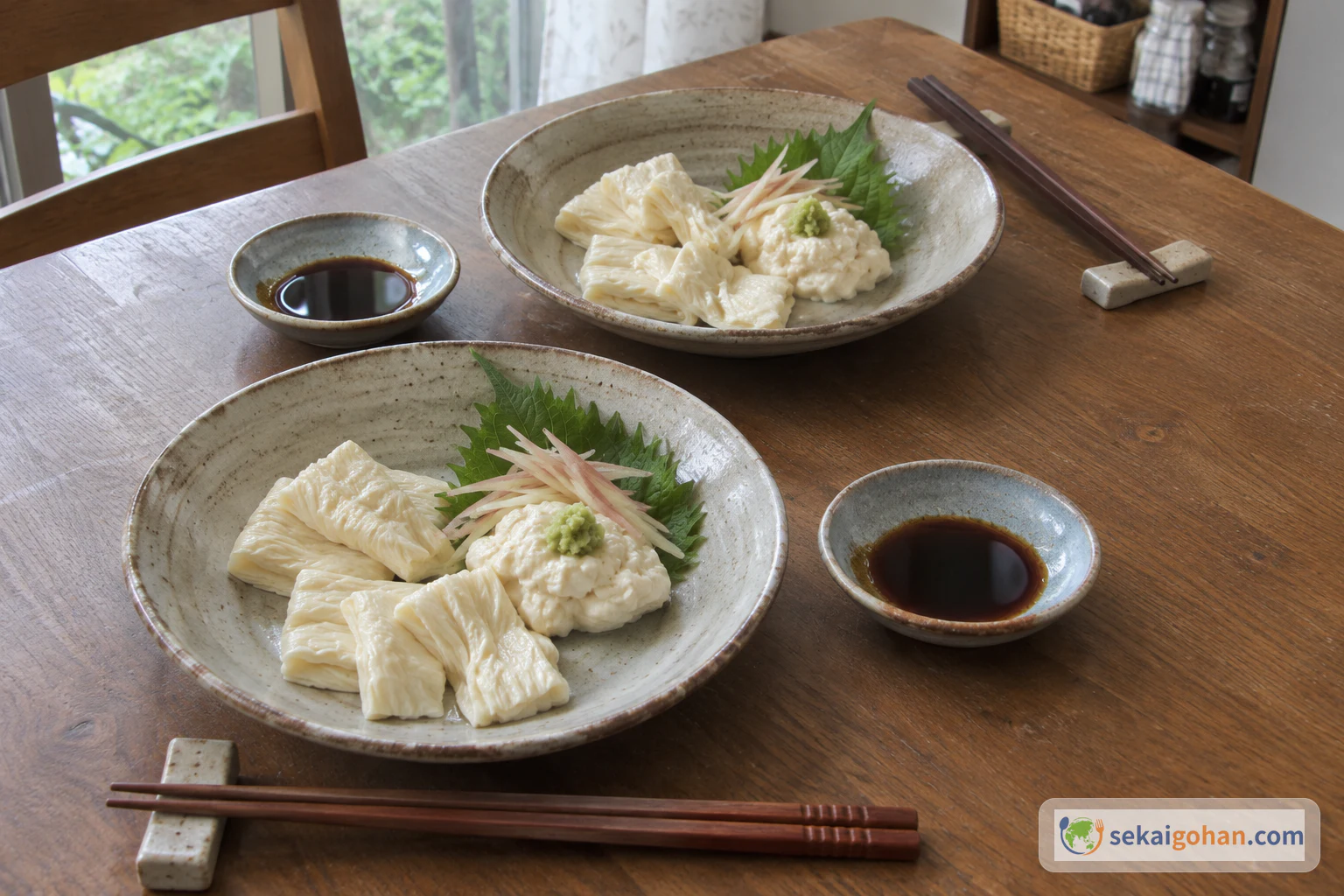
Peel the film off a cold pack of fresh yuba and you see the folds first: pale cream sheets of soy milk skin laid over one another, damp and faintly glossy. A knife meets a little resistance on the way through, and the cut edge shows thin layers stacked tight. Beside it, kumiage yuba sits soft in its own soy milk, and a spoon lifts it out in one heavy, sagging mound. This is yuba sashimi, the way fresh yuba is eaten in Kyoto and in Minobu in Yamanashi: cut or spooned, set in a shallow dish, and eaten with grated wasabi and soy sauce. It tastes of sweet, clean soy milk, rich on the tongue and cool against the green heat of wasabi and the bright scent of shiso.
Skin from Hot Soy Milk, from Temple Kitchens to Kyoto and Minobu
The film on the soy milk
Yuba starts like tofu. Soybeans are simmered, ground and pressed through cloth into soy milk, and up to that point the two foods are made the same way. Tofu then gets nigari or another coagulant. Yuba gets nothing added: the soy milk is heated, a film forms on the surface, and the maker lifts it off. The film forms again and again in the same pan, and makers decide how far to go. One Kyoto maker uses only the first few films, because the protein and colour change with each lift, and works only with domestic soybeans and groundwater. The common way to lift is to slide a rod under the middle of the film and fold it in two; that same maker lifts from the edge to take up a single thin sheet, then folds it in three. These are one house's choices, and every workshop has its own.
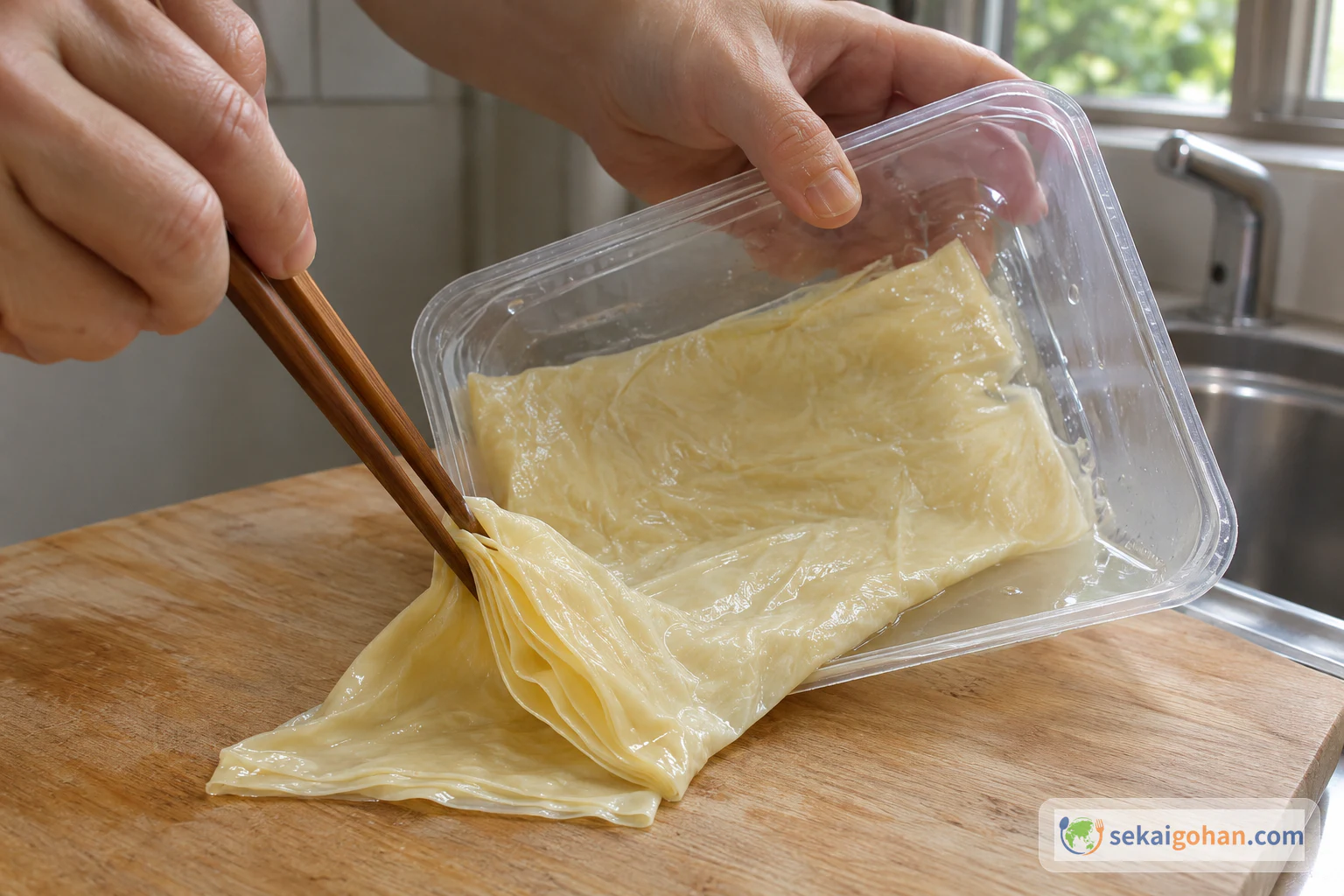
What you buy fresh comes in two kinds, and they behave differently on the plate. Sashimi yuba, also called hikiage yuba, is packed after the soy milk has been drained off, so the sheets stay layered and firm enough to cut. Kumiage yuba, and its cousin tsumami yuba, is packed without draining, sometimes with extra soy milk added, so it stays soft and you serve it with a spoon. Put both on one dish and the plate gets its two textures: the clean bite of the layers and the spoonable, creamy mound beside it. With carefully prepared condiments, this pairing becomes a proper starter course.
Temples, Kyoto and Minobu
Yuba has long been an ingredient of shojin ryori, the vegetarian cooking of Buddhist temples, and it carried protein to monks who were forbidden meat. How it reached Japan is not settled. One account brings it over in the late Kamakura period along with Zen and tea. Another credits the monk Saichō with carrying it back from China about 1,200 years ago. In Minobu the story goes that Nichiren's disciples made it there about 750 years ago. By the Edo period it had a place in cookbooks, and Tōfu Hyakuchin, the famous collection of a hundred tofu recipes, is usually credited with five yuba dishes.
Today two places stand out. In Kyoto, Kyo-yuba was registered as a regional collective trademark in 2015, and one Kyoto yuba shop names otsukuri, fresh yuba cut into easy bites and eaten with wasabi soy sauce or ginger soy sauce, as the simplest way to taste yuba itself. In Minobu, a town in Yamanashi with many yuba makers, fresh yuba is cut into bite-size pieces and eaten with wasabi soy sauce all year round, and yuba dishes are among the 47 foods chosen as Yamanashi's selected local specialties. Further afield, one Kanazawa household carries the local habit of putting karashi mustard on cold tofu over to yuba. For more of the country's food, see our Japan page.
The name is usually traced to uba, an old woman, after the wrinkled skin, though that reading is generally treated as folk etymology; another account links it to uwa, the "top" or surface film of the soy milk. In Nikko and some other places the word is written with different characters, 湯波 instead of 湯葉. The spelling differs, and the local yuba is its own product.
Ingredients (serves 2)
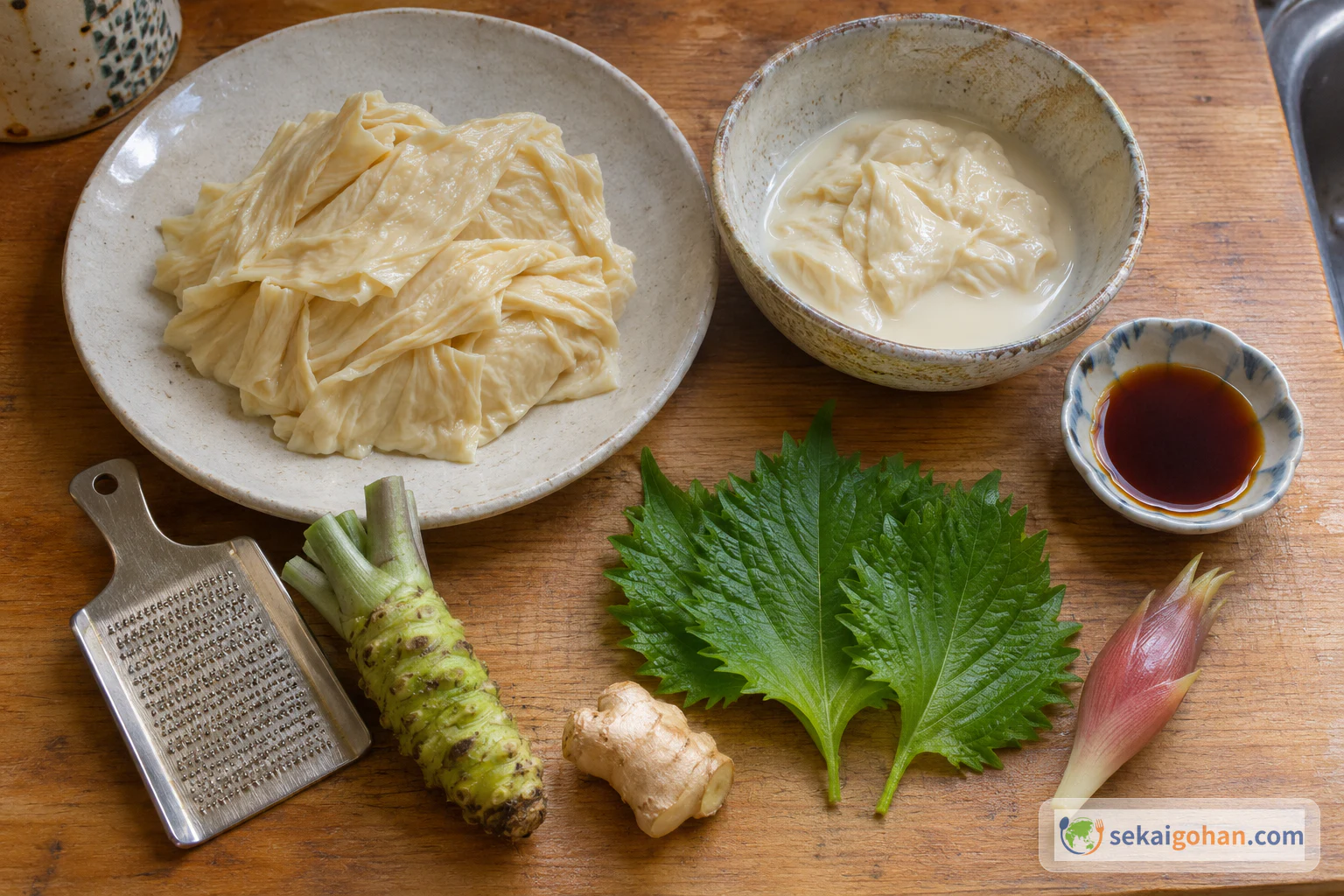
Shops pack sashimi yuba and kumiage yuba in their own sizes. Weigh or read what you bought and use the packs close to these amounts; the method works the same for a little more or less.
Yuba is made from soybeans: anyone with a soy allergy should avoid this dish. Soy sauce contains soy, and mentsuyu, used in the variation below, usually contains wheat and soy; check the label.
Equipment
- Fine-mesh strainer set over a bowl
- Paper towels
- Cooking chopsticks or a thin knife
- Sharp kitchen knife and cutting board
- Large spoon
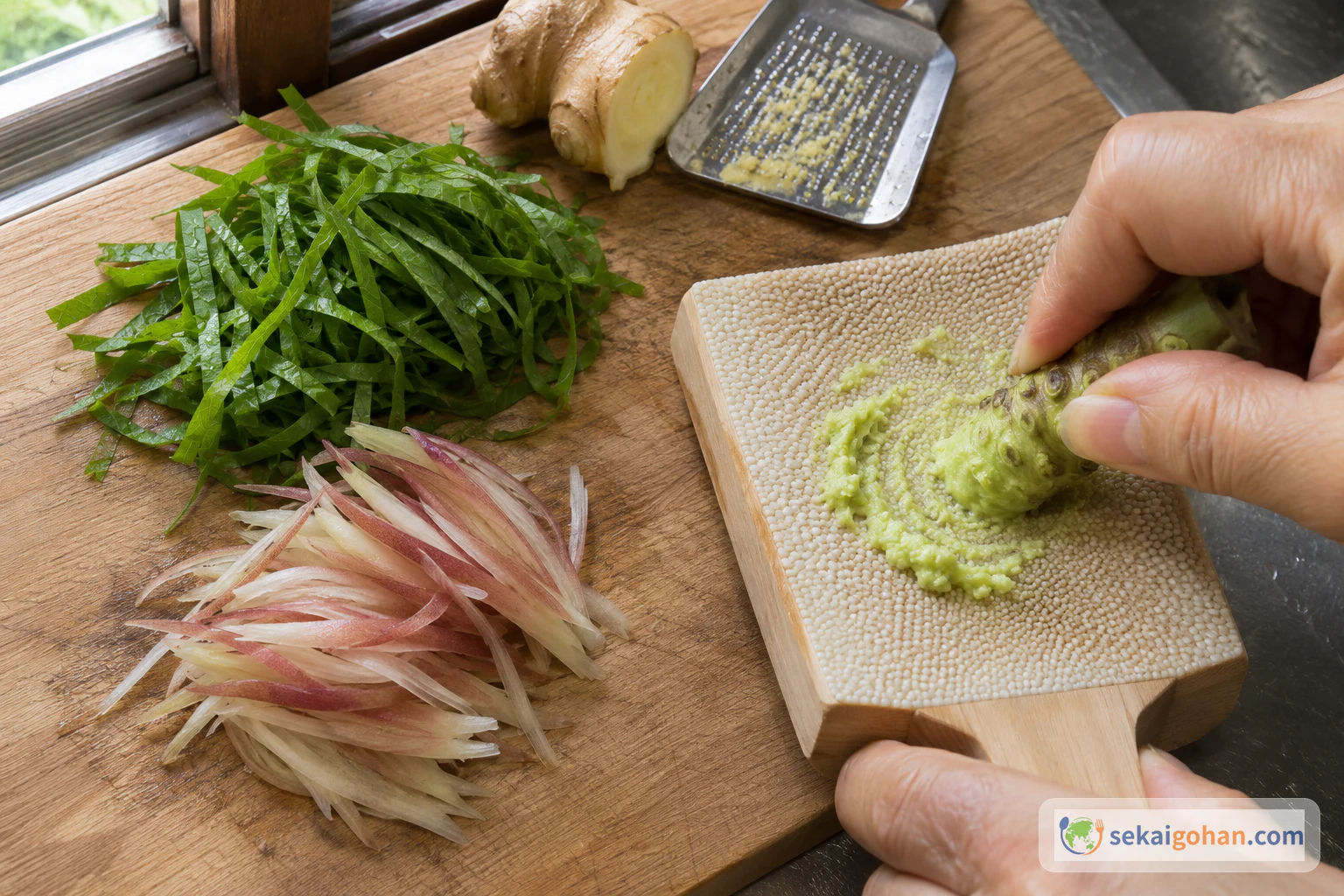
- Fine wasabi grater (sharkskin is the classic)
- Fine ginger grater (copper works well)
- Shallow serving dishes and small dipping dishes
Choosing and Substituting
Fresh yuba lives in the chilled tofu section. Look for it in the chilled case of a Japanese or other Asian grocery store, or order it online. Buy it for the day you will eat it, and check the use-by date on the pack.
If there is no sashimi yuba, flat yuba (hira yuba) or fresh rolled yuba (nama komaki yuba) does the same job: two sheets serve two people as a sashimi plate. A plain pack sold simply as fresh yuba also works; drain it well. Tsumami yuba stands in for kumiage yuba. Sashimi yuba alone still makes otsukuri, though the plate loses its soft, spoonable side.
Fresh wasabi is the condiment to seek out. Tube wasabi works, with less aroma. Grated ginger is the traditional other choice, and it pairs especially well with dashi. Horseradish also goes well with yuba when wasabi is scarce. Shiso and myoga add scent and height to the plate; leave them out and the dish still stands. If soy sauce tastes too strong next to the delicate yuba, use dashi alone.
Method
Everything here happens cold, and the order serves one aim: get the yuba from the fridge to the table firm, dry and in one piece. Set out the strainer, paper towels, board and dishes before the packs come out. Cutting and spooning take only a few minutes; the condiments are grated last, right before plating, so their scent is at its sharpest.
The colder the sashimi yuba, the firmer it is and the easier it cuts. Work straight from the fridge, and if the pieces start to feel soft and slack, return them to the fridge briefly before you go on.
Soy sauce poured over the plate soaks into the layers and floods the kumiage yuba. With the sauce on the side, each bite gets just a touch of seasoning, and anyone who wants it stronger dips again.
When It Goes Wrong
| What you see | Why | What to do |
|---|---|---|
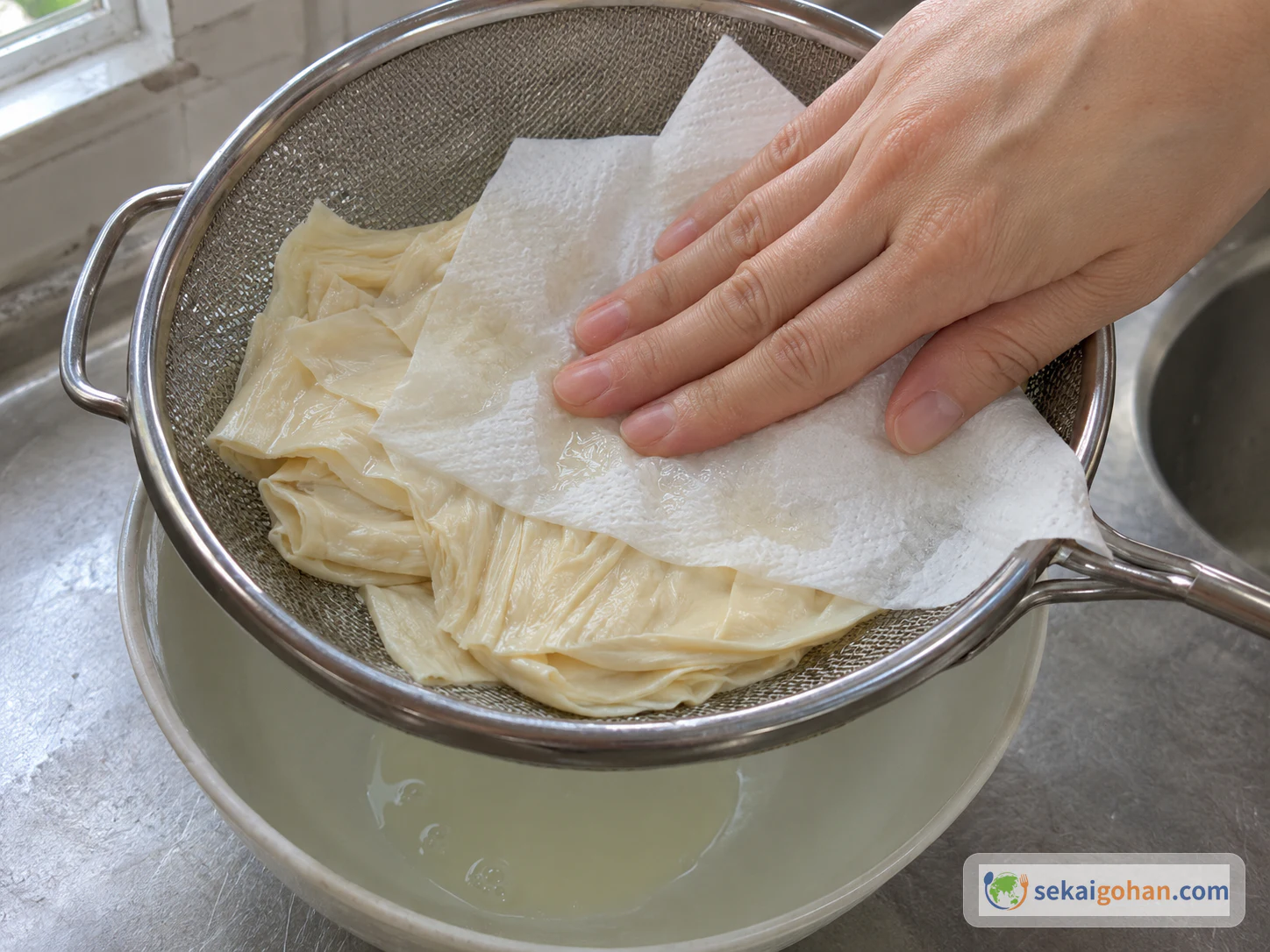
| The dipping sauce turns cloudy | Liquid from the pack was left on the yuba | Drain in the strainer and press with a paper towel before plating |
| The sashimi yuba tears or the layers slide apart | It warmed up and softened before cutting | Cut straight from the fridge; chill it briefly if it goes slack |
| The yuba will not come out of the tray | It is stuck to the sides | Run chopsticks around the edges, turn it over and shake, then squeeze the tray sides lightly |
| The kumiage yuba is watery and separated, or smells sour, or feels slimy or stringy | It has spoiled from warmth or age | Throw it away. Heating does not save it |
| The seasoning tastes too weak or too strong | The sauce amount is to taste | Adjust in each small dish; keep the sauce off the yuba |
Serving, Variations and Storage
At the table
Yuba sashimi opens a meal. It comes cold, before warm dishes, and in temple cooking it sits naturally beside other plant-based dishes. In summer, serve it cold. For a smaller plate in the Minobu style, a single serving is 1¾ oz (50 g) of fresh yuba with 1 tbsp dipping sauce. For guests, stack the shiso and myoga on top of each portion: the plate gains height and looks like a finished starter course.
Variations
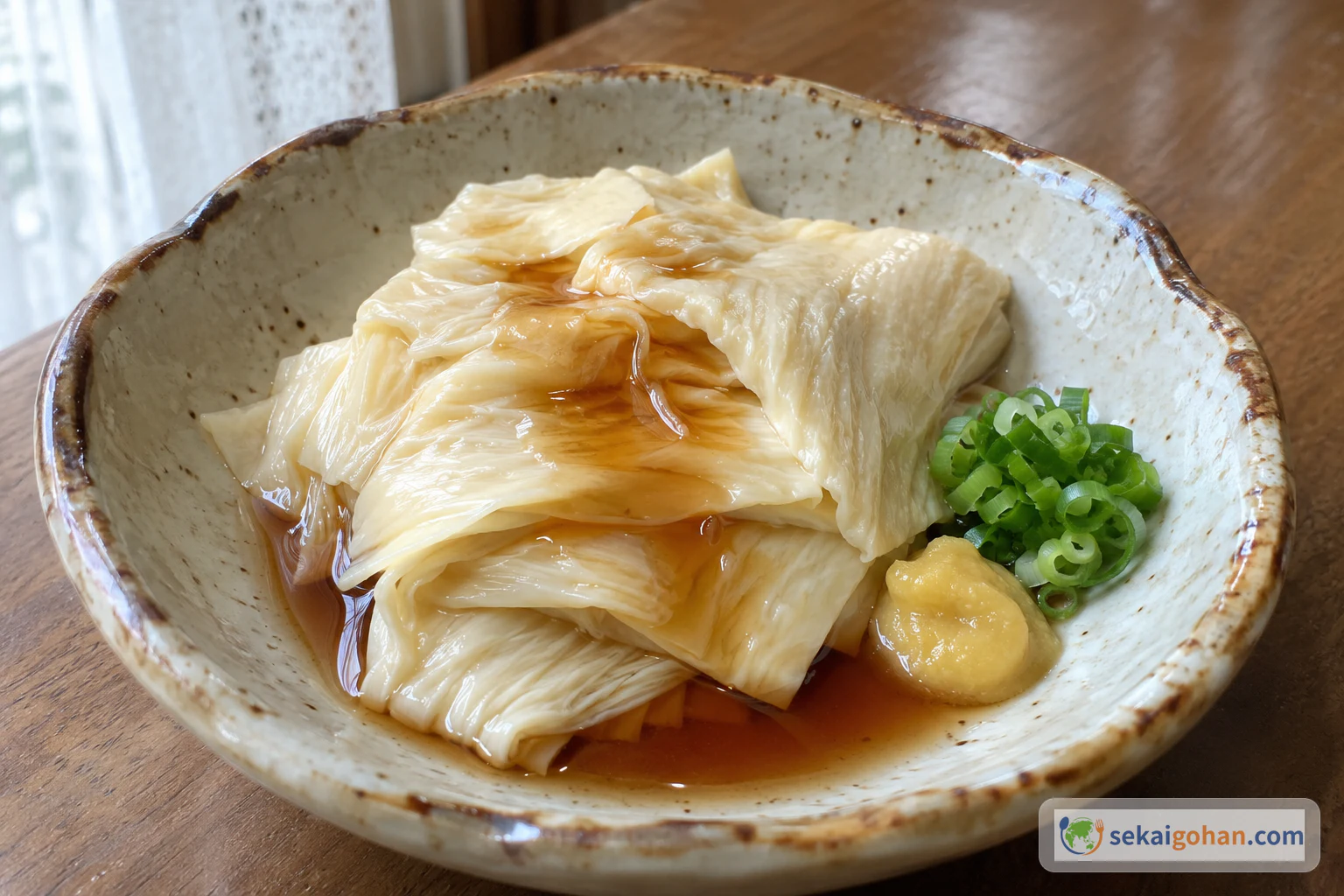
Mentsuyu, karashi and scallion. Inspired by the Kanazawa habit of karashi on cold tofu. Fold the drained yuba one sheet at a time into overlapping layers in a small, slightly deep dish, spoon a little straight-strength mentsuyu over it, and set karashi mustard and finely chopped scallion at the edge. If you use concentrated mentsuyu, dilute it as the label directs. The result is sweeter and saltier, with a sharp mustard kick in place of wasabi's green heat.
Umeboshi or sesame in the dipping sauce. Stir umeboshi paste or ground sesame into the dipping sauce. Plum brings sourness that cuts the richness; sesame makes it nuttier and rounder.
Measured dashi soy sauce. For a small plate, set 3 oz (80 g) of yuba for two in a dish, add a little wasabi, and pour 2 tsp dashi soy sauce over it. The seasoning is pre-measured and lighter; keep this as its own small plate rather than scaling it to the full recipe.
Warm in winter. In cold months, warm the yuba a little. The layers loosen and the texture turns softer and silkier, so serve it as soon as it is warm. Ginger with dashi suits this version.
Keeping it safe
Fresh yuba sold for sashimi is made by heating soy milk to 167°F (75°C) for at least 1 minute, then chilled to 50°F (10°C) or below within 2 hours of packing, and kept at 50°F (10°C) or below on its way to the shop. Its use-by date is 3 to 6 days from the day it was made. It is not reheated at home, so its safety there rests on the temperature and the date.
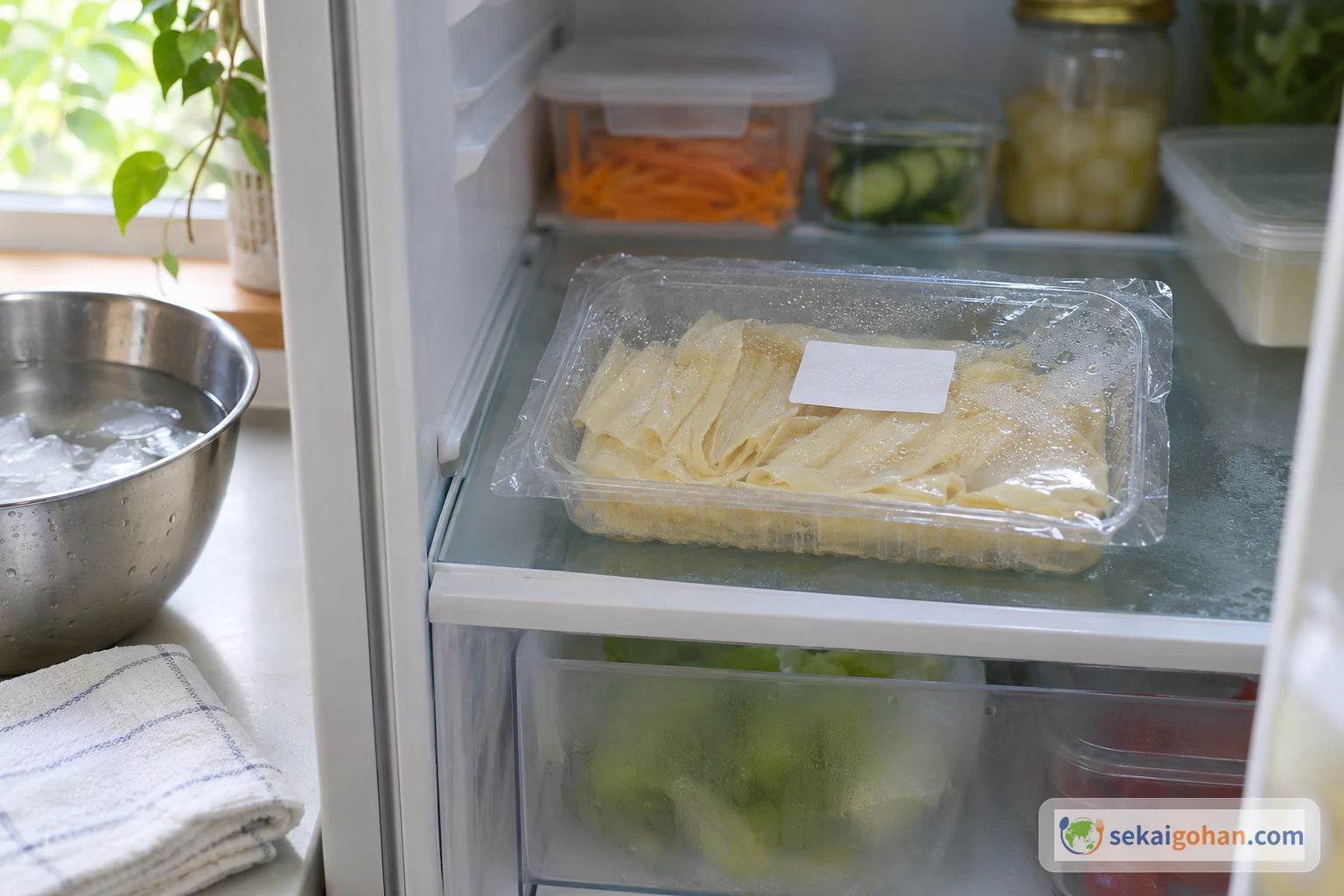
- Keep unopened yuba at 50°F (10°C) or below and eat it by the use-by date on the pack. Do not extend that date.
- Once opened, plan to finish it the same day. If any is left, seal it in a covered container, refrigerate it promptly at 50°F (10°C) or below, and eat it soon.
- If it smells sour, separates into watery liquid, or turns slimy or stringy, throw it away. Some bacterial toxins survive heat, so cooking spoiled yuba does not make it safe.
- Pregnant women, older adults, infants and anyone with a weakened immune system should skip this chilled, unheated dish and choose a cooked dish instead.
Frequently Asked Questions
Can I make yuba at home and serve it raw like this?
Make yuba at home only to cook with. Sashimi yuba depends on the rapid chilling and strict cold handling of a commercial maker, and a home kitchen cannot match that reliably. For sashimi, buy fresh yuba sold for eating as it is.
How is fresh yuba different from dried yuba?
Dried yuba is dried until very little water remains, keeps at room temperature, and has a best-before date of 6 months to a year. It is softened and cooked in simmered dishes and stir-fries. Fresh yuba is a chilled, perishable food with a short use-by date, and it is the one to use for sashimi.
Is yuba a good source of protein?
Yes. Every 3½ oz (100 g) of fresh yuba gives about 218 kcal, 21.8 g protein, 13.7 g fat and 4.1 g carbohydrate, along with 90 mg calcium and 3.6 mg iron. It contains essentially no salt, so all the seasoning comes from the dipping sauce.