Nikuman: Soft Steamed Dough Around a Savory Pork Filling
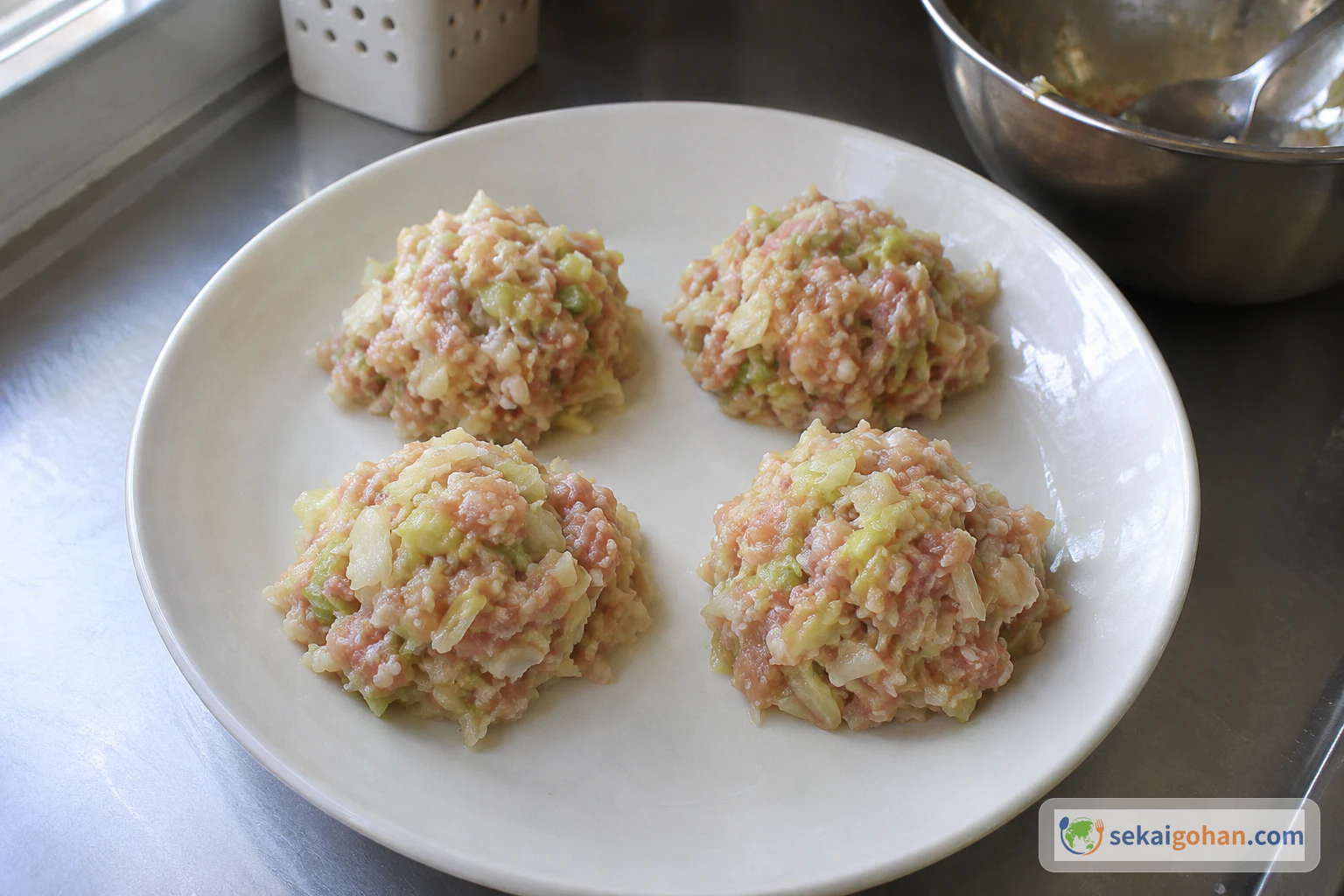
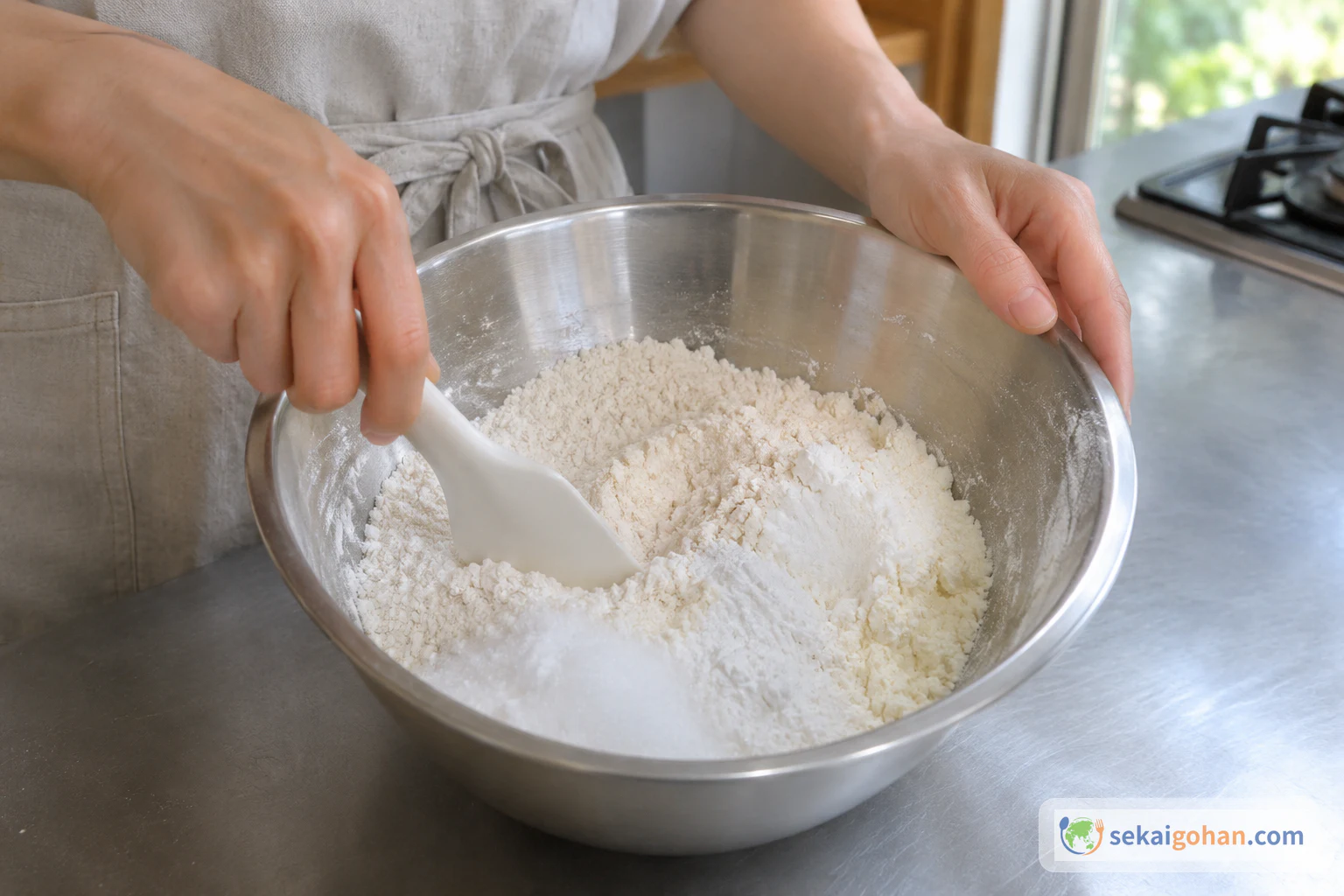
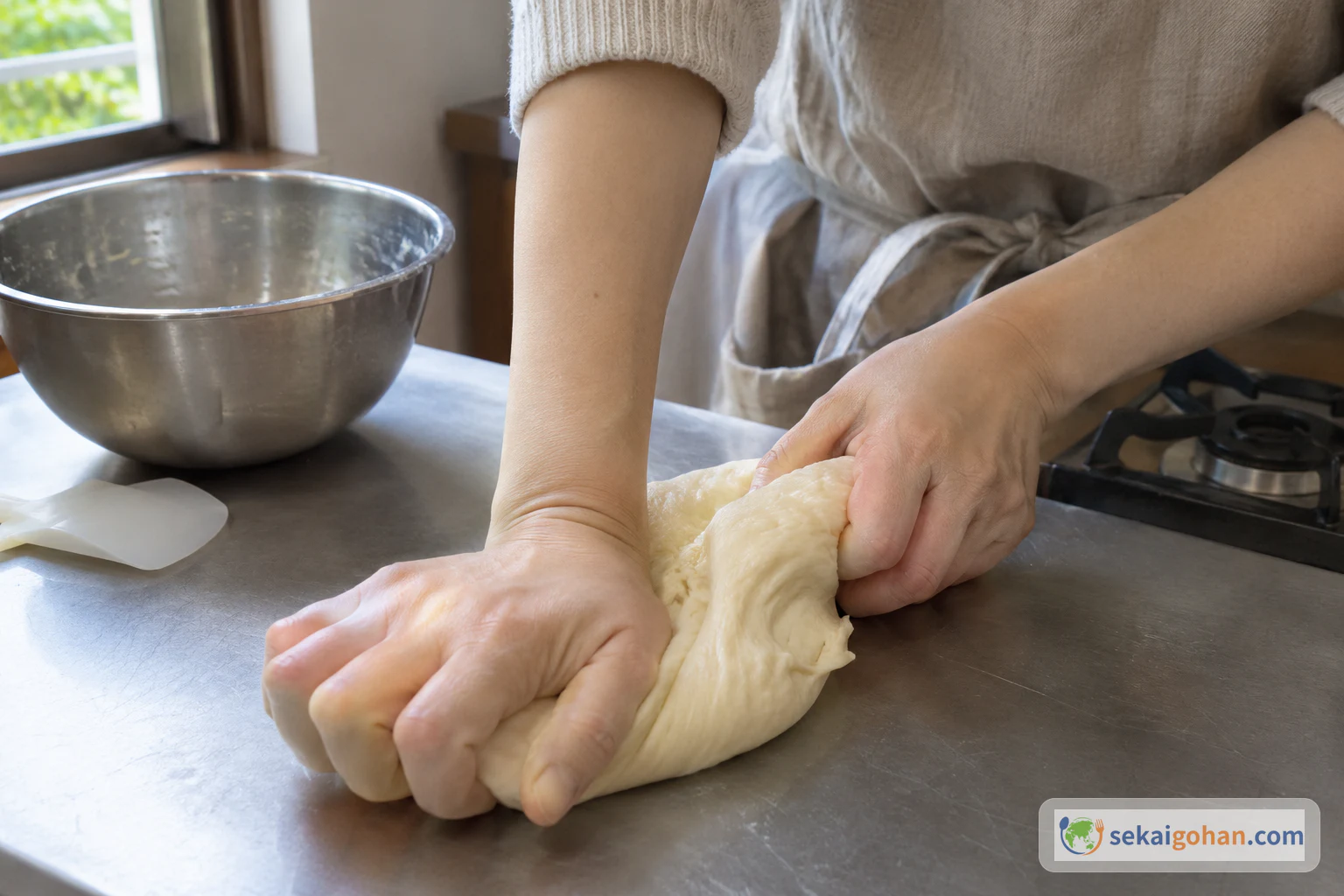
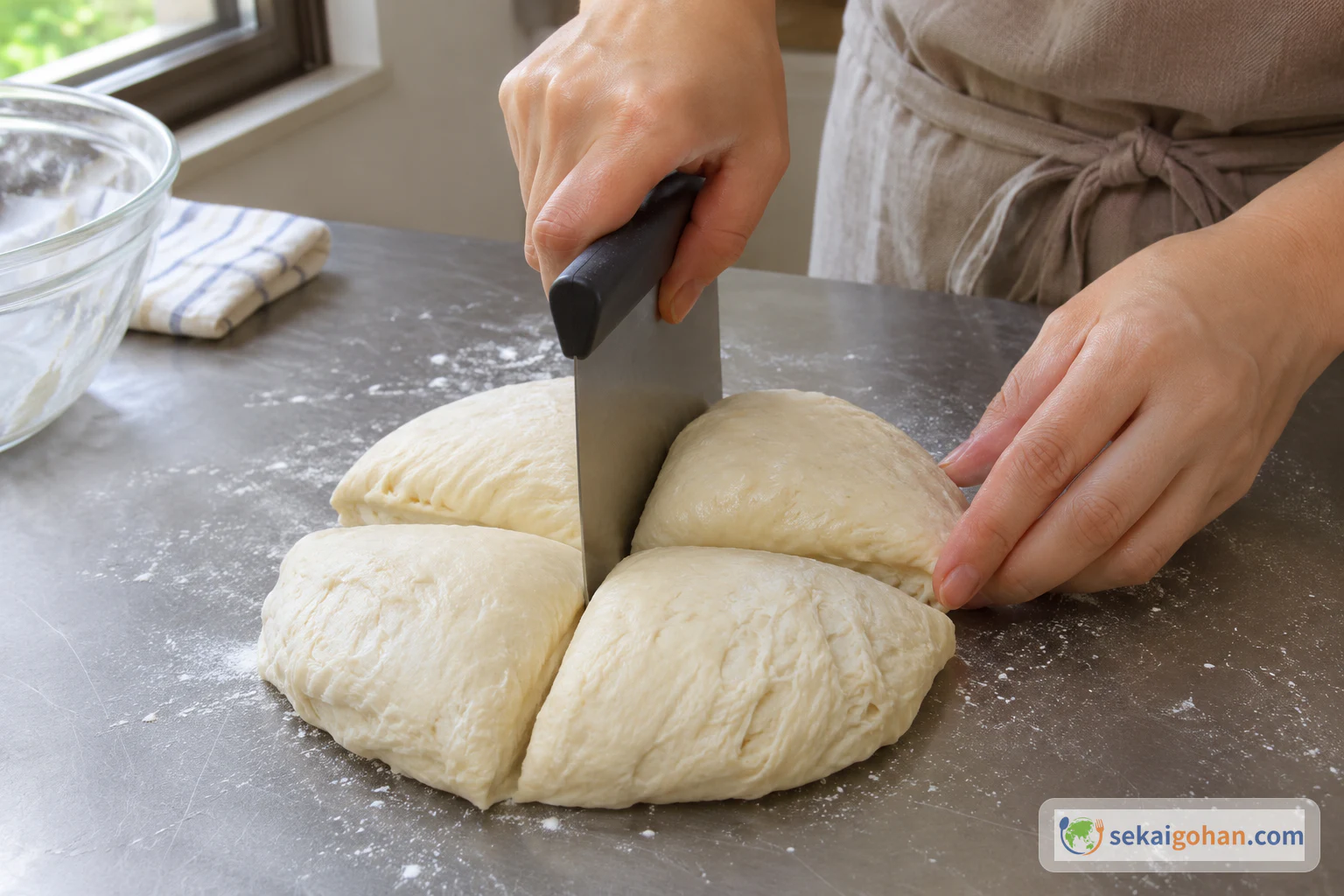
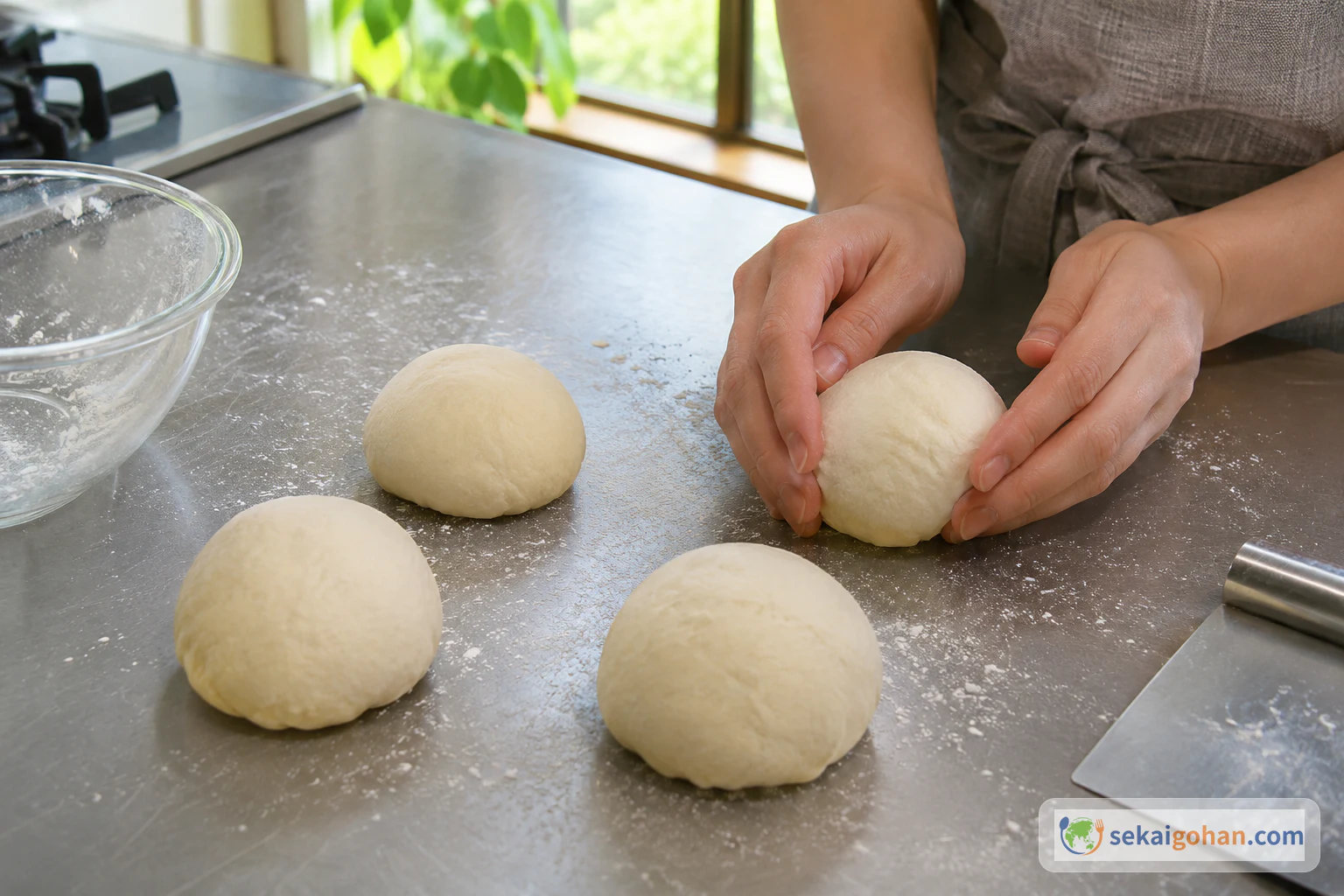
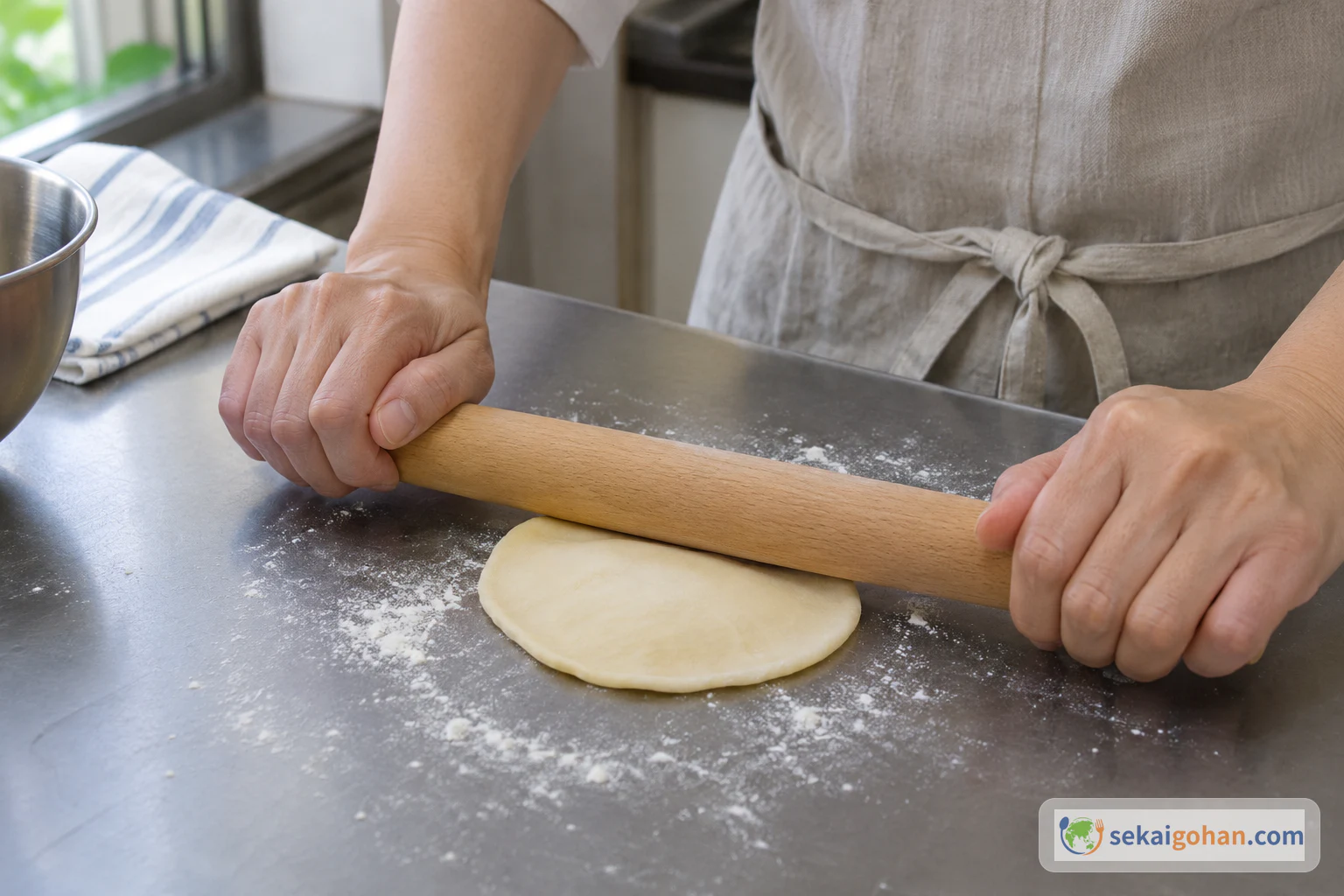
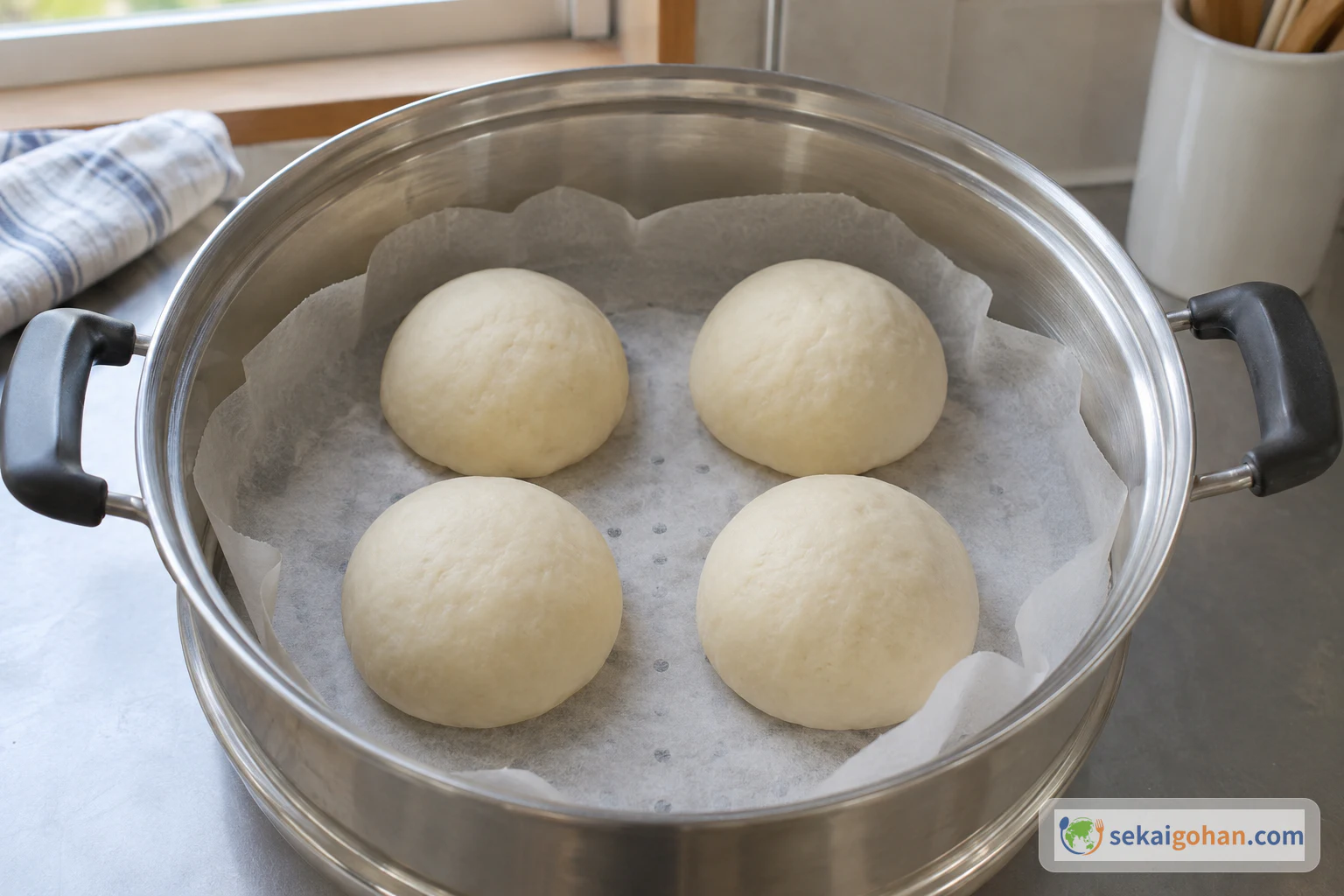
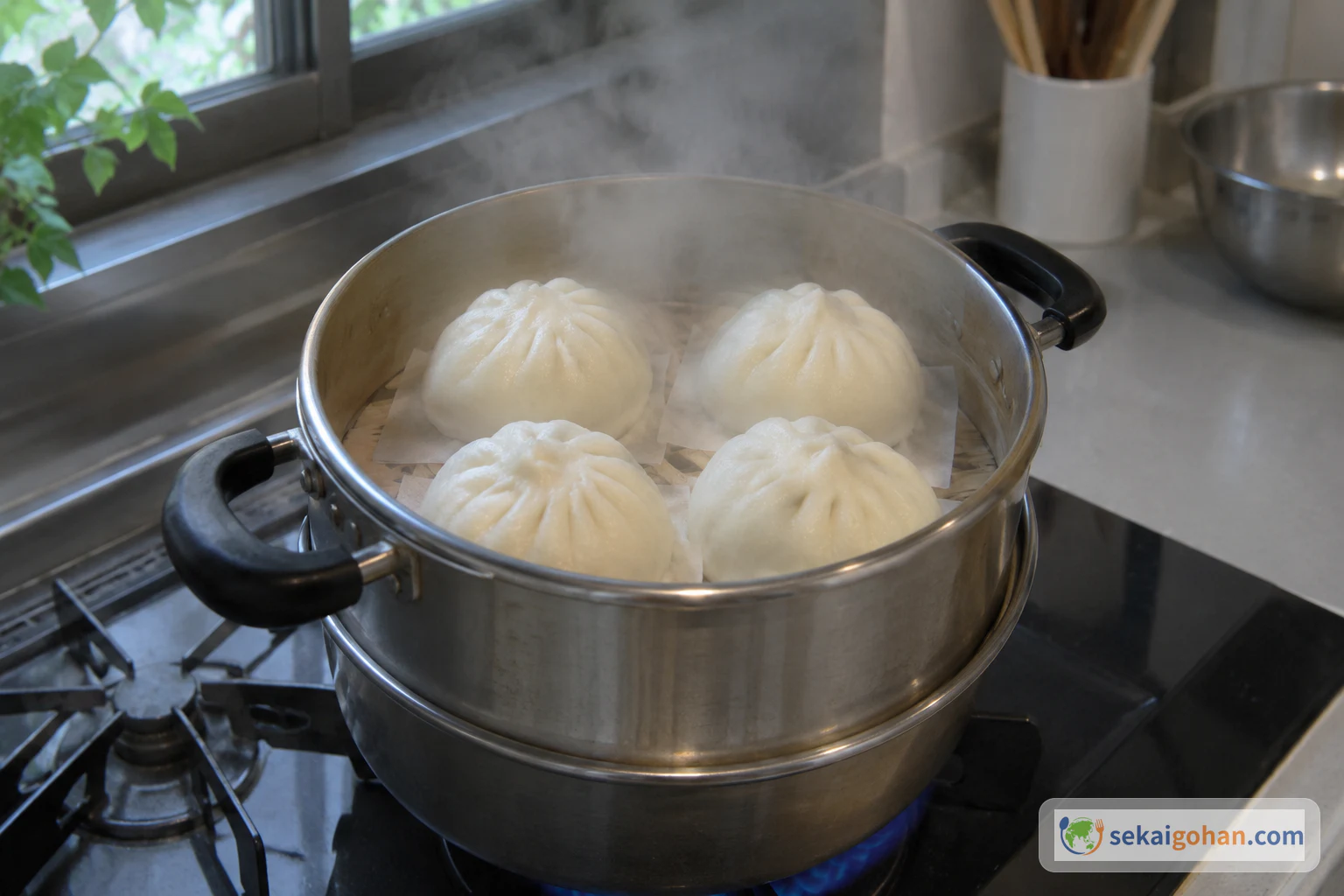
This recipe makes 4 buns. It has not been kitchen-tested by this site: no trial batch, proofing test, thermometer reading or storage test stands behind this article. The pictures illustrate each stage. They do not show that a dough has proofed properly or that a filling is safely cooked.
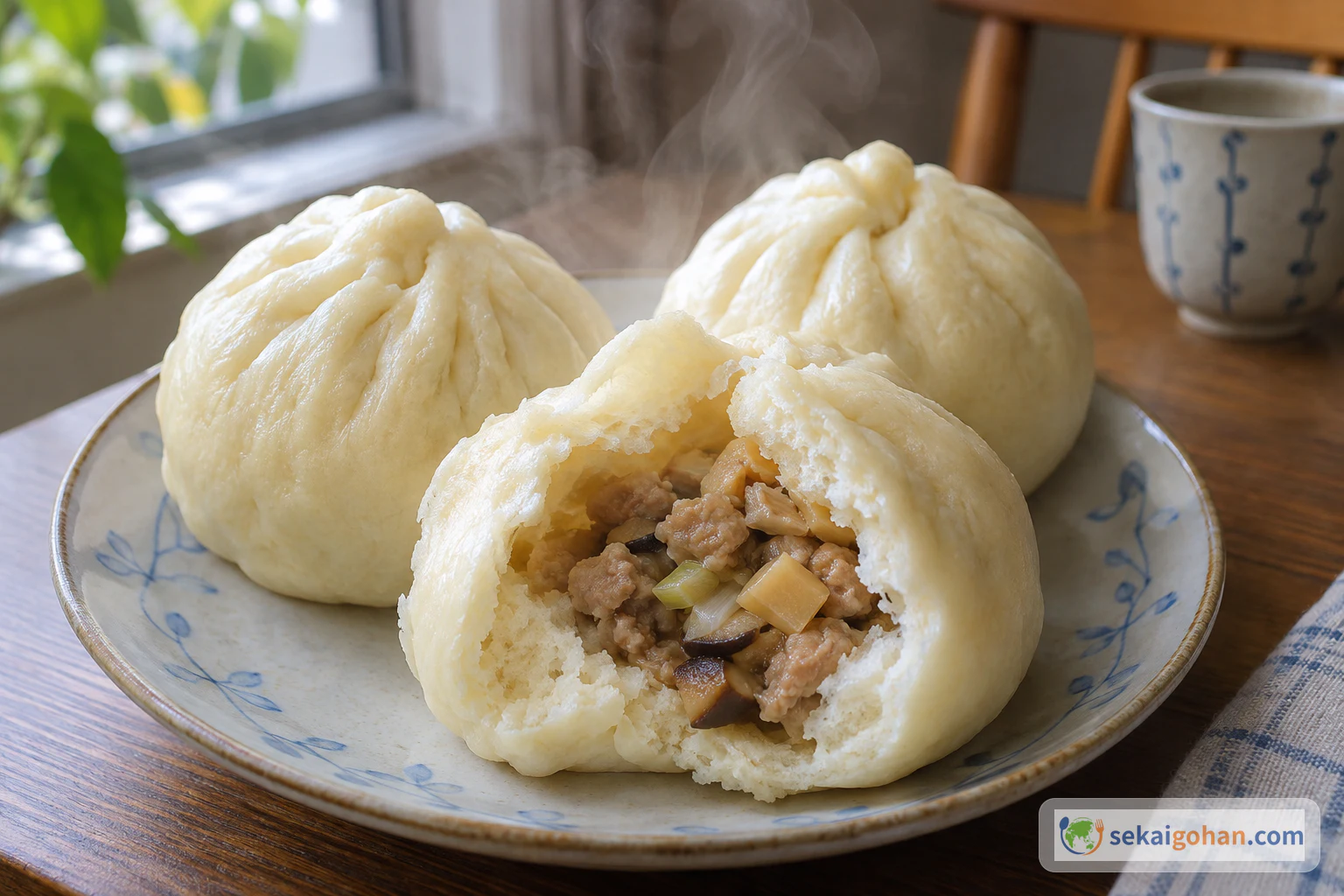
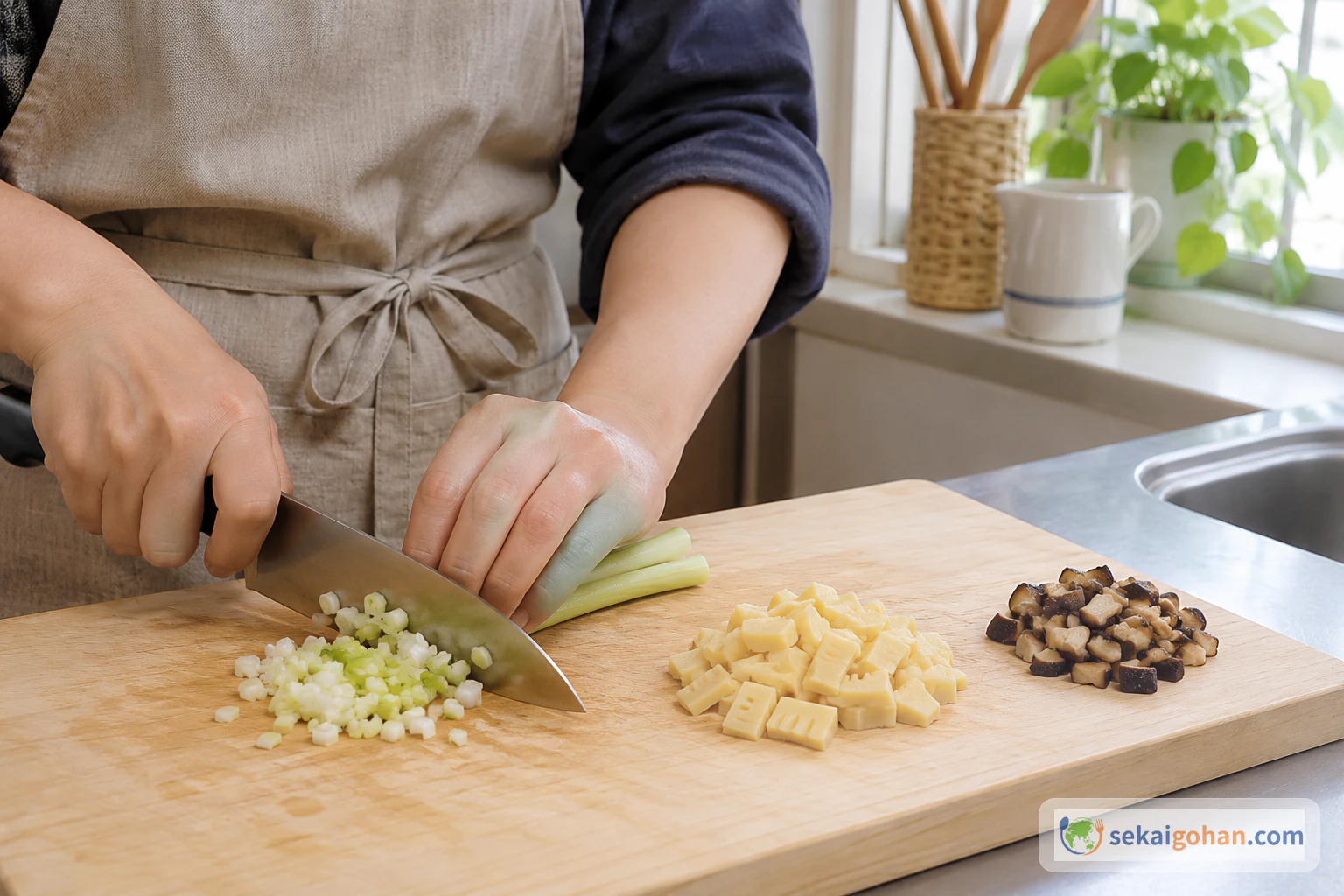
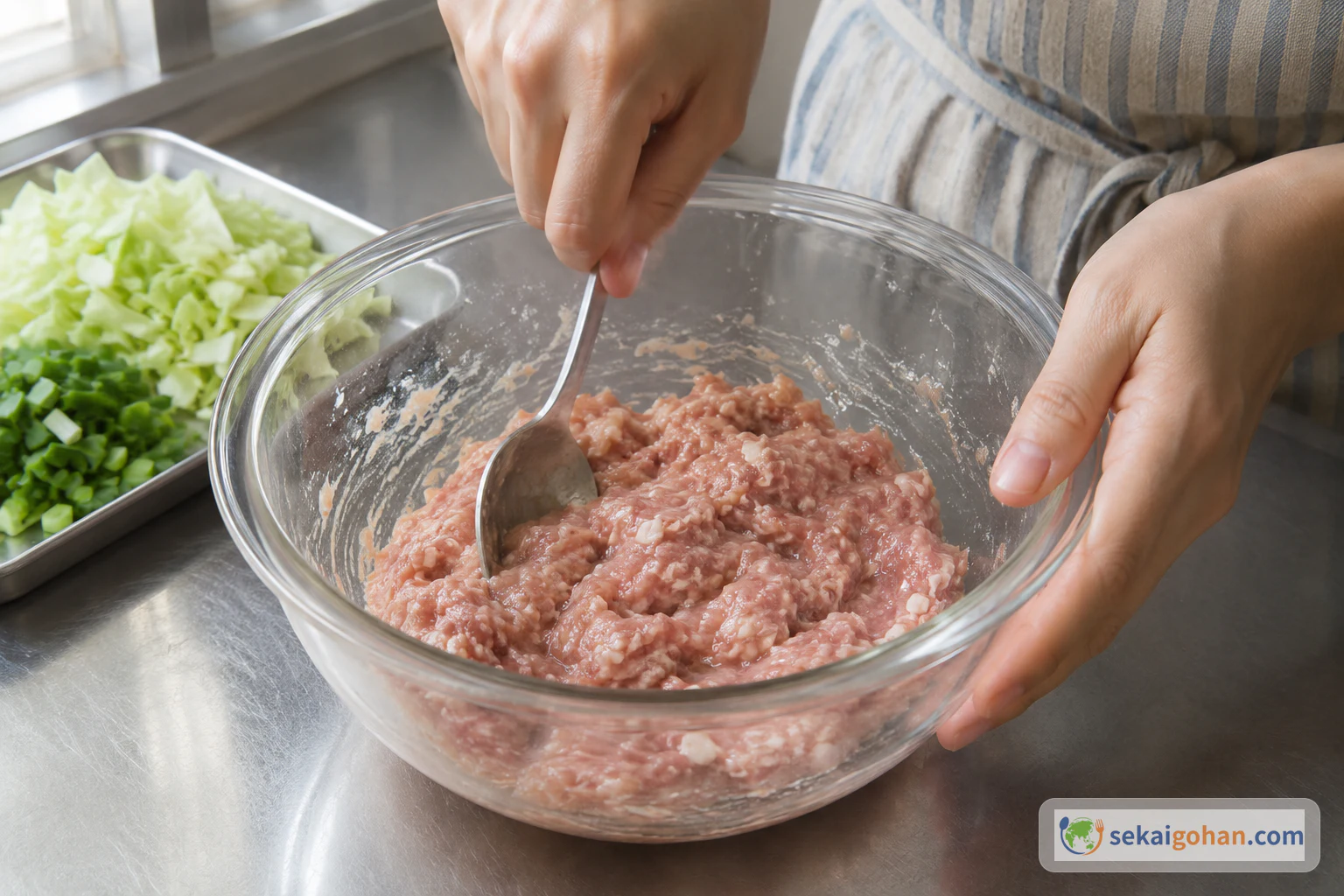
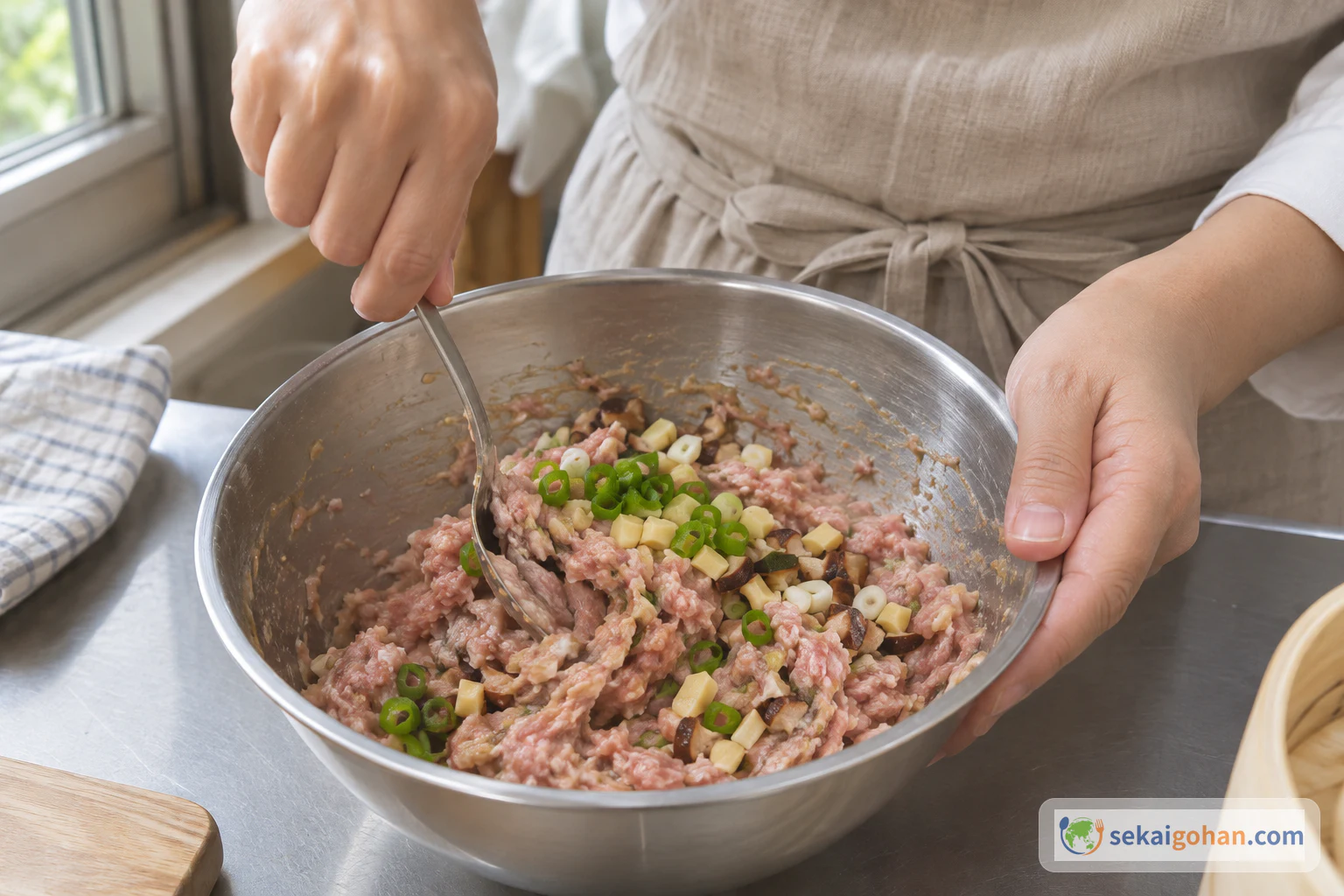
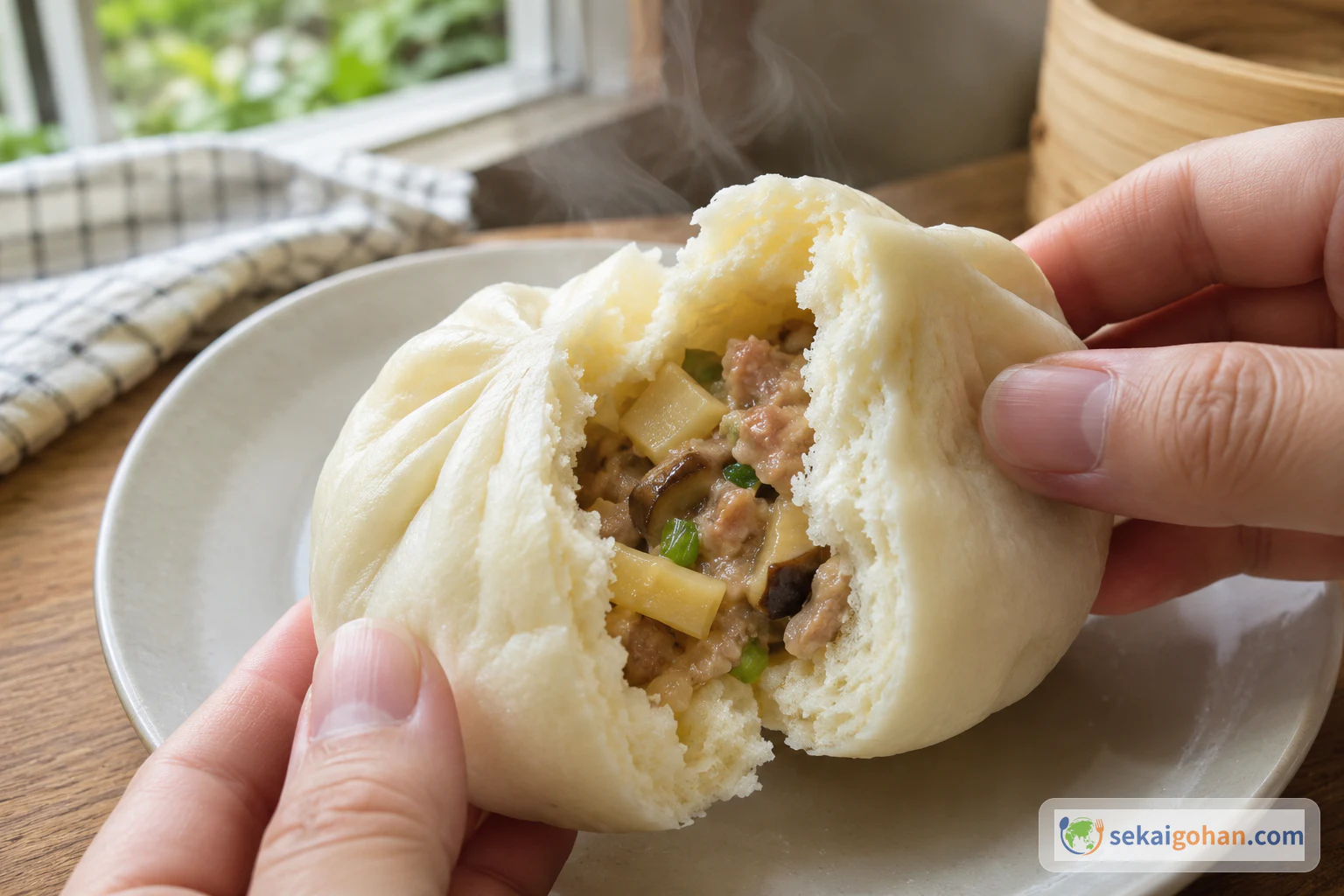
Steam rises when the steamer opens, and the pale wrappers underneath have turned soft and pillowy. Tear one open and the filling appears: pork seasoned with soy sauce and tenmenjan, flecked with long green onion, bamboo shoot and shiitake.
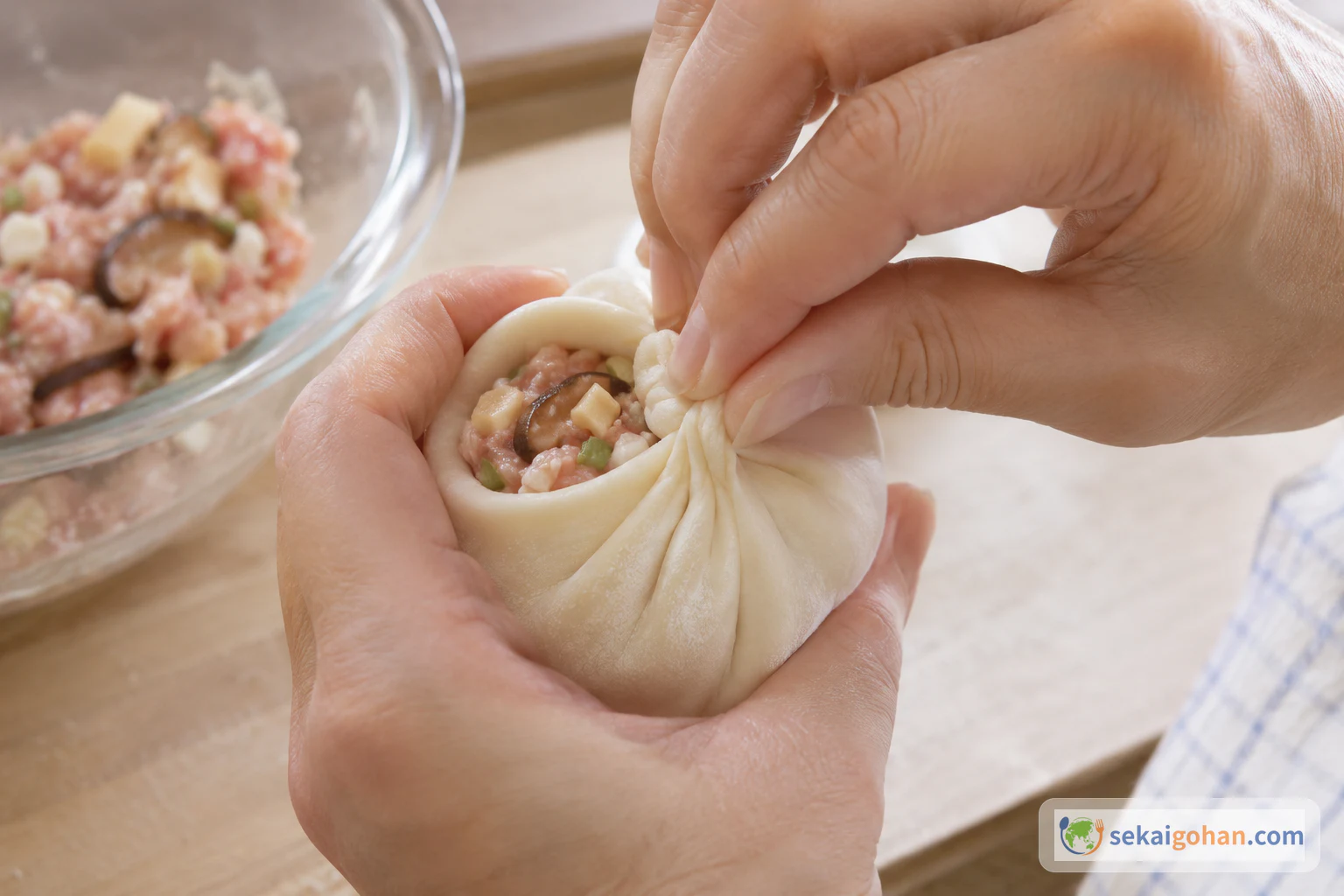
Nikuman is a closed bun of yeast-raised wheat dough, filled and steamed. For a home cook, the hard parts are closing the pleats and knowing when the pork is done. This article treats those two questions separately from the clock: the steaming time is a starting point, and the thermometer settles whether the filling is ready.
Nikuman or Butaman: One Bun, Several Histories
Japan's Ministry of Education, Culture, Sports, Science and Technology, in the notes to its food composition tables, describes Chinese-style steamed buns as a filling wrapped in yeast-raised wheat dough and steamed. It adds that the meat-and-vegetable type is called buta-man in the Kansai region. That is a useful small window on regional language, though not a map of what every part of Japan says.
Two commercial histories are often part of the story, and they belong to the businesses concerned. Hyogo's official tourism site introduces Roshoki in Kobe's Nankinmachi, which opened in 1915, and describes the shop's own pork buns: a koji-fermented wrapper, soy-seasoned mixed ground meat with green onion, and wrapping by hand. Shinjuku Nakamuraya records that it launched its "Tenka Ippin Shina Manju" in 1927, adjusting the baozi its people had eaten in China to Japanese tastes, and says the buns then became familiar to the general public. One is a shop's local history and the other a company's product history. Neither is treated here as proof of a single national origin.
The bun in this article is a different thing from both. It is a four-bun home recipe from the Tokyo Gas Food Information Center, with ground pork and tenmenjan and without Roshoki's koji wrapper or mixed meat. You can find more dishes from the same country among our Japanese recipes.
What the recipe says, and what this article adds
The formula, the order of work, the 10 cm wrapper, the dry proof of about 30 minutes and the 15 minutes of steaming over high heat all come from Tokyo Gas. That recipe gives no proofing temperature, rise or endpoint, and further searching turned up no official figure for this kind of dough proofed in a steamer. So no target temperature appears here. The following conditions are editorial additions:
- Finger test and 60-minute ceiling. These come from a nikuman recipe by a food-improvement volunteer group, published on the official site of Tsuchiura City. It is the same general type of bun but a different 10-bun formula, and it is not a safety standard. These values were not tried on this formula.
- Proofing at room temperature, off the heat. No steam and no warm oven, because the buns hold raw pork. If the dough has not reached the finger-test feel by 60 minutes, steam it anyway. Both are editorial decisions.
- Time limit for the filling. Discard it, uncooked, if more than 2 hours pass between taking it out of the refrigerator and starting to steam, or 1 hour if the room is above 32°C. This adapts FDA guidance on food at 40–140°F, which allows 2 hours, or 1 hour when the outdoor temperature is above 90°F. Applying an outdoor rule indoors, and rounding 90°F to 32°C, is a cautious editorial choice.
- Center temperature. Japan's Ministry of Health, Labour and Welfare gives 75°C for 1 minute or more at the center of ground-meat dishes. The 15 minutes of steaming does not replace that check.
For comparison, a rice-flour version from Japan's agriculture ministry proofs pork-filled buns for about 20 minutes under a damp cloth and also steams them over high heat for 15 minutes. Kai Group's six-bun recipe uses pork belly, and Zojirushi's is built around one specific microwave model. These are other recipes, and their formulas and temperatures are not borrowed here.
This caution concerns raw pork filling sitting at room temperature. It does not mean yeast dough is inherently dangerous.
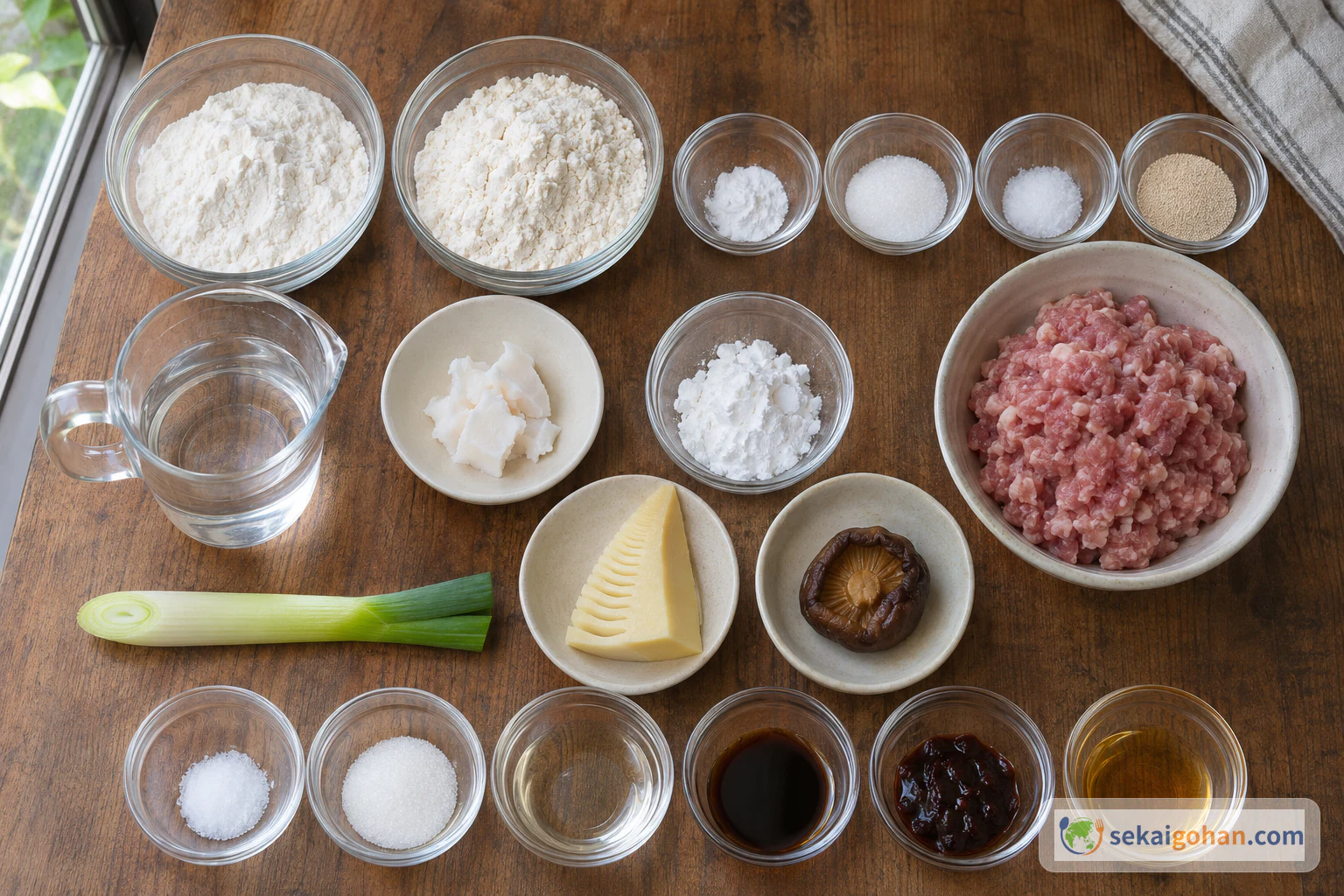
Ingredients for 4 Buns
Equipment
- Steamer
- Oven paper, to line the steamer
- Clean food thermometer
- Kitchen scale and measuring spoons
- Knife and cutting board
- Mixing bowls and a small cup
- Rolling pin
- Bench scraper
Choosing and Swapping
Any swap below moves the bun away from this recipe.
- Yeast: use commercial instant dry yeast along with the baking powder. The proofing guidance in this article does not cover homemade yeast or old dough, so don't swap those in.
- Tenmenjan: don't silently replace it with red miso or doubanjiang. Leaving it out changes the flavor, and no replacement amount is offered here.
- Lard: this recipe stays with lard; a neutral oil would make it a different formula.
This recipe contains wheat, soy from the soy sauce and tenmenjan, and sesame oil. Check the labels of the products you use, including the lard, soy sauce and tenmenjan, and take care to avoid cross-contact. If you change an ingredient, recheck the allergens too.
Method: Filling First, Then Wrapper, Then Steam
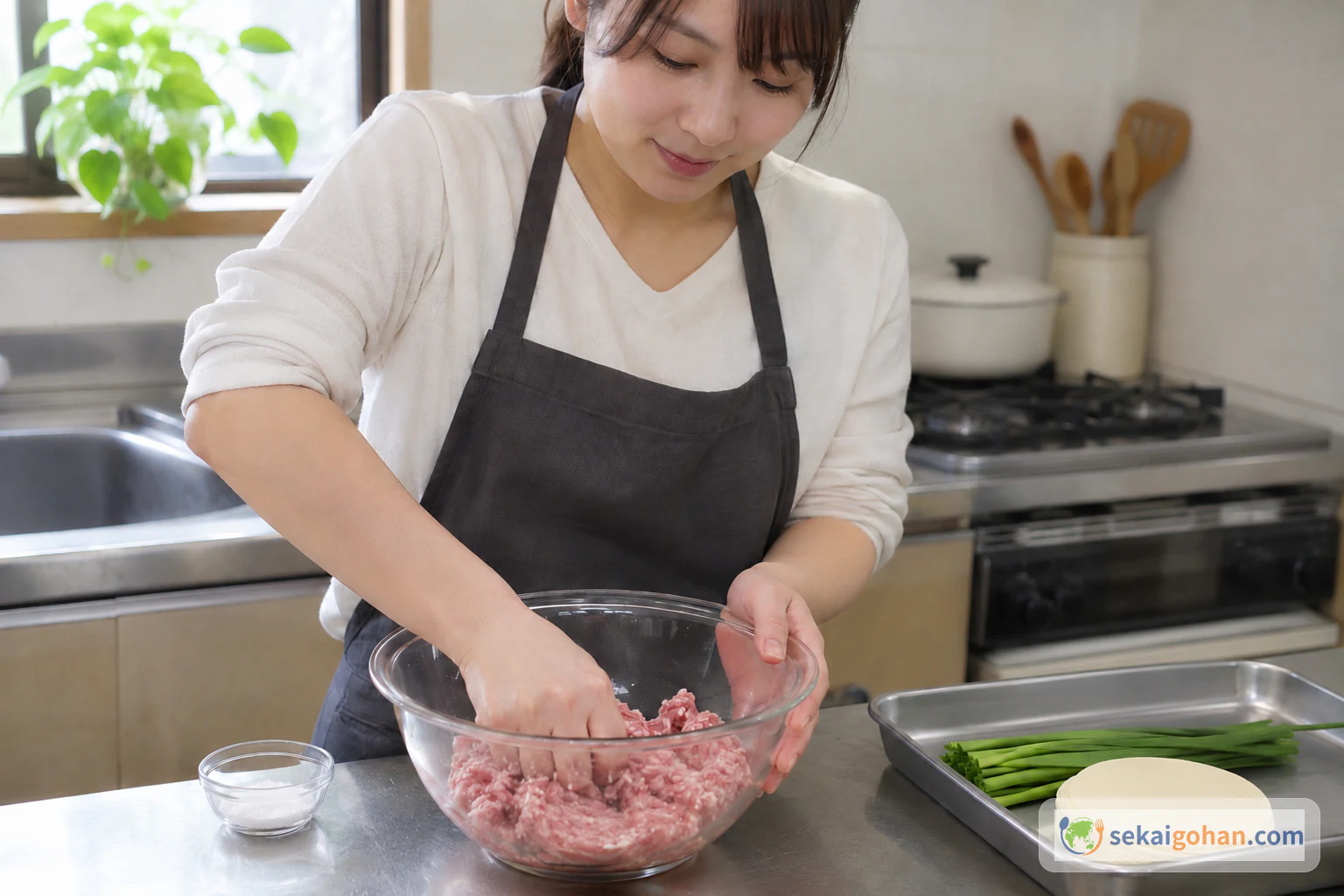
Keep the pork refrigerated until you use it. Never taste the raw filling. Wash your hands and any tools after they touch raw meat, and keep them away from other foods and from the finished buns. Take care around steam and hot equipment.
When Something Goes Wrong
| Problem | What to look at | What to do |
|---|---|---|
| The wrapper is hard to handle | The thickness of the center and the edge | Check that the center is thicker and the edge thinner, and have the filling portions ready before you start wrapping |
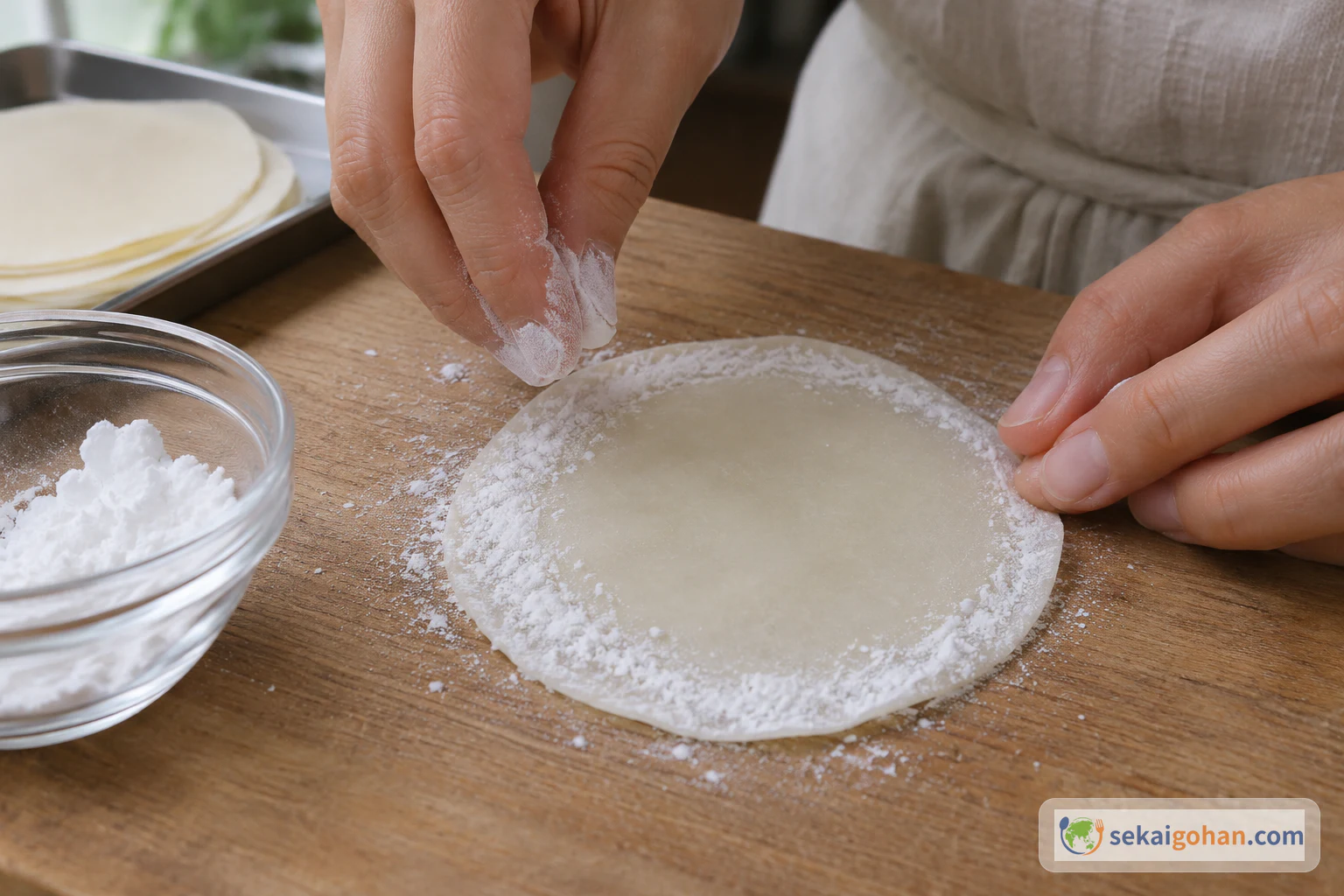
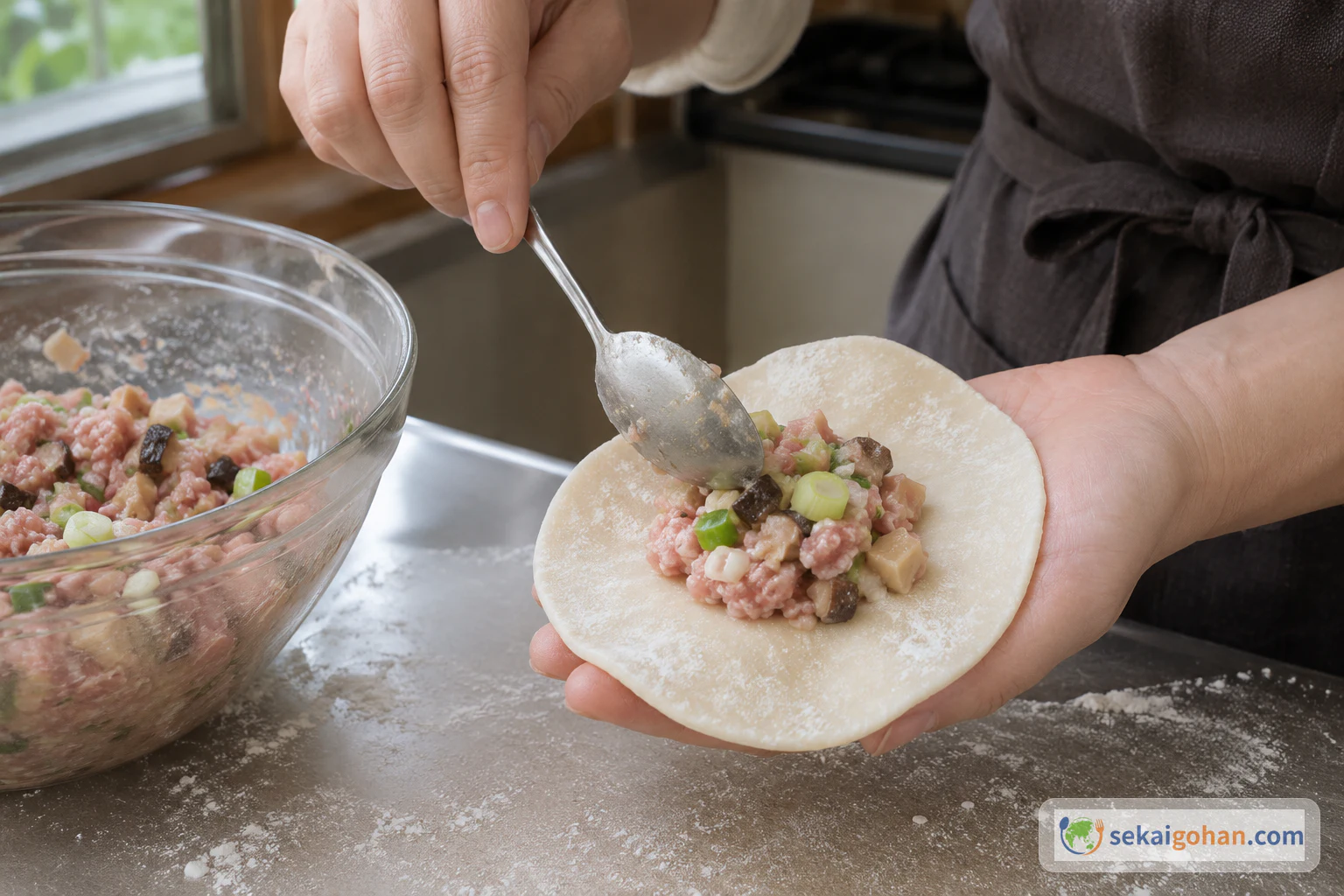
| The pleats won't close | The filling portion and the starch | Check that you used just one portion of filling and that the starch went around the edge, leaving the center clear |
| You can't tell if the proof is done | The feel of the dough | Press with a washed finger and compare with how it felt before proofing. Don't go past 60 minutes |
| The dough hasn't changed by 60 minutes | The clock | Steam it anyway rather than extending the proof |
| The filling has been out too long | The time since it left the refrigerator | Past 2 hours, or 1 hour in a room above 32°C, discard the buns without cooking them |
| The center hasn't reached temperature | The thermometer reading | Keep steaming past 15 minutes, then check again |
No rescue amounts of extra water or flour are given, because none are confirmed for this dough.
Doneness, Leftovers and Hygiene
Color, puffiness and the look of the juices do not stand in for a temperature check, and neither do 15 minutes on the clock. The filling is done once its center has held 75°C or higher for at least 1 minute. Filling shape, the number of buns and how your steamer runs can all change how long that takes.
Japan's health ministry warns against eating pork or ground meat raw or undercooked, and advises refrigerating raw meat and preventing cross-contamination through hands and utensils. Its home food-safety guidance also says to refrigerate food if you pause partway through cooking and not to leave food at room temperature for long, before or after cooking.
Plan to finish the buns freshly steamed. If any are left over, don't leave them out at room temperature for long. The same guidance gives 10°C or below as the refrigerator guideline. Reheat leftovers thoroughly, throw them away if too much time has passed, and if anything seems at all doubtful, don't eat it. This article gives no storage days, freezing period or reheating time, because none are confirmed for this bun.
Small Changes That Keep the Formula
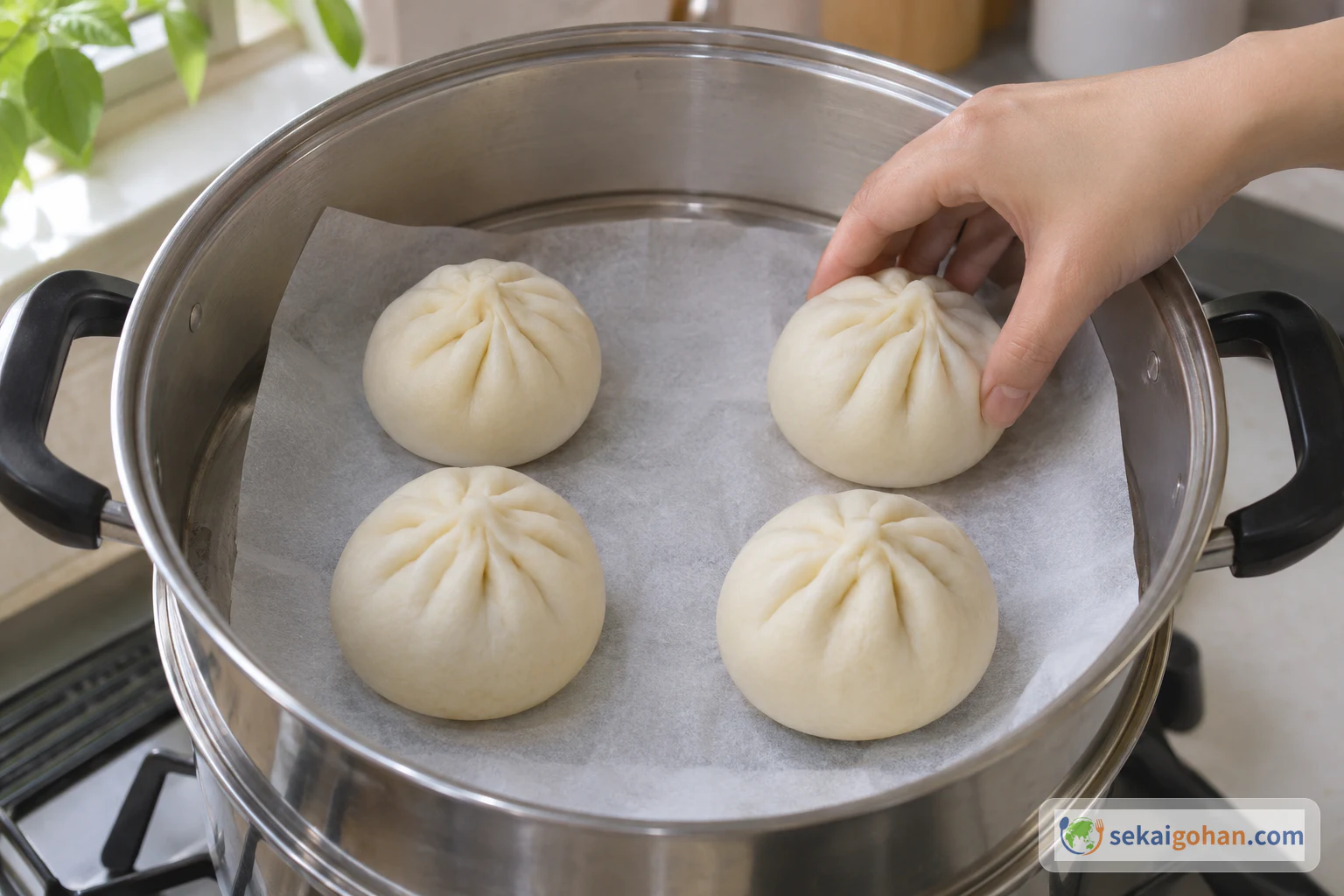
- Steam in batches. If your steamer can't hold all four, steam only as many as fit. The overall time grows, so the wait counts toward the filling's time limit, and each batch still needs the thermometer check.
- Even out the green onion. Chop it to a similar size so that no bite is all onion.
- Change the bamboo shoot's cut. Keep the 50g, but cut it a little finer or coarser to change the crunch.
- Mind the wrapper's shape. Keeping the center thicker than the edge makes it easier to wrap, with no change to the amounts or the number of buns.
From Nikuman to Other Wrapped Dishes
Similar-looking dishes are built differently, and none of their formulas are used here:
- Xiaolongbao, from China, is a dim sum dumpling that holds meat juices inside, using jellied stock.
- Bánh bao, from Vietnam, is a steamed bun whose filling combines ingredients such as egg, mushroom and fish sauce.
- Khinkali, from Georgia, is boiled rather than steamed.
- Hujiao bing, from Taiwan, is a meat-filled, bun-like dish that is baked rather than steamed.
Taiwan's gua bao differs again: it is an open bun with the filling tucked inside, not a sealed one.
Frequently Asked Questions
How many people does this feed?
The Tokyo Gas recipe makes 4 buns. It doesn't give a number of servings, and how many people that feeds depends on the rest of the meal.
Is 15 minutes of steaming enough?
Fifteen minutes over high heat is the recipe's steaming time, but it isn't a safety guarantee. Japan's health ministry gives 75°C for 1 minute or more at the center for ground-meat dishes, so check with a thermometer and keep steaming if the filling falls short.
What temperature should the dough proof at?
Neither the Tokyo Gas recipe nor the other resources consulted give a figure for this kind of dough, so this article doesn't name one. Temperatures you may see elsewhere belong to other formulas or specific appliances. Here the steamer stays off the heat at room temperature, and time and the discard limit do the job of keeping the pork from sitting out too long.
How do I know the buns have proofed?
Press with a washed finger: the dough should feel softer and puffier than before proofing. That test and the 60-minute ceiling come from the Tsuchiura City group's different formula and have not been tried on this one, so treat them as a guide. They are not a promise of a particular rise.
The wrapper won't close. Should I add water or flour?
No amounts are confirmed for that. Check instead that the center is thicker than the edge, that the starch went around the edge, and that you are using one portion of filling.
Can I leave out the tenmenjan?
You can, but it becomes a departure from this recipe and the flavor changes. No replacement amount is suggested.
Can I make these ahead or freeze them?
No storage period, freezing method or reheating time could be confirmed for this bun, so none is given. Plan to eat them freshly steamed, and reheat any leftovers thoroughly.
Sources
- Tokyo Gas Uchikoto (recipe by Tokyo Gas Food Information Center), "蒸したてを召し上がれ! 手作り「肉まん」." The four-bun formula, order of work, 10 cm wrapper, dry proof of about 30 minutes and 15 minutes of steaming over high heat. https://uchi.tokyo-gas.co.jp/recipes/topics/6485
- Ministry of Health, Labour and Welfare (Japan), "お肉による食中毒の原因や予防方法について紹介します。" Risks of raw or undercooked pork and ground meat, 75°C at the center for 1 minute or more, refrigerating raw meat and preventing cross-contamination. https://www.mhlw.go.jp/stf/web_magazine/closeup/08.html
- Ministry of Health, Labour and Welfare (Japan), "家庭でできる食中毒予防の6つのポイント." Refrigerator guideline, refrigerating food when pausing cooking, not leaving food out for long, reheating leftovers thoroughly and discarding doubtful food. https://www.mhlw.go.jp/stf/seisakunitsuite/bunya/kenkou_iryou/shokuhin/syokuchu/01_00006.html
- U.S. Food and Drug Administration, "Handling Food Safely While Eating Outdoors." The 2-hour limit, the 1-hour limit above 90°F outdoors, and discarding food past those limits. https://www.fda.gov/food/buy-store-serve-safe-food/handling-food-safely-while-eating-outdoors
- Tsuchiura City Dietary Improvement Volunteers Council, Nikuman Group, "ハッスル中華まん レシピ." Proofing wrapped buns for 30–60 minutes, covering with plastic wrap or a cloth, and the finger-press guide. A different formula. https://www.city.tsuchiura.lg.jp/data/doc/1781858439_doc_25_0.pdf
- Tsuchiura City, "肉まん班活動." The city page where the group's recipe is published. https://www.city.tsuchiura.lg.jp/kenko-fukushi-iryo/kenko-iryo/shokukaizensuishiniin/page013243.html
- Ministry of Agriculture, Forestry and Fisheries (Japan), "米粉入り中華まん." A different rice-flour version, for comparison: about 20 minutes of second proof under a damp cloth and 15 minutes over high heat. https://www.maff.go.jp/j/seisan/kakou/mezamasi/recipe/recipe254.html
- Ministry of Education, Culture, Sports, Science and Technology (Japan), "Standard Tables of Food Composition in Japan 2015 (Seventh Revised Edition), Notes on Foods, Chapter 3." The description of Chinese-style steamed buns and the Kansai name buta-man. https://www.mext.go.jp/component/english/__icsFiles/afieldfile/2017/12/20/1385123_Notes-on-food_r11.pdf
- Hyogo Tourism Navi, "豚饅頭発祥の地「老祥記」で豚まんづくり体験." Roshoki's 1915 opening and the features of that shop's buns. https://www.hyogo-tourism.jp/review/detail_478.html
- Shinjuku Nakamuraya, "中華まん|商品の歴史." The company's own account of its 1927 product and how it was adapted. https://www.nakamuraya.co.jp/pavilion/products/pro_003.html
- Kai Group, "肉まん." A different six-bun recipe, for comparison only. https://www.kai-group.com/fun/recipe/detail/105/
- Zojirushi, "肉まん." A microwave method for a specific appliance model, for comparison only. https://www.zojirushi.co.jp/recipe/list/2598.html