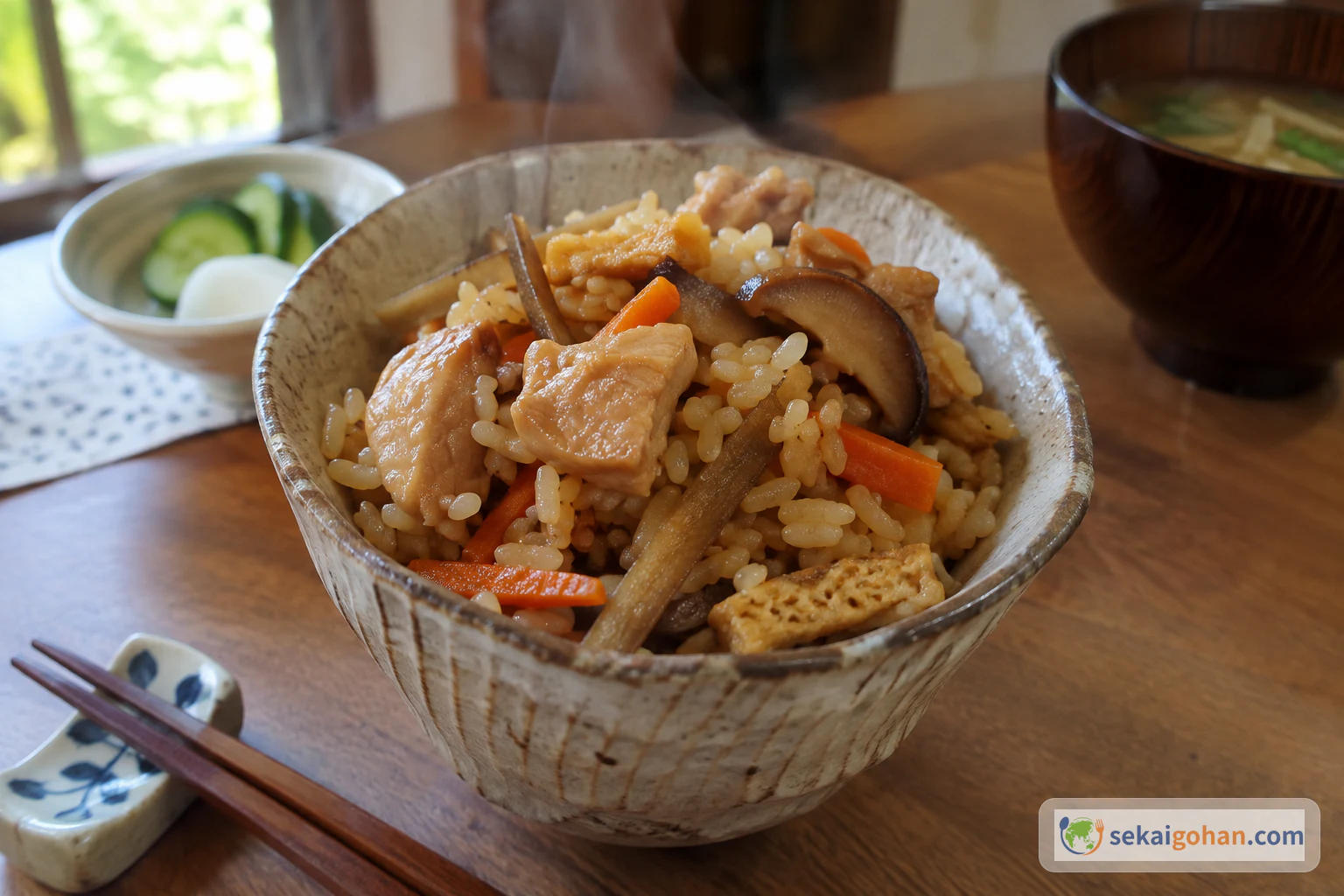
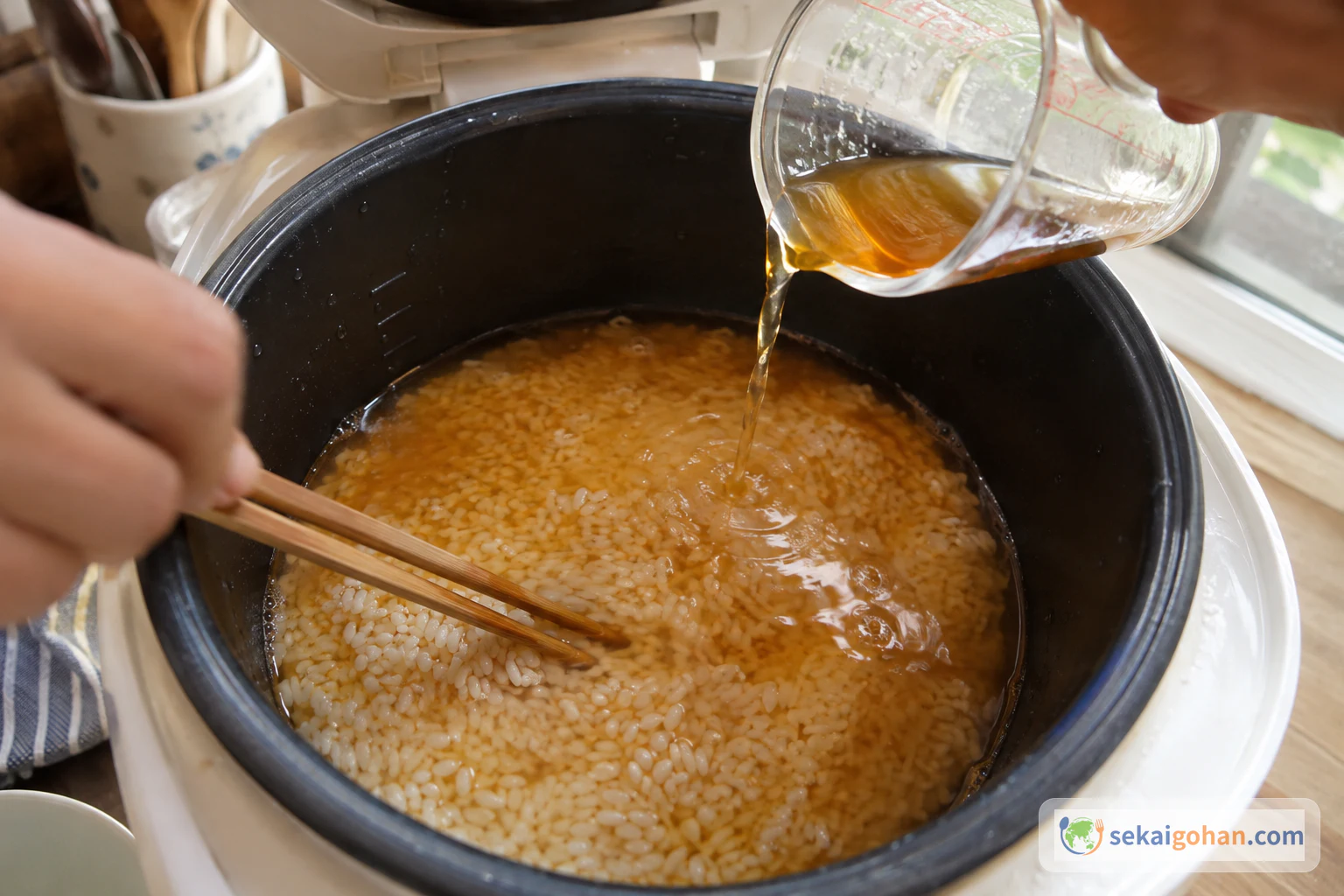
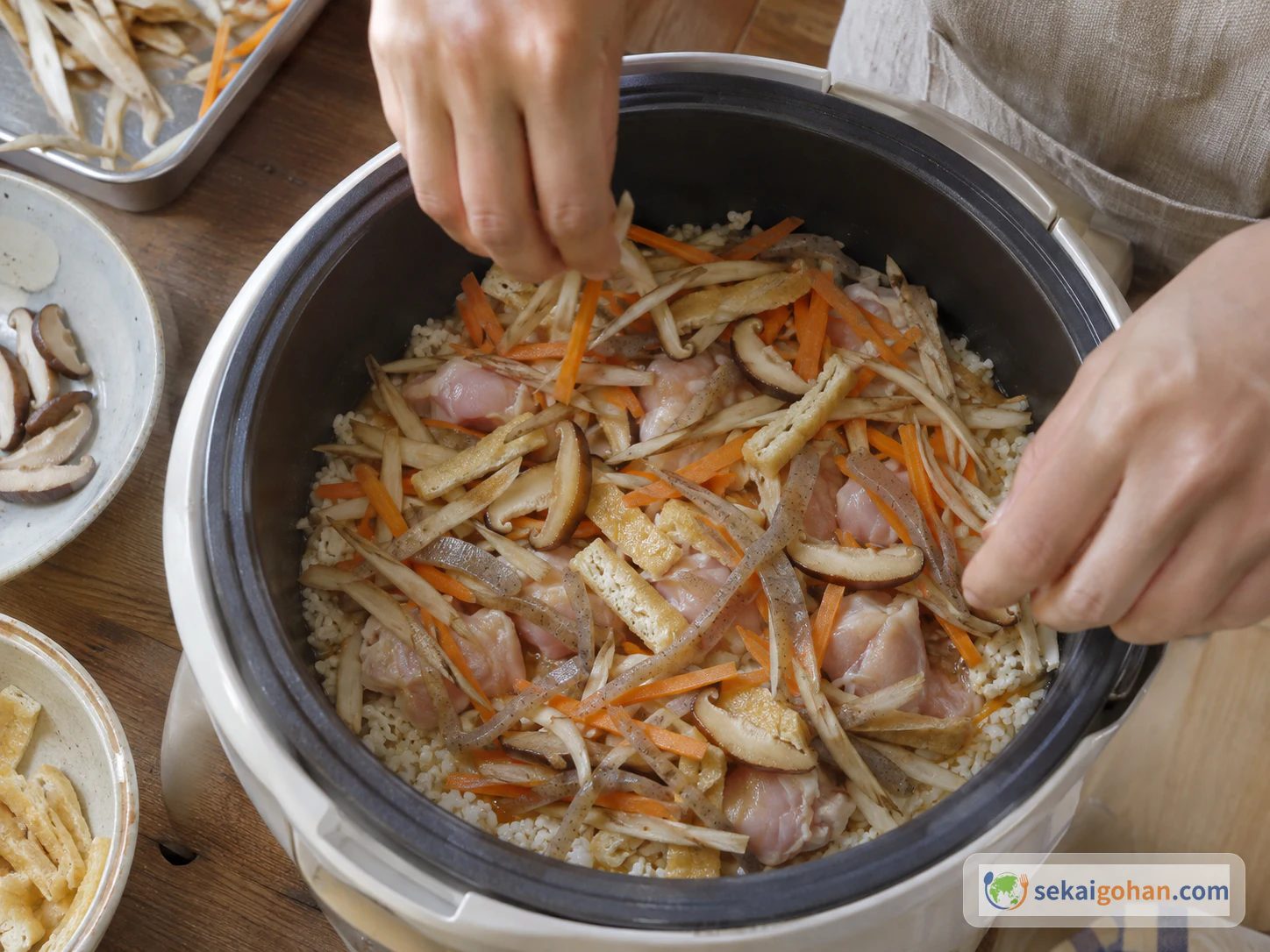
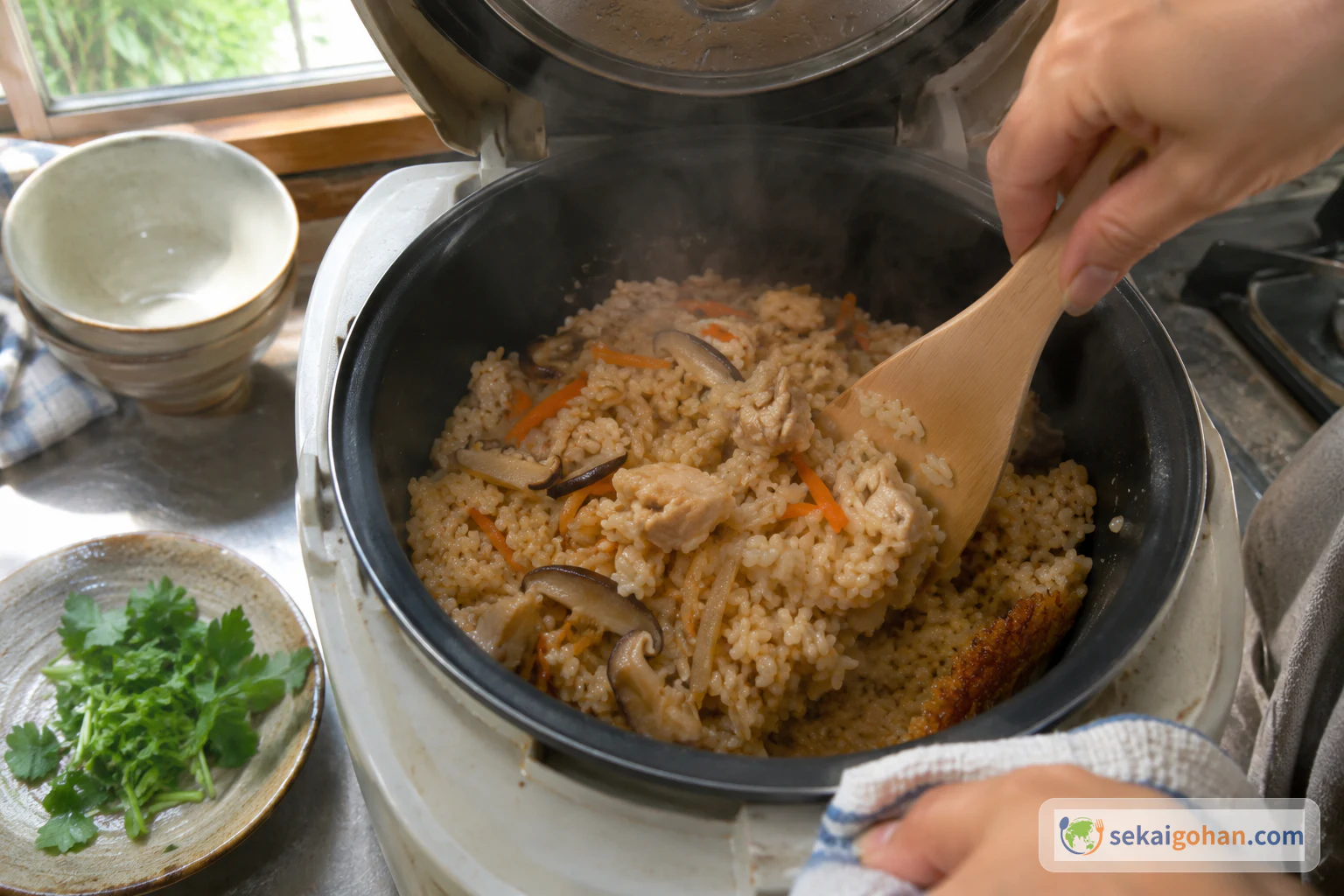
The rice cooker finishes, you lift the lid, and steam rolls out smelling of dashi and soaked shiitake. The surface is tiled with chicken, carrot and thin curls of burdock that went in raw and came out tender, and underneath, every grain has turned a pale toasty brown. Takikomi gohan is Japanese rice cooked in one pot together with its toppings and seasoning, so the rice drinks in everything that sat on top of it. This is the everyday gomoku style, with chicken thigh, dried shiitake, konnyaku, fried tofu, burdock and carrot, seasoned only with dashi, mirin and soy sauce. It tastes gently sweet and savory, earthy from the mushrooms and burdock, with a little chew from the konnyaku in every mouthful.
Cooked In, Not Stirred In: Where Takikomi Gohan Belongs
The name tells you the method. Takikomi means "cooked in", and rice, toppings and seasoning go into the pot together, so the umami of the chicken and mushrooms soaks right into the grains. Its close neighbour is mazegohan, "mixed rice", where ingredients that have already been seasoned are folded into rice that is already cooked. In mazegohan the toppings keep their own separate flavor; in takikomi gohan the rice and the toppings taste of one another. Two bowls can share a topping list and still be different dishes, because the difference happens in the pot.
One dish, several names
In the Kansai region around Osaka and Kyoto, the mixed-topping version is called kayaku gohan, and across Japan it also goes by gomoku gohan, "five-ingredient rice". The names do not always line up with the method, though. In Tochigi, gomoku-meshi is a mixed-rice dish: the toppings are stir-simmered separately and folded into rice cooked a little firm. It was made for festivals and for farmers' rest days, and it is dressed with shreds of thin omelette, snow peas, nori and red pickled ginger. Its toppings include kanpyo, dried gourd strips, and Tochigi grows more than 99 percent of Japan's kanpyo (2018 figures), so the dish carries its prefecture's crop to the table.
Takikomi gohan is written 炊き込みご飯, or with the more formal 炊き込み御飯. The Kansai name kayaku is written two ways as well, 加薬 or 加役.
A calendar in a rice pot
Japan's regional rice dishes follow the seasons, and many of them are cooked or mixed with whatever the month brings. In spring there is bamboo-shoot rice in Miyagi and kakimaze in Kagawa. Summer brings ume rice in Kanagawa and octopus rice in Aichi and around the Seto Inland Sea, where tako-meshi is tied to the summer observance of Hangesho. Autumn is chestnut rice in Kyoto and sanma rice in Yamanashi, made to celebrate the harvest. Winter means oyster rice in Hiroshima and kate-meshi in Chichibu, Saitama. The chicken-and-vegetable gomoku in this recipe is the year-round version, the one made on an ordinary weeknight.
Where it began, and where it is eaten
Where the habit started is not settled. The dish is often traced back more than a thousand years, to times when rice harvests were unreliable and cooks stretched their rice by cooking it with barley, millet, wild greens or daikon. Today you meet it at kamameshi restaurants, where each diner gets an individual iron pot, and as part of a set meal at udon shops. More of Japan's home cooking is collected on our Japan page.
Rice cooked with its flavorings turns up all over the world, and the comparisons are instructive. Paella is cooked in a shallow pan that drives the liquid off, jambalaya builds its flavor from smoked meat and aromatic vegetables, and kabuli palaw is steamed rather than simmered. Takikomi gohan is the quietest of them. No pre-frying, just dashi and the toppings doing their work in a closed cooker.
Ingredients (serves 4)
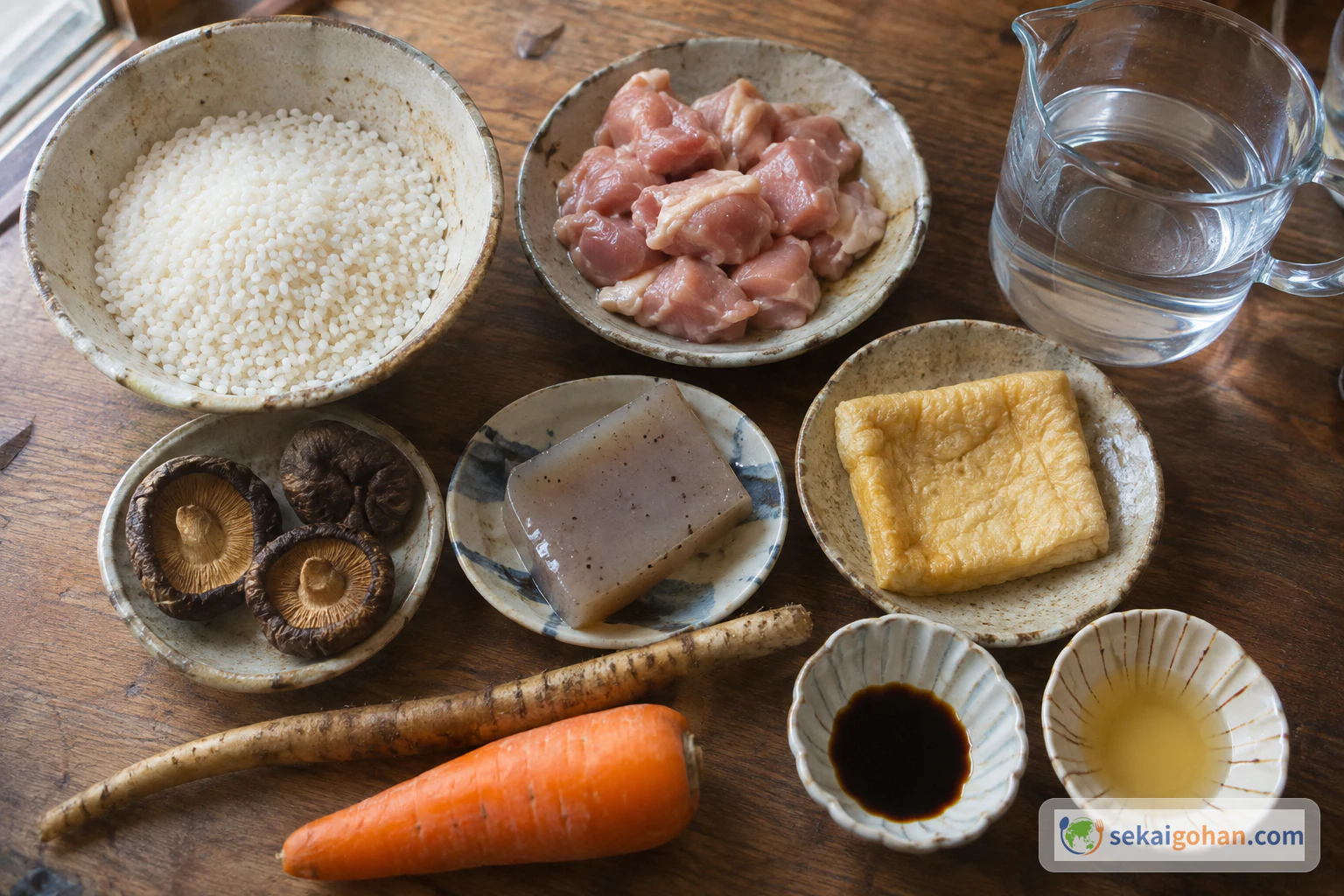
There is no salt in this rice. The soy sauce and dashi season it, and the shiitake liquid gives it its depth.
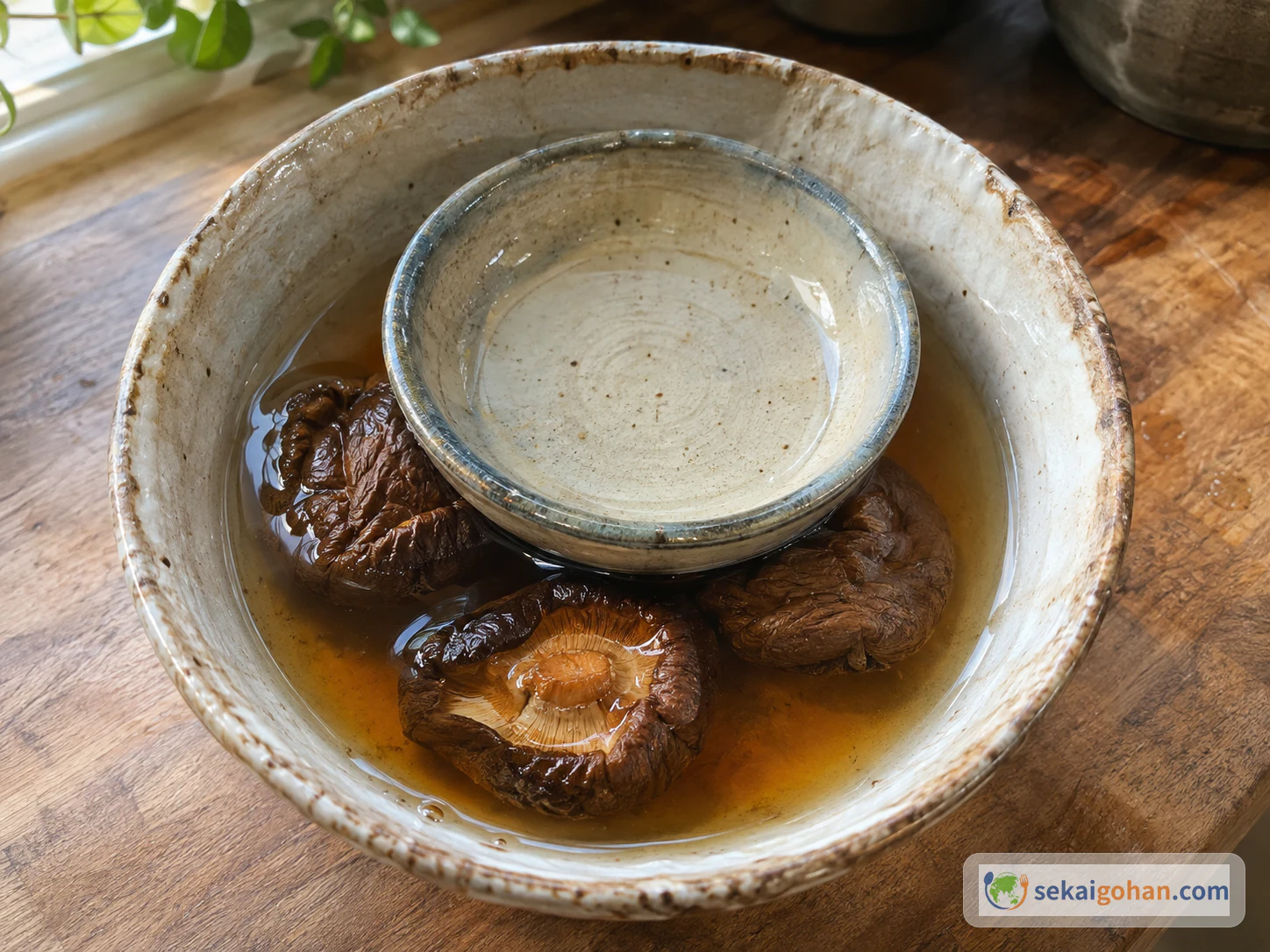
The amber water the shiitake soaked in is the heart of the flavor. Strain it and count it as part of the 1½ cups (360 ml) of cooking liquid; topping it up with dashi, rather than replacing it, is what makes this rice taste of mushrooms all the way through.
Soy sauce contains soy and wheat, and aburaage is made from soy. For a gluten-free version, use gluten-free soy sauce. Dashi packs, instant dashi and other packaged items carry their own ingredient lists, so check the labels for anything you need to avoid.
Equipment
- Rice cooker (a Mixed Rice or takikomi setting helps, but the regular setting works)
- Large bowl for rinsing and soaking the rice
- Fine-mesh sieve
- Small bowl, plus a smaller bowl to keep the shiitake submerged
- Fine strainer for the shiitake liquid
- Liquid measuring cup
- Small saucepan
- Chef's knife and cutting board
- Bowl of cold water for the burdock
- Rice paddle (shamoji)
Choosing and Substituting
Dried shiitake is the one thing worth a trip to a Japanese or Asian grocer, or an online order, because the dried mushroom gives you both the aroma and the soaking liquid. Fresh shiitake, shimeji or maitake can stand in for it and make a milder, fresher-tasting rice. With no soaking liquid, make up the full 1½ cups (360 ml) with dashi.
For the dashi itself, a dashi pack or instant dashi works fine. Kombu dashi makes the liquid suitable for vegetarians and vegans. Konnyaku and aburaage are sold at the same Asian grocery stores, or online shops, that carry dried shiitake.
Burdock is harder to find outside Japan. You can leave it out, but you lose one of the two main aromas and most of the crunch, and the rice tastes sweeter and flatter. Green onion stands in for mitsuba with a sharper, oniony finish where mitsuba is cool and herbal.
| Keep for the taste of Japan | Fine to let go abroad |
|---|---|
| The shiitake liquid as part of the cooking liquid | Homemade dashi (a pack or instant dashi is fine) |
| Equal amounts of mirin and soy sauce, and no salt | Mitsuba (green onion works) |
| Toppings laid on the rice, never stirred in before cooking | The Mixed Rice setting (the regular setting works) |
Method
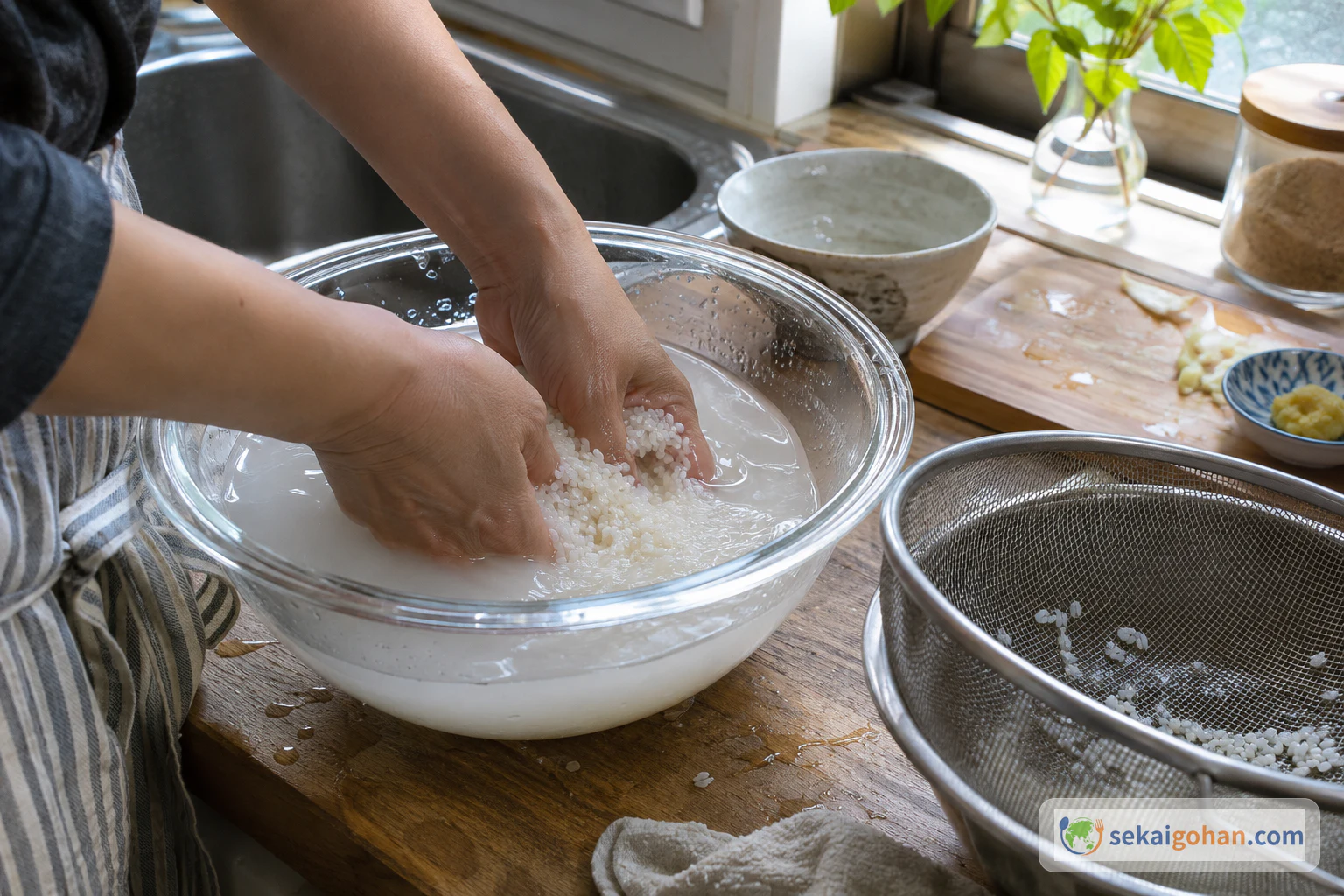
Start the rice soaking first. While it soaks and then drains, rehydrate the shiitake and prepare the rest of the toppings. Once everything is cut, it all goes into the cooker within a few minutes, and the rice must cook as soon as the seasoning goes in. After that the cooker does the work.
When It Goes Wrong
| What you see | Why | What to do |
|---|---|---|
| The grains have a hard core | The rice sat in the seasoned liquid, and the soy sauce slowed its water uptake | Soak in plain water only, add the seasoning just before cooking and start the cooker straight away |
| Some rice is mushy, some firm | The toppings were stirred in before cooking and blocked the water's movement | Lay the toppings flat on top of the rice and leave them unstirred until it is cooked |
| The rice under the toppings is undercooked | Too many toppings soaked up the liquid | Keep the toppings to about 20 to 30 percent of the cooked weight |
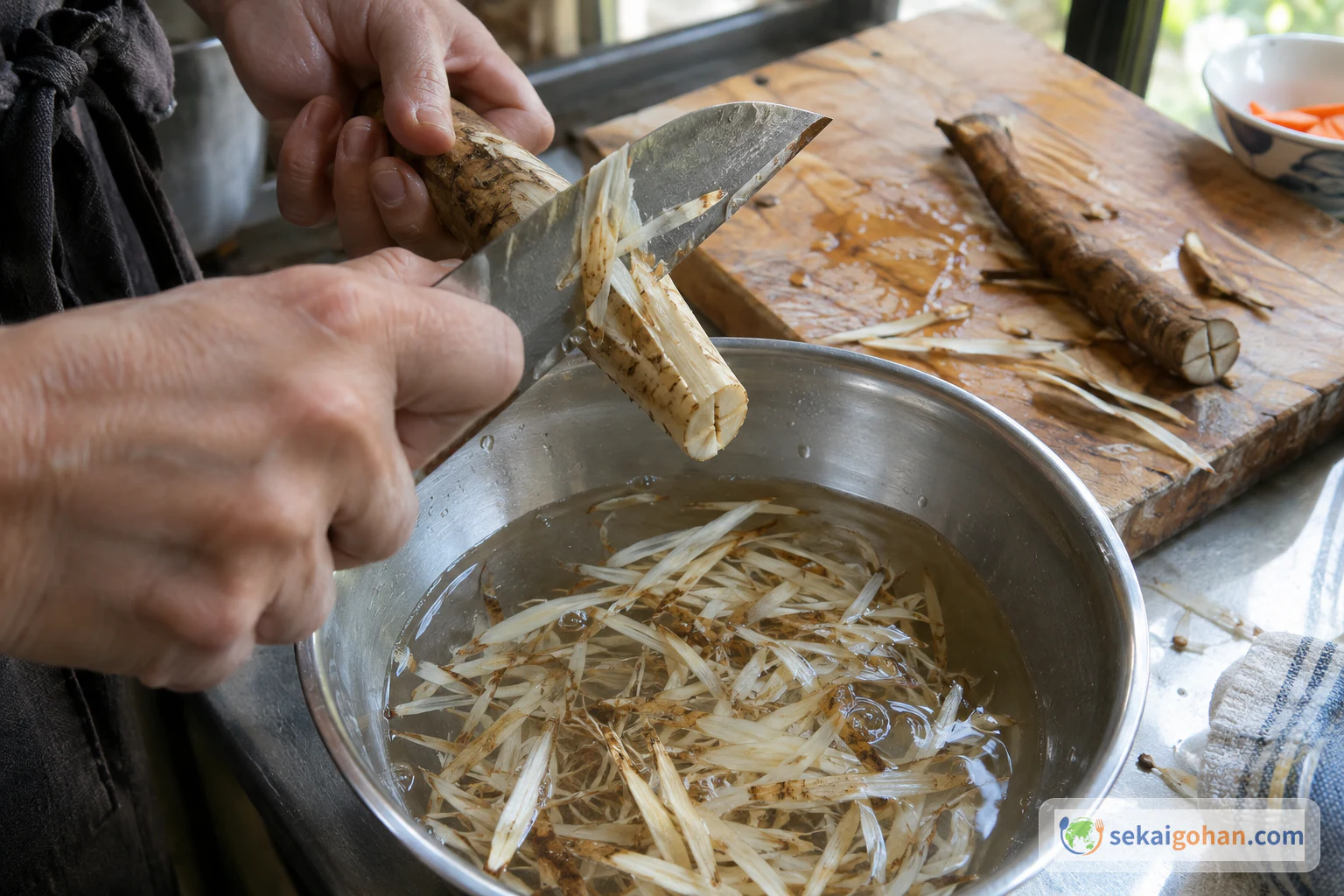
| The burdock tastes of almost nothing | It was peeled with a peeler | Scrape it with the back of a knife next time |
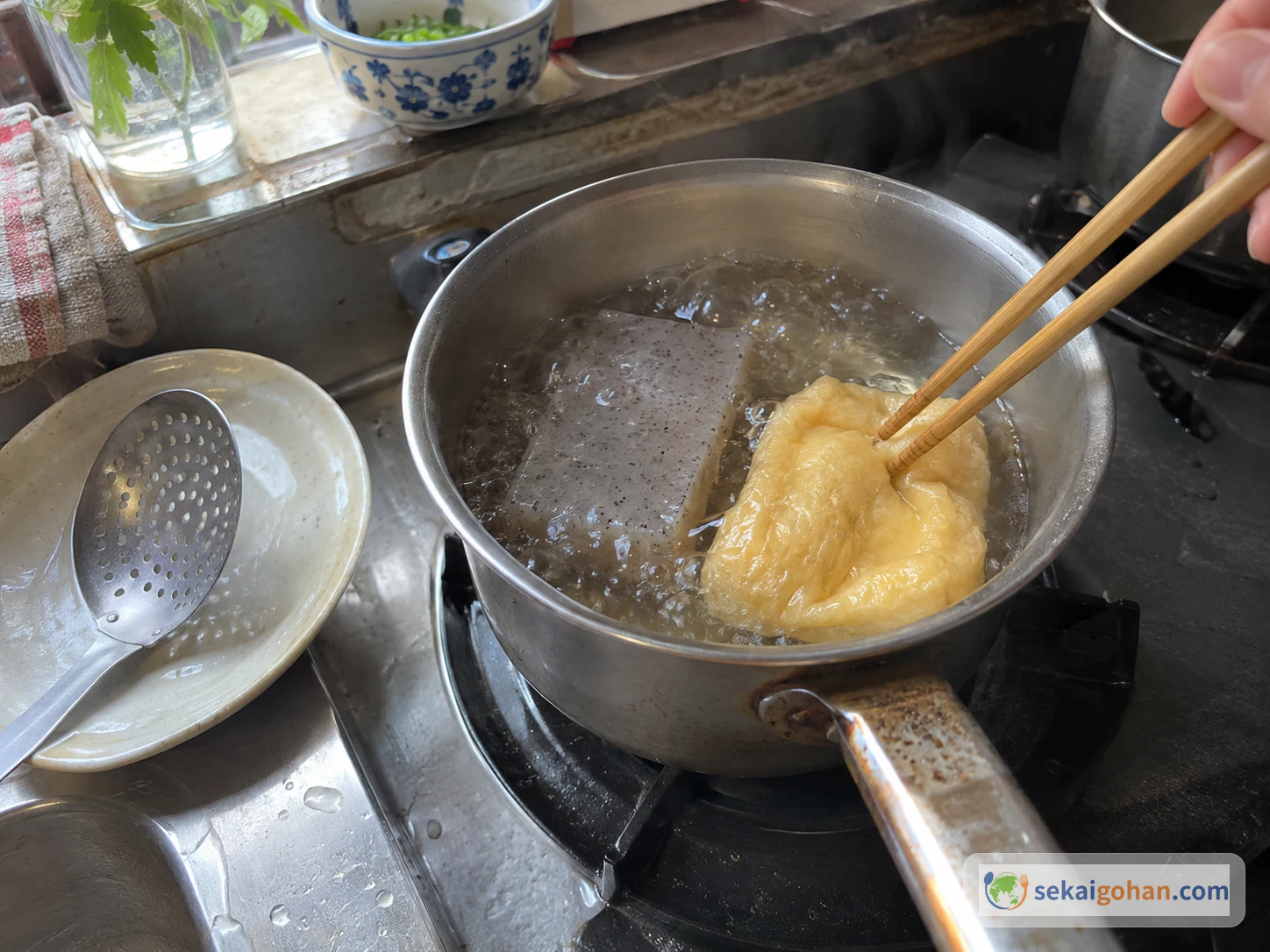
| A faint fishy or oily taste | The konnyaku or aburaage was not blanched | Give each its 1 minute in boiling water |
| Too salty or too flat | Dashi products and soy sauce brands vary in saltiness | Taste your dashi before measuring, and remember that its saltiness adds to the soy sauce |
Serving, Variations and Storage
At the table
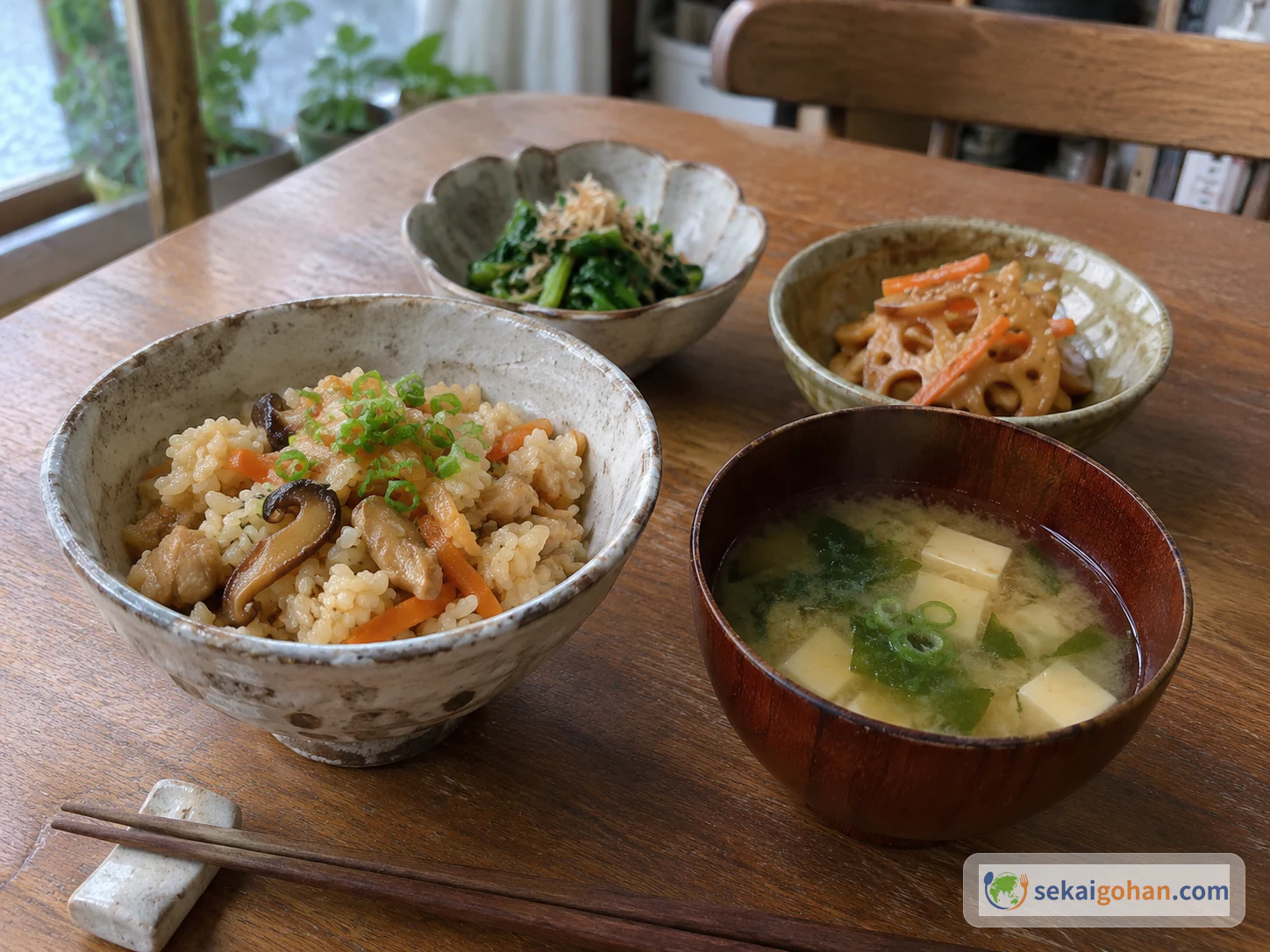
At home, takikomi gohan takes the place of plain rice. Serve it with a bowl of miso soup and one or two simple vegetable side dishes, and it carries the meal. It tastes good cold, so leftovers go into bento boxes and get shaped into onigiri the next day. The seasoning is already in the rice, so the rice balls need no filling.
Variations
- Seasonal toppings. Swap the gomoku mix for chestnuts in autumn or oysters in winter and cook it the same way. The rice takes on the flavor of whatever sits on top, so one topping gives a cleaner, more focused taste than the mixed version. Keep within the 20 to 30 percent topping ratio.
- Beef and egg yolk. Cook mushroom rice, lay thinly sliced raw beef over the hot rice as soon as it is done, close the lid and let it steam for 10 minutes, then serve with an egg yolk. The yolk makes the rice rich and silky. Because the beef and yolk are only lightly heated here, pregnant women, older adults, young children and anyone with a weakened immune system should choose a fully cooked version instead, and use eggs sold for eating raw.
- Vegan. Use kombu dashi, leave out the chicken and keep the shiitake, burdock, konnyaku and aburaage. The mushroom liquid carries the savory depth, and the flavor turns lighter and more vegetable-forward.
- Salted and pre-seasoned. Another common style uses fresh shiitake and water instead of shiitake dashi, coats the toppings in soy sauce before they go on, and adds salt (and sometimes sake) to the cooking liquid. The toppings taste more strongly seasoned and the rice is saltier, with less mushroom aroma.
Storage
Freeze leftovers rather than refrigerating them. Divide the rice into portions, wrap each in plastic wrap, put them in a freezer bag and freeze; use them within a month. Refrigerated takikomi gohan dries out and turns hard.
Frequently Asked Questions
Can I double the recipe?
Only if your rice cooker is big enough. Takikomi gohan should fill no more than about 60 percent of the cooker's maximum capacity. A fuller pot leaves the liquid and toppings crowded and the rice cooks unevenly.
What is the browned layer at the bottom of the pot?
That is okoge, the crust that forms where the soy-seasoned rice touches the hot pot. It is crisp and toasty, with a deeper soy flavor than the rest of the rice. Break it up with the paddle and fold it through so everyone gets a little.
Can I use chicken breast instead of thigh?
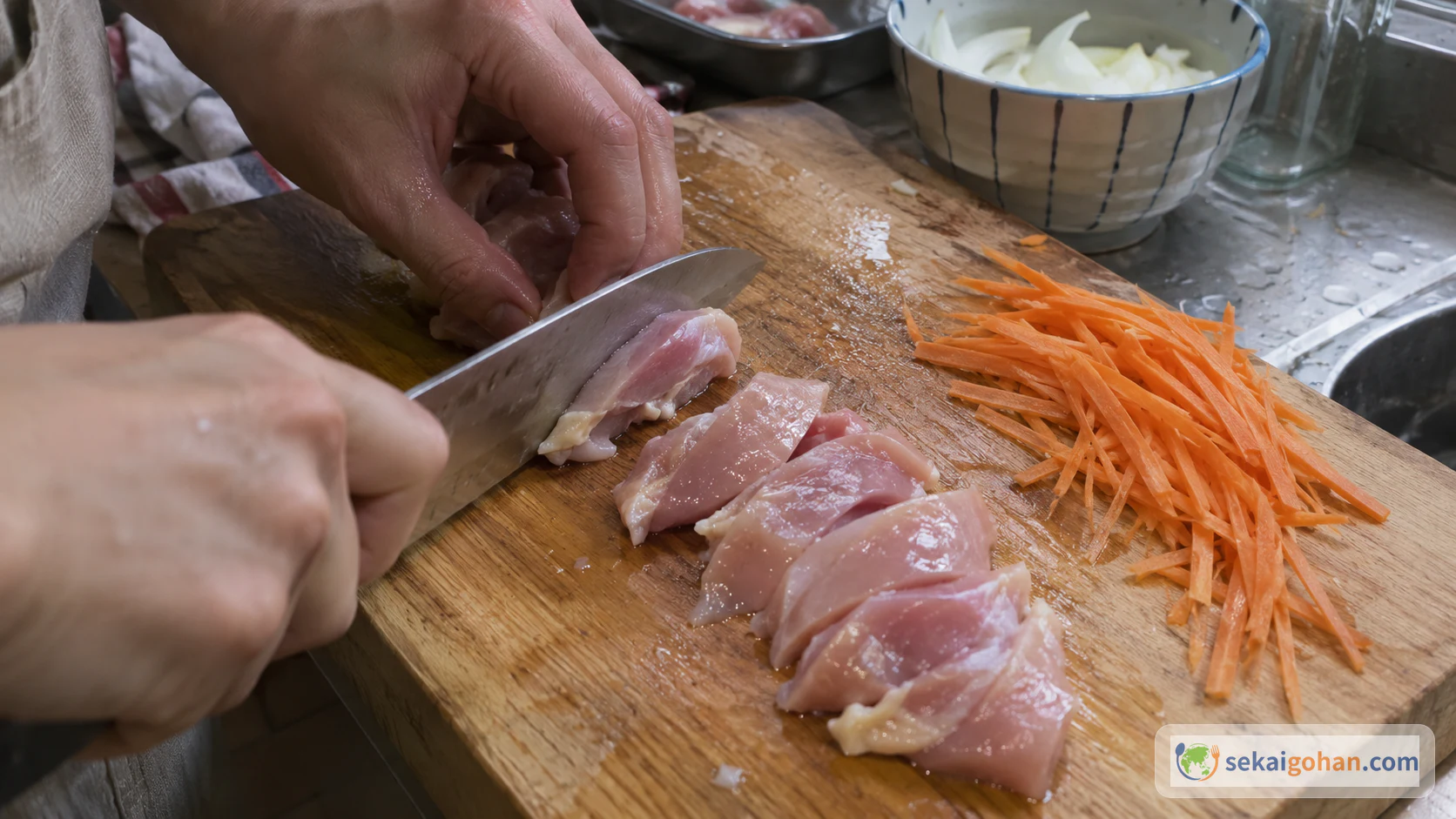
You can, but breast meat turns firm and dry more easily as it cooks in the rice. Thigh gives a little fat that coats the grains and keeps the meat tender. If you use breast, slice it thinly at the same angle so it cooks quickly.