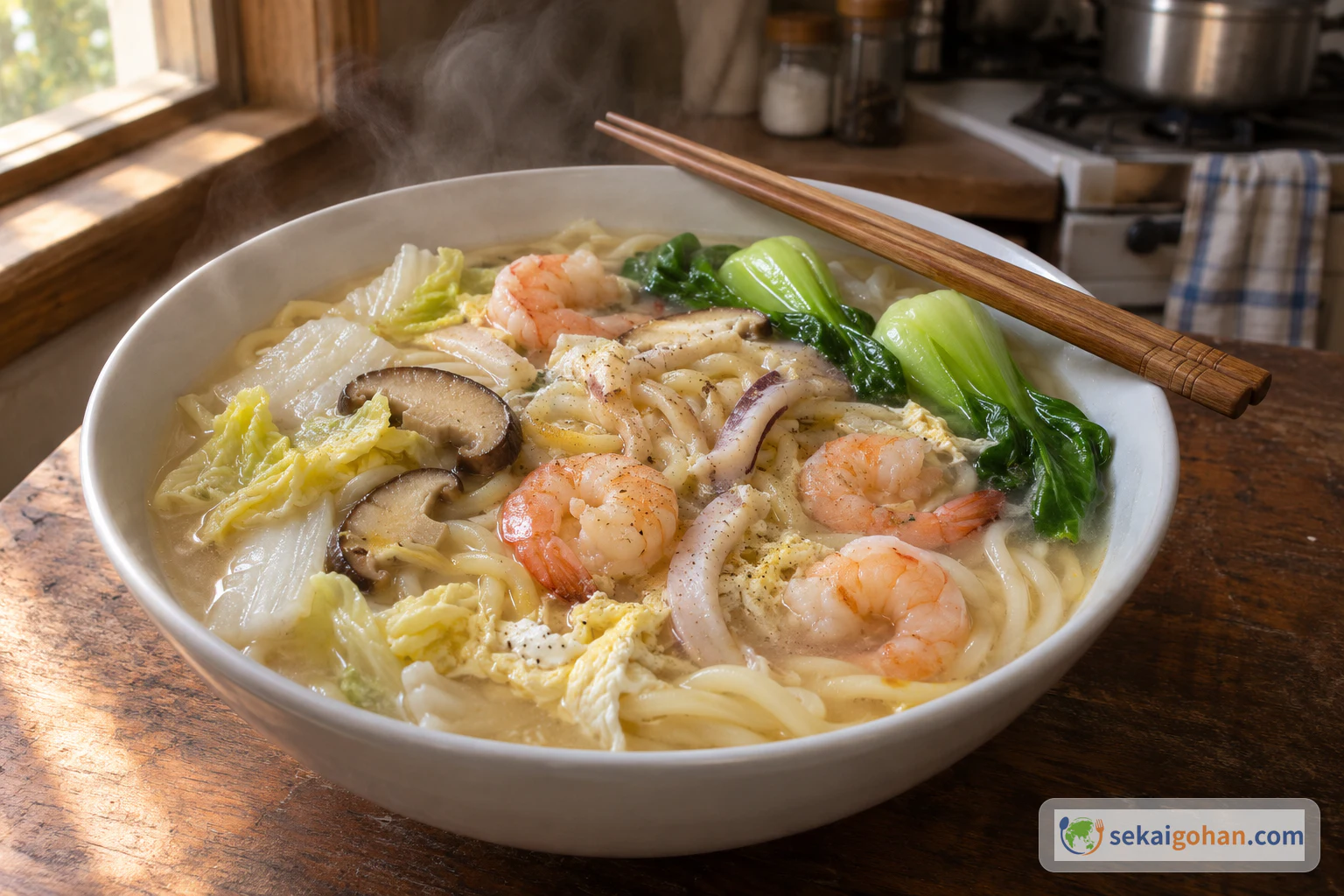
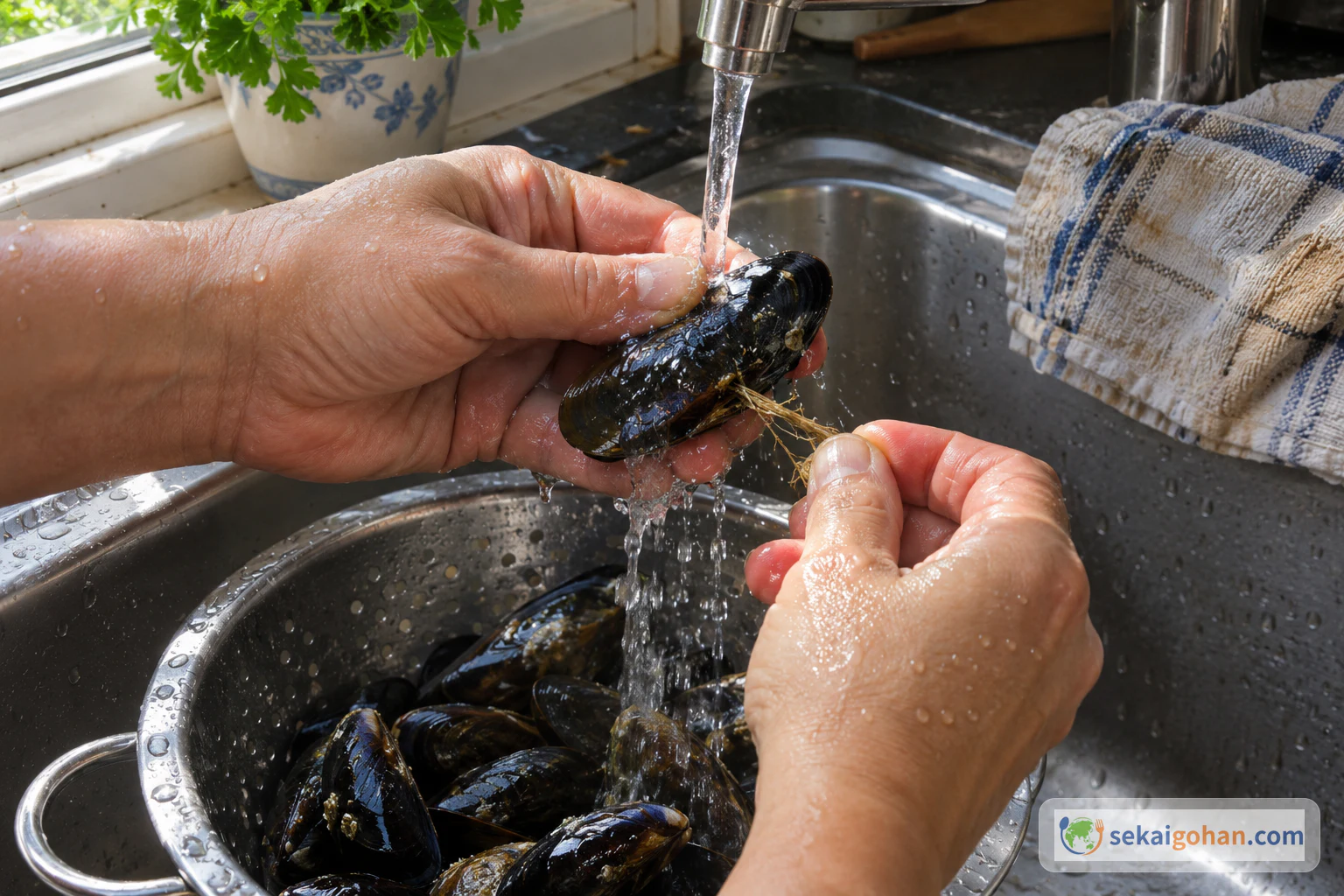
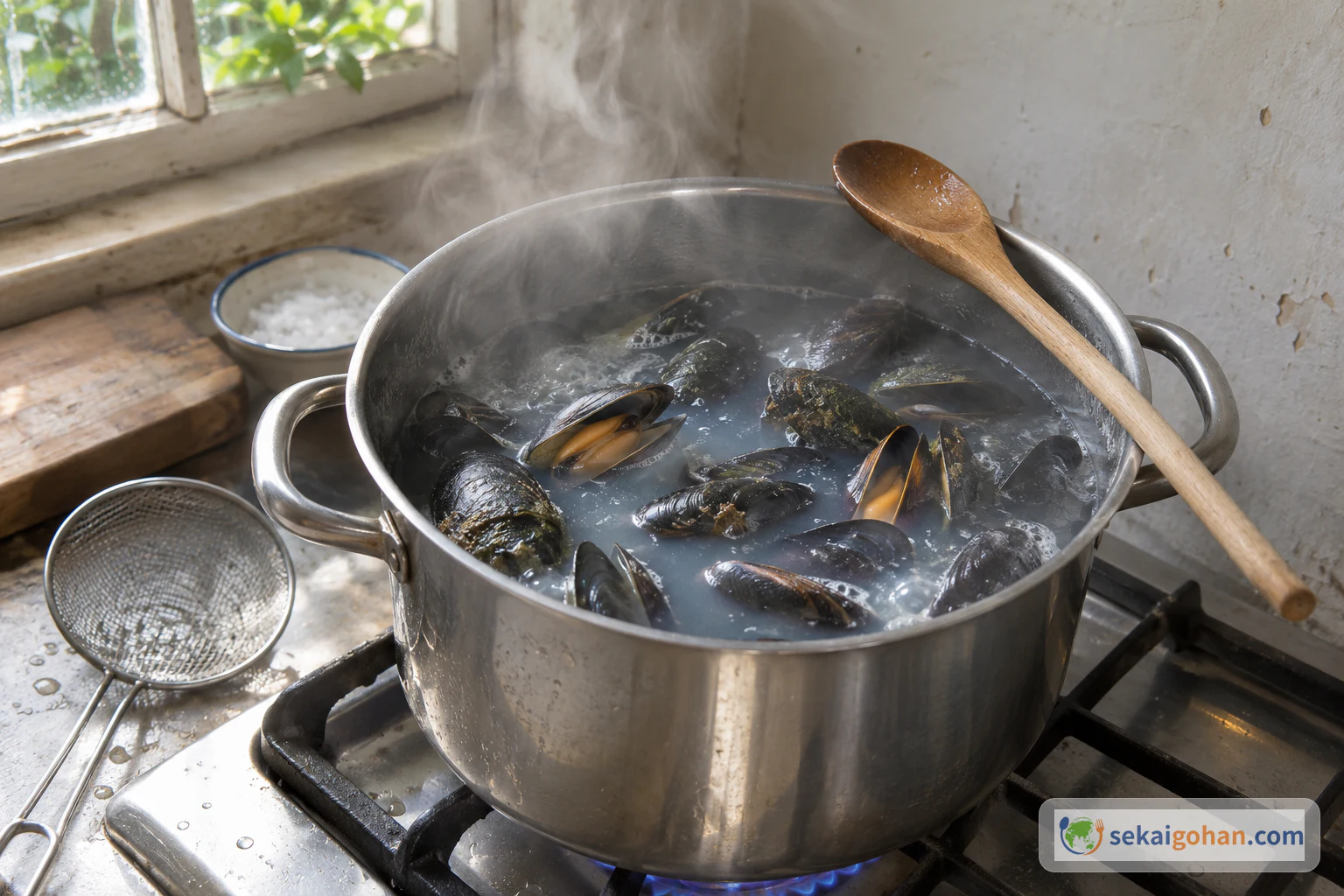
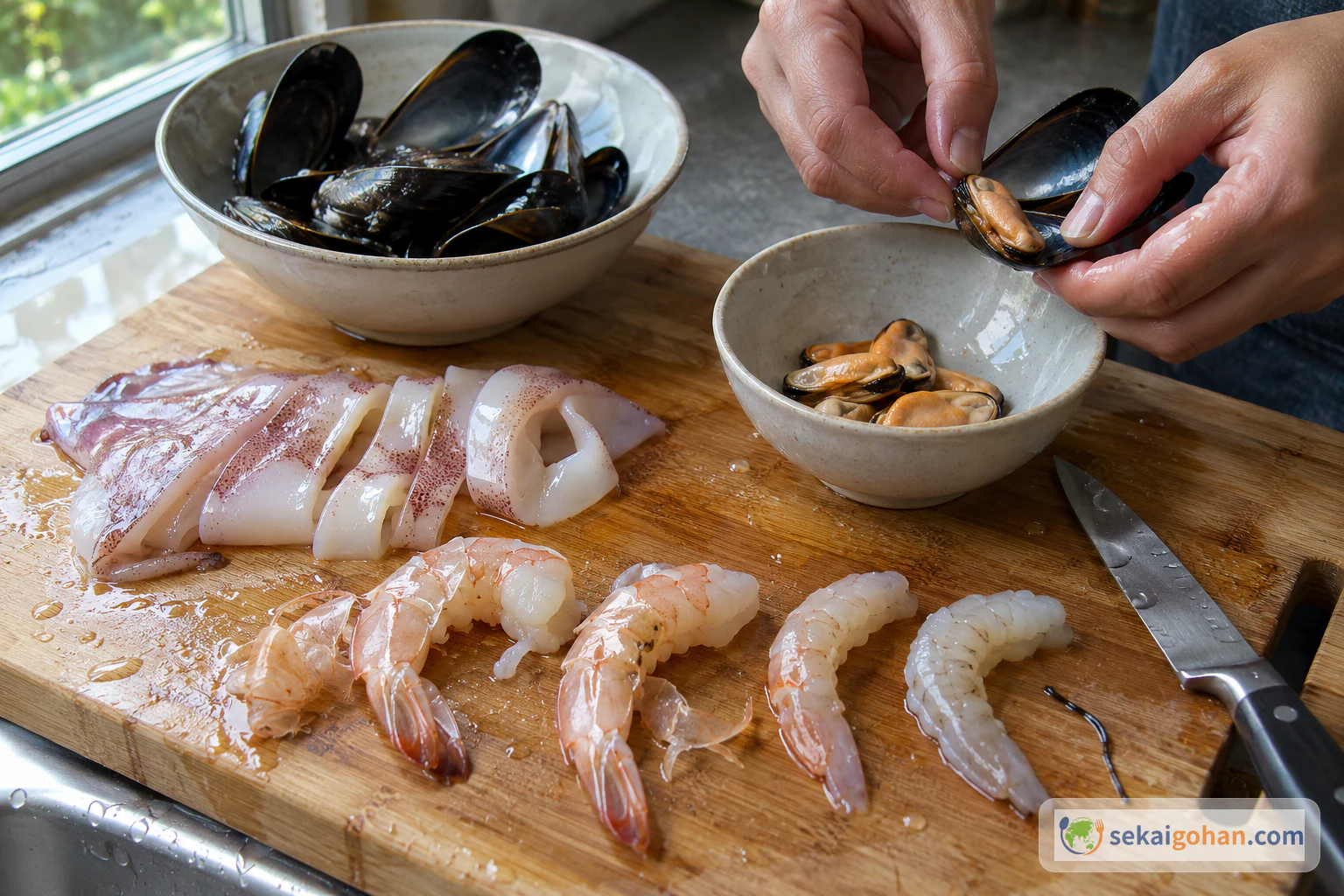
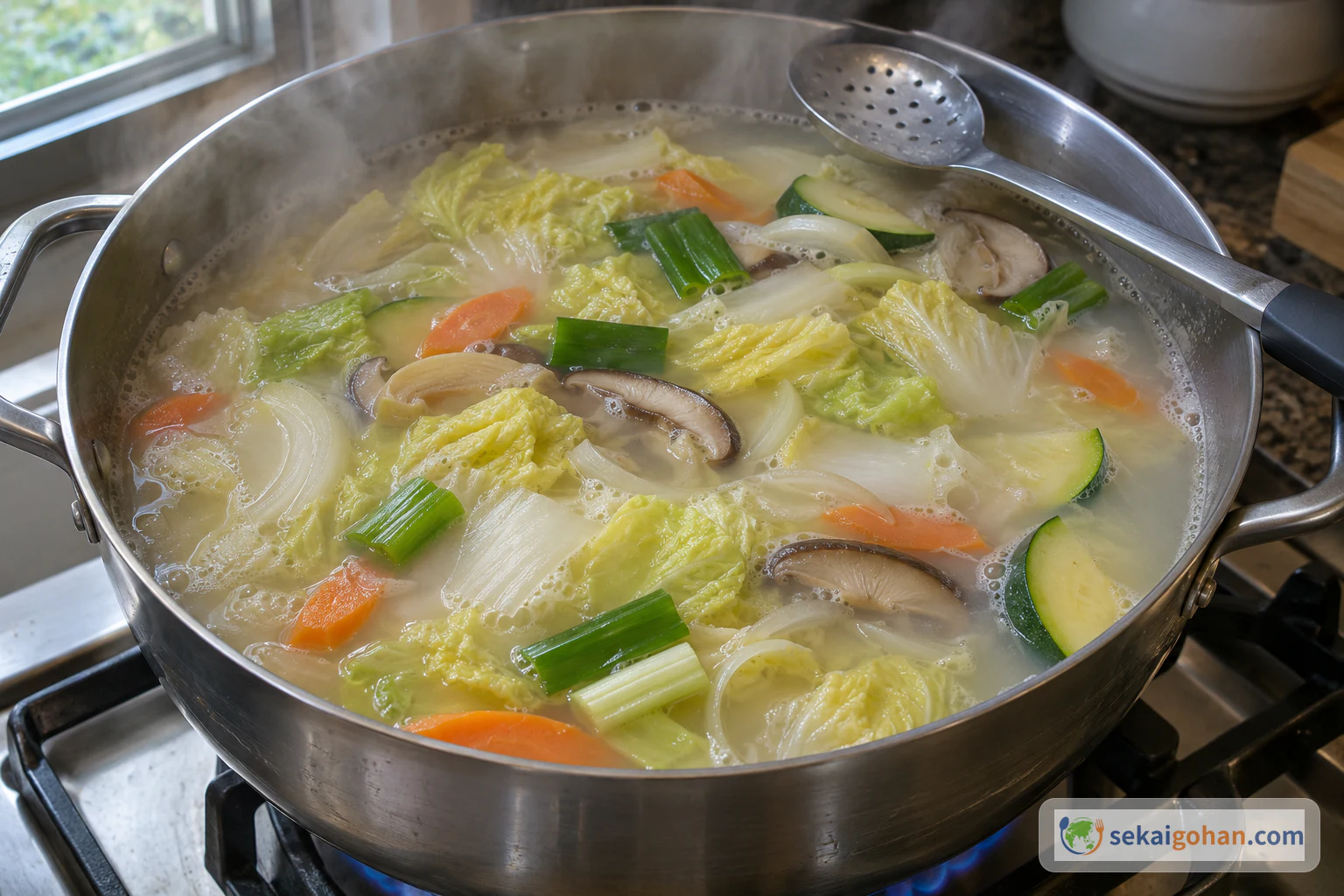
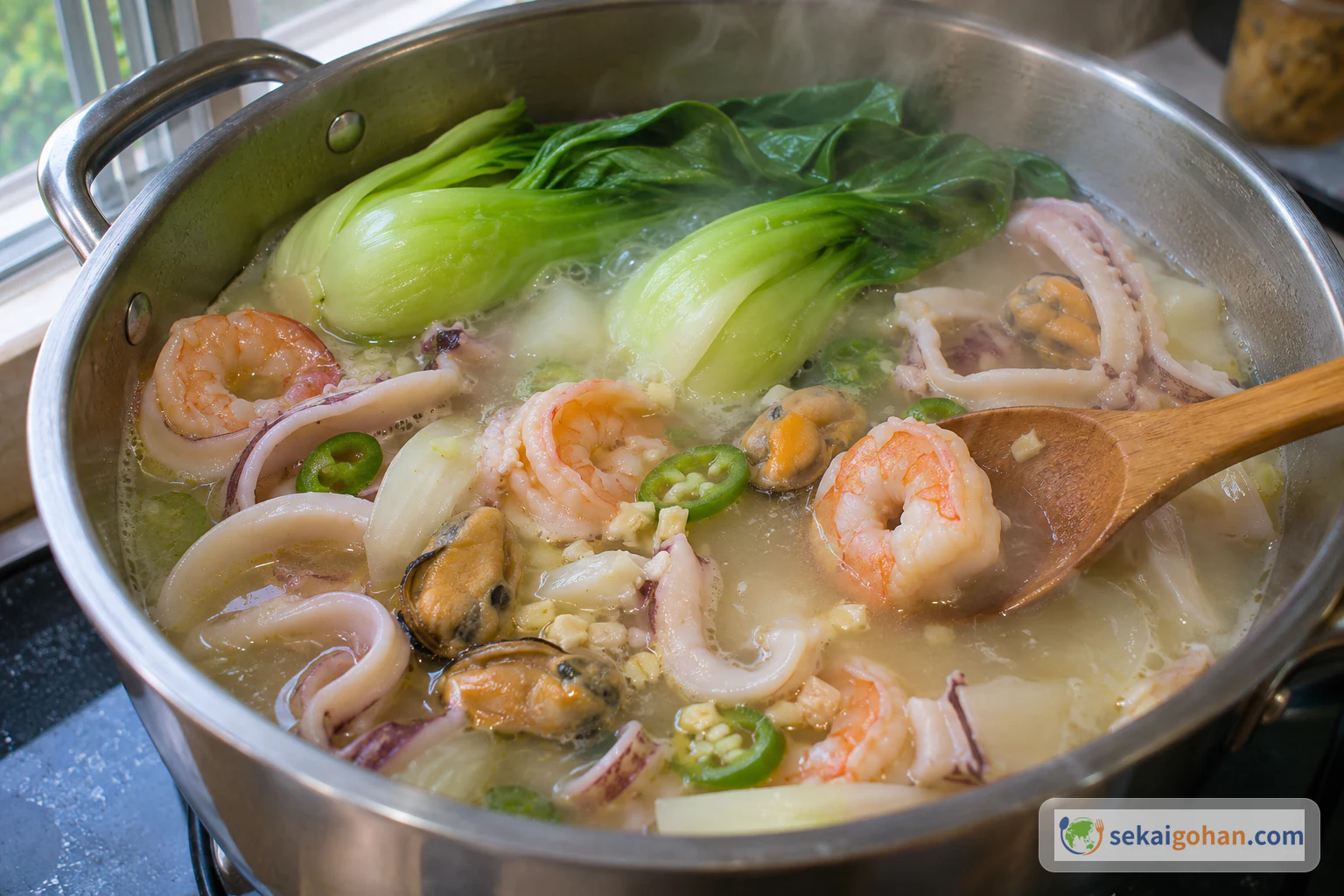
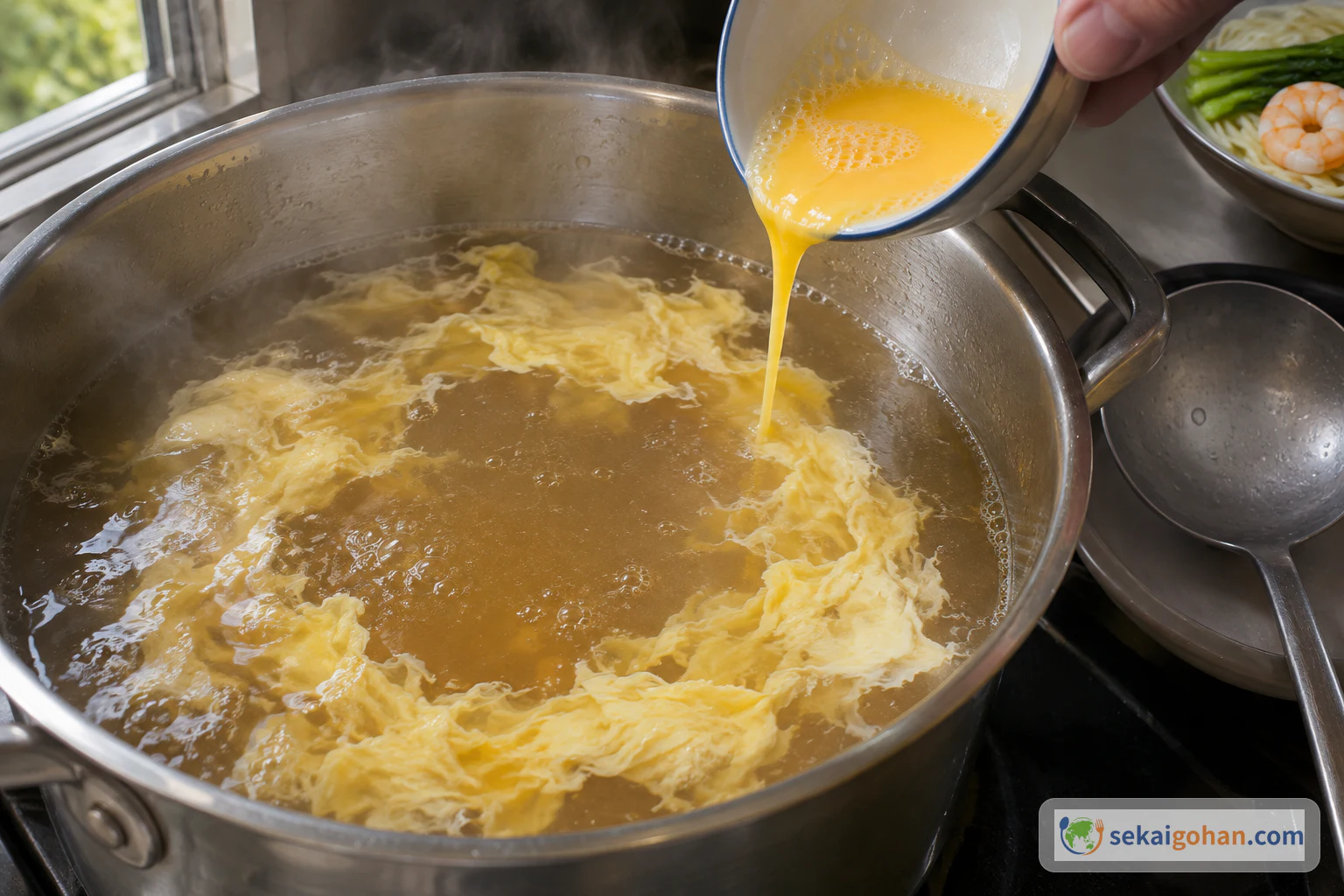
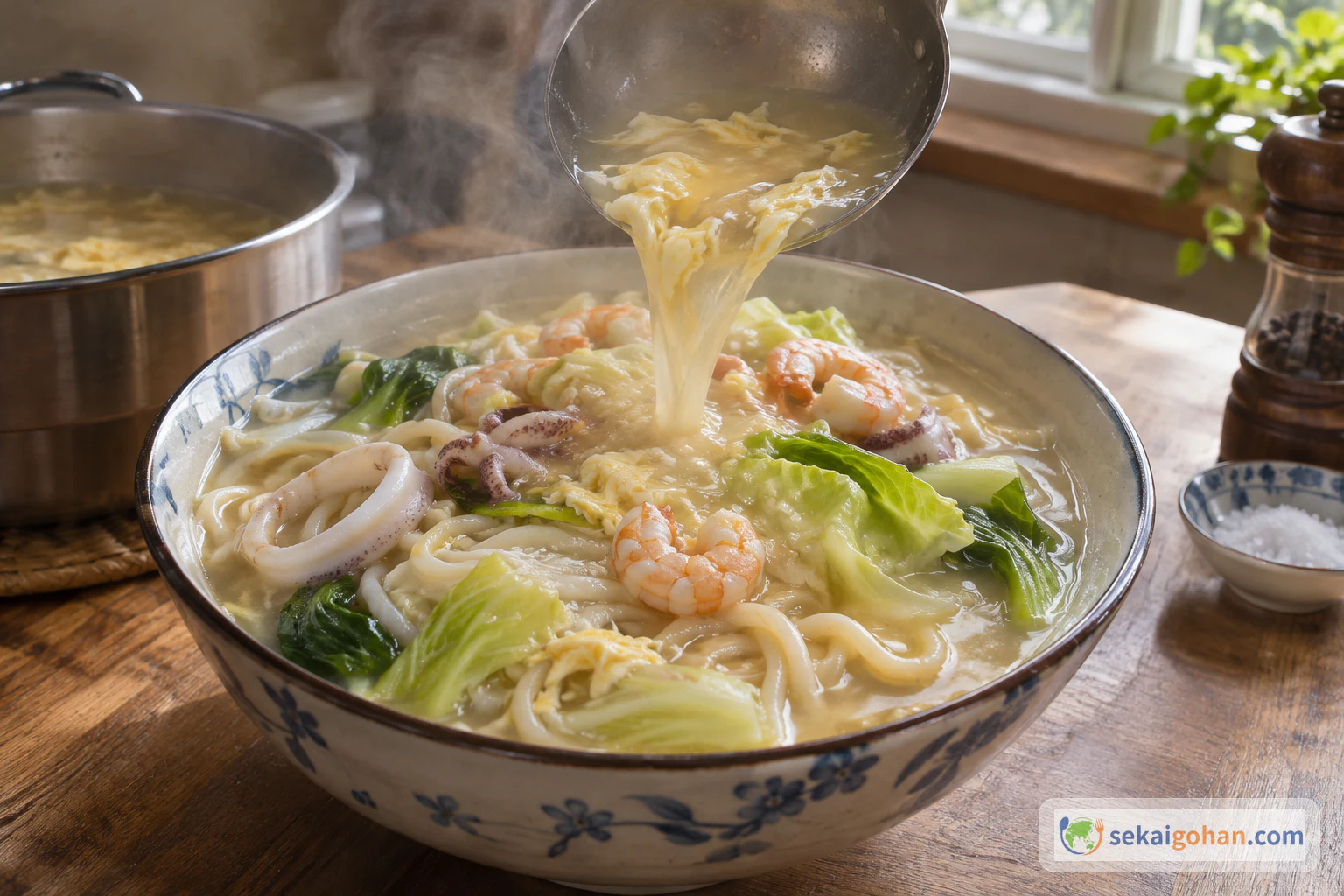
The mussels go into cold water, and as the pot heats their shells crack open one after another while the water turns faintly milky. That cooking water becomes the whole soup. Chunks of napa cabbage, squid and shrimp simmer in it, and at the very end a thin stream of beaten egg sets into soft pale ribbons at the edge of the pot. Udong (우동) is the white noodle bowl of Korea's Chinese restaurants, thick wheat noodles in a mild seafood broth that tastes of shellfish and sweet cabbage with a little fresh green-chili heat. On menus now ruled by red, fiery jjamppong, it is the bowl people order when they want the old taste.
The White Bowl on a Korean-Chinese Menu
Korea's Chinese restaurants (중화요리점) run a long menu of noodles and fried dishes, and udong has sat on it for close to a century. The name is the Japanese word udon, yet the broth and the toppings belong to the Chinese restaurant. Japanese udon is thick wheat noodles in a hot soy-seasoned broth. The Korean-Chinese bowl takes its stock from shellfish, shrimp and oyster sauce, which gives it a whitish color, then piles stir-fried or boiled seafood and vegetables on the noodles. Traditionally it was finished with beaten egg. Some restaurants now leave the egg out, apparently to save cost, but the egg ribbons are what make the bowl look and taste complete.
Kitchens differ a good deal. Some shops stir-fry the seafood first, others simply boil it in the broth, and the stock itself ranges from chicken to vegetable cooking liquid. Older cooks made it with pork bones, while today a spoonful of chicken stock powder does that work at home. The version here builds everything from the mussel cooking water and never touches a frying pan.
A name from Japan, a bowl from the Chinese restaurant
Japanese-style udon spread through Korea during the Japanese colonial period, centred on Seoul, then called Gyeongseong, where it was seen as a modern Japanese food. Records from 1939 and 1941 still list udon among the Japanese dishes Koreans liked. Chinese restaurants put a dish under the same name on their own menus, and in the 1930s udong was the most popular dish at Chinese restaurants, ahead of jajangmyeon. When the city of Daegu pushed restaurant prices down during the slump of 1930, udong was the dish named as the typical Chinese-restaurant meal. A national survey that October counted 1,635 Chinese restaurants across the country. In a novel published in 1937, characters sit in a Chinese restaurant eating udong with tangsuyuk.
Whether the Chinese-restaurant bowl grew out of Japanese udon or came from a separate line of its own is not settled. Both explanations are told, and the dish carries traces of both.
In the 1930s the Chinese-restaurant bowl was called homyeon (호면, 胡麵) or cheongguk udong (청국우동, "Qing-country udong"), which kept it apart from Japanese udon. What cheongguk udong looked like is a guess, either a white-broth jjamppong close to Nagasaki champon or something like today's udong.
Udong, jjamppong, ulmyeon and garak-guksu
From the 1960s to the 1980s, jajangmyeon was the first choice at Chinese restaurants, and udong and ulmyeon fought for second place. Jjamppong took off in the 1970s, and the red jjamppong people know today appeared in the late 1970s. Now jjamppong is at its peak, and finding a shop that still lists udong or ulmyeon takes some searching.
The neighbours are easy to confuse. Jjamppong is red and spicy, its seafood and vegetables stir-fried in chili oil in a wok before the stock goes in. Ulmyeon carries a similar spread of seafood, meat, mushrooms and vegetables but is thickened with starch. Udong stays mild and thin-brothed, which is why some people call it a jjamppong without the heat. Korea also has garak-guksu, a home-grown udon in anchovy broth topped with fried tofu, crown daisy and scallion, and it is a different dish altogether. For more of the Korean table, see our Korean cooking collection.
Ingredients (serves 2 to 3)
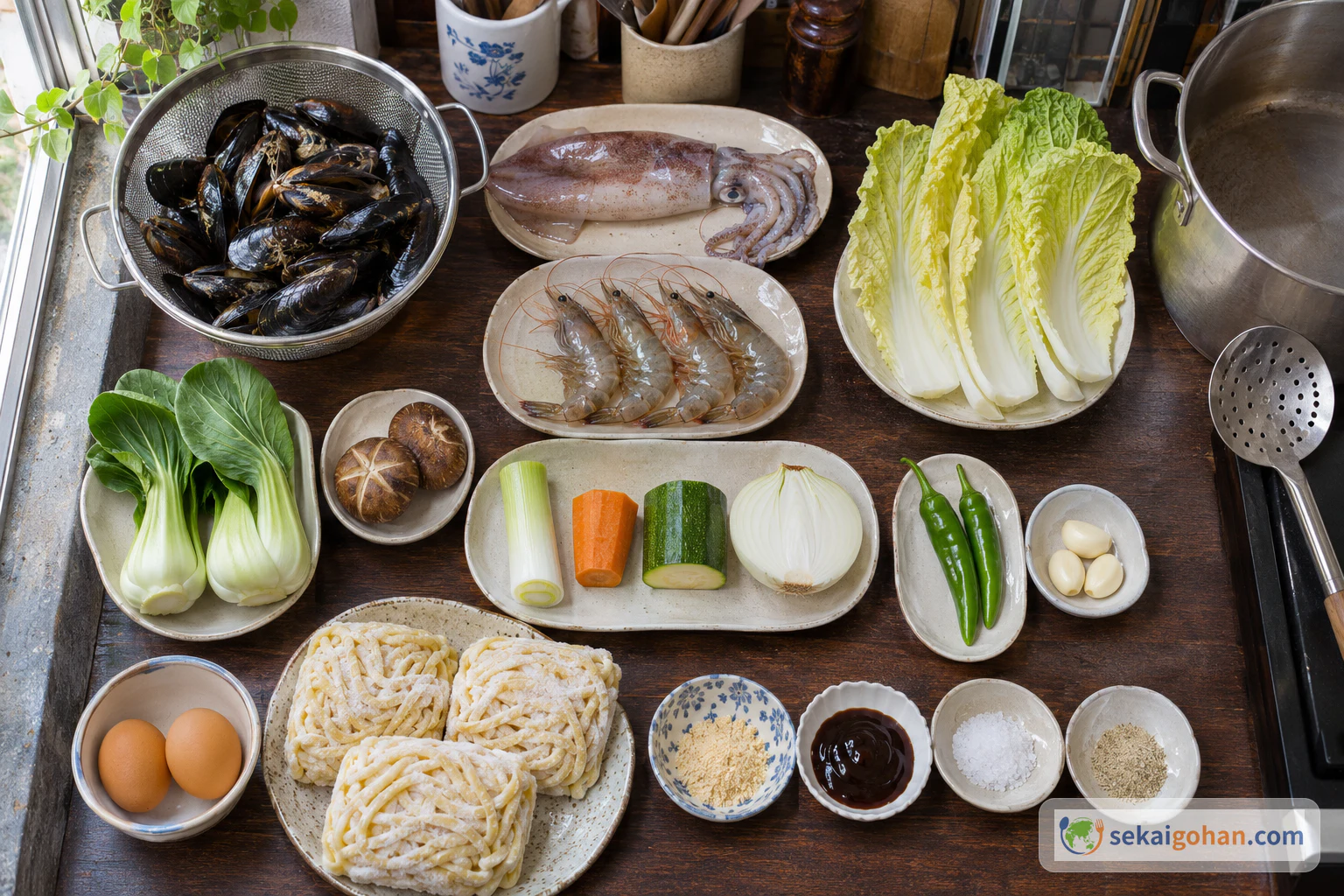
Use an ordinary spoon for the stock powder and oyster sauce, and put in less than the full amount first. Taste after the broth has bubbled, then add the rest. Too much oyster sauce turns the white broth muddy and brown.
This bowl contains wheat (noodles), egg, shrimp, squid and mussels, soy (oyster sauce) and chicken (stock powder). Some chicken stock powders also contain milk or wheat. Check the ingredient label of each product when you buy it.
Equipment
- A deep pot that holds at least 2⅔ quarts (2.5 L), for the mussels and the soup
- A second pot for the noodles
- A slotted spoon and a ladle
- A colander
- A cutting board and knife kept for shellfish, or washed and sanitized after each use
- A kitchen thermometer, for checking the center temperature of the shellfish
Choosing and Substituting
Shell-on frozen mussels are easy to find at import grocers and online, and live mussels work just as well. Two ingredients hold the broth up and stay in. Napa cabbage and onion give the soup its sweetness, and leaving either out leaves the broth flat. Everything else has a workable swap, each with its own cost.
| Item | Swap | What changes |
|---|---|---|
| Mussels | Clams | The broth turns sweeter and the meat is smaller. Purge the sand first |
| Frozen Chinese noodles | Japanese udon noodles | They soak up the broth differently and lose the springy chew |
| Oyster sauce | Korean soup soy sauce (국간장) | The taste leans toward soy and the white broth darkens |
| Korean green chilies | 1 dried red chili, seeds in | A drier heat with a different aroma. Leave chilies out and the bowl turns milder and plainer |
| Fresh shiitake | Canned mushrooms or wood ear, as Chinese restaurants often use | Wood ear brings a crunchier texture |
| Korean zucchini | More carrot | The zucchini's moisture and soft sweetness drop out |
| White pepper | Black pepper | White pepper has the lighter aroma that suits a white broth |
Method
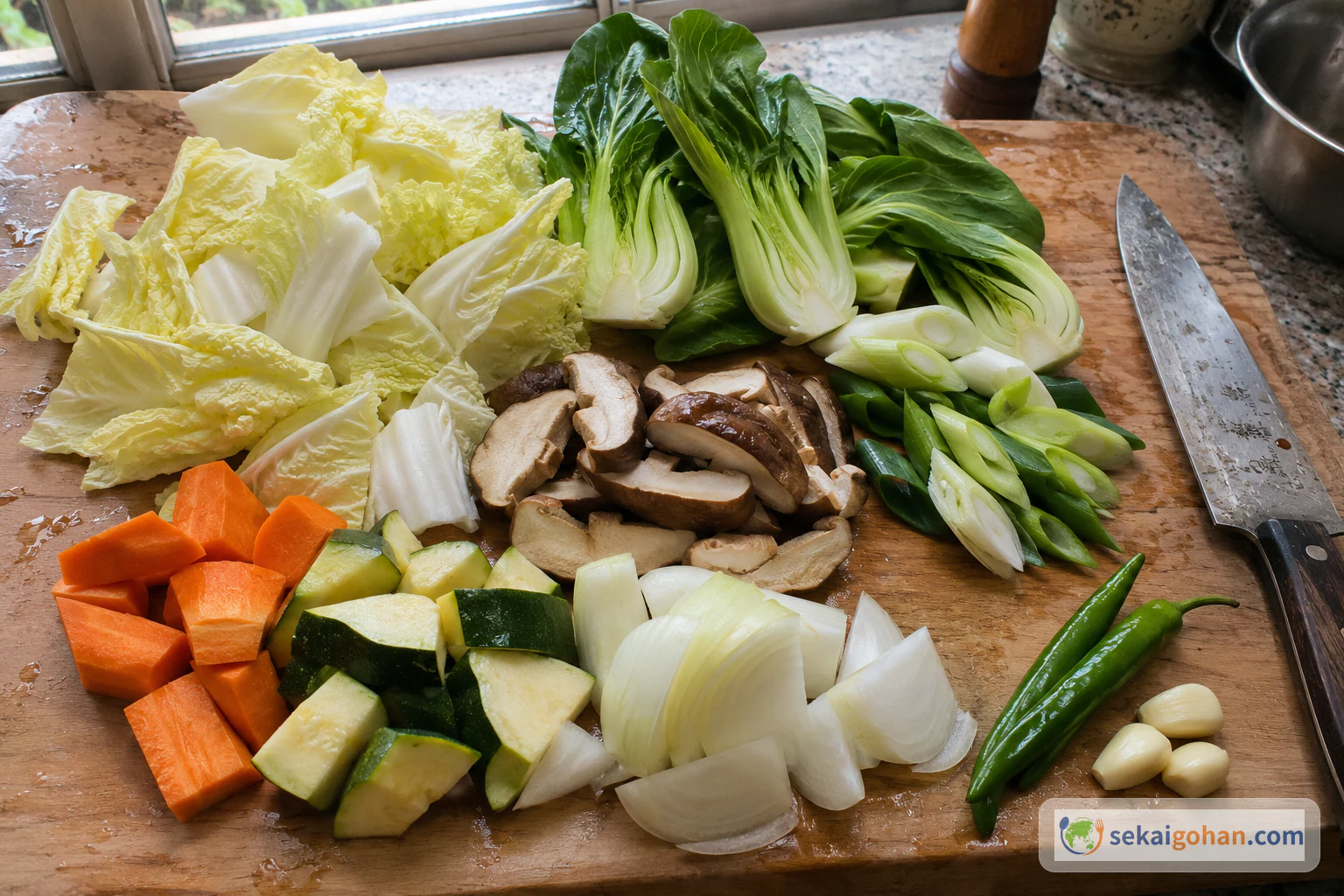
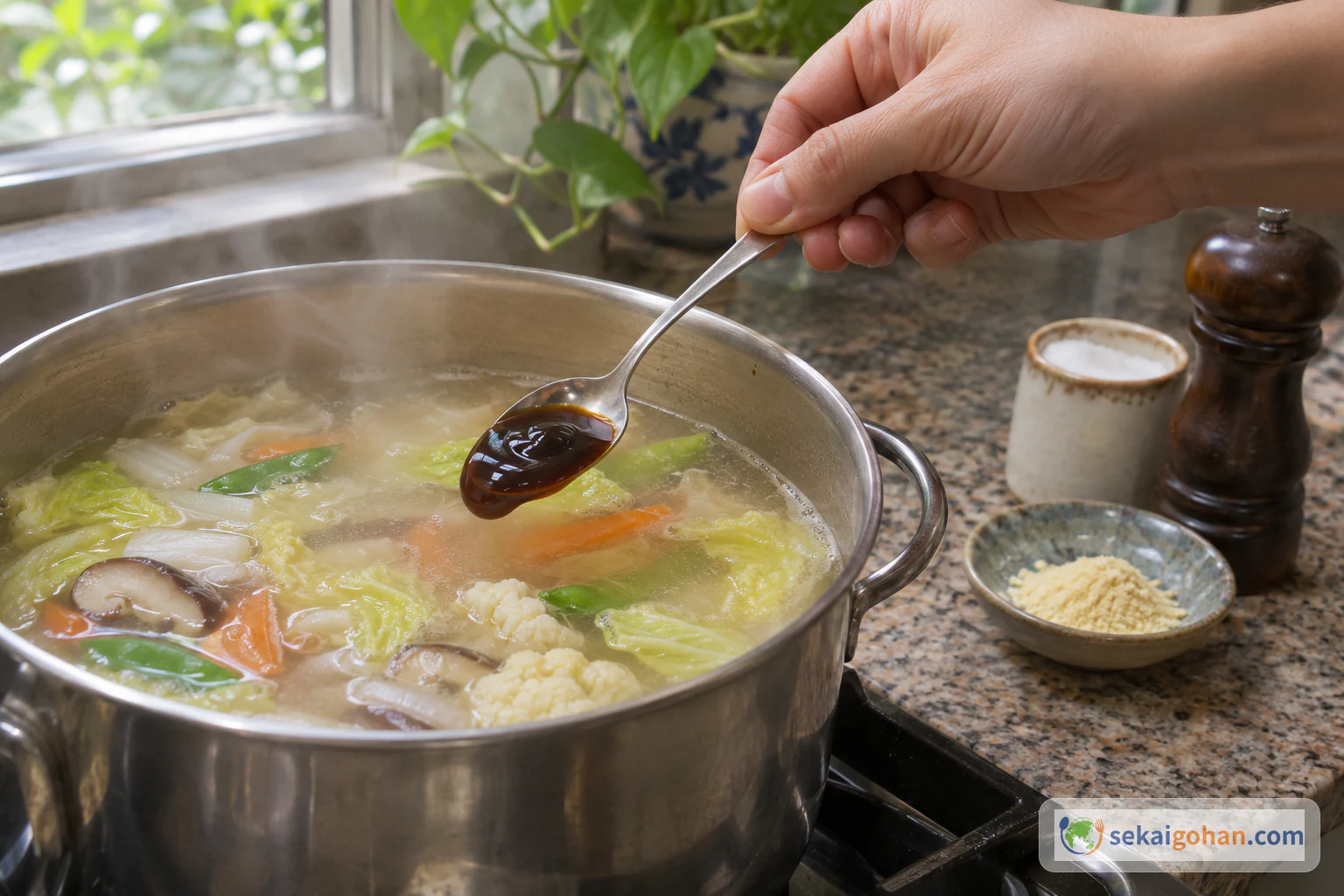
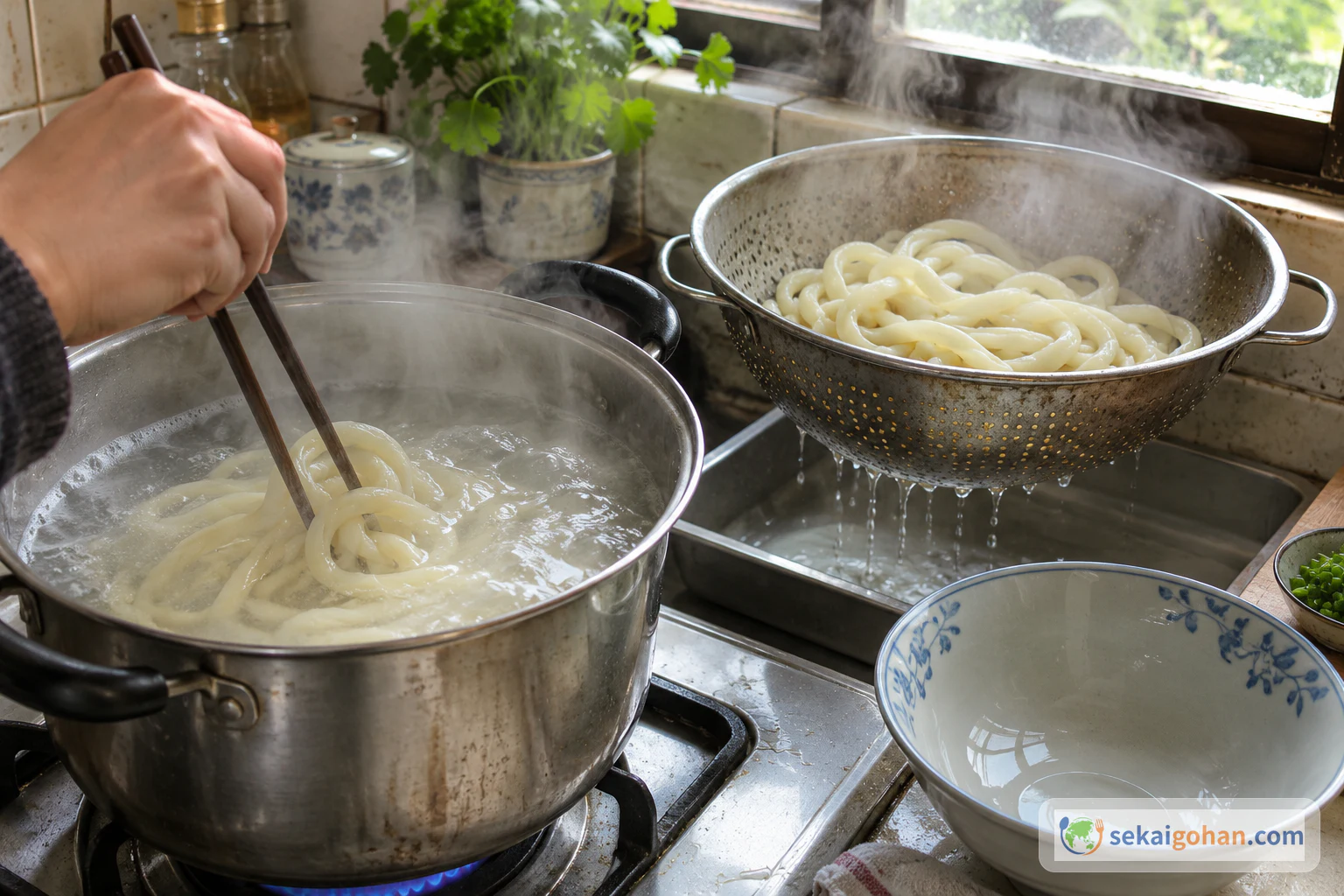
The work splits into three parts. First come the mussels, which give you both the broth and the meat. Next the vegetables are cut and simmered in that broth. The last stretch moves fast, with seafood, noodles and egg one after another, so have the noodle water coming to a boil, the eggs beaten and the bowls warmed before step 7.
The mussel water, the stock powder and the oyster sauce all bring salt, and the amount shifts with the mussels and the brand. Add only a little salt in step 6 and settle the seasoning at the very end, once the egg has set.
Never taste a raw mussel or any raw seafood. Cook shrimp and squid through even if they are labeled for eating raw. Cook the egg until it sets. If you like it softer, keep soft egg away from young children, older adults and anyone with weakened immunity.
When It Goes Wrong
| What you see | Why | What to do |
|---|---|---|
| The broth is cloudy and grey-brown | Hard boiling, too much oyster sauce, or scum from dirty shells | Scrub the shells well, boil the mussels at medium, and keep the oyster sauce small. Make up the salt with salt instead |
| The soup tastes thin | Wet noodles watered it down | Shake the noodles until they stop dripping, and keep the noodle water out of the pot |
| Squid and shrimp are tough | They boiled too long | Add them only at step 7, for 1–2 minutes, once the broth is already seasoned |
| The egg broke into specks | The soup was stirred, or the egg went in all at once | Pour in a thin stream from the edge into gently bubbling broth, then wait |
| The cabbage has gone to mush | Cut too thin or simmered too long | Cut finger-joint chunks and move on as soon as the ribs turn translucent |
| Some mussels never opened | They were dead or damaged | Throw them away. Never pry them open to eat |
Serving, Variations and Storage
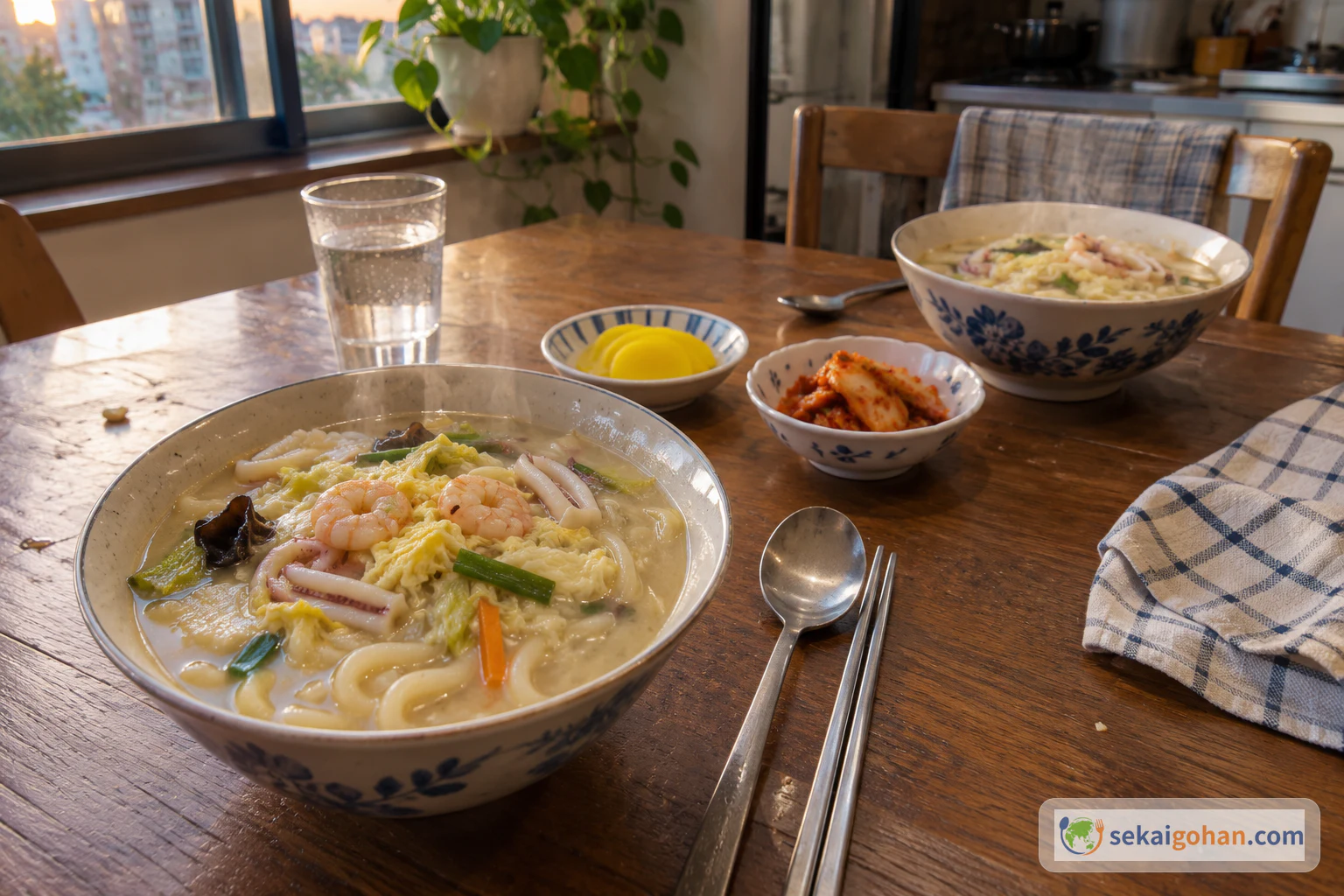
At the table
At a Korean-Chinese restaurant, udong shares the menu with jajangmyeon, jjamppong and tangsuyuk, and it is the mild bowl on a table full of black-bean sauce and chili heat. At home, set out yellow pickled radish (danmuji) and kimchi if you have them. Eat it straight away, while the noodles are springy and the egg is soft.
Variations
- Clams instead of mussels. The broth turns sweeter and the meat smaller. Purge the clams of sand before boiling.
- Spicier. Raise the green chilies to 4, or add a little chili powder. This takes the bowl away from mild udong and toward its own taste.
- Old-style pork-bone broth. Older kitchens used pork bones. Blanch the bones first and skim the scum as it simmers. The broth comes out heavier than chicken stock.
- Japanese udon noodles. They are easy to buy, but they drink up the broth differently and go soft sooner than Chinese noodles.
Storage
Eat the udong within 2 hours of cooking. Until then, keep it hot at 140°F (60°C) or above. To keep leftovers, refrigerate them at 41°F (5°C) or below, with the noodles and the soup in separate covered containers so the noodles do not swell. Reheat the soup to 167°F (75°C) or above before eating, and finish the leftovers early the next day.
Frequently Asked Questions
How do I make it for two?
Keep the seafood and vegetables at the full amount, cook one portion of noodles per person, and ladle less soup into each bowl. Cutting every ingredient down evenly leaves too little broth to simmer the vegetables properly.
Which kind of chicken stock works best?
Powder is the safest choice, and liquid concentrate is the one to skip. Granules or bouillon cubes also work, though they bring a different saltiness and aroma, so lean even harder on tasting before you add salt at the end.
Can I thicken the broth?
A potato-starch slurry will thicken it, but the bowl then turns into something close to ulmyeon, a separate dish on the same menu. Udong is meant to stay thin and clear enough to see the egg ribbons.
Do I have to take the mussels out of their shells?
Shelling them makes the bowl easier to eat with chopsticks and keeps shell grit out of the soup. The meat goes back into the pot in step 7 and is reheated there with the squid and shrimp.