Chankonabe: One Pot of Chicken Dumplings, Cod and Pork in Seasoned Dashi
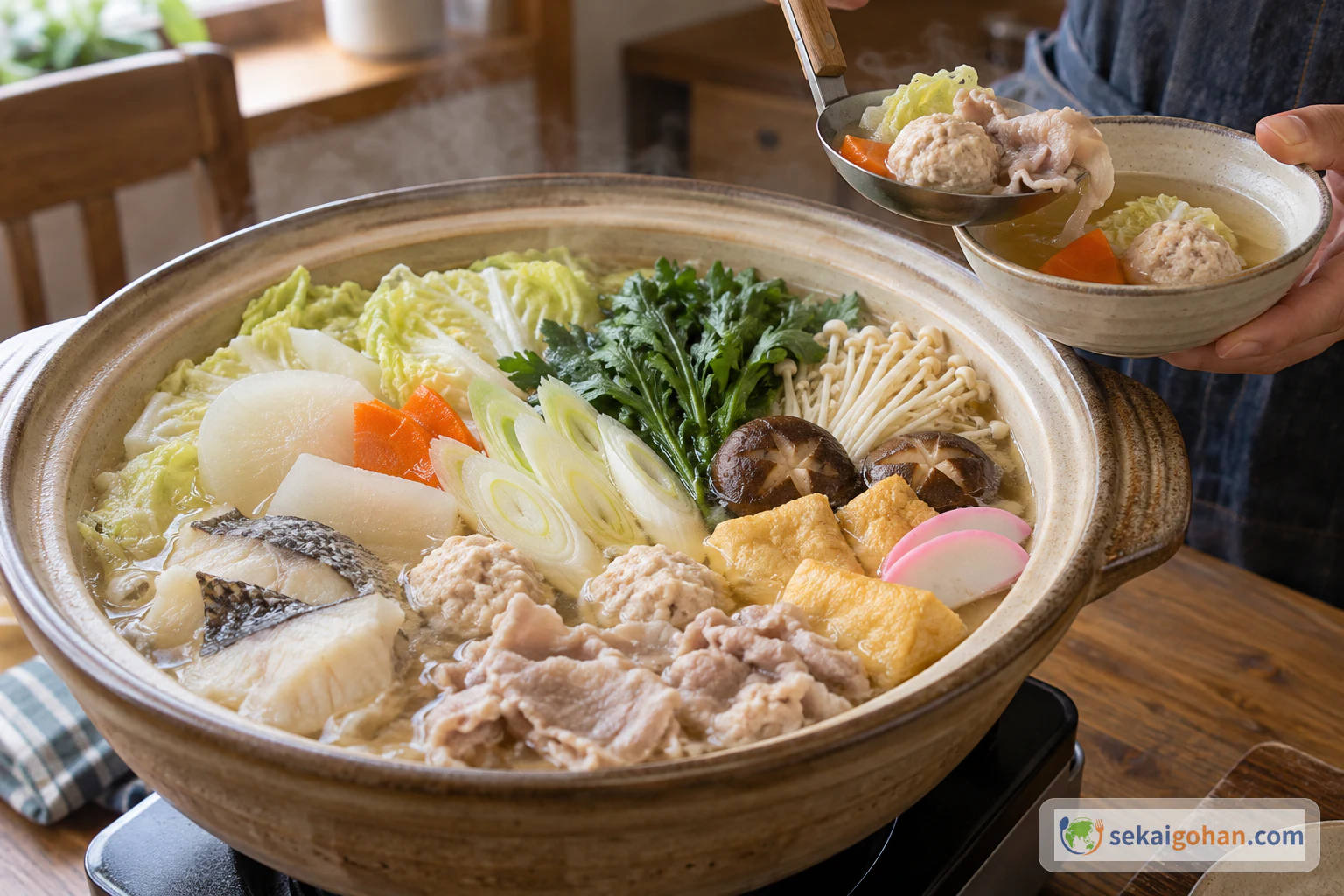
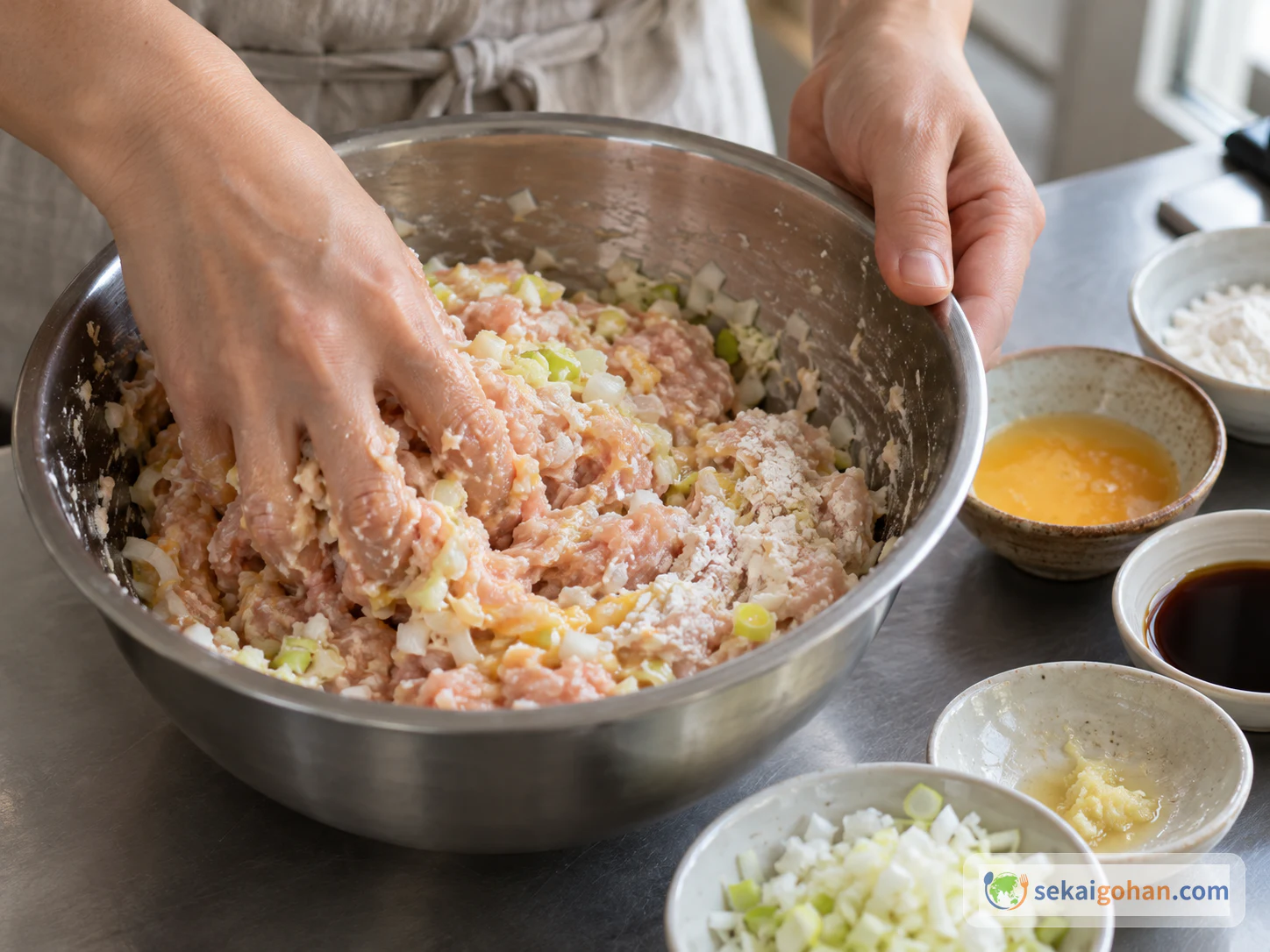
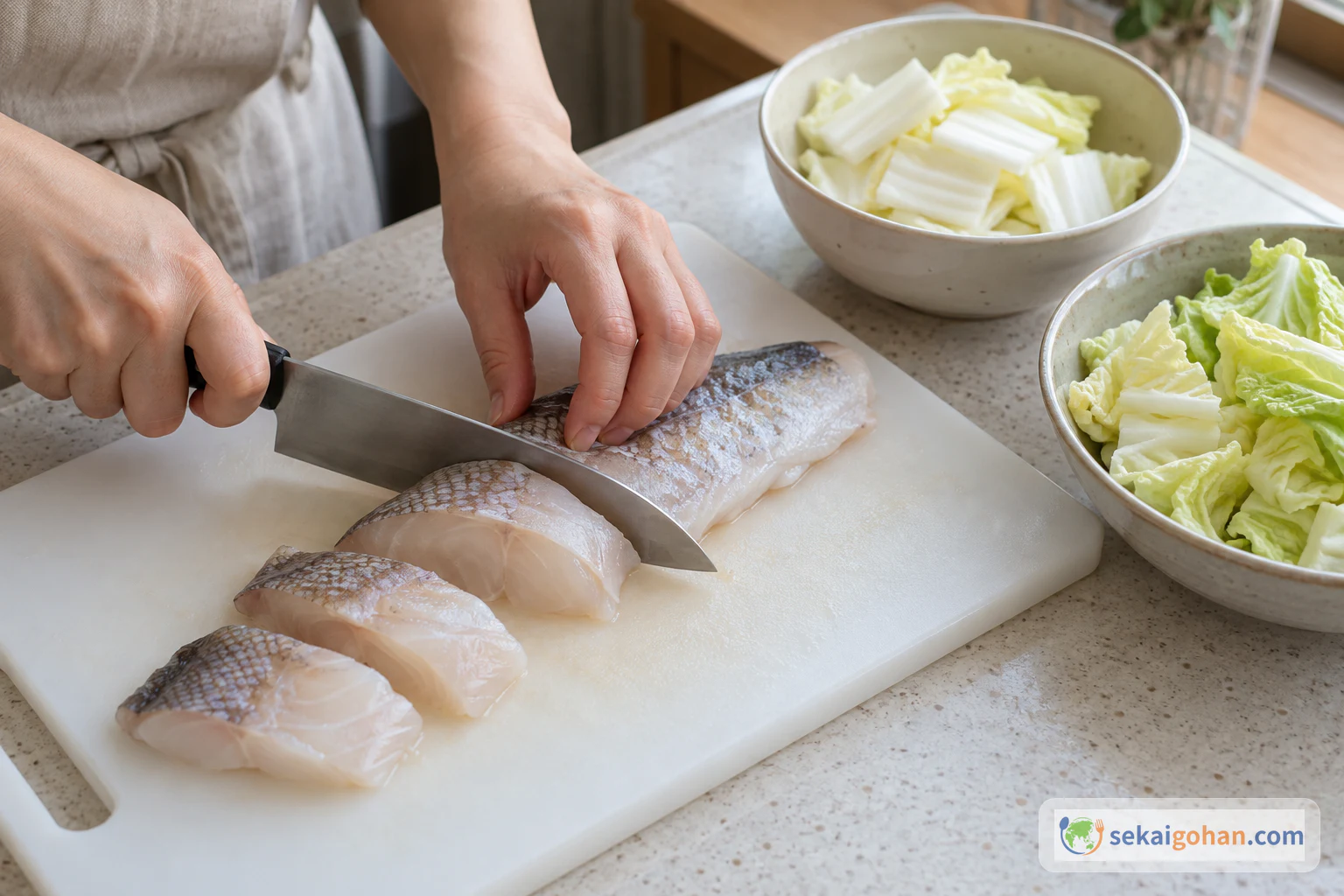
Three proteins, each in its own form: chicken mixed into a soft dumpling paste, cod cut into bite-size pieces, and pork sliced thin enough for shabu-shabu. They go into a dashi broth seasoned with mirin, sake, light soy sauce and salt, in a set order: vegetables and the other prepared ingredients first, then the dumplings, then the pork.
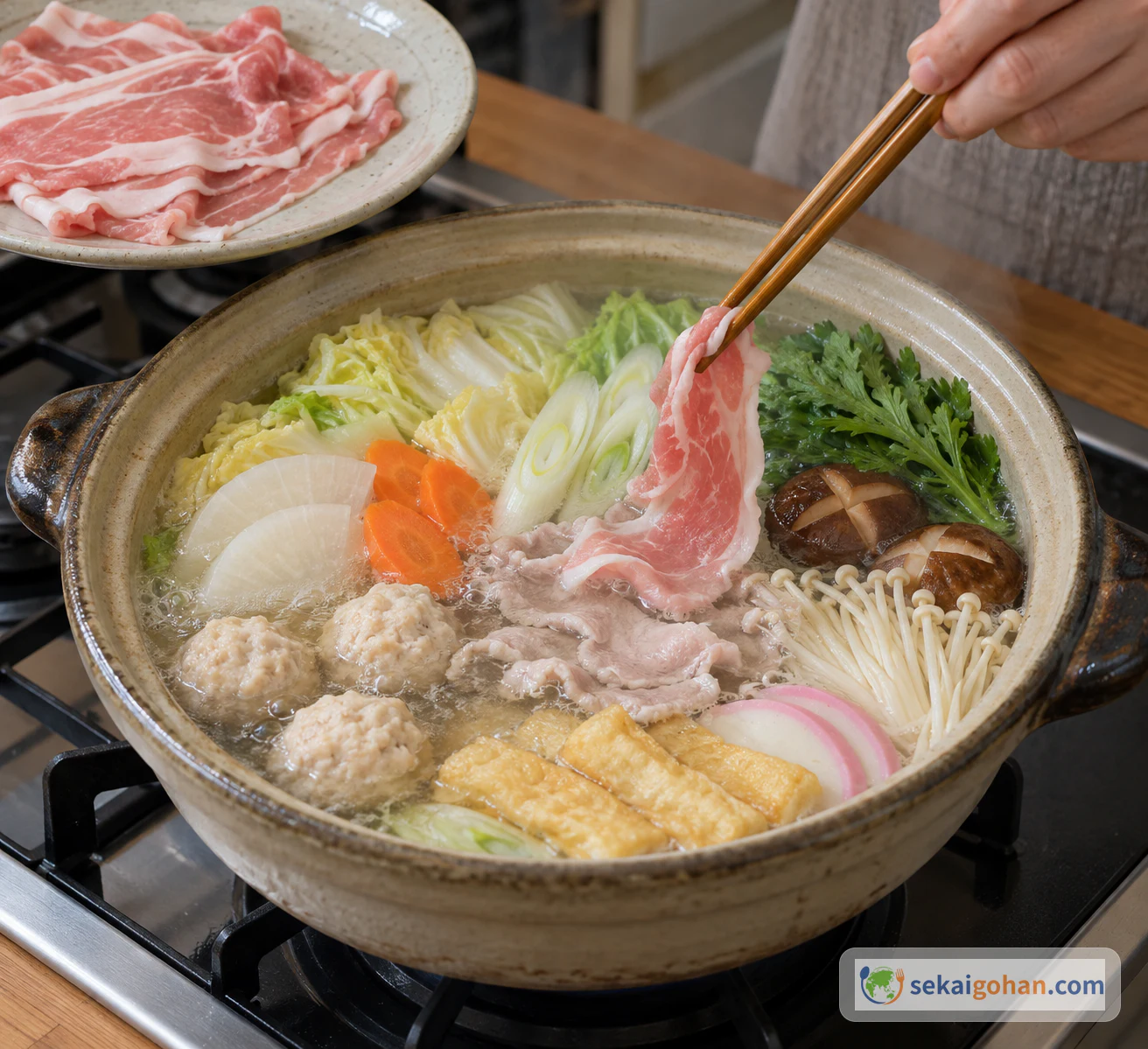
A pot of dashi broth holds napa cabbage, rounds of daikon, carrot, long onion, shungiku, mushrooms, strips of fried tofu and slices of kamaboko. Spoonfuls of chicken paste drop in as small dumplings, and thin slices of pork go in last. Each piece is served into a bowl as soon as it is cooked.
This version is a four-serving home recipe published by the Japanese sake and seasoning maker Takara Shuzo under the name "chankonabe." It is a manufacturer's recipe for home kitchens, not the house formula of any sumo stable, and it is not presented here as the single traditional form of the dish. The amounts and steps below follow that published recipe without mixing in broths, finishes or ingredients from other recipes. This recipe has not been kitchen-tested by Sekai Gohan.
The word "chanko" itself reaches well beyond this pot. The Japan Sumo Association explains that chanko means any meal cooked by sumo wrestlers, and Japan's Ministry of Agriculture, Forestry and Fisheries (MAFF) has its own view of what to call a hot pot like this when it is made at home. Those differences are laid out in the background section below. For more dishes from the same country, see Japan.
Ingredients (Serves 4)
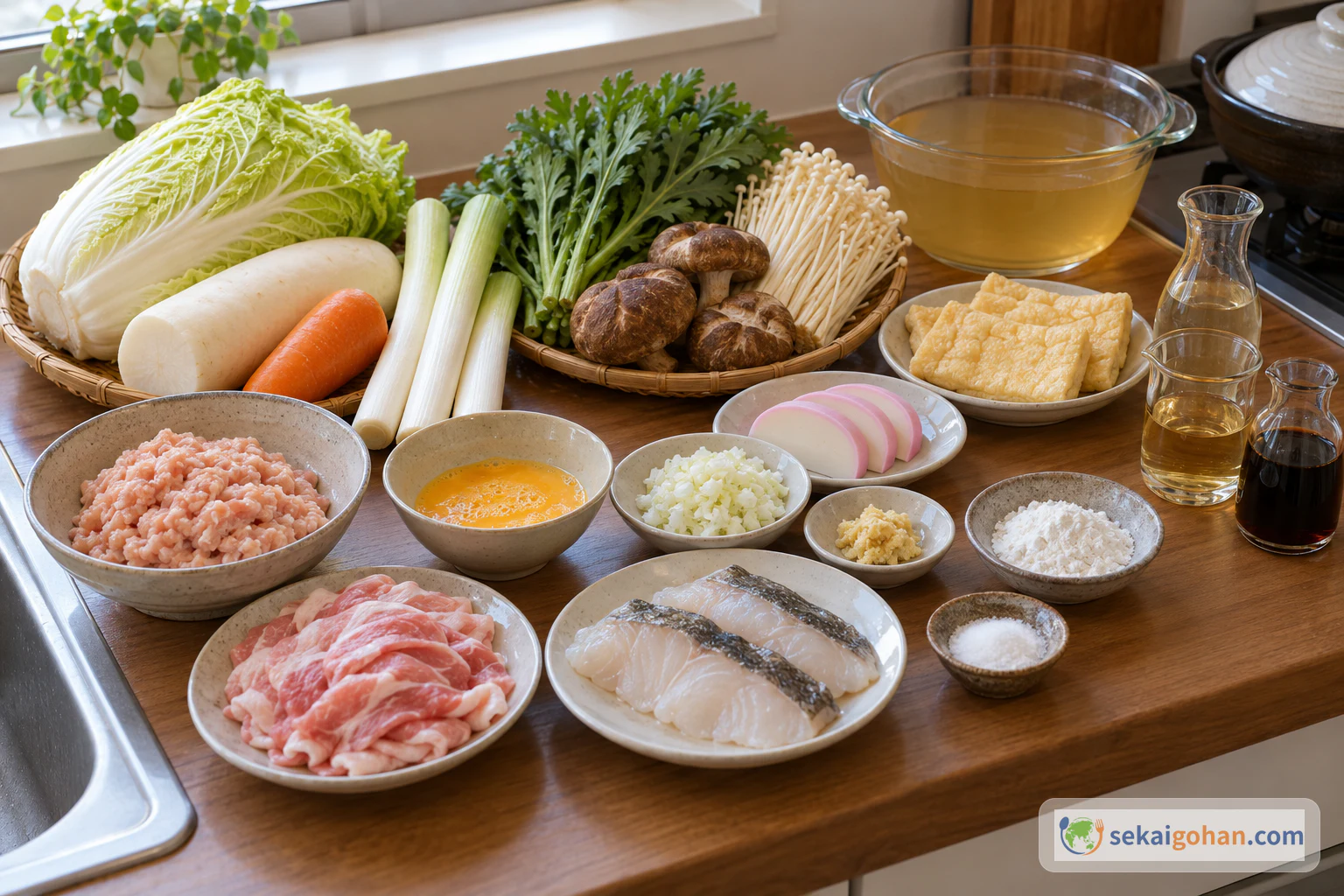
The cooking sake and salt each appear twice: a small amount for the dumpling paste and a larger amount for the broth. Measure them separately.
The dumpling paste contains egg, wheat flour and soy sauce, and the broth contains light soy sauce. Dashi and seasoning products vary, so check their labels for fish, soy, wheat and other allergens, along with the labels on the cod, pork, chicken and kamaboko you buy.
Equipment
- A pot for the hot pot
- A small saucepan for parboiling the daikon and carrot
- A mixing bowl for the dumpling paste
- Knife and cutting board (wash them before moving from raw fish or meat to other foods)
- A vegetable cutter for the carrot (any shape)
- Food thermometer (optional, for checking the center of the dumplings and pork)
Shopping and Choosing
Buy each protein raw and in the right form. For pork, look for thin slices labeled for shabu-shabu. For fish, a raw cod fillet. For chicken, raw ground chicken: the dumplings are mixed at home, so pre-made or pre-cooked chicken meatballs are a different ingredient.
Light soy sauce is not the same as regular soy sauce. Usukuchi soy sauce is lighter in color than the everyday dark (koikuchi) kind and is a separate product. Swapping in dark soy sauce changes both the color and the saltiness of the broth, so it is not an equivalent.
Use prepared dashi. Have 8 cups of finished dashi ready before you start. Adding a different stock base, such as chicken bones or a separate kombu and bonito blend, turns this into a different pot.
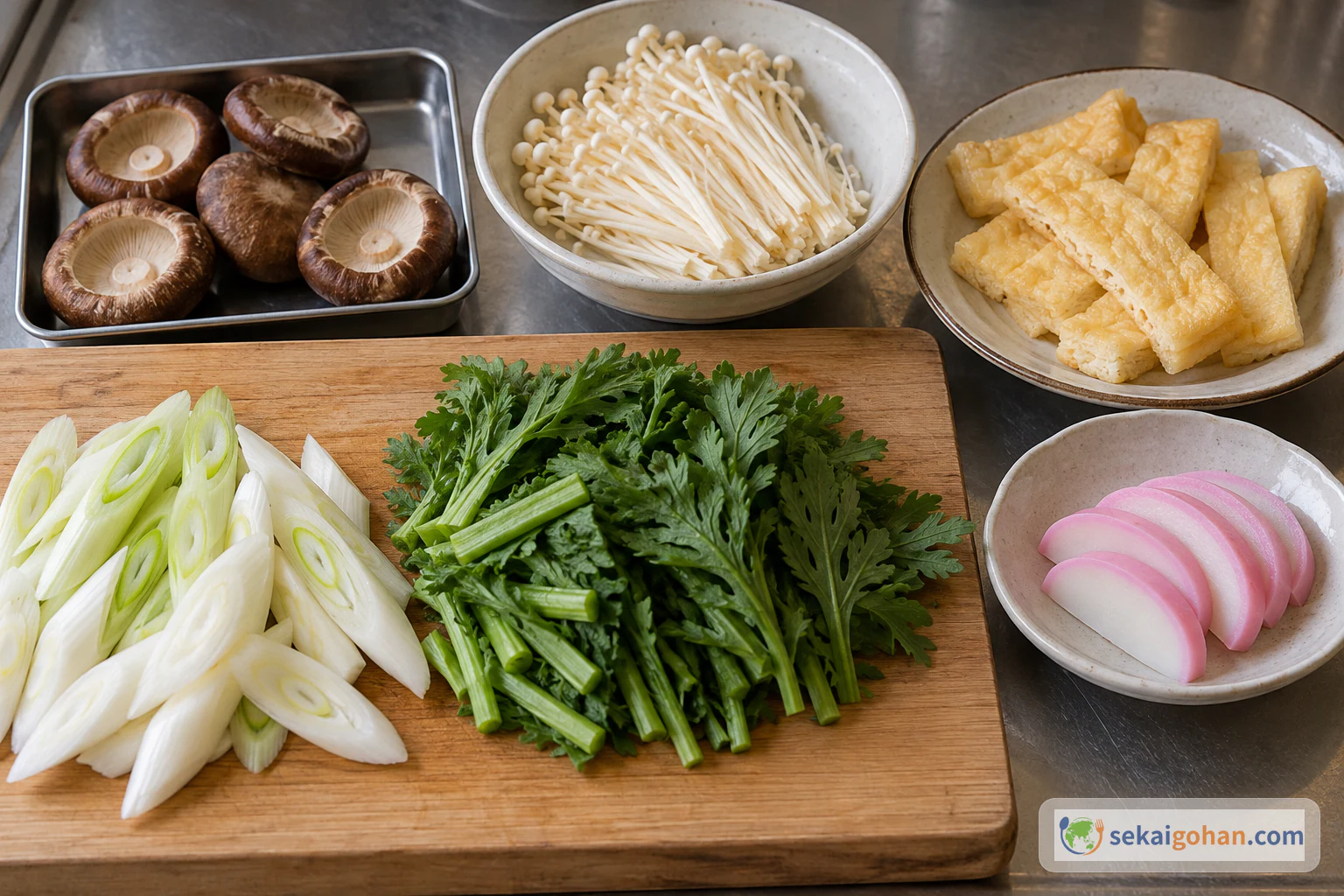
Napa cabbage, daikon, carrot, long onion, shungiku, fresh shiitake, enoki, abura-age and kamaboko make up the rest of the pot. An ordinary pot is all the cooking vessel this recipe needs.
How to Make Chankonabe
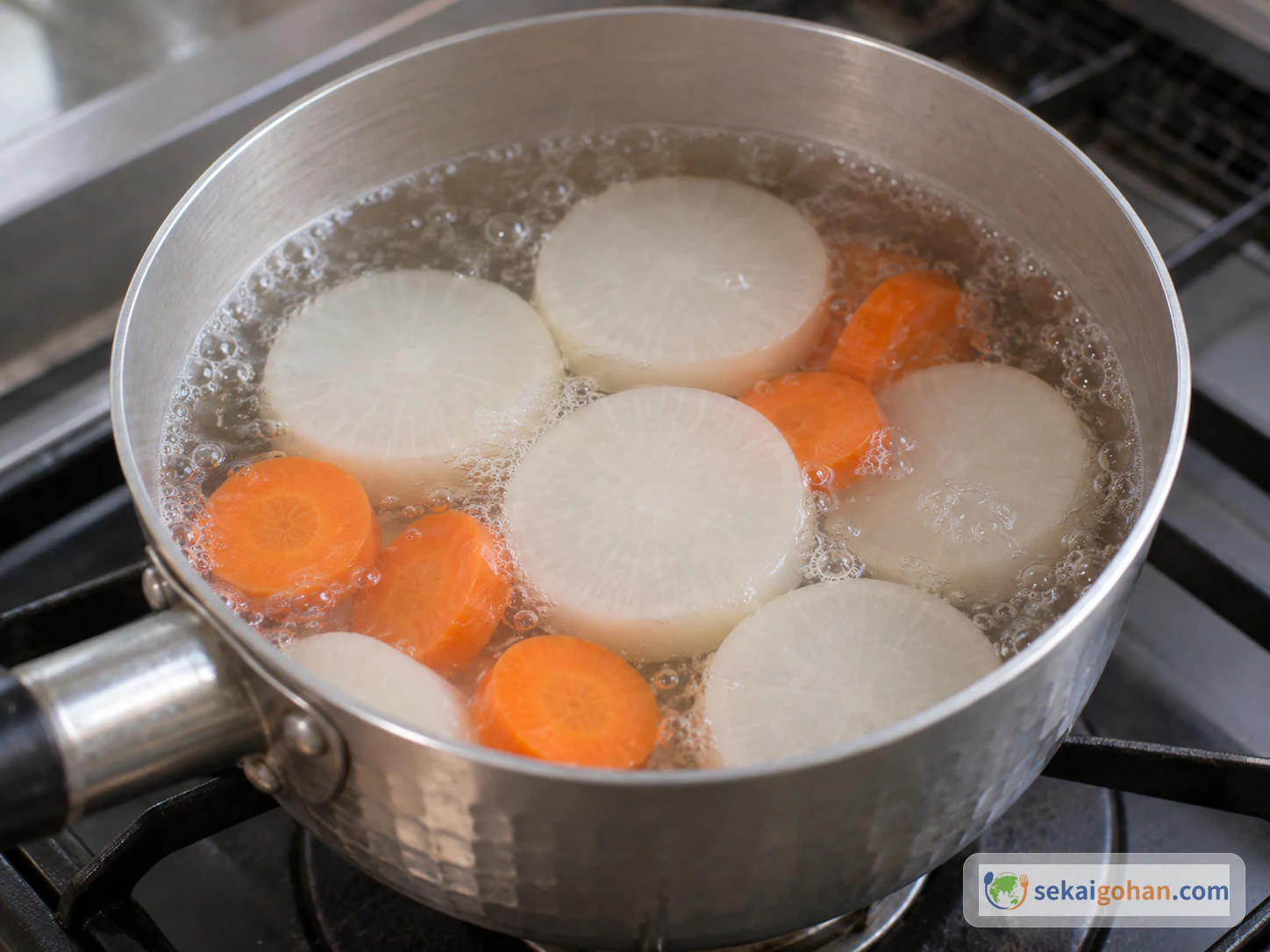
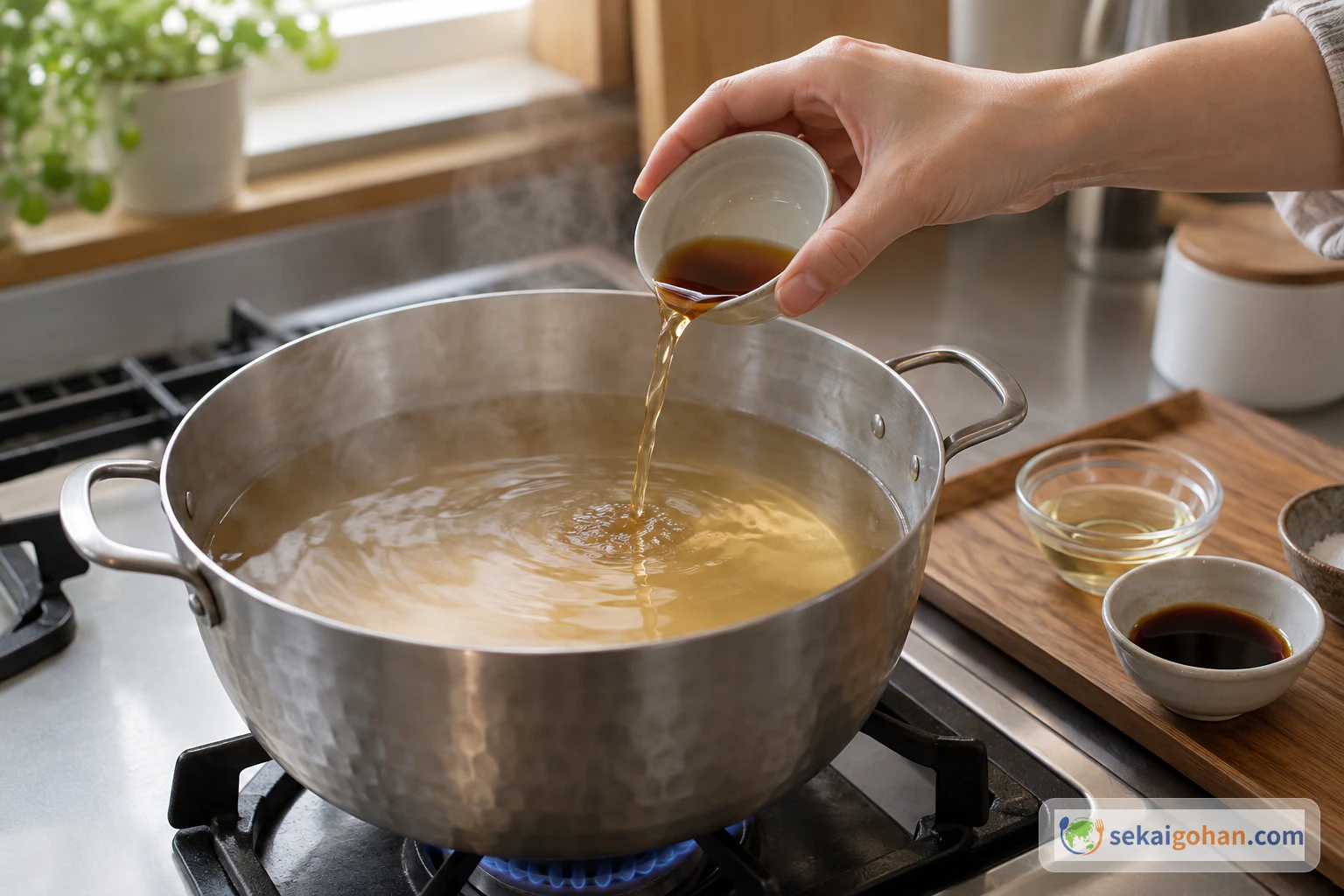
Mix the dumpling paste first but don't shape it. Season the broth before anything goes in. Then add the prepared vegetables and other ingredients, then the dumplings, and the pork last.
Troubleshooting
| Problem | What to check | What to do |
|---|---|---|
| The dumpling paste feels loose | Whether the salt was kneaded into the chicken before the other ingredients went in | Mix with the amounts as listed; adding extra flour, starch or water makes a different dumpling |
| The broth tastes stronger or weaker than expected | The dashi you used | Dashi strength varies with how it is made; keep the seasoning amounts as listed |
| No light soy sauce on hand | Whether only dark soy sauce is available | Dark soy sauce is not a like-for-like swap; the broth will be darker and taste different |
| Unsure whether the meat is done | The center of the dumplings and pork | Check that the center reaches 75°C for at least 1 minute rather than judging by color or by the clock |
What "Chanko" Means: Sources on the Name and the Pot
Chanko is not only a hot pot. According to the Japan Sumo Association, chanko refers to the food that sumo wrestlers cook in general, and curry or fried chicken (karaage) made by wrestlers counts as chanko too. Takasaki oyakata of the Dewanoumi stable, interviewed by Asahi Group Japan, likewise describes chanko as wrestlers' meals as a whole. The association lists several theories about the origin of the word and says none is settled, so no single explanation is given here.
Where the pot is tied to. MAFF's regional food profile lists chankonabe under Tokyo, naming Sumida Ward as the area where it has been handed down, and says the dish is said to have begun in the Meiji era. The same page describes it as a meal suited to cooking in quantity at sumo stables, notes that ingredients and seasoning vary by region and household, and records a tradition that four-legged meat such as beef and pork was once avoided for luck. That is presented as lore from the past, not as a rule for every period or every stable today; the Takara Shuzo home recipe used here includes pork.
What MAFF calls it at home. The MAFF page also says that when ordinary households cook a pot with the same ingredients, it is called yosenabe. Takara Shuzo, by contrast, publishes its home recipe under the name chankonabe. Neither usage is treated here as the one correct definition; this article simply presents a home recipe that is published as chankonabe.
Comparisons: One Stable's Practice and This Home Recipe
These comparisons are context only. None of them changes the ingredients or steps above.
- Mixing proteins. In the Asahi Group Japan interview, Takasaki oyakata says that at the Dewanoumi stable, a pot that uses chicken does not have other kinds of meat or fish mixed in. Takara Shuzo's home recipe combines chicken dumplings, cod and pork in one pot. One is a single stable's practice and the other is a manufacturer's home recipe; neither is the standard for all sumo stables.
- Topping up the pot. The same interview gives being able to add more ingredients as they run out, while many people eat, as one reason pots suit a large stable.
- Ways of eating. The stablemaster also describes pouring broth over the food in one's own bowl, and pouring the pot's broth over separately boiled udon. The Takara Shuzo recipe has no noodle or rice finish, so neither is part of this recipe.
Serving, Leftovers and Food Safety
Serve the ingredients from the pot as they finish cooking. While cooking, keep raw meat and fish juices off other foods, and wash hands and tools before moving on to the next task.
The general guideline from Japan's Ministry of Health, Labour and Welfare (MHLW) for foods that are cooked is to heat the center to 75°C for at least 1 minute. That guideline is applied here to the chicken dumplings and pork; it is not a cooking time for the cod or vegetables.
For leftovers, don't leave the cooked pot out at room temperature for long. Divide what remains into shallow containers, cool it quickly in the refrigerator, and reheat it before eating.
Frequently Asked Questions
Are chankonabe and yosenabe the same thing?
The sources describe it differently. MAFF's regional food page says a pot made in ordinary households with the same ingredients is called yosenabe, while Takara Shuzo publishes this home recipe as chankonabe. The naming depends on who is describing it.
Is chanko only a hot pot?
According to the Japan Sumo Association, chanko is any meal cooked by sumo wrestlers. Curry and fried chicken can be chanko too.
Can chankonabe include pork?
This recipe includes 200 g of shabu-shabu pork. MAFF's page records an old tradition of avoiding beef and pork for luck, but presents it as lore rather than a rule for all times.
What should the dashi be made from?
Takara Shuzo's recipe calls for 8 cups of dashi without saying what it is made from, how it is extracted, or what size cup is meant. No separate stock recipe is added here. If you use a commercial dashi product, follow its label.
Should I add udon at the end?
This recipe has no finish. Separately boiled udon with the pot's broth poured over it is one stable's way of eating, as described by Takasaki oyakata, and is not included in these amounts.
How long should it simmer to be safe?
Takara Shuzo lists a cooking time of 20 minutes for the whole recipe. That is the recipe's stated time, not a home measurement and not a safety guarantee for the meat. Use MHLW's general guideline for the chicken dumplings and pork: a center temperature of 75°C for at least 1 minute.
Sources
- Takara Shuzo Co., Ltd., "ちゃんこ鍋" (Chankonabe). The four-serving recipe used here: ingredients and amounts, the chicken dumpling paste and when it is shaped, how each ingredient is cut, parboiling the root vegetables, seasoning the dashi, the order ingredients go into the pot, and the listed 20-minute cooking time. https://www.takarashuzo.co.jp/cooking/print.php?id=189
- Japan Sumo Association, "大相撲クイズ No.1141" (Grand Sumo Quiz No. 1141). That chanko means food cooked by sumo wrestlers in general, including curry and fried chicken, and that the word's origin has several theories with none settled. https://www.sumo.or.jp/Entertainment/quiz/1141/
- Ministry of Agriculture, Forestry and Fisheries, "ちゃんこ鍋 東京都|うちの郷土料理" (Chankonabe, Tokyo — Our Regional Cuisines). Sumida Ward as the area where it is handed down, the account that it began in the Meiji era, its role as a stable meal made in quantity, the old tradition of avoiding four-legged meat, variation by household and region, and the page's classification of the same pot at home as yosenabe. The recipe on that page is not used here. https://www.maff.go.jp/j/keikaku/syokubunka/k_ryouri/search_menu/menu/34_28_tokyo.html
- Asahi Group Japan, "Hare no Hi, Asahi," "角界の"料理の鉄人"出羽海部屋 高崎親方に聞く、「ちゃんこ」の世界" (The world of chanko, with Takasaki oyakata of the Dewanoumi stable). One stablemaster's account of chanko as wrestlers' meals, adding ingredients as a large group eats, not mixing other meats or fish into a chicken pot at that stable, and pouring broth over one's bowl or over separately boiled udon. https://harenohi.asahigroup-japan.co.jp/special/2-3/
- Ministry of Health, Labour and Welfare, "家庭での食中毒予防" (Preventing Food Poisoning at Home). The general guideline of heating food to 75°C at the center for at least 1 minute, keeping raw meat and fish juices off other foods, washing tools, and cooling leftovers quickly in shallow containers and reheating them. https://www.mhlw.go.jp/stf/seisakunitsuite/bunya/kenkou_iryou/shokuhin/syokuchu/01_00008.html