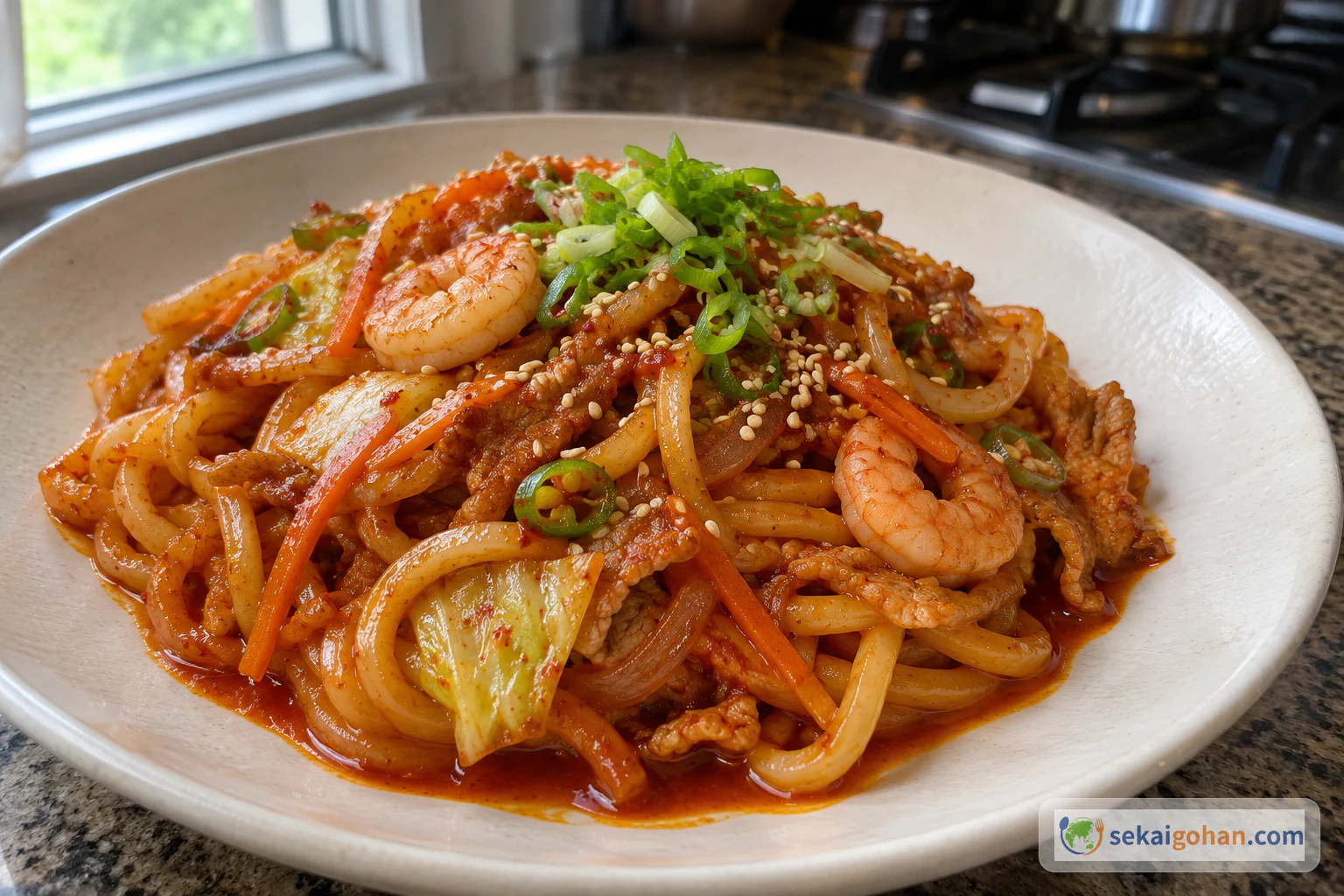
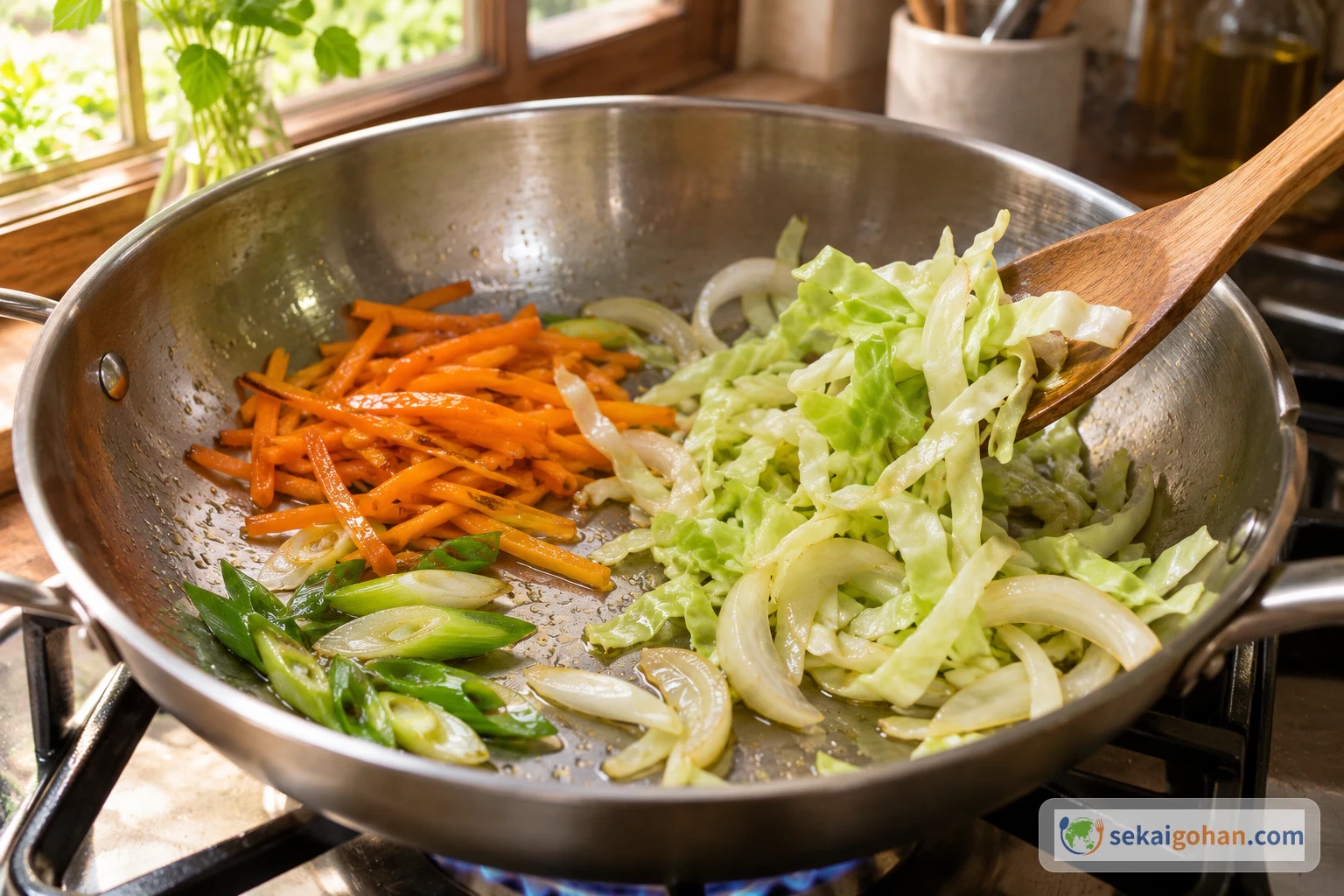
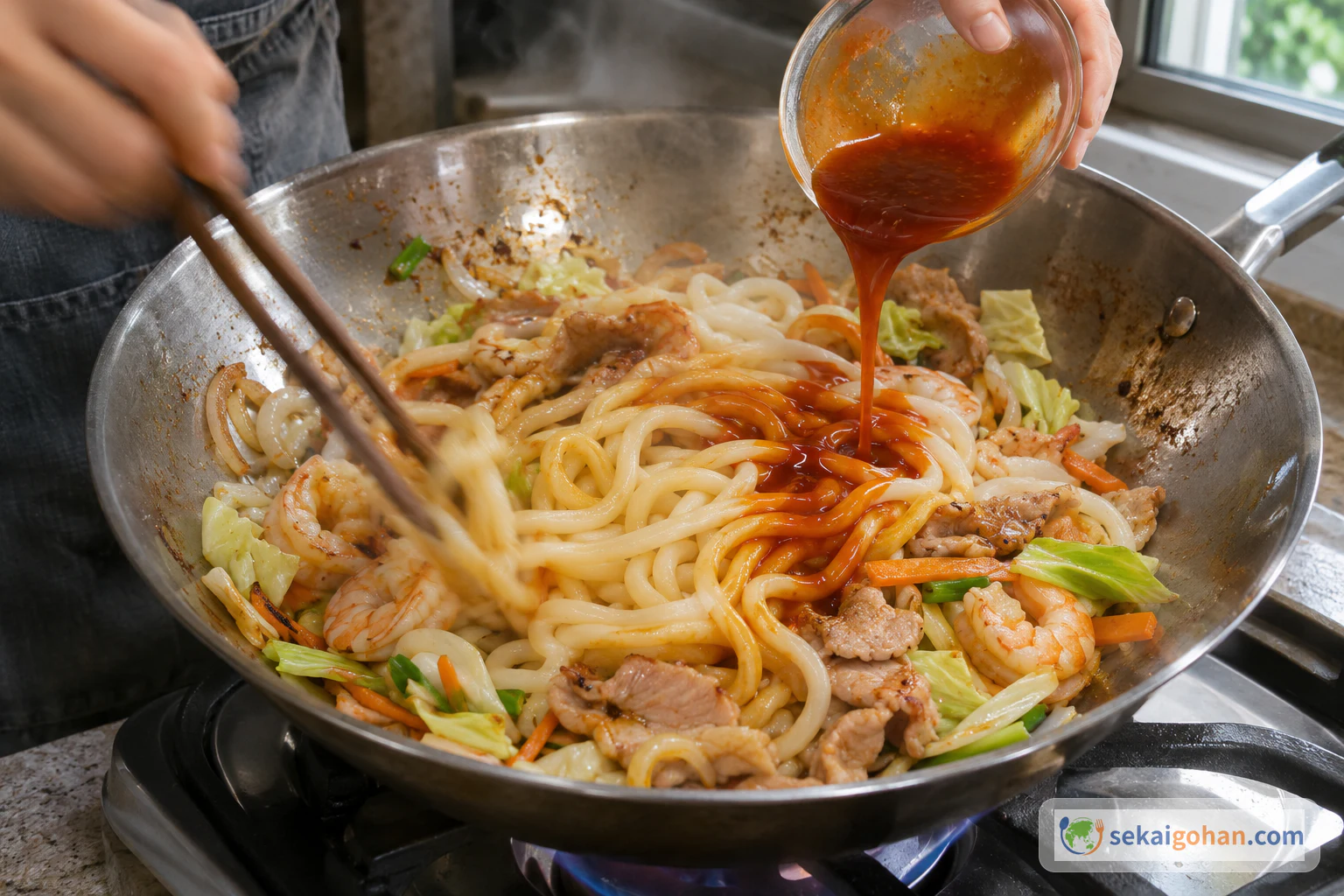
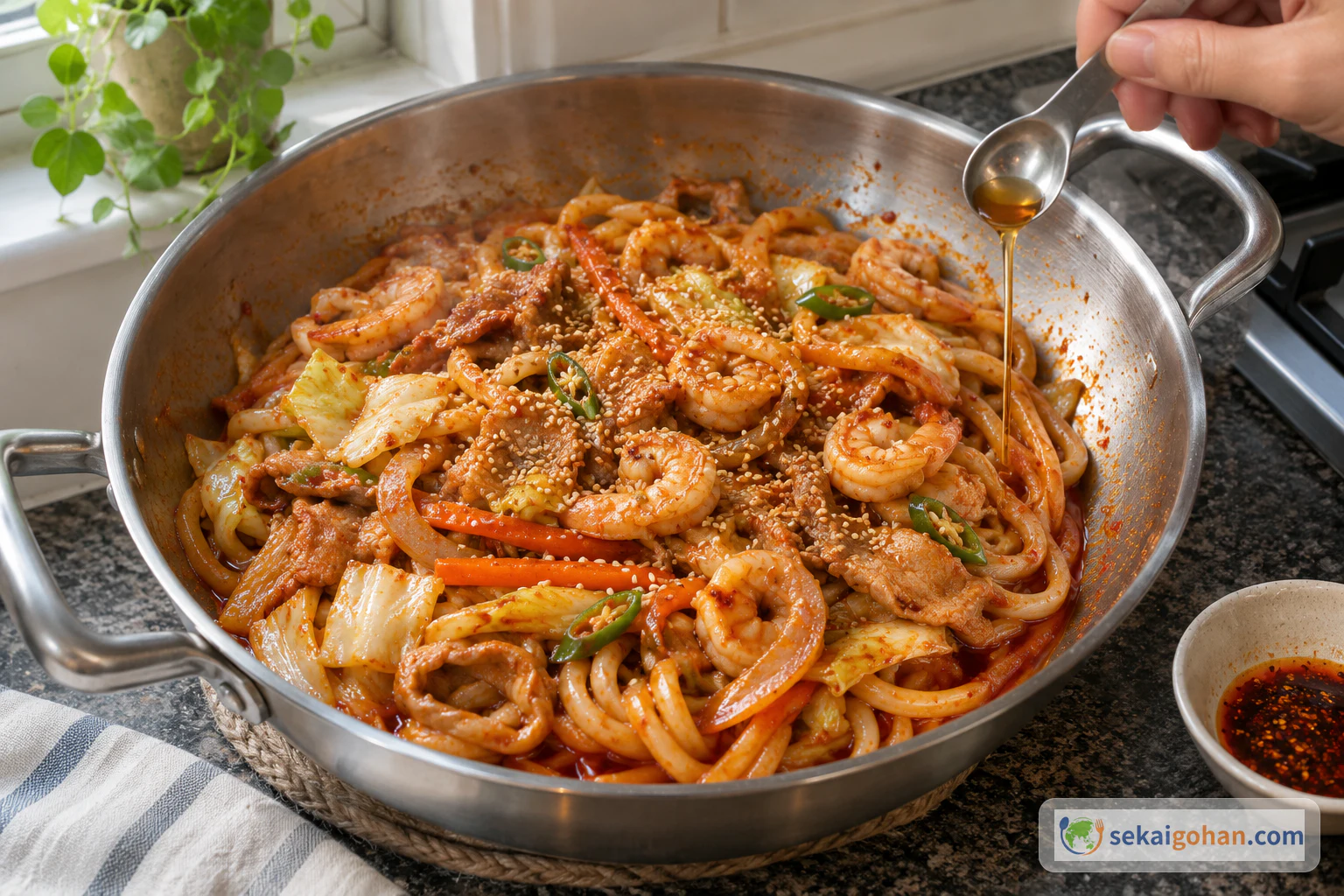
The noodles go back into the pan last, over the strongest flame the stove will give. The red sauce hits hot metal with a hiss, and the kitchen fills with garlic and toasted chili. What lands on the plate is a heap of thick udon slicked red-orange, threaded with pork, pink shrimp, cabbage and carrot, with a little sauce pooled underneath. At the table you loosen the noodles with chopsticks instead of cutting them, and the first mouthful is sweet, then garlicky, then hot. This is yakki-udong (야끼우동), the stir-fried noodle that Daegu's Chinese restaurants are known for across Korea.
A Daegu Noodle With a Japanese-Sounding Name
Neither jjamppong nor udong
In 1974, Jang Yu-cheong, a restaurateur of overseas Chinese background born in 1934, put a new noodle on the menu at his Daegu restaurant, Junghwa Banjeom. It was neither the spicy seafood soup jjamppong nor the mild udong, and at first customers barely noticed it. He had taken a Chinese stir-fried noodle, chaomian, and bent it toward Daegu taste. He cut back the oil, left a shallow layer of broth in the plate, built the heat from garlic and chili flakes, and piled in seafood.
By 1980 the dish was in its heyday, and today nearly every Chinese restaurant in Daegu serves it. Junghwa Banjeom itself opened in 1954 as Junghwawon in Dongmun-dong, Jung-gu, across from the Donga Department Store, and moved several times before settling under its current name; the present shop is dated to 1968. Jang died in 1997. The second generation, Jang Yeo-rim, has run the kitchen since 1996, switching the coal-briquette braziers to gas, and the sauce has grown spicier and richer than it once was. By 2019, about 80 percent of the orders there were for yakki-udong.
What a Daegu plate holds
In the restaurants, yakki-udong is fried to order over high heat with onion, napa cabbage, Korean zucchini, mung bean sprouts and wood ear mushroom, with garlic chives in summer and spinach in winter, plus shrimp, squid and pork. Some kitchens add beef-bone broth. Locals describe the taste as eolkeun, a fiery heat that warms the chest, but also as sweet-spicy, with a strong fire flavor and a heat that feels pleasant rather than harsh. Descriptions of the liquid differ: one calls it a dish with no broth, another describes a shallow layer of broth at the bottom. It is a stir-fry, not a soup, but a little sauce stays loose in the plate.
In 2006 the city of Daegu, gathering expert opinion at a local food fair, named yakki-udong one of the Daegu Ten Flavors, and the city's tourism office still introduces it as "a paradise of seafood and vegetables." The same ingredients spun off another dish in the late 1970s: junghwa bibimbap, the stir-fry spooned over rice and topped with a fried egg. If you want to keep exploring the country's cooking, start with the other dishes of Korea.
How it differs from its neighbors
Japanese yaki udon shares the look of the name and little else; it leans on soy sauce, bonito flakes and Worcestershire-style sauce, while yakki-udong runs on chili flakes, garlic, oyster sauce and seafood. The udong of Korean-Chinese restaurants is a white soup noodle in shellfish broth. Bokkeum-jjamppong, the brothless stir-fried cousin of jjamppong, comes closest, and in Daegu yakki-udong is set apart from it by that shallow pool of sauce. Jjajangmyeon and jjamppong use the same wheat noodles as many restaurant versions, with completely different sauces.
야끼우동 pairs a Japanese-sounding yaki (grilled or fried) with udong, the Korean word for udon. How the dish came to carry that name is not settled. The dish itself took shape in a Korean-Chinese restaurant kitchen in Daegu, and Korean spellings such as yakki-udong and yaki-udong are both in use.
Ingredients (serves 2)
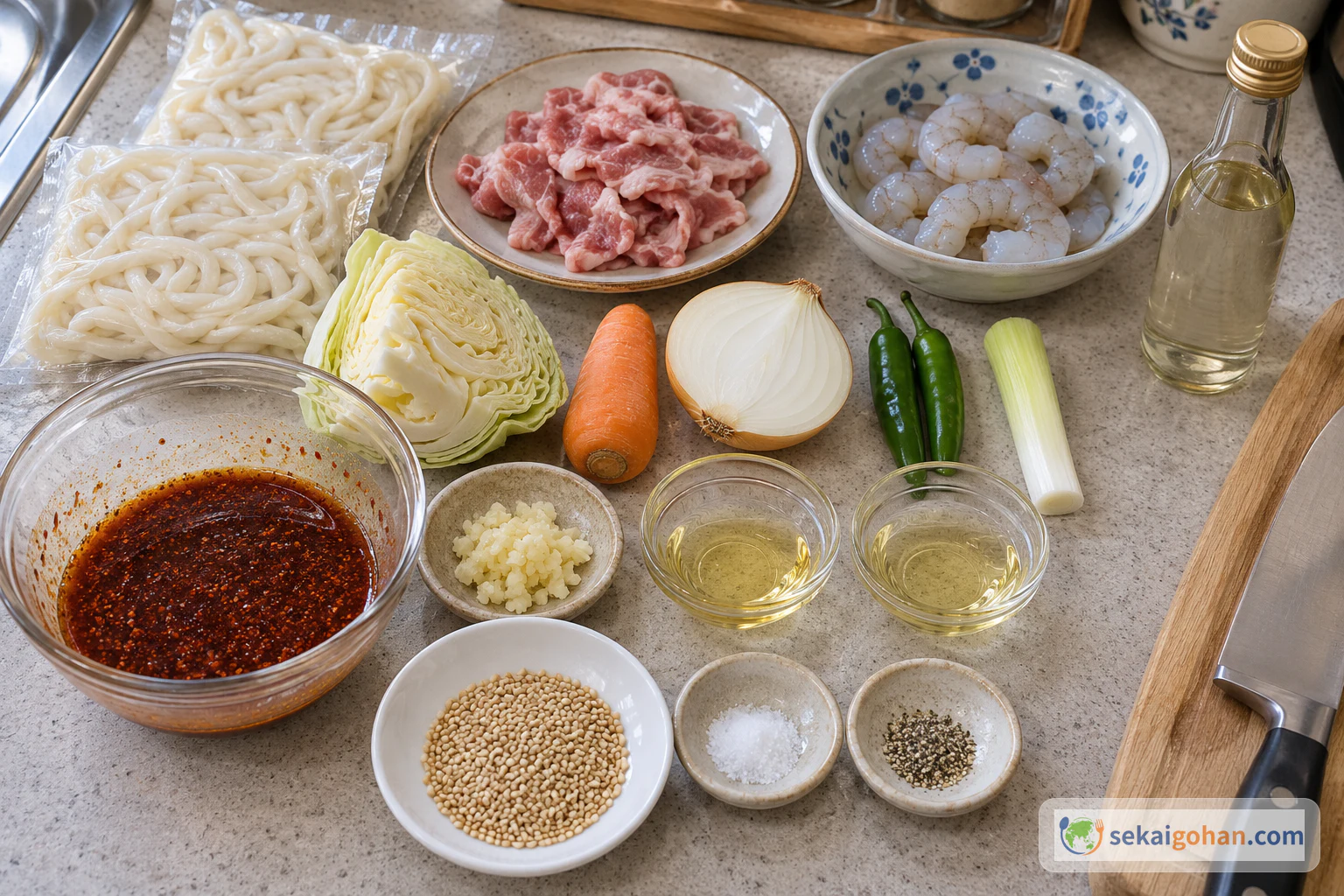
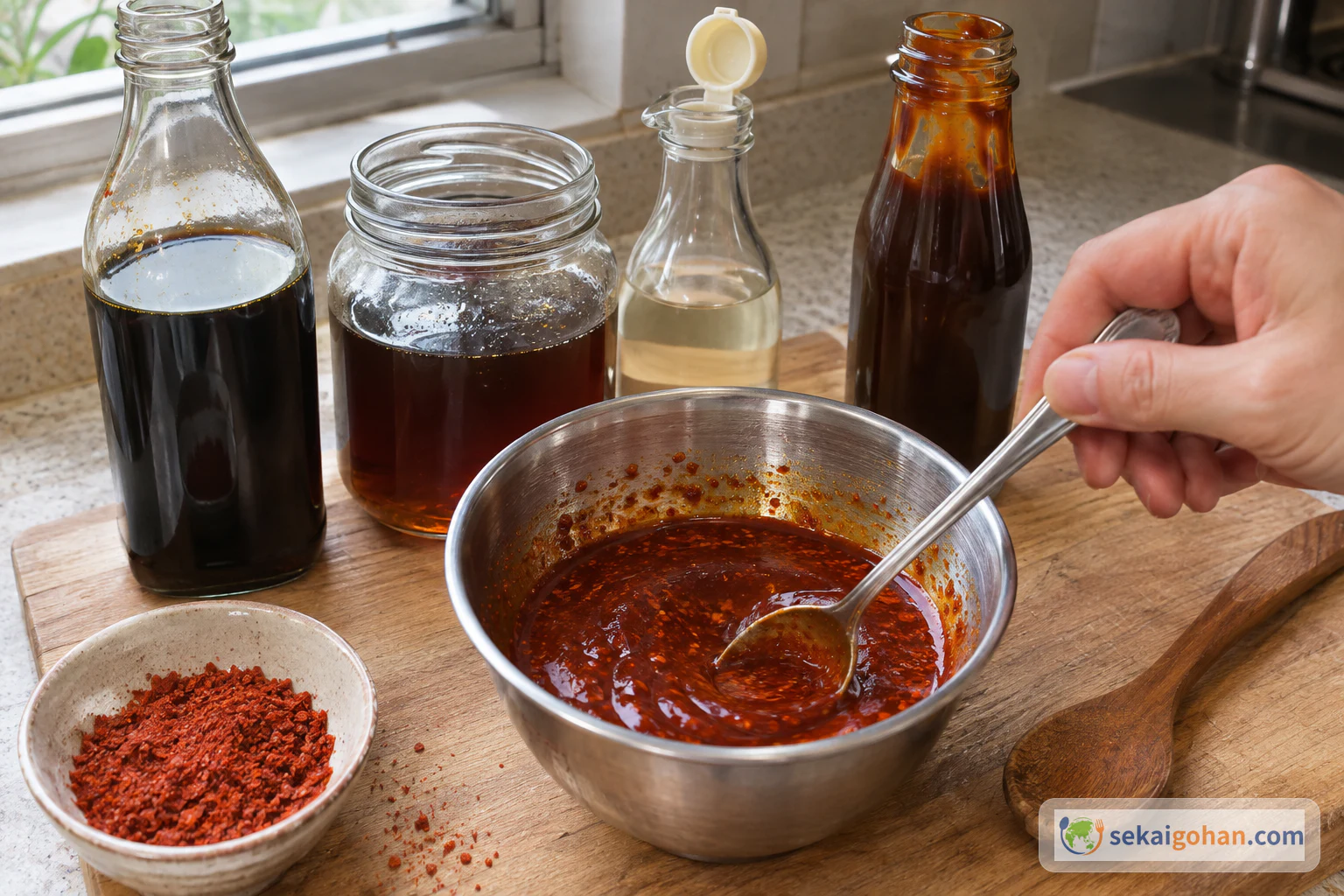
The sauce is five seasonings in one bowl, and its balance decides the dish: gochugaru for color and heat, soy and oyster sauce for depth, oligo syrup and vinegar for the sweet-sour edge.
This dish contains wheat (noodles, soy sauce), shrimp, soy (soy sauce, oyster sauce) and sesame (sesame oil, sesame seeds). Oyster sauce contains oyster extract, so it is a shellfish allergen. Some udon noodles contain egg; check the label on the pack.
Equipment
- A pot for boiling the noodles
- A 10- to 11-inch (26–28 cm) skillet or wok that can take high heat
- A colander
- Two bowls (one for the marinade, one for the sauce), a small bowl for noodle water, and a clean plate
- Long cooking chopsticks and a wooden spatula
- A knife and cutting board
Choosing and Substituting
Two things are worth a trip to a Korean grocery or an online order: gochugaru and oligo syrup. Gochugaru gives the dish its red color and its round, fruity heat, and nothing on a supermarket spice shelf matches it. Everything else has an honest swap.
| Ingredient | Swap | What changes |
|---|---|---|
| Gochugaru | Japanese ichimi or shichimi pepper | Color and aroma shift away from the Daegu taste |
| Cheongyang chilies | Any fresh hot green chili | Close; mild peppers such as shishito lack the heat |
| Oligo syrup | Starch syrup (mizuame) or honey | The shine and the kind of sweetness change. Never give honey to babies under 1 year |
| Brewed soy sauce | Japanese-style dark soy sauce | Close, but salt and sweetness differ; start with less and add |
| Oyster sauce | Any oyster sauce | Same seasoning family, works as is |
| Chili oil | Japanese "eating" chili oil (taberu rayu) | Adds a sesame aroma |
| Udon portions | Refrigerated cooked udon or frozen udon | Close in texture to the udon portions |
This is a home kitchen's yakki-udong, built on pork, shrimp and cabbage. It leaves out the squid, bean sprouts and wood ear of the restaurants, and Junghwa Banjeom keeps its own proportions private, so the plate you make is close kin to the Daegu one, not a copy of it.
Method
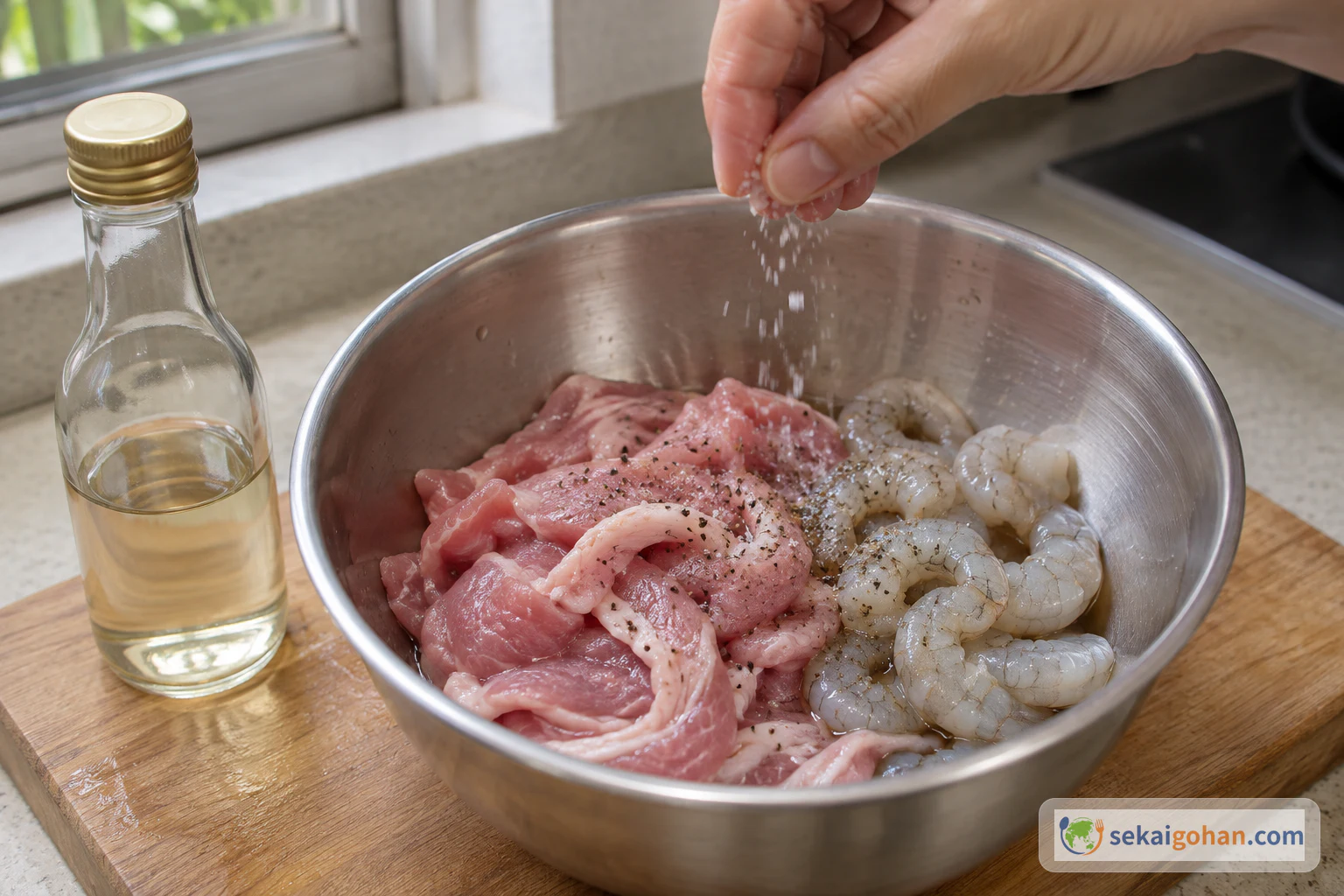
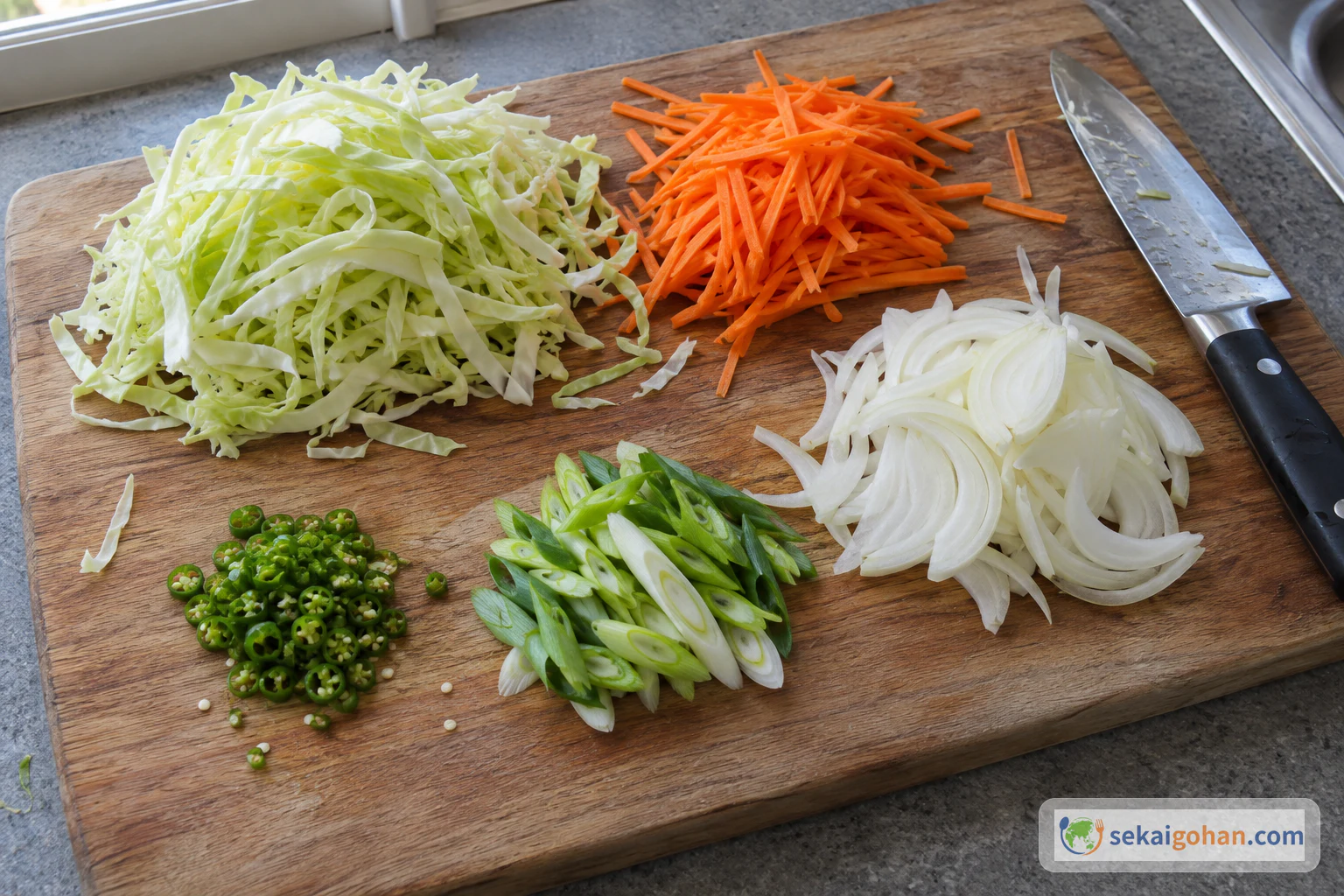
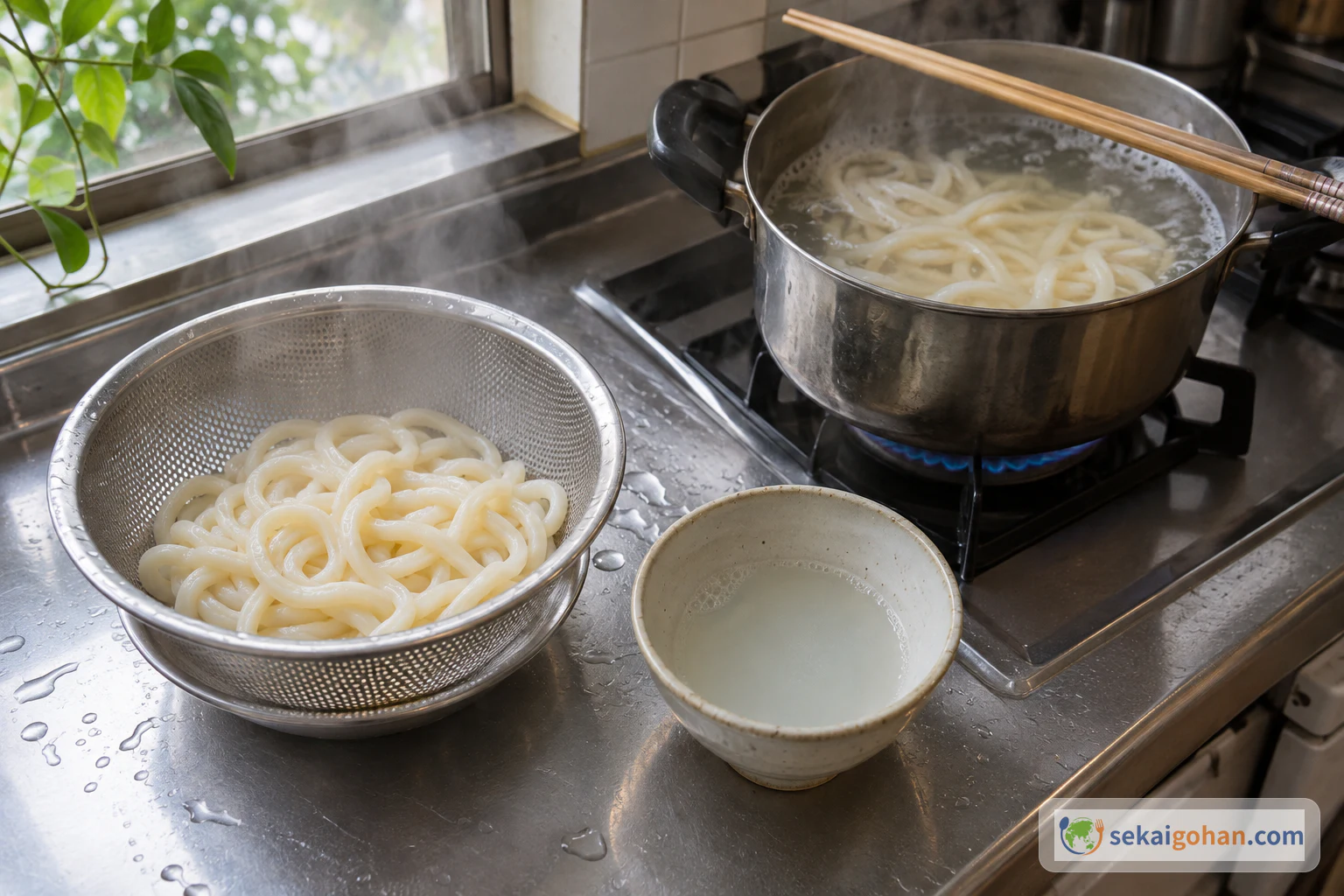
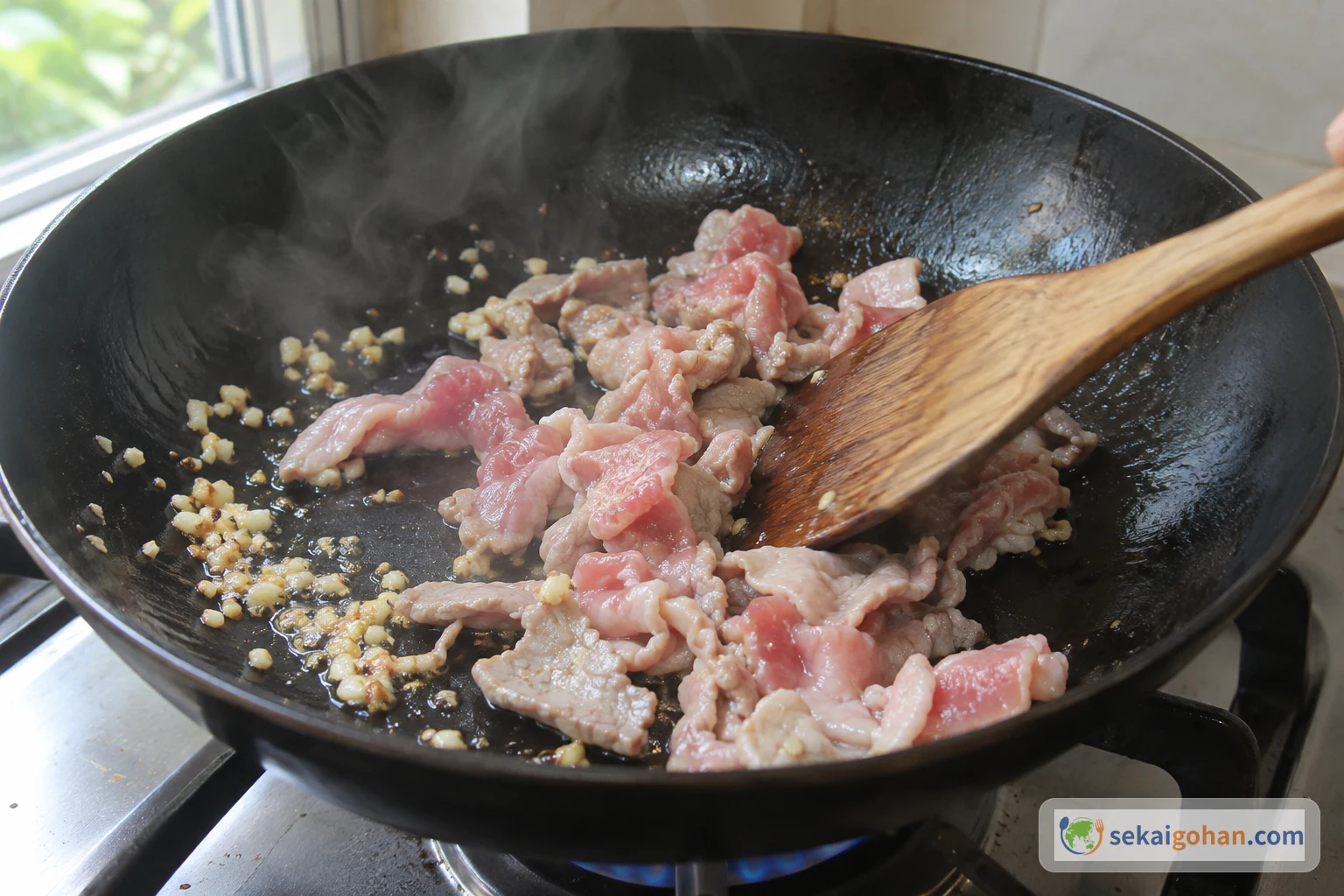
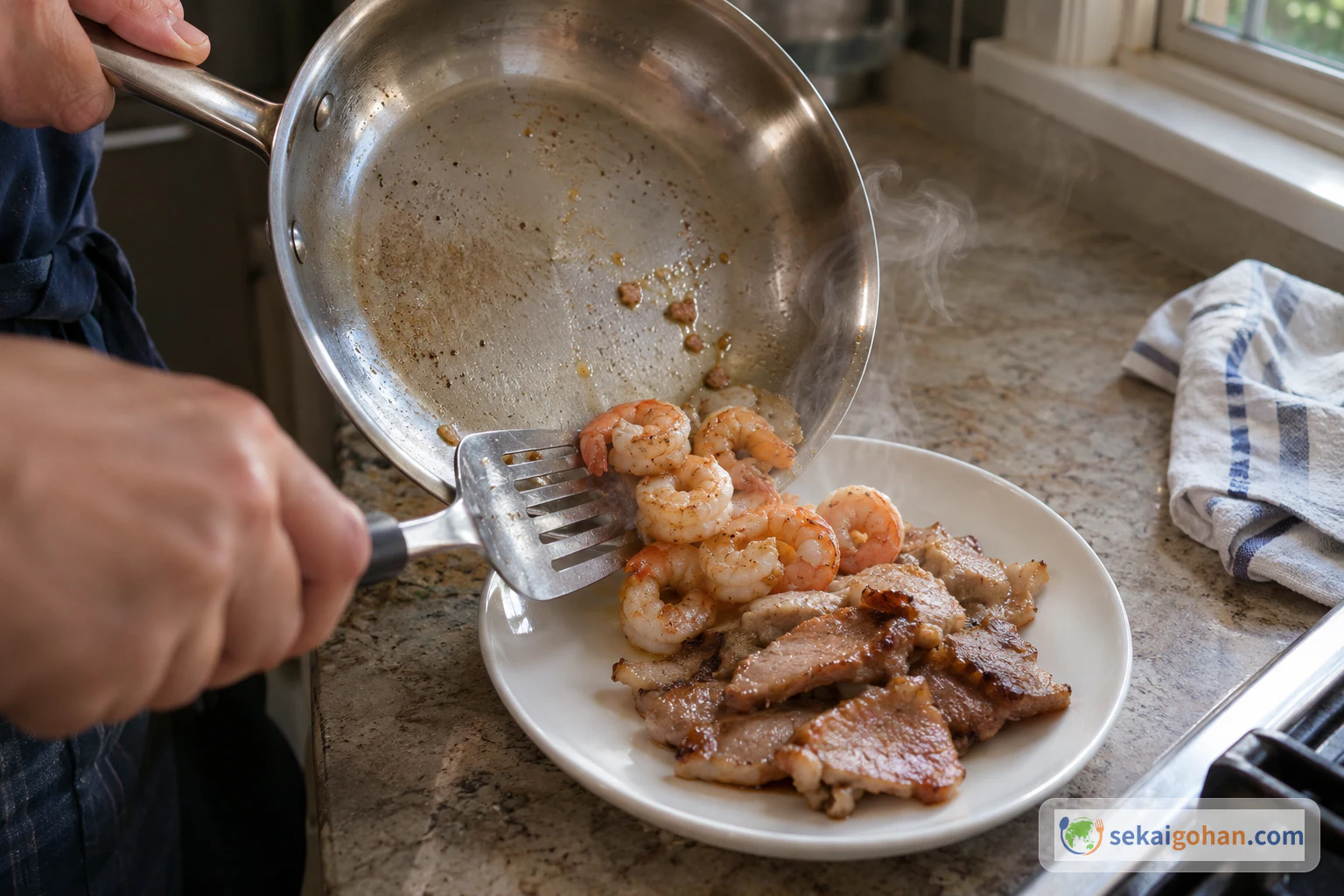
Do all the cutting, the marinade and the sauce before the stove goes on, because once the noodles are drained everything moves fast. The noodles boil while the pan is cold; the pork and shrimp then cook and wait on a plate while the vegetables fry, and the whole thing comes together in one quick, hot toss.
Cook pork and shrimp through to the center. The food-safety benchmark against salmonella is food heated to 167°F (75°C) for at least 1 minute. Use shrimp sold for cooking, not shrimp meant to be eaten raw. Thaw frozen meat and shrimp in the refrigerator or under running water, never at room temperature. Wash and sanitize the knife, board and bowls that touched raw meat before using them again.
When It Goes Wrong
| What you see | Why | What to do |
|---|---|---|
| Noodles dry, sticky and catching on the pan | The sauce has been absorbed or reduced too far | Add the reserved noodle water a spoonful at a time and toss |
| Watery, soupy plate | Heat too low, so the vegetable juices never cooked off | Turn the heat to high and toss quickly until only a little sauce remains |
| Bitter edge under the chili | Garlic browned too far at the start | Next time, keep the garlic over low heat and add the pork as soon as it smells sweet |
| Rubbery shrimp | Shrimp stayed in the pan through the vegetables | Take them out as soon as they are cooked through and return them only at the end |
| Too hot | Fresh chilies and gochugaru stacked up | Add the minced chili gradually, and next time hold back part of the sauce and add it after tasting |
| Too salty | Strong soy sauce or oyster sauce, or extra noodle water | Next time, use a little less soy sauce and oyster sauce and adjust at the end |
Serving, Variations and Storage
At the table
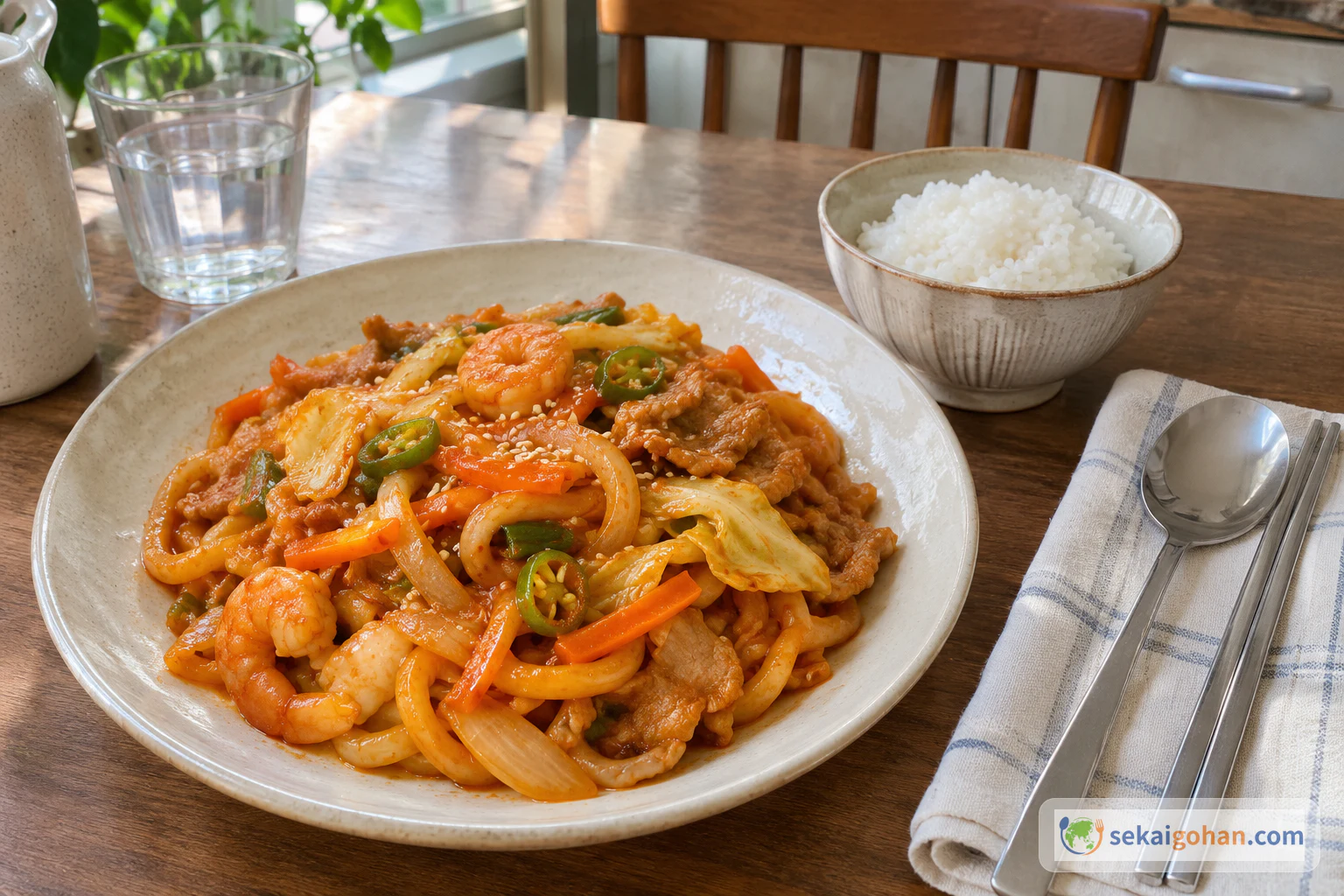
In Daegu, yakki-udong sits happily beside tangsuyuk (sweet-and-sour pork) and dim sum, and it doubles as a snack with goryangju, the strong kaoliang liquor of Korean-Chinese restaurants. Keep a bowl of plain rice nearby. When the noodles are finished, tip the rice into the leftover red sauce on the plate and stir it through; for many people that last spoonful is the best part.
Variations
- Milder heat. Use one green chili instead of two and less gochugaru in the sauce. The garlic and the sweet-sour edge come forward, and the dish suits children and anyone sensitive to chili.
- Ketchup-finished version for one. Boil 1 portion of Chinese-style wheat noodles for 2 minutes, rinse once in cold water and drain. Stir-fry 1¾ oz (50 g) cabbage, ⅓ carrot, ¼ onion and 5 perilla leaves, add the noodles, then a sauce of 2 tbsp gochugaru, 4 tbsp water, 2 pinches of sugar and 1 tbsp oyster sauce, and toss in 2 tbsp ketchup at the end. Meat or seafood fried in with the vegetables makes it better. The result is sweeter and tangier, with a springier noodle.
Storing leftovers
Let leftovers cool, then cover them and refrigerate them promptly at 41°F (5°C) or below; never leave them out at room temperature. The next day, reheat until the noodles are steaming hot all the way to the center.
Frequently Asked Questions
Should I measure the tablespoons level or heaped?
Level. The sauce uses tablespoons for everything, including the chili flakes, and a heaped spoon of gochugaru or soy sauce shifts the heat and salt noticeably. Measure level, then adjust the heat and salt at the end once you have tasted.
Why is there vinegar in a spicy noodle sauce?
The vinegar sharpens the sweetness of the oligo syrup so the sauce tastes sweet-sour instead of sugary. You will not taste it as sour. Leave it out and the sauce turns flat and heavy.
Can I make it with Chinese-style wheat noodles instead of udon?
Yes, and many Korean-Chinese kitchens use them. Boil them for 2 minutes and rinse once in cold water, then follow the same sauce and steps. The noodles come out thinner and springier, a lighter chew than the soft, thick bite of udon.
Can I add squid or bean sprouts like the restaurants do?
Yes. Squid can fry alongside the shrimp and come out with it. Bean sprouts go in at the very end, over high heat with a splash of water, and get a fast toss so they stay crisp. Napa cabbage, Korean zucchini, wood ear mushroom, garlic chives in summer or spinach in winter all belong in the Daegu picture too.