Bossam: Tender Pork, Soft Leaves, and One Small Bite at a Time
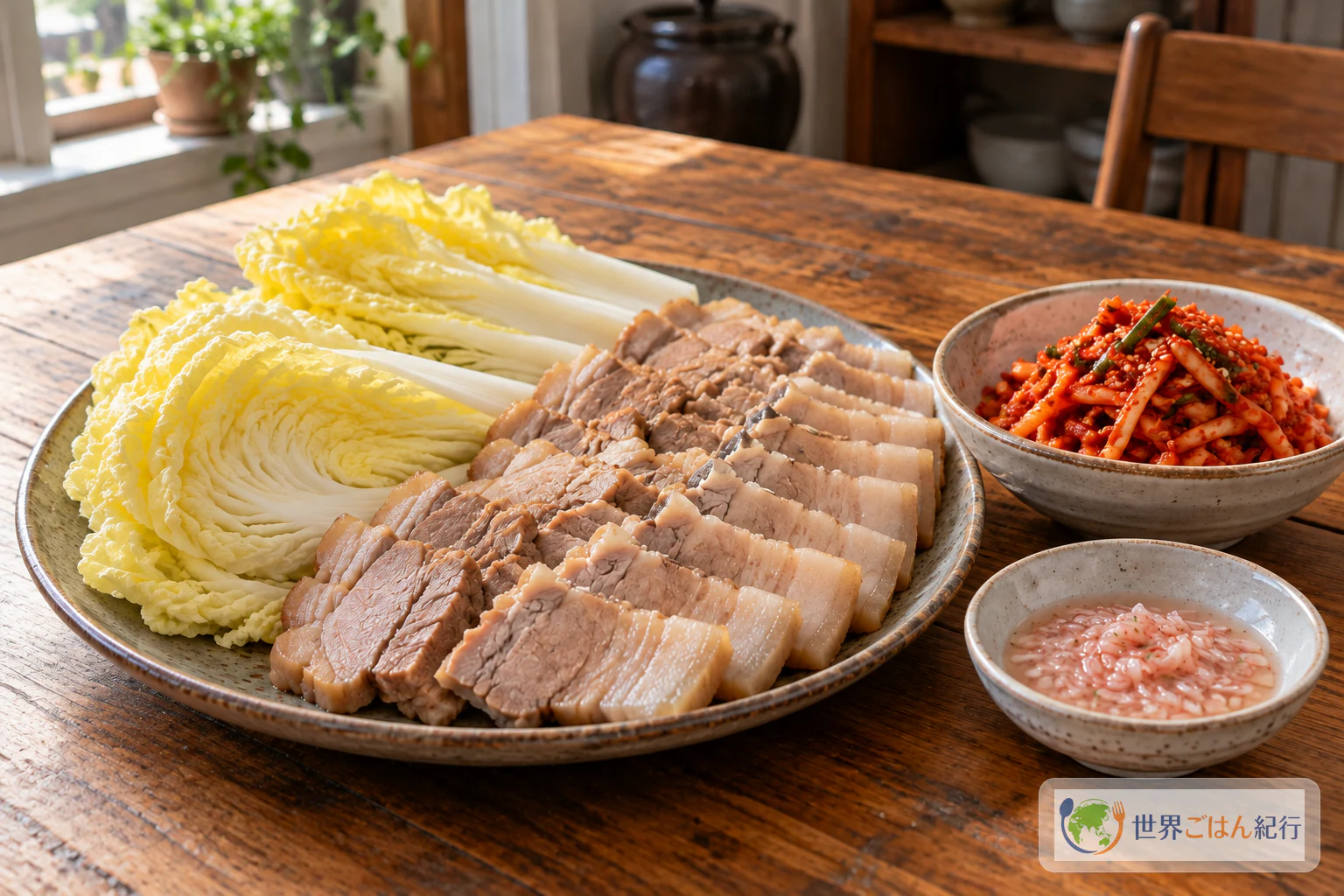
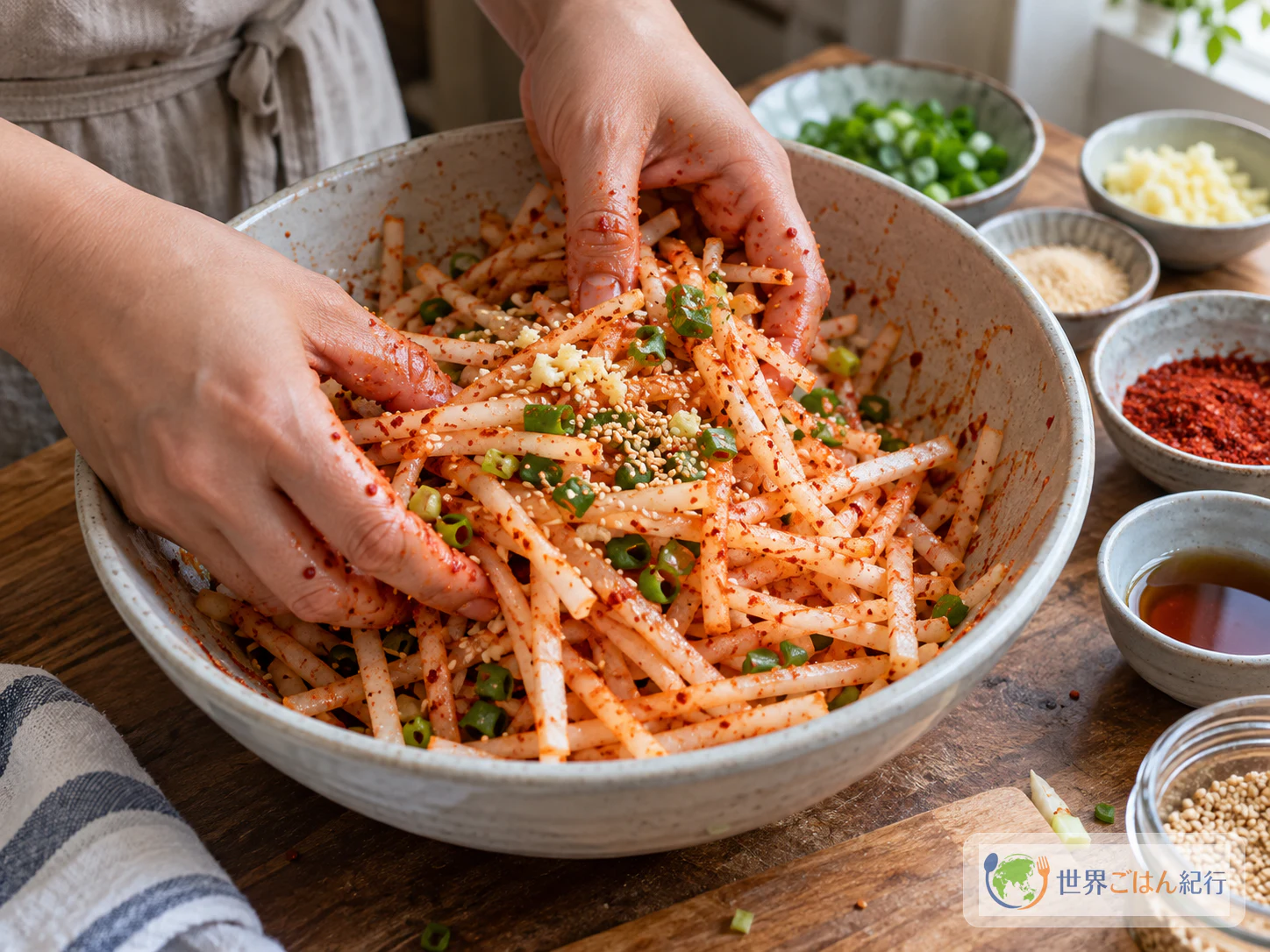
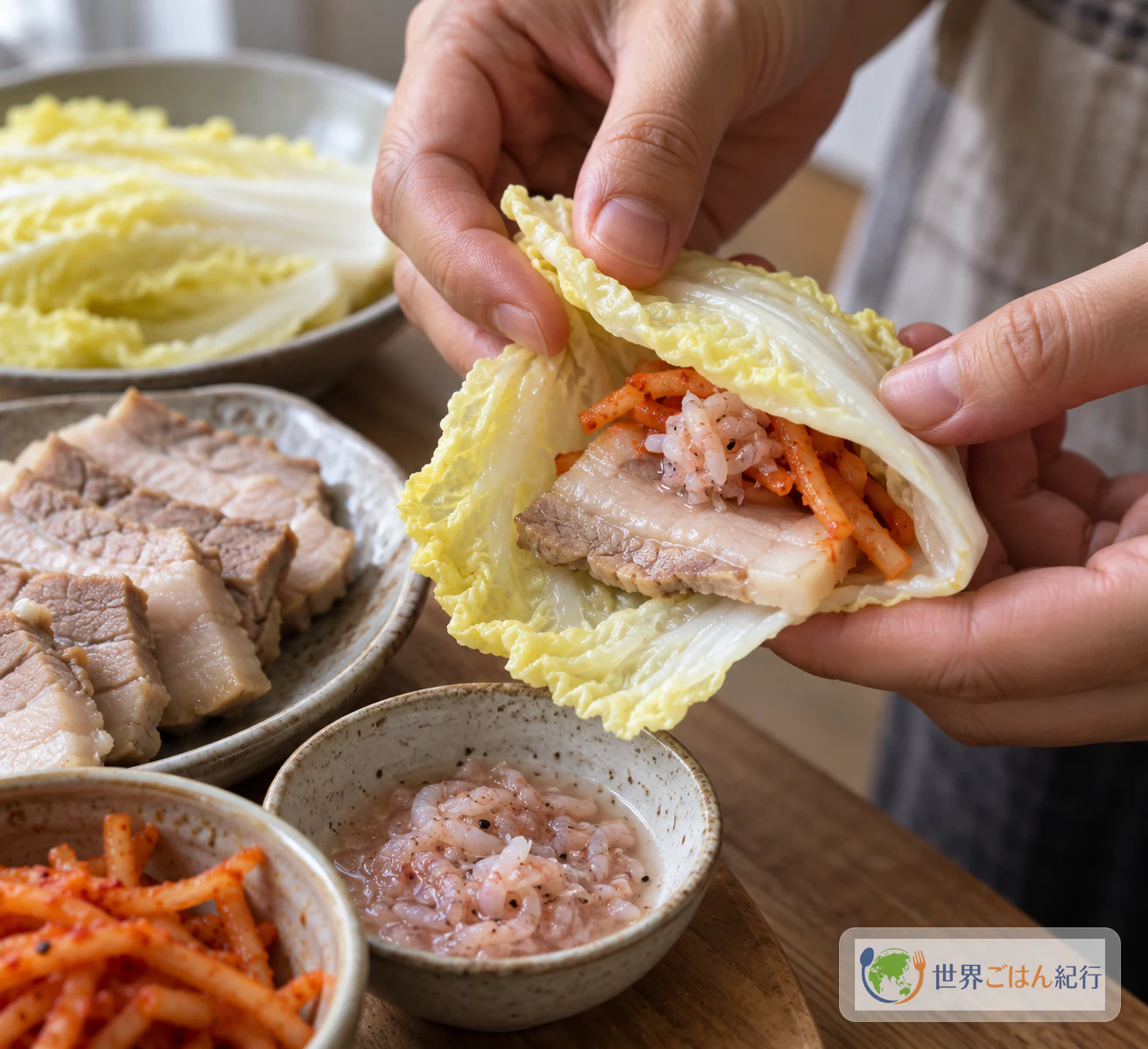
Pork cooked with aromatics until tender, napa leaves soft enough to fold, a bright red radish salad, and a little salty shrimp sauce. Each wrap stays small enough to eat in one bite.
In late autumn, Korean families and neighbors gather for kimjang, the work of making kimchi to last through winter. Korea.net, the Korean government's culture site, describes how boiled pork has been eaten with kimchi during kimjang. Picture slices of warm pork beside the newly salted cabbage and a radish kimchi, then folded into a leaf as a single bite. That is the scene behind bossam (보쌈).
Bossam is a dish of cooked pork wrapped with leaves and kimchi-style sides. This version follows Maangchi's published "Pork wraps (Bo-ssam)" recipe for its amounts, order, and cooking times. There is one deliberate change. Maangchi's radish salad includes 8 oz of frozen shucked oysters, mixed in raw after thawing in the refrigerator. We have not confirmed safety guidance for preparing raw oysters at home, so the radish salad here leaves them out. That makes this an oyster-free adaptation, not a full reproduction of Maangchi's recipe.
Sekai Gohan has not kitchen-tested this recipe. The amounts use the US cups, spoons, ounces, and pounds of the recipe it follows, and they are not converted. The recipe lists amounts but no number of servings. How many people it feeds depends on the cut of pork and how thickly you slice it.
Bossam kimchi from Gaeseong (개성 보쌈김치) has a similar name but is a different dish. It is a kimchi in which the filling is wrapped inside napa cabbage leaves. This article is about the pork-wrap meal.
What Bossam Is: Cooked Pork, Wrapped as Ssam
According to Maangchi, ssam means wrapping food in leaves or something similar and eating it as a parcel. Bossam brings several parts together on one table:
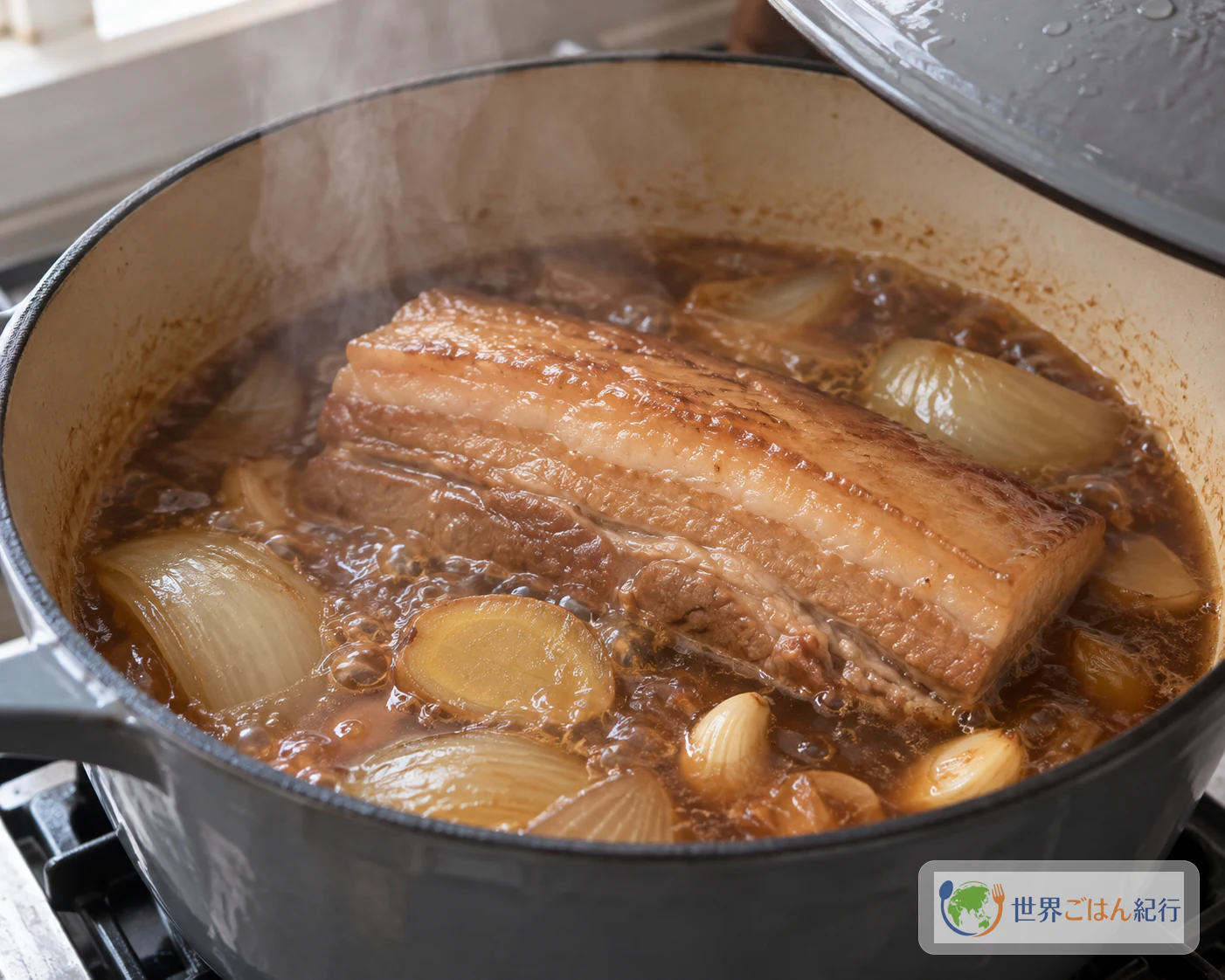
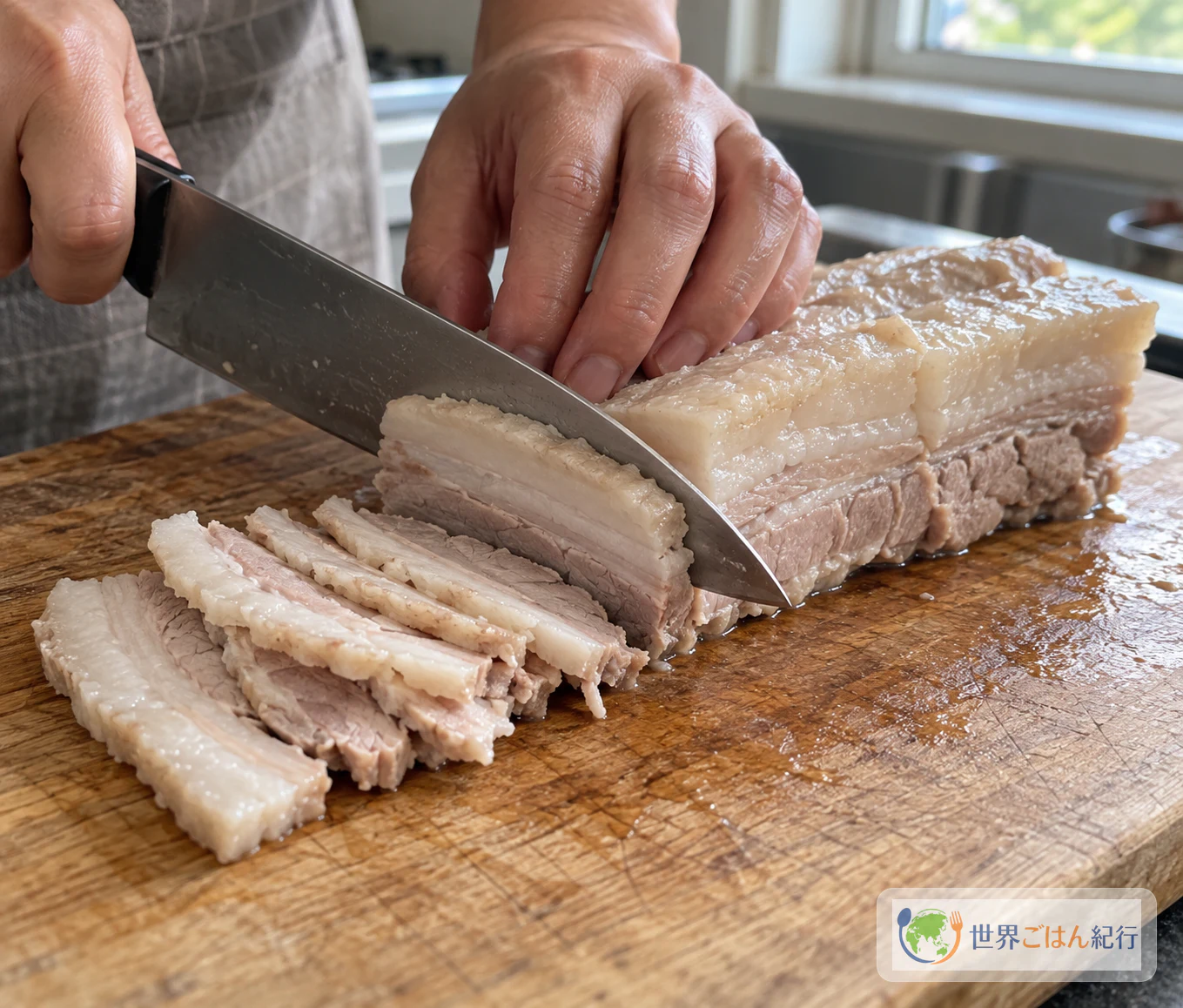
- pork cooked with onion, ginger, garlic, and doenjang
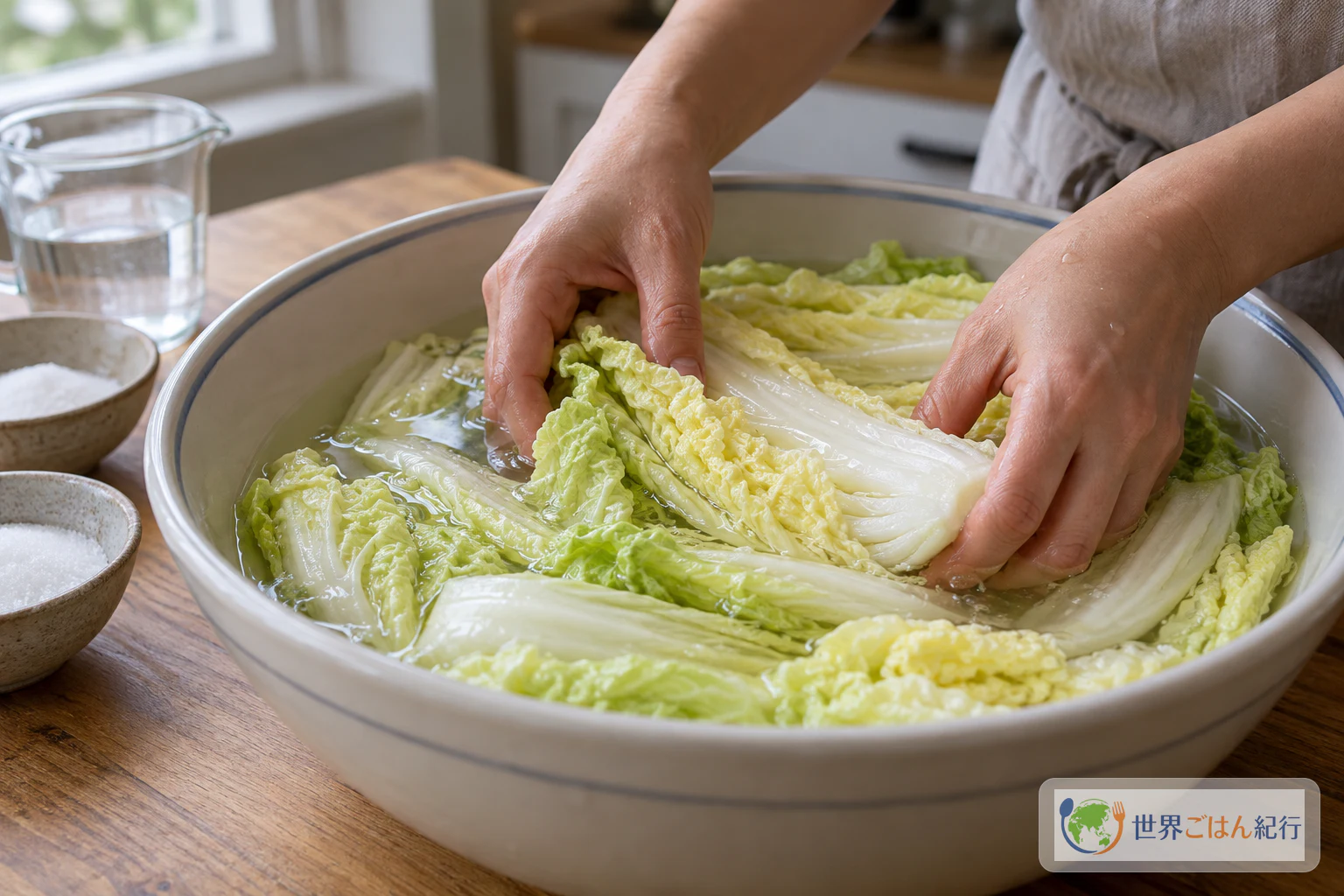
- napa cabbage leaves softened in a sweet-sour brine
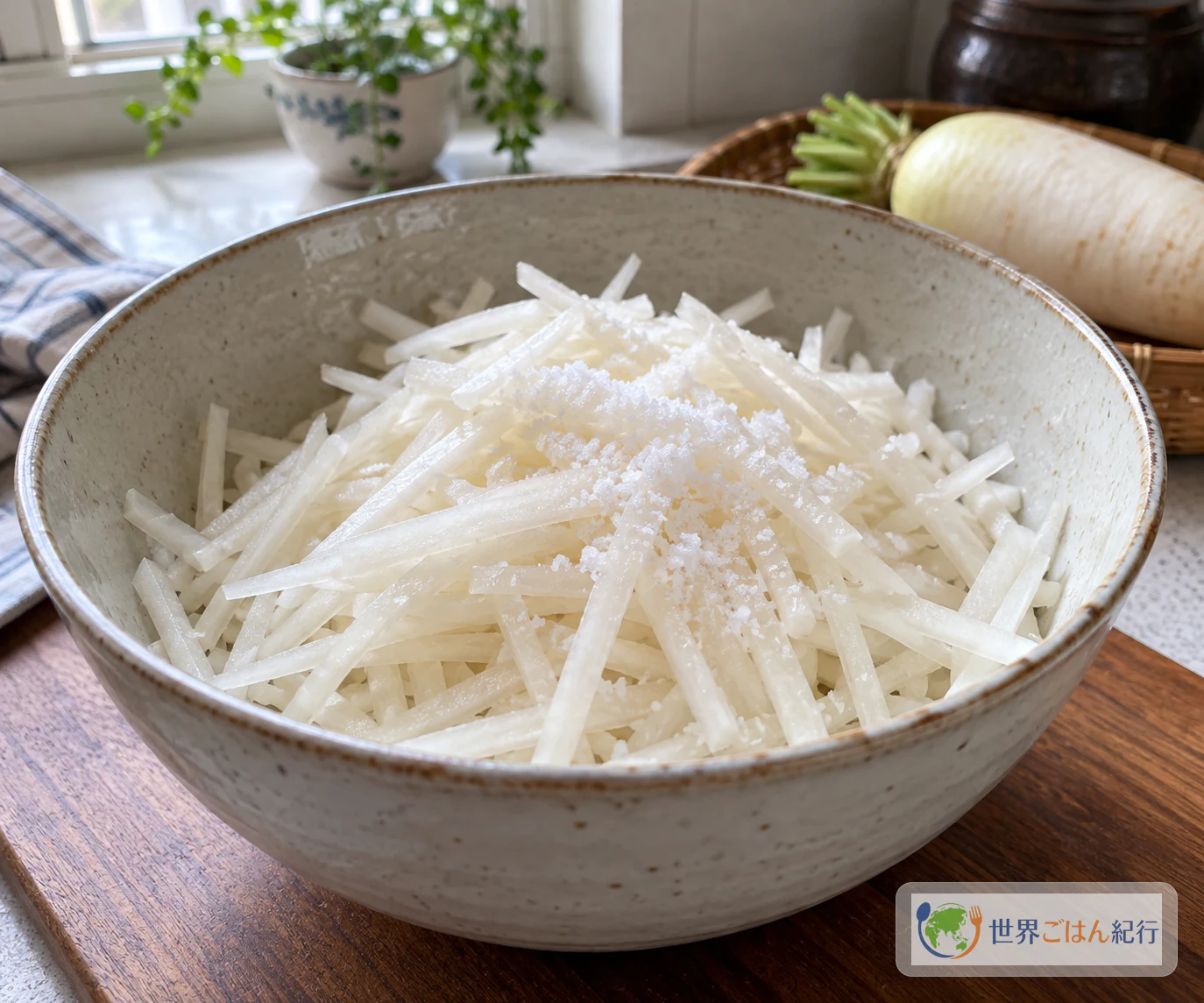
- a spicy radish salad
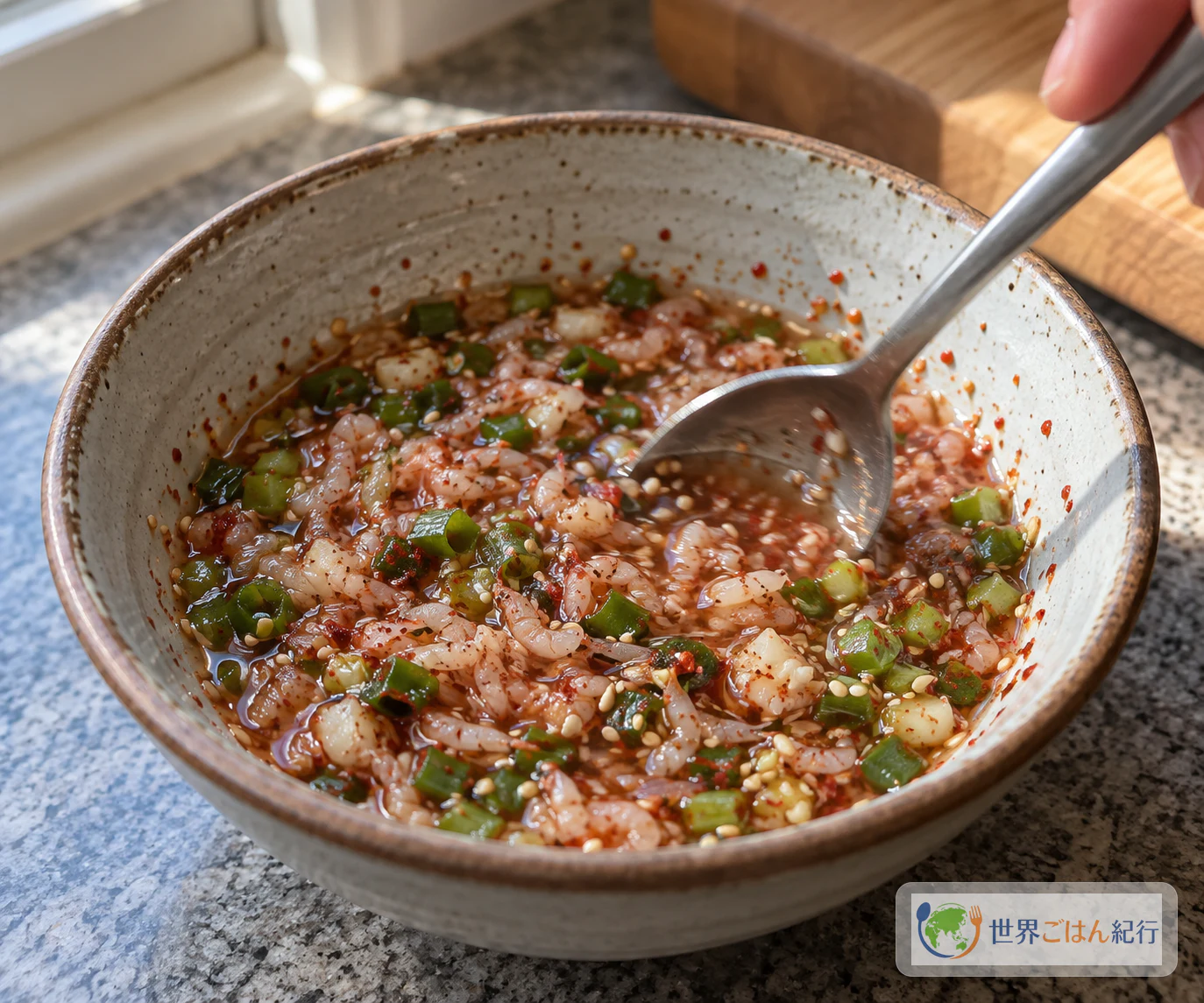
- a small dish of salted fermented shrimp sauce
Each person builds their own small wraps.
None of the parts is complicated, but each has its own seasoning. Sugar, salt, garlic, green onion, and gochugaru each appear in more than one component. Keep every amount with its own part of the recipe rather than measuring them out together.
Ingredients for Bossam: Leaves, Pork, Radish Salad, and Shrimp Sauce
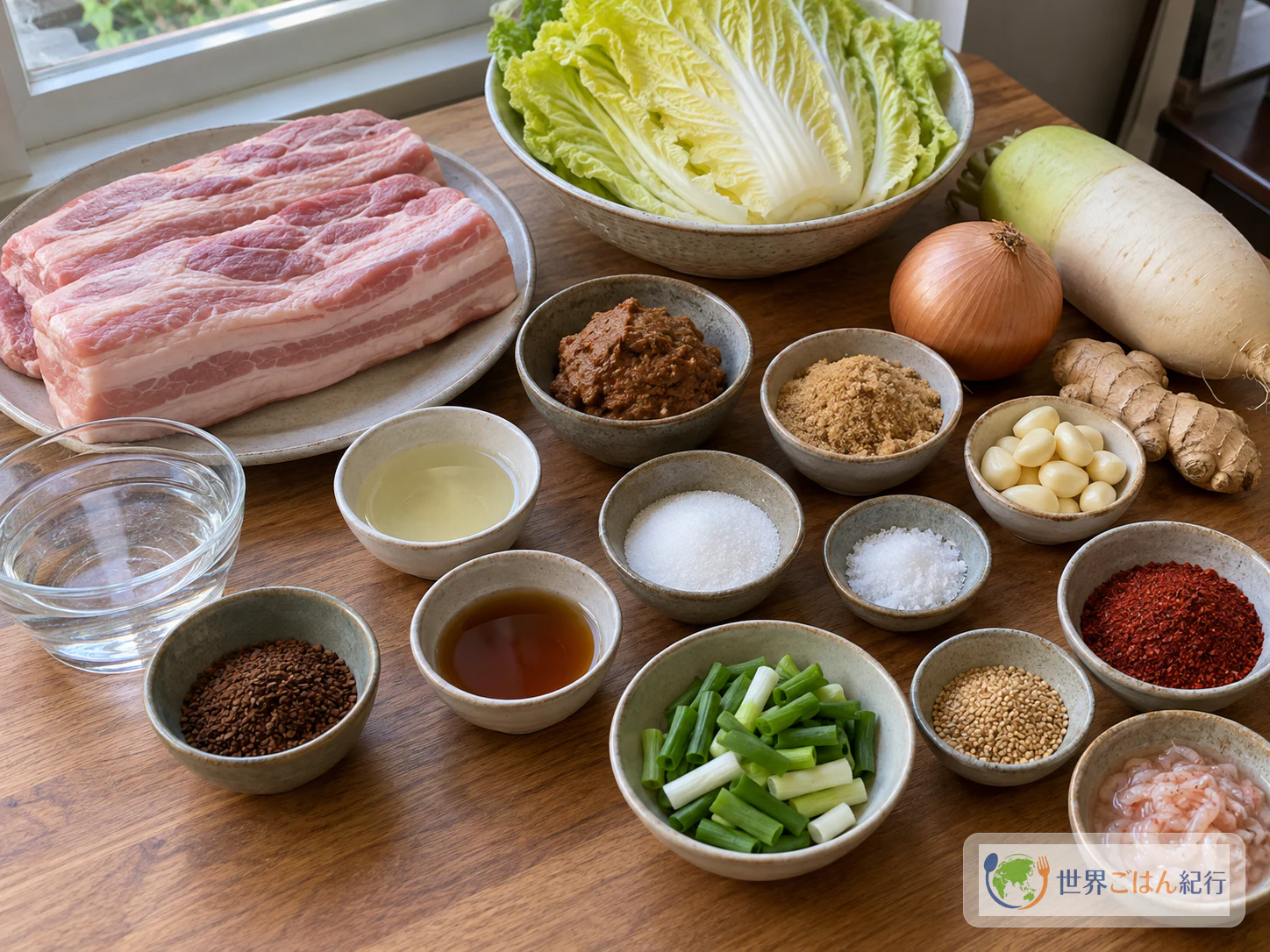
This dish contains pork, fish (fish sauce), shrimp (saeujeot), and sesame. If you add oysters, it also contains shellfish. Check the labels on doenjang, gochugaru, fish sauce, and saeujeot.
The napa leaves and radish are eaten without cooking. Use a separate cutting board and knife for the raw pork. Wash the thermometer after each use.
Equipment
- Large bowl for brining the napa leaves
- Large pot with a lid, big enough for the pork and 10 cups of water
- Food thermometer
- Two cutting boards: one for raw pork, one for the vegetables and the cooked pork
- Sharp knife
- Bowl for salting and seasoning the radish
- Small bowl for the shrimp sauce
- Serving platter
Shopping and Swaps: Doenjang, Gochugaru, Saeujeot, and the Leaves
Three items are worth a trip to a Korean grocer or an online shop:
- Doenjang: the fermented soybean paste that seasons the pork pot.
- Gochugaru: Korean chili flakes, which give the radish salad its color and heat.
- Saeujeot: tiny salted fermented shrimp for the sauce. It is not the same as ordinary shrimp.
These swaps change the result, so treat each as a different version rather than the same dish:
| Swap | What changes |
|---|---|
| Pork shoulder instead of pork belly | Less fat, a different mouthfeel |
| Regular instant coffee instead of hazelnut-flavored | A different aroma in the pork |
| Daikon instead of Korean radish | Works for the radish salad |
| Japanese miso instead of doenjang | Not the same flavor; both are fermented soybean pastes, but taste and saltiness differ |
| Rice vinegar instead of white vinegar | A different aroma in the brine |
| Lettuce instead of salted napa leaves | Different moisture and texture in each wrap |
| Less gochugaru | Lighter color and milder heat |
Method: Brine the Leaves, Cook the Pork, Season the Radish, Wrap
Start the napa leaves first, because they need 1 to 2 hours in the brine. While they soften, cook the pork. Make the radish salad and shrimp sauce while the pork finishes.
Stiff Leaves, Tough Pork, Too Salty: Fixing Problems
| Problem | Likely cause | What to do |
|---|---|---|
| Napa leaves too stiff to fold | Not enough time in the brine, or not turned often enough | Keep turning every 10 to 15 minutes and check the leaves within the 1 to 2 hour range. |
| Pork is tough | The piece is thick or hasn't cooked long enough | Check thickness and internal temperature, not only the time. Keep cooking until it is tender |
| Wraps taste too salty or strong | Doenjang in the pork and saeujeot in the sauce add up | Use less sauce and radish in each wrap rather than changing the recipe amounts |
| Radish salad is watery | The salted radish wasn't squeezed | Don't skip squeezing out the water after the 10-minute salting |
| Too spicy | Gochugaru | Use less gochugaru; the color and heat will both be lighter |
Kimjang, Home Tables, and Regional Differences
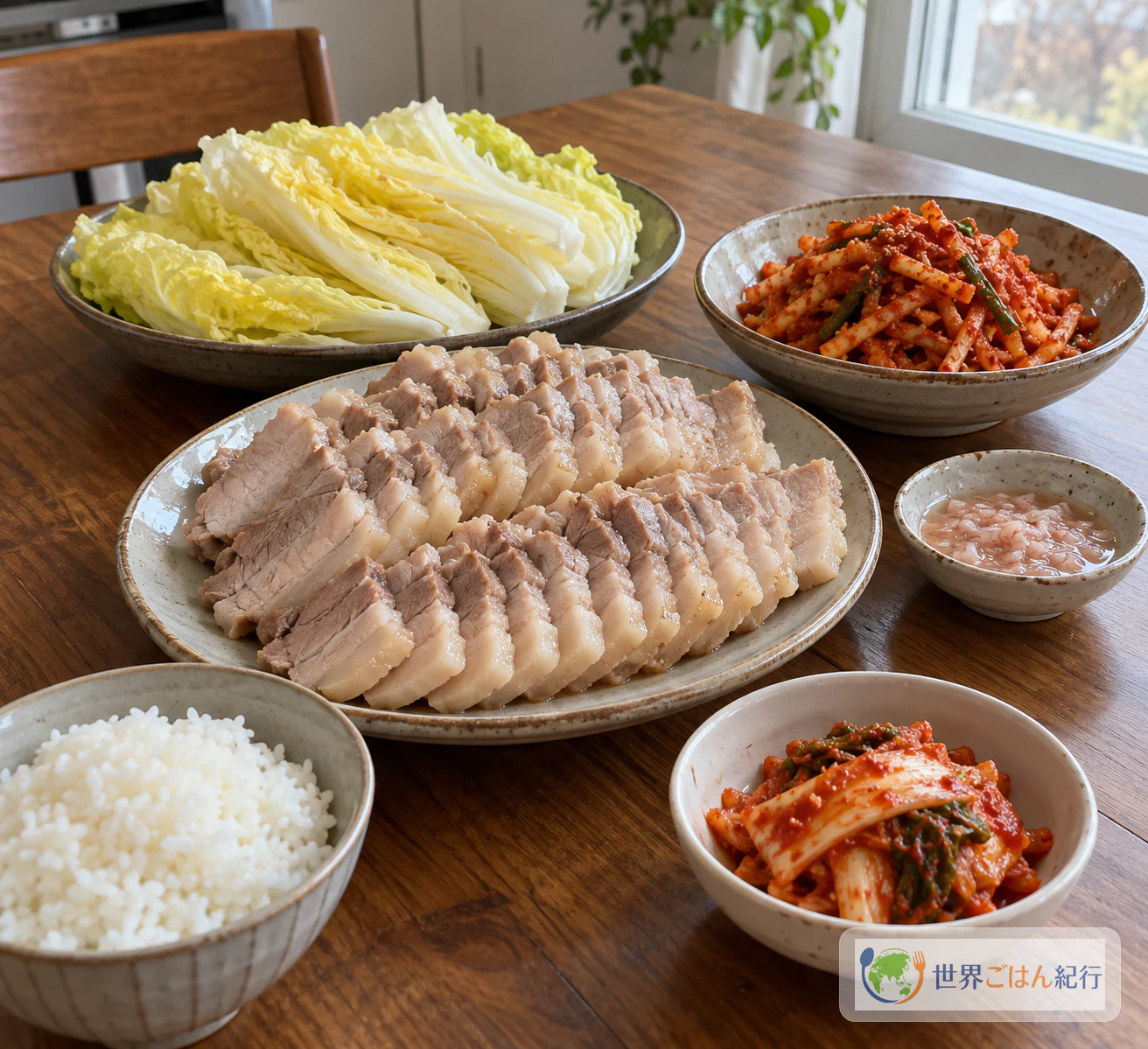
Korea.net explains that during kimjang, families and communities prepare kimchi for winter, and that boiled pork has been eaten with kimchi at this time. It also notes that households and restaurants differ in how they flavor the pork and which kimchi they serve with it. The kimchi made for bossam may include radish or oysters. It is distinct from everyday napa cabbage kimchi and from the rare Gaeseong bossam kimchi.
These are differences between homes and restaurants, not a ranking of versions. Whether the radish salad includes oysters, which leaves are used, and what goes alongside all vary from table to table.
KBS WORLD presents a related dish, jeyuk-bossam (제육보쌈), as boiled or steamed pork served with condiments, and also connects it to kimjang. Its recipe works differently from the one followed here. It uses 500 g of pork in 3 L of water with aromatic vegetables and adds the doenjang later. It also notes that oysters keep their shape better when added at the end.
The hazelnut-flavored instant coffee in the pork pot is Maangchi's own touch, which she learned at a Korean potluck. It is not a universal tradition or a required ingredient. To explore more of the country's cooking, see dishes from South Korea.
Food Safety and Leftovers
The 145°F (63°C) internal temperature with a 3-minute rest comes from the U.S. government's FoodSafety.gov chart for whole cuts of pork. It tells you the pork is safe to eat. It does not tell you the pork has reached the tender texture bossam calls for. The long, covered cooking time is what does that.
This article gives no storage periods or reheating instructions, because none have been confirmed for this recipe.
Frequently Asked Questions
Is bossam a kind of Korean barbecue?
No. The pork is cooked in liquid, not grilled, and then sliced and wrapped in leaves with radish salad and sauce. KBS WORLD describes the pork as boiled or steamed.
Is doenjang the same as Japanese miso?
Both are fermented soybean pastes, but their flavor and saltiness differ. Swapping one for the other gives a different result.
Can I make it without oysters?
Yes, and this article's version does exactly that. Maangchi's recipe includes 8 oz of frozen shucked oysters, thawed in the refrigerator and mixed raw into the radish salad. We have not confirmed safety guidance for handling raw oysters at home, so we leave them out rather than recommend eating them raw. Korea.net notes that bossam kimchi may include oysters, and KBS WORLD notes that oysters hold their shape better when added at the end.
What is the saeujeot sauce for?
It is a small, salty, fermented accent for the pork, used a little at a time in each wrap. Saeujeot is made from shrimp, so leave it out for anyone with a shrimp allergy. Any substitute will taste different.
How many people does this serve?
Maangchi's recipe gives amounts but no number of servings. It depends on the cut of pork and how thinly you slice it.
Is the pork done once it reaches 145°F (63°C)?
It is safe at that point, after a 3-minute rest. Tenderness comes from the long, covered cooking time, so use the thermometer as well as the cooking time.
Sources
- Maangchi, "Pork wraps (Bo-ssam)." Recipe amounts, cooking order and times for the brined napa leaves, the pork, the radish salad (including the oysters omitted here), and the saeujeot sauce. Also the meaning of ssam, how to assemble the wraps, and the author's use of hazelnut instant coffee. https://www.maangchi.com/recipe/bo-ssam
- Korea.net / Ministry of Culture, Sports and Tourism, Republic of Korea, "Eat your way across Korea -- boiled pork belly slices with kimchi." Kimjang as a family and community winter kimchi preparation, eating boiled pork with kimchi at that time, differences between households and restaurants, and the distinction from Gaeseong bossam kimchi. https://www.korea.net/NewsFocus/Culture/view?articleId=131157
- KBS WORLD, "Jeyuk-bossam (제육보쌈)." A different style of the dish with its own amounts and method, its connection to kimjang, and the note on adding oysters last; used for comparison only. https://world.kbs.co.kr/service/contents_view.htm?board_seq=337274&id=&lang=e&menu_cate=lifestyle
- FoodSafety.gov, "Cook to a Safe Minimum Internal Temperature." The 145°F (63°C) minimum internal temperature and 3-minute rest for whole cuts of pork, checked with a thermometer. https://www.foodsafety.gov/food-safety-charts/safe-minimum-internal-temperatures