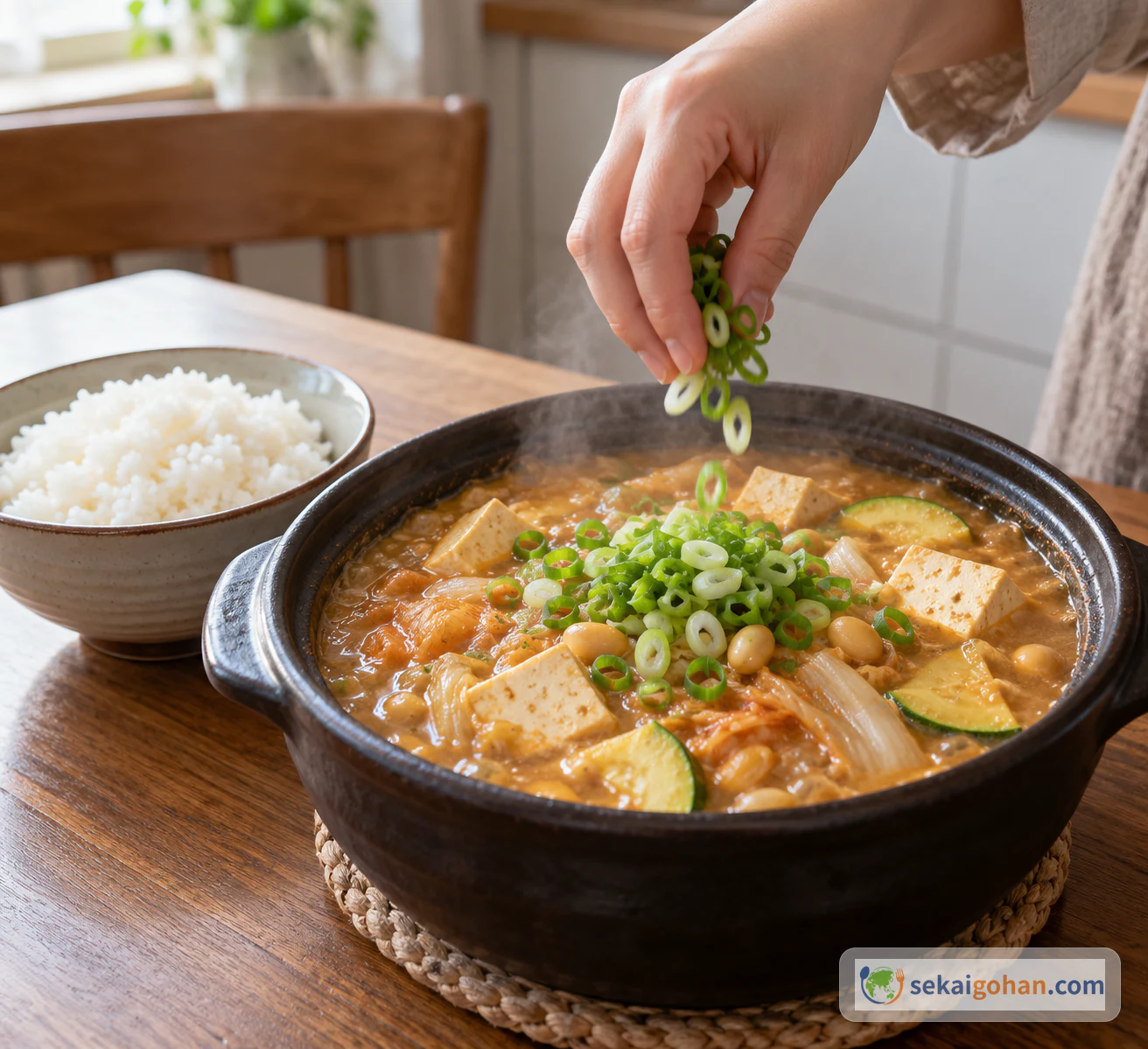
Cheonggukjang Jjigae: A Stew Built on Bought Fermented Soybean Paste
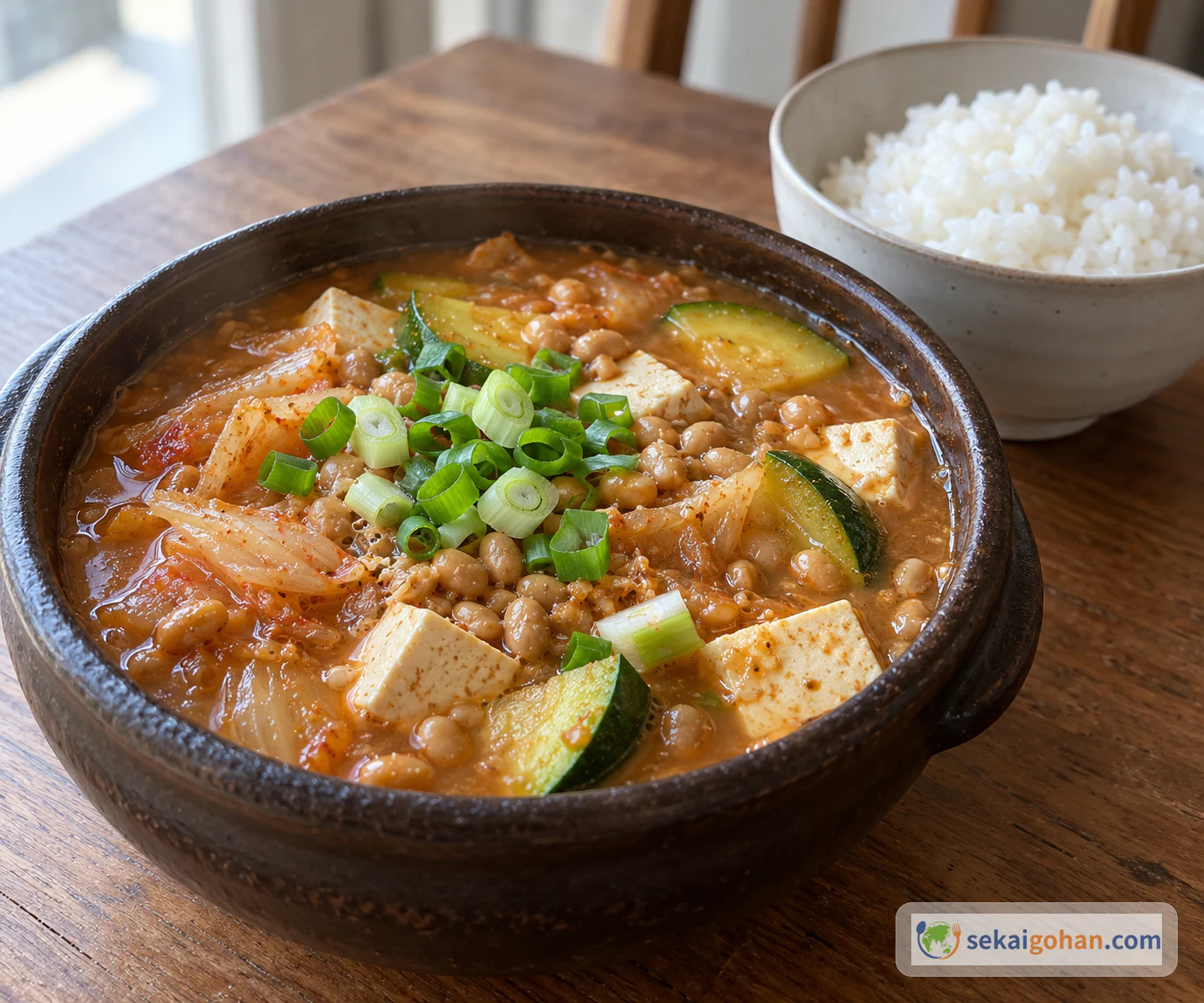
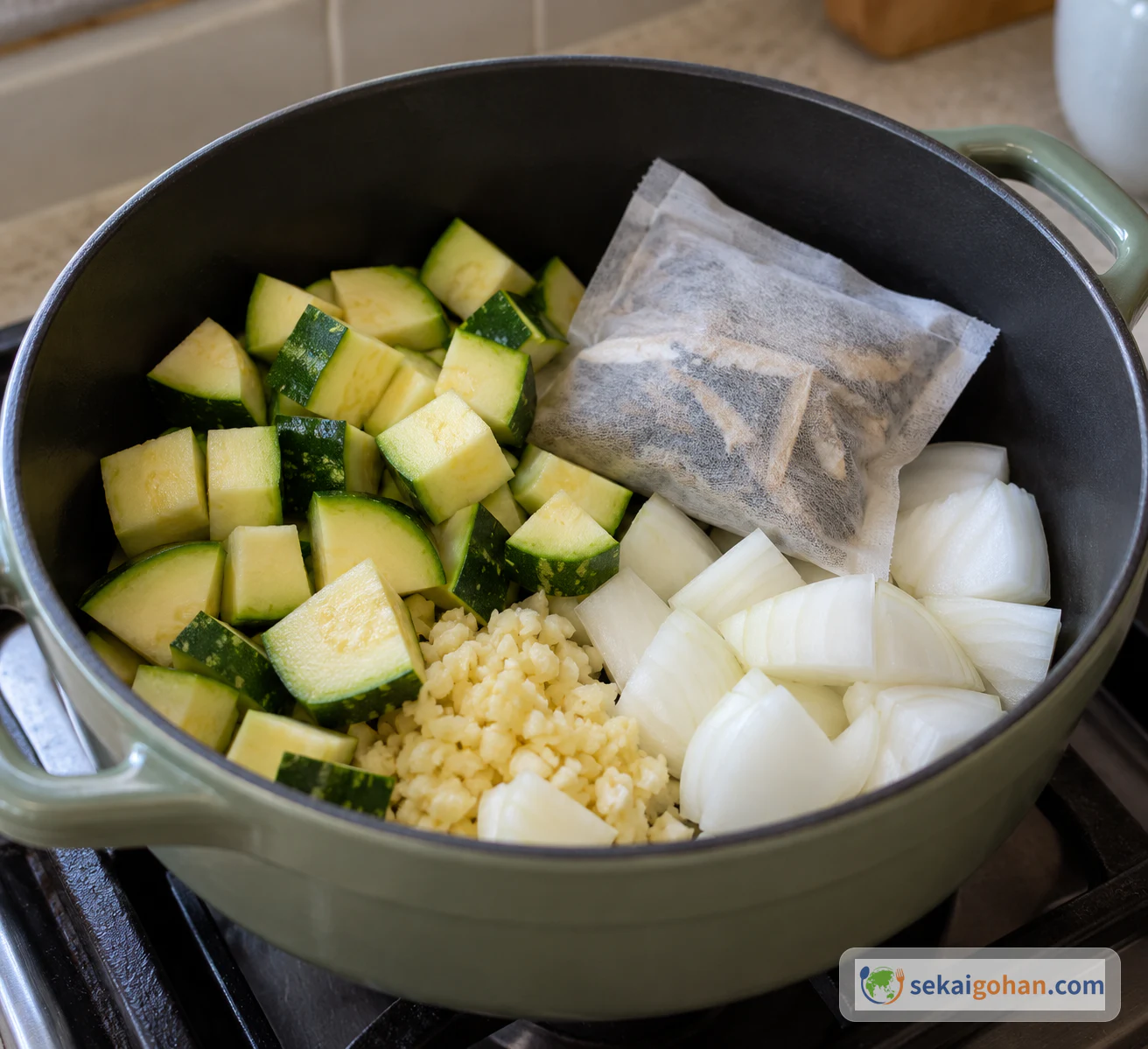
Cook the vegetables, kimchi and anchovy broth first. Season with fish sauce, then break the cheonggukjang paste into the stew. Finish when the tofu is soft and the broth has thickened slightly, and bring it to the table right away with rice.
In the introduction to the recipe this article follows, the Korean cook Maangchi recalls a winter lunch at a cousin's home in Korea, where this stew was eaten with rice and several side dishes. It is one writer's memory of one table. It is not a rule about when or how every Korean household eats the dish, but it shows the stew where it belongs: hot, in the middle of a meal, next to a bowl of rice.
The name can cause confusion. Cheonggukjang (청국장) is a fermented soybean food. The Rural Development Administration of Korea's agricultural dictionary maps the English term "fermented soybean" to cheonggukjang and describes it as cooked soybeans that are fermented and seasoned into a jang. The same word is also used for the stew made from that paste. A list of Korean dishes places cheonggukjang jjigae (청국장찌개) among soups and stews and describes it as a soup made from thick soybean paste that contains whole beans. The Korea Tourism Organization introduces it in English as "Rich Soybean Paste Jjigae."
This article is about the stew. The paste is bought ready-made, and making or fermenting your own paste is not covered here. The recipe is the cheonggukjang-jjigae published by Maangchi, with one consistent choice wherever that recipe offers alternatives: the kimchi brine goes in, fish sauce is used rather than salt, and green onions are used rather than daepa. For more dishes from the same country, see South Korea.
Sekai Gohan has not kitchen-tested this recipe. No serving count, yield, total time or pot size is given here, because none is stated for this version.
Ingredients for Cheonggukjang Jjigae
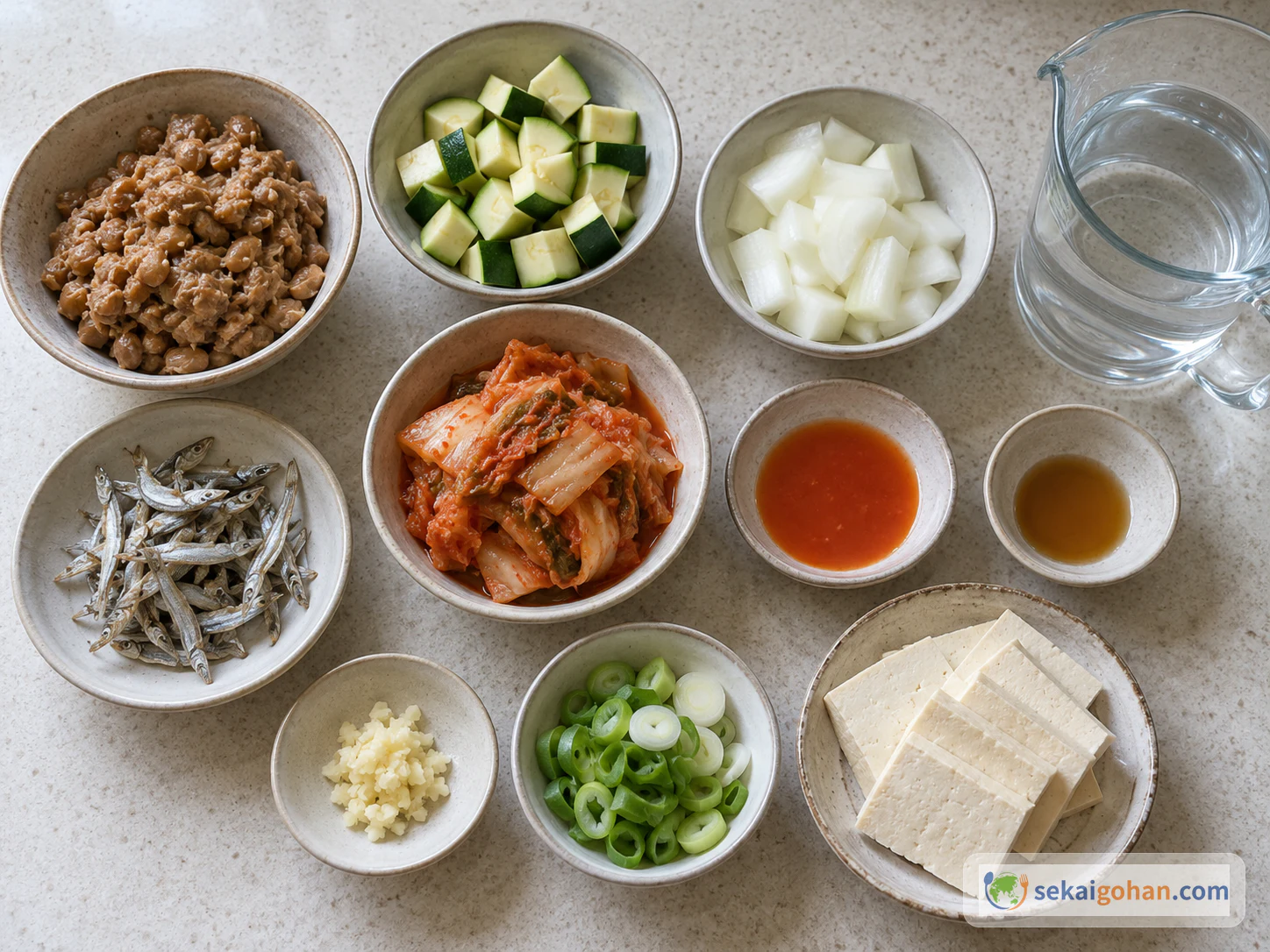
Equipment
- Shallow pot with a lid
- Soup pouch or soup strainer for the anchovies
- Spoon for breaking up the paste
Buying the Paste and the Choices in This Version
Look for the Hangul 청국장 on the package. Labels on these products can be confusing, and some may read in English as "soybean paste" or "natto." The Korean word is the clearest sign that you have the right product. Large Korean grocery stores are the place to look. Specific shops and stock outside Korea are not covered here.
Cheonggukjang is not Japanese natto, and it is not a general soybean paste. This version does not use natto or another soybean paste in place of cheonggukjang.
The stew is made with one fixed set of ingredients. This version uses 2 tablespoons of kimchi brine, 1 teaspoon of fish sauce with no added salt, and 3 to 4 green onions rather than daepa (Korean large green onion). Use one choice from each pair, not both together.
Tofu type is open. The tofu only needs to be sliced ¼ inch thick. Firmness is not fixed, so no single kind of tofu is presented as the correct one.
Method: From the Covered Simmer to the Table
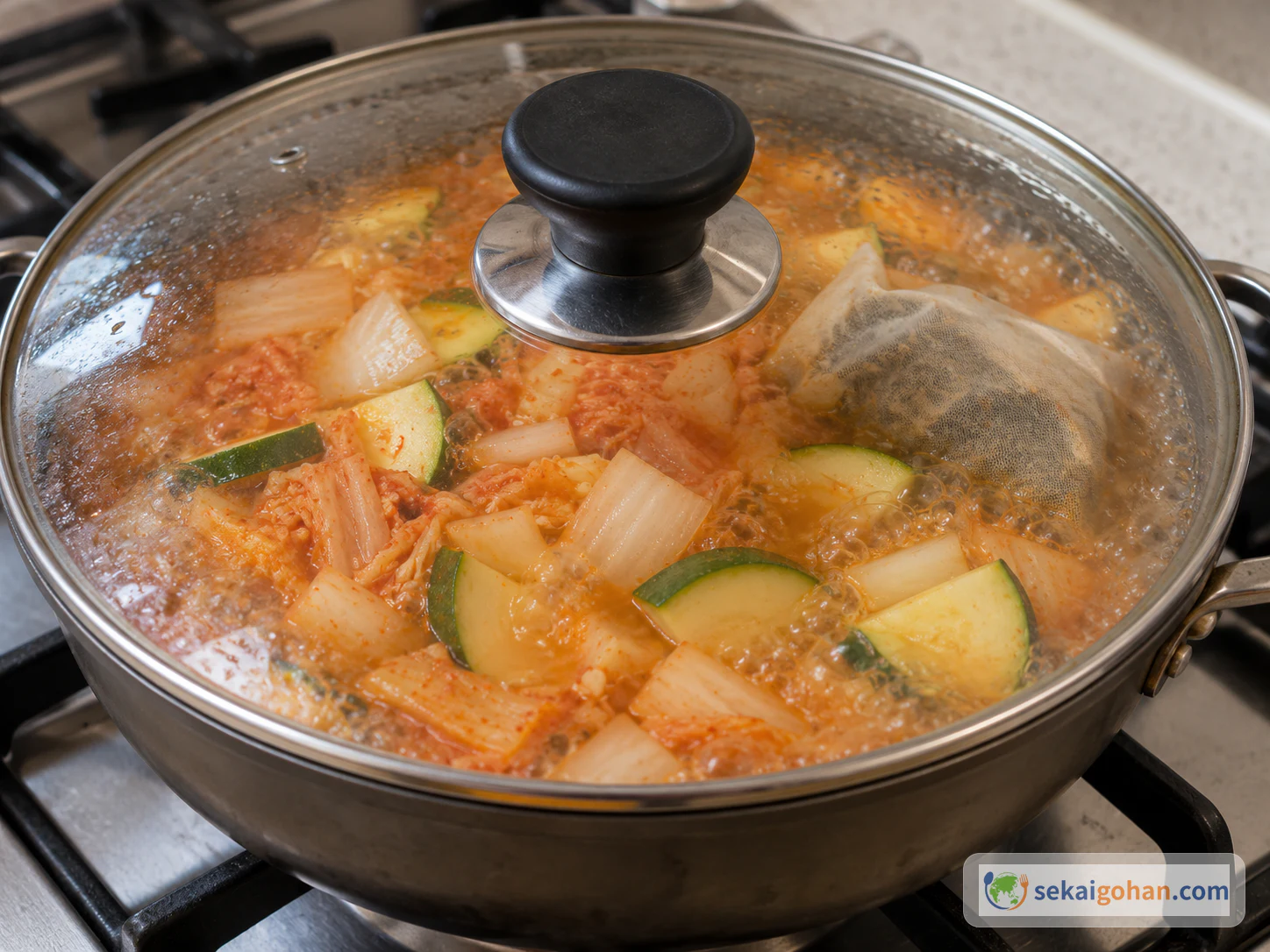
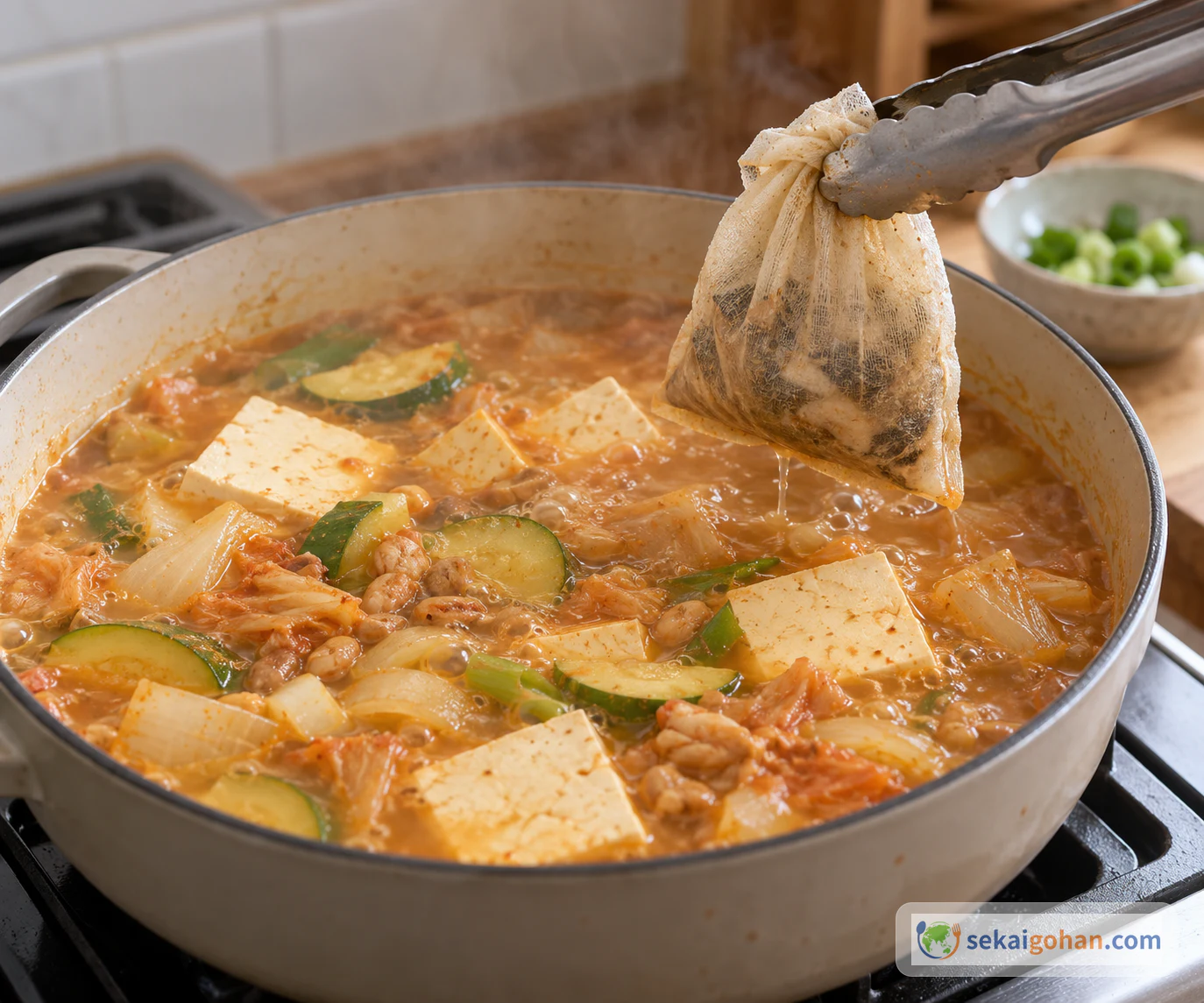
The stew cooks for 20 minutes covered in step 2, and then for another 5 to 10 minutes in step 5. Judge the end of step 5 by the tofu and the broth, not by the clock alone.
When Things Go Off Course
| What you see | What to do |
|---|---|
| The covered pot starts to boil over during the 20-minute simmer | Crack the lid slightly, as in step 2 |
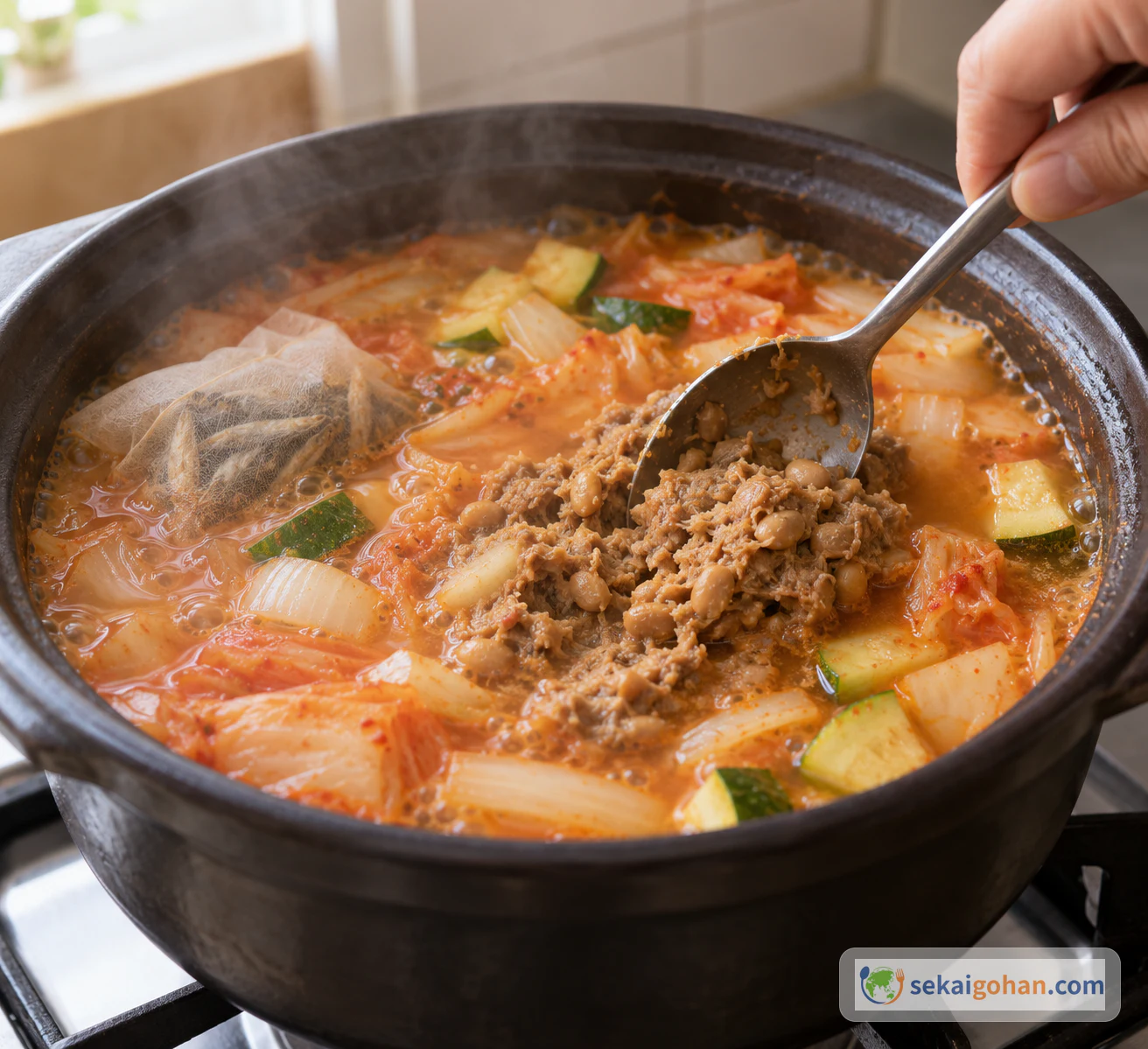
| The paste stays in one lump | Keep pressing and breaking it up with the spoon inside the stew |
| After 5 minutes the tofu is still firm and the broth is thin | Keep cooking, up to the end of the 5 to 10 minutes, until the tofu is soft and the broth is a little thick |
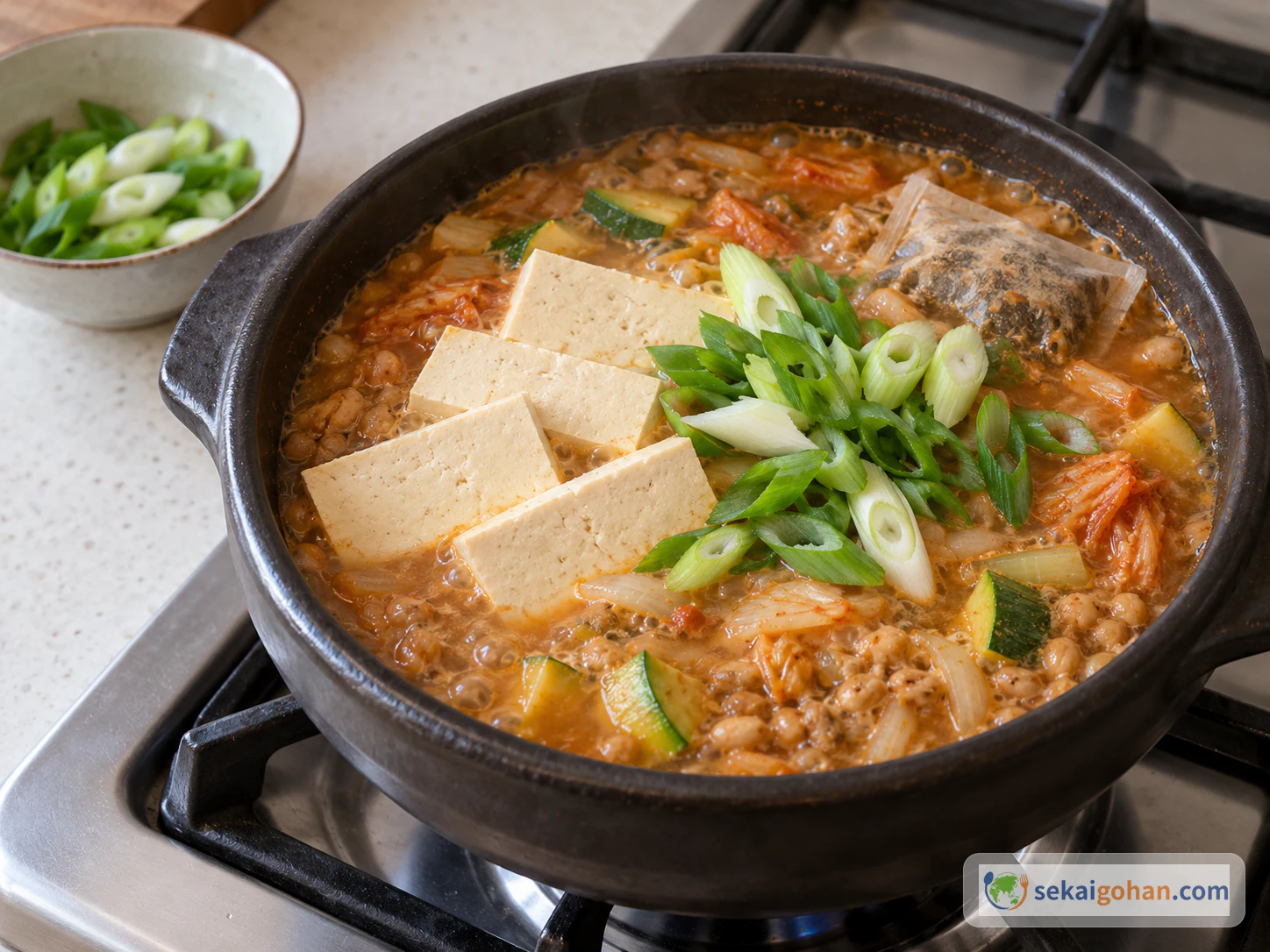
| No green onion is left for the garnish | Next time, set some aside when adding the tofu in step 4 |
| The package doesn't clearly say what the paste is | Check for the Hangul 청국장 before buying |
Other Versions of the Stew
The recipe above is one version. Other sources describe the same stew with different ingredients. They are noted here for comparison and are not added to the recipe above.
The Korea Tourism Organization describes cheonggukjang as a rich soybean paste jjigae made with kimchi and bean curd. It characterizes the stew as having many solid ingredients and a broth that is not spicy or salty, and mentions beef, mushrooms and bean curd as possible additions. The version in this article uses kimchi brine and fish sauce, so that description of the broth is not applied to it.
Korea's National Institute of Crop and Food Science keeps a record of one Cheongju-area formula. It boils beef seasoned with salt, scallion and garlic together with kimchi in rice-washing water, stirs in the cheonggukjang once it boils, adds green chili and tofu, and finishes with red pepper powder and salt. This is one documented recipe. It is not presented as the way all Cheongju households, or all Korean households, make the stew.
The Paste, the Stew and Where They Are Recorded
In Korean food records, cheonggukjang appears both as a food and as a dish. The Rural Development Administration's agricultural dictionary treats it as a fermented soybean food, a jang made from cooked soybeans. The National Institute of Crop and Food Science's traditional local food archive lists 청국장찌개 separately, as a stew and a food cooked by boiling.
That archive entry credits a 1984 local food survey and a 2006 Korea Tourism Organization traditional food source. It names Jeong Rak-shin of Yongam-dong, Cheongju, as the demonstrator of its recipe. The Korea Tourism Organization's own English overview introduces the dish to visitors as a jjigae, a Korean stew.
Maangchi's recipe adds a home perspective: store-bought paste from a Korean grocery store when there is no homemade paste, and a personal memory of the stew at a winter lunch with rice and side dishes. This article does not cover where the paste originated, when the stew first appeared, or any health or nutrition claims.
Frequently Asked Questions
Can I use Japanese natto instead of cheonggukjang?
This version does not. Maangchi's recipe points out that packaging can be confusing and advises looking for the Korean word 청국장; that advice helps you identify the product and is not a suggestion to substitute natto. Use Korean cheonggukjang paste.
Can I use salt instead of fish sauce?
Maangchi's recipe lists 1 teaspoon of fish sauce or salt. This article fixes the choice as fish sauce and adds no salt on top. If you use salt instead, use it in place of the fish sauce, not in addition to it.
Is the kimchi brine necessary?
In Maangchi's recipe the 2 tablespoons of kimchi brine are optional. This version includes them, and the steps are written that way.
Can I use daepa instead of green onions?
Maangchi's recipe gives 1 small daepa or 3 to 4 green onions. This version uses the green onions. Choose one or the other, not both.
How many people does this serve?
The recipe does not give a serving count or yield, so none is stated here.
Can I add beef, mushrooms or chili?
Other documented versions do. The Korea Tourism Organization mentions beef and mushrooms as possible additions, and the Cheongju-area archive recipe uses beef, green chili and red pepper powder. The version in this article keeps to its own ingredient list and does not include them.
Can I make the cheonggukjang paste at home?
This article covers only the stew made with store-bought paste. It does not give a method for fermenting soybeans at home.
Sources
- Maangchi (Emily Kim), "Cheonggukjang-jjigae (Extra-strong fermented soybean paste stew) 청국장찌개." The complete recipe and all six steps used in this article; store-bought paste from Korean grocery stores; the advice to look for the Korean word 청국장 on packaging; and the author's memory of a winter lunch with rice and side dishes. https://www.maangchi.com/recipe/cheonggukjang-jjigae
- Korea Tourism Organization (VISITKOREA), "Rich Soybean Paste Jjigae (청국장 / Cheonggukjang)." The stew described as a rich soybean paste jjigae with kimchi and bean curd, with many solid ingredients and a broth that is not spicy or salty, and beef, mushrooms and bean curd mentioned as possible additions. https://english.visitkorea.or.kr/svc/contents/contentsView.do?vcontsId=178396
- National Institute of Crop and Food Science, Rural Development Administration of Korea, "청국장찌개 — Traditional Local Food record." Classification as a stew cooked by boiling; credits to a 1984 local food survey and a 2006 Korea Tourism Organization source; the demonstrator from Yongam-dong, Cheongju; and a separate Cheongju-area formula. https://www.nics.go.kr/food/kfi/tfSrch08/view?menuId=PS03520&tfcode=89555
- Rural Development Administration of Korea (Nongsaro), "Agricultural Terms Dictionary — fermented soybean (淸麴醬)." Cheonggukjang as a fermented soybean food, used to distinguish the paste from the stew. https://www.nongsaro.go.kr/portal/ps/psq/psqb/farmTermSimpleDicLst.ps?menuId=PS00064&sWordNm=fermented+soybean&searchTagWord=fermented+soybean
- Wikipedia, "List of Korean dishes." Used only to confirm that cheonggukjang jjigae (청국장찌개) is listed among soups and stews as a soup of thick soybean paste containing whole beans. https://en.wikipedia.org/wiki/List_of_Korean_dishes