A Toasty Seed Tea from Korea
Wash the seeds, roast them until they pop, and simmer them only briefly. The tea needs only two ingredients, seeds and water, so let the roast carry the flavor.
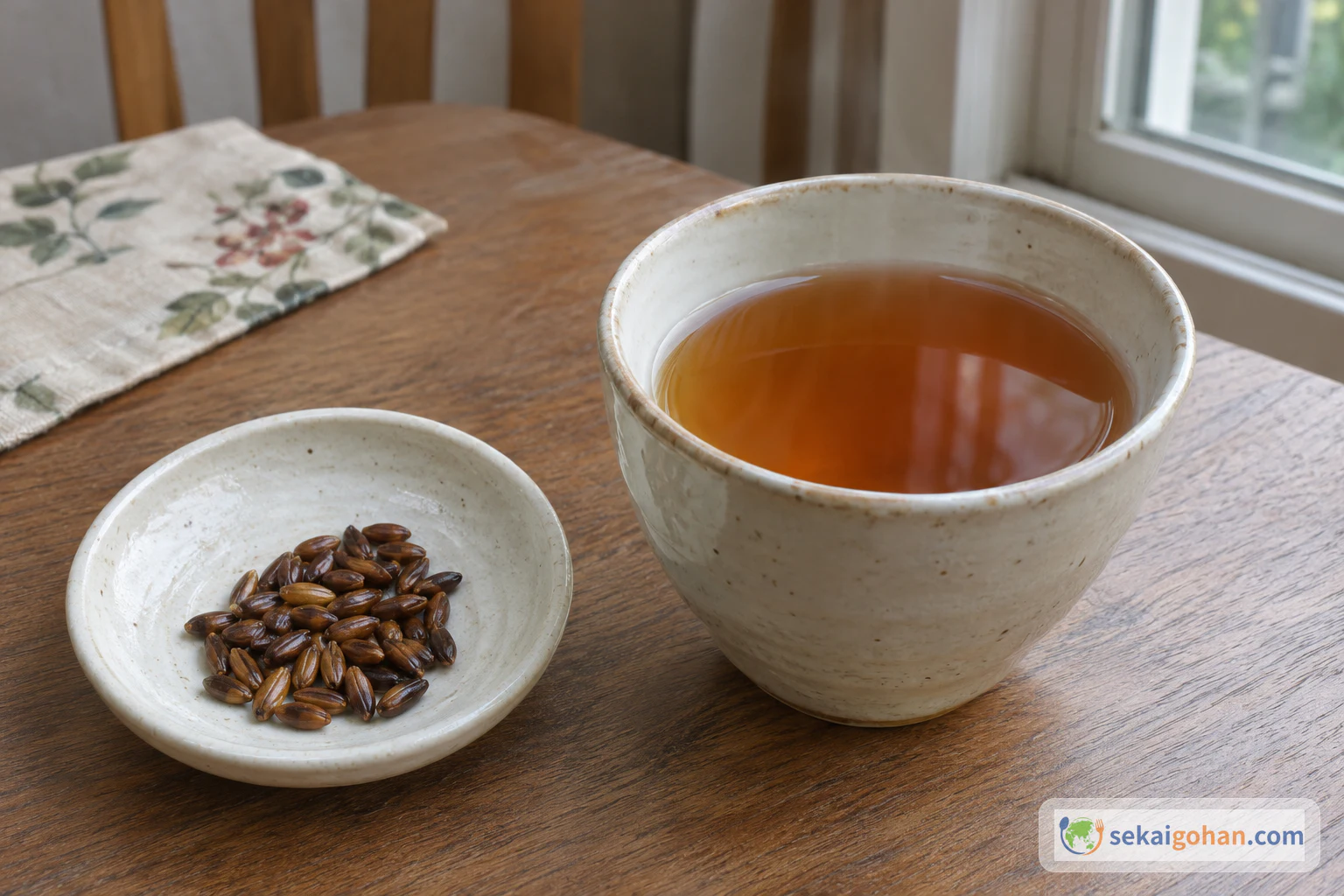
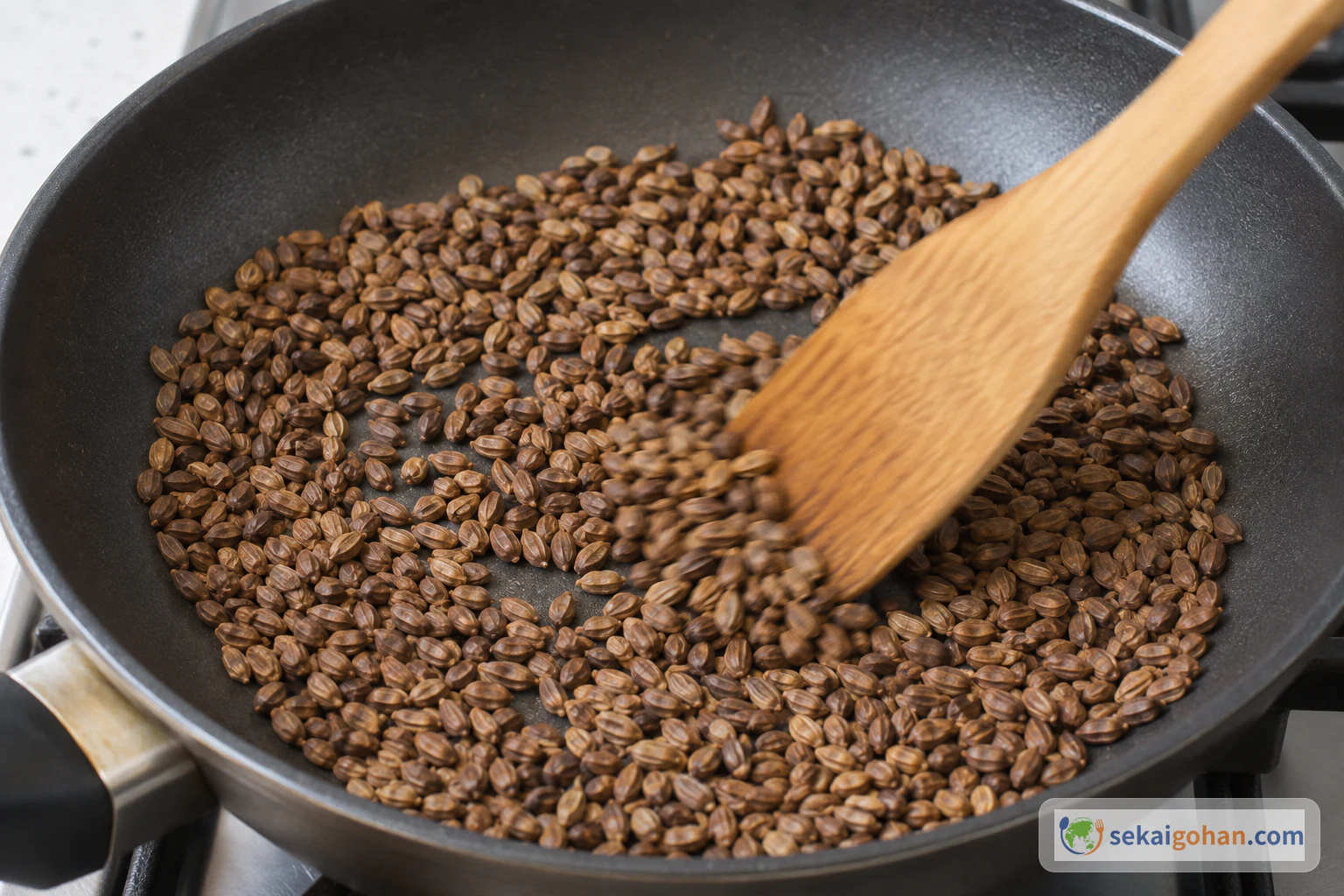
Small brown seeds go into a dry pan and are kept moving over medium heat. At some point they start to pop quickly, one after another. That sound is the cue you are working toward. Gyeolmyeongja-cha (결명자차) is a Korean tea made by washing, roasting and briefly simmering gyeolmyeongja seeds (決明子 in Chinese and Japanese characters). Once it is brewed, you can drink it warm or let it cool and drink it cold.
This article follows a home recipe titled "Gyulmyungja cha (Cassia Seeds Tea)," published on AsianSupper in 2010 by a contributor who writes under the handle umma. It uses 2 teaspoons of seeds and 4 cups of cold water. There is no sugar, honey, ginger, fruit or any other flavoring. The recipe page lists 4 servings and a 15-minute prep time. Those are the page's own labels, not a measured yield or an exact cooking time.
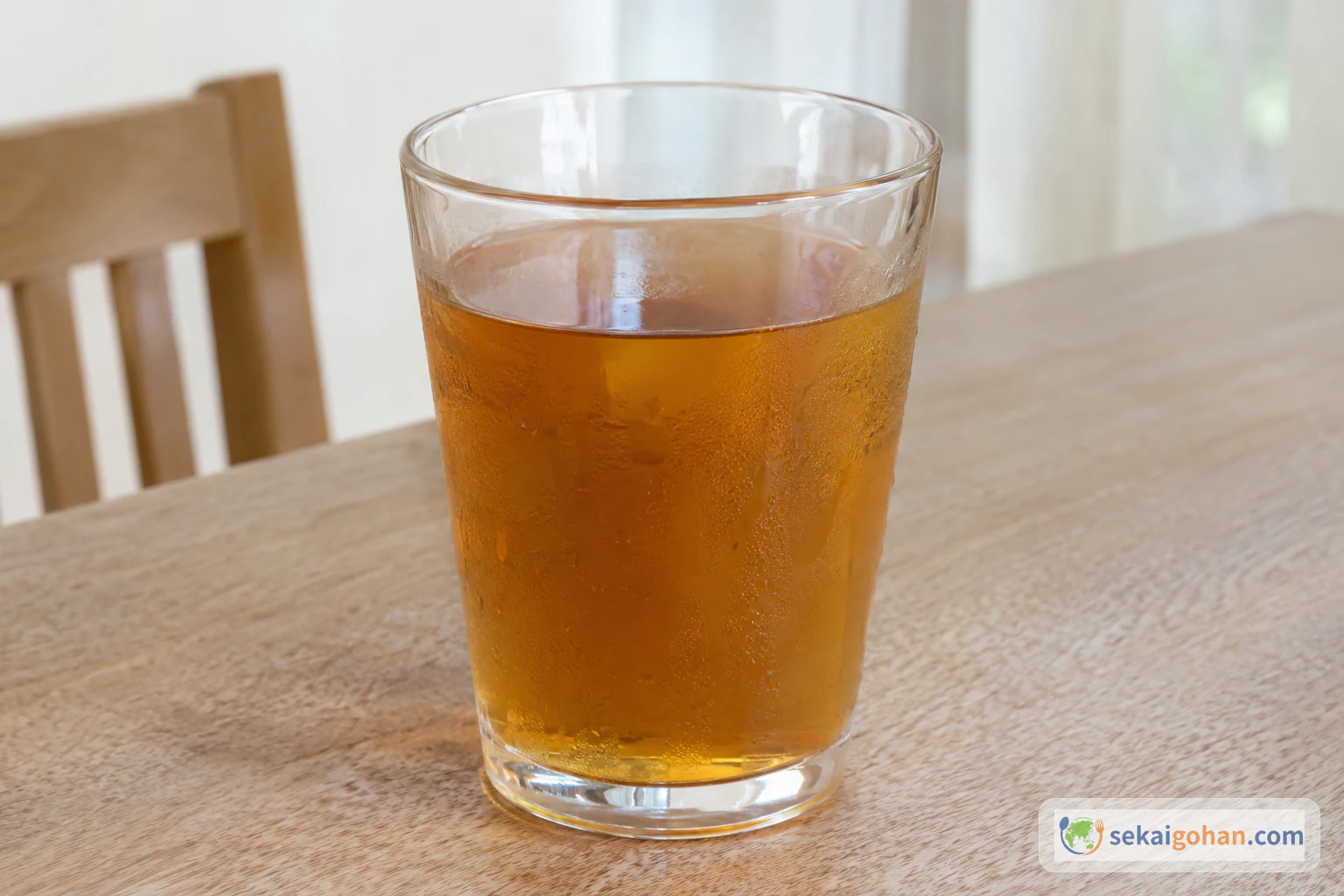
Kimchimari is a Korean food site whose writer describes gyeolmyeongja-cha as a red-colored tea with a mild roasted flavor and a slight bitterness. The writer also remembers their mother making it at home. That is one person's taste and memory. The recipe here does not name a target color, and a natural shade anywhere from light amber to brown is normal.
For more dishes and drinks from the same country, see South Korea.
In Korean it is 결명자차, usually romanized as gyeolmyeongja-cha. The AsianSupper recipe spells it "gyulmyungja cha." In English the seeds are often sold as "cassia seed," and it helps to search with the Korean name as well.
Not Cinnamon: Gyeolmyeongja Is a Seed
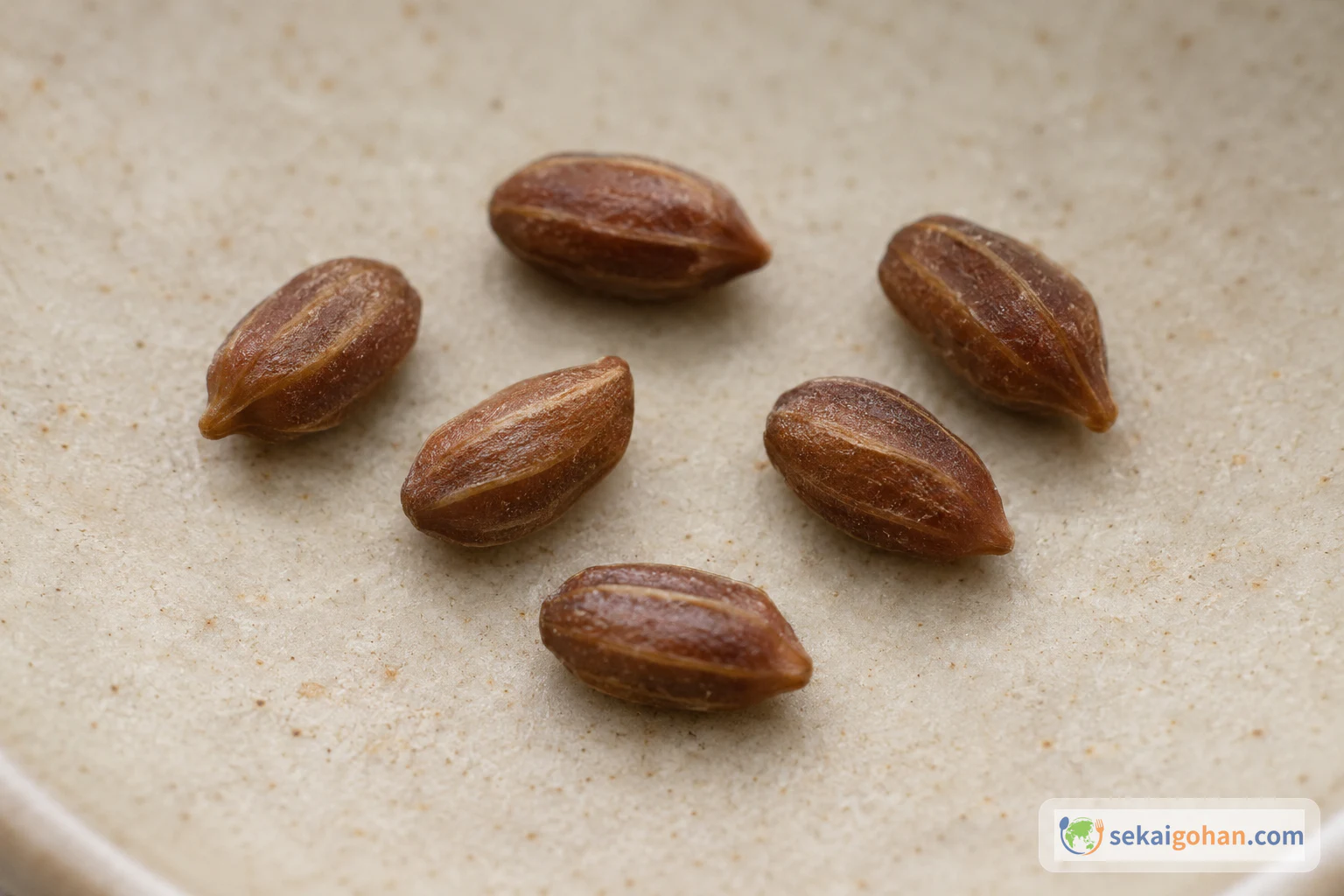
The "cassia" in cassia seed tea is not cinnamon. In English, the word cassia easily brings cinnamon to mind, but this tea uses a seed.
The Japanese Pharmacopoeia lists two separate entries:
- Cassia Seed is the seed of Cassia obtusifolia or Cassia tora, in the legume family (Leguminosae).
- Cinnamon Bark is the bark of Cinnamomum cassia, in the laurel family (Lauraceae).
These are a different family and a different part of the plant. The Korean Traditional Knowledge Portal identifies its gyeolmyeongja entry as Cassia tora L. and says the part used is the seed.
The seeds you buy in a shop have not been botanically checked here. For that reason, this article simply calls them gyeolmyeongja seeds and does not claim a specific species. In practice, the rule is simple: use seeds, and leave cinnamon sticks and bark out of the pot.
Ingredients: Seeds and Water
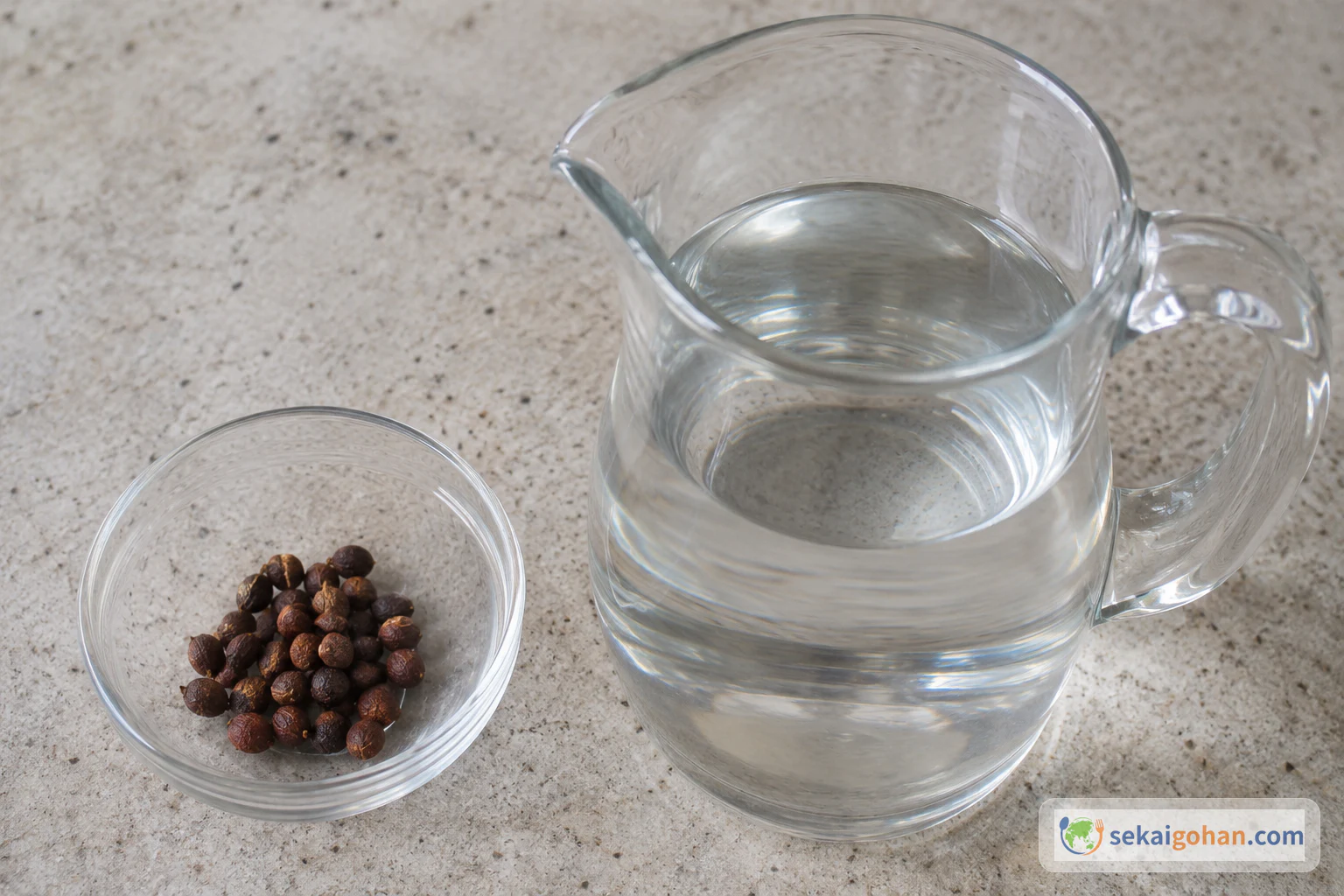
Choosing Seeds and What to Leave Out
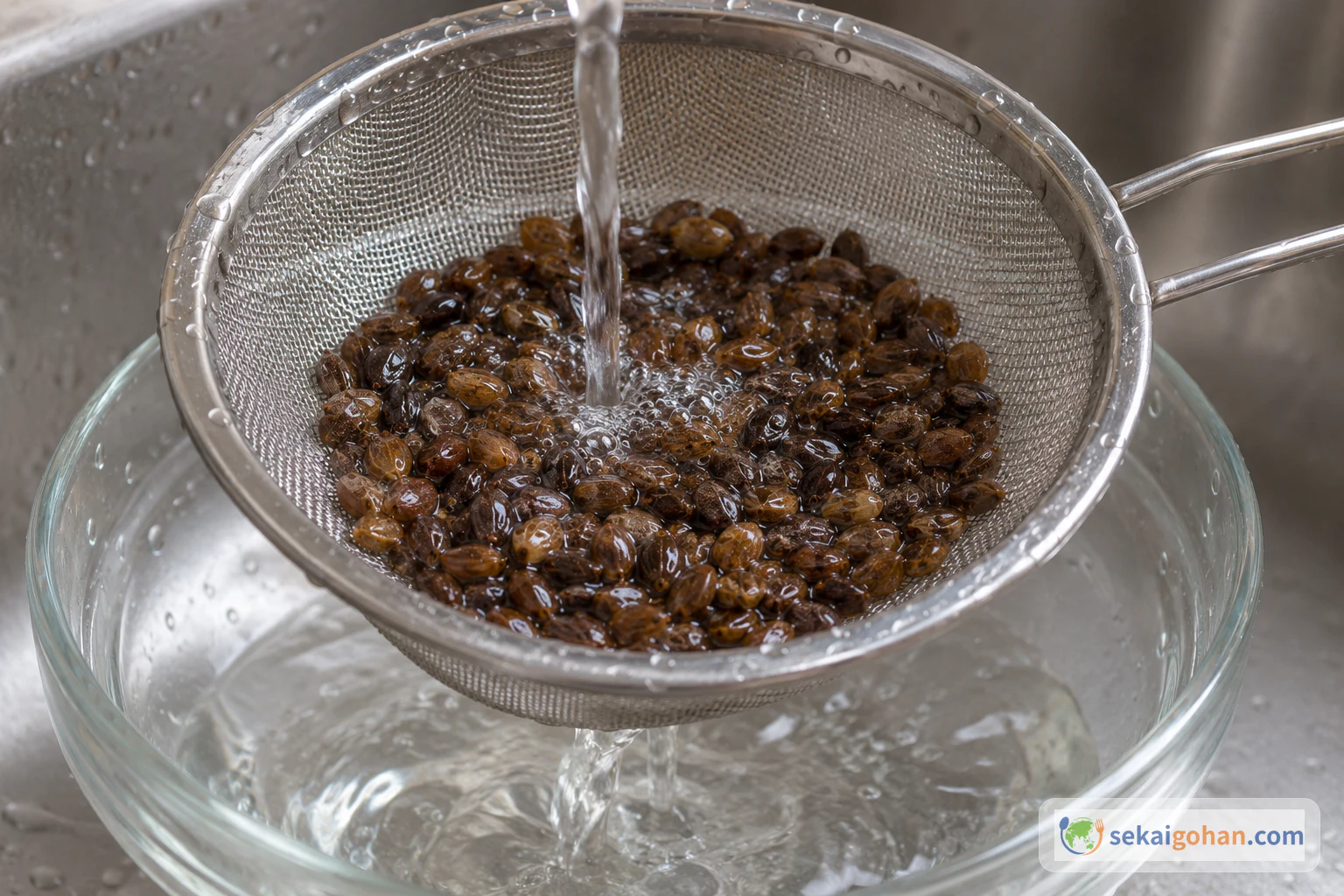
Choose whole, unroasted seeds. Wash and dry them before roasting; unroasted seeds are available at Korean or Chinese grocery stores.
Pre-roasted whole seeds are also sold. The quantities and times below may not apply to them.
Choose seeds labeled as food or for tea. Do not use foraged plants or medicinal extracts. This is a recipe for a drink. It does not suggest any health effect, daily amount or medicinal use.
Equipment
- Frying pan
- Pot
- Measuring spoons
Method: Wash, Roast Until Popping, Simmer Briefly
The roasting step is judged by sound. When the seeds start popping quickly and steadily, keep going for about 2 more minutes and then stop.
Background: Roast and Flavor Notes
A study published in the Korean Journal of Food Culture examined teas made from Cassia tora seeds roasted under different conditions. Its abstract describes flavor notes including:
- sweetness, astringency, tartness and bitterness
- a roasted-coffee-like aroma and a roasted-barley-like aroma
- a burnt smell
According to the abstract, overall liking went up with roasting. Roasting too far, which brought bitterness and a burnt smell, lowered the ratings. The laboratory roasting conditions in that study are not a guide for a home pan.
| What you notice | Likely reason | What to try next time |
|---|---|---|
| Bitter or burnt-smelling tea | The seeds were roasted too far | Stop about 2 minutes after the rapid popping begins, rather than roasting on and on |
| No popping yet | The seeds haven't reached the cue | Keep stirring over medium heat until the popping becomes rapid |
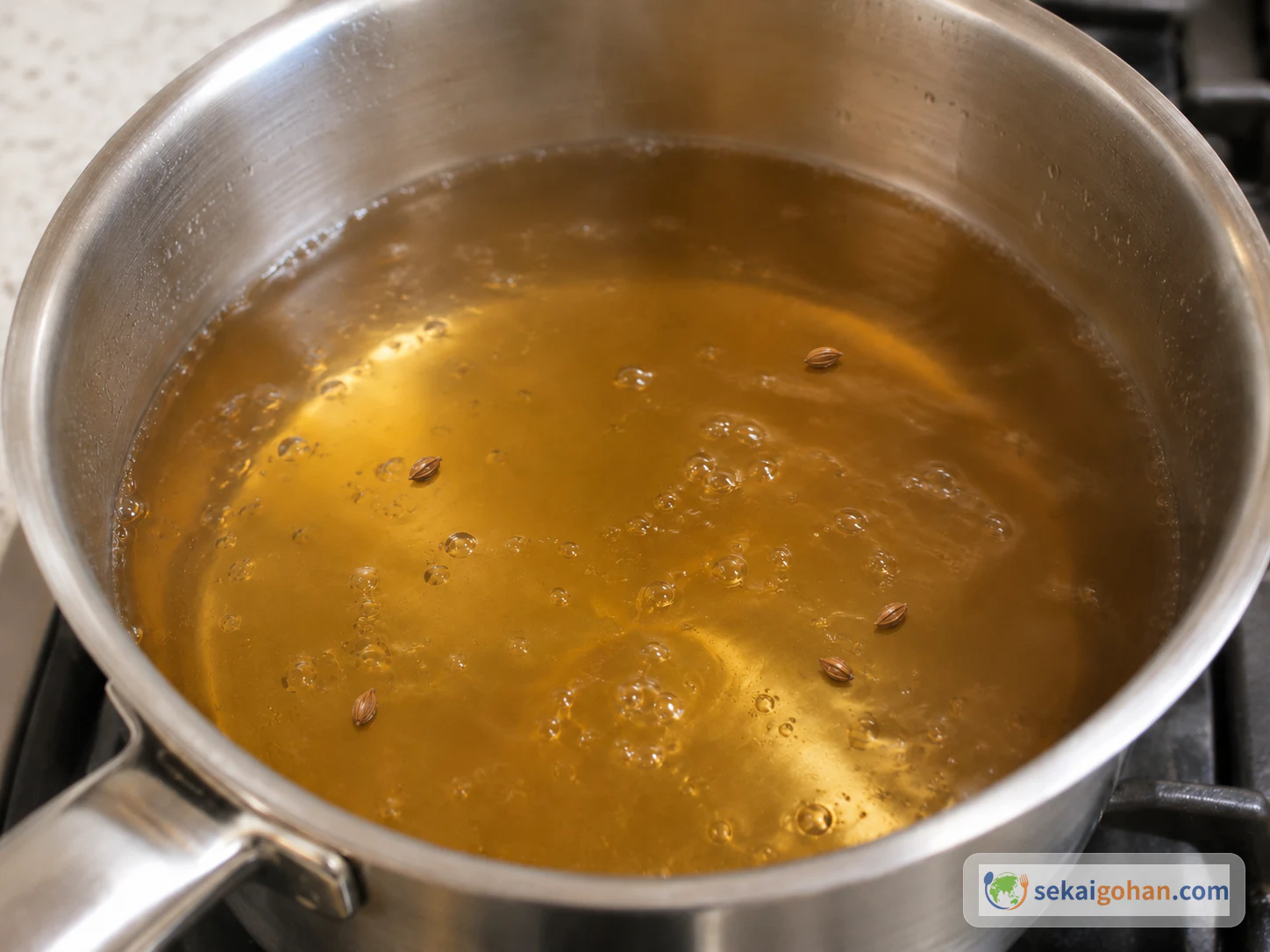
| Tea is lighter than a color description | This recipe gives no target color | Light amber to brown is a natural shade; use the stated 4–5 minute simmer as your reference |
| Tea tastes bitter after changing the recipe | More seed or a longer simmer | Using more seed or simmering longer can make the tea bitter; follow the 2 tsp and 4–5 minute method here |
Background: Serving Options and Other Methods
Keep these as separate methods rather than adjustments to one recipe.
- Warm. Drink it straight after brewing, as in the main recipe.
- Cooled. Brew it the same way, let it cool and drink it cold. This is brewed tea that has cooled, not seeds steeped in cold water for a long time. The recipe does not mention ice or chilling methods.
- Boiling the seeds again. The AsianSupper author says the tea can be reboiled. However, no amount of water, time or number of rounds is given, so there is no set formula for a second brew here.
- A separate Korean formula. The Foodnuri information service, a Korean food information portal, describes roasted gyeolmyeongja brewed like barley tea (보리차). It uses 10–15 g of roasted seed per 1 L of water, brought to a boil and then simmered over low heat for about 20 minutes. That is a different ratio and time from 2 tsp seeds in 4 cups of water for 4–5 minutes, so do not mix the two.
- Sweeteners. The main recipe has no sugar or honey. If you want a sweetened tea, treat it as your own change and not as part of this recipe.
Background: A Home Cook's Recipe and a Tea Like Barley Tea
Foodnuri describes roasted gyeolmyeongja as a seed brewed the way barley tea is. This article keeps the dish's background to that comparison. It does not claim an origin story, an ancient history or a nationwide drinking habit.
About the recipe's author:
- The recipe followed here is by AsianSupper contributor umma. umma's profile lists Seattle, Washington, names Korean as a favorite cuisine and mentions a Korean cookbook.
- umma also writes a column on the site called "Mondays with Mom." The site presents it as written from the perspective of an older Korean generation, by a contributor who immigrated to the US in the 1980s and lives in Washington. The posts record memories of growing up in Korea and of home cooking.
- "umma" is a handle. No legal name or professional credentials are given.
- This is a home cook's recipe, not one from a professional test kitchen; Sekai Gohan has not kitchen-tested the recipe as a whole.
Gaps in the recipe that this article does not fill:
- the size of the cup
- the weight of the seeds
- how long the roasting takes before the popping starts
- how much tea you end up with
- whether to strain
- how to cool the tea
- how long it keeps
The AsianSupper page also contains claims about the eyes, kidneys and liver in its introduction. This article does not repeat them.
Frequently Asked Questions
Is the "cassia" in this tea cinnamon?
No. This tea uses gyeolmyeongja seeds. In the Japanese Pharmacopoeia, Cassia Seed (a seed from the legume family) and Cinnamon Bark (the bark of Cinnamomum cassia, from the laurel family) are separate entries, from different families and different parts of the plant.
Can I use pre-roasted seeds?
The main recipe washes the seeds and then roasts them, so you cannot simply skip a step and keep everything else the same. Sempio's roasted whole-seed product page gives no brewing directions. With any pre-roasted product, follow its own label rather than borrowing this recipe's amounts and times.
Is cold gyeolmyeongja-cha a cold brew?
No. In this recipe the seeds are simmered first, and the tea is then left to cool and drunk cold.
Do I need sugar or honey?
The recipe has neither. Its only ingredients are seeds and water.
Why don't you roast the seeds in oil?
The recipe lists no oil, and its word "fry" does not mention any. For that reason, this article roasts the seeds in a dry pan.
Do I need to strain the tea?
The recipe does not include a straining step, so none is added here. It does not rule out pouring the tea however you normally would.
How long does the tea keep?
The recipe gives no storage guidance, so this article does not suggest a keeping time.
Can I drink it for eye strain or digestion?
This is a cooking article and does not recommend the tea for any health purpose or treatment. The recipe here explains how to prepare a drink, nothing more.
Sources
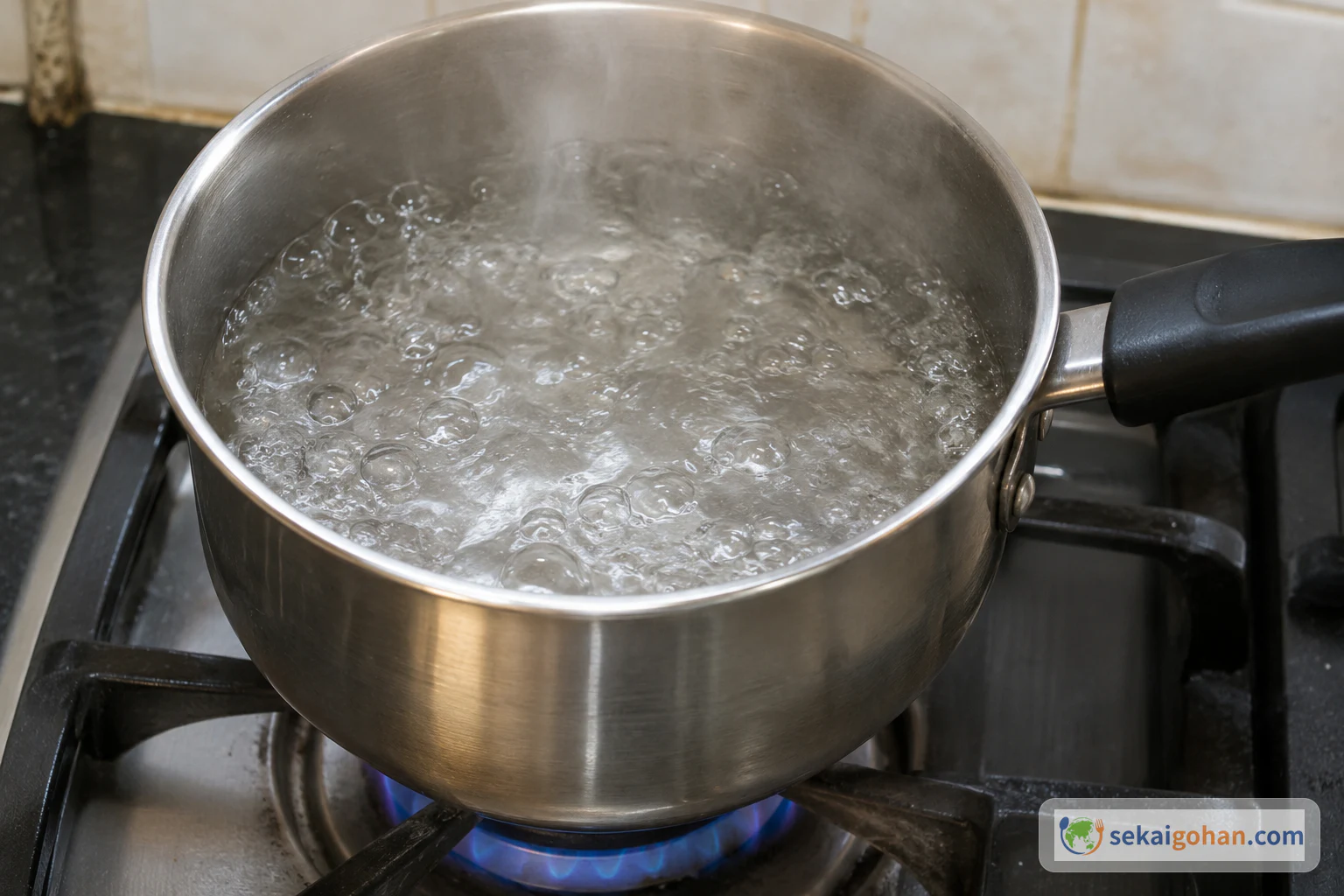
- AsianSupper, recipe by contributor umma, "Gyulmyungja cha (Cassia Seeds Tea)," dated 2010. The main recipe: 2 tsp cassia seeds and 4 cups cold water. Wash and dry the seeds, roast them over medium heat while stirring frequently until they pop rapidly, then continue a couple of minutes more. Boil the water, add the seeds and simmer 4–5 minutes. Drink warm or cold. Reboiling is mentioned without amounts. The page lists 4 servings and a 15-minute prep time. Its health claims are not used. https://asiansupper.com/recipe/gyulmyungja-cha-cassia-seeds-tea/
- AsianSupper, "umma profile." Contributor context: Seattle, Washington; Korean as a favorite cuisine; a Korean cookbook. https://asiansupper.com/users/umma/
- AsianSupper, umma, "Mondays with Mom: White Rice, Brown Rice." Contributor context: an older Korean generation's perspective, immigration to the US in the 1980s, and memories of growing up in Korea. It is not evidence for the tea's origin. https://www.asiansupper.com/theslurp/mondays-mom-white-rice-brown-rice/
- Foodnuri Information Service, "제철농식품: 결명자." Roasted gyeolmyeongja brewed like barley tea. A separate formula of 10–15 g roasted seed per 1 L water, simmered about 20 minutes after boiling. More seed or a longer simmer can make the tea bitter. Its health claims are not used. https://www.foodnuri.go.kr/portal/bbs/B0000283/view.do?deleteCd=0&menuNo=300063&nttId=219958&pageIndex=4&selectMonth=99
- Korean Traditional Knowledge Portal, "Gyeolmyeongja / Cassiae Semen." Identifies the entry as Cassia tora L., with the seed as the part used. Its medicinal assertions are not used, and it does not identify the species of any retail product. https://koreantk.com/ktkp2014/medicine/medicine-view.view?medCd=M0000145
- Japan Ministry of Health, Labour and Welfare, "The Japanese Pharmacopoeia XVIII: Crude Drugs and Related Drugs," Cassia Seed and Cinnamon Bark entries. Cassia Seed is the seed of Cassia obtusifolia or Cassia tora (Leguminosae). Cinnamon Bark is the bark of Cinnamomum cassia (Lauraceae). https://www.mhlw.go.jp/content/11120000/001372350.pdf
- Korean Journal of Food Culture, "Study on the Organoleptic Quality Characteristics of Cassia tora teas by Roasting Conditions" (abstract on KoreaScholar). Flavor notes, higher acceptability with roasting, and lower ratings with excessive roasting that brought bitterness and a burnt smell. Only the abstract is used, and its laboratory conditions are not applied to home cooking. https://db.koreascholar.com/Article/Detail/253087
- Sempio, "Cassia Seed Tea (Roasted Grains)." A manufacturer's product made from whole roasted cassia seeds, described as nutty in taste and aroma. The page gives no brewing directions, and its marketing claims are not used. https://en.sempio.com/product/tea/view/721
- Kimchimari, "20 Traditional Korean Teas beyond Barley and Corn Tea." The writer's personal impression of the tea's red color, mild roasted flavor and slight bitterness, and a memory of it being made at home. Its separate method and its medical claims are not used. https://kimchimari.com/special-traditional-korean-teas/