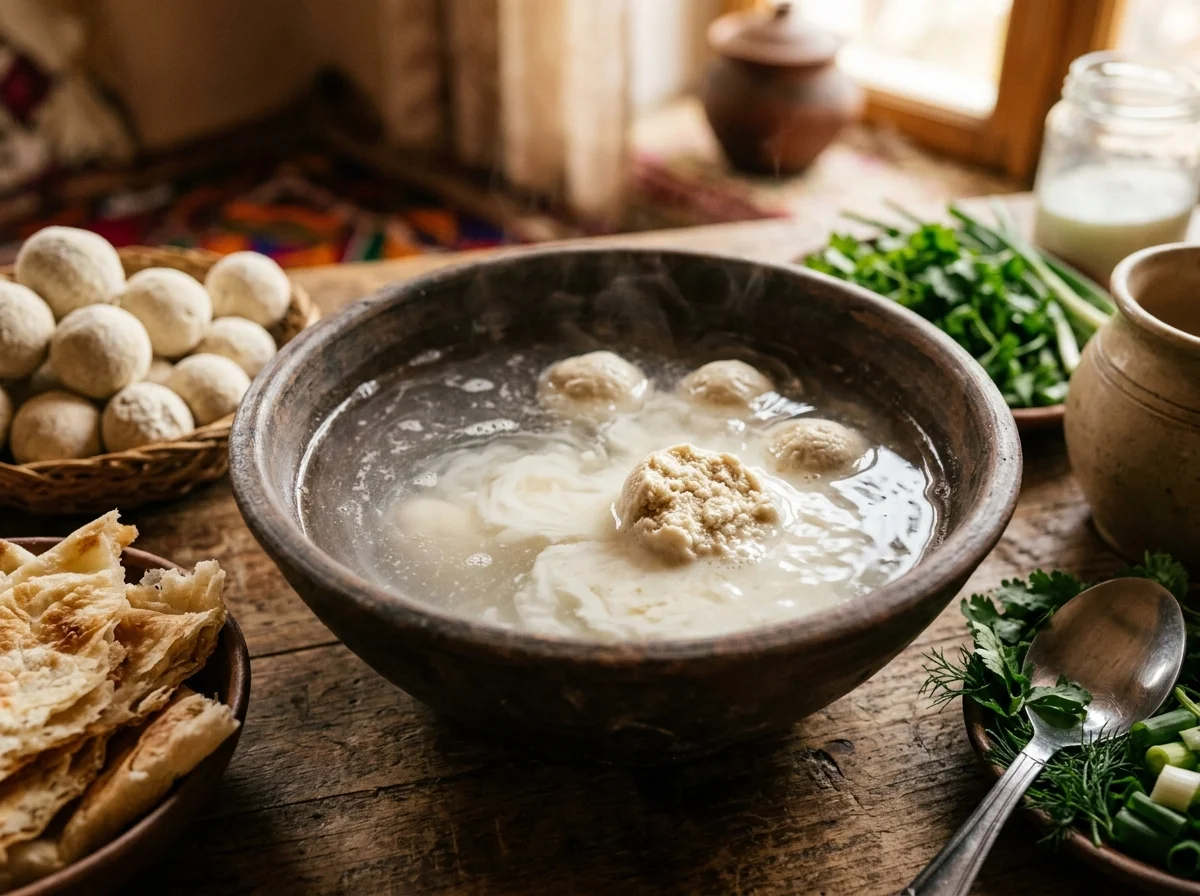
"Tear the bread and soak it in yogurt": that alone makes a national dish
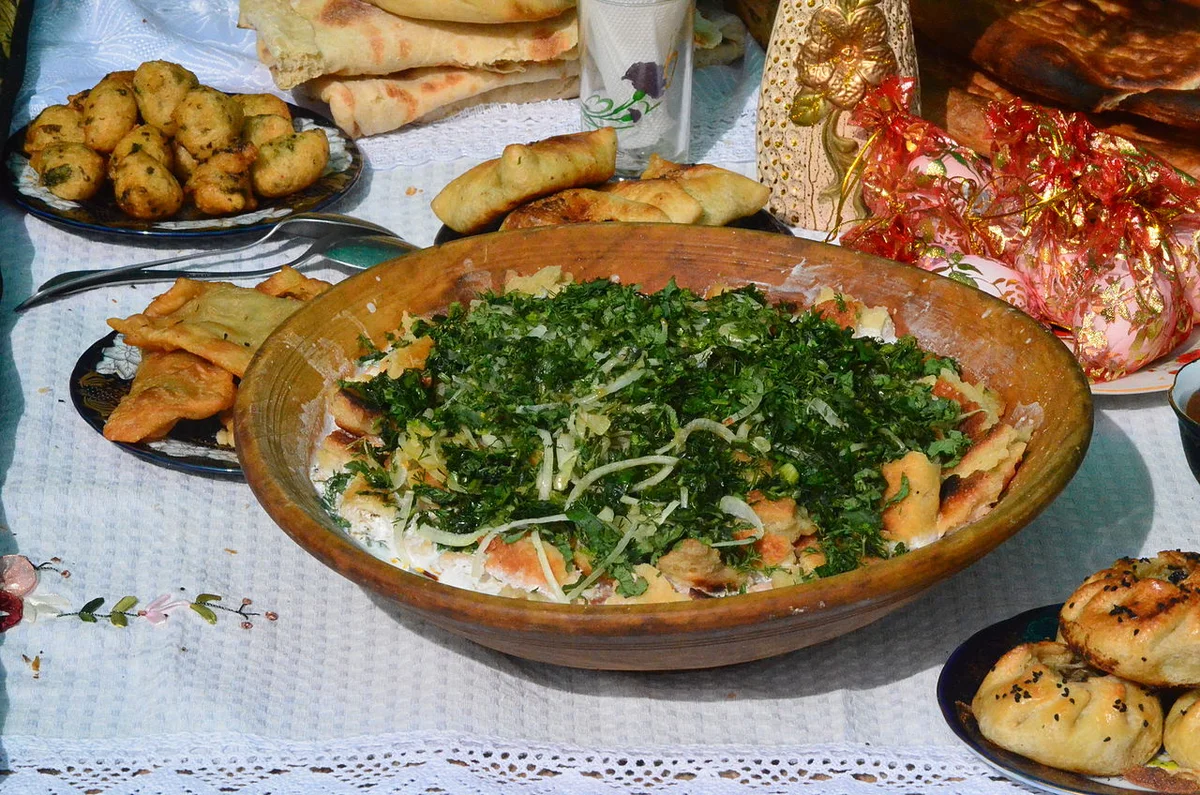
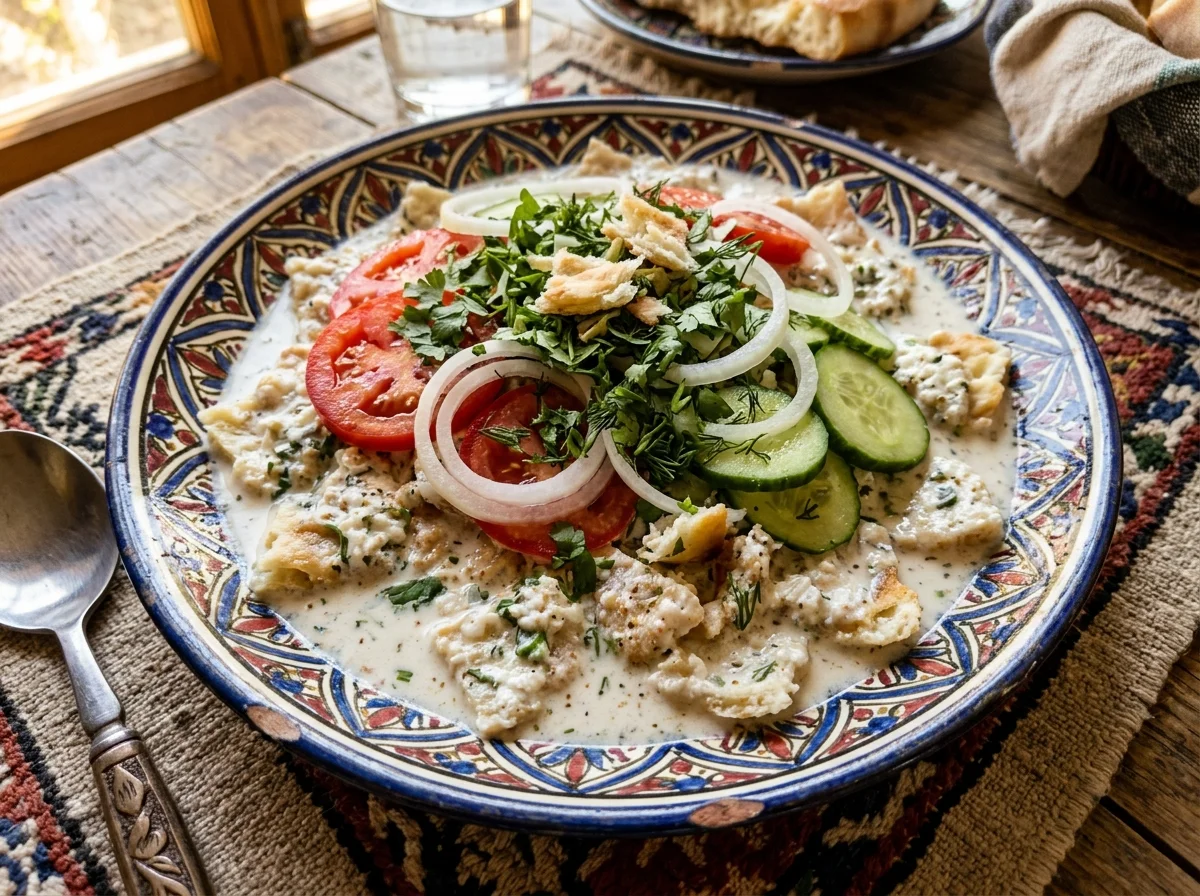
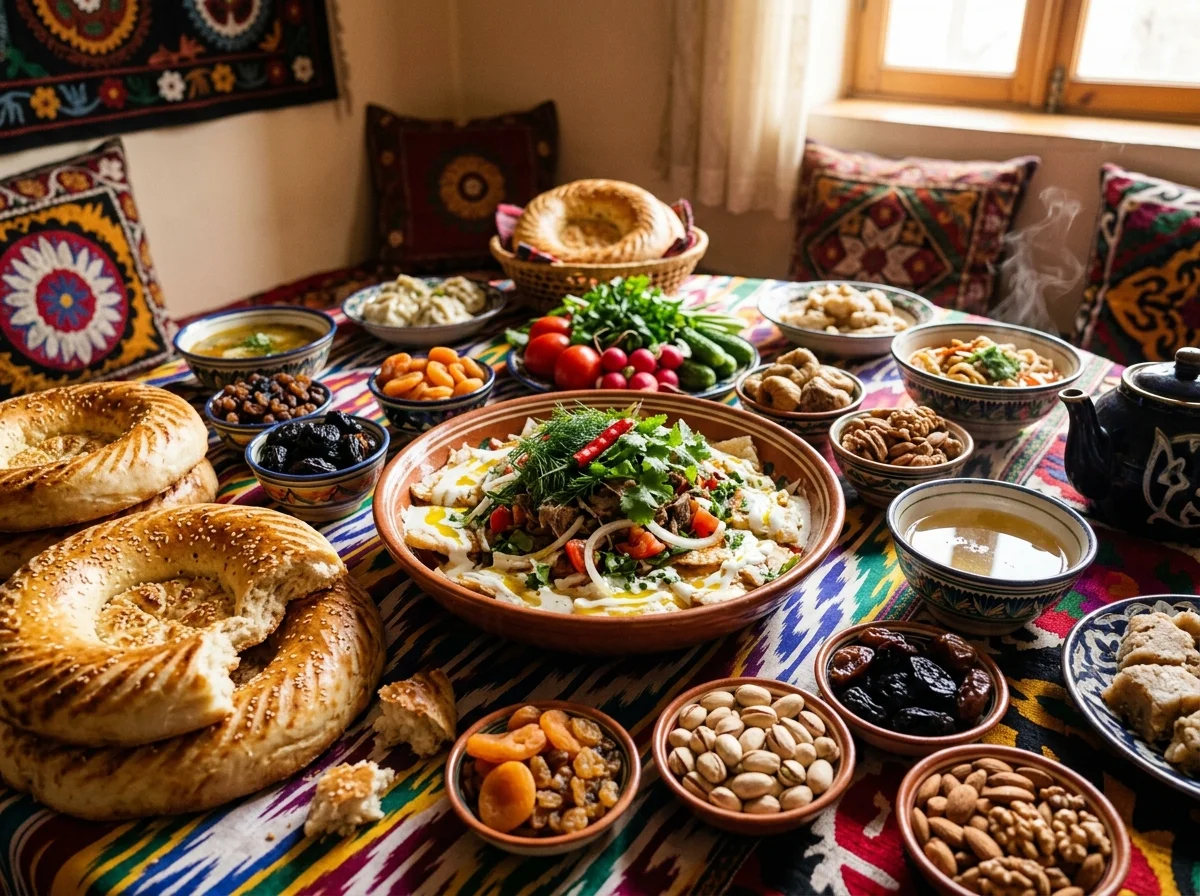
Dushanbe, the capital of Tajikistan. Walk into a restaurant in town and nearly every table has the same dish. A mound of torn bread on a large round plate. White yogurt sauce poured over it generously, with red tomato, white onion and green herbs adding color.
Qurutob (Qurutob / Қурутоб) is Tajikistan's signature dish.
The ingredients are extremely simple. Tear Tajik flatbread (non) into a sauce of dried yogurt (qurut) dissolved in water, soak it, and top it with raw vegetables and herbs. There is almost no cooking to speak of. Fire is used only to bake the bread. Even so, this dish is "mother's cooking" for Tajiks, and has a cultural weight that few dishes do.
The charm of qurutob is the depth of fermentation hiding in its simplicity. Qurut is a preserved food made by drying and concentrating cow's or sheep's yogurt over days, with a strong sourness and saltiness and a distinctive savor. The rich sauce of this fermented milk soaks into the bread and becomes one with the crunch of raw vegetables. On a hot summer day a cold qurutob makes the best lunch, and in cold winter qurut dissolved in lukewarm water warms the body.
In Japan it is a nearly unknown dish, but as interest in Central Asian and Caucasian cooking grows with dishes such as manti and khinkali, qurutob is still like an undiscovered gem.
In Tajik, "qurut (қурут) = dried yogurt" and "ob (об) = water." In other words, "qurut water" is the source of the dish's name. It is eaten across Tajikistan, particularly around Dushanbe and on the Pamir plateau.
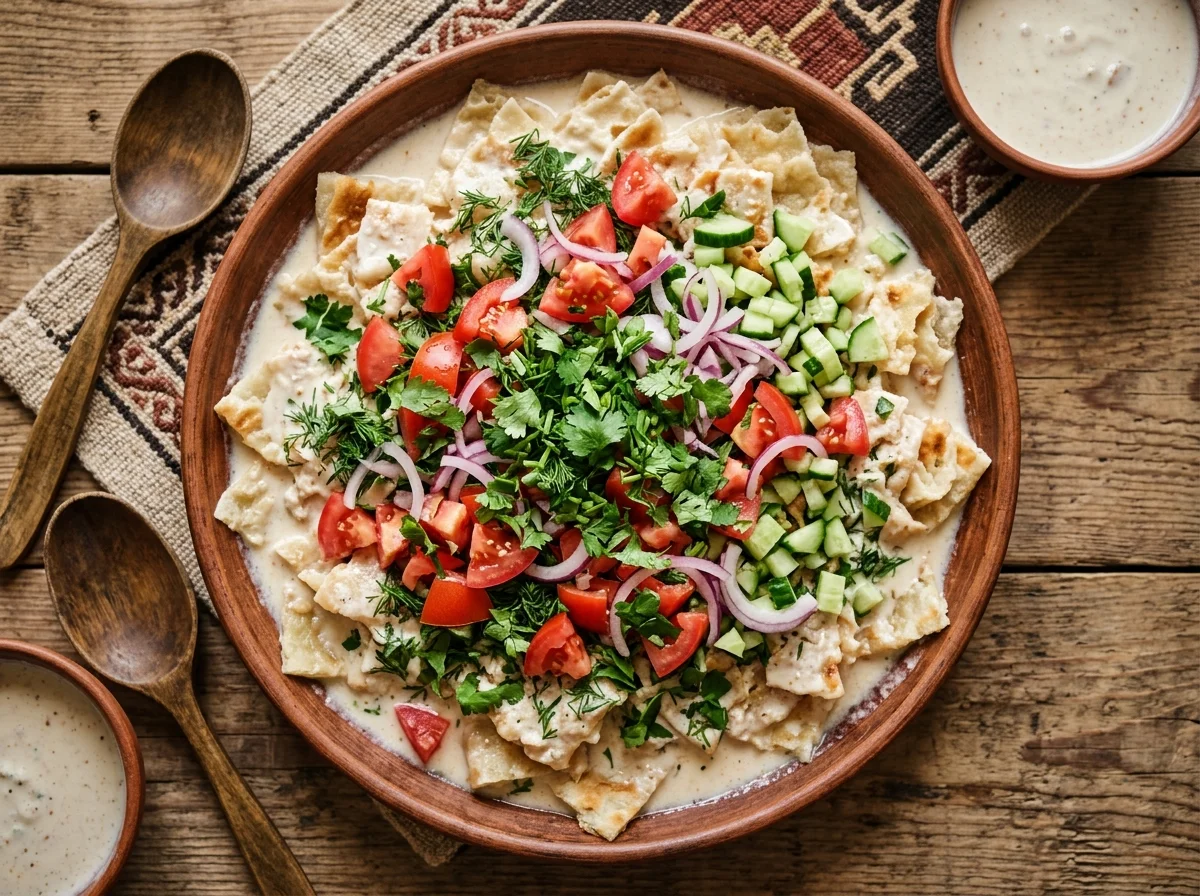
Ingredients (serves 4)
Qurut is a preserved food widely used in Central Asian countries such as Tajikistan, Uzbekistan and Kazakhstan. Outside the region it is sold in small quantities at Central Asian and Middle Eastern grocers and online, under names such as "qurut," "kashk" and "dried curd." If it is hard to find, you can make a substitute sauce as follows.
How to make a quick qurut sauce:
- Mix 1 tsp salt into 400 g Greek yogurt
- Wrap it in cheesecloth and drain overnight in the refrigerator (it concentrates to about 200 g)
- Just before using, dissolve it with 100 ml lukewarm water into a creamy consistency
This method makes a sauce close to the sourness and richness of qurut. If you want to go further, roll the drained yogurt into small balls and dry them in the sun for 3 days, and you have homemade qurut.
Method
Baking the non (flatbread)
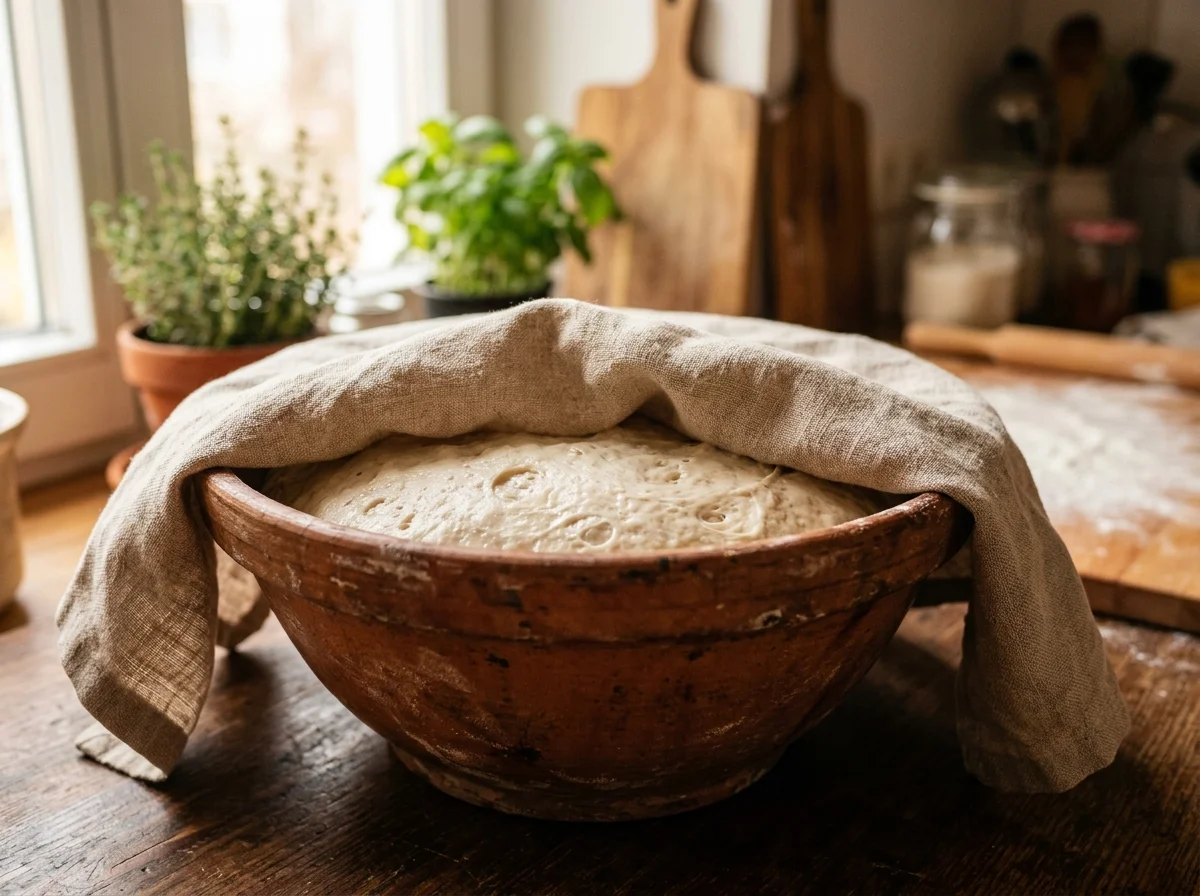
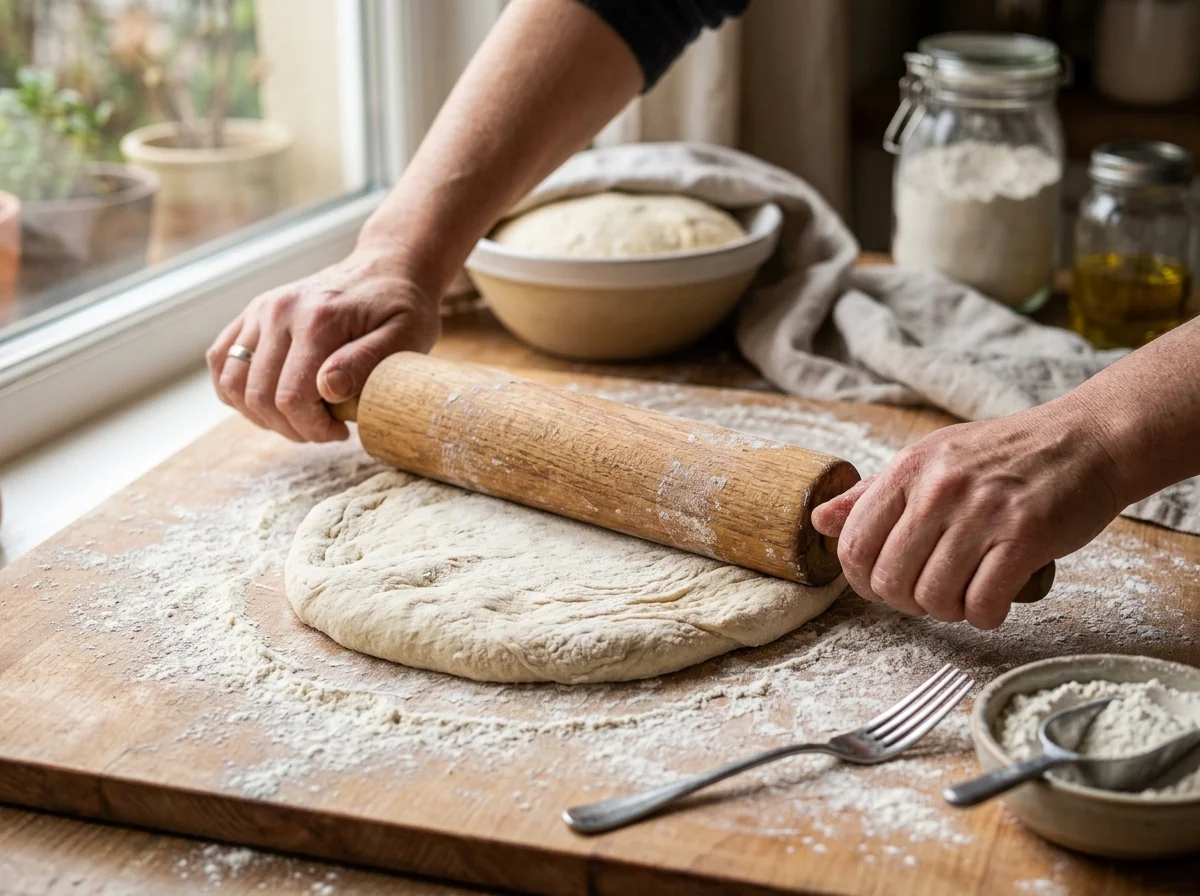
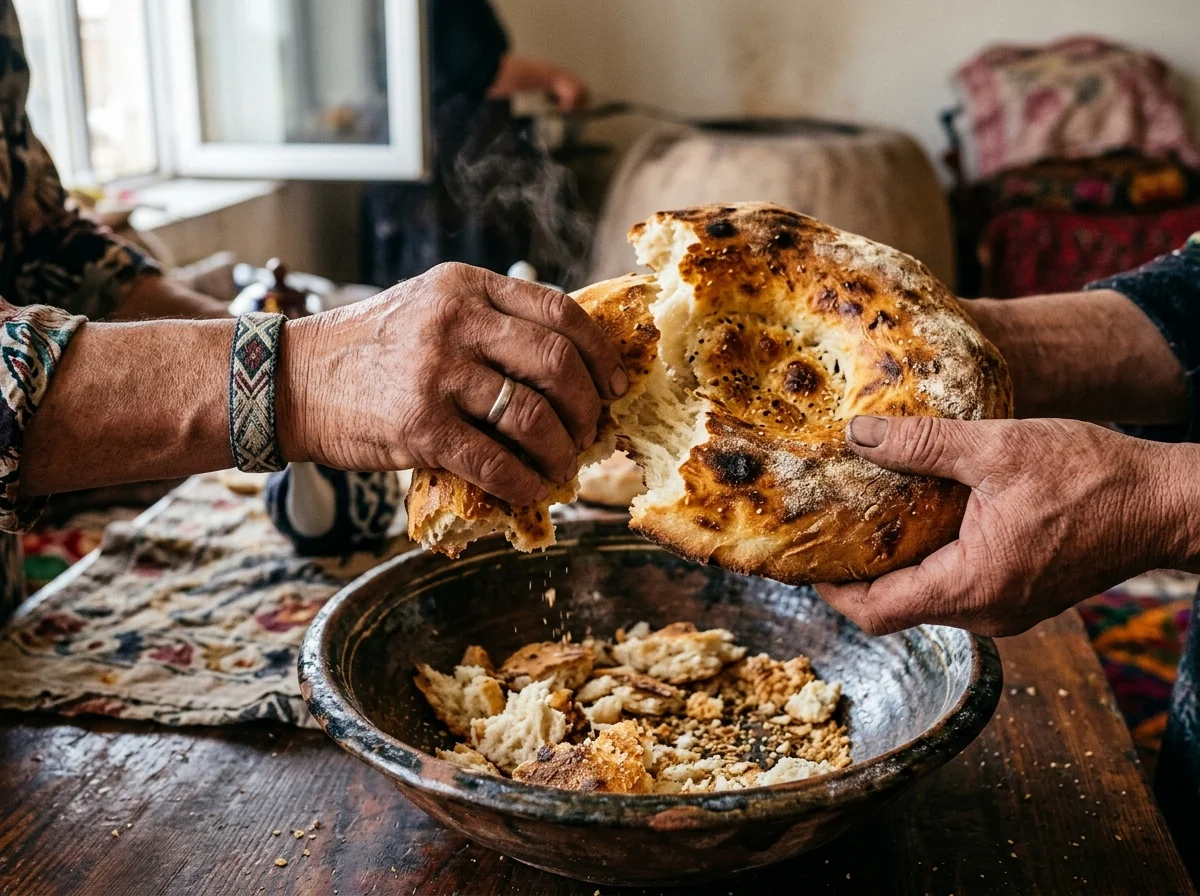
Tajik non (Non / Нон) is a round flatbread eaten throughout Central Asia. It has a distinctive pattern stamped into the surface and is baked in a tandoor-type oven (tanur). In a home kitchen you can reproduce it with a skillet and an oven.
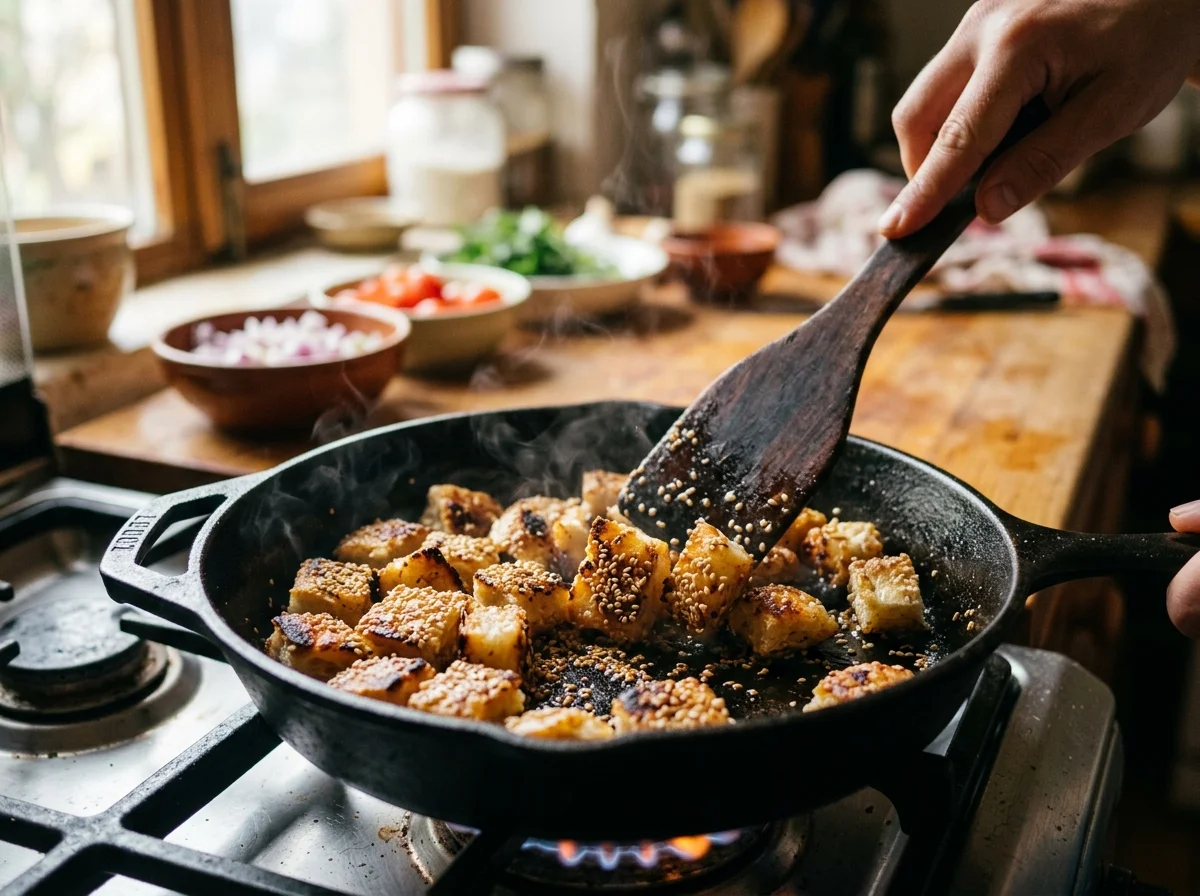
If you do not have time to bake non, you can substitute the following breads. The texture of the result will differ, however.
| Substitute | Character | How close |
|---|---|---|
| Naan (Indian-style) | Close in chewiness | ★★★★☆ |
| Pita bread | Soaks up liquid easily. Easy to find | ★★★★☆ |
| Tortilla (wheat flour) | Thin, so the sauce soaks in well | ★★★☆☆ |
| Baguette | A firmer texture but close to the result of panzanella | ★★★☆☆ |
| Sandwich bread (toast) | The easiest. Use lightly toasted | ★★☆☆☆ |
Making the qurut sauce
The heart of the flavor of qurutob is this sauce.
Crumble the qurut (dried yogurt) by hand into a bowl and dissolve it with a whisk, adding lukewarm water little by little. Once fully dissolved it becomes a thick white sauce like fresh cream. Taste it and adjust the salt. Qurut itself is salty, so extra salt is often unnecessary.
When substituting Greek yogurt, add lukewarm water little by little to the drained yogurt to make it creamy. The final thickness is when it "falls slowly from a spoon."
Plating: assembling the qurutob
Plating qurutob is a three-layer structure: bread on the bottom, pour the sauce, pile the vegetables on top.
In Tajikistan, qurutob is a shared dish eaten around a large plate with family and friends. Each person scoops from the near side of the plate, bread and all, with a spoon or by hand. The good way to eat it is to take the bread that has soaked up plenty of sauce together with the crunchy raw vegetables. Like dal bhat, a culture of "eating by hand" is rooted here, and spoons and forks are supplementary.
The background of the dish: a preserved-food culture raised by the Silk Road
To talk about the history of qurutob, you first need to understand the history of qurut (dried yogurt).
The nomads of Central Asia have made preserved foods from fermented and dried milk of sheep and yaks for thousands of years. Qurut is a prime example. Fermenting the milk to bring out sourness, adding salt and drying it in the sun completes a source of nutrition that keeps for months at room temperature.
93% of Tajikistan's territory is mountainous, much of it the Pamir plateau (called the "roof of the world," a plateau at over 4,000 m). In this harsh environment, fresh dairy cannot be stored for long. Qurut was a technique for survival to keep milk drawn in summer through the winter.

Tips for cooking: five points for a perfect qurutob
1. The thickness of the sauce is everything
If the qurut sauce is too thin the bread turns soggy, and if too thick it does not soak into the bread. The guide is a thickness like fresh cream. Ideally a thin film forms on the back of a spoon. Do not add the water all at once; adjust little by little.
2. The bread should be "fresh-baked" or "hard bread from the day before"
In Tajikistan there are two kinds of qurutob: a luxury version with freshly baked non and a thrifty version with hardened bread from the day before. Both are delicious, but the results differ.
Freshly baked non soaks up the sauce yet keeps some chew, while hard bread softens completely in the sauce to a texture like bread pudding. For a first try, fresh is recommended. Making the thrifty version from leftover baguette is also a smart choice.
3. Always remove the sharpness of the onion
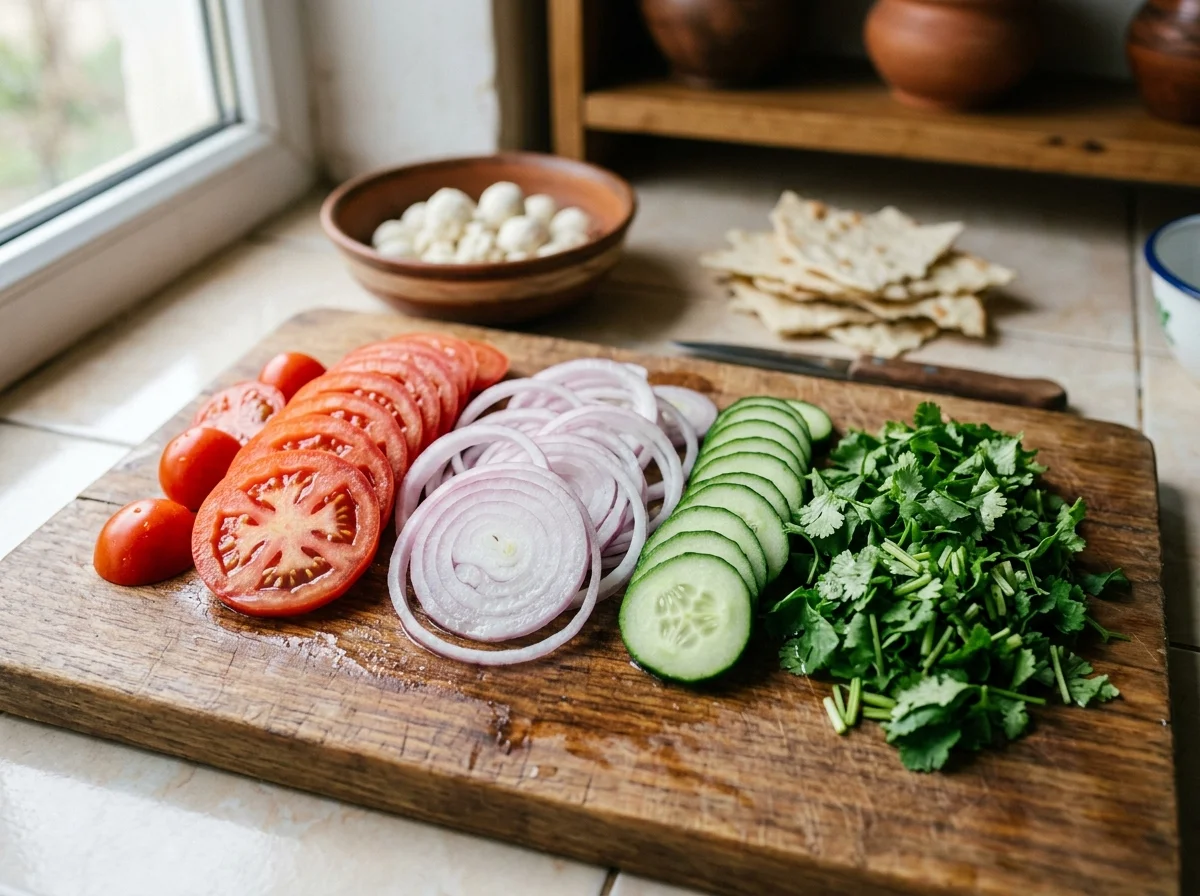
The onions used for qurutob must be soaked in water to remove the sharpness. Tajik onions are milder than Japanese ones, but if Japanese onions are used as they are, the sharpness breaks the mellowness of the sauce. Slice thin, soak in water for 10 minutes, and drain well before using.
4. Cut the vegetables "large"
The vegetables for qurutob are not chopped fine like a salad. Tomato in bold wedges, cucumber in thick slices on the bias. The contrast of the texture of the large vegetables and the softness of the bread soaked in sauce is the charm of qurutob. Like the seafood in ceviche, keep in mind a cut that lets the ingredient itself show its presence.
5. Do not forget the finishing oil
In Tajikistan, plenty of vegetable oil (traditionally cottonseed oil) is drizzled on at the end. The oil links the sauce and the vegetables and adds mellowness to the whole. Substituting olive oil adds more flavor, but moves a little away from the traditional Tajik taste.
Variations of qurutob
Because qurutob is a simple dish, regions and households each make it their own way. As khachapuri takes different forms across Georgian regions, qurutob also has its own versions in places.
The standard qurutob (Dushanbe style)
The recipe introduced in this article is the most common Dushanbe style. A combination of non + qurut sauce + raw vegetables (tomato, onion, cucumber, herbs), and it is especially popular as a summer lunch.
The nutrition of qurutob
The nutritional value of qurutob is largely shaped by qurut (dried yogurt), a fermented food.
| Nutrient (per serving of qurutob) | Amount |
|---|---|
| Calories | about 420 kcal |
| Protein | 14 g |
| Fat | 18 g |
| Carbohydrate | 52 g |
| Fiber | 4 g |
With carbohydrates from the bread, protein from the qurut and vitamin C and fiber from the raw vegetables, qurutob is a sensible meal that gives a balance of the three major nutrients on one plate. Among Eastern European dishes that tend to lean on carbohydrates, like pierogi (in Japanese), qurutob, which uses plenty of raw vegetables, has an excellent nutritional balance.
Frequently asked questions
Qurutob is a dish that uses almost no fire. As long as you can prepare the bread, the rest is "just mix and plate." Getting the ingredients is the biggest hurdle, but substituting Greek yogurt and naan lets you make it in your kitchen from today.
Q1. Is qurutob a cold dish or a warm one?
Basically it is a room-temperature to cold dish. In summer especially, qurut sauce chilled in the refrigerator is used and a cold qurutob is preferred.
Q2. Does it keep?
Qurutob is a dish to eat as soon as it is made. Because the bread keeps absorbing the sauce, over time the bread falls apart and turns mushy. Ideally eat it within 30 minutes of making. Leftover qurut sauce keeps about 3 days in the refrigerator, so combine the bread and vegetables just before eating.
Q3. Can vegetarians or vegans eat it?
Standard qurutob is vegetarian-friendly. The only animal ingredient is the dairy (qurut), and no meat is used. For vegans, substituting drained soy yogurt for the qurut makes a plant-based qurutob.
Sources
Books and articles:
- Tamang, J. P., Watanabe, K., & Holzapfel, W. H. (2016). "Review: Diversity of Microorganisms in Global Fermented Foods and Beverages." Frontiers in Microbiology, 7, 377.
- Anderson, E. N. (2014). Everyone Eats: Understanding Food and Culture. NYU Press.
- Lonely Planet (2024). "Tajikistan: Food and Drink." Travel Guide.
- Atlas Obscura (2023). "Qurutob: Tajikistan's National Dish." Gastro Obscura.