Bulgarian Moussaka: Potato and Minced Meat Bake With Yogurt Topping

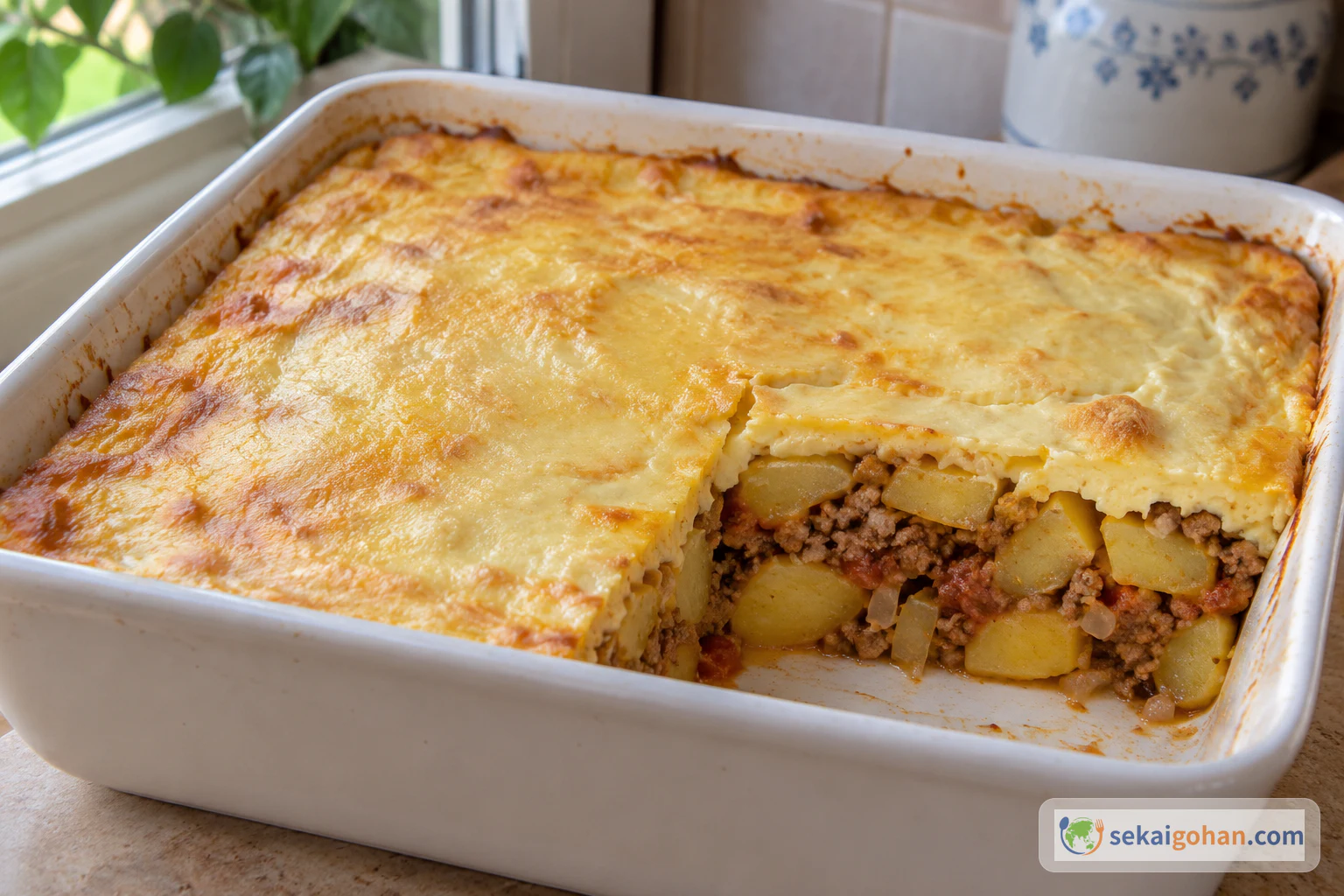
A finished pan of Bulgarian moussaka with one square cut to show the diced potatoes and minced meat under the set topping
Serves
6 servings
Level
Beginner
Cuisine
Bulgarian

Bulgarian moussaka bakes diced potatoes and paprika mince under a tangy yogurt and egg topping. Learn the hot-water bake, the set cue and smart swaps.

Cooking flow

Cooking steps

STEP 11 / 7

Prepare the potatoes and vegetables

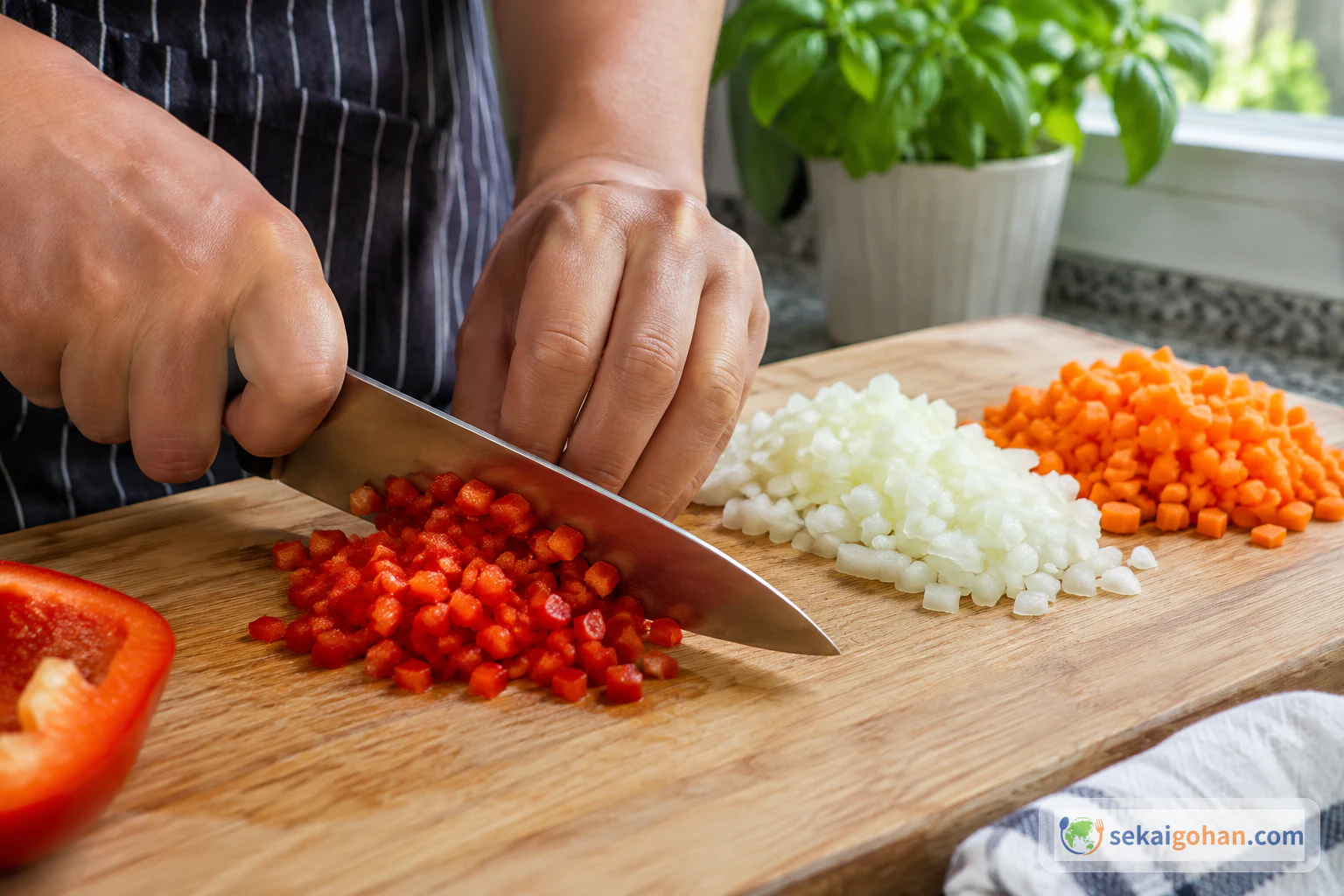
Finely chopping red pepper with a knife on a cutting board, with chopped onion and carrot beside it
Cut the carrot into small dice rather than grating it, so it keeps a little shape in the filling

Peel the potatoes and cut them into dice. Finely chop the onion, carrot and red pepper so they fold into the meat as small flecks. Chop the parsley now as well and set it aside for later. The vegetables are ready when the pieces are fine and roughly even, with no long strips of pepper left on the board.

STEP 22 / 7

Fry the meat with the vegetables

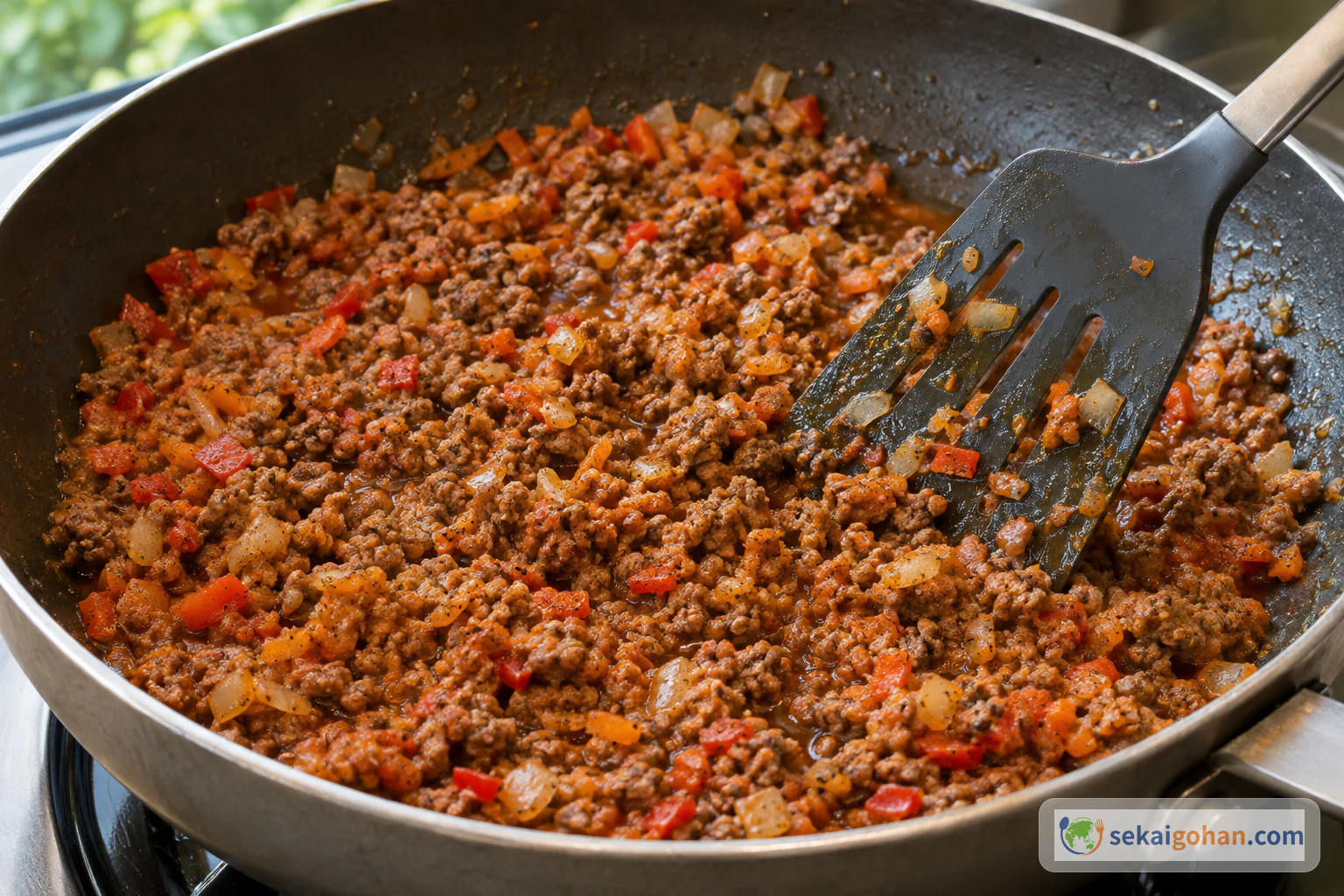
Frying minced meat and vegetables in a pan while a spatula breaks the meat into crumbs
Drag the spatula edge through the mince until the crumbs are about the size of the chopped vegetables

Heat the oil in a wide frying pan, then add the mince and the chopped vegetables. Fry them together and keep breaking the meat apart with a spatula as it cooks. Stir in the paprika, then season with black pepper and salt to taste. It is ready when no clumps of meat are left, the vegetables have softened and the oil has turned red.

Season the meat for the whole pan

The fried meat is the only real seasoning the potatoes get, apart from the pinch of salt in the topping. Taste it before it leaves the pan. It should taste a little stronger than you would want it on its own.

STEP 33 / 7

Mix with the potatoes and pour in hot water

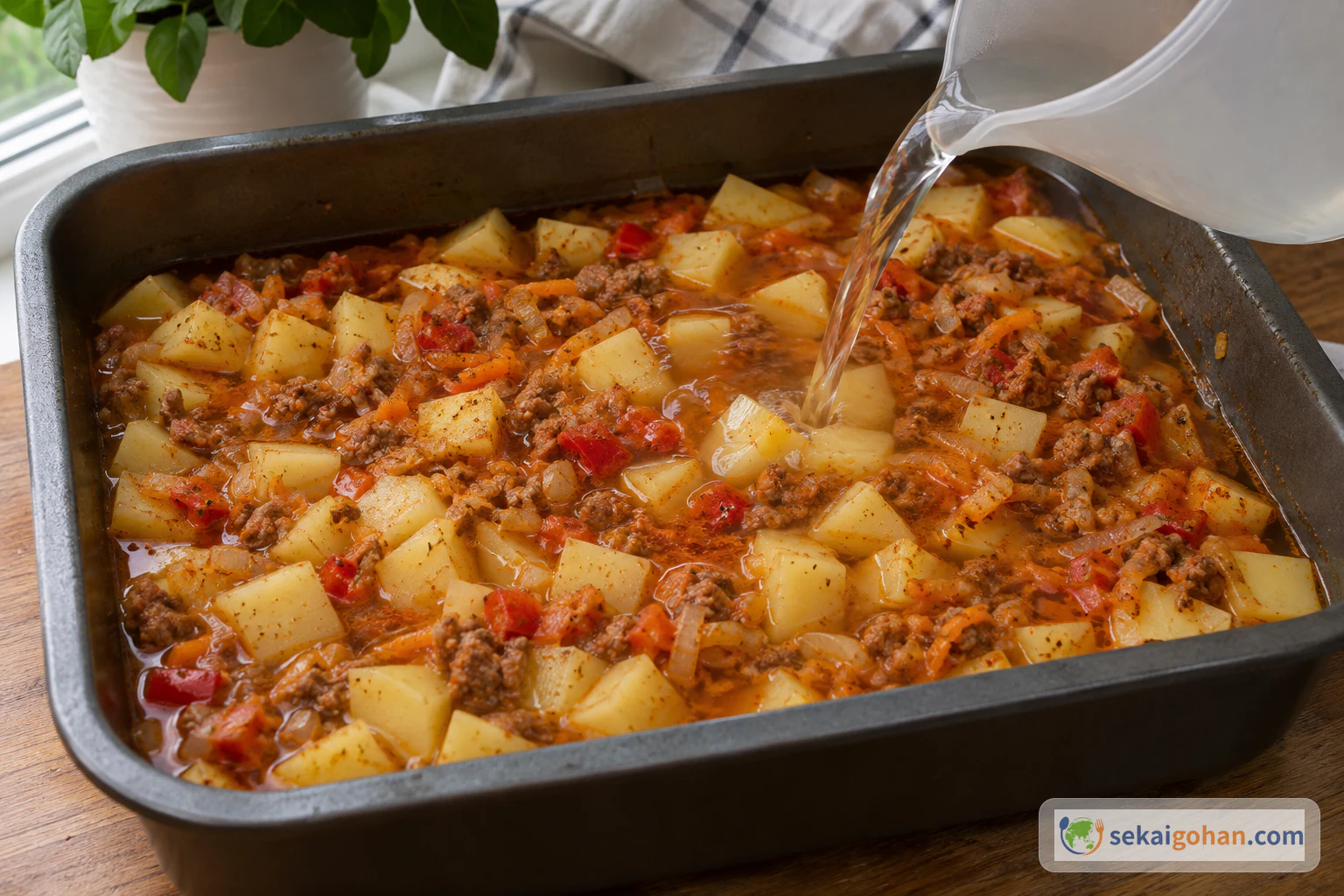
Pouring hot water from a jug into a baking pan of diced potatoes mixed with fried mince
Pour from the side of the pan so the water settles between the cubes without washing the meat to one end

Heat the oven to 390°F (200°C). Spread the diced potatoes in the baking pan, add the fried meat and vegetables with all their red oil, and mix well so the meat is spread through the potatoes. Pour in hot water slowly and stop as soon as it covers the potatoes. You are done when the tops of the cubes sit just under the surface.

Hot water and a full pan

Pour the hot water away from your hands and carry the filled pan to the oven with oven mitts, holding it level. Keep a clear space ready on the counter for when it comes back out.

Water decides the topping

Just covered is the right level. Too little and the potatoes stay firm. Too much and the pan is still wet when the topping goes on, so it sinks into the filling instead of sitting on top.

STEP 44 / 7

Bake, then add the tomatoes and parsley

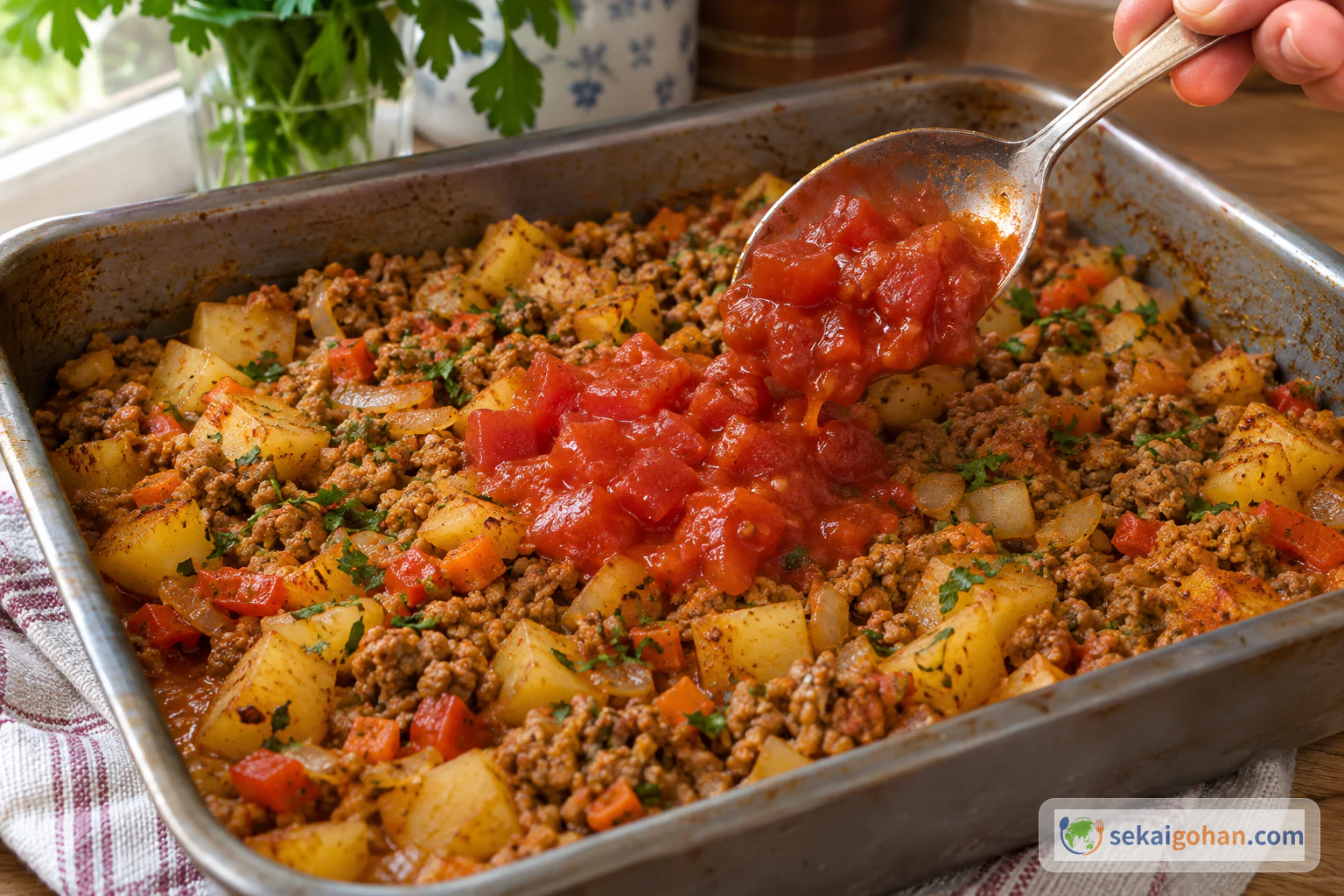
Spooning diced tomatoes onto the baked potatoes and mince, with chopped parsley in the filling
Spoon the tomatoes over the filling and scatter in the parsley before the pan goes back into the oven

Bake for about 30 minutes, until the potatoes are soft. Test a cube from the middle of the pan, where they cook last. Take the pan out, spoon the diced tomatoes over the filling, scatter in the chopped parsley and return it to the oven for 10 minutes more. It is ready for the topping when a skewer slides into the potatoes with no resistance and the tomato has cooked into the filling.

Check the potatoes before the tomatoes go in

The first bake is the one that softens the potatoes. If a cube still resists the skewer, leave the pan in and test again before you add the tomatoes and parsley.

STEP 55 / 7

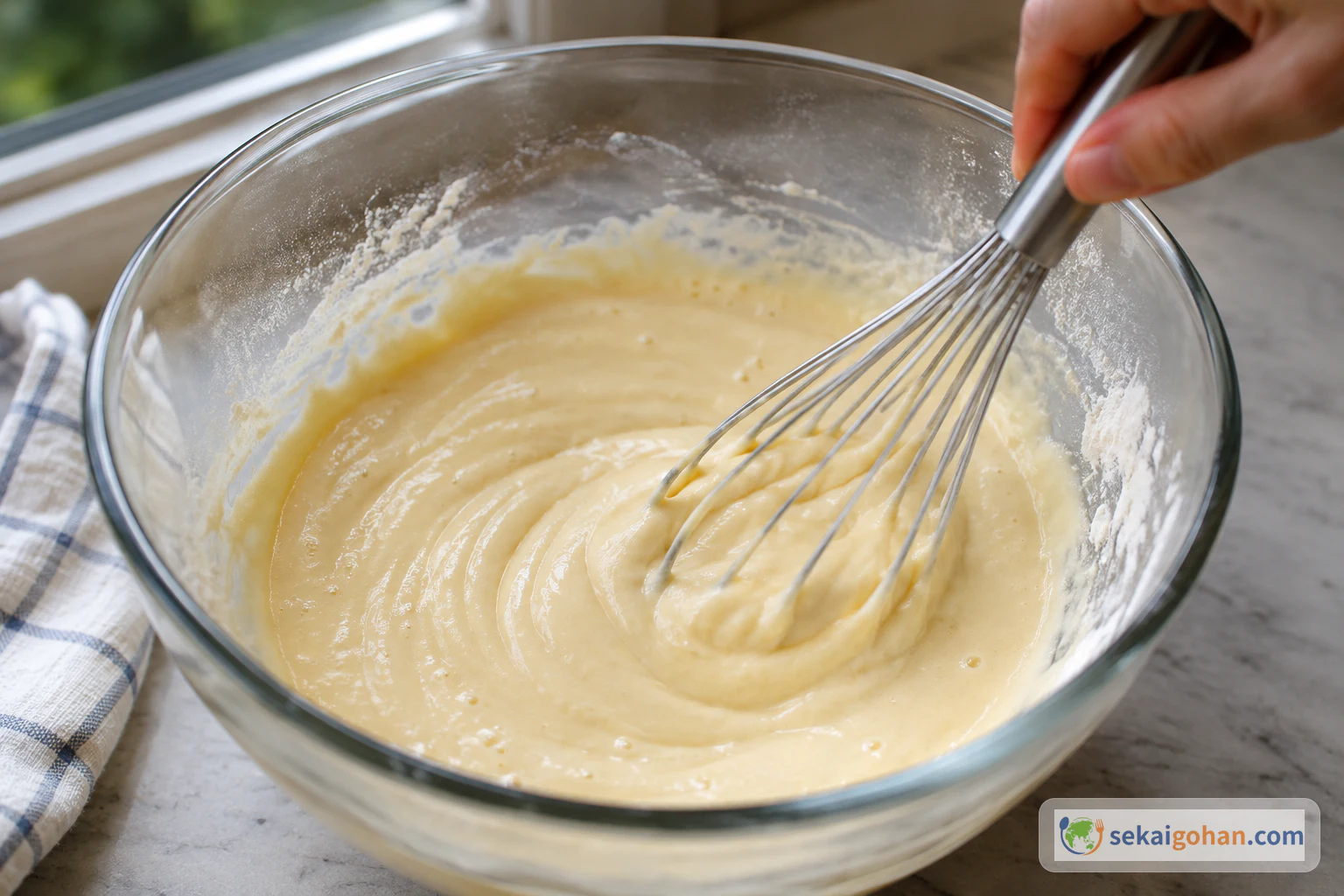
Whisk the yogurt topping

Whisking yogurt, eggs, flour and salt in a glass bowl
Flour clings to the bowl wall, so scrape it back into the mixture before you stop

Put the yogurt, eggs, flour and a pinch of salt in a mixing bowl. Whisk until the flour disappears and the mixture is smooth. Scrape down the side of the bowl once and whisk again. It is ready when the mixture is pale and pourable, with no streaks of yogurt and no dry specks of flour.

STEP 66 / 7

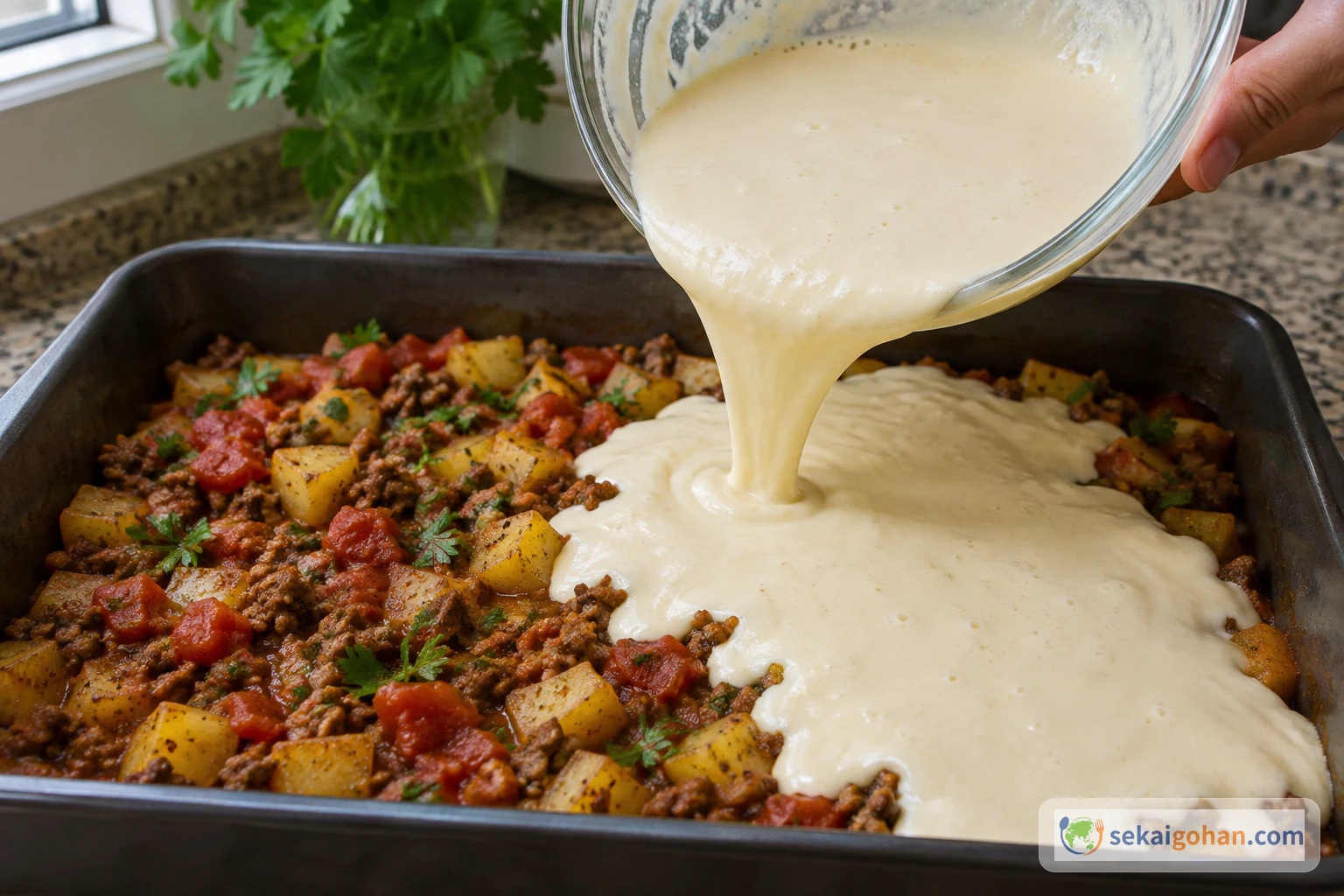
Pour the topping over the filling

Pouring the pale yogurt topping from a bowl over the baked potato and meat filling
The topping stays pale at this stage. Any color comes in the final bake

Take the pan out after the tomatoes' extra bake and look at the liquid. If water is still sloshing around the potatoes, carefully tip off the excess. Pour the topping slowly over the whole surface, moving the bowl from end to end, then nudge it into the corners with the back of a spoon. The step is finished when the filling is covered edge to edge with an even, pale layer.

STEP 77 / 7

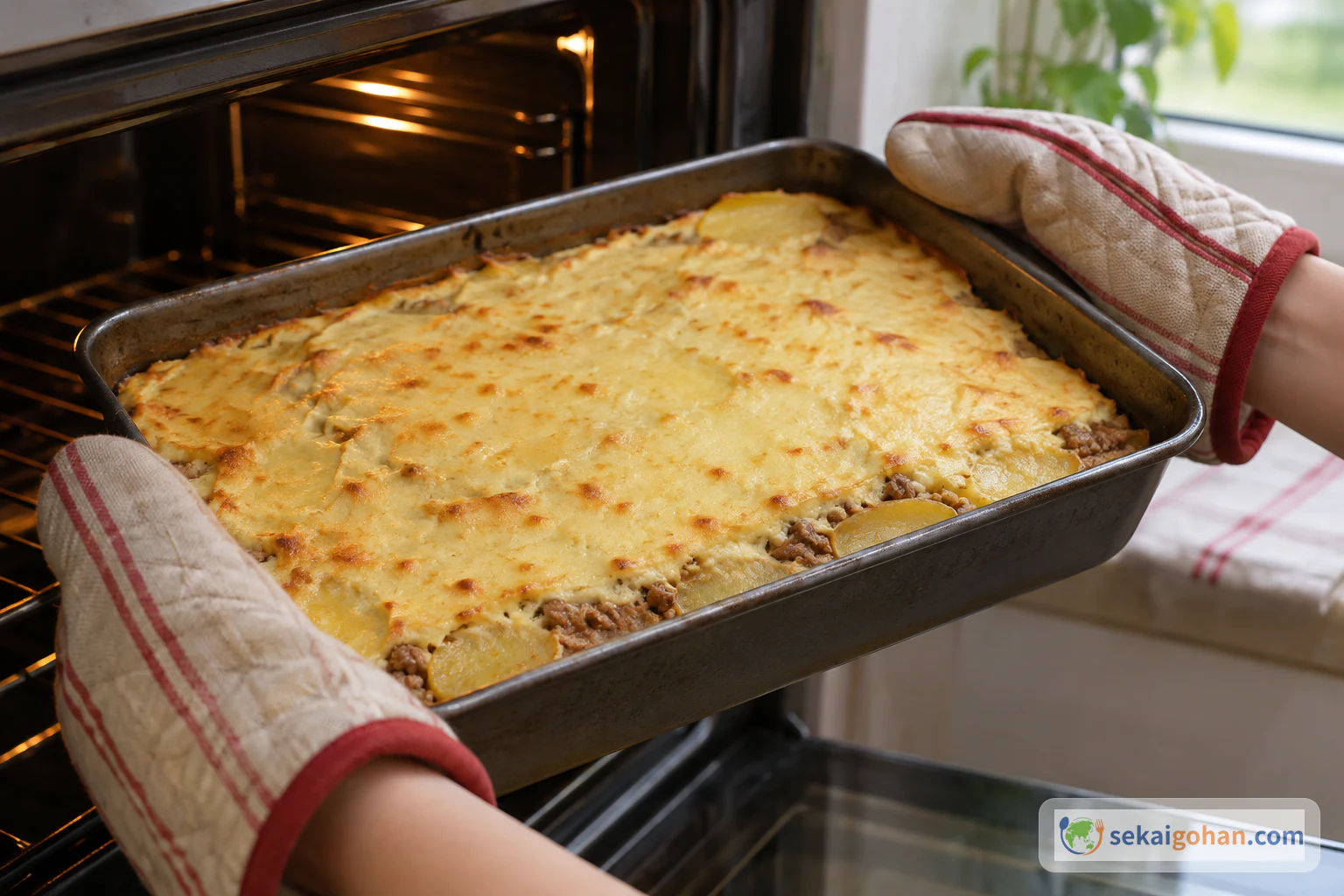
Bake until the topping sets

Oven-mitted hands lifting the pan of moussaka with its set topping out of the oven
Hold the pan level with both mitted hands, because it is full and hot

Return the pan to the oven on a middle-to-upper rack and bake for 10–15 minutes. Lift it out with oven mitts and push a thermometer into the center. Check the reading against the minimum your local food-safety rules set for minced meat and egg dishes, and bake longer if it falls short. The topping is done when it stays still as you nudge the pan and shows only a light color in patches.

0 / 0
Ingredients

Ingredients

1 / 1

Ingredients

Ingredient Amount Role
Minced meat (kayma, кайма) 1 lb 2 oz (500 g) The savory base of the filling
Potatoes 3⅓ lb (1.5 kg) Peeled and diced. The bulk of the dish
Onion 3½ oz (100 g) Finely chopped. Sweetness for the meat
Carrot 1¾ oz (50 g) Finely chopped
Red sweet pepper 2½ oz (70 g) Finely chopped. Sweetness and color
Canned diced tomatoes 3 tbsp Acidity and depth, added after the first bake
Parsley 4–5 sprigs Chopped, added with the tomatoes
Cooking oil 2⅔ tbsp (40 ml) For frying the meat and vegetables
Paprika (sweet) 2 tbsp Colors and flavors the whole filling
Black pepper to taste Seasons the meat
Salt to taste, plus a pinch for the topping Seasons the meat and the topping
Hot water enough to just cover the potatoes Cooks the potatoes in the first bake
Plain yogurt (topping) 14 oz (400 g) The body and sourness of the topping
Eggs 2 Set the topping in the oven
All-purpose flour 2 tbsp Gives the topping body
Plain yogurt (to serve) 1–2 spoonfuls Cool and sour beside each square
0 / 0

The last thing to go into the pan is pale and smooth. It is eggs, yogurt and a little flour, poured over potato cubes and paprika-red mince that have already baked soft in the oven. A short while later it has set into a thin lid with faint golden patches. Each square comes to the table with a spoonful of plain yogurt beside it. This is Bulgarian musaka, and it tastes of sweet paprika and tender potato, with the sour yogurt running through both the topping and the spoonful on the plate.

Potatoes Where You Expected Eggplant

In Bulgaria musaka is a fixture of home cooking. It is the pan that comes out when family and friends gather, and restaurants give it a prominent place on their menus. If you know moussaka as the Greek dish, the Bulgarian one looks like a different family at first. It is closer to a potato bake than a layered casserole. Diced potatoes, minced meat and finely chopped vegetables go into one pan together and cook in a little hot water before any topping goes on. There is more on the country's home cooking on the Bulgaria page.

The main difference is the vegetable and the lid. In Bulgaria and its neighbours, potatoes take the place of eggplant. The mince is usually pork, beef or a mix of the two. The top is yogurt or milk beaten with raw eggs, sometimes with flour added. The Greek version settled into its familiar eggplant-and-béchamel form in the 1920s. If that is the dish you want, our Greek moussaka covers it. The Bulgarian pan has no white sauce to stir. The topping is whisked in a bowl and simply poured over.

Households make it their own way. Some add dried savory and cumin to the meat. Some use fresh tomato in place of canned, or bake the pan covered for most of its time. Some keep the topping to just egg and yogurt, while others thicken it with plenty of flour. Where the Bulgarian dish first took shape is not settled. All of these kitchens share the yogurt-and-egg topping, and that topping is what marks the dish as Bulgarian.

The name

In Bulgarian it is мусака, written musaka or moussaka in Latin letters, and the spelling mousakka turns up too. The word is usually traced through Ottoman Turkish back to the Arabic muṣaqqa'a, though other explanations exist.


Ingredients (serves 6)
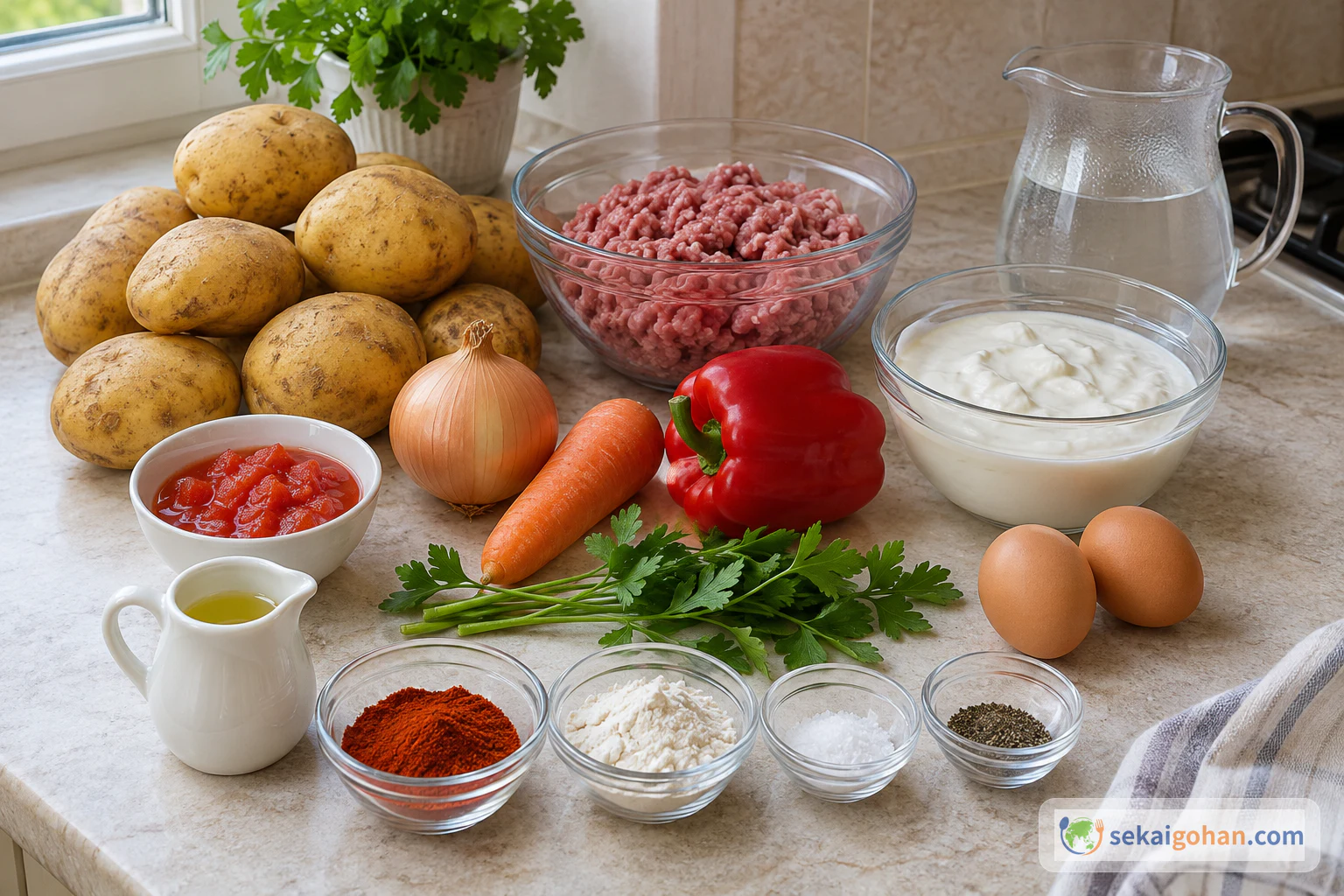
Uncooked ingredients for Bulgarian moussaka: potatoes, minced meat, onion, carrot, red pepper, canned tomatoes, parsley, oil, paprika, yogurt, eggs, flour, salt, pepper and a vessel of hot water
Hot water is part of the recipe, so have the kettle ready before the meat comes off the heat

The pan holds far more potato than meat, and the vegetables are there for sweetness rather than bulk. The yogurt does two jobs. Most of it goes into the topping, and a little is kept back for the table.

Allergen information

This dish contains egg, milk (yogurt) and wheat (flour). Check the labels on canned tomatoes and spice blends if you cook for someone with allergies.

Equipment

  • Knife and cutting board
  • Vegetable peeler
  • Wide frying pan and a spatula
  • A medium baking pan (deep enough for the potatoes, water and topping)
  • Kettle or heatproof jug for the hot water
  • Mixing bowl and whisk
  • Skewer for testing the potatoes
  • Instant-read thermometer
  • Oven mitts

Choosing and Substituting

The topping is half the flavor, so spend your care on the yogurt. Plain, unsweetened yogurt with a clear sourness is what you want. Bulgarian-style yogurt is the natural choice, and you can find it at Balkan and Eastern European grocers or online. Paprika should be sweet, not hot, because a full 2 tablespoons goes into the meat. Sweet paprika from the supermarket spice aisle works well.

Ingredient What to buy What a swap changes
Minced meat A pork and beef mix is usual in Bulgaria All beef gives a leaner, beefier filling. All pork gives a softer, richer one
Potatoes A variety that holds its shape when diced and baked Floury potatoes break down and turn the filling mushy under the topping
Oil Any neutral cooking oil. Sunflower suits the dish Strongly flavored oils push the paprika into the background
Flour Plain wheat flour Cornstarch or potato starch is a different thickener. Keep to wheat flour
Dried savory (chubritsa) Optional, from Balkan grocers or online Adds a herbal, thyme-like note that many Bulgarian kitchens like

What has to stay is the sour yogurt topping and potatoes that keep their cube shape. The type of meat and oil can follow what your shop sells.


Method

Do all the chopping before the stove goes on, then fry the meat. After that, most of the time is hands-off while the pan bakes in three stages. Whisk the topping during the first bake, so it is ready the moment the tomatoes have finished.

When It Goes Wrong

What you see Why What to do
The topping sinks into the filling or stays runny at the edges Too much water was left in the pan Before the topping goes on, tip off the excess liquid. Next time, stop pouring as soon as the potatoes are just covered
The potatoes are still firm after the first bake Too little water, or too short a bake Keep the pan in the oven and test again with a skewer before adding the tomatoes
The topping still wobbles at the end of the final bake It needs longer in your oven Return the pan to the oven and check again until the surface holds still
The filling tastes flat under the topping The meat was seasoned too lightly Next time, season the fried meat until it tastes a little strong. At the table, salt individual portions

The first bake is where most problems start and where they are easiest to fix. Once the topping is on, you can no longer reach the potatoes or the water.


Serving and Variations

At the table

Cut the musaka into squares in the pan. Each square goes on the plate with yogurt from the table beside it, cool against the hot topping. A shopska salad of fresh vegetables fits well alongside, or try snezhanka, the Bulgarian yogurt and cucumber salad. A Bulgarian red wine such as Mavrud suits the paprika.

Variations

  • Savory and cumin with fresh tomato. Add dried savory (chubritsa) and cumin to the meat and use fresh tomato in place of canned. The filling turns more herbal and earthy, and the tomato is lighter and juicier.
  • Smaller, covered bake. For four, use 2¼ lb (1 kg) of potatoes. Bake covered at 375°F (190°C) for 40–45 minutes, then uncovered for 20–25 minutes, with a topping of 2 eggs and 7 oz (200 g) yogurt and no flour. The topping comes out thinner and softer.
  • Thick floured topping. Whisk 2 eggs with 1¾ oz (50 g) flour and 10½ oz (300 g) yogurt and bake at 355°F (180°C) for 20–30 minutes. With much more flour, the topping bakes up thicker and firmer.

Frequently asked questions

What size baking pan should I use?

Use a medium pan, rectangular or square. The diced potatoes and meat should fill it in a layer with room above for the water to cover them and the topping to sit on top. A deep ovenproof glass or ceramic dish works as well as a metal pan. A pan that is too shallow will spill hot water on the way into the oven.

Can I use Greek yogurt?

Yes. Plain, unsweetened Greek yogurt comes close to Bulgarian yogurt and works in both the topping and the spoonful on the side. Avoid sweetened, flavored or low-fat dessert yogurts, because the sourness is what the dish needs.

Can I use a green bell pepper instead of red?

Yes, it works. The red pepper brings sweetness and keeps the filling red. A green pepper gives a sharper, greener taste and a duller color, and the paprika still carries the dish.
Sources

  • Bonapeti.com, "Traditional Bulgarian Moussaka." Ingredients and amounts, method, oven temperature and baking times, and the six-serving size for the recipe above. https://bonapeti.com/recipes/r-196837-Traditional_Bulgarian_Moussaka
  • GuideBG, "Traditional Bulgarian Musaka (Мусака)." Musaka as a staple home dish served at gatherings; potatoes and the yogurt-egg topping as its Bulgarian character; savory, cumin and fresh tomato; the smaller covered-bake variation; shopska salad, snezhanka and red wine such as Mavrud alongside. https://www.guidebg.com/traditional-bulgarian-musaka/
  • Visit Bulgaria, "Moussaka with potatoes." The dish's prominent place on Bulgarian menus; its origin being hard to pin down; the thick floured-topping variation. https://visitbulgaria.com/recipe/moussaka-with-potatoes/
  • Wikipedia, "Moussaka." Potatoes in place of eggplant, pork or beef mince and a yogurt or milk topping with raw eggs and sometimes flour in Bulgaria; the name's path through Ottoman Turkish from Arabic and the existence of other views; the Greek version's form in the 1920s. https://en.wikipedia.org/wiki/Moussaka