Kranjska Klobasa: A Smoked Sausage, Boiling Water and Something Sharp on the Side
Use a real Kranjska klobasa, warm it through in boiling water, and keep the sides simple: bread, mustard, grated horseradish, or a sour cabbage side. The sausage's smoke, pork, garlic and pepper do the rest.
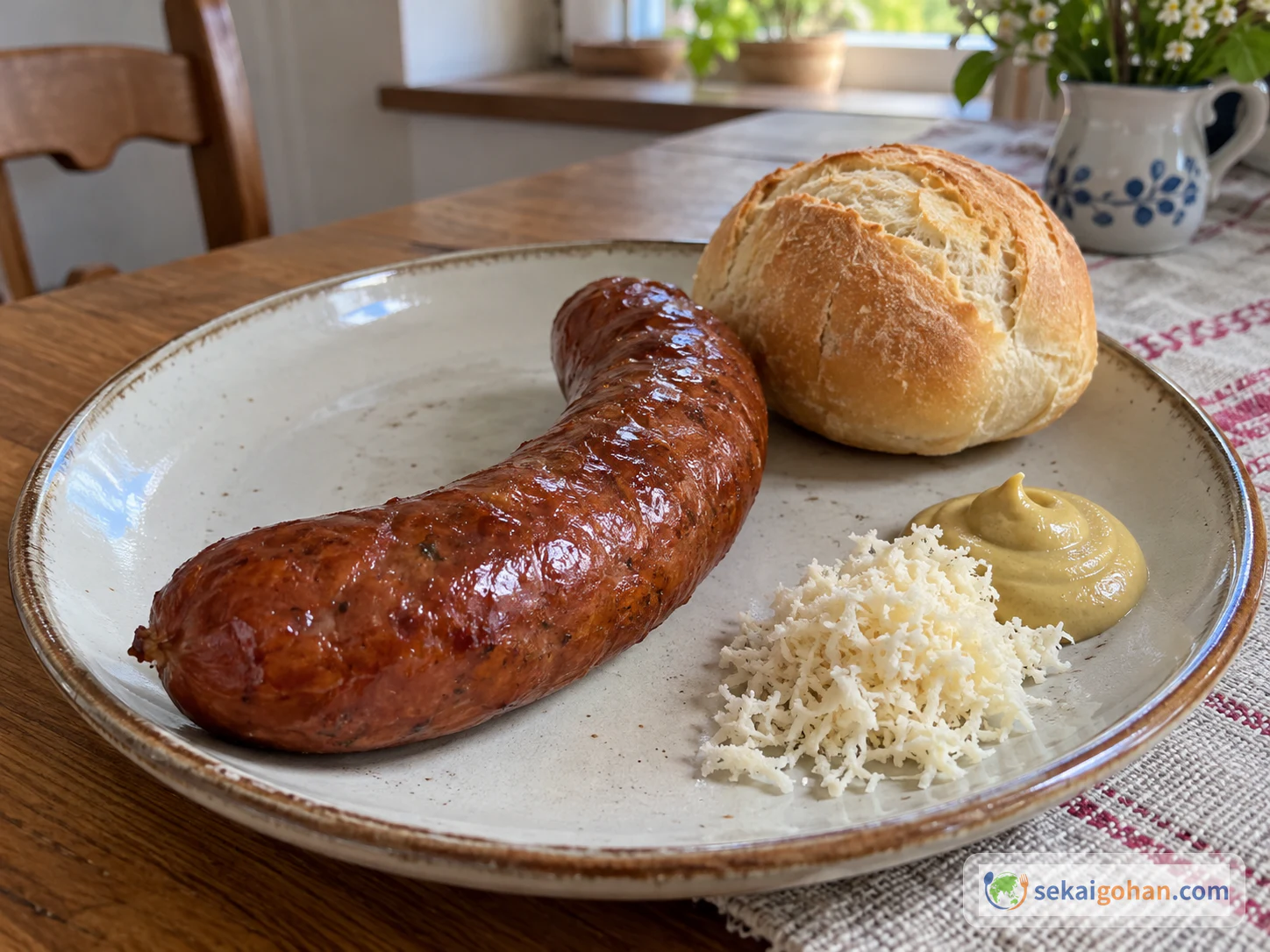
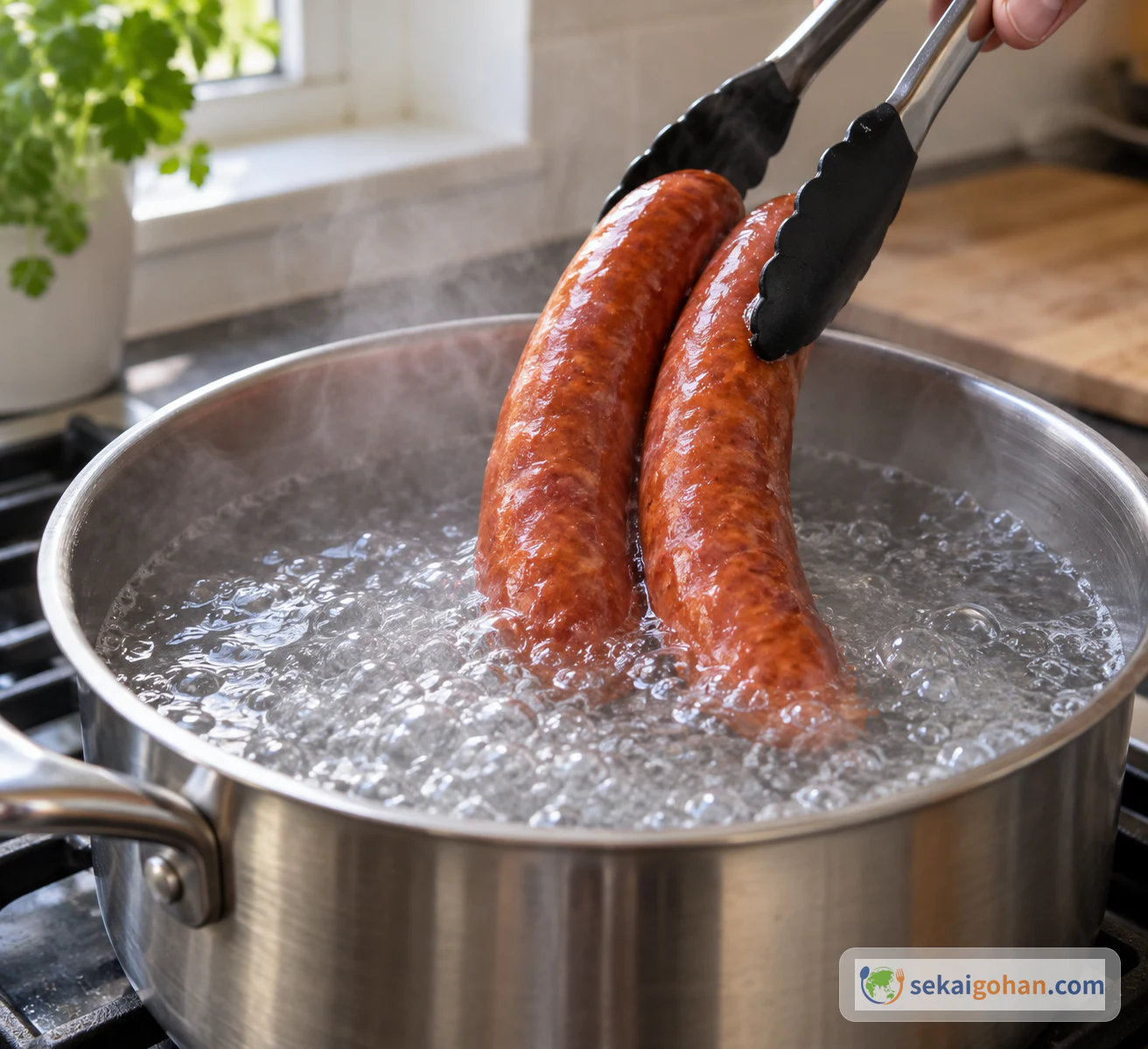
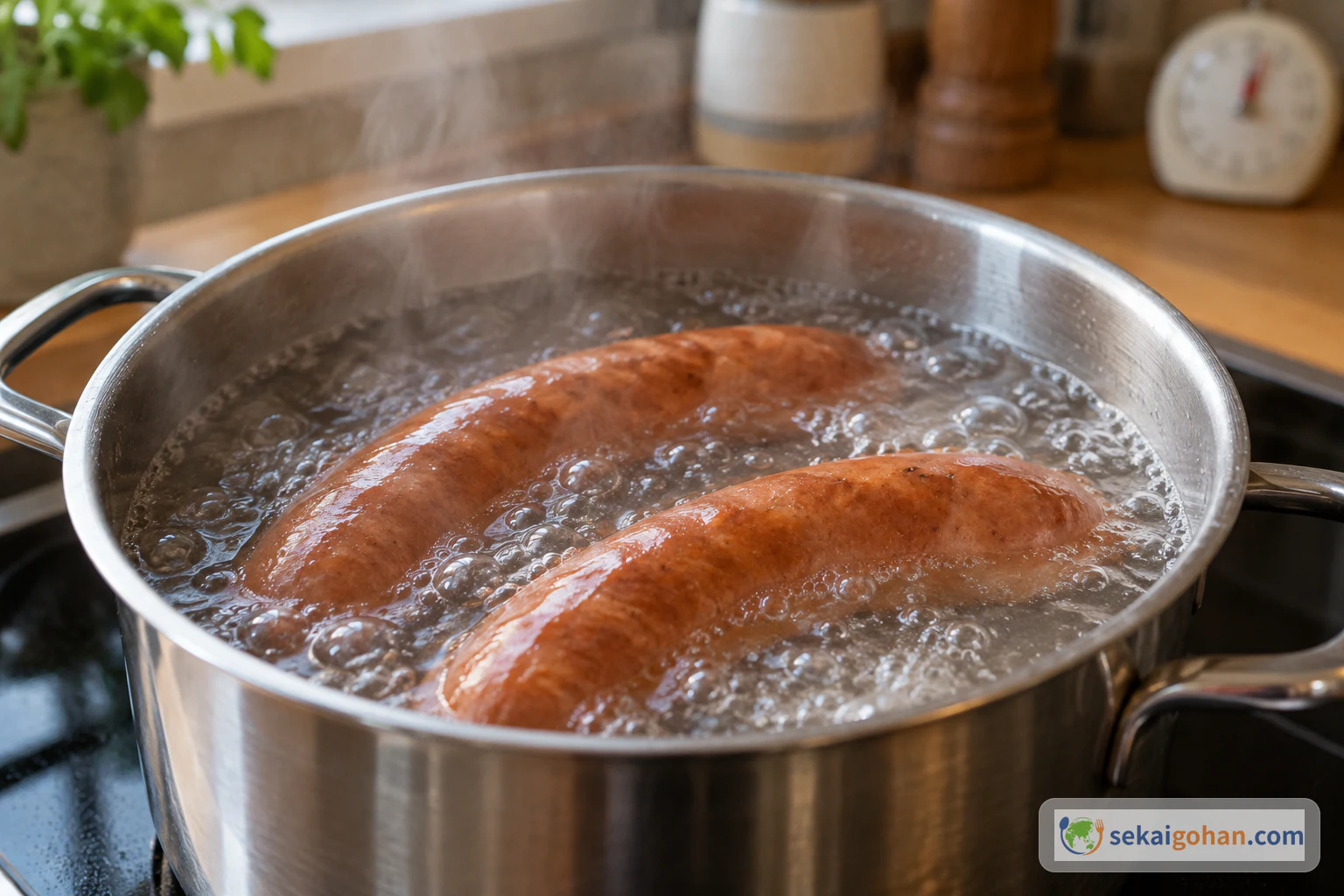
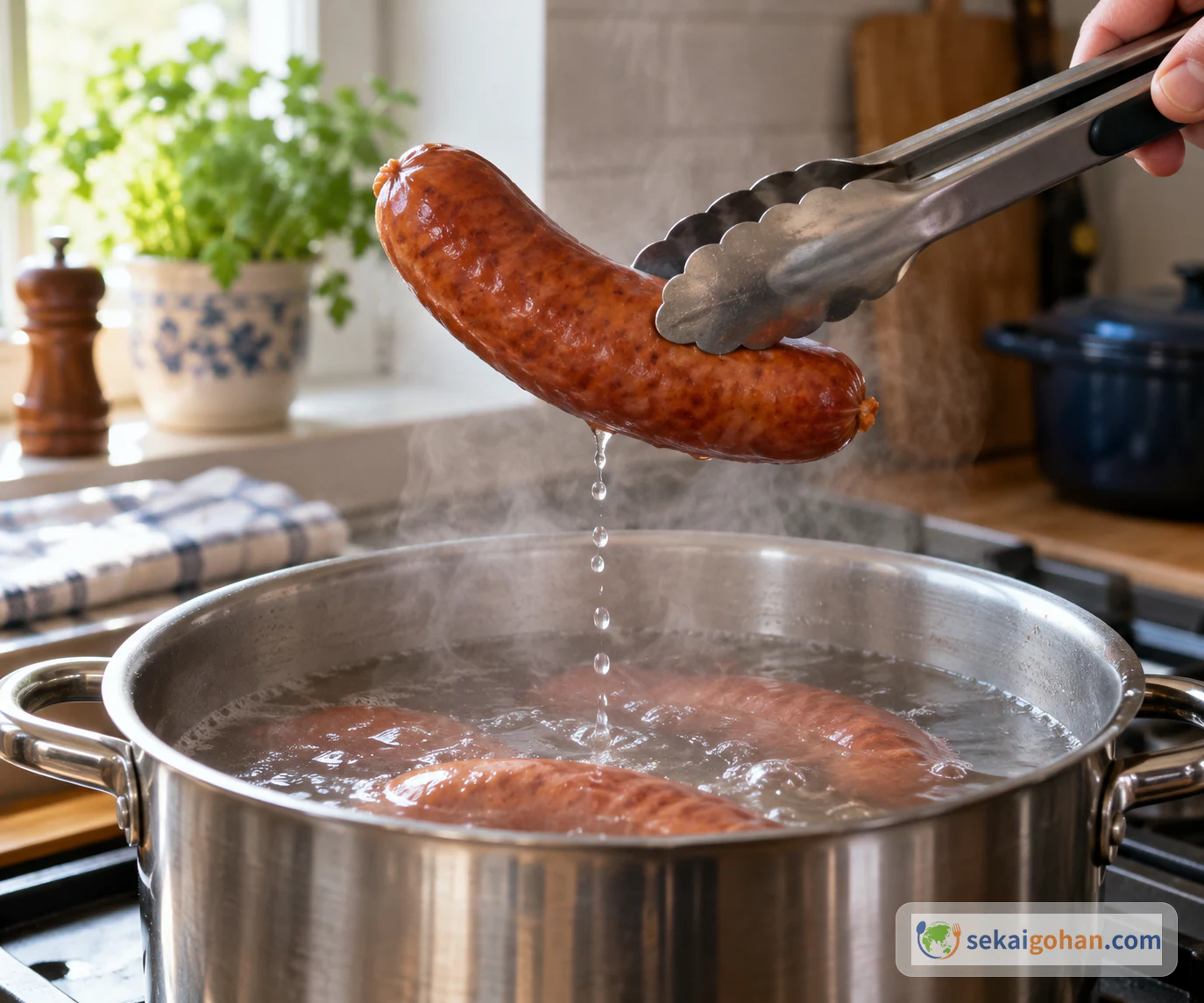
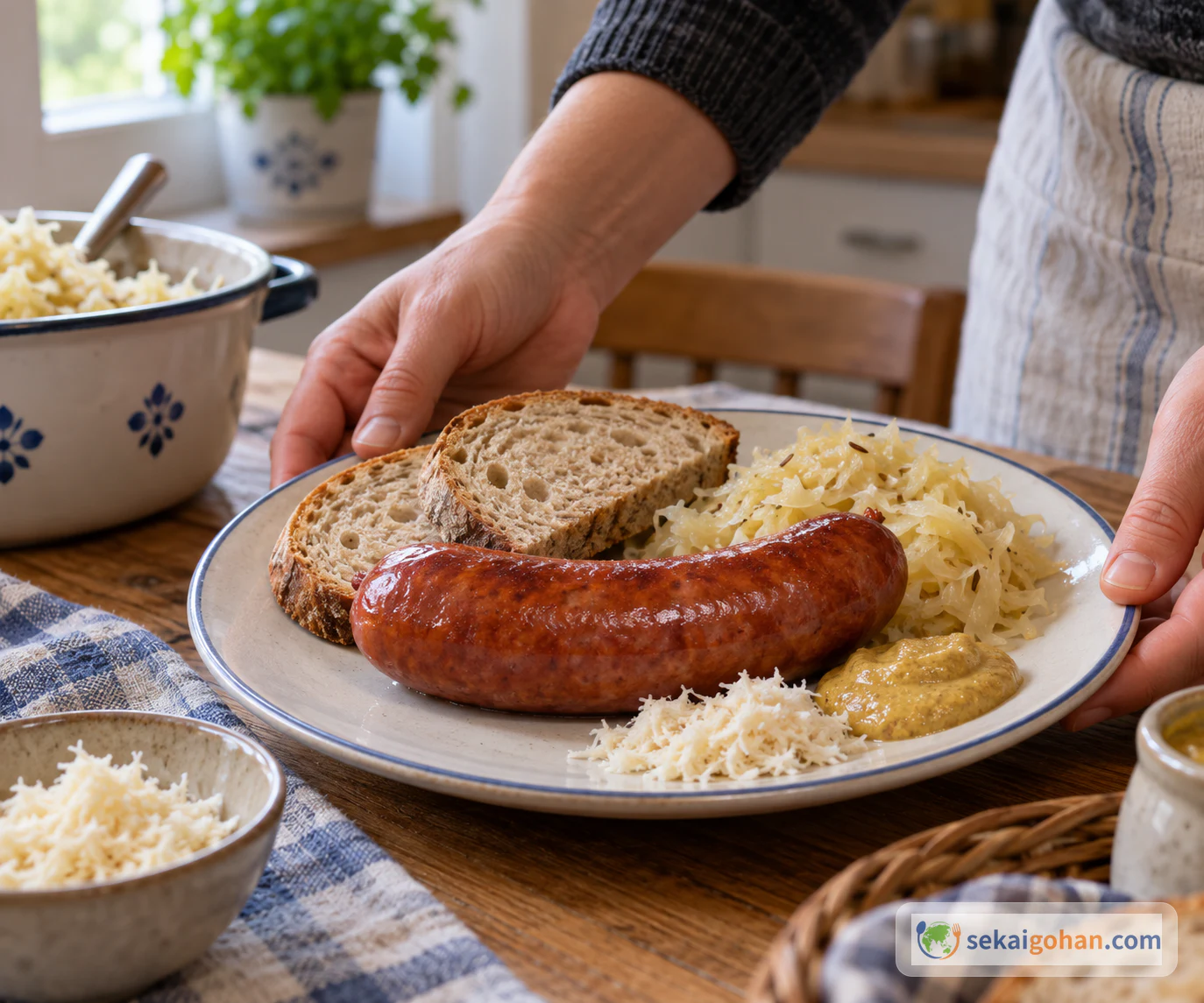
A thick, smoked sausage slides into a pot of boiling water and comes out a few minutes later, its casing glossy and hot. It goes onto a plate next to a bread roll, a spoonful of mustard and a little freshly grated horseradish, or next to a heap of sauerkraut. Kranjska klobasa is a finished smoked sausage that you buy, heat and eat. It is not something you make from raw meat at home.
The cooking itself is short. The more important decision happens at the shop counter, because an ordinary smoked sausage is not the same thing.
This recipe has not been kitchen-tested by Sekai Gohan. The heating step follows the method published by the Kranjska klobasa producer association. The amounts for two people (two sausages, two rolls and so on) are an editorial suggestion for a home meal, not an official specification or yield.
What Is Kranjska Klobasa?
Kranjska klobasa (in English, Carniolan sausage) is a Slovenian product with Protected Geographical Indication (PGI) status, registered in 2015. It is a pasteurised, semi-durable sausage made from coarsely minced pork and bacon, seasoned with garlic and pepper, and hot-smoked. You eat it warm after brief heating in hot water. The name is tied to that protected specification, so only products made by certified producers can use it, not any sausage in a similar style.
The modern product is made from pork and hard bacon with nitrite salt, pepper and dehydrated garlic, stuffed into pig casing, hot-smoked over beech and pasteurised. Cook it before eating.
The name keeps the old region of Carniola (Kranjska), but the current protected production area is the whole of Slovenia.
Ingredients for 2 People
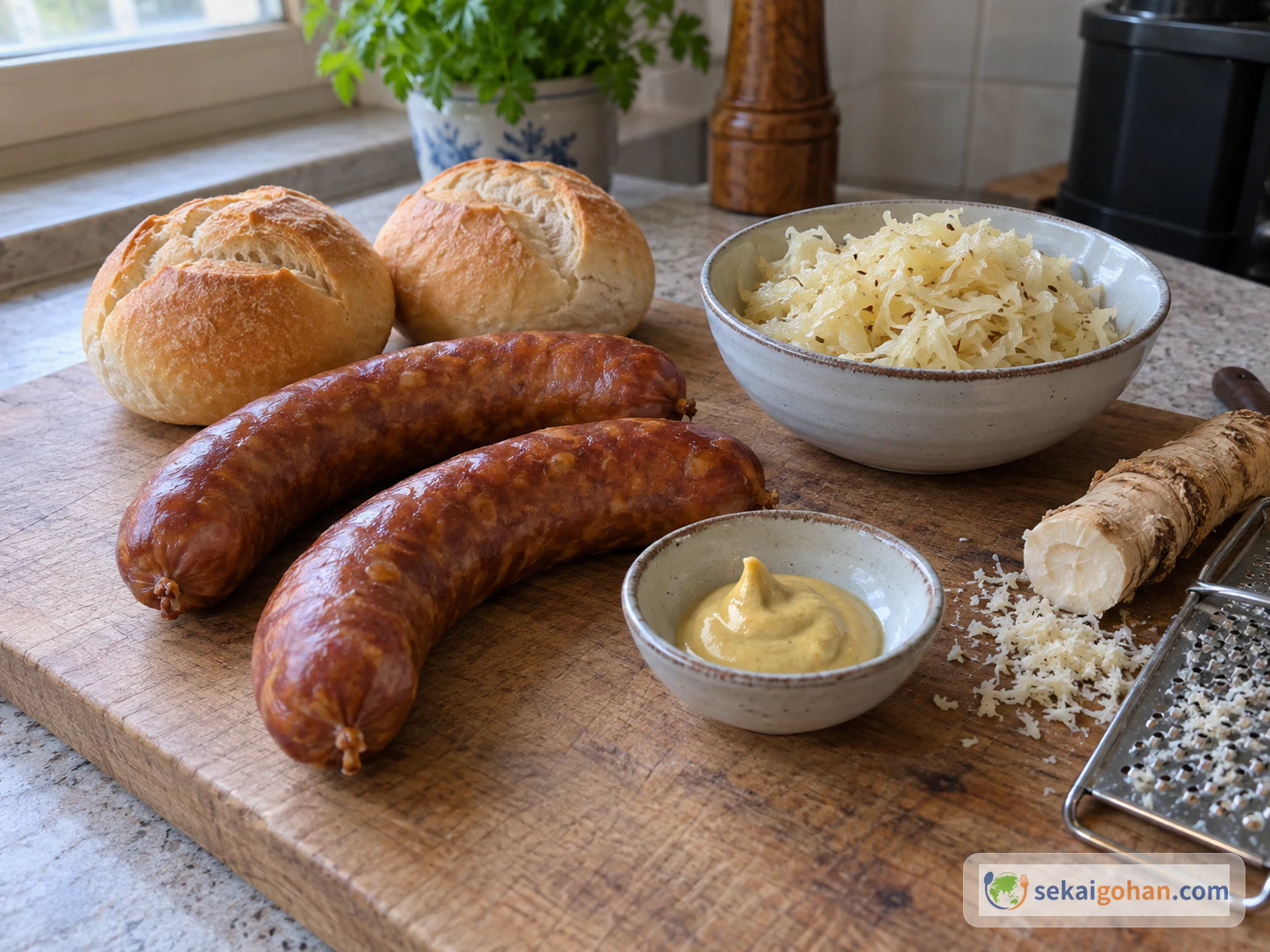
If the sausage package gives its own heating instructions or serving amount, follow the package.
Check the sausage label for ingredients and additives. Bread can contain wheat, and mustard contains mustard. Check the labels of the bread, mustard, horseradish products and sauerkraut you buy as well.
Equipment
- A saucepan large enough for the sausages to sit fully under water
- Tongs
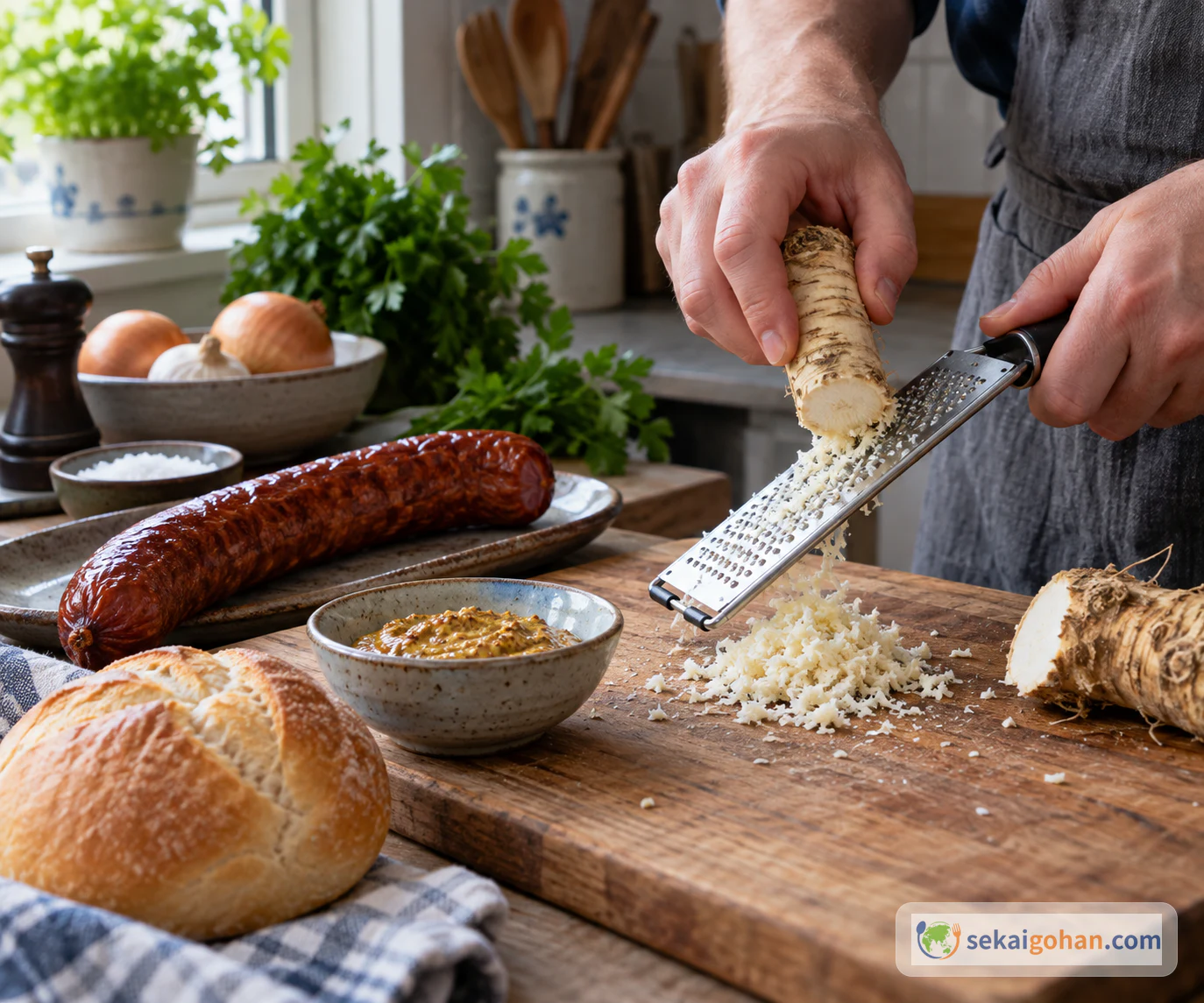
- A fine grater (if using fresh horseradish)
- A strainer (for draining the sauerkraut)
- Plates
Choosing the Sausage and the Sides
The sausage cannot be replaced. Look for packaging that names the product as 'Kranjska klobasa' or 'Carniolan sausage', and check its ingredients and import labeling. A generic smoked sausage is not the same product. If you swap the meat, the center of the dish is gone. Check what you are buying; do not assume any smoked pork sausage will do.
Bread can be any small roll you can find easily. The taste and texture will change with the bread you choose.
Mustard can be smooth or wholegrain. Choose the style you prefer.
Horseradish is best grated fresh. Jarred or tube horseradish differs in moisture and heat, so add it a little at a time and adjust to taste.
Sauerkraut varies in sourness and saltiness. Taste it, and drain off excess liquid before serving. If you can find sour turnip, serve it as another sour side.
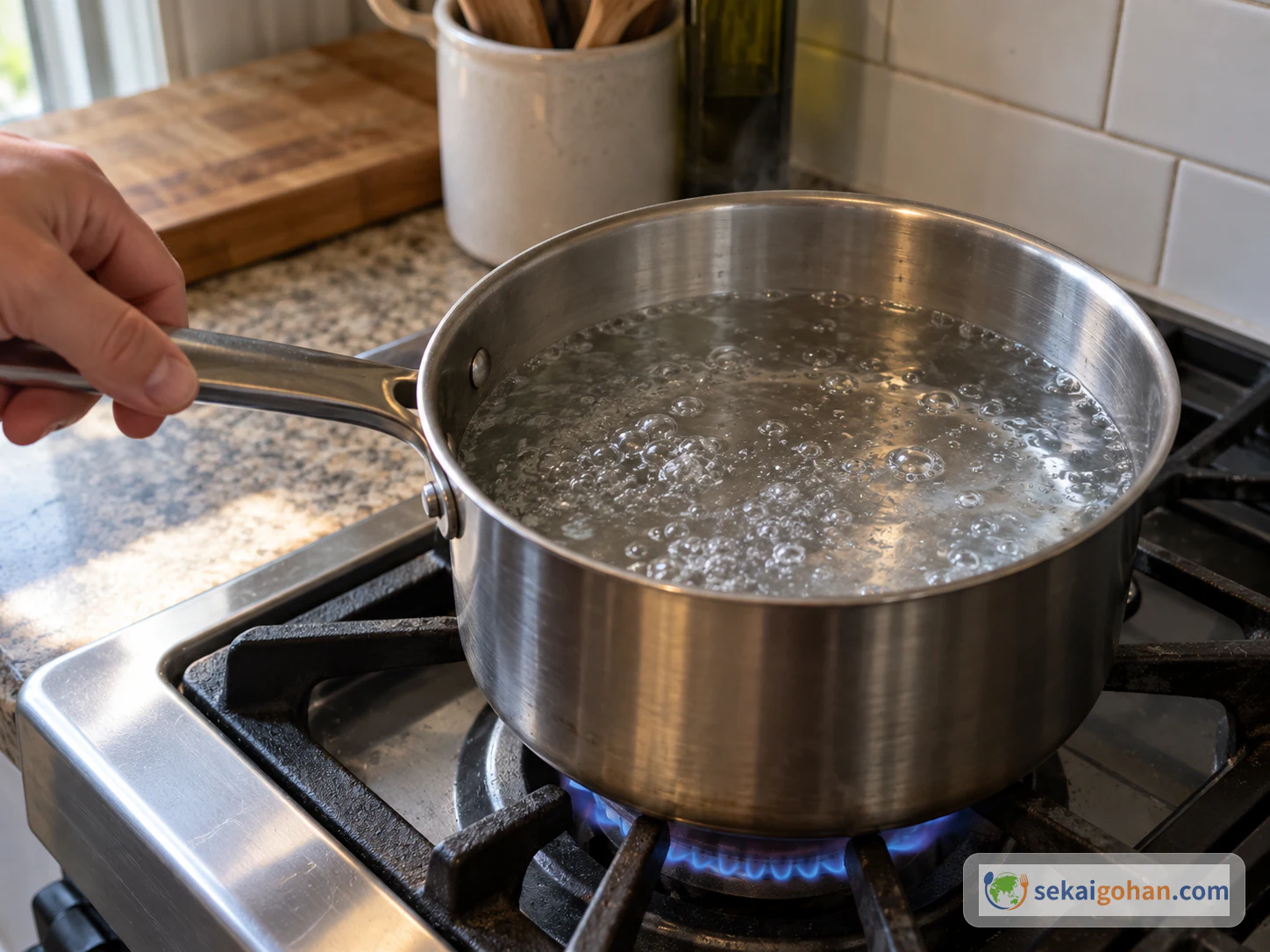
How to Heat Kranjska Klobasa
Take the sausages out of their packaging. If the package gives a different heating method or time, follow the package instead.
How to Serve: Bread, Mustard and Horseradish
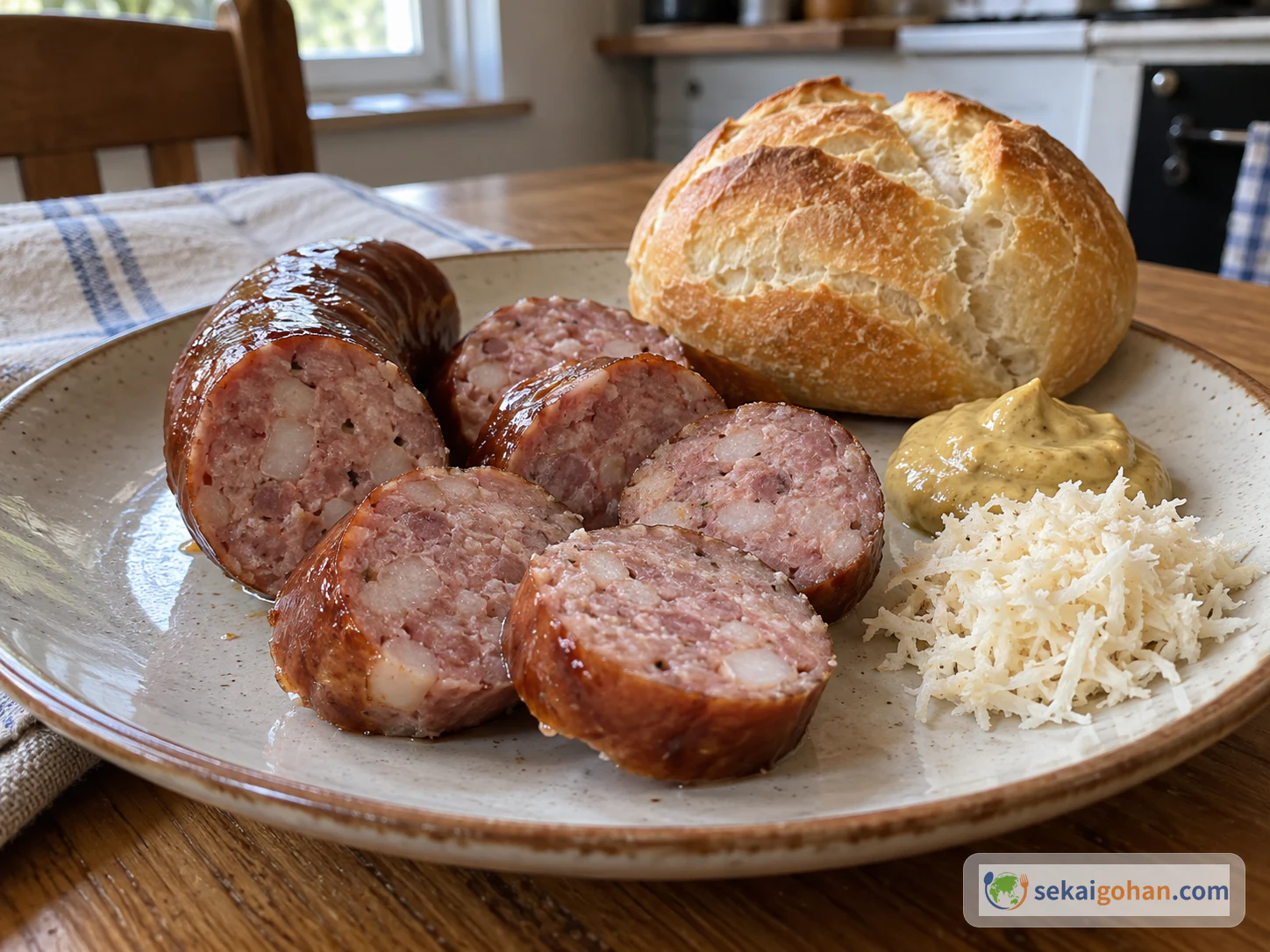
Each side does a different job. Bread gives you something plain to eat with the rich, smoky pork. Mustard adds sharpness, and grated horseradish adds a pungent, clearing heat. Sauerkraut brings acidity that cuts through the fat.
Some ways to vary the plate:
- A simple snack: the sausage with just bread and mustard.
- Horseradish-forward: add more freshly grated horseradish to bring its aroma to the front.
- With sauerkraut: add sourness for a warmer, fuller plate.
- With sour turnip: if you can find it, use it as a different kind of sour side.
- Sliced in bread: slice the hot sausage and tuck it into a roll.
How It Is Eaten in Slovenia
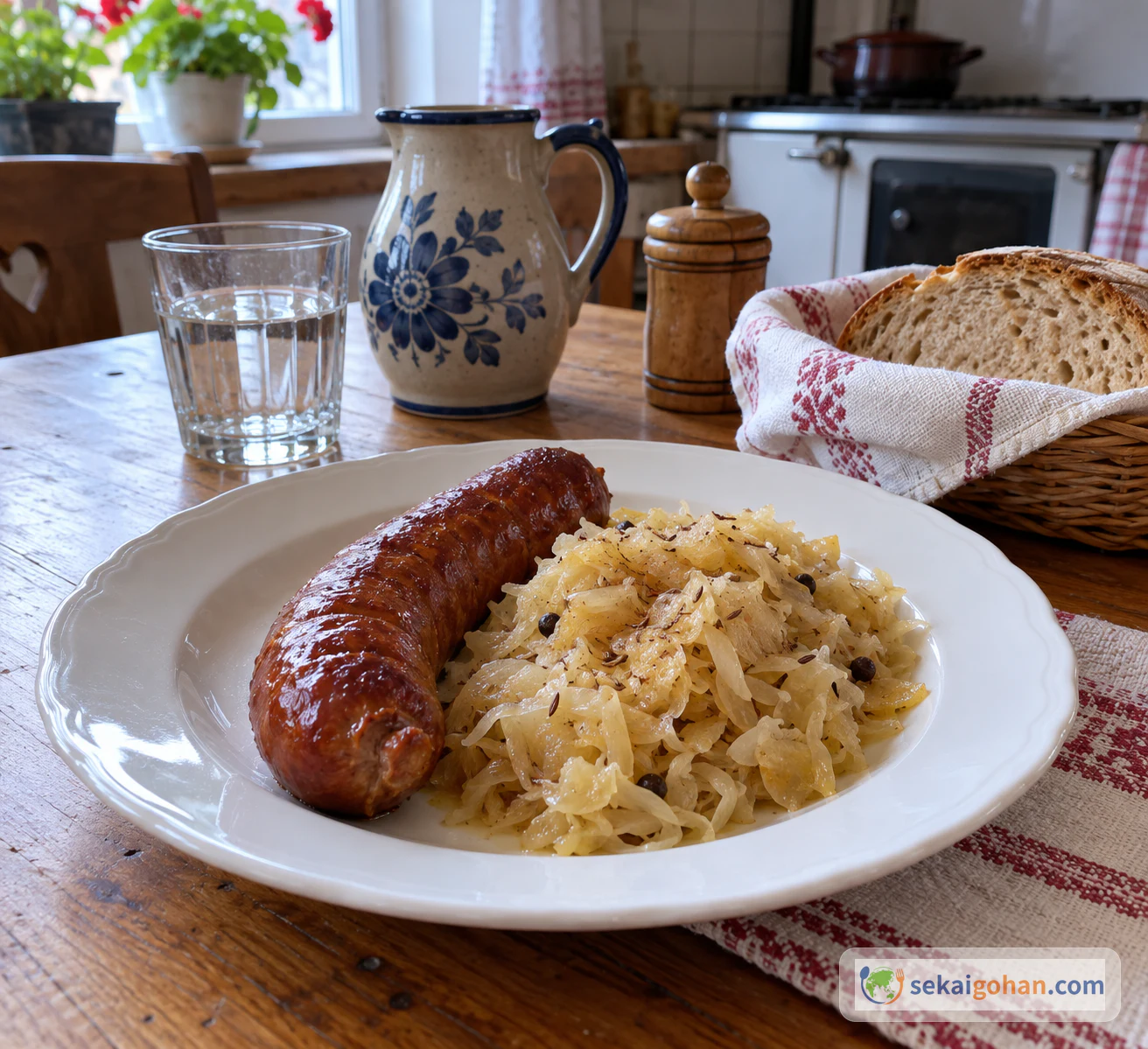
The producer association describes two familiar ways of serving it: warm, with sauerkraut or sour turnip, and with a bread roll, mustard and grated horseradish. Ljubljana Tourism's "Taste Ljubljana" brochure lists the same accompaniments, and the Slovenian Kitchen site pairs the sausage with horseradish, mustard and fresh bread, noting that sauerkraut is also common. These are examples recorded in introductions to the dish, not the only correct way to eat it.
Kranjska klobasa sits alongside many other dishes from the country; you can find more on the Slovenia country page.
The 1896 Recipe and the Modern Sausage
A historical recipe from 1896 calls for pork, bacon, salt, saltpetre, pepper, water, garlic and casing, with instructions for smoking and boiling. It shows how the sausage was made more than a century ago.
Treat the 1896 recipe as history only. It uses saltpetre and home smoking and drying, so do not use it as a modern home sausage-making method or mix it with the heating method above. The modern protected product is made by producers, with nitrite salt, hot-smoking over beech and pasteurisation.
Troubleshooting
| Problem | Likely cause | What to do |
|---|---|---|
| Not sure the sausage is the right product | Generic smoked sausage, or a raw sausage | Check the label for "Kranjska klobasa" or "Carniolan sausage" and read the ingredients. Do not treat a raw sausage or a different product as the same thing |
| The package says something different | Product-specific instructions | Follow the package's heating method and time |
| The water is boiling very hard | Heat set too high | Lower the heat a little so the water keeps a steady boil |
| The sausage has cooled by the time you eat | Sides prepared after heating | Prepare bread and condiments during the 8 minutes, and serve right away |
| Horseradish is too strong | Tube or jarred product, or too much fresh horseradish | Add a little at a time, to taste |
| The plate is watery | Sauerkraut not drained | Drain the sauerkraut before plating |
For storing unopened sausages and leftovers, follow the package label.
Frequently Asked Questions
Is Kranjska klobasa the same as an ordinary smoked sausage?
No. Kranjska klobasa is a PGI product with its own protected specification: coarsely minced pork and bacon, garlic and pepper, hot-smoked and pasteurised, made in Slovenia. A generic smoked sausage can look similar, but it is not the same product.
Can I make it from raw meat at home?
Do not try to make it from raw meat at home. The 1896 recipe is a historical document that uses saltpetre and home smoking, not a modern home method. Use a certified, purchased product.
How long should I boil it?
Put the sausage in boiling water, boil for 8 minutes, then take it out and serve. If your package gives a different method or time, follow the package.
What should I serve with it?
Bread, mustard and grated horseradish, or sauerkraut or sour turnip for a warm plate.
Has this recipe been tested?
Sources
- Republic of Slovenia, Ministry of Agriculture, Forestry and Food, "Protected Slovenian Agricultural Products and Foodstuffs." Supports Kranjska klobasa as a Slovenian PGI product registered in 2015 and produced across Slovenia; that it is pasteurised and semi-durable, made from coarsely minced pork and bacon, seasoned with garlic and pepper, hot-smoked, and eaten warm after brief heating in hot water. https://www.gov.si/assets/ministrstva/MKGP/PODROCJA/HRANA/SHEME-KAKOVOSTI/PUBLIKACIJA/Protected_Slovenian_Agricultural_Products_and_Foodstuffs_DE_2021.pdf
- Kranjska klobasa (producer association), "Kako pravilno skuhamo kranjsko klobaso?" Supports the heating method: place the sausage in boiling water, boil for 8 minutes, remove and serve. https://www.kranjskaklobasa.si/recepti/kako-pravilno-skuhamo-kranjsko-klobaso/
- Ljubljana Tourism, "Taste Ljubljana." Supports the historical 1896 recipe (pork, bacon, salt, saltpetre, pepper, water, garlic and casing, with smoking and boiling) and serving accompaniments: mustard, grated horseradish, bread roll, sauerkraut or sour turnip. https://www.visitljubljana.com/assets/Dokumenti-PDF/PROSPEKT_OKUSI-LJUBLJANE_ANG_0816_web.pdf
- Kranjska klobasa (producer association), "Proizvodnja Kranjske klobase." Supports the modern production description (pork and hard bacon, nitrite salt, pepper, dehydrated garlic, pig casing, hot-smoking over beech, pasteurisation; cooked before eating) and traditional serving with sauerkraut or sour turnip, or with a roll, mustard and grated horseradish. https://www.kranjskaklobasa.si/proizvodnja/
- Slovenian Kitchen, "Kranjska klobasa." Independent confirmation of boiling for about 8 minutes and serving with horseradish, mustard and fresh bread, with sauerkraut also common. https://www.slovenian-kitchen.com/slovenski-koticek/kranjska-klobasa