Ratatouille: Summer Vegetables That Stay Themselves in One Pot
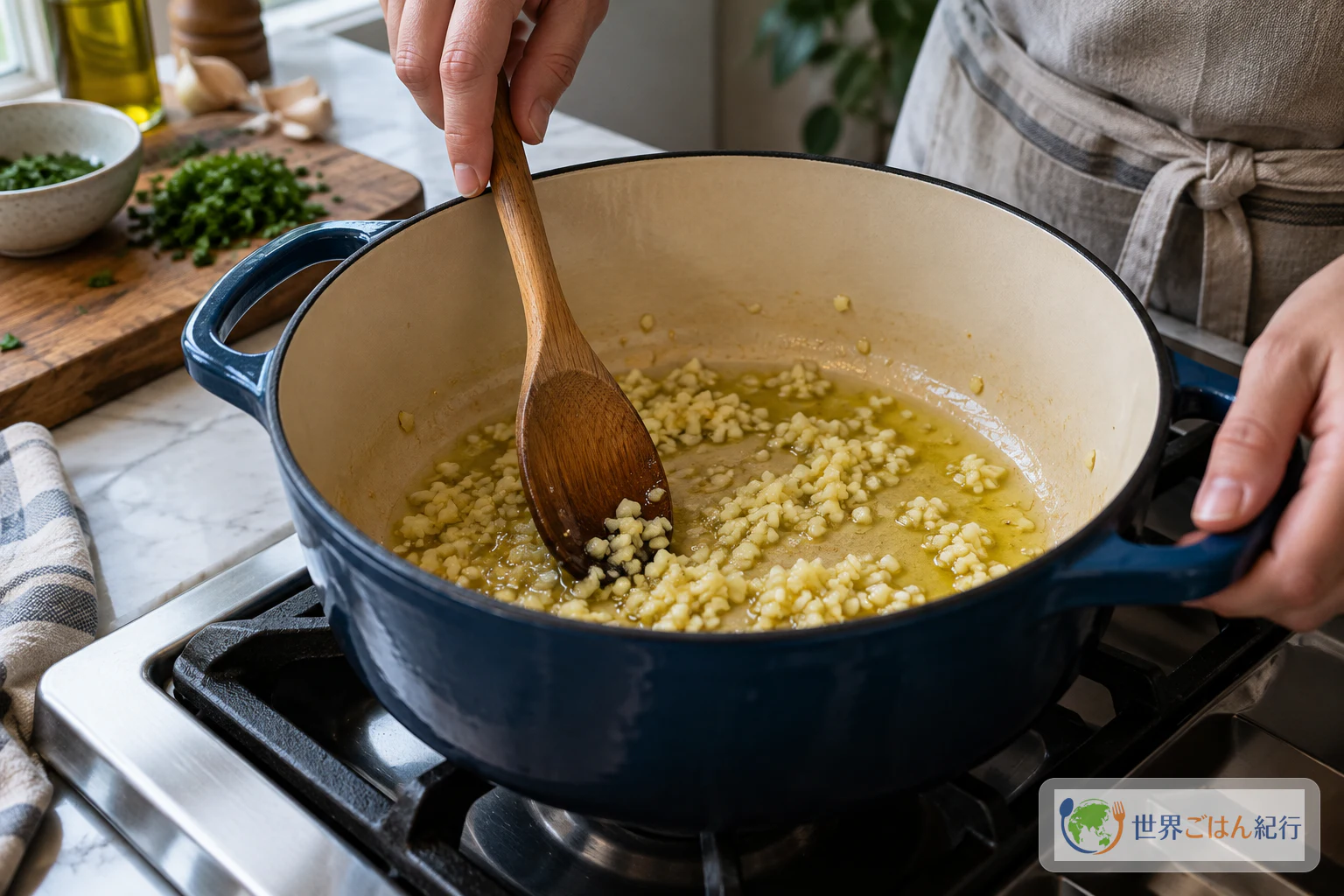
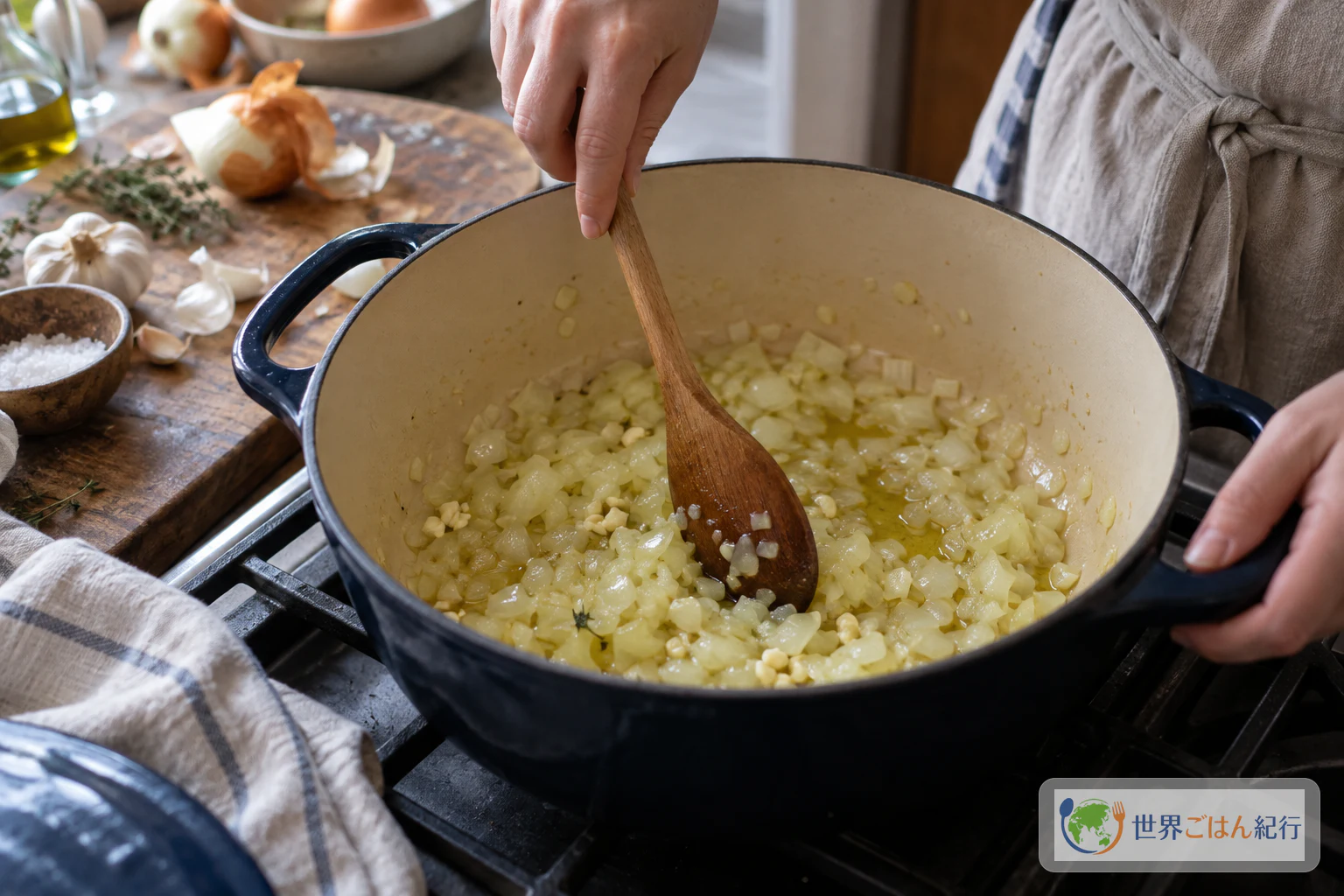
Garlic that never browns, onion that turns soft and sweet, vegetables cut coarsely enough to keep their outlines, and tomatoes added only at the end. Judge the finish by the texture you want, not by a fixed time.
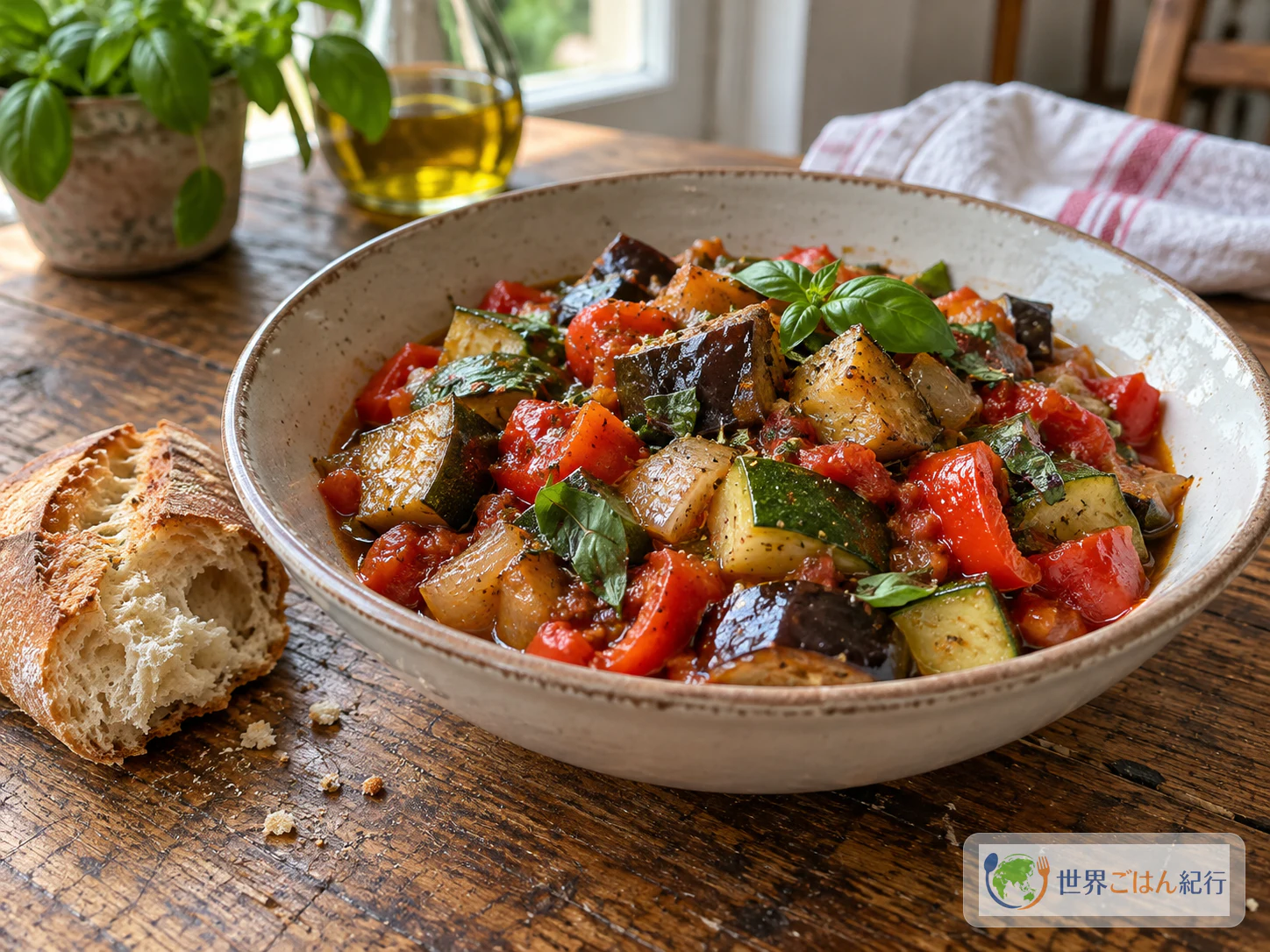
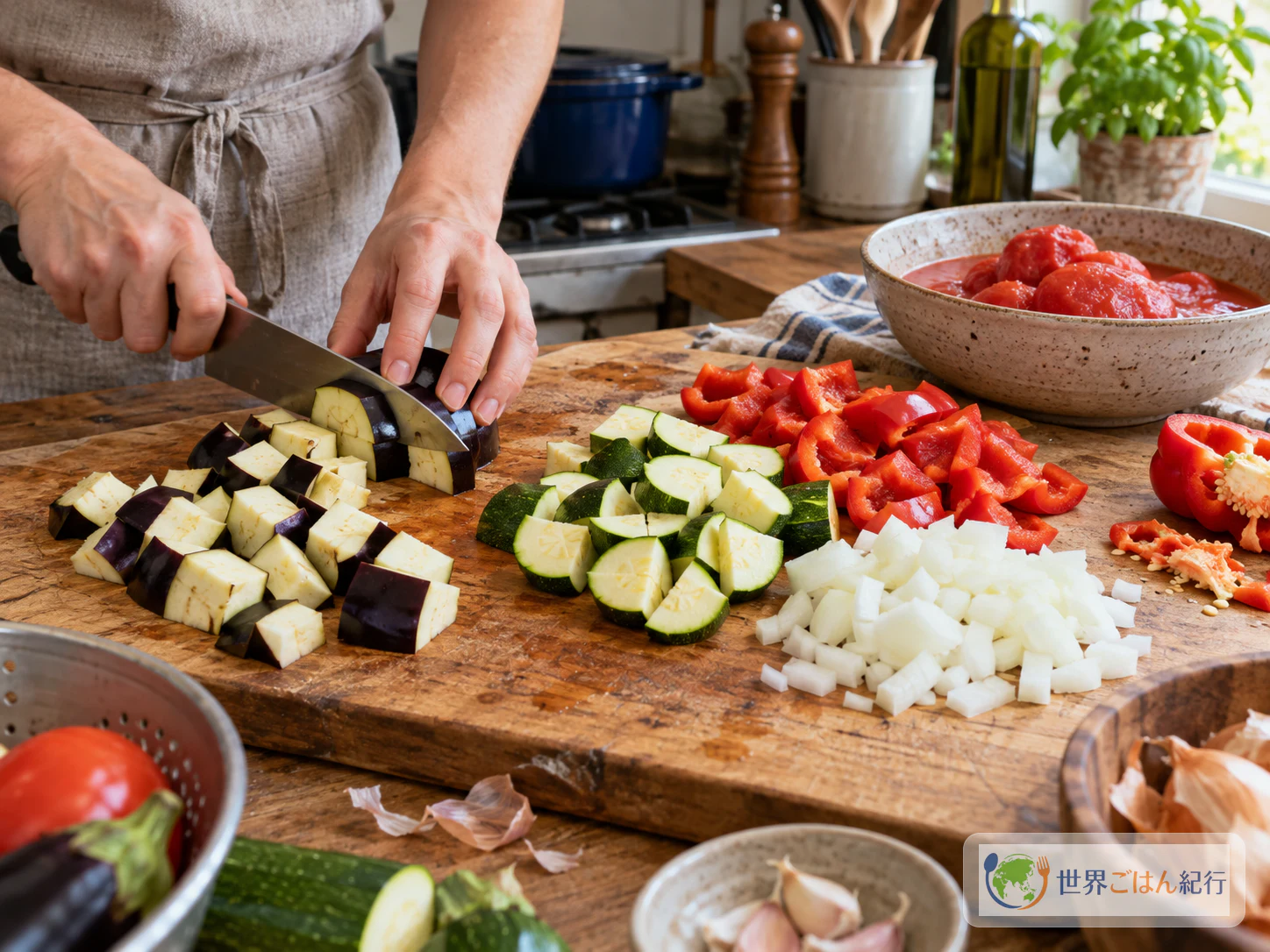
When you gather eggplant, zucchini, peppers and tomatoes into one pot, it is tempting to cook them all down to the same softness. Ratatouille asks for a different decision. The vegetables are cut coarsely and go into the pot in order, so that each one can still be recognized on the plate while they share one sauce.
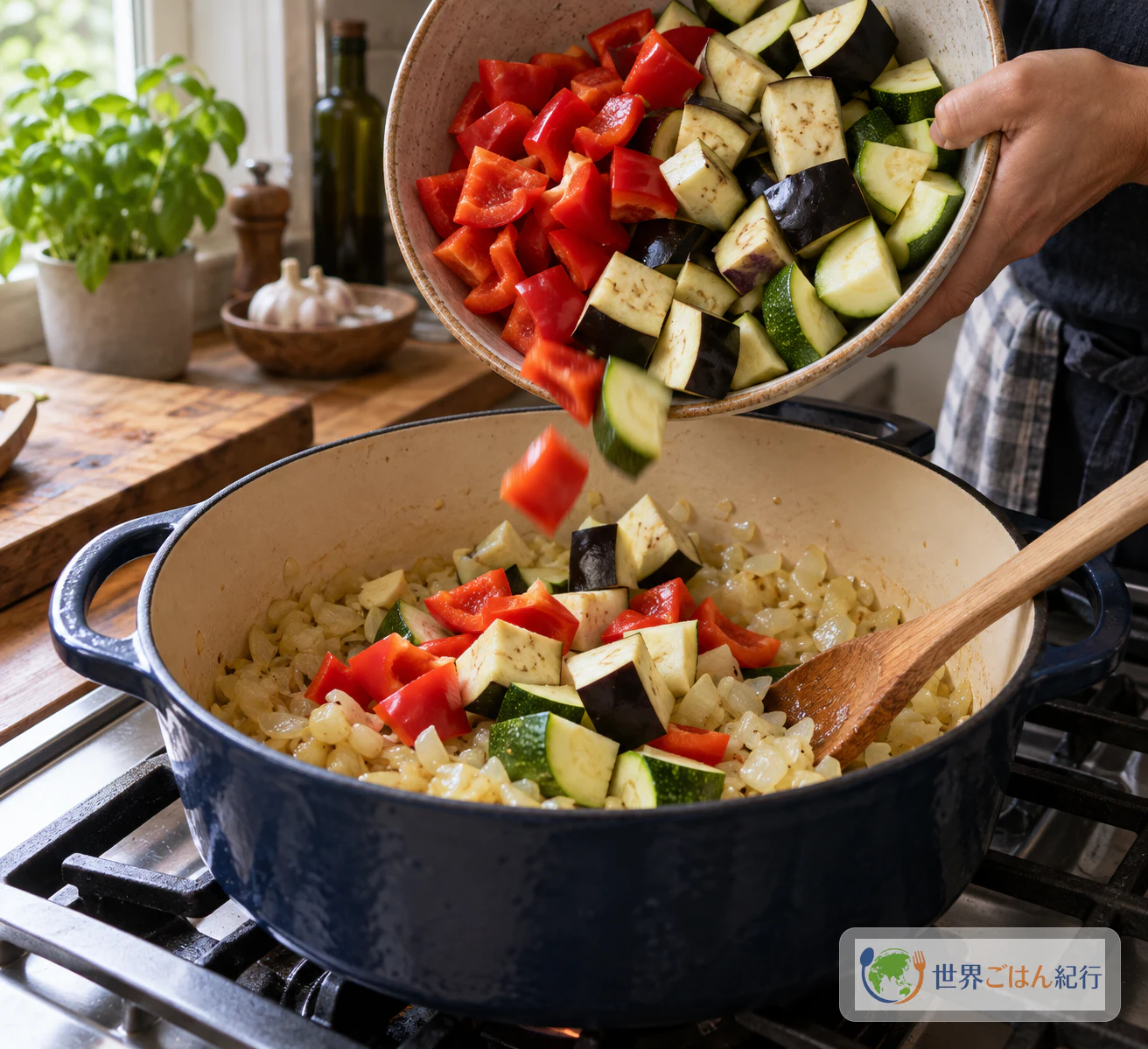
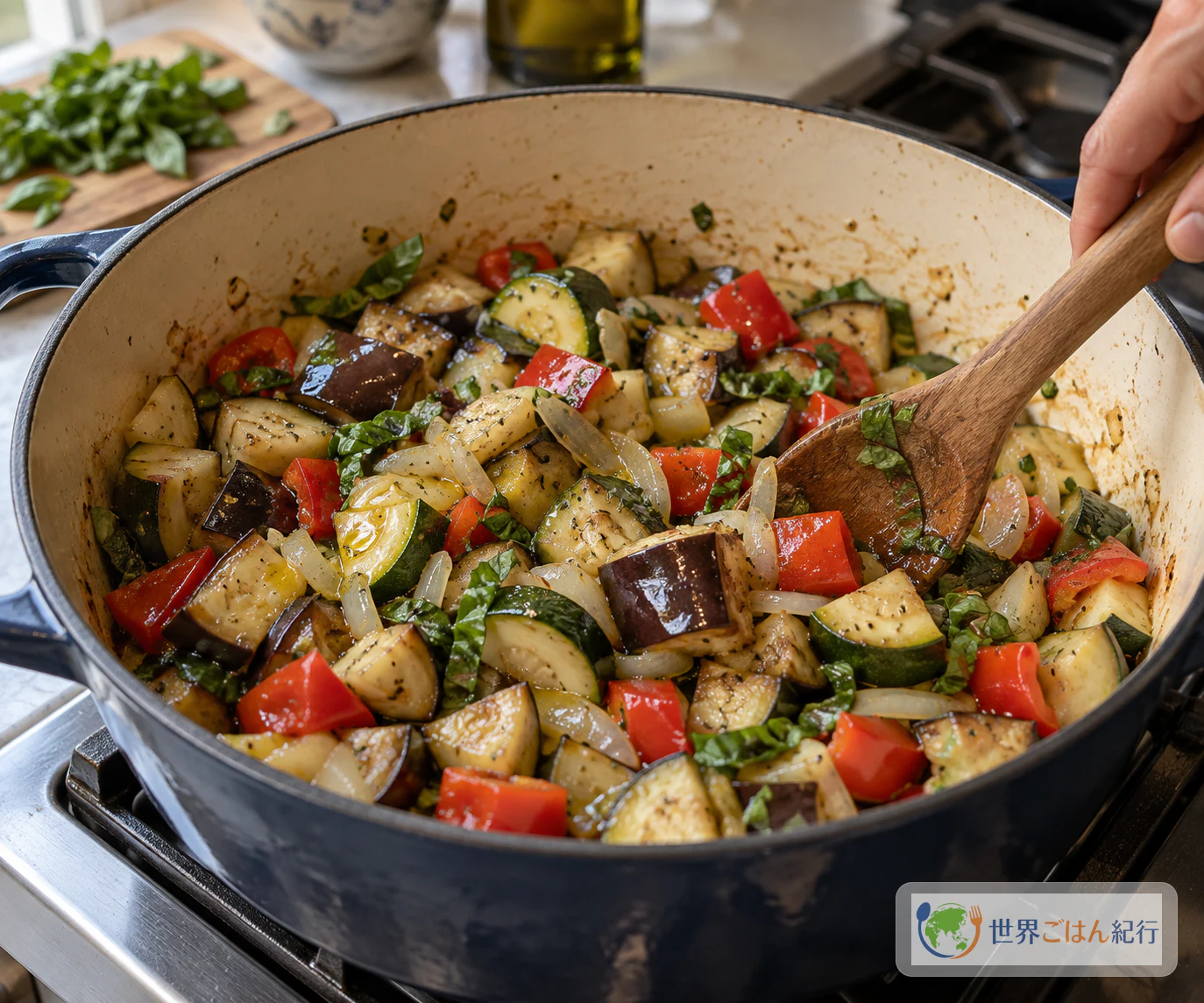
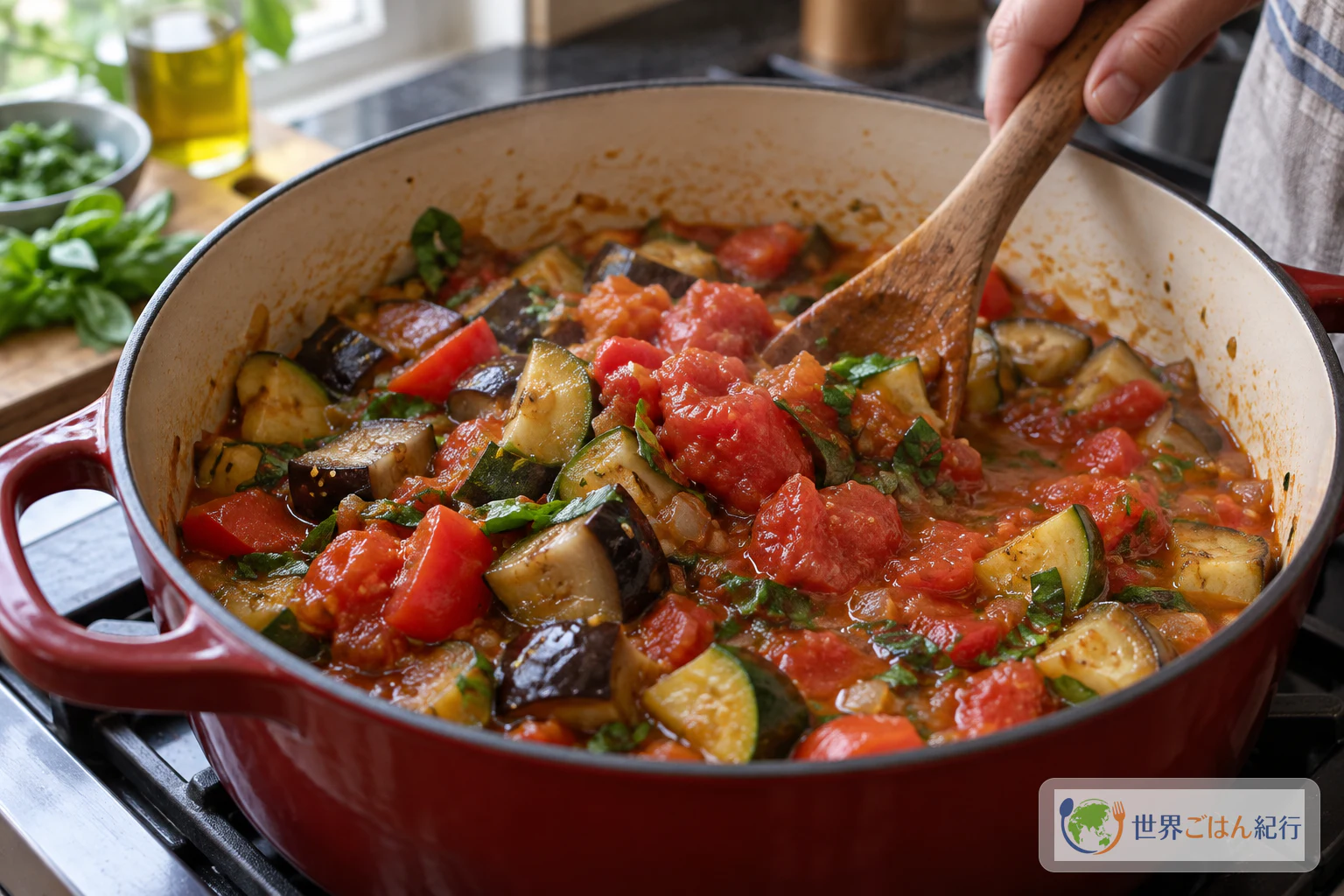
Ratatouille is a vegetable stew associated with Provence in southern France, and especially with Nice. The recipe here follows the version by James Beard published by the James Beard Foundation: a one-pot method for 6 servings in which garlic and onion are cooked gently in olive oil, the other vegetables are added and cooked briskly for about 10 minutes, and the tomatoes go in last.
This is not the dish of thin vegetable slices arranged in overlapping circles that many people know from film. That layered dish is confit byaldi, which National Geographic describes as a variation rather than the default preparation. The rustic, chunky stew below is the one to start from.
Ingredients for 6 Servings: Matching the Vegetables by Volume
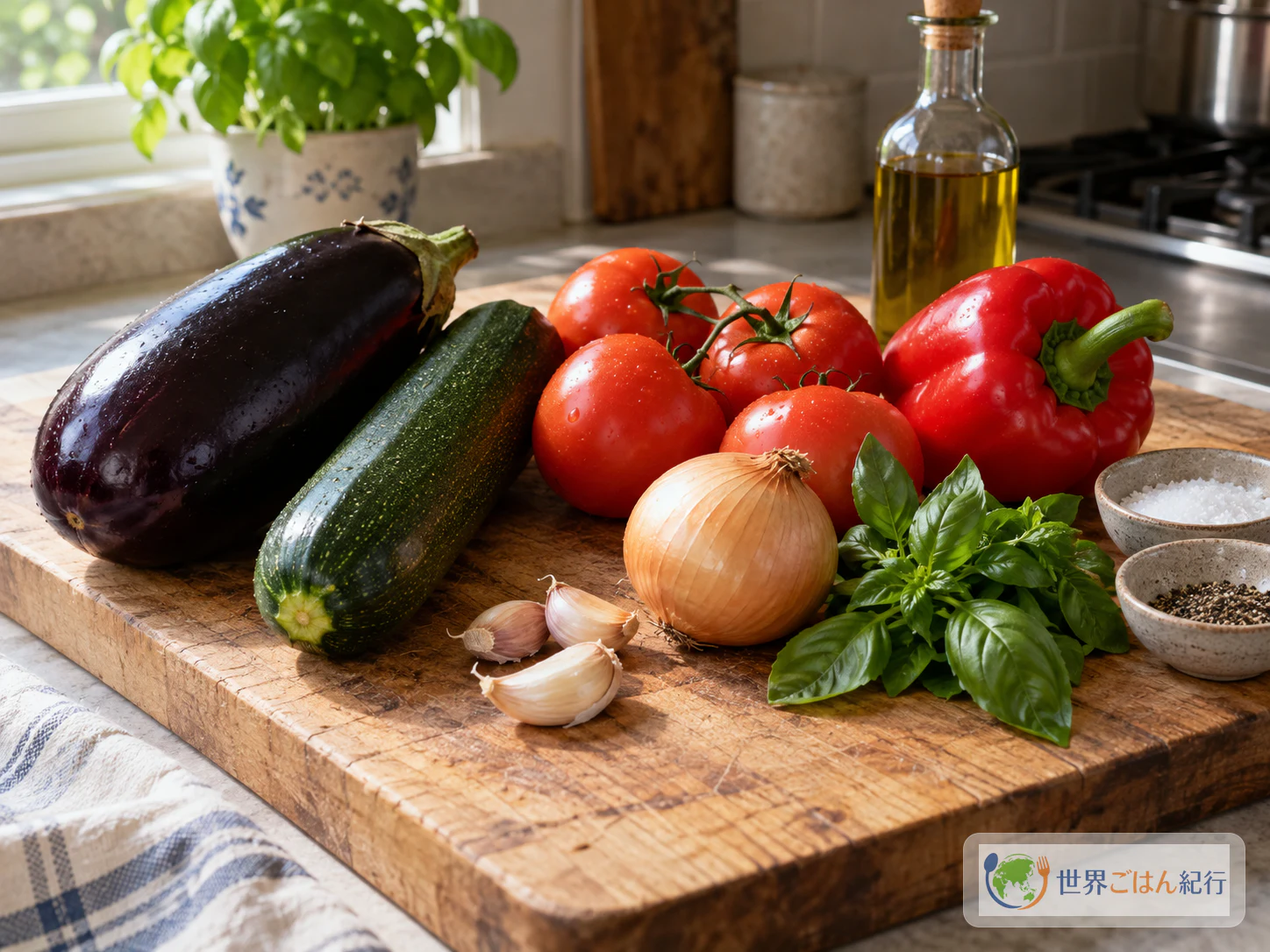
Most vegetables are given in cups of chopped or diced vegetable. Keep those volumes; don't convert them into grams. Use a 240 ml measuring cup, so each 1 1/2 cups of cut vegetable is 360 ml and the 1/2 cup of olive oil is 120 ml.
The main version here uses red bell pepper, fresh basil and fresh tomatoes that are peeled, seeded and chopped. The optional cayenne or Tabasco is left out of this version.
Equipment
- A large, heavy pot (a lid is not used in this recipe)
- A wooden spoon or wooden spatula
- Measuring cups (240 ml cup) and measuring spoons
- A knife and cutting board
- A saucepan of boiling water and a bowl of cold water for peeling the tomatoes
Choosing Peppers, Tomatoes, Basil and Salt
Peppers. Green or red peppers both work. Green peppers keep the stew less sweet; red ones add sweetness and color. Whichever you choose, the total stays at 1 1/2 cups. Don't add 1 1/2 cups of each.
Tomatoes. Fresh tomatoes need to be peeled and seeded, which takes some effort. When time matters more, use canned Italian plum tomatoes, coarsely chopped, in the same 1 1/2 cups. Canned tomatoes vary in salt and liquid from product to product, so read the label and adjust the salt by tasting. Diced canned tomatoes sold in your area are not necessarily the same product as plum tomatoes.
Basil. If you can't find fresh basil, use 2 tsp dried basil. The aroma is different. Use one or the other, not both.
Eggplant. Other eggplant varieties, such as long slender ones, can be used if you match the volume. Varieties differ, so watch how quickly they soften.
Salt. Use 1 tbsp salt. Because a tablespoon of fine salt and a tablespoon of coarse salt hold different amounts, the result can taste different depending on the salt you use. The recipe's amount is the baseline. If you want less salt, start with a smaller amount and taste.
Check the labels of bottled and canned products such as Tabasco and canned tomatoes, as ingredients and cross-contact vary by product. The optional baguette contains wheat, and the optional egg accompaniment contains egg; check the bread label for any other allergens. Cook the eggs thoroughly.
Method: Garlic and Onion Gently, the Other Vegetables Briskly, Tomatoes Last
Cook the vegetables for about 10 minutes before the tomatoes. After the tomatoes go in, decide by looking at the vegetables and the liquid in the pot.
Serving: Choose by Texture, Then by Temperature
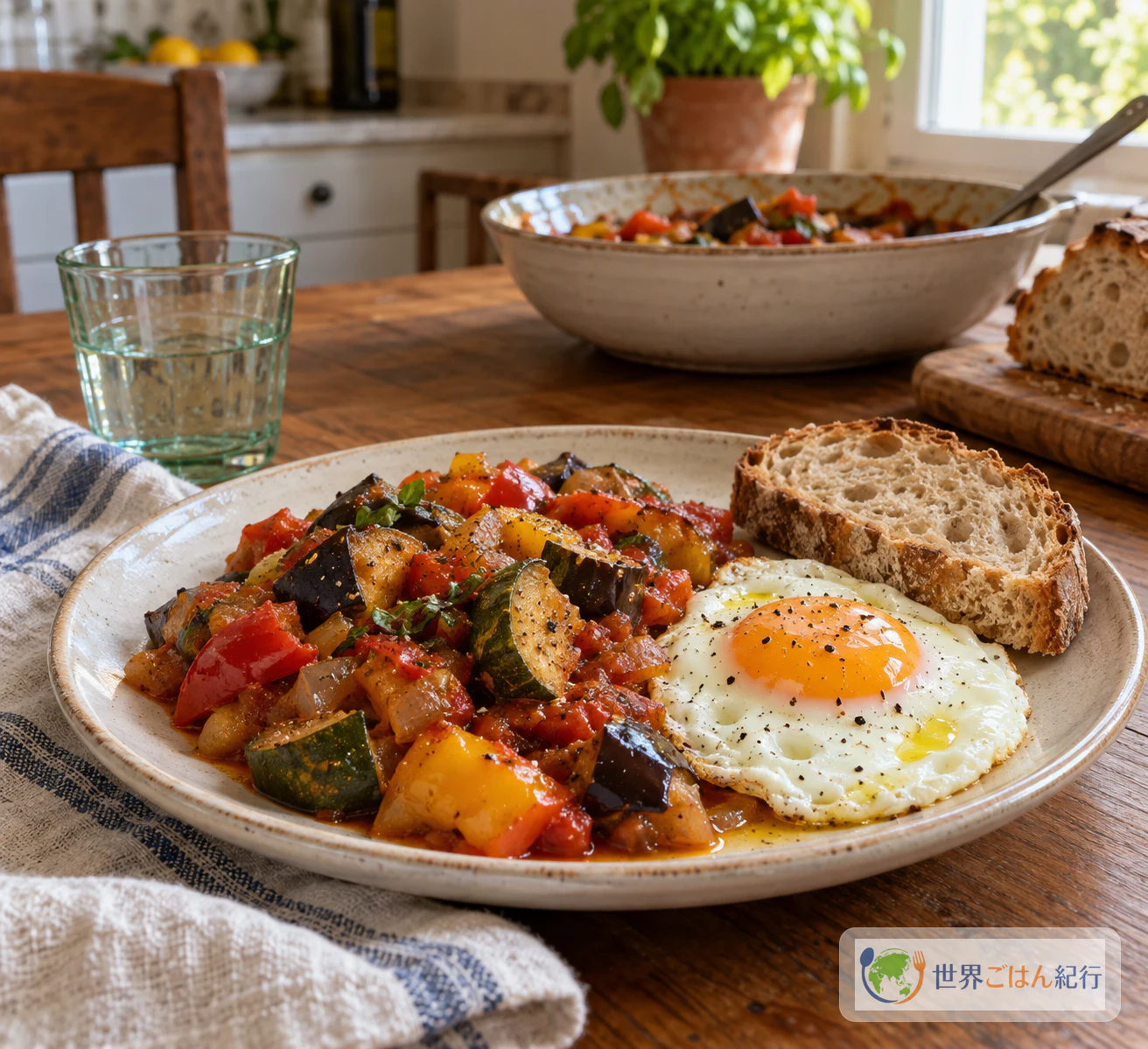
The James Beard recipe suggests ratatouille as an accompaniment, as an appetizer or as a meal. The same page also mentions a main-dish idea with bread topped with cheese; that is a separate preparation, not part of the stew's formula. National Geographic reports that ratatouille may be eaten hot, warm or cold, and that it can go with eggs.
If you serve it with bread or eggs, treat them as separate accompaniments. Cook the eggs separately and thoroughly. The stew itself stays as written above.
Watery, Bitter, Oily: Fixing Problems in the Pot
| Condition | Likely cause | What to do |
|---|---|---|
| Eggplant and zucchini turn watery | Too many vegetables crowded into a pot that is hard to stir | Use a large pot so you can stir easily. Adjust the final thickness after the tomatoes by cooking off liquid |
| The garlic tastes bitter | The garlic browned | Next time, keep the heat low and push the garlic aside before it colors |
| The eggplant soaks up the oil | Eggplant absorbs oil readily | The source uses 1/2 cup oil in total. Rather than adding more, watch the heat and the bottom of the pot. Extra oil is a change from the source |
| Vegetables stick during the 10-minute stage | Heat too high, not enough stirring | Lower the heat and keep stirring. Don't add water at this stage |
| Too dry after the tomatoes | The liquid has cooked off | Add a little water, tomato juice or broth, as the source allows at the finish |
| Too salty with canned tomatoes | Salt in the canned product | Check the label next time and add the recipe's salt more cautiously |
Variations: Other Ways Cooks Make Ratatouille
Ratatouille varies by household and by cook. These options change the result; they are not a ranking of which version is "real."
- Cooking the vegetables separately. National Geographic describes the Niçoise cook Sophie Agrofoglio cooking the vegetables separately, then gently finishing them together uncovered to avoid excess liquid. This makes it easier to give each vegetable its own texture, but it uses more pans and more work. The recipe above uses the one-pot method instead.
- Cutting smaller. The same article describes chef Anne-Sophie Pic's preference for smaller pieces, aiming for shorter cooking and preserved texture. That gives a different finish from the coarse cut used here.
- Fresh or canned tomatoes. Fresh tomatoes are peeled and seeded; if they are very juicy, cooking them down may take longer. Canned Italian plum tomatoes are allowed by the source and are easier, but check the salt and liquid. The preference for avoiding tinned tomatoes reported in National Geographic is one cook's view, not a universal rule.
- With or without heat. Cayenne or Tabasco is optional in the source and is not essential to the dish.
Not the Film Dish: Ratatouille and Confit Byaldi
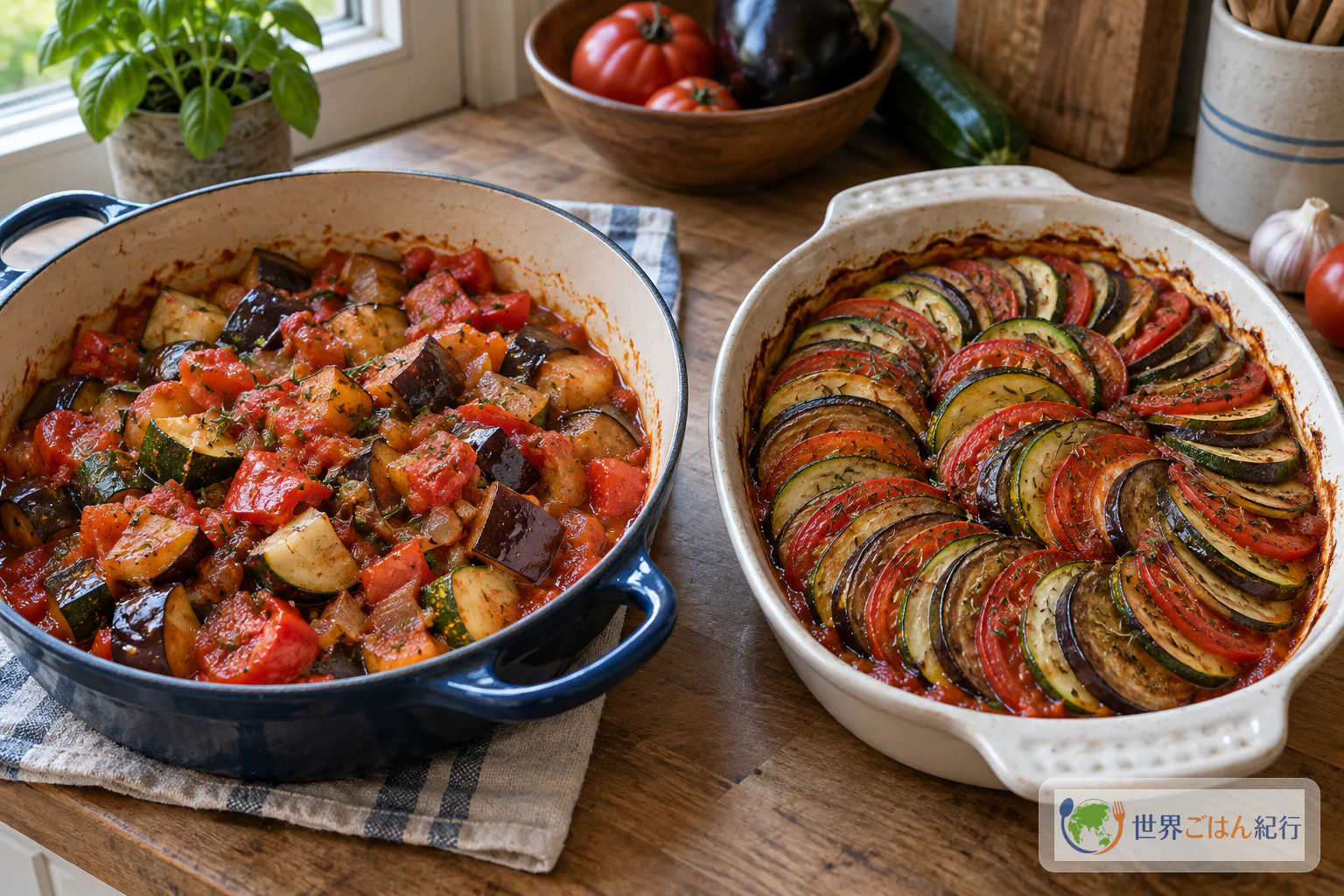
The dish of thin rounds of zucchini, eggplant and tomato arranged in overlapping circles is often what people picture when they hear "ratatouille." National Geographic describes that layered dish as confit byaldi, a variation rather than the default classic preparation. The recipe in this article is the coarse-cut stew, in which vegetables are added to the pot in order and cooked together.
Provence, Nice and the Name
Ratatouille is tied to the vegetable gardens of Provence. A page from the City of Nice's school catering service explains the word ratatouille through the Occitan ratatolha, and describes the dish as one made from garden vegetables that are easy to come by, such as eggplant, zucchini and tomatoes, seasoned with garlic. That is a local institution's explanation, not a settled etymological conclusion.
National Geographic treats the history from another angle. It reports that the earliest occurrence of the name is in an 1831 military journal, and it points to a 1903 Nice cookbook reference. The article suggests that ratatouille as we know it is more recent, and less bound by rules, than the popular story of a centuries-old dish implies. Different sources explain different parts of the story, so it is better not to fold them into a single origin tale.
Ratatouille is often linked with the season when southern French summer vegetables ripen, and that image is useful when choosing vegetables. National Geographic also notes a broader family resemblance with other southern European vegetable dishes; Spanish pisto and Italian caponata, for example, are separate dishes. For another southern French dish, see bouillabaisse. For more of the country's cooking, see France.
Frequently Asked Questions
Which vegetables does ratatouille need?
The James Beard recipe used here calls for onion, garlic, green or red peppers, eggplant, zucchini and tomatoes, with olive oil, salt, black pepper, basil and optional cayenne or Tabasco. Ratatouille varies by region and household, so other versions exist, but this is the combination this recipe follows.
Should the vegetables be cooked separately?
Both methods exist. Some Niçoise cooks cook each vegetable separately and combine them at the end, as National Geographic reports. This recipe uses the James Beard one-pot method, adding the vegetables in order. Neither is the only correct way.
Can I make it ahead?
We don't give storage times or temperatures here, because the sources for this recipe don't cover them. For cooling, storing and reheating, follow the food-safety guidance from your local food-safety authority.
Is this the same as the dish in the film?
No. The thinly sliced, layered dish is confit byaldi, which National Geographic describes as a variation. The recipe here is the coarse-cut stew.
Should I serve it hot or cold?
Either. National Geographic reports that ratatouille may be eaten hot, warm or cold, and the James Beard recipe suggests it as an accompaniment, an appetizer or a meal.
Sources
- James Beard Foundation, "Ratatouille" (recipe attributed to James Beard). The recipe used in this article: yield of 6 servings, ingredients and amounts, the gentle garlic sauté and softened onion, adding the other vegetables and cooking briskly for about 10 minutes before the tomatoes, cooking to the desired consistency, the range of texture preferences, and serving as an accompaniment, appetizer or meal. https://archive.jamesbeard.org/recipes/ratatouille
- Ville de Nice, service de restauration scolaire, "Les spécialités du menu Nice Label." The City of Nice school catering service's description of ratatouille in a Provençal context, its account linking the word to Occitan ratatolha, and the garden vegetables seasoned with garlic. https://cantines.nice.fr/actualite/nice-label
- Rebecca Seal, "Deconstructing ratatouille," National Geographic Traveller (UK). Reported history (an 1831 military journal and a 1903 Nice cookbook reference), the separate-cooking method of Niçoise cook Sophie Agrofoglio, serving hot, warm or cold and with eggs, confit byaldi as a variation, and ratatouille's resemblance to other southern European vegetable dishes. https://www.nationalgeographic.com/travel/article/deconstructing-ratatouille